US Navy Heavy and Light Cruisers: USS New Orleans (CL/CA-32), USS Portland (CL/CA-33), USS Astoria (CL/CA-34), USS Indianapolis (CL/CA-35), USS Minneapolis (CL/CA-36), USS Tuscaloosa (CA-37), USS San Francisco (CA-38), USS Quincy ((CA-39)
Washington Naval Treaty
The first cruisers of the Pensacola, Northampton, New Orleans, and Portland classes – which were designed after the 1922 Washington Naval Treaty, so quickly that the last design was complete before sea trial of the first were finished – were originally designated Light Cruisers (CL) due to their light protection. Later, in accordance with the 1930 London Naval Treaty, they were reclassified as “Heavy Cruisers” (CA) in 1931 due to their 8-inch (203 mm) guns. Thenceforward new heavy and light cruisers were numbered in a single sequence. These four classes were known as “Treaty cruisers” and “Tinclads” and were seen even before the Second World War as deficient by the Navy due to the treaty limitations, but despite their high losses in the early days of the war they performed well. (Wikipedia)
New Orleans class
(CL/CA-32) New Orleans (1934) – WW2: 17 battle stars.
Portland class
(CL/CA-33) Portland (1933) – Second World War: 16 battle stars.
New Orleans class
(CL/CA-34) Astoria (1934) – Second World War: 3 battle stars, sunk by gunfire 9 August 1942, 219 killed.
Portland class
(CL/CA-35) Indianapolis (1932) – Second World War: 10 battle stars, sunk by torpedoes 30 July 1945, 879 killed.
New Orleans class
(CL/CA-36) Minneapolis (1934) – Second World War: 17 battle stars.
(CA-37) Tuscaloosa (1934) – Second World War: 7 battle stars.
(CA-38) San Francisco (1934) – Second World War: 17 battle stars.
(CA-39) Quincy (1936) – Second World War: 1 battle star, sunk by gunfire and torpedoes 9 August 1942, 370 killed.
USS New Orleans (CA-32)
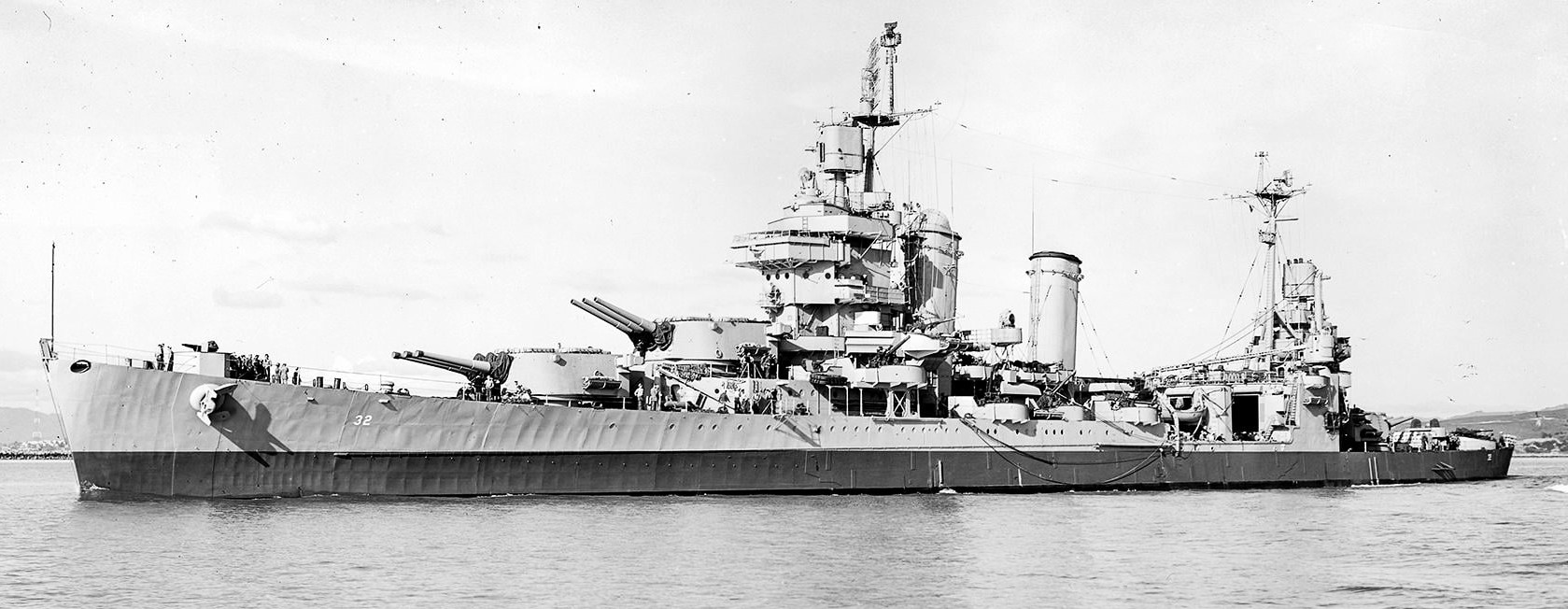
(USN Photo)
USS New Orleans (CL/CA-32) was the lead New Orleans-class cruiser in service with the United States Navy. The New Orleans-class cruisers were the last U.S. cruisers built to the specifications and standards of the Washington Naval Treaty of 1922. Such ships, with a limit of 10,000 long tons (10,160 t) standard displacement and 8-inch (203 mm) caliber main guns may be referred to as “treaty cruisers.” While she was originally classified a light cruiser because of her thin armor, soon after being laid down she was reclassified as a heavy cruiser because of her 8-inch guns. The term “heavy cruiser” was not defined until the London Naval Treaty in 1930. (Wikipedia)
The cruiser USS New Orleans (CA-32) was built at the New York Navy Yard and launched on 12 April 1933. She was commissioned on 15 February 1934. On 5 July, she sailed with President Franklin D. Roosevelt aboard. On 7 December 1941, the New Orleans was undergoing engine repair while moored in Pearl Harbor when the Japanese attacked. Her antiaircraft batteries were in action within ten minutes; she suffered no serious damage.
The New Orleans returned to San Francisco on 13 January 1942 for installation of a new radar and 20-mm. guns. Upon return to Pearl Harbor, she joined Task Force 11. She took part in the Battle of Coral Sea in May 1942, playing a major role in rescuing sailors from the sinking USS Lexington (CV-2). The New Orleans also took part in the Battle of Midway.
The New Orleans screened the USS Saratoga (CV-3) during the invasion of the Solomons and supported the Marines who landed on Guadalacanal. When the Saratoga was struck by a torpedo on 31 August 1942, the New Orleans escorted her safely back to Pearl Harbor.
On the night of 30 November, while engaged in the Battle of Tassafaronga, the New Orleans was struck by a torpedo that tore away her bow. She remained afloat and entered Tulagi Harbor under her own power on 1 December 1942. She underwent further repair in Sydney, Australia, and received a new bow at Puget Sound Navy Yard. By September 1943, she was back in action and took part in the bombardments of Wake Island and the Gilbert Islands.
In early 1944, the New Orleans fired on the Marshalls; from 17–18 February took part in a raid on Truk; and later played a role in an attack on the Marianas. In March, she took part in attacks on the Carolines, and in April supported landings in New Guinea. During the Battle of the Philippine Sea, the New Orleans engaged enemy aircraft that penetrated Allied air cover.
Later in 1944 and throughout the war, the New Orleans supported operations on Iwo Jima, the Palaus, Okinawa, Formosa, Luzon, and took part in the memorable Battle of Leyte Gulf. She received 16 battle stars for her service in World War II.
The New Orleans was decommissioned on 10 February 1947 and stricken from the Navy List on 1 March 1959. Six months later, she was sold for scrap. (U.S. Naval Institute)
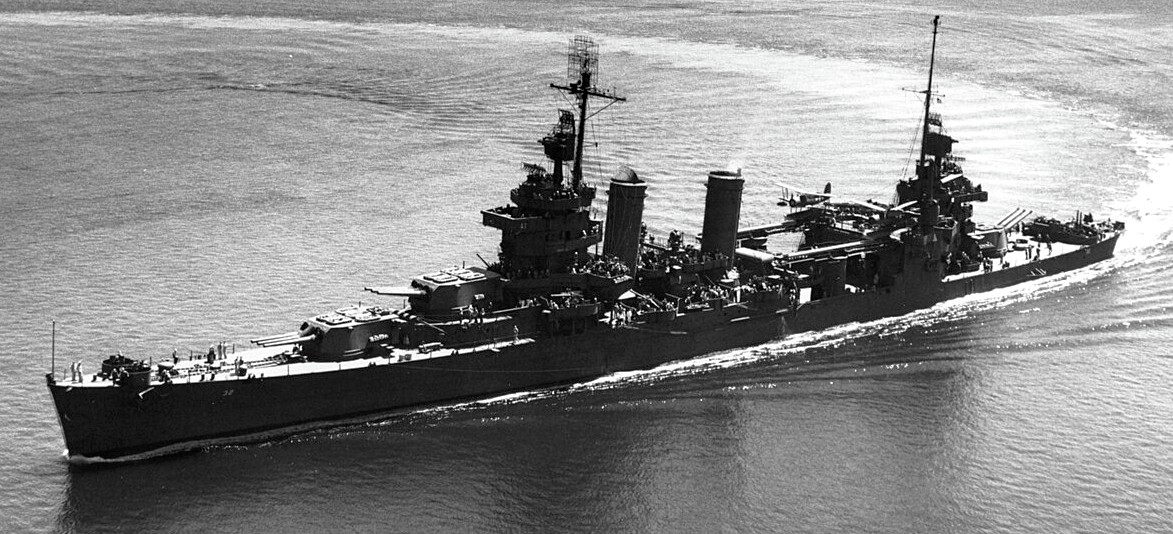
(USN Photo)
USS New Orleans (CA-32) steams through a tight turn in Elliot Bay, Washington (USA), on 30 July 1943, following battle damage repairs and overhaul at the Puget Sound Naval Shipyard.
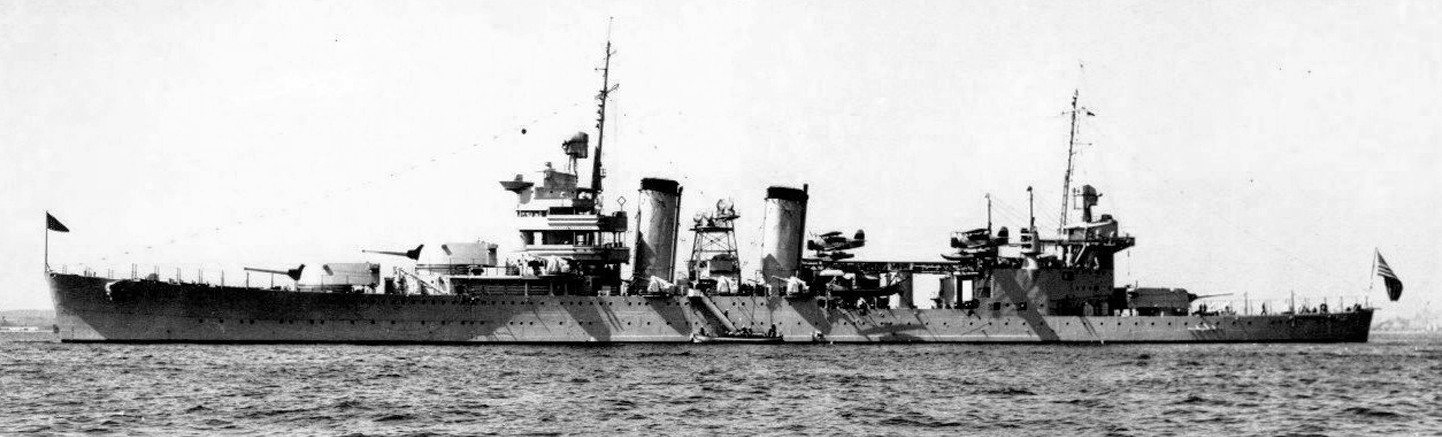
(USN Photo)
USS New Orleans (CA-32) before 1942.
(U.S. Naval History and Heritage Command Photo)
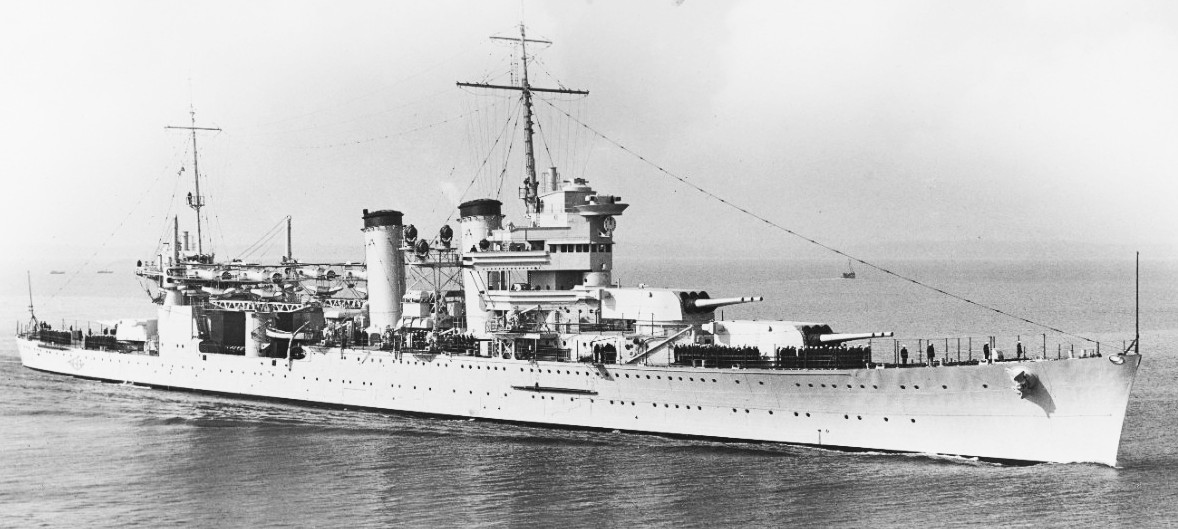
USS New Orleans (CA-32) in English waters June 1934.
(USN Photo)
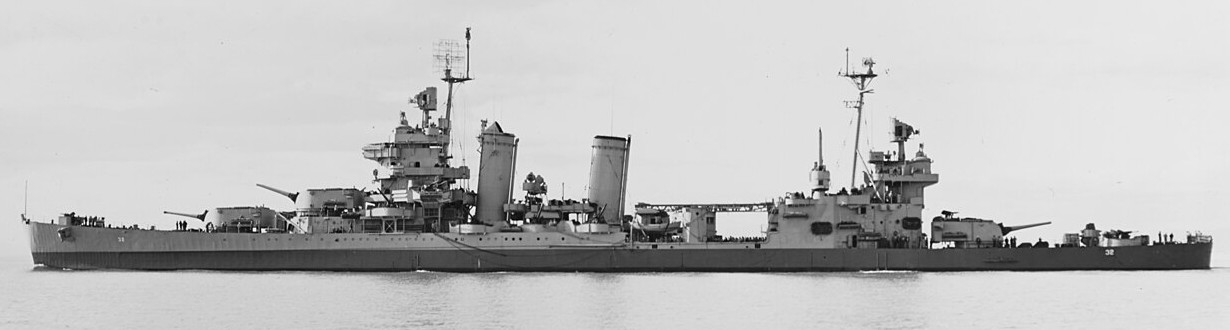
USS New Orleans (CA-32) off the Mare Island Naval Shipyard, California, on 8 March 1945, following her last wartime overhaul. The port catapult has been removed.
Battle of Tassafaronga
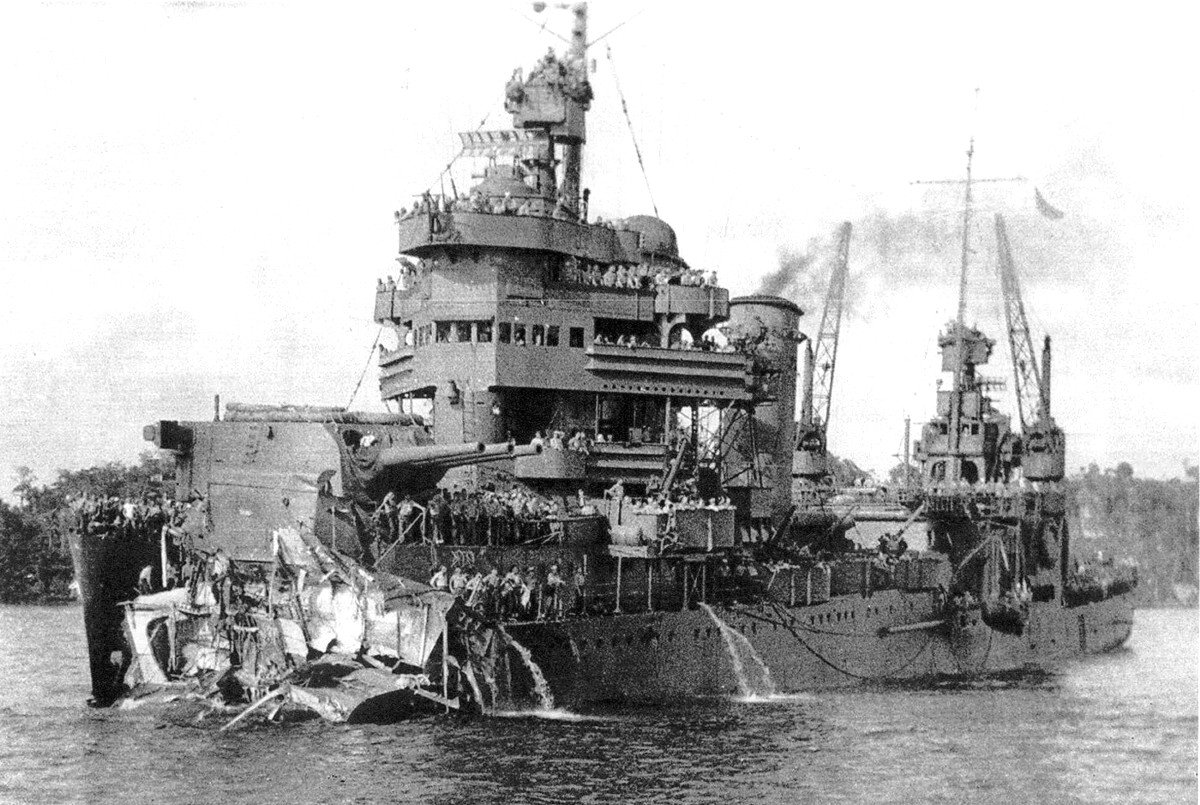
New Orleans sailed to Fiji early in November 1942, then proceeded to Espiritu Santo, arriving on 27 November to return to action in the Solomons. With four other cruisers and six destroyers, she fought in the Battle of Tassafaronga on the night of 30 November, engaging a Japanese destroyer-transport force. When the flagship Minneapolis was struck by two torpedoes, New Orleans, next astern, was forced to sheer away to avoid collision, and ran into the track of a torpedo, which detonated the ship’s forward magazines and gasoline tanks. This explosion severed 150 ft (46 m) of her bow just forward of turret number two. The severed bow, including turret number one, swung around the port side and punched several holes in the length of New Orleans’ hull before sinking at the stern and damaging the port inboard propeller.[4] With one-quarter of her length gone, she slowed to 2 kn (2.3 mph; 3.7 km/h) and was on fire. Everyone in turrets one and two perished; 183 men were killed. Herbert Brown, a seaman in the ship’s plotting room, described the scene after the torpedo hit:
“I had to see. I walked alongside the silent turret two and was stopped by a lifeline stretched from the outboard port lifeline to the side of the turret. Thank God it was there, for one more step and I would have pitched headfirst into the dark water 30 feet below. The bow was gone; 125 feet of ship and the number-one main battery turret with three 8-inch guns were gone. Eighteen hundred tons of ship were gone. Oh my God, all those guys I went through boot camp with – all gone” [5]
Damage control parties managed to repair the ship enough to sail to Tulagi Harbor near daybreak on 1 December.
The crew camouflaged their ship from air attack, jury-rigged a bow of coconut logs, and worked clearing away wreckage. Eleven days later, New Orleans sailed stern first, to avoid sinking, to Cockatoo Island Dockyard in Sydney, Australia, arriving on 24 December. At Cockatoo, the damaged propeller was replaced and other repairs were made including the installation of a temporary stub bow. On 7 March 1943, she left Sydney for Puget Sound Navy Yard, sailing backward the entire voyage, where a new bow was fitted with the use of Minneapolis’ number-two turret. All battle damage was repaired, and she was given a major refit involving the reduction of the forward superstructure along the lines of other prewar cruisers, adding new air-search and surface-search radars, as well as numerous 20 mm and 40 mm Bofors antiaircraft guns. In addition, her boilers, machinery, and hull structures were overhauled to almost new condition. She continued to sail with the back portion (aft) riveted and the front portion (bow) welded. (Wikipedia)
(USN Photo)
The damaged U.S. Navy heavy cruiser USS New Orleans (CA-32) entering Tulagi harbour about eight hours after the Battle of Tassafaronga, 1 December 1942. Everything ahead of turret No. 2 is missing after being hit by a single Japanese Long Lance torpedo which exploded her forward magazines. New Orleans, with her entire bow sheared off, limped back to Cockatoo dockyard in Australia; in fact, she sailed backwards (stern first) to avoid flooding the ship’s frontal section. There, temporary repairs were made including the fitting of a ‘stub bow’ to cover the blown-off bow section. In March of 1943, she sailed for Puget Naval Yard where she was given a complete repair, and had a new bow section fitted. She also received a large anti-aircraft armament boost of 24 Bofors guns (6×4) and numerous more double Oerlikon cannons. Repairs completed, she returned to service in August of 1943.
USS Portland (CL/CA-33)
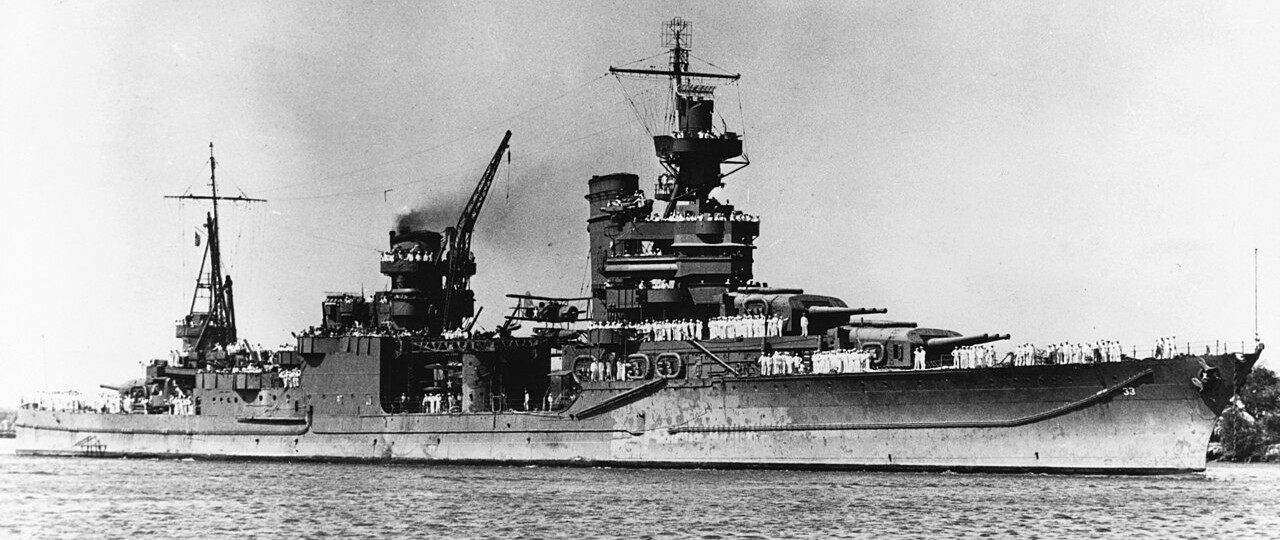
(USN Photo)
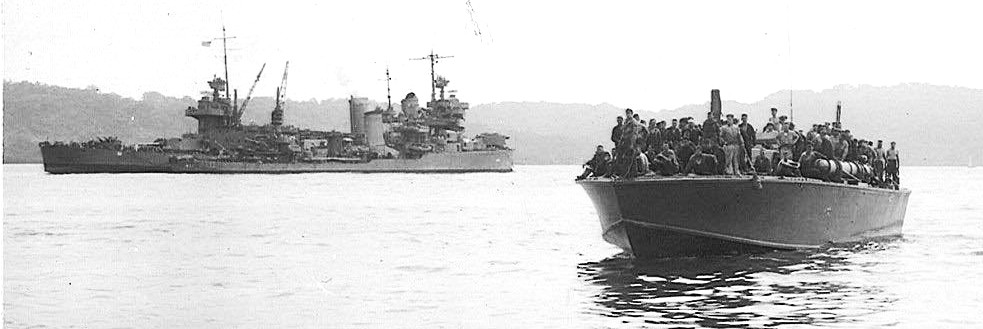
USS Portland (CA-33) at Pearl Harbor, Hawaii, 14 June 1942, with her crew paraded on deck in “Whites”. Note the external degaussing cable fitted to the hull side of this ship.
USS Portland (CL/CA–33) was the lead ship of the Portland class of cruiser and the first ship of the United States Navy named after the city of Portland, Maine. Launched in 1932, she completed a number of training and goodwill cruises in the interwar period before seeing extensive service during the Second World War, beginning with the Battle of the Coral Sea in 1942, where she escorted the aircraft carrier Yorktown and picked up survivors from the sunken carrier Lexington. She screened for Yorktown again in the Battle of Midway, picking up her survivors as well. She then supported the carrier Enterprise during the initial phase of the Guadalcanal campaign later that year, and was torpedoed during the Naval Battle of Guadalcanal. The torpedo inflicted heavy damage which put her out of action for six months as she was repaired in Sydney, Australia, and later San Diego, California.
Returning to combat in mid-1943, Portland saw action in many of the major engagements of the Pacific War, conducting shore bombardments in support of campaigns at the Aleutian Islands, Gilbert and Marshall Islands, Mariana Islands, and New Guinea. She was involved in the October 1944 Battle of Leyte Gulf, engaging Japanese ships in the decisive Battle of Surigao Strait. She then conducted shore bombardments at Lingayen Gulf and Corregidor Island, and in 1945 supported landings during the Battle of Okinawa until the end of the war.
Following the end of the Second World War, Portland accepted the Japanese surrender in the Caroline Islands and then undertook several Operation Magic Carpet cruises to bring U.S. troops home. She was decommissioned in 1946 and scrapped by 1962. In her extensive service she accrued 16 battle stars, making her one of the most decorated ships in the U.S. fleet. (Wikipedia)
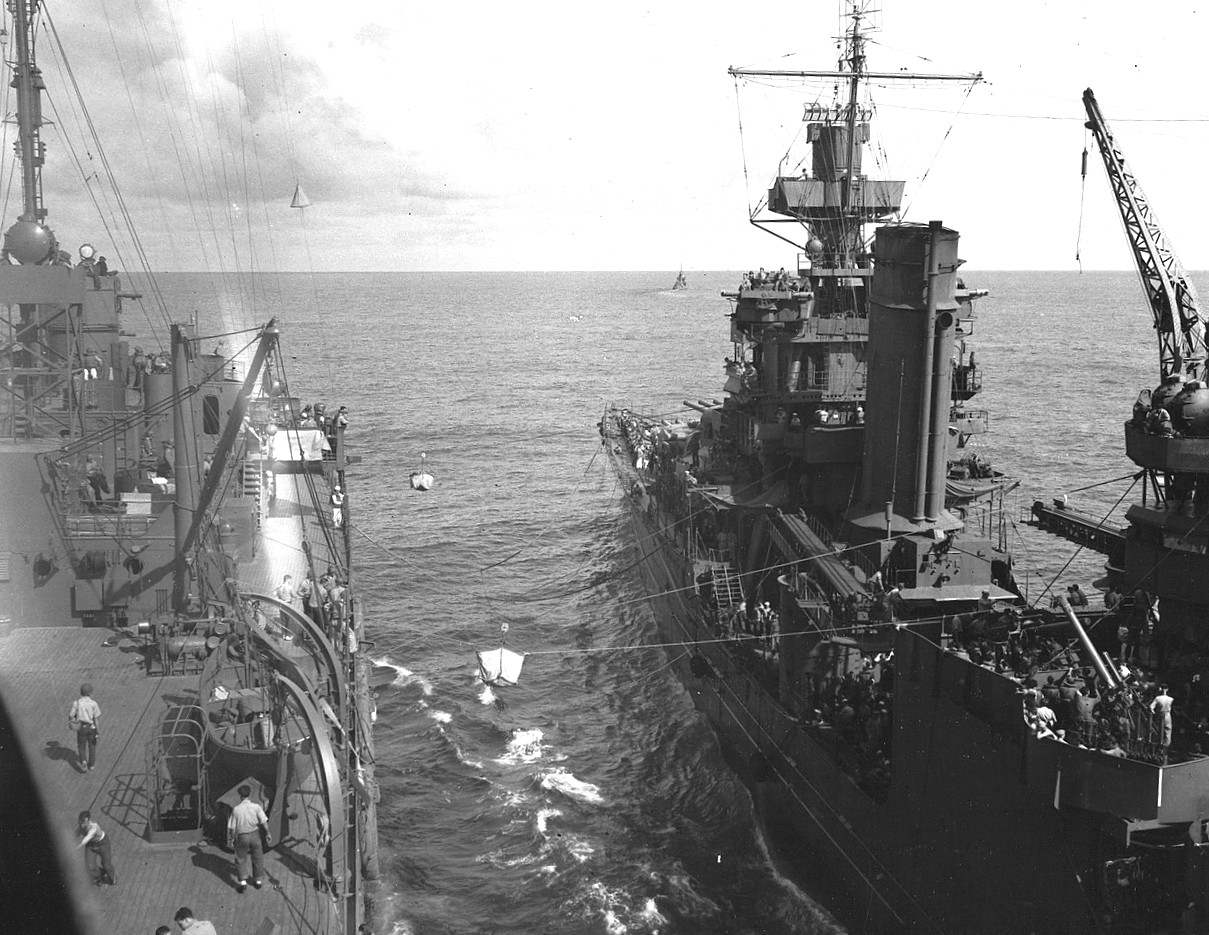
(USN Photo)
USS Portland (CA-33), right, transfers survivors of the aircraft carrier USS Yorktown (CV-5) to the submarine tender USS Fulton (AS-11), left, on 7 June 1942, following the Battle of Midway. Fulton transported the men to Pearl Harbor.
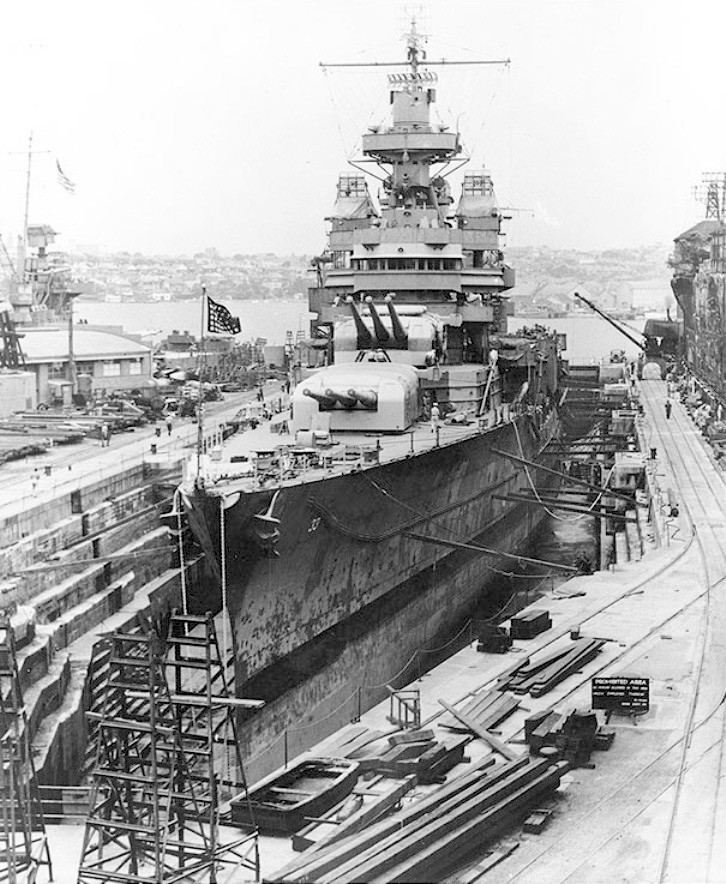
(USN Photo)
USS Portland (CA-33) in a drydock at the Cockatoo Island Dockyard, Sydney, New South Wales, Australia, circa in late December 1942, while under repair for torpedo damage received in the Naval Battle of Guadalcanal on 13 November 1942. She arrived at Sydney on 30 November but did not enter drydock until 24 December after USS Chester (CA-27) and USS New Orleans (CA-32) were repaired. Note the arrangement of gun directors on her forward superstructure: main battery director atop the foremast, with FC fire control radar; and a secondary battery director, with FD fire control radar, on each bridge wing. Also note this ship’s external degaussing cables, mounted on her hull sides.
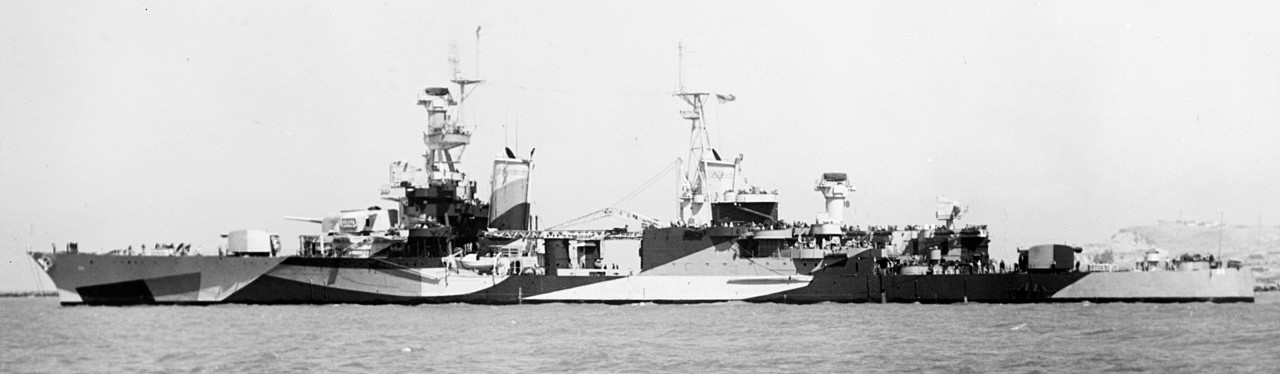
(USN Photo)
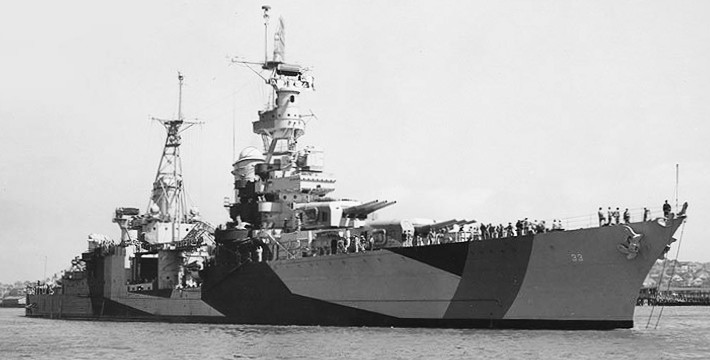
USS Portland (CA-33) off the Mare Island Naval Shipyard, California, 30 July 1944. Her camouflage is Measure 32, Design 7d.
(USN Photo)
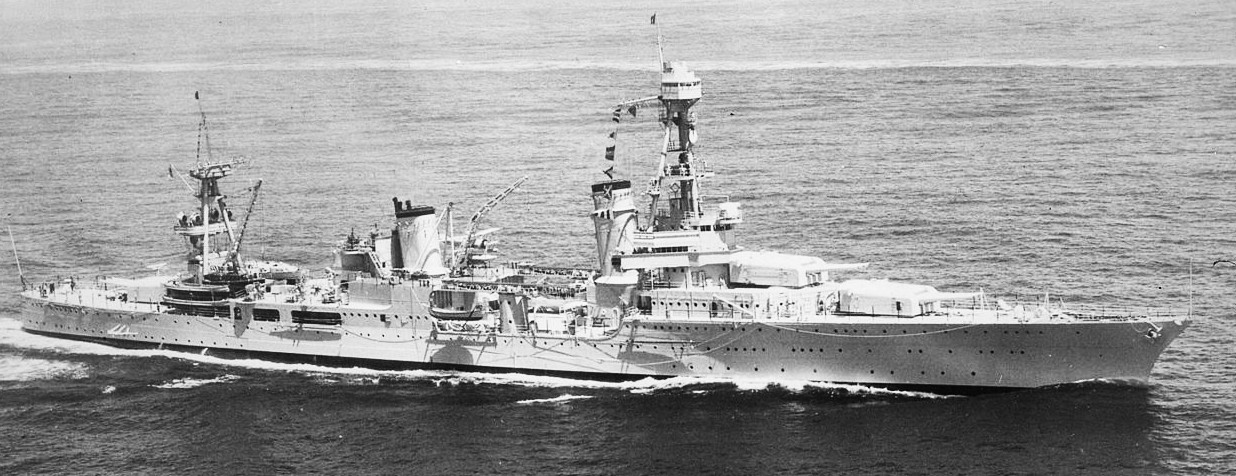
USS Portland (CA-33) off the Mare Island Naval Shipyard, California, on 30 July 1944. Her camouflage is Measure 32, Design 7d.
(USN Photo)
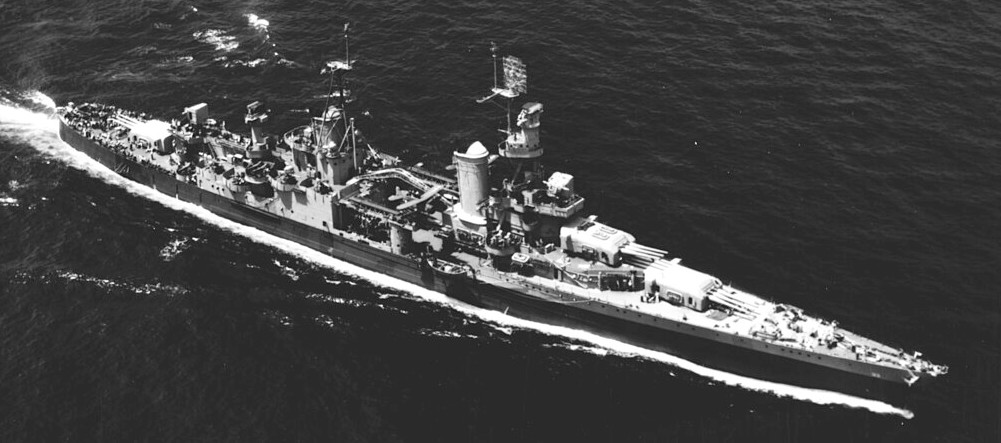
USS Portland (CA-33), 31 May 1934.
(USN Photo)
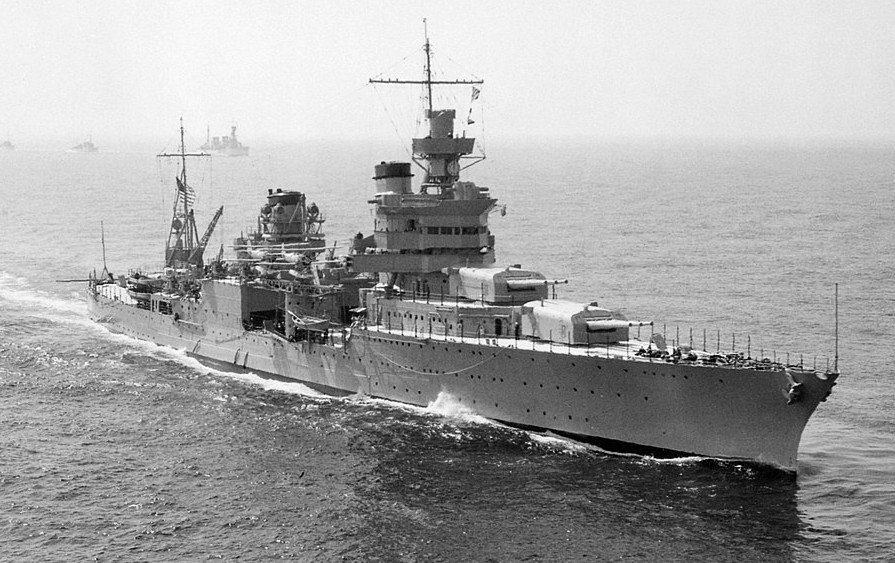
USS Portland (CA-33) underway while nearing Pearl Harbor, Territory of Hawaii, 20 September 1945, with 500 additional naval personnel aboard.
(USN Photo)
USS Portland (CA-33) underway.
USS Astoria (CL/CA-34)
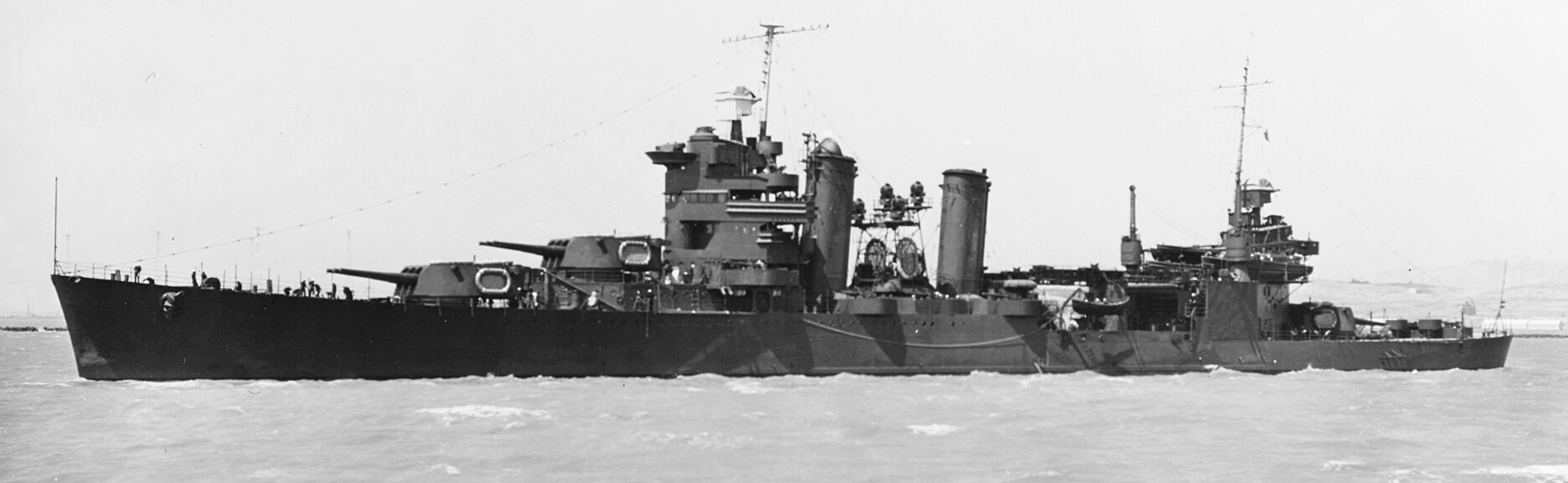
(USN Photo)
USS Astoria (CL/CA-34) off the coast of the Mare Island Navy Yard, California, 11 July 1941.
The second USS Astoria (CL/CA-34) was a New Orleans-class cruiser of the United States Navy that participated in both the Battle of the Coral Sea and the Battle of Midway, but was then sunk in August 1942, at the Battle of Savo Island. Astoria was the first New Orleans-class cruiser to be laid down but launched after and received a hull number higher than the lead ship New Orleans.
Immediately after the months-long Guadalcanal campaign ended in February 1943, the remaining ships of the class would go through major overhauls to lessen top-heaviness due to new electrical and radar systems and advanced anti-aircraft weaponry. In doing so the ships took on a new appearance, most notably in the bridge. (Wikipedia)
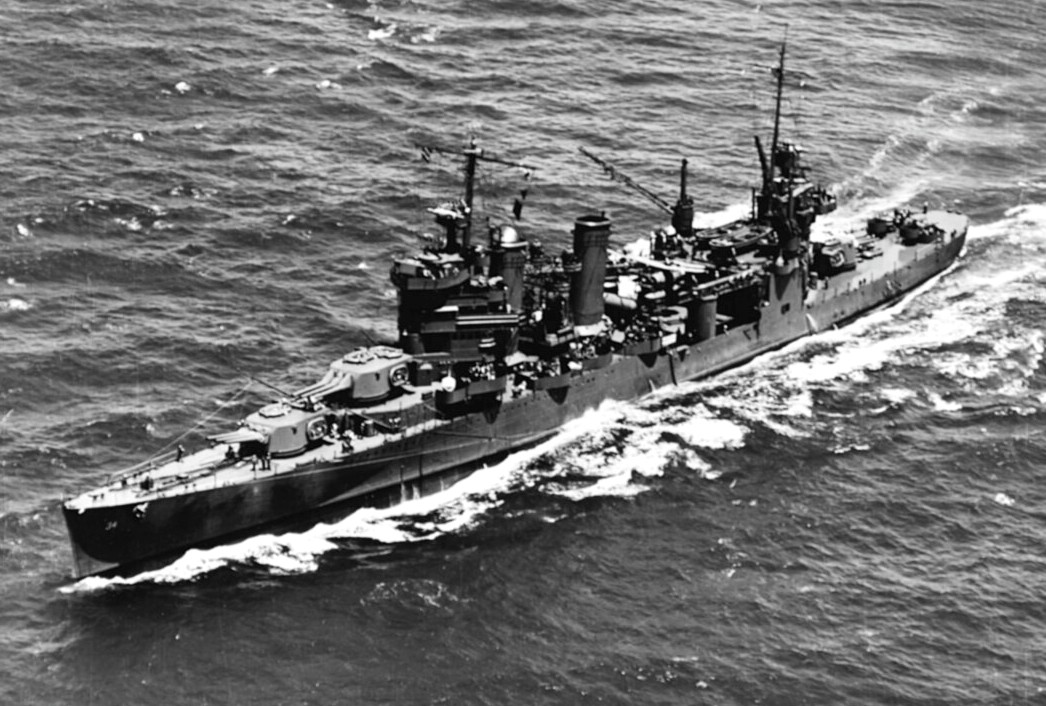
(USN Photo)
USS Astoria (CA-34) operating in Hawaiian waters during battle practice, 8 July 1942. She appears to be recovering floatplanes from off her starboard side. Note the booms rigged below the forward superstructure to tow aircraft recovery mats, and the starboard crane swung out.
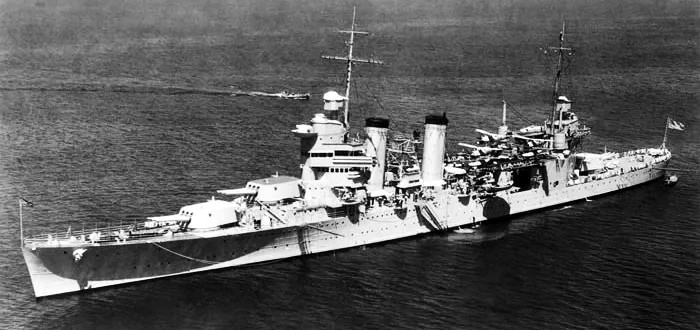
(USN Photo)
USS Astoria (CA-34) in San Diego harbor on 10 April 1935. Vought O3U-3 seaplanes are on her catapults.
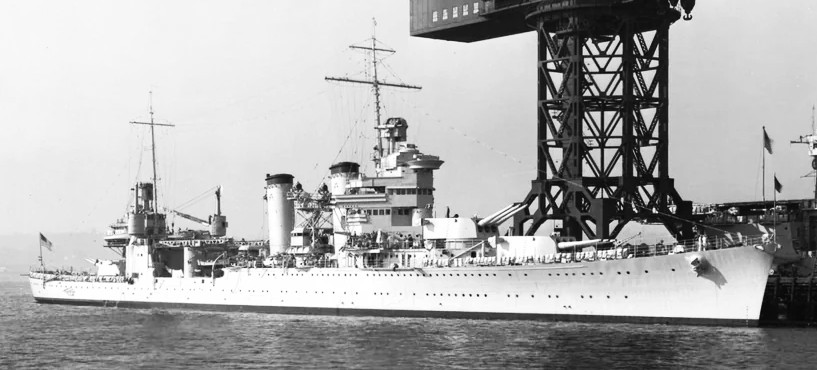
(USN Photo)
USS Astoria (CA-34) at Puget Sound Navy Yard, 25 September 1939.
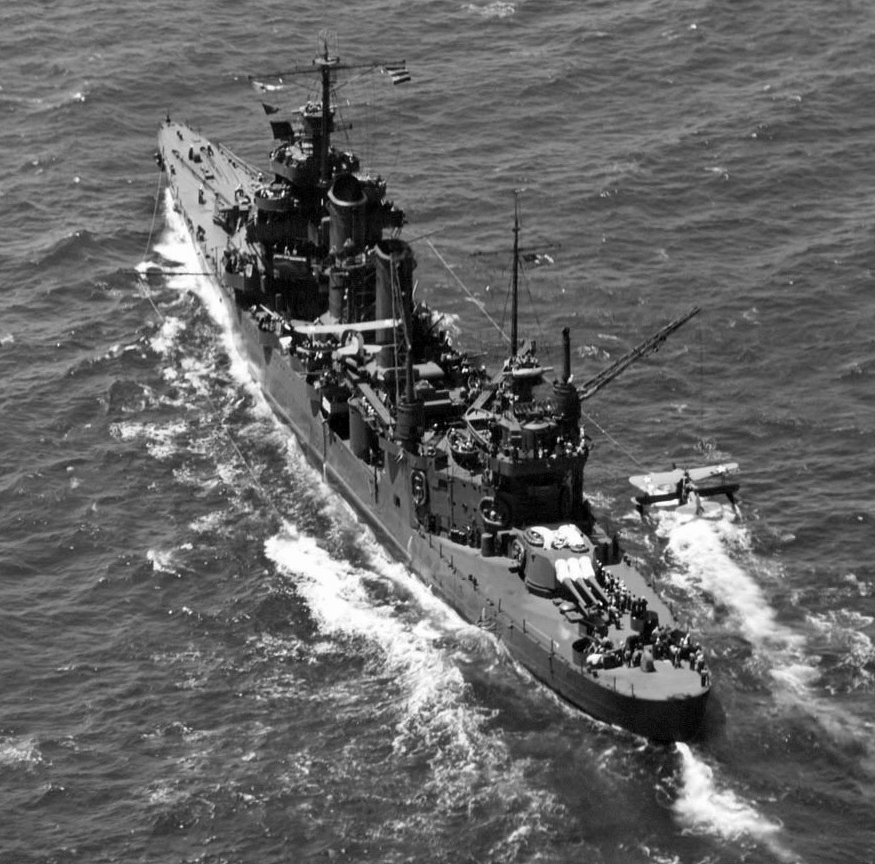
(USN Photo)
USS Astoria (CA-34) recovers a seaplane off Hawaii, c. Summer 1942.
USS Indianapolis (CL/CA-35)
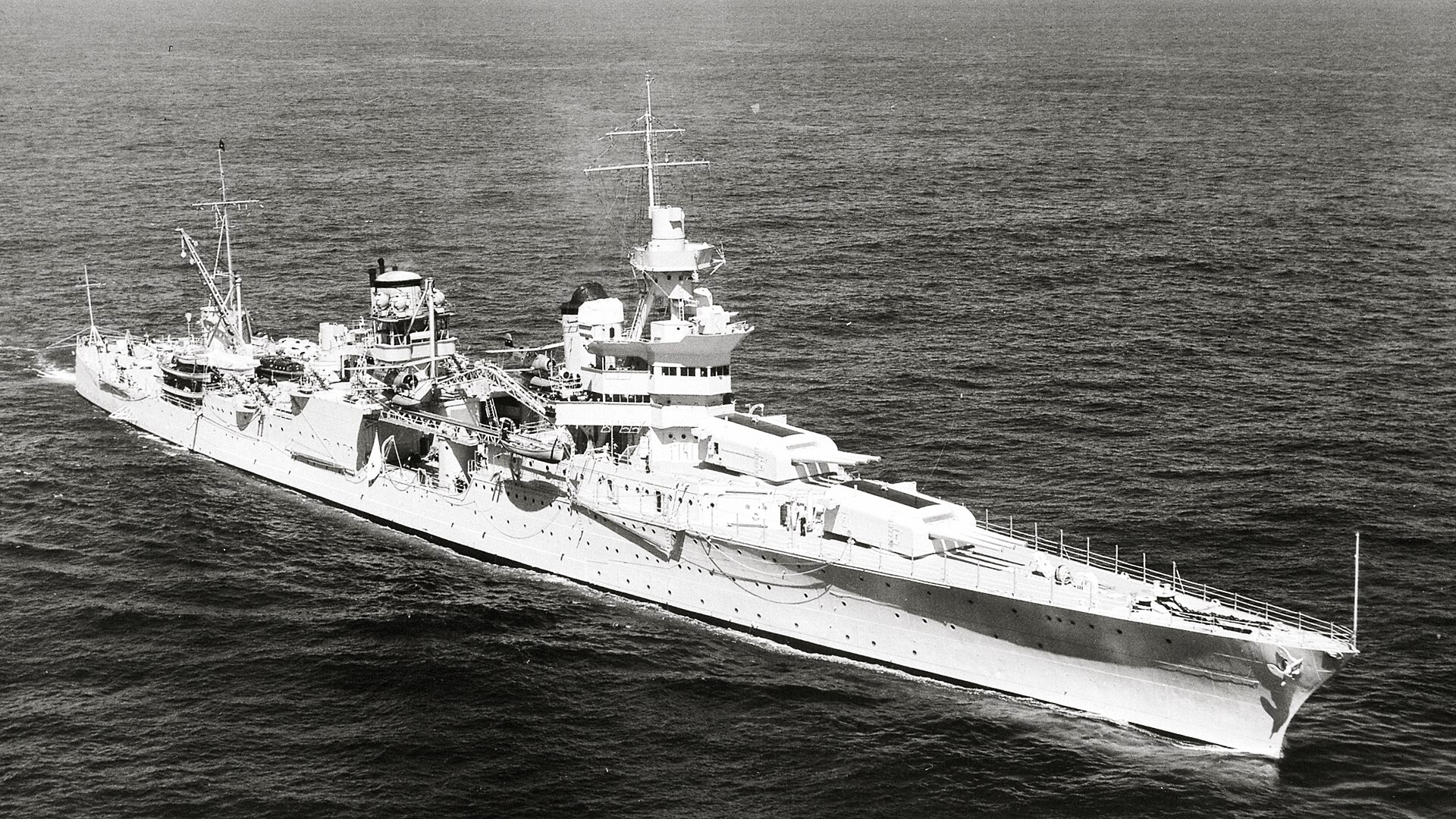
(USN Photo)
USS Indianapolis (CA-35) underway at sea on 27 September 1939.
USS Indianapolis (CL/CA-35) was a Portland-class heavy cruiser of the United States Navy, named for the city of Indianapolis, Indiana. Launched in 1931, she was the flagship of the commander of Scouting Force 1 for eight years, then flagship for Admiral Raymond Spruance from 1943 to 1945 while he commanded the Fifth Fleet in battles across the Central Pacific during the Second World War.
In July 1945, Indianapolis completed a top-secret high-speed trip to deliver uranium and other components for “Little Boy”, the first nuclear weapon used in combat, to the Tinian Naval Base, and subsequently departed for the Philippines on training duty. At 0015 on 30 July, the ship was torpedoed by the Imperial Japanese Navy submarine I-58, and sank in 12 minutes. Of 1,195 crewmen aboard, about 300 went down with the ship. The remaining 890 faced exposure, dehydration, saltwater poisoning, and shark attacks while stranded in the open ocean, with few lifeboats and almost no food or water.
The Navy learned of the sinking four days later, when survivors were spotted by the crew of a PV-1 Ventura on routine patrol. A U.S. Navy PBY flying boat crew landed to save those in the water. Only 316 survived. No U.S. warship sunk at sea has lost more sailors.
On 19 August 2017, a search team financed by Microsoft co-founder Paul Allen located the wreckage in the Philippine Sea at a depth of about 18,000 ft (5,500 m). On 20 December 2018, the crew of Indianapolis was collectively awarded a Congressional Gold Medal. (Wikipedia)
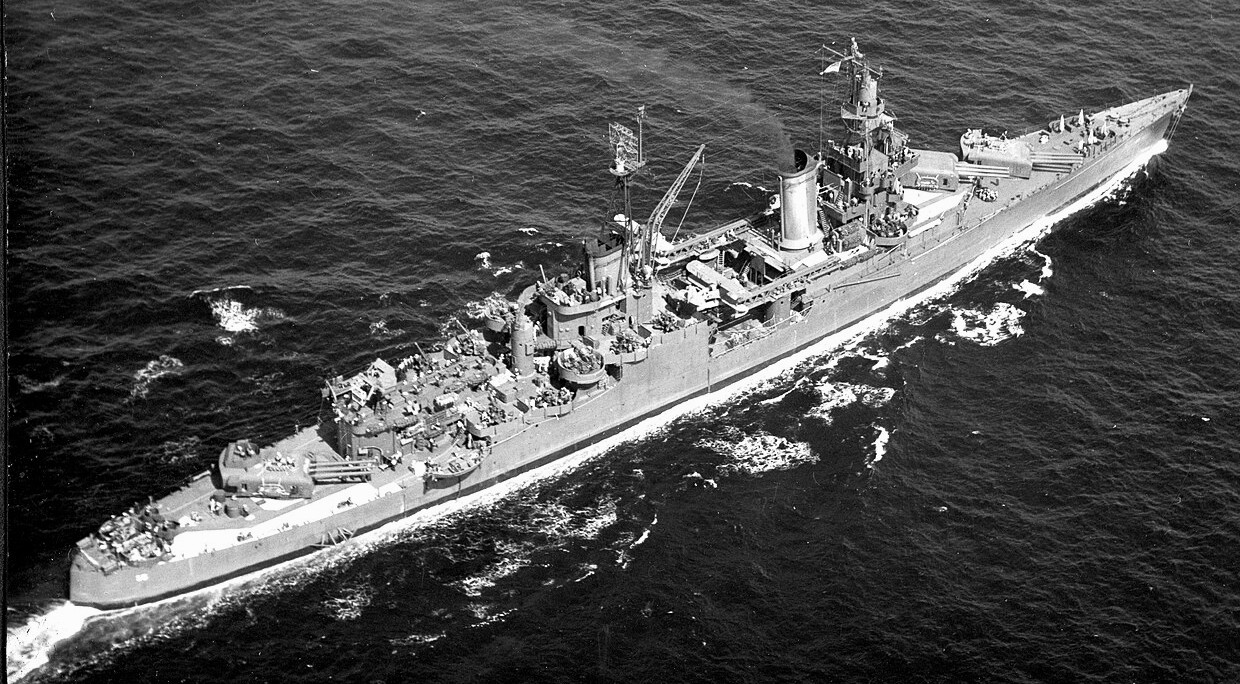
(USN Photo)
USS Indianapolis (CA-35) underway at sea between May 1943 and May 1944. She is painted in Camouflage Measure 21.
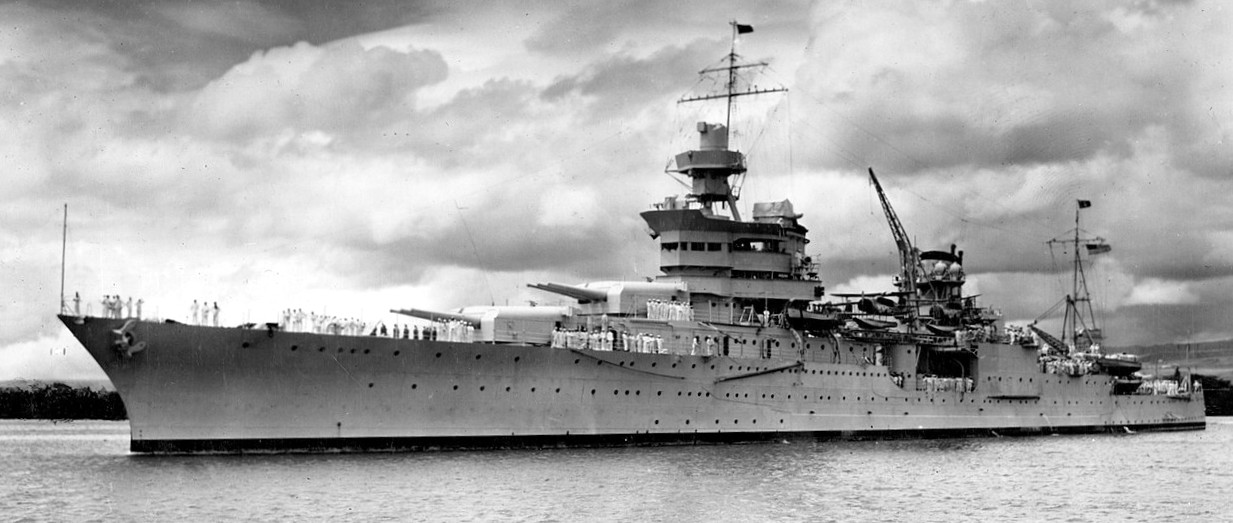
(USN Photo)
USS Indianapolis (CA-35) at Pearl Harbor, Hawaii, circa in 1937.
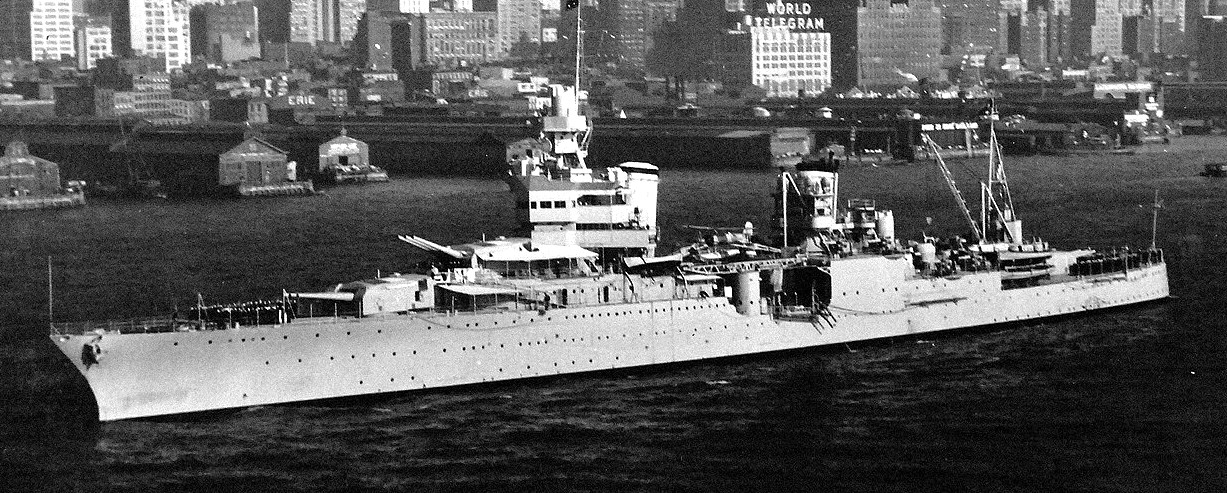
(USN Photo)
USS Indianapolis (CA 35) entering the Hudson River, New York City, New York, 31 May 1934.
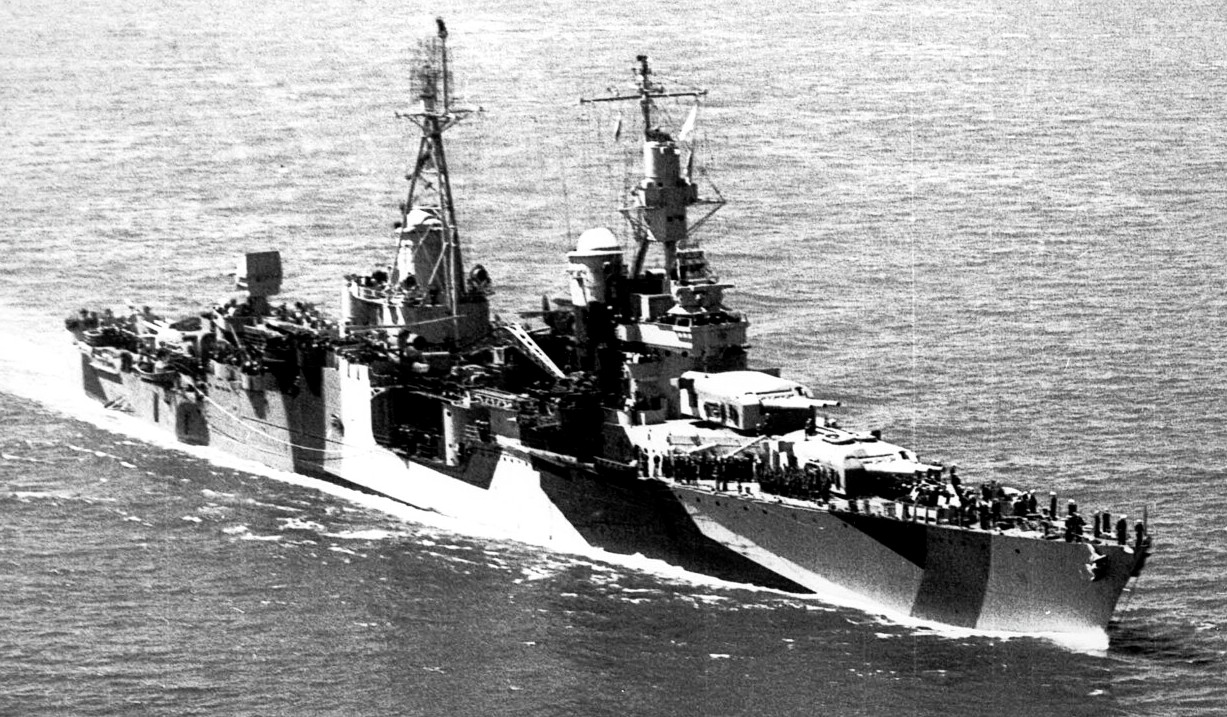
(USN Photo)
USS Indianapolis (CA-35) underway in 1944. She wears Camouflage Measure 32/7D.
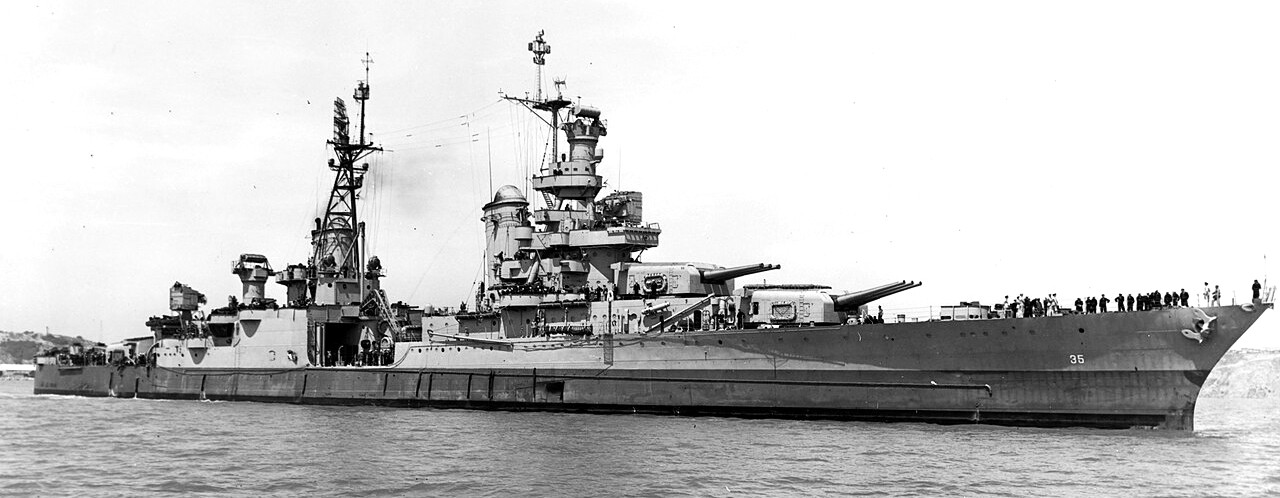
(USN Photo)
USS Indianapolis (CA-35) off the Mare Island Naval Shipyard, California, on 10 July 1945, after her final overhaul and repair of combat damage. The photo was taken before the ship delivered atomic bomb components to Tinian and just 20 days before she was sunk by a Japanese submarine.
USS Minneapolis (CL/CA-36)
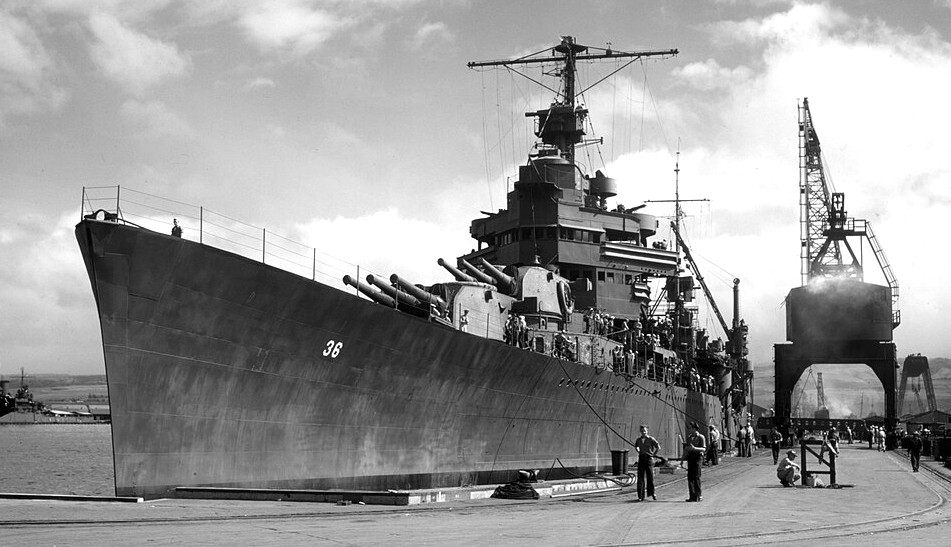
(USN Photo)
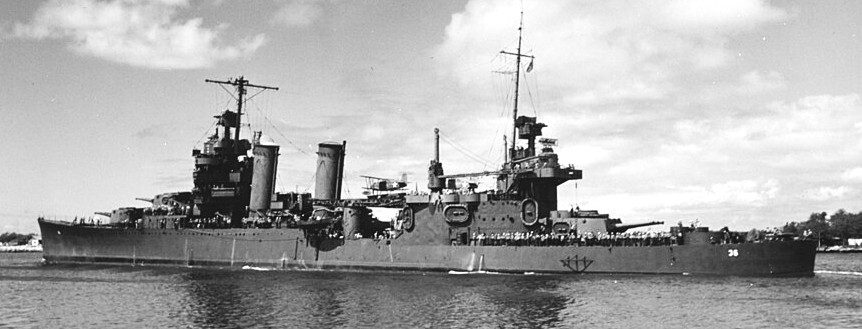
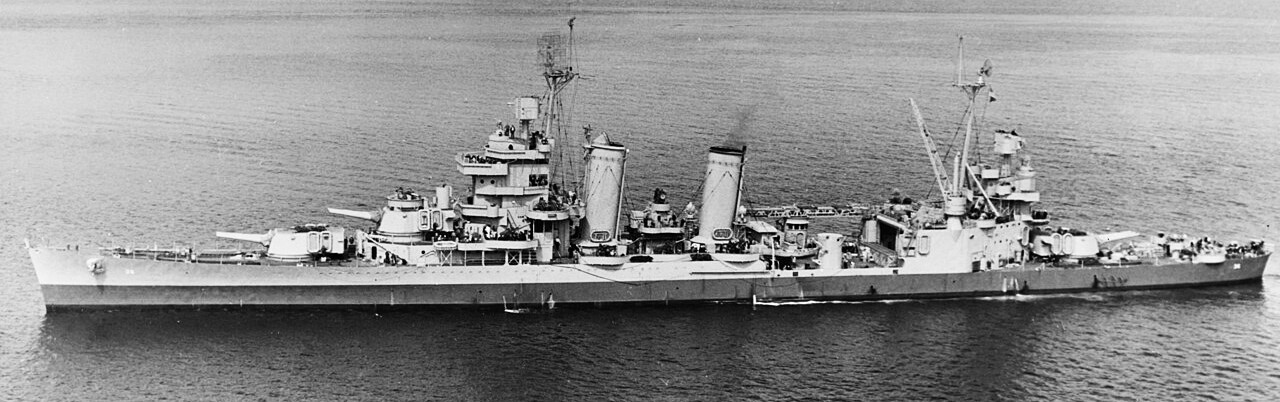
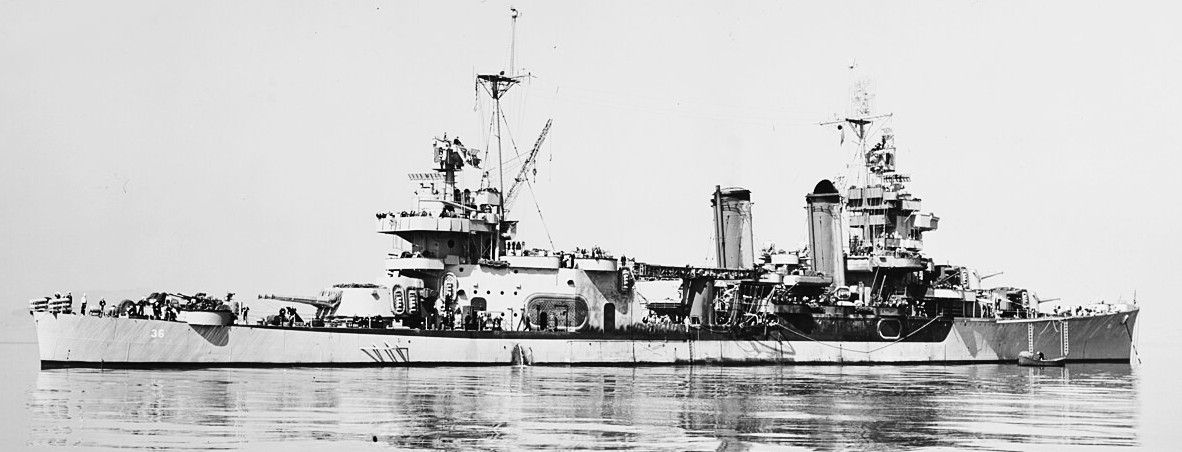
USS Minneapolis (CA-36) at Pearl Harbor Naval Shipyard, Hawaii, on 11 April 1943, after being fitted with a new bow. She had lost her original bow in the Battle of Tassafaronga, off Guadalcanal, on 30 November 1942.
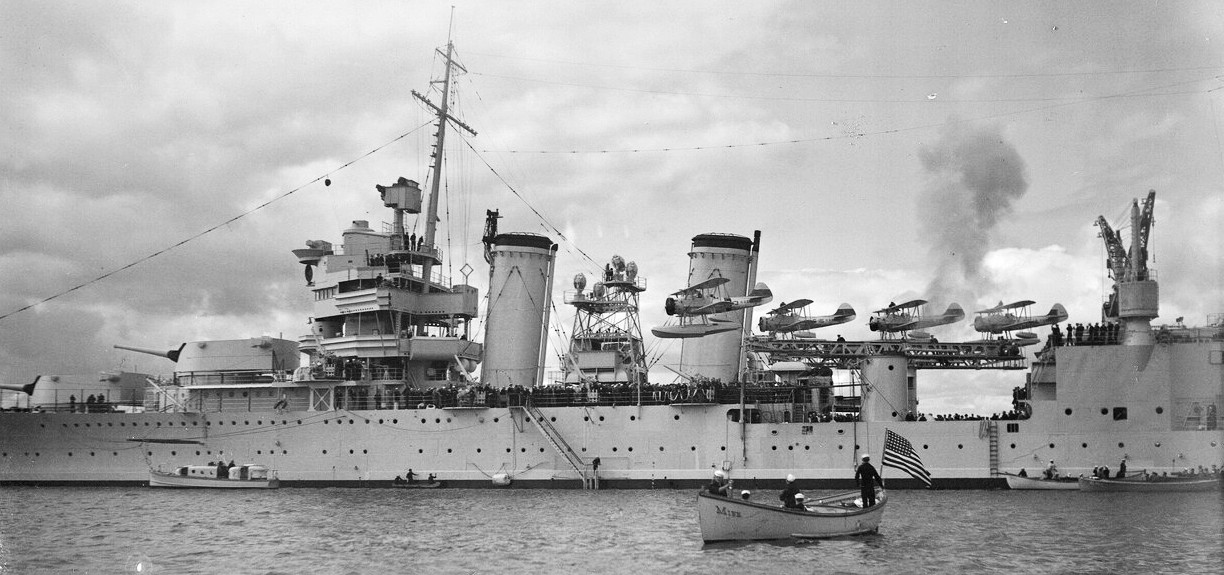
USS Minneapolis (CL/CA-36) was a New Orleans-class cruiser built for the United States Navy before the outbreak of the Second World War, the second ship named for Minneapolis, Minnesota. She served in the Pacific Theater during the Second World War.
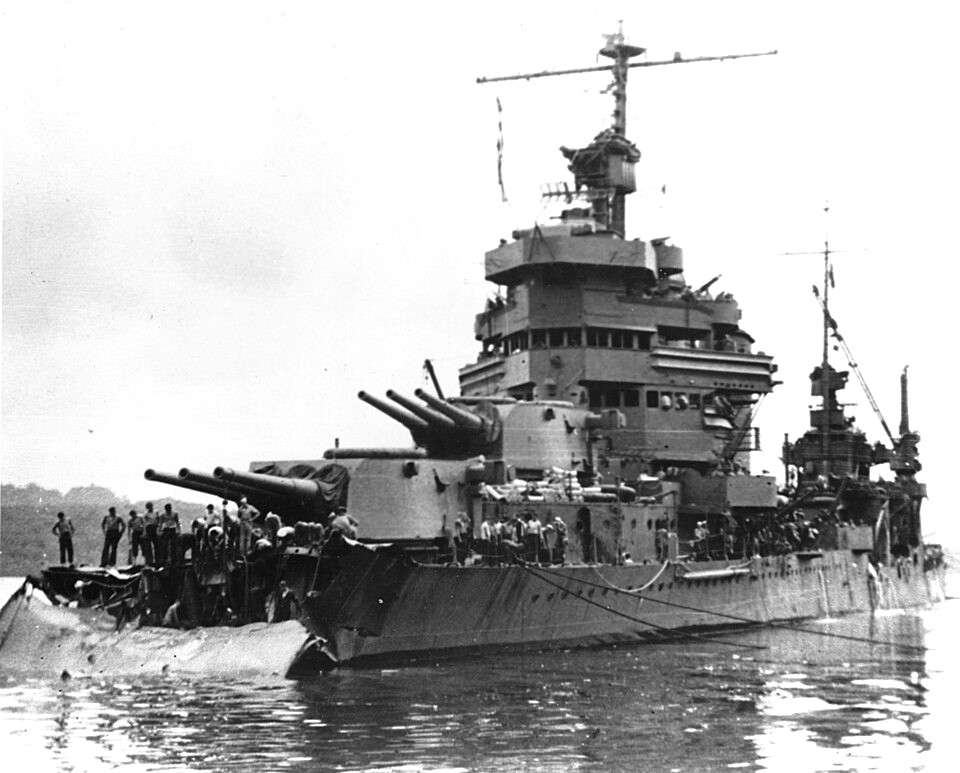
(USN Photo)
USS Minneapolis (CA-36) at Tulagi with torpedo damage received in the Battle of Tassafaronga, the night before. The photograph was taken on 1 December 1942, as work began to cut away the wreckage of her bow.
Battle of Tassafaronga
After replenishing and repairing at Pearl Harbor, Minneapolis sailed to protect the carriers as they covered the landings on Guadalcanal and Tulagi from 7–9 August. Remaining with the carriers, she went to the aid of the USS Saratoga on 30 August, when the carrier took a torpedo hit, and towed her from the danger area. Through September and October, she supported landings west of Lunga Point and on Funafuti.
As flagship of Task Force 67 (TF 67), she sortied on 29 November to intercept a Japanese destroyer force attempting to reinforce Guadalcanal. At 23:05 the next night, she spotted six Japanese ships, and the Battle of Tassafaronga was opened by her 8.00 in (203 mm) fire.[4] She scored many hits on the destroyer Takanami, which sank.[5] However, the gunfire failed to sink Takanami before she could fire her torpedoes, and in a twist of revenge two of these torpedoes hit Minneapolis, one on the port bow, the other in her number two fireroom, causing loss of power and severe damage; her bow collapsing back to the hawsepipes, her port side badly ruptured, and two firerooms open to the sea. Of the battle, American naval historian Samuel Eliot Morison wrote, “It is a painful truth that the Battle of Tassafaronga was a sharp defeat inflicted on an alert and superior cruiser force by a partially surprised and inferior destroyer force.” Of her crew, 37 were killed in action while 36 were wounded.
The ship was saved however by skillful damage control work and seamanship that kept her afloat and enabled her to reach Tulagi. There, camouflaged with palm fronds and shrubs to protect her from frequent air raids, she was temporarily repaired by her own crew with the help of Seabees of the 27th Naval Construction Battalion stationed on the island, and was able to sail for extensive repairs at Mare Island Naval Shipyard. A new bow was built for her during her transit back to the shipyard and was almost ready to be mated on by the time of her arrival. While there she received a remodeling of her forward bridge and added new radars and numerous 20 mm and 40 mm anti-aircraft guns.
By August 1943, the USS Minneapolis was back in the Pacific for 20 months of frontline duty, which would include every major Pacific operation by American forces save Iwo Jima. Her first was the bombardment of Wake on 5 October, then from 20 November to 4 December she joined in the assault and capture of Makin in the Gilberts. In December, she screened a carrier group in the pre-invasion strikes against Kwajalein and Majuro, serving on in the capture of the Marshalls into mid-February 1944. With the carriers blasting the Marianas and the Carolines, Minneapolis continued to guard them through raids on the Palaus, Truk, Satawan, Ponape, and other key Japanese bases into April, including a surface action off Truk during Operation Hailstone where she assisted in sinking the destroyer Maikaze and the armed trawler Shonan Maru. The latter raids were coordinated with the landings at Hollandia (currently known as Jayapura), New Guinea. (Wikipedia)
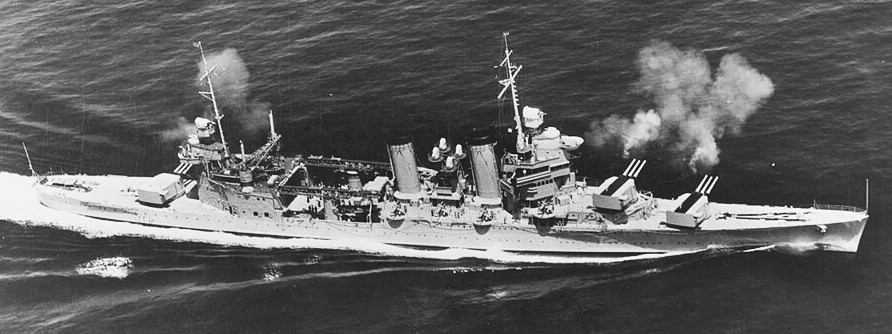
(U.S. National Archives Photos)
SS Minneapolis firing her 8/55 main battery guns during battle practice, 29 March 1939. This photo was taken from a floatplane of her embarked aviation unit, VCS-6. Note the stripes painted on the tops of her forward gun turrets.
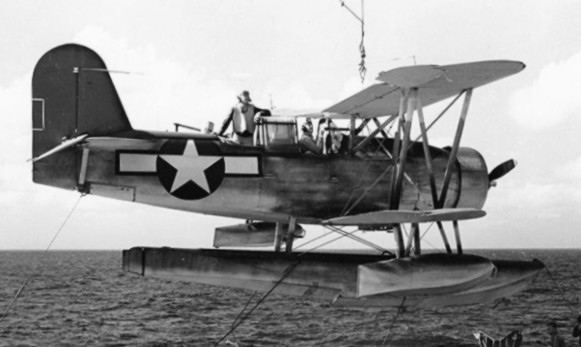
(USN Photo)
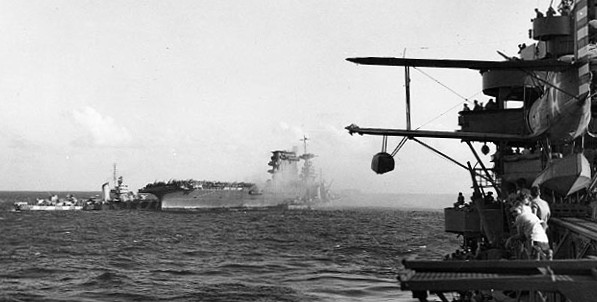

USS Tuscaloosa (CA-37)
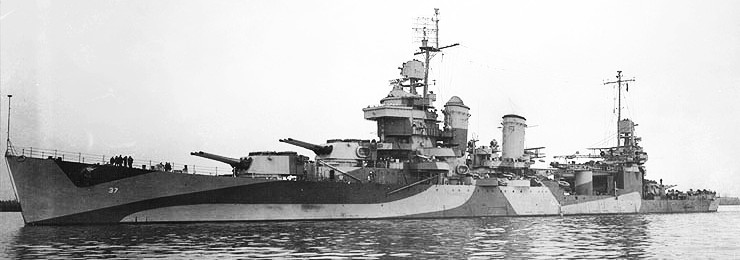
(USN Photo)
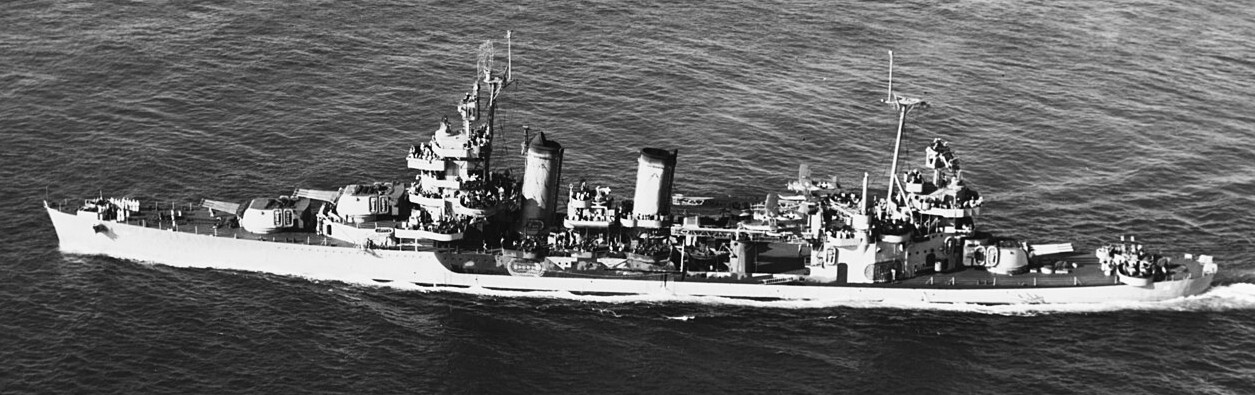
USS Tuscaloosa (CA-37) off the Philadelphia Naval Shipyard, Pennsylvania (USA), on 10 November 1944. She is wearing Camouflage Measure 32, Design 13D.
USS Tuscaloosa (CL/CA-37) was a New Orleans-class cruiser of the U.S. Navy. Commissioned in 1934, she spent most of her career in the Atlantic and Caribbean, participating in several European wartime operations. In early 1945, she transferred to the Pacific and assisted in shore bombardment of Iwo Jima and Okinawa. She earned 7 battle stars for her service in the Second World War. Never damaged in battle, the ship fared better compared to her six sister ships, three of which were sunk and the other three heavily damaged. Tuscaloosa was decommissioned in early 1946 and scrapped in 1959. (Wikipedia)
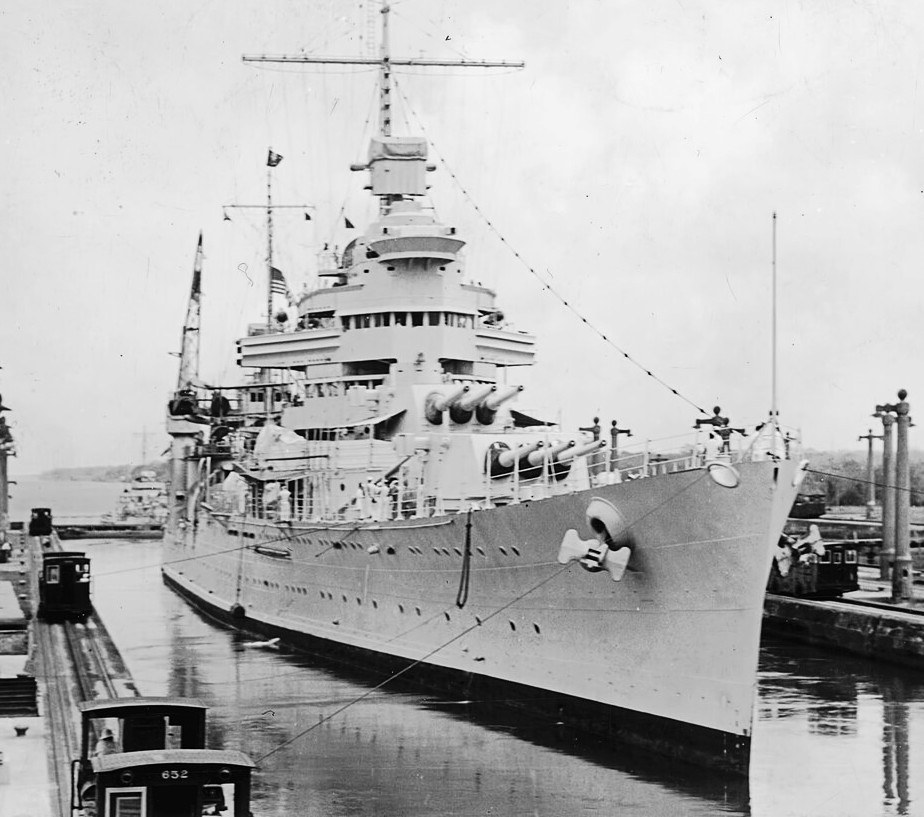
(Harley Flowers Photo)
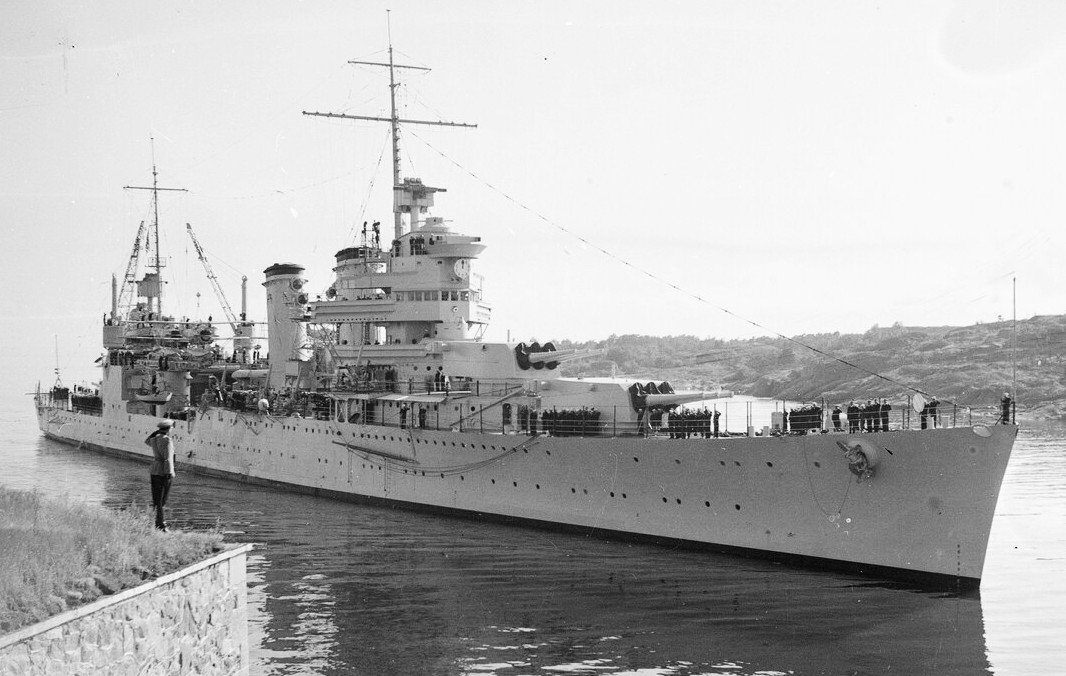
USS Tuscaloosa (CA-37) in the Panama Canal in early February of 1940 .
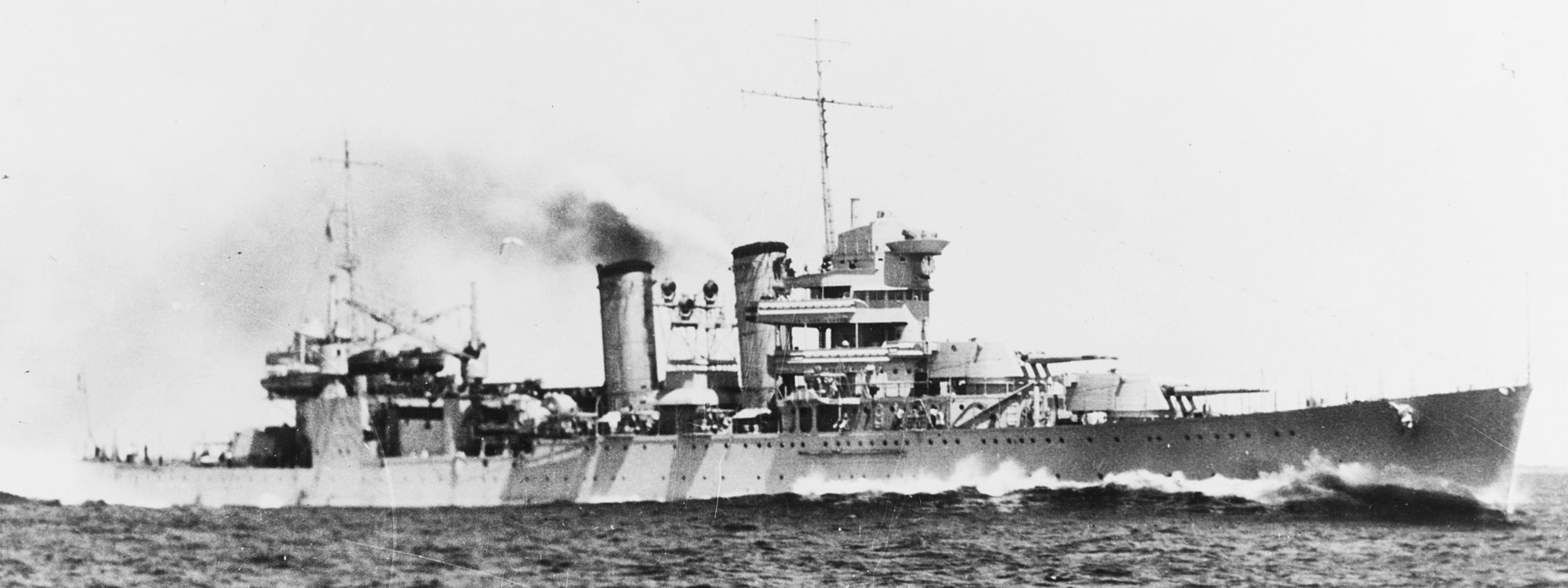
(U.S. National Archives Photo)
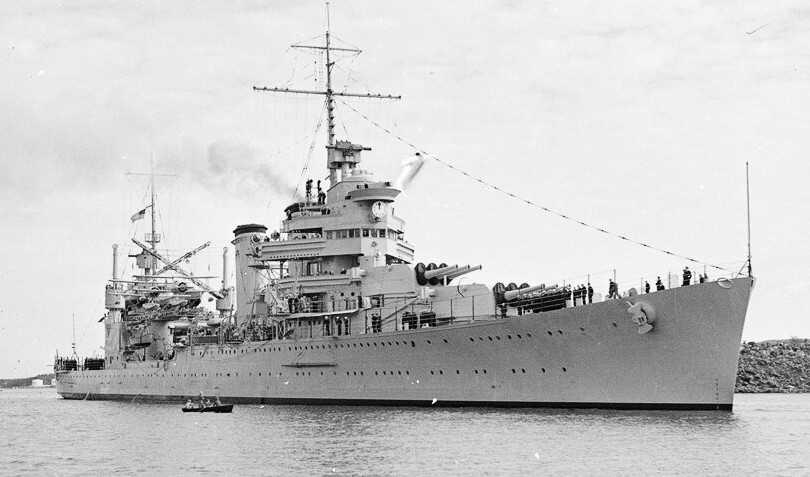
USS Tuscaloosa (CL/CA-37), 1934.
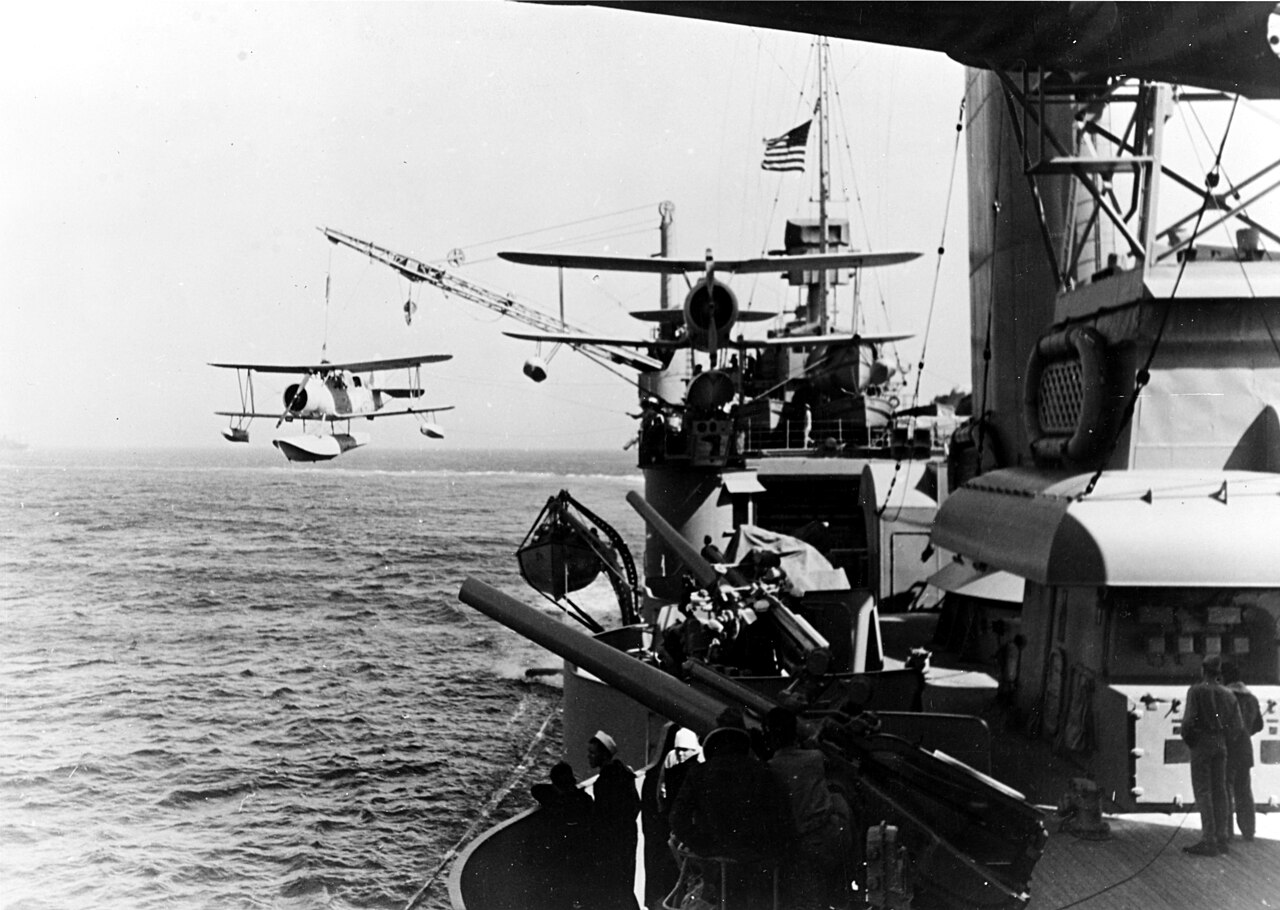
(USN Photo)
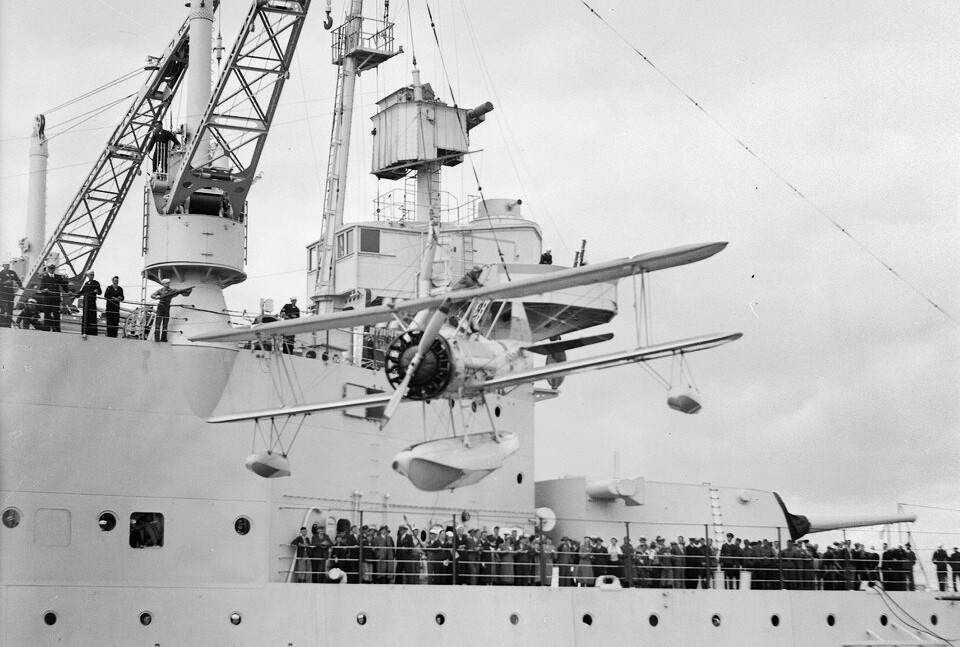
USS Tuscaloosa (CA-37) hoists in a Curtiss SOC Seagull scout-observation plane after a patrol while on a convoy to Iceland.
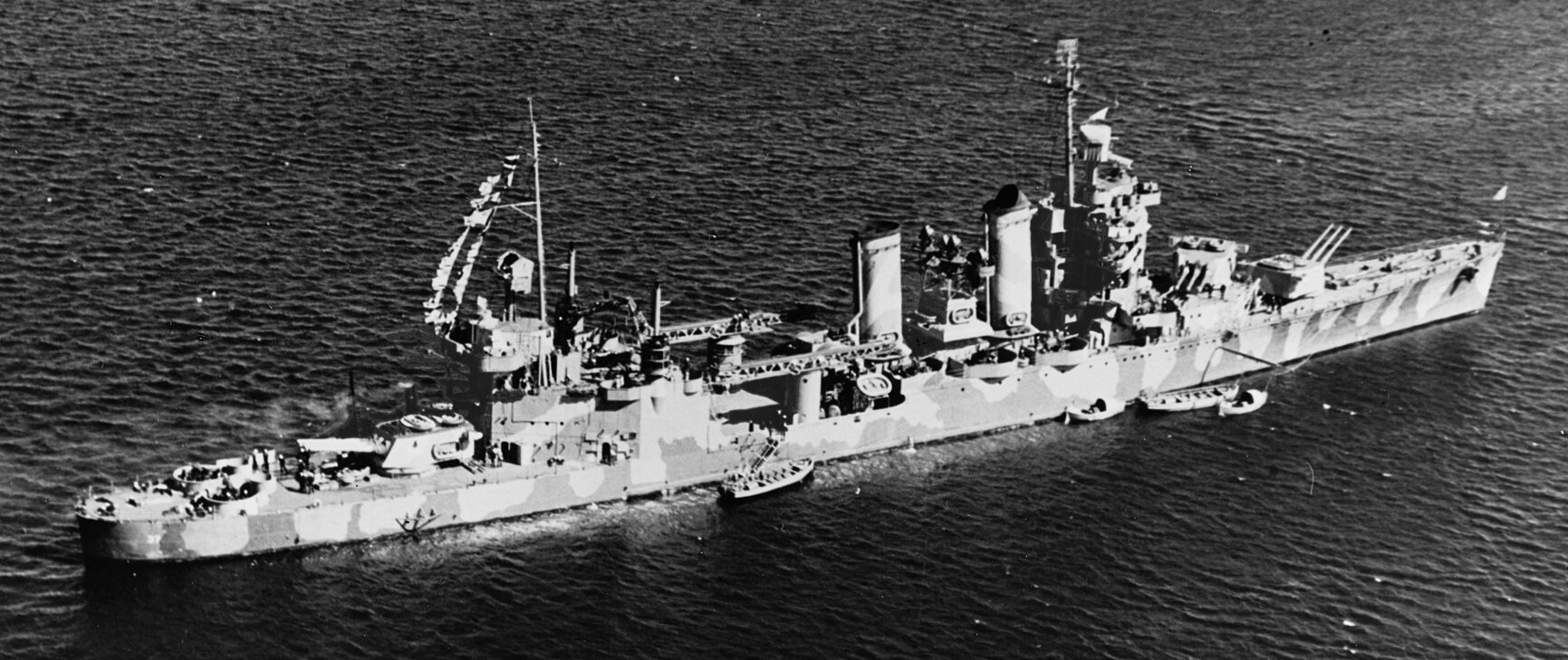
(USN Photo)
USS San Francisco (CA-38)
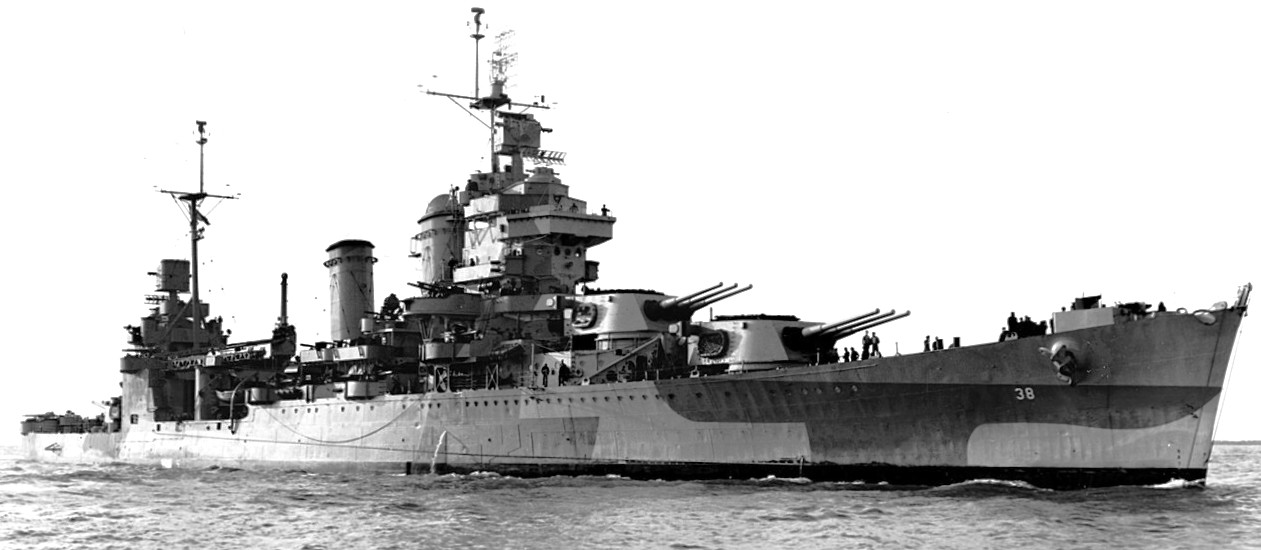
(USN Photo)
USS San Francisco (CA-38) off the Mare Island Naval Shipyard, California (USA), following overhaul, on 13 October 1944. She is painted in Camouflage Measure 33, Design 13D.
USS San Francisco (CL/CA-38), a New Orleans-class cruiser, was the second ship of three of the United States Navy named after the city of San Francisco, California. Commissioned in 1934, she was one of the most decorated U.S. ships of World War II, earning 17 battle stars and the Presidential Unit Citation.
Like most of her sister ships, she saw extensive action during the Guadalcanal campaign. San Francisco survived the battle of Cape Esperance without damage and helped to sink the heavy cruiser Furutaka and the destroyer Fubuki and cripple the heavy cruiser Aoba, before partaking in the Naval Battle of Guadalcanal, during which she was heavily damaged and her captain and admiral killed. Earlier in the battle she mistakenly fired on the light cruiser Atlanta, causing serious damage and inflicting numerous casualties.
Decommissioned immediately after the end of the war, she was sold for scrap in 1959. Her bridge wings, damaged during the Naval Battle of Guadalcanal and removed during repairs, are now mounted on a promontory in Golden Gate National Recreation Area. They are set on the great circle course from San Francisco to Guadalcanal. (Wikipedia)
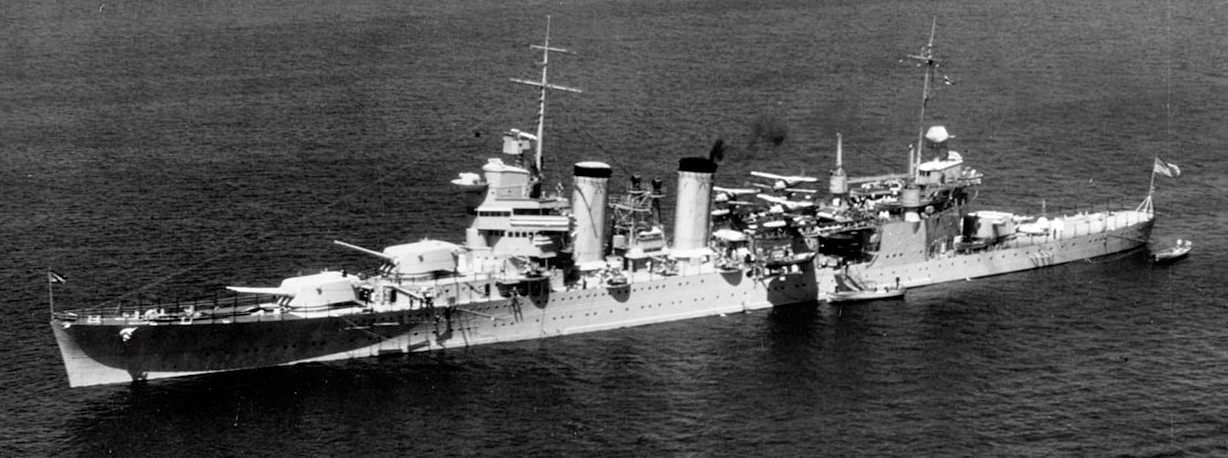
(USN Photo)
USS San Francisco (CA-38) at anchor off San Pedro, California, on 22 April 1935.
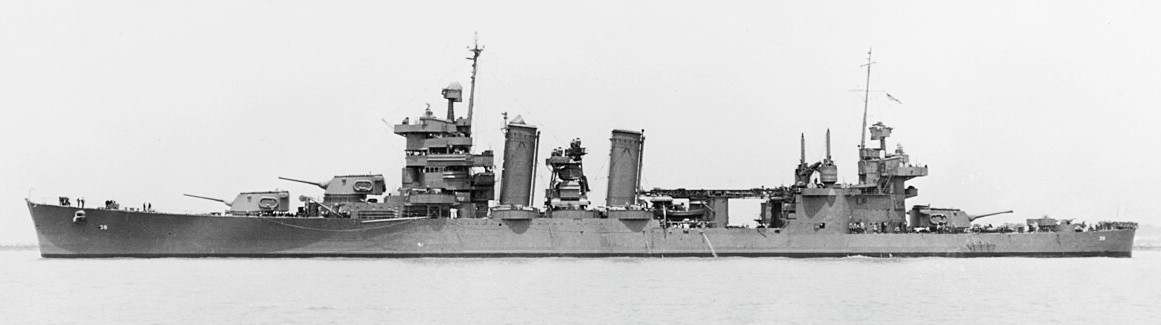
(USN Photo)
USS San Francisco (CA-38) off the Mare Island Naval Shipyard, California, on 20 May 1942.
(USN Photo)
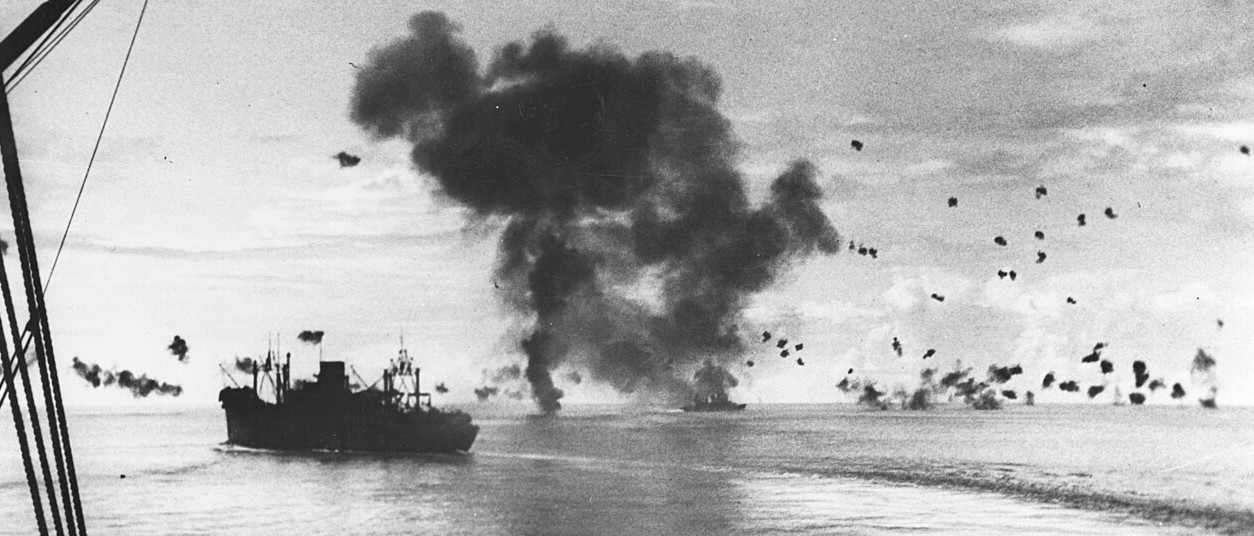
Naval Battle of Guadalcanal, 12-15 November 1942: the U.S. Navy troop transport USS President Jackson (AP-37) is maneuvering under Japanese air attack off Guadalcanal, 12 November 1942. In the center background is smoke from an enemy plane that had just crashed into the after superstructure of the heavy cruiser USS San Francisco (CA-38), which is steaming away in the right center. Note the anti-aircraft shell bursts.
(USN Photo)
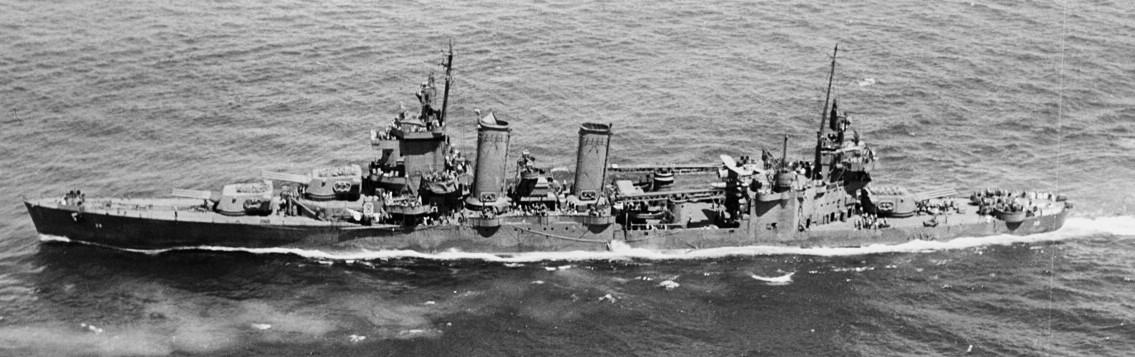
USS San Francisco (CA-38) underway on 8 April 1944, probably at Majuro Atoll.
(USN Photo)
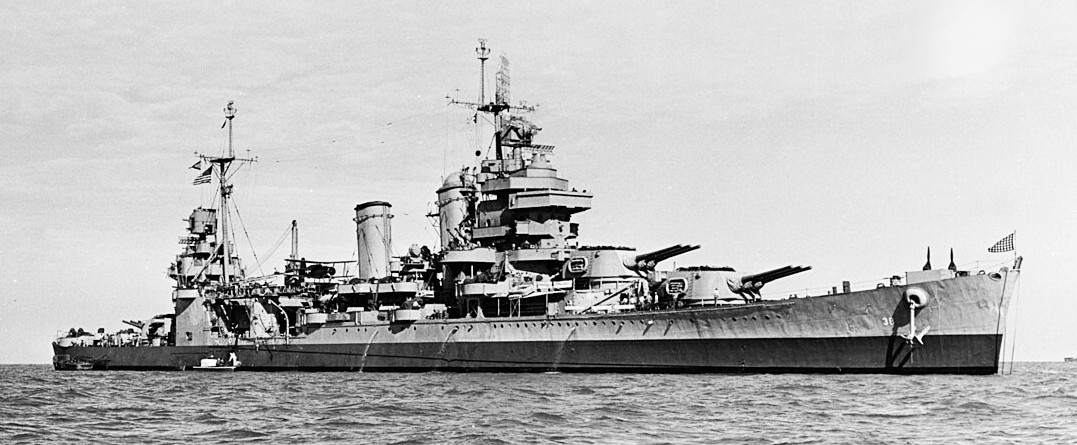
USS San Francisco (CA-38) off the coast of Korea, 28 September 1945. She is flying from her mainmast a U.S. Ensign that flew over the Capitol Building, in Washington, D.C., during the debate of the United Nations Treaty. Note that she still carries Curtiss SOC Seagull seaplanes.
(USN Photo)
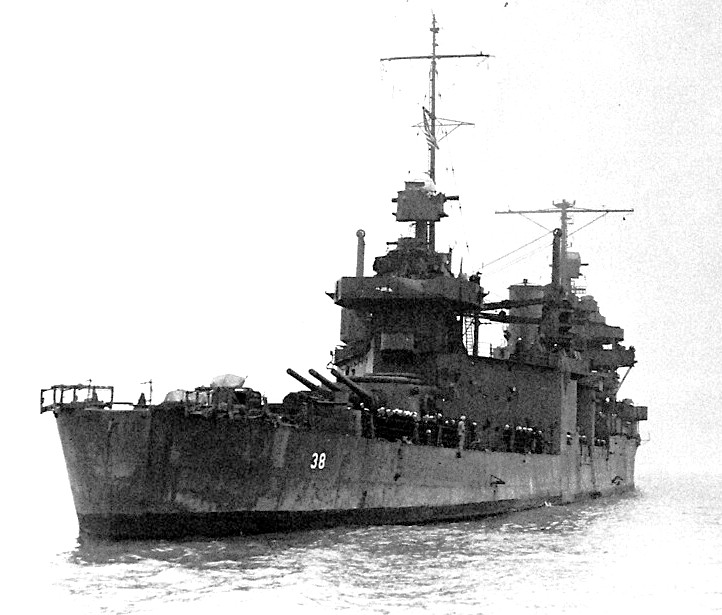
USS San Francisco (CA-38) following the Naval Battle of Guadalcanal, circa in November 1942. She was en route to the Mare Island Naval Shipyard, California.
(USN Photo)
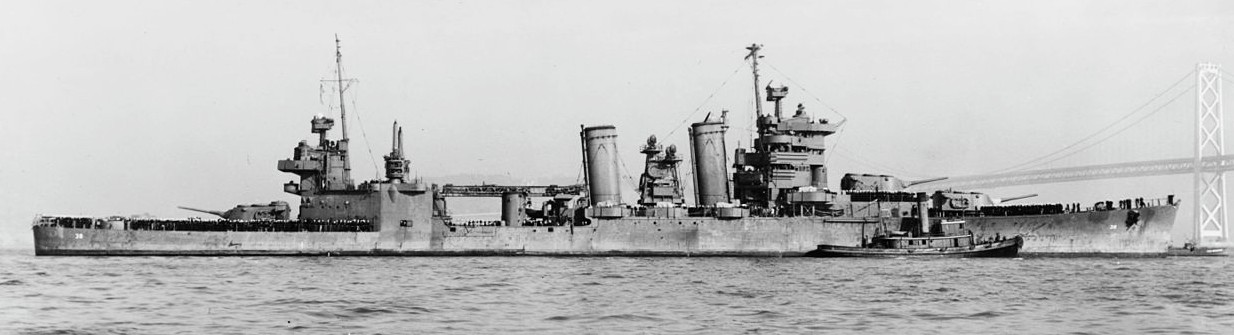
USS San Francisco (CA-38) entering San Francisco Bay, California (USA), on 11 December 1942, after being damaged in action during the Naval Battle of Guadalcanal on 13 November 1942.
USS San Francisco (CA-38) was among the most decorated US Naval vessels of the Second World War. San Francisco earned 17 battle stars during the Second World War, and when combined with the crewmember’s awards of Medals of Honor, Navy Crosses, Silver Stars, etc., she is the second most decorated US ship of the Second World War after USS Enterprise (CV-6). For her participation in the Naval Battle of Guadalcanal and Battle of Cape Esperance, she was awarded the Presidential Unit Citation with star. For the same action, three members of her crew were awarded the Medal of Honor: Lieutenant Commander Herbert E. Schonland, Lieutenant Commander Bruce McCandless, and Boatswain’s Mate 1st Class Reinhardt J. Keppler (posthumous). Admiral Callaghan was also awarded the Medal of Honor (posthumous).
USS Quincy ((CA-39)
(USN Photo)
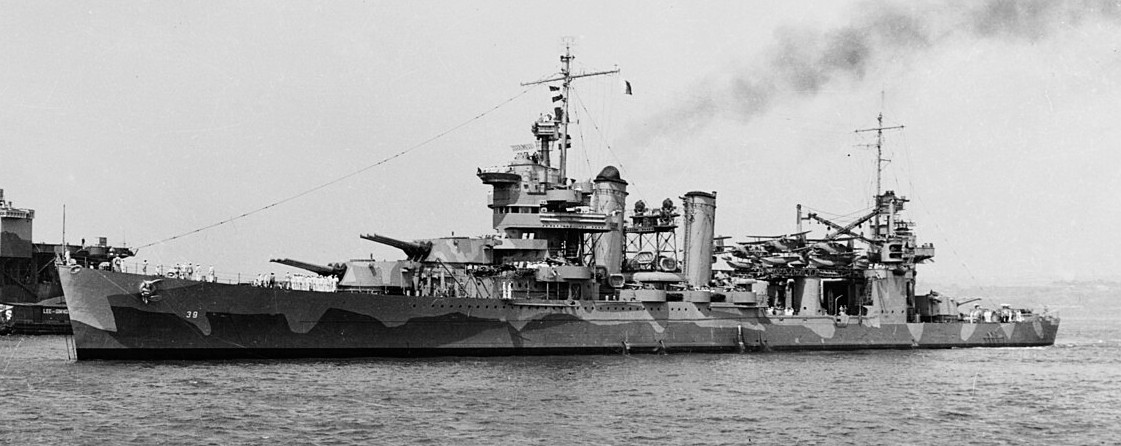
USS Quincy (CA-39) in New York harbour, following her last overhaul. In the left background is the British escort carrier HMS Biter (D97). Note Quincy´s Modified Measure 12 camouflage scheme.
USS Quincy (CL/CA-39) was a United States Navy New Orleans-class cruiser, sunk at the Battle of Savo Island in 1942. While on patrol in the channel between Florida Island and Savo Island, in the early hours of 9 August, Quincy was attacked by a large Japanese naval force during the Battle of Savo Island.
(USN Photo)
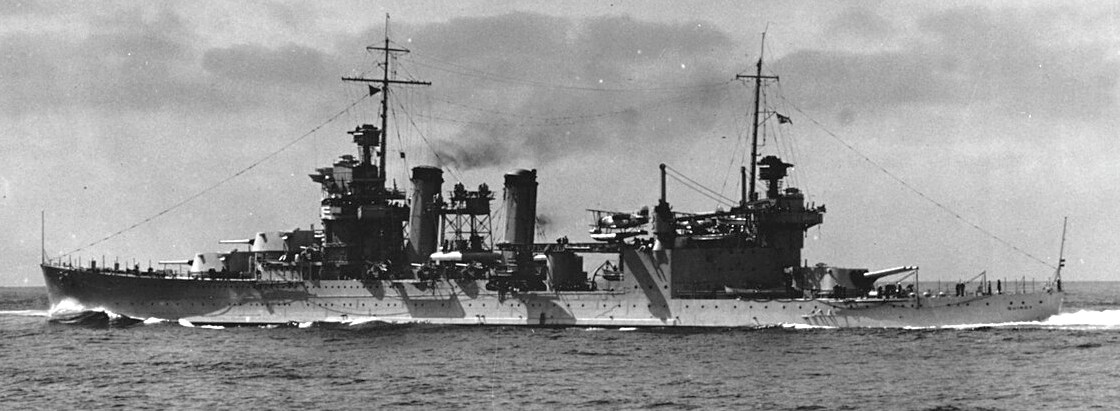
USS Quincy (CA-39) underway at sea, circa 1937.
(USN Photo)
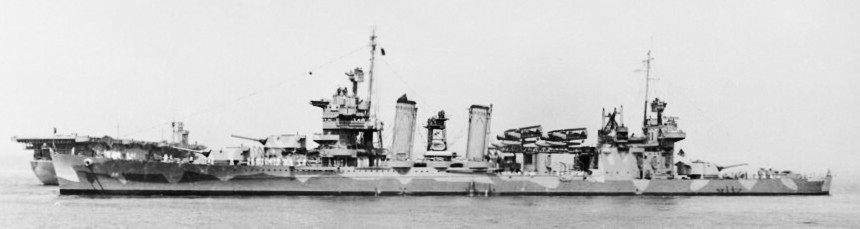
USS Quincy (CA-39) in New York Harbor, 23 May 1942, after her last overhaul. HMS Biter (British Escort Aircraft Carrier, 1942) is in the left background, partially hidden by Quincy’s bow.Quincy, along with sister ships USS Astoria (CA-34) and USS Vincennes (CA-44), had seen aircraft flares dropped over other ships in the task force, and had just sounded general quarters and was coming alert when the searchlights from the Japanese column came on. Quincy’s captain, Samuel N. Moore, gave the order to commence firing, but the gun crews were not ready. Within a few minutes, Quincy was caught in a crossfire between Aoba, Furutaka, and Tenryū, and was hit heavily and set afire. Quincy’s captain ordered his cruiser to charge towards the eastern Japanese column, but as she turned to do so Quincy was hit by two torpedoes from Tenryū, causing severe damage. Quincy managed to fire a few main gun salvos, one of which hit Chōkai’s chart room 6 meters (20 ft) from Admiral Mikawa and killed or wounded 36 men, although Mikawa was not injured. At 02:10, incoming shells killed or wounded almost all of Quincy’s bridge crew, including the captain. At 02:16, the cruiser was hit by a torpedo from Aoba, and the ship’s remaining guns were silenced. Quincy’s assistant gunnery officer, sent to the bridge to ask for instructions, reported on what he found:
“When I reached the bridge level, I found it a shambles of dead bodies with only three or four people still standing. In the Pilot House itself the only person standing was the signalman at the wheel who was vainly endeavoring to check the ship’s swing to starboard to bring her to port. On questioning him I found out that the Captain, who at that time was laying [sic] near the wheel, had instructed him to beach the ship and he was trying to head for Savo Island, distant some four miles (6 km) on the port quarter. I stepped to the port side of the Pilot House, and looked out to find the island and noted that the ship was heeling rapidly to port, sinking by the bow. At that instant the Captain straightened up and fell back, apparently dead, without having uttered any sound other than a moan.”
Quincy sustained many direct hits which left 370 men dead and 167 wounded. She sank, bow first, at 02:38, being the first ship sunk in the area which was later known as Ironbottom Sound. (Wikipedia)
(USN Photo)
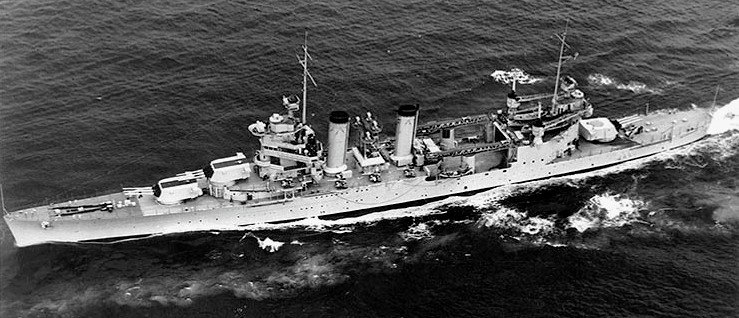
USS Quincy (CA-39) underway on 1 May 1940, as seen from a Utility Squadron 1 (VU-1) aircraft. Note the identification markings on her turret tops: longitudinal stripes on the forward turrets and a circle on the after one.