US Navy Heavy and Light Cruisers: USS Pensacola (CL/CA-24), USS Salt Lake City (CL/CA-25), USS Northampton (CA-26), USS Chester (CL/CA-27), USS Louisville (CL/CA-28), USS Chicago (CL/CA-29), USS Houston (CL/CA-30), USS Augusta (CL/CA-31)
Washington Naval Treaty
The first cruisers of the Pensacola, Northampton, New Orleans, and Portland classes – which were designed after the 1922 Washington Naval Treaty, so quickly that the last design was complete before sea trial of the first were finished – were originally designated Light Cruisers (CL) due to their light protection. Later, in accordance with the 1930 London Naval Treaty, they were reclassified as “Heavy Cruisers” (CA) in 1931 due to their 8-inch (203 mm) guns. Thenceforward new heavy and light cruisers were numbered in a single sequence. These four classes were known as “Treaty cruisers” and “Tinclads” and were seen even before the Second World War as deficient by the Navy due to the treaty limitations, but despite their high losses in the early days of the war they performed well. (Wikipedia)
Pensacola class
(CL/CA-24) Pensacola (1930) – WW2: 13 battle stars.
(CL/CA-25) Salt Lake City (1929) – WW2: 11 battle stars.
Both ships of the Pensacola class would be Operation Crossroads nuclear test targets in 1946.
USS Pensacola (CL/CA-24)
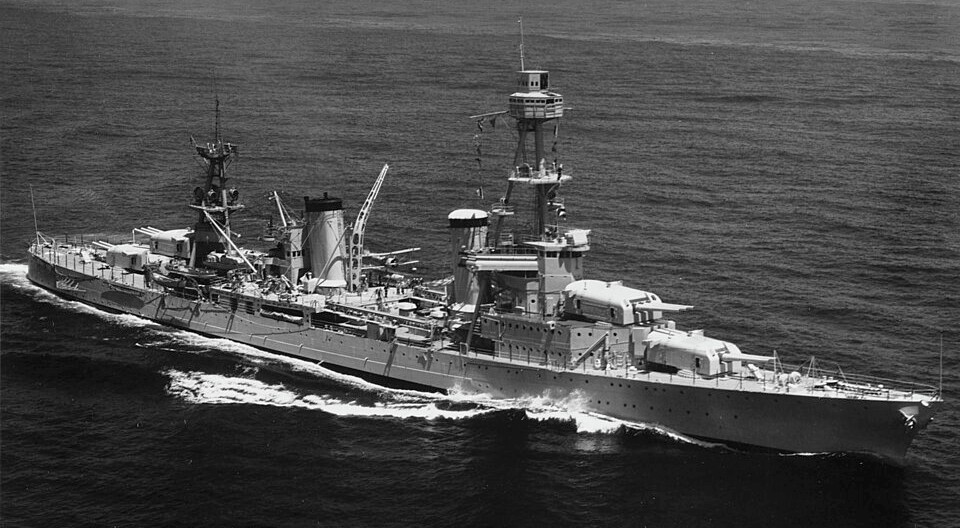
(USN Photo)
USS Pensacola (CA-24) underway at sea in September 1935.
USS Pensacola (CL/CA-24) was a cruiser of the United States Navy that was in service from 1929 to 1945. She was the lead ship of the Pensacola class, which the Navy classified as light cruisers in 1929, with the Pensacola herself originally designated as “CL-24.” Under the terms of the Washington Naval Treaty, from 1931 on the class was re-classified as heavy cruisers, with the Pensacola being re-designated as “CA-24.” The third Navy ship to be named after the city of Pensacola, Florida, she was nicknamed the “Grey Ghost” by Tokyo Rose. She received 13 battle stars for her service. She was laid down by the New York Navy Yard on 27 October 1926, launched on 25 April 1929, sponsored by Mrs. Joseph L. Seligman, and commissioned on 6 February 1930. (Wikipedia)
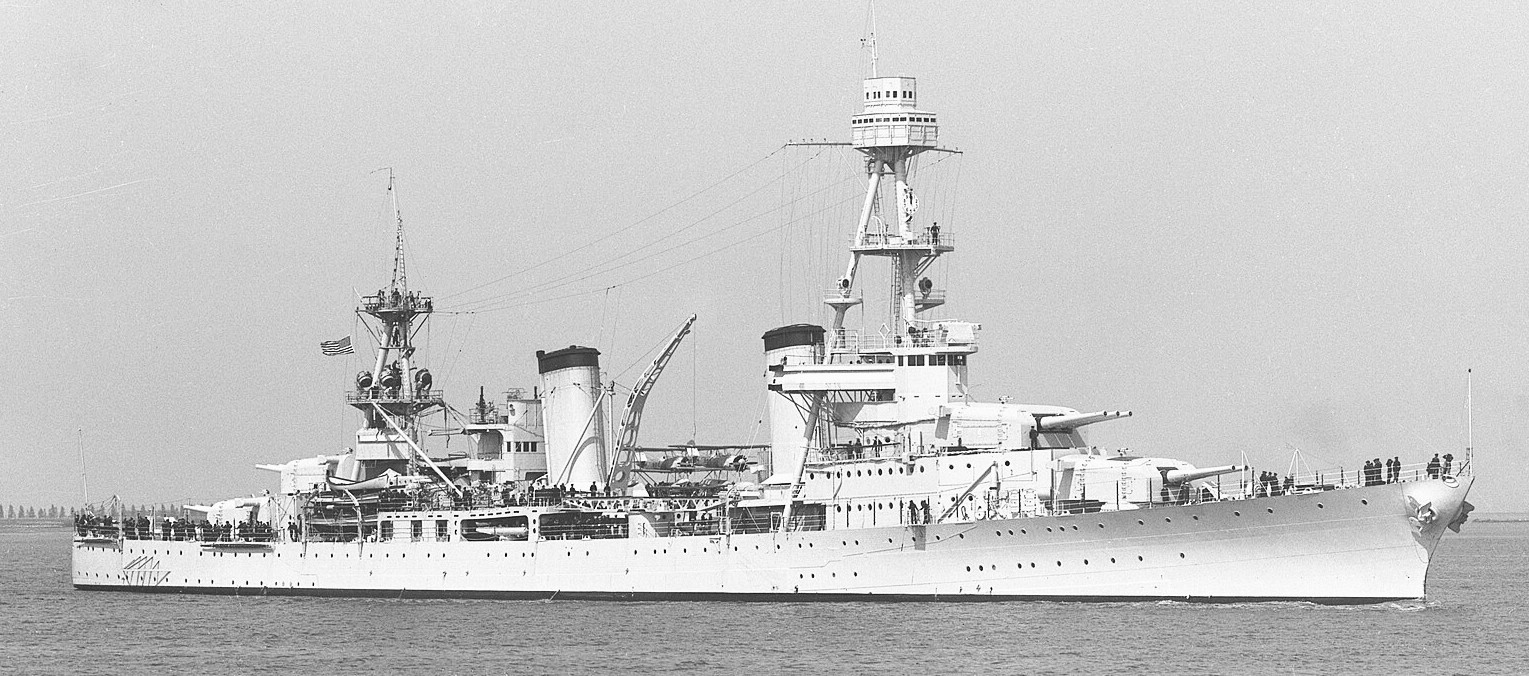
(Louis Claes Photo)
USS Pensacola (CA-24).
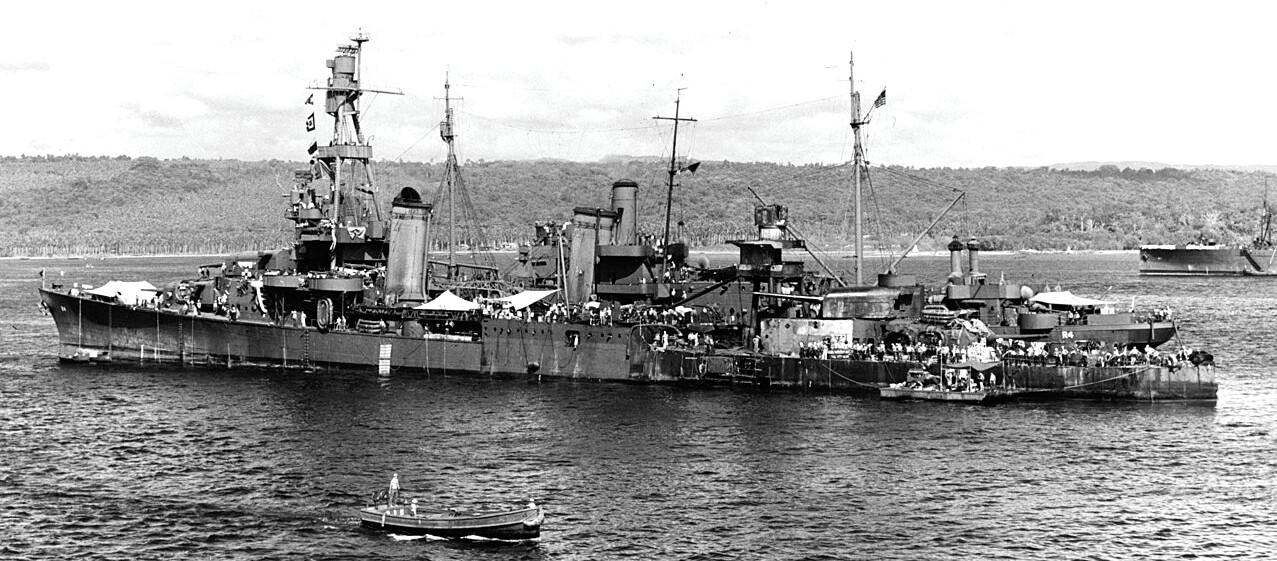
(USN Photo)
USS Pensacola (CA-24) alongside the repair ship USS Vestal (AR-4), undergoing repair of torpedo damage received during the Battle of Tassafaronga, off Guadalcanal on 30 November 1942. Note the hole in her side below the mainmast, and the extensive fire damage in the area of that mast and the number three eight-inch gun turret. Photographed at Espiritu Santo, New Hebrides, on 17 December 1942.
(USN Photo)
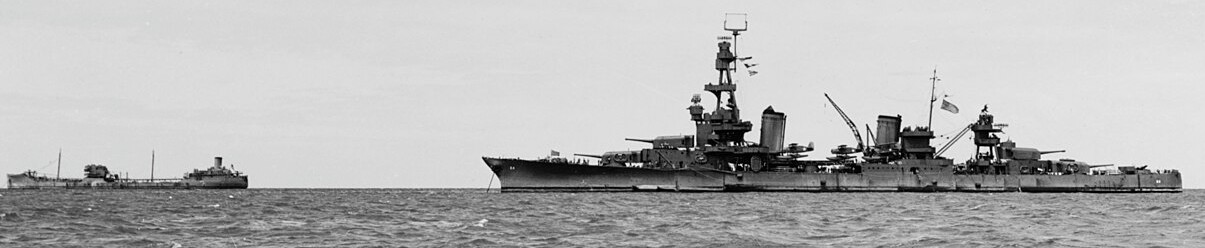
USS Pensacola (CA-24) at anchor in Nouméa, New Caledonia, on 28 September 1942. A fleet oiler is visible in the left distance. Pensacola arrived at Nouméa on 26 September, and departed with the aircraft carrier USS Hornet (CV-8) on 2 October.
(USN Photo)
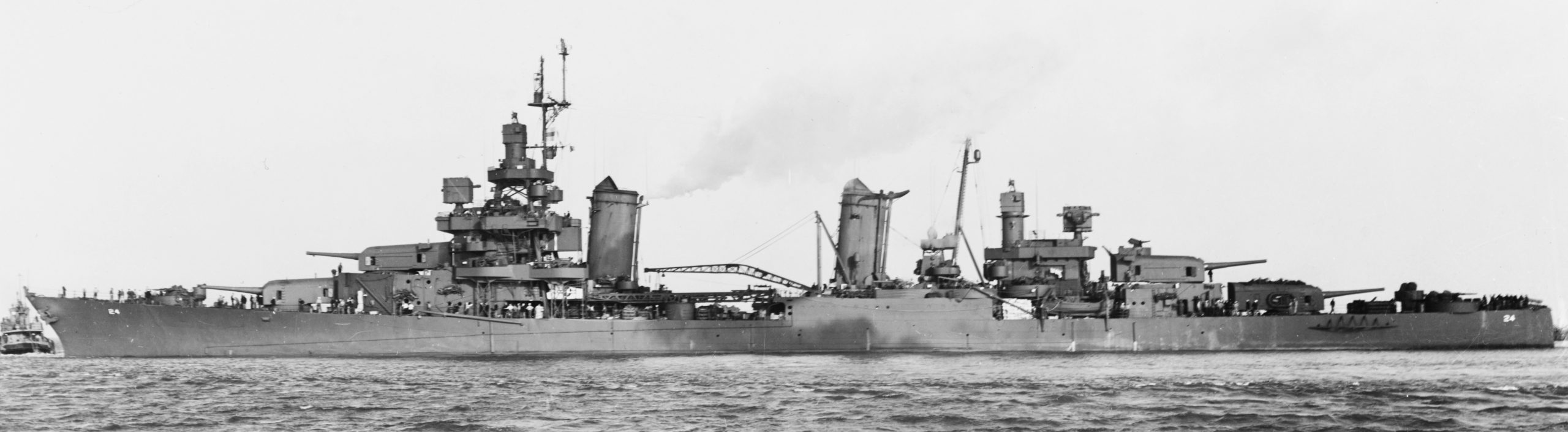
USS Pensacola (CA-24) off the Mare Island Naval Shipyard, California (USA), on 29 June 1945. Note that her foremast has been cut drastically to reduce topweight.
(USN Photo)
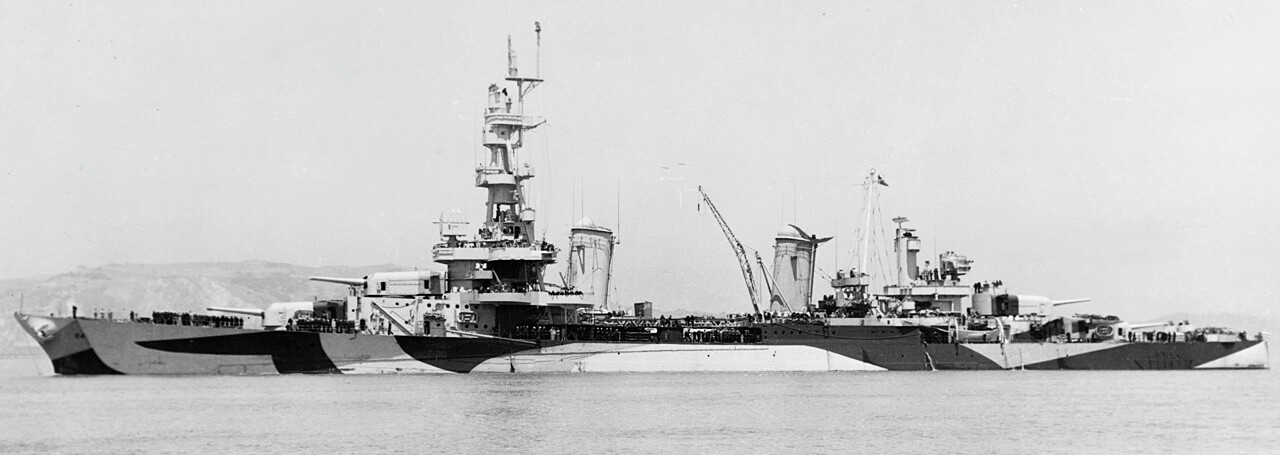
USS Pensacola (CA-24) underway off the Mare Island Naval Shipyard, California (USA), on 20 May 1944. She is painted in Camouflage Measure 32, Design 14D.
(USN Photo)
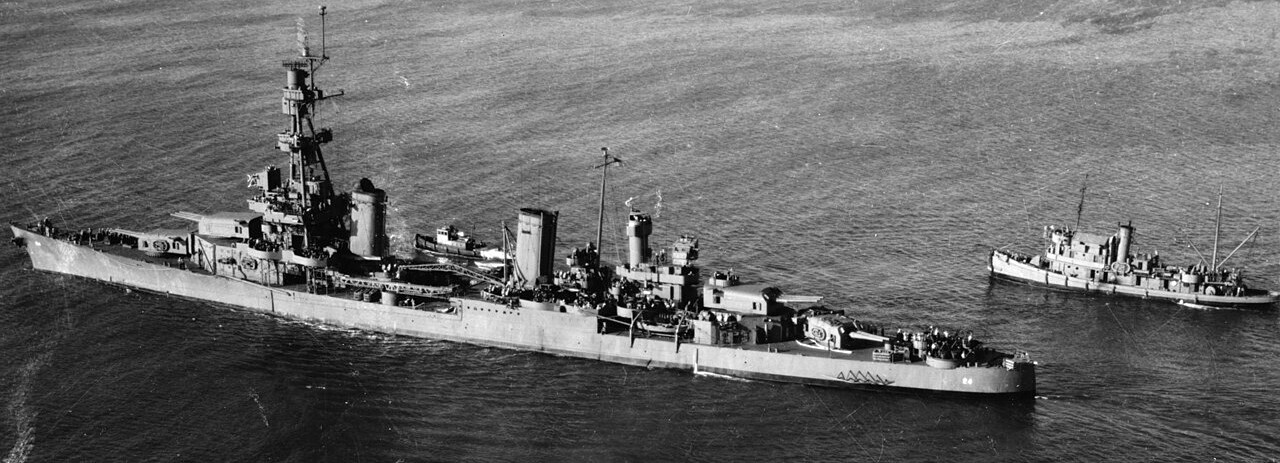
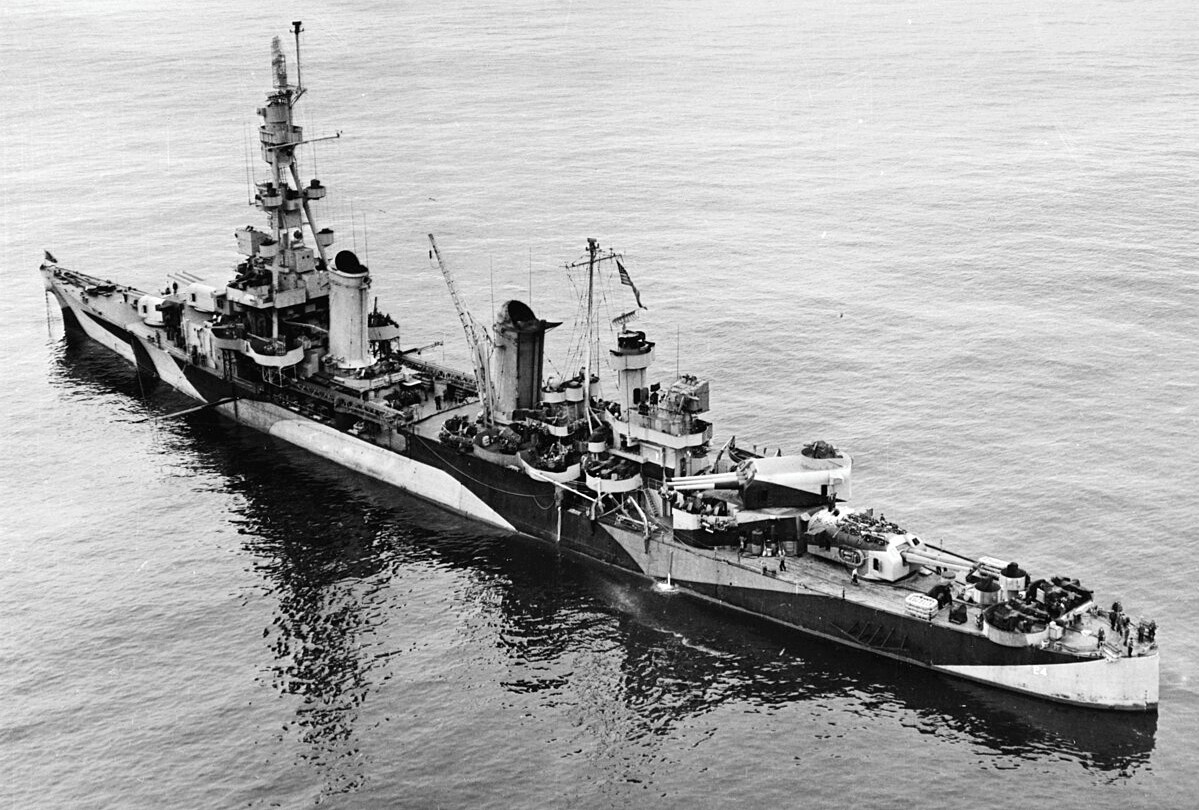
USS Pensacola (CA-24) on 14 October 1943. She is accompanied by two tugs, one small harbour type and the other (at right) an old Navy fleet tug. Pensacola was repaired at the Pearl Harbor Naval Shipyard, following her torpedo damage during the Battle of Tassafaronga in November 1942. She reached Pearl Harbor in January 1943 and left again for the Gilbert Islands Campaing in November 1943.
(USN Photo)
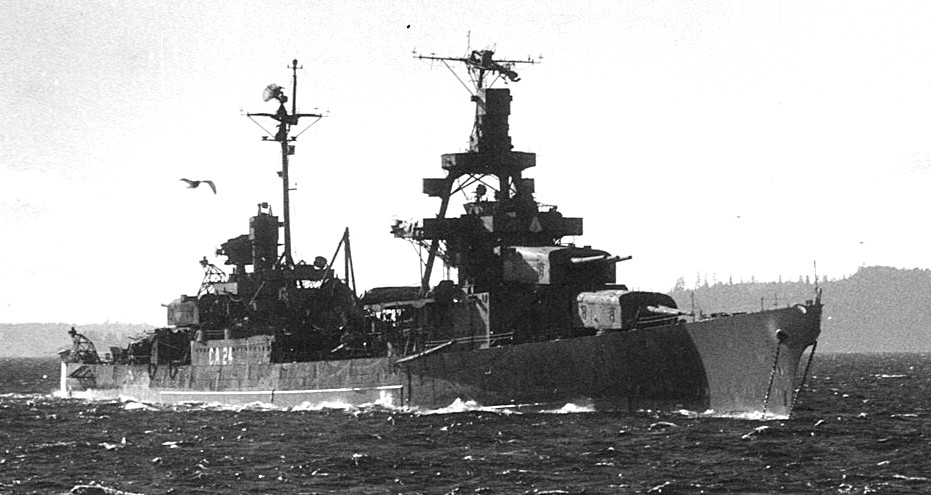
USS Pensacola (CA-24) in Massacre Bay, Attu Island, Alaska, on 9 June 1944. She is painted in Camouflage Measure 32, Design 14d.(USN Photo)
(USN Photo)
USS Pensacola (CA-24) is towed out of Puget Sound, Washington (USA), en route to sea for disposal as a target on 9 November 1948.
USS Pensacola (CA-24) departed San Pedro on 29 April to stage with units of Joint Task Force One at Pearl Harbor in preparation for Operation Crossroads, the atomic bomb experiments at Bikini Atoll. She stood out of Pearl Harbor on 20 May, and reached Bikini on the 29th to serve as a target ship. She survived the tests of 1 July and 25 July. On 24 August, she was taken in tow for Kwajalein where she decommissioned on 26 August. Her hulk was turned over to the custody of Joint Task Force One for radiological and structural studies. On completion of these studies, her hulk was sunk on 10 November 1948 off the Washington coast. Her wreck has never been found. (Wikipedia)

(USN Photo)
The U.S. Navy heavy cruisers USS Salt Lake City (CA-25), USS Pensacola (CA-24) and USS New Orleans (CA-32) (listed from left to right) nested together at Pearl Harbor, 31 October 1943. Ford Island is at the left, with the battleship USS Oklahoma (BB-37) under salvage at the extreme left, just beyond Salt Lake City‘s forward superstructure. Note the radar antennas, gun directors and 203 mm guns on these three heavy cruisers. Two New Mexico-class battleships are visible in the background between Pensacola and New Orleans.
USS Salt Lake City (CL/CA-25)
(USN Photo)
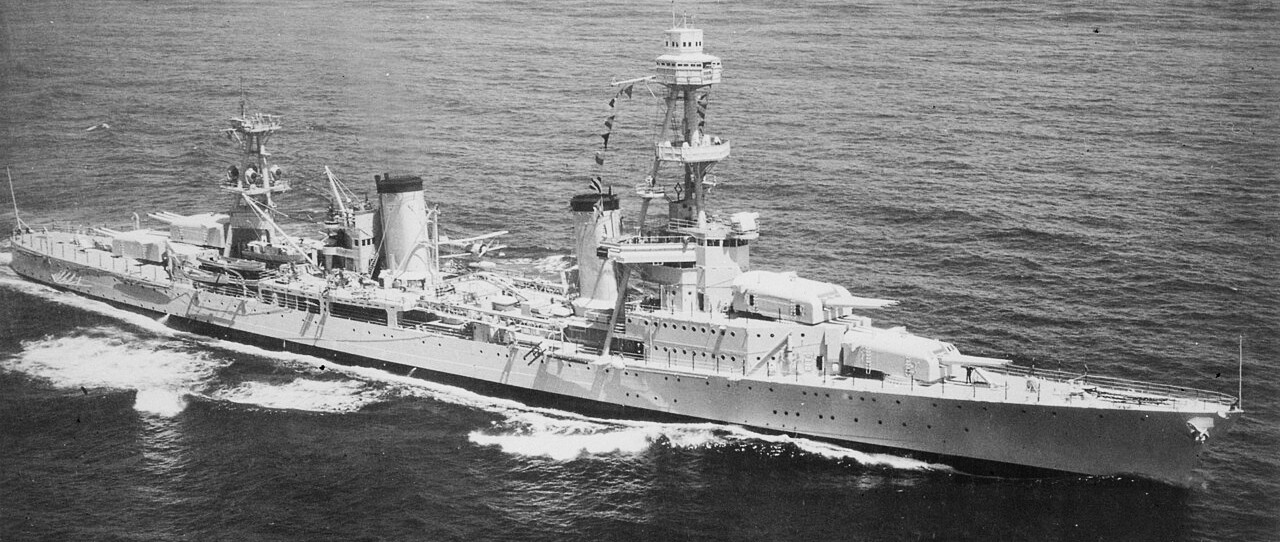
USS Salt Lake City (CL/CA-25) of the United States Navy was a Pensacola-class cruiser, later reclassified as a heavy cruiser, sometimes known as “Swayback Maru” or “Old Swayback”. She had 11 battle stars for the eleven engagements she participated in. She was also the first ship to be named after Salt Lake City, Utah.
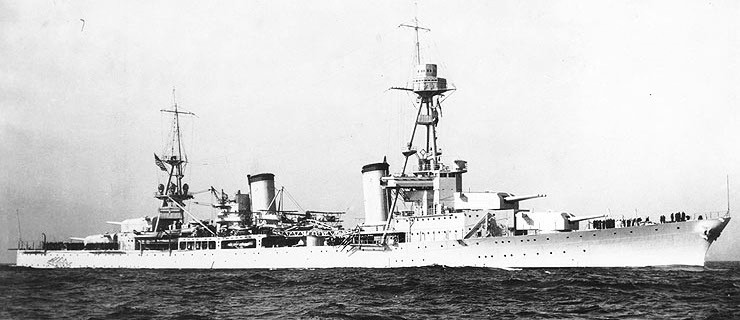
She was laid down on 9 June 1927, by the American Brown Boveri Electric Corporation, a subsidiary of the New York Shipbuilding Corporation, at Camden, New Jersey; launched on 23 January 1929, sponsored by Helen Budge, a granddaughter of leading Mormon missionary William Budge; and commissioned on 11 December 1929, at the Philadelphia Navy Yard. (Wikipedia)
(USN Photo)

(USN Photo)
USS Salt Lake City (CA-25) fires her after 8″/55 guns while bombarding a Japanese-held island in February 1942. This view has long been identified has a scene from the 24 February bombardment of Wake. However, it may have been taken on 1 February, during the bombardment of Wotje, in the Marshall Islands. Note the Curtiss SOC Seagull floatplane in the foreground, with the cruiser’s after stack and aircraft crane immediately to the right.
(USN Photo)
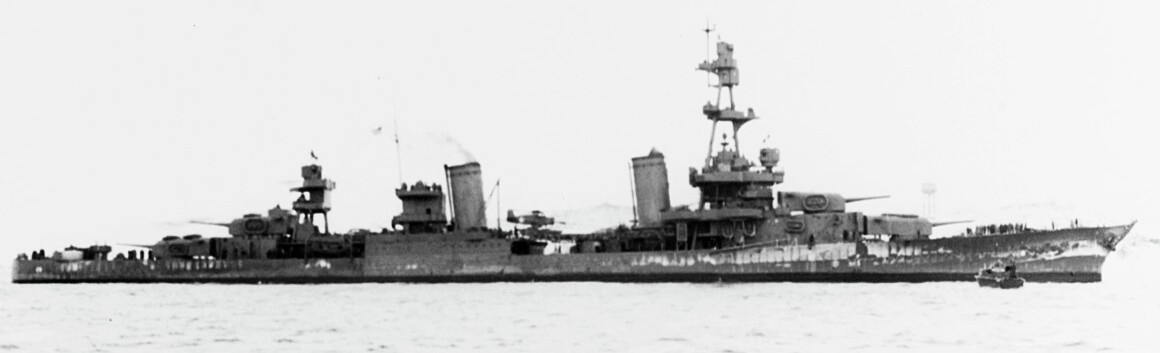
USS Salt Lake City (CA-25) at Dutch Harbor, Alaska (USA), on 29 March 1943, three days after the Battle of the Komandorski Islands.
On 7 December 1941, when the United States was brought into the Second World War by the Japanese attack on Pearl Harbor, Salt Lake City—under the command of Capt. Ellis M. Zacharias—was with the Enterprise task group 200 nmi (230 mi; 370 km) west of Pearl Harbor, returning from Wake Island, when they received word of the attack. The group immediately launched scouting planes in hopes of catching possible stragglers from the Japanese force, but the search proved fruitless. The ships entered Pearl Harbor toward sundown on the 8th.
After a tedious night refueling, they sortied before dawn to hunt submarines north of the islands. Submarines were encountered on the 10th-11th. The first—I-70—was sunk by dive bombers from Enterprise; the second—sighted ahead of the group on the surface—was engaged with gunfire by Salt Lake City as the ships maneuvered to avoid torpedoes. Screening destroyers made numerous depth charge runs, but no kill was confirmed. Operations against a third contact brought similar results. The group returned to Pearl Harbor on 15 December to refuel.
Salt Lake City operated with Task Force 8 (TF 8) until 23 December, covering Oahu and supporting the task force strike that was planned to relieve beleaguered Wake Island. After Wake fell, Salt Lake City’s group moved to cover the reinforcement of Midway and then Samoa.
In February, Enterprise’s task force carried out air strikes in the eastern Marshalls at Wotje, Maloelap, and Kwajalein to reduce enemy seaplane bases. While conducting shore bombardment during those strikes, Salt Lake City came under air attack and assisted in downing two Japanese bombers. In March, she supported air strikes at Marcus Island.
In April, she escorted TF 16, which launched the Doolittle Raid on Tokyo and other Japanese cities, and returned to Pearl Harbor on 25 April. Orders awaited the ships to sail as soon as possible to join the Yorktown and Lexington forces in the Coral Sea. Although the task force moved fast, it had only reached a point some 450 mi (390 nmi; 720 km) east of Tulagi by 8 May, the day of the Battle of the Coral Sea. What followed was essentially a retirement, and Salt Lake City operated as cover with her group; on the 11th off the New Hebrides, and from the 12th-16th eastward from Efate and Santa Cruz. On 16 May, she was ordered back to Pearl Harbor and arrived there 10 days later.
Sister ships Salt Lake City and Pensacola, with New Orleans (L to R), at Pearl Harbor in 1943
The carrier groups began intensive preparations to meet the expected Japanese thrust at Midway Atoll. During the battle, early in June, Salt Lake City provided rear guard protection for the islands.
From August–October 1942, Salt Lake City was in the south Pacific to support the campaign to seize and hold Guadalcanal. She escorted Wasp during the landings of 7–8 August and subsequent operations.
Salt Lake City protected Wasp as she shuttled planes for Saratoga and Enterprise, and provided Combat Air Patrol (CAP) and scouting patrols during the landings. Salt Lake City was with Wasp on 15 September when the carrier was torpedoed by Japanese submarines and sunk. She assisted in rescue operations for survivors, and took on board others who had been picked up by Lardner. (Wikipedia)
(USN Photo)
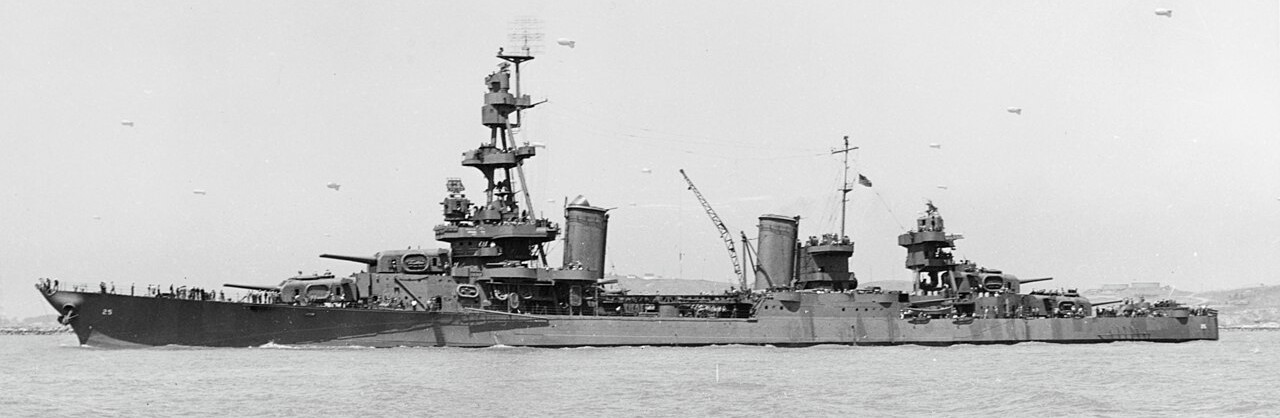
USS Salt Lake City (CA-25) off the Mare Island Naval Shipyard, California (USA), on 10 May 1943. Salt Lake City was repaired after being damaged during Battle of the Komandorski Islands on 26 March. Note the barrage balloons in the distance.
Battle of Cape Esperance
The campaign in the Solomons had developed into a grim struggle requiring the US Navy to commit heavy and light cruisers to savage night battles. On the night of 11–12 October in the Battle of Cape Esperance. TF 64 was formed around Salt Lake City, Boise, Helena, and San Francisco to attack the “Tokyo Express”, a steady flow of Japanese vessels maintaining reinforcement and resupply to Guadalcanal. The force was not considered large enough to get involved with a major Japanese covering force; they were interested primarily in inflicting maximum damage to the transports. They arrived off Espiritu Santo on 7 October, and for two days steamed near Guadalcanal and waited. Land-based search-plane reports came in that an enemy force was steaming down The Slot; that night, TF 64 moved to the vicinity of Savo Island to intercept it.
Search planes were ordered launched from the cruisers, but in the process of launching, Salt Lake City′s plane caught fire as flares ignited in the cockpit. The plane crashed close to the ship and the pilot managed to get free. He was later found safe on a nearby island. The brilliant fire was seen in the darkness by the Japanese flag officers, who assumed that it was a signal flare from the landing force which they were sent to protect. The Japanese flagship answered with blinker light. Despite receiving no reply, they continued to signal. The American force formed a battle line at right angles to the Japanese T-formation, and thus were able to enfilade the enemy ships. The American cruisers opened fire and continued scoring hits for a full seven minutes before the confused Japanese realized what was taking place. They had believed that their own forces were taking them under fire. When the Japanese warships replied, their fire was too little and too late. The action was over in half an hour. One Japanese cruiser, the Furutaka, sank; the flagship cruiser Aoba was severely damaged and required several months of repairs; a third cruiser, Kinugasa, was lightly damaged; and the destroyer Fubuki was sunk. Only a single destroyer of the five-ship force escaped damage. Of the American ships, Salt Lake City sustained three major hits during the action; Boise was severely damaged but managed to rejoin the group under her own power; and Duncan was left gutted off Savo Island. The ships formed up and steamed to Espiritu Santo. (Wikipedia)
(USN Photo)
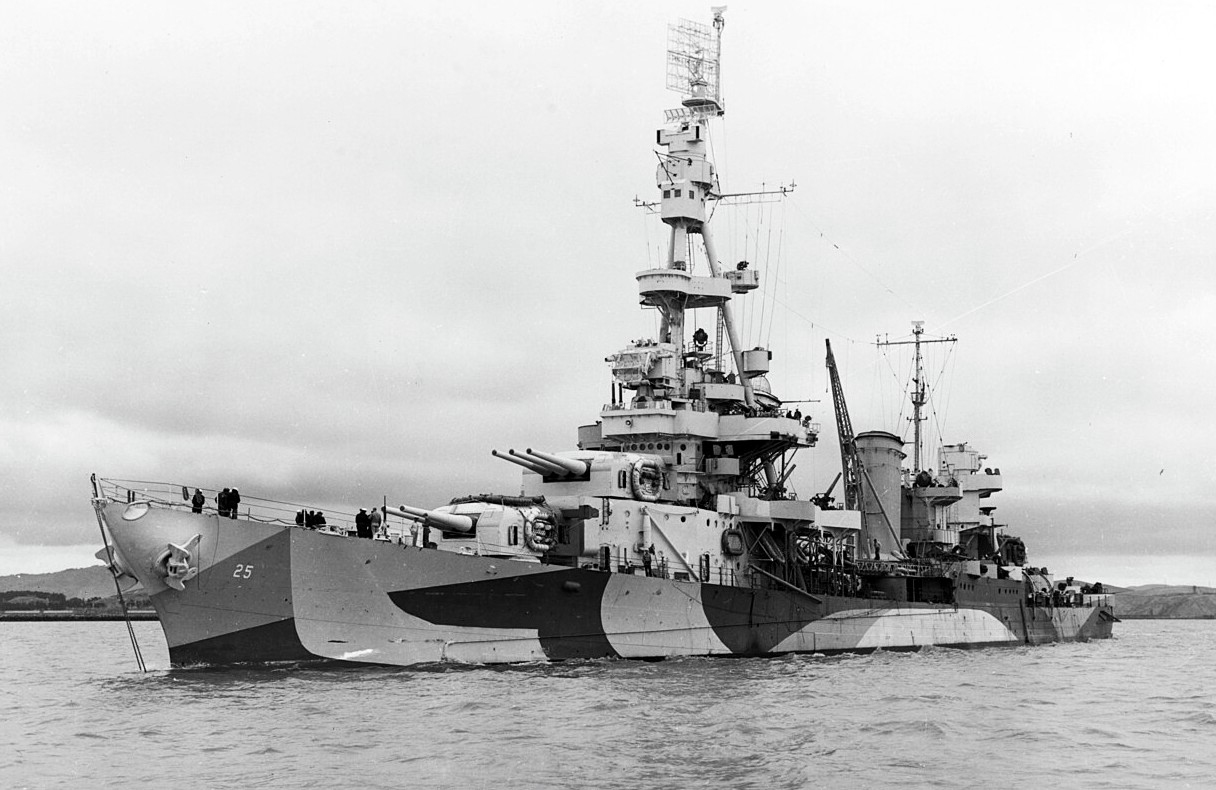
USS Salt Lake City (CA-25) off Mare Island, June 1944.
Battle of the Komandorski Islands
Main article: Battle of the Komandorski Islands
Salt Lake City spent the next four months at Pearl Harbor undergoing repairs and replenishing. Late in March 1943, she departed for the Aleutian Islands and operated from Adak Island to prevent the Japanese from supporting their garrisons on Attu and Kiska. Operating in TF 8, Salt Lake City was accompanied by Richmond and four destroyers when they made contact on 26 March with some Japanese transports,[7] escorted by the heavy cruisers Nachi and Maya, the light cruisers Tama and Abukuma, and four destroyers, led by Vice Admiral Boshiro Hosogaya leading to the Battle of the Komandorski Islands.
Salt Lake City, damaged by Japanese cruiser gunfire, starts losing speed prior to going dead in the water during the battle under a smoke screen laid by accompanying destroyers.
Aftermath with effects of heavy gun usage on Salt Lake City’s guns
Believing that easy pickings were in store, the American warships formed up and closed the range. Two transports fled for safety as the Japanese warships turned to engage. The American group was outgunned and outnumbered, but pressed on and made a course change in hopes of getting a shot at the transports before the escorts could intervene. There was also a possibility that the Japanese would split their force and that Salt Lake City and Richmond could tackle a portion of them on more equal terms.
The opposing cruisers simultaneously opened fire at a range of 20,000 yd (18,000 m). The ensuing battle was a retiring action on the part of the Americans, for the Japanese foiled their attempt to get to the auxiliaries. Salt Lake City received most of the attention and soon received two hits, one of them amidships, mortally wounding two men, but she responded with very accurate fire. Her rudder stops were carried away, limiting her to 10° course changes. The starboard seaplane caught fire and was jettisoned. Another hit soon flooded forward compartments. Under cover of a thick smoke screen and aggressive torpedo attacks by the destroyers, the American cruisers were able to make an evasive turn, which for a while allowed the range to open. Salt Lake City soon began taking hits again and her boiler fires died one by one. Salt water had entered the fuel oil feed lines. There was now cause for grave concern; she lay dead in the water, and the Japanese ships were closing fast. Luckily, she was hidden in the smoke, and the enemy was not aware of her plight.
The destroyers charged the Japanese cruisers and began to draw the fire away from the damaged Salt Lake City.[7] Bailey suffered two 8 in (200 mm) hits while launching a spread of five torpedoes at long range.[citation needed] In the meantime, Salt Lake City′s engineers purged the fuel lines and fired the boilers. With fresh oil supplying the fires, she built up steam and gained headway. Suddenly, the Japanese began to withdraw. This was due to the combination of the Japanese having intercepted demands for air support from the American forces, and the mistaken belief that the high explosive shells being fired in desperation by the American cruisers were air-dropped bombs. The Japanese forces were also fast exhausting their ammunition and fuel. They did not suspect that the Americans were in far worse shape in terms of both ammunition and fuel.
Despite being outnumbered two to one, the Americans succeeded in their purpose. The Japanese attempt to reinforce their bases in the Aleutians had failed and they turned tail and headed home. Salt Lake City later covered the American liberation of Attu and Kiska which ended the Aleutian Campaign. She departed Adak on 23 September and sailed, via San Francisco, to Pearl Harbor where she arrived on 14 October.
After the Aleutian Campaign
The Allied offensive strategy in the Pacific now focused on the Marshall Islands. A two-column thrust through Micronesia and the Bismarck Archipelago would force the enemy to disperse his forces, deny him the opportunity for a flanking movement, and provide the Allies with the choice of where and when to strike next. To obtain adequate intelligence for planning the Marshalls operation, the Gilbert Islands would have to be secured for use as a staging area and launch point for photographic missions. Salt Lake City was assigned to Task Group 50.3 (TG 50.3) of the Southern Carrier Group for the Gilbert Islands Campaign, Operation Galvanic.
Salt Lake City conducted rigorous gunnery training until 8 November, when she sailed to join Essex, Bunker Hill, and Independence which had carried out preliminary strikes on Wake, as a diversion on 5–6 October, and at Rabaul on 11 November. Salt Lake City joined on the 13th off Funafuti, Ellice Islands, following the carriers’ fueling rendezvous at Espiritu Santo. She then saw action on the 19th as she bombarded Betio at Tarawa Atoll, in the Gilberts. That day and the next, she fought off repeated torpedo plane attacks aimed for the flattops. Tarawa was secured by the 28th. This was the first Pacific amphibious operation to be vigorously opposed at the beach, and many lessons were learned here to be applied in the island campaigns to follow.
Salt Lake City was attached to the Neutralization Group—TG 50.15—for the long-awaited Marshalls Campaign. From 29 January-17 February 1944, she conducted shore bombardment at Wotje and Taroa islands which were bypassed and cut off from support as the major forces concentrated on Majuro, Eniwetok, and Kwajalein. This leapfrog technique worked well and eliminated the needless casualties that would result in mopping up every Japanese-held island. On 30 March–1 April, Salt Lake City participated in raids on Palau, Yap, Ulithi, and Woleai in the western Caroline Islands archipelago. The cruiser anchored at Majuro on 6 April and remained until 25 April, when she sailed—unescorted—for Pearl Harbor.
Salt Lake City arrived at Pearl Harbor on 30 April and sailed the next day for Mare Island Naval Shipyard. She arrived on 7 May and operated in the San Francisco Bay area until 1 July. She then proceeded to Adak, Alaska arriving on the 8th. In the Aleutians, her operations, including a scheduled bombardment at Paramushiro were curtailed by severe weather, and she returned to Pearl Harbor on 13 August.
Salt Lake City sortied with Pensacola and Monterey on 29 August to attack Wake Island. They shelled that island on 3 September, and then proceeded to Eniwetok to remain until the 24th. The cruisers then moved to Saipan for patrol duty after which, on 6 October, they proceeded to Marcus Island to create a diversion in connection with raids on Formosa. They shelled Marcus on 9 September and returned to Saipan.
In October, during the second Battle of the Philippine Sea, Salt Lake City returned to screen and support duty with the carrier strike groups against Japanese bases and surface craft. Based at Ulithi, she supported the carriers between 15 and 26 October. From 8 November 1944 – 25 January 1945, she operated with CruDiv 5, TF 54, in bombardment against the Volcano Islands to neutralize airfields through which the Japanese staged bombing raids on the B-29 Superfortresses based at Saipan. These raids were coordinated with B-24 Liberator strikes. In February, she operated in the Gunfire and Covering Force—Task Force 54—during the final phases of securing Iwo Jima and the initial operations in the campaign for the invasion of Okinawa.
Salt Lake City provided call-fire at Iwo Jima until 13 March, and then concentrated her activities at Okinawa until 28 May, when she put into Leyte for repairs and upkeep. She returned to Okinawa to cover minesweeping operations and general patrol in the East China Sea as part of Task Force 95 on 6 July. A month later, on 8 August, she sailed for the Aleutians via Saipan. While en route to Adak, she received word on 31 August to proceed to northern Honshū, Japan, to cover the occupation of Ominato Naval Base. (Wikipedia)
Like many warships at the close of the war, Salt Lake City was almost immediately slated for deactivation. She was originally ordered to report to Commander, 3rd Fleet, upon arrival on the West Coast, in October, for deactivation. On 29 October, however, she was diverted to Operation Magic Carpet duty to return veterans of the Pacific theater to the U.S.
On 14 November, she was added to the list of warships to be used as test vessels for Operation Crossroads, the Atomic Bomb Experiments and Evaluation Tests at Bikini Atoll. She was partially stripped and her crew reduced prior to sailing to Pearl Harbor in March 1946.
Salt Lake City was used in evaluating the effects on surface vessels during an initial test with an aerial atomic bomb burst on 1 July and during the second test of a subsurface burst on 25 July. Surviving two atomic bomb blasts, she was decommissioned on 29 August and laid up to await ultimate disposal. She was sunk as a target hull on 25 May 1948, 130 mi (110 nmi; 210 km) off the coast of Southern California and stricken from the Naval Vessel Register on 18 June 1948.[7] Records preserved by the National Archives and Records Administration place the location of the wreckage at approximately 31°57’12.0″N 119°54’24.0″W, at 1800 fathoms deep. (Wikipedia)
Northampton class
(CL/CA-26) Northampton (1930) – WW2: 6 battle stars, sunk by torpedoes 1 December 1942, 50 killed.
(CL/CA-27) Chester (1930) – WW2: 11 battle stars.
(CL/CA-28) Louisville (1931) – WW2: 13 battle stars.
(CL/CA-29) Chicago (1931) – WW2: 3 battle stars, sunk by air attack 30 January 1943, 62 killed.
(CL/CA-30) Houston (1930) – WW2: 2 battle stars, sunk by torpedoes 1 March 1942, 693 killed and 77 POWs died.
(CL/CA-31) Augusta (1931) – WW2: 3 battle stars.
USS Northampton (CA-26)
(USN Photo)
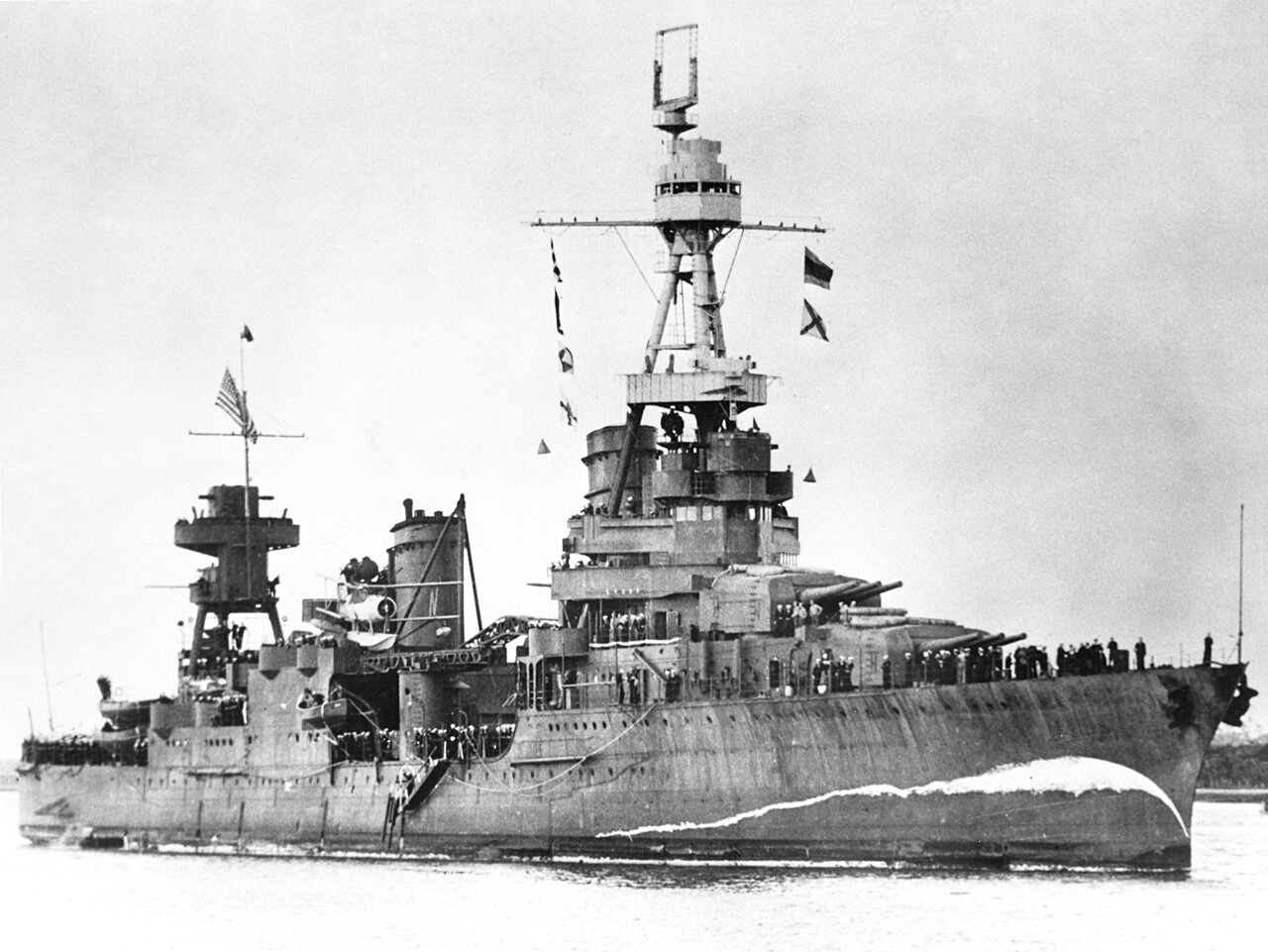
USS Northampton (CA-26) at Brisbane, Australia, on 5 August 1941. Note her false bow wave Camouflage Measure 5 on Camouflage Measure 1. She carries one of the early CXAM radars on her mainmast.
USS Northampton (CL/CA-26) was the lead Northampton-class cruiser in service with the United States Navy. She was commissioned in 1930, originally classified a light cruiser because of her thin armor but later reclassified a heavy cruiser because of her 8-inch guns. During the Second World War she served in the Pacific and was sunk by Japanese torpedoes during the Battle of Tassafaronga on 30 November 1942. She was named after the city of Northampton, Massachusetts, the home of former President Calvin Coolidge. (Wikipedia)
(USN Photo)
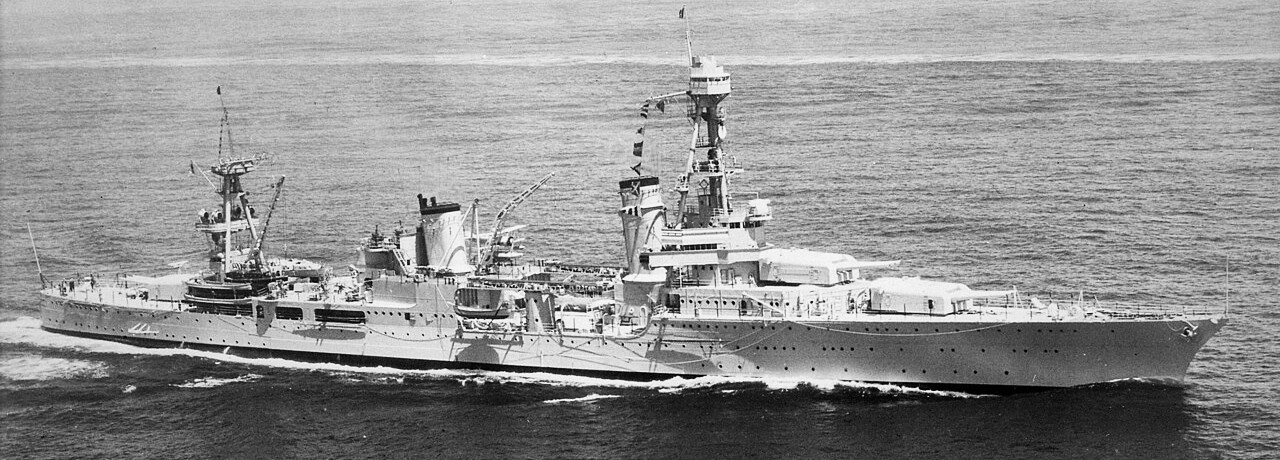
USS Northampton (CA-26) underway in 1935.
(USN Photo)
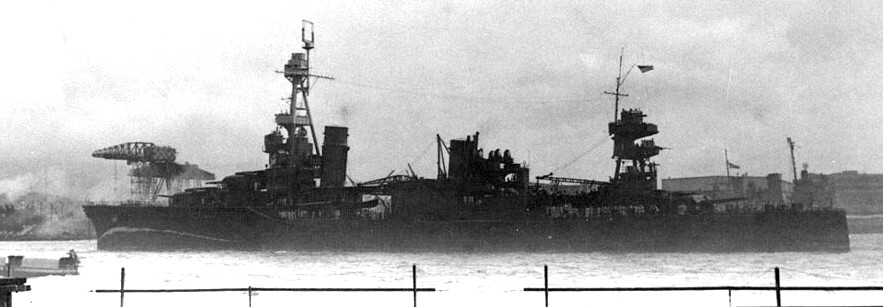
USS Northampton (CA-26) steams into Pearl Harbor on the morning of 8 December 1941, the day after the Japanese air attack. Photographed from Ford Island, looking toward the Navy Yard, with the dredging pipe in the foreground. Northampton was at sea with Vice Admiral Halsey’s task force on the day of the attack. Note her Measure One (dark) camouflage, with a Measure Five false bow wave, and manned anti-aircraft director positions.
USS Northampton was at sea with Admiral William Halsey, Jr. in Enterprise task force during the Japanese attack on Pearl Harbor on 7 December 1941, returning to port the next day. On 9 December, the force sortied to search northeast of Oahu, then swept south to Johnston Island, then north again to hunt the enemy west of Lisianski Island and Midway Atoll.[5] On 11 December, Craven was damaged when it collided with Northampton during underway refueling.
Through January 1942, Northampton joined in such searches until detached with Salt Lake City to bombard Wotje on 1 February. The bombardment not only demolished buildings and fuel dumps on the island, but also sank two Japanese ships. A similar assault was fired against Wake Island on 24 February when, despite serious enemy counterfire, the guns of Northampton and her force started large fires on the island and sank a dredge in the lagoon. As Northampton retired from the island, enemy seaplanes, landbased planes, and patrol craft attacked, but all were destroyed or repulsed.
On 4 March, the force launched aircraft for a strike on Marcus Island, then turned east for Pearl Harbor. Early in April, Enterprise’s task force, including Northampton, sortied once again, and joined Hornet force for the Doolittle Raid on Tokyo 18 April. Once again the ships replenished at Pearl Harbor, then sailed for the Southwest Pacific, arriving just after the battle of the Coral Sea. Returning to Pearl Harbor, Northampton prepared for the action soon to come at the battle of Midway, when she screened Enterprise. On 4–5 June, the American carriers launched their planes to win a great victory, turning the Japanese back in mid-Pacific, and dealing them a tremendous blow by sinking four carriers. Throughout the Battle of Midway, Northampton protected her carrier and with her returned undamaged to Pearl Harbor on 13 June.
In mid-August, Northampton sailed for the Southwest Pacific to join in the Guadalcanal operation. She patrolled southeast of San Cristobal, where on 15 September her force was attacked by submarines, which sank Wasp and damaged North Carolina, and another torpedo hit badly damaged O’Brien only 800 yd (730 m) off Northampton’s port beam. Now sailing with Hornet, Northampton screened the carrier during attacks on Bougainville Island on 5 October.
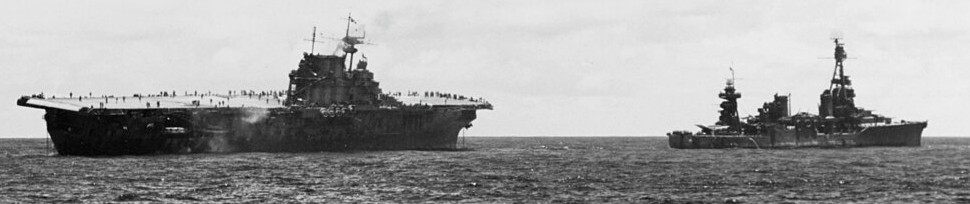
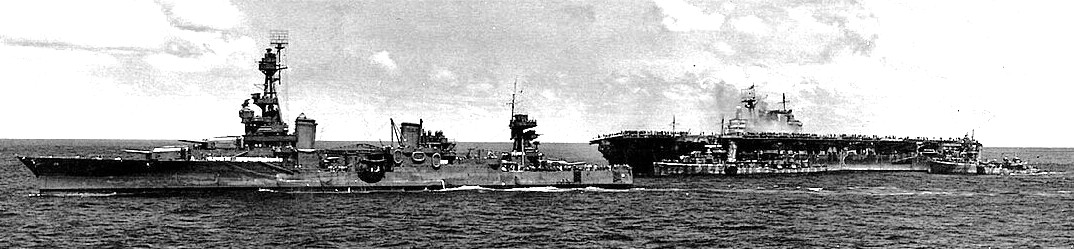
During the battle of the Santa Cruz Islands on 26 October, which took place without surface contact with the enemy, Northampton went to the aid of Hornet, mortally wounded by enemy aircraft, and provided antiaircraft cover while attempting to take the stricken carrier in tow. Obviously doomed, the carrier was abandoned after failing to be scuttled and later finished by Japanese destroyer torpedo and gunfire, while the American force retired to the southwest. (Wikipedia)
(USN Photo)
USS Northampton (CA-26) attempting to tow the aircraft carrier USS Hornet (CV-8) after the latter had been damaged by Japanese air attacks on 26 October 1942 during the Battle of the Santa Cruz Islands.
(USN Photo)
USS Northampton (CA-26) maneuvers to try to take the aircraft carrier USS Hornet (CV-8) under tow during the Battle of the Santa Cruz Islands on 26 October 1942. Note the two destroyers next to the Hornet.
Loss at the Battle of Tassafaronga
USS Northampton (CA-26) next operated with a cruiser-destroyer force, to prevent the Japanese from reinforcing their troops on Guadalcanal. The Battle of Tassafaronga began 40 minutes before midnight on 30 November 1942, when three American destroyers made a surprise torpedo attack on the Japanese. All American ships then opened fire, which the startled enemy did not return for seven minutes. Two of the American cruisers took torpedo hits within the space of a minute, and 10 minutes later, another was hit, all being forced to retire from the action. Northampton and Honolulu, with six destroyers, continued the fierce action.
Close to the end of the engagement, Northampton was struck by two torpedoes, which tore a huge hole in her port side, ripping away decks and bulkheads. Flaming oil sprayed over the ship; she took on water rapidly and began to list. Three hours later, as she began to sink stern-first, she had to be abandoned. So orderly and controlled was the process that loss of life was surprisingly light. Most of the survivors were picked up within an hour by destroyers of Task Force 67. About 40 crewmen spent the rest of the night in two life rafts. Those survivors were later rescued by torpedo boat PT-109 and landed on Tulagi Island. U. S. Navy archives contain a photo of PT-109 entering the anchorage at Tulagi, her topside crowded by Northampton survivors, some of them seriously wounded or dying. Five months after this battle PT-109 got a new skipper: Lt.jg John F. Kennedy. It was a tactical defeat, as three cruisers had been severely damaged and Northampton lost in exchange for the loss of only one Japanese destroyer; nevertheless the Japanese had been denied a major reinforcement.
The senior officer killed on Northampton during the battle of Tassafaronga was Chief Engineer, Commander (select) Hilan Ebert of Alliance, Ohio. Ebert was awarded the Navy Cross. In honor of Commander Ebert, the destroyer escort USS Ebert was launched 11 May 1944 by Tampa Shipbuilding Co., Inc., Tampa, Florida; sponsored by the widow of Commander Ebert; Mrs. Hilan Ebert. Commanding officer of the ship, Captain Willard A. Kitts survived the sinking and was also decorated the Navy Cross for handling the evacuation of Northampton. Fletcher rescued survivors of Northampton, ingeniously using cork-floated cargo nets to take great groups of them from the water. (Wikipedia)
USS Chester (CL/CA-27)
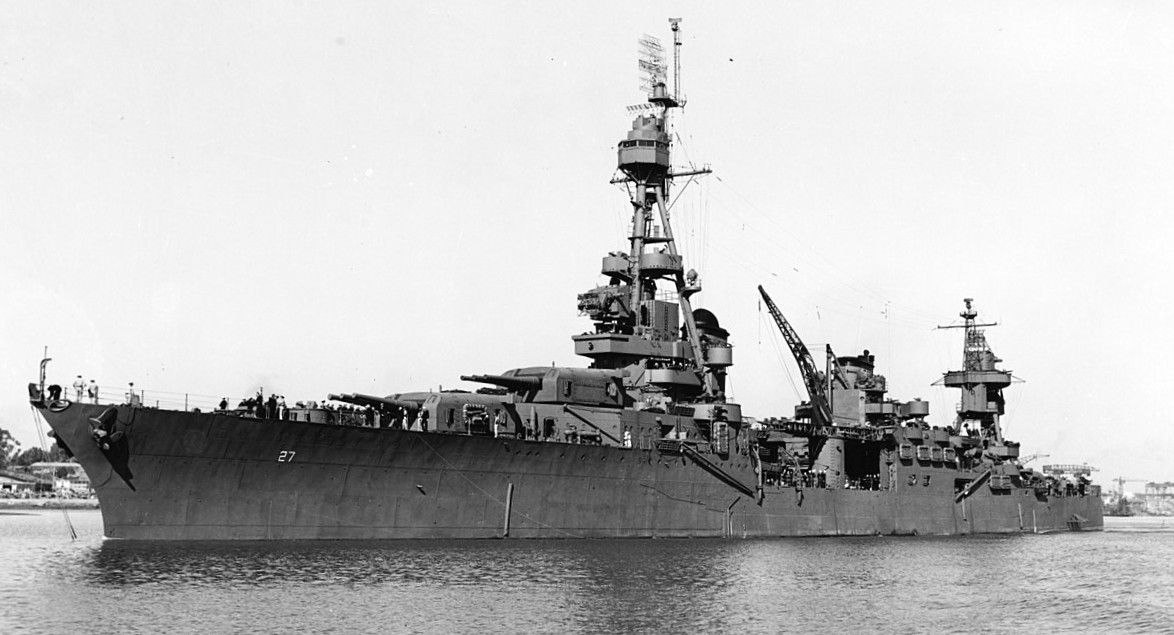
(USN Photo)
USS Chester (CA-27) off the Mare Island Navy Yard, California, after torpedo damage repairs and overhaul, 2 October 1943.
USS Chester (CL/CA-27), a Northampton-class cruiser, was the second ship of the United States Navy named after the city of Chester, Pennsylvania. Chester was launched on 3 July 1929 by the New York Shipbuilding Corporation, Camden, New Jersey;[4] sponsored by Miss J. T. Blain; commissioned on 24 June 1930 and reported to the Atlantic Fleet. (Wikipedia)
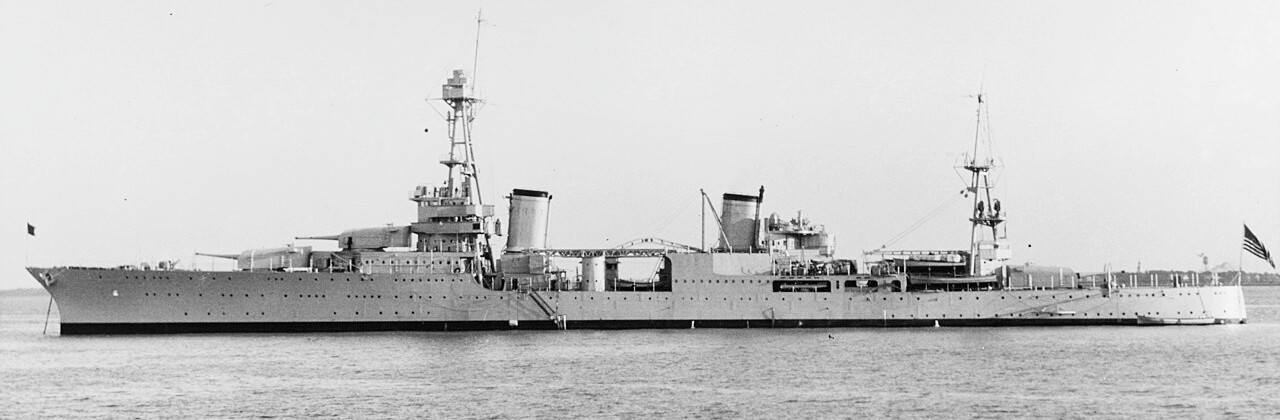
(U.S. Naval History and Heritage Command Photo Photo)
USS Chester (CA-27) at anchor in Hampton Roads, Virginia, November 1930.
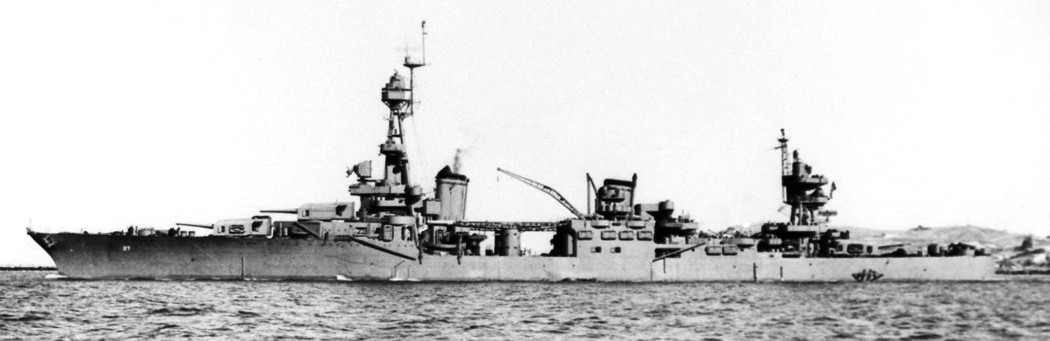
(USN Photo)
USS Chester (CA-27) off the Mare Island Navy Yard, San Francisco, California, on 2 October 1943. She was in overhaul following torpedo damage at the shipyard from 15 September until 2 October 1943.
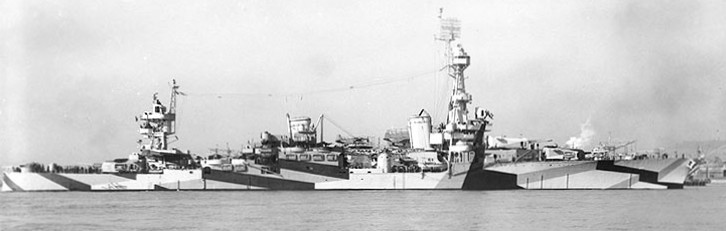
(USN Photo)
USS Chester (CA-27) off San Francisco, California (USA), following an overhaul, circa in late May 1944. She wears Camouflage Measure 32, Design 9d.
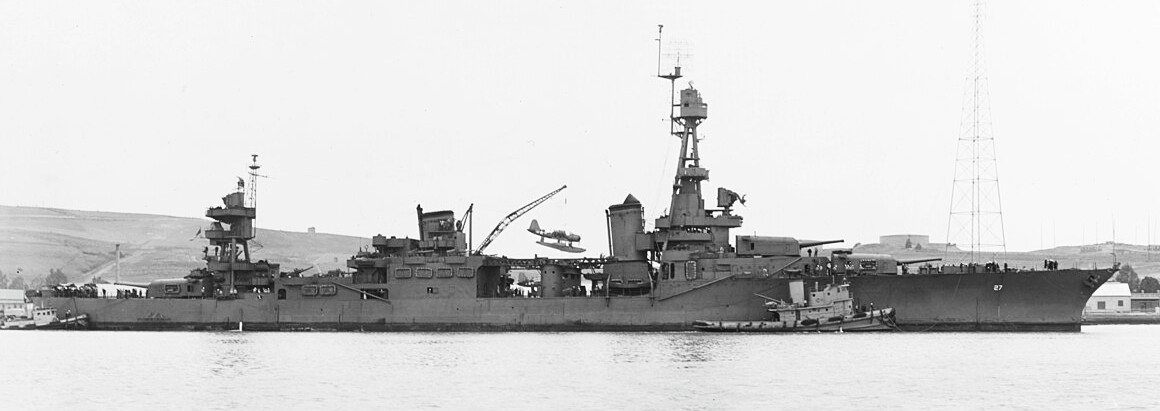
(USN Photo)
USS Chester (CA-27) off Mare Island, California, on 15 September 1943. Note the tugs alongside and the Vought OS2U Kingfisher dangling from the aircraft handling crane amidships.
USS Louisville (CL/CA-28)
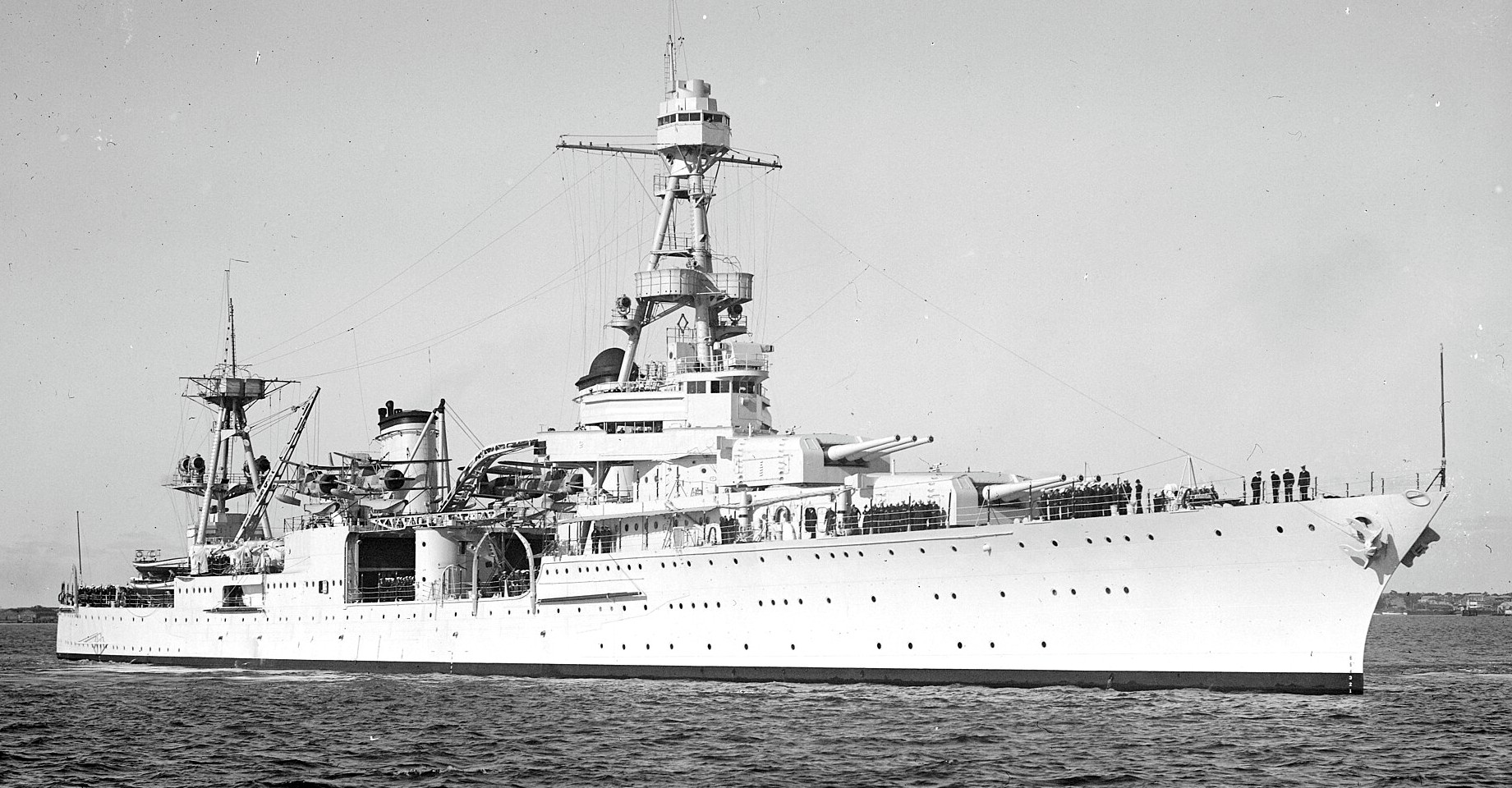
(Alan C. Green Photo)
USS Louisville (CA-28) visiting Australia, 2 February 1938.
USS Louisville (CL/CA-28), a Northampton-class cruiser, was the third ship of the United States Navy to be named for the city of Louisville, Kentucky. She was active throughout the Pacific War. USS Louisville was the first large warship to be built in a drydock.
Louisville was launched on 1 September 1930 at the Puget Sound Navy Yard, Bremerton, Washington,[5] sponsored by Miss Jane Brown Kennedy, and commissioned on 15 January 1931.[6] Louisville since commissioning day carried, on the prominent bulkhead, a shoe of the great stallion, Man o’ War, as a talisman against evil.
She was originally classified as a light cruiser, CL-28, because of her thin armor. Effective 1 July 1931, Louisville was redesignated a heavy cruiser, CA-28, because of her 8-inch guns in accordance with the provisions of the London Naval Treaty of 1930. (Wikipedia)
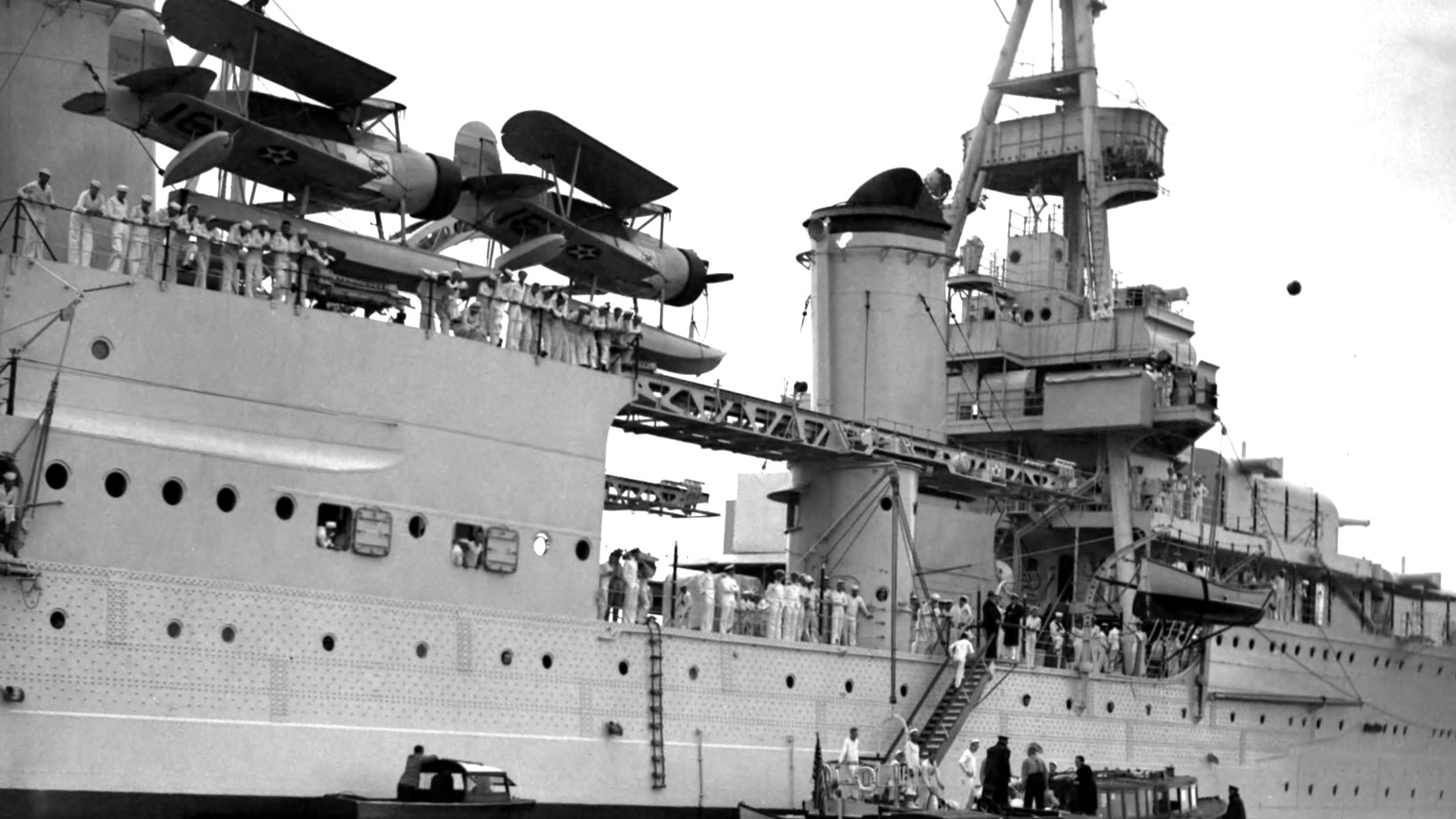
(Sydney Morning Herald Photo)
USS Louisville (CA-28) in Sydney Harbour 13 February 1938.
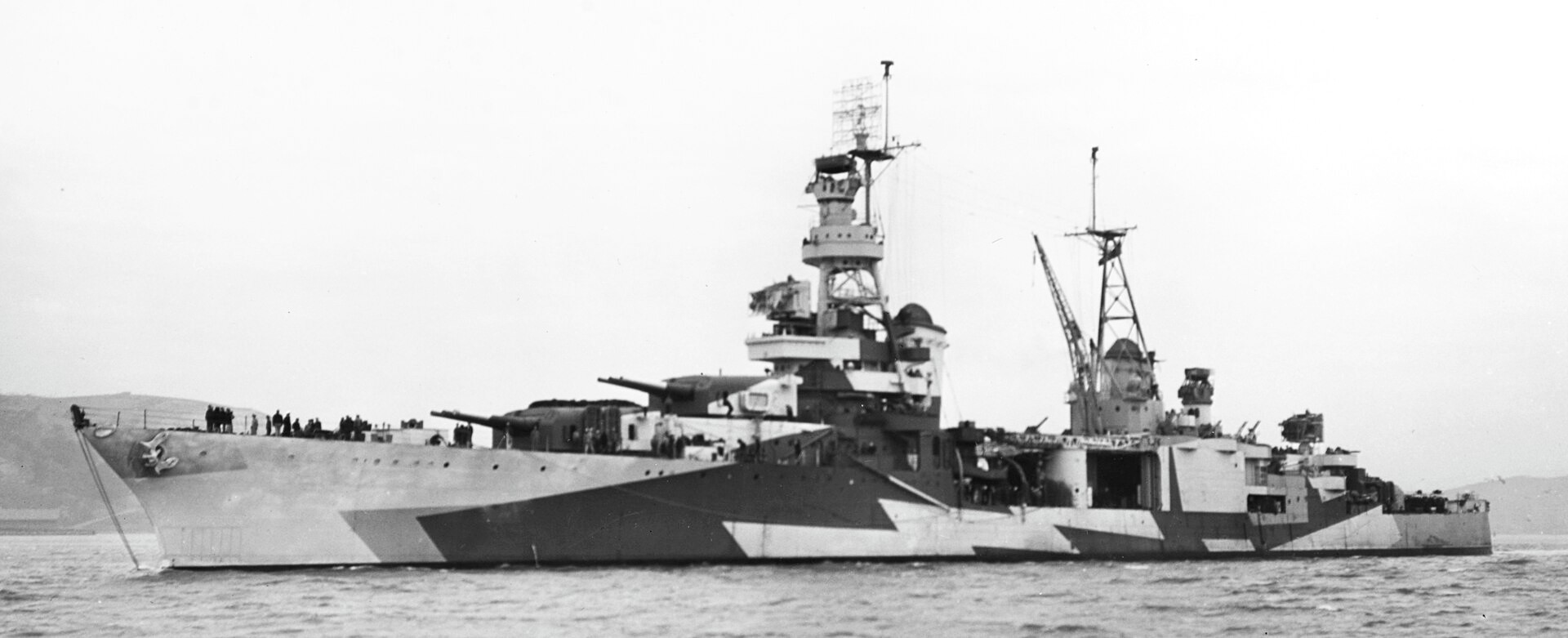
(USN Photo)
USS Louisville (CA-28) off the Mare Island Naval Shipyard, California, on 17 December 1943. The ship’s camouflage scheme is probably Measure 32, Design 6d. Note that no hull number was painted on the bow.
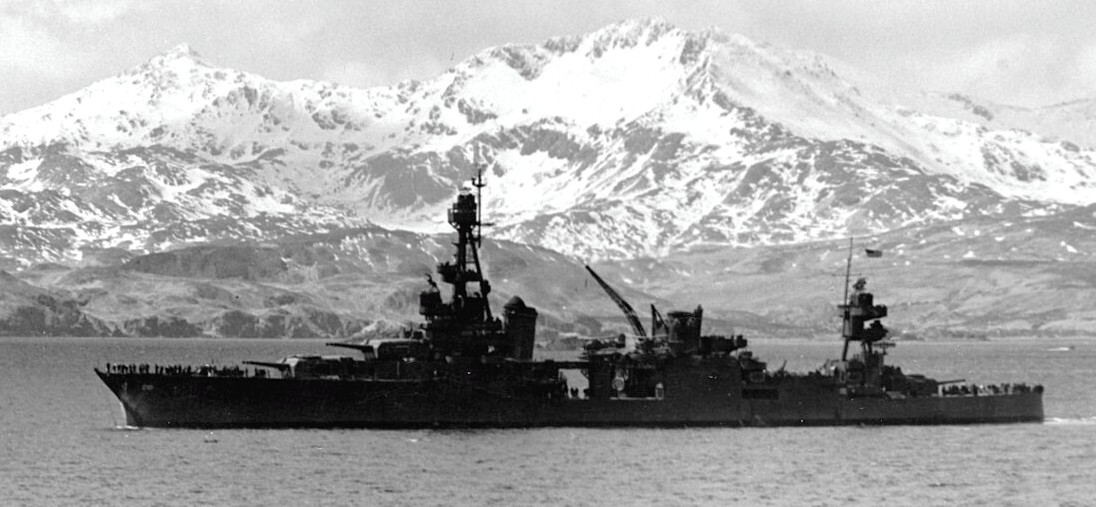
(USN Photo)
USS Louisville (CA-28) steams out of Kulak Bay, Adak, Aleutian Islands, bound for operations against Attu, 25 April 1943.
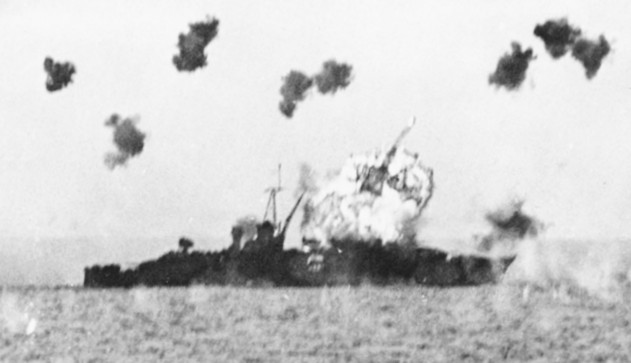
(USN Photo)
USS Louisville (CA-28) is hit by a kamikaze in Lingayen Gulf, Philippine Islands, 6 January 1945. The aircraft was a Mitsubishi Ki-51. 43 men were killed and at least 125 were wounded. Rear Admiral Theodore E. Chandler, commander of Cruiser Division 4 (CruDiv 4) was among the killed, as he was fatally injured helping sailors man handle the fire hoses to put out the massive flames during the attack.
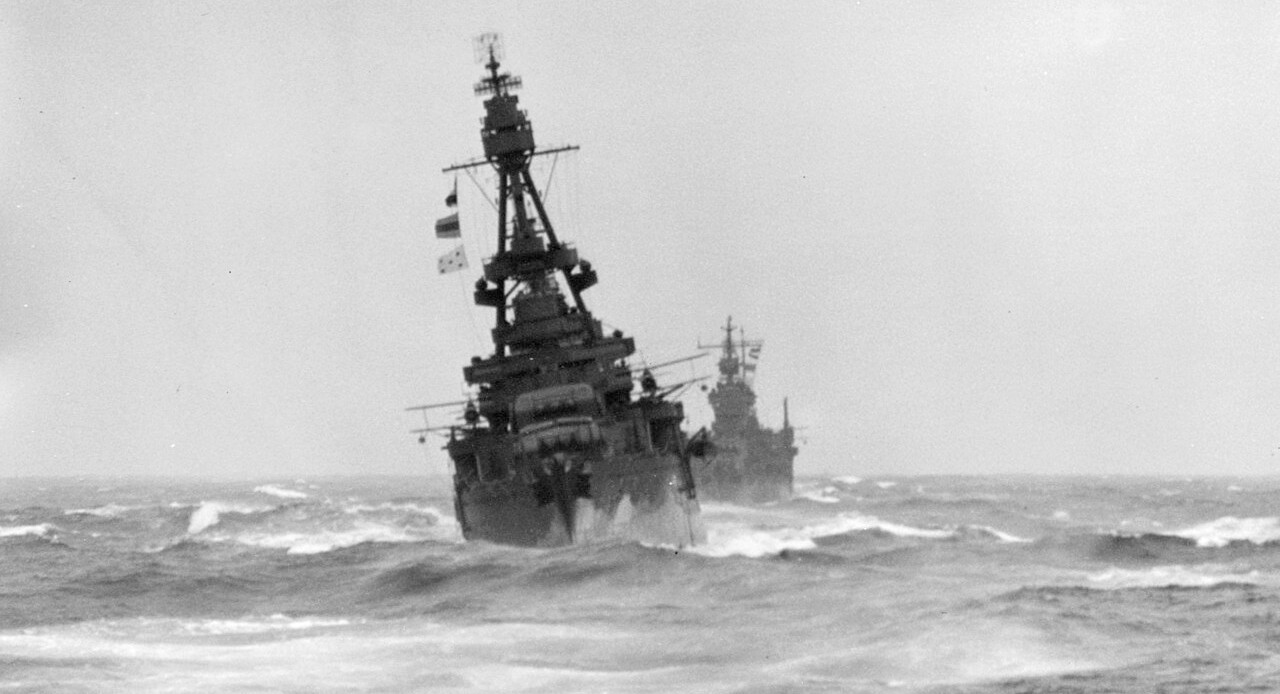
(USN Photo)
USS Louisville (CA-28) operating in the Bering Sea during May 1943. She is followed by USS San Francisco (CA-38).
USS Chicago (CL/CA-29)
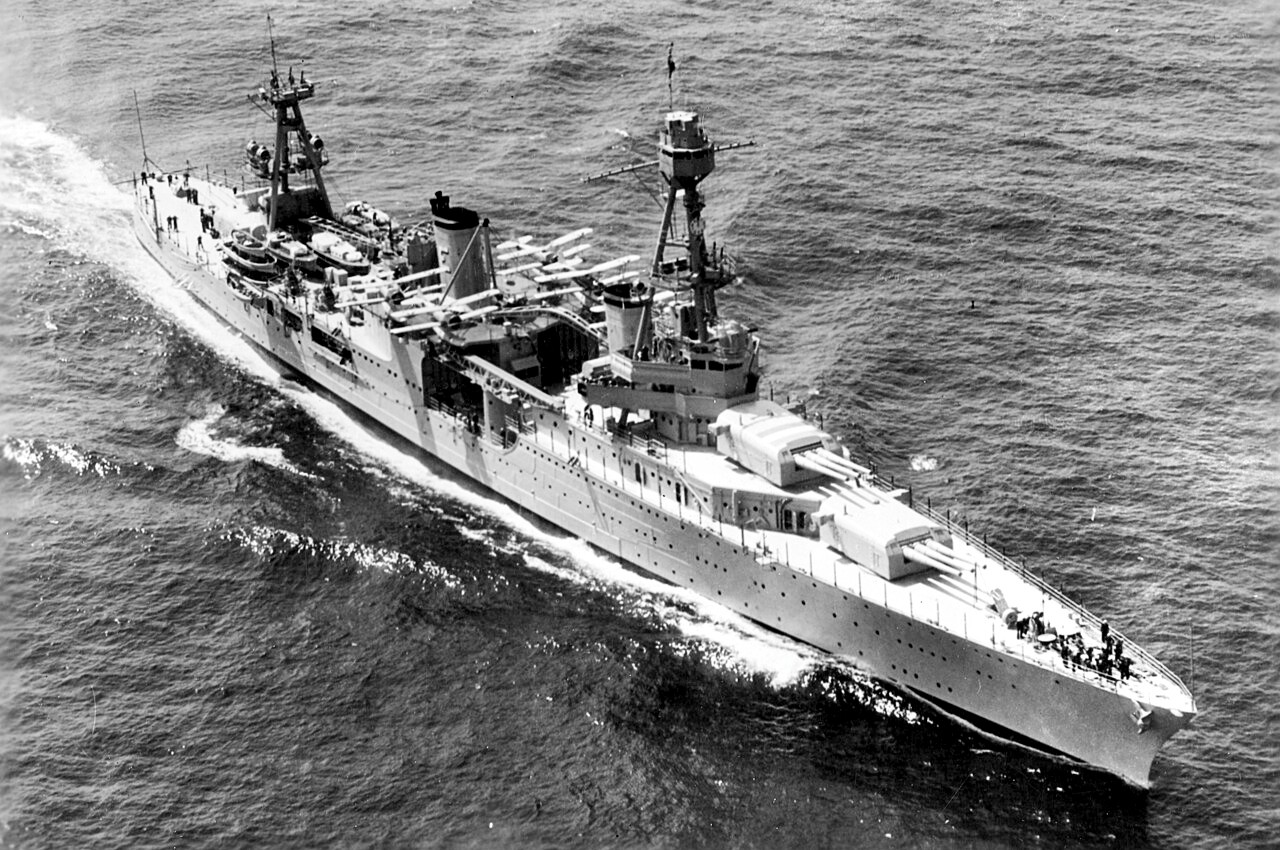
(USN Photo)
USS Chicago (CA-29) underway off New York City, during the 31 May 1934 fleet review.
SS Chicago (CL/CA-29) was a Northampton-class cruiser of the United States Navy that served in the Pacific Theater in the early years of the Second World War. She was the second US Navy ship to be named after the city of Chicago. After surviving a midget submarine attack at Sydney Harbour and serving in battle at the Coral Sea and Savo Island in 1942, she was sunk by Japanese aerial torpedoes in the Battle of Rennell Island, in the Solomon Islands, on 30 January 1943.
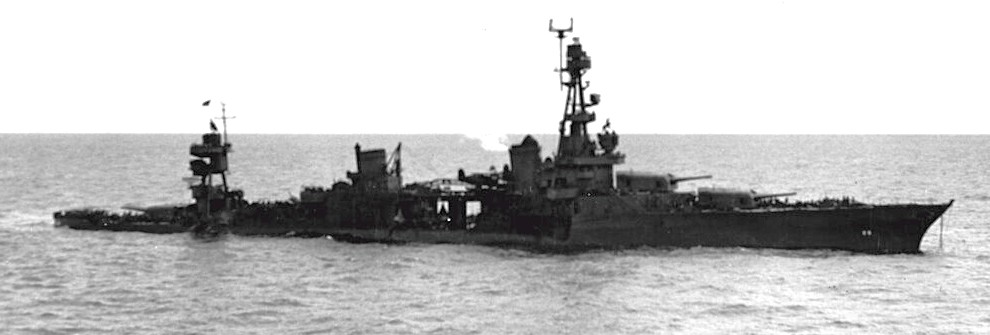
(USN Photo)
USS Chicago (CA-29) low in the water on 30 January 1943, after she had been torpedoed by Japanese aircraft during the Battle of Rennell Island.
Battle of Rennell Island
Early in January 1943, Chicago departed San Francisco, action-bound once more. On 27 January, she sailed from Nouméa to escort a Guadalcanal convoy. On the night of the 29th, as the ships approached that bitterly contested island, Japanese aircraft attacked the force and the Battle of Rennell Island was underway. During the attacks, two burning Japanese planes silhouetted Chicago, providing enough light for further torpedo attacks; two hits caused severe flooding and loss of power. By the time the attack ended, work by the crew had checked Chicago’s list. Louisville took the disabled ship in tow, and was relieved by Navajo the following morning. Fighters from the nearby carrier Enterprise provided CAP for the wounded cruiser as she tried to make her way away from the battle area. During the afternoon, the Japanese attacked again with 20 G4M “Betty” bombers. The ship was hit by four torpedoes, one forward of the bridge and three others in her engineering spaces. The patrolling fighters downed 8 of the attacking planes, but the damage was done. Captain Ralph O. Davis gave the order to abandon ship shortly before Chicago sank stern first, 20 minutes later at 11°25′S 160°56′E. Navajo and the escorting destroyers rescued 1,049 survivors from Chicago, but 62 of her crew died. A final attack force of Japanese torpedo bombers failed to find the remaining U.S. ships.
The Japanese widely publicized the results of the engagement, claiming to have sunk two battleships and three cruisers. In reality they sank only the heavy cruiser Chicago on 30 January (two days later they also sank the destroyer USS De Haven much farther north in an air attack off Savo Island). The U.S. did not report the loss of Chicago to the public for some time, with Admiral Chester Nimitz—commander in chief of Allied Pacific forces—threatening to shoot any of his staff who leaked the loss to the press. The loss of the cruiser was published in a US newspaper on 16 February 1943. (Wikipedia)
USS Houston (CL/CA-30)
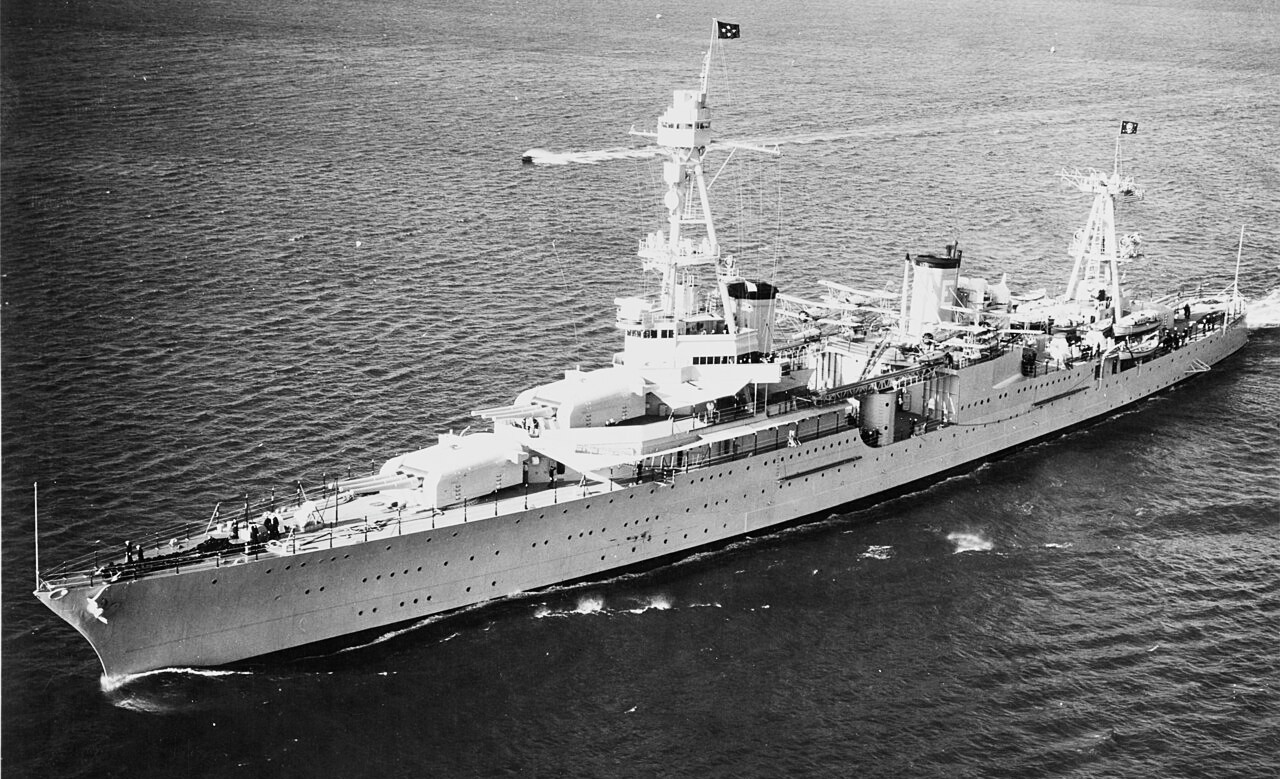
(USN Photo)
USS Houston (CA-30) off San Diego, California, in October 1935, with the U.S. President Franklin D. Roosevelt on board. She is flying an admiral’s four-star flag at her foremast peak, and the Presidential flag at her mainmast peak.
USS Houston (CL/CA-30), was a Northampton-class cruiser of the United States Navy. She was the second Navy ship to bear the name “Houston”. She was launched by Newport News Shipbuilding & Dry Dock Company, Newport News, Virginia, on 7 September 1929, sponsored by Elizabeth Holcombe (daughter of Oscar Holcombe, ex-mayor of Houston, Texas). Elizabeth was chaperoned by Mary Ellen Bute and Charlotte Williams (great grand-daughter of Sam Houston). [5] Houston was commissioned on 17 June 1930.
The ship was originally classified as a light cruiser (hull number CL-30). Houston was redesignated a heavy cruiser (CA-30) on 1 July 1931, as the provisions of the 1930 London Naval Treaty classified ships with 8-inch (20.3 cm) main battery guns as heavy cruisers. (Wikipedia)
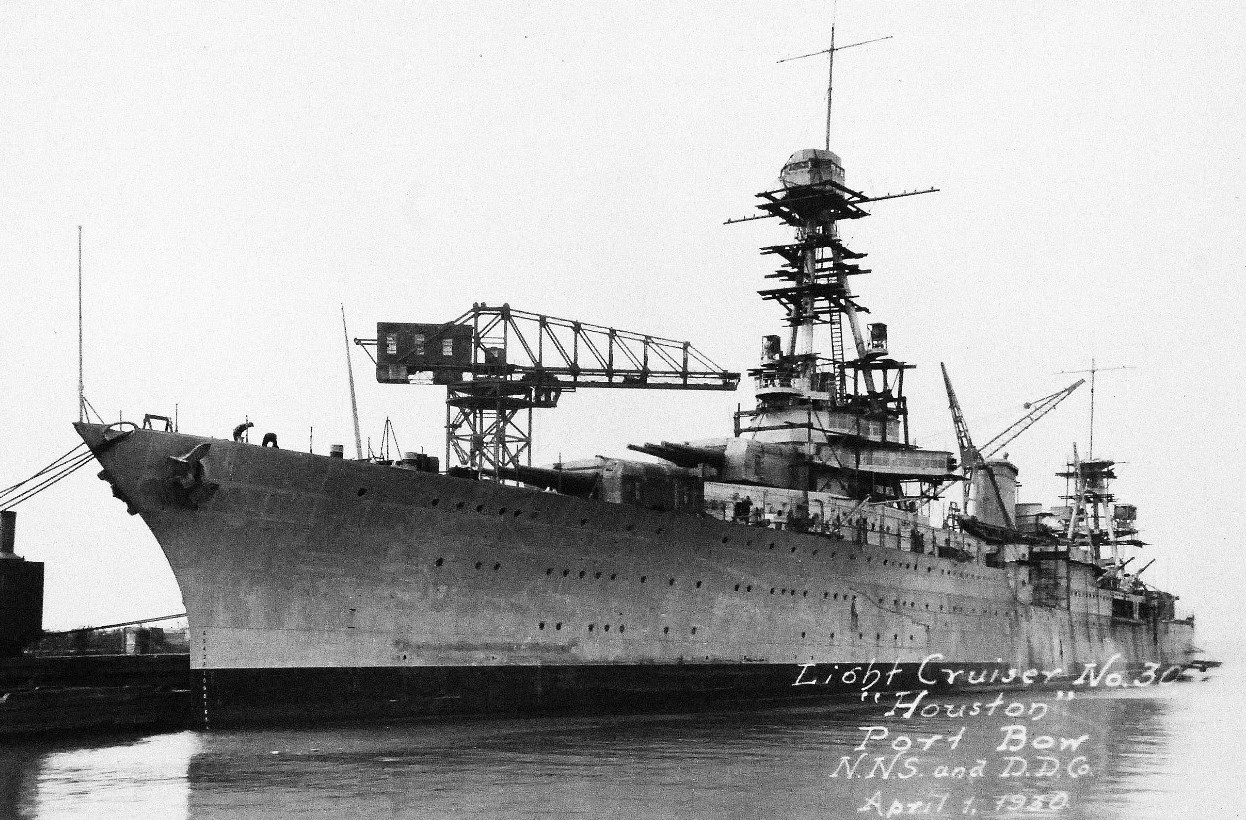
(USN Photo)
USS Houston (CA-30), 1 April 1930.
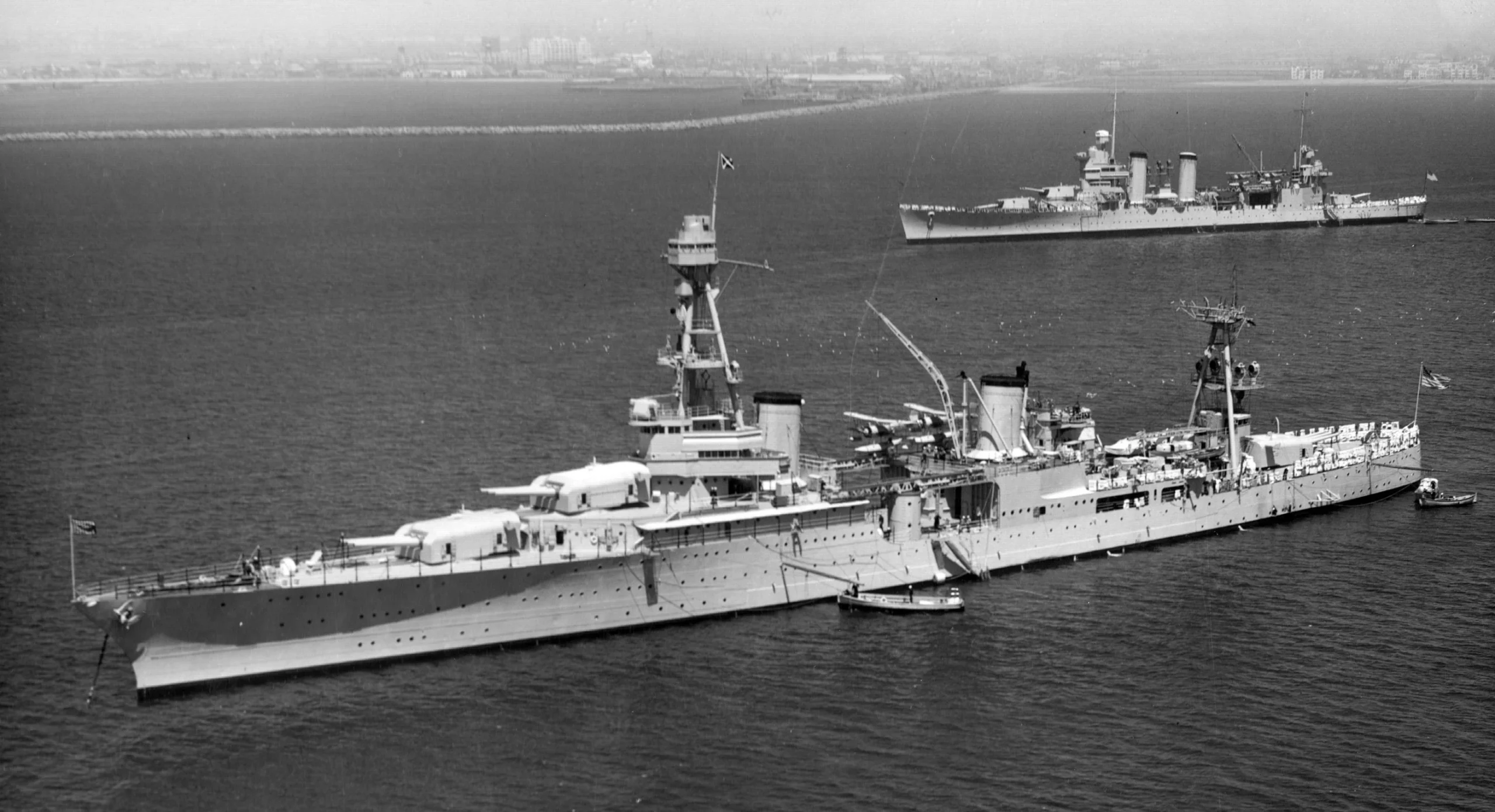
(USN Photo)
USS Houston (CA-30), 1934.

(USN Photo)
USS Houston (CA-30) transits the Panama Canal with Franklin Delano Roosevelt’s presidential party on 11 July 1934 en route from Annapolis, Maryland (USA), to Portland, Oregon. This was the first passage through the canal by a president of the United States while in office.
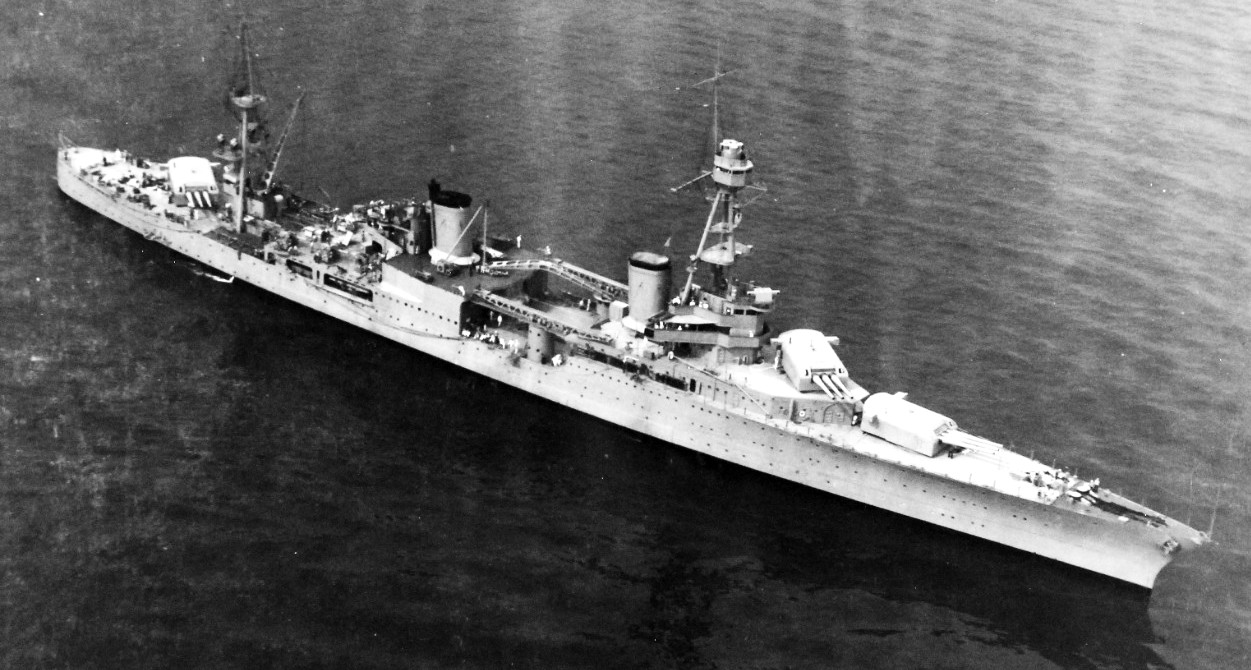
(USN Photo)
USS Houston (CA 30), aerial starboard side view, June 27, 1931.
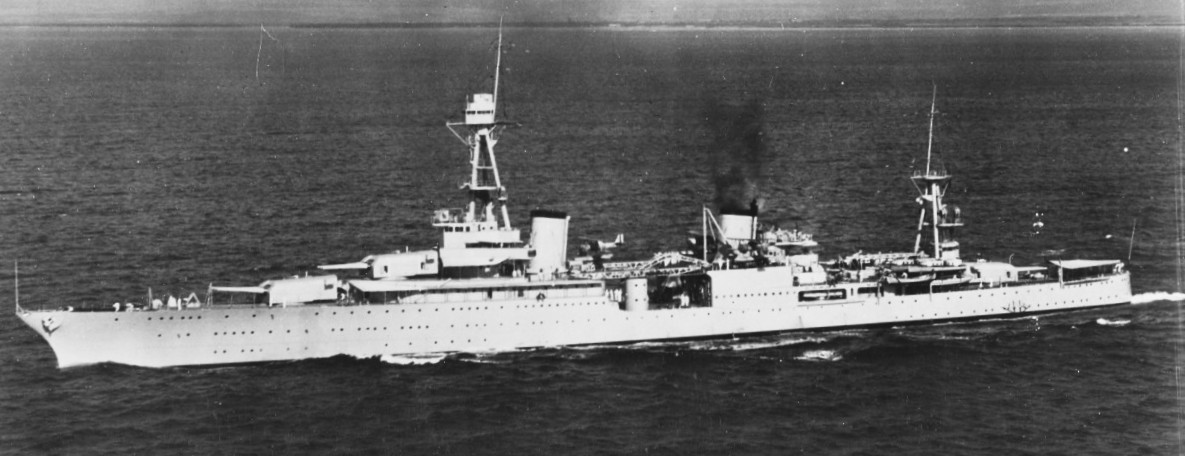
(USN Photo)
USS Houston (CA-30).
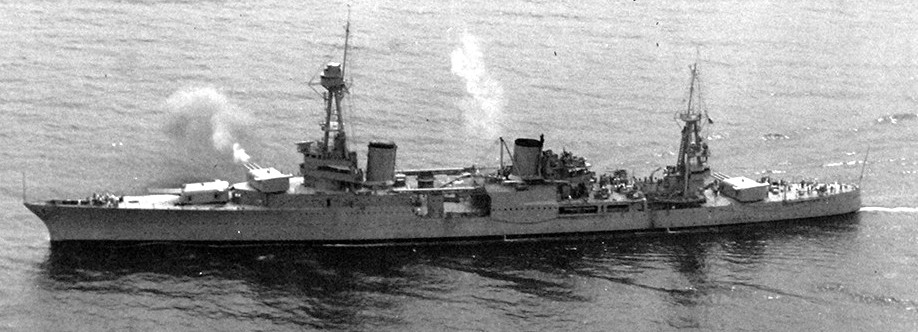
(USN Photo)
USS Houston (CA-30).
As the war crisis deepened, Admiral Hart deployed his fleet in readiness. Houston was to operate as part of Task Force Five (TF5) under RADM William A. Glassford, Jr. At 0900 hrs on 1 December 1941 Houston departed Cavite Navy Yard’s Machina Wharf for the degaussing range in Manila Bay. This consumed about four hours, then the ship steamed out of the Bay through the mine channel and headed south for the Philippine port of Iloilo on the island of Panay. She reached her anchorage off Iloilo at 1257 hrs on the 2nd of December. There she remained, receiving fuel oil and aviation gasoline from barges while flying SOC air patrols over the next few days. At 0345 hrs on 8 December she got the message that hostilities had been initiated by Japan. At 1612 hrs that afternoon RADM Glassford and staff arrived from Manila via PBY. An hour later Houston got underway, steaming south for the Dutch East indies. Over the following days she escorted Asiatic Fleet auxiliaries Holland, Otus and Isabel to Balikpapan, Borneo, which was reached at 1927 hrs on 14 December. Houston departed the next morning at 0611 hrs escorting another US convoy south. She left the convoy after two days to proceed at high speed to Surabaja, Java, with the destroyer USS Parrott (DD-218). They reached Java on 17 December at ~1800 hrs.
Battle of Makassar Strait
Air raids were frequent in the area, and Houston’s gunners shot down four Japanese planes in the Battle of Bali Sea (also known as the Battle of Makassar Strait) on 4 February 1942, as Rear-Admiral Karel Doorman of the Royal Netherlands Navy took the ABDA Striking Force to engage Japanese ships reported to be massing at Balikpapan. Houston carried defective 5″/25cal ammunition which failed her during these air attacks. After dodging bombs and shooting down at least one attacker, Houston took one 250kg bomb hit aft. This disabled the number three turret, killing four dozen men and wounding about 20 others. The old light cruiser USS Marblehead was so damaged that she had to be sent out of the combat zone. RADM Doorman abandoned his advance and returned to Java.[6] The two American ships returned to the port of Tjilatjap. The dead from the two cruisers were interred at the European cemetery in Tjilatjap, while the wounded men from Houston and Marblehead were put on trains (5-6 Feb.) and taken to the Dutch Petronella hospital in Yogyakarta. There they came under the care of a dedicated USNR medical officer, LTCDR Corydon Wassell.
Timor Convoy
Said to be Houston, this photo may actually show USS Pensacola escorting the so-called Pensacola Convoy to Australia in December 1941. The cruiser’s profile is swaybacked and shows four turrets, and the transport to the right appears to be USS Republic, which was not part of the Timor Relief convoy.
Houston stayed at Tjilatjap until 10 February, during which time she also took on some 500 rounds of 5″/25cal ammunition left behind by USS Boise (CL-47) after that cruiser had to leave the East Indies due to a grounding accident in Sape Strait in late January.[13] This 5″ ammunition, which was not marked by the defects that had plagued Houston’s gunners on 4 February, would prove invaluable within a matter of days. CA-30 then left Tjilatjap for Darwin to escort a convoy carrying troops to reinforce forces already defending Timor. Escorting USAT Meigs, SS Mauna Loa, SS Portmar, and Tulagi, Houston with the destroyer USS Peary and sloops HMAS Warrego and HMAS Swan departed Darwin before two in the morning of 15 February for Koepang. By eleven in the morning, the convoy was being shadowed by a Japanese flying boat that dropped some bombs without causing damage before departing. The next morning another shadowing aircraft had taken position, and before noon the convoy was attacked by bombers and flying boats in two waves. During the first attack, Mauna Loa suffered slight damage and two casualties, one killed and one wounded. Houston’s fire showed no effects. During the second attack, Houston distinguished herself with a barrage which made her “like a sheet of flame” shooting down 7 of the 44 planes of the second wave. The convoy continued toward Timor for a few hours, with Houston launching a scout plane seeking the enemy position. ABDA suspected the presence of Japanese carriers, an imminent invasion of Timor, and a support fleet lying in wait and thus ordered the convoy back to Darwin, which it reached before noon on 18 February.
Houston and Peary departed later that day to rejoin combat forces at Tjilatjap. Shortly after departure, Peary broke off to help RAN units chase a suspected submarine, and expended so much fuel in doing so that the destroyer returned to Darwin for replenishment instead of continuing with Houston. Houston thus escaped the Japanese attack on Darwin on 19 February, in which Peary, Meigs and Mauna Loa were among the ships sunk and Portmar was forced to beach. Returning to the East Indies, Houston lingered briefly off NW Australia awaiting the arrival of one of her SOC scout planes which had been sent to the coast. That plane did not rejoin CA-30, and the cruiser then proceeded to Java via the route below the Lesser Sunda islands. She narrowly missed being detected by the Japanese forces invading and seizing Timor on 19-20 February. Some of the IJN covering forces at sea included elements of 5th Cruiser Division (Sentai 5) under RADM Takagi Takeo, specifically the heavy cruisers Nachi and Haguro, both of which Houston would meet a week or so later in the Java Sea.
Battle of the Java Sea
Receiving word that the major Japanese invasion force was approaching Java protected by a formidable surface unit, Admiral Doorman decided to meet and seek to destroy the main convoy. Sailing on 26 February 1942 with the cruisers Houston, HMAS Perth, HNLMS De Ruyter, HMS Exeter, HNLMS Java and ten destroyers, he met the Japanese support force under Admiral Takeo Takagi consisting of four cruisers and 13 destroyers in the late afternoon of 27 February 1942.[6] As Japanese destroyers laid a smokescreen, the cruisers of both fleets opened fire. After one ineffective torpedo attack, the Japanese light cruisers and destroyers launched a second and sank the destroyer HNLMS Kortenaer. HMS Exeter and the destroyer HMS Electra were hit by gunfire, Electra sinking shortly after. At 17:30, Admiral Doorman turned south toward the Java coast, not wishing to be diverted from his main purpose of destroying the convoy.
The Allied fleet dodged another torpedo attack and followed the coastline, during which time the destroyer HMS Jupiter was sunk, either by mine or internal explosion. The destroyer HMS Encounter was detached to pick up survivors from Kortenaer, and the American destroyers were ordered back to Surabaya as they had fired all their torpedoes. With no destroyer protection, Doorman’s four remaining ships turned north again in a last attempt to stop the invasion of Java.[6] At 23:00, the cruisers again encountered the Japanese surface group. Sailing on parallel courses, the opposing units opened fire, and the Japanese launched a torpedo attack 30 minutes later. De Ruyter and Java were caught in a spread of 12 torpedoes, which resulted in their destruction.[6] Before De Ruyter sank, Doorman ordered Houston and Perth to retire to Tanjong Priok.
Two cruisers and three destroyers of the ABDA naval force were sunk, the cruiser Exeter had been damaged, and the remaining ships were ordered back to Surabaya and Tanjong Priok.
Battle of Sunda Strait
Houston and Perth reached Tandjong Priok around midday on 28 February, where they attempted to resupply, but were met with fuel shortages and no available ammunition.[21] The two cruisers, under the command of CAPT Waller in Perth, were ordered (by CCCF Collins) to sail to Tjilatjap with the Dutch destroyer Evertsen, but that destroyer would not leave without specific orders from Dutch HQ (CZM Helfrich). Perth and Houston therefore departed Tandjong Priok at 17:00 without Evertsen. Evertsen followed an hour or two later, and never caught up. The Allies mistakenly believed that Sunda Strait was free of enemy vessels, with the last intelligence reports indicating that Japanese warships were no closer than 50 miles (43 nmi; 80 km) to the north, and heading east. Unknown to the two cruisers a large Japanese force had assembled at Bantam Bay.[23][22][24] At 23:06, the two cruisers were off St. Nicholas Point when lookouts on Perth sighted an unidentified ship; when it was realized that she was a Japanese destroyer, Perth engaged. However, as this happened, multiple Japanese warships appeared and surrounded the two Allied ships.
The two cruisers evaded the nine torpedoes launched by the destroyer Fubuki. According to ABDA post-battle reports, the cruisers then reportedly sank one transport and forced three others to beach, but were blocked from passing through Sunda Strait by a destroyer squadron, and had to contend with the heavy cruisers Mogami and Mikuma in close proximity.[6] At midnight, Perth attempted to force a way through the destroyers, but was hit by four torpedoes in the space of a few minutes, then subject to close-range gunfire until sinking at 00:25 on 1 March.
On board Houston, shells were in short supply in the forward turrets, so the crew manhandled shells from the disabled number three turret to the forward turrets. Houston was struck by a torpedo shortly after midnight, and began to lose headway.[6] Houston’s gunners had scored hits on three different destroyers and sank a minesweeper, but she was struck by three more torpedoes in quick succession.[6] Captain Albert Rooks was killed by a bursting shell at 00:30, and as the ship came to a stop, Japanese destroyers moved in, machine-gunning the decks and men in the water. A few minutes later, Houston rolled over and sank.[6] Of the 1,061 aboard, 368 survived, including 24 of the 74-man Marine Detachment, only to be captured by the Japanese, interned in prison camps, and forced to work on the infamous Burma Railway. Of 368 Navy and Marine Corps personnel taken prisoner, 77 (21%) died in captivity from a combination of starvation, cruel treatment at the hands of Japanese soldiers, and tropical diseases.
Aftermath
Houston’s fate was not fully known outside of Japan for almost nine months. Americans learned the full story of her last fight when the survivors were liberated from prison camps at the end of the war. Before then, on 30 May 1942, 1,000 new recruits for the Navy, known as the Houston Volunteers, were sworn in at a dedication ceremony in downtown Houston, to replace those believed lost on Houston. On 12 October 1942 the light cruiser Vicksburg (CL-81), then under construction, was renamed Houston in honor of the old ship, President Roosevelt declaring:
Our enemies have given us the chance to prove that there will be another USS Houston, and yet another USS Houston if that becomes necessary, and still another USS Houston as long as American ideals are in jeopardy.
Captain Rooks received posthumously the Medal of Honor for his actions. Chaplain George S. Rentz, who had surrendered his life jacket to a younger sailor after finding himself in the water, was posthumously awarded the Navy Cross. He was the only Navy Chaplain to be so honored during the Second World War.
The crew of Houston is honored alongside that of Perth at the Shrine of Remembrance in Melbourne, Australia, and in St John’s Anglican Church, Fremantle. On Veterans Day, 11 November 1995, the Texas Commandery, Naval Order of the United States, unveiled a 16-foot high granite obelisk faced with bronze tablets recording the names of the crew of Houston at Sam Houston Park near the Heritage Society in downtown Houston. It is the site of a formal memorial ceremony (“Day of Remembrance”) in the first week of March each year celebrating the ship’s story and that of her crew. (Wikipedia)
USS Augusta (CL/CA-31)

(USN Photo)
USS Augusta (CA-31) steaming off Portland, Maine, on 9 May 1945.
USS Augusta (CL/CA-31) was a Northampton-class cruiser of the United States Navy, notable for service as a headquarters ship during Operation Torch, Operation Overlord, and Operation Dragoon, and for her occasional use as a presidential flagship carrying both Franklin D. Roosevelt and Harry S. Truman under wartime conditions (including at the Atlantic Charter). She was named after Augusta, Georgia, and was sponsored by Miss Evelyn McDaniel of that city. (Wikipedia)
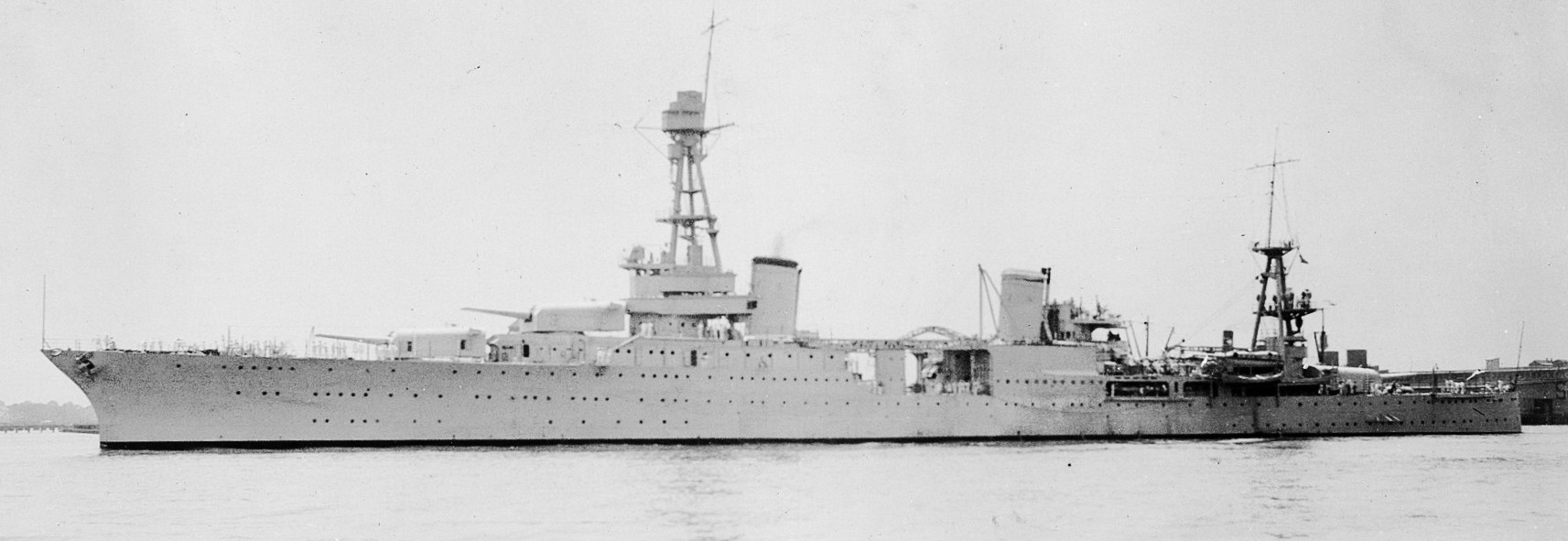
(USN Photo)
USS Augusta (CA-31), 10 June 1931.
(USN Photo)
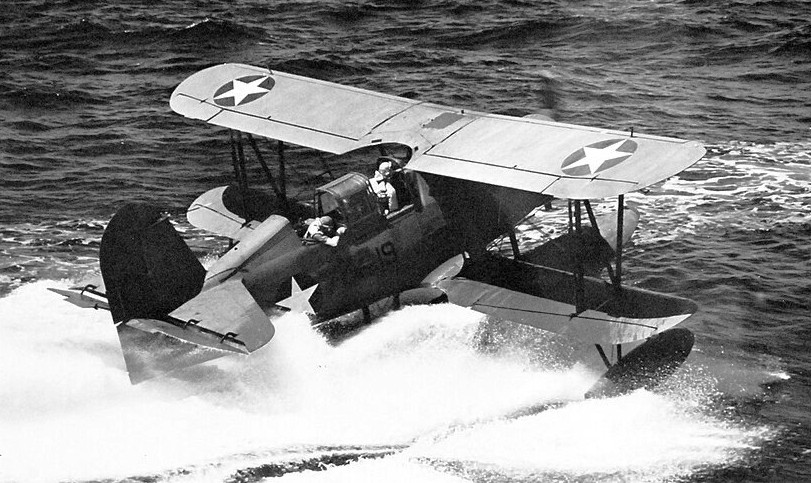
SOC aircraft returns to USS Augusta (CA-31) from patrol duty, June 1942.
USN Photo)
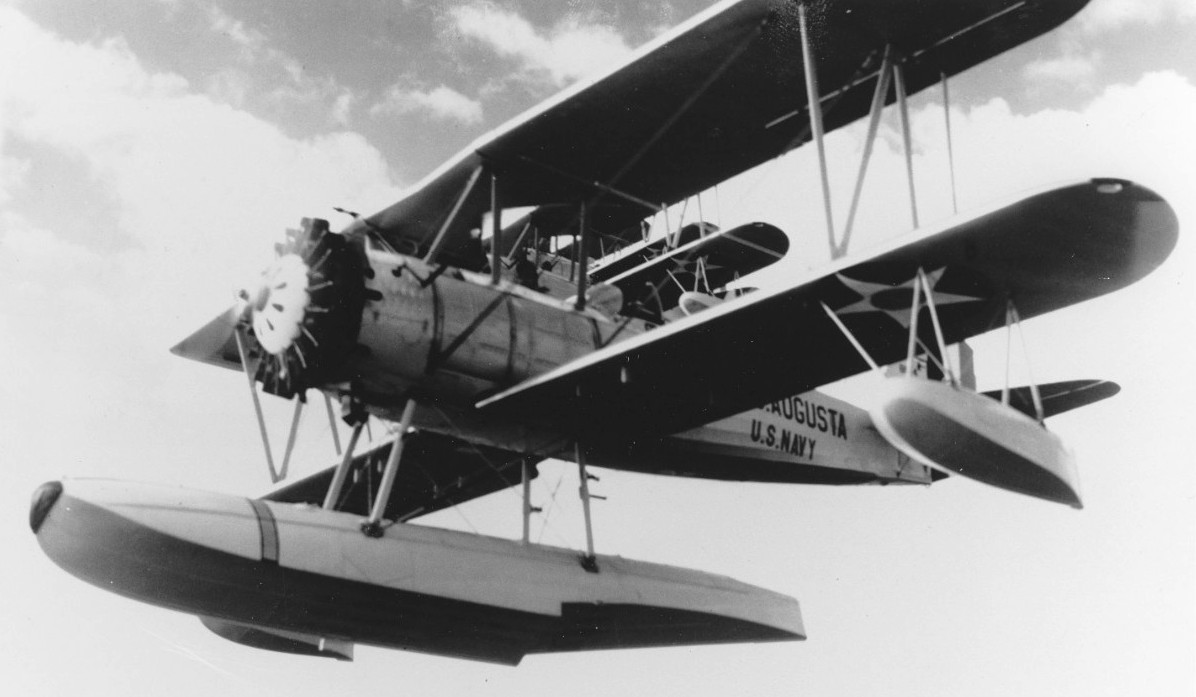
Vought O3U Corsair aircraft of the USS Augusta (CA-31)’s aviation unit over Philippine waters, circa 1936.
(USN Photo)
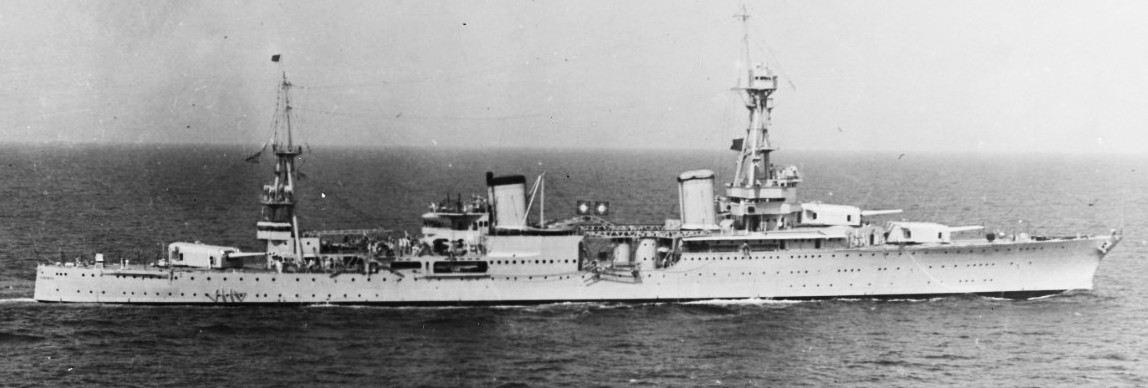
USS Augusta (CA-31), 1930s
(USN Photo)
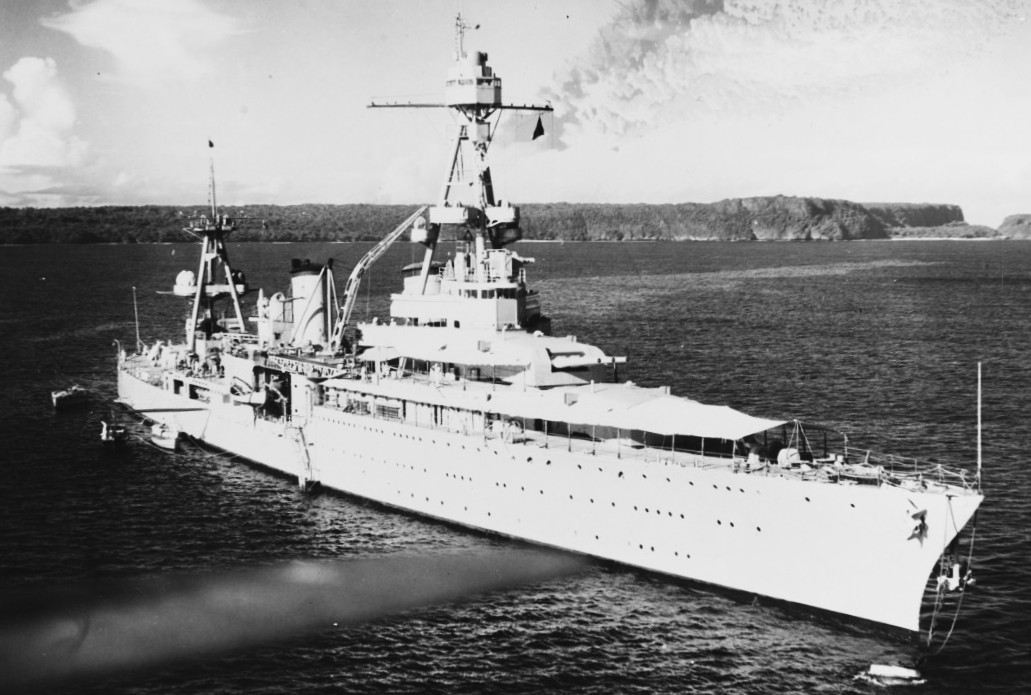
USS Augusta (CA-31), 1930s.
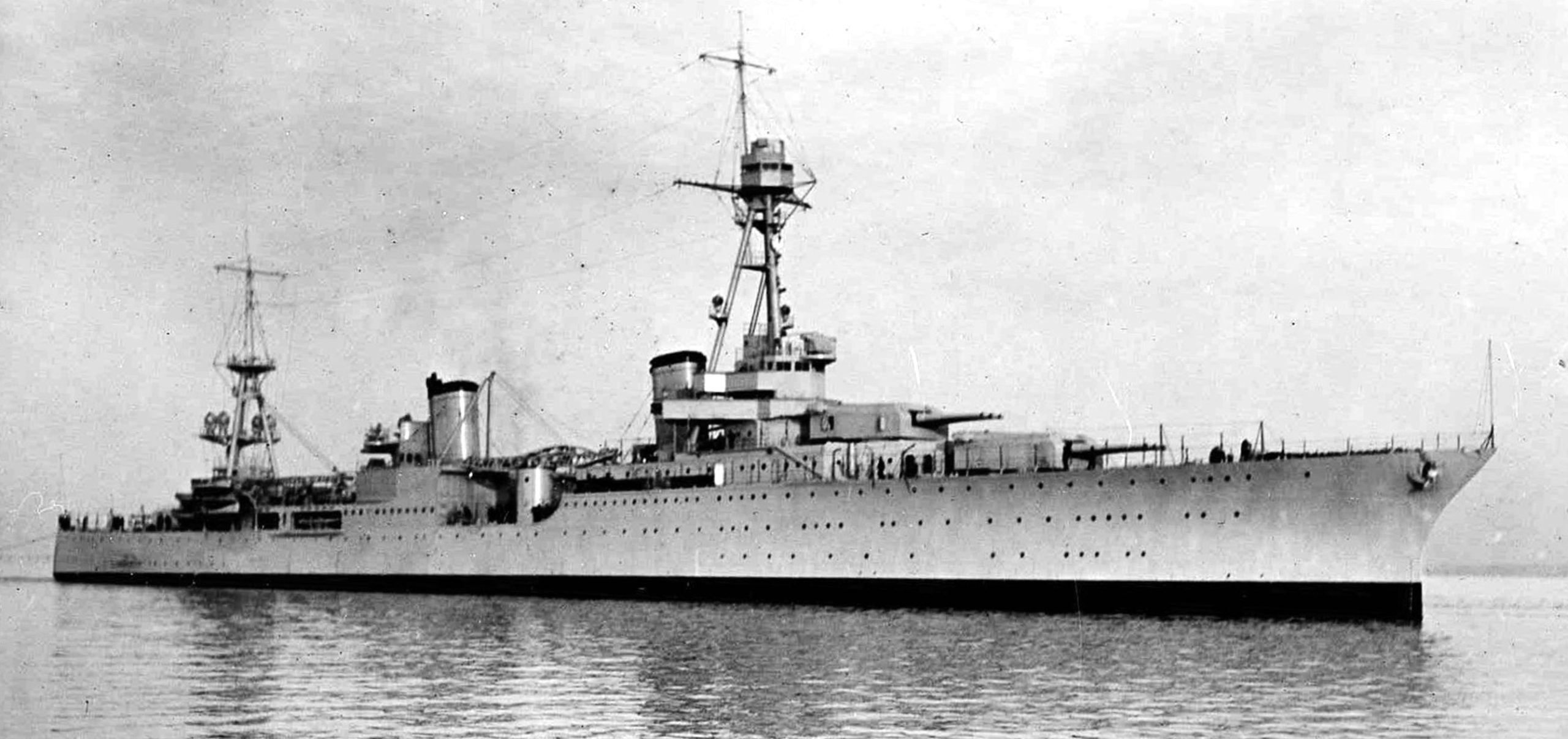
(USN Photo)
USS Augusta (CA-31), 1930s.
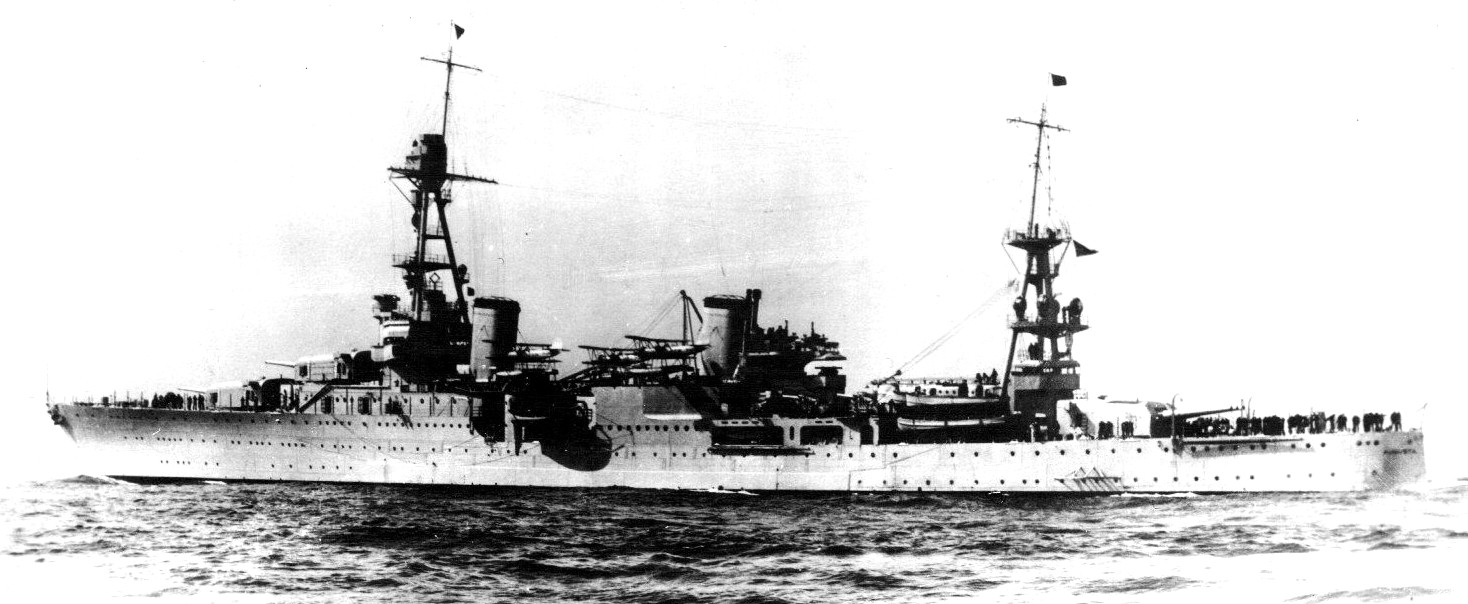
(USN Photo)
USS Augusta (CA-31), 1930s
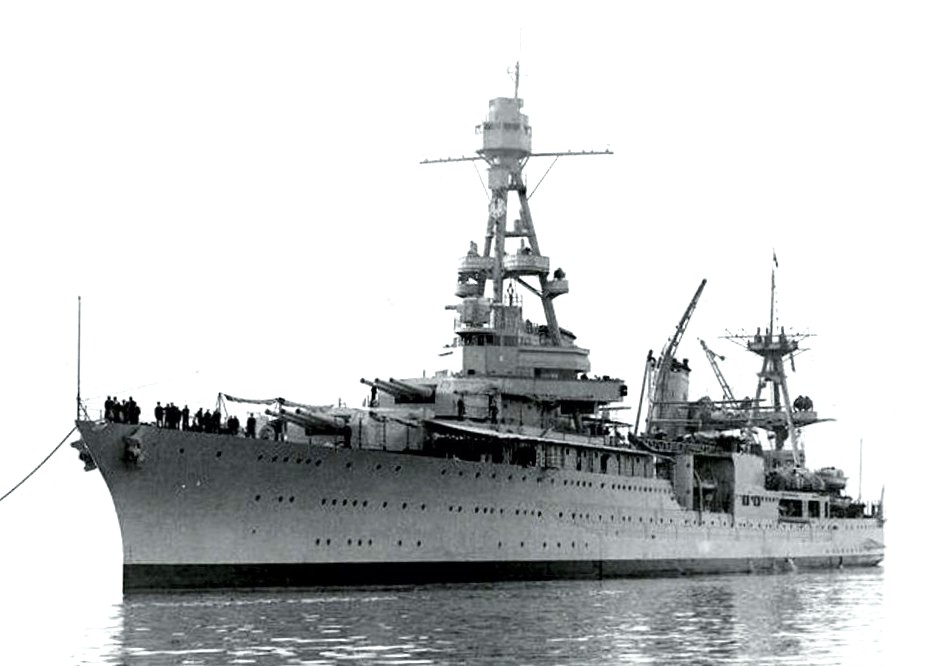
(State Library Victoria, Photo)
USS Augusta (CA-31), being assisted to her berth at Melbourne, Australia on 29 October 1934.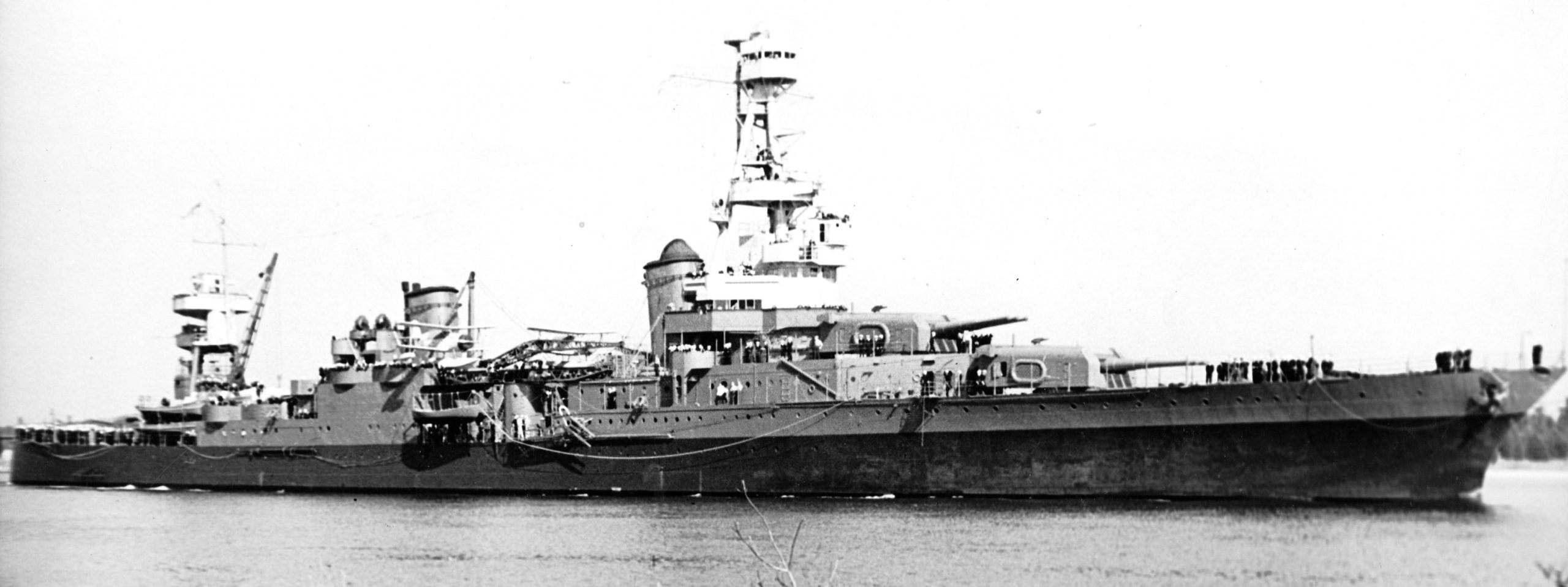
(USN Photo)
USS Augusta (CA-31) on the Cape Cod Canal, Massachusetts, 17 June 1941.
(USN Photo)
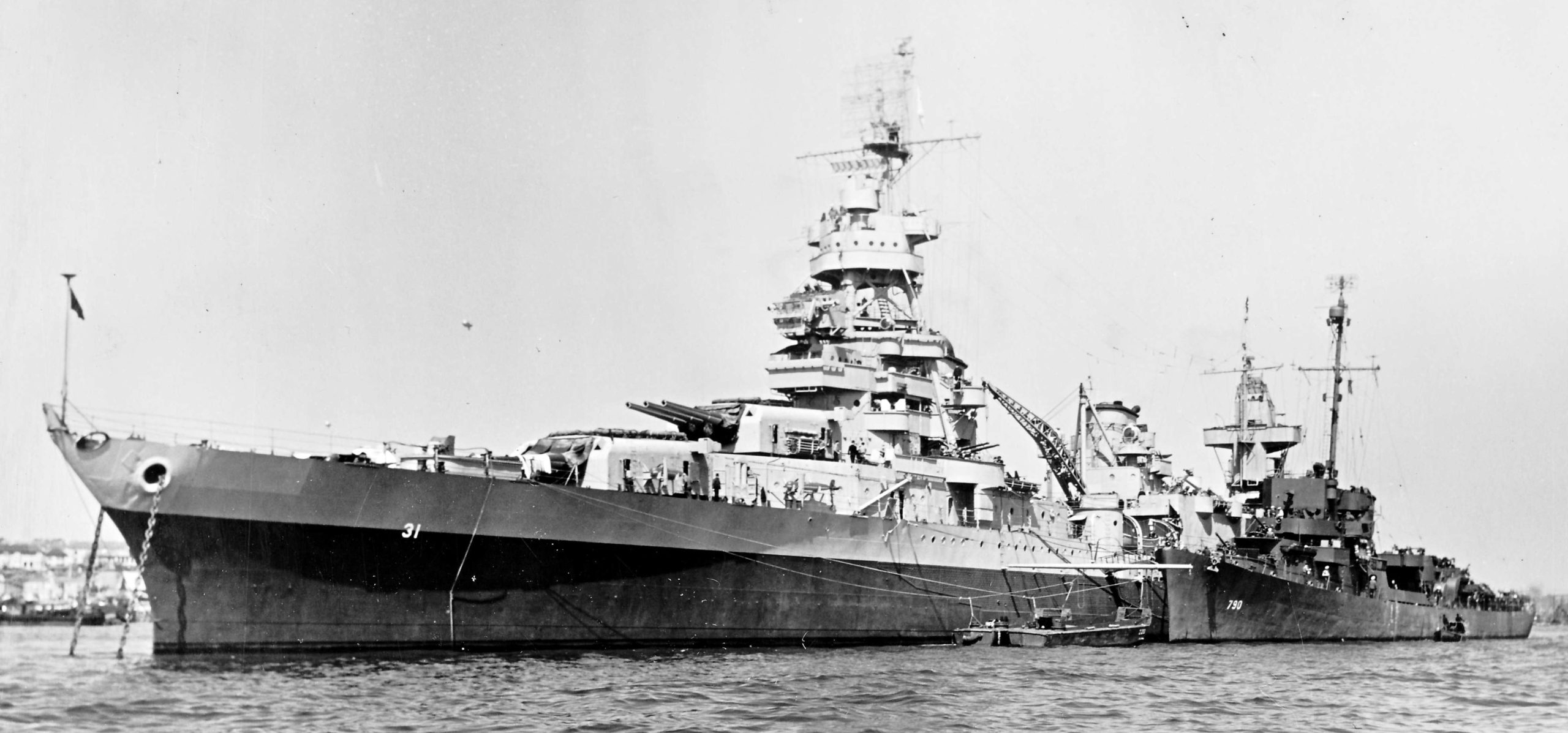
USS Augusta (CA-31), Plymouth, UK, 11 May 1944. USS Borum (DE 790) is tied up alongside. Both ships were part of the run-up to D-Day, scheduled to take place 5 June, delayed until 6 June.