
US Navy Heavy and Light Cruisers: USS Atlanta (CL-51), USS Juneau (CL-52), USS San Diego (CL-53), USS San Juan (CL-54)
Second London Naval Treaty
The 1936 Second London Naval Treaty would also influence the Navy’s light cruiser program. It imposed limits that resulted in the smaller displacement Atlanta class with a 5-inch (127 mm) dual purpose rapid fire main gun battery, the first such ship in the Navy. (Wikipedia)
Atlanta class
(CL-51) Atlanta (1941) – WW2: 5 battle stars, scuttled after torpedo damage 13 November 1942.
(CL-52) Juneau (1942) – WW2: 4 battle stars, sunk by torpedoes 13 November 1942, 687 killed.
(CL-53) San Diego (1942) – WW2: 18 battle stars.
(CL-54) San Juan (1942) – WW2: 13 battle stars.
USS Atlanta (CL-51)
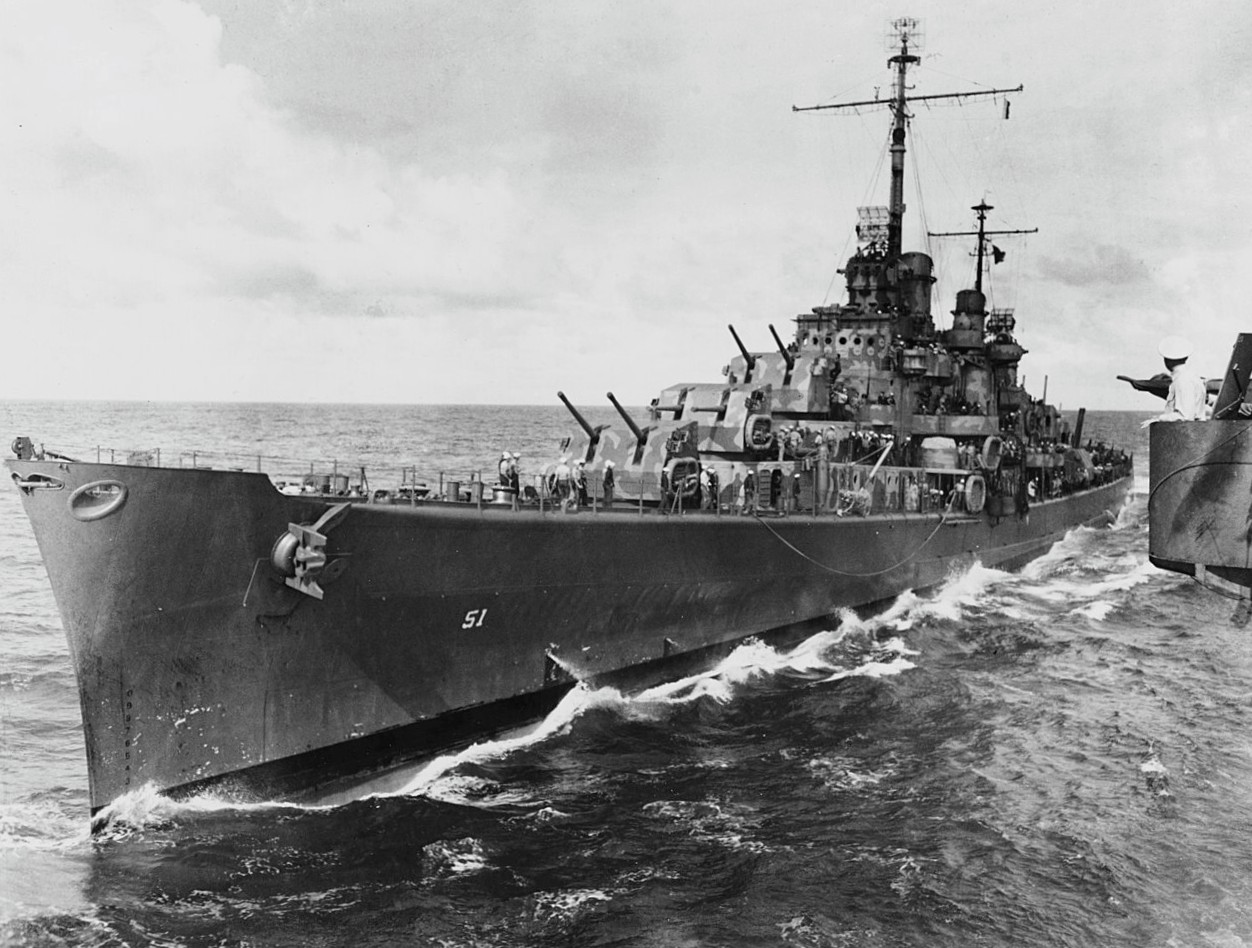
(USN Photo)
USS Atlanta (CL-51) comes alongside the heavy cruiser USS San Francisco (CA-38) to refuel, 16 October 1942.
USS Atlanta (CL-51) of the United States Navy was the lead ship of the Atlanta class of eight light cruisers. She was the third Navy ship named after the city of Atlanta, Georgia. Designed to provide anti-aircraft protection for US naval task groups, Atlanta served in this capacity in the naval battles Midway and the Eastern Solomons. Atlanta was heavily damaged by Japanese and friendly gunfire in a night surface action on 13 November 1942 during the Naval Battle of Guadalcanal. The cruiser was sunk on her captain’s orders in the afternoon of the same day.
Atlanta, in some works, is designated CLAA-51 because of her primary armament as an anti-aircraft cruiser. Hence, all of the Atlanta-class ships are sometimes designated as CLAA. However, her entire battery of 5-inch (127 mm) guns were dual-purpose (DP) guns, and were capable of being used against both air and surface targets, able to fire anti-aircraft, high-explosive and armor-piercing shells.
The Atlanta-class ships were lightly armored, making them poor surface combatants compared to a typical light cruiser. In terms of armament, the Atlanta-class was closer to a destroyer, being armed with 5-inch guns, than a light cruiser, which were generally equipped with 6-inch guns; but at well over 500 feet (152 m) in length, and combined with their large battery of sixteen 5-inch (127 mm) guns, reduced to twelve in number for later ships of the class, they were designated as light cruisers. The unusual features of the Atlanta-class is a result of the class originally being intended to be a destroyer leader. A destroyer leader is larger than its destroyer counterparts to accommodate command staff and resources as well as other general utilities to support the destroyers that they would be paired with.
In-line with this intended role the ship was given a complement of torpedoes and relatively thin armor compared to other contemporary light cruisers. Later, the dimensions and tonnage of the ship resulted in a change in designation of the Atlanta-class from a destroyer leader to a light cruiser. Despite this change in designation, the Atlanta-class of ships maintained their destroyer leader features, including their destroyer-caliber guns, albeit while mounting significantly more 5 in guns than most contemporary destroyers. (Wikipedia)
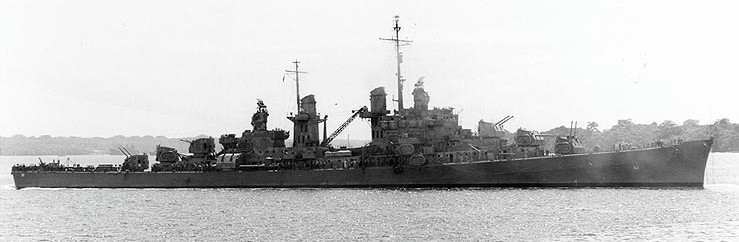
(USN Photo)
USS Atlanta (CL-51) backing down in a South Pacific harbour, 25 October 1942.
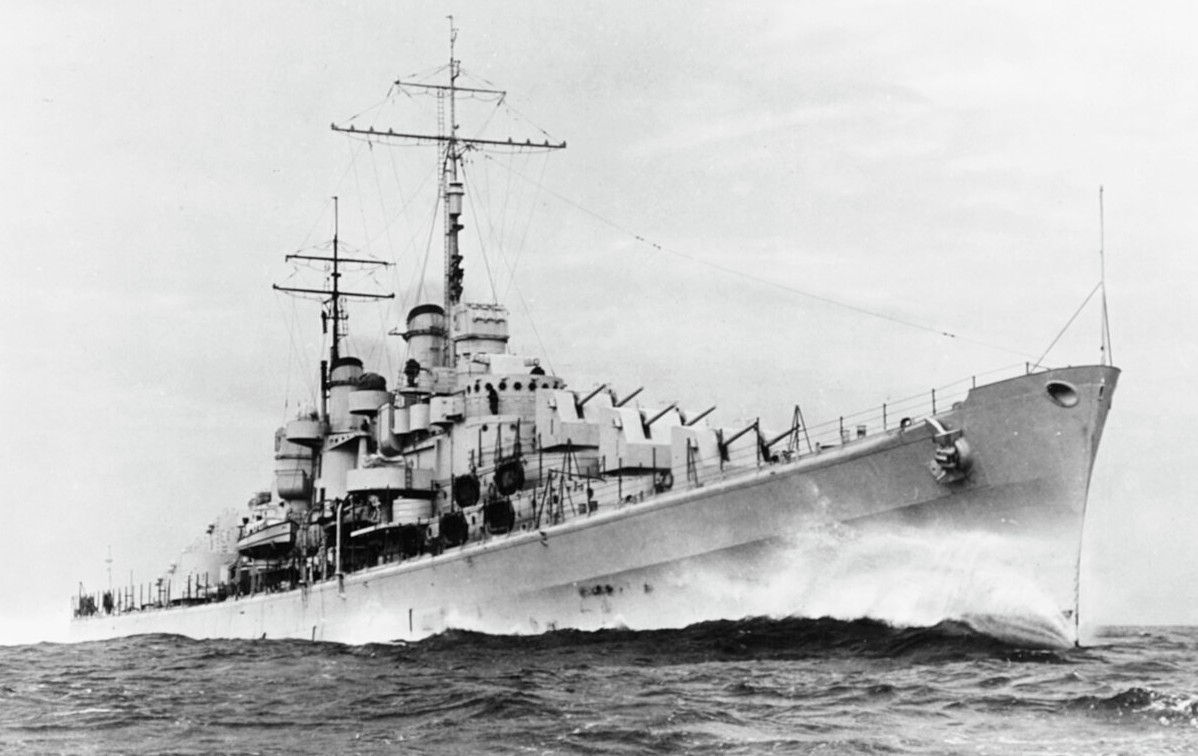
(USN Photo)
USS Atlanta (CL-51) steaming at high speed, probably during her trials, circa in November 1941.
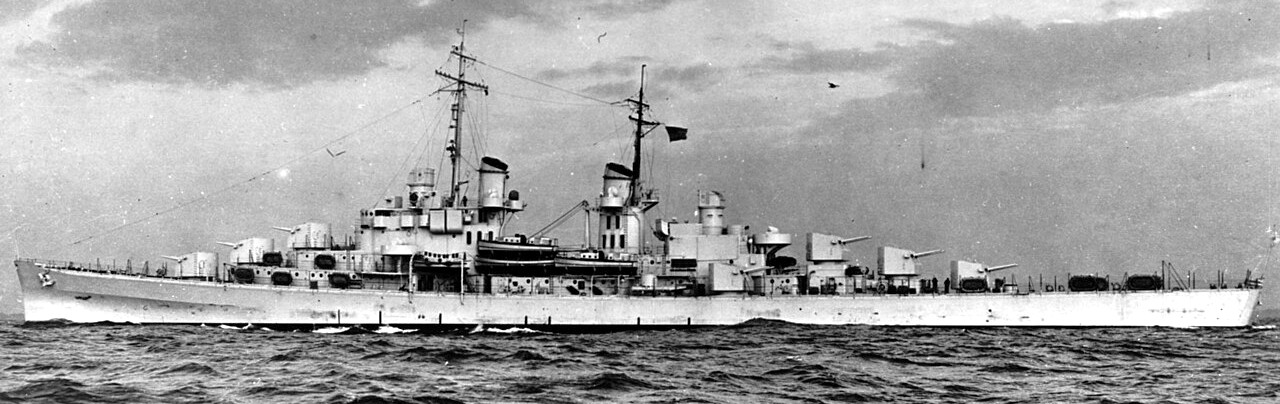
(USN Photo)
USS Atlanta (CL-51) running trials off Rockland, Maine, on 26 November 1941.
USS Juneau (CL-52)
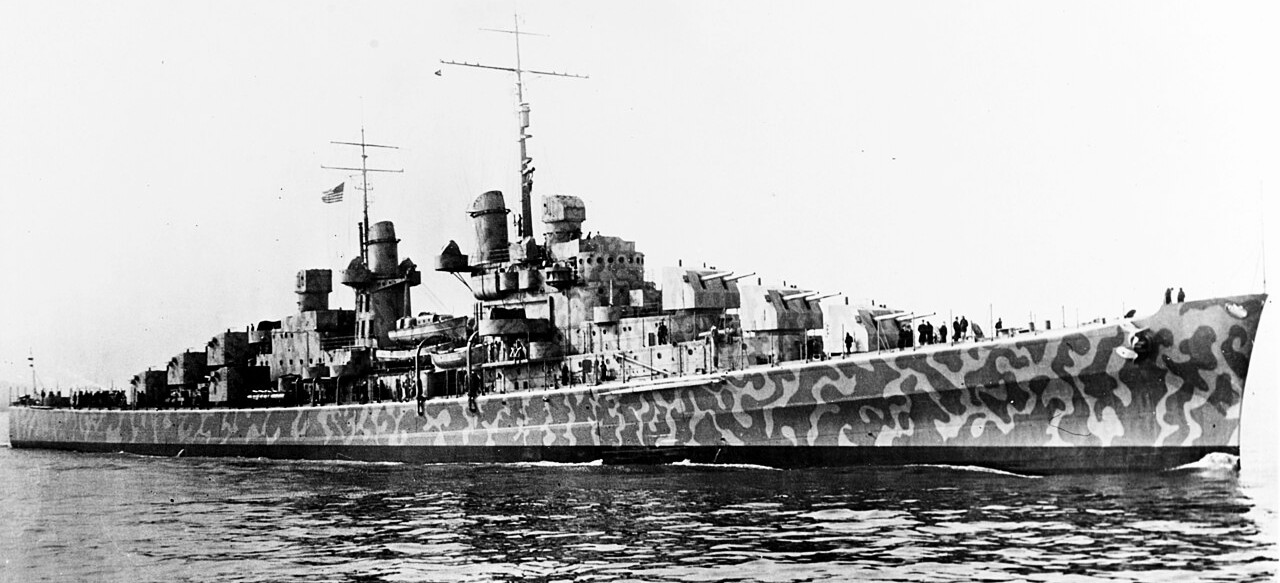
(USN Photo)
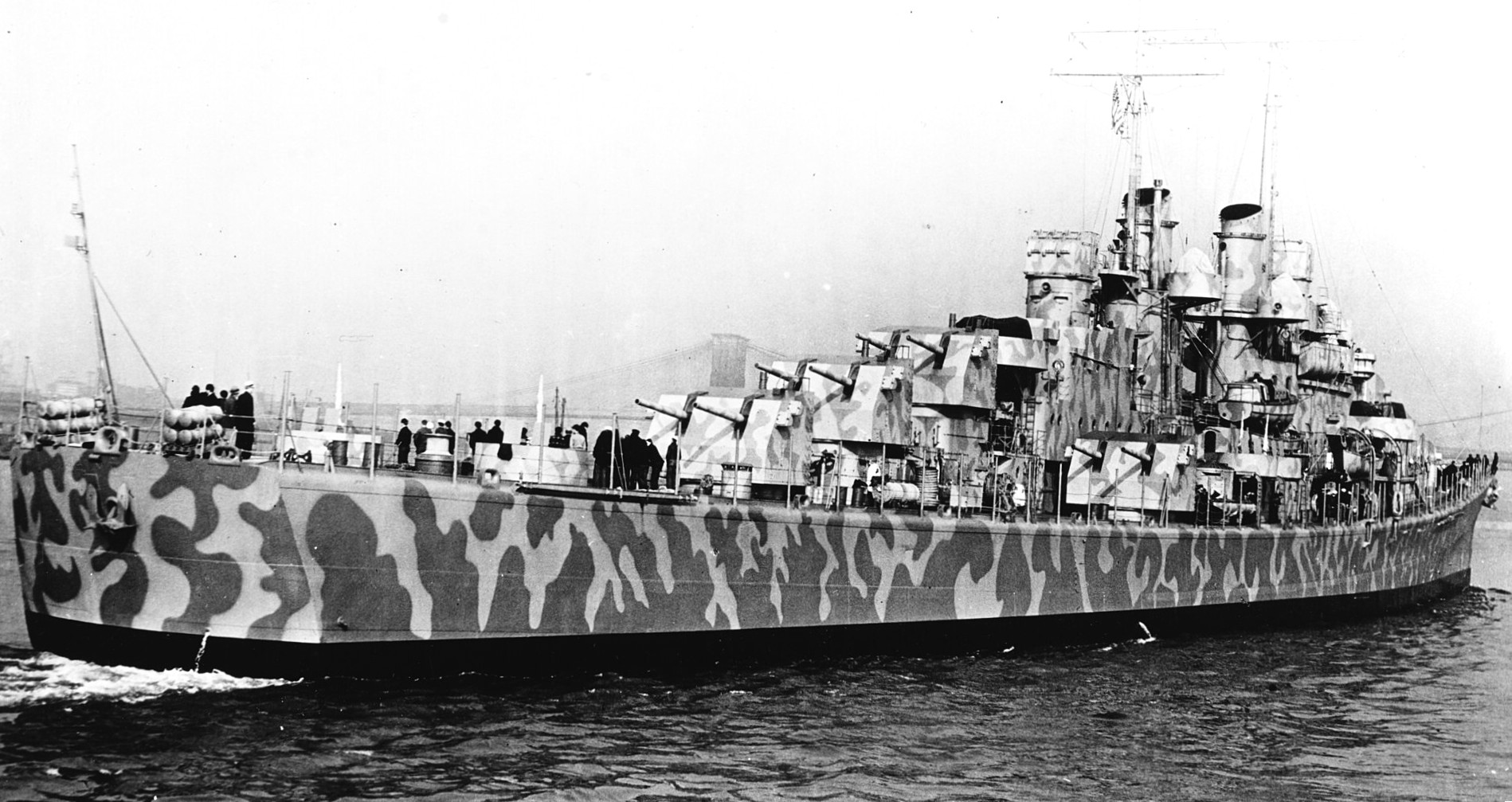
USS Juneau (CL-52) in New York Harbor, 11 February 1942.
USS Juneau (CL-52) was a United States Navy Atlanta-class light cruiser torpedoed and sunk at the Naval Battle of Guadalcanal on 13 November 1942. In total, 687 officers and sailors, including the five Sullivan brothers, were killed in action as a result of her sinking. Only 10 survivors were rescued after eight days in the water. To honour the five Sullivan brothers and Juneau, the U.S. Navy has since commissioned two ships named USS The Sullivans and two ships named USS Juneau. On 17 March 2018, Paul Allen’s research crew on board RV Petrel located the wreck of Juneau at a depth of about 4,200 m (13,800 ft) off the Solomon Islands. (Wikipedia)
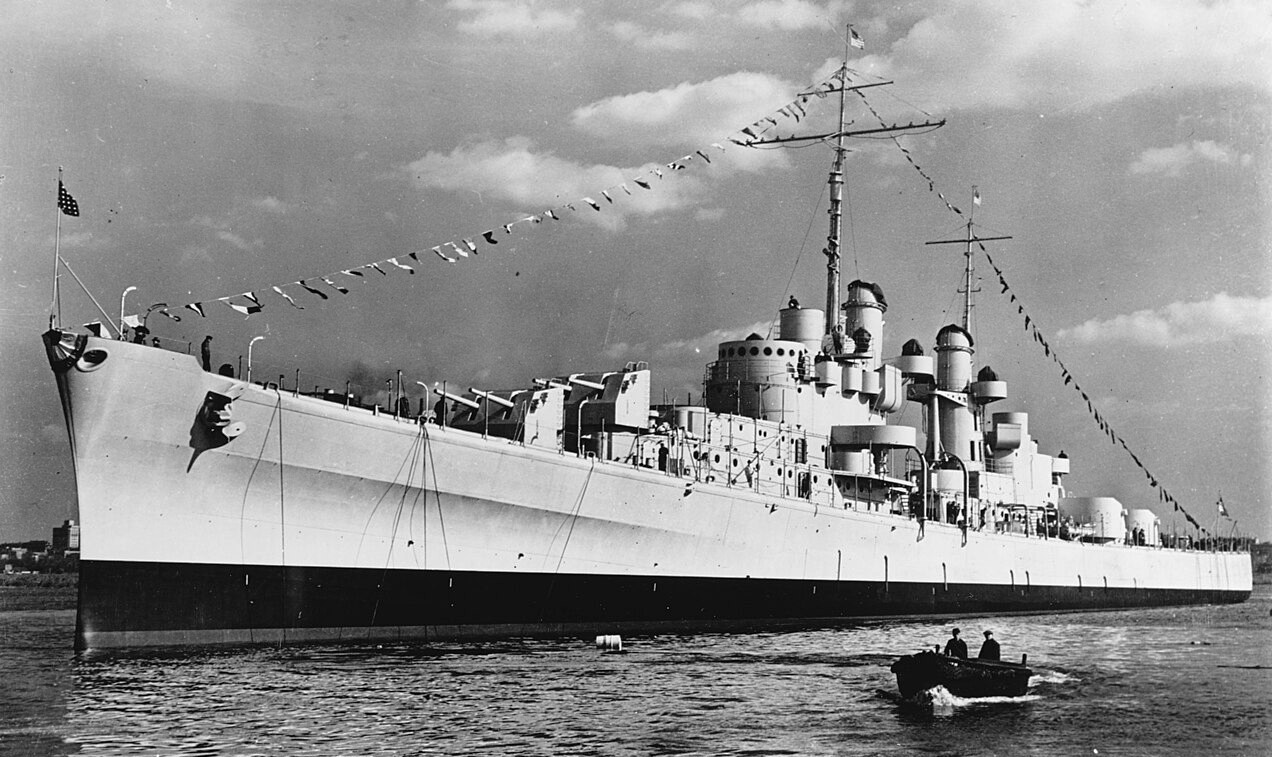
(U.S. National Archives Photo)
USS Juneau (CL-52) just after being launched at the Federal Shipbuilding Company yard, Kearny, New Jersey, 25 October 1941.
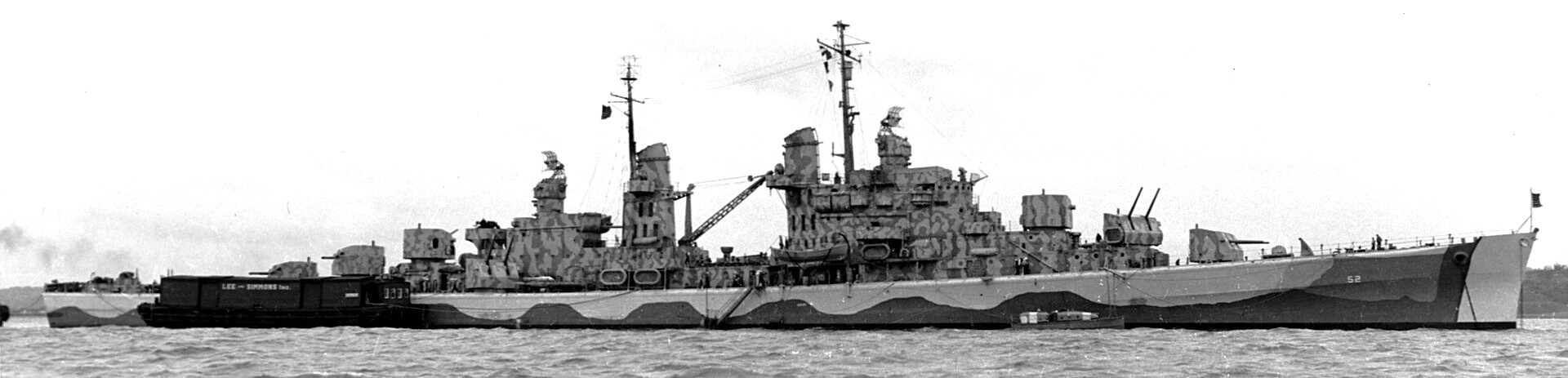
(USN Photo)
USS Juneau (CL-52) off New York City (USA), 1 June 1942. A barge is alongside her starboard quarter. Her superstructure retains its original measure 12 “mottled pattern” camouflage scheme, but her hull has been repainted wave-style pattern.
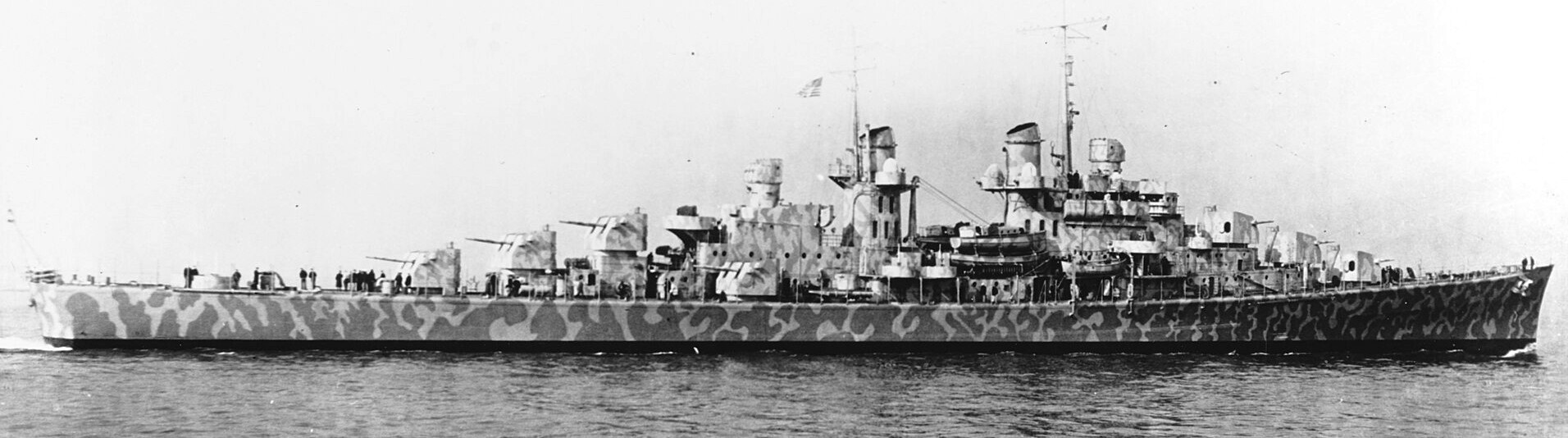
(USN Photo)
USS Juneau (CL-52) in New York harbor (USA), 11 February 1942.
(U.S. National Archives Photo)
USS Juneau (CL-52) in New York Harbour, 11 February 1942.
USS San Diego (CL-53)
(USN Photo)
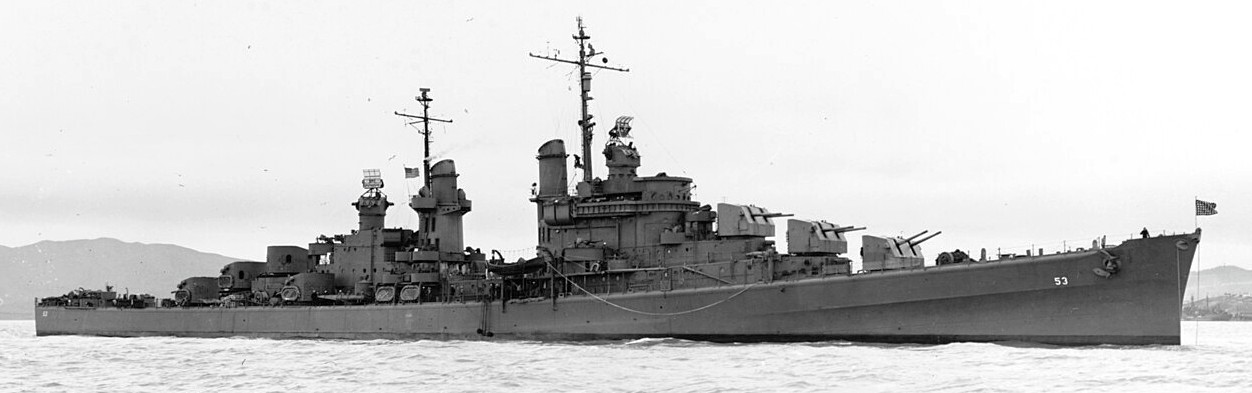
USS San Diego (CL-53) off San Francisco, California, on 1 January 1944.
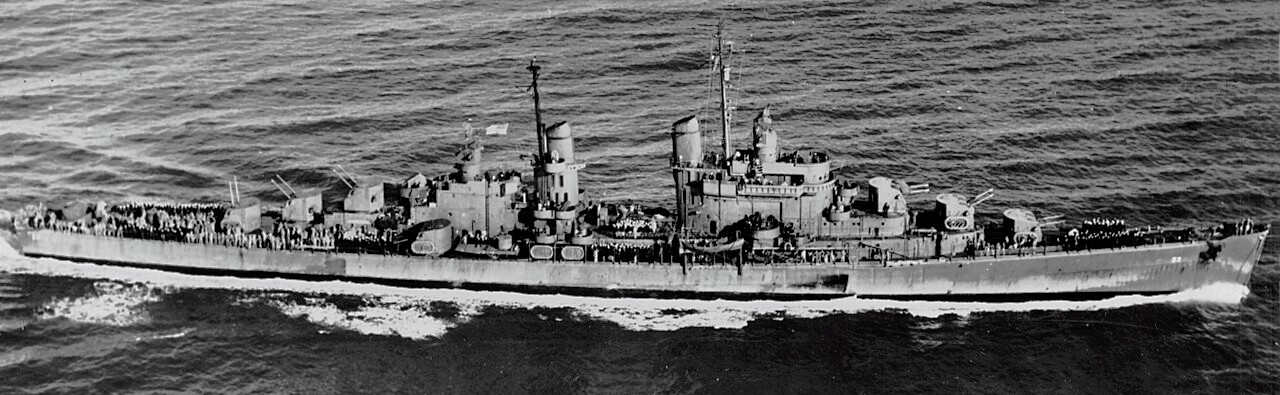
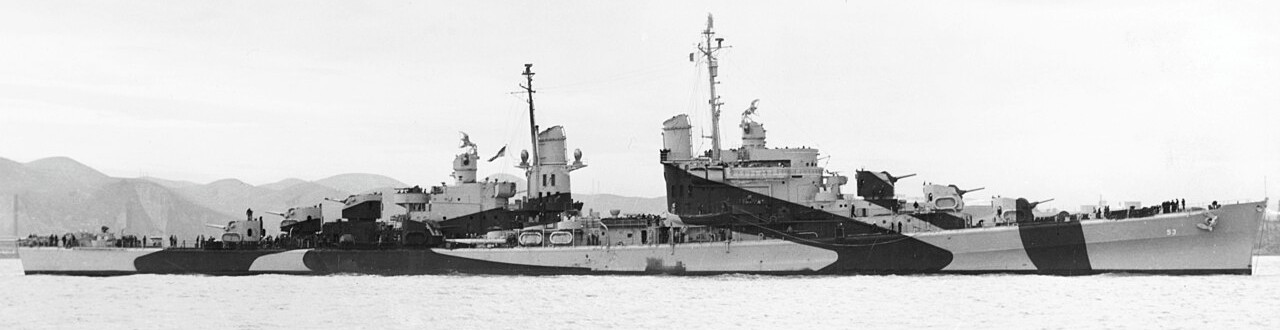
The USS San Diego (CL-53) was an Atlanta-class light cruiser of the United States Navy, commissioned just after the US entry into the Second World War, and active throughout the Pacific theater. Armed with 16 5 in (127 mm)/38 cal DP anti-aircraft guns and 16 Bofors 40 mm AA guns, the Atlanta-class cruisers had one of the heaviest anti-aircraft broadsides of any warship of the Second World War.
San Diego was one of the most decorated US Naval vessels of World War II, being awarded 18 battle stars, and was the first major Allied warship to enter Tokyo Bay after the surrender of Japan. Decommissioned in 1946, the ship was sold for scrapping in December 1960. (Wikipedia)
(USN Photo)
USS San Diego (CL-53) underway on 8 March 1944.
(USN Photo)
USS San Diego (CL-53) off San Francisco, California, on 1 January 1944.
USS San Juan (CL-54)
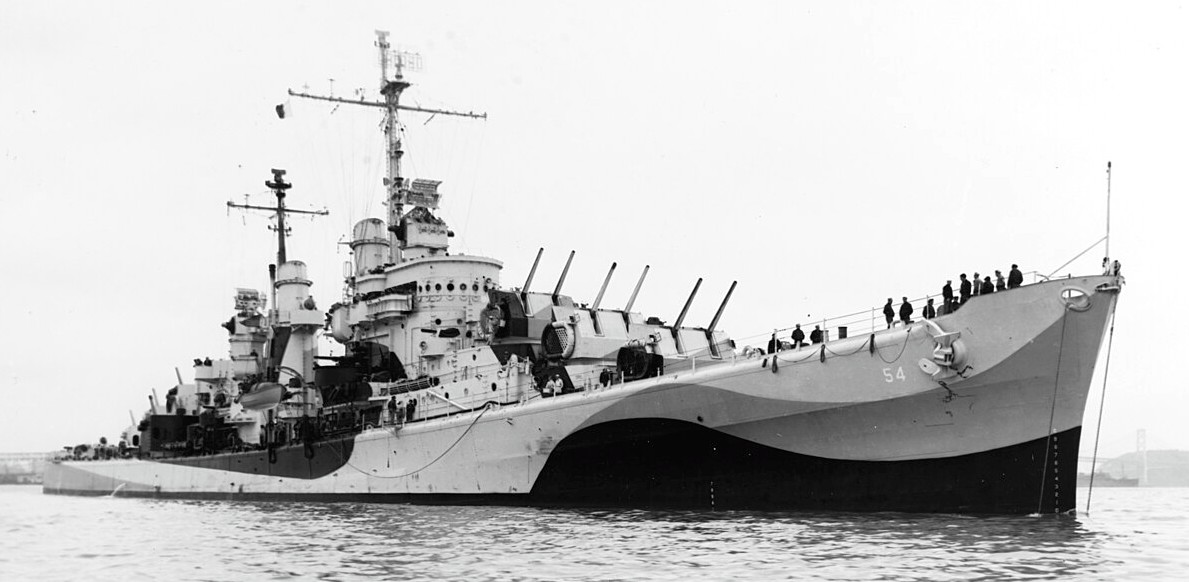
(USN Photo)
USS San Juan (CL-54) off San Francisco, California, on 14 October 1944. She is wearing Camouflage Measure 33, Design 22D.
The second USS San Juan (CL-54), and the first to be named for the city of San Juan, Puerto Rico, was an Atlanta-class light cruiser of the United States Navy. She was laid down on 15 May 1940 by the Bethlehem Steel Co. (Fore River), Quincy, Massachusetts; launched on 6 September 1941; sponsored by Mrs. Margarita Coll de Santori; and commissioned on 28 February 1942. (Wikipedia)
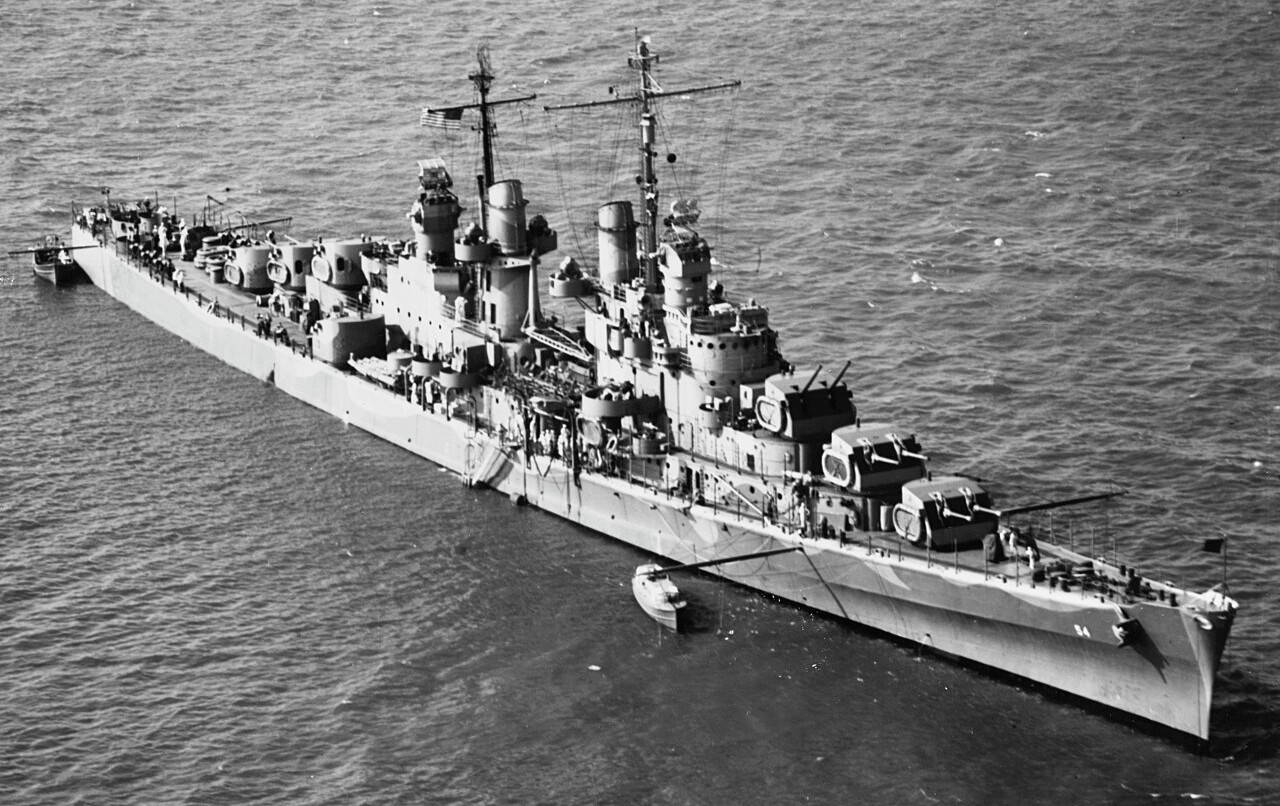
(USN Photo)
USS San Juan (CL-54) off Norfolk, Virginia, 3 June 1942.
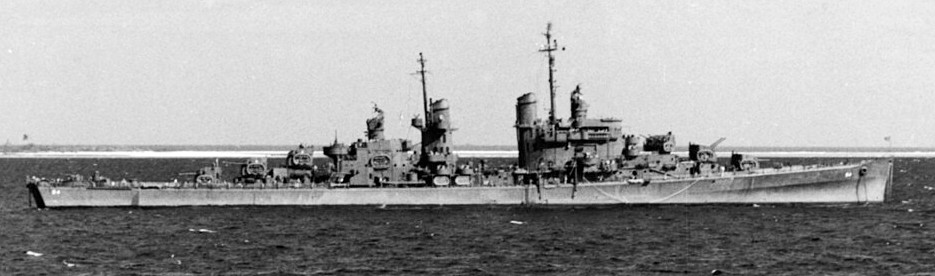
(USN Photo)
USS San Juan (CL-54), circa 1943-1944.
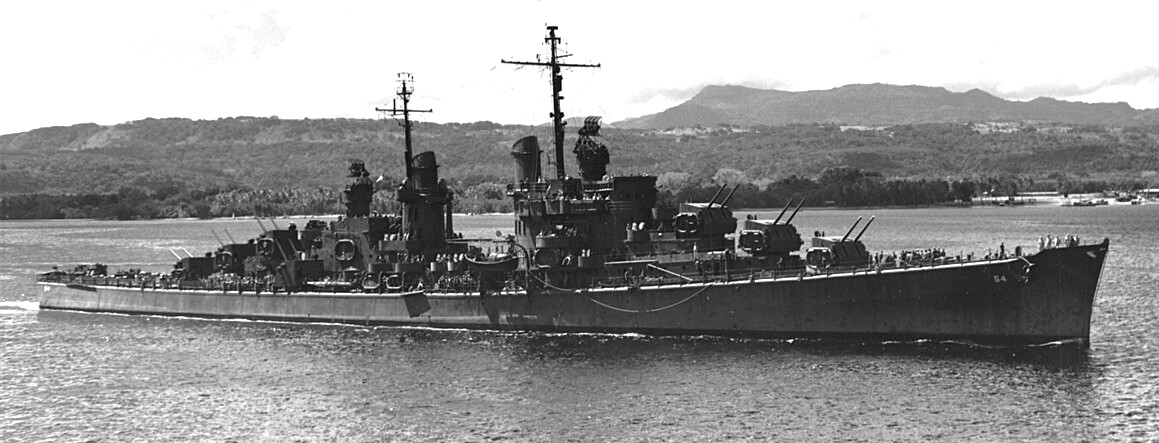
(USN Photo)
USS San Juan (CL-54) in a South Pacific harbour, on 30 August 1943.
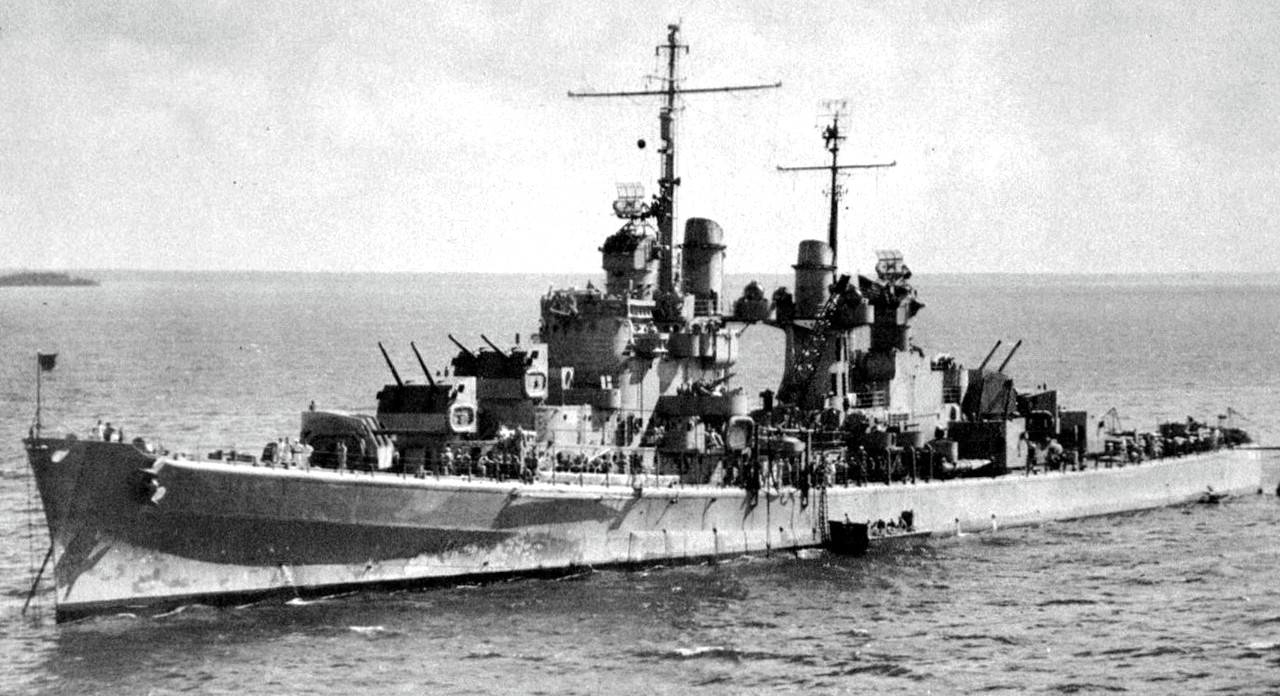
(USN Photo)
USS San Juan (CL-54) at anchor in the South Pacific, in 1942.
Cruiser-Destroyer (CLD)
Parallel to the Atlanta design was an abortive attempt to design a super-Atlanta known as the Cruiser-Destroyer, or CLD. The “ship characteristics” resulting from this study would be almost identical to that of the later CL-154 design. CLD did not become an official hull classification symbol. (Wikipedia)