
USN Armored cruisers (ACR): (ACR-1) Maine, (ACR-2) New York, (ACR-3) Brooklyn, (ACR-4) Pennsylvania, (ACR-5) West Virginia, (ACR-6) California, (ACR-7) Colorado, (ACR-8) Maryland, (ACR-9) South Dakota, (ACR-10) Tennessee, (ACR-11) Washington, (ACR-12) North Carolina, (ACR-13) Montana
Officially these ships were e.g., “Armored Cruiser No. 1”. Unofficially, top naval officers initially referred to these ships as battleships because they cost almost as much, shared many features with them, and were intended to accompany them in fleet actions; they took care to ensure that Congress never heard their opinion. The 1905 Russo-Japanese War showed armored cruisers did not perform as well as either battleships or as other cruiser types. As battleship technology advanced they were judged obsolete for their original role about the time the last U.S. armored cruiser was commissioned (this advance in part led to the development of battlecruisers as a replacement), and so they were retained for other cruiser roles despite their deficiencies. During 1912–1920 the U.S. armored cruisers had their names changed from states to cities within those states to free up the names for battleships. (Wikipedia)
(ACR-1) Maine (1895), later classed as a second class battleship, sunk by explosion 15 February 1898, 286 killed
(ACR-2) New York (1893) – Spanish–American War, later Saratoga, WW1 as Rochester, later CA-2
(ACR-3) Brooklyn (1896) – Spanish–American War, later CA-3
Pennsylvania class
(ACR-4) Pennsylvania (1905), later Pittsburgh – United States occupation of Veracruz, WW1, later CA-4
(ACR-5) West Virginia (1905), later Huntington – WW1, later CA-5
(ACR-6) California (1907), later San Diego – WW1, sunk by mine 19 July 1918, 6 killed
(ACR-7) Colorado (1905), later Pueblo – WW1, later CA-7
(ACR-8) Maryland (1905), later Frederick – WW1, later CA-8
(ACR-9) South Dakota (1908) – WW1, later Huron CA-9
Tennessee class
(ACR-10) Tennessee (1906), later Memphis, wrecked 29 August 1916, 43 killed and missing
(ACR-11) Washington (1906), later Seattle – WW1, later CA-11
(ACR-12) North Carolina (1908) – WW1, later Charlotte CA-12
(ACR-13) Montana (1908), later Missoula – WW1, later CA-13
(ACR-1) Maine
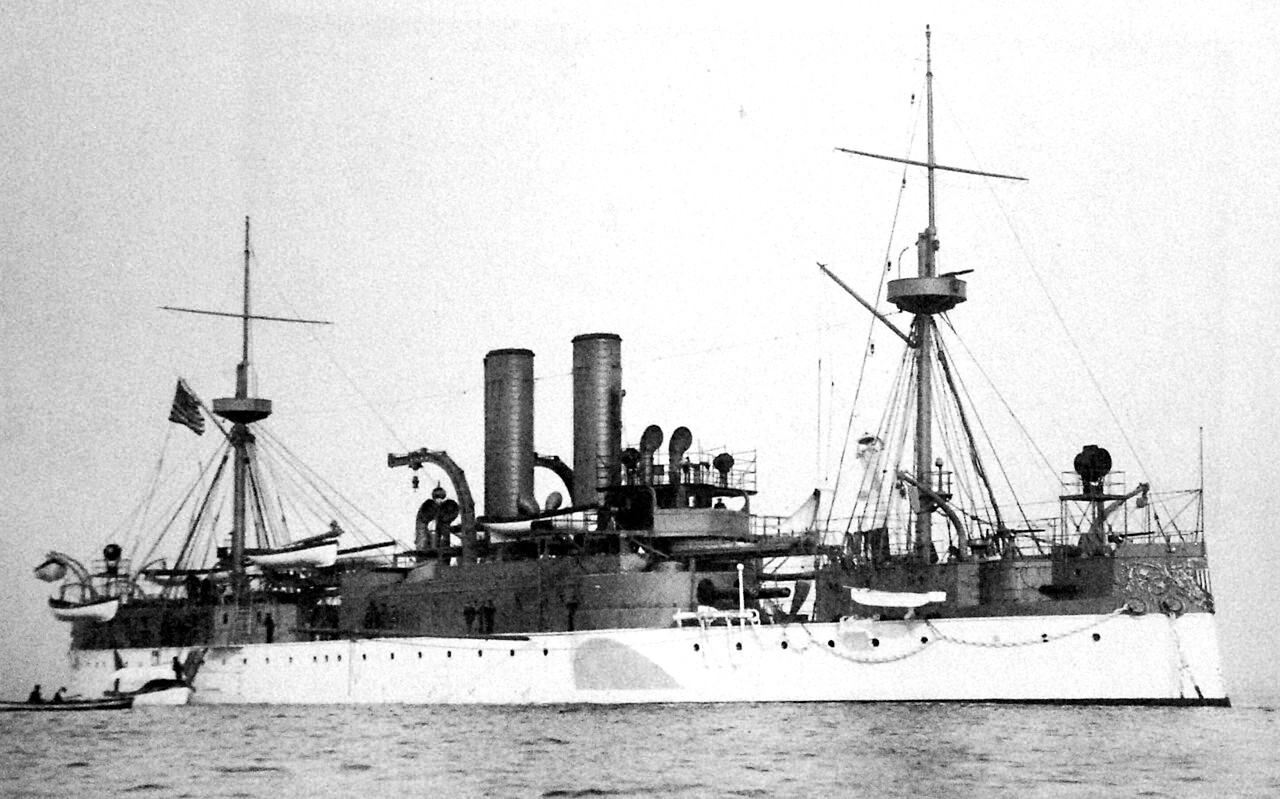
(Library of Congress Photo, 1898)
USS Maine was a United States Navy ship that sank in Havana Harbor on 15 Feb 1898, contributing to the outbreak of the Spanish–American War in April. U.S. newspapers claimed that the Spanish were responsible for the ship’s destruction, while evidence points to an accident caused by an internal coal bunker fire. The phrase “Remember the Maine! To hell with Spain!” became a rallying cry for action. The Maine explosion served as a catalyst which accelerated the events leading up to the war.
Maine is described as an armored cruiser or second-class battleship, depending on the source, ordered in 1886. She was the first U.S. Navy ship to be named after the state of Maine. Maine and its contemporary the battleship Texas were both represented as an advance in American warship design, reflecting the latest European naval developments. Both ships had two-gun turrets staggered en échelon, and full sailing masts were omitted due to the increased reliability of steam engines. Maine and Texas were obsolete by the time of completion due to a protracted nine-year construction period.[3] Far more advanced vessels were in service or nearing completion that year.
Maine was sent to Havana Harbor to protect U.S. interests during the Cuban War of Independence. She exploded and sank on the evening of 15 Feb 1898, killing 268 sailors, which was three-quarters of her crew. In 1898, a U.S. Navy board of inquiry ruled that the ship had been sunk by an external explosion from a mine. However, some U.S. Navy officers disagreed with the board, suggesting that the ship’s magazines had been ignited by a spontaneous fire in a coal bunker. The coal used in Maine was bituminous, which is known for releasing firedamp, a mixture of gases composed primarily of flammable methane that is prone to spontaneous explosions. An investigation by Admiral Hyman Rickover in 1974 agreed with the coal fire hypothesis, presented in a 1976 monograph that argued for this conclusion. The cause of her sinking remains a subject of debate.
The ship lay at the bottom of the harbor until 1911, when it was patched and refloated within a cofferdam. The hull was then towed to sea and sunk. Maine now lies on the seabed 3,600 feet (1,100 m) below the surface. The ship’s main mast is now a memorial in Arlington National Cemetery. (Wikipedia)
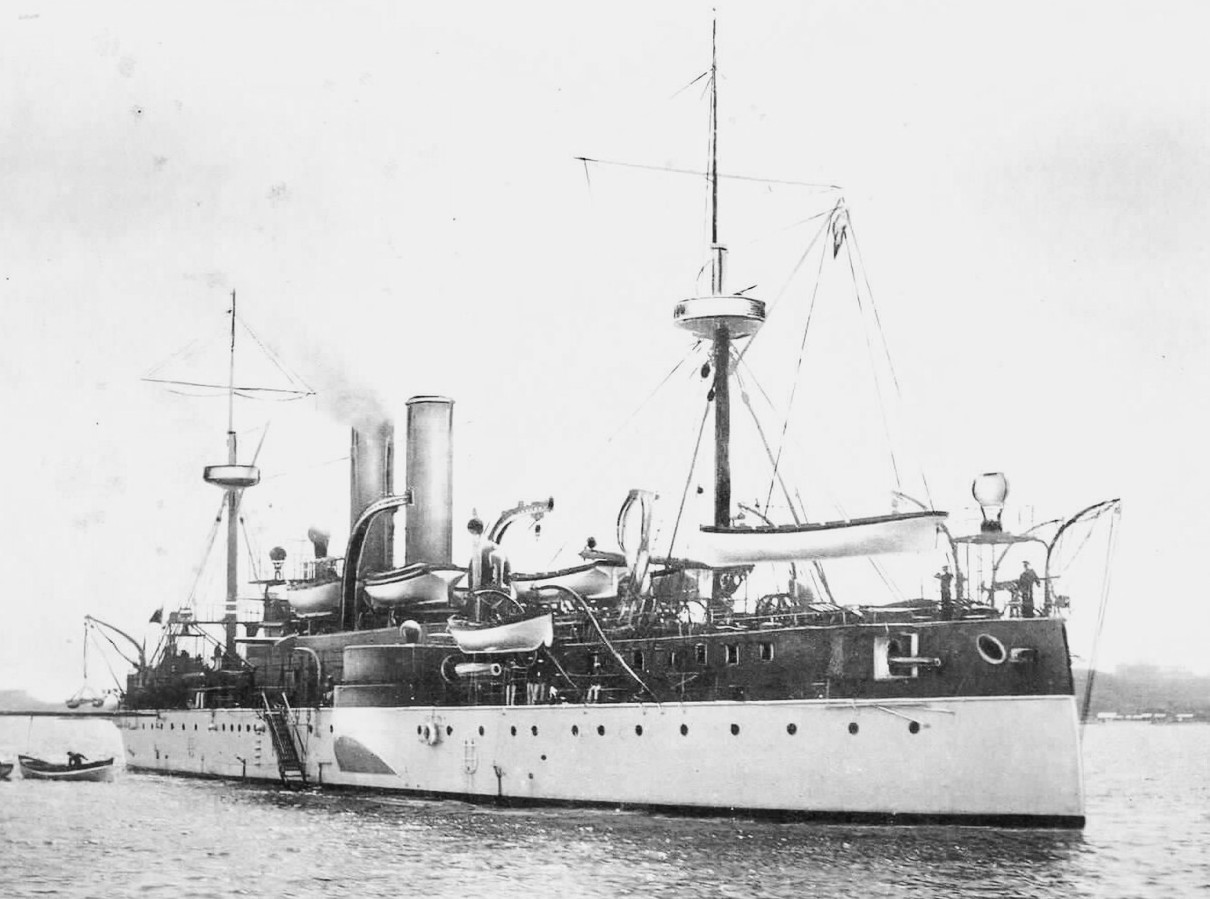
(USN Photo)
USS Maine, Armored Cruiser ACR-1 in Havana harbor, shortly before the explosion in 1898.
(ACR-2) New York
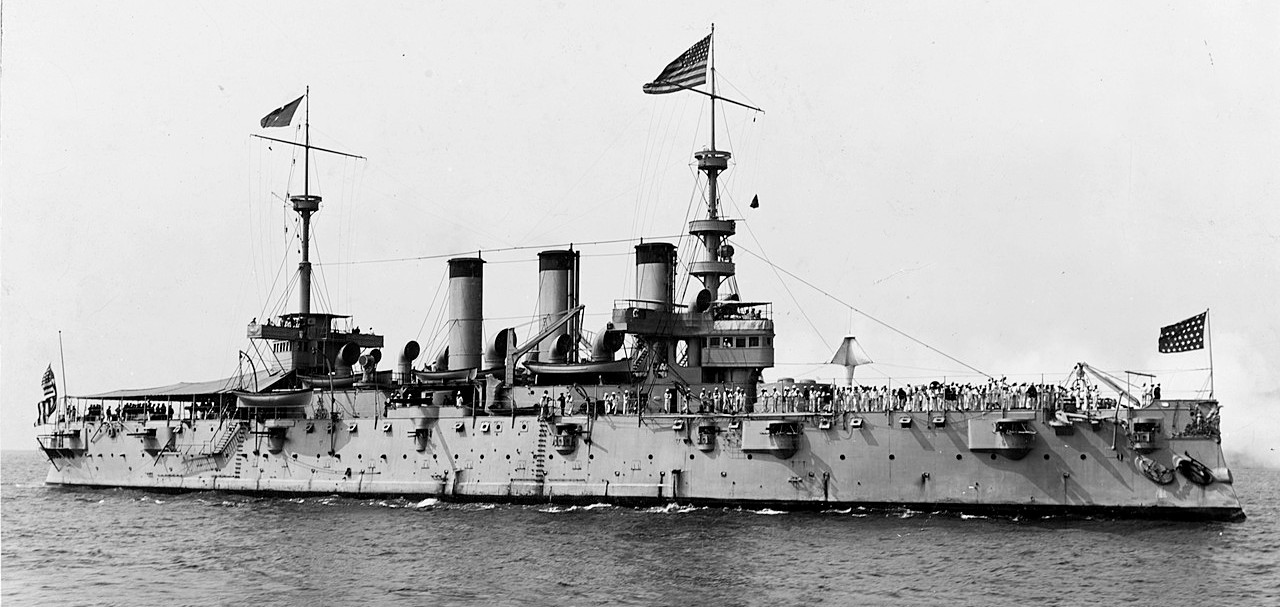
(U.S. Naval History and Heritage Command Photo, 1898)
USS New York (hull number ACR-2/CA-2) was the second United States Navy armored cruiser so designated; the first was the ill-fated Maine, which was soon redesignated a second-class battleship. Due to the unusually protracted construction of Maine, New York was actually the first armored cruiser to enter U.S. Navy service. The fourth Navy ship to be named in honor of the state of New York, she was later renamed Saratoga and then Rochester. With six 8-inch guns, she was the most heavily armed cruiser in the US Navy when commissioned.
She was laid down on 19 September 1890 by William Cramp & Sons, Philadelphia, launched on 2 December 1891, and sponsored by Miss Helen Clifford Page, the daughter of J. Seaver Page, the secretary of the Union League Club of New York. New York was commissioned 1 August 1893, Captain John Philip in command. (Wikipedia)
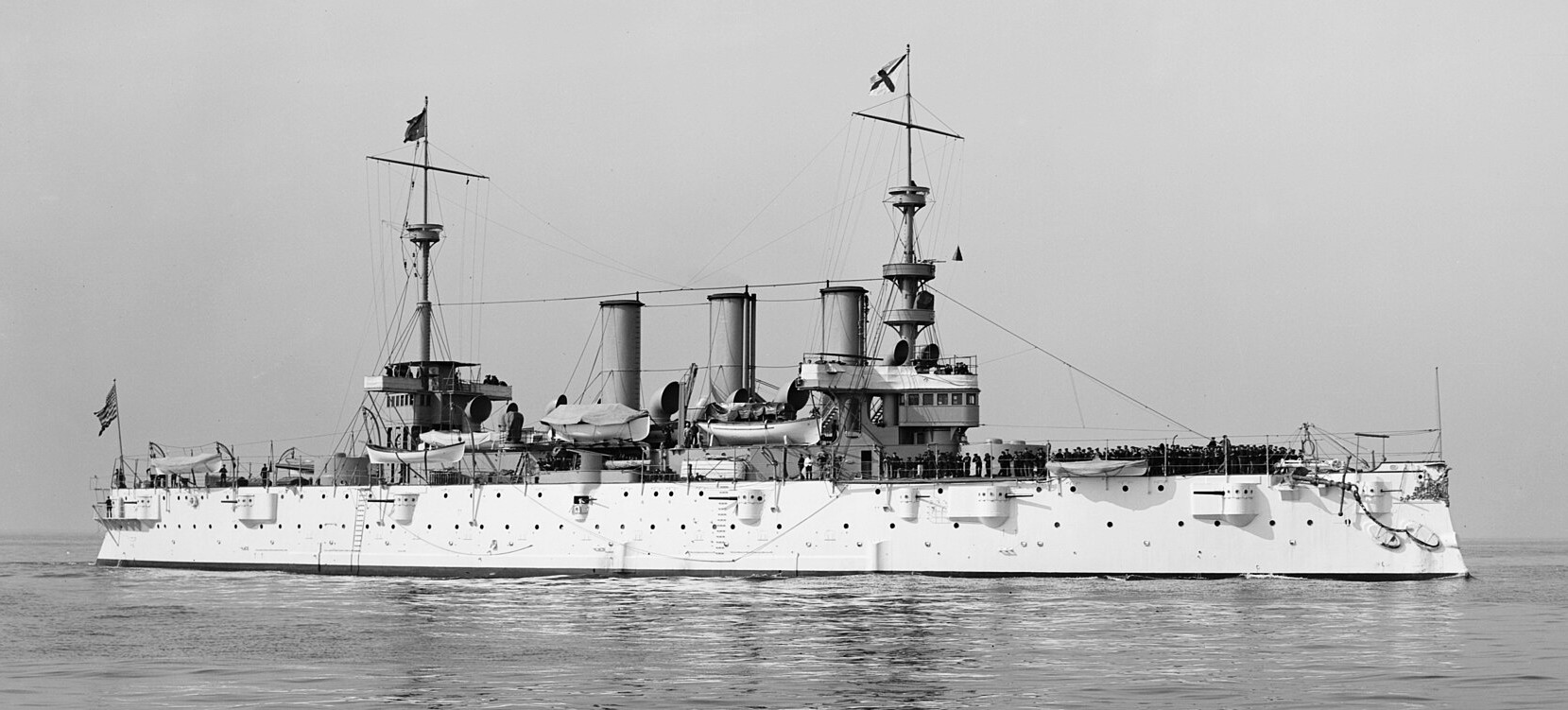
(Library of Congress Photo)
USS New York, 1899.
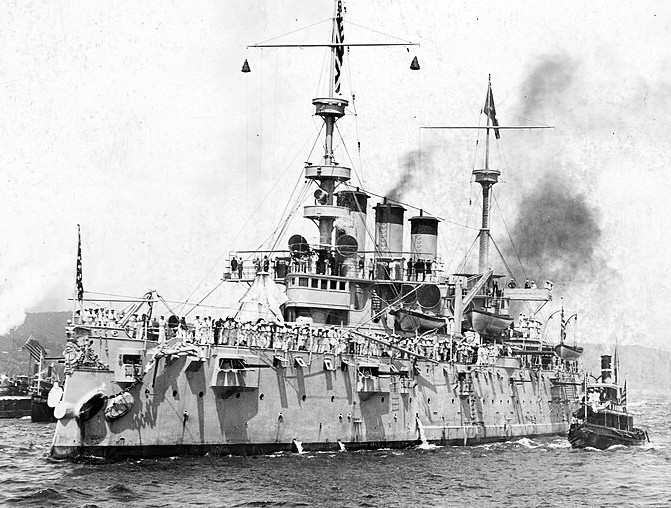
(C.C. Langill, New York Army and Navy Journal Photo)
USS New York, 16 Sep 1899. Ships of the North Atlantic Squardron attended by tugs proceed down the Hudson River in route to Riverside on 15 September 1898 during the Dewey Parade. also included were five revenue cutters and at least six boats from the Committee on water parade.
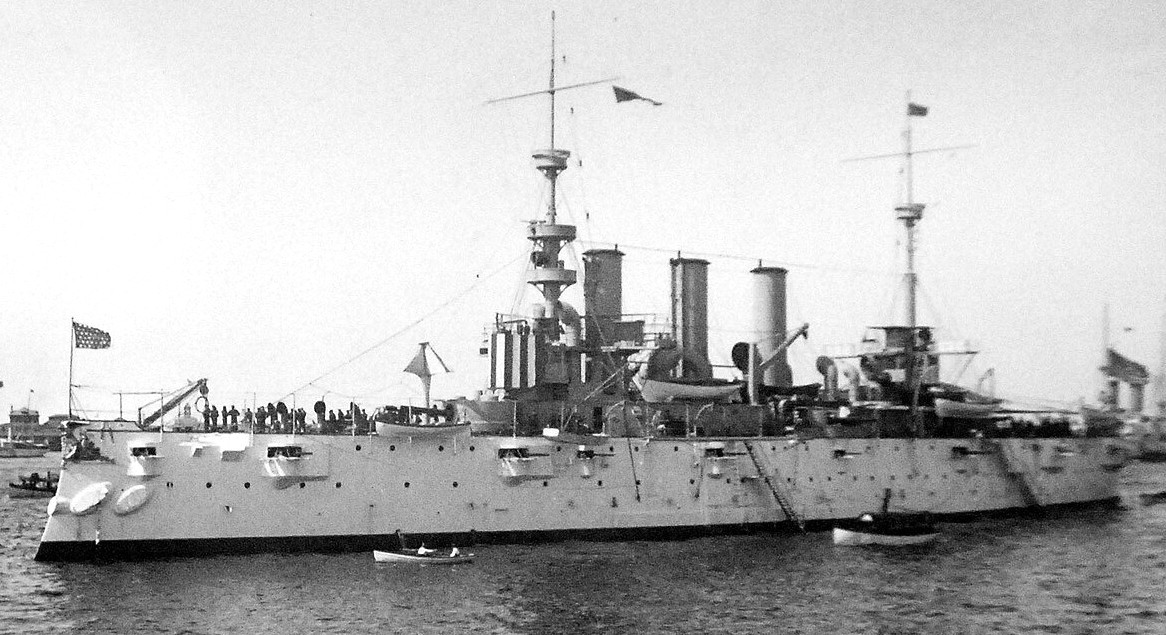
(C.C. Langill, New York Army and Navy Journal Photo)
USS New York, 16 Sep 1899.
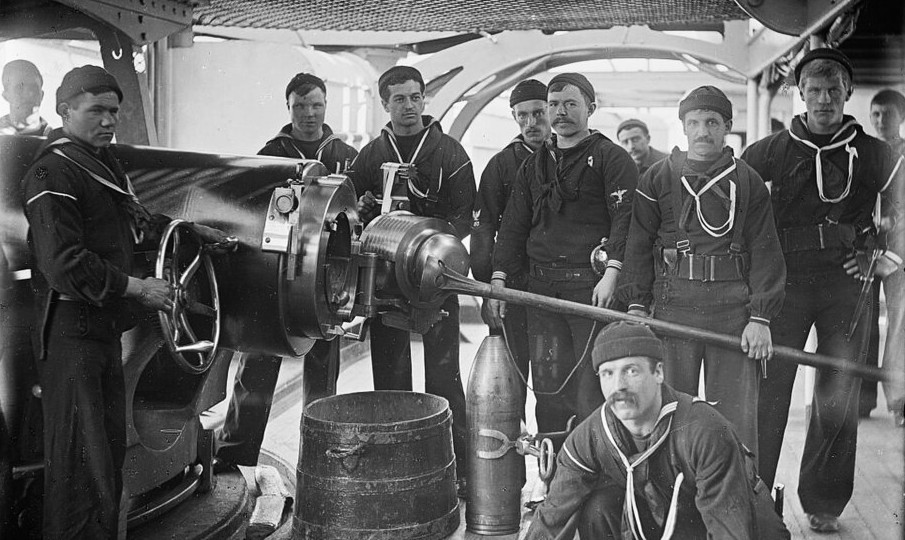
(Library of Congress Photo)
USS New York 8-inch gun and crew, c1898.
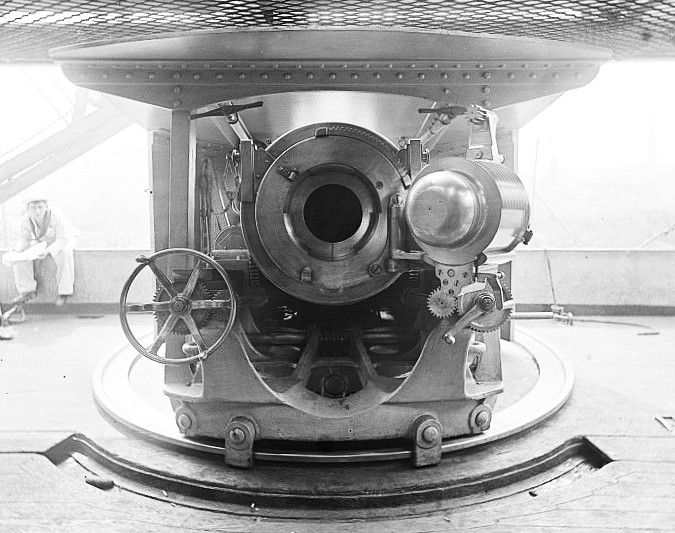
(Library of Congress Photo)
USS New York 8-inch gun, c1898.
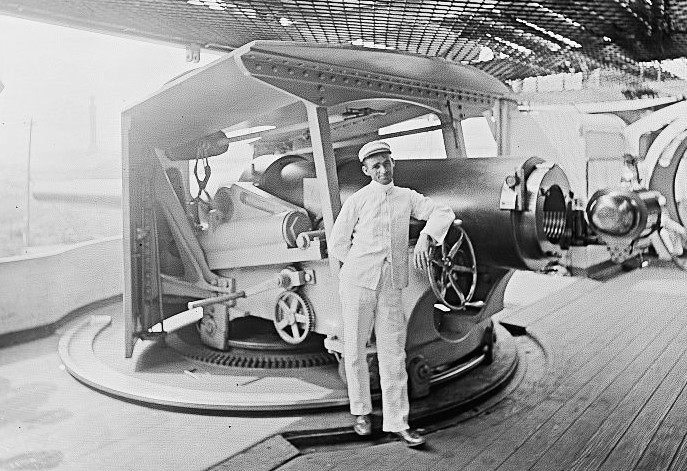
(Library of Congress Photo)
USS New York, chief gunner Morgan and 8-inch gun, c1898.
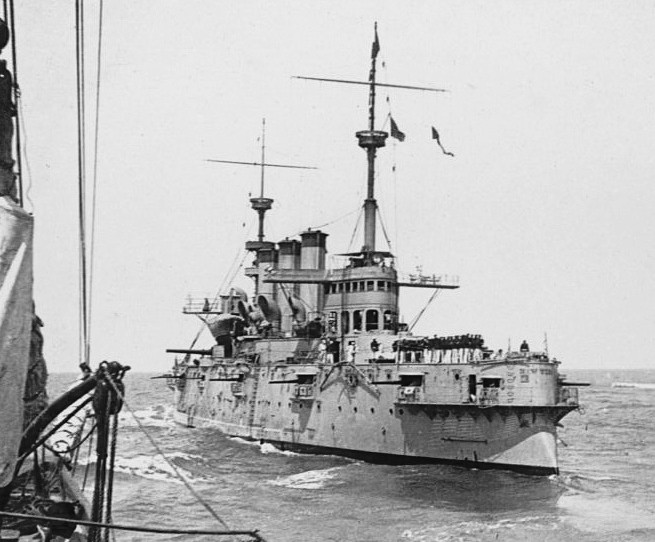
(Library of Congress Photo)
USS New York, c1898.
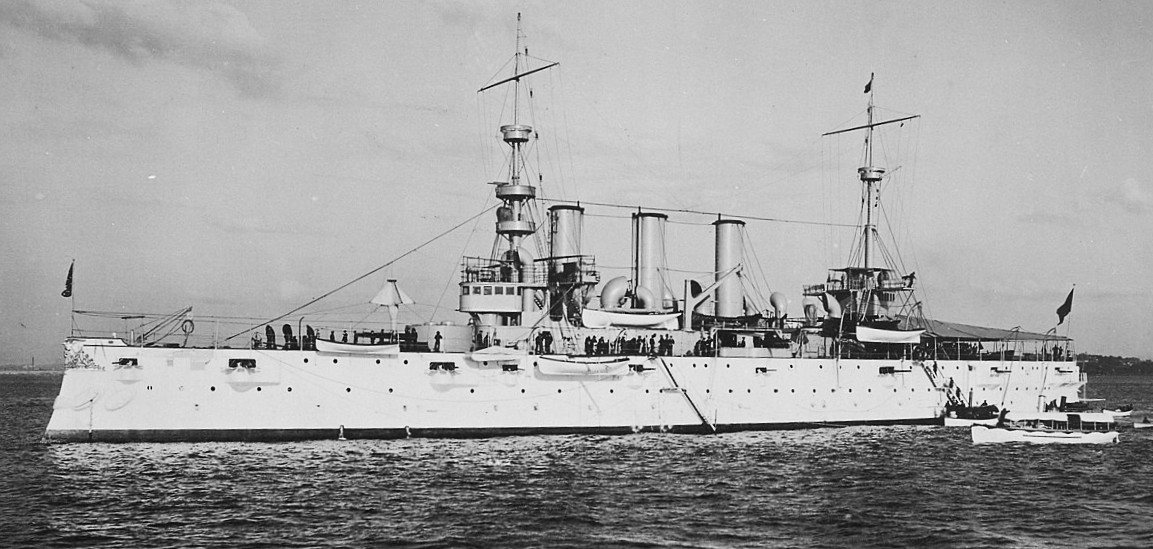
(National Archives and Record Administration Photo)
USS New York, 1899.
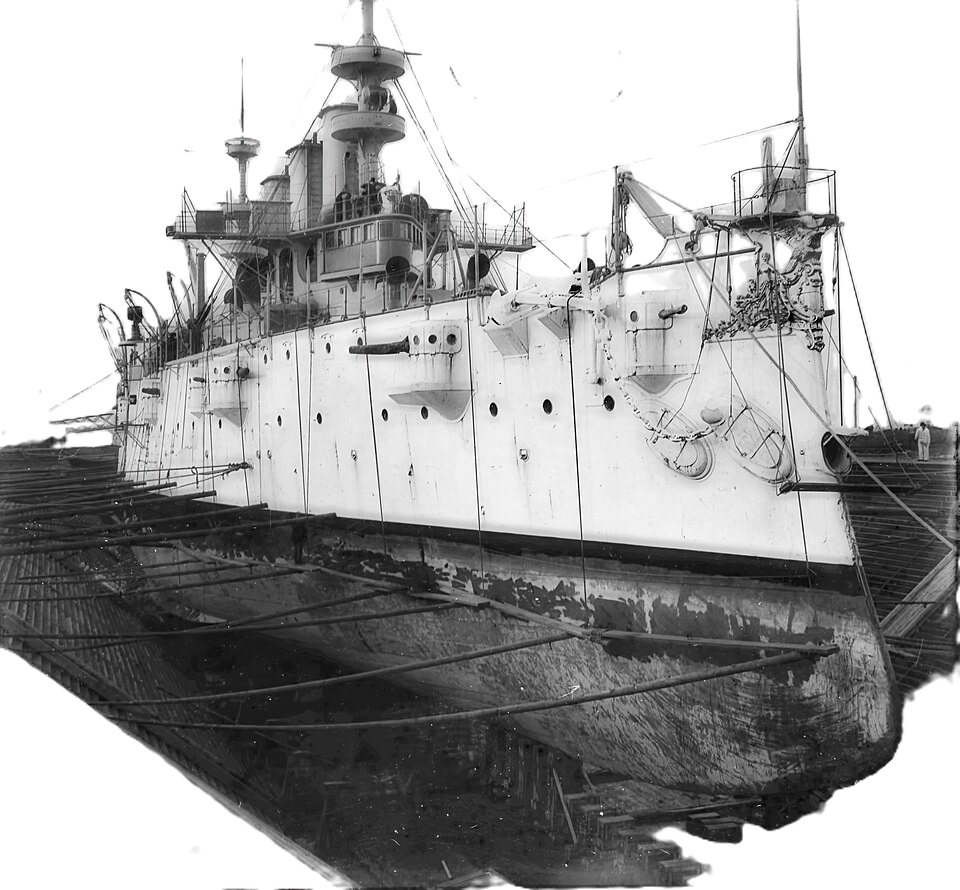
(Harley Flowers Photo)
USS New York, in drydock, 1895.
(ACR-3) Brooklyn
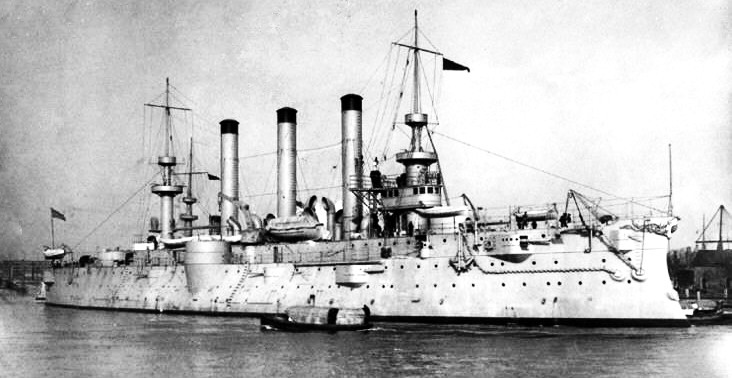
(U.S. Naval Historical Center Photo, 1898)
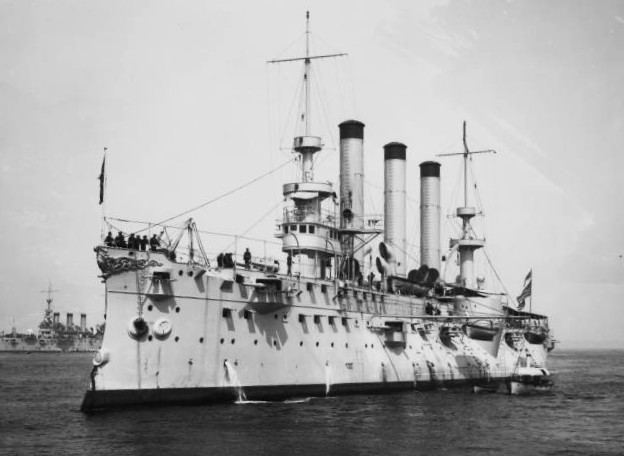
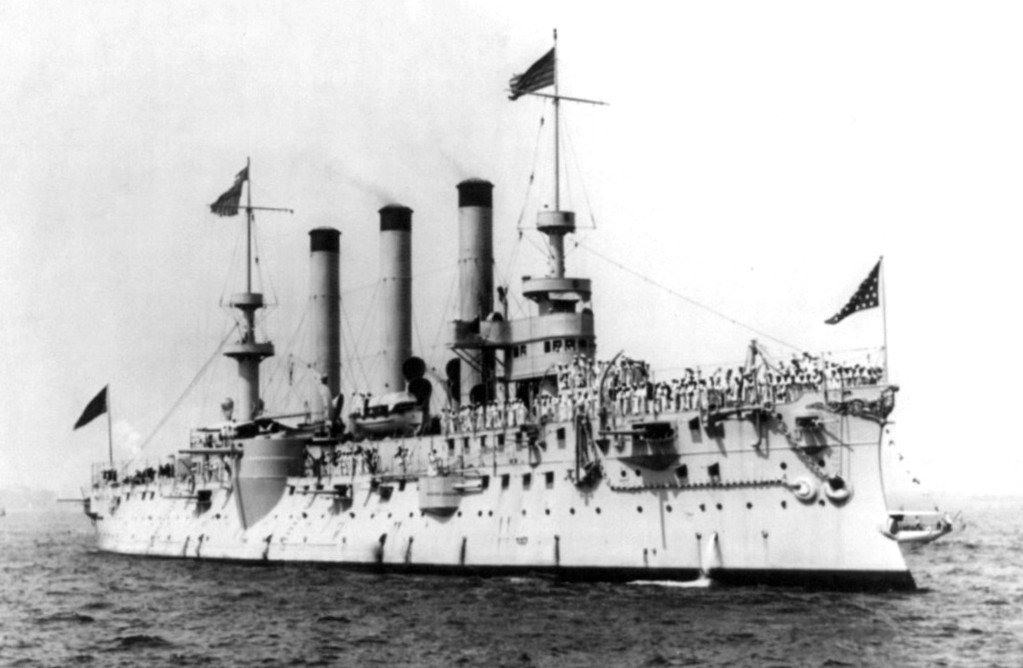
USS Brooklyn (ACR-3/CA-3) was the third United States Navy armored cruiser, the only one to be named at commissioning for a city rather than a state. Ordered for $3,450,420.29 (hull and machinery),[3] she was launched on 2 October 1895 by William Cramp & Sons Ship and Engine Building Company of Philadelphia; sponsored by Miss Ida May Schieren, daughter of Charles A. Schieren, Mayor of Brooklyn, New York; and commissioned on 1 December 1896, Captain Francis Augustus Cook in command. (Wikipedia)
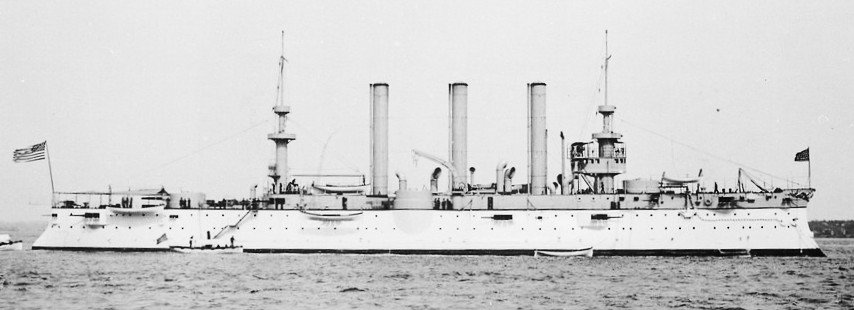
(U.S. National Archives and Records Administration Photo)
USS Brooklyn, 1899.
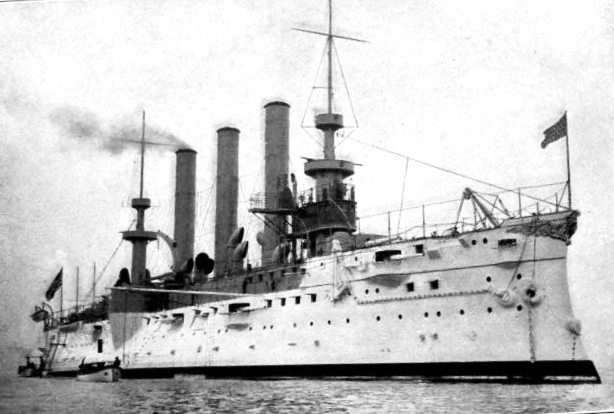
(Encyclopædia Britannica Photo)
USS Brooklyn, 1911.
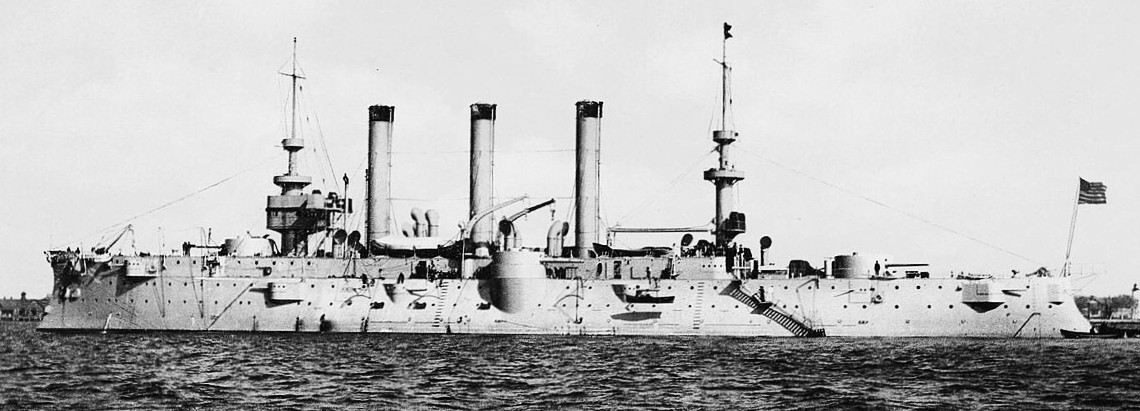
(Detroit Photographic Company Photo)
USS Brooklyn.
(George Eastman House Collection Photo)
USS Brooklyn.
()
USS Brooklyn, 1898.
(ACR-4) Pennsylvania
(USN Photo)
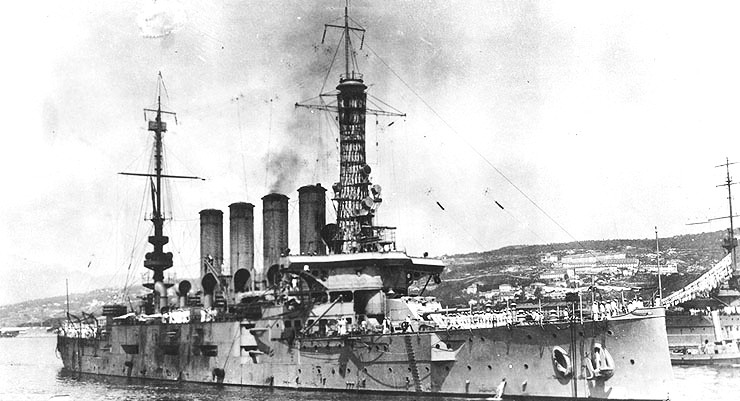
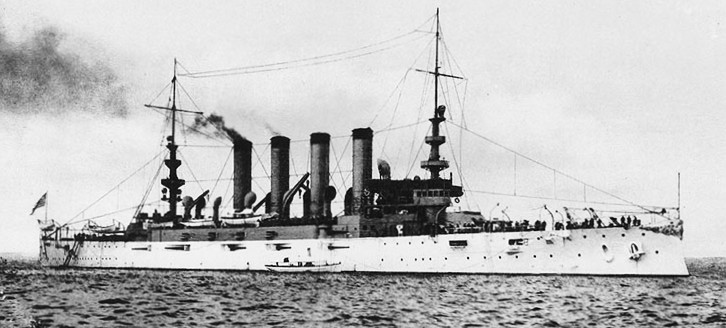
The second USS Pennsylvania (ACR/CA-4), also referred to as Armored Cruiser No. 4, and later renamed Pittsburgh, was a United States Navy armored cruiser, the lead ship of her class. She was originally assigned the name Nebraska but was renamed Pennsylvania on 7 March 1901. (Wikipedia)
(USN Photo)
USS Pennsylvania, c1905-1908.
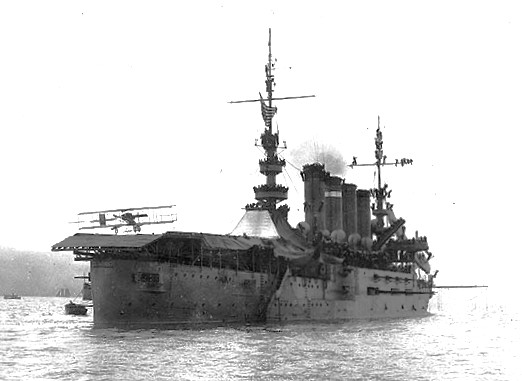
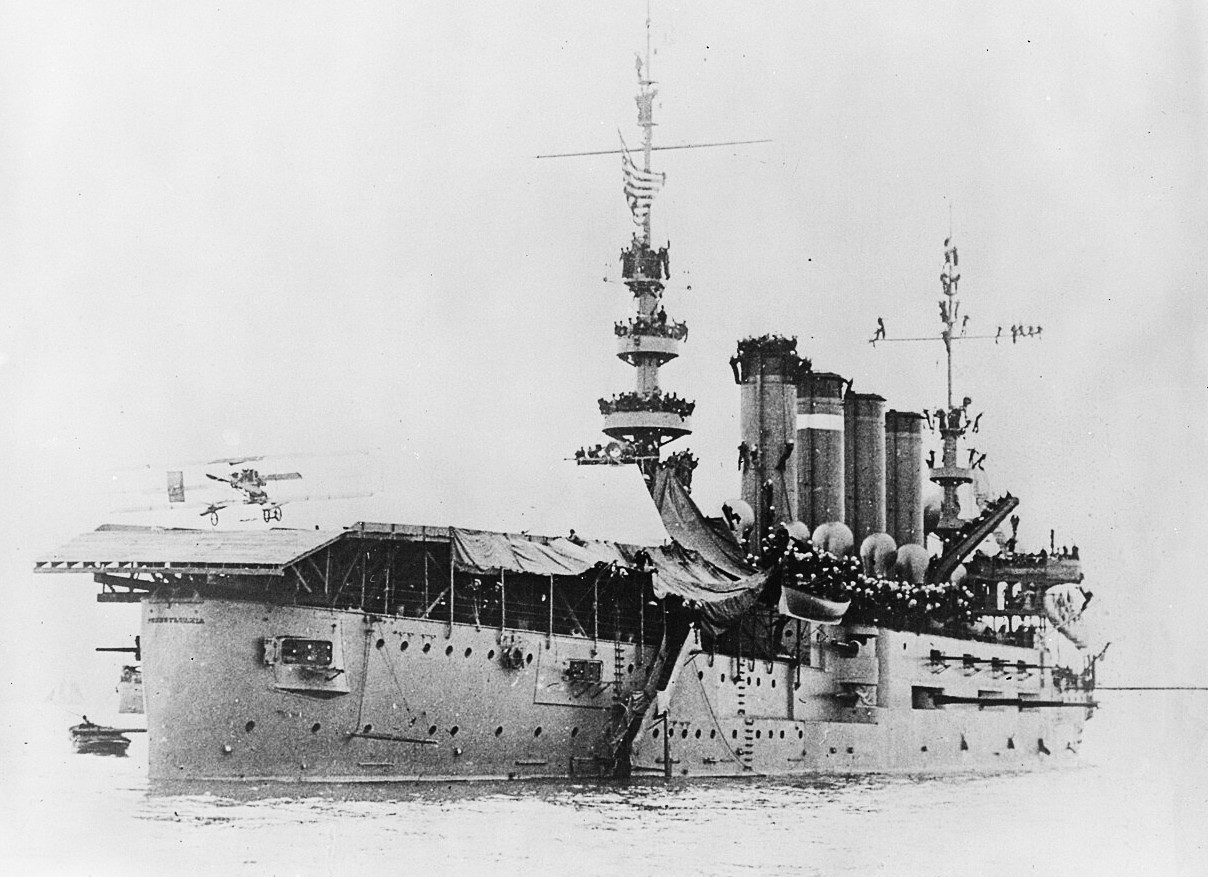
(U.S. National Archives and Records Administration)
First fixed-wing aircraft landing on a warship: Eugene Ely landing his plane aboard Pennsylvania in San Francisco Bay on 18 January 1911. At 10:48 on 18 January 1911, Eugene Ely took off in a Curtiss Model D from Tanforan Racetrack in San Bruno, California, and at 11:01 he landed aboard Pennsylvania while she lay at anchor off Hunters Point in San Francisco Bay. The plane made a smooth landing from astern onto a specially built 130-by-32-foot (39.6 by 9.8 m) platform. At 11:58, Ely took off and returned to Selfridge Field, completing the earliest demonstration of the adaptability of aircraft to shipboard operations. (Wikipedia)
(ACR-5) West Virginia
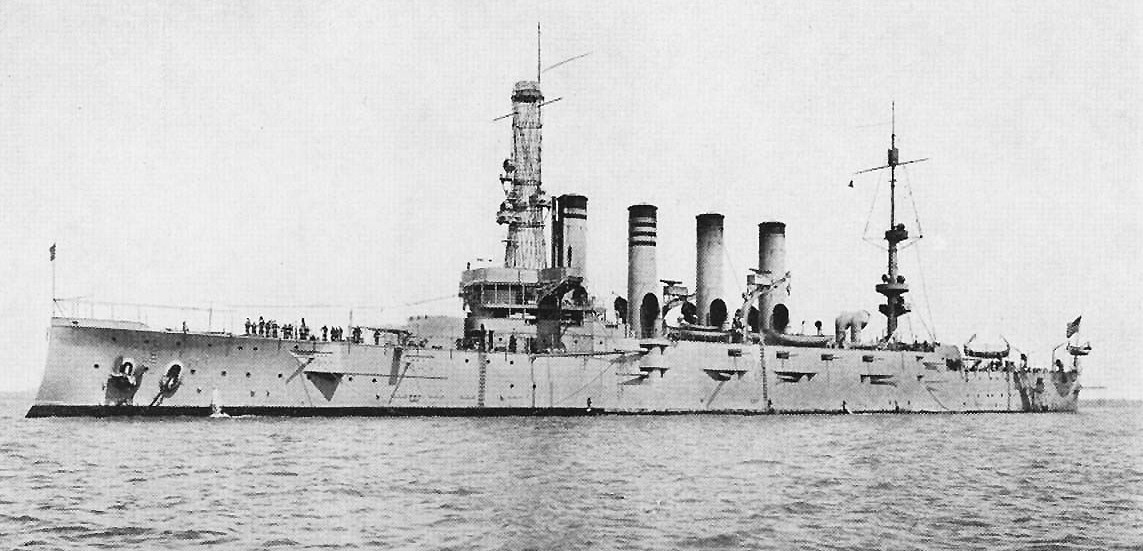
(USN Photo)
USS West Virginia (hull number ACR-5/CA-5), also referred to as “Armored Cruiser No. 5”, was a United States Navy Pennsylvania-class armored cruiser and the first United States Navy vessel named for the U.S. state of West Virginia. She was renamed Huntington in 1916 as the U.S. Navy designated that only battleships would carry the names of U.S. states.
The ship was launched on 18 April 1903 by Newport News Drydock & Shipbuilding Co., Newport News, Virginia, sponsored by Miss Katherine V. White, and commissioned on 23 February 1905, Captain C. H. Arnold in command. After 15 years in active service, Huntington was decommissioned in September 1920, struck from the naval register in March 1930, and sold for scrap later that year. (Wikipedia)
(ACR-6) California
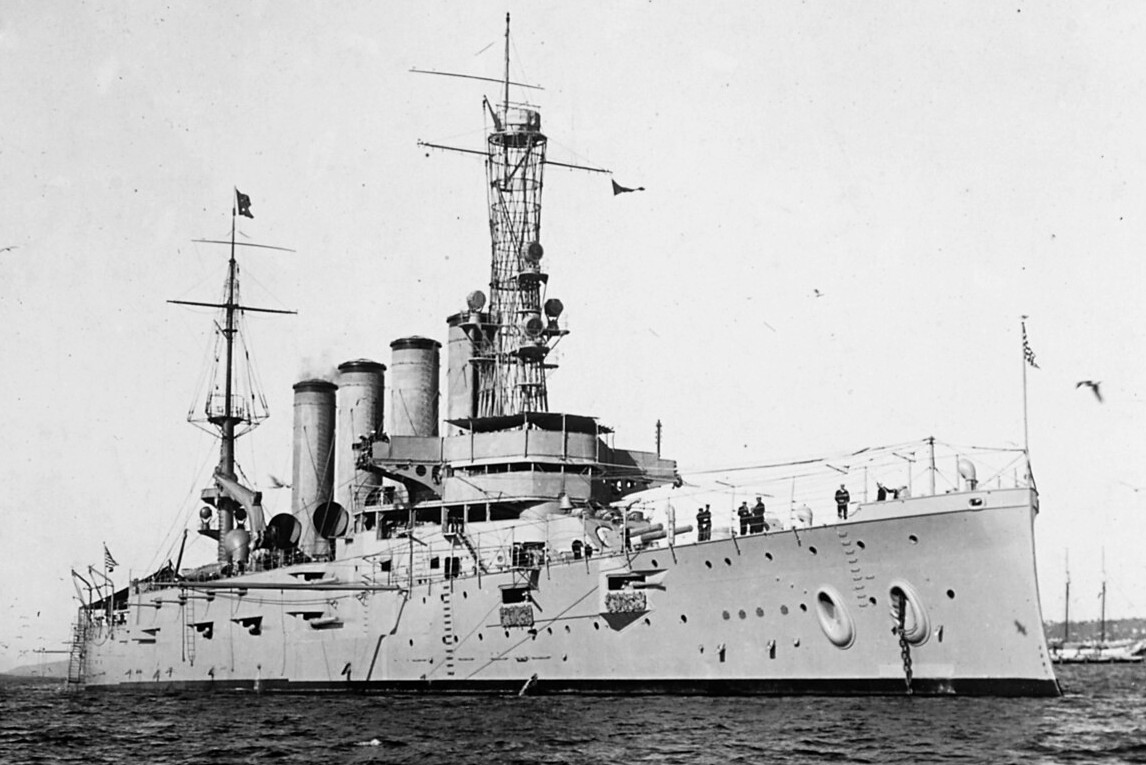
(USN Photo, 28 Jan 1915)
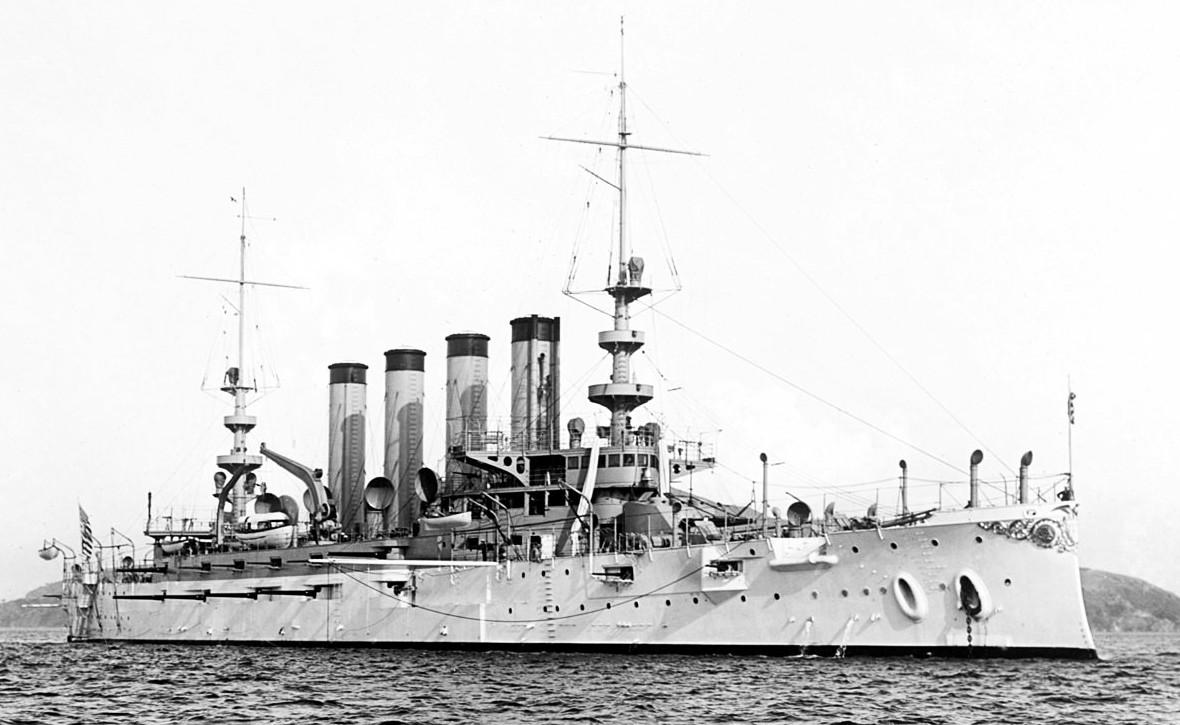
The second USS California (ACR-6), also referred to as “Armored Cruiser No. 6”, and later renamed San Diego, was a United States Navy Pennsylvania-class armored cruiser. California was launched on 28 April 1904 by Union Iron Works at San Francisco, California, sponsored by Miss Florence Pardee, daughter of California Governor George C. Pardee, and commissioned on 1 August 1907. It would later be the only major US warship lost during the First World War, sunk by a German mine after reaching Long Island, New York while en route from Portsmouth, New Hampshire to New York. (Wikipedia)
(Library of Congress Photo)
USS California (ACR-6), 1907.
(ACR-7) Colorado
(USN Photo, 1907)
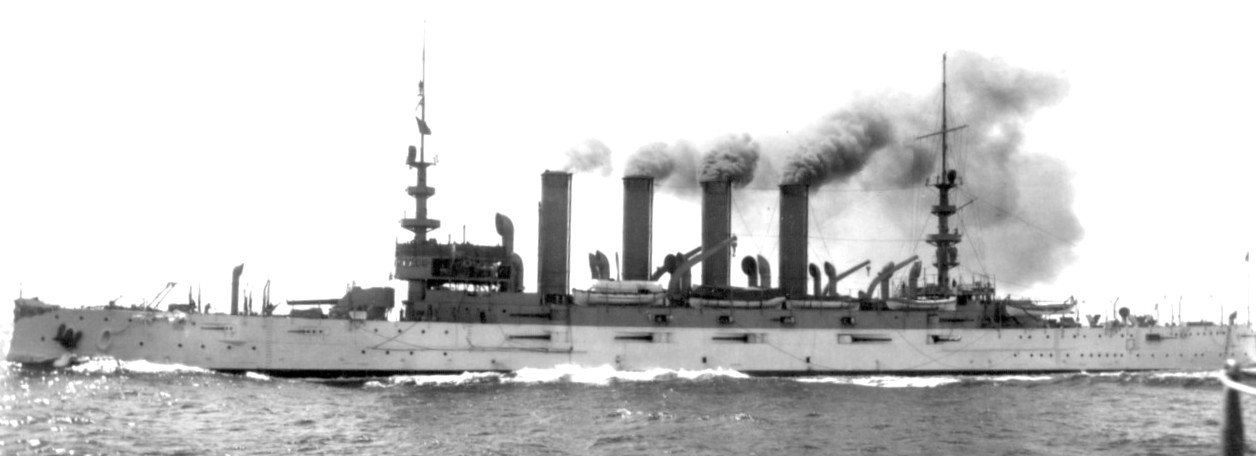
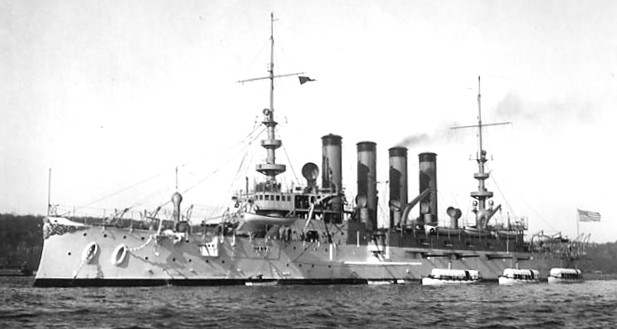
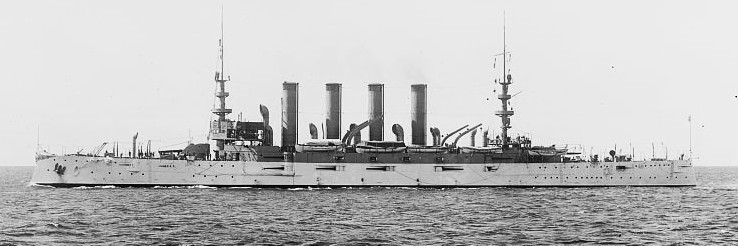
The USS Colorado (ACR-7), also referred to as “Armored Cruiser No. 7”, and renamed USS Pueblo (CA-7) in 1916, was a United States Navy Pennsylvania-class armored cruiser. She was the second US Navy ship named Colorado, and the first to be named after the State of Colorado. The first, Colorado, was named for the Colorado River. (Wikipedia)
(USN Photo)
USS Colorado (ACR-7), 1905.
(Library of Congress Photo)
USS Colorado (ACR-7), 1913.
(ACR-8) Maryland
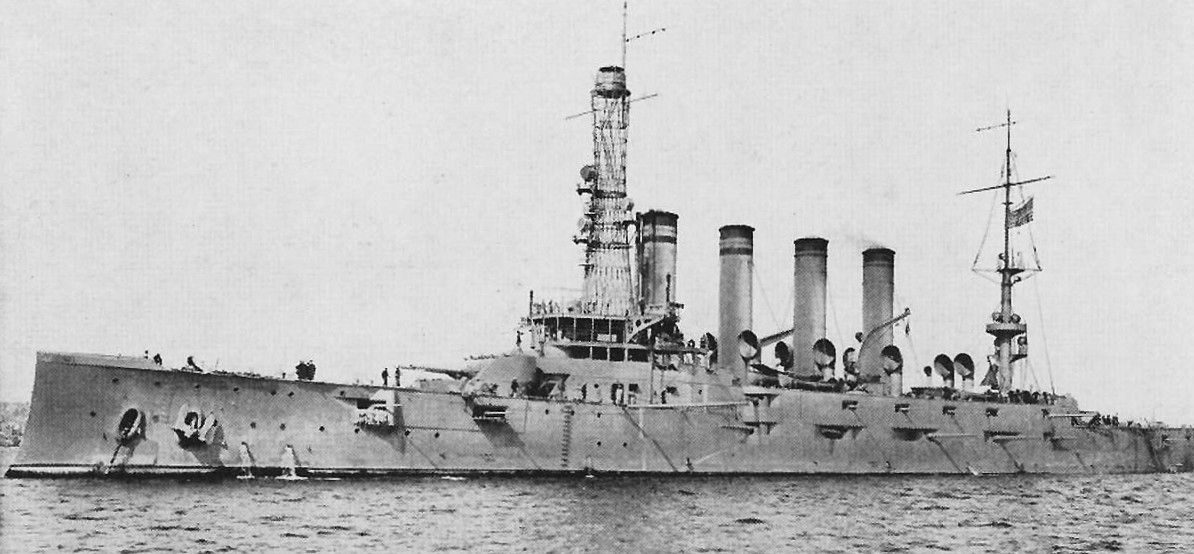
(USN Photo, 1919)
The second USS Maryland (ACR-8/CA-8), also referred to as “Armored Cruiser No. 8”, and later renamed Frederick, was a United States Navy Pennsylvania-class armored cruiser.
She was laid down on 7 October 1901 by the Newport News Drydock & Shipbuilding Co., Newport News, Virginia, launched on 12 September 1903, sponsored by Miss Jennie Scott Waters; and commissioned on 18 April 1905, Captain Royal R. Ingersoll in command. (Wikipedia)
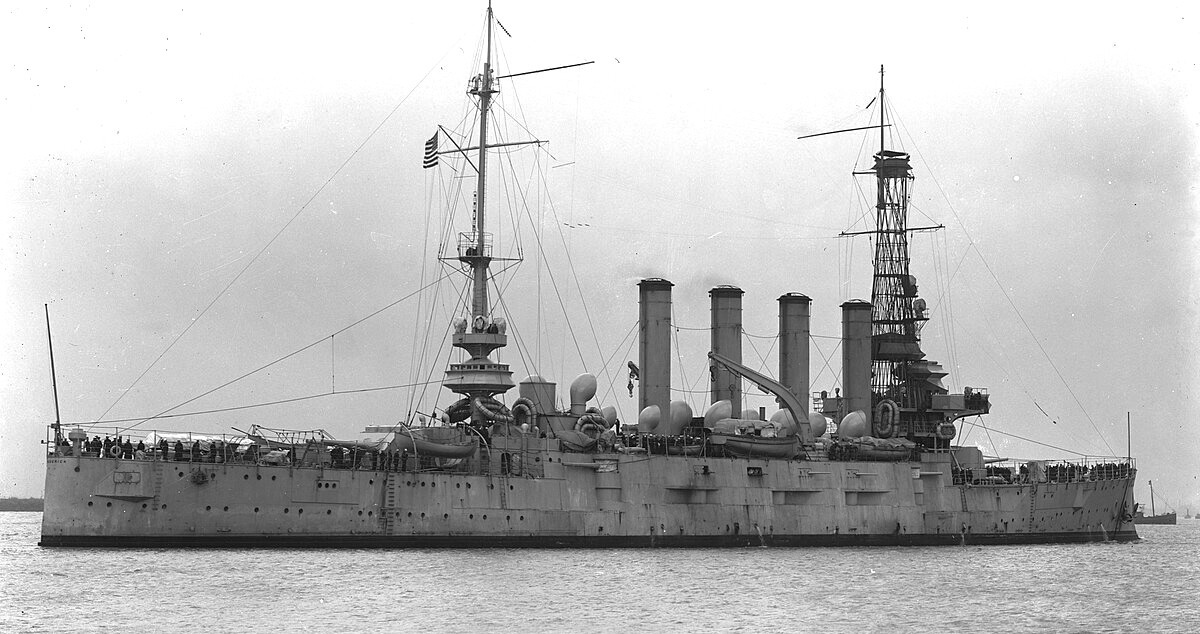
(Claes, Louis Photo)
USS Maryland (ACR-8/A-8).
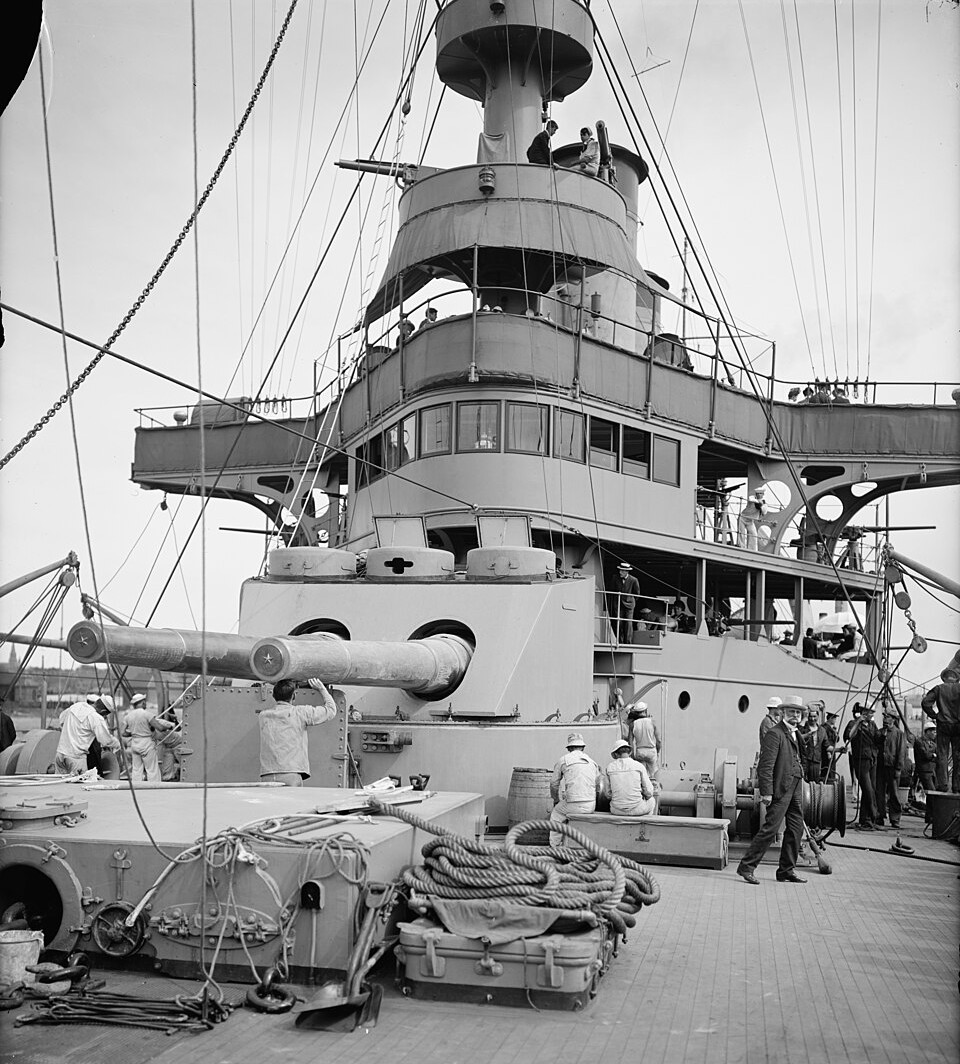
(Library of Congress Photo)
USS Maryland (ACR-8/A-8).
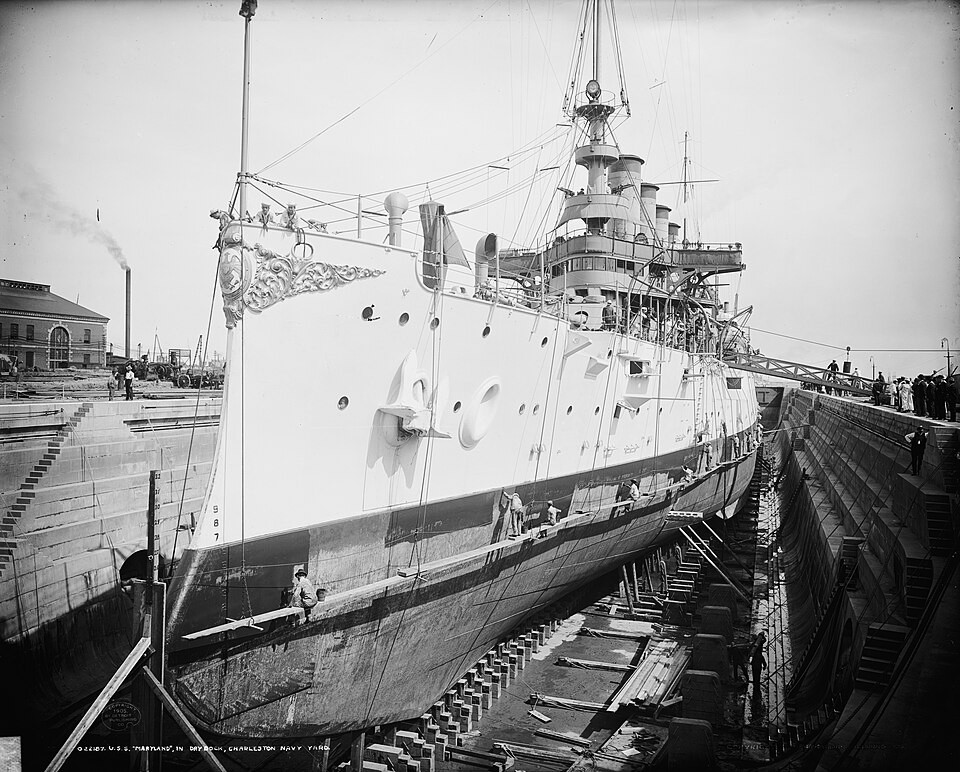
(Library of Congress Photo)
USS Maryland (ACR-8/A-8) in drydock, c1905.
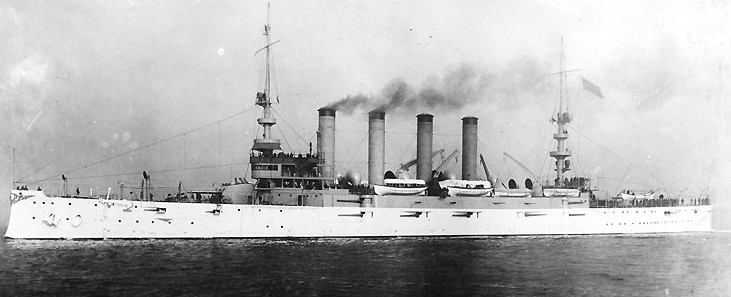
(USN Photo)
USS Maryland (ACR-8/CA-8), 1905.
(ACR-9) South Dakota
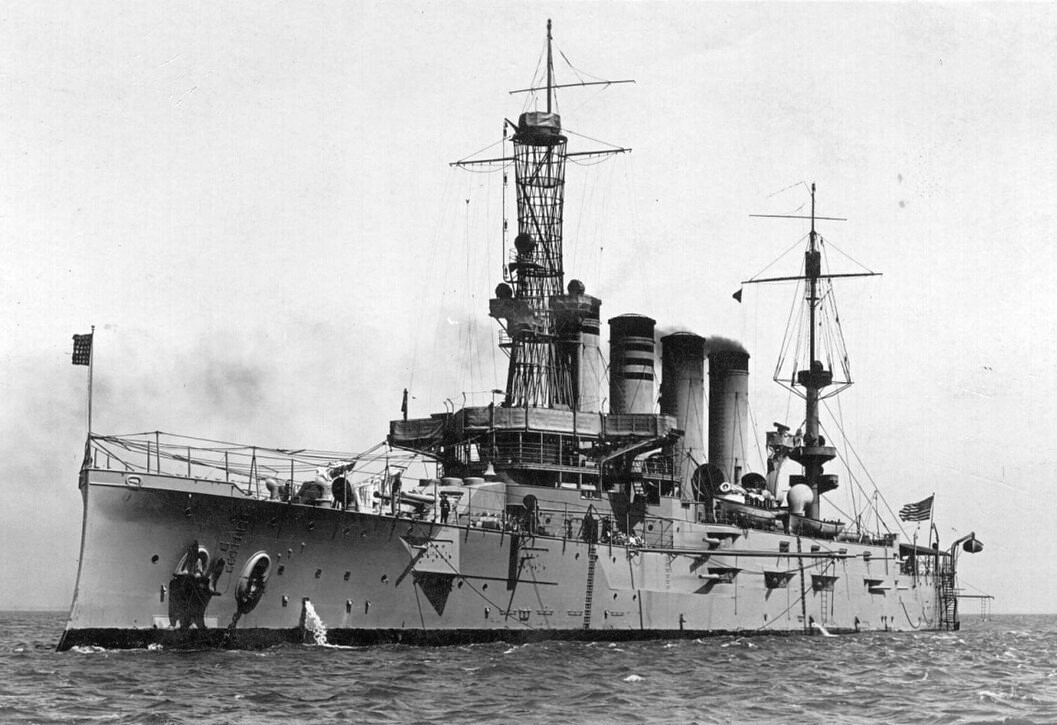
(USN Photo)
The first USS South Dakota (ACR-9/CA-9), also referred to “Armored Cruiser No. 9”, and later renamed Huron, was a United States Navy Pennsylvania-class armored cruiser. South Dakota was laid down on 30 September 1902 by the Union Iron Works, San Francisco, California, she was launched on 21 July 1904; sponsored by Grace Herreid, daughter of Charles N. Herreid, Governor of South Dakota, and commissioned on 27 January 1908. (Wikipedia)
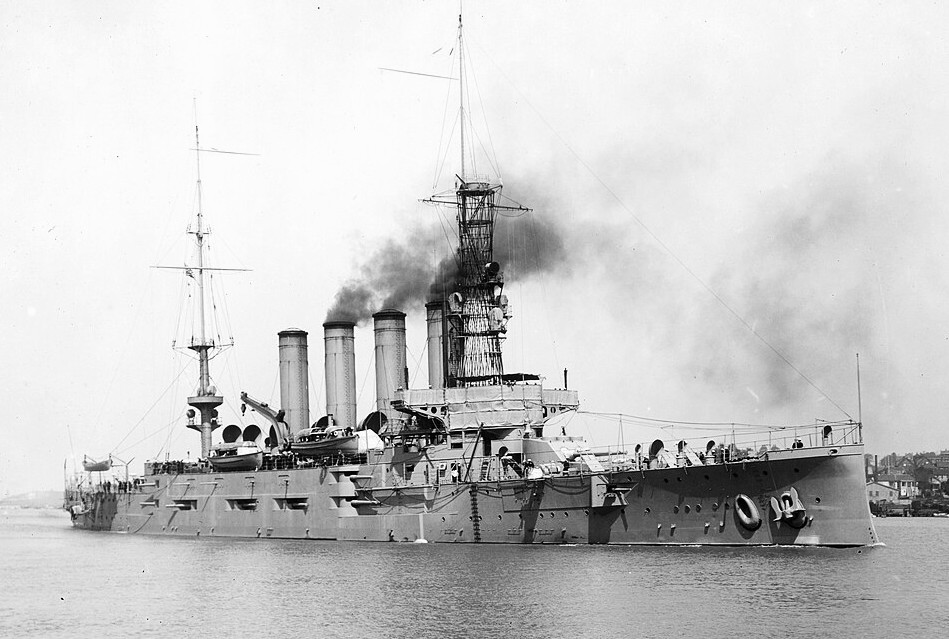
(U.S. National Archives Photo)
USS South Dakota (ACR-9/CA-9), 1916.
(ACR-10) Tennessee
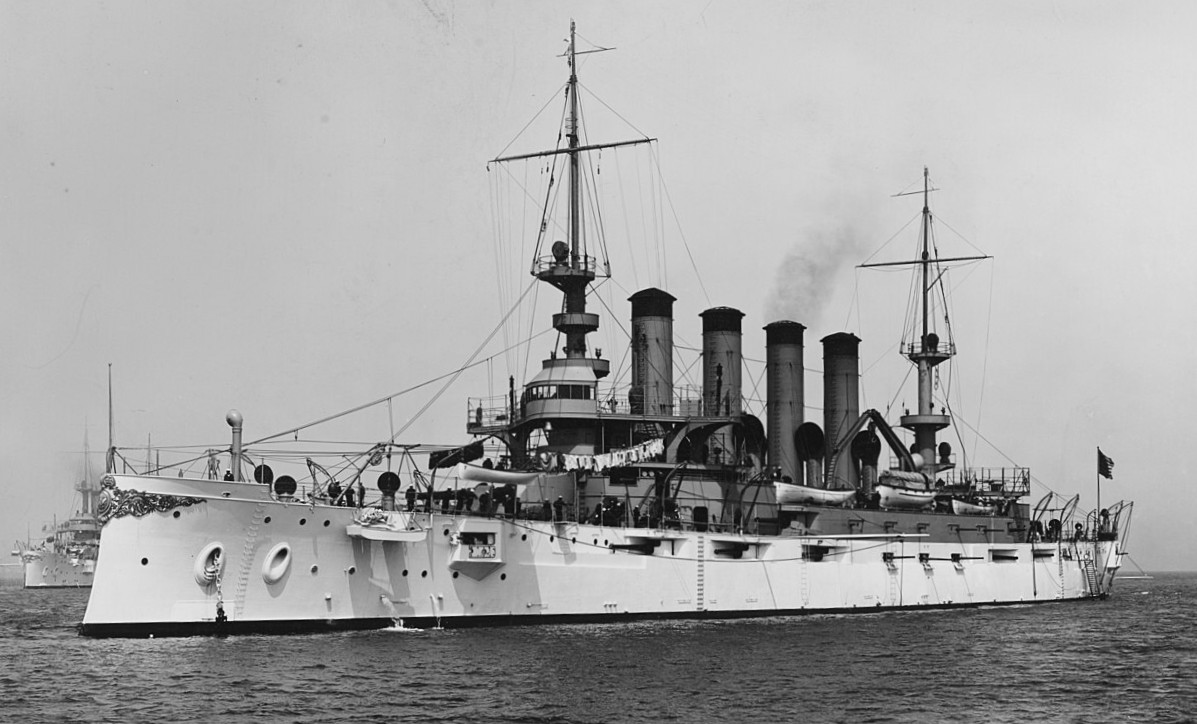
(USN Photo)
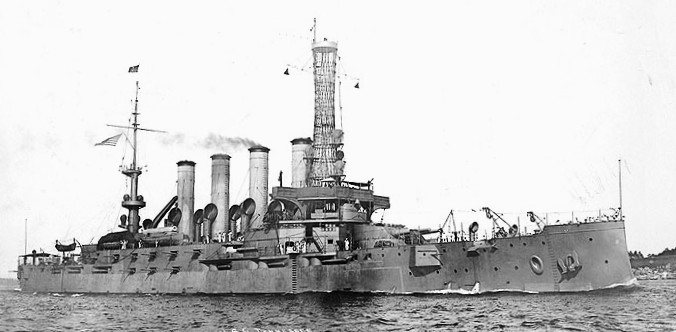
The USS Tennessee (ACR-10), also referred to as “Armored Cruiser No. 10”, and later renamed Memphis, was a United States Navy armored cruiser, the lead ship of her class. Tennessee was laid down by the Cramp Shipbuilding Company of Philadelphia, Pennsylvania, on 20 June 1903, launched on 3 December 1904, sponsored by Annie K. Frazier (daughter of Governor James B. Frazier of Tennessee and later the foundress of the Society of Sponsors of the United States Navy), and commissioned at the Philadelphia Navy Yard on 17 July 1906, Captain Albert Gleaves Berry in command. (Wikipedia)
(USN Photo)
USS Tennessee (ACR-10), 1912.
(ACR-11) Washington
(Asahel Curtis Photo, 1908)
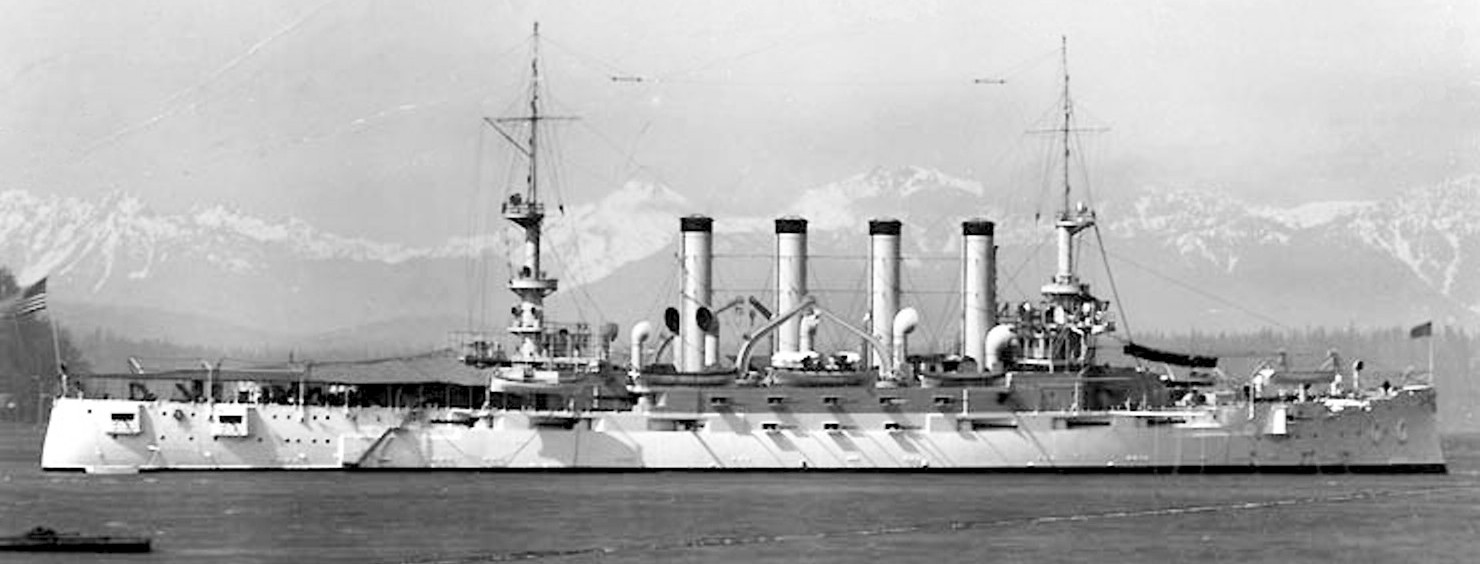
The seventh USS Washington (ACR-11/CA-11/IX-39), also referred to as “Armored Cruiser No. 11”, and renamed Seattle and reclassified CA-11 and IX-39, was a United States Navy Tennessee-class armored cruiser. Commissioned in 1906, renamed in 1916, and not decommissioned until 1946, she spent periods of time in reserve. She was used for escort duties during the First World War, and as a receiving ship during the Second World War. The ship was laid down on 23 September 1903 at Camden, New Jersey, by the New York Shipbuilding Corporation, launched on 18 March 1905, sponsored by Miss Helen Stewart Wilson, daughter of United States Senator John L. Wilson of Washington state, and commissioned at the Philadelphia Navy Yard on 7 August 1906, Captain James D. Adams in command. (Wikipedia)

(USN Photo)
USS Washington (ACR-11/CA-11/IX-39), 10-inch (250 mm) turret during gun practice.
(USN Photo)
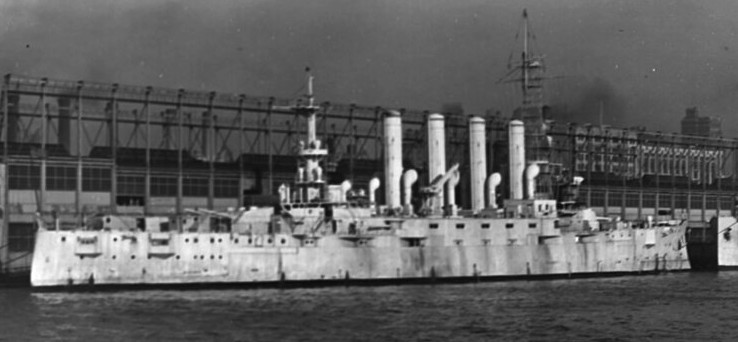
USS Seattle (IX-39) at Pier 92, North River, New York City, during or shortly after the Second World War.
(ACR-12) North Carolina
(USN Photo, c1911)
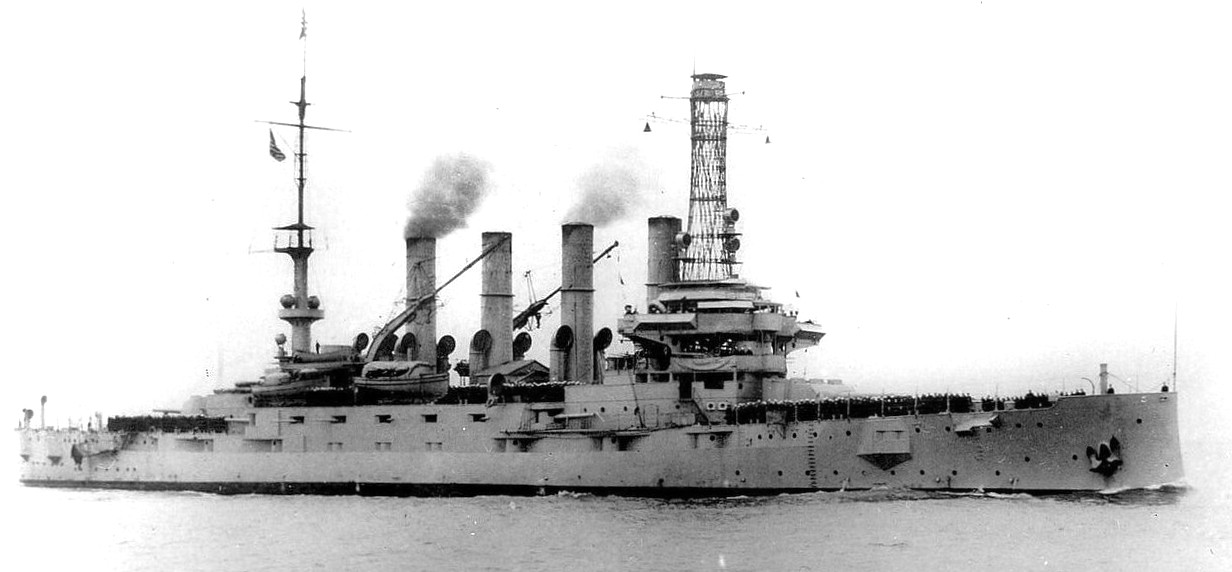
The USS North Carolina (hull number ACR-12/CA-12) was a Tennessee-class armored cruiser of the United States Navy. The ship was built by Newport News Shipbuilding; she was laid down in March 1905, launched in October 1906, and was commissioned in May 1908. The final class of armored cruisers to be built for the US Navy, North Carolina and her sisters were armed with a main battery of four 10-inch (254 mm) guns, and were capable of a top speed of 22 knots (41 km/h; 25 mph).
North Carolina spent much of her career in the Atlantic Ocean and Caribbean Sea conducting training and visiting foreign countries. She went on short deployments to the Mediterranean Sea twice, the first in 1909 to protect American citizens in the Ottoman Empire, and the second during the First World War, again to protect still neutral American citizens in the region. After the United States entered the war in April 1917, North Carolina was used to escort troop ships off the eastern coast of the United States. Following the war in late 1918 and early 1919, she was used to carry soldiers from the American Expeditionary Force back from France. In 1920, the ship was renamed Charlotte so her original name could be used for a new battleship, and she was decommissioned the following year. She was sold for scrap in September 1930 and broken up thereafter. (Wikipedia)
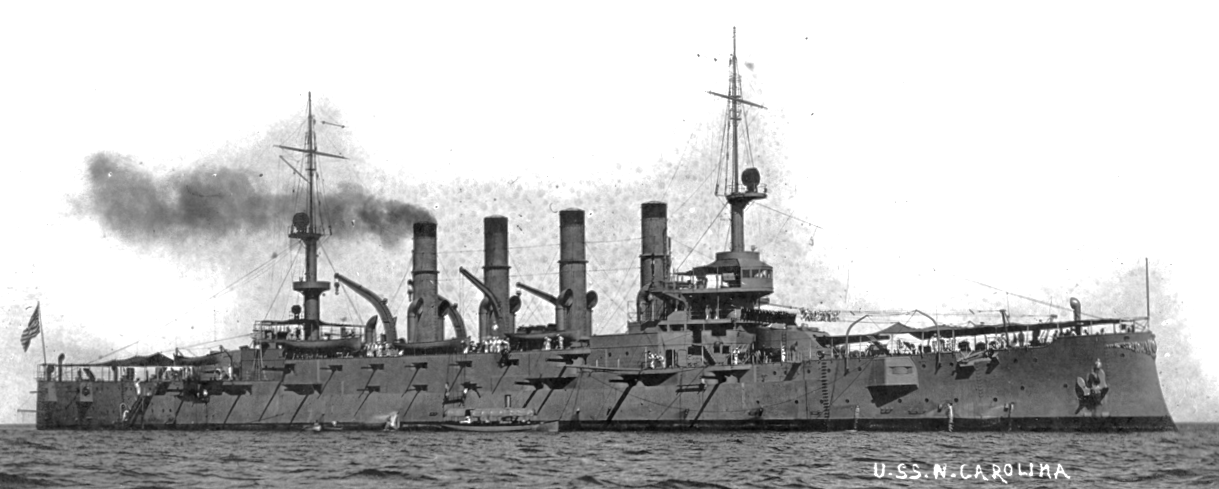
(USN Photo)
The USS North Carolina.
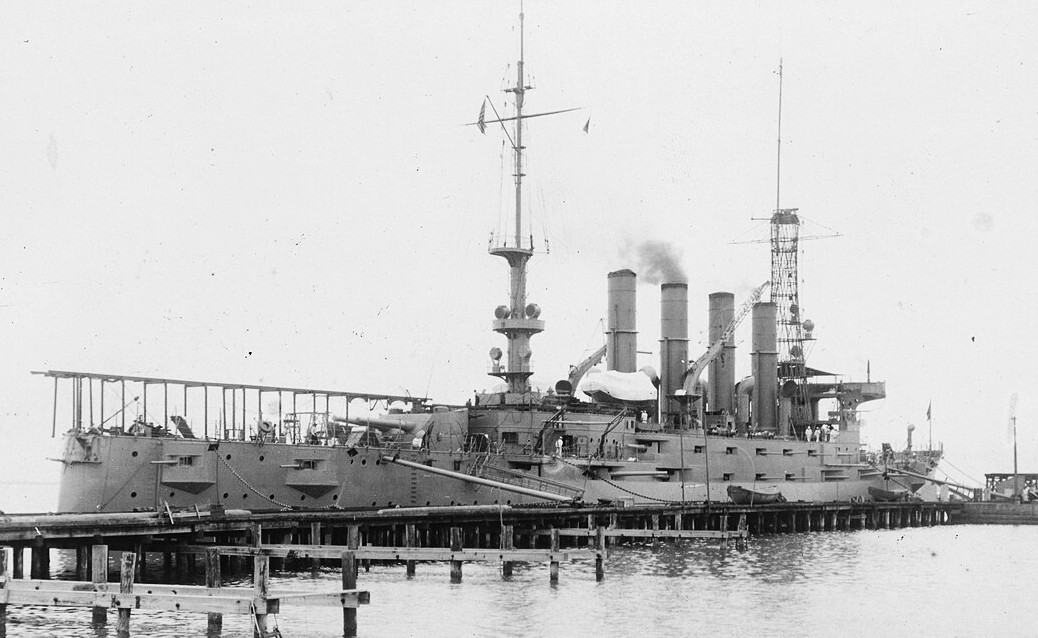
(USN Photo)
USS North Carolina, catapult launcher, 1916.
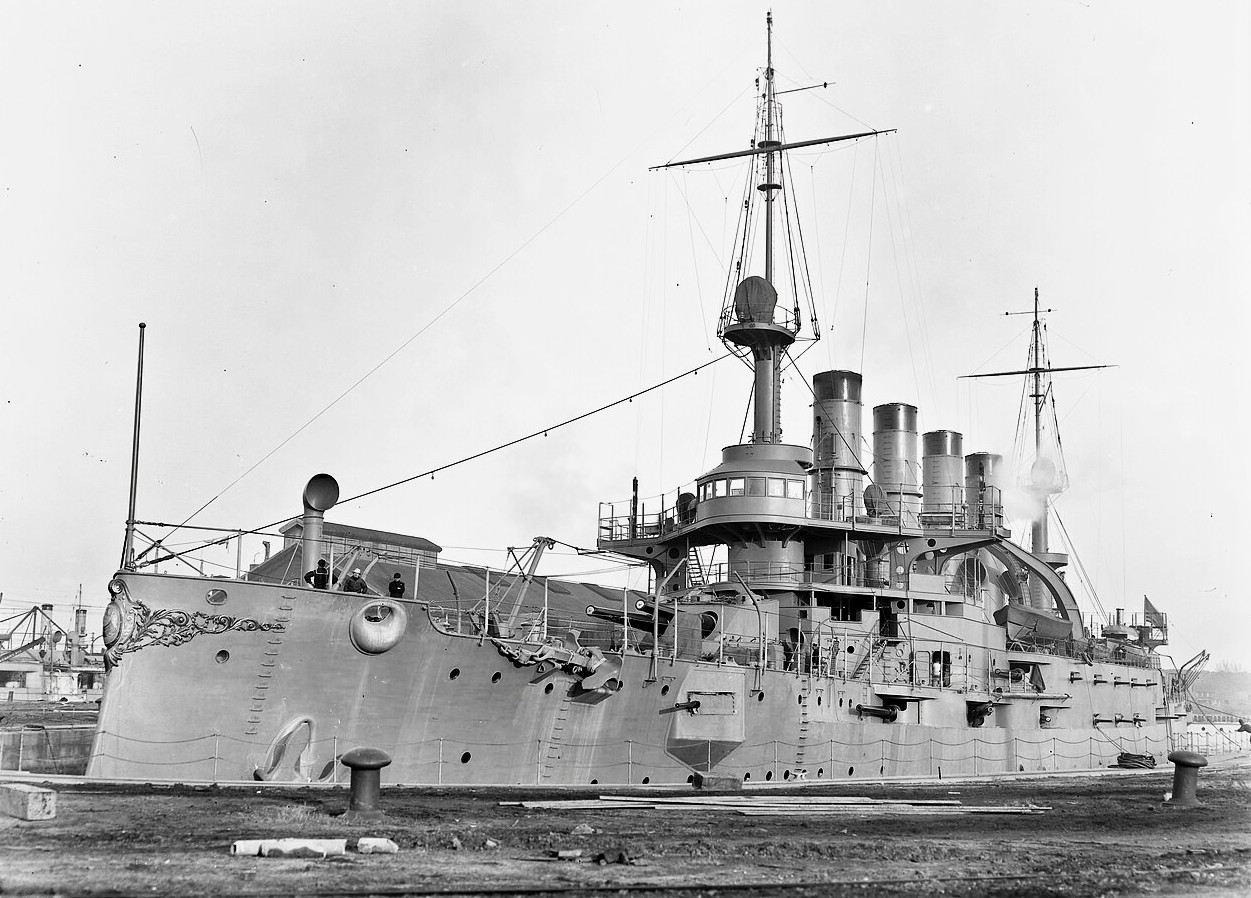
(Harley Flowers Photo)
USS North Carolina (ACR-12), at the U.S. Navy yard in Norfolk, Virginia, 9 Dec 1908.
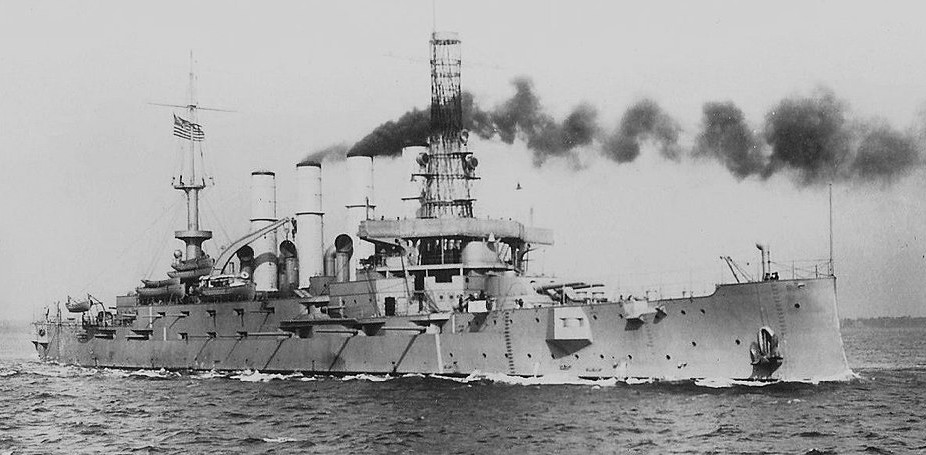
( State Archives of North Carolina Photo)
USS North Carolina (ACR-12),
(ACR-13) Montana
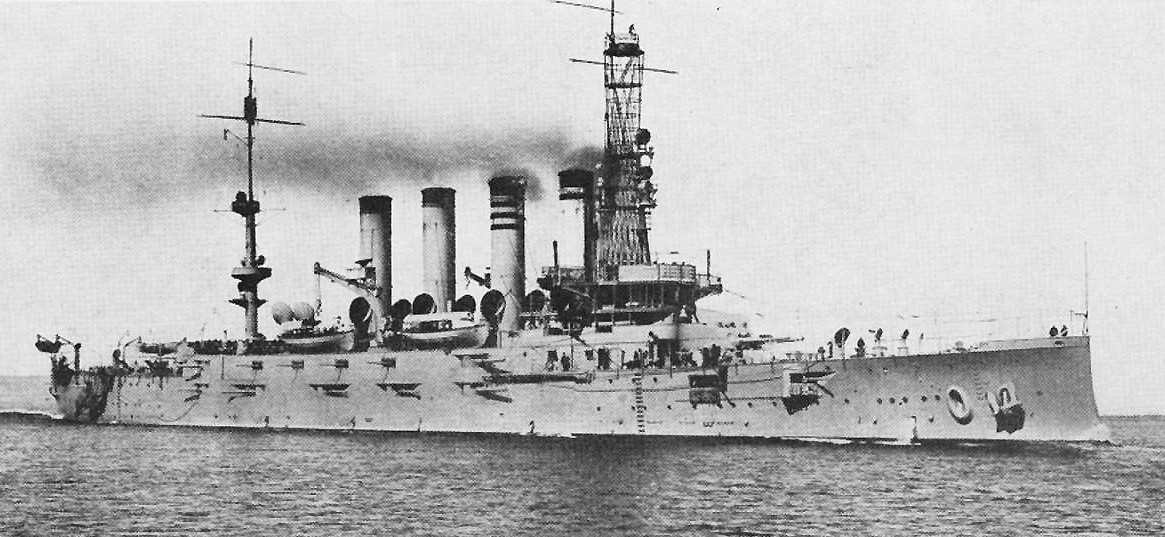
(USN Photo)
USS Montana (ACR-13/CA-13), also referred to as “Armored Cruiser No. 13”, later renamed Missoula and reclassified CA-13, was a Tennessee-class armored cruiser of the United States Navy. She was built by the Newport News Drydock & Shipbuilding Co.; her keel was laid down in April 1905, she was launched in December 1906, and she was commissioned in July 1908. The final class of armored cruisers to be built for the US Navy, Montana and her sisters were armed with a main battery of four 10-inch (254 mm) guns, and they were capable of a top speed of 22 knots (41 km/h; 25 mph).
Montana spent her active duty career in the Atlantic Fleet. She made two cruises to the Mediterranean Sea to protect American citizens in the Ottoman Empire, the first in 1909 in the aftermath of the Young Turk Revolution and the second during the Balkan Wars in 1913. Montana was also involved in political unrest in Central American countries, sending landing parties ashore in Haiti and in Mexico during the Occupation of Veracruz, both in 1914.
After the United States entered the First World War in April 1917, Montana was tasked with convoy escort and training ship duties. With the end of the war in November 1918 came a new task, transporting American soldiers back from the battlefields of Europe. She made six round trips to France and carried back a total of 8,800 men. Montana was then transferred to the Puget Sound Naval Yard in Washington state, where she was decommissioned and renamed Missoula. She remained in the reserve fleet until 1930, when she was stricken under the terms of the London Naval Treaty. The ship was eventually sold for scrap in 1935 and broken up. (Wikipedia)
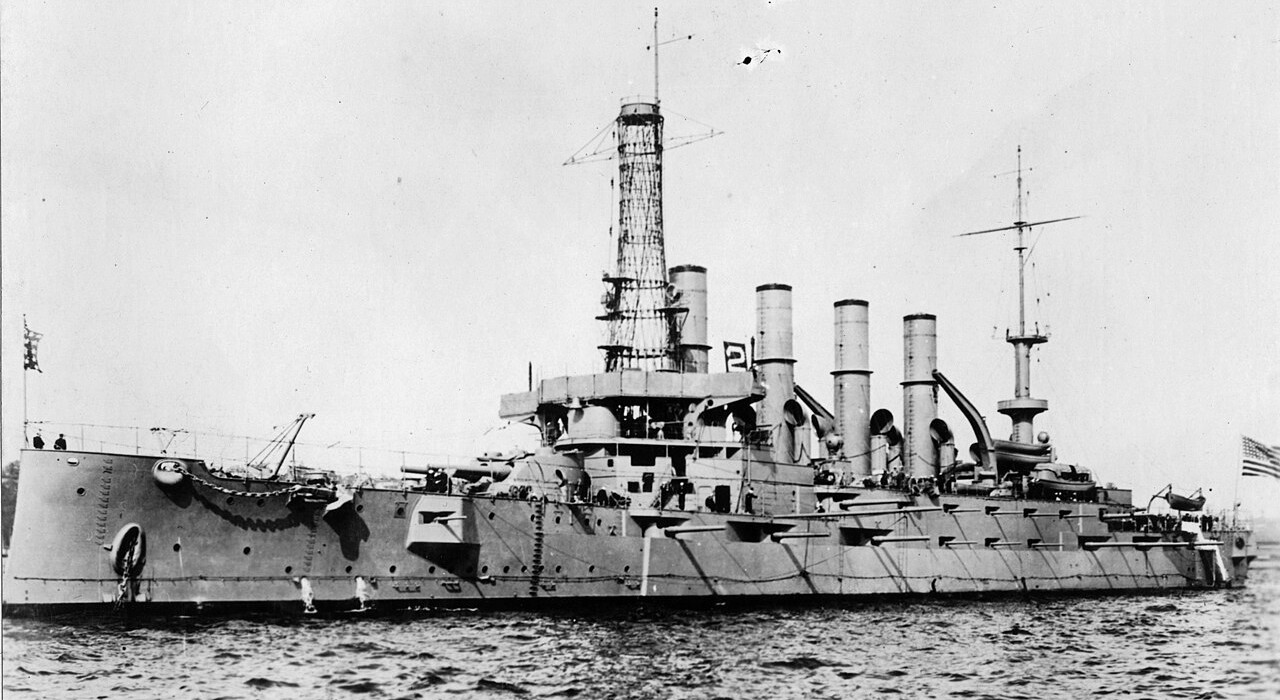
(USN Photo)
USS Montana (ACR-13) at a naval review, c1911-1912.
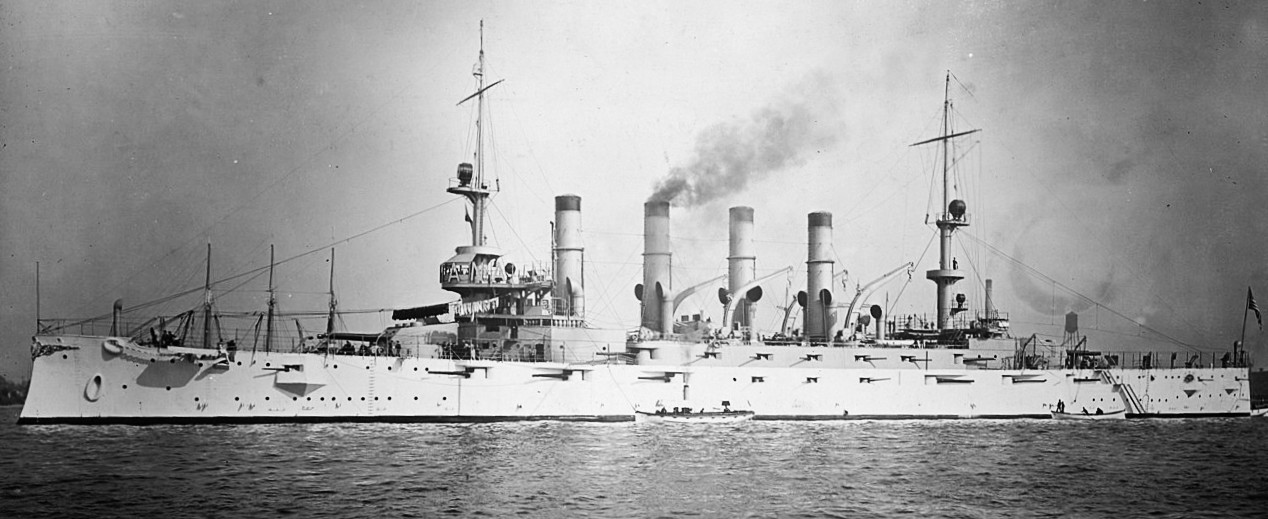
(USN Photo)
USS Montana (ACR-13), c1908.
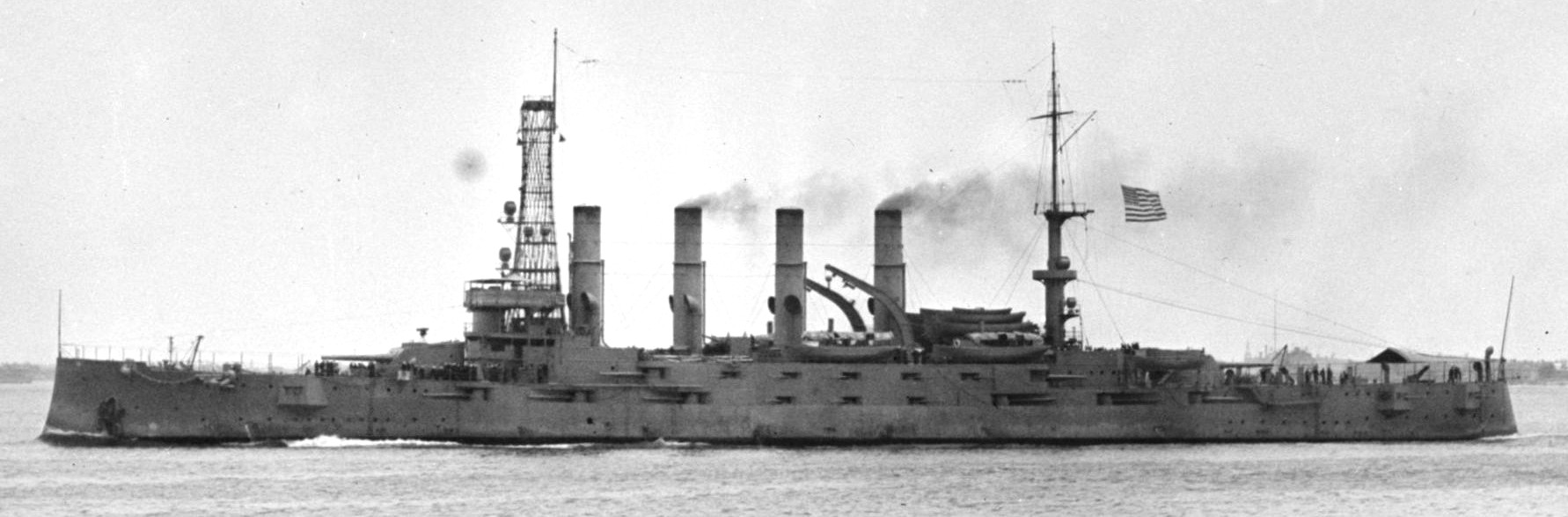
(USN Photo)
USS Montana (ACR-13).