
USN, first modern Cruisers: USS Atlanta, USS Boston, USS Chicago, USS Vesuvius, USS New Orleans, USS Albany.
The first three modern cruisers in the US Navy, the Atlanta, Boston, and Chicago, were most successful as technology demonstrators that stimulated the US industrial base, with features such as steel hulls and electricity generation. Their technology proved so operationally decisive they came to be seen as the dividing line between the “Old Navy” and the “New Navy”. The last two protected cruisers which initially served without hull classification numbers, the New Orleans and Albany, were purchased from a British builder during mobilization for the 1898 Spanish–American War. (Wikipedia)
USS Atlanta (1884), protected cruiser.
USS Boston (1884), protected cruiser, fought in the Spanish–American War, later Despatch (IX-2).
USS Chicago (1885), protected cruiser.
USS Vesuvius (1888), experimental dynamite guns, fought in the Spanish–American War.
USS New Orleans (1898), ex-Brazilian Amazonas, fought in the Spanish–American War and the First World War.
USS Albany (1899), ex-Brazilian Almirante Abreu, fought in the Spanish–American War and the First World War.
USS Atlanta
(USN Photo)
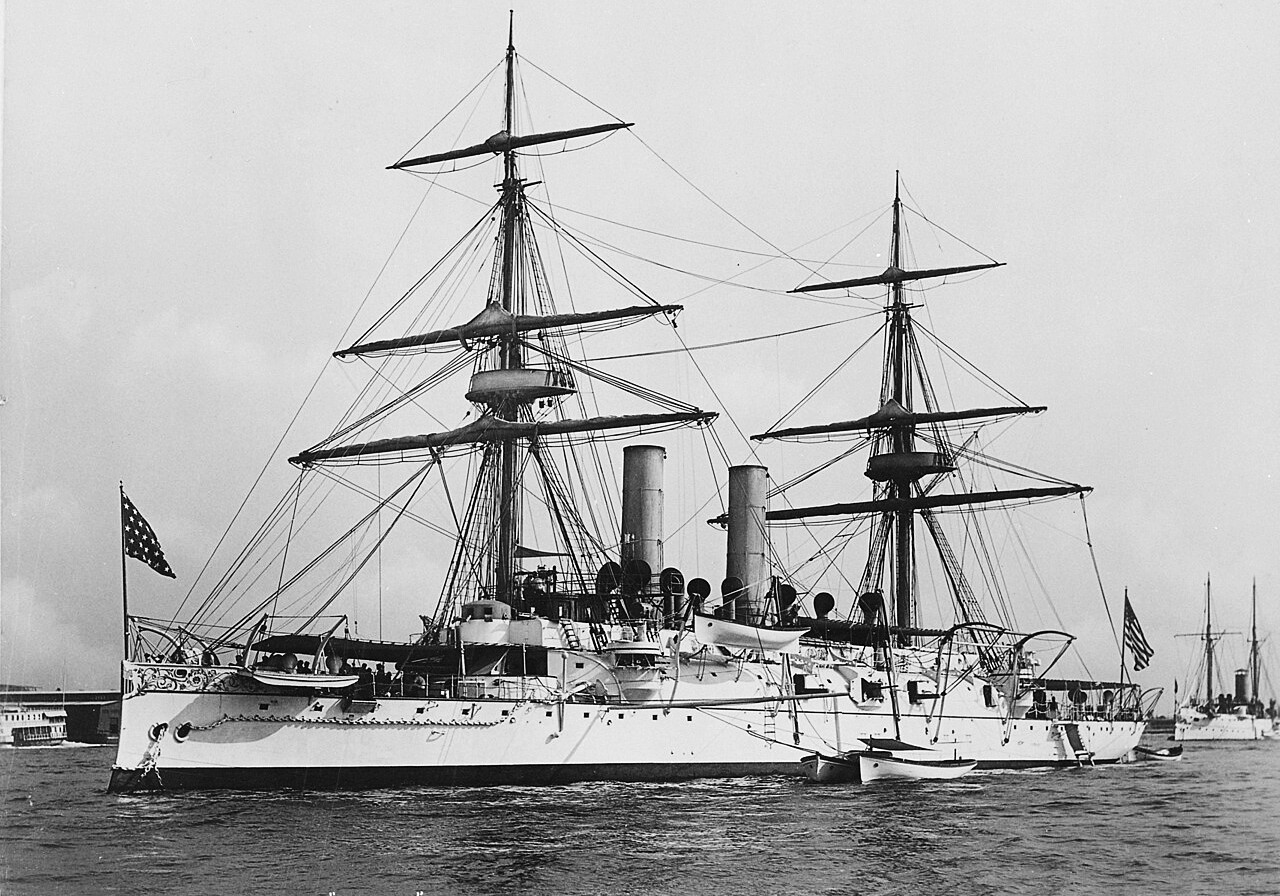
USN Squadron of Evolution USS Atlanta (Protected Cruiser) in 1891.
USS Atlanta was a protected cruiser and one of the first steel warships of the “New Navy” of the 1880s. In some references she is combined with Boston as the Atlanta class, in others as the Boston class. Atlanta was laid down on 8 November 1883 at Chester, Pennsylvania by Delaware River Iron Ship Building and Engine Works; launched on 9 October 1884; sponsored by Miss Jessie Lincoln, the daughter of Secretary of War Robert Todd Lincoln and granddaughter of President Abraham Lincoln; and commissioned at the New York Navy Yard on 19 July 1886, Captain Francis M. Bunce in command.
Atlanta was ordered as part of the “ABCD” ships, the others being the cruisers Boston and Chicago and the dispatch vessel Dolphin. All were ordered from the same shipyard, John Roach & Sons of Chester, Pennsylvania. However, when Secretary of the Navy William C. Whitney initially refused to accept Dolphin, claiming her design was defective, the Roach yard went bankrupt and Atlanta was completed at the New York Navy Yard, which had little experience with steel-hulled ships.
As-built armament included two 8-inch (203 mm)/30 caliber Mark 1 guns,[3] six 6-inch (152 mm)/30 caliber Mark 2 guns,[4] two 6-pounder (57 mm (2.24 in)) rapid fire guns, two 3-pounder (47 mm (1.85 in)) Hotchkiss revolving cannon, two 1-pounder (37 mm (1.46 in)) Hotchkiss revolving cannon, and two .45 caliber (11.4 mm) Gatling guns. The 8-inch guns were initially in open barbettes with gun shields added later.
Armor protection was light, with 2-inch (50.8 mm) gun shields and conning tower, and a 1.5-inch (38.1 mm) deck extending 100 feet (30 m) over the machinery spaces.
The as-built engineering plant included eight coal-fired cylindrical fire-tube boilers producing 100 psi (690 kPa) steam and a horizontal compound engine producing 3,500 ihp (2,600 kW) driving one shaft.[2][5][6] Like the other “ABCD” ships, Atlanta was built with a sail rig to increase cruising range, though it was later removed. The ship carried up to 490 tons of coal, with a cruising range as built of 3,390 nmi (6,280 km; 3,900 mi) at 10 kn (19 km/h; 12 mph).
In 1897–1899 Atlanta received a new triple-expansion steam engine of 4,030 ihp (3,010 kW) and the 6-inch guns were converted to rapid firing with brass case ammunition replacing powder bags.
Atlanta remained at New York fitting out and undergoing modifications until July 1887, when she joined the North Atlantic Squadron. For a little over two years, she cruised the Atlantic coast, the Gulf of Mexico, and the West Indies. On 30 September 1889, she was reassigned to the Squadron of Evolution with which she voyaged to Europe and the Mediterranean that winter. On the return voyage the protected cruiser paid a friendship visit to the Republic of Brazil before returning to New York at the end of July 1890. There, she resumed duty along the east coast and in the West Indies. Between February and April 1891, she cruised the Gulf of Mexico. From May–October, the ship operated along the Atlantic coast and participated in exercises and maneuvers at Boston and New York, training members of the Naval Militia. Between October 1891 and July 1892, she served successively along the east coast, in the West Indies, and in South American waters.
On 2 September 1892, the cruiser was transferred from the Squadron of Evolution back to the North Atlantic Squadron. Between December 1892 and February 1893, she operated in the West Indies protecting American interests. From March–May, the warship participated in the Naval Review held at Hampton Roads, Virginia. In May–June, she returned to the Gulf of Mexico. On 18 July 1893, Atlanta was placed out of commission at Norfolk, Virginia. There, she remained until recommissioned on 2 April 1894. She returned to duty on the North Atlantic station for the next 17 months. During that assignment, she put a landing party ashore at Boca del Toro, Colombia, on 8 March 1895 to protect American lives and property threatened by a Liberal Party revolt and the activity of filibusters. In September 1895, she was placed out of commission at the New York Navy Yard where she was laid up for the next five years.
On 15 September 1900, she was placed back in commission at New York, Comdr. E. C. Pendleton in command. Late in October, the ship put to sea to join the South Atlantic Squadron off the coast of Brazil. She cruised those waters until November 1902 when she was transferred to the Caribbean Squadron. During the latter tour of duty, she again landed shore parties to protect American interests; first at Santo Domingo in April 1903 and then at Porto Bello, Panama, the following December. She made a voyage to the Mediterranean in 1904 and returned in October, via the western coast of Africa and Cape Town, to the South Atlantic station. She arrived back at Hampton Roads on 26 December and, in January 1905, moved to Annapolis, Maryland, where she was placed in reserve on 12 January. Atlanta remained inactive only until 8 May, at which time she was returned to full commission for service in the Coast Squadron to participate in midshipman training missions. In November 1905, the warship moved to Norfolk where she served as a barracks ship for sailors of the Torpedo Flotilla until 1909. At that time, she moved to Charleston, South Carolina, where she resumed duty as a barracks ship. On 23 March 1912, Atlanta was relieved of duty, and on 24 April her name was struck from the Navy List. The ship was sold at Charleston on 10 June to Frank Rijsdyk’s Scheepsslooperij (ship scrapping yard). (Wikipedia)
(USN Photo)
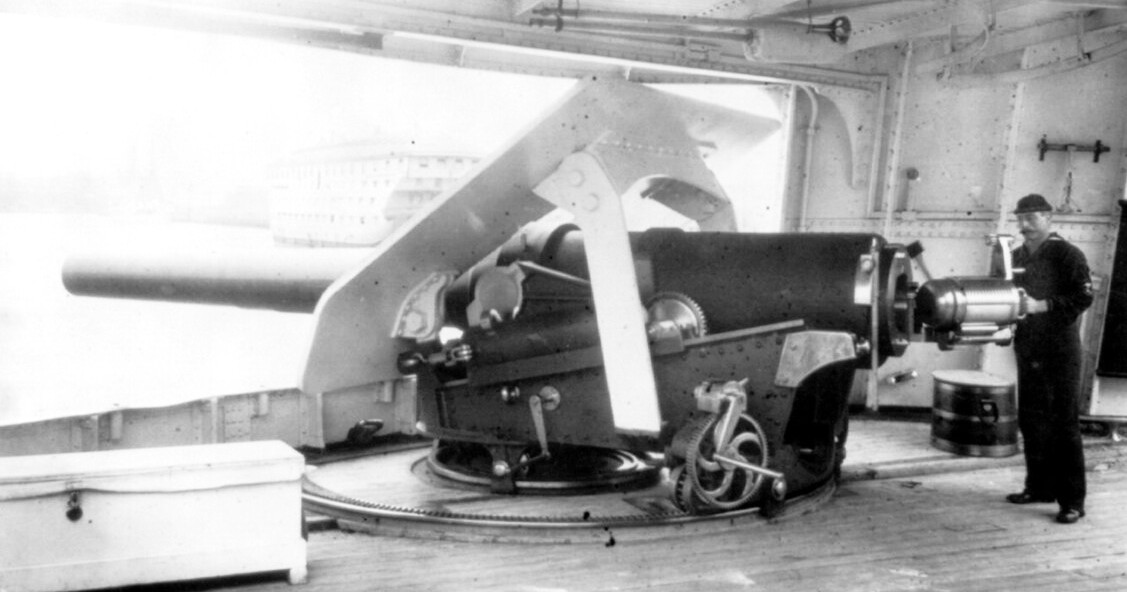
6-inch (152-mm) gun on the USS Atlanta.
(National Museum of the USN Photo)
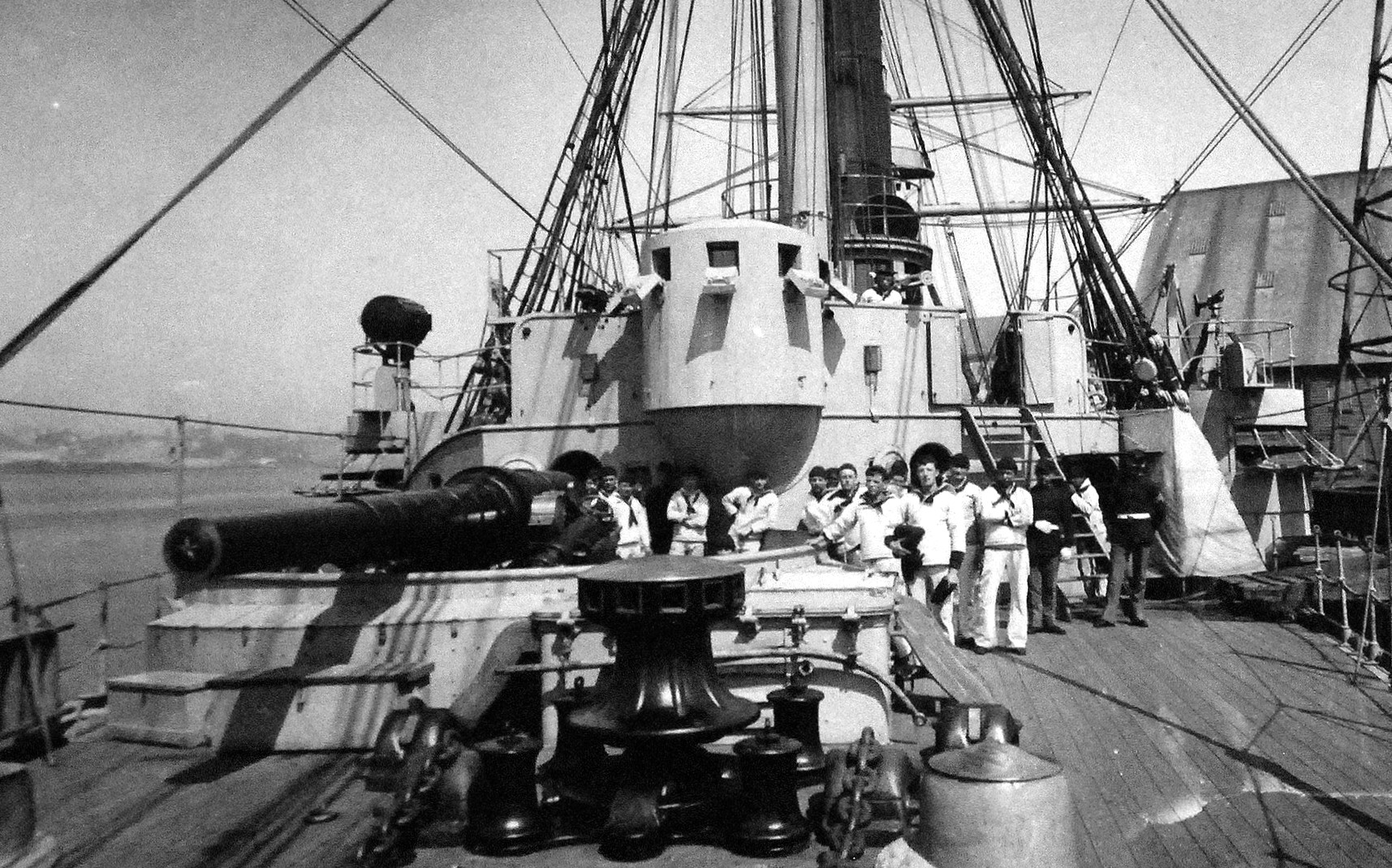
USS Atlanta, showing an 8-inch gun and crew.
(Library of Congress Photo)
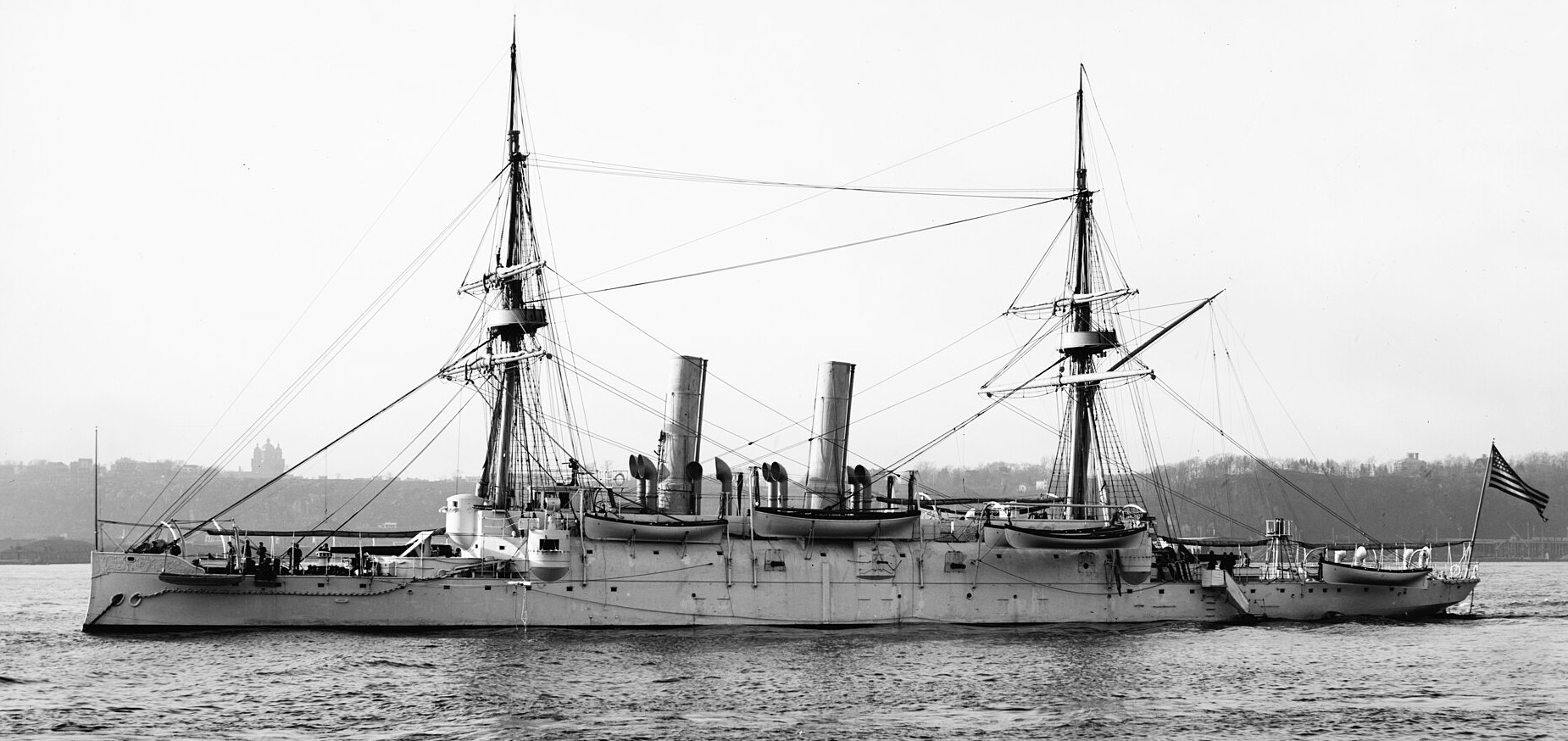
USS Atlanta, 1901.
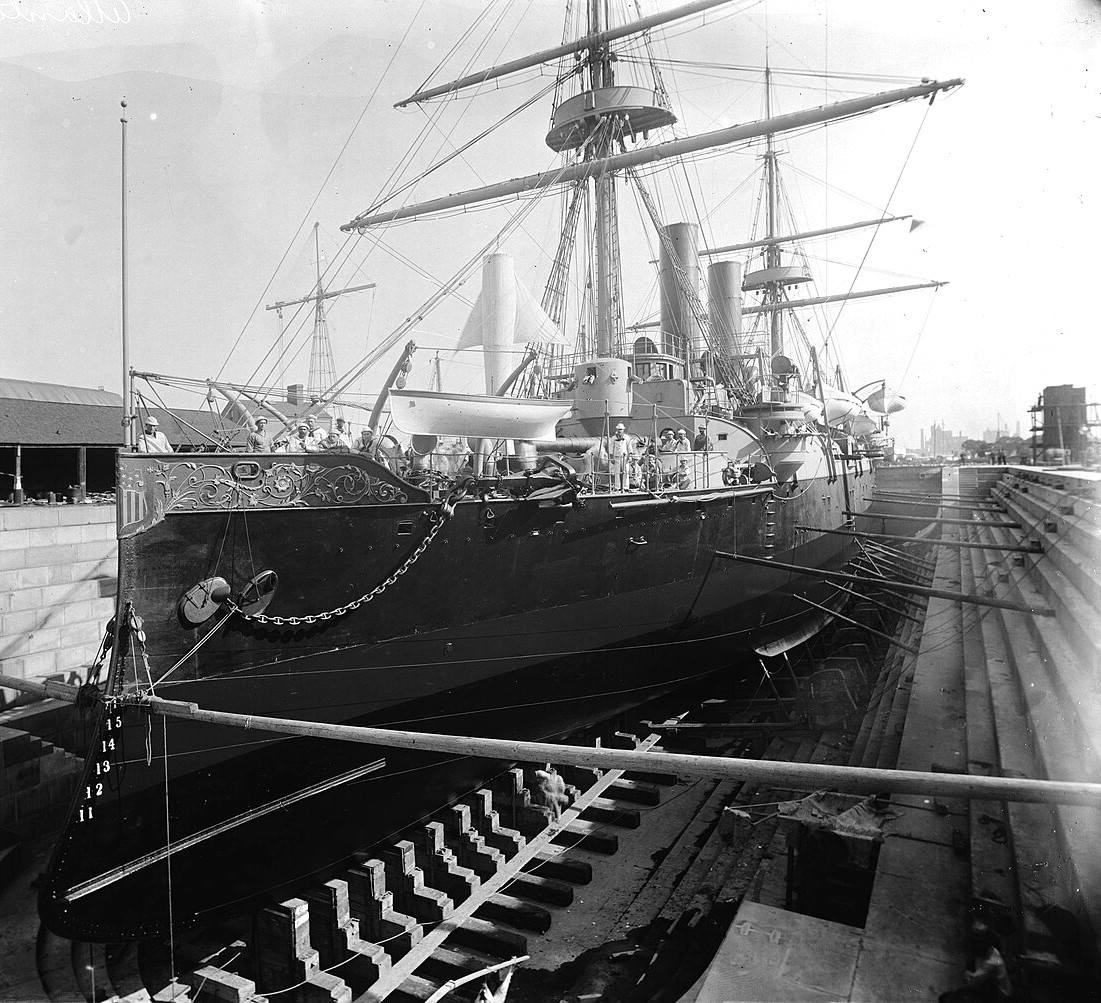
(National Museum of the US Navy Photo)
USS Atlanta, port bow view, in dry-dock at the Brooklyn Navy Yard, c1884-1901.
USS Boston
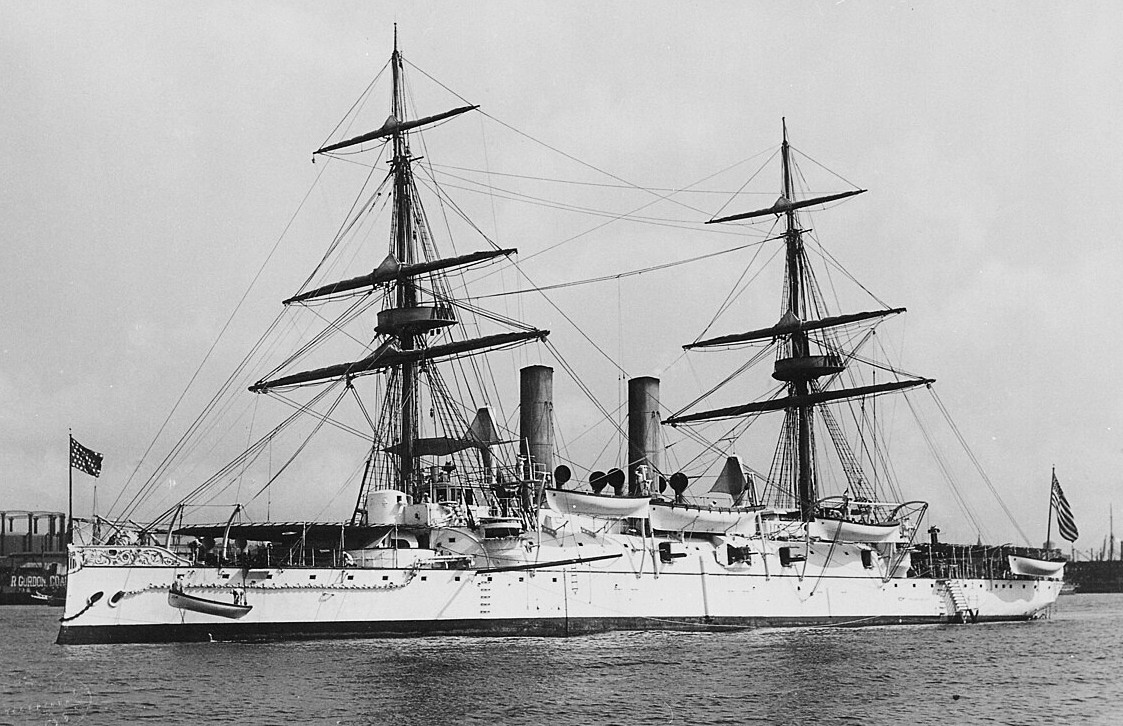
(U.S. National Archives and Records Administration Photo, 1891)
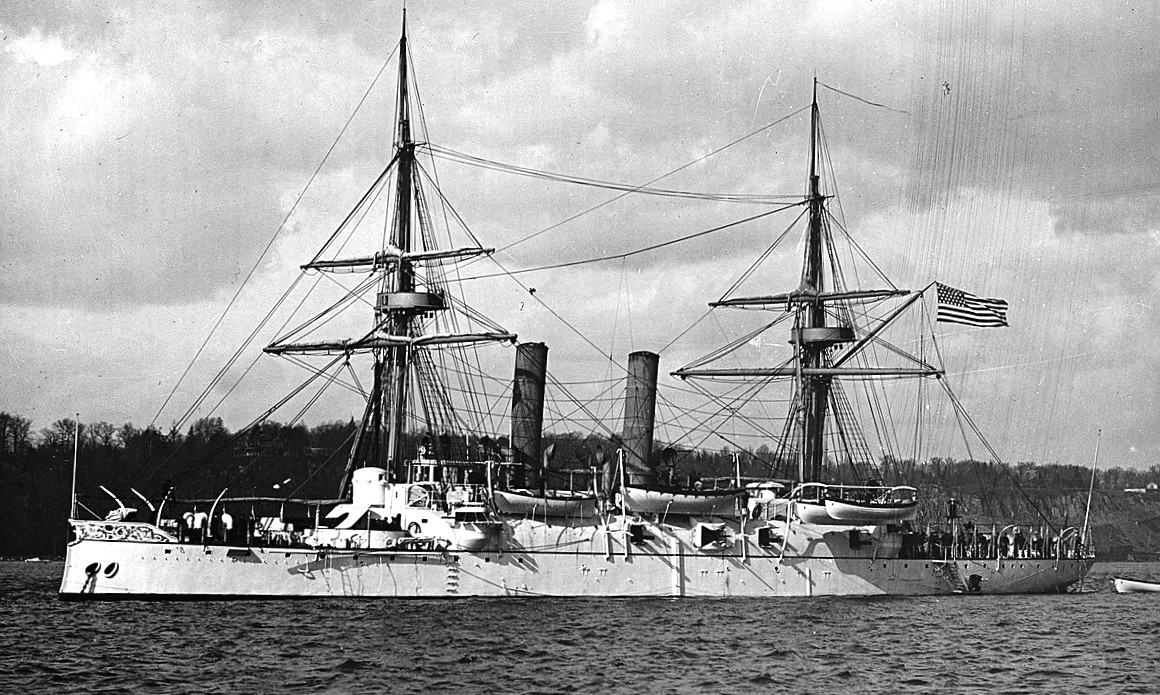
The fifth USS Boston was a United States Navy protected cruiser and one of the first steel warships of the “New Navy” of the 1880s. In some references she is combined with Atlanta as the Atlanta class, in others as the Boston class.
Boston was ordered as one of the steel-hulled “ABCD” ships, the others being the protected cruisers Atlanta and Chicago and the dispatch vessel Dolphin. All were ordered from the same shipyard, John Roach & Sons of Chester, Pennsylvania. Boston was laid down on 15 November 1883 by Delaware River Iron Ship Building and Engine Works, Chester, Pennsylvania, and launched on 4 December 1884. However, when United States Secretary of the Navy William C. Whitney initially refused to accept Dolphin, claiming her design was defective, the Roach yard went bankrupt and Boston was completed at the New York Navy Yard in Brooklyn, New York, which had little experience with steel-hulled ships. She was commissioned on 2 May 1887 at the New York Navy Yard with Captain Francis M. Ramsay in command.
As-built armament included two 8-inch (203 mm)/30 caliber Mark 1 guns,[3] six 6-inch (152 mm)/30 caliber Mark 2 guns,[4] two 6-pounder (57 mm (2.24 in)) guns, two 3-pounder (47 mm (1.85 in)) Hotchkiss revolving cannon, two 1-pounder (37 mm (1.46 in)) Hotchkiss revolving cannon, and two .45 caliber (11.4 mm) Gatling guns.[2] The 8-inch guns were initially in open barbettes with gun shields added later.
Armor protection was light, with 2-inch (50.8 mm) gun shields and conning tower, and a 1.5-inch (38.1 mm) deck extending 100 feet (30 m) over the machinery spaces.
The engineering plant included eight coal-fired cylindrical boilers producing 100 psi (690 kPa) steam and a horizontal compound engine producing 3,500 ihp (2,600 kW) driving one shaft.[2][5][6] Like the other “ABCD” ships, Boston was built with a sail rig to increase cruising range, later removed. The ship carried up to 490 tons of coal, with a cruising range as built of 3,390 nmi (6,280 km; 3,900 mi) at 10 kn (19 km/h; 12 mph). (Wikipedia)
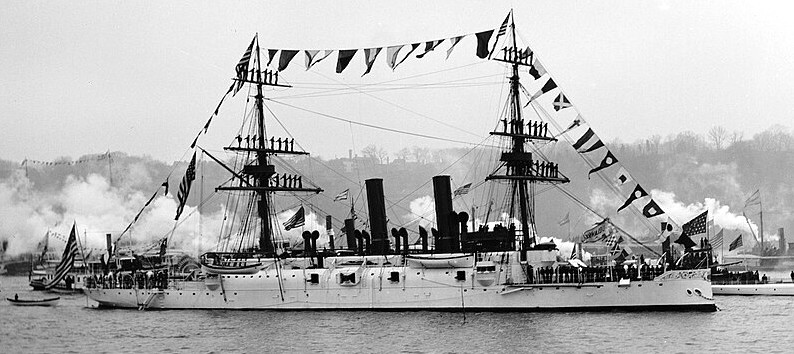
(National Museum of the US Navy Photo)
USS Boston.
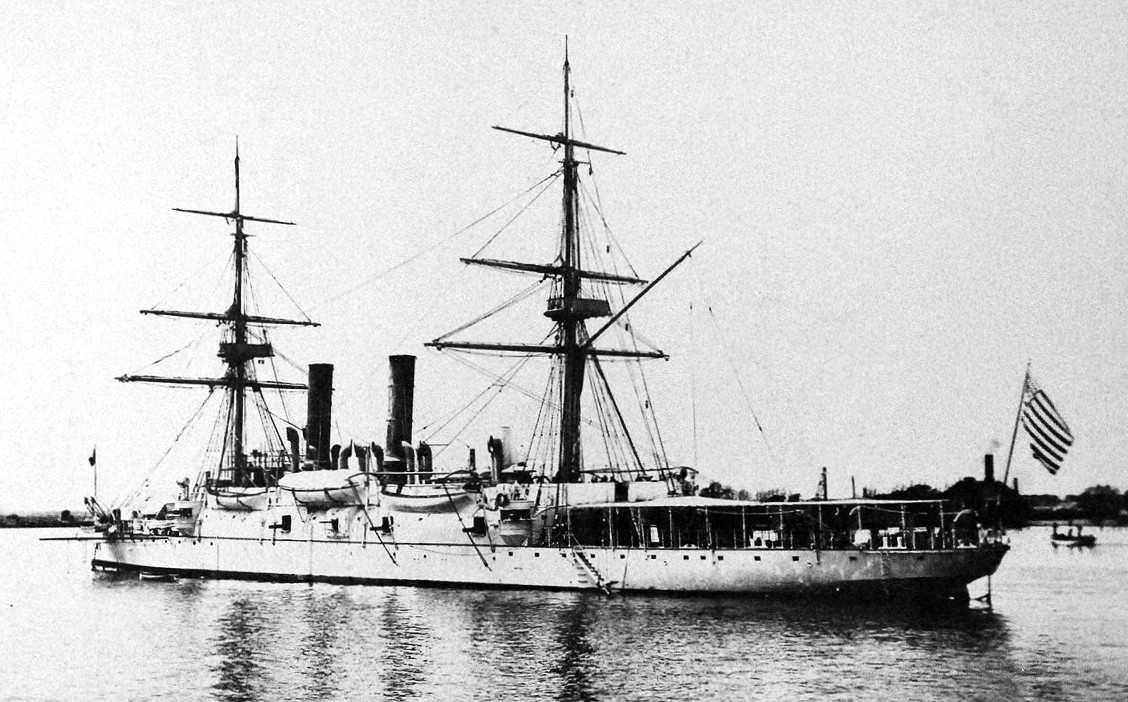
(National Museum of the US Navy Photo)
USS Boston.
(National Museum of the US Navy Photo)
USS Boston.
USS Chicago
(U.S. National Archives and Records Administration Photo)
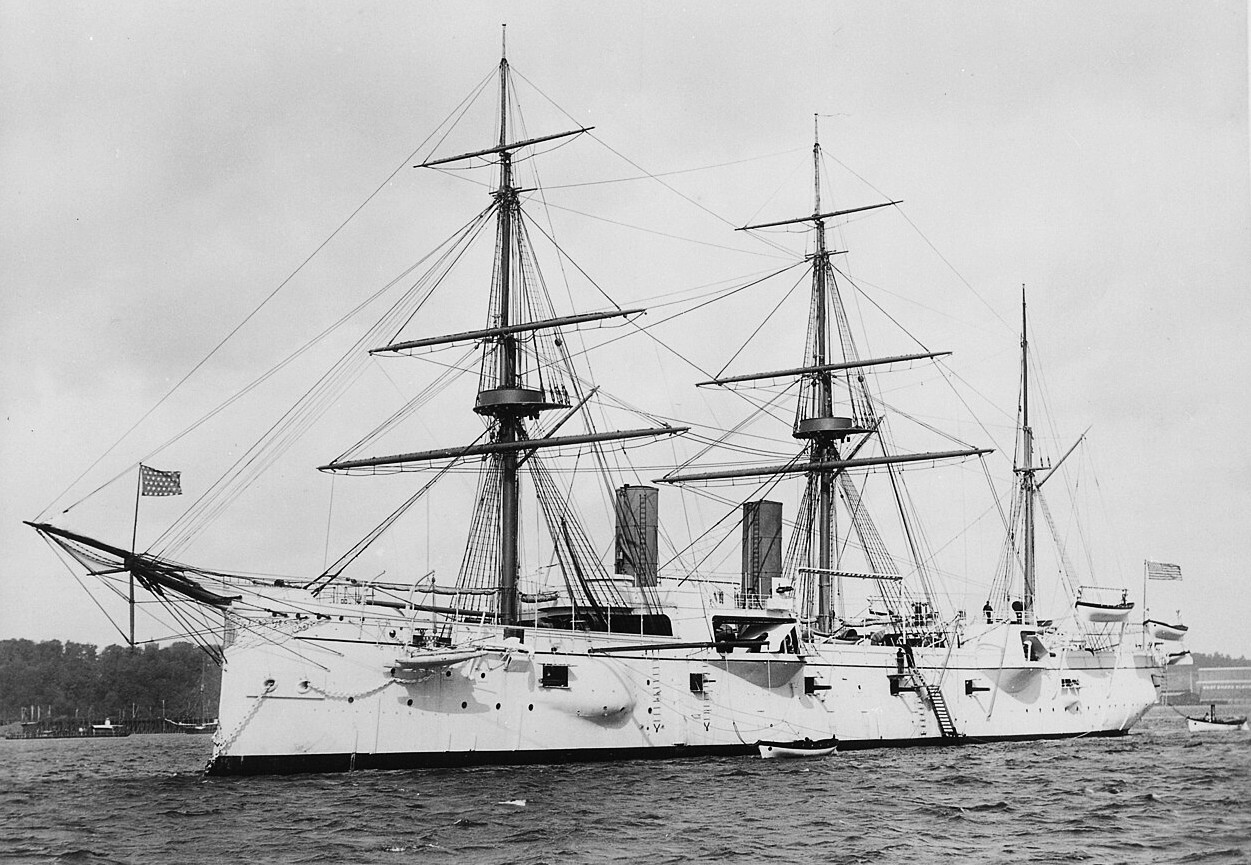
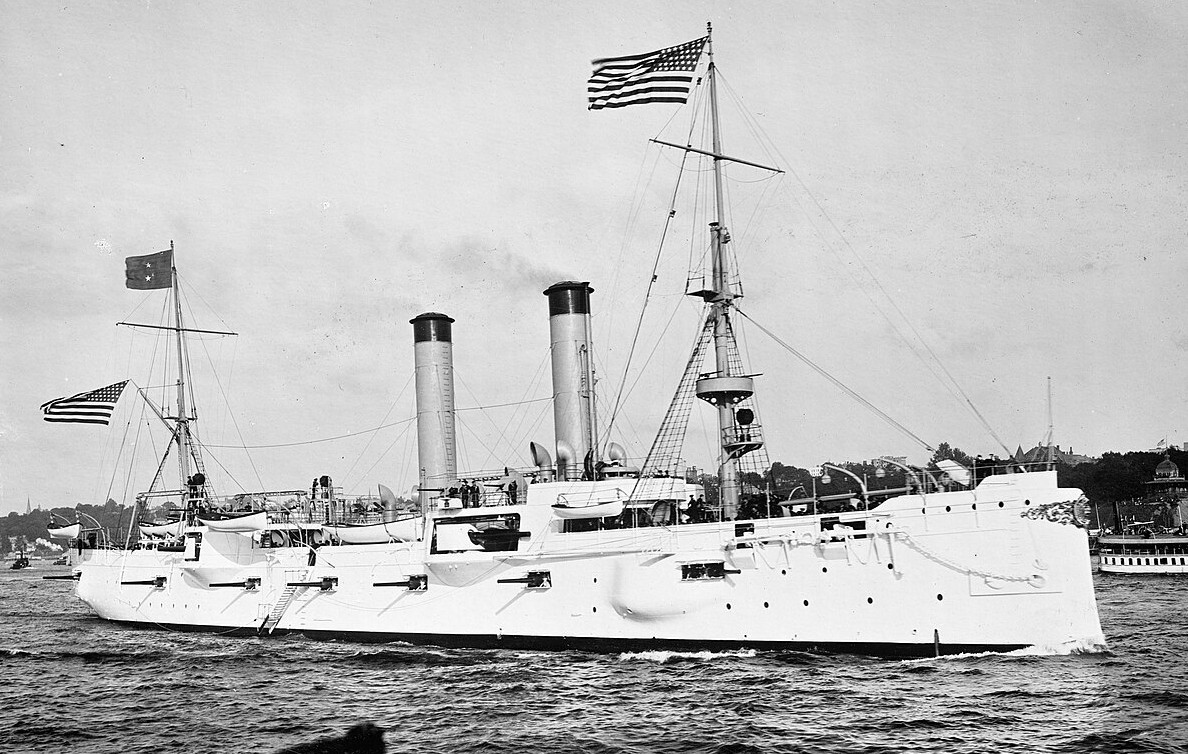
USS Chicago, 1891.
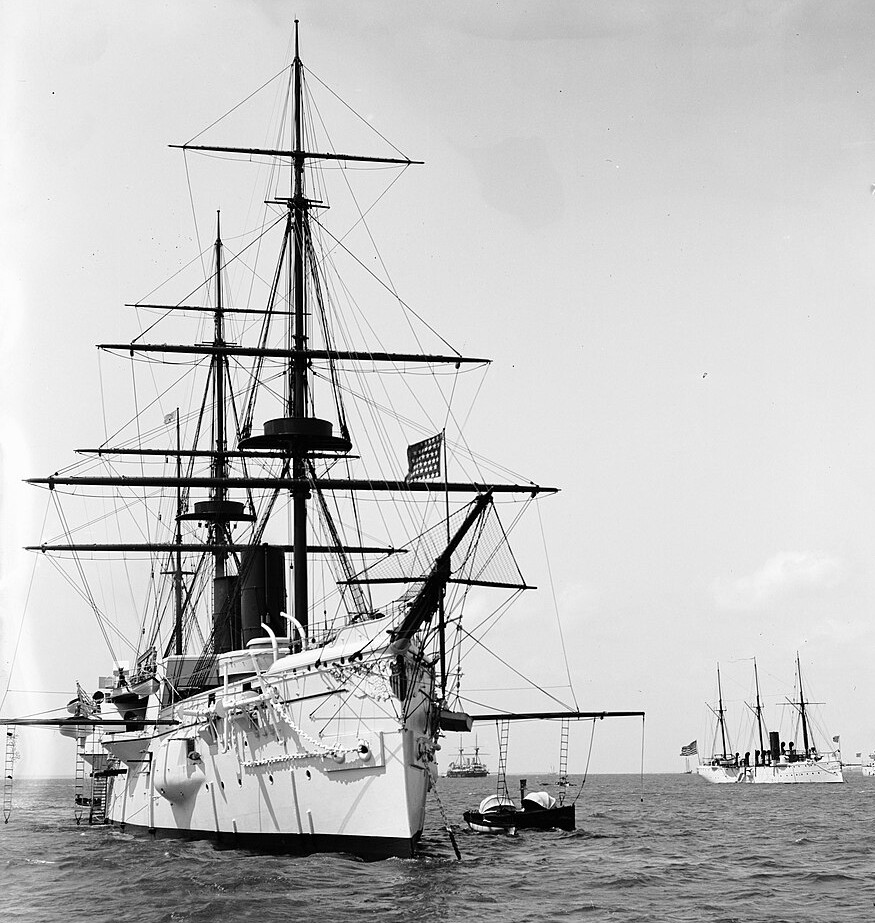
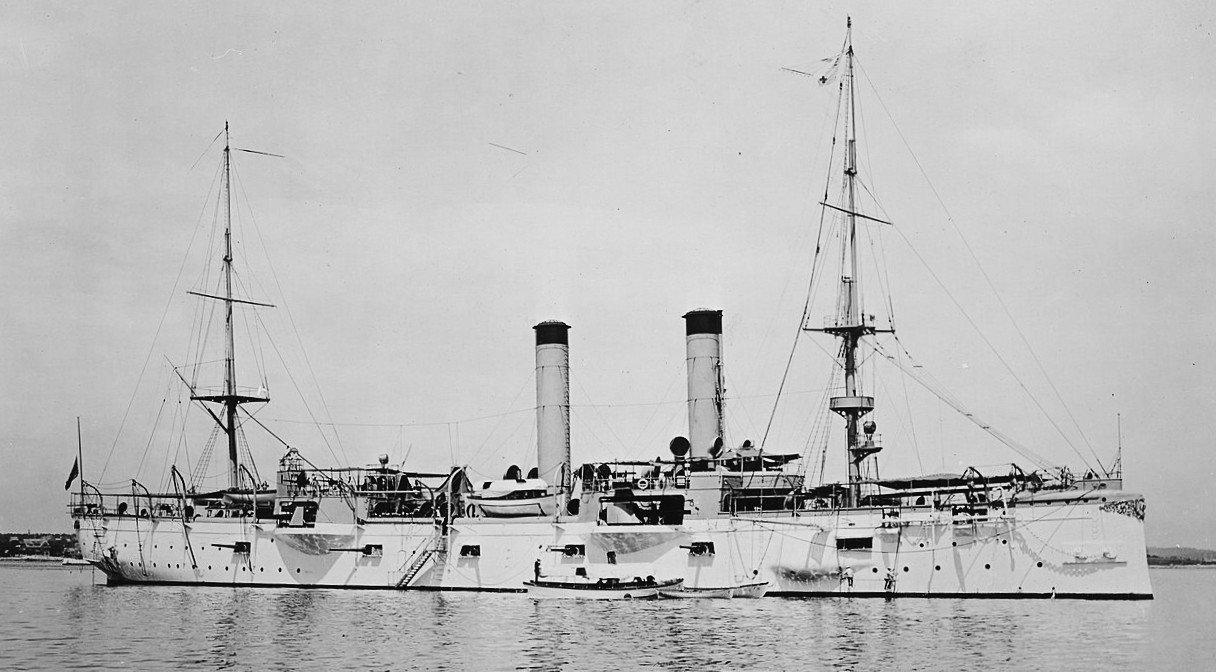
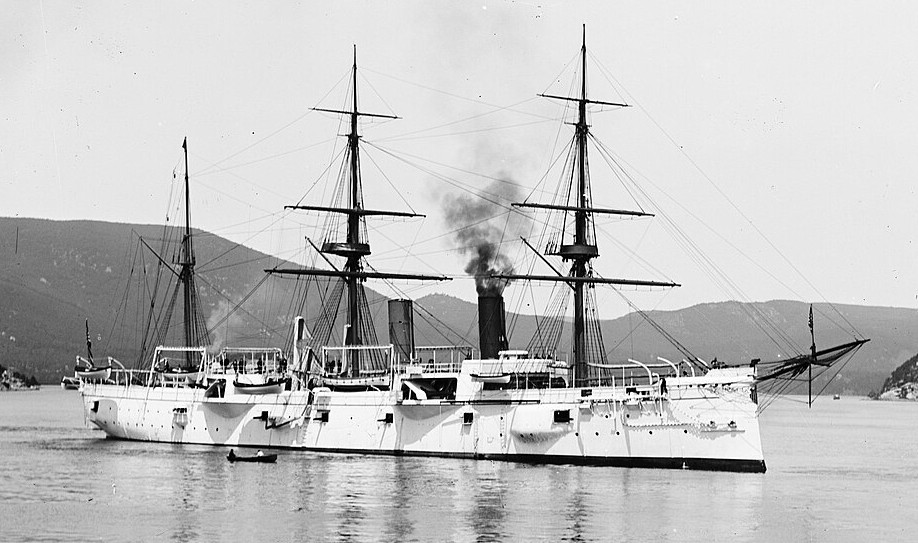
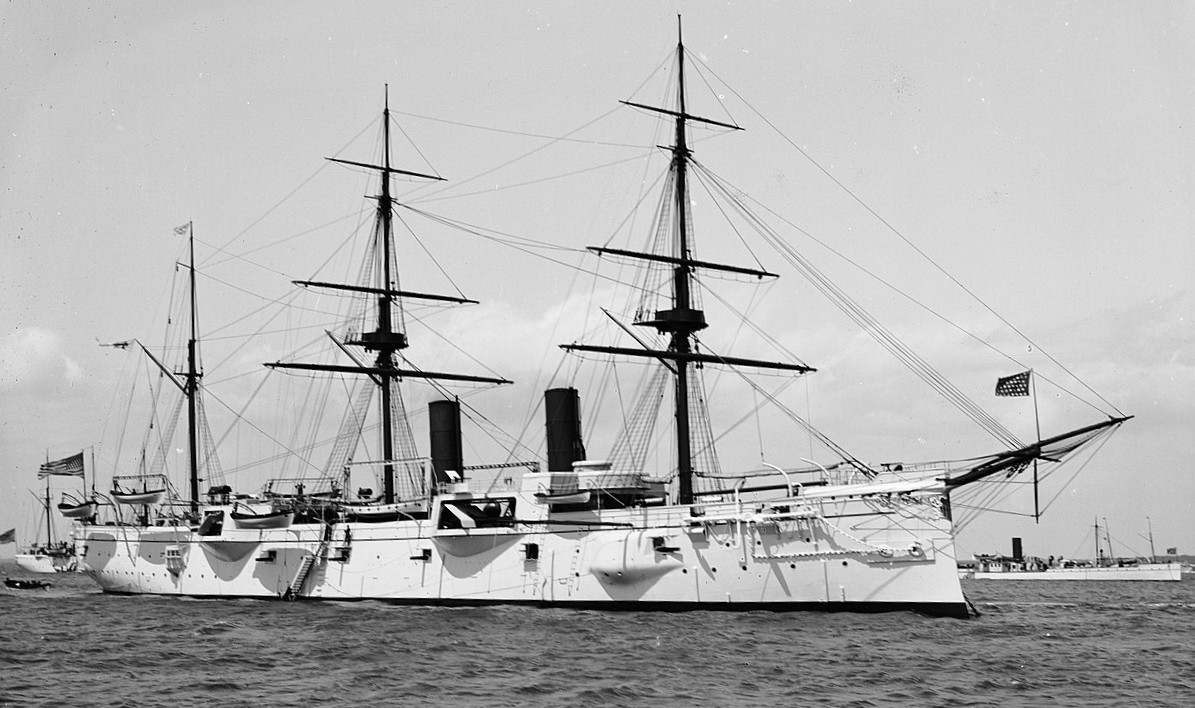
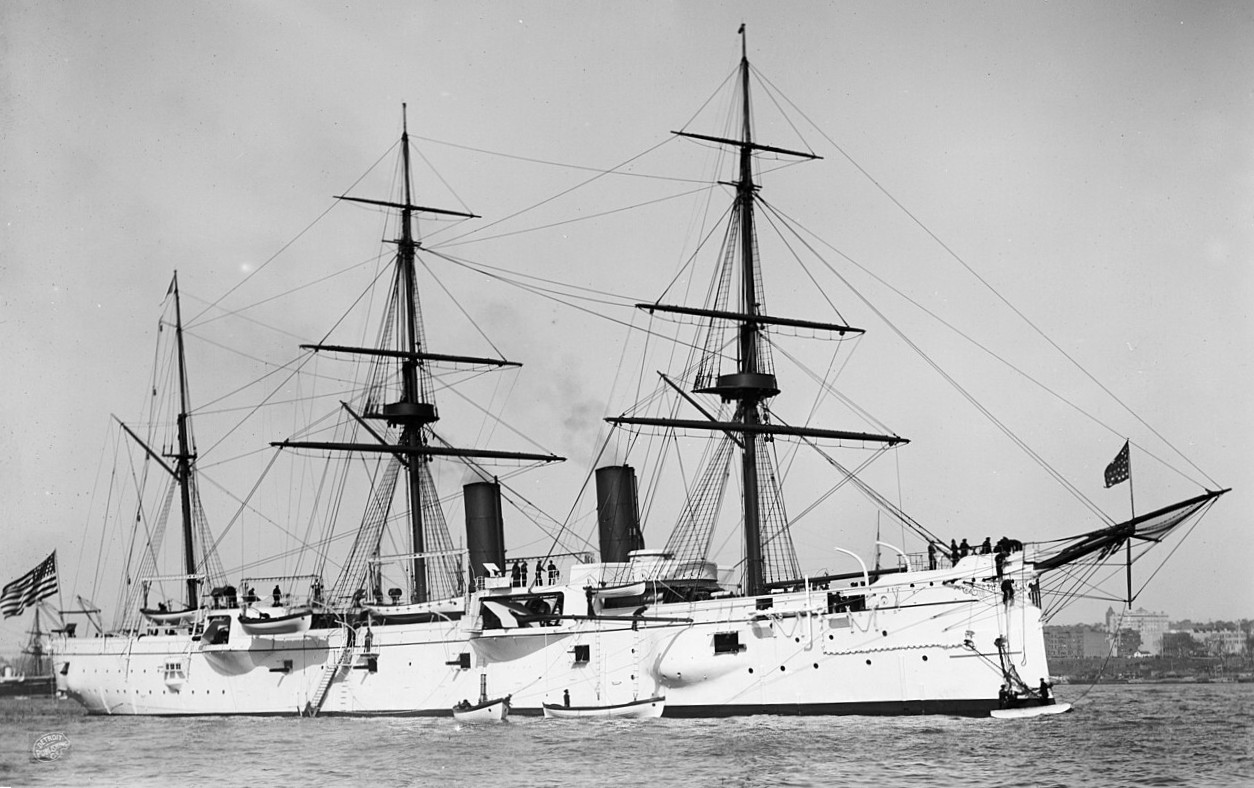
The first USS Chicago (later CA-14) was a protected cruiser of the United States Navy, the largest of the original three authorized by Congress for the “New Navy” and one of the U.S. Navy’s first four steel ships.
Chicago was ordered as one of the “ABCD” ships, the others being the protected cruisers USS Atlanta and USS Boston and the dispatch vessel USS Dolphin. These were the Navy’s first steel-hulled ships, and their ordering is generally taken to mark the beginning of the “New Navy.”
Chicago was built with a displacement of 4,500 long tons (4,572 t) at an overall length of 342 ft 2 in (104.29 m) and 325 ft (99 m) at the perpendiculars. Her beam was 48 ft 3 in (14.71 m) with a draft of 19 ft (5.8 m). She had fourteen 100-psi boilers that powered two compound overhead beam steam engines, producing a total of 5,084 ihp (3,791 kW) to turn her two screws and achieve a speed of 14 kn (16 mph; 26 km/h). Chicago was capable of carrying 830 short tons (750 t) of coal.[1] Like the other “ABCD” ships, Chicago — rigged as a bark — was built with a sail rig to increase her cruising range.
Chicago’s original armament consisted of four 8-inch (203 mm)/30 caliber Mark 2 guns,[2] eight 6-inch (152 mm)/30 caliber Mark 2 guns, two 5-inch (127 mm)/31 caliber Mark 1 guns,[3] two 6-pounder 57 mm (2.24 in) guns, four 3-pounder 47 mm (1.85 in) guns, two 1-pounder 37 mm (1.46 in) Hotchkiss revolver cannon, and two .45 caliber (11.4 mm) Gatling guns.
She had 4 in (100 mm) of armor on her gun shields, 1.5 in (38 mm) on her deck, and 3 in (76 mm) on her conning tower. (Wikipedia)
(Library of Congress Photo)
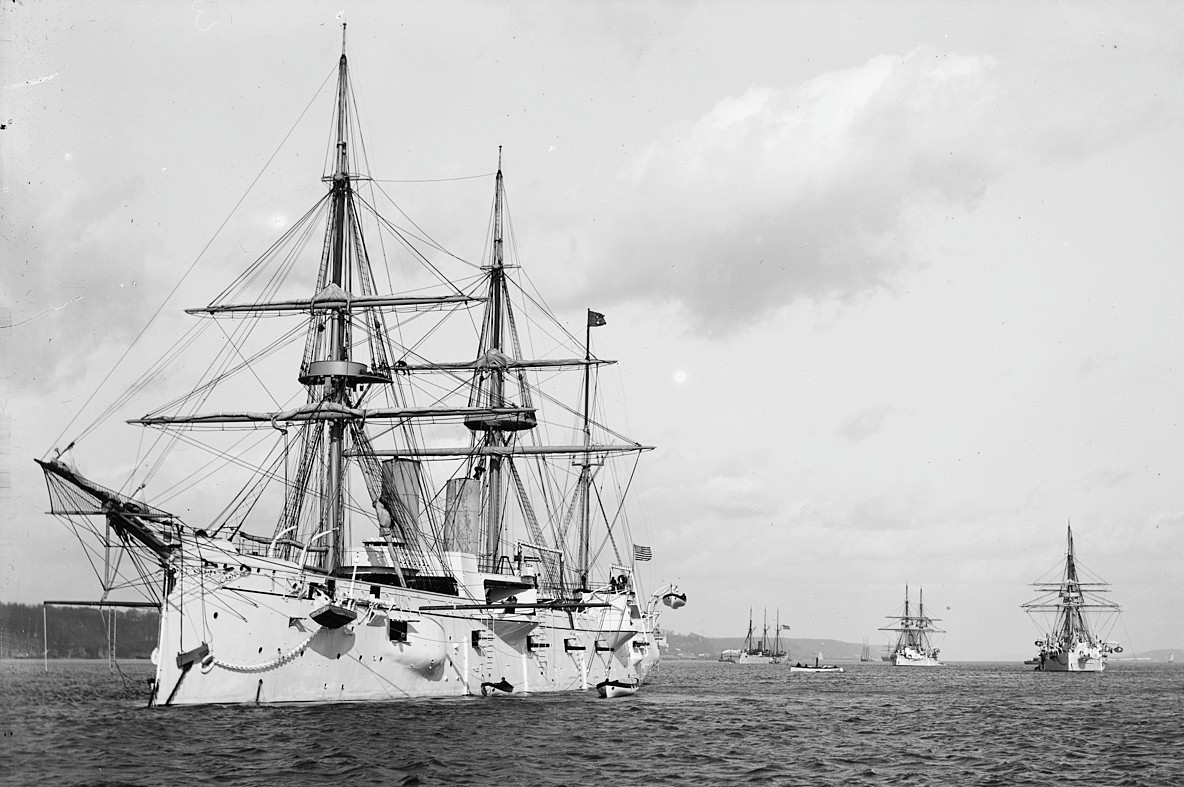
The United States Navy “Squadron of Evolution”. From left to right: USS Chicago, USS Yorktown, USS Boston, USS Atlanta, 1899.
(National Museum of the US Navy Photo)
USS Chicago.
(U.S. National Archives and Records Administration Photo)
USS Chicago.
(National Museum of the US Navy Photo)
USS Chicago.
(National Museum of the US Navy Photo)
USS Chicago.
(National Museum of the US Navy Photo)
USS Chicago.
(National Museum of the US Navy Photo)
USS Chicago.
(Library of Congress Photo)
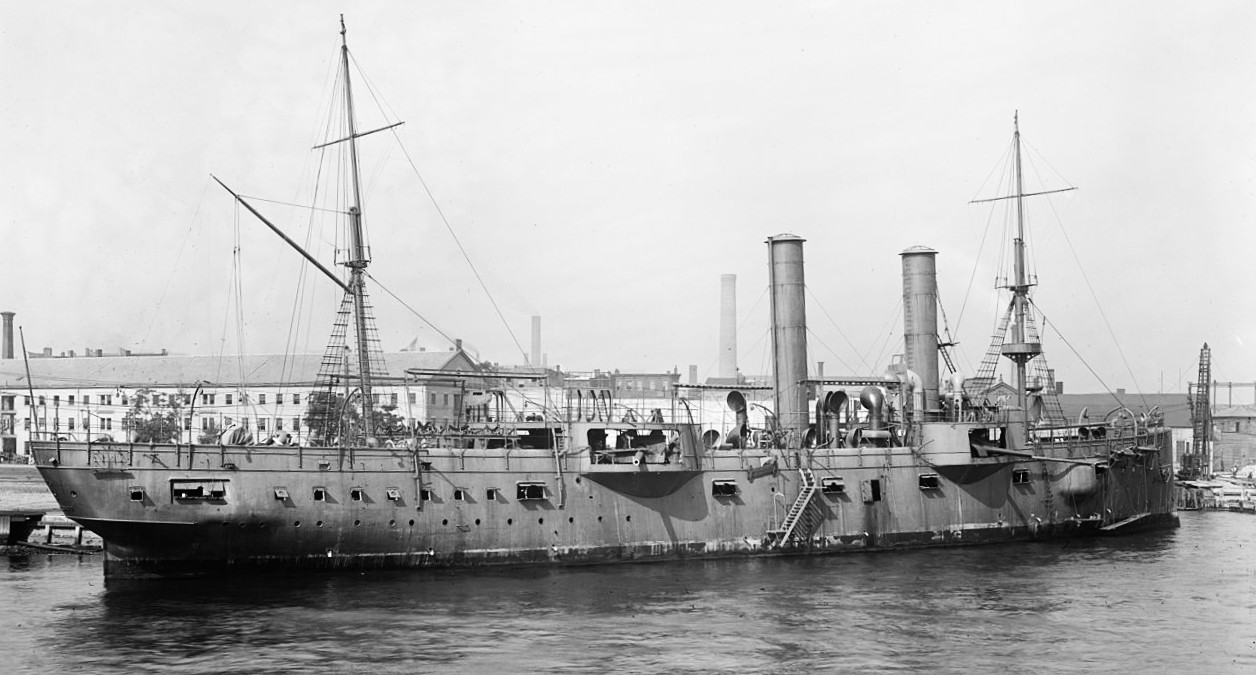
USS Chicago at the Brooklyn Navy Yard (probably during her 1897-98 modernization, as she still carries old 8″/30 guns, but new funnels and masts).
(OSU Special Collections and Archives Photo)
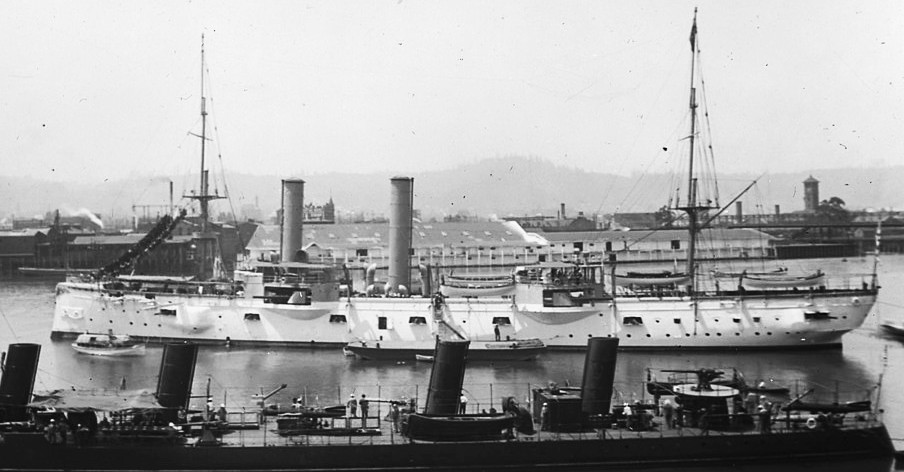
USS Chicago at the Lewis and Clark Exposition held at Portland, Oregon in 1905.
USS Vesuvius
(U.S. National Archives and Records Administration Photo, 1891)
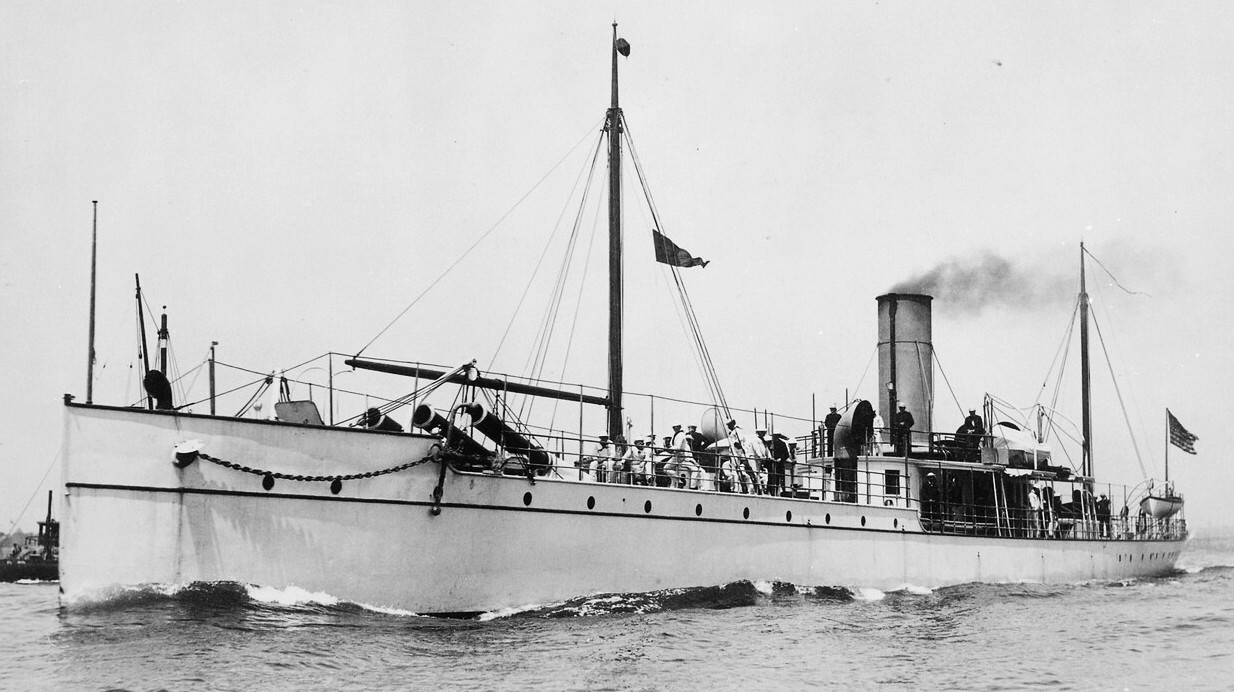
USS Vesuvius, the third ship of the United States Navy named for the Italian volcano, was a unique vessel in the Navy inventory which marked a departure from more conventional forms of main battery armament. She is considered a dynamite gun cruiser and was essentially an operational testbed for large dynamite guns.
Vesuvius was laid down in September 1887 at Philadelphia by William Cramp & Sons Ships and Engine Building Company, subcontracted from the Pneumatic Dynamite Gun Company of New York City. She was launched on 28 April 1888 sponsored by Miss Eleanor Breckinridge and commissioned on 2 June 1890 at the Philadelphia Navy Yard with Lieutenant Seaton Schroeder in command. (Wikipedia)
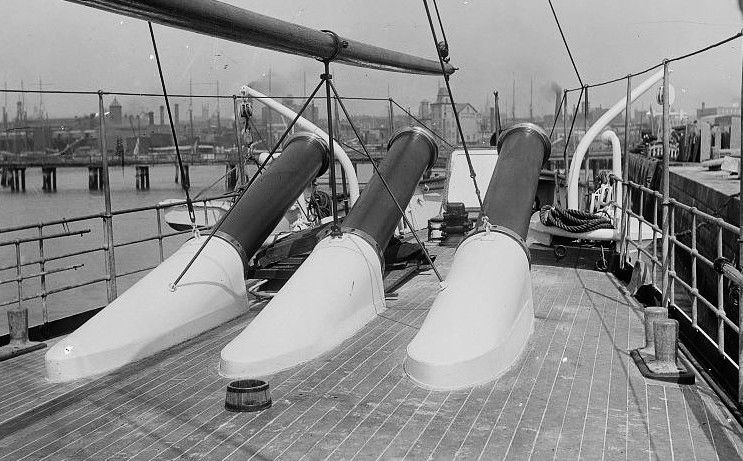
(Library of Congress Photo)
USS Vesuvius, dynamite gun muzzles.
The USS Vesuvius carried three 15-inch (38-cm) cast-iron pneumatic guns, invented by D. M. Medford and developed by Edmund Zalinski, a retired officer of the United States Army. They were mounted forward side by side at a fixed elevation of 16 degrees. Gun barrels were 55 feet (17 meters) long with the muzzles extending 15 feet (4.6 meters) through the deck 37 feet (11 meters) abaft the bow. In order to train these weapons, the ship had to be aimed, like a gun, at its target. Compressed air from a 1000 psi (70 atm) reservoir projected the shells from the dynamite guns. Two air compressors were available to recharge the reservoir.

The dynamite gun cruiser was designed to fire unique cartridges via a pneumatic system. The body of the cartridge (shaped like a cigar) contained the warhead, usually some version of nitroglycerin, connected to aerial fins that kept the weapon stable as it flew through the sky.
The shells fired from the guns were steel or brass casings 7 feet (2.1 meters) long with the explosive contained in the conical forward part of the casing and spiral vanes on the after part to rotate the projectile. The explosive used in the shells themselves was actually a “desensitized blasting gelatin” composed of nitrocellulose and nitroglycerin. It was less sensitive to shock than regular dynamite, but still sensitive enough that compressed air, rather than powder, had to be utilized as the propellant. Shells containing 550 pounds (250 kg) of explosive had a maximum range of 1 mile (1.6 km), but range could be extended to 4,000 yards (3.7 km) by reducing projectile weight to 200 pounds (91 kg). Maximum muzzle velocity was 800 feet (240 meters) per second. Range could be reduced by releasing less compressed air from the reservoir. Ten shells per gun were carried on board, and 15 shells were fired in 16 minutes 50 seconds during an 1889 test. The shells employed an electrical fuze which could be either set to explode on contact or delayed to explode underwater. (Wikipedia)
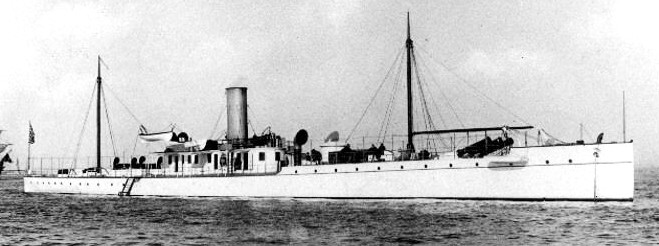
(USN Photo)
USS Vesuvius (1888).
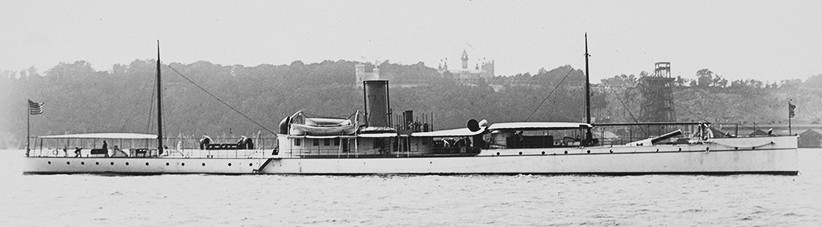
(DeGolyer Library, Southern Methodist University Photo)
USS Vesuvius (1893).
USS New Orleans
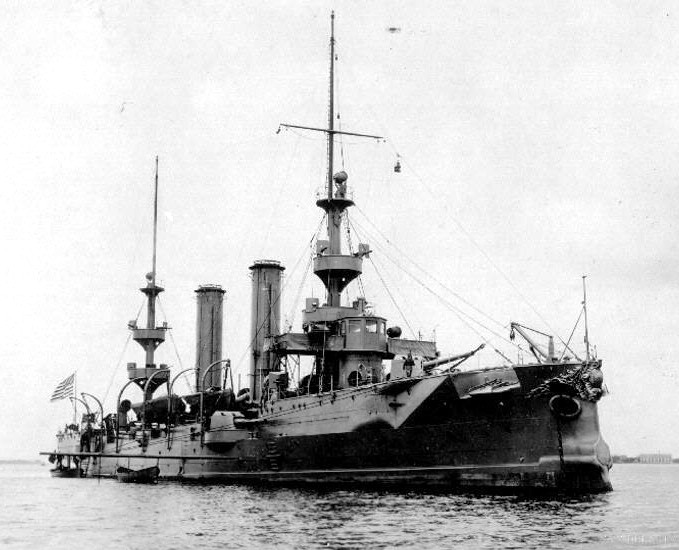
(U.S. Naval Historical Center Photo)
USS New Orleans (1898-1929) Photographed during the Spanish-American War, 1898.
USS New Orleans (later designated PG-34 then CL-22) was a United States Navy protected cruiser of the New Orleans class. She was laid down in 1895 as Amazonas for the Brazilian Navy by Armstrong, Mitchell and Company, Newcastle upon Tyne, England, launched on 4 December 1896, purchased by the U.S. Navy while building on 16 March 1898; and commissioned 18 March 1898 at Gravesend, England. (Wikipedia)
New Orleans sailed on 27 March 1898 to fit out at New York, New York, for service in the Spanish–American War. She left Norfolk, Virginia, on 17 May and joined the Flying Squadron off Santiago de Cuba on 30 May. The next afternoon, with Massachusetts (BB-2) and Iowa (BB-4), she reconnoitered the harbor, exchanging fire with Spanish ships and shore batteries. After joining in the bombardment of the batteries at the entrance to the harbor 6 and 16 June, New Orleans sailed to coal at Key West, and was thus absent during the Battle of Santiago de Cuba on 3 July.
Through the summer, New Orleans cruised on blockade between San Juan, Puerto Rico, and Guantanamo Bay, Cuba, burning the beached Spanish steamer Antonio Lopez near the coast of Puerto Rico on 16 July, and capturing the French blockade runner Olinde Rodrigues on 17 July. She arrived at Philadelphia, on 20 October for the Peace Jubilee, then prepared at New York to launch her peacetime service with a visit to New Orleans, from 16 May through 29 May 1899. After summer exercises off the Atlantic seaboard, she sailed from New York on 21 October to join the Asiatic Fleet. She called at the Azores and Port Said, passed through the Suez Canal, and reached Manila on 21 December. For the next 5 years, as flagship of the Cruiser Squadron, U.S. Asiatic Fleet, she cruised the Philippines and the China coast. Relieved by Baltimore (C-3), she departed Cavite on 27 December 1904 for Mare Island Navy Yard, arriving there on 27 January 1905 to decommission on 6 February 1905.
Recommissioning on 15 November 1909, New Orleans returned to Asiatic duty at Yokohama on 25 April 1910. She cruised the Orient until returning to Bremerton, Washington, on 14 February 1912 and going into reserve. Again in full commission on 31 December 1913, New Orleans patrolled the west coast of Mexico during the tense spring of 1914, then trained the Washington Naval Militia through the summer, returning to Mexican waters in the fall. Upon American entry into World War I, she was overhauled at Puget Sound, and sailed for the Panama Canal and the East Coast, arriving at Hampton Roads on 27 August 1917.
New Orleans escorted convoys from New York City to ocean rendezvous with destroyer escorts off the British Isles and the French coast until 16 January 1918, when she cleared New York for the Asiatic Station. She reached Yokohama from Honolulu and Panama on 13 March, cruised to China, and the Philippines, and from 17 July to 20 December 1919 was station ship at Vladivostok, Russia, supporting the Allied force in Siberia.
After repairs at Cavite, New Orleans returned to Vladivostok to resume her service for the Allied Expeditionary Force from 20 May to 27 September 1920. During further cruising with the Asiatic Fleet she was redesignated CL-22 on 8 August 1921, then completed her service at Vladivostok 14 February to 17 August 1922. She returned to Mare Island on 23 September, decommissioned there on 16 November 1922, and was struck from the Naval Vessel Register on 13 November 1929. On 1 April 1925 the 4.7-inch gun No. 5 was presented to Kane County, Illinois by the U.S. government and is currently on display at the Kane County courthouse in Geneva Illinois. She was sold for scrapping on 11 February 1930.
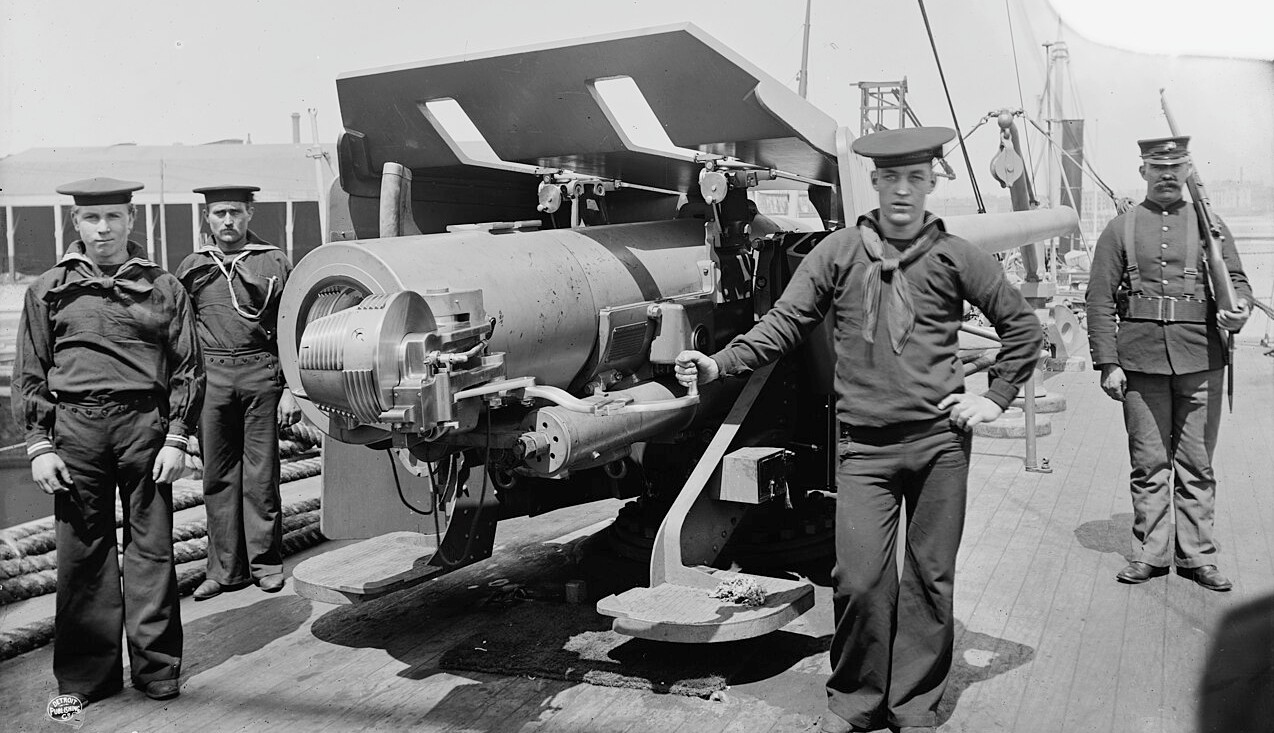
(Library of Congress Photo)
USS New Orleans 6 inch gun , 1898.
New Orleans was originally armed with six 6″/50 caliber (152 mm) guns and four 4.7″/50 caliber (120-mm) guns. These were British-made export-model guns built by Elswick Ordnance Company, a subsidiary of Armstrong. These guns were unique in the US Navy to New Orleans and her sister Albany, and they were designated as “6”/50 caliber Mark 5 Armstrong guns” and “4.7”/50 caliber Mark 3 Armstrong guns”. To reduce supply difficulties, during refits at the Cavite Navy Yard in the Philippines in 1903, both ships had their 4.7-inch guns replaced with standard 5-inch (127 mm)/50 caliber Mark 5 guns; the 6-inch guns were replaced with 5-inch guns in 1907. Their torpedo tubes were also removed in the 1903 refits.[4] At least some of the guns from these ships were emplaced in the Grande Island/Subic Bay area 1907-1910 and operated by the United States Marine Corps until the Coast Artillery Corps’ modern defenses centered on Fort Wint were completed.[5][6] During World War I the 5-inch guns were reduced from ten to eight and a 3″/50 caliber (76 mm) anti-aircraft gun was added. Two 4.7-inch guns (one from each ship of the class) are preserved at the Kane County, Illinois Soldier and Sailor Monument at the former courthouse in Geneva, Illinois. (Wikipedia)
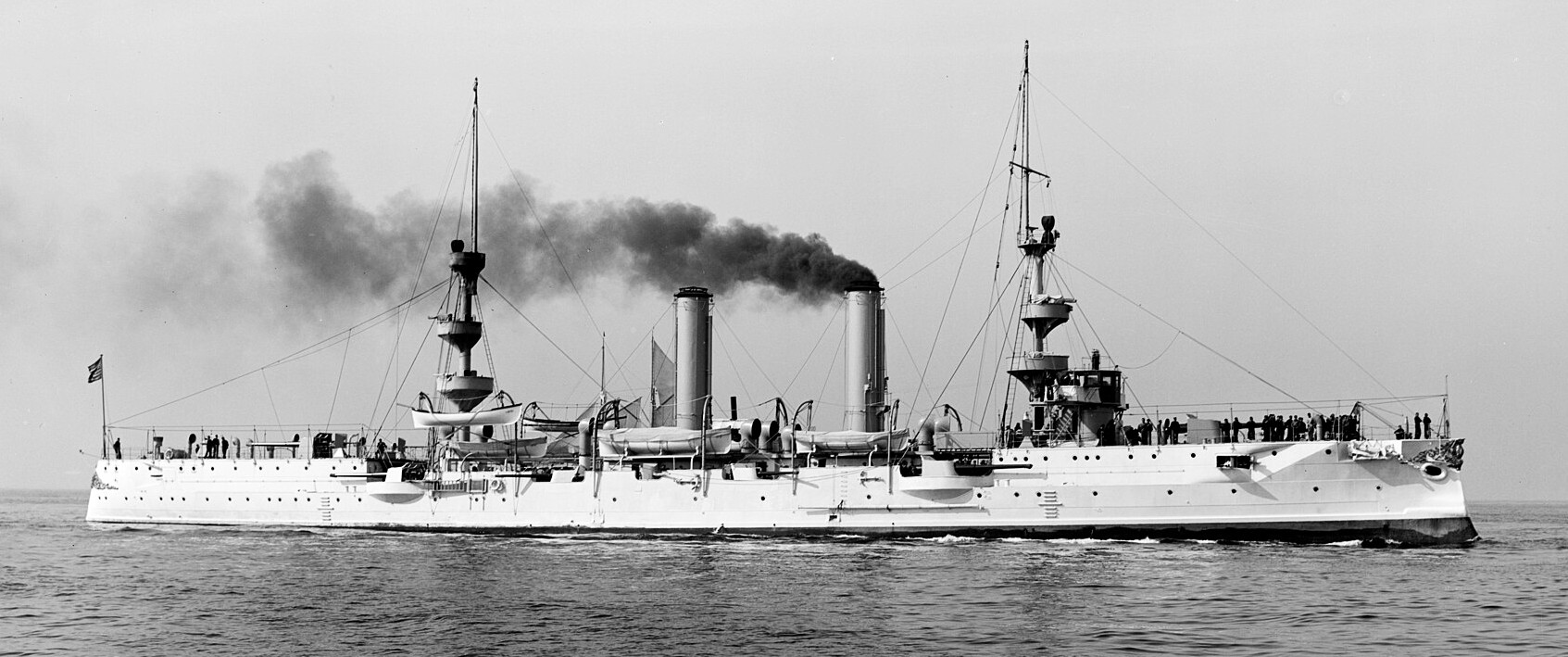
(Library of Congress Photo)
USS New Orleans 6 inch gun , 1899.
USS Albany
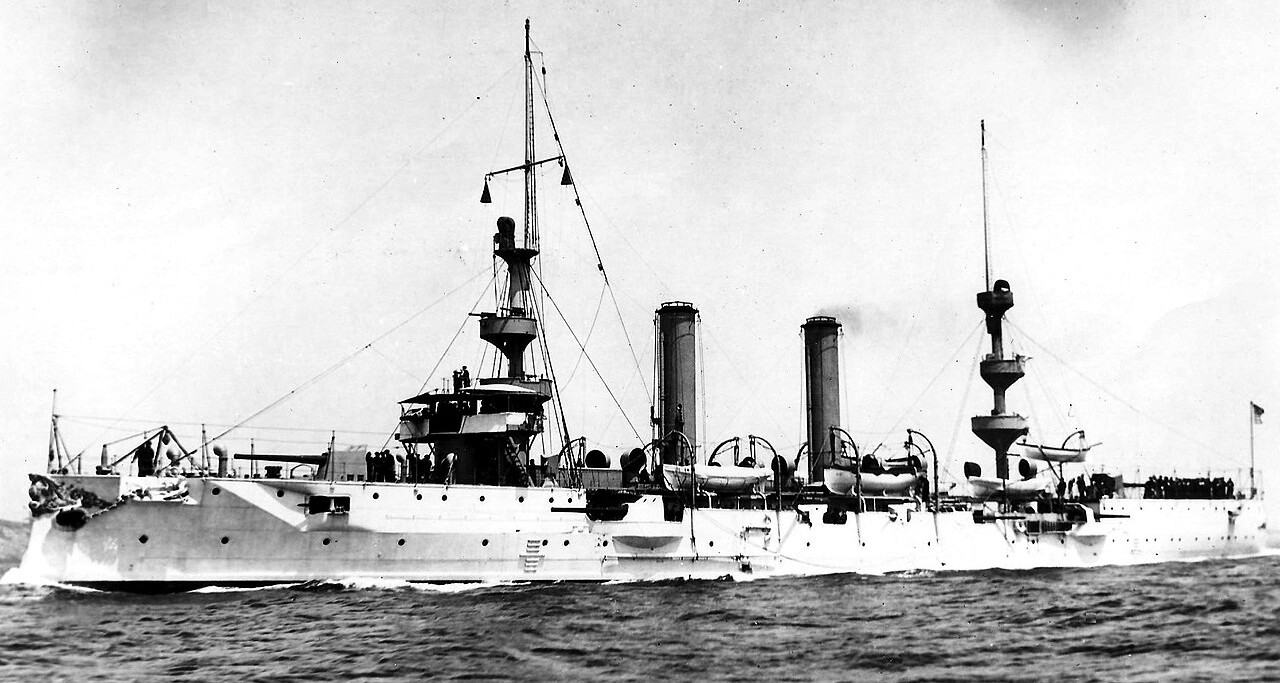
(Naval History and Heritage Command Photo)
The third USS Albany (later PG-36 and CL-23) was a United States Navy protected cruiser of the New Orleans class. She saw service in the Philippine–American War and during the First World War. Albany was originally laid down at Newcastle upon Tyne, England, by Armstrong Whitworth on 8 December 1897 for the Brazilian Navy as Almirante Abreu, but was purchased while still on the ways by the United States Navy on 16 March 1898 to prevent her from being acquired by the Spanish Navy during the Spanish–American War. She was renamed Albany and launched in February 1899, sponsored by Mrs. John C. Colwell, the wife of the American naval attaché in London. She was commissioned in the River Tyne, England, on 29 May 1900. Cost $1,207,644.13 (hull and machinery). (Wikipedia)
Albany was originally armed with six 6″/50 caliber (152-mm) guns and four 4.7″/50 caliber (120 mm) guns. These were British-made export-model guns built by Elswick Ordnance Company, a subsidiary of Armstrong. These guns were unique in the US Navy to Albany and her sister New Orleans, and they were designated as “6”/50 caliber Mark 5 Armstrong guns” and “4.7”/50 caliber Mark 3 Armstrong guns”. To reduce supply difficulties, during refits at the Cavite Navy Yard in the Philippines in 1903, both ships had their 4.7-inch guns replaced with standard 5-inch (127 mm)/50 caliber Mark 5 guns; the 6-inch guns were replaced with 5-inch guns in 1907. Their torpedo tubes were also removed in the 1903 refits. At least some of the guns from these ships were emplaced in the Grande Island/Subic Bay area 1907-1910 and operated by the United States Marine Corps until the Coast Artillery Corps’ modern defenses centered on Fort Wint were completed. During the First World War the 5-inch guns were reduced from ten to eight and a 3″/50 caliber (76 mm) anti-aircraft gun was added. Two 4.7-inch guns (one from each ship of the class) are preserved at the Kane County, Illinois Soldier and Sailor Monument at the former courthouse in Geneva, Illinois. The gun from Albany was the No. 5 gun, presented on 1 April 1925. (Wikipedia)
In July 1922, Albany departed Chinese waters for the last time and headed home. She arrived at the Mare Island Navy Yard on 6 August and was placed out of commission on 10 October 1922. She was berthed at Mare Island until 3 November 1929, when her name was struck from the Naval Vessel Register. On 11 February 1930, Albany was sold for scrapping.