
US Navy Protected and Peace Cruisers: (C-1) Newark, (C-2) Charleston, (C-3) Baltimore, (C-4) Philadelphia, (C-5) San Francisco, (C-6) Olympia
In the pre-1920 period abbreviations were informal and not standardized; officially these ships were, e.g., “Cruiser No. 1”. Only the Montgomery class were unprotected cruisers, all the rest were protected cruisers. The Navy often referred to unprotected cruisers and obsolete protected cruisers (and some large gunboats without cruiser features) as peace cruisers due to their use in major policing and diplomatic roles. (Wikipedia)
(C-1) Newark (1891) – Spanish–American War
(C-2) Charleston (1889) – Spanish–American War, wrecked 2 November 1899
(C-3) Baltimore (1890) – Spanish–American War, WW1, later minelayer CM-1
(C-4) Philadelphia (1890), later IX-24
(C-5) San Francisco (1890) – Spanish–American War, WW1, later minelayer CM-2
(C-6) Olympia (1895) – Spanish–American War, WW1
Cincinnati class
(C-7) Cincinnati (1894) – Spanish–American War, WW1
(C-8) Raleigh (1894) – Spanish–American War, WW1
Montgomery class
(C-9) Montgomery (1894) – Spanish–American War, WW1 as Anniston
(C-10) Detroit (1893) – Spanish–American War
(C-11) Marblehead (1894) – Spanish–American War, WW1, later PG-27
Columbia class
(C-12) Columbia (1894) – Spanish–American War, WW1, later CA-16
(C-13) Minneapolis (1894) – Spanish–American War, WW1, later CA-17
Denver class
(C-14) Denver (1904) – WW1, later PG-28, CL-16
(C-15) Des Moines (1904) – WW1, later PG-29, CL-17
(C-16) Chattanooga (1904) – WW1, later PG-30, CL-18
(C-17) Galveston (1905) – WW1, later PG-31, CL-19
(C-18) Tacoma (1904) – United States occupation of Veracruz, WW1, later PG-32, CL-20
(C-19) Cleveland (1903), later PG-33, CL-22
St. Louis class
(C-20) St. Louis (1906) – WW1, later CA-18
(C-21) Milwaukee (1906), wrecked 13 January 1917
(C-22) Charleston (1905) – WW1, later CA-19
While classified as patrol gunboats by the Navy and as sloops by the 1930 London Naval Treaty, the 2,000 ton displacement Erie-class gunboats were designed to fulfill the role of peace cruisers in Asia and the Caribbean as detailed in internal Navy documents.
Erie class
(PG-50) Erie (1936) – WW2: 1 battle star, burned out and beached after torpedo hit 12 November 1942, 7 killed, later capsized
(PG-51) Charleston (1936) – WW2: 1 battle star.
(C-1) Newark
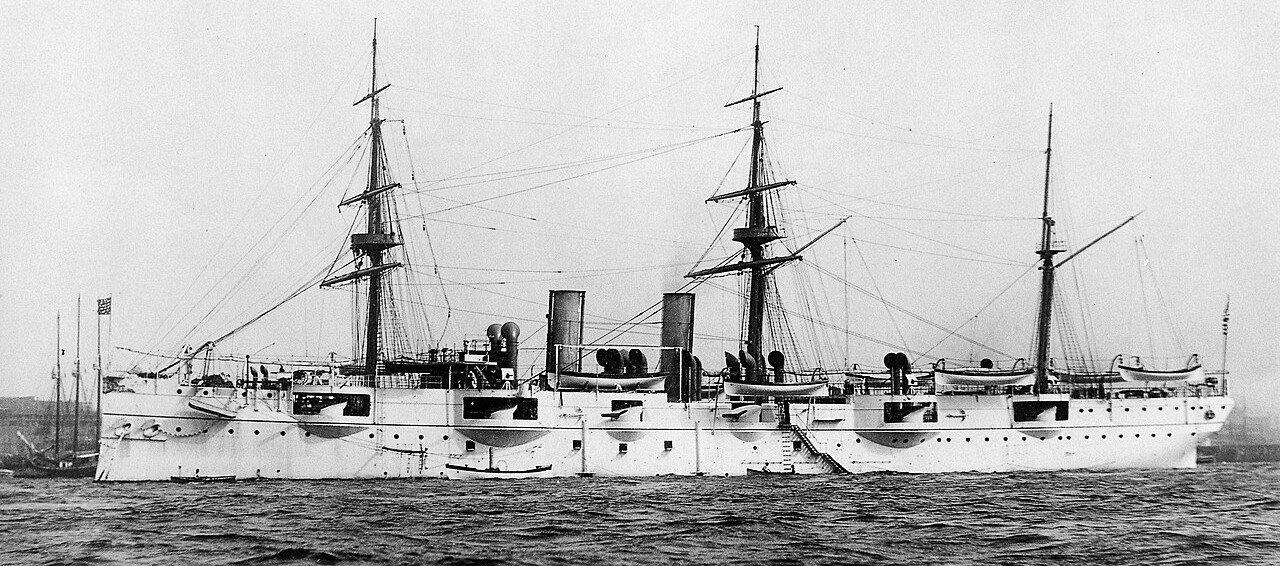
(U.S. National Archives Photo, 1891)
The first USS Newark (C-1) was a United States Navy protected cruiser, the eighth protected cruiser launched by the United States. In design, she succeeded the “ABC” cruisers Atlanta, Boston, and Chicago with better protection, higher speed, and a uniform 6-inch gun armament. Four additional protected cruisers (C-2 through C-5) were launched for the USN prior to Newark.[1][2]
She was laid down by William Cramp & Sons of Philadelphia on 12 June 1888, launched on 19 March 1890, sponsored by Miss Annie Boutelle, the daughter of Representative Charles A. Boutelle of Maine, and commissioned on 2 February 1891, Captain Silas Casey III in command. (Wikipedia)
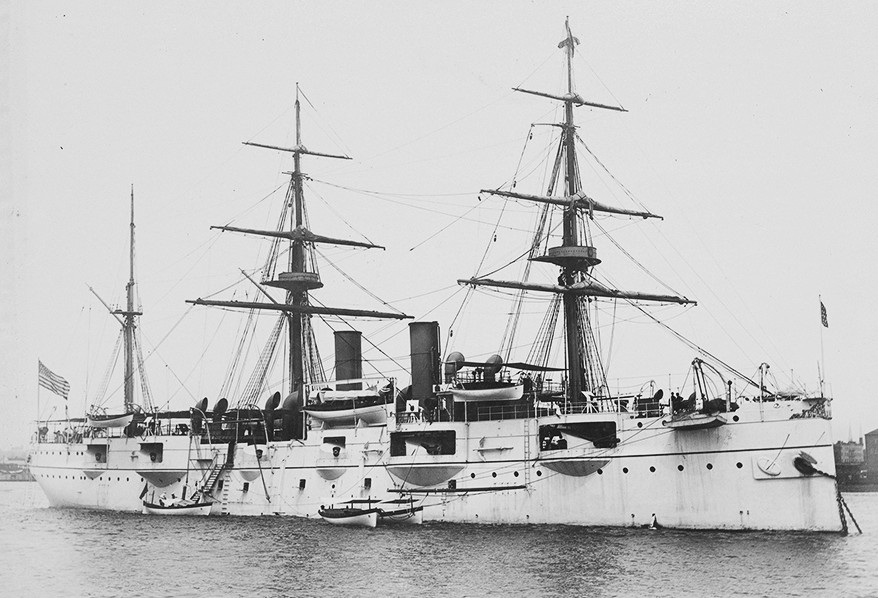
(DeGolyer Library, Southern Methodist University Photo)
USS Newark (C-1), Columbian Naval Parade, New York harbour, 27 Apr 1893.
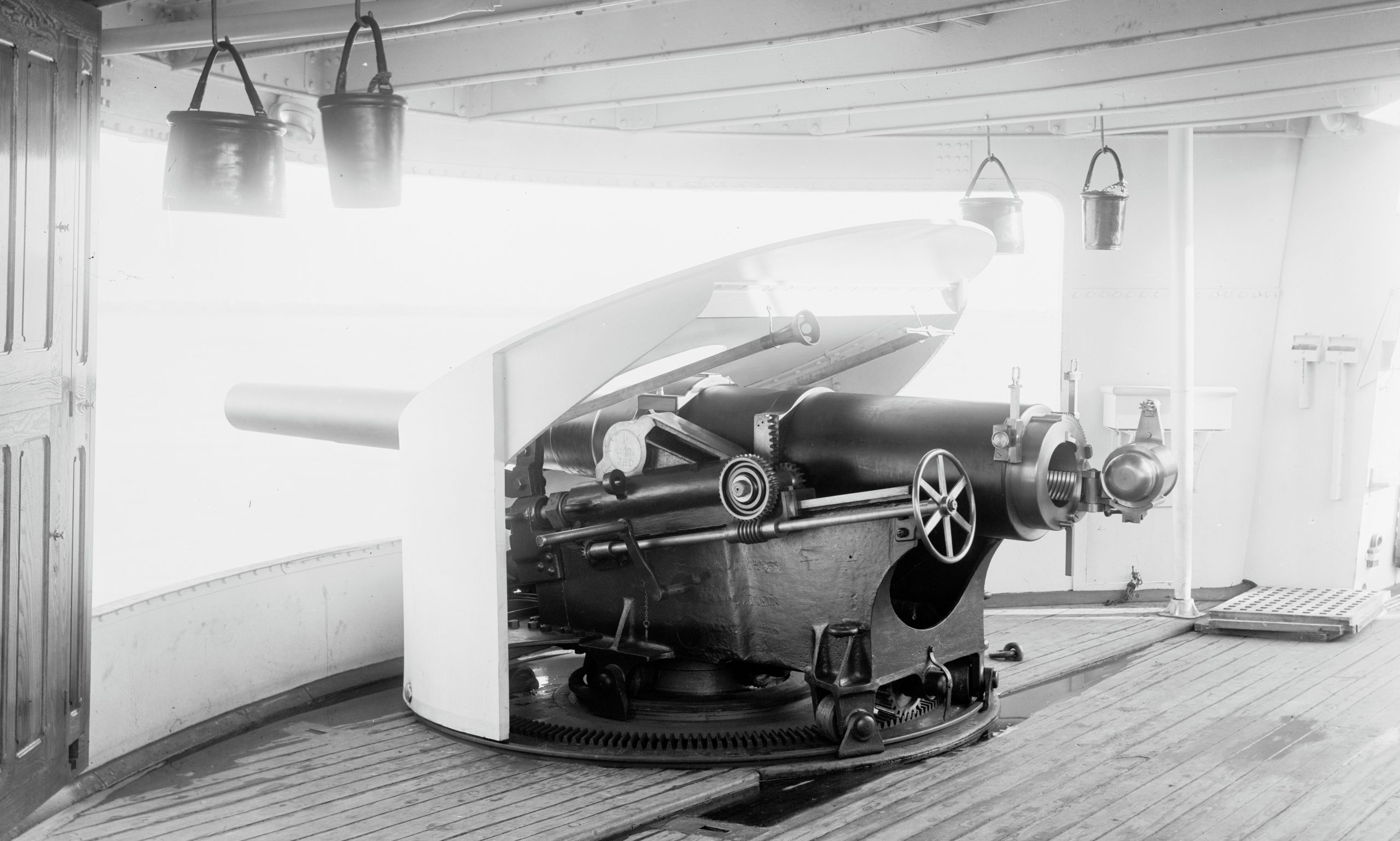
(Library of Congress Photo)
USS Newark (C-1), 6-inch gun, c1892-1901.
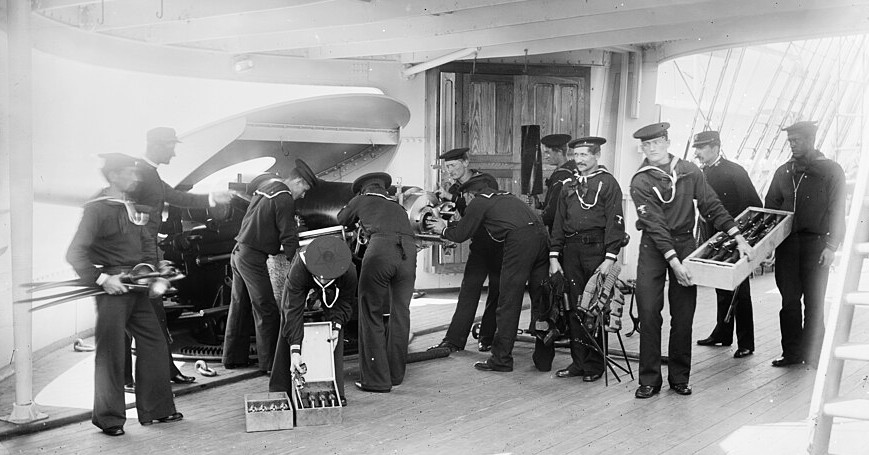
(Library of Congress Photo)
USS Newark (C-1), 6-inch gun crew in action, c1890s.
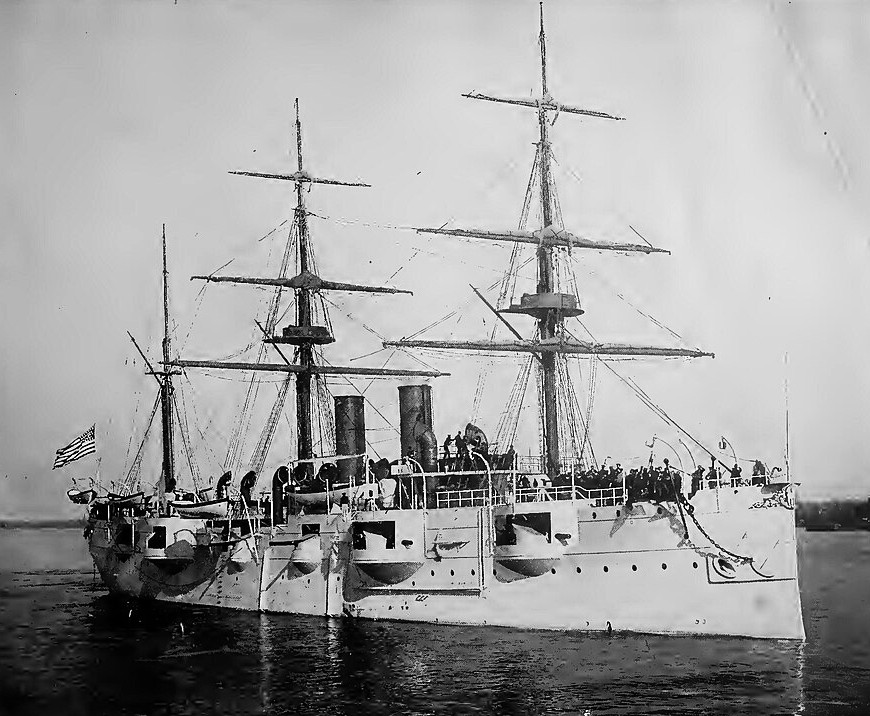
(USN Photo)
USS Newark (C-1).
(C-2) Charleston
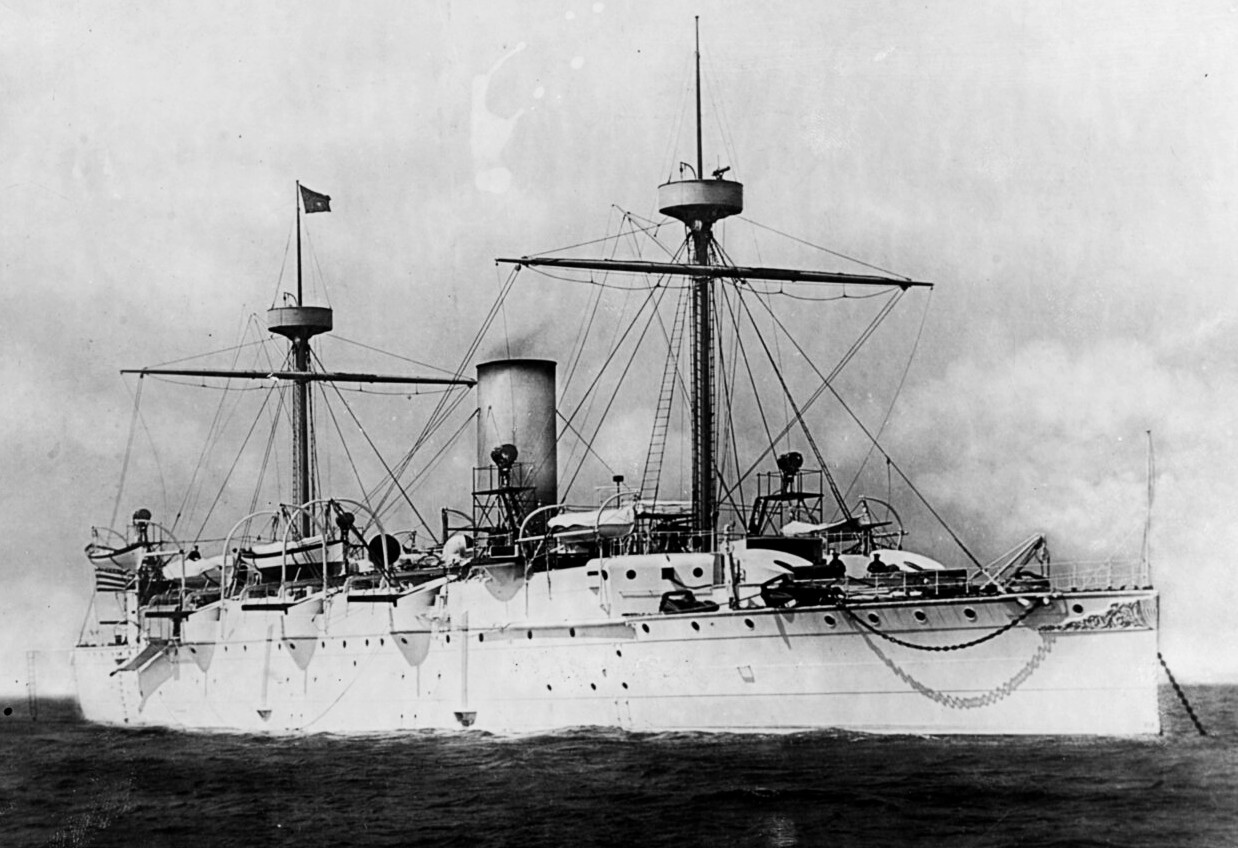
(USN Photo, c1900)
The second USS Charleston (C-2) was a United States Navy protected cruiser — the fourth US protected cruiser to be built. Lacking experience in building steel cruisers, the design was purchased from the British company Armstrong, Mitchell and Co. of Newcastle, the construction to be by an American shipyard. In design, she succeeded the “ABC” cruisers Atlanta, Boston, and Chicago with better protection, higher speed, and similar armament.
She was launched on 19 July 1888 by Union Iron Works, San Francisco, California, sponsored by Mrs. A. S. Smith, and commissioned on 26 December 1889, Captain George C. Remey in command. (Wikipedia)
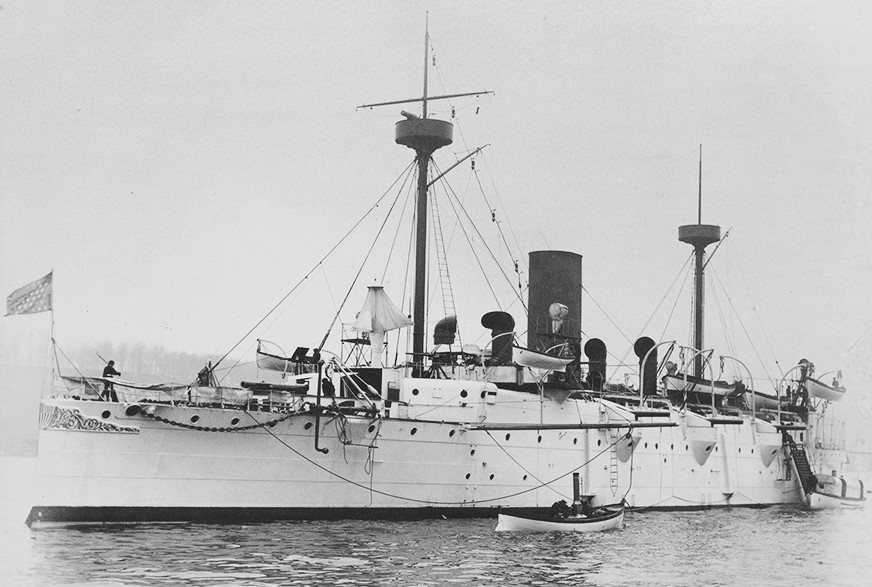
(DeGolyer Library, Southern Methodist University Photo)
USS Charleston (C-2), 27 April 1893.
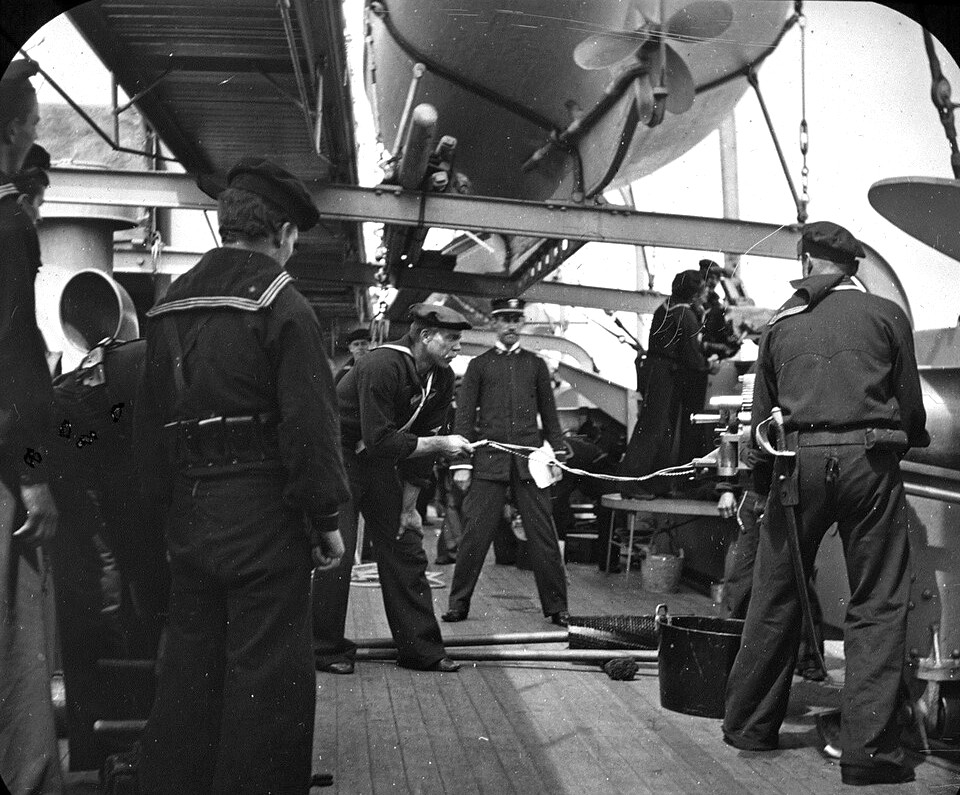
(Naval History and Heritage Command Photo)
USS Charleston (C-2), 6-inch gun crew in action.
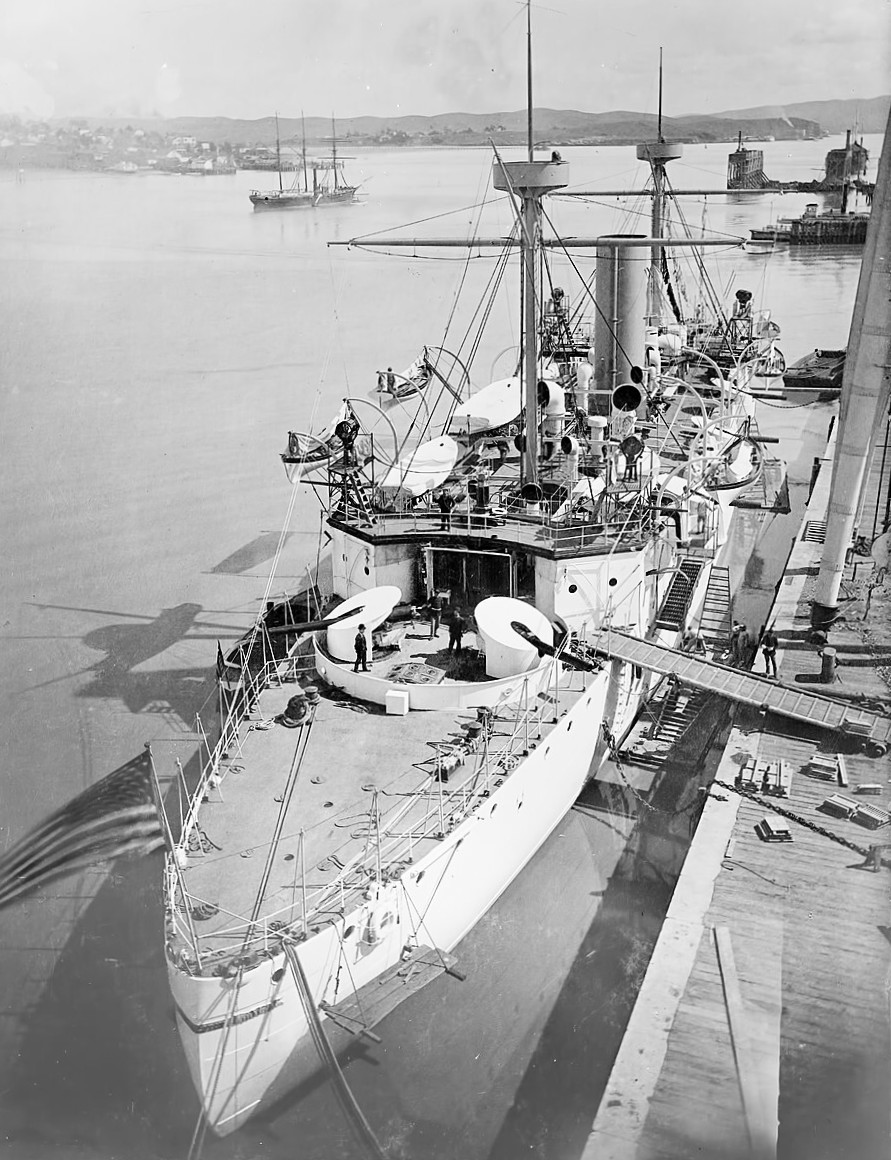
(Detroit Publishing Co Photo)
USS Charleston (C-2), San Francisco harbour in the 1890’s.
(C-3) Baltimore
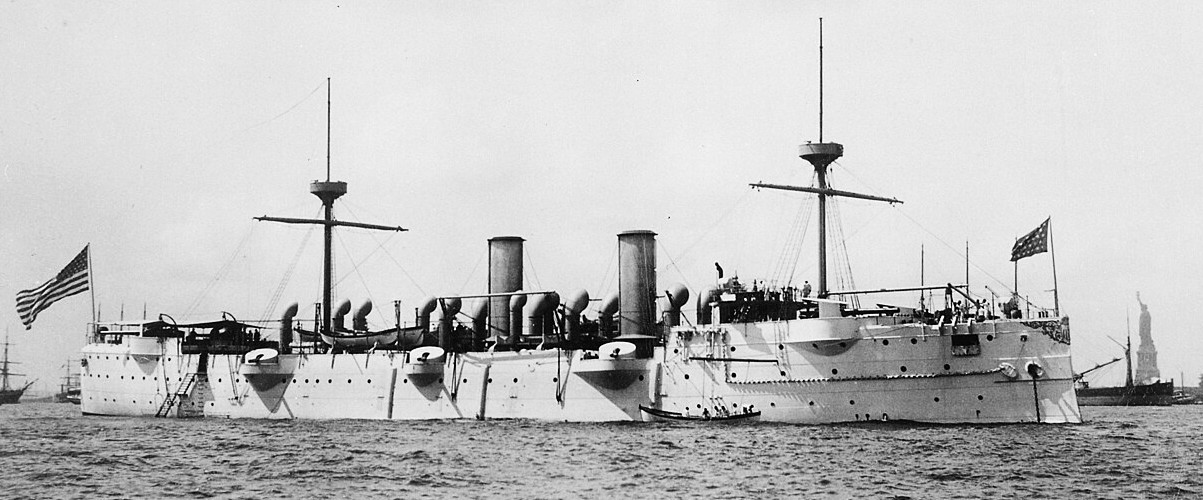
(U.S. National Archives Photo, 1891)
The fourth USS Baltimore (C-3) (later CM-1) was a United States Navy cruiser, the fifth protected cruiser to be built by an American yard. Like the previous one, Charleston, the design was commissioned from the British company of W. Armstrong, Mitchell, and Company of Newcastle. Baltimore was an all-around improvement on Charleston, somewhat larger with more guns, thicker armor, and better machinery. (Wikipedia)
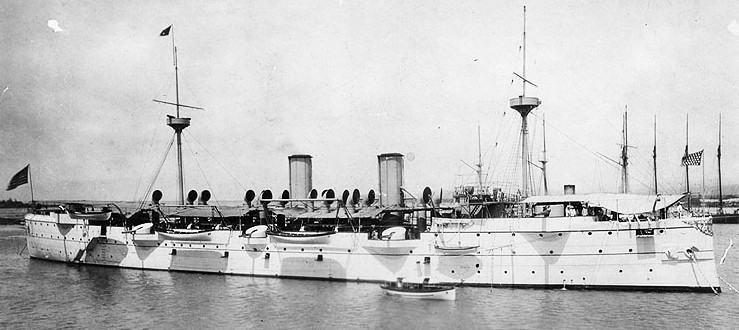
(USN Photo)
USS Baltimore anchored stern to the reef at Honolulu, circa 1897-1898.
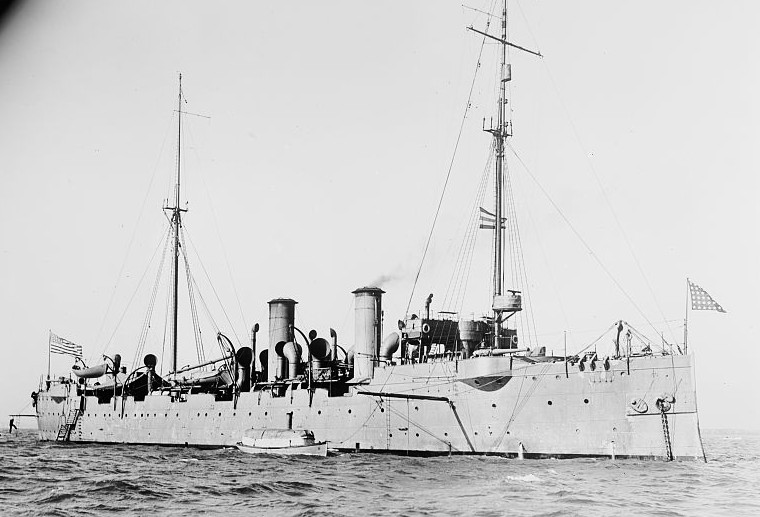
( Library of Congress Photo)
USS Baltimore (C-3), Hampton Roads, Virginia, 13 Dec 1916.
(C-4) Philadelphia
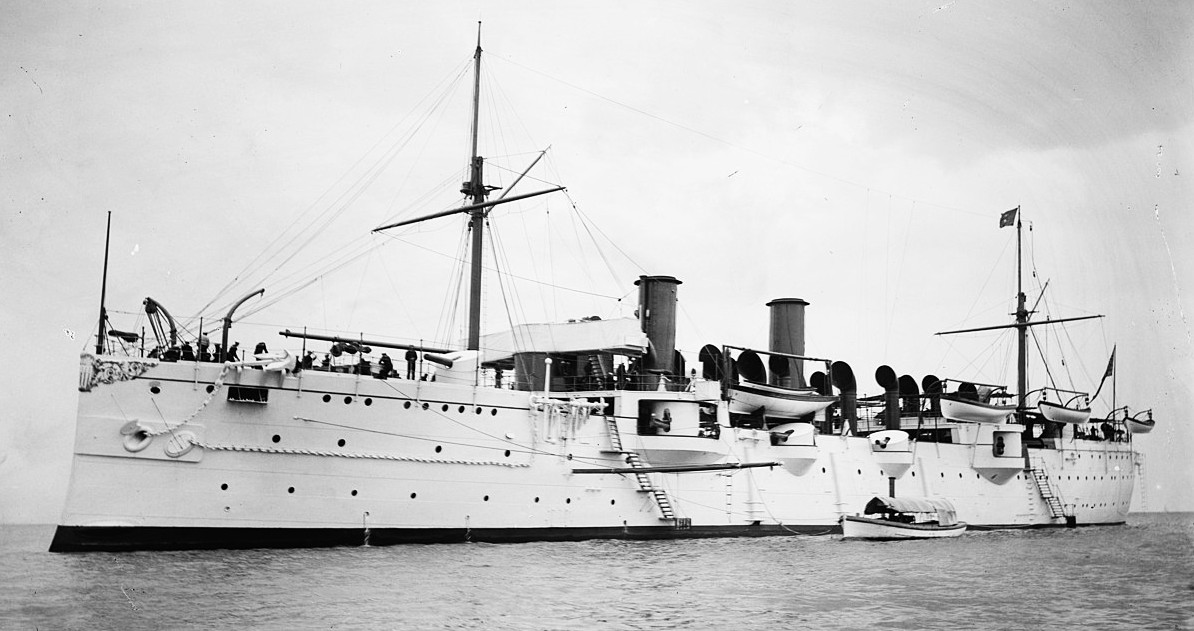
(Detroit Publishing Co. Photo)
The fourth USS Philadelphia (C-4) (later IX-24) was the sixth protected cruiser of the United States Navy. Although designed by the Navy Department, her hull was similar to the preceding British-designed Baltimore, but Philadelphia had a uniform main armament of twelve 6-inch guns. She was laid down 22 March 1888 by William Cramp & Sons, Philadelphia, launched 7 September 1889, sponsored by Miss Minnie Wanamaker, daughter of merchant and philanthropist John Wanamaker; and commissioned 28 July 1890, Capt. Albert S. Barker in command. (Wikipedia)
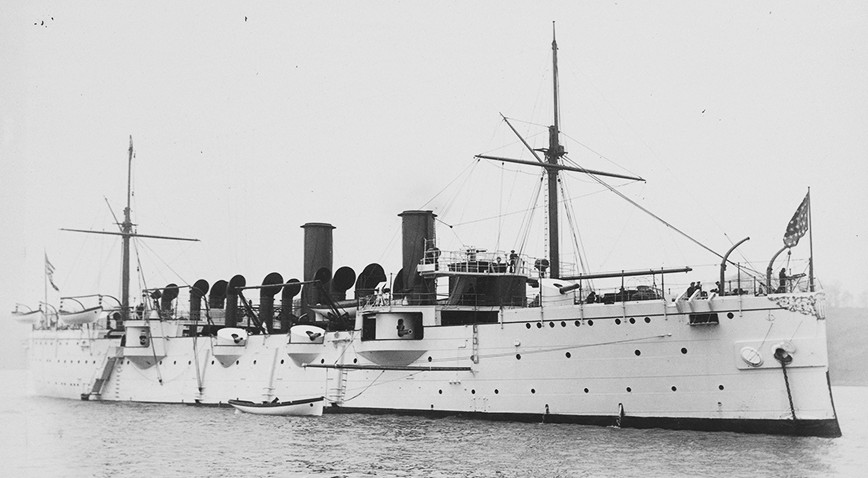
(DeGolyer Library, Southern Methodist University Photo)
USS Philadelphia (C-4), 27 April 1893.
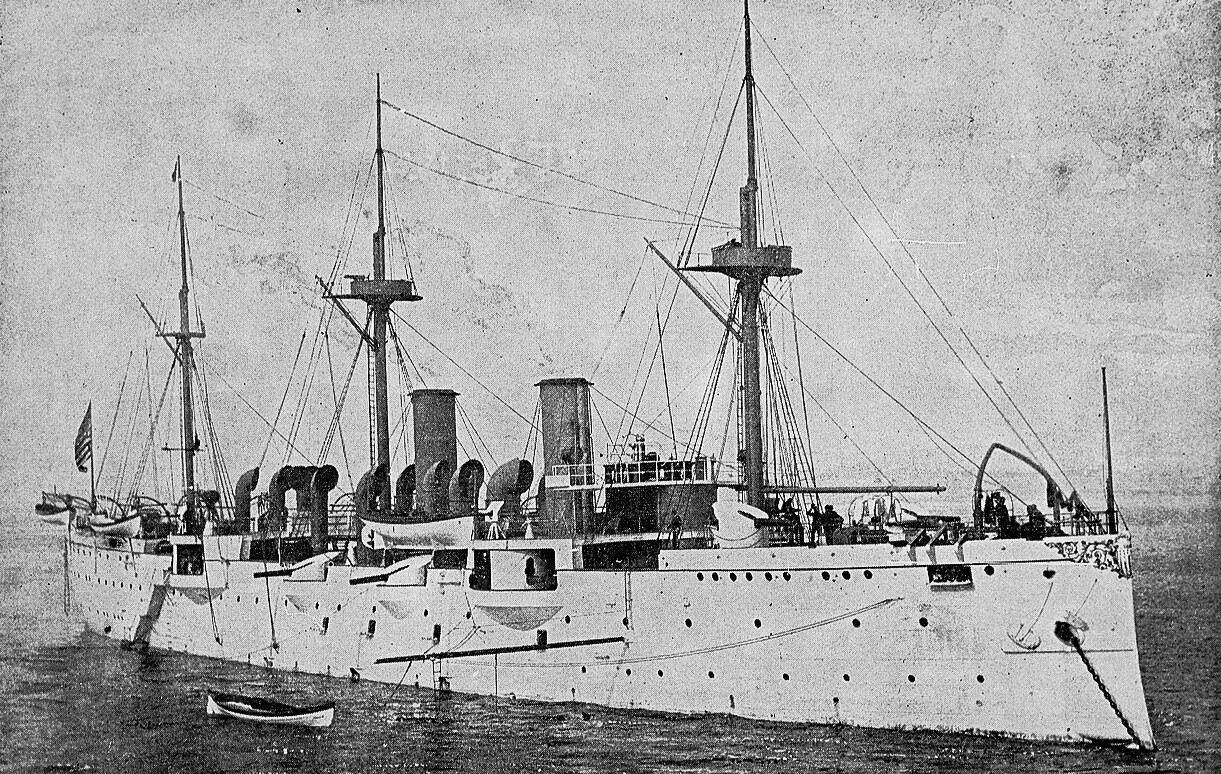
( White, Trumbull, Photo, 1868-1941)
USS Philadelphia (C-4), 27 April 1893.
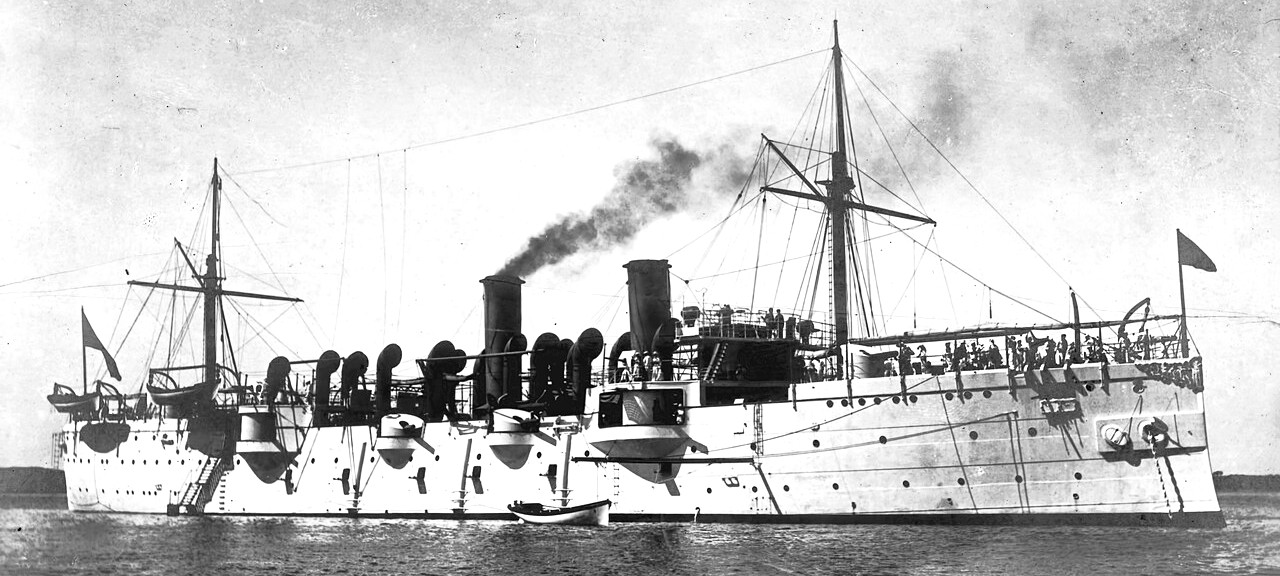
(Robert Enrique Muller Jr. Photo)
USS Philadelphia (C-4), about 1900. she was converted into a receiving ship at Puget Sound Navy Yard in may of 1904, then a prison ship in 1912 and back to a receiving ship in 1916.
(C-5) San Francisco
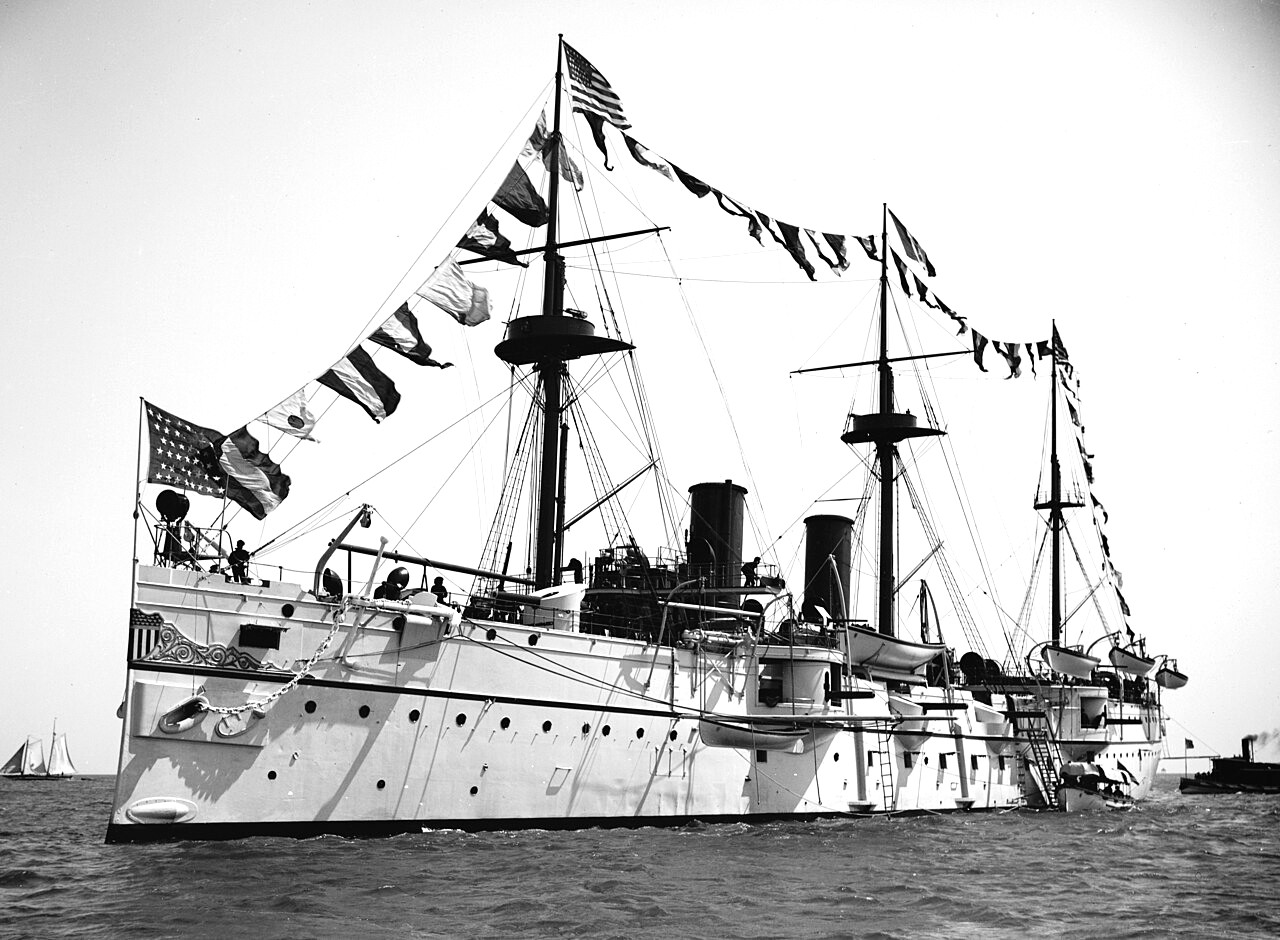
(Library of Congress Photo)
The first USS San Francisco (C-5) (later CM-2) was a steel protected cruiser in the United States Navy. She was later named Tahoe and then Yosemite, becoming the third US Navy ship to bear the name Yosemite. She generally resembled her predecessor Newark, with a main armament of twelve 6-inch guns. San Francisco was launched on 26 October 1889, at the Union Iron Works, San Francisco, California; sponsored by Miss Edith W. Benham; and commissioned on 15 November 1890, Captain William T. Sampson in command. (Wikipedia)
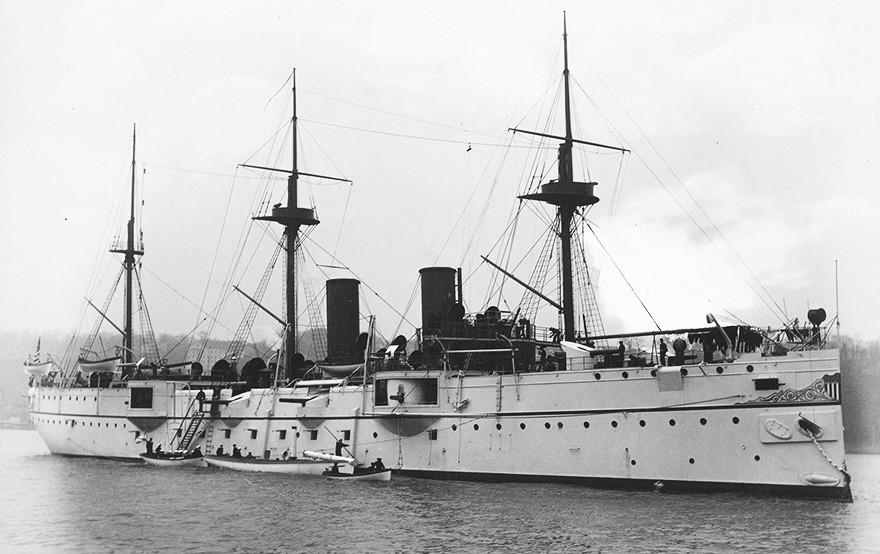
(DeGolyer Library, Southern Methodist University Photo)
USS San Francisco (C-5), Columbian Naval Parade, New York, 27 April 1893.
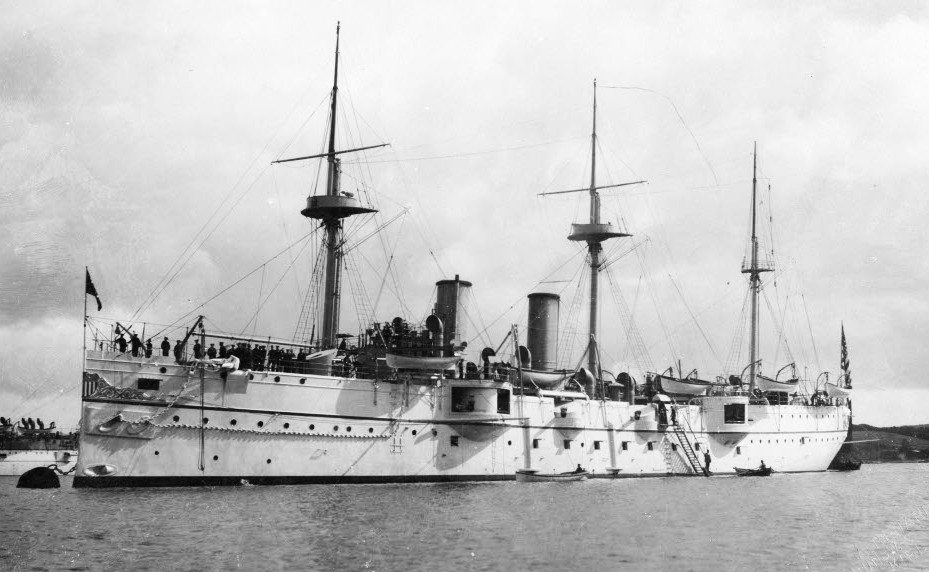
(Arthur Renard Photo)
USS San Francisco (C-5), Kiel, Germany, June 1895.
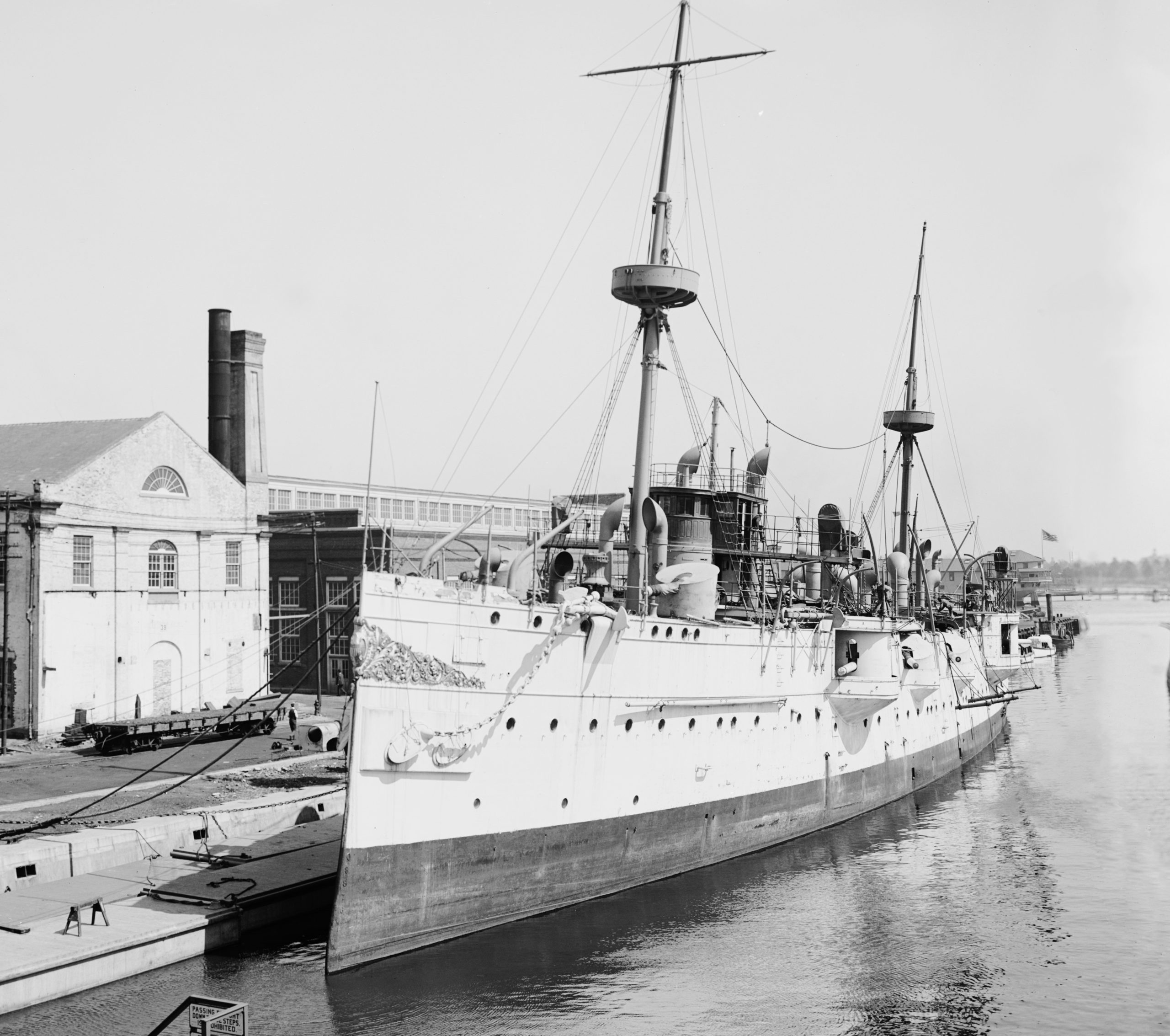
(Library of Congress Photo)
USS San Francisco (C-5) decommissioned, after having been converted to a mine vessel in 1908, renamed USS Tahoe CM-2 and later USS Yosemite. The ship is under going work in the Norfolk Navy Yard.
(C-6) Olympia
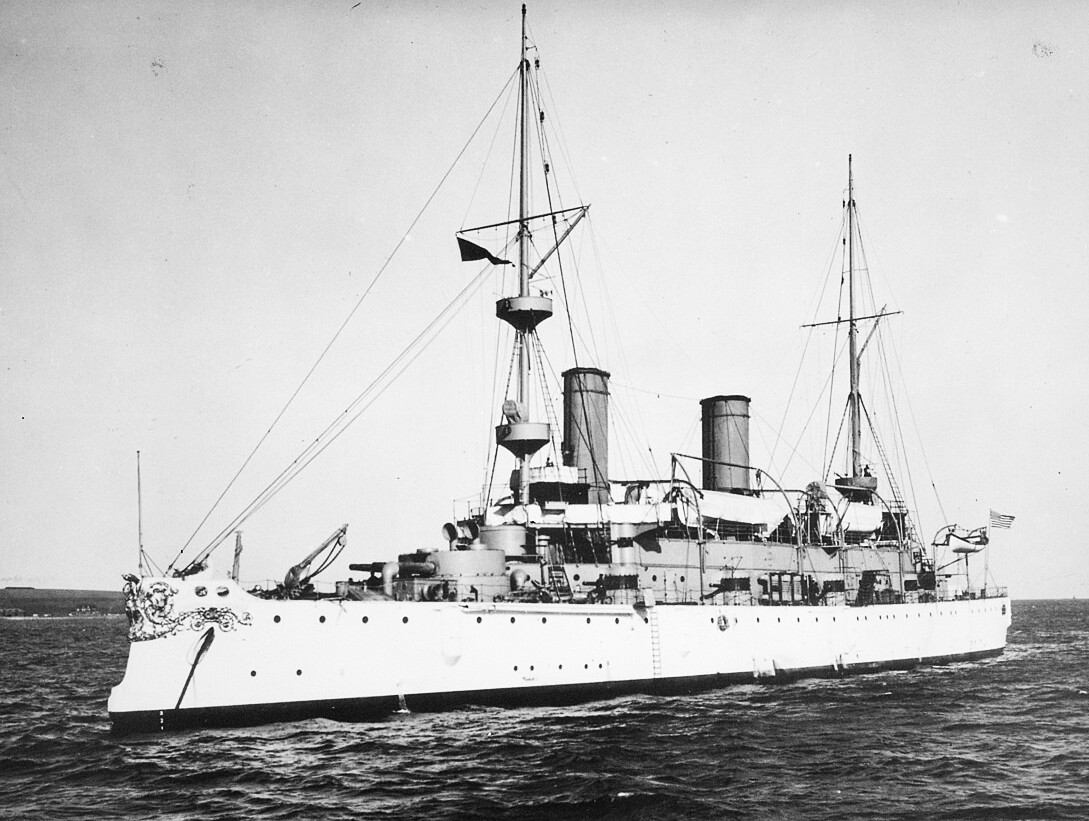
(U.S. National Archiuves Photo)
USS Olympia (C-6/CA-15/CL-15/IX-40) is a protected cruiser that saw service with the United States Navy from her commissioning in 1895 until 1922. She is currently a museum ship in Philadelphia.
Olympia became famous as the flagship of Commodore George Dewey during the Battle of Manila Bay in the Spanish–American War in 1898. The ship was decommissioned after returning to the U.S. in 1899, but was returned to active service in 1902. She served until the First World War as a training ship for naval cadets and as a barracks ship in Charleston, South Carolina. In 1917, she was mobilized again for war service, patrolling the American coast and escorting transport ships.
After the First World War, Olympia participated in the 1919 Allied intervention in the Russian Civil War and conducted cruises in the Mediterranean and Adriatic Seas to promote peace in the unstable Balkan countries. In 1921, the ship carried the remains of the First World War’s Unknown Soldier from France to Washington, D.C., where his body was interred in Arlington National Cemetery. Olympia was decommissioned for the last time in December 1922 and placed in reserve.
In 1957, the U.S. Navy ceded title to the Cruiser Olympia Association, which restored the ship to her 1898 configuration. Since then, Olympia has been a museum ship in Philadelphia, where it is now part of the Independence Seaport Museum. Olympia was designated a National Historic Landmark in 1966.
Olympia is the oldest steel American warship still afloat.[6] Repairs, estimated at $10 to 20 million, were desperately needed to keep Olympia afloat, and in 2010 the Independence Seaport Museum considered finding a new steward for the ship. By 2014, the museum reversed its plan to find a new steward and soon obtained funding from private donors as well as federal and state agencies to begin work on repairing the ship.
The museum invested in extensive stabilization measures including reinforcing the most deteriorated areas of the hull, expanding the alarm system, installing a network of bilge pumping stand pipes (which will provide greater damage control capability in the unlikely event of a hull breach), extensive deck patching and extensive repair and recoating of the ship’s rigging. This work was made possible by donations from the National Trust for Historic Preservation, the U.S. Cruiser Sailors Association and many individual donors. By 2017, the museum completed the first phase of repairs to the ship and has embarked on an ambitious national campaign to raise the $20 million needed to dry-dock Olympia and address waterline deterioration of the hull. (Wikipedia)
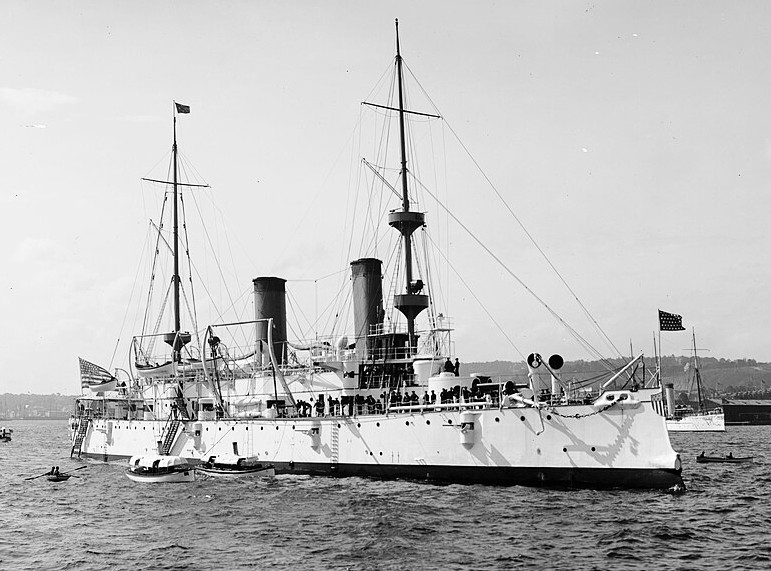
(National Museum of the US Navy Photo)
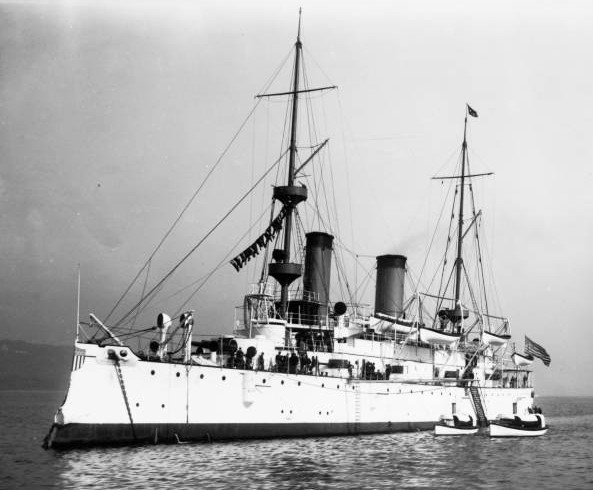
(George Eastman House Photo)
USS Olympia (C-6/CA-15/CL-15/IX-40), c1905.
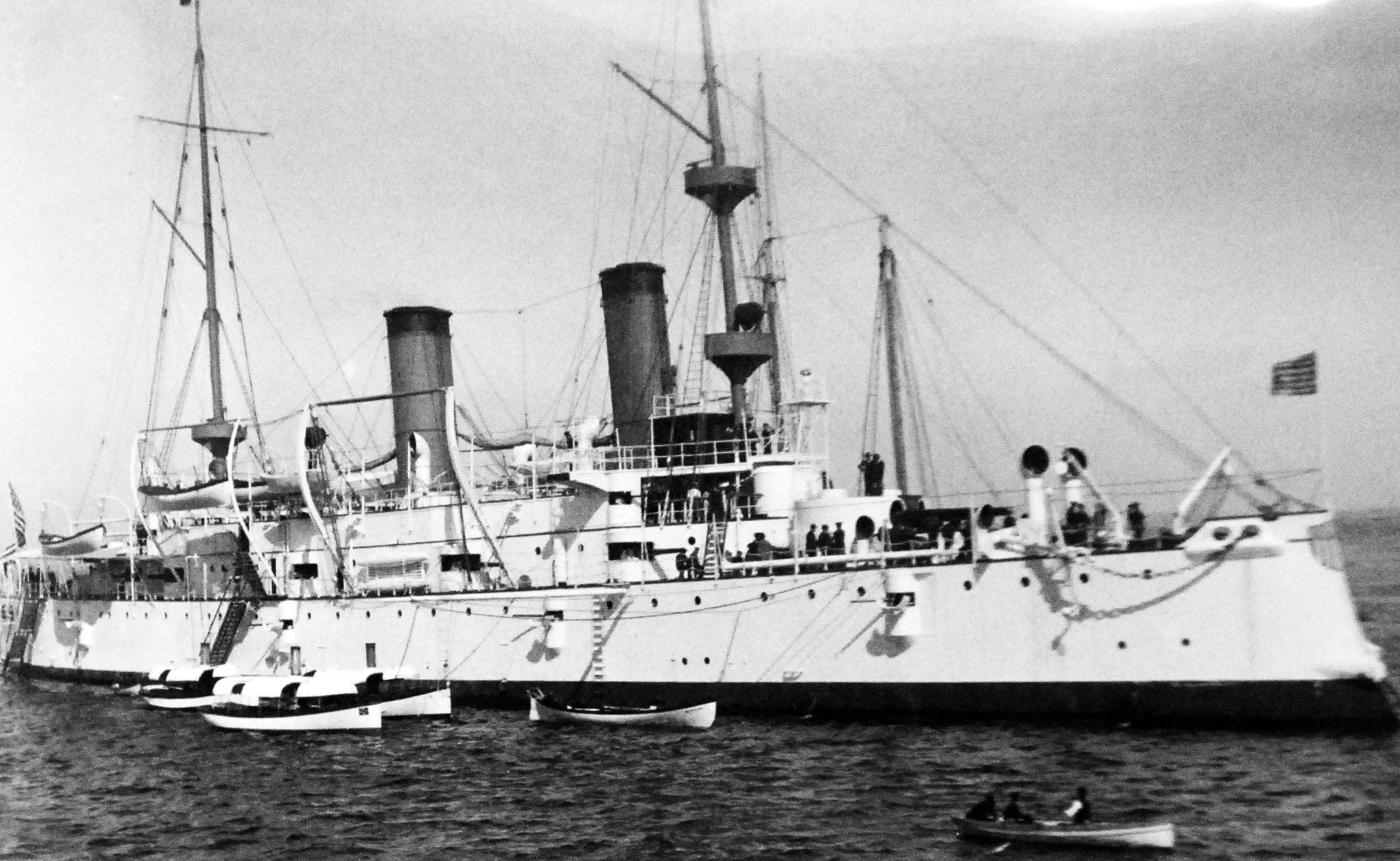
(Library of Congress Photo)
USS Olympia (C-6), Admiral Dewey’s flagship, New York, 29 Sep 1899.
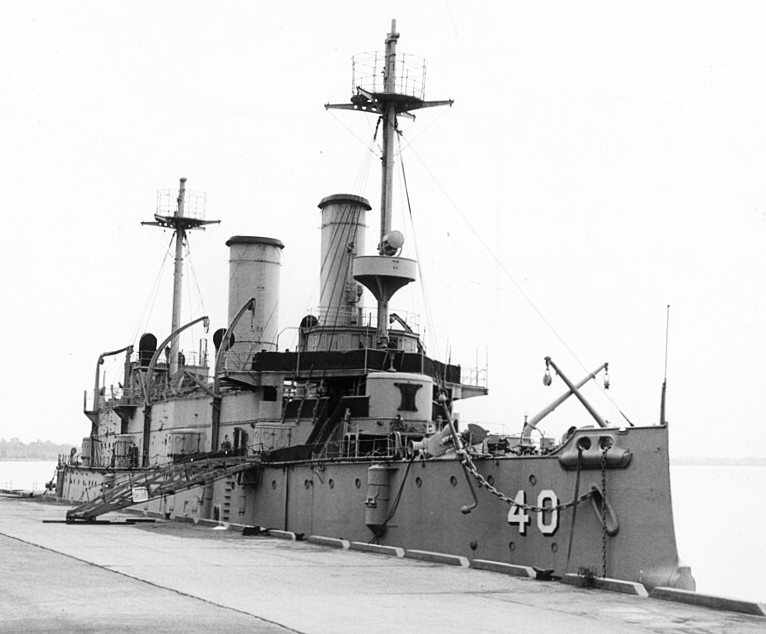
(U.S. National Archives Photo)
USS Olympia (C-6), at the Philadelphia Naval Shipyard in 1957.

(Acroterion Photo)
USS Becuna (left) and USS Olympia (right) at Penn’s Landing, Philadelphia, Pennsylvania.