
Imperial Russian Navy cruiser Aurora
The Soviet Navy was formed from the remnants of the Imperial Russian Navy during the Russian Civil War. After the dissolution of the Soviet Union in 1991, the Russian Federation inherited the largest part of the Soviet Navy and reformed it into the Russian Navy, with smaller parts becoming the basis for navies of the newly independent post-Soviet states. (Wikipedia)
The Soviet Navy was based on a republican naval force formed from the remnants of the Imperial Russian Navy, which had been almost completely destroyed in the two Revolutions of 1917 (the February and October Revolutions), during World War I (1914–1918), the following Russian Civil War (1917–1922), and the Kronstadt rebellion in 1921. During the revolutionary period, Russian sailors deserted their ships at will and generally neglected their duties. The officers were dispersed (some were killed by the Red Terror, some joined the “White” (anti-communist) opposing armies, and others simply resigned) and most of the sailors walked off and left their ships. Work stopped in the shipyards, where uncompleted ships deteriorated rapidly.
The Black Sea Fleet fared no better than the Baltic. The Bolshevik (Communist) revolution entirely disrupted its personnel, with mass murders of officers; the ships were allowed to decay to unserviceability. At the end of April 1918, Imperial German troops moved along the Black Sea coast and entered Crimea and started to advance towards the Sevastopol naval base. The more effective ships were moved from Sevastopol to Novorossiysk where, after an ultimatum from Germany, they were scuttled by Vladimir Lenin’s order.
The ships remaining in Sevastopol were captured by the Germans and then, after the later Armistice of 11 November 1918 on the Western Front which ended the War, additional Russian ships were confiscated by the British. On 1 April 1919, during the ensuing Russian Civil War when Red Army forces captured Crimea, the British Royal Navy squadron had to withdraw, but before leaving they damaged all the remaining battleships and sank thirteen new submarines.
When the opposing Czarist White Army captured Crimea in 1919, it captured and reconditioned a few units. At the end of the civil war, Wrangel’s fleet, a White flotilla, moved south through the Black Sea, Dardanelles straits and the Aegean Sea to the Mediterranean Sea to Bizerta in French Tunisia on the North Africa coast, where it was interned.
The first ship of the revolutionary navy could be considered the rebellious Imperial Russian cruiser Aurora, built 1900, whose crew joined the communist Bolsheviks. Sailors of the Baltic fleet supplied the fighting force of the Bolsheviks led by Vladimir Lenin and Leon Trotsky during the October Revolution of November 1917 against the democratic provisional government of Alexander Kerensky established after the earlier first revolution of February against the Czar. Some imperial vessels continued to serve after the revolution, albeit with different names.
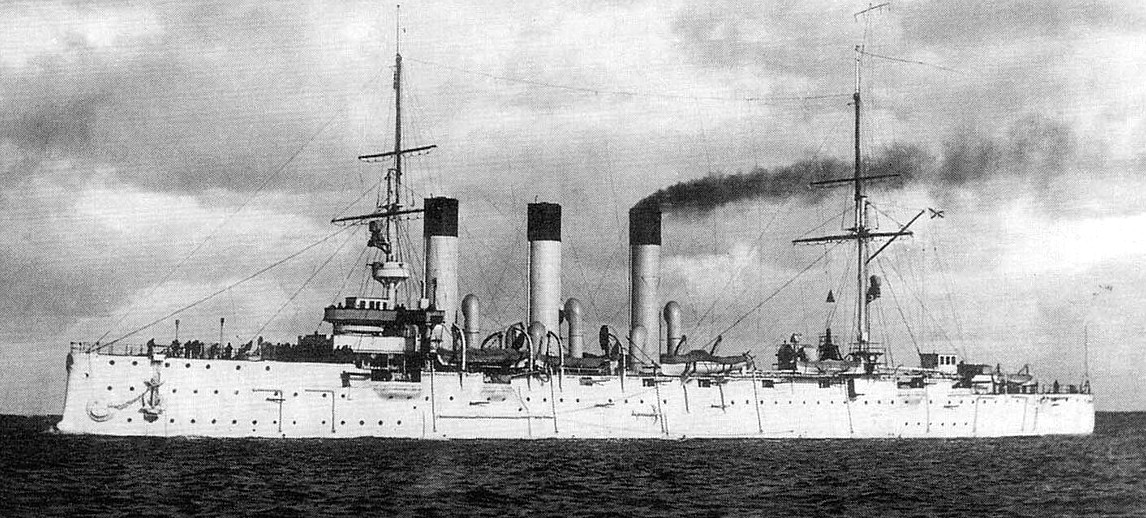
(Imperial Russian Navy Photo)
Russian protected cruiser Aurora on her official main machinery trials, 14 June 1903.
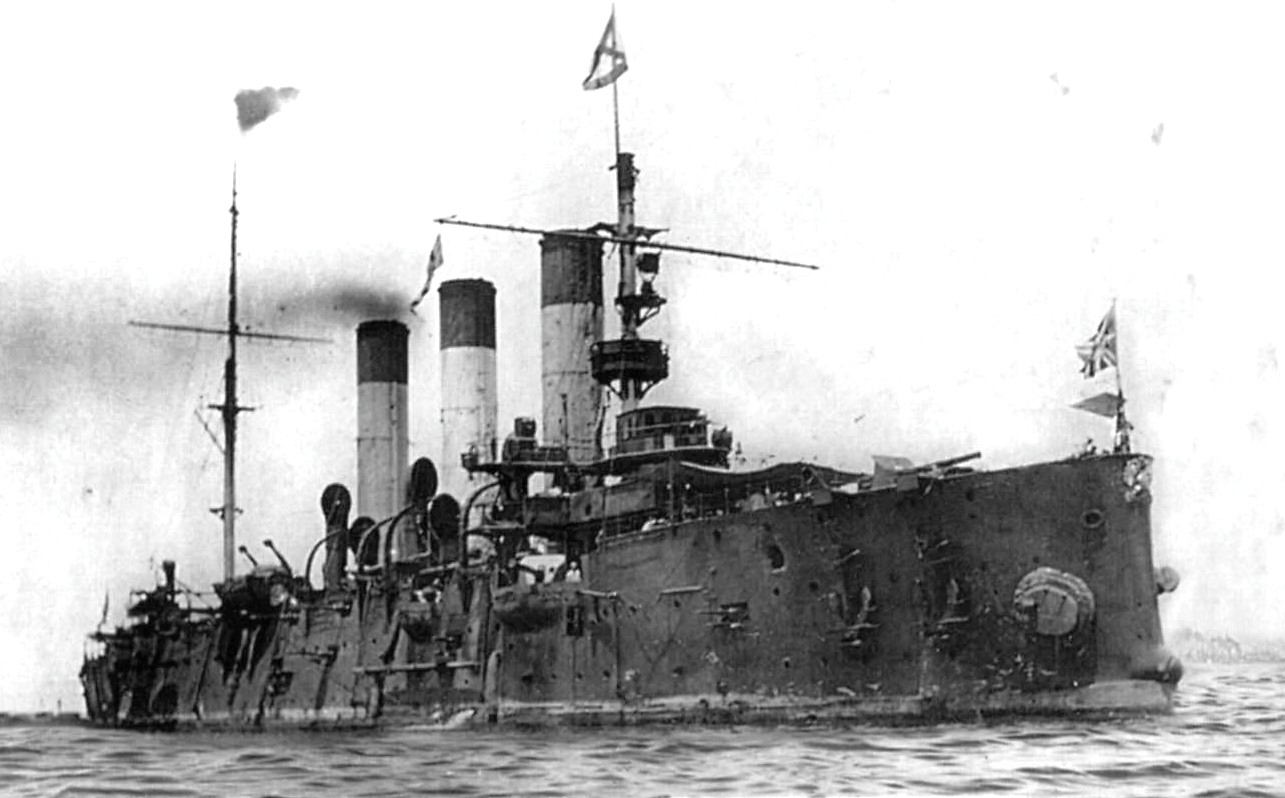
(Imperial Russian Navy Photo)
Russian protected cruiser Aurora, Manila, 1905.
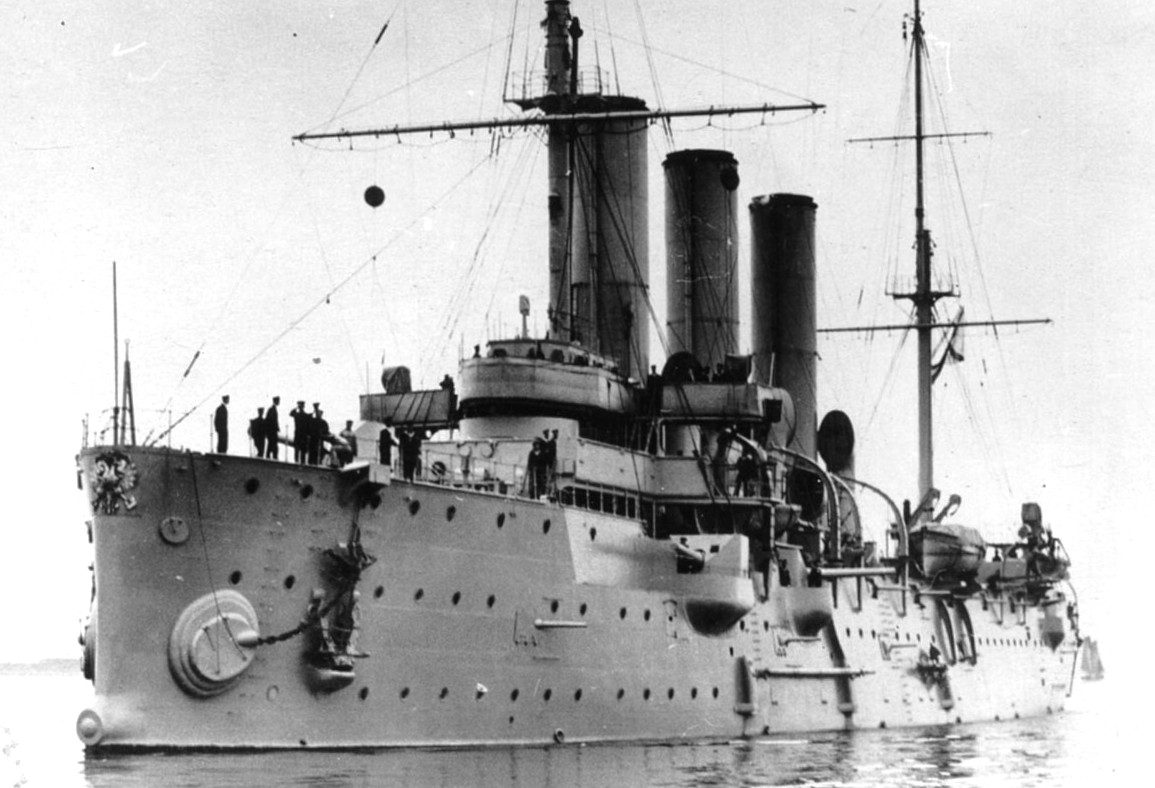
(Imperial Russian Navy Photo)
Russian protected cruiser Aurora, Manila, c1909-1910.
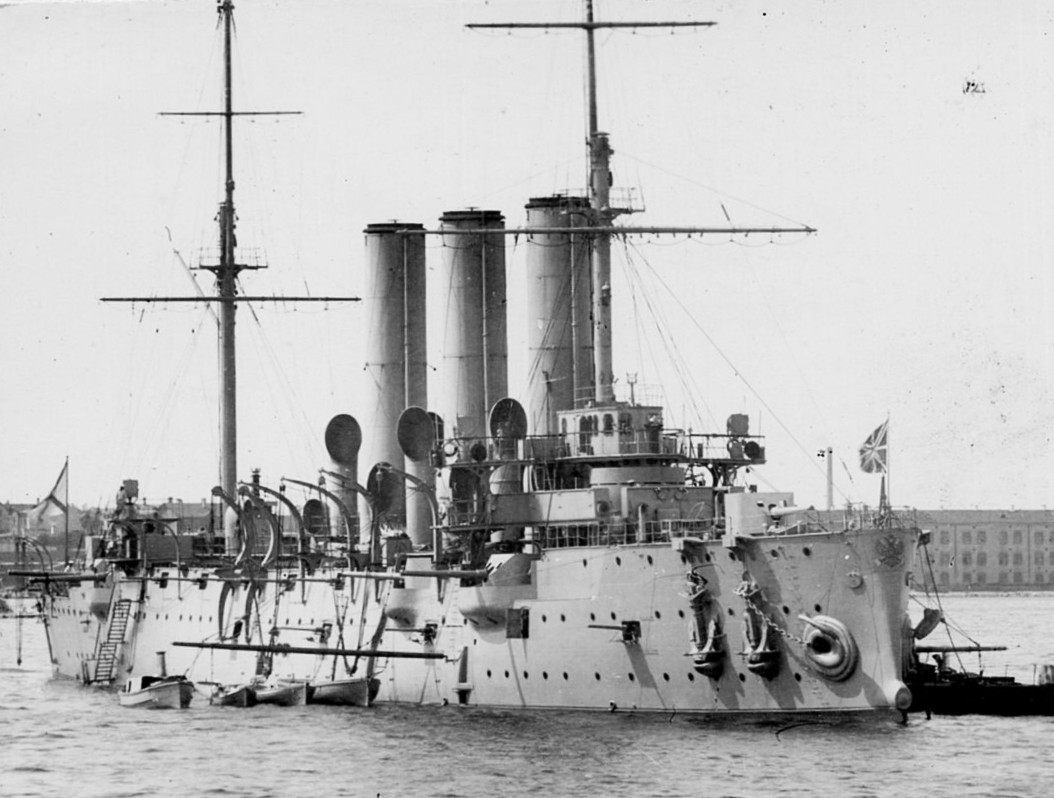
(Imperial Russian Navy Photo)
Russian protected cruiser Aurora, Manila, c1909-1914.
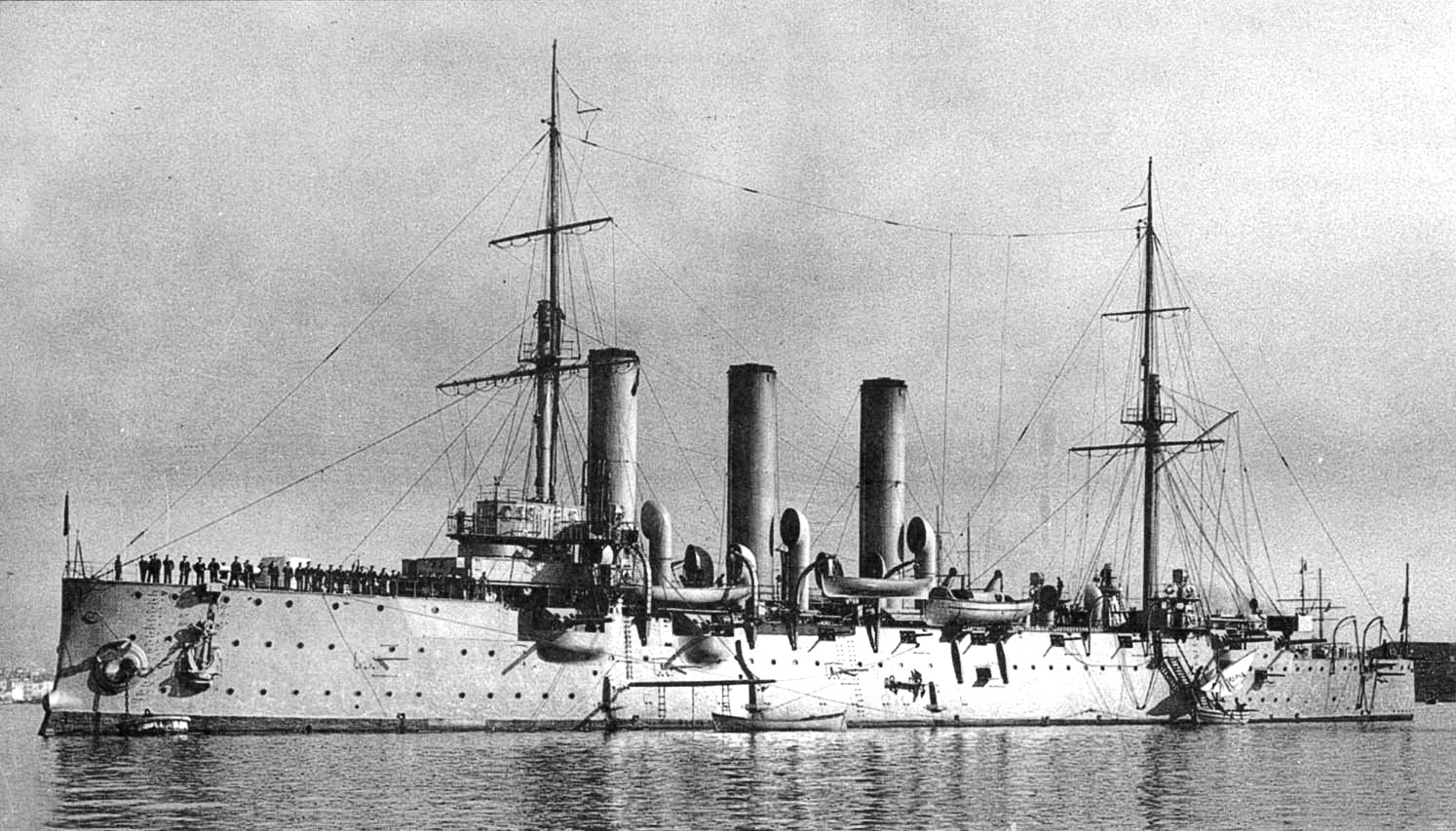
(Imperial Russian Navy Photo)
Russian protected cruiser Aurora, c1909.
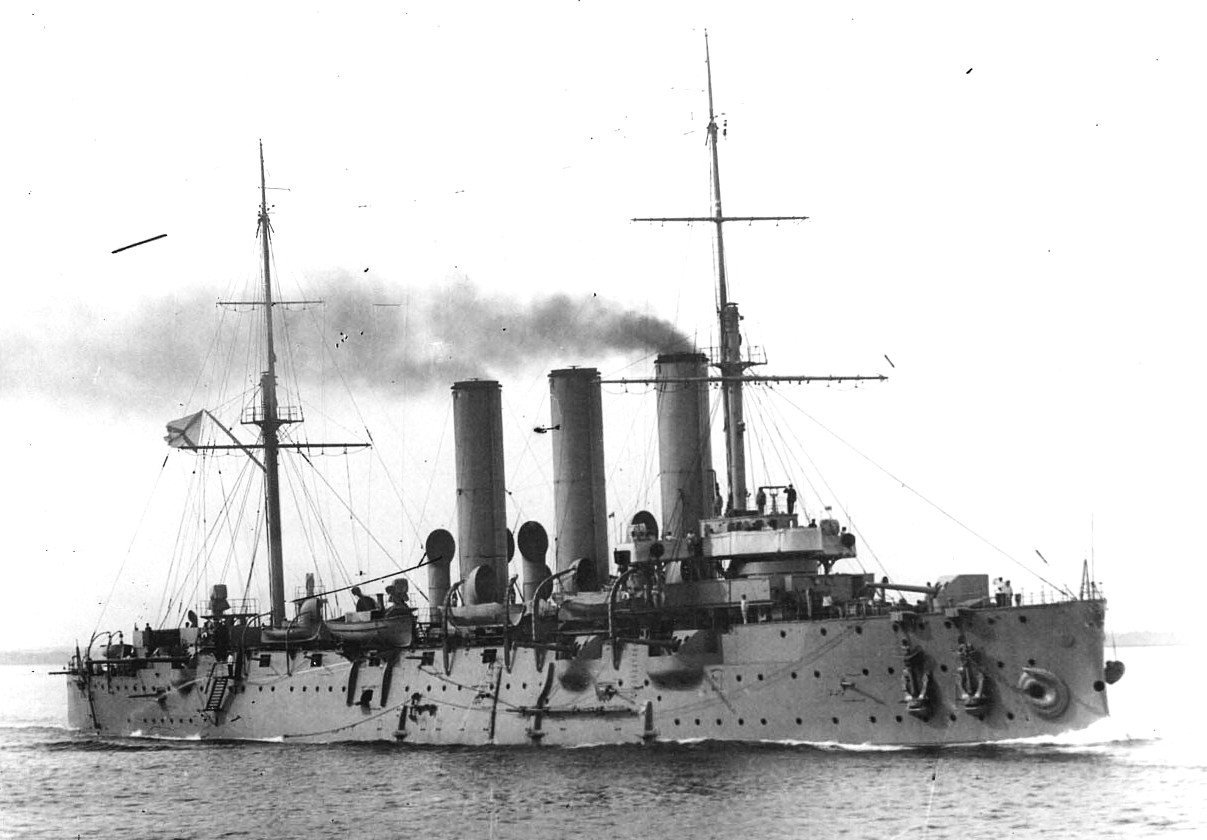
(Imperial Russian Navy Photo)
Russian protected cruiser Aurora, 1910.

(Никонико962 Photo)
Aurora (Russian: Авро́ра, romanized: Avrora, IPA: [ɐˈvrorə]) is a Russian protected cruiser, currently preserved as a museum ship in Saint Petersburg. Aurora was one of three Pallada-class cruisers, built in Saint Petersburg for service in the Pacific Ocean. All three ships of this class served during the Russo-Japanese War. Aurora survived the Battle of Tsushima and was interned under US protection in the Philippines, and eventually returned to the Baltic Fleet. Aurora is most famous for her actions during the October Revolution, where she reportedly fired the shot that signaled the beginning of the attack on the Winter Palace.
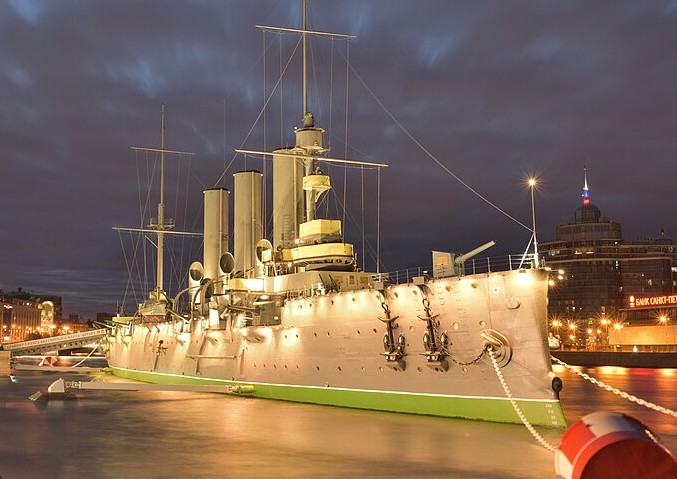
(Александр Байдуков Photo)
Aurora, Petrogradskaya Embankment, at house 2, Petrogradsky district, St. Petersburg, Russia.
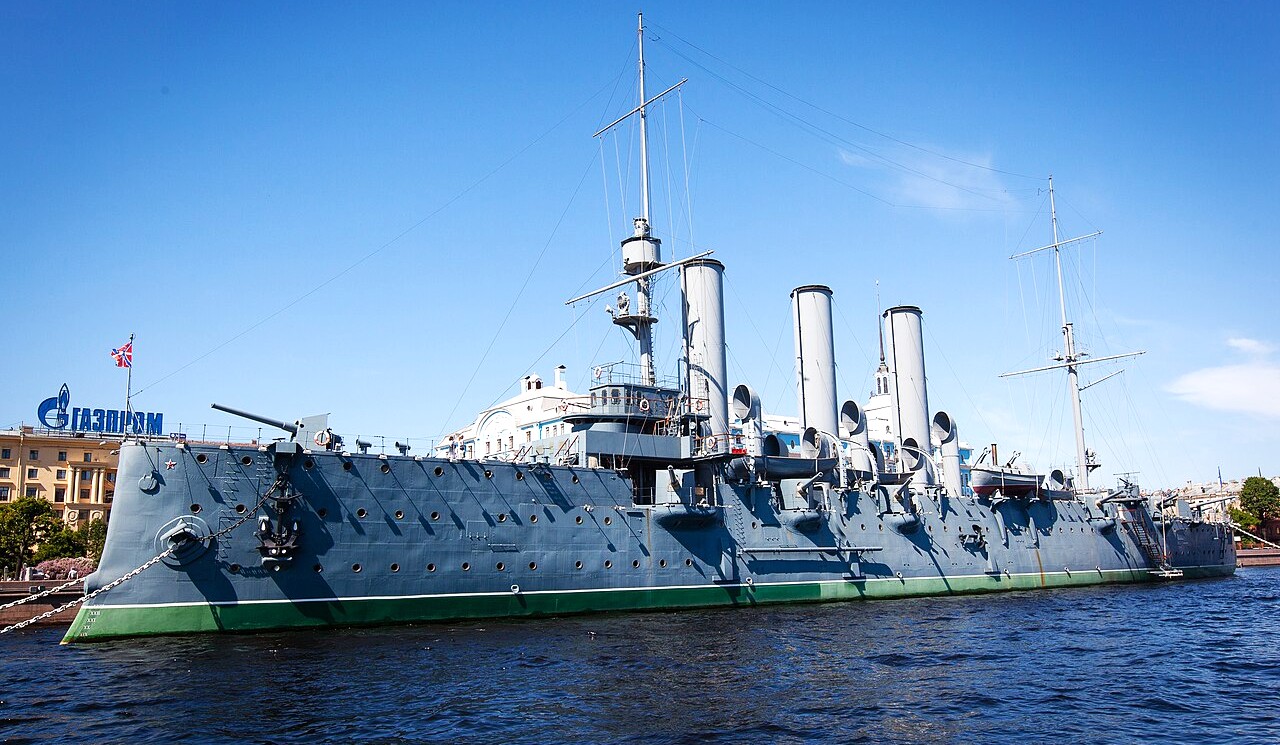
(Jimmyweee Photo)
Aurora, St. Petersburg, Russia.
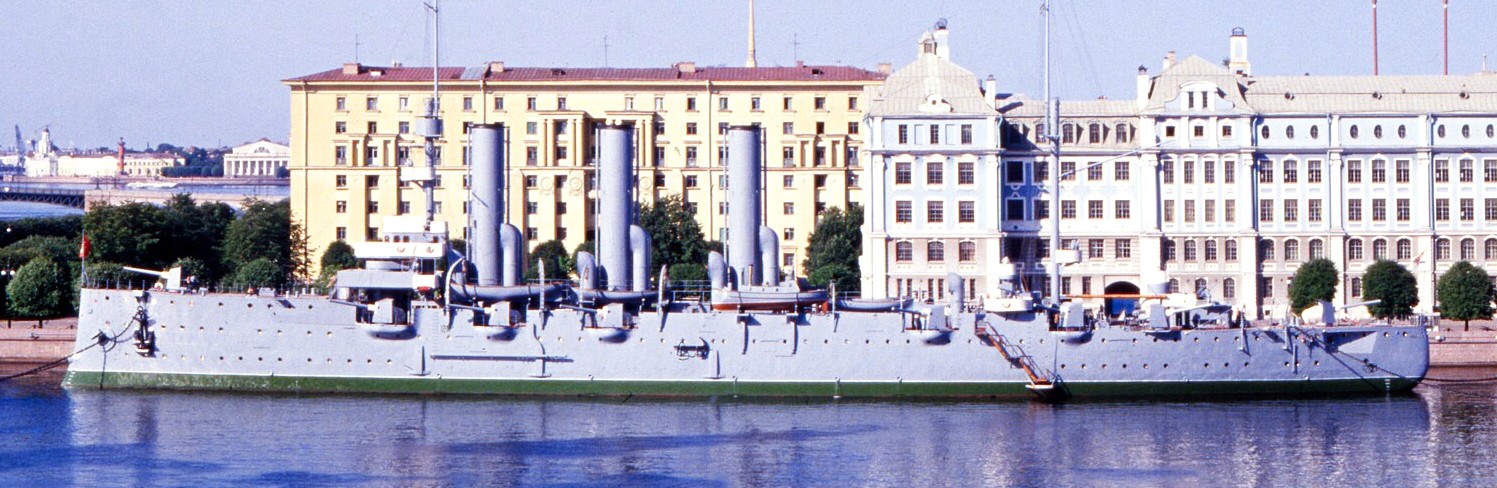
(Leo Medvedev/Лев Леонидович Медведев Photo)
Aurora, St. Petersburg, Russia.
The Soviet Navy, established as the “Workers’ and Peasants’ Red Fleet”[c] by a 1918 decree of the new Council of People’s Commissars, installed as a temporary Russian revolutionary government, was less than service-ready during the interwar years of 1918 to 1941. After the Civil War was won by Communist forces, the Soviet government took control of all naval elements. It also ensured that all elements of the new military would remain under the firm control of the party leadership. At Kronstadt, sailors who staged a rebellion in support of urban workers in Petrograd in 1921 were supressed and many were shot.[5]
As the country’s attentions were largely directed internally, the Navy did not have much funding or training. An indicator of its reputation was that the Soviets were not invited to participate in negotiations for the Washington Naval Treaty of 1921–1922, which limited the size and capabilities of the most powerful navies – British, American, Japanese, French, Italian. The greater part of the old fleet was sold by the Soviet government to post-war Germany for scrap.
In the Baltic Sea there remained only three much-neglected battleships, two cruisers, some ten destroyers, and a few submarines. Despite this state of affairs, the Baltic Fleet remained a significant naval formation, and the Black Sea Fleet also provided a basis for expansion. There also existed some thirty minor-waterways combat flotillas. (Wikipedia)
The Soviet Navy (Военно-морской флот (ВМФ) СССР, Voyenno-morskoy flot (VMF) SSSR) was the naval warfare uniform service branch of the Soviet Armed Forces. Often referred to as the Red Fleet, the Soviet Navy made up a large part of the Soviet Union’s strategic planning in the event of a conflict with the opposing superpower, the United States, during the Cold War (1945–1991). The Soviet Navy played a large role during the Cold War, either confronting the North Atlantic Treaty Organization in western Europe or power projection to maintain its sphere of influence in eastern Europe.
The Soviet Navy was divided into four major fleets: the Northern, Pacific, Black Sea, and Baltic Fleets, in addition to the Leningrad Naval Base, which was commanded separately. It also had a smaller force, the Caspian Flotilla, which operated in the Caspian Sea and was followed by a larger fleet, the 5th Squadron, in the Mediterranean Sea. The Soviet Navy included Naval Aviation, Naval Infantry, and the Coastal Artillery. (Wikipedia)