
Royal Navy King George V-class battleships: HMS King George V, HMS Centurion, HMS Audacious, HMS Ajax
The King George V-class battleships, HMS King George V, HMS Centurion, HMS Audacious, and HMS Ajax, were larger variants of the preceding Orion-class “super-dreadnought.” The four sisters used the same primary and secondary armament of the Orions, ten 45-calibre Mk V 13.5-inch (340 mm) main guns and 16 50-calibre Mk VII 4-inch (102 mm) secondary guns, and 12-inch (305 mm)-thick belt armour, but were longer at 597 feet 9 inches (182 m) and displaced 25,420 long tons (25,830 t). In addition, although the King George V class again retained the two Parsons steam turbines and their four shafts, they were faster than previous British battleships with a top speed of 22.9 kn (42.4 km/h; 26.4 mph) and enjoyed much-needed corrections in the arrangement of its funnels that made the spotting tops much easier to use.
All four of the King George V-class ships were assigned to the 2nd Battle Squadron on commission, King George V becoming the Squadron’s flagship by 18 February 1913, but Centurion began her career early, accidentally ramming and sinking an Italian steamer with all hands.[95] From 17 to 20 July 1914 the sister ships participated in the July Crisis test mobilisation and were shortly thereafter ordered to join the Home Fleet, soon the Grand Fleet, at Scapa Flow. On 27 October 1914, Audacious struck a mine while conducting a training mission off the coast of Ireland and sank with only one death, an officer from HMS Liverpool.[97] King George V also went out of service for a brief time beginning in November 1914 because of a condenser malfunction. The surviving sisters participated in a sortie that set out to engage Franz von Hipper’s raiding force after its attack on three coastal British towns in December 1914, but did not see combat. At the Battle of Jutland nearly two years later, the sisters did see combat but none of them fired more than 19 shells, all without effect due to poor visibility. The sisters participated in the Royal Navy’s subsequent war time actions and were present at the surrender of the German fleet at Rosyth on 21 November 1918. Into early 1919, the sisters remained with the 2nd Squadron, until King George V was moved to the 3rd Squadron and then became the flagship of the Reserve Fleet until 1920 when the 3rd Squadron was disbanded. She was refitted and reassigned to the 4th Squadron the same year, then in 1923 became a gunnery training vessel before finally being sold for scrap in December 1926. Ajax met the same fate, but was sold for scrap on 9 November 1926. The last of the King George V-class ships, Centurion was converted into a target ship, but was remilitarised in 1941 with light weapons and dummy main guns. On 9 June 1944, she was sunk as a block ship to defend a mulberry harbor established on Omaha Beach. (Wikipedia)
HMS King George V
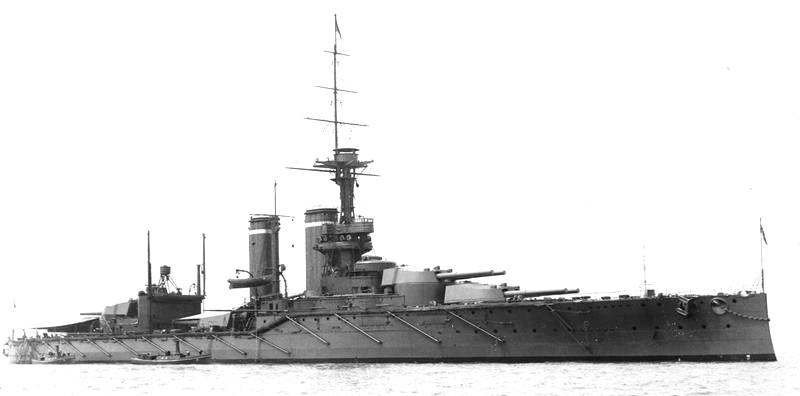
(IWM Photo, Q 75215)
HMS King George V was the lead ship of her class of four dreadnought battleships built for the Royal Navy in the early 1910s. She spent the bulk of her career assigned to the Home and Grand Fleets, often serving as a flagship. Aside from participating in the failed attempt to intercept the German ships that had bombarded Scarborough, Hartlepool and Whitby in late 1914, the Battle of Jutland in May 1916 and the inconclusive action of 19 August, her service during the First World War generally consisted of routine patrols and training in the North Sea.
After the war, King George V became flagship of the Home Fleet and then of the Reserve Fleet before she was assigned to the Mediterranean Fleet in late 1920. The ship evacuated refugees during the Great fire of Smyrna in September 1922 before returning home at the beginning of 1923. King George V was reduced to reserve and used as a training ship until late 1926 and was sold for scrap later in the year in accordance with the terms of the Washington Naval Treaty. (Wikipedia)
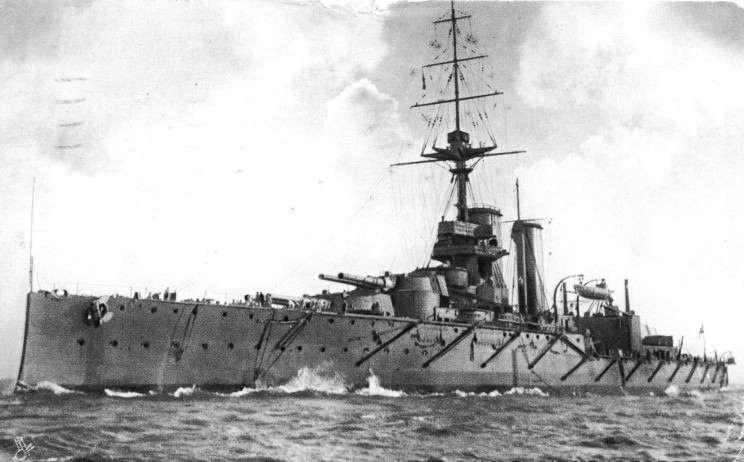
(Royal Navy Photo)
HMS King George V.
HMS Centurion
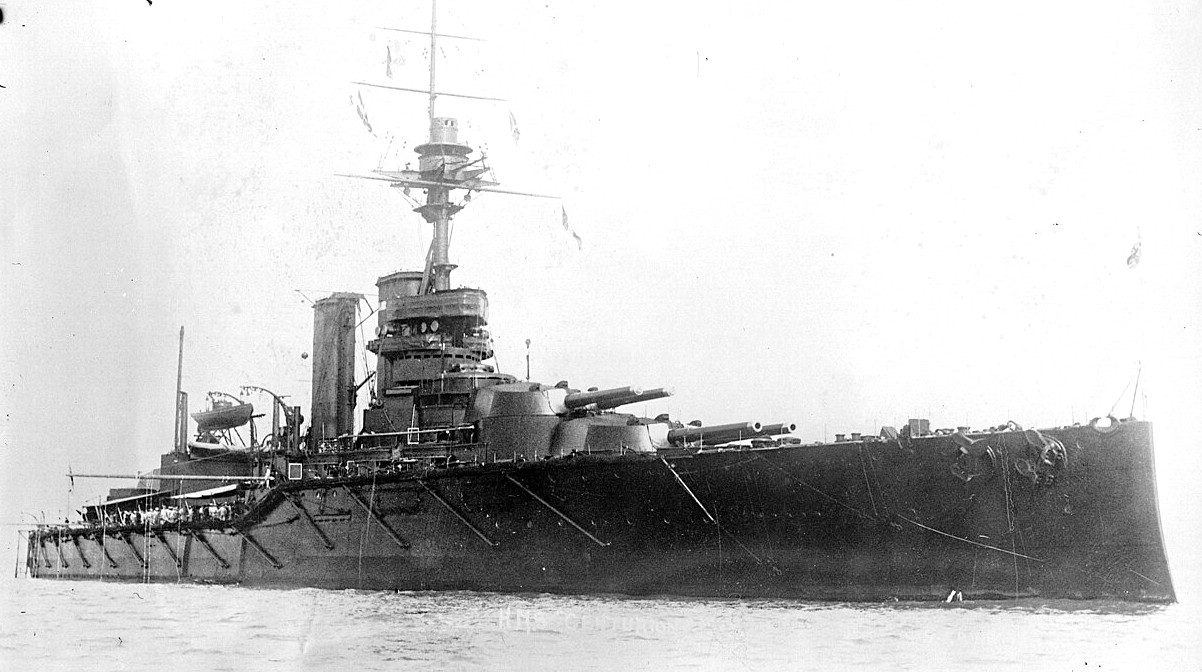
(Bibliothèque nationale de France Photo)
HMS Centurion was the second of four King George V-class dreadnought battleships built for the Royal Navy in the early 1910s. She spent the bulk of her career in the Home Fleet and the Grand Fleet. Aside from participating in the failed attempt to intercept the German ships in the Raid on Scarborough, Hartlepool and Whitby in late 1914 and the Battle of Jutland in May 1916, her service during the First World War generally consisted of routine patrols and training in the North Sea.
By the end of 1919, Centurion had been transferred to the Mediterranean Fleet. Although she spent much of her time in reserve, she had a peripheral role in the Allied intervention in the Russian Civil War. After her return home in 1924, the ship became the flagship of the Reserve Fleet. In 1926 Centurion was converted into a target ship and participated in trials evaluating the effectiveness of aerial bombing in addition to her normal duties. During the Second World War, the ship was rearmed with light weapons and was converted into a blockship in 1941. When that operation was cancelled, she was then modified into a decoy with dummy gun turrets to fool the Kriegsmarine and the Regia Marina. Centurion was sent to the Mediterranean in 1942 to escort Convoy MW 11 to Malta, although the Italians quickly saw through the deception. The ship was deliberately sunk during the Invasion of Normandy in 1944 to form a breakwater. (Wikipedia)
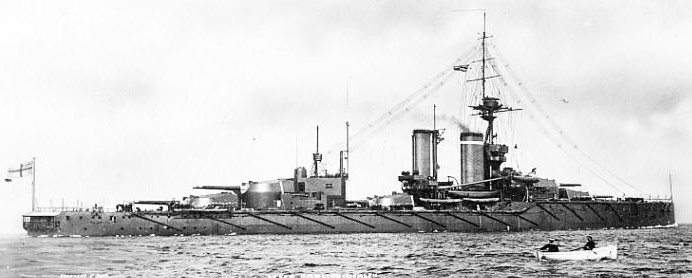
(Royal Navy Photo)
HMS Centurion.
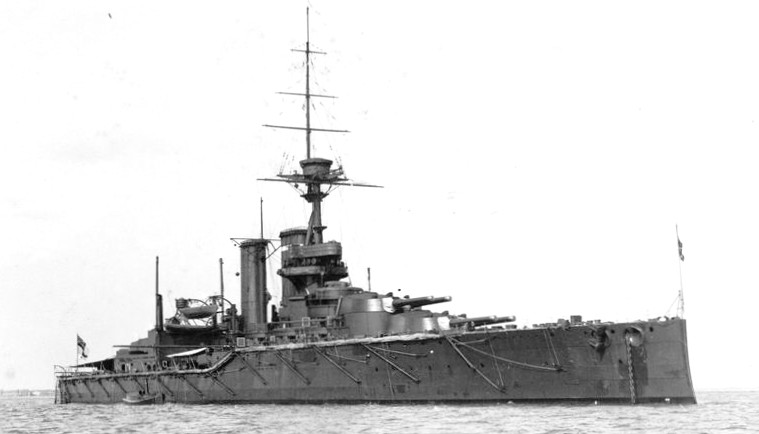
(IWM Photo, Q 75214)
HMS Centurion.
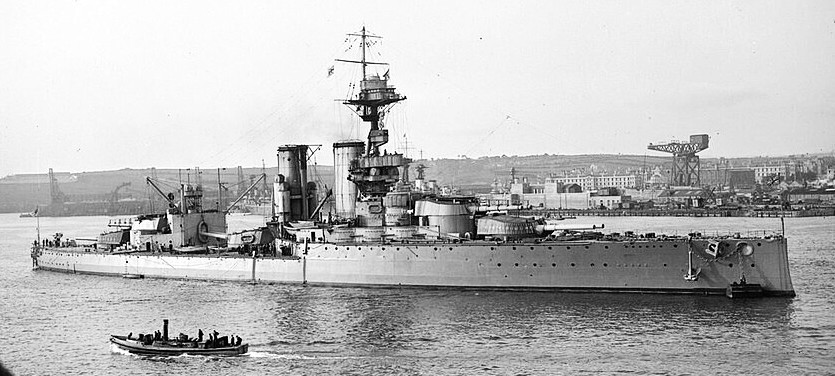
(IWM Photo, Q 13955)
HMS Centurion underway at Rosyth, Scotland, June 1919. She is fitted with aircraft platforms on ‘B’ and ‘X’ turrets.
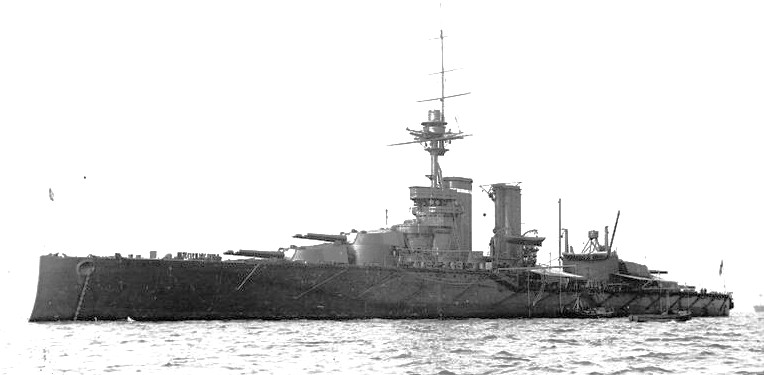
(IWM Photo, Q 38444)
HMS Centurion, c1912.
HMS Audacious
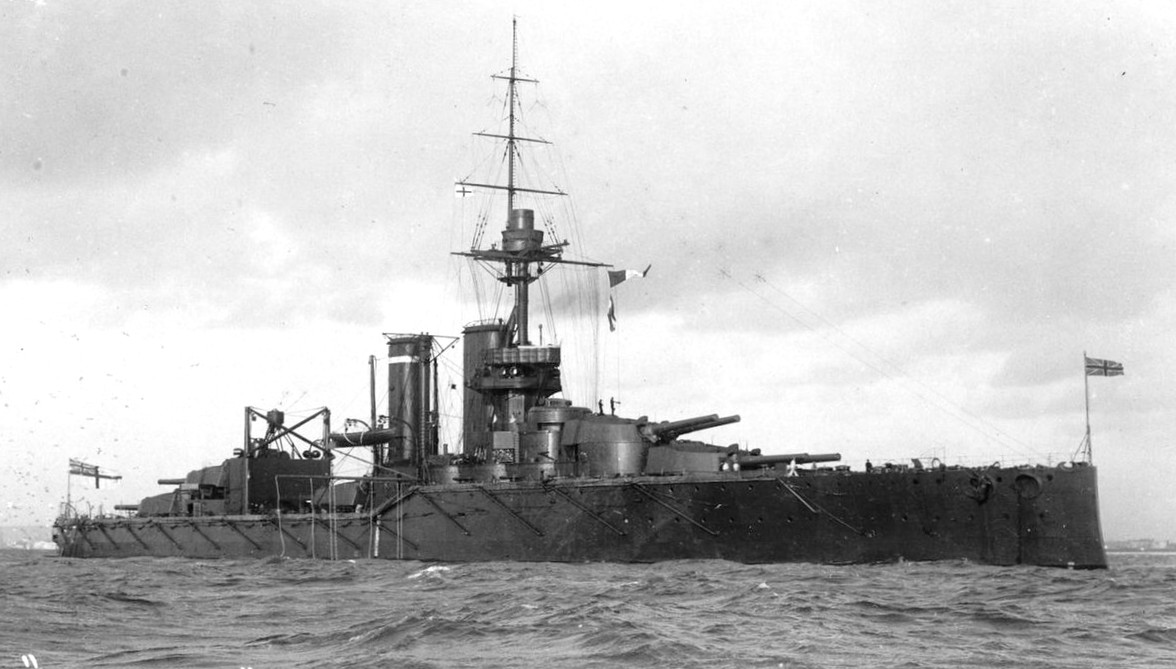
(IWM Photo, Q 75212)
HMS Audacious was the fourth and last King George V-class dreadnought battleship built for the Royal Navy in the early 1910s. After completion in 1913, she spent her brief 2-year career assigned to the Home and Grand Fleets. The ship struck a German naval mine off the northern coast of County Donegal in Ulster, Ireland, in the early days of the First World War. Audacious slowly flooded, allowing all of her crew to be rescued, and finally sank after the British were unable to tow her to shore. However, a petty officer on a nearby cruiser was killed by shrapnel when Audacious subsequently exploded. Even though American tourists aboard one of the rescuing ships photographed and filmed the sinking battleship, the Admiralty embargoed news of her loss in Britain to prevent the Germans from taking advantage of the weakened Grand Fleet. She is the largest warship ever sunk by naval mines. (Wikipedia)
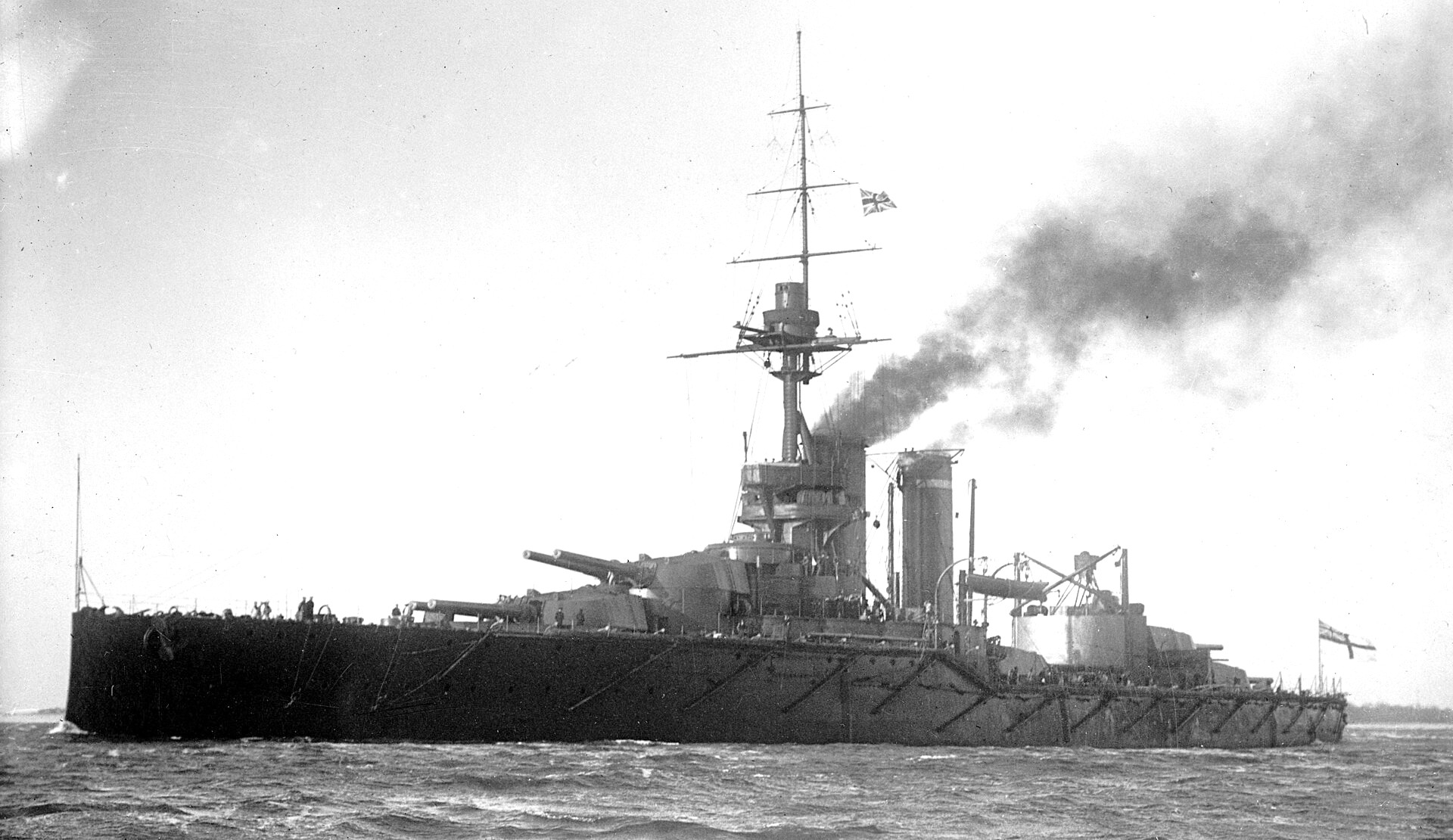
(IWM Photo, Q 17766)
HMS Audacious.
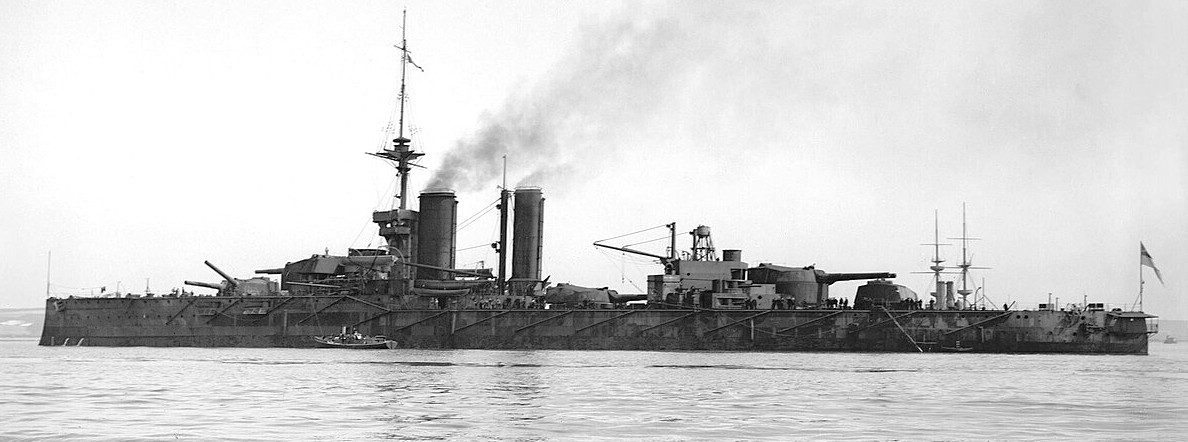
(IWM Photo, Q 20925)
HMS Audacious, c1913.
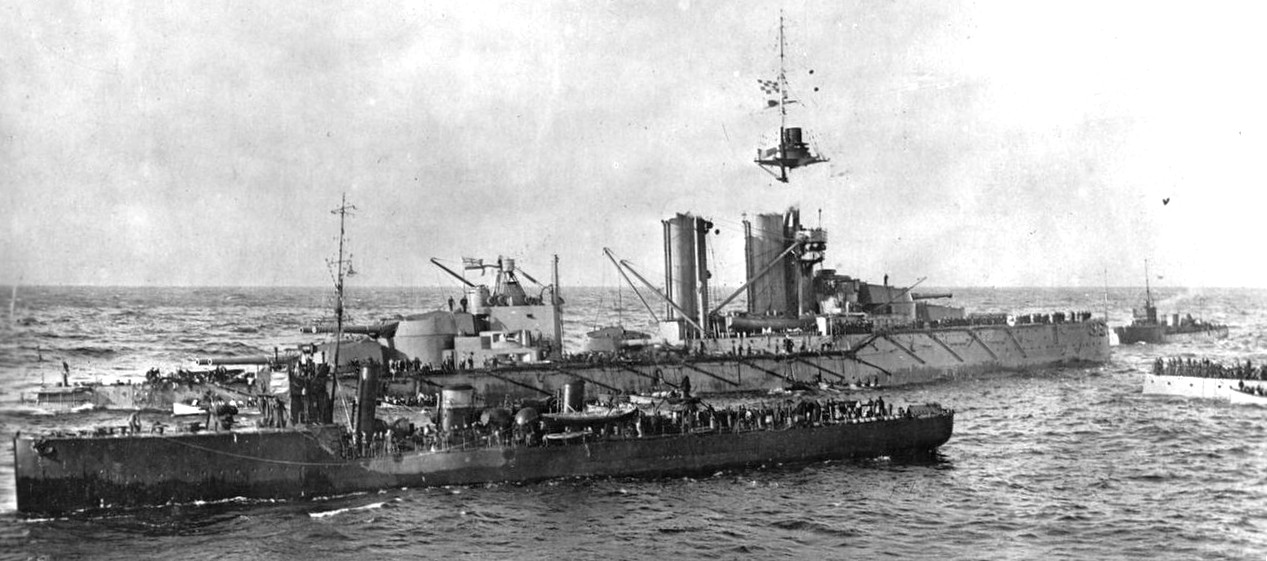
(IWM Photo, Q 75585)
The crew of HMS Audacious being taken off, 27 October 1914.
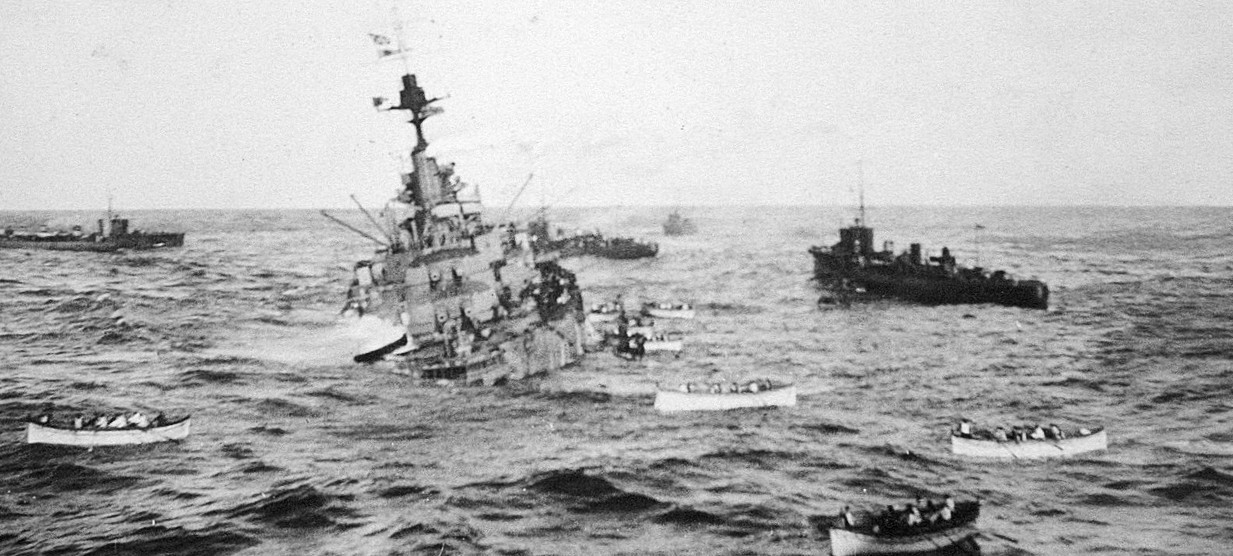
(Mabel and Edith Smith Photo)
HMS Audacious crew take to lifeboats to be taken aboard RMS Olympic.
HMS Ajax
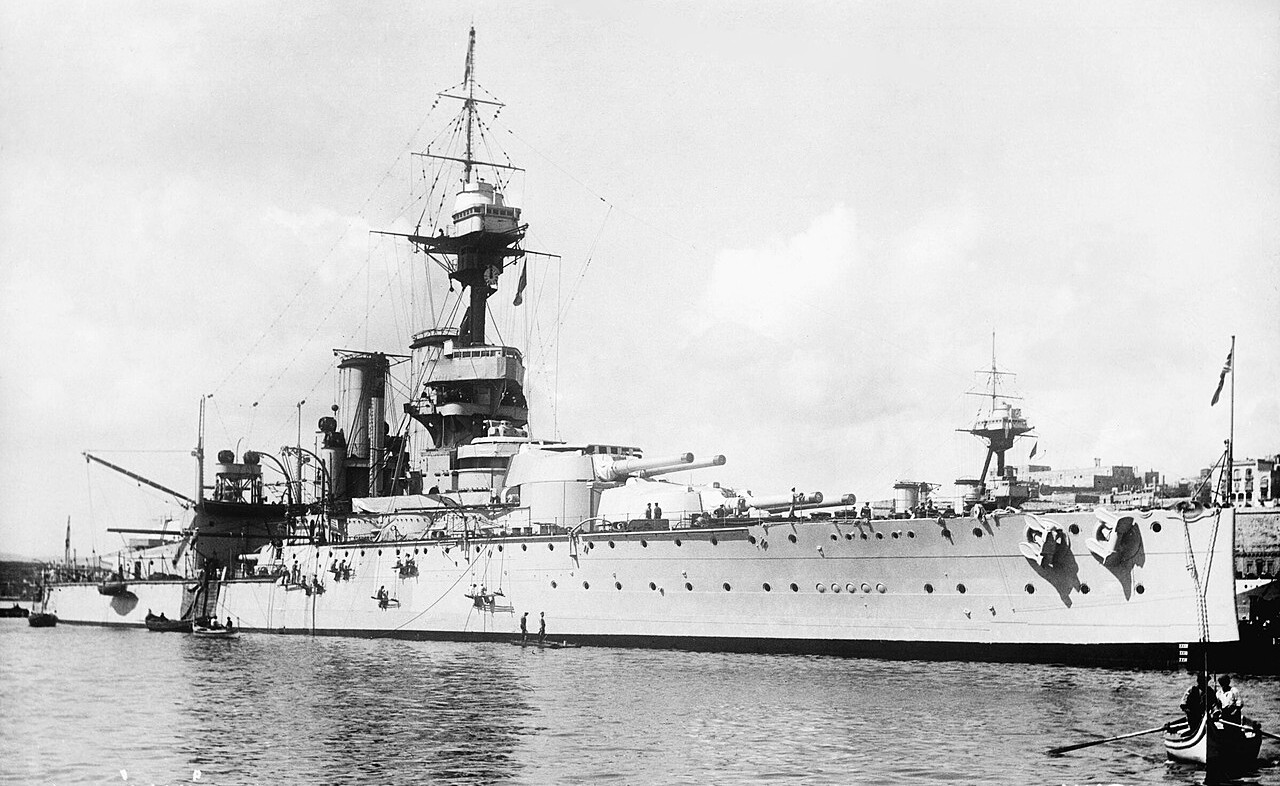
(IWM Photo, FL 334)
HMS Ajax at anchor in Grand Harbour, Valletta, Malta, 1921.
HMS Ajax was the third of four King George V-class dreadnought battleships built for the Royal Navy in the early 1910s. After commissioning in 1913, she spent the bulk of her career assigned to the Home and Grand Fleets. Aside from participating in the failed attempt to intercept the German ships that had bombarded Scarborough, Hartlepool and Whitby in late 1914, the Battle of Jutland in May 1916 and the inconclusive action of 19 August, her service during World War I generally consisted of routine patrols and training in the North Sea.
After the war, Ajax was assigned to the Mediterranean Fleet, where she took part in the Allied intervention in the Russian Civil War in the Black Sea in 1919–1920. The ship was deployed to Turkish waters during the Chanak Crisis of September–October 1922. Ajax was placed in reserve in 1924 before being sold for scrap two years later in accordance with the terms of the Washington Naval Treaty. (Wikipedia)