
Royal Navy dreadnought-class battleships: HMS Neptune, HMS Colossus, HMS Hercules
HMS Neptune
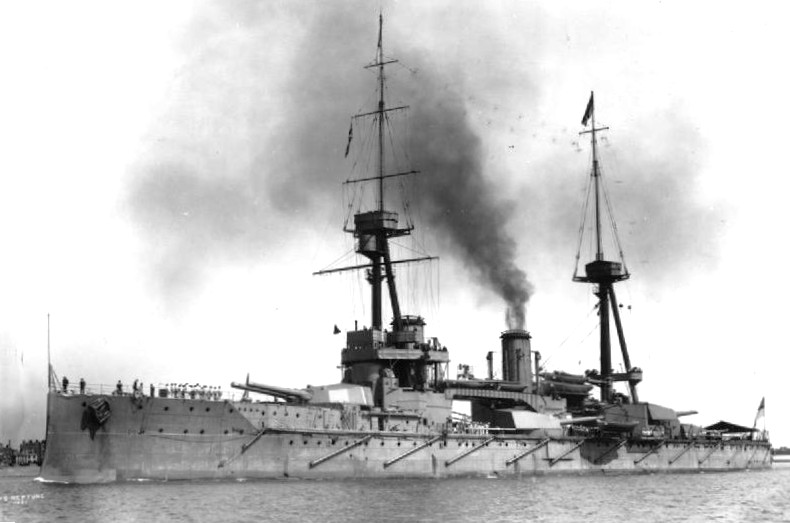
(IWM Photo, Q 21559)
HMS Neptune, the only ship of her class, was the only battleship constructed during the 1908–1909 Naval Programme, and was the first British battleship to use superfiring gun turrets. She retained the 50-calibre Mk XI (305 mm) guns of the St Vincent class, 10-inch (250 mm) belt armour, and the top speed of 21 knots (39 km/h; 24 mph) and the two Parsons steam turbines and their four shafts that produced that speed. Neptune, however, was longer at 546 feet (166 m) and displaced 19,680 long tons (20,000 t), 20 less than the St Vincent class. Her secondary weapons also made her unique from the preceding class, as her 50-calibre Mk VII 4-inch (100 mm) secondary guns did not have shielding in the superstructure, a first for British dreadnoughts.
HMS Neptune was commissioned on 19 January 1909. She replaced HMS Dreadnought as the flagship of the Home Fleet and of the 1st Division 25 March 1909, two weeks after the completion of sea trials. Neptune then participated in the Coronation review of King George V, was replaced as the Home Fleet’s flagship by HMS Iron Duke 10 March 1914, and then participated in the British naval response to the July Crisis from 17–20 July 1914.[58] She participated in many Royal Navy actions until the Battle of Jutland, at which she fired 48 main battery shells, scoring several ineffectual or unconfirmed hits of SMS Wiesbaden and SMS Derfflinger and an assortment of German destroyers. After Jutland, she was transferred to the 4th Battle Squadron and never again saw combat. Neptune was placed in the reserve 1 February 1919 and sold for scrap in September 1922. (Wikipedia)
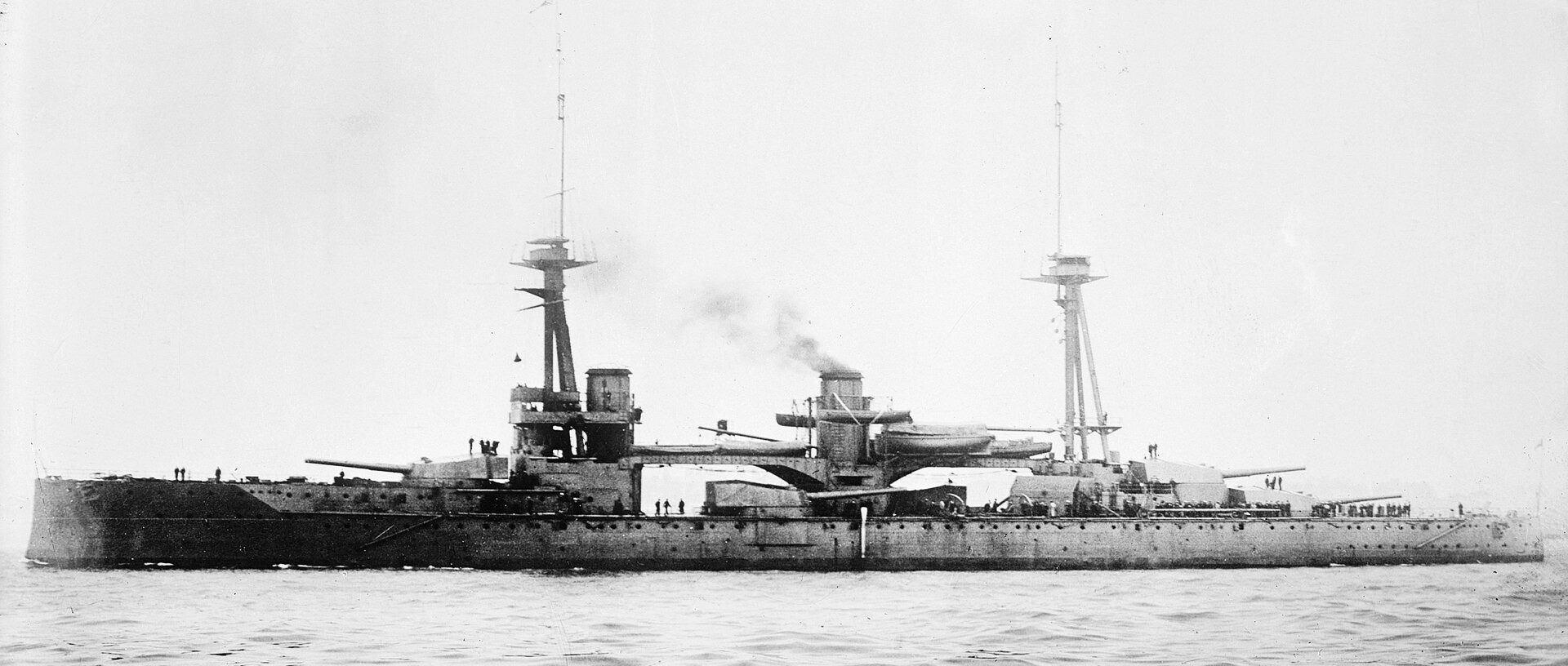
(Library of Congress Photo)
HMS Neptune.
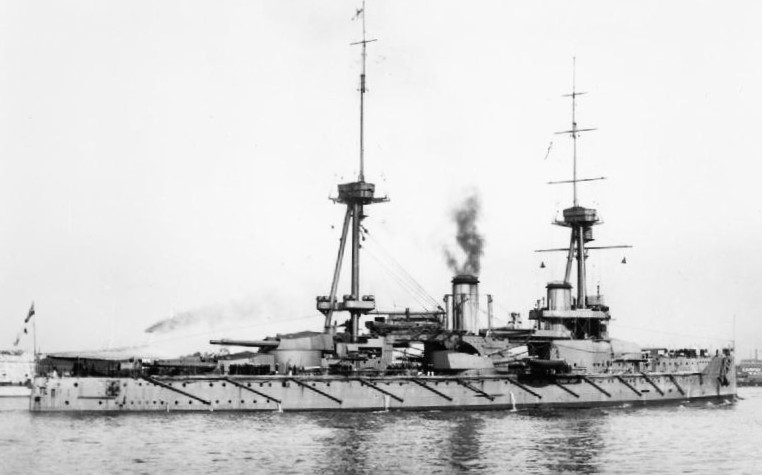
(IWM Photo, Q 39704)
HMS Neptune, entering Portsmouth harbour in 1911.
Colossus-class battleships: HMS Colossus and HMS Hercules
The two Colossus-class battleships were the final members of the first generation of British dreadnoughts. HMS Colossus and HMS Hercules were part of the first Naval Programme of 1909–1910 and improved upon the preceding HMS Neptune. The Colossus class retained the same two Parsons steam turbines and their four shafts and the top speed of 21 knots (39 km/h; 24 mph) they produced and the same ten 50-calibre Mk XI 12-inch (305 mm) main guns and 50-calibre Mk VII 4-inch (102 mm) secondary guns of the previous classes of British dreadnoughts. The changes were: the number of engine rooms (now three instead of two (the first ships in the world to have this many)); the length (now one foot shorter than the preceding HMS Neptune at 545 feet (166 m)); the belt armour (now one inch thicker at 11 inches (279 mm)); and the displacement (now up to 20,030 long tons (20,350 t)).
Upon commission, Colossus and Hercules were both assigned to the 2nd Division, renamed the 2nd Battle Squadron 1 May 1912, of the Home Fleet and Hercules became its flagship. Colossus was transferred to the 1st Squadron by the end of the year, and Hercules temporarily became a private ship in 1913 but later also joined the 1st Squadron.[65] Before the First World War, Hercules had a collision with a merchant ship in Portland Harbour.[66] After a long period of drilling and relative inactivity for the Grand Fleet, in which Colossus became the flagship of the 1st Squadron’s 5th Division, both ships participated in the Battle of Jutland, firing a total of no more than 98 shells each at SMS Wiesbaden, SMS Seydlitz, and SMS Derfflinger, and were able to hit them without inflicting much damage as well as various German destroyers that neither ship managed to hit. After the battle, both ships were transferred into the 4th Squadron, Colossus becoming second-in-command,[68] and entered another period of relative inactivity. Both ships were present at the surrender of the German fleet at Rosyth, Scotland on 21 November, and Hercules took the Allied Naval Armistice Commission to Kiel, Germany, then joined the Reserve Fleet in February 1919 a month after her sister ship had briefly become flagship. Colossus was for a time listed for scrapping, but was then made a boys’ training vessel in September 1921 and was refitted. Colossus was then returned to the list the following year, but was once again removed and hulked for use by the training establishment HMS Impregnable and was finally sold for scrap in August 1928, with Hercules having preceded her on 8 November 1921. (Wikipedia)
HMS Colossus
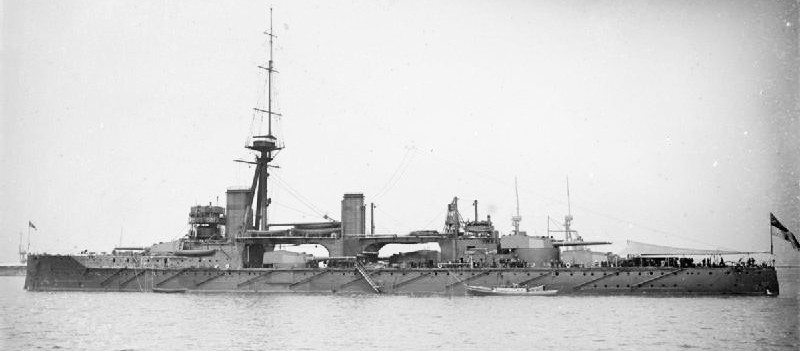
(IWM Photo, Q 38500)
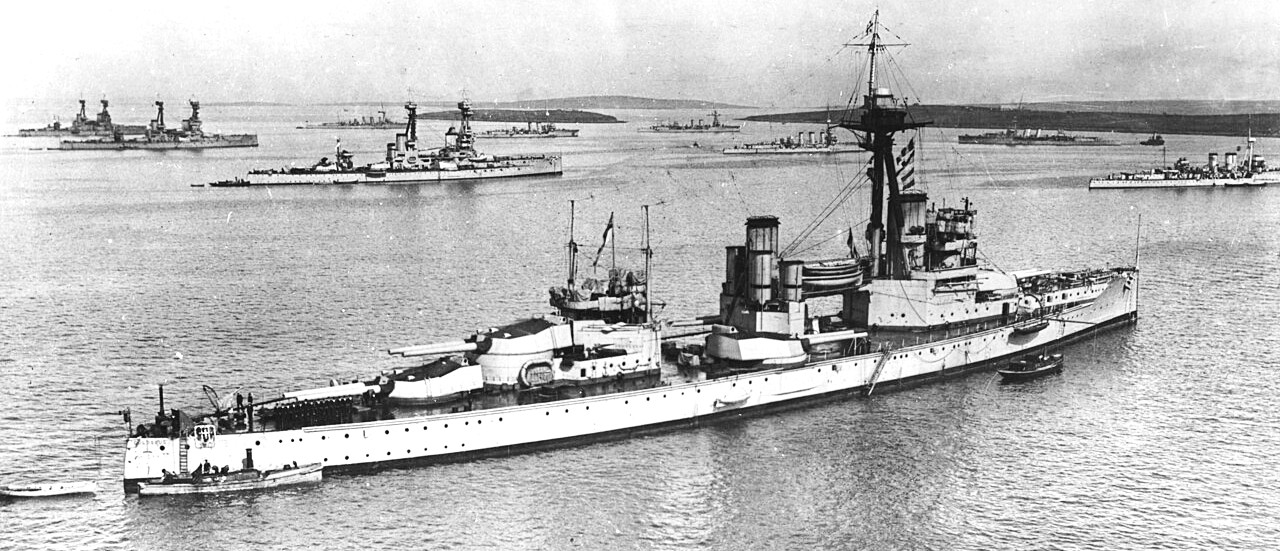
HMS Colossus was the lead ship of her class of two dreadnought battleships built for the Royal Navy at the end of the first decade of the 20th century. She spent her whole career assigned to the Home and Grand Fleets, often serving as a flagship. Aside from participating in the Battle of Jutland in May 1916 and the inconclusive action of 19 August, her service during World War I generally consisted of routine patrols and training in the North Sea. Colossus was the only dreadnought from the main body of the Grand Fleet to be hit during the Battle of Jutland, although she suffered only minor damage. The ship was deemed obsolete after the war and was reduced to reserve and then became a training ship. Colossus was hulked in 1923 and sold for scrap in 1928. (Wikipedia)

(Library of Congress Photo)
HMS Colossus at anchor, c1915.
(Royal Navy Photo)
HMS Colossus at anchor in Scapa Flow with other ships of the Grand Fleet, 1916.
HMS Hercules
(IWM Photo, SP 1679)
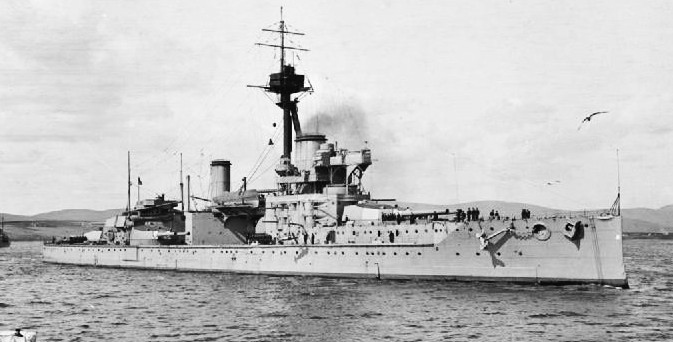
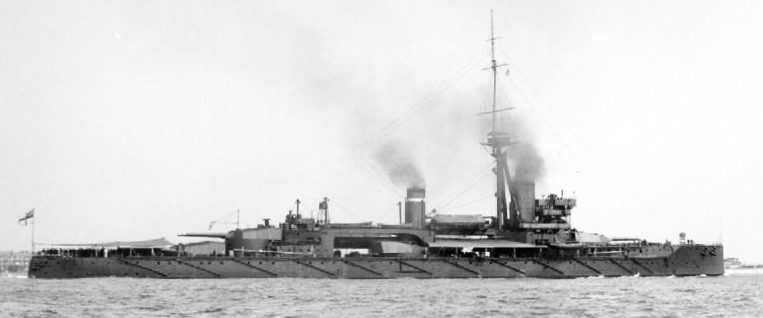
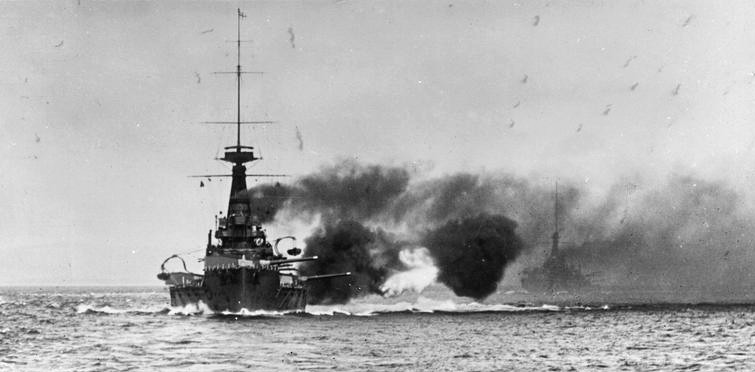
HMS Hercules was the second and last of the two Colossus-class dreadnought battleships built for the Royal Navy at the end of the first decade of the 20th century. She spent her whole career assigned to the Home and Grand Fleets, often serving as a flagship. Aside from participating in the Battle of Jutland in May 1916 and the inconclusive action of 19 August, her service during World War I generally consisted of routine patrols and training in the North Sea. The ship was deemed obsolete after the war and was reduced to reserve. Hercules was sold for scrap in 1921 and broken up the following year. (Wikipedia)
(IWM Photo, Q 39069)
HMS Hercules.
(IWM Photo, Q 75197)
HMS Hercules at battle practice, 1913.