
Admiral-class battlecruisers
The Admiral-class battlecruisers were intended as improved versions of the Queen Elizabeth-class battleships, but were recast as battlecruisers after Admiral John Jellicoe, commander of the Grand Fleet, saw no real need for more battleships. A number of German battlecruisers had been laid down that were superior to the bulk of the Grand Fleet’s battlecruisers so the design was revised to counter these. The class was going to consist of Hood, Anson, Howe, and Rodney—all names of famous Admirals—but the latter three ships were suspended as the material and labour required to complete them was needed for higher-priority merchantmen and escort vessels. Their designs were updated to incorporate the lessons from the Battle of Jutland, but the Admiralty eventually decided that it was better to begin again with a clean-slate design so they were cancelled in 1919.
HMS Hood, however, was sufficiently advanced in construction that she was completed in 1920 and immediately became flagship of the Battlecruiser Squadron of the Atlantic Fleet. In 1923–24 Hood, accompanied by Repulse and a number of Danae-class cruisers, sailed around the world from west to east via the Panama Canal. On 23 April 1937, after the beginning of the Spanish Civil War, she escorted three British merchantmen into Bilbao harbour despite the presence of the Nationalist cruiser Almirante Cervera that attempted to blockade the port. Hood spent most of the early part of the Second World War patrolling against German commerce raiders and escorting convoys. As flagship of Force H based at Gibraltar, she bombarded French ships during the attack on Mers-el-Kébir. In May 1941 Hood and the battleship Prince of Wales were ordered to intercept the German battleship Bismarck and the heavy cruiser Prinz Eugen as they attempted to break out into the North Atlantic. In the subsequent Battle of the Denmark Strait Hood’s aft magazines exploded, sinking her within five minutes of the start of the battle. (Wikipedia)
Royal Navy Battlecruiser HMS Hood
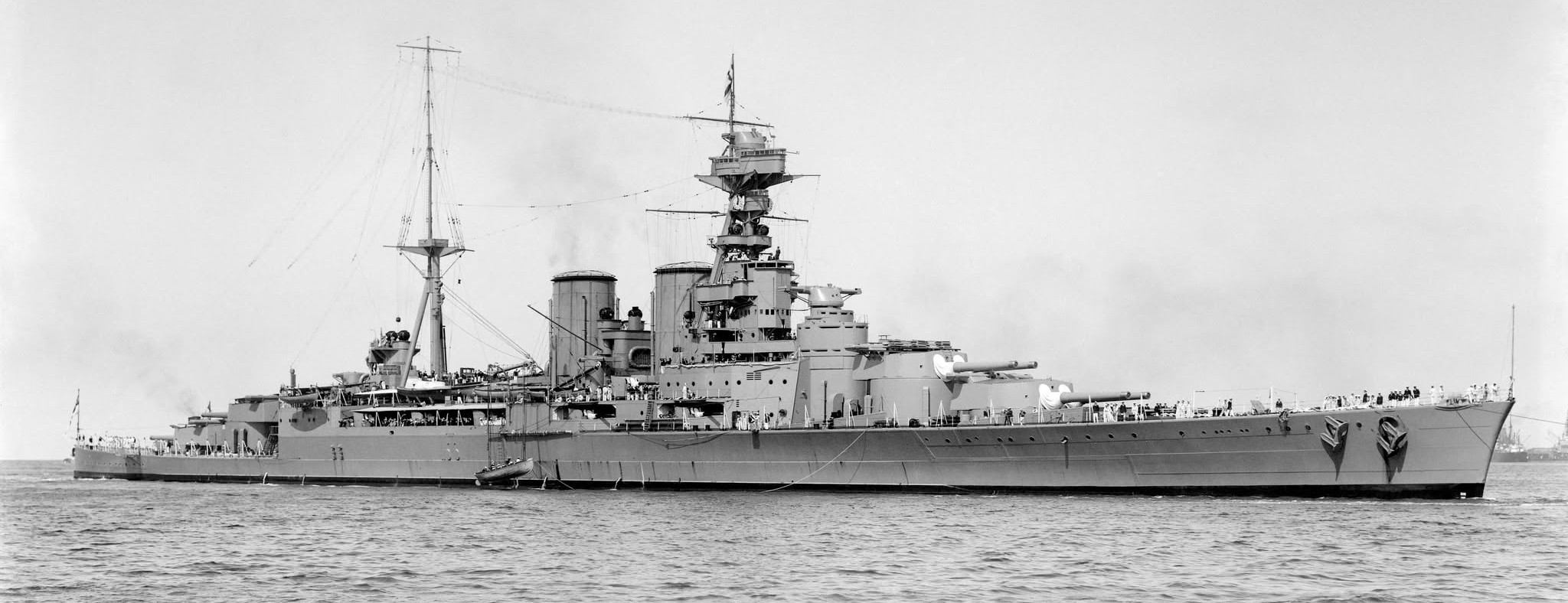
(State Library of Victoria, Allan C. Green Photo)
HMS Hood, the last battlecruiser built for the Royal Navy. 17 March 1924.
HMS Hood (pennant number 51) was a battlecruiser of the Royal Navy (RN). Hood was the first of the planned four Admiral-class battlecruisers to be built during the First World War. She was already under construction when the Battle of Jutland occurred in mid-1916, and that battle revealed serious flaws in her design; with drastic revisions, she was completed four years later. For this reason, she was the only ship of her class to be completed, as the Admiralty decided it would be better to start with a clean design on succeeding battlecruisers, leading to the never-built G-3 class. Despite the appearance of newer and more modern ships, Hood remained the largest warship in the world for 20 years after her commissioning, and her prestige was reflected in her nickname, “The Mighty Hood”.
Hood was involved in many showing-the-flag exercises between her commissioning in 1920 and the outbreak of war in 1939, including training exercises in the Mediterranean Sea and a circumnavigation of the globe with the Special Service Squadron in 1923 and 1924. She was attached to the Mediterranean Fleet following the outbreak of the Second Italo-Ethiopian War in 1935. When the Spanish Civil War broke out the following year, Hood was officially assigned to the Mediterranean Fleet until she had to return to Britain in 1939 for an overhaul. By this time, advances in naval gunnery had reduced Hood’s usefulness. She was scheduled to undergo a major rebuild in 1941 to correct these issues, but the outbreak of the Second World War in September 1939 kept the ship in service without the upgrades.
When war with Germany was declared, Hood was operating in the area around Iceland, and she spent the next several months hunting for German commerce raiders and blockade runners between Iceland and the Norwegian Sea. After a brief overhaul of her propulsion system, she sailed as the flagship of Force H, and participated in the destruction of the French fleet at Mers-el-Kebir. Transferred to the Home Fleet shortly afterwards, Hood was dispatched to Scapa Flow, and operated in the area as a convoy escort and later as a defence against a potential German invasion fleet. In May 1941, Hood and the battleship Prince of Wales were ordered to intercept the German battleship Bismarck and the heavy cruiser Prinz Eugen, which were en route to the Atlantic, where they were to attack convoys. On 24 May 1941, early in the Battle of the Denmark Strait, Hood was struck by several German shells, exploded, and sank with the loss of all but 3 of her crew of 1,418.
The RN conducted two inquiries into the reasons for the ship’s quick demise. The first, held soon after the ship’s loss, concluded that Hood’s aft magazine had exploded after one of Bismarck’s shells penetrated the ship’s armour. A second inquiry was held after complaints that the first board had failed to consider alternative explanations, such as an explosion of the ship’s torpedoes. It was more thorough than the first board but concurred with the first board’s conclusion. Despite the official explanation, some historians continued to believe that the torpedoes caused the ship’s loss, while others proposed an accidental explosion inside one of the ship’s gun turrets that reached down into the magazine. Other historians have concentrated on the cause of the magazine explosion. The discovery of the ship’s wreck in 2001 confirmed the conclusion of both boards, although the exact reason the magazines detonated is likely to remain unknown, since that portion of the ship was obliterated in the explosion. (Wikipedia)
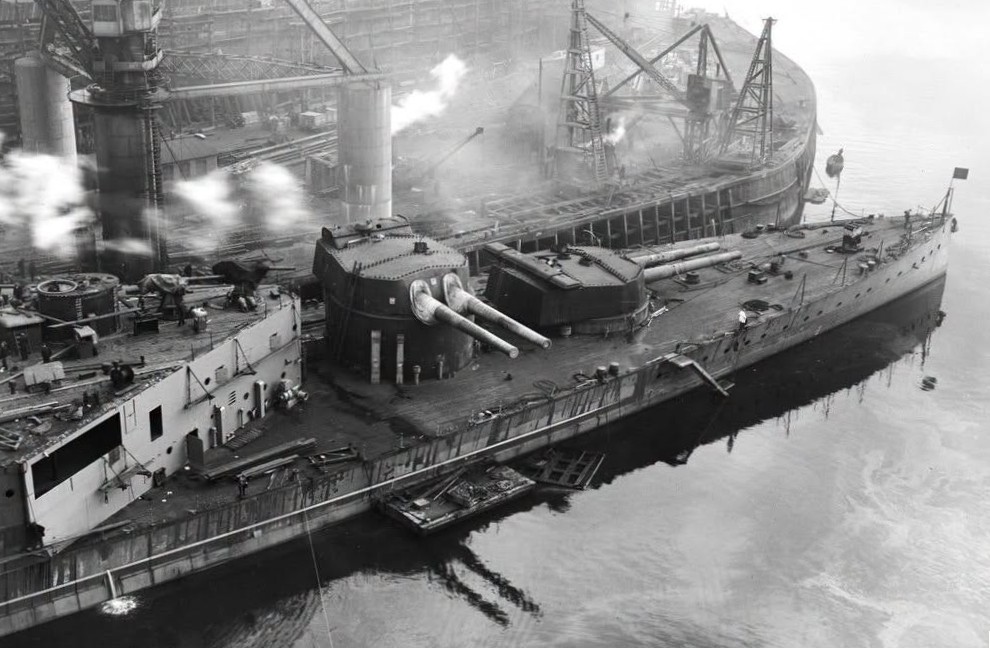
(Royal Navy Photo)
British battlecruiser HMS Hood during its construction at the John Brown & Company shipyard in Clydebank, Scotland, around 1918–1919. The image specifically showcases the mounting of her main armament, which consisted of four twin turrets armed with 15-inch Mark I guns. HMS Hood was launched in 1918 and served as the pride of the Royal Navy for over 20 years before being sunk by the German battleship Bismarck in 1941.
The Mark II turret was unique to HMS Hood and had a distinct look. This has several improvements over the Mark I turret as fitted to the Queen Elizabeth and Revenge classes:
- Nominal cycle time reduced from 36 seconds to 32 seconds (although 30 seconds was achieved in practice with the Mark I).
- Maximum elevation increased from 20 degrees to 30 degrees, which increase maximum gun range with a worn gun and a 4 crh shell from 23,400 yards to 28,500 yards.
- The armour of the front plate was increased from 13in to 15in.
- The armour of the forward part of the side was increased from 11in to 12in.
- Sighting ports moved from roof to turret face, which allowed the super-firing turret to fire directly over the lower turret.
- All four turrets were equipped with 30 ft rangefinders.
- Flash-tightness improved to handing room cordite hoppers and the cordite hoist cage
- Flash door added to the hoist well.
- Adjustable anti-surging stops fitted to shell hoist, which enabled longer shells to be carried.
- Mechanical improvements to the training gear and gun run-out.
This did come at a cost – mounting weight increased from 770 tons to 880 tons.
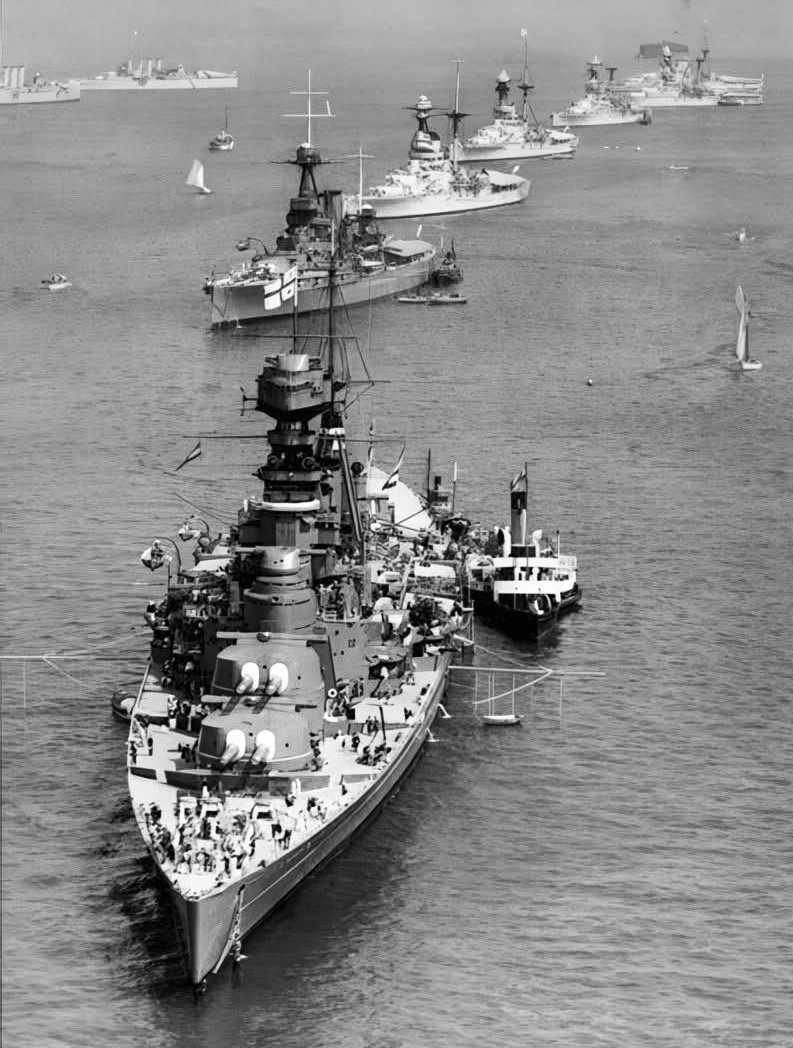
(RN Photo)
HMS Hood, HMS Iron Duke, HMS Resolution, HMS Revenge, HMS Ramillies, and other warships preparing for the Royal Jubilee Naval Review, c1935.
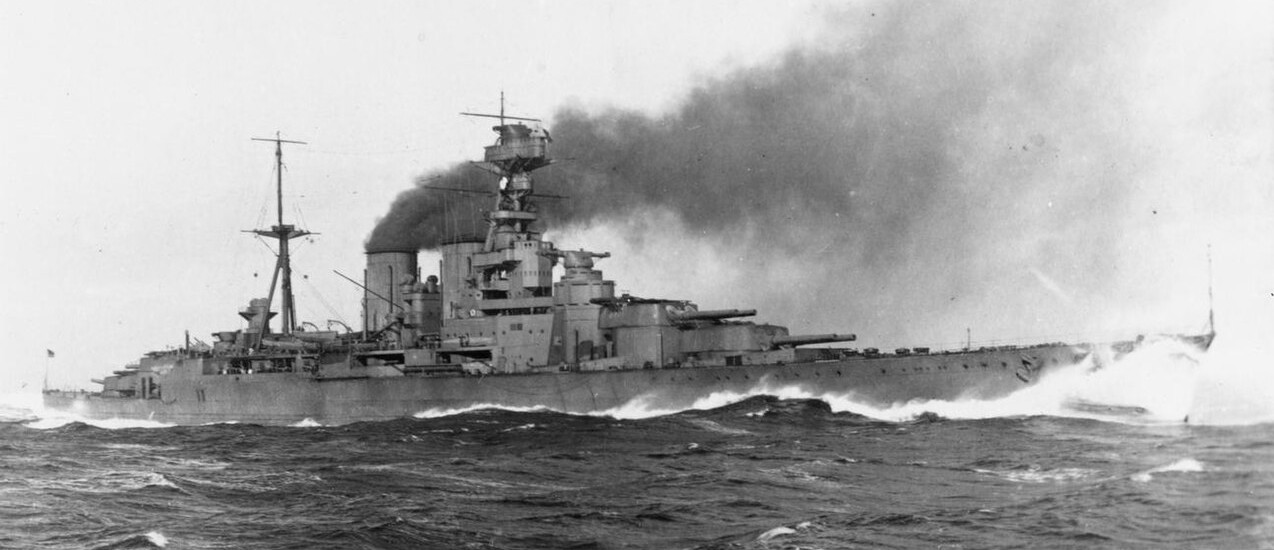
(IWM Photo, Q 75272)
Battlecruiser HMS Hood on speed trials, 1920.
(Royal Navy Photo, HMS Hood Association)
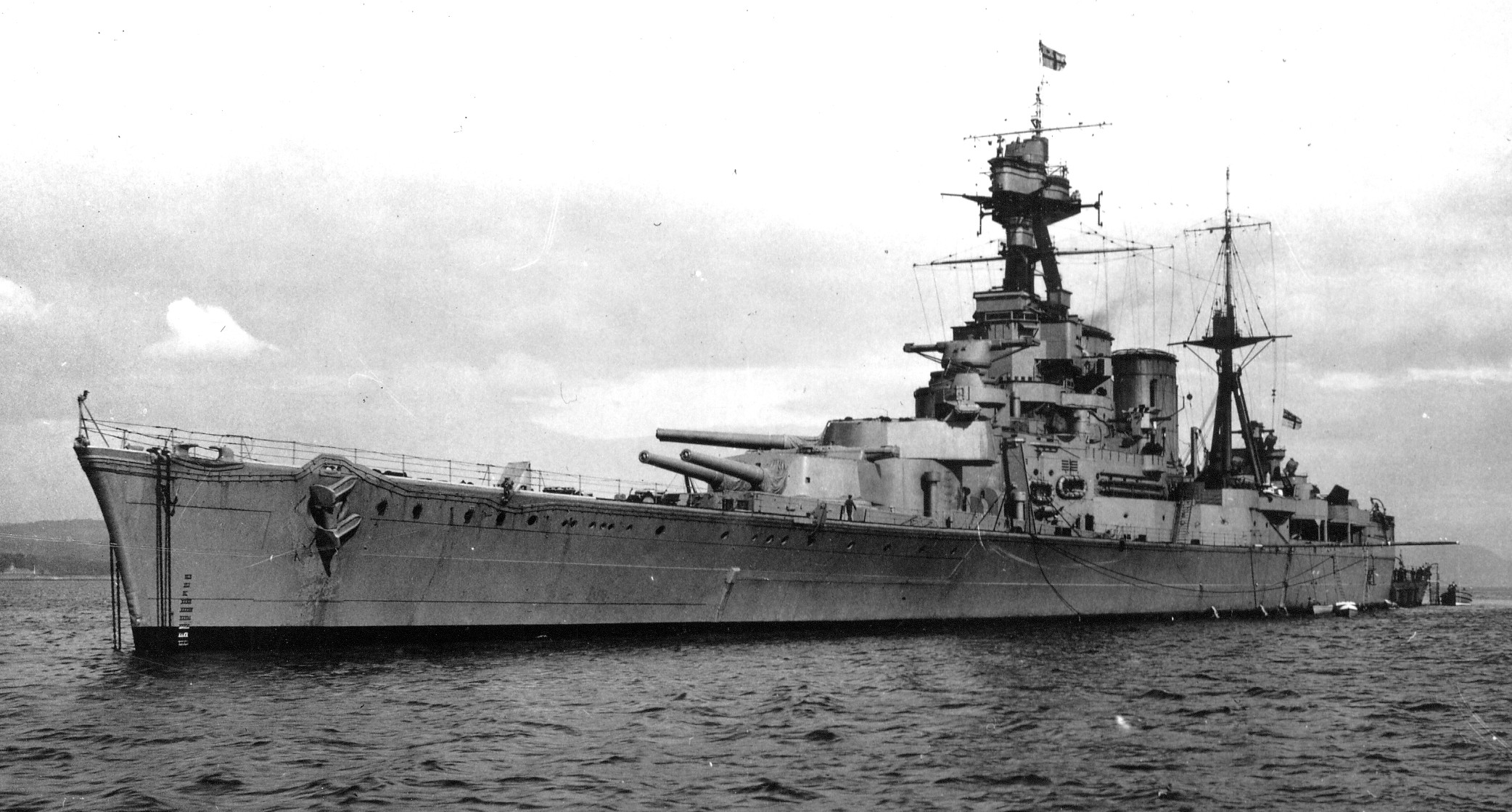
HMS Hood preparing to depart Scapa Flow. HMS Hood was sunk by the Bismarck on 24 May 1941 with the loss of 1,415 lives. There were only three survivors.
(IWM Photo, Hu 76085)
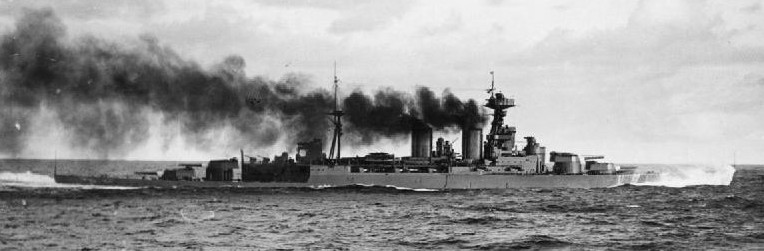
HMS Hood at speed, taking water over her bows, circa 1939-40.
(U.S. Naval Historical Center Photo)
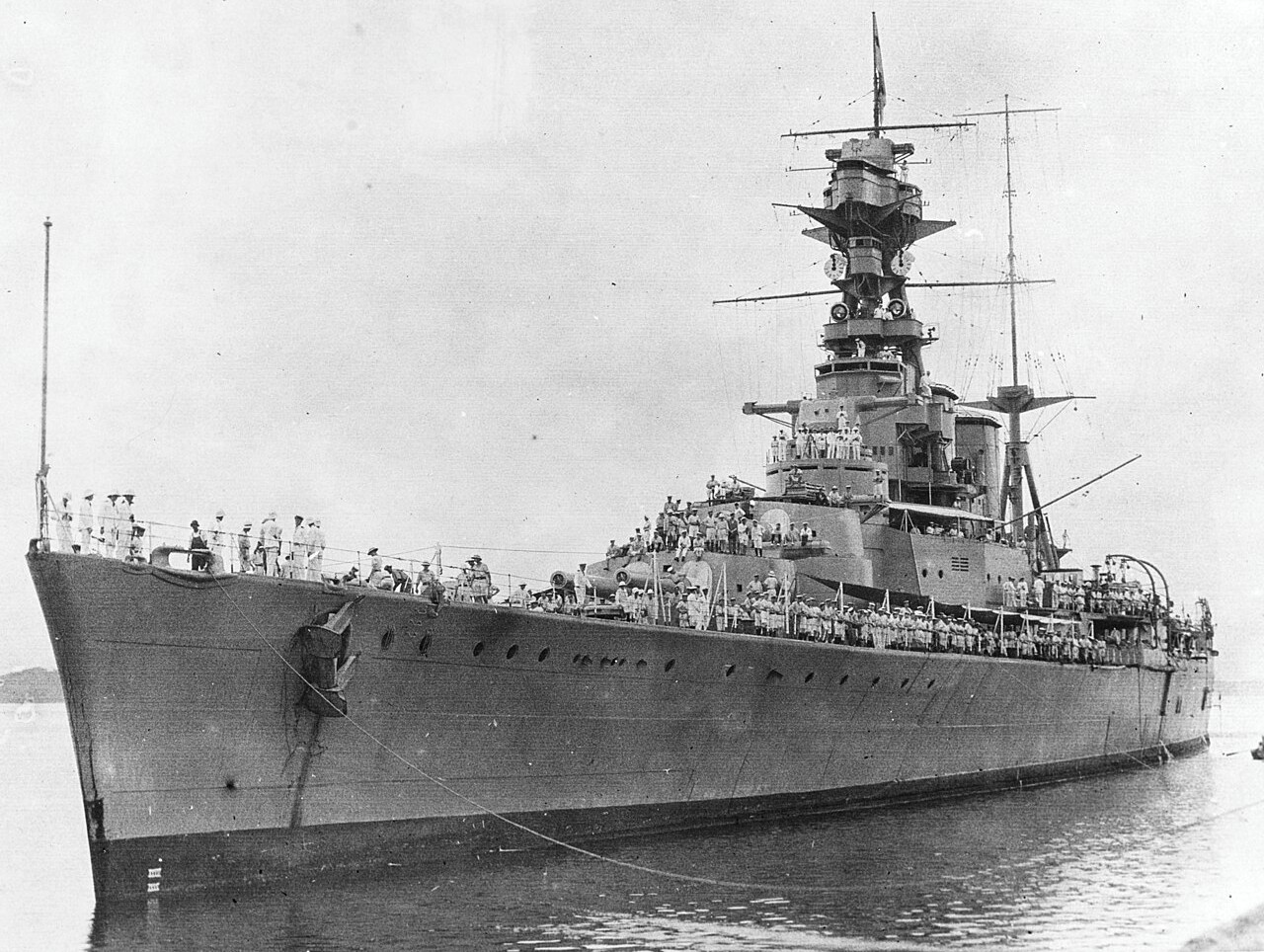
(National Archives and Records Administration Photo)
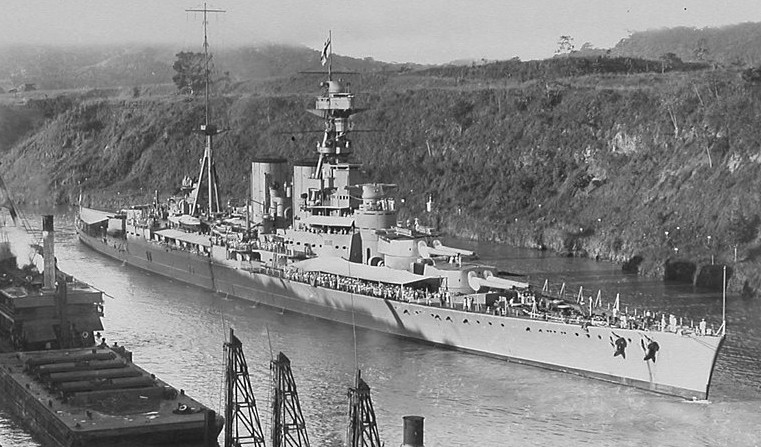
HMS Hood in the Panama Canal, 24 July 1924.
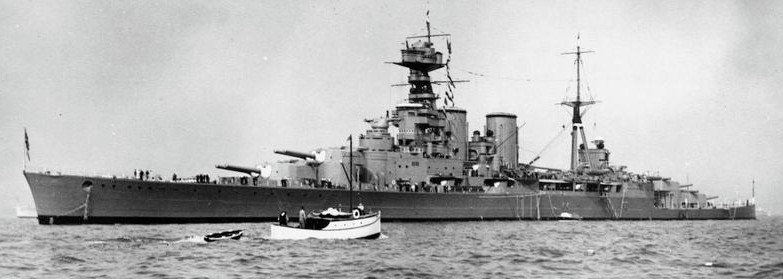
(IWM Photo, HU 108390)
HMS Hood viewed from HMS Repulse.
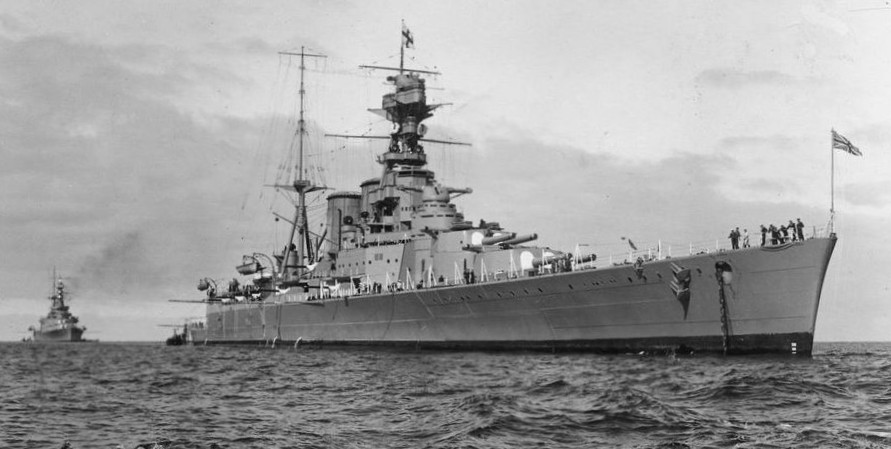
(State Library of South Australia)
Battlecruisers HMS Hood and HMS Repulse at anchor off Outer Harbour during a visit by the Royal Naval Fleet to South Australia, 1924.
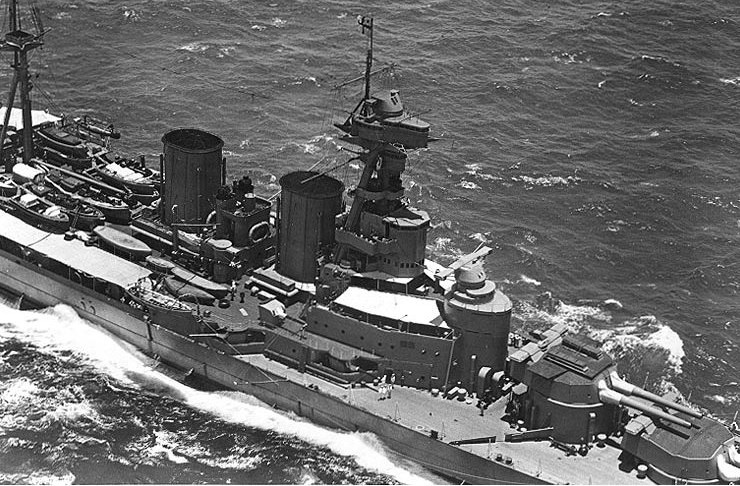
(USN Photo)
Aerial view of the ship’s starboard midships area, taken by a plane from Naval Air Station, Pearl Harbor, while HMS Hood was off Honolulu, Hawaii, on 12 June 1924. Note rangefinders atop the conning tower and foremast top; 15-inch twin gun turrets, with a partially disassembled aircraft platform atop “B” turret; and boats stowed amidships.
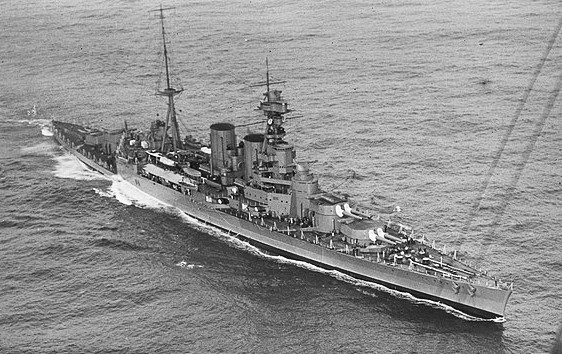
(The Sun Sydney Photo)
Aerial view of HMS Hood, Sydney, Australia, 1924.
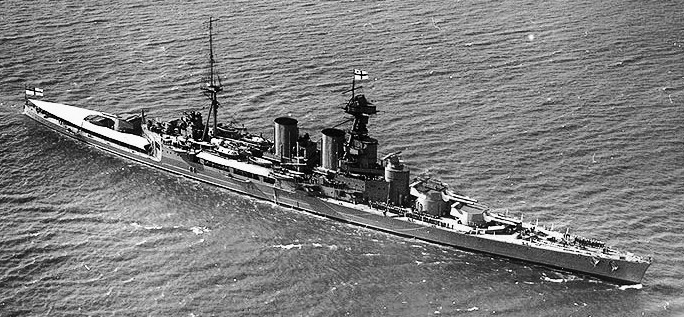
(USN Photo)
HMS Hood in American waters, circa June-July 1924. Note Vice-Admiral’s flag flying from her foremast.
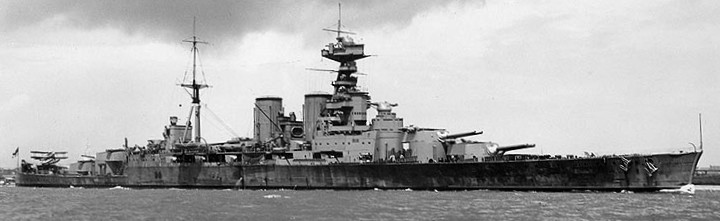
(U.S. Naval History and Heritage Command Photo)
HMS Hood after she was fitted with an aircraft catapult; a Fairey III floatplane is visible on her stern, 1932.
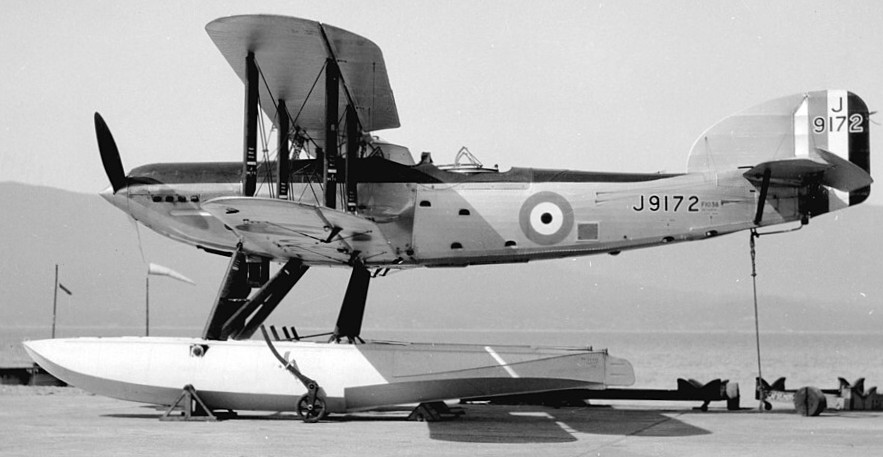
(City of Vancouver Archives Photo, CVA 99-2155)
Fairey IIIF Mk. IV G.P. floatplane RCAF (Serial No. J9172) at RCAF Station Jericho Beach, British Columbia. This was the only British-built Fairley III F to serve in Canada. It was used for trials October 1929 to September 1930.
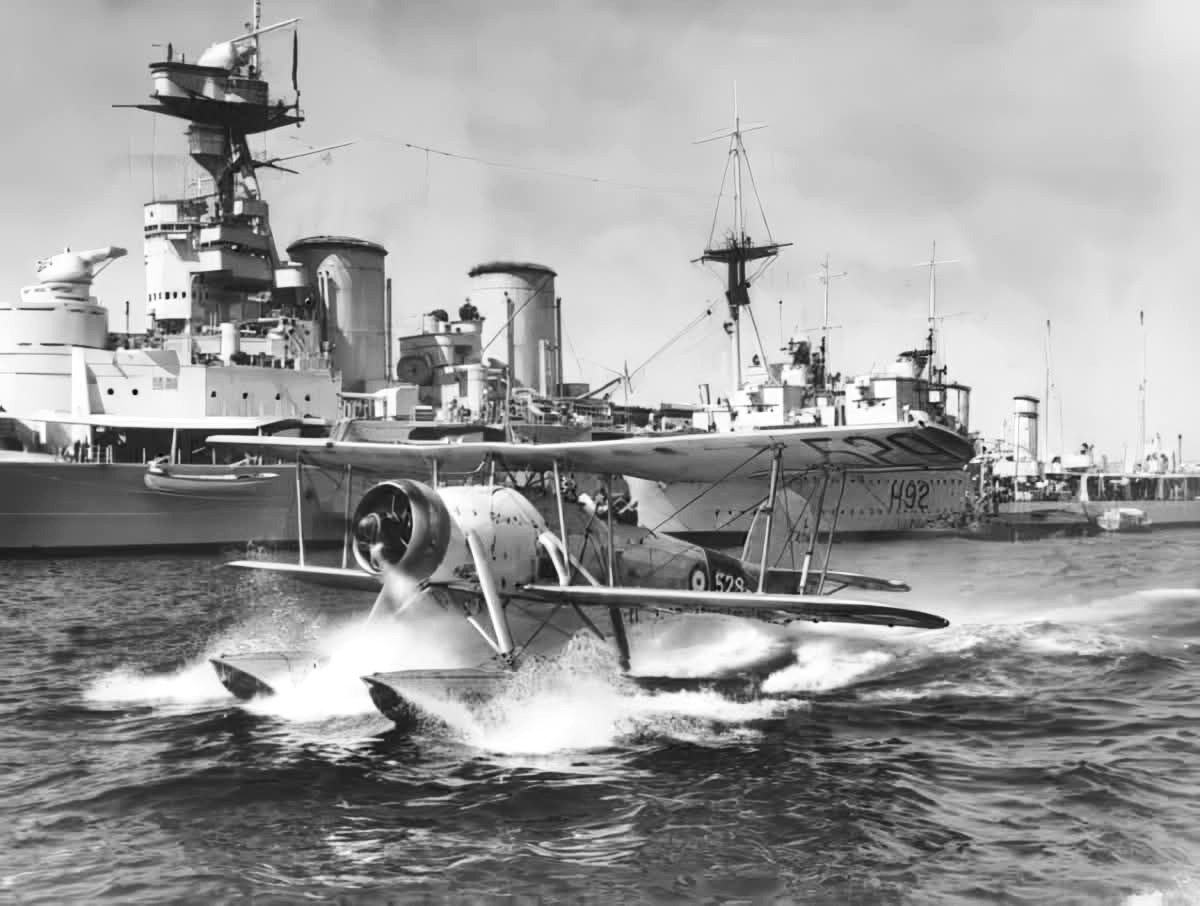
(RN Photo)
Fairey Swordfish floatplane, with HMS Hood and HMS Glowworm in Gibraltar, 1938.
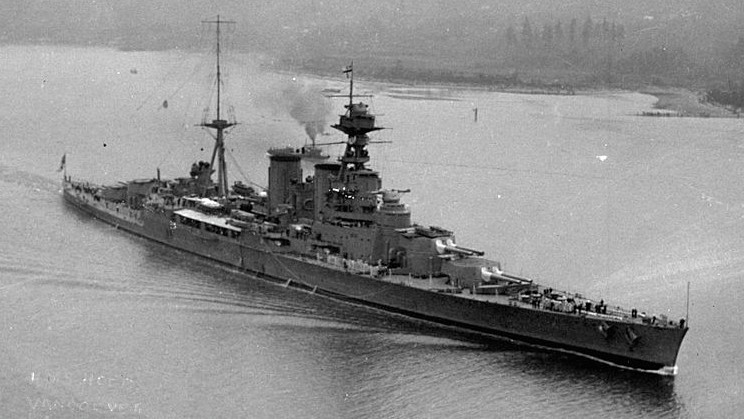
(City of Vancouver Archives Photo, Bo N88.4)
HMS Hood entering Vancouver Harbour, British Columbia.
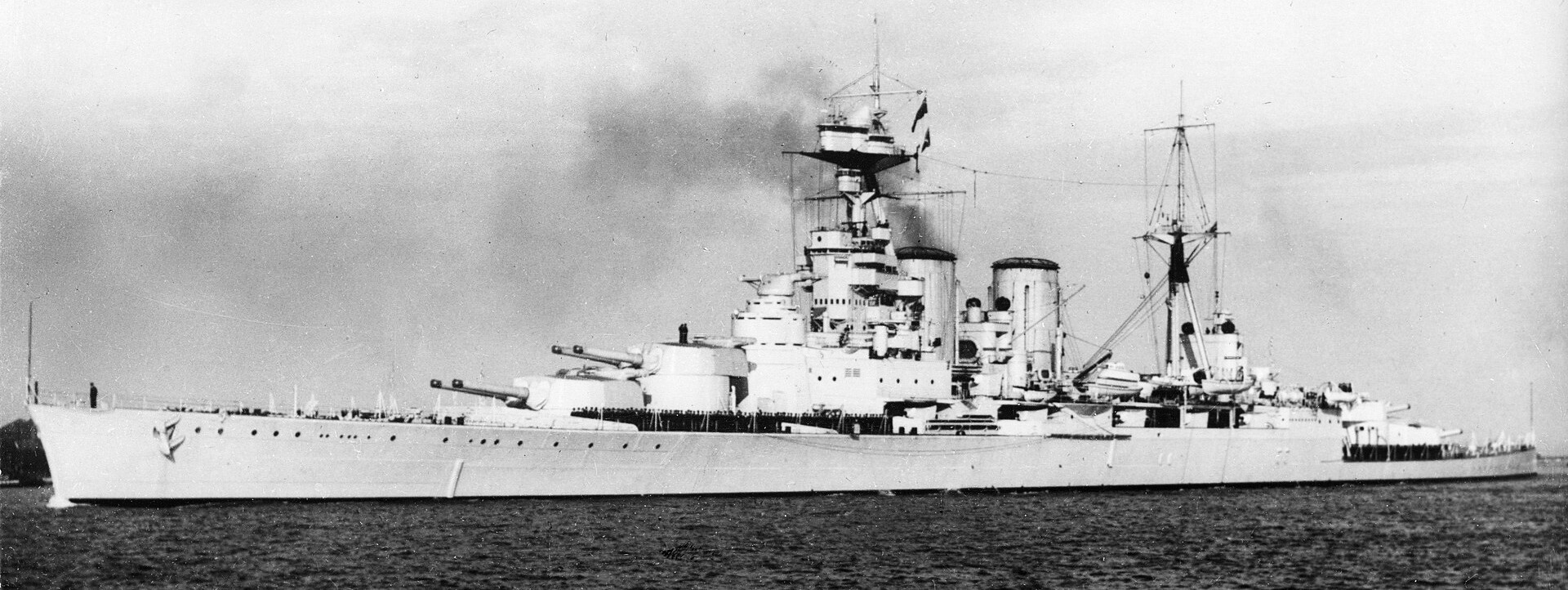
(Fotocollectie Spaarnestad Photo)
HMS Hood in the Denmark Strait, 1941.
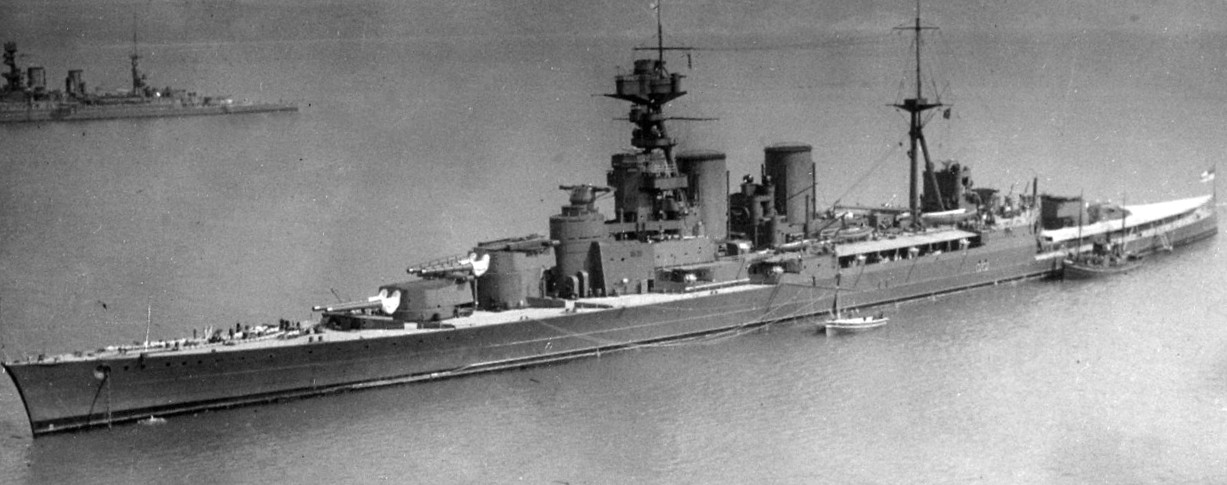
(SDASM Photo)
HMS Hood.
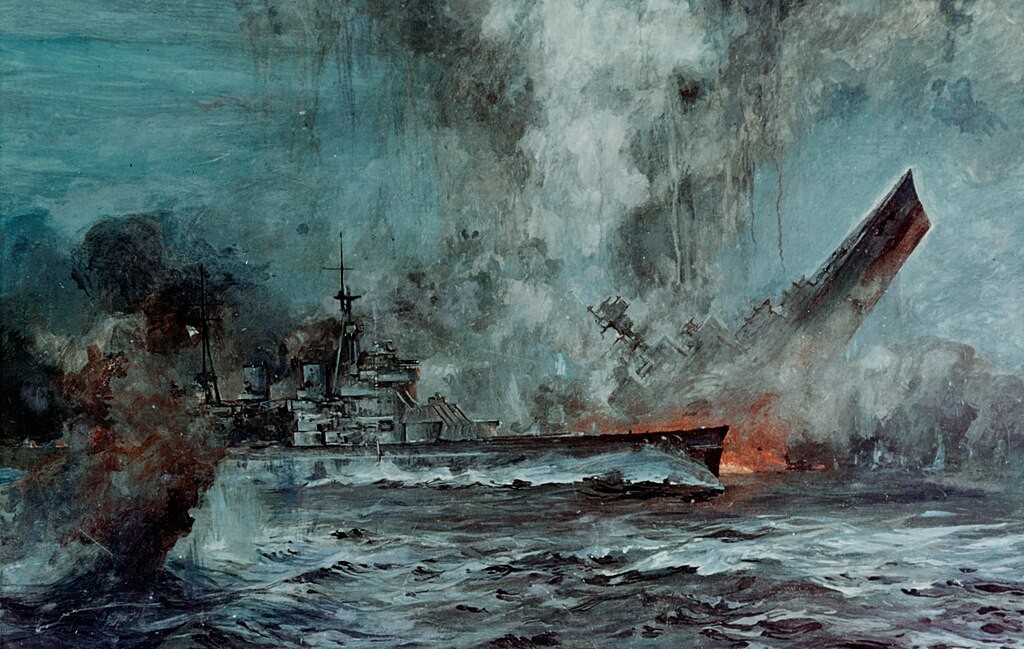
(U.S. Naval Historical Center Photo)
Painting by J.C. Schmitz-Westerholt, depicting HMS Hood‘s loss during her engagement with the German battleship Bismarck on 24 May 1941. HMS Prince of Wales is in the foreground.
All comments are subject to our Comment Policy. You must be at least 18 years old to comment.
See a comment that violates our guidelines? Report it here.