
Kaiserliche Marine dreadnaught Battleships: Bayern class: SMS Bayern, SMS Baden, SMS Sachsen, SMS Württemberg.
SMS Bayern
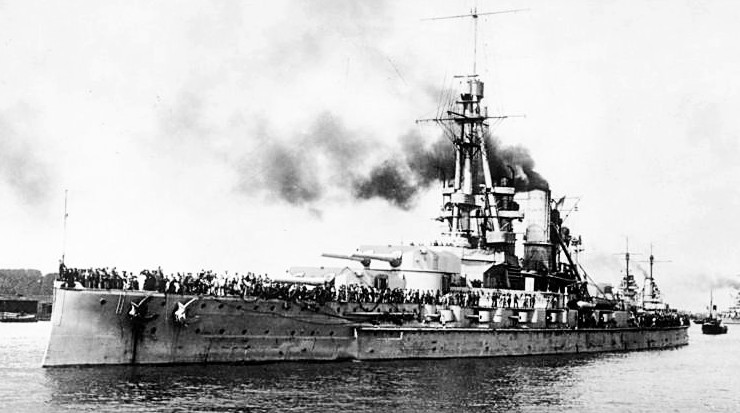
(Bundesarchiv, Bild 183-R17811)
SMS Bayern in the Kaiser Wilhelm Canal, while being commissioned for sea trials in 1915.
SMS Bayern was the lead ship of the Bayern class of dreadnought battleships in the German Kaiserliche Marine (Imperial Navy). The vessel was launched in February 1915 and entered service in July 1916, too late to take part in the Battle of Jutland. Her main armament consisted of eight 38 cm (15 in) guns in four turrets, which was a significant improvement over the preceding König’s ten 30.5 cm (12 inch) guns. The ship was to have formed the nucleus for a fourth battle squadron in the High Seas Fleet, along with three of her sister ships. Of the other ships only one, SMS Baden, was completed; the other two were canceled later in the war when production requirements shifted to U-boat construction.
Bayern was commissioned midway through the war, and had a limited service career. The first operation in which the ship took part was an abortive fleet advance into the North Sea on 18–19 August 1916, a month after she had been commissioned. The ship also participated in Operation Albion in the Gulf of Riga, but shortly after the German attack began on 12 October 1917, Bayern was mined and had to be withdrawn for repairs. She was interned with the majority of the High Seas Fleet at Scapa Flow in November 1918 following the end of the First World War. On 21 June 1919, Admiral Ludwig von Reuter ordered the fleet to be scuttled; Bayern sank at 14:30. In September 1934, the ship was raised, towed to Rosyth, and scrapped. (Wikipedia)
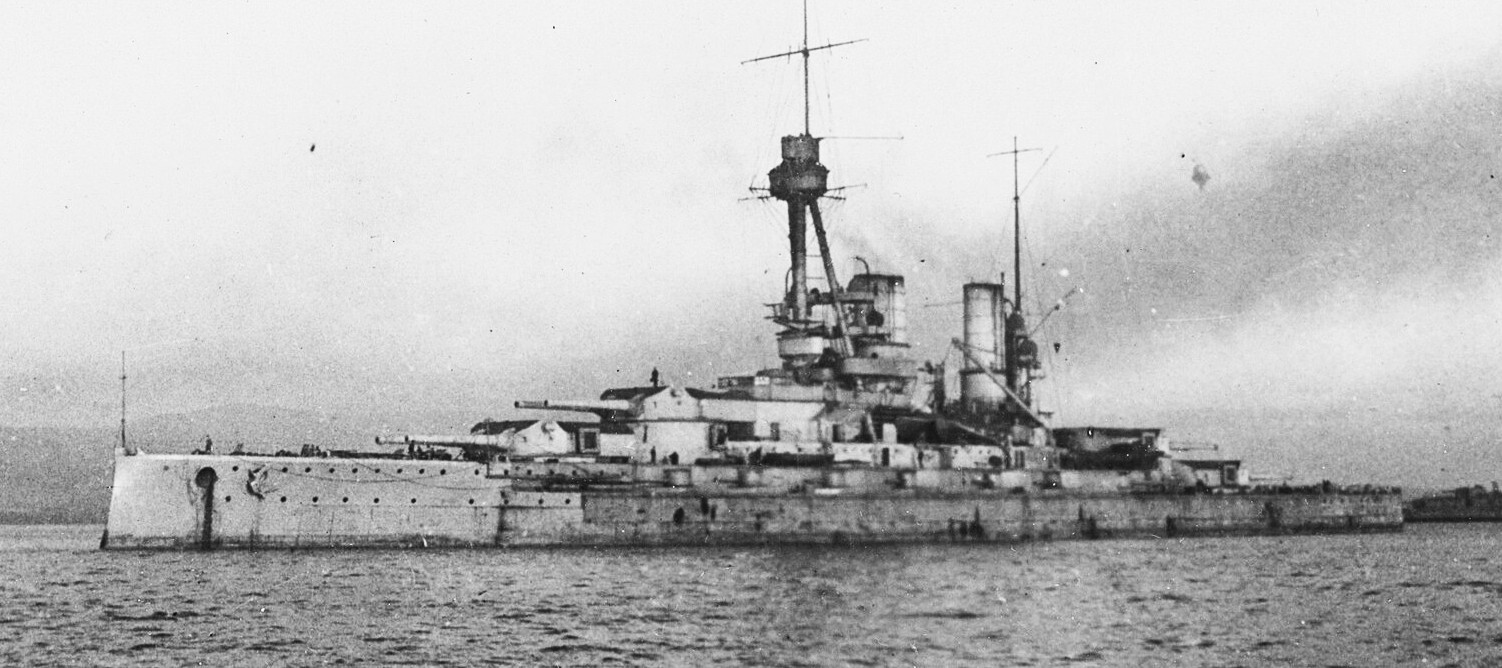
(IWM Photo)
SMS Bayern, likely during her internment in Scapa Flow.
SMS Baden
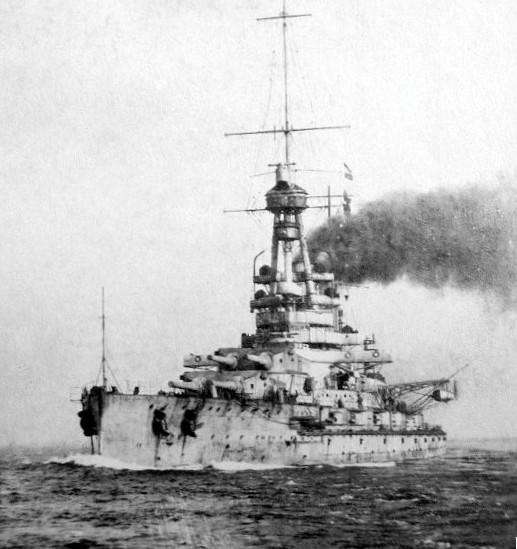
SMS Baden was a Bayern-class dreadnought battleship of the German Imperial Navy built during the First World War. Launched in October 1915 and completed in March 1917, she was the last battleship completed for use in the war; two of her sisters, SMS Sachsen and SMS Württemberg, were incomplete when the war ended. The ship mounted eight 38-centimeter (15 in) guns in four twin turrets, displaced 32,200 metric tons (31,700 long tons; 35,500 short tons) at full combat load, and had a top speed of 21 knots (39 km/h; 24 mph). Along with her sister Bayern, Baden was the largest and most powerfully armed battleship built by the Imperial Navy.
Upon commissioning into the High Seas Fleet, Baden was made the fleet flagship, replacing Friedrich der Grosse. Baden saw little action during her short career; the only major sortie in April 1918 ended without any combat. Following the German collapse in November 1918, Baden was interned with the majority of the High Seas Fleet at Scapa Flow by the Royal Navy. On 21 June 1919, Rear Admiral Ludwig von Reuter ordered the scuttling of the fleet. However, British sailors in the harbour managed to board Baden and beach her to prevent her sinking. The ship was refloated, thoroughly examined, and eventually sunk in extensive gunnery testing by the Royal Navy in 1921. (Wikipedia)
(Bundesarchiv, Bild 183-R17062)
SMS Baden, with her main battery trained to port, 1916.
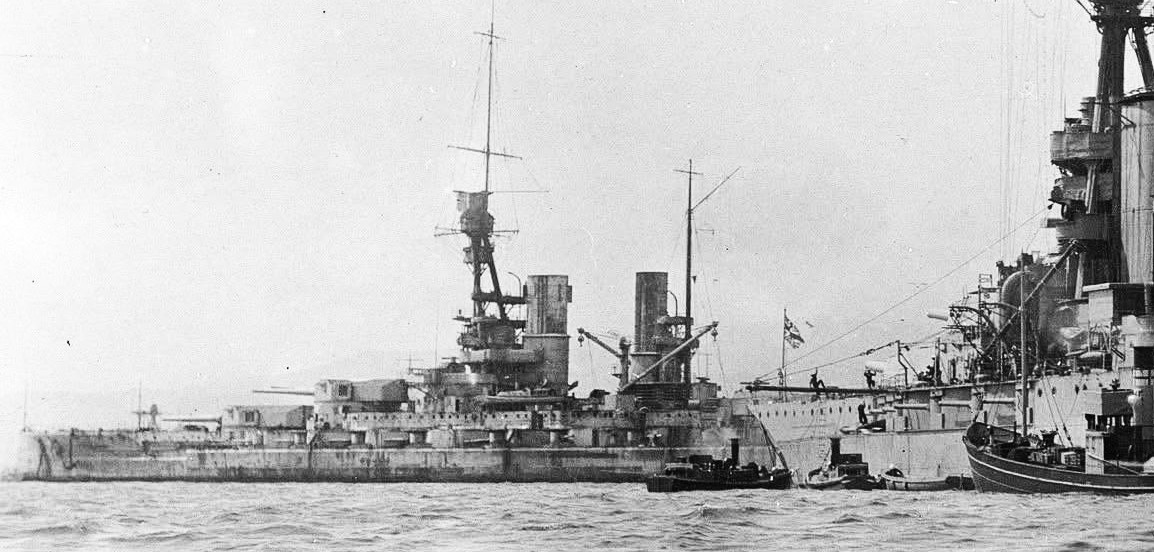
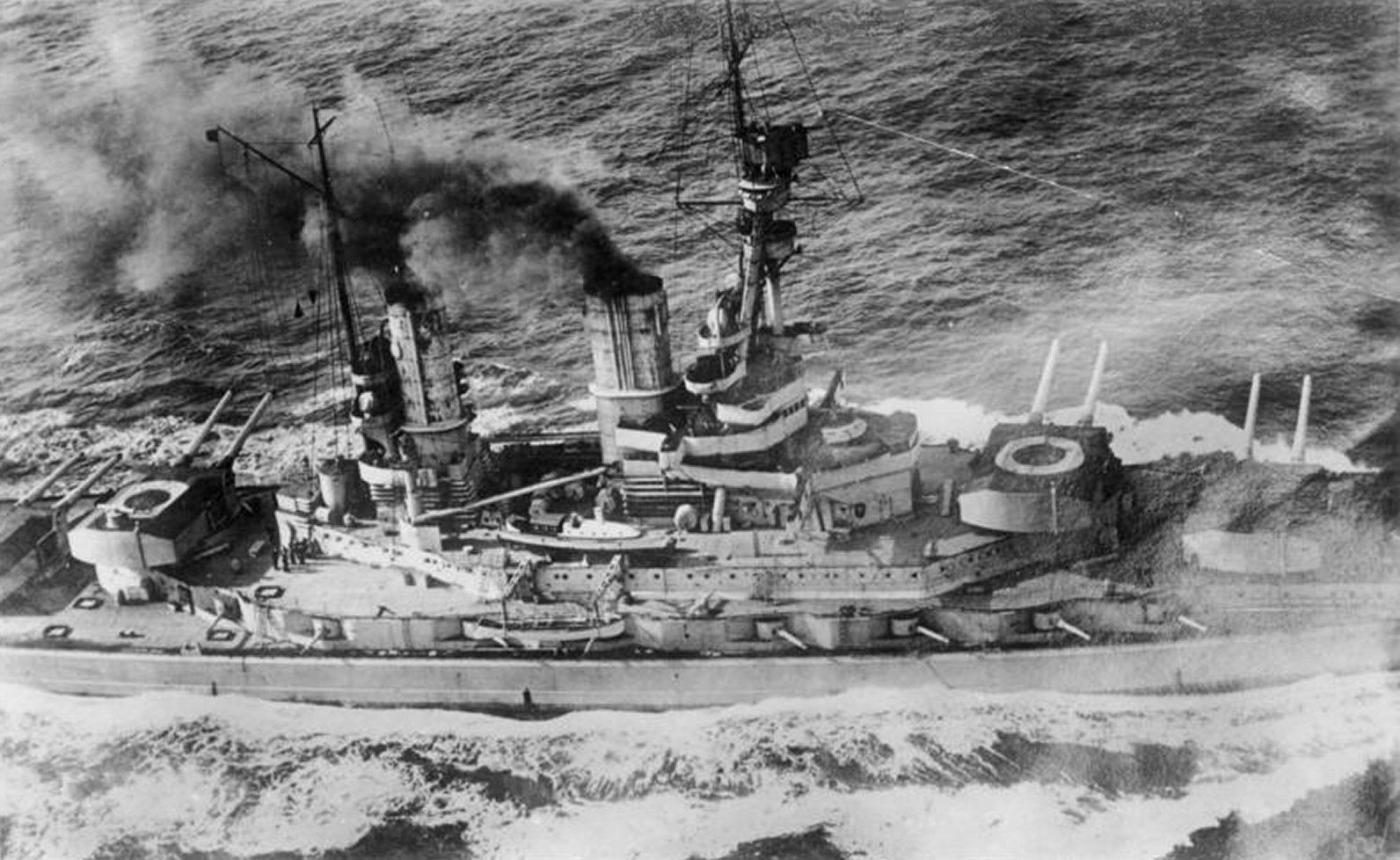
(IWM Photo)
SMS Baden after being refloated at Scapa Flow.
SMS Sachsen
SMS Sachsen was the third of four dreadnought-type Bayern-class battleships built, but never finished, for the German Kaiserliche Marine (Imperial Navy) in the 1910s. This ship is sometimes considered to be part of a sub-class with her sister Württemberg. Like the other members of the class, she was to be armed with the same main battery of eight 38 cm (15 in) guns in four gun turrets, but she differed from the other members of her class in her propulsion system. She exchanged the steam turbine on her center propeller shaft in favor of a diesel engine. She was laid down in April 1914 at the Germaniawerft shipyard, but the start of the First World War in July slowed work on the ship; she was launched in November 1916, but as resources were diverted to more pressing projects, including U-boat construction, work stopped completely when the ship was about nine months from completion. Some components of her propulsion system were reused in several of the Type U 151 submarines. The Treaty of Versailles that ended the war in June 1919 specified that all warships under construction in Germany were to be destroyed, and Sachsen was accordingly sold for scrap in 1920 and dismantled the following year. (Wikipedia)
SMS Württemberg
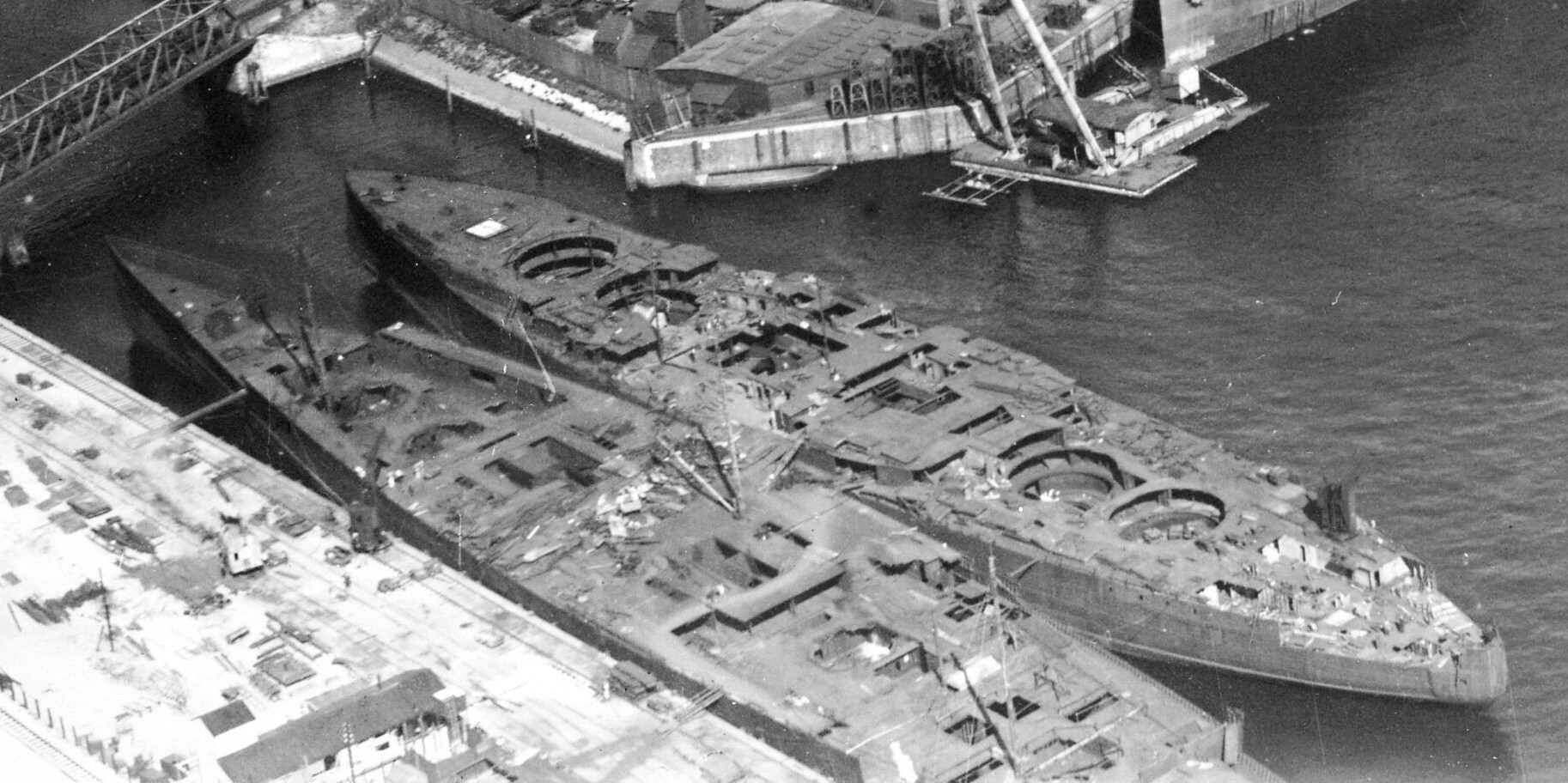
(U.S. National Archives Photo)
Unfinished battleship SMS Württemberg (right) and the Mackensen-class battlecruiser SMS Prinz Eitel Friedrich in Hamburg post-war, c1920.
SMS Württemberg was the fourth and final member of the Bayern-class dreadnought battleships ordered but never finished for the German Kaiserliche Marine (Imperial Navy) in the 1910s, sometimes considered to be part of a sub-class with her sister Sachsen. She was to be armed with the same main battery of eight 38 cm (15 in) guns in four gun turrets. Originally intended to serve as a fleet flagship, the start of the First World War in July 1914 forced the Navy to simplify her design in the hopes that she could be completed in time to see service during the conflict. She was laid down in January 1915 at the AG Vulcan shipyard, but as resources were diverted to more pressing projects, including U-boat construction, work on the ship slowed; she was launched in June 1917, but only to clear the slipway for other work. By the time construction stopped, she was about twelve months from completion. The Treaty of Versailles that ended the war in June 1919 specified that all warships under construction in Germany were to be destroyed, and Württemberg was accordingly sold for scrap in 1921 and dismantled the following year. (Wikipedia)