
Kaiserliche Marine dreadnaught battleships: Nassau class (1906): SMS Nassau, SMS Westfalen, SMS Rheinland, SMS Posen.
SMS Nassau
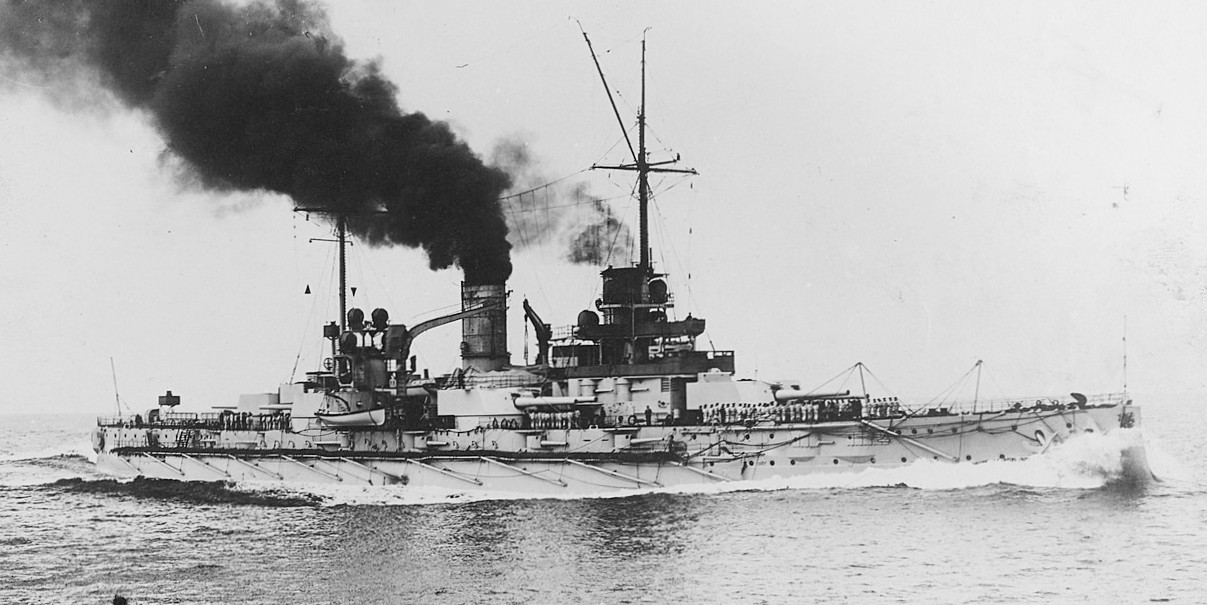
(Arthur Renard, Kaiserliche Marine Photo, 1910
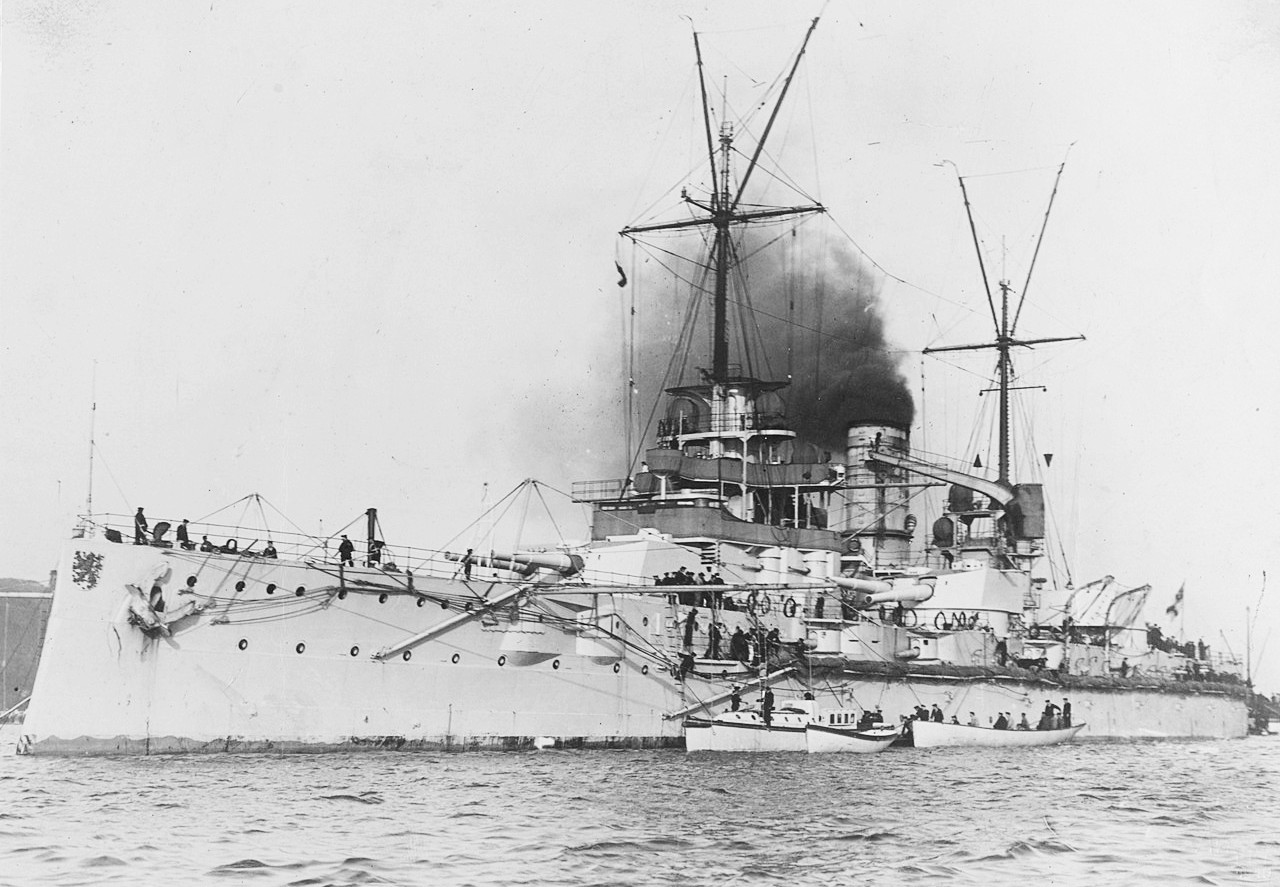
SMS Nassau was the first dreadnought battleship built for the Imperial German Navy. Nassau was laid down on 22 July 1907 at the Kaiserliche Werft in Wilhelmshaven, and launched less than a year later on 7 March 1908, approximately 25 months after Dreadnought. She was the lead ship of her class of four battleships, which included Posen, Rheinland, and Westfalen.
Nassau saw service in the North Sea at the beginning of the First World War, in II Division of I Battle Squadron of the German High Seas Fleet. In August 1915, she entered the Baltic Sea and participated in the Battle of the Gulf of Riga, where she engaged the Russian battleship Slava. Following her return to the North Sea, Nassau and her sister ships took part in the Battle of Jutland on 31 May – 1 June 1916. During the battle, Nassau collided with the British destroyer HMS Spitfire. Nassau suffered a total of 11 killed and 16 injured during the engagement.
After World War I, the bulk of the High Seas Fleet was interned in Scapa Flow. As they were the oldest German dreadnoughts, the Nassau-class ships were for the time permitted to remain in German ports. After the German fleet was scuttled, Nassau and her three sisters were surrendered to the victorious Allied powers as replacements for the sunken ships. Nassau was ceded to Japan in April 1920. With no use for the ship, Japan sold her to a British wrecking firm, which then scrapped her in Dordrecht, Netherlands. (Wikipedia)
(Kaiserliche Marine Photo)
SMS Nassau, c 1909-1910).
SMS Westfalen
(Kaiserliche Marine Photo)
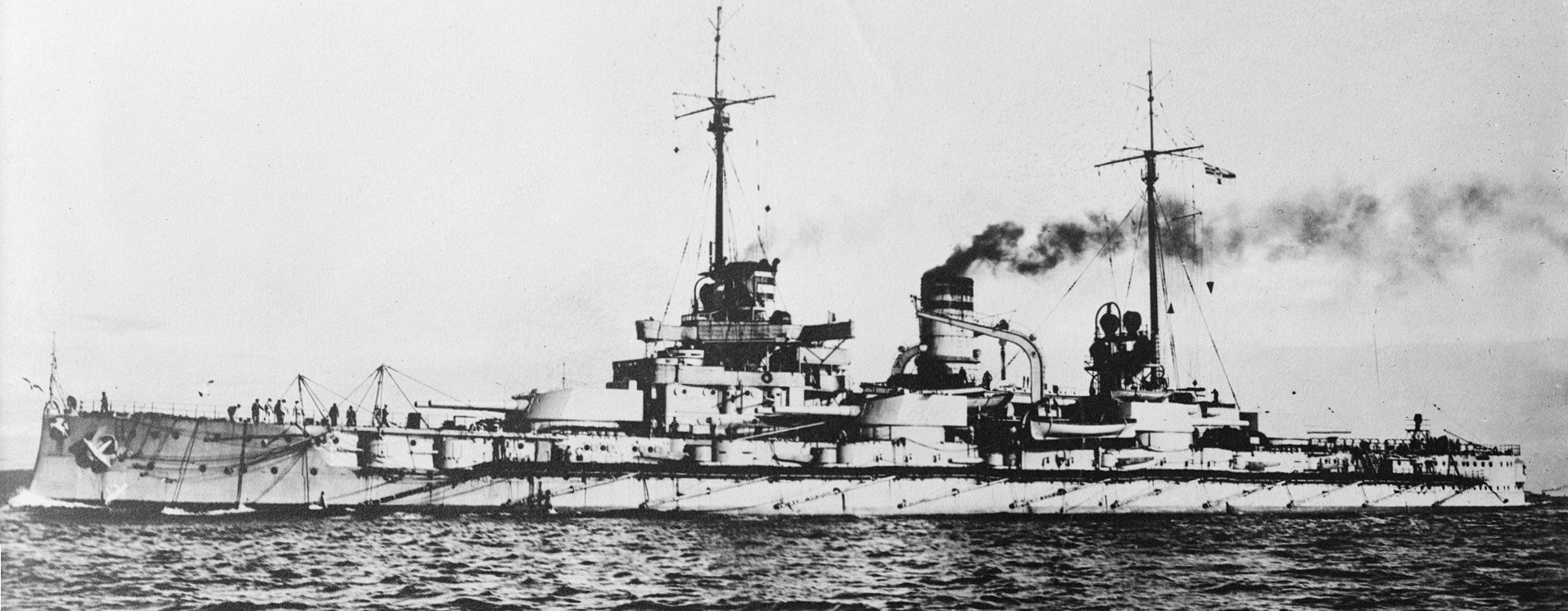
SMS Westfalen was one of the Nassau-class battleships, the first four dreadnoughts built for the German Imperial Navy. Westfalen was laid down at AG Weser in Bremen on 12 August 1907, launched nearly a year later on 1 July 1908, and commissioned into the High Seas Fleet on 16 November 1909. The ship was equipped with a main battery of twelve 28 cm (11 in) guns in six twin turrets in an unusual hexagonal arrangement.
The ship served with her sister ships for the majority of the First World War, seeing extensive service in the North Sea, where she took part in several fleet sorties. These culminated in the Battle of Jutland on 31 May – 1 June 1916, where Westfalen was heavily engaged in night-fighting against British light forces. Westfalen led the German line for much of the evening and into the following day, until the fleet reached Wilhelmshaven. On another fleet advance in August 1916, the ship was damaged by a torpedo from a British submarine.
Westfalen also conducted several deployments to the Baltic Sea against the Russian Navy. The first of these was during the Battle of the Gulf of Riga, where Westfalen supported a German naval assault on the gulf. Westfalen was sent back to the Baltic in 1918 to support the White Finns in the Finnish Civil War. The ship remained in Germany while the majority of the fleet was interned in Scapa Flow after the end of the war. In 1919, following the scuttling of the German fleet in Scapa Flow, Westfalen was ceded to the Allies as a replacement for the ships that had been sunk. She was then sent to ship-breakers in England, who broke the ship up for scrap by 1924. (Wikipedia)
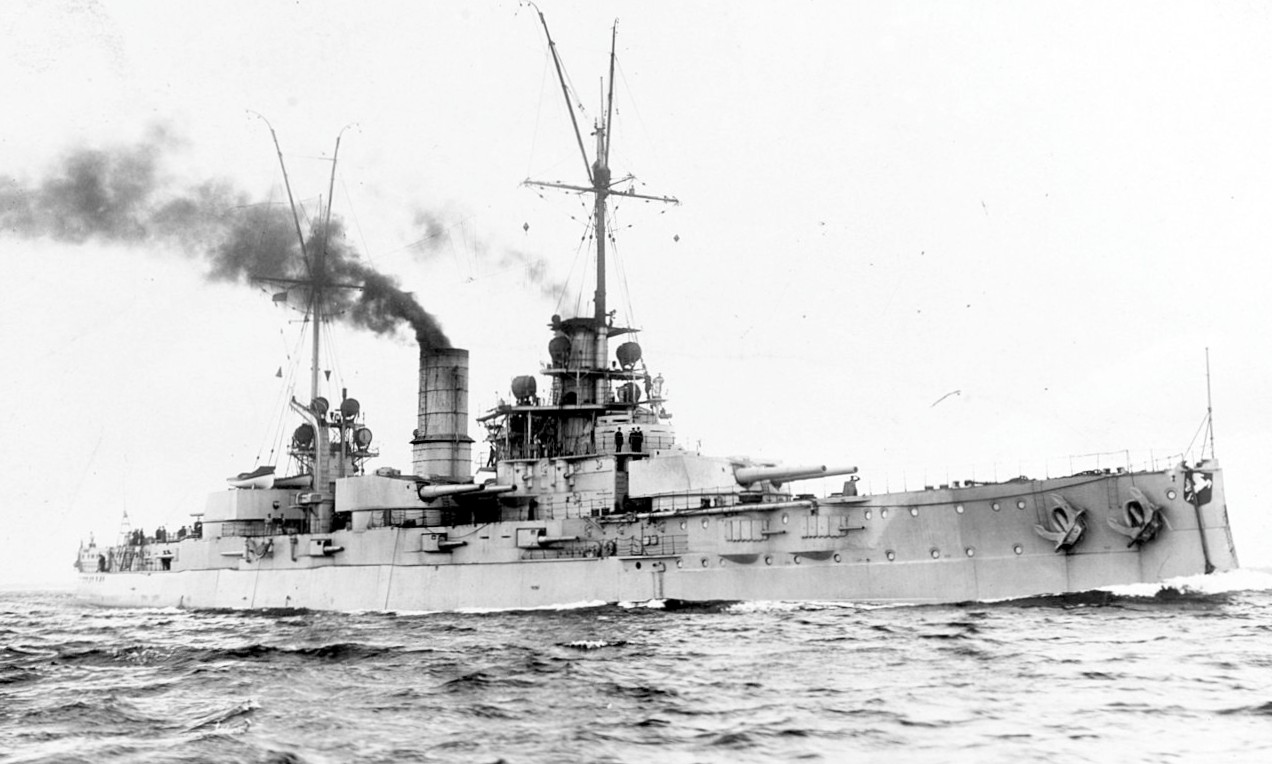
(Arthur Renard Photo)
SMS Westfalen, Photographed very soon after completion. The ship was commissioned on 16 November 1909.
SMS Rheinland
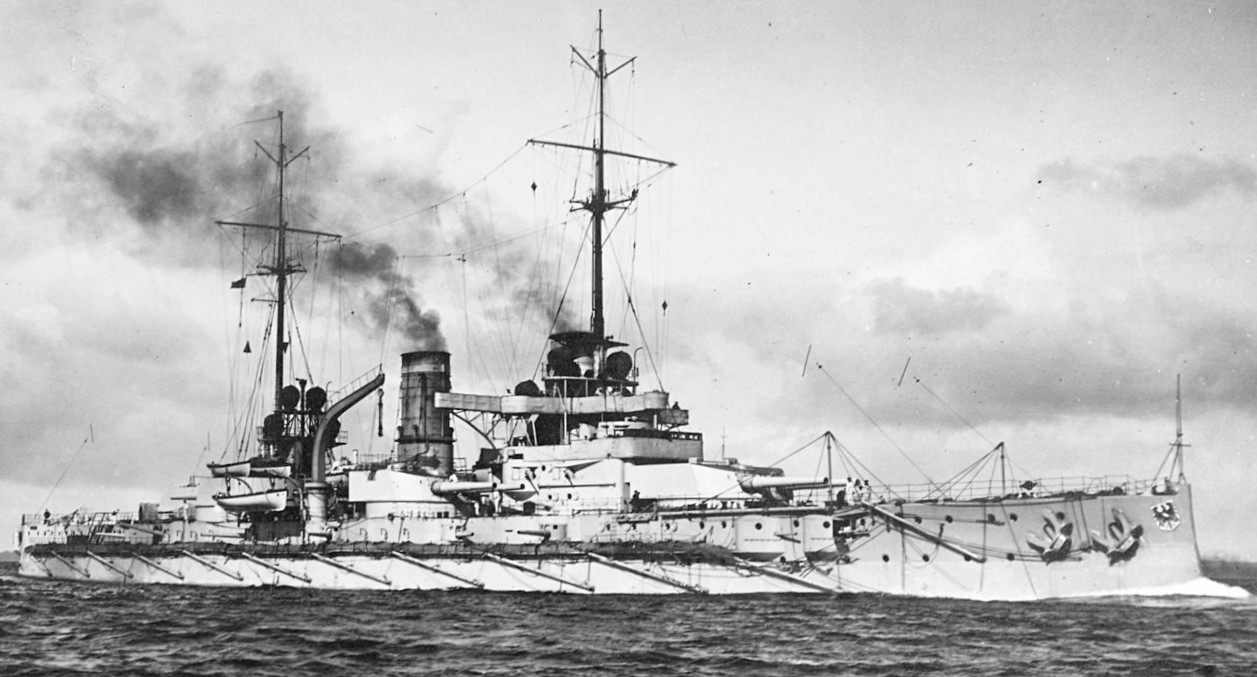
(Arthur Renard Photo)
SMS Rheinland was one of four Nassau-class battleships, the first dreadnoughts built for the German Imperial Navy (Kaiserliche Marine). Rheinland mounted twelve 28 cm (11 in) main guns in six twin turrets in an unusual hexagonal arrangement. The navy built Rheinland and her sister ships in response to the revolutionary British HMS Dreadnought, which had been launched in 1906. Rheinland was laid down in June 1907, launched the following year in October, and commissioned in April 1910.
Rheinland’s extensive service with the High Seas Fleet during the First World War included several fleet advances into the North Sea, some in support of raids against the English coast conducted by the German battlecruisers of I Scouting Group. These sorties culminated in the Battle of Jutland on 31 May – 1 June 1916, in which Rheinland was heavily engaged by British destroyers in close-range night fighting.
The ship also saw duty in the Baltic Sea, as part of the support force for the Battle of the Gulf of Riga in 1915. She returned to the Baltic as the core of an expeditionary force to aid the White Finns in the Finnish Civil War in 1918, but ran aground shortly after arriving in the area. Significant portions of her armor and all her main guns had to be removed before she could be refloated. The damage done by the grounding was deemed too severe to justify repairs and Rheinland was decommissioned to be used as a barracks ship for the remainder of the war. In 1919, following the scuttling of the German fleet in Scapa Flow, Rheinland was ceded to the Allies who, in turn, sold the vessel to ship-breakers in the Netherlands. The ship was broken up for scrap metal starting in 1920. Her bell is on display at the Bundeswehr Military History Museum in Dresden. (Wikipedia)
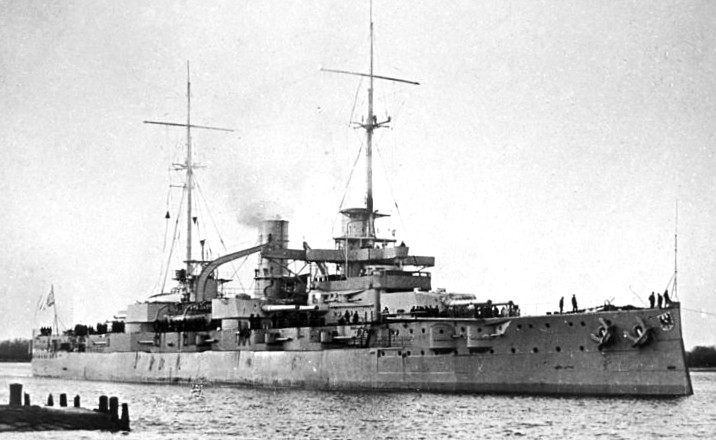
(Bundesarchiv, DVM 10 Bild-23-61-23 / CC-BY-SA 3.0)
SMS Rheinland, c1910.
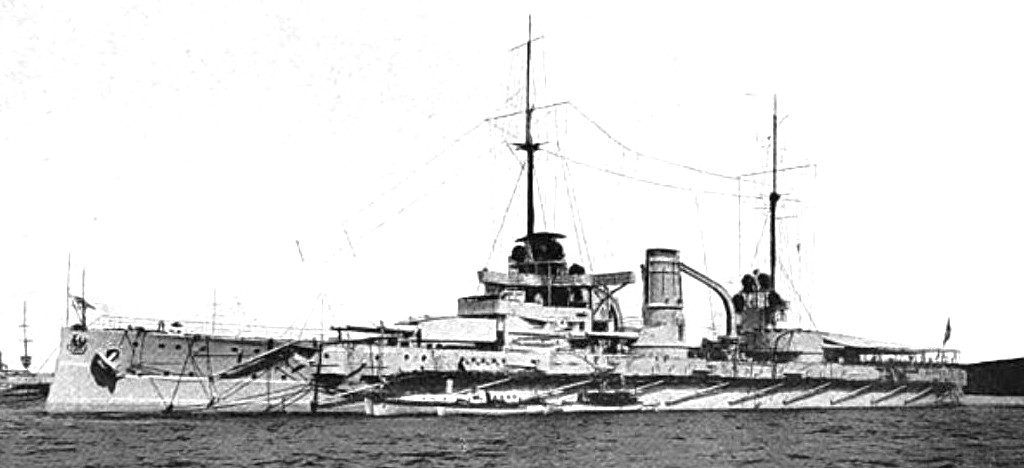
(Kaiserliche Marine Photo)
SMS Rheinland, in port.
SMS Posen
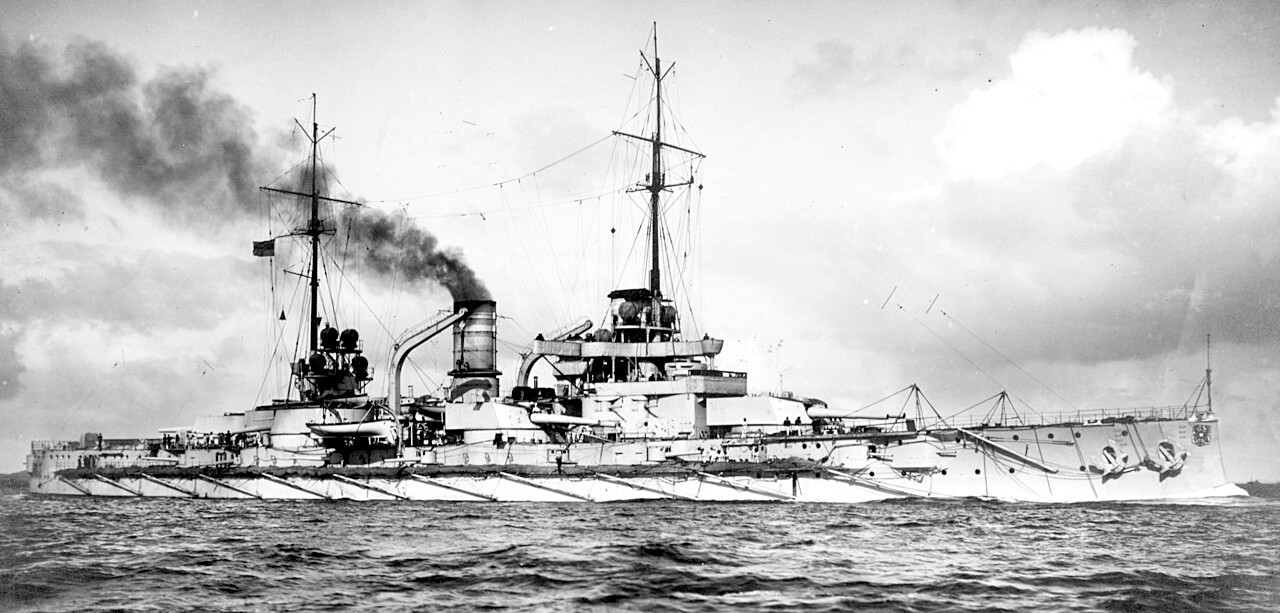
(Arthur Renard Photo, c1910)
SMS Posen was one of four battleships in the Nassau class, the first dreadnoughts built for the German Imperial Navy (Kaiserliche Marine). The ship was laid down at the Germaniawerft shipyard in Kiel on 11 June 1907, launched on 12 December 1908, and commissioned into the High Seas Fleet on 31 May 1910. She was equipped with a main battery of twelve 28 cm (11 in) guns in six twin turrets in an unusual hexagonal arrangement.
The ship served with her three sister ships for the majority of the First World War. She saw extensive service in the North Sea, where she took part in several fleet sorties. These culminated in the Battle of Jutland on 31 May – 1 June 1916, where Posen was heavily engaged in night-fighting against British light forces. In the confusion, the ship accidentally rammed the light cruiser SMS Elbing, which suffered serious damage and was scuttled later in the night.
The ship also conducted several deployments to the Baltic Sea against the Russian Navy. In the first of these, Posen supported a German naval assault in the Battle of the Gulf of Riga. The ship was sent back to the Baltic in 1918 to support the White Finns in the Finnish Civil War. At the end of the war, Posen remained in Germany while the majority of the fleet was interned in Scapa Flow. In 1919, following the scuttling of the German fleet in Scapa Flow, she was ceded to the British as a replacement for the ships that had been sunk. She was then sent to ship-breakers in the Netherlands and scrapped in 1922. (Wikipedia)
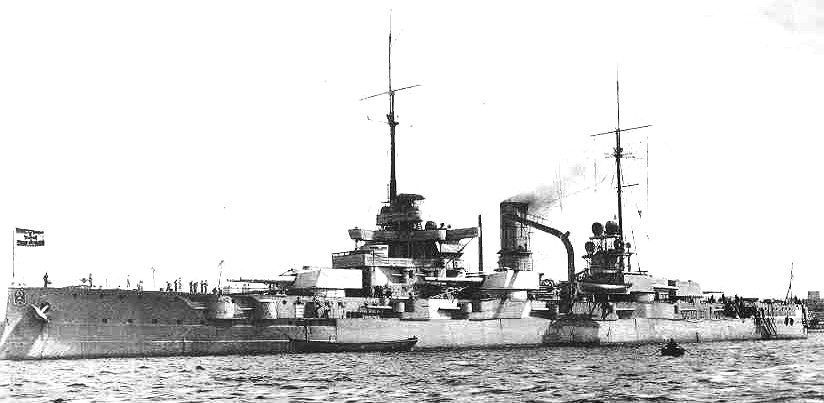
(U.S. National Archives Photo)
SMS Posen.