
Kaiserliche Marine Dreadnaught battleships: Helgoland class (1909): SMS Helgoland, SMS Ostfriesland, SMS Thüringen, SMS Oldenburg.
SMS Helgoland
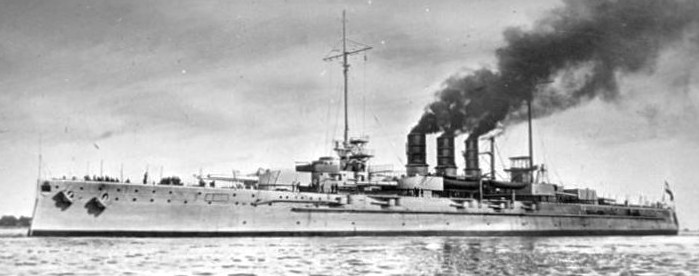
(Bundesarchiv, DVM 10 Bild-23-61-09 / CC-BY-SA 3.0)
SMS Helgoland, the lead ship of her class, was a dreadnought battleship of the German Imperial Navy. Helgoland’s design represented an incremental improvement over the preceding Nassau class, including an increase in the caliber of the main guns, from 28 cm (11 in) to 30.5 cm (12 in). Her keel was laid down on 11 November 1908 at the Howaldtswerke shipyards in Kiel. Helgoland was launched on 25 September 1909 and was commissioned on 23 August 1911.
Like most battleships of the High Seas Fleet, Helgoland saw limited action against Britain’s Royal Navy during the First World War. The ship participated in several fruitless sweeps into the North Sea as the covering force for the battlecruisers of the I Scouting Group. She saw some limited duty in the Baltic Sea against the Russian Navy, including serving as part of a support force during the Battle of the Gulf of Riga in August 1915. Helgoland was present at the Battle of Jutland on 31 May – 1 June 1916, though she was located in the center of the German line of battle and not as heavily engaged as the König- and Kaiser-class ships in the lead. Helgoland was ceded to Great Britain at the end of the war and broken up for scrap in the early 1920s. Her coat of arms is preserved in the Military History Museum of the Bundeswehr in Dresden. (Wikipedia)
SMS Ostfriesland
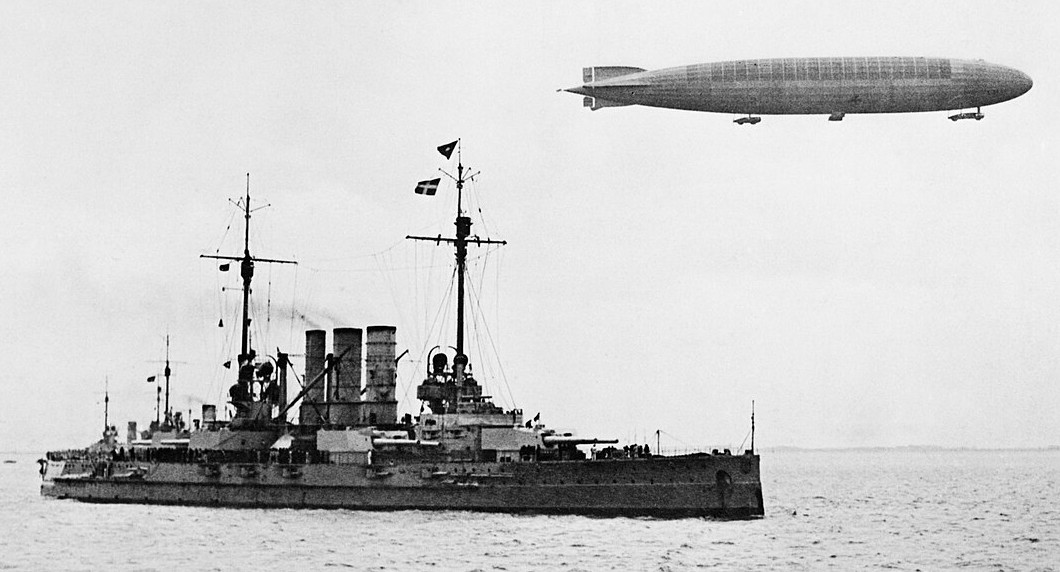
(Kaiserliche Marine Photo, with a Zeppelin overhead, 1915)
SMS Ostfriesland was the second vessel of the Helgoland class of dreadnought battleships of the Imperial German Navy. Named for the region of East Frisia, Ostfriesland’s keel was laid in October 1908 at the Kaiserliche Werft dockyard in Wilhelmshaven. She was launched on 30 September 1909 and was commissioned into the fleet on 1 August 1911. The ship was equipped with twelve 30.5 cm (12 in) guns in six twin turrets, and had a top speed of 21.2 knots (39.3 km/h; 24.4 mph). Ostfriesland was assigned to the I Battle Squadron of the High Seas Fleet for the majority of her career, including World War I.
Along with her three sister ships, Helgoland, Thüringen, and Oldenburg, Ostfriesland participated in all of the major fleet operations of the First World War in the North Sea against the British Grand Fleet. This included the Battle of Jutland on 31 May – 1 June 1916, the largest naval battle of the war. The ship also saw action in the Baltic Sea against the Russian Navy. She was present during the unsuccessful first incursion into the Gulf of Riga in August 1915.
After the German collapse in November 1918, most of the High Seas Fleet was interned in Scapa Flow during the peace negotiations. The four Helgoland-class ships were allowed to remain in Germany, however, and were therefore spared the destruction of the fleet in Scapa Flow. Ostfriesland and her sisters were eventually ceded to the victorious Allied powers as war reparations; Ostfriesland was transferred to the United States Navy. She was sunk during air power trials off the Virginia Capes in July 1921. (Wikipedia)
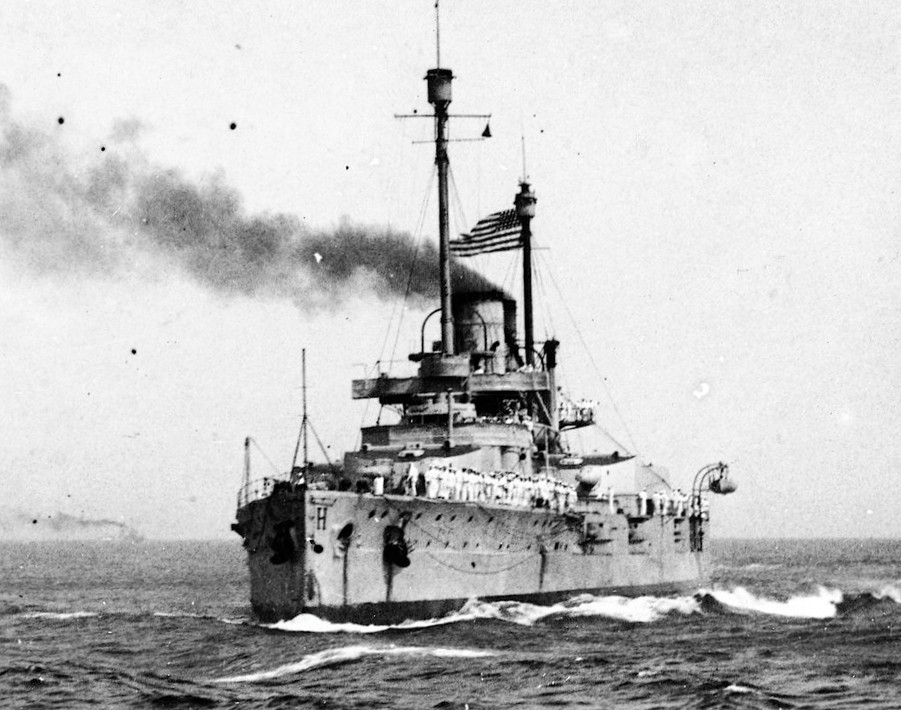
(USN Photo)
Ex-German battleship SMS Ostfriesland. Photographed while operating as a US Navy ship, April to September 1920. The ship was obtained by the US as a war reparations transfer and was expended in 1921 as a target for aerial bombing experiments.

(USN Photo)
SMS Ostfriesland at anchor prior to being attacked by Army Air Service bombers during an evaluation of aerial bombardment of ships off the Virginia Capes. Note the targets visible on the ship.
SMS Thüringen
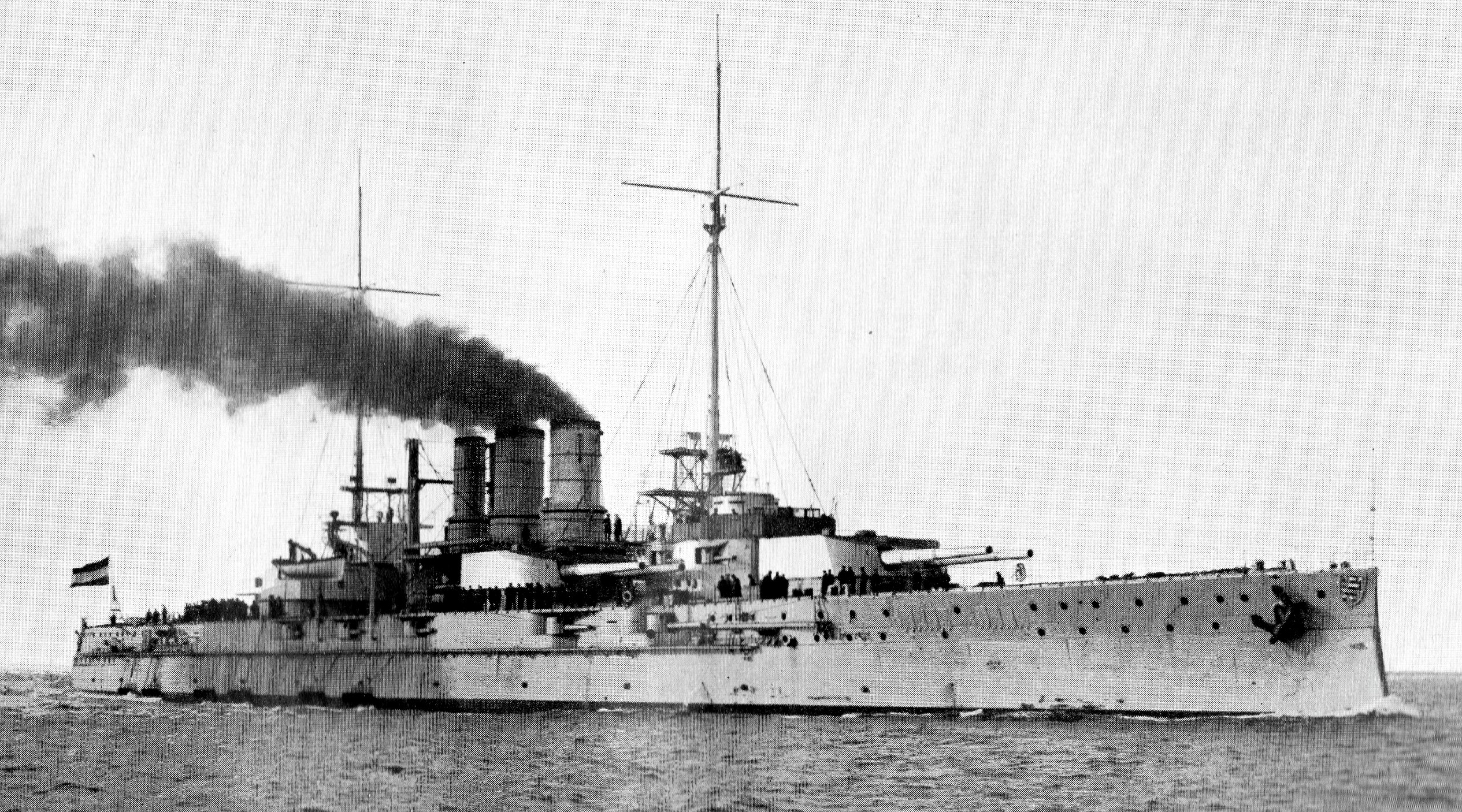
(Kaiserliche Marine Photo, 1910)
SMS Thüringen was the third vessel of the Helgoland class of dreadnought battleships of the German Kaiserliche Marine (Imperial Navy). Thüringen’s keel was laid in November 1908 at the AG Weser dockyard in Bremen. She was launched on 27 November 1909 and commissioned into the fleet on 1 July 1911. The ship was equipped with twelve 30.5 cm (12 in) guns in six twin turrets, and had a top speed of 21 knots (39 km/h; 24 mph). Thüringen was assigned to I Battle Squadron of the High Seas Fleet for the majority of her career, including World War I.
Along with her three sister ships, Helgoland, Ostfriesland, and Oldenburg, Thüringen participated in all of the major fleet operations of the First World War in the North Sea against the British Grand Fleet. This included the Battle of Jutland on 31 May and 1 June 1916, the largest naval battle of the war. Thüringen was involved in the heavy night fighting at Jutland, including the destruction of the armored cruiser HMS Black Prince.[1] The ship also saw action against the Imperial Russian Navy in the Baltic Sea, where she participated in the unsuccessful first incursion into the Gulf of Riga in August 1915.
After the German collapse in November 1918, most of the High Seas Fleet was interned in Scapa Flow during the peace negotiations. The four Helgoland-class ships were allowed to remain in Germany and were therefore spared the destruction of the fleet in Scapa Flow. Thüringen and her sisters were eventually ceded to the victorious Allied powers as war reparations; Thüringen was transferred to France in April 1920 and used as a target ship for the French Navy. She was sunk off Gâvres and broken up in situ in 1923–1933, though some sections of the ship remain. (Wikipedia)
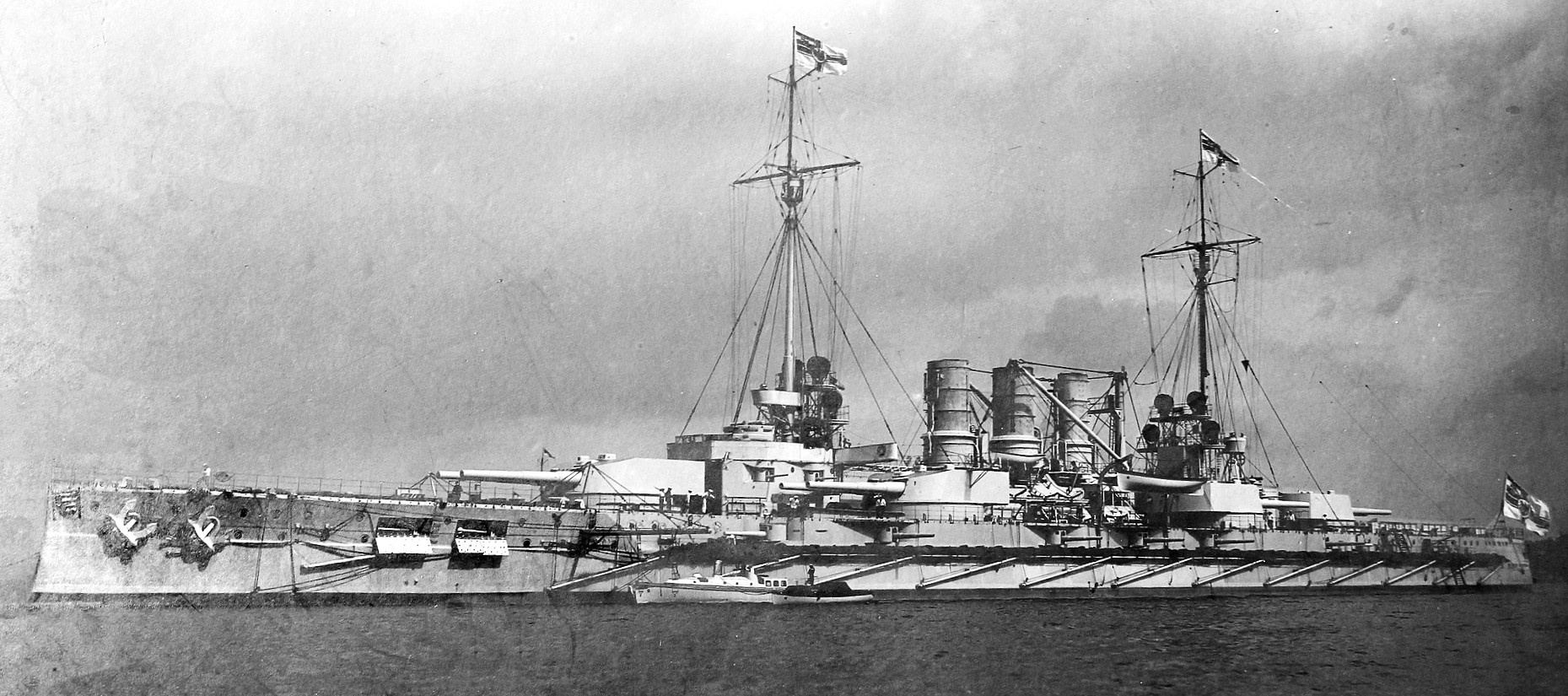
(Lothar Spurzem Photo)
SMS Thüringen, 1911.
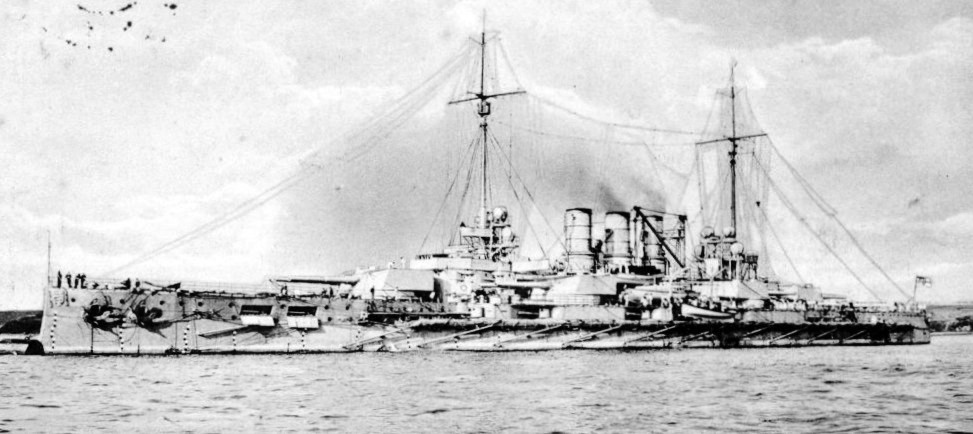
(Kaiserliche Marine Photo)
SMS Thüringen.
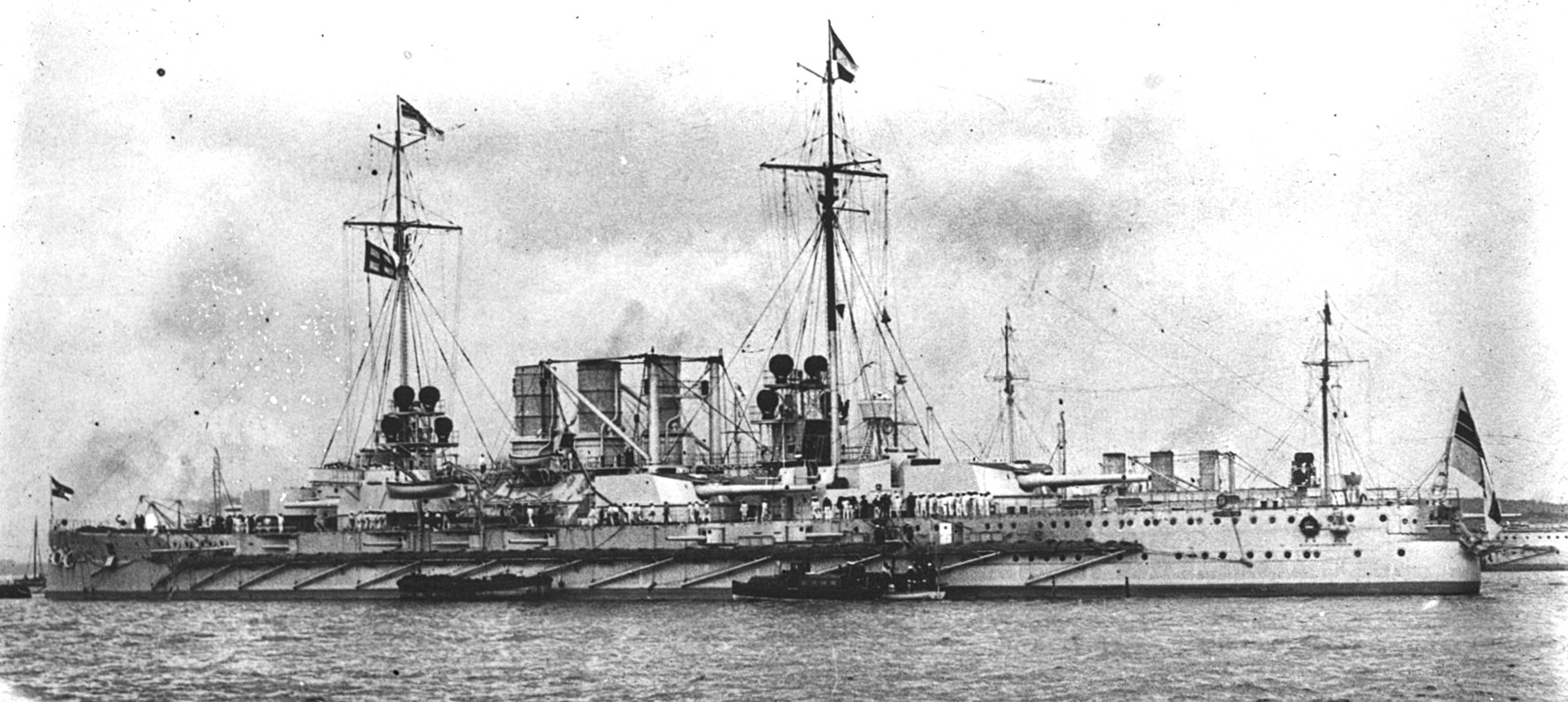
(Bibliothèque nationale de France Photo)
SMS Thüringen.
SMS Oldenburg
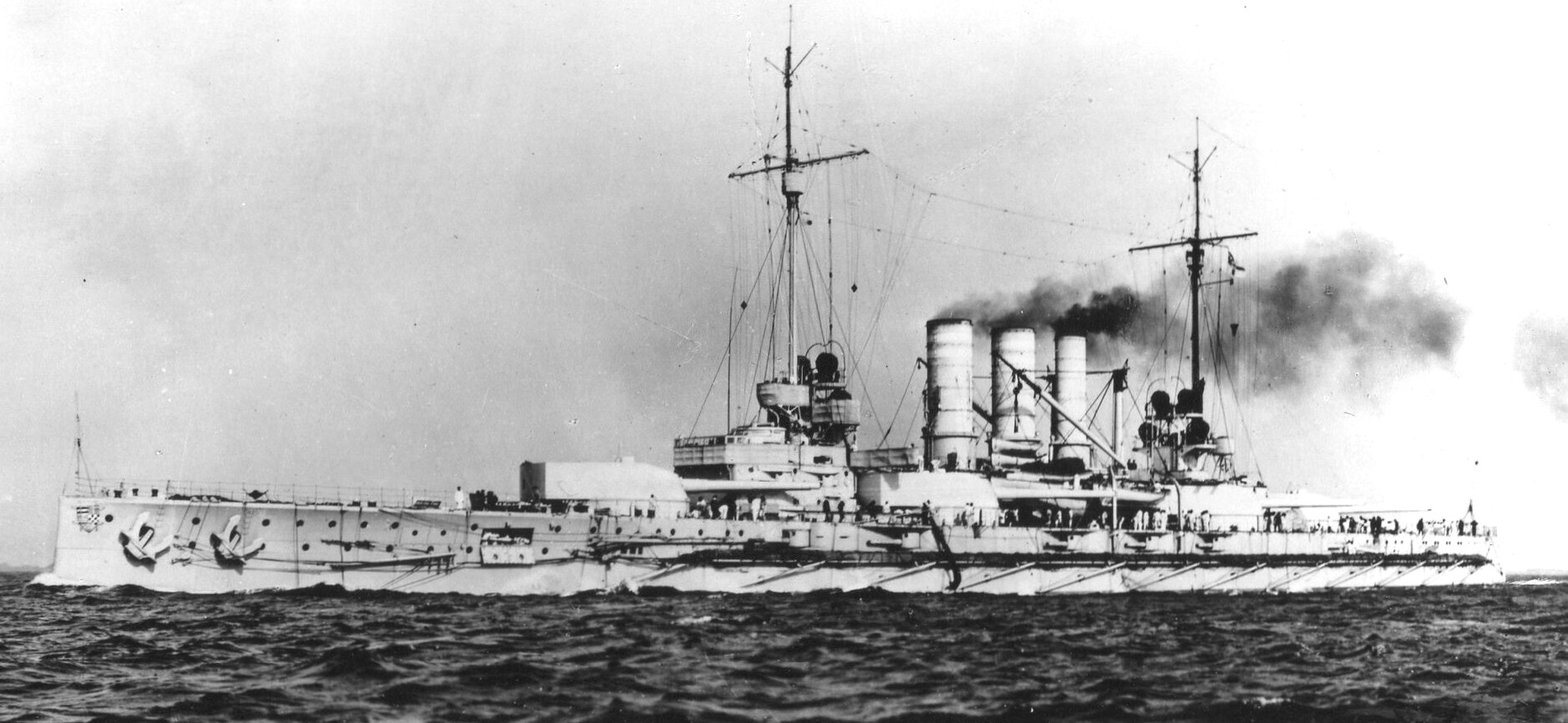
(Kaiserliche Marine Photo)
SMS Oldenburg was the fourth vessel of the Helgoland class of dreadnought battleships of the Imperial German Navy. Oldenburg’s keel was laid in March 1909 at the Schichau-Werke dockyard in Danzig. She was launched on 30 June 1910 and was commissioned into the fleet on 1 May 1912. The ship was equipped with twelve 30.5 cm (12 in) guns in six twin turrets, and had a top speed of 21.2 knots (39.3 km/h; 24.4 mph). Oldenburg was assigned to I Battle Squadron of the High Seas Fleet for the majority of her career, including World War I.
Along with her three sister ships, Helgoland, Ostfriesland, and Thüringen, Oldenburg participated in all of the major fleet operations of the First World War in the North Sea against the British Grand Fleet, including the Battle of Jutland on 31 May and 1 June 1916, the largest naval battle of the war. The ship also saw action in the Baltic Sea against the Imperial Russian Navy. She was present during the unsuccessful first incursion into the Gulf of Riga in August 1915, though she saw no combat during the operation.
After the German collapse in November 1918, most of the High Seas Fleet was interned and then scuttled in Scapa Flow during the peace negotiations. The four Helgoland-class ships were allowed to remain in Germany but eventually ceded to the victorious Allied powers as war reparations; Oldenburg was given to Japan, which sold the vessel to a British ship breaking firm in 1920. She was broken up for scrap in Dordrecht in 1921. (Wikipedia)