
Kaiserliche Marine Dreadnaught battleships: Kaiser class (1911): SMS Kaiser, SMS Friedrich der Grosse, SMS Kaiserin, SMS Prinzregent Luitpold, SMS König Albert.
SMS Kaiser
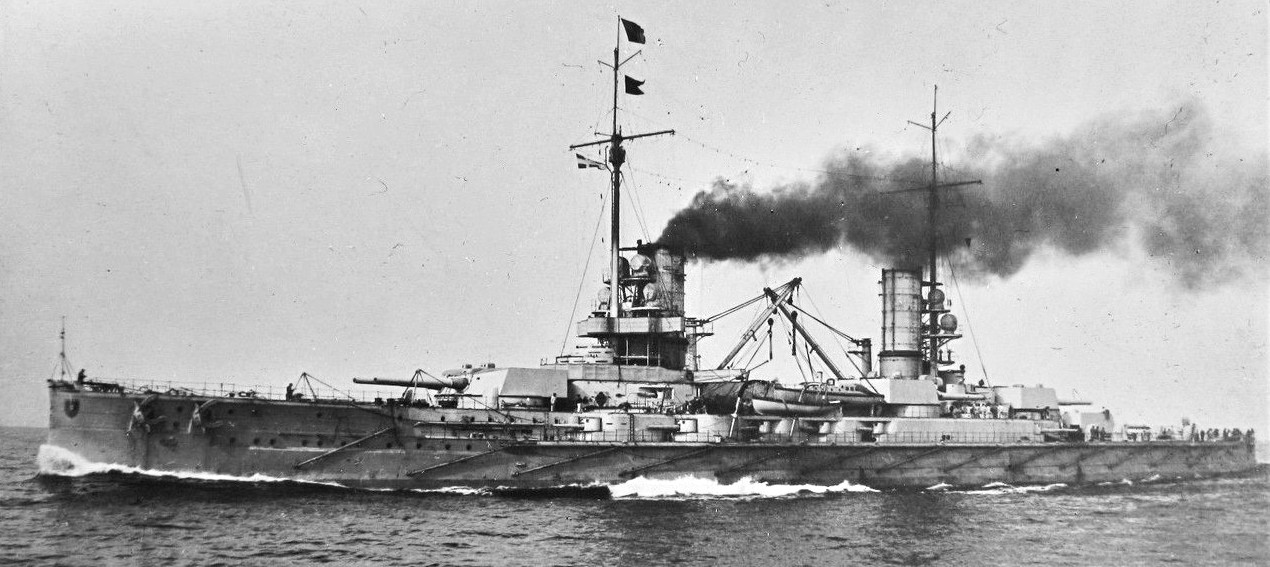
(Bundesarchiv, DVM 10 Bild-23-61-83 / CC-BY-SA 3.0, c1913)
SMS Kaiser was the lead ship of the Kaiser class of dreadnought battleships of the Imperial German Navy. Kaiser was built by the Imperial Dockyard at Kiel, launched on 22 March 1911 and commissioned on 1 August 1912. The ship was equipped with ten 30.5-centimeter (12 in) guns in five twin turrets, and had a top speed of 23.4 knots (43.3 km/h; 26.9 mph). Kaiser was assigned to III Battle Squadron of the High Seas Fleet for the majority of World War I.
In 1913, Kaiser and her sister König Albert conducted a cruise to South America and South Africa. The ship participated in most of the major fleet operations during the war. She fought at the Battle of Jutland on 31 May – 1 June 1916, during which she was hit twice and suffered negligible damage. The ship was also present during Operation Albion in the Baltic Sea in September and October 1917, and at the Second Battle of Heligoland Bight in November 1917.
During peace negotiations after the end of the war in 1918, she was interned with other ships of the High Seas Fleet at Scapa Flow. On 21 June 1919 the commander of the interned fleet, Rear Admiral Ludwig von Reuter, ordered the fleet to be scuttled to ensure that the British would not be able to seize the ships. The wreck was raised in 1929 and broken up in Rosyth in 1930. (Wikipedia)
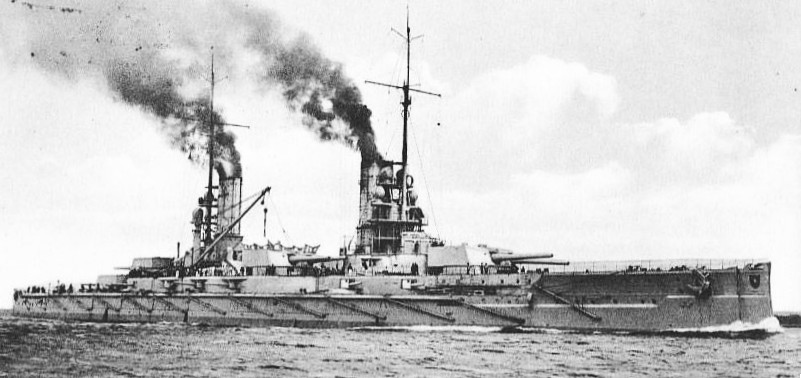
(Kaiserliche Marine Photo)
SMS Kaiser, 1914.
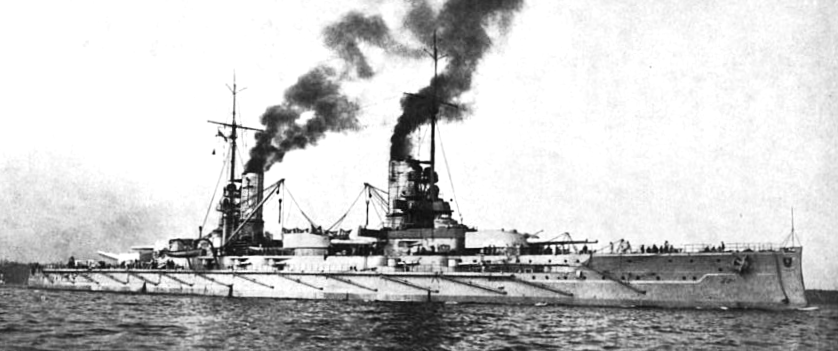
(USNI Photo)
SMS Kaiser, 1912.
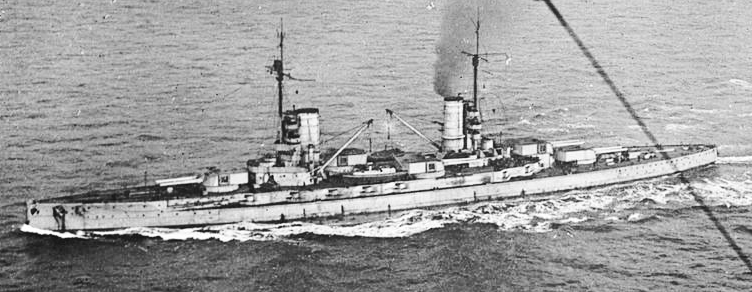
(IWM Photo Q 20613)
SMS Kaiser, photographed from the air at the time of the surrender of the German Fleet, 21 November 1918.
SMS Friedrich der Grosse
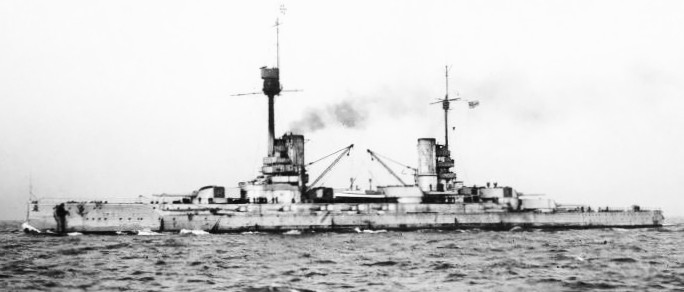
(IWM Photo)
SMS Friedrich der Grosse was the second vessel of the Kaiser class of dreadnought battleships of the German Imperial Navy. Friedrich der Grosse’s keel was laid on 26 January 1910 at the AG Vulcan dockyard in Hamburg, her hull was launched on 10 June 1911, and she was commissioned into the fleet on 15 October 1912. The ship was equipped with ten 30.5-centimeter (12 in) guns in five twin turrets, and had a top speed of 23.4 knots (43.3 km/h; 26.9 mph). Friedrich der Grosse was assigned to III Battle Squadron of the High Seas Fleet for the majority of the First World War, and served as fleet flagship from her commissioning until 1917.
Along with her four sister ships, Kaiser, Kaiserin, König Albert, and Prinzregent Luitpold, Friedrich der Grosse participated in all the major fleet operations of World War I, including the Battle of Jutland on 31 May – 1 June 1916. Toward the center of the German line, Friedrich der Grosse was not as heavily engaged as the leading German ships, such as the battleships König and Grosser Kurfürst and the battlecruisers of I Scouting Group—Friedrich der Grosse emerged from the battle completely unscathed. In 1917, the new battleship Baden replaced Friedrich der Grosse as the fleet flagship.
After Germany’s defeat in the war and the signing of the Armistice in November 1918, Friedrich der Grosse and most of the capital ships of the High Seas Fleet were interned by the British Royal Navy in Scapa Flow. The ships were disarmed and reduced to skeleton crews while the Allied powers negotiated the final version of the Treaty of Versailles. On 21 June 1919, days before the treaty was signed, the commander of the interned fleet, Rear Admiral Ludwig von Reuter, ordered the fleet to be scuttled to ensure that the British would not be able to seize the ships. Friedrich der Grosse was raised in 1936 and broken up for scrap metal. Her bell was returned to Germany in 1965 and is now located at the Fleet Headquarters in Glücksburg. (Wikipedia)
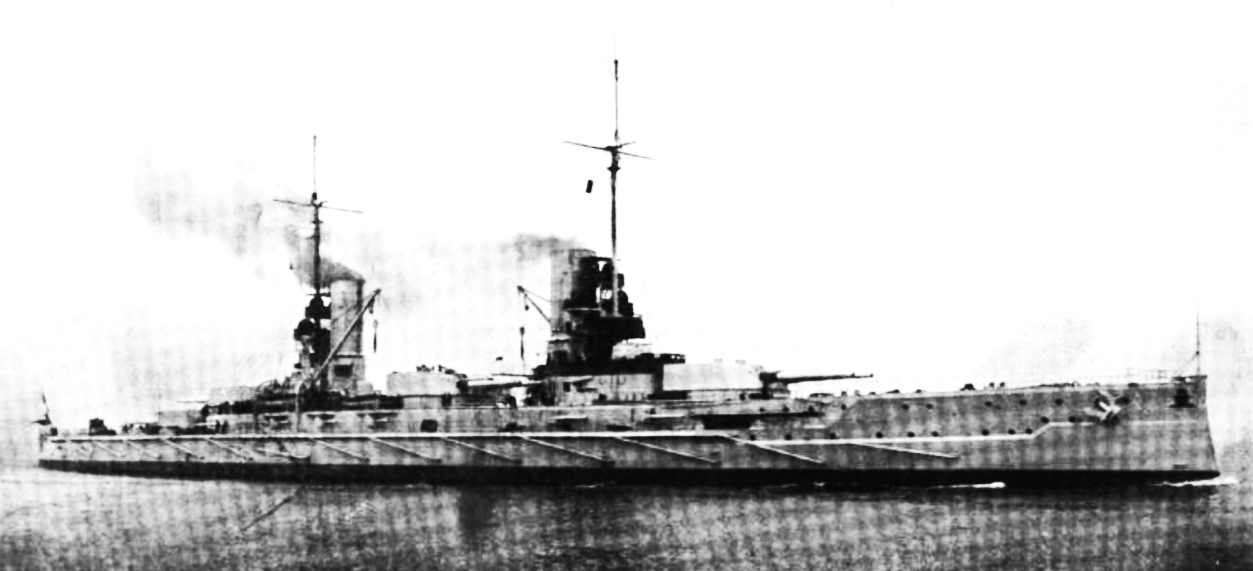
(Kaiserliche Marine Photo)
SMS Friedrich der Grosse, 1913.

(U.S. National Archives Photo)
SMS Friedrich der Grosse, en route to Scapa Flow flying the flag of Rear Admiral von Reuter, following the surrender of the German fleet in 1918.
SMS Kaiserin
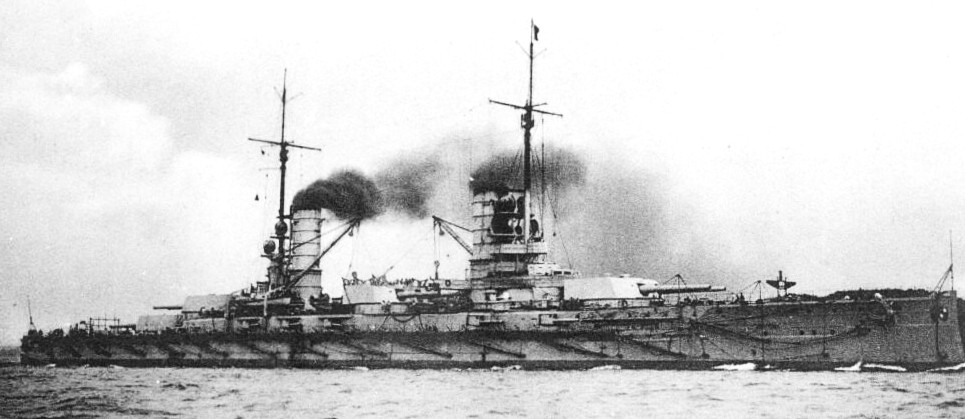
(Kaiserliche Marine Photo)
SMS Kaiserin was the third vessel of the Kaiser class of dreadnought battleships of the Imperial German Navy. Kaiserin’s keel was laid in November 1910 at the Howaldtswerke dockyard in Kiel. She was launched on 11 November 1911 and was commissioned into the fleet on 14 May 1913. The ship was equipped with ten 30.5-centimeter (12 in) guns in five twin turrets, and had a top speed of 22.1 knots (40.9 km/h; 25.4 mph). Kaiserin was assigned to III Battle Squadron and later IV Battle Squadron of the High Seas Fleet for the majority of her career, including the First World War.
Along with her four sister ships, Kaiser, Friedrich der Grosse, König Albert, and Prinzregent Luitpold, Kaiserin participated in all of the major fleet operations of the First World War, including the Battle of Jutland on 31 May and 1 June 1916. The ship was also involved in Operation Albion, an amphibious assault on the Russian-held islands in the Gulf of Riga, in October 1917. She later saw action during the Second Battle of Heligoland Bight in November 1917.
After Germany’s defeat in the war and the signing of the Armistice in November 1918, the Royal Navy interned Kaiserin and most of the capital ships of the High Seas Fleet in Scapa Flow. The ships were disarmed and reduced to skeleton crews while the Allied powers negotiated the final version of the Treaty of Versailles. On 21 June 1919, the commander of the interned fleet, Rear Admiral Ludwig von Reuter, ordered the fleet to be scuttled to ensure that the British would not be able to seize the ships. Kaiserin was raised in May 1936 and subsequently broken up for scrap. (Wikipedia)
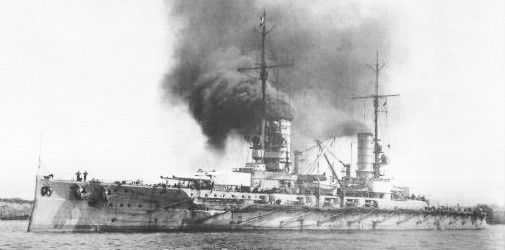 (Kaiserliche Marine Photo)
SMS Kaiserin.
SMS Prinzregent Luitpold
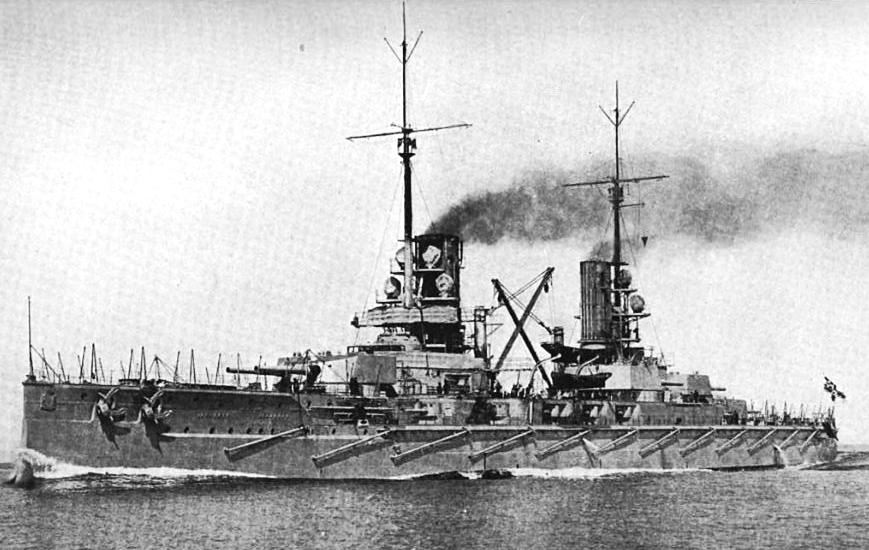
(Arthur Renard Photo, Bundesarchiv DVM 10 Bild-23-61-53)
SMS Prinzregent Luitpold was the fifth and final vessel of the Kaiser class of dreadnought battleships of the Imperial German Navy. Prinzregent Luitpold’s keel was laid in October 1910 at the Germaniawerft dockyard in Kiel. She was launched on 17 February 1912 and was commissioned into the navy on 19 August 1913. The ship was equipped with ten 30.5-centimeter (12 in) guns in five twin turrets, and had a top speed of 21.7 knots (40.2 km/h; 25.0 mph).
Prinzregent Luitpold was assigned to III Battle Squadron of the High Seas Fleet for the majority of her career; in December 1916, she was transferred to IV Battle Squadron. Along with her four sister ships, Kaiser, Friedrich der Grosse, Kaiserin, and König Albert, Prinzregent Luitpold participated in all of the major fleet operations of the First World War, including the Battle of Jutland on 31 May – 1 June 1916. The ship was also involved in Operation Albion, an amphibious assault on the Russian-held islands in the Gulf of Riga, in late 1917.
After Germany’s defeat in the war and the signing of the Armistice in November 1918, Prinzregent Luitpold and most of the capital ships of the High Seas Fleet were interned by the Royal Navy in Scapa Flow. The ships were disarmed and reduced to skeleton crews while the Allied powers negotiated the final version of the Treaty of Versailles. On 21 June 1919, days before the treaty was signed, the commander of the interned fleet, Rear Admiral Ludwig von Reuter, ordered the fleet to be scuttled to ensure that the British would not be able to seize the ships. Prinzregent Luitpold was raised in July 1931 and subsequently broken up for scrap in 1933. (Wikipedia)
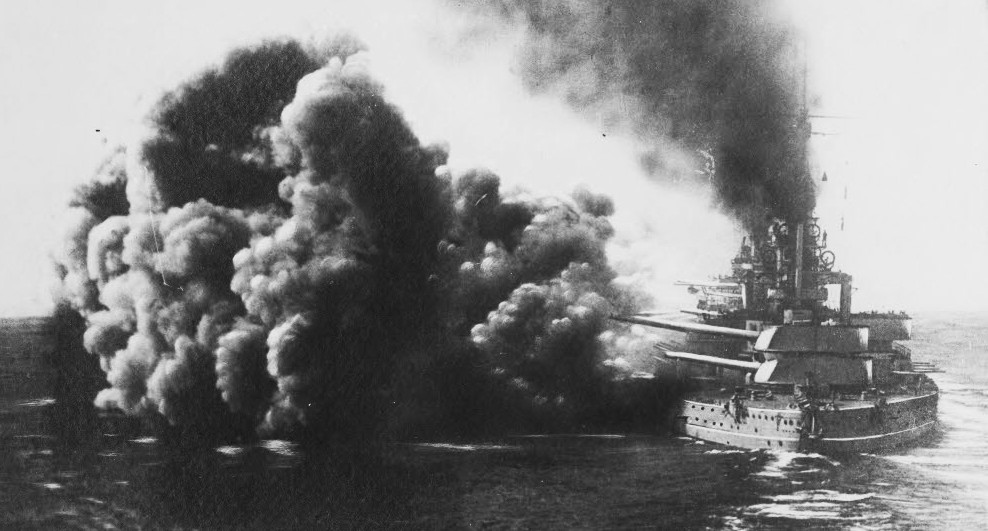
(Arthur Renard Photo)
SMS Prinzregent Luitpold bombarding Ösel, October 1917.
SMS König Albert
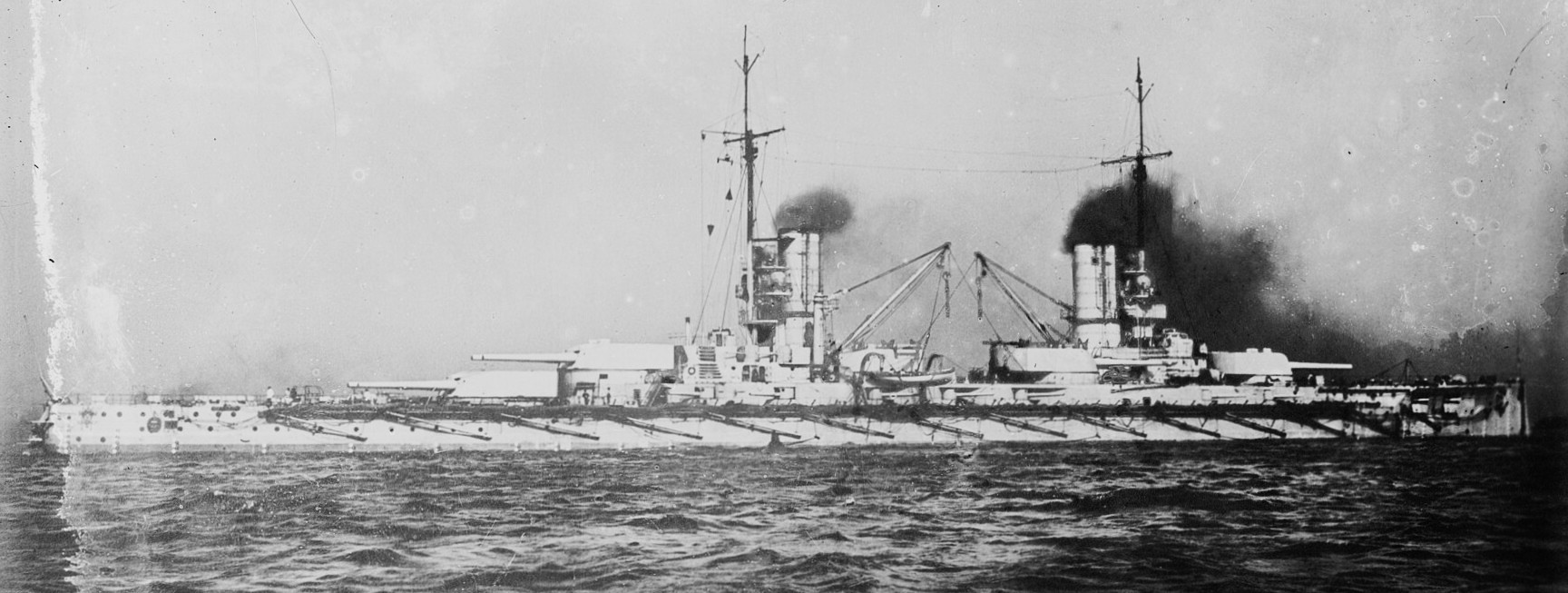
(Library of Congress Photo, 1910)
SMS König Albert was the fourth vessel of the Kaiser class of dreadnought battleships of the Imperial German Navy.[b] König Albert’s keel was laid on 17 July 1910 at the Schichau-Werke dockyard in Danzig. She was launched on 27 April 1912 and was commissioned into the fleet on 31 July 1913. The ship was equipped with ten 30.5-centimeter (12 in) guns in five twin turrets, and had a top speed of 22.1 knots (40.9 km/h; 25.4 mph). König Albert was assigned to III Battle Squadron and later IV Battle Squadron of the High Seas Fleet for the majority of her career, including World War I.
Along with her four sister ships, Kaiser, Friedrich der Grosse, Kaiserin, and Prinzregent Luitpold, König Albert participated in most of the major fleet operations of the First World War, though she was in drydock for maintenance during the Battle of Jutland between 31 May and 1 June 1916. As a result, she was the only battleship actively serving with the fleet that missed the largest naval battle of the war. The ship was also involved in Operation Albion, an amphibious assault on the Russian-held islands in the Gulf of Riga, in late 1917.
After Germany’s defeat in the war and the signing of the Armistice in November 1918, König Albert and most of the capital ships of the High Seas Fleet were interned by the Royal Navy in Scapa Flow. The ships were disarmed and reduced to skeleton crews while the Allied powers negotiated the final version of the Treaty of Versailles. On 21 June 1919, days before the treaty was signed, the commander of the interned fleet, Rear Admiral Ludwig von Reuter, ordered the fleet to be scuttled to ensure that the British would not be able to seize the ships. König Albert was raised in July 1935 and subsequently broken up for scrap in 1936. (Wikipedia)