
Battleships of the Ottoman Empire: Abdül Kadir, Barbaros Hayreddin, Turgut Reis, Reşadiye, Sultân Osmân-ı Evvel, Yavûz Sultân Selîm
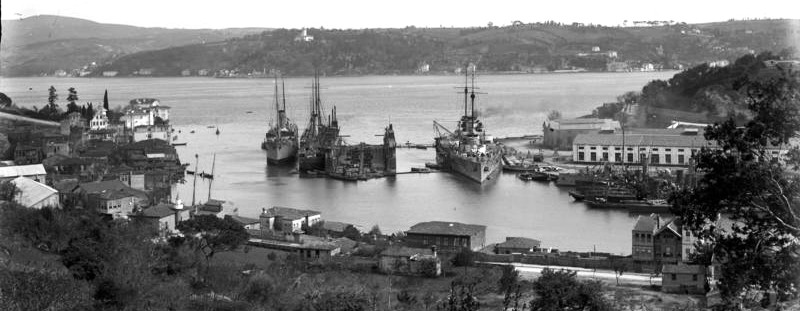
(Bundesarchiv, Bild 134-B0024 / CC-BY-SA 3.0)
SMS Goeben, later Ottoman Empire battleship Yavuz at Istinye Bay on the European shoreline of the Bosphorus in Istanbul.
In the aftermath of the Young Turk Revolution in 1908, the Committee of Union and Progress that had taken control of the Ottoman Empire began to draw up plans to strengthen the Ottoman Navy. The poor condition of the fleet was clearly visible in the Ottoman Naval Parade of 1910. Attempts to construct Ottoman-made battleships such as Abdül Kadir had ended in failure, so the Ottoman Navy Foundation was established with the aim of purchasing new ships through public donations rather than having them built locally. Despite these efforts, the fleet remained in a poor state. Its inability to respond to naval threats was evident in the First Balkan War (1913), when the Ottoman Navy was defeated in two separate engagements by the Greek Navy, during the battles of Elli and Lemnos.
Following the conclusion of the Balkan Wars, a naval race began in the Balkans between Greece and the Ottoman Empire. In order to update the fleet, the Ottoman Navy Foundation purchased larger battleships such as Sultân Osmân-ı Evvel, and ordered three planned Reşadiye-class battleships, including the purchase of one that had already been built, the Reşadiye. The United Kingdom confiscated the ships at the outbreak of World War I though only two were nearing completion, Sultân Osmân-ı Evvel and Reşadiye. Upon confiscation, Sultân Osmân-ı Evvel was renamed HMS Agincourt while Reşadiye was renamed HMS Erin.[4] The seizure of these battleships by the Royal Navy outraged the Ottoman people, since public donations had been the source of most of the funds for the ships. The German Empire took advantage of the situation by sending the battlecruiser SMS Goeben and the light cruiser SMS Breslau to the Ottoman capital of Constantinople in 1914, and handing them over to the Ottoman Navy. These two ships entered service as Yavûz Sultân Selîm and Midilli respectively. The British seizure of these ships as well as the transfer of German ships to the Ottoman Navy significantly contributed to the Ottoman Empire’s decision to enter World War I on the side of Germany and the Central Powers a few months later.
During the First World War, many of the Ottoman battleships saw little or no action.[Note 1] Since many were in a poor condition, they simply remained at their moorings for most of the war. Out of all the battleships legally owned by the Ottoman Empire at the beginning of the war, half were either scrapped or were seized by the British in the early days of the conflict. Abdül Kadir was scrapped in 1914, while Barbaros Hayreddin was sunk in 1915. Turgut Reis survived the conflict and was scrapped in the 1950s. Of the three planned Reşadiye-class ships, only one, Reşadiye, was ever built, with the rest being cancelled just before the war. Reşadiye was one of the ships seized by the British in August 1914.[4] Sultân Osmân-ı Evvel, which had been bought from Brazil in 1913, was also seized by Britain in August 1914. The last battleship in the Ottoman Navy, Yavûz Sultân Selîm, survived the war and was scrapped in 1973. (Wikipedia)
Abdül Kadir
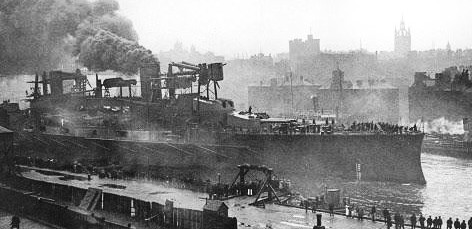
(Royal Navy Photo)
Abdül Kadir was a pre-dreadnought battleship laid down in 1892 at the Imperial Arsenal in Constantinople for the Ottoman Navy, the first vessel of this type to be ordered by the Ottoman Empire. The ship was the first capital ship to be laid down by the Ottomans in more than a decade. She was to have a main armament of four 28-centimeter (11 in) guns, with an armored belt that was 230 mm (9.1 in) thick. Work proceeded on the ship very slowly, primarily the result of a lack of funds; after two years, only the frames for the hull had been erected, and by the time work stopped in 1906, the hull had been only partially plated. During the long construction period, the supports for the keel shifted, which distorted the structure and prevented completion. The unfinished ship was ultimately broken up for scrap in 1909.
The Ottoman battleships Barbaros Hayreddin and Turgut Reis were originally named SMS Kurfürst Friedrich Wilhelm and SMS Weissenburg, respectively. They were members of the German Brandenburg class, the first class of ocean-going battleships built for the German navy. Two other ships of the class were constructed: Brandenburg and Wörth. Of the four, Kurfürst Friedrich Wilhelm and Weissenburg were more advanced in that their armor was composed of higher-quality steel.
Kurfürst Friedrich Wilhelm and Weissenburg were sold to the Ottoman Navy in 1910 and renamed Barbaros Hayreddin and Turgut Reis, respectively. The two battleships saw very little service in the Italo-Turkish War and were mostly used to defend the Dardanelles from any Italian naval attacks. Barbaros Hayreddin and Turgut Reis saw heavy service during the Balkan Wars however, failing in two attempts to break the Greek naval blockade of the Dardanelles in December 1912 and January 1913, and providing artillery support to Ottoman ground forces in Thrace. On 8 August 1915, during the First World War, Barbaros Hayreddin was torpedoed and sunk off the Dardanelles by the British submarine HMS E11, with heavy loss of life. Turgut Reis was largely inactive during the First World War, in part due to her slow speed. By 1924, Turgut Reis was used as a school ship before eventually being scrapped in 1956–1957. (Wikipedia)
Barbaros Hayreddin
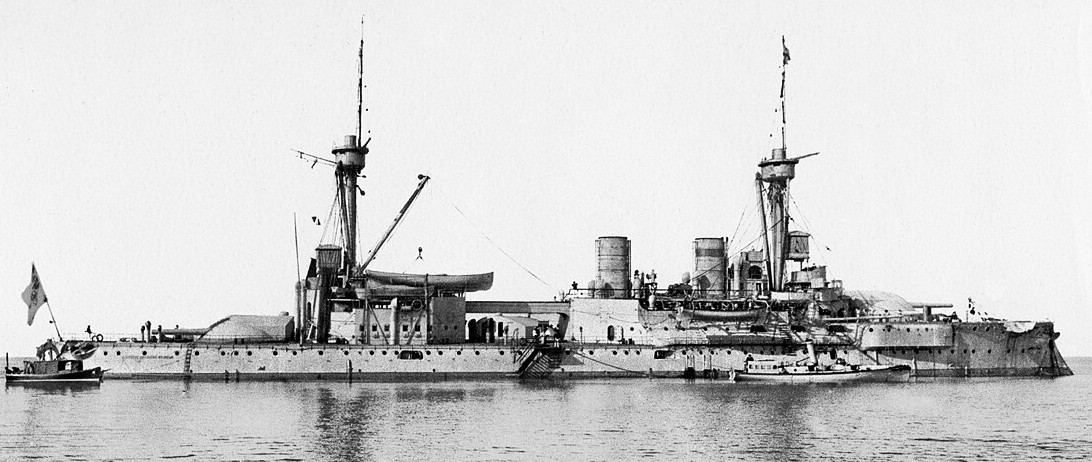
(Library of Congress Photo)
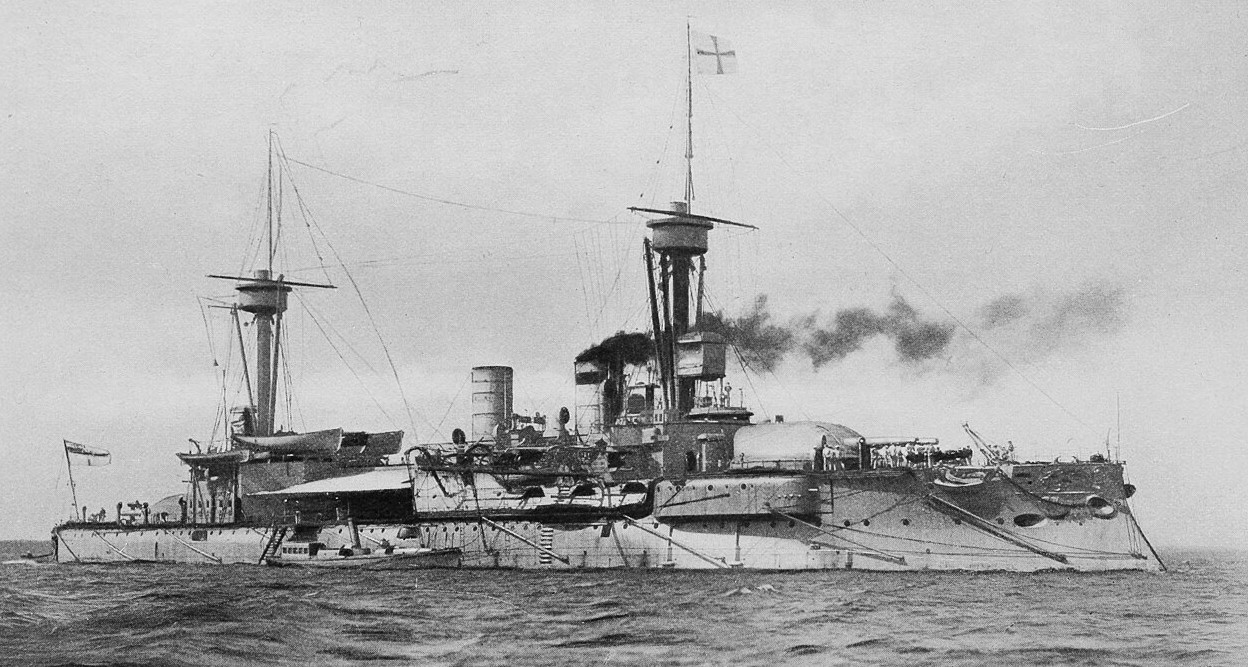
SMS Kurfürst Friedrich Wilhelm prior to being sold to the Ottoman Empire.
In late 1909, the German military attache to the Ottoman Empire began a conversation with the Ottoman Navy about the possibility of selling German warships to the Ottomans to counter Greek naval expansion. After lengthy negotiations, including Ottoman attempts to buy one or more of the new battlecruisers Von der Tann, Moltke, and Goeben, the Germans offered to sell the four ships of the Brandenburg class at a cost of 10 million marks. The Ottomans chose to buy Kurfürst Friedrich Wilhelm and Weissenburg, since they were the more advanced ships of the class. The two battleships were renamed after the famous 16th-century Ottoman admirals, Hayreddin Barbarossa and Turgut Reis. They were transferred on 1 September 1910, and German crews took the ships to Constantinople, along with four new destroyers also purchased from Germany. The Ottoman navy, however, had great difficulty equipping the Barbaros Hayreddin and Turgut Reis; the navy had to pull trained enlisted men from the rest of the fleet just to put together crews for them. Both vessels suffered from condenser troubles after they entered Ottoman service, which reduced their speed to 8 to 10 knots (15 to 19 km/h; 9 to 12 mph).
A year later, in September 1911, Italy declared war on the Ottoman Empire. The two battleships and the ancient central battery ironclad Mesudiye – which had been built in the mid-1870s – had been on a summer training cruise since July, and so were prepared for the conflict. On 1 October, shortly after the outbreak of war, Barbaros Hayreddin and the rest of the Ottoman fleet was moored at Beirut. The following day, the fleet departed for Constantinople for repairs in preparation to engage the Italian fleet. Nevertheless, the bulk of the Ottoman fleet, including Barbaros Hayreddin, remained in port for the duration of the war. By the end of the war, Barbaros Hayreddin and her sister were in very poor condition. Their rangefinders and the ammunition hoists for their main battery guns had been removed, their telephones did not work, and the pipes for their pumps were badly rusted. Most of the watertight doors could not close, and the condensers remained problematic. (Wikipedia)
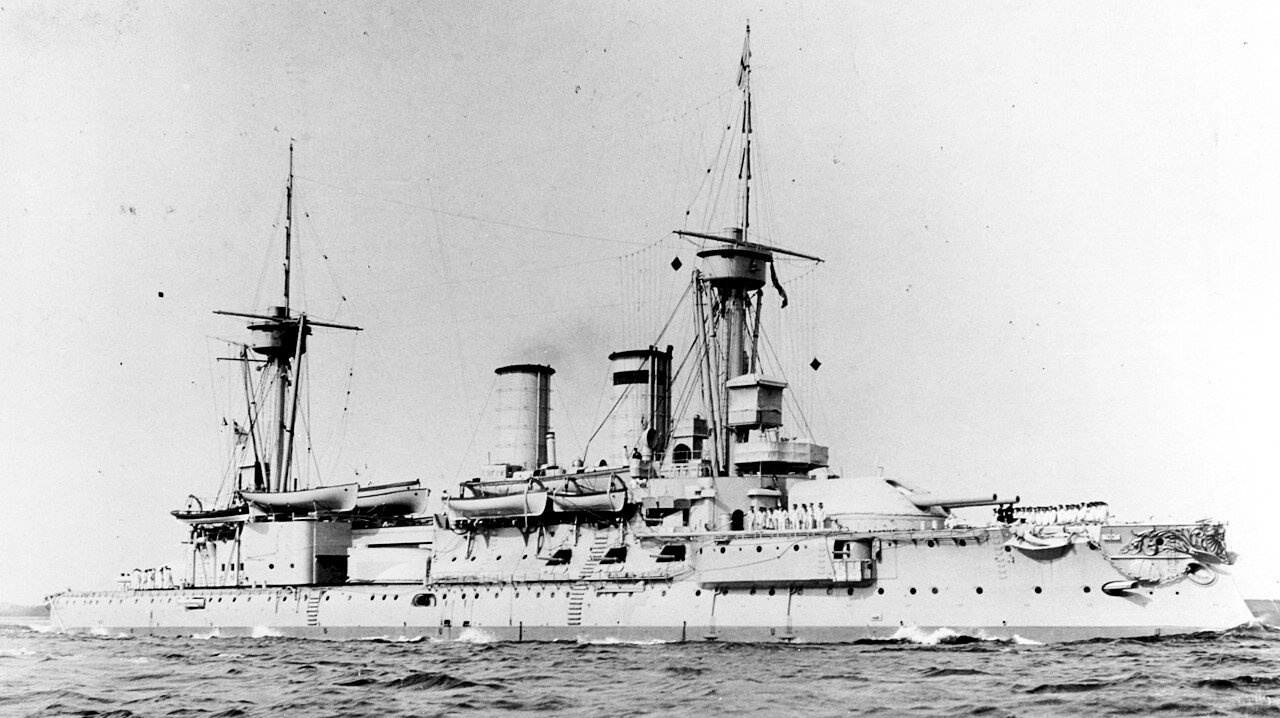
(Arthur Renard Photo)
SMS Kurfürst Friedrich Wilhelm in 1899.
(E. H. Mullin Photo)
SMS Kurfürst Friedrich Wilhelm in 1891.
Turgut Reis
(Alfred John West Photo)
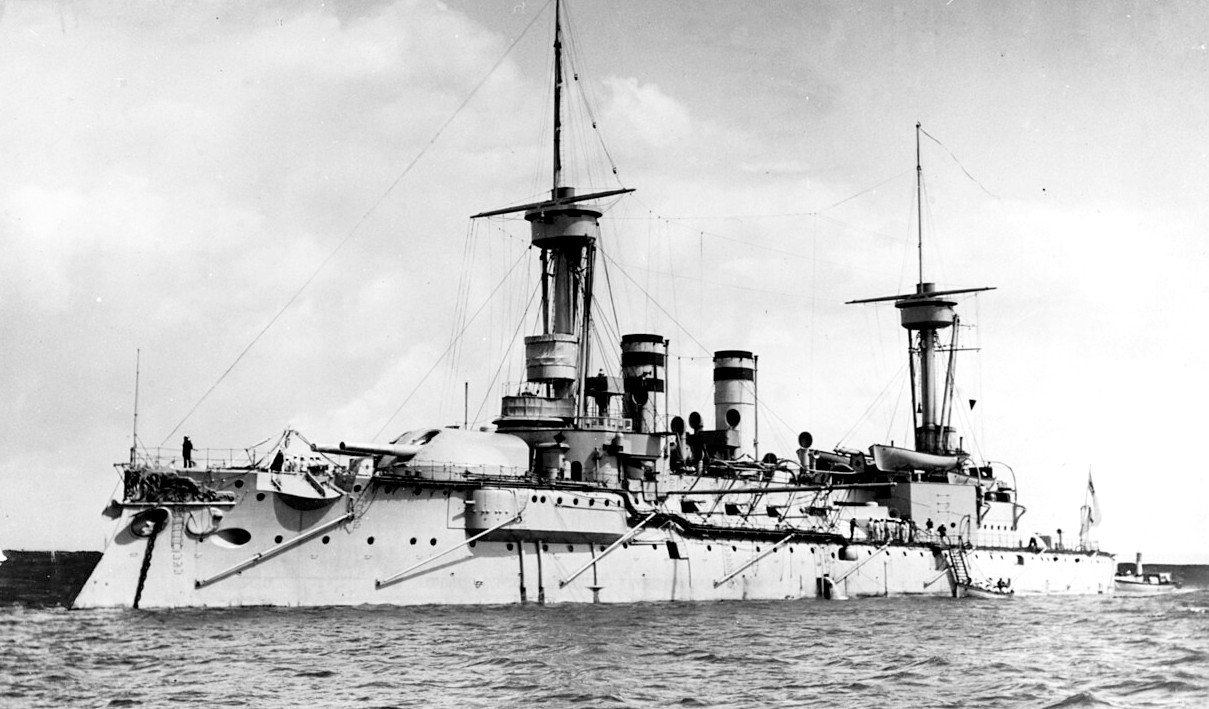
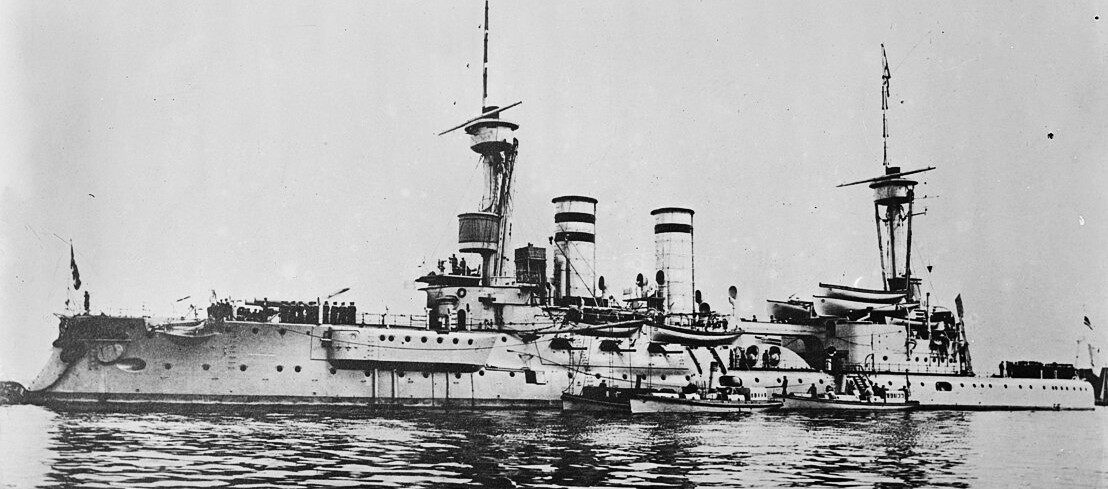
SMS Weissenburg c1890s, later Turgut Reis.
( Photo)
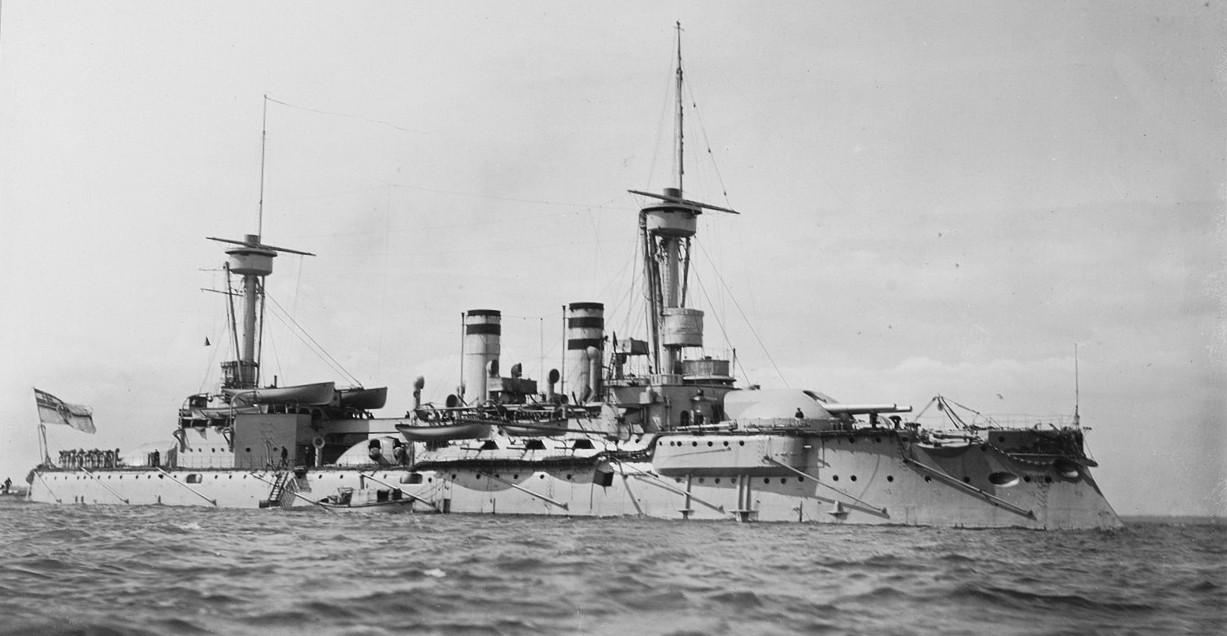
SMS Weissenburg c1890-1912.
(D. Nottelmann Photo)
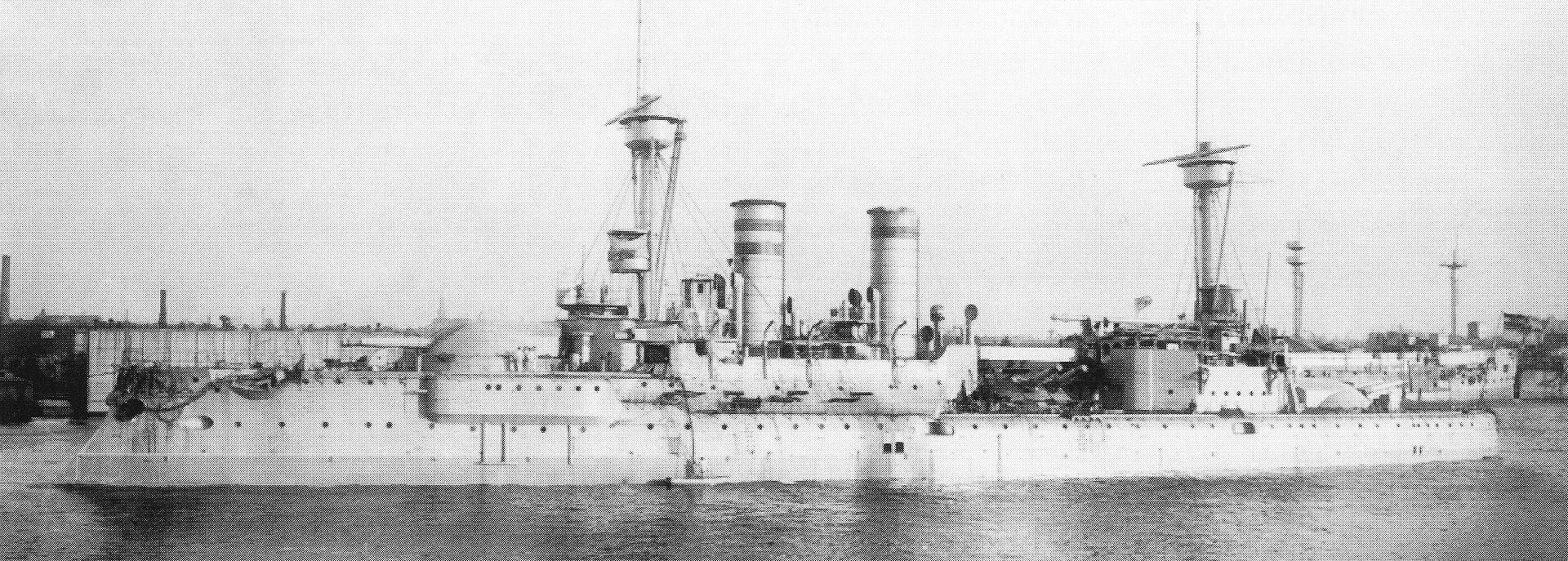
SMS Weißenburg 1898.
(Library of Congress Photo)
SMS Weißenburg 1891.
Reşadiye
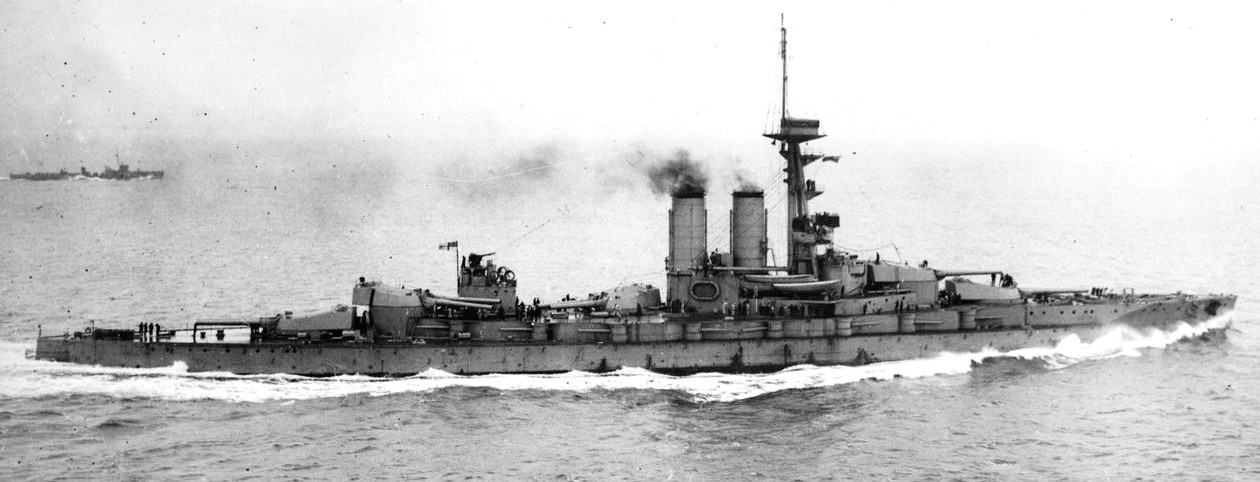
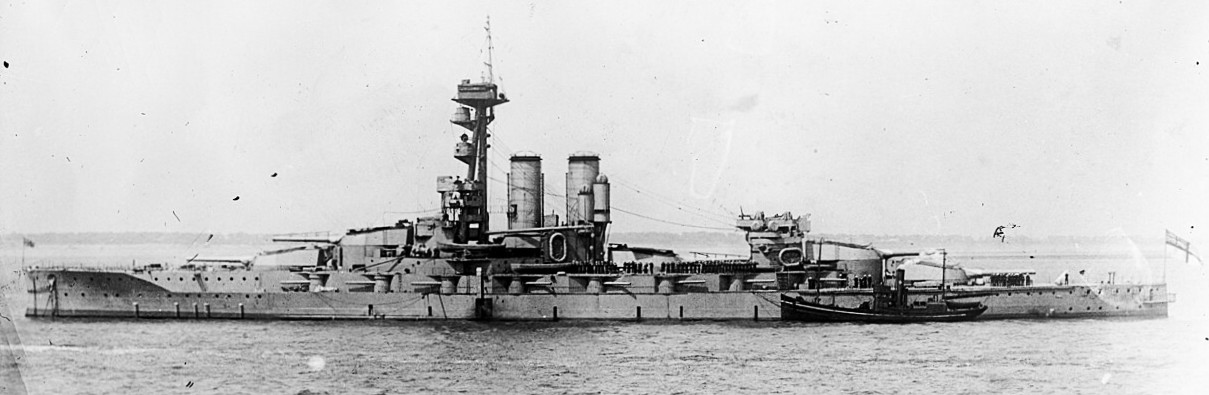
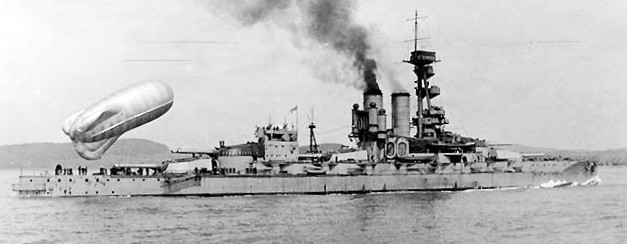
Following the purchase of SMS Kurfürst Friedrich Wilhelm and SMS Weissenburg from Germany, the Ottoman Navy drew up plans for a new class of battleships called the Reşadiye class. The class would have consisted of two ships, Reşadiye and Fatih Sultan Mehmed. Only Reşadiye was completed, though she was seized by the Royal Navy at the outbreak of the First World War while under construction in Britain, due to fears that she would be used to support the Central Powers; the British renamed her HMS Erin. The seizure caused resentment among the Ottoman people as public donations had been the source of most of the funds for the ships, and her crew had already been formed. This action by the Royal Navy was a major contributing factor to the participation of the Ottoman Empire on the side of the Central Powers in the First World War. The second ship, Fatih Sultan Mehmed, ordered in 1914 in response to the Greek Navy purchasing the dreadnought Vasilefs Konstantinos, was estimated to be completed in 1917. She was scrapped on the slipway in 1914.
During the First World War, HMS Erin was assigned to the 1st Division of the 2nd Battle Squadron of the Grand Fleet. While serving with the 2nd Battle Squadron, she fought in the Battle of Jutland. Following the war, she became the flagship of the Nore Reserve in 1919 and was scrapped in 1922 to comply with the Washington Naval Treaty. (Wikipedia)
(IWM Photo, SP 531)
HMS Erin underway in Moray Firth 1915.
(Bibliothèque nationale de France Photo)
HMS Erin, 1921.
(USN Photo)
HMS Erin underway in a North Sea harbour, with a kite balloon moored aft, 1918.
Sultân Osmân-ı Evvel
Sultân Osmân-ı Evvel went through three names and legally belonged to three different navies in her career. She was originally intended for the Brazilian Navy as Rio de Janeiro, and was laid down on 14 September 1911 by Armstrong Whitworth in Newcastle upon Tyne. After more than a year of construction her hull was launched on 22 January 1913. Because of an economic crisis in Brazil, the uncompleted battleship was sold to the Ottoman Navy on 28 December 1913. She was then renamed Sultân Osmân-ı Evvel. Her sea trials were completed the next August, at the outbreak of the First World War. When the war began she was still in British hands. When her Ottoman crew came to collect her, the British government seized the vessel for fear of it being used against Britain in the conflict. This act outraged the Ottoman people and was a major factor in turning Turkish public opinion against Britain, which in turn helped to drive the Ottoman Empire into an alliance with the Central Powers. Once she was under British control, the battleship was once again renamed, this time as HMS Agincourt. She served in the Royal Navy for the remainder of the war and was decommissioned and scrapped in 1924. (Wikipedia)
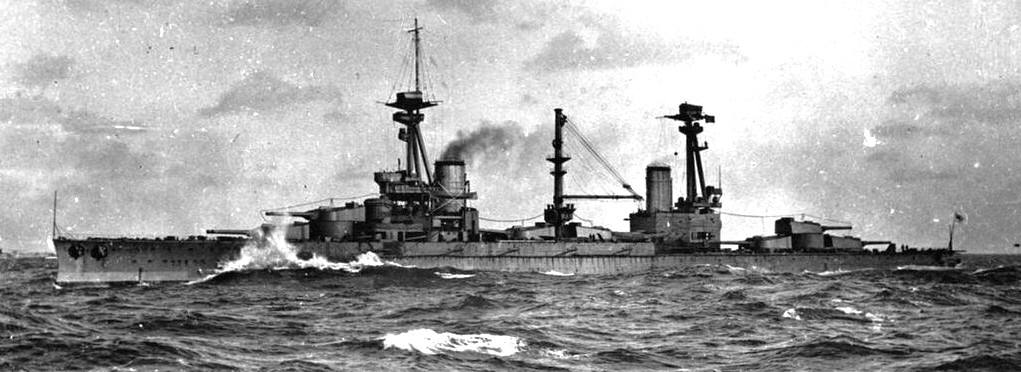
(IWM Photo, SP 564)
HMS Agincourt (ex-Sultan Osman I).
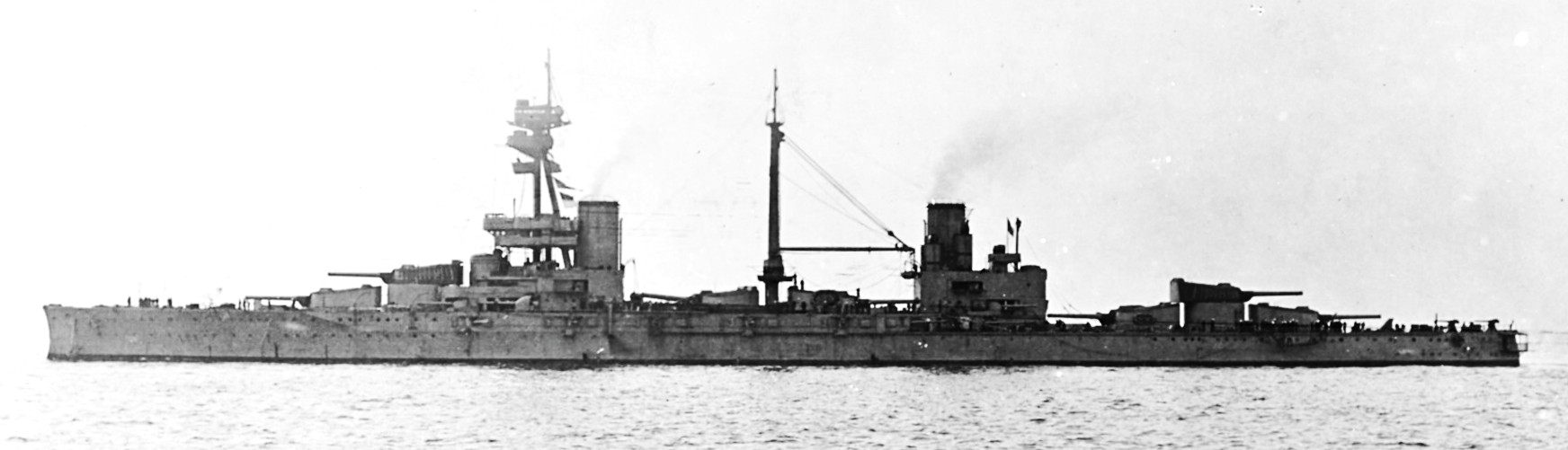
(USN Photo)
HMS Agincourt, 1918.
Yavûz Sultân Selîm
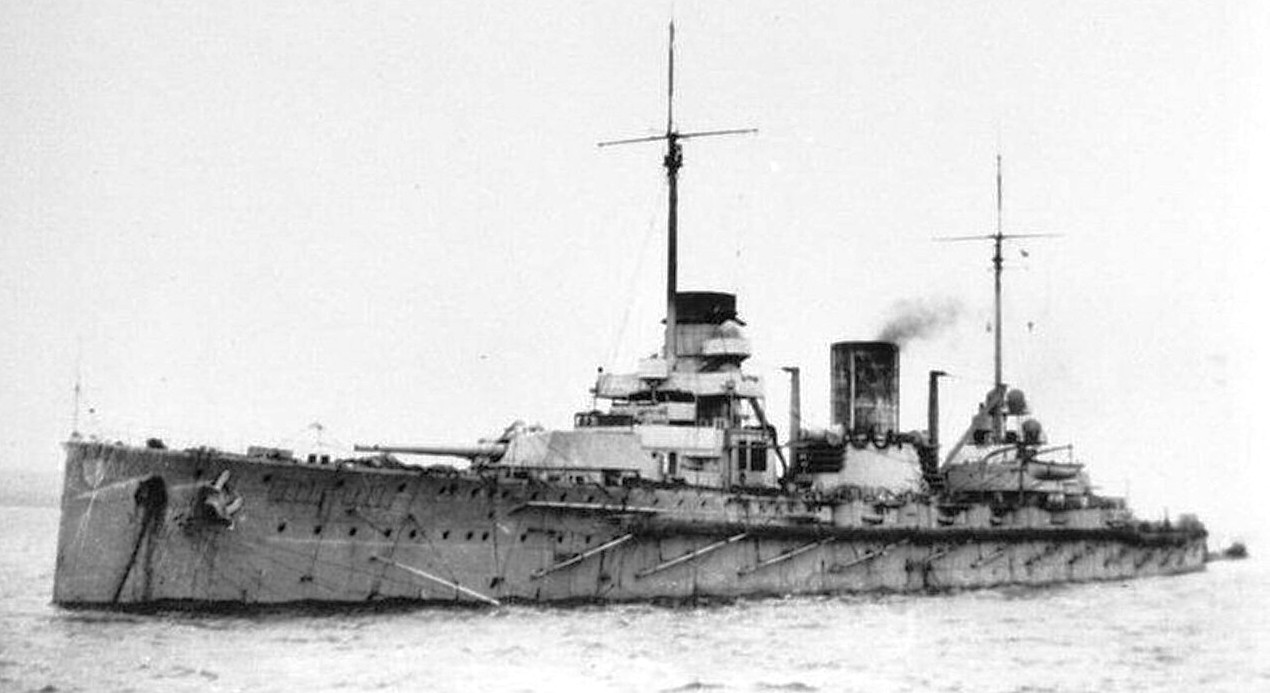
(Bundesarchiv Bild 134-D0004)
SMS Goeben was originally a German battlecruiser and a member of the Moltke class. Goeben and her sister ship Moltke were ordered in 1909 and 1908 respectively. Before being transferred to the Ottoman Navy, Goeben was assigned to the Mediterranean as the flagship of the German Navy’s new Mediterranean Division. At the outbreak of the First World War in 1914, Goeben and the light cruiser Breslau attempted to evade the British fleet. With the assistance of the entire Austro-Hungarian Navy the two ships managed to safely make their way to Constantinople, arriving in the Bosporus on 11 August. They were then transferred to the Ottoman Navy. Upon transfer, SMS Goeben was renamed as Yavûz Sultân Selîm. The German transfer of Goeben to the Ottoman Empire helped gain public support for the nation’s entry into the First World War on the side of the Central Powers following the British seizure of other Ottoman battleships. Yavûz Sultân Selîm mainly operated in the Black Sea against the Russian Black Sea Fleet stationed in Sevastopol. In 1918, Yavûz Sultân Selîm attacked British forces outside the Dardanelles; during the conflict, she struck three mines. Under attack by British bombers, she managed to beach herself and was towed back for repairs three days later. The battleship underwent a series of repairs and upgrades between 1927 and 1930. In 1936 her name was officially shortened to Yavûz. The battlecruiser continued to serve in the Turkish Navy in the Second War and had her anti-aircraft battery upgraded in 1941. Yavûz was decommissioned from active service on 20 December 1950 and stricken from the Navy register on 14 November 1954. In 1973 she was sold for scrap. (Wikipedia)
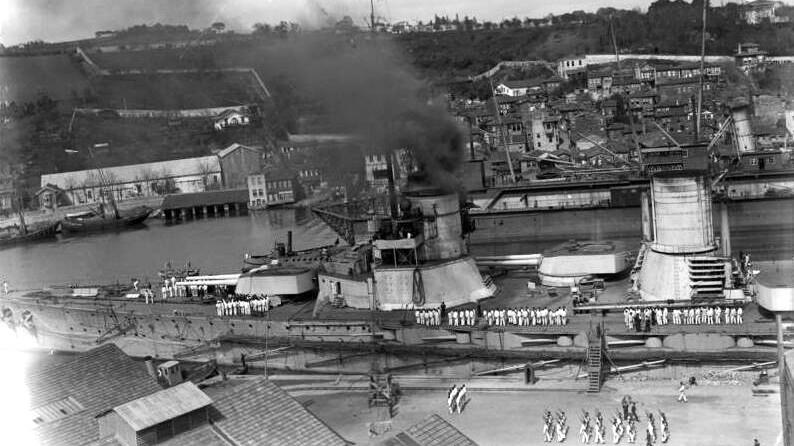
(Bundesarchiv, Bild 134-B0025 / CC-BY-SA 3.0)
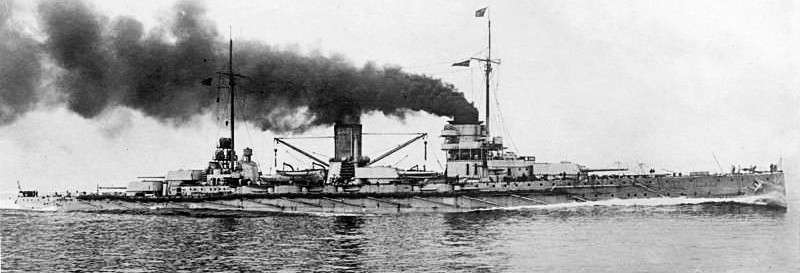
(Bundesarchiv, Bild 134-B0032 / CC-BY-SA 3)
SMS Goeben, 1914.
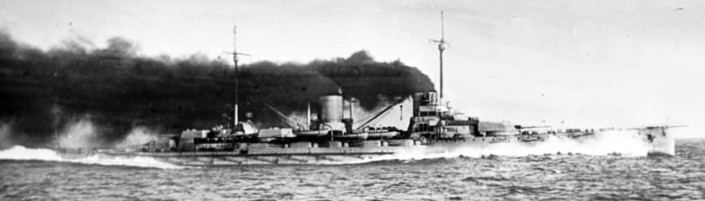
(Bundesarchiv, DVM 10 Bild-23-61-15 / CC-BY-SA 3.0)
SMS Goeben, 1912.
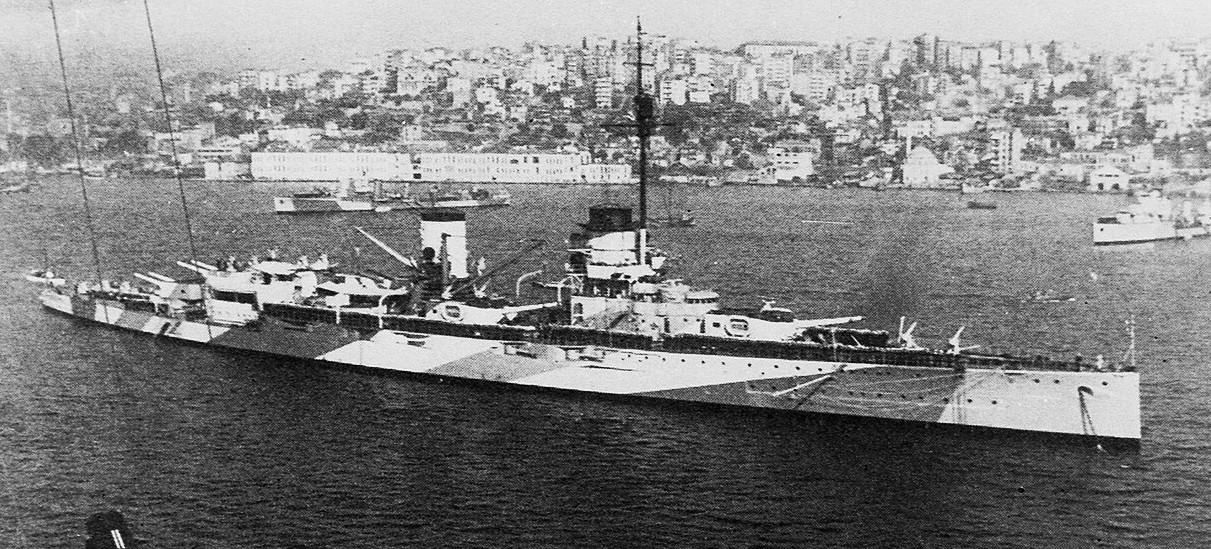
(USN Photo)
The Turkish battlecruiser TCG Yavuz (B-70) with two Turkish destroyers at the Bosporus strait in Istanbul, Turkey, circa May 1947. The photo was taken from the visiting U.S. Navy aircraft carrier USS Leyte (CV-32). Leyte, with assigned Carrier Air Group 7 (CVG-7), was deployed to the Mediterranean Sea from 3 April to 9 June 1947.
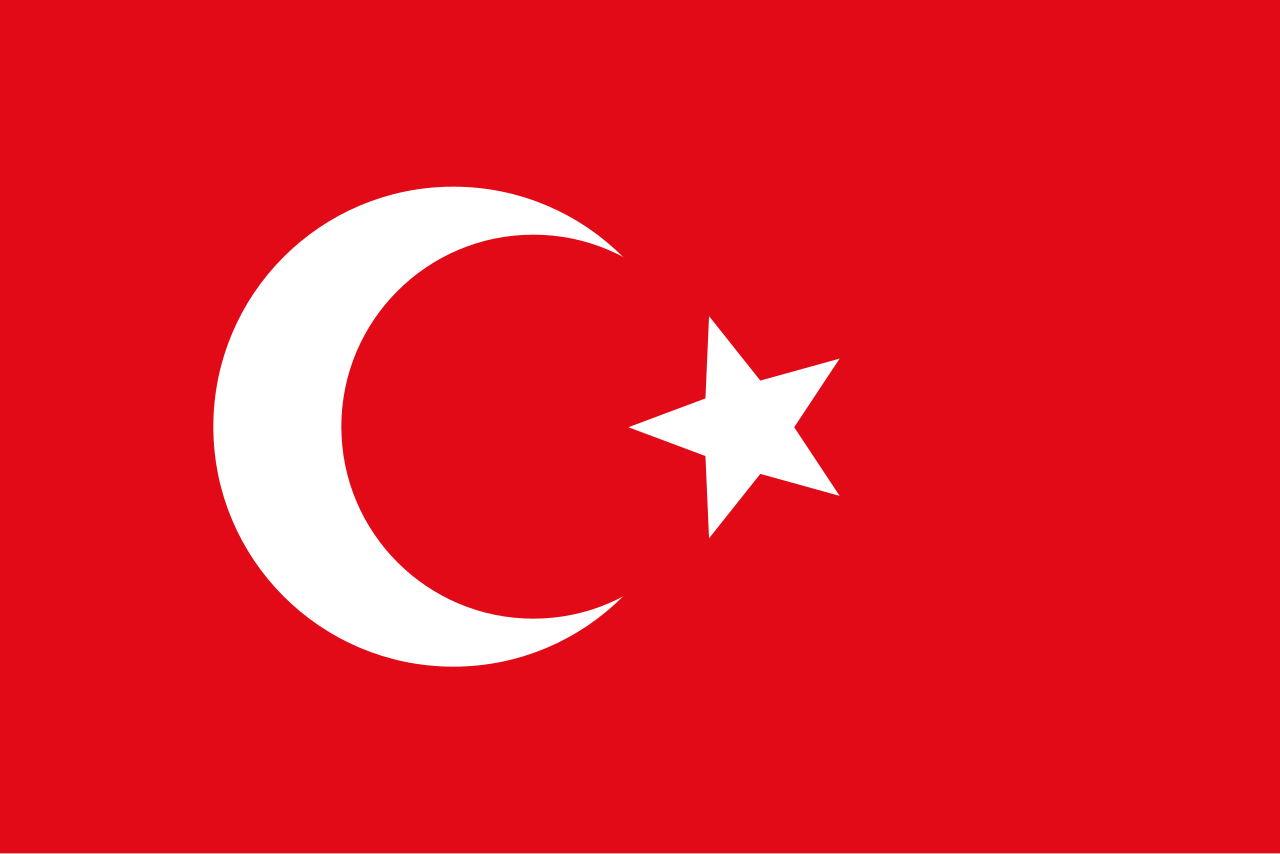
The Ottoman Empire, historically also known as the Turkish Empire or Turkey, was a state that spanned much of Southeastern Europe, West Asia, and North Africa from the 14th century to the early 20th century, centred in modern-day Turkey. It also controlled parts of southeastern Central Europe between the early 16th and early 18th centuries.
The empire emerged from a beylik, or principality, founded in northwestern Anatolia in c. 1299 by the Turkoman tribal leader Osman I. His successors conquered much of Anatolia and expanded into the Balkans by the mid-14th century, transforming their petty kingdom into a transcontinental empire. The Ottomans ended the Byzantine Empire with the conquest of Constantinople in 1453 by Mehmed II. Further conquests by Selim I led the Sultans to adopt the title of caliph. With its capital at Constantinople and control over a significant portion of the Mediterranean Basin, the Ottoman Empire was at the centre of interactions between the Middle East and Europe for six centuries. Ruling over so many peoples, the empire granted varying levels of autonomy to its many confessional communities, or millets, to manage their own affairs per Islamic law. During the reign of Suleiman the Magnificent in the 16th century, the Ottoman Empire became a global power.
Modern academic consensus posits that the empire began to decline after defeat in the Second Siege of Vienna in 1683, but continued to maintain a flexible and strong economy, society and military into much of the 18th century. The Ottoman Empire fell behind technologically from the rest of Europe by the late 18th century as imperial authority fragmented. Further defeats from Austria and Russia culminated in the loss of territory, and with rising nationalism after the French Revolution, a number of new states emerged in the Balkans. Following Mahmud II’s reign and the Tanzimat reforms over the course of the 19th century, the Ottoman state became more powerful and organised internally as a new Ottoman identity took hold. In the 1876 revolution, the Ottoman Empire attempted constitutional monarchy, before reverting to an absolute monarchy under Abdul Hamid II, following the Great Eastern Crisis.
Over the course of the late 19th century, Ottoman intellectuals known as Young Turks sought to liberalise and rationalise society and politics along Western lines, culminating in the Young Turk Revolution of 1908 led by the Committee of Union and Progress (CUP), which reestablished a constitutional monarchy. However, following the disastrous Balkan Wars, the CUP became increasingly radicalised and Turkish nationalist, leading a coup d’état in 1913 that established a dictatorship.
In the 19th and early 20th centuries, persecution of Muslims during the Ottoman contraction and in the Russian Empire resulted in large-scale loss of life and mass migration into modern-day Turkey from the Balkans, Caucasus, and Crimea. The CUP joined World War I on the side of the Central Powers. It struggled with internal dissent, especially the Arab Revolt, and engaged in genocide against Armenians, Assyrians, and Greeks. In the aftermath of World War I, the victorious Allied Powers occupied and partitioned the Ottoman Empire, which lost its southern territories to the United Kingdom and France. The successful Turkish War of Independence, led by Mustafa Kemal Atatürk against the occupying Allies, led to the end of the Ottoman sultanate in 1922. (Wikipedia)
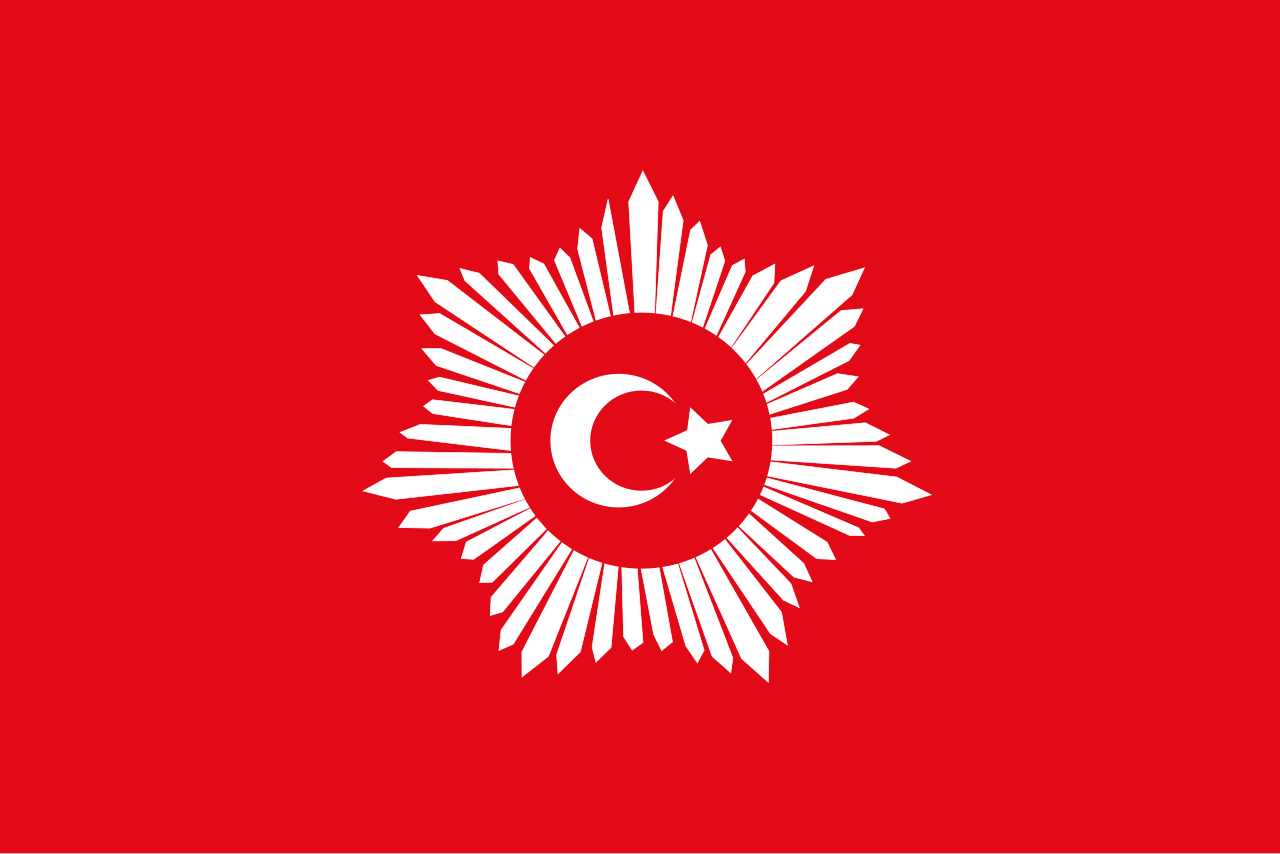
Ottoman Imperial Standard at sea, Late 19th and early 20th Century.
The Ottoman Navy vastly contributed to the expansion of the Empire’s territories on the European continent. It initiated the conquest of North Africa, with the addition of Algeria and Egypt to the Ottoman Empire in 1517. Starting with the loss of Greece in 1821 and Algeria in 1830, Ottoman naval power and control over the Empire’s distant overseas territories began to decline. Sultan Abdülaziz (reigned 1861–1876) attempted to reestablish a strong Ottoman navy, building the largest fleet after those of Britain and France. The shipyard at Barrow, England, built its first submarine in 1886 for the Ottoman Empire.
However, the collapsing Ottoman economy could not sustain the fleet’s strength for long. Sultan Abdülhamid II distrusted the admirals who sided with the reformist Midhat Pasha and claimed that the large and expensive fleet was of no use against the Russians during the Russo-Turkish War. He locked most of the fleet inside the Golden Horn, where the ships decayed for the next 30 years. Following the Young Turk Revolution in 1908, the Committee of Union and Progress sought to develop a strong Ottoman naval force. The Ottoman Navy Foundation was established in 1910 to buy new ships through public donations. (Wikipedia)
The Ottoman Navy (Turkish: Osmanlı Donanması) or the Imperial Navy (Ottoman Turkish: Donanma-yı Humâyûn), also known as the Ottoman Fleet, was the naval warfare arm of the Ottoman Empire. It was established after the Ottomans first reached the sea in 1323 by capturing Praenetos (later called Karamürsel after the founder of the Ottoman Navy), the site of the first Ottoman naval shipyard and the nucleus of the future navy.
(Library of Topkapi Palace Museum, No. H 1824)
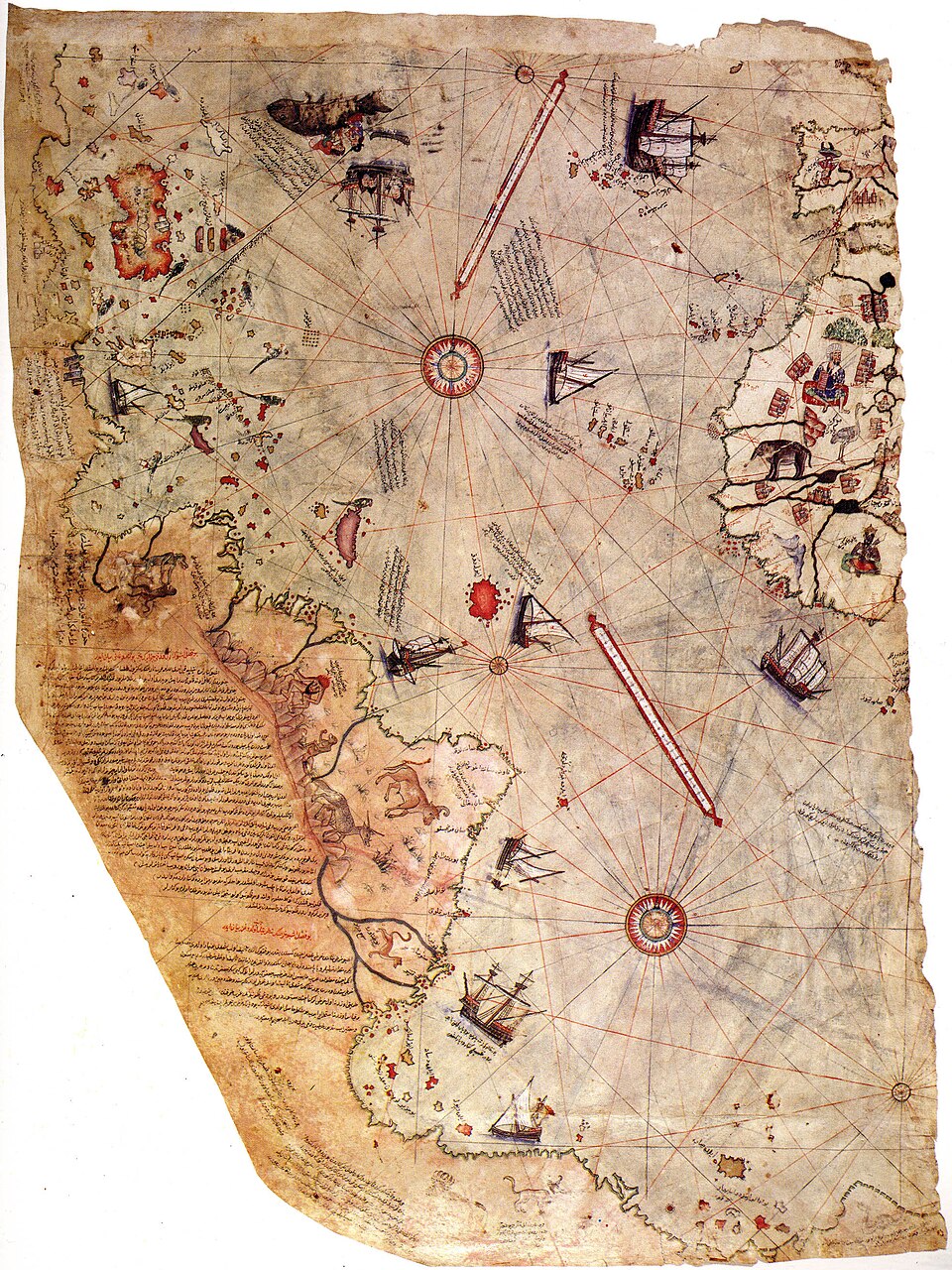
Map of the world by Ottoman admiral Piri Reis, drawn in 1513. Only part of the original map survives and is held at the Topkapi Museum in Istanbul. The map synthesizes information from many maps, including one drawn by Christopher Columbus of the Caribbean.
(Historic image from the archives of the Turkish Navy. Turkish Naval Forces Command, Piri Reis History Research Center)
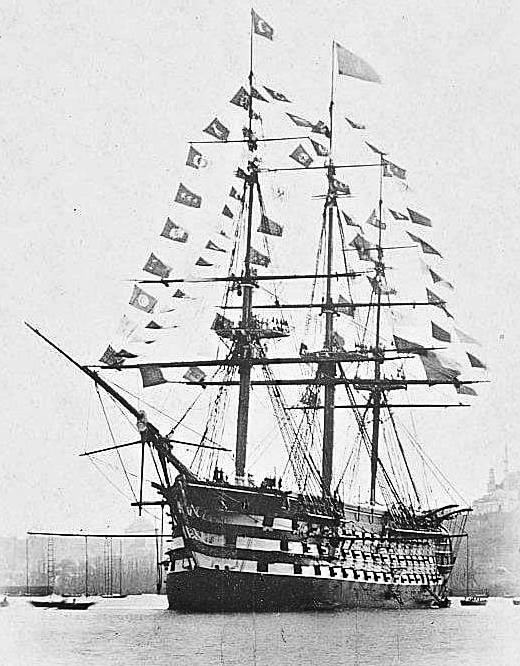
Mahmudiye (1829), ordered by the Ottoman Sultan Mahmud II and built by the Imperial Naval Arsenal on the Golden Horn in Constantinople, was for many years the largest warship in the world. The 201 x 56 kadem (1 kadem = 37.887 cm) or 76.15 m × 21.22 m (249.8 ft × 69.6 ft) (kadem, which translates as “foot”, is often misinterpreted as equivalent in length to one imperial foot, hence the wrongly converted dimensions of “201 x 56 ft, or 62 x 17 m” in some sources) ship-of-the-line was armed with 128 cannons on 3 decks and carried 1,280 sailors on board. She participated in many important naval battles, including the Siege of Sevastopol (1854-1855) during the Crimean War (1854-1856). She was decommissioned in 1874. (Wikipedia)
During its long existence, the Ottoman Navy was involved in many conflicts and signed a number of maritime treaties. It played a decisive role in the conquest of Constantinople and the subsequent expansion into the Mediterranean and Black Seas. At its height in the 16th century, the Navy extended to the Indian Ocean, sending an expedition to Indonesia in 1565, and by the early 17th century operated as far as the Atlantic. Commensurate with the decline and modernization of the empire in the late 18th century, the Ottoman Navy stagnated, albeit remaining among the largest in the world: with nearly 200 warships, including 21 battleships, it ranked third after the British and French navies in 1875.
In 1875, during the reign of Sultan Abdülaziz, the Ottoman Navy had 21 battleships and 173 other types of warships, ranking as the third largest navy in the world after the British and French navies. But the vast size of the navy was too much of a burden for the collapsing Ottoman economy to sustain. Abdülhamid II was aware that the empire needed a navy to shield herself from the ever-growing Russian threat. However, the Ottoman economic crisis of 1875 and the additional financial burden of the disastrous Russo-Turkish War (1877–1878) deprived the Ottoman Empire from the financial resources and economic independence to maintain and modernize a large fleet. The second half of the 19th century was a period of breakthroughs in the field of naval engineering. The Ottoman Navy was rapidly becoming obsolete, and needed to replace all her warships once a decade to keep up with the pace in technological progress – which, given the dismal state of the economy, was clearly not an option.
(Historic image from the archives of the Turkish Navy. Turkish Naval Forces Command, Piri Reis History Research Center)
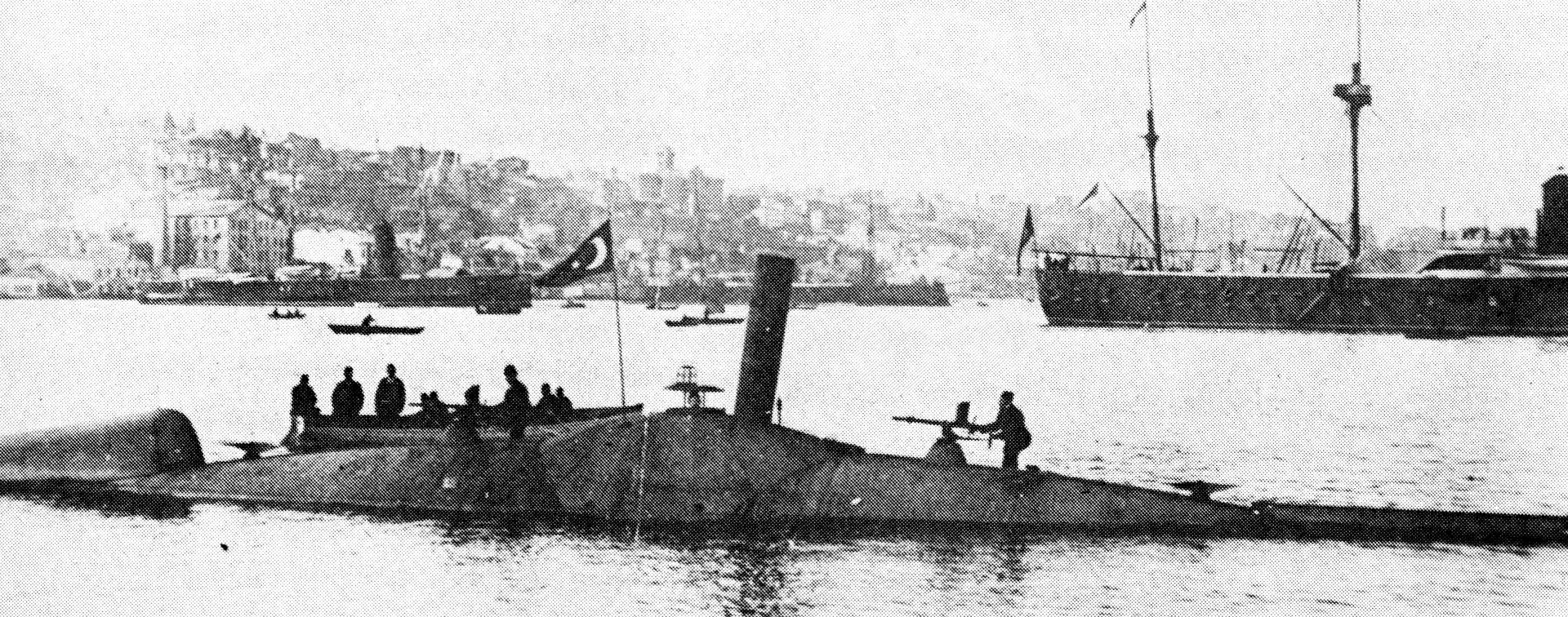
Nordenfelt-class Ottoman submarine Abdül Hamid (1886) was the first submarine in the world to fire a torpedo while submerged under water.
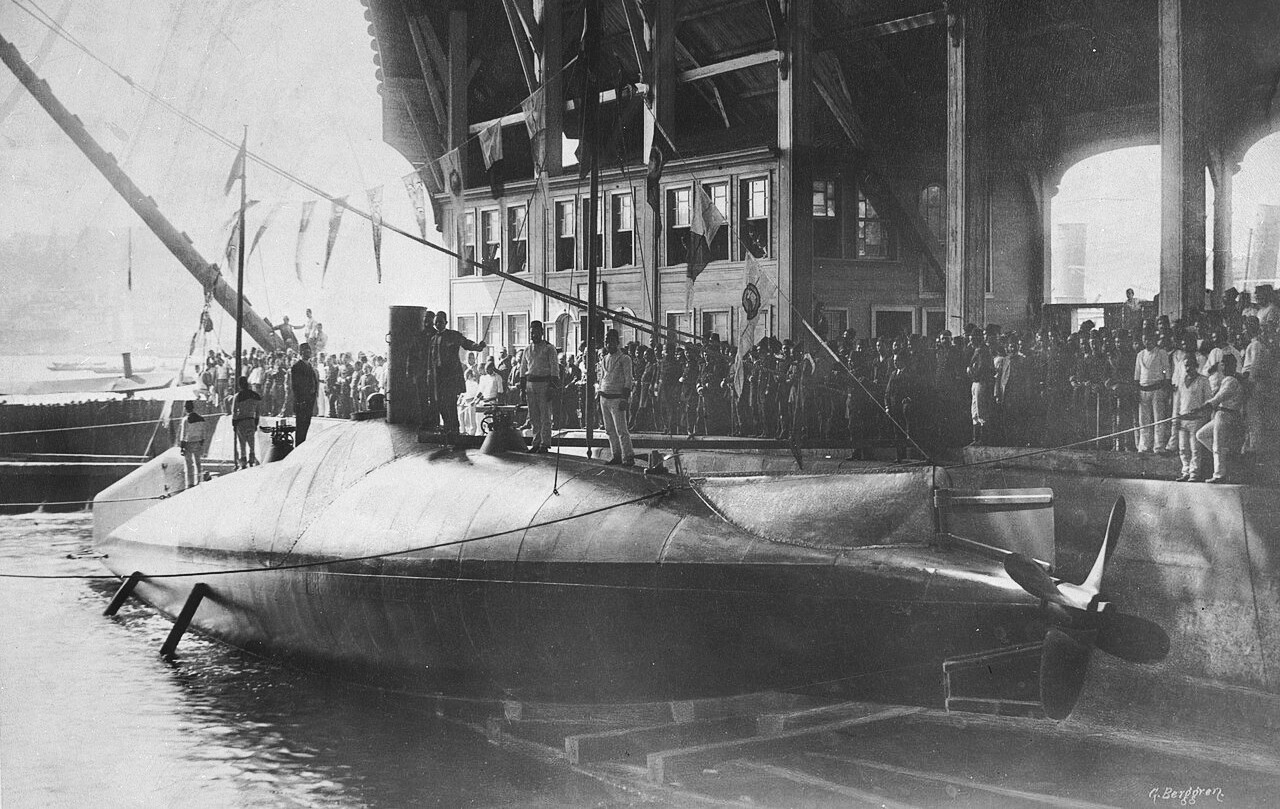
(Guillaume Berggren Photo)
Ottoman submarine Abdül Hamid at the Taşkızak Naval Shipyard in Istanbul, 1886.
Nordenfelt-class Ottoman submarine Abdül Hamid (1886) was the first submarine in history to fire a torpedo while submerged under water. Two submarines of this class, Nordenfelt II (Abdül Hamid, 1886) and Nordenfelt III (Abdül Mecid, 1887) were built for the Ottoman Navy. They were built in pieces by Des Vignes (Chertsey) and Vickers (Sheffield) in England, and assembled at the Taşkızak Naval Shipyard in Constantinople (Istanbul). These submarines were an attempt to gain an edge over the Greek navy (which had only one Nordenfelt submarine, a smaller and older version). However, it was quickly realized that – like the other Nordenfelt submarines ordered by Russia – they suffered from stability problems and were too easy to swamp on the surface. The Turks could not find a crew that was willing to serve on the primitive submarines. Abdül Hamid ended up rotting at dock, while Abdül Mecid was never fully completed. (Wikipedia)
For much of its history, the Navy was led by the Kapudan Pasha (Grand Admiral; literally “Captain Pasha”); this position was abolished in 1867, when it was replaced by the Minister of the Navy (Turkish: Bahriye Nazırı) and a number of Fleet Commanders (Turkish: Donanma Komutanları).
Following the Young Turk Revolution in 1908, the Committee of Union and Progress which effectively took control of the country sought to develop a strong Ottoman naval force. The poor condition of the fleet became evident during the Ottoman Naval Parade of 1910, and the Ottoman Navy Foundation was established by the Ottoman government in order to purchase new ships through public donations. Those who made donations received different types of medals according to the size of their contributions.
In 1910, the Ottoman Navy purchased two pre-dreadnought battleships from Germany: SMS Weissenburg and her sister ship SMS Kurfürst Friedrich Wilhelm. These ships were renamed Turgut Reis and Barbaros Hayreddin, respectively.
The Italo-Turkish War of 1911–1912 and the Balkan Wars of 1912–1913 proved disastrous for the Ottoman Empire. In the former, the Italians occupied Ottoman Tripolitania (present-day Libya) and the Dodecanese Islands in the Aegean Sea and the Regia Marina defeated Ottoman light naval forces in the battles of Preveza, Beirut and Kunfuda Bay. In the latter, a smaller Greek fleet successfully engaged with Ottoman battleships in the naval skirmishes of Elli and Lemnos. The better condition of the Greek fleet in the Aegean Sea during the Balkan Wars led to the liberation of all Ottoman-held Aegean islands other than those in the Italian-occupied Dodecanese. It also prevented Ottoman reinforcements and supplies to the land battles on the Balkan peninsula, where the Balkan League emerged victorious. The only Ottoman naval successes during the Balkan Wars were the raiding actions of the light cruiser Hamidiye under the command of Rauf Orbay.
In the aftermath of the Balkan Wars, the Ottomans remained engaged in a dispute over the sovereignty of the North Aegean islands with Greece. A naval race ensued in 1913–1914, with the Ottoman Navy ordering large dreadnought battleships like Sultan Osman-ı Evvel and Reşadiye with the aforementioned public donations made to the Ottoman Navy Foundation. Although the Ottoman government had fully completed the payments for both battleships and sent a Turkish delegation to the United Kingdom to collect them after the completion of their sea trials, the British government confiscated them at the outbreak of the First World War in August 1914 and renamed them as HMS Agincourt and HMS Erin. This caused considerable ill-feeling towards Britain among the Ottoman public, and the German Empire took advantage of the situation when the battlecruiser SMS Goeben and light cruiser SMS Breslau arrived at the Dardanelles and entered service in the Ottoman Navy as Yavuz Sultan Selim and Midilli, respectively. These events significantly contributed to the Porte’s decision to enter the First World War on the side of the Central Powers. However, Germany and the Ottomans had already signed a secret alliance, the Ottoman-German alliance on 2 August 1914, before the British naval seizures.
The Ottomans’ first military action in the First World War was the Black Sea raid and was a surprise attack by the Ottoman Navy on the Russian Black Sea coast on 29 October 1914. The naval raid prompted Russia and its allies, Britain and France, to declare war on the Ottoman Empire in November 1914. During the First World War, the Ottoman Navy engaged the Entente Powers in the Mediterranean and Black Sea.
In 1915 at the Battle of Gallipoli, the British and French fleets failed to pass through the Dardanelles Strait (Çanakkale Boğazı) thanks to the heavy Turkish fortifications lining the Strait, mining by Turkish minelayers like Nusret, and fierce fighting by the Turkish soldiers on land, sea and air.[27][page needed] During the battle, the British submarine HMS E11 sank Barbaros Hayreddin on 8 August 1915.
In the last year of World War I, while returning from a bombardment mission of the Allied port of Mudros on the Greek island of Lemnos, Midilli ran into a minefield between Lemnos and Gökçeada on 20 January 1918, and sank after being severely damaged by five consecutive mine hits. During the mission, Midilli, together with Yavuz Sultan Selim, had managed to sink the British warships HMS Raglan and HMS M28, as well as a 2,000-ton transport ship, and had bombarded the port of Mudros, together with the communication posts and air fields of the Entente on the other parts of Lemnos. The battlecruiser Yavuz Sultan Selim became one of the most active Ottoman warships throughout the First World War; she bombarded numerous ports on the Black Sea and Aegean Sea, while engaging with Russian dreadnought battleships of the Imperatritsa Mariya class and sinking a number of Russian and British warships and transport vessels.
Following the end of the First World War, the victorious Entente dissolved the Ottoman Navy and the large ships of the Ottoman fleet were towed to the Prince Islands in the Sea of Marmara under the control of Allied warships, or locked inside the Golden Horn. Some of them were scrapped[citation needed].
After the independence of the Republic of Turkey in 1923, the remaining major warships of the former Ottoman fleet, such as the battlecruiser TCG Yavuz, the pre-dreadnought battleship TCG Turgut Reis, protected cruisers TCG Hamidiye and TCG Mecidiye, torpedo cruisers Berk-i Satvet and Peyk-i Şevket, destroyers TCG Samsun, TCG Basra and TCG Taşoz, and torpedo boats TCG Burak Reis, TCG Kemal Reis, TCG Îsâ Reis and TCG Sakız were overhauled, repaired and modernized in the 1920s, while new ships and submarines were acquired starting from the early 1930s. (Wikipedia)
After the end of the Ottoman Empire and the declaration of the Republic of Turkey in 1923, the Navy’s tradition was continued under the modern Turkish Naval Forces. (Wikipedia)