
Windsor, The Canadian Aviation Museum.
Founded in 1994 as the Canadian Historical Aircraft Association (CH2A), Group Box 40, Airport Road. 519.966.9742
info@canadianaviationmuseum.ca
The Objective of the Association is to encourage, foster, preserve and maintain history, knowledge and awareness of all types of aircraft built, flown, or otherwise used within, or of historical importance to Canada and its Provinces and Territories, including aircraft used by Canadians in other parts of the world in their role as military, private or commercial aviators in the service of, or representing Canada. Web site: Canadian Aviation Museum
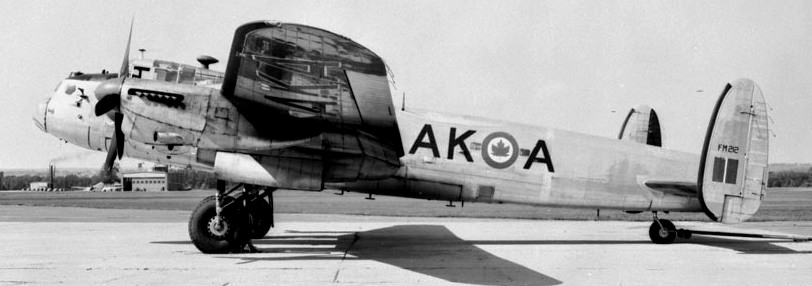
(Library and Archives Canada Photo, MIKAN No. 3584699)
Avro Lancaster Mk. 10, RCAF (Serial No. 212), coded AK-A, No. 408 (P) Squadron, 26 Aug 1952.
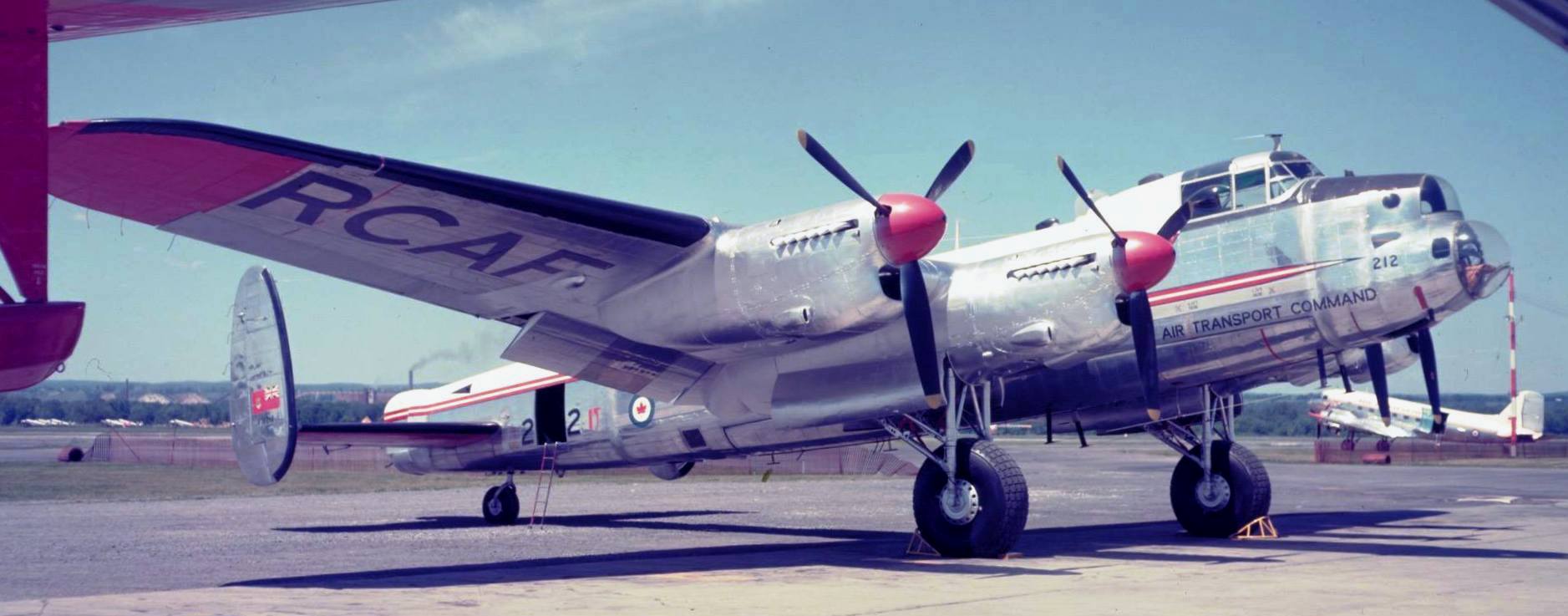
(DND Photo via James Craik)
Avro Lancaster Mk. 10MR (Serial No. FM212), coded AK-A, No. 408 (P) Squadron.
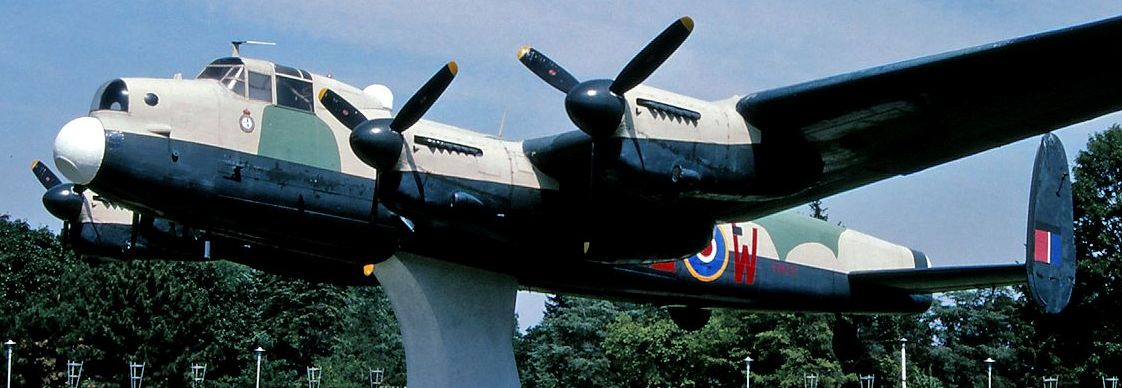
(John Meneely Photo, 1995)
Avro Lancaster Mk. 10MR (Serial No. FM212), coded EQ-W, built at Victory Aircraft in Malton, Ontario as a Mk. 10. FM212 was retained in Canada during the war. Modified to Mk. 10P (Photographic Survey), No. 408 Squadron, coded MN. Part of the second production batch to 130 aircraft ordered from Victory Aircraft Limited, Malton, Ontario. Serial numbers in this batch included FM100-FM229. Aircraft were equipped with Packard built Rolls-Royce Merlin 28, 38 or 224 engines. This Lancaster has been renamed “Bad Penny”, coded SR-N, to commemorate the first RAF Lancaster to fly into Holland during “Operation Manna” to save the Dutch from starvation in the closing days of the Second World War, 29 April 1945. Returned to factory, by then owned by Avro Canada, in 1948 and converted to a Mk. 10P. Served with No. 9 Squadron, No. 418 Squadron and No. 408 Squadron. Struck off charge on 9 October 1964. Stored at RCAF Station Dunnville, Ontario. Sold to the City of Windsor, Ontario and moved on a barge. Placed on display on a concrete pylon in Jackson Park. On 29 April, 2007 (to coincide with the 62nd anniversary of Operation Manna) FM212 was removed from storage in Jackson Park and towed to the Sears parking lot of Devonshire where it was on display and open for tours through the aircraft. On 13 May 2007, FM212 was towed from Devonshire Mall to Windsor Airport where it is on display and undergoing extensive restoration to return the aircraft back to a flight worthy status over the next few years.
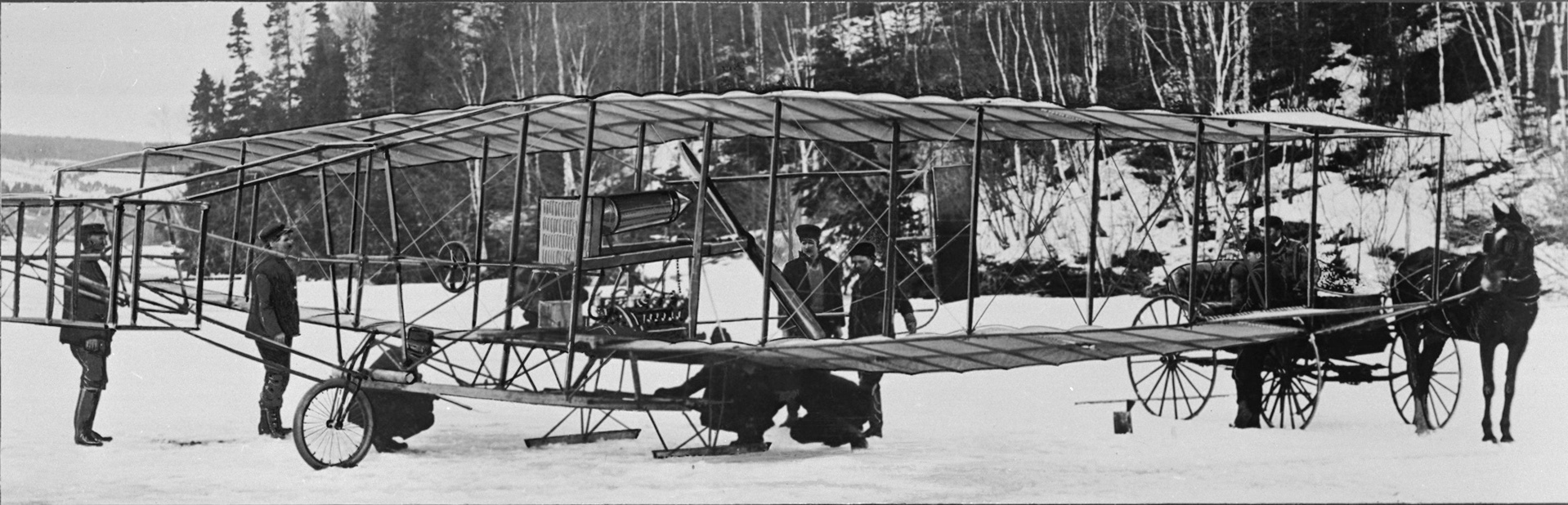
(DND Archives Photo, PL-113635)
The Silver Dart being prepared for a flight at Baddeck, Nova Scotia, February 1909.
(Library and Archives Canada Photo, MIKAN No. 3922995)
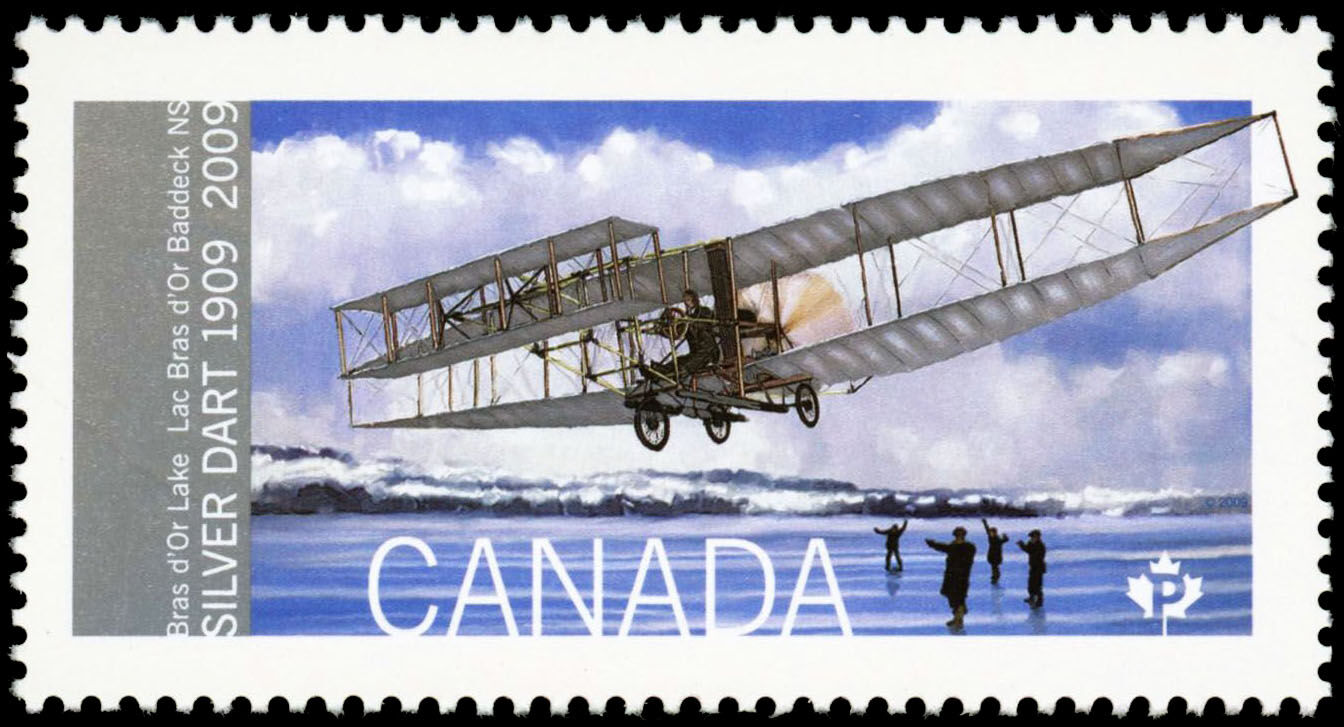
During the Canadian Centenary of Flight, Canada Post honored the Silver Dart – and the first flight in Canada – with a Canadian postage stamp released on 23 February 2009.
AEA Silver Dart half-scale model.
Silver Dart, the first powered, heavier-than-air machine to fly in Canada; designed and built by the Aerial Experiment Assn (Oct 1907-Mar 1909) under Alexander Graham BELL, a flight enthusiast since boyhood. After several successful flights at Hammondsport, NY, early in 1909 the Silver Dart was dismantled, crated and brought to Baddeck Bay, NS, the Bells’ Canadian home. The “aerodrome” (Bell’s preferred term) had a 14.9 m wingspan and an all-up weight of 390 kg, pilot included.
J.A.D. MCCURDY was the principal designer and pilot; Glenn H. Curtiss developed the water-cooled engine, an advance on the association’s earlier experiments. Pulled on to the ice of Baddeck Bay by horse drawn sleigh on Feb 23, the silver-winged machine rose on its second attempt after travelling about 30 m, flying at an elevation from 3 to 9 m at roughly 65 km/hr for 0.8 km. Over 100 of Bell’s neighbours witnessed the first flight of a British subject anywhere in the Empire.
(Library and Archives Canada Photo, MIKAN No. 3582154)
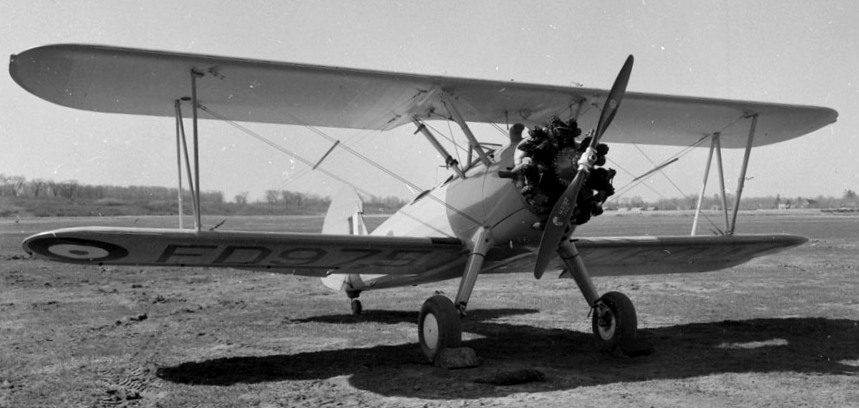
Boeing-Stearman PT-17 Kaydet, RCAF (Serial No. FD975), 29 Apr 1942.
(CAM Photo)
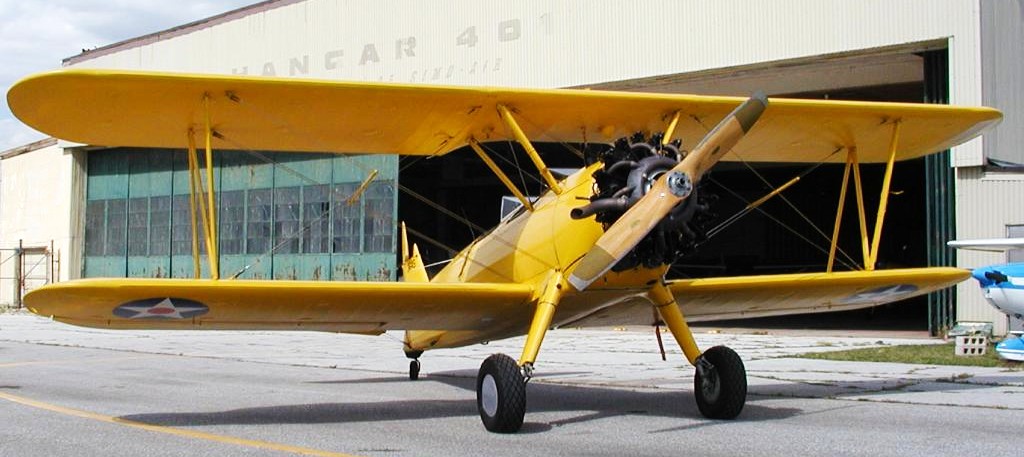
Boeing-Stearman A75N1/PT-17 Kaydet (Serial No. 75-2730), N2S2, CF-APG, C/N 75-3860), 1941.
(DND Photo)
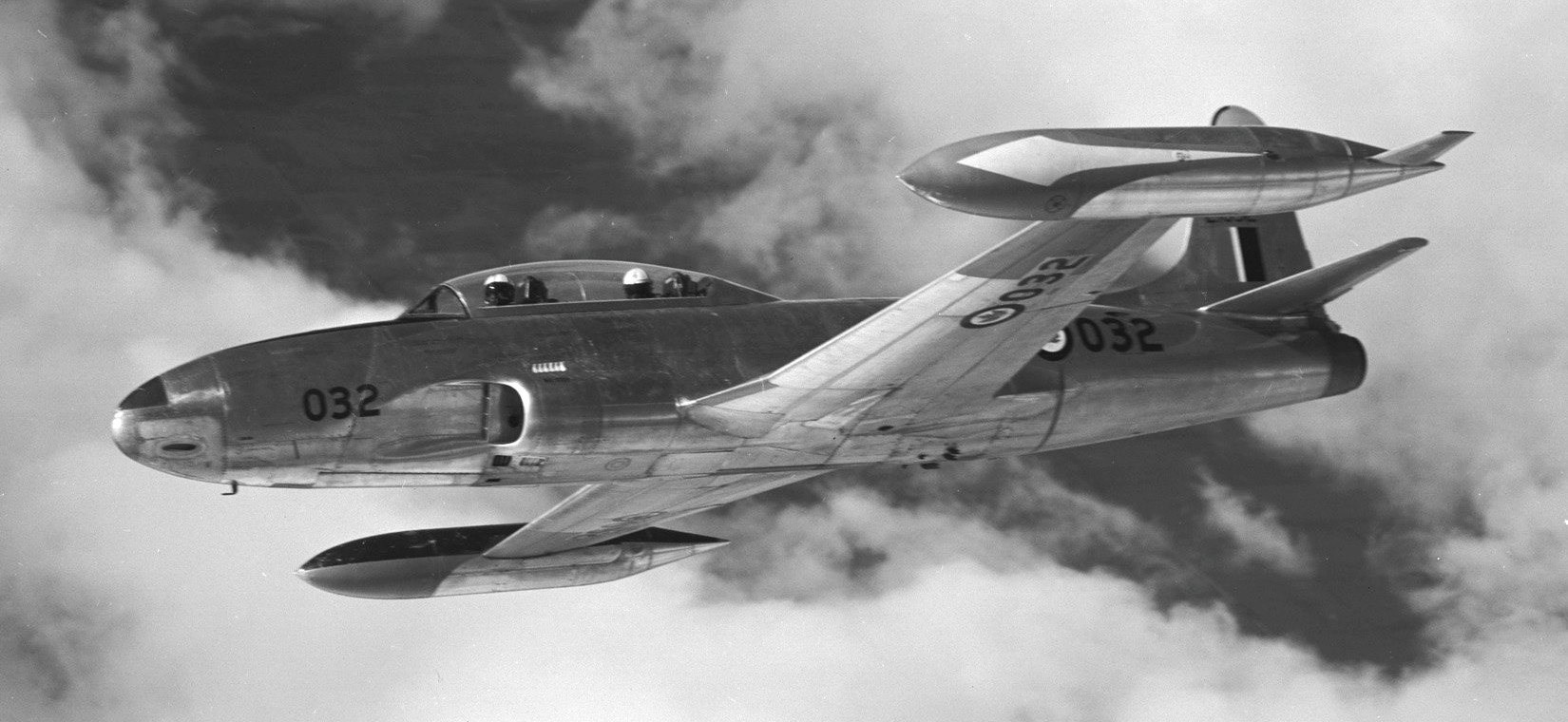
Canadair CT-133 Silver Star Mk. 1 (Serial No. 21032).
(Members of the CH2A Photo)
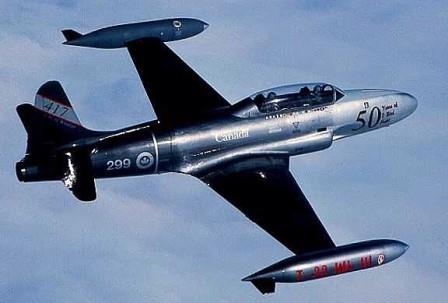
Canadair CT-133 Silver Star (Serial No. 133299).
(RAF Photo)
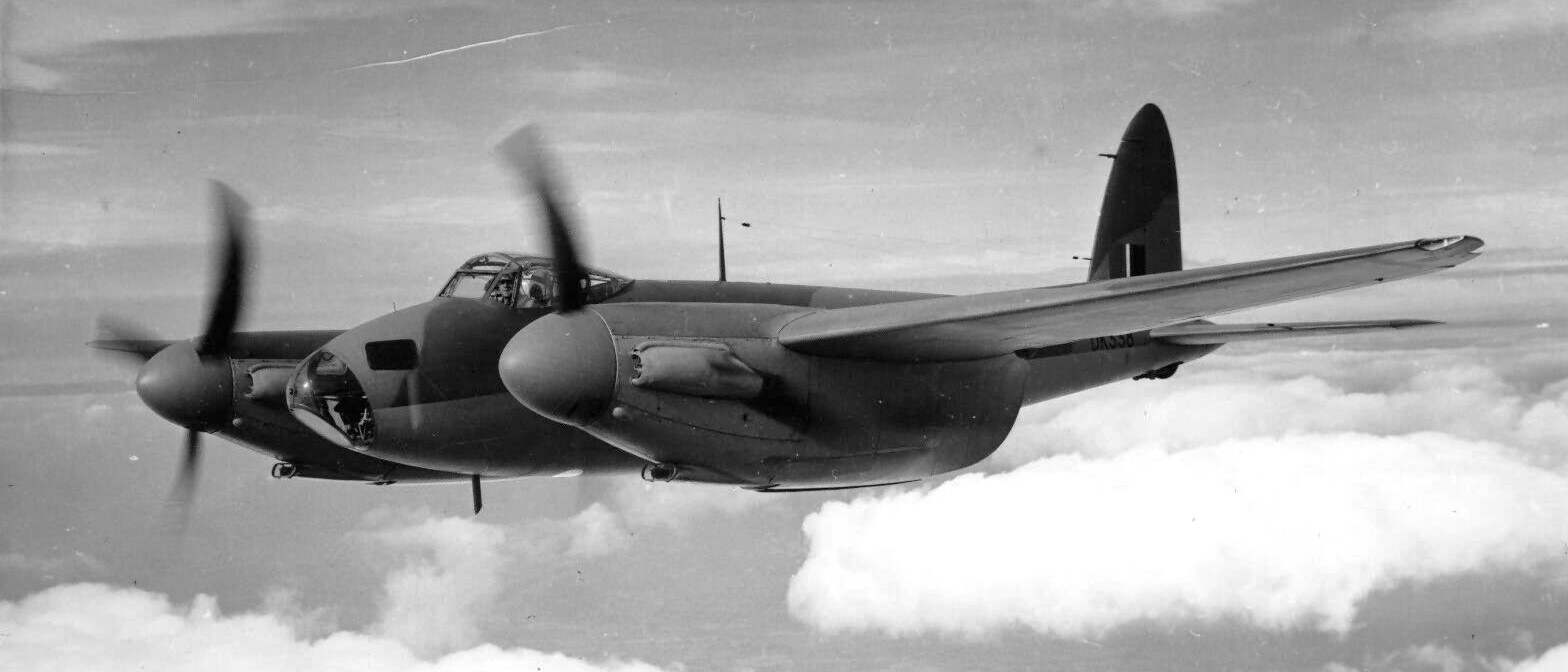
de Havilland DH.98 Mosquito (Serial No. DK388), No. 105 Squadron RAF, c1943.
(Members of the CH2A Photo)
de Havilland Canada DH.98 Mosquito Mk. XX (Serial No. KB161). The original Mosquito KB161 was a Mosquito Mk. XX manufactured by de Havilland’s Canadian subsidiary in Downsview, Ontario. The first five Canadian-built Mosquitoes arrived in Hatfield, England in the middle of August 1943. KB161, “Vancouver“, was one of the first to land on English soil.
KB161 took part in its first raid on 2 Dec 1943, an attack on Berlin and was flown by Canadian pilot G.W. Salter. The aircraft was allocated to No. 139 Squadron flying from RAF Wyton until Feb 1944 and then RAF Upwood airfield, Huntingdonshire. On the 11th of May 1944, the squadron was involved in bombing operations at Mannheim and Ludwigshaven, where the target was the I.G. Farben chemical works. It was piloted by F/O G.W. Lewis and Navigator F/O A.J.A. Woollard. KB161, coded XD-H, was tasked to drop a pattern of Target Indicator flares. On returning from the mission, it was found that one flare had not dropped correctly and was lodged in the bomb-bay. It ignited and caught fire to the belly of the aircraft. F/O Woollard was able to bale out with the help of Pilot Lewis, who was himself not able to escape. The aircraft soon crashed. KB161 had also become the first Canadian-built Mosquito to be destroyed in Bomber Command service.
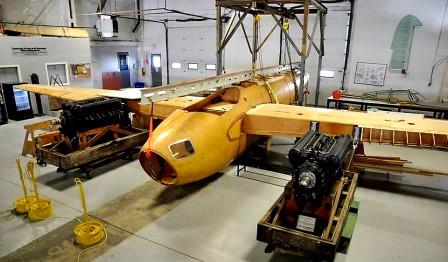
de Havilland DH.98 Mosquito B Mk. 35 (Serial No. TA661), CF-HMR, partial airframe.
(DND Archives Photo, PL-3582)
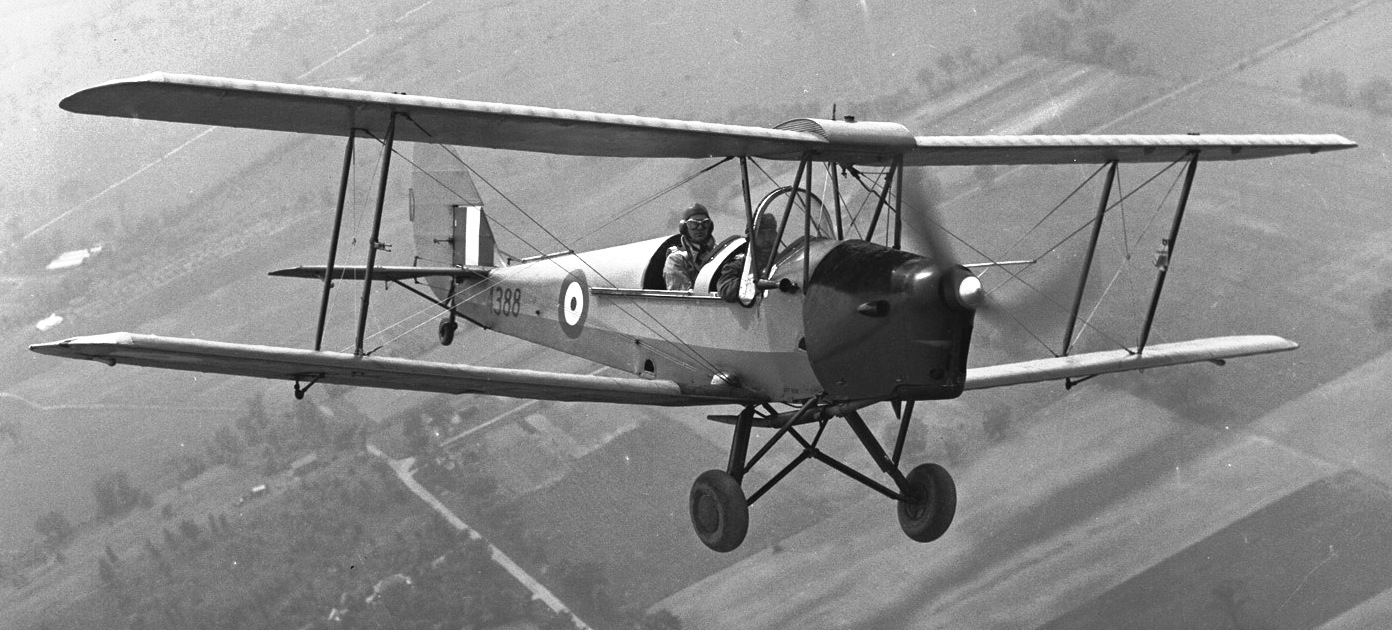
de Havilland DH.82C Tiger Moth, RCAF (Serial No. 4388).
de Havilland DH.82C Tiger Moth, Reg. No. CF-CIH. Project.
(CAM Photo)
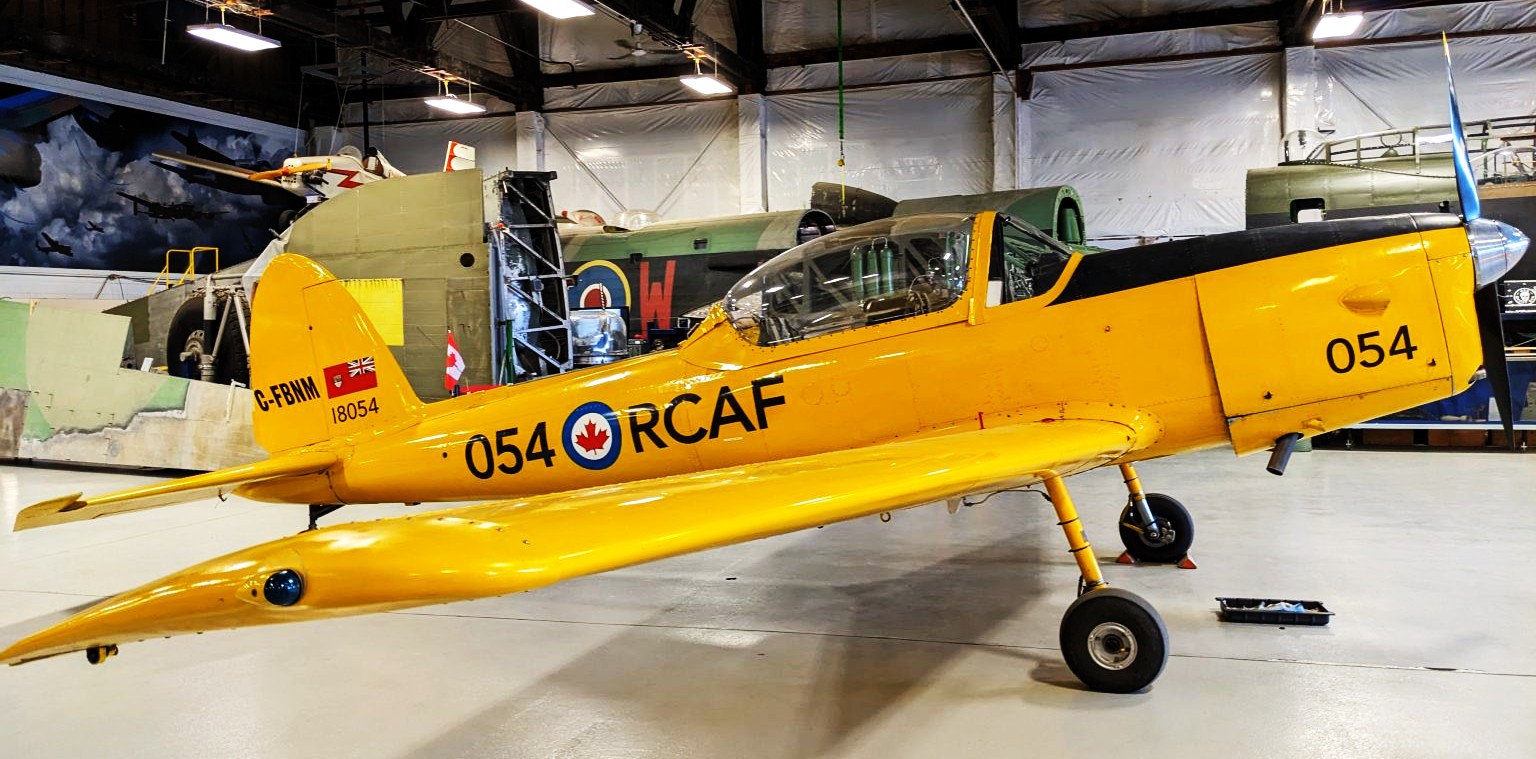
de Havilland Canada CT-120 Chipmunk (Serial No. 18054), 192/230, CF-BNM, painted as 054.
de Havilland Canada CT-120 Chipmunk (Serial No. 18017), 151/189, CF-CYR, painted as 017.
(RCAF Photo)
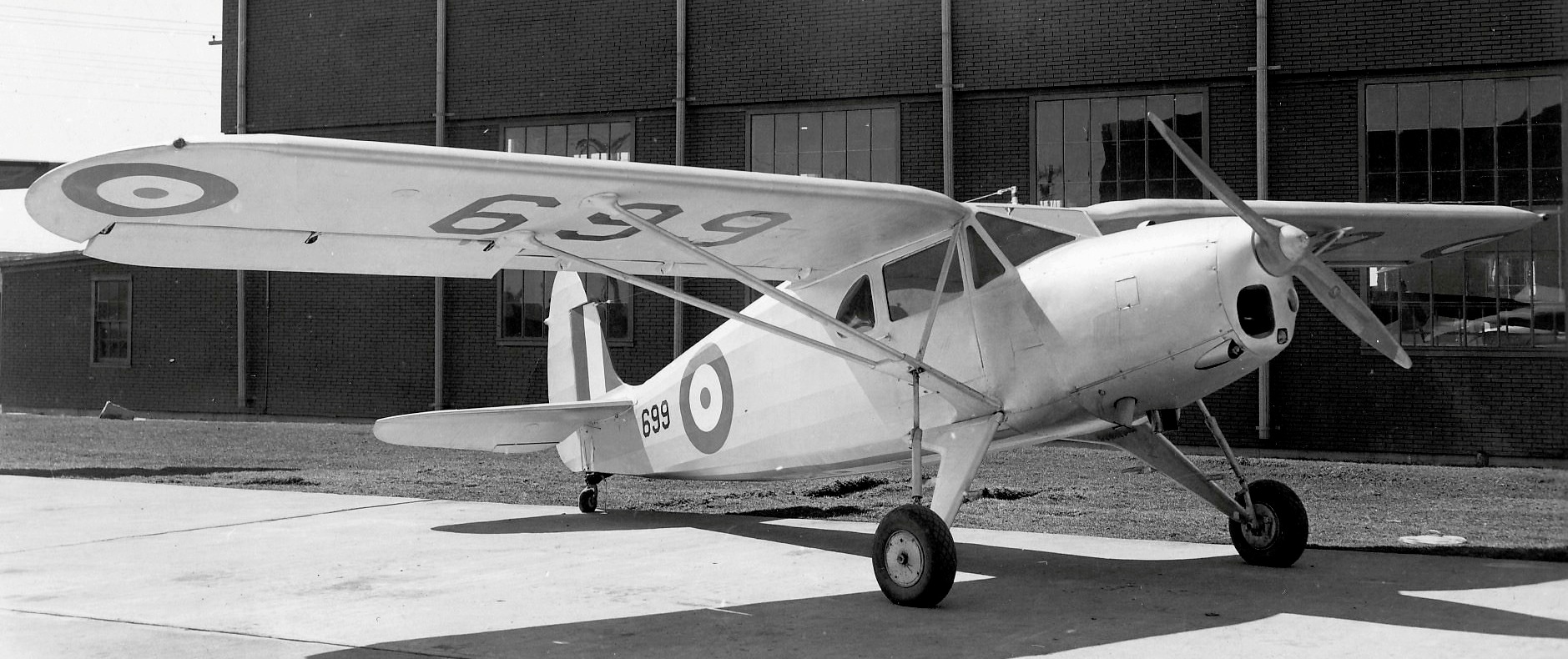
Fairchild F-24H Argus, RCAF (Serial No. 699). Flown out of Rockcliffe, Ottawa, Ontario from Nov 1940 until she was struck off strength in Dec 1942.
(CAM Photo)
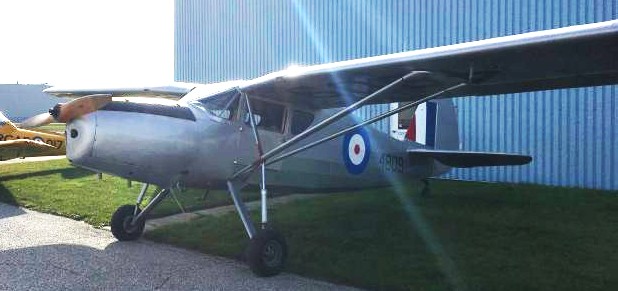
Fairchild 24R Argus (Serial No. 4809). CH2A’s 1946 Fairchild 24R was donated by the previous owner to the association. He had purchased it from the Canadian Warplane Heritage Museum in Hamilton, Ontario, who had restored the aircraft to airworthy status and painted it in its current RCAF markings. The paint scheme commemorates one of only two Argus’ taken on strength by the RCAF in the Second World War. Argus 4809 served at RCAF Station Rockcliffe from November 1940 until October 1945. The other Fairchild 24H, registered as 699, was struck off strength in December 1942.
(RCAF Photo)
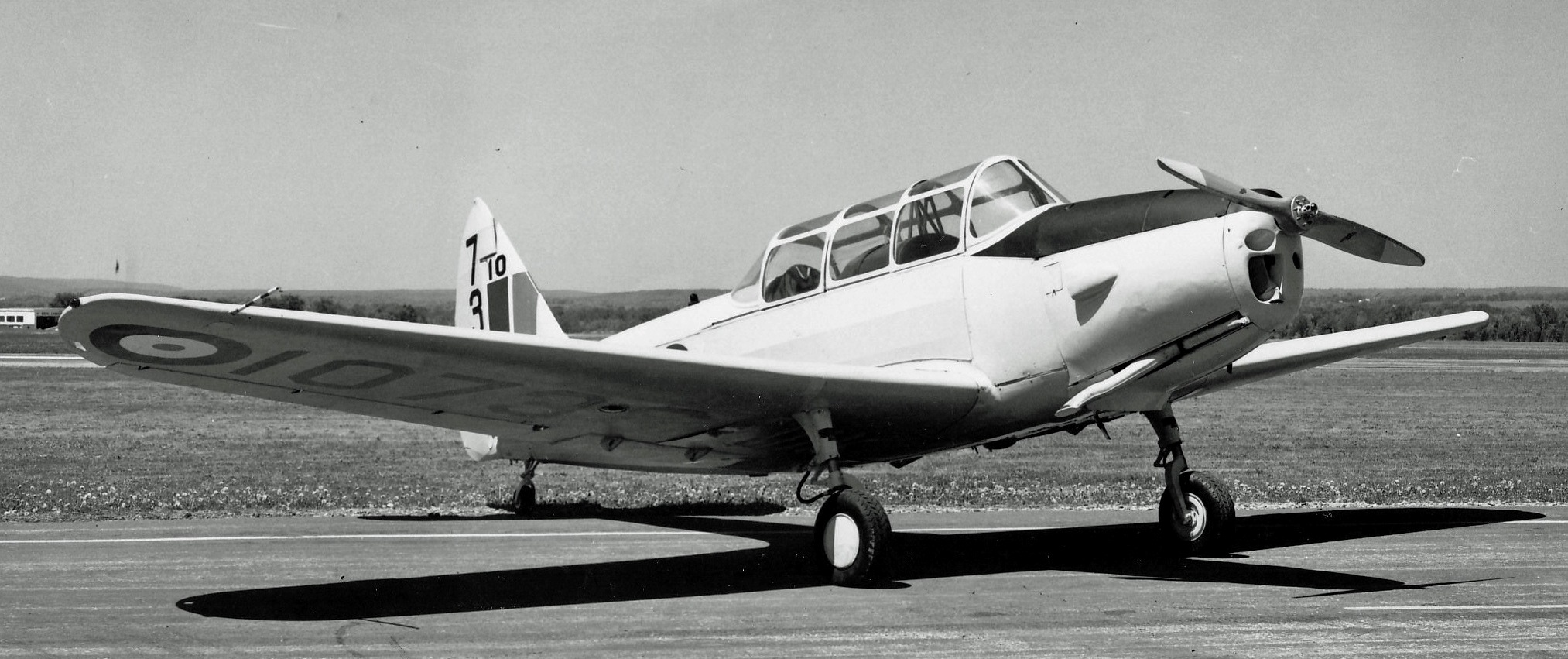
Fairchild M-62A-4 Cornell Mk. II, RCAF (Serial No. 10730).
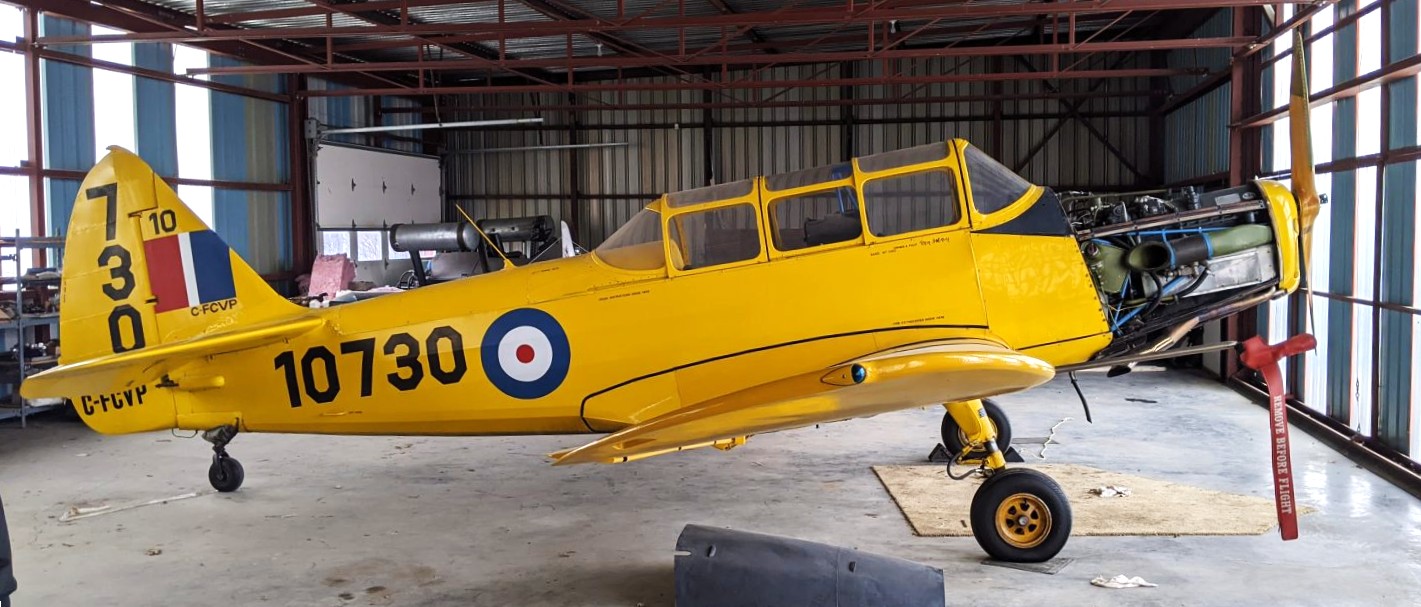
(CAM Photo)
Fairchild PT-26B Cornell (Serial No. 10730), Reg. No. C-FCVP.
(RCAF Photo)
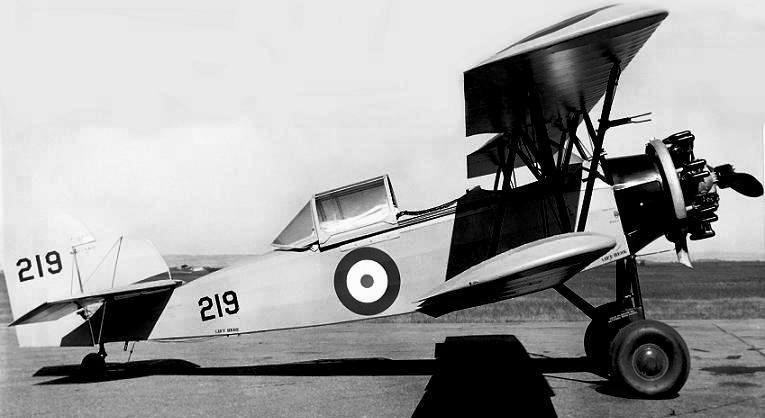
Fleet Fawn Mk. II , RCAF (Serial No. 219).
Fleet 7B Fawn, Reg. No. CF-CEQ, c/n 68.
The Fleet Model 7 first saw service with the Royal Canadian Air Force in 1931 when 20 Mk Is were delivered. As a two-seater primary trainer they were felt to have excellent flying characteristics together with a rugged strength which inspired confidence in novice pilots. The RCAF was very impressed with the Fleet Fawn and claimed that the aircraft was one of the factors which improved its flying standards during the 1930s. A total of 31 Model 7Cs were built between 1931 and 1938 at the Fleet Aircraft of Canada’s plant at Fort Erie, Ontario, with the first deliveries made in 1936. Due to the smoother, quieter and more powerful engine, the Model 7C was considered the definitive variant. Forty three Fleet Model 7B and C trainers were operational with the Royal Canadian Air Force when war was declared in 1939. In service during the Second World War, the RCAF adopted the name “Fawn” for both variants. Along with the more modern follow-up design, the Fleet Finch, Fleet Fawns helped train thousands of pilots under the British Commonwealth Air Training Plan during the war. The Fawn remained in service with the RCAF until 1947. (CAM)
(CAM Photo)
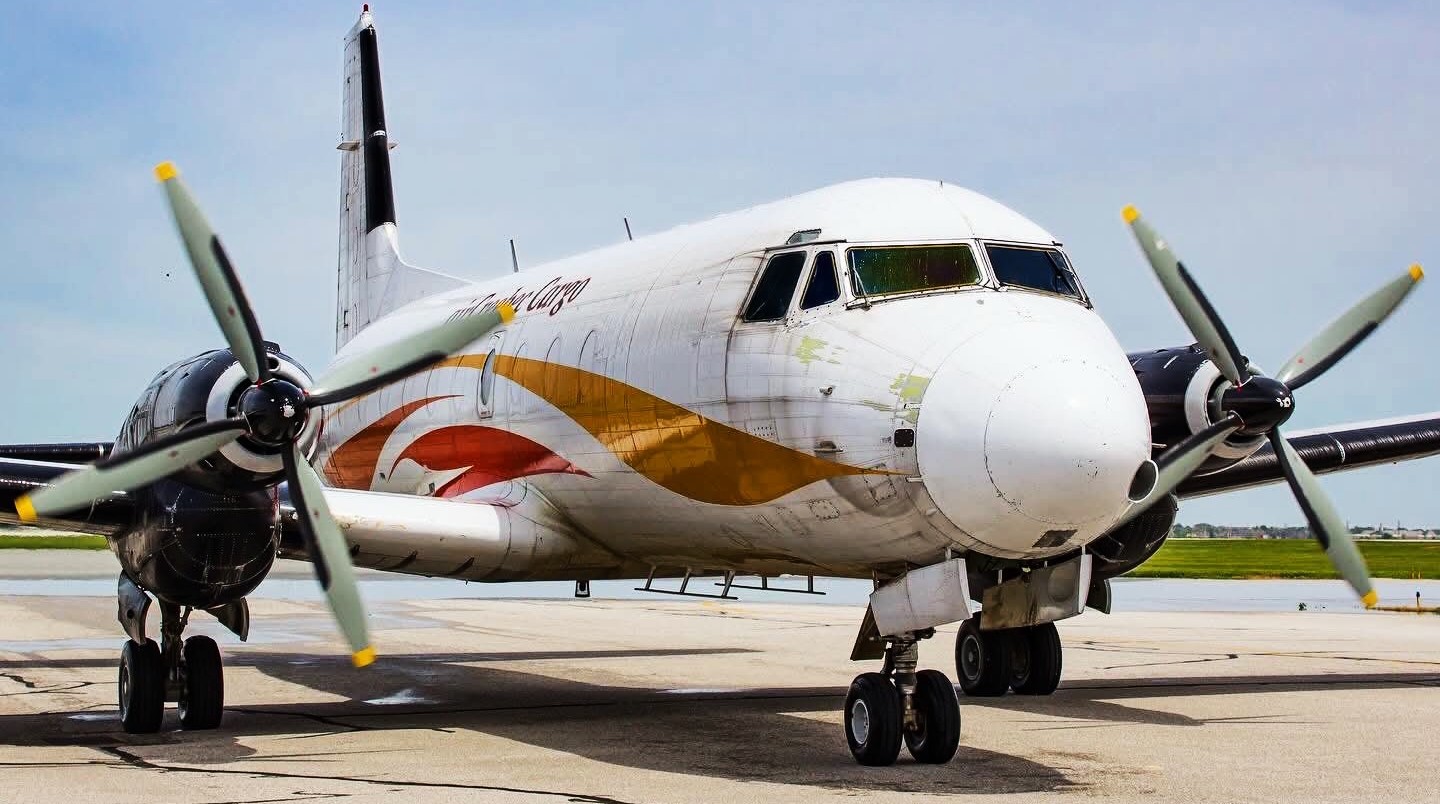
Hawker Siddeley HS 748, Air Creebec, Reg. No. C-FLIY. The AVRO 748, a twin-turboprop airliner, first flew in June 1960. It was designed by A.V. Roe and Company (AVRO) and later produced by Hawker Siddeley Aviation, British Aerospace, and Hindustan Aeronautics. The aircraft was a successful replacement for the DC-3 and saw service with both civilian and military operators.
(USAF Photo)
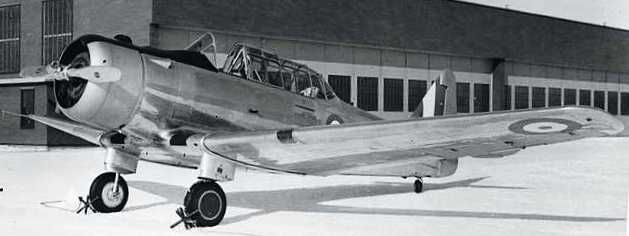
North American NA-64 Yale, shortly after being taken on strength as an intermediate trainer, at Camp Borden, Ontario.
North American Yale, RCAF (Serial No. 3409), construction number 64-2158) is one of a batch of 39 surplus Yale aircraft that were purchased after the war by Tillsonburg Ontario farmer Ernie Simmons. Mr. Simmons was convinced the war was not over and he could sell the aircraft back to the government at a profit. The aircraft sat on his farm from 1946 until his death in 1970. At this time his collection was put up for auction. Many were bought for scrap, many were purchased by aviation enthusiasts. All of the surviving Yale aircraft today came from Mr. Simmons’ farm. The CAM Yale, 3409 served at #1 SFTS Camp Borden as a pilot trainer and at #4 Wireless School Guelph as a wireless trainer. In this role it flew from the airfield at #9 EFTS St. Catharines Ontario. Over the course of its service life it had three minor Category “C” mishaps and was quickly put back into service.
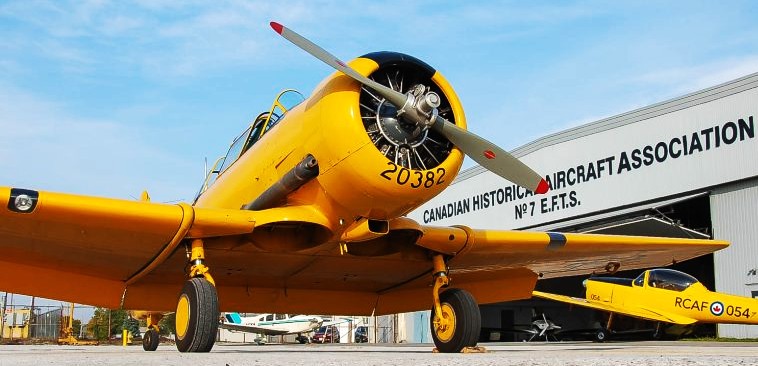
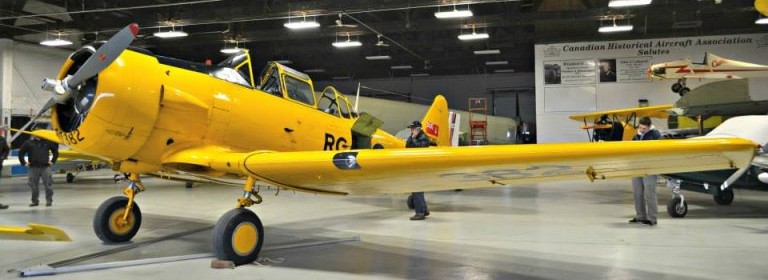
(CAM Photos)
Canadian Car and Foundry Harvard Mk. IV (Serial No. 20382), C-FVIJ, built in 1952 at Fort William, Ontario, this aircraft is one of 270 built for the RCAF.
(RCAF Photo)
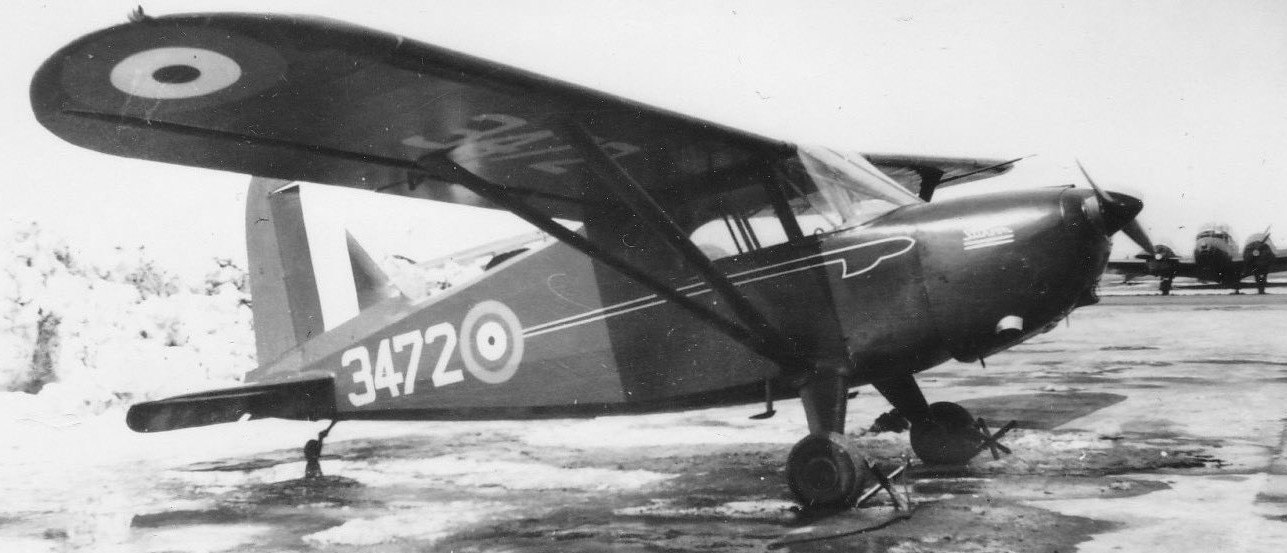
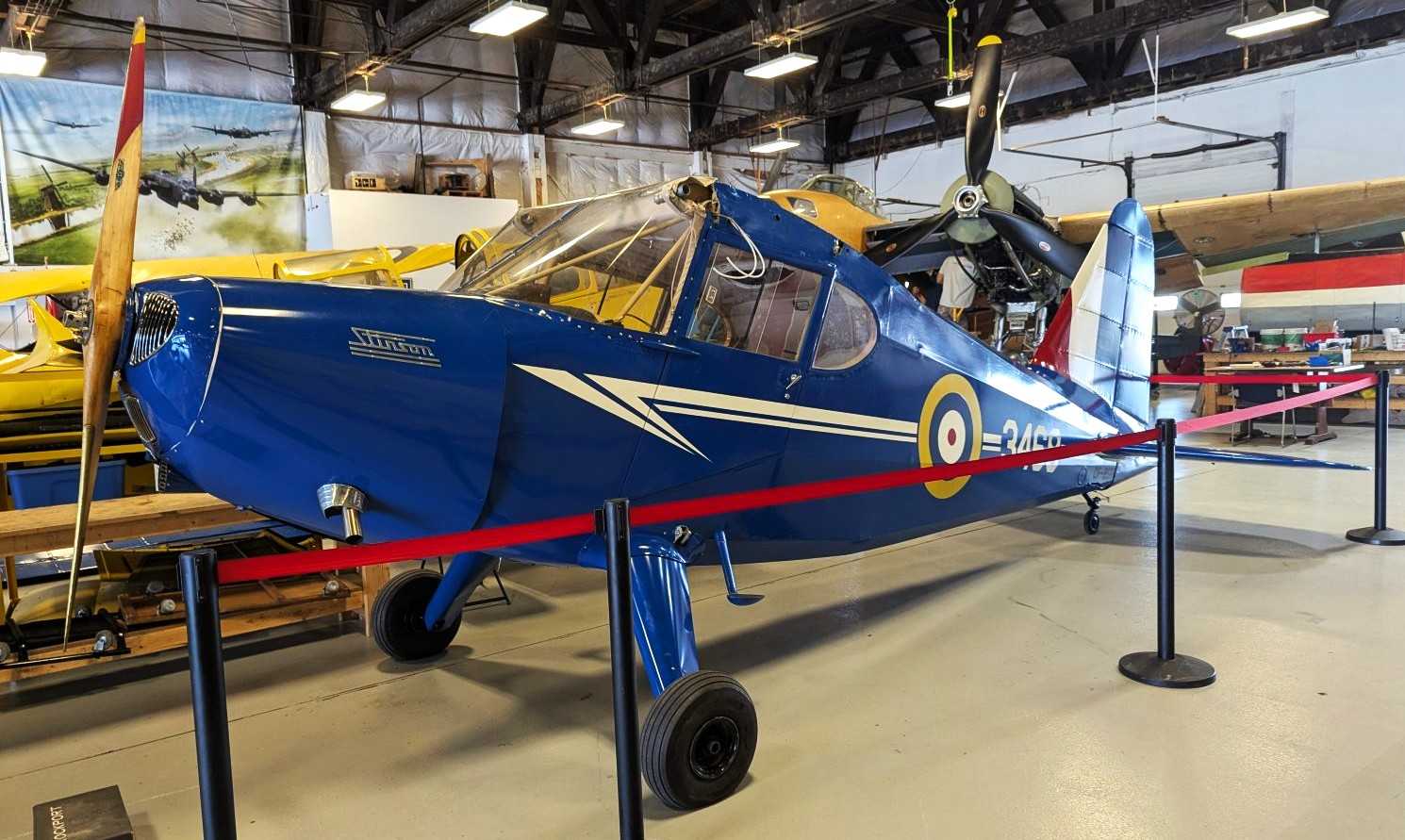
Stinson Model 105, RCAF (Serial No. 3472).
(Eric Dumigan Photo)
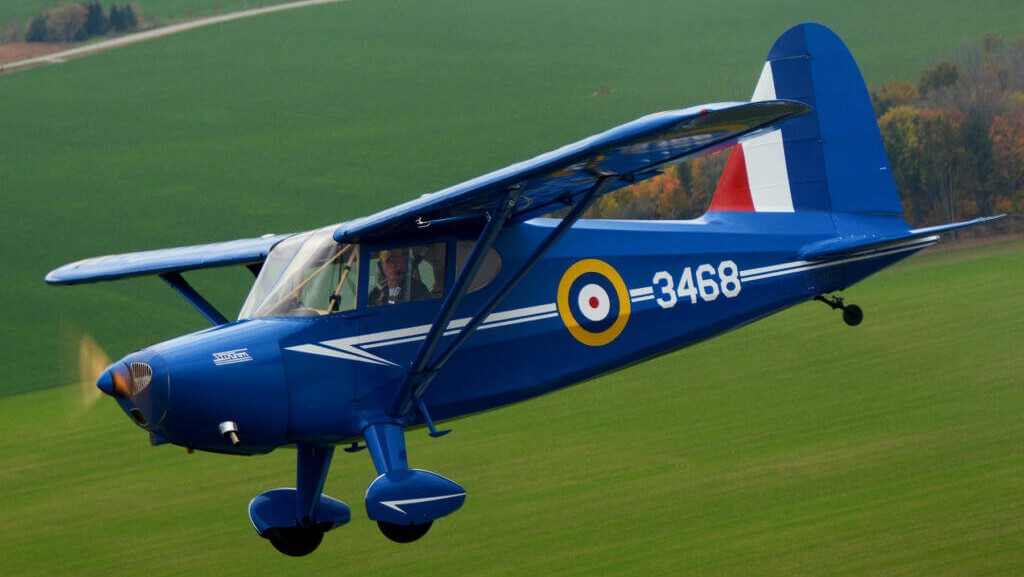
Ex-RCAF Stinson HW-75 (105) Voyager (Serial No. 3468), built in 1939, and being flown by Murray Kot. The 1.939 HW-75 was designed with a geared 75hp Lycoming but was released as the Model 105 with a Continental 80hp engine. The later Stinson 10A had the 90hp Franklin engine.
(CAM Photo)
Stinson 105 Voyager, RCAF (Serial No. 3468), Reg. No. CF-BST.