US Navy Heavy and Light Cruisers: USS Oakland (CL-95), USS Reno (CL-96), USS Flint (CL-97), USS Tucson (CL-98), USS Buffalo (CL-99), USS Newark (CL-100), USS Amsterdam (CL-101), USS Portsmouth (CL-102), USS Wilkes-Barre (CL-103), USS Atlanta (CL-104), USS Dayton (CL-105)
Atlanta class (Oakland subclass)
(CL-95) Oakland (1943) – WW2: 9 battle stars.
(CL-96) Reno (1943) – WW2: 3 battle stars.
(CL-97) Flint (1944) – WW2: 4 battle stars.
(CL-98) Tucson (1945) – WW2: 1 battle star.
USS Oakland (CL-95)
(USN Photo)
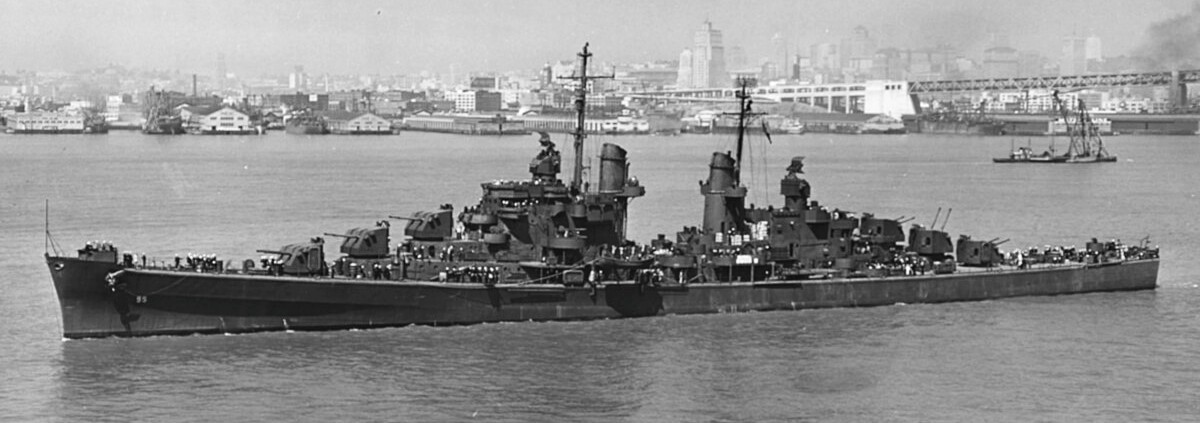
USS Oakland (CL-95) in San Francisco Bay, California (USA), with the San Francisco waterfront in the background, 2 August 1943.
USS Oakland (CL-95), was a modified Atlanta-class light cruiser, the first of a group of four sometimes referred to as the “Oakland-class”. She was laid down by Bethlehem Shipbuilding Corporation, San Francisco, California, on 15 July 1941; launched on 23 October 1942; sponsored by Dr. Aurelia Henry Reinhardt, president of Mills College, Oakland, California; and commissioned on 17 July 1943.[4] She was named for the city of Oakland, California. Like the Atlanta class, the Oakland class was designed as an anti-aircraft cruiser, with a main battery of dual-purpose guns, the principal difference between the two classes being that the Oakland-class did not have the Atlanta class’s two-beam twin 5 in (127 mm)/38 cal gun turrets. They were removed for the sake of stability and the limited arcs of fire experienced by the wing turrets on the Atlantas. Oakland sustained three casualties during the Second World War. (Wikipedia)
USS Reno (CL-96)
(USN Photo)
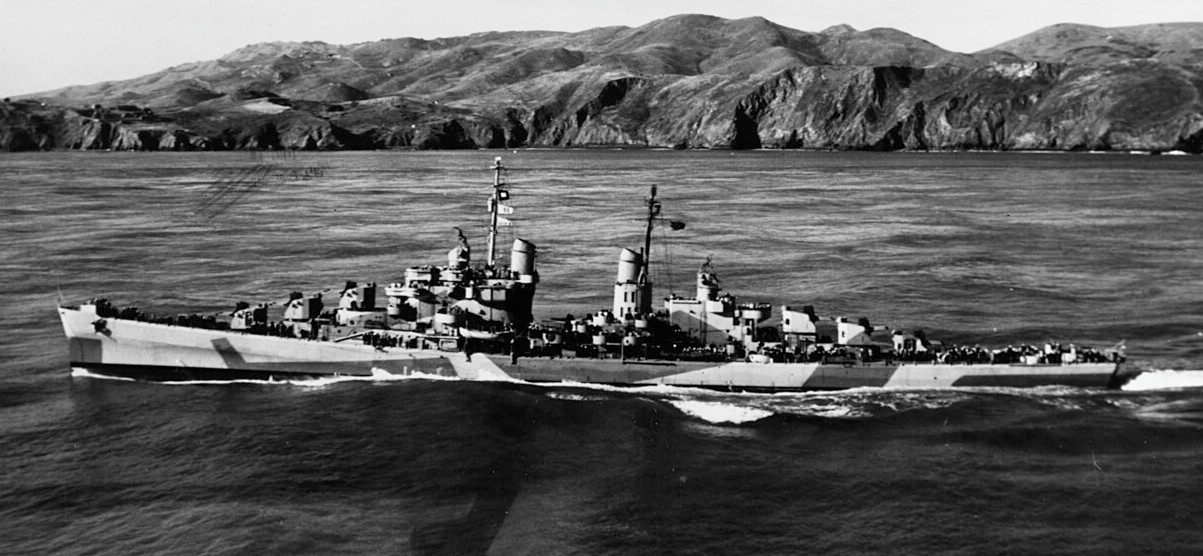
USS Reno (CL-96) underway off California, 25 January 1944
USS Reno (CL-96) was an updated Atlanta-class light cruiser – sometimes referred to as an “Oakland-class” – designed and built to specialize in antiaircraft warfare. She was the first warship to be named for the city of Reno, Nevada. Reno (DD-303) was a destroyer named for Lt. Commander Walter E. Reno.
Reno was laid down by Bethlehem Shipbuilding Corporation, at San Francisco, California, on 1 August 1941. She was launched on 23 December 1942; sponsored by Mrs. August C. Frohlich; and commissioned on 28 December 1943. The USS Reno saw combat in the Pacific theater from April 1944 until it was torpedoed and damaged in November that year. The light cruiser was repaired and performed several transport voyages to Europe before being decommissioned in November 1946. (Wikipedia)
(USN Photo)
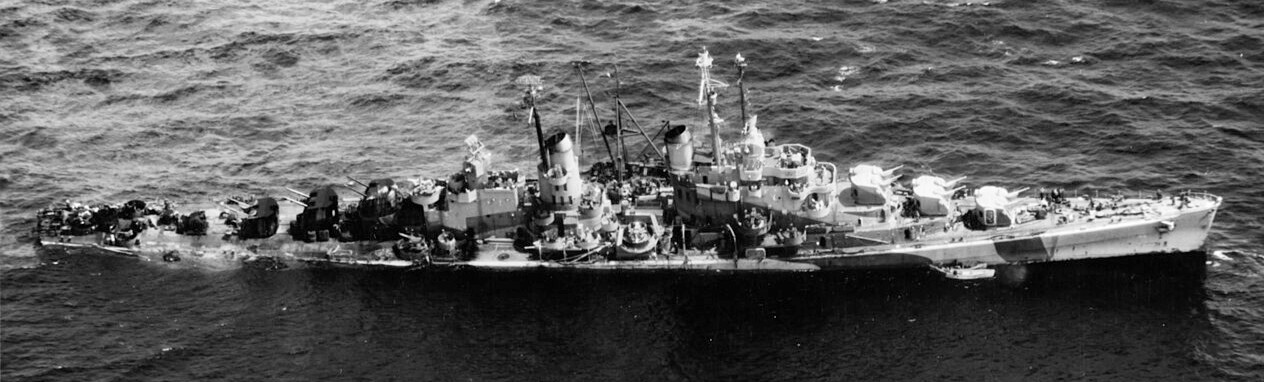
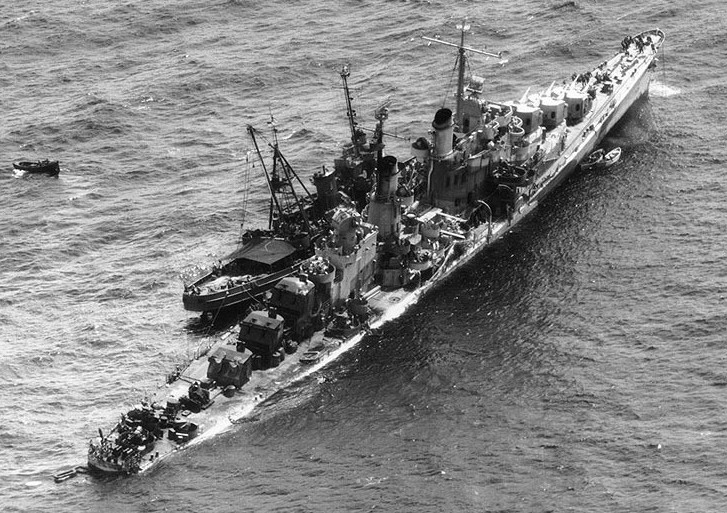
USS Reno (CL-96) under salvage after being torpedoed off the Philippines on 3 November 1944. The photograph was taken on 5 November, while the fleet tug USS Zuni (ATF-95) was tied up to Reno’s port side. Note the large amount of fuel oil on the sea.
(USN Photo)
USS Reno (CL-96) under salvage after she was torpedoed by the Japanese submarine I-41 on 3 November 1944, while operating off the Philippines. The photograph was taken the following day and shows the tug with USS Zuni (ATF-95) alongside.
USS Flint (CL-97)
(USN Photo)
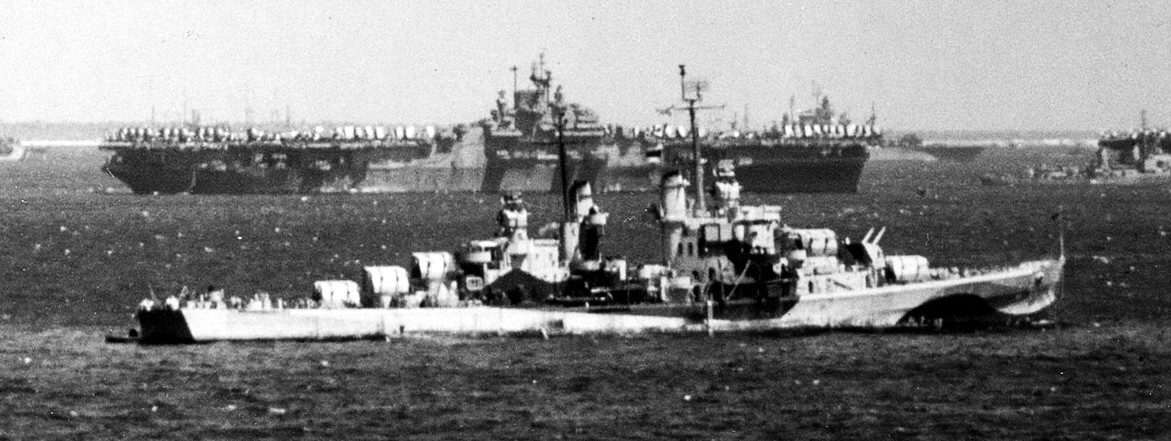
USS Flint (CL-97), probably at Ulithi Atoll, circa late March 1945, as the U.S. Fifth Fleet was departing for the Okinawa operation. Flint´s camouflage is Measure 33, Design 22D. Note the Essex-class carrier in the background.
USS Flint (CL-97) was a modified Atlanta-class light cruiser, sometimes referred to as an “Oakland-class”. She was named after the city of Flint, Michigan. She was launched on 25 January 1944 by Bethlehem Shipbuilding Corporation of San Francisco, California, sponsored by Mrs. R. A. Pitcher. She was and commissioned on 31 August 1944. She was reclassified CLAA-97 on 18 March 1949. (Wikipedia)
USS Tucson (CL-98)
(USN Photo)
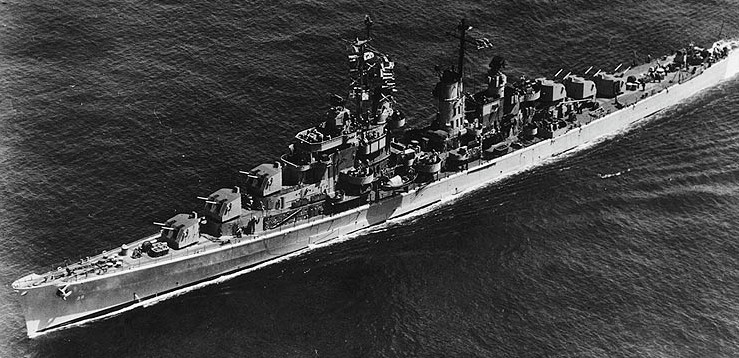
USS Tucson (CL-98) underway, circa the later 1940s.
USS Tucson (CL-98/CLAA-98) was a modified Atlanta-class light cruiser, sometimes referred to as an “Oakland-class”. She was laid down on 23 December 1942 in San Francisco, California, by the Bethlehem Steel Corporation; launched on 3 September 1944; sponsored by Mrs. Emmett S. Claunch, Sr.; and commissioned on 3 February 1945.[4] She was named after Tucson, Arizona. She, along with the surviving Atlanta-class, was reclassified a light antiaircraft cruiser (CLAA) on 18 March 1949, prior to her decommissioning on 18 June 1949. (Wikipedia)
Cleveland class
(CL-99) Buffalo (completed as Bataan (CVL-29)),
(CL-100) Newark (completed as San Jacinto (CVL-30)).
(CL-101) Amsterdam (1945) – WW2: 1 battle star.
(CL-102) Portsmouth (1945).
(CL-103) Wilkes-Barre (1944) – WW2: 4 battle stars.
(CL-104) Atlanta (1944) – WW2: 2 battle stars, later IX-304.
(CL-105) Dayton (1945) – WW2: 1 battle star.
USS Buffalo (CL-99)
The USS Buffalo (CL-99) was to have been a Cleveland class light cruiser, but the ship was actually completed as the light carrier USS Bataan (CVL-29). Her production demonstrates the long term nature of the American ship building programme adopted after Pearl Harbor – the name was allocated to a planned cruiser on 28 December 1940, but the hull of the resulting carrier wasn’t laid down until 31 August 1942, a year and a half later. By that point she had been renamed, while the CV-29 designation was allocated on 29 June 1942. The name Buffalo was reallocated to the later Cleveland class cruiser CL-110, but that ship was cancelled at the end of the war, before any work had been carried out.
USS Newark (CL-100)
USS Newark (CL-100) was a Cleveland-class light cruiser that was converted during construction to the Independence-class light aircraft carrier USS San Jacinto (CVL-30).
USS Amsterdam (CL-101)
(USN Photo)
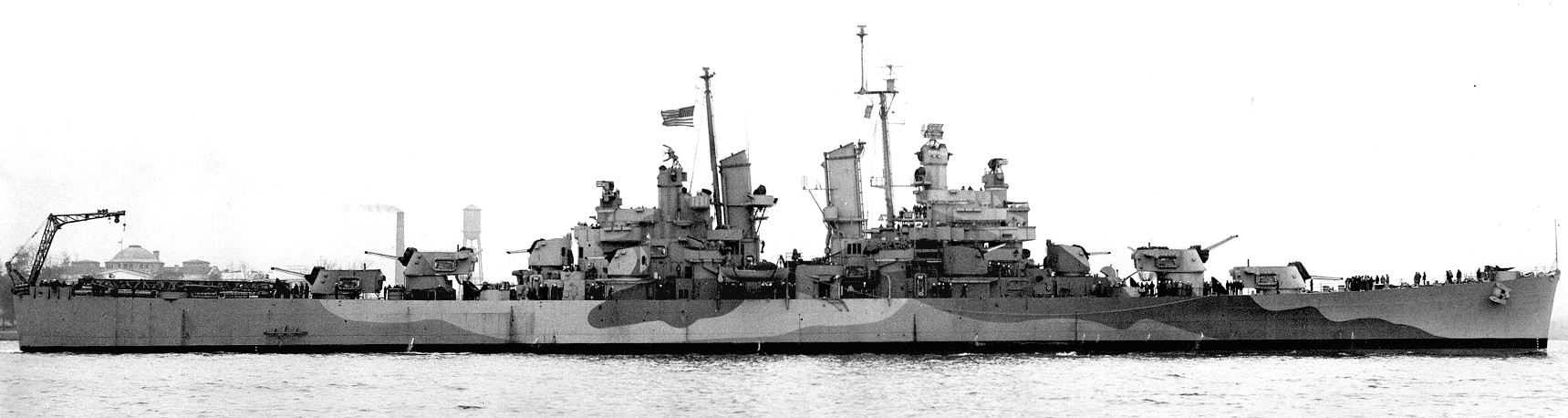
USS Amsterdam (CL-101) off Norfolk, Virginia (USA), on 29 January 1945. She is painted in Camouflage Measure 31a, Design 10C.
USS Amsterdam (CL-1010 was a Cleveland-class light cruiser of the United States Navy, which were built during World War II. The class was designed as a development of the earlier Brooklyn-class cruisers, the size of which had been limited by the First London Naval Treaty. The start of the war led to the dissolution of the treaty system, but the dramatic need for new vessels precluded a new design, so the Clevelands used the same hull as their predecessors, but were significantly heavier. The Clevelands carried a main battery of twelve 6-inch (152 mm) guns in four three-gun turrets, along with a secondary armament of twelve 5 in (127 mm) dual-purpose guns. They had a top speed of 32.5 knots (60.2 km/h; 37.4 mph).
The ship was laid down on 3 March 1943 at Newport News, Virginia, by the Newport News Shipbuilding & Dry Dock Company, launched on 25 April 1944, sponsored by Mrs. William E. Hasenfuss (the first “Gold Star Mother” of Amsterdam, New York, who had lost her son William E. Hasenfuss, Jr. in the Japanese attack on Pearl Harbor), and commissioned at the Norfolk Navy Yard Portsmouth, Virginia, on 8 January 1945, Captain Andrew P. Lawton in command. (Wikipedia)
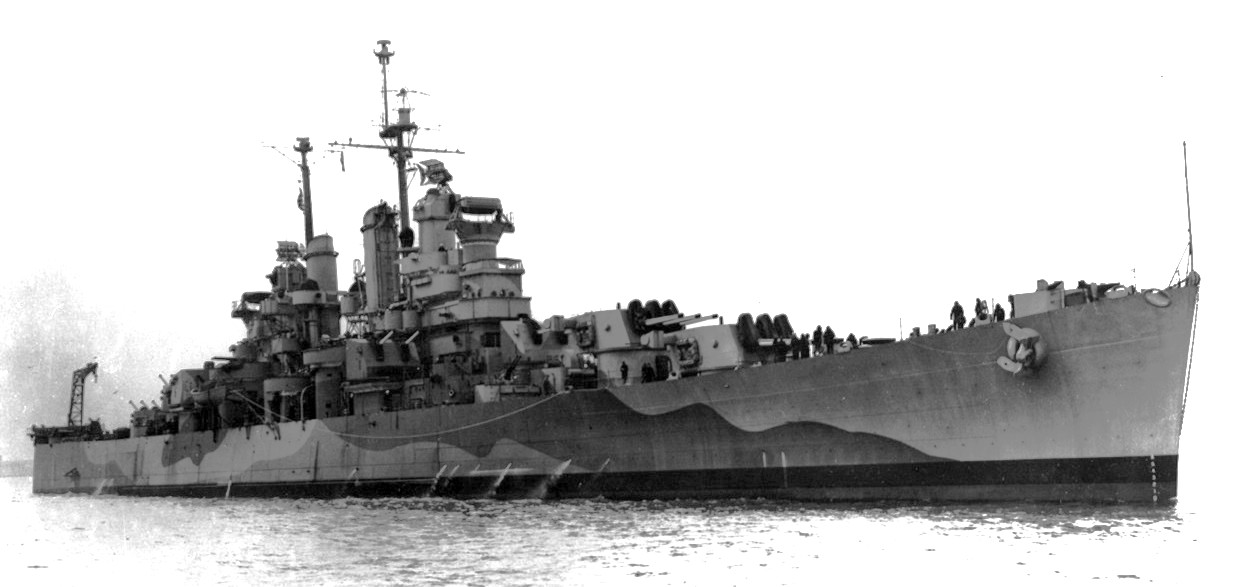
(USN Photo)
USS Amsterdam (CL-101) starboard bow view off the Norfolk Naval Shipyard, 29 January 1945. Note the high waterline. She has yet to take on ammunition. She is wearing camouflage Measure 31a, Design 10c.
USS Portsmouth (CL-102)
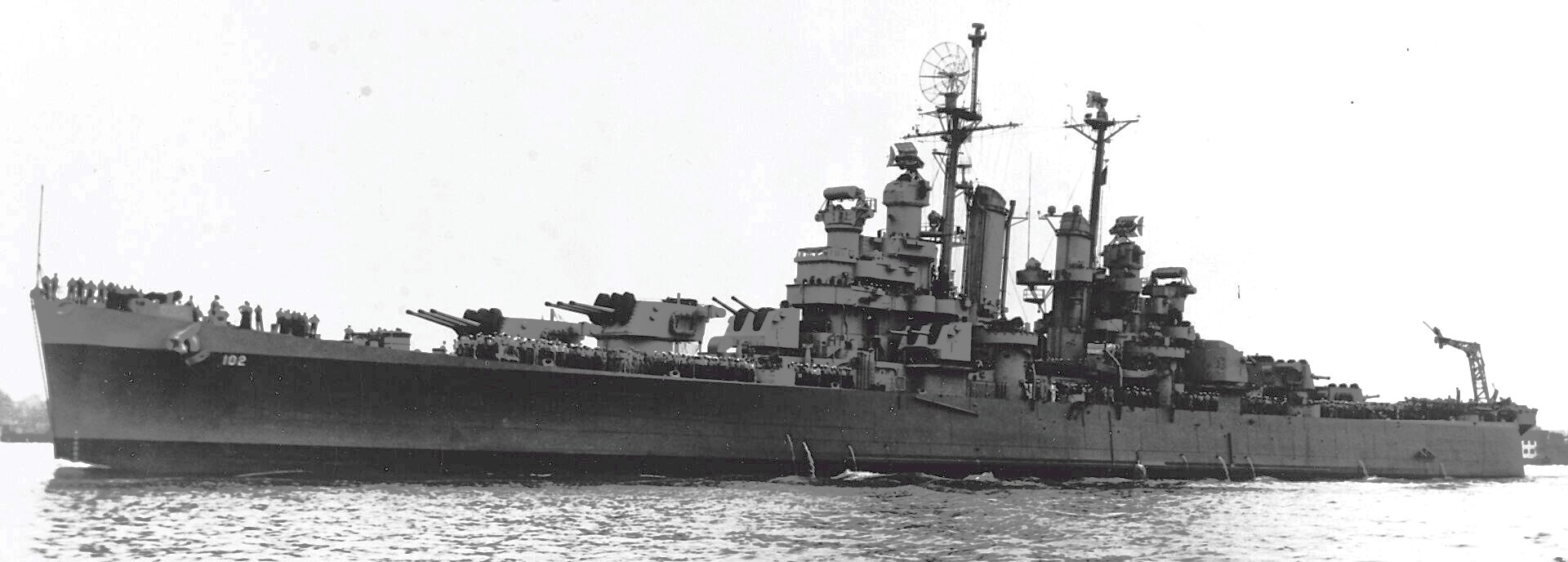
(USN Photo)
USS Portsmouth (CL-102) off the Norfolk Naval Shipyard, Virginia (USA), on 22 July 1945.
USS Portsmouth was a Cleveland-class light cruiser of the United States Navy, which were built during World War II. The class was designed as a development of the earlier Brooklyn-class cruisers, the size of which had been limited by the First London Naval Treaty. The start of the war led to the dissolution of the treaty system, but the dramatic need for new vessels precluded a new design, so the Clevelands used the same hull as their predecessors, but were significantly heavier. The Clevelands carried a main battery of twelve 6-inch (152 mm) guns in four three-gun turrets, along with a secondary armament of twelve 5 in (127 mm) dual-purpose guns. They had a top speed of 32.5 knots (60.2 km/h; 37.4 mph). Portsmouth was laid down in 1943, launched in September 1944, and commissioned in June 1945. By the time she completed her initial sea trials, the war had ended, so her career was short and uneventful. She made three overseas cruises to visit ports in Africa and the Mediterranean Sea between 1946 and 1948 before conducting training cruises later in 1948. The following year, she was decommissioned and assigned to the Atlantic Reserve Fleet, where she remained until 1970, when she was broken up. (Wikipedia)
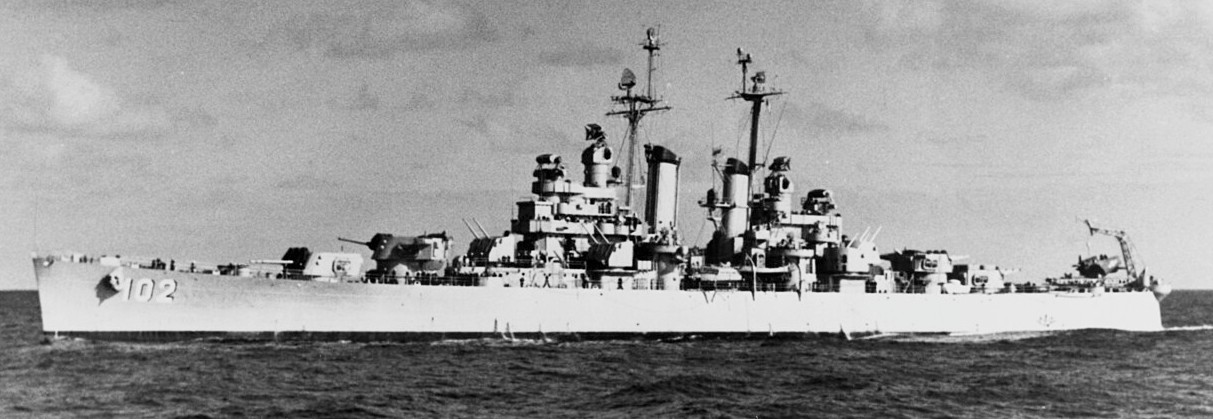
(USN Photo)
USS Portsmouth (CL-102) underway at sea on 22 April 1948.
USS Wilkes-Barre (CL-103)
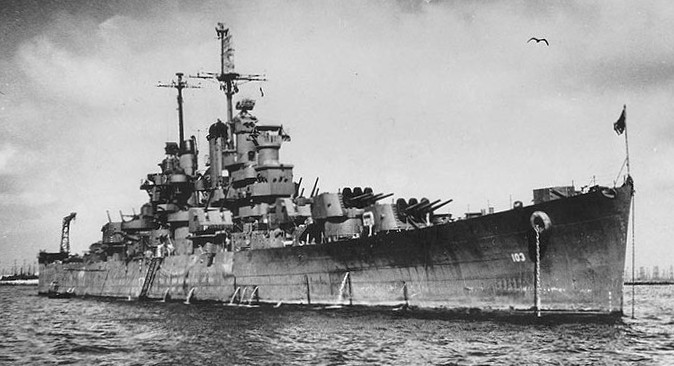
(USN Photo)
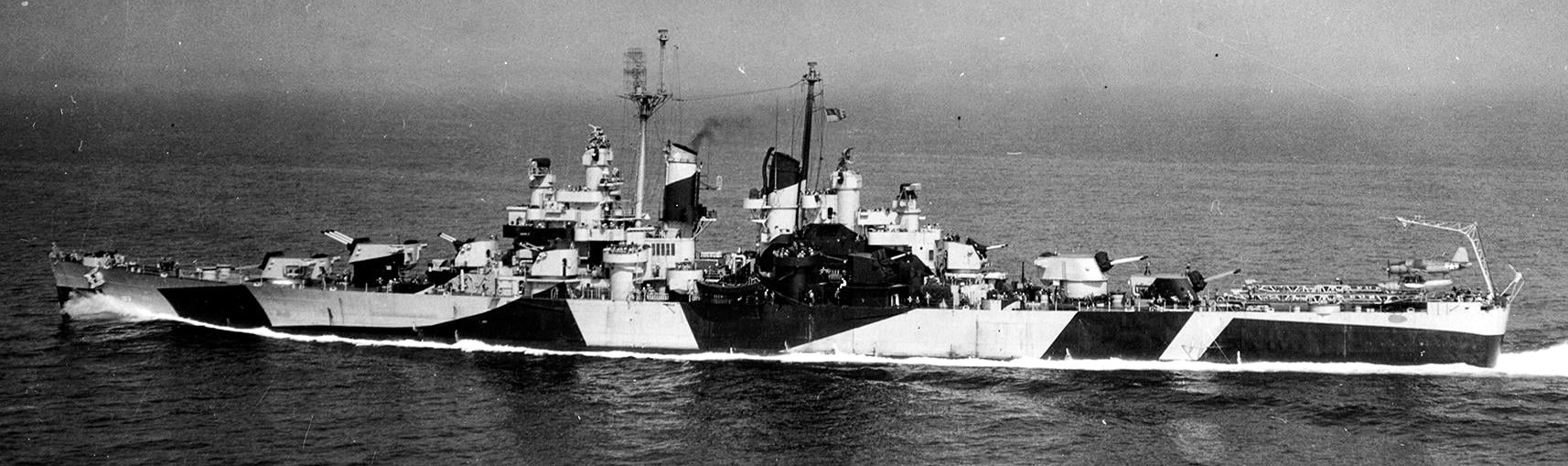
USS Wilkes-Barre (CL-103) at anchor, probably at San Pedro, California, circa 31 January 1946.
Launched on 24 December 1943, the USS Wilkes-Barre (CL-103) was commissioned at the Philadelphia Navy Yard on 1 July 1944 with Captain Robert Porter, Jr. in Command. Following shakedown training, the Wilkes-Barre sailed for San Diego, where she loaded provisions and ammunition before arriving in Pearl Harbor on 17 November 1944. The Wilkes-Barre left Pearl Harbor for the Caroline Islands where she joined Cruiser Division 17 and in support of Admiral John S. McCain’s Task Force 38. In January 1945, Task Force 38 was redesignated Task Force 58, under command of Vice Admiral Marc Mitscher.
The Wilkes-Barre arrived off the coast of Honshu, Japan on 16 February 1945 and screened American carriers while their aircraft attacked Tokyo. The Wilkes-Barre again screened carriers while their aircraft attacked targets in Tokyo on 25 February, and Okinawa on 1 March. After refueling at Ulithi, the Wilkes-Barre returned to Japanese waters. On the transit from Ulithi to Honshu, the Wilkes-Barre downed her first enemy aircraft, a “Judy” dive bomber, on 19 March off Okinawa.
Beginning on 1 April 1945, the Wilkes-Barre operated in support of the U.S. invasion of Okinawa where, among other activities, she provided valuable antiaircraft fire support. On 10 May 1945, the USS Bunker Hill (CV-17) was severely damaged in a kamikaze attack. The Wilkes-Barre played an essential role in saving the vessel and her sailors, by providing firefighting assistance and evacuating the injured. Much of the remainder of her war operations were spent actively supporting Allied operations against Japanese forces.
Following the end of hostilities, the Wilkes-Barre formed part of the Third Fleet, which traveled triumphantly through the entrance to Tokyo Bay. She eventually would take part in several missions in the demilitarization of Japanese forces. Following refresher training and a goodwill cruise to Europe, the Wilkes-Barre was decommissioned and placed in reserve on 9 October 1947. She was stricken from the Navy list on 15 January 1971 and was sunk during underwater explosive tests in May 1972. (U.S. Naval Institute)
(USN Photo)
USS Wilkes-Barre (CL-103).
USS Atlanta (CL-104)
(USN Photo)
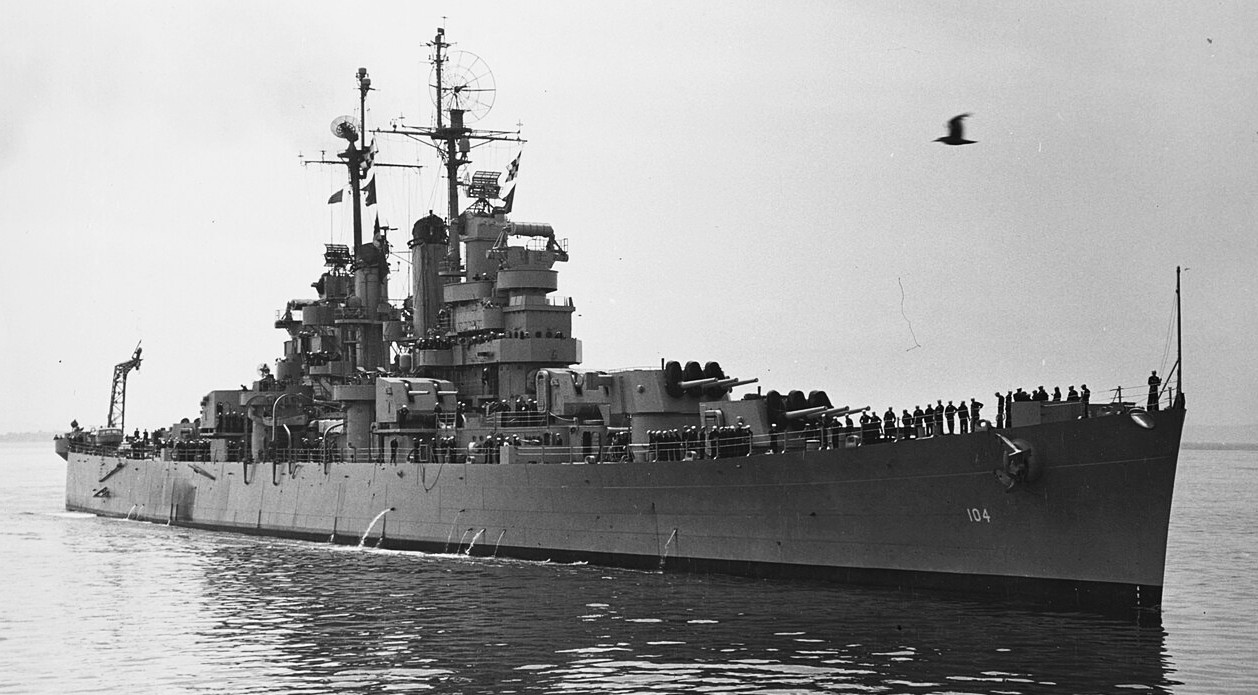
USS Atlanta (CL-104) leaves Seattle, Washington (USA), for a Naval Reserve training cruise to Alaska, 27 June 1948.
The USS Atlanta (CL-104) was laid down on 25 January 1943 at Camden, New Jersey, by the New York Shipbuilding Corporation, launched on 6 February 1944, sponsored by Margaret Mitchell (author of Gone with the Wind, who also sponsored the previous USS Atlanta), and commissioned on 3 December 1944, Captain B. H. Colyear in command. carried a main battery of twelve 6-inch (152 mm) guns in four three-gun turrets, along with a secondary armament of twelve 5 in (127 mm) dual-purpose guns. They had a top speed of 32.5 knots (60.2 km/h; 37.4 mph). (Wikipedia)
USS Dayton (CL-105)
(USN Photo)
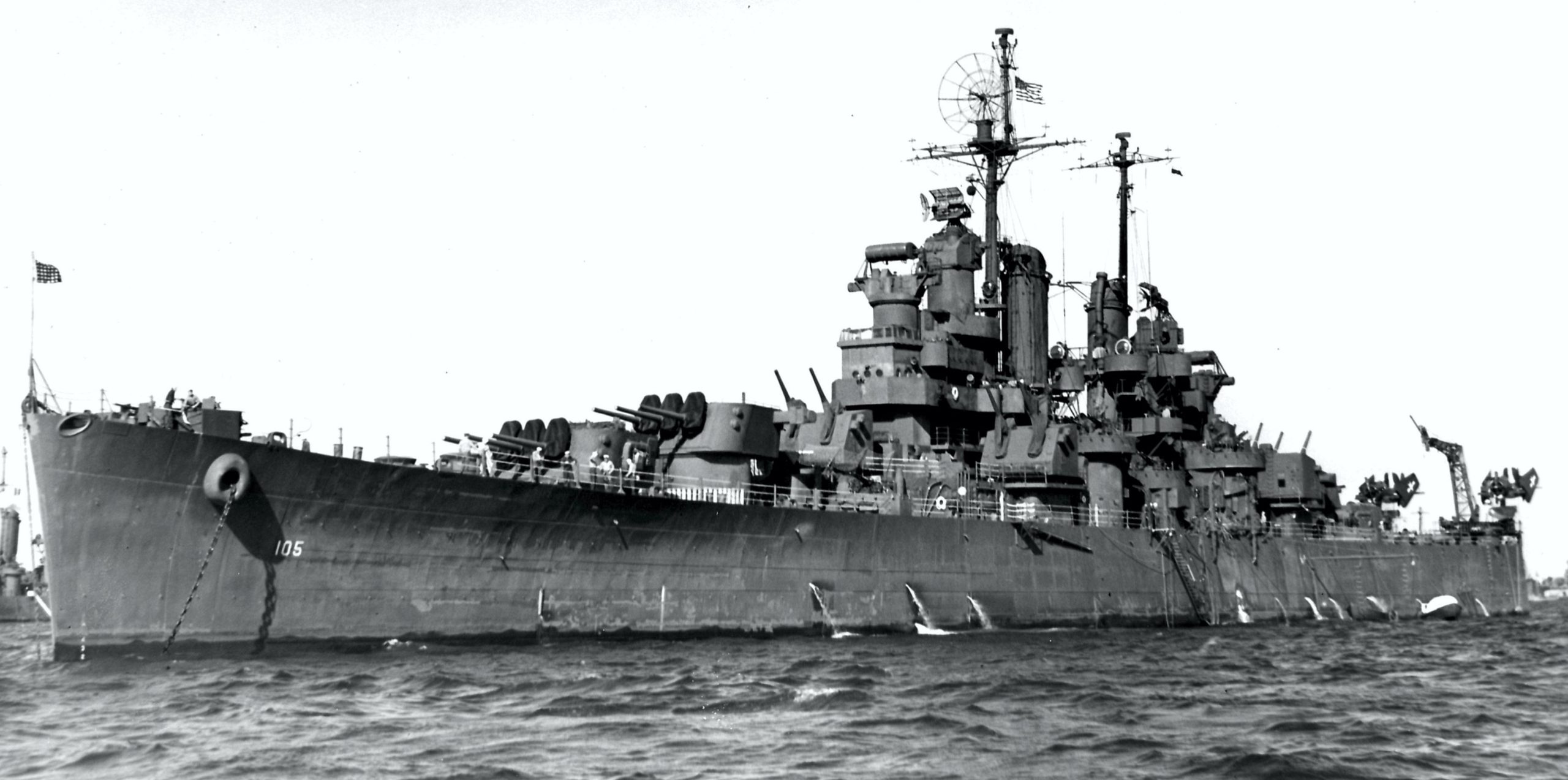
USS Dayton (CL-105) was a Cleveland-class light cruiser of the United States Navy, which were built during World War II. The class was designed as a development of the earlier Brooklyn-class cruisers, the size of which had been limited by the First London Naval Treaty. The start of the war led to the dissolution of the treaty system, but the dramatic need for new vessels precluded a new design, so the Clevelands used the same hull as their predecessors, but were significantly heavier. The Clevelands carried a main battery of twelve 6-inch (152 mm) guns in four three-gun turrets, along with a secondary armament of twelve 5 in (127 mm) dual-purpose guns. They had a top speed of 32.5 knots (60.2 km/h; 37.4 mph). (Wikipedia)