US Navy Heavy and Light Cruisers: USS Fargo ((CL-106), USS Huntington (CL-107), USS Juneau (CL-119), USS Spokane (CL-120), USS Fresno (CL-121), USS Oregon City (CA-122), USS Albany ((CA-123), USS Rochester (CA-124), USS Northampton (CA-125), USS Bremerton (CA-130), USS Fall River (CA-131), USS Macon (CA-132), USS Toledo (CA-133), USS Des Moines (CA-134), USS Los Angeles (CA-135), USS Chicago (CA-136), USS Salem (CA-139), USS Worcester (CL-144), USS Roanoke (CL-145), USS Newport News (CA-148), USS Long Beach (CLGN/CGN-160)
Late Second World War
As the Navy gained experience with Second World War combat conditions, it was decided that the Atlanta, Cleveland, and Baltimore classes needed improvement. However, major improvements would cause unacceptable delays in the construction programs. A new generation of cruisers with minor improvements would consist of the Juneau and Fargo classes of light cruisers (respectively 5-inch and 6-inch main batteries), and the Oregon City-class of heavy cruisers. The major noticeable difference would be that the Fargo and the Oregon City classes would have their engine exhausts trunked into a single funnel to aid anti-aircraft fire. Due to the near-total destruction of the Imperial Japanese Navy, the number of the ships of this generation to be completed as gun cruisers would be small: three Juneau-class, two Fargo-class, and three Oregon City-class cruisers. A fourth Oregon City-class cruiser would be completed postwar as a command cruiser. Seventeen hulls from among the three classes were canceled. (Wikipedia)
Late in the war the Baltimore-class would also serve as the basis of the two Saipan class light aircraft carriers (CVLs).
Fargo class
(CL-106) Fargo (1945).
(CL-107) Huntington (1946).
(CL-108) Newark – canceled after construction started.
(CL-109) New Haven – canceled after construction started.
(CL-110) Buffalo – canceled after construction started.
(CL-111) Wilmington – canceled after construction started.
(CL-112) Vallejo – canceled.
(CL-113) Helena – canceled.
(CL-114) Roanoke – canceled.
(CL-115) – canceled unnamed.
(CL-116) Tallahassee – canceled after construction started.
(CL-117) Cheyenne – canceled after construction started.
(CL-118) Chattanooga – canceled after construction started.
USS Fargo (CL-106)
(USN Photo)
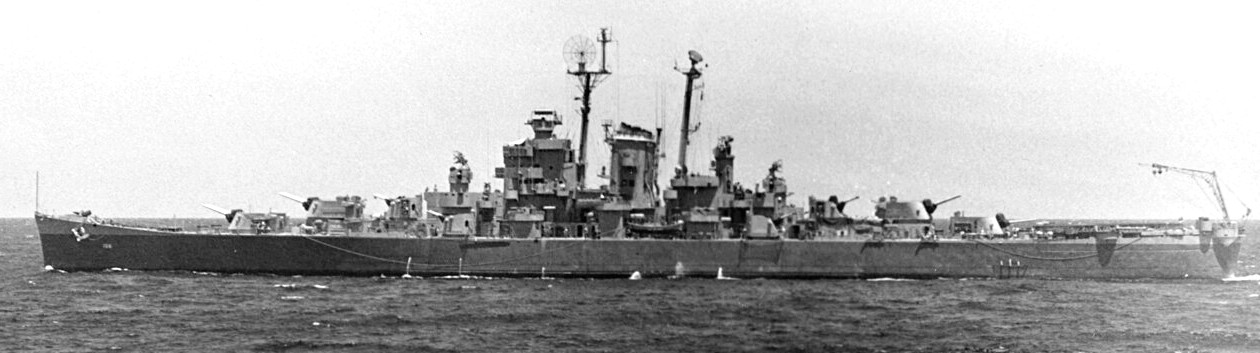
USS Fargo (CL-106) underway at sea on 8 May 1946. Fargo sailed from Philadelphia, Pennsylvania (USA), on 15 April 1946, for a goodwill cruise to Bermuda, Trinidad, Recife, Rio de Janeiro and Montevideo, from which she took departure on 31 May for the Mediterranean Sea. Note that Fargo is still painted in wartime Camouflage Measure 22.
USS Fargo (CL-106), named after the city of Fargo, North Dakota, was the lead ship of her class of light cruisers of the United States Navy, most of which were canceled due to the end of the Second World War. The Fargo-class cruisers were a modified version of the previous Cleveland-class cruiser design; the main difference was a more compact pyramidal superstructure with a single trunked funnel, intended to improve AA gun arcs of fire. The cruiser was launched 25 February 1945 by New York Shipbuilding Corporation, Camden, New Jersey, sponsored by Mrs. F. O. Olsen, and commissioned 9 December 1945. (Wikipedia)
USS Huntington (CL-107)

(USN Photo)
USS Huntington (CL-107) underway on 12 April 1948.
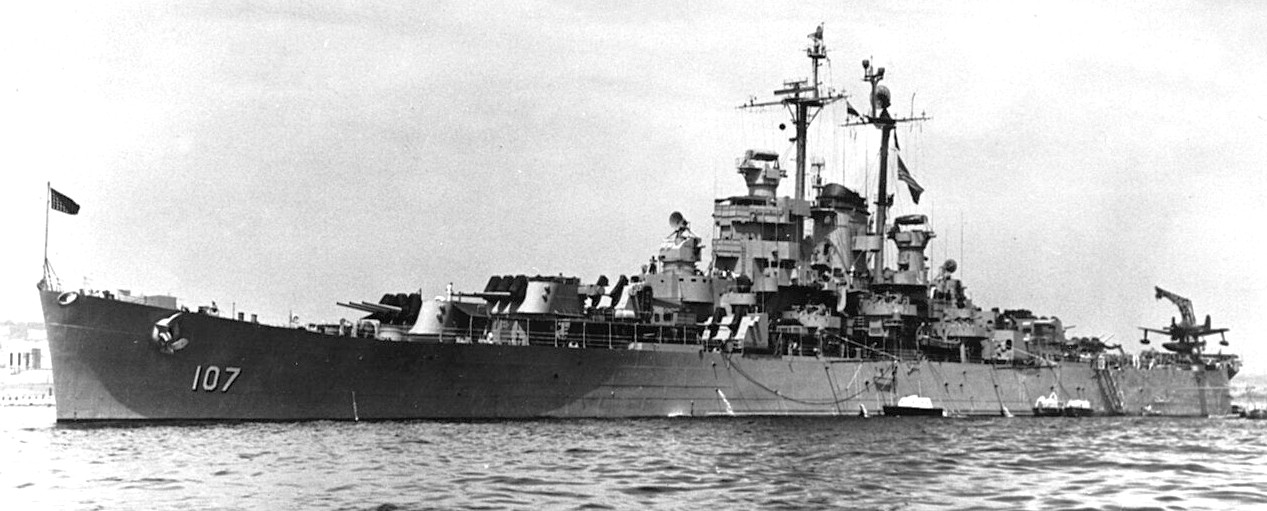
USS Huntington (CL-107), a Fargo-class light cruiser, was the second ship of the United States Navy named after the city of Huntington, West Virginia. She was built during the Second World War but not completed until after the end of the war and in use for only a few years. Huntington was launched by the New York Shipbuilding Corporation, Camden, New Jersey, on 8 April 1945, sponsored by Mrs. M. L. Jarrett, Jr., and commissioned 23 February 1946. (Wikipedia)
(USN Photo)
USS Huntington (CL-107) at Naples, Italy, circa 30 July – 11 August 1948. She was then commanded by Captain Arleigh A. Burke, USN.
USS Newark (CL-108)
Canceled after construction started.
USS New Haven (CL-109)
Canceled after construction started.
USS Buffalo (CL-110)
Canceled after construction started.
USS Wilmington (CL-111)
Canceled after construction started.
USS Vallejo (CL-112)
Canceled.
USS Helena (CL-113)
Canceled.
Canceled.
Canceled.
USS Roanoke (CL-114)
Canceled.
Unnamed (CL-115)
Canceled.
USS Tallahassee (CL-116)
Canceled after construction started.
USS Cheyenne (CL-117)
Canceled after construction started.
USS Chattanooga (CL-118)
Canceled after construction started.
Juneau class
(CL-119) Juneau (1946).
(CL-120) Spokane (1946).
(CL-121) Fresno (1946).
USS Juneau (CL-119)
(USN Photo)
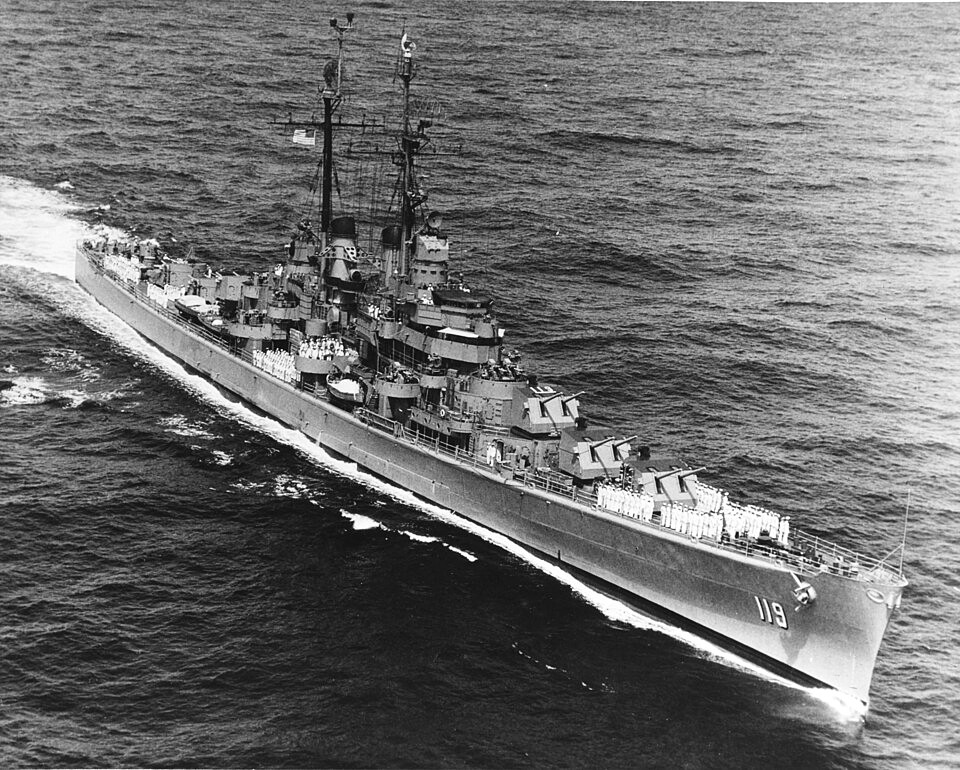
USS Juneau (CLAA-119) underway with her crew on deck in “Whites”, 1 July 1951.
The second USS Juneau (CL-119/CLAA-119) was the lead ship of the United States Navy Juneau-class cruisers. Juneau was laid down by the Federal Shipbuilding and Drydock Company in Kearny, New Jersey, on 15 September 1944; launched on 15 July 1945; sponsored by Mrs. B. L. Bartlett; and commissioned 15 February 1946. The USS Juneau (CL-119) was reclassified as a light anti-aircraft cruiser “CLAA-119” on 18 March 1949. (Wikipedia)
(USN Photo)
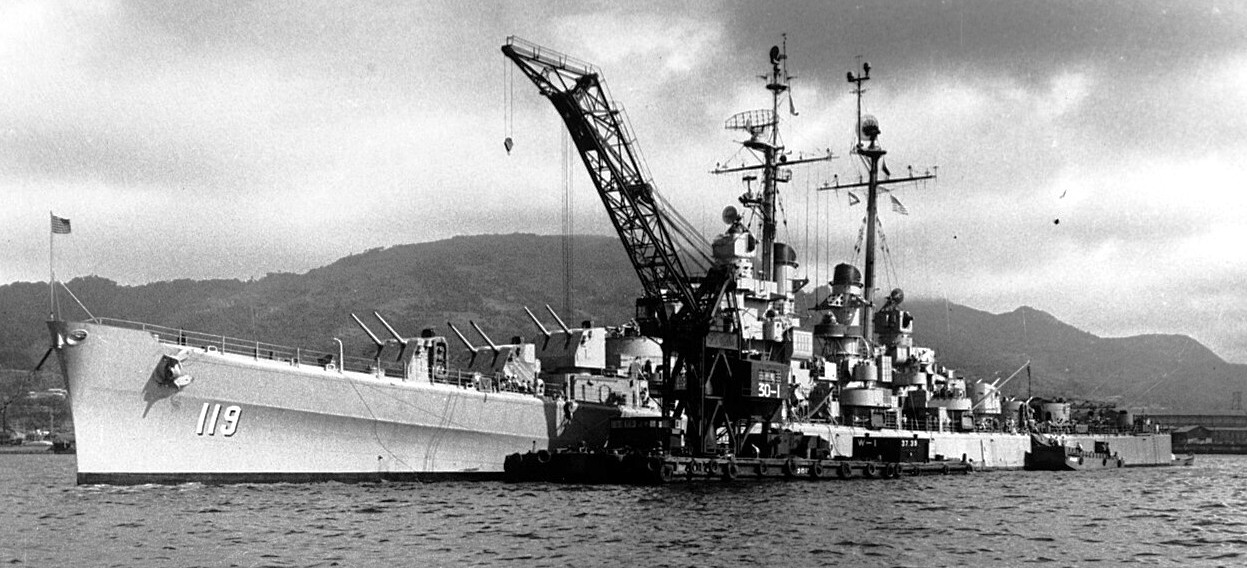
USS Juneau (CLAA-119) receives ammunition and fuel at Sasebo, Japan, on 6 July 1950. Flagship of Rear Admiral John M. Higgins, Commander, Task Group 96.5, Juneau actively patrolled and bombarded along the Korean east coast from 28 June to 5 July 1950. She was the first U.S. Navy cruiser to see combat action during the Korean War. Note Japanese floating crane alongside .
(USN Photo)
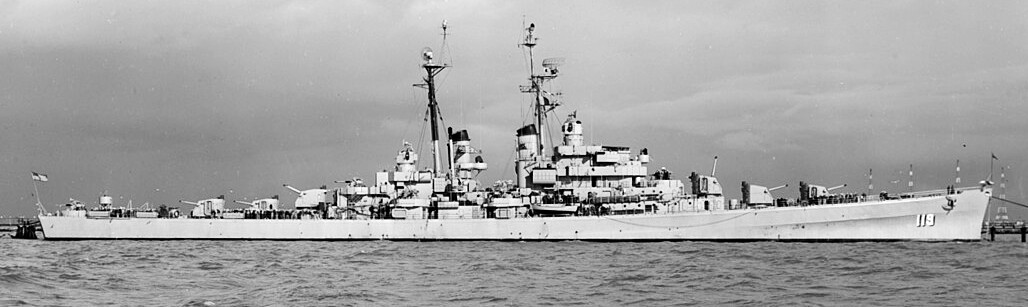
USS Juneau (CL-119) in 1952, after her refit at the Long Beach Naval Shipyard, California.
USS Spokane (CL-120)
(Nationaal Archief Materiaalsoort Photo)
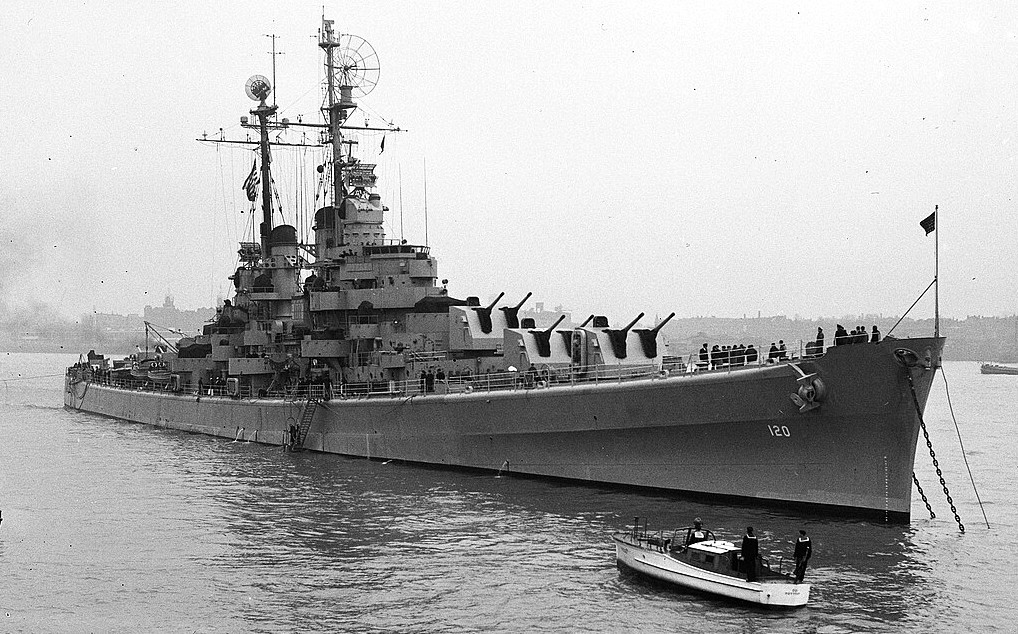
USS Spokane (CL-120), Rotterdam, Netherlands, 12 Feb 1948.
USS Spokane (CL-120/CLAA-120/AG-191) was the second ship of the Juneau-class light cruiser of the United States Navy. She was laid down on 15 November 1944 at the Federal Shipbuilding and Drydock Company in Kearny, New Jersey; launched on 22 September 1945, sponsored by Miss Patrice Munsel; and commissioned on 17 May 1946. (Wikipedia)
(USN Photo)
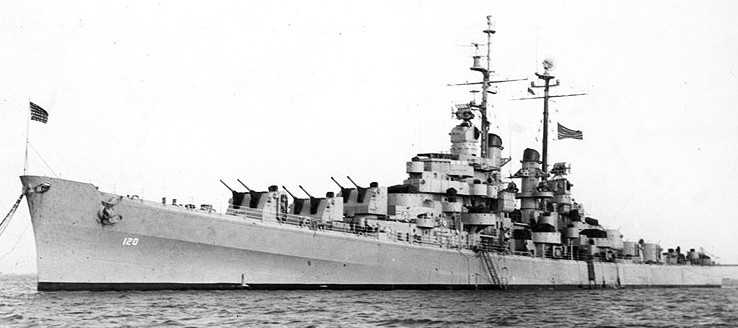
USS Spokane (CL-120) at anchor, circa 1946-1948.
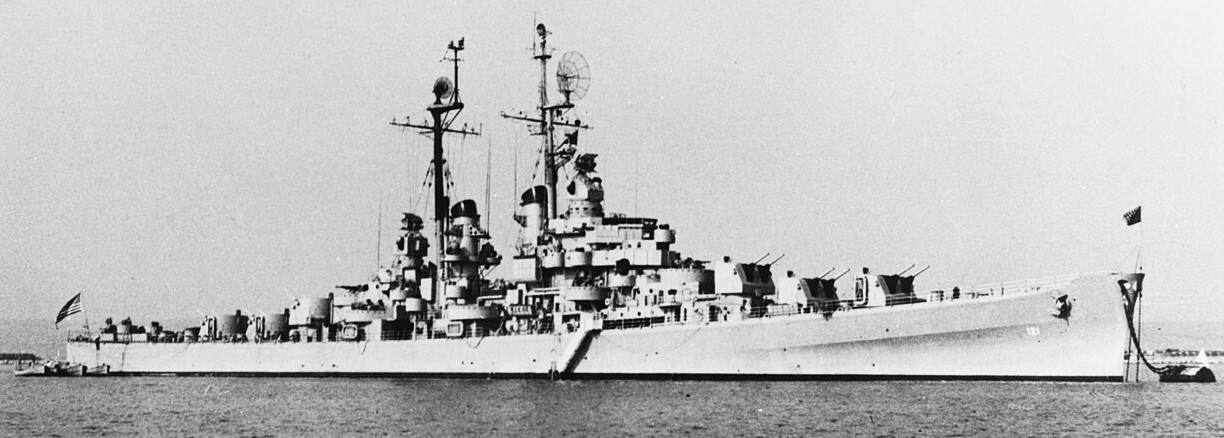
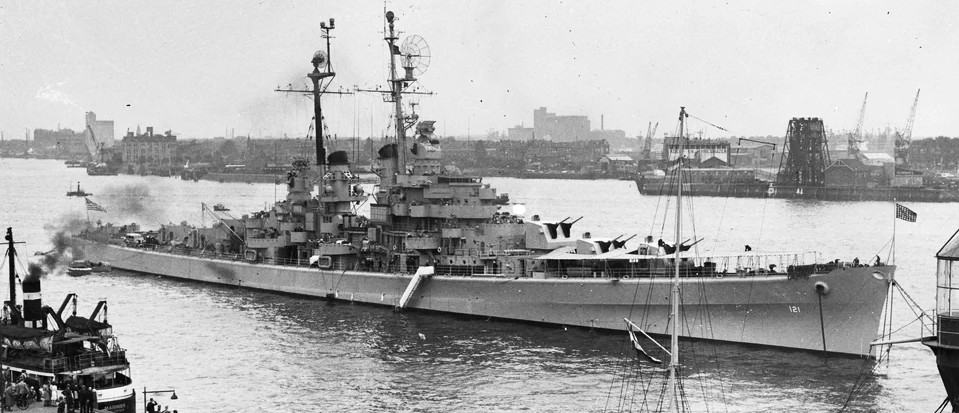
USS Fresno (CL-121)
(USN Photo)
USS Fresno (CL-121) moored off Portland, Dorset (UK), 14 August 1947.
The second USS Fresno (CL-121) was a United States Navy Juneau-class light cruiser launched on 5 March 1946 by Federal Shipbuilding and Dry Dock Company of Kearny, New Jersey, sponsored by Mrs. Ruth R. Martin; and commissioned on 27 November 1946, with Captain Elliott Bowman Strauss in command. She was reclassified CLAA-121 on 18 March 1949. (Wikipedia)
(USN Photo)
USS Fresno (CL-121) visiting Rotterdam, 19 Sep 1947.
Oregon City class
(CA-122) Oregon City (1946).
(CA-123) Albany (1946) – later converted to CG-10.
(CA-124) Rochester (1946) – Korea: 6 battle stars.
(CA-125) Northampton (completed as CLC-1)
(CA-126) Cambridge – canceled after construction started.
(CA-127) Bridgeport – canceled after construction started.
(CA-128) Kansas City – canceled after construction started.
(CA-129) Tulsa – canceled.
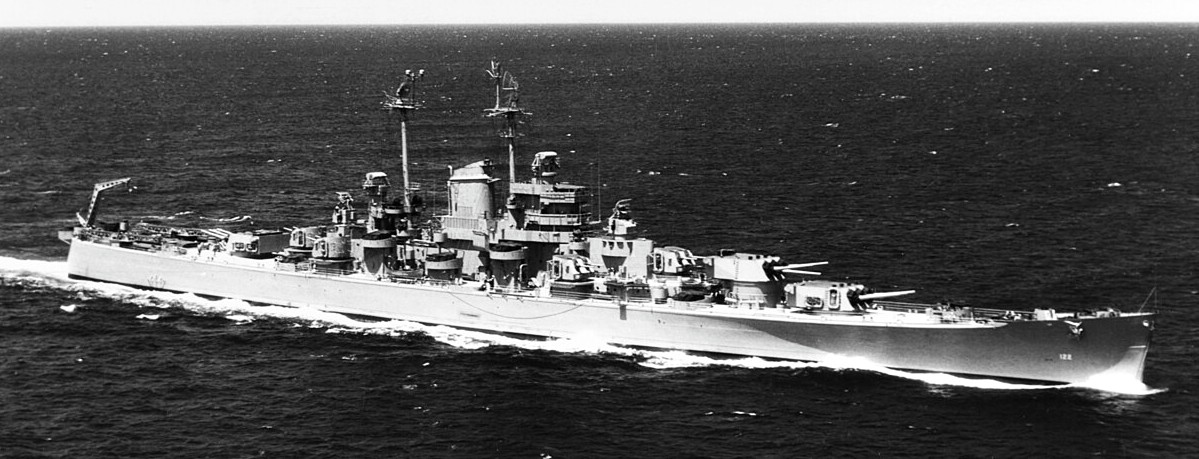
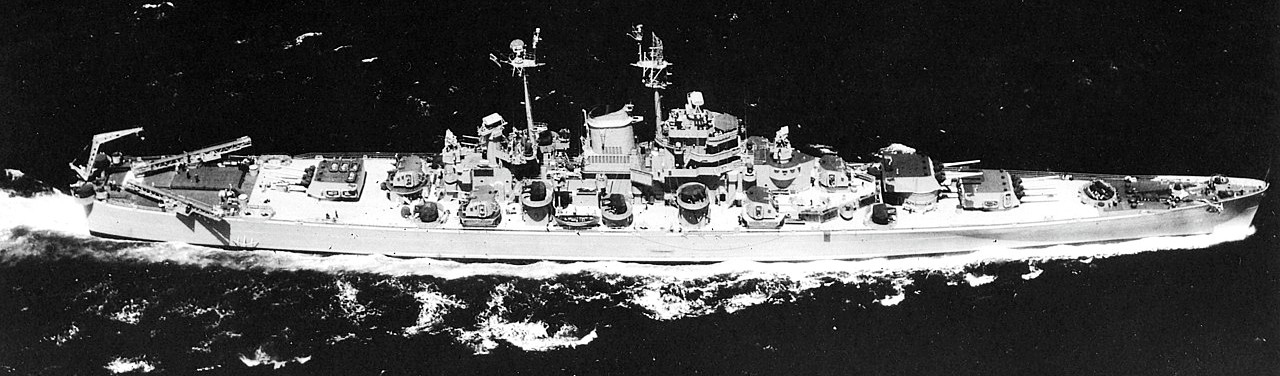
USS Oregon City (CA-122)
(USN Photo)
USS Oregon City (CA-122) underway approximately 16 km (10 mi) northeast of Provincetown, Massachusetts (USA), on 17 June 1946.
USS Oregon City (CA-122), the lead ship of the Oregon City class of heavy cruisers, was laid down 8 April 1944 by Bethlehem Steel Company, Quincy, Massachusetts; launched 9 June 1945; sponsored by Mrs. Raymond P. Canfield, wife of the City Commissioner of Oregon City, Oregon. Newspapers showed pictures of celebrated radio, film and television personality Bing Crosby adding a bit of glamor to the launching. The Oregon City was commissioned 16 February 1946.
Oregon City was named for the city in the state of Oregon. Oregon City departed Boston 31 March 1946 for shakedown out of Guantanamo Bay Naval Base, then returned to Boston in mid-May. Oregon City became flagship of the United States Fourth Fleet on 3 July and the following month began dockside training of reservists in Philadelphia. From 6 to 19 October she made a post-war Reserve Training Cruise, to Bermuda, then sailed to Boston and remained until the following March with a somewhat reduced complement. Reassigned to the 2nd Fleet in January 1947, Oregon City’s crew had returned to full strength by the time she sailed for Guantanamo Bay 30 March. After three weeks of exercises she returned to Boston, not sailing again until 6 June. She embarked midshipmen at Annapolis on the 21st, then sailed for the Canal Zone and the Caribbean on an annual summer training cruise.
Oregon City debarked her midshipmen at Norfolk in mid-August and sailed for Philadelphia and deactivation. She was decommissioned on 15 December 1947. She was the only Oregon City-class ship to be decommissioned soon after completion, and was not selected for conversion to a missile ship. Her bell was sent back to Oregon where it is on display at the Museum of the Oregon Territory in Oregon City, Oregon. She was stricken 1 November 1970, and sold 17 September 1973 to Union Minerals and Alloys Corporation, NYC, and scrapped in Kearny, New Jersey the following year. Her 5″ gun houses could still be seen well into the 90s at Philadelphia Navy Yard.[citation needed]
The bell originally from USS Oregon City was presented to Portland Area Naval Reserve through the people of Oregon City, Oregon on 8 March 1975 and it is now on display at Museum of Oregon Territory. A model of her is also on displayed there. (Wikipedia)
(USN Photo)
USS Oregon City (CA-122) underway, ca. early 1946.
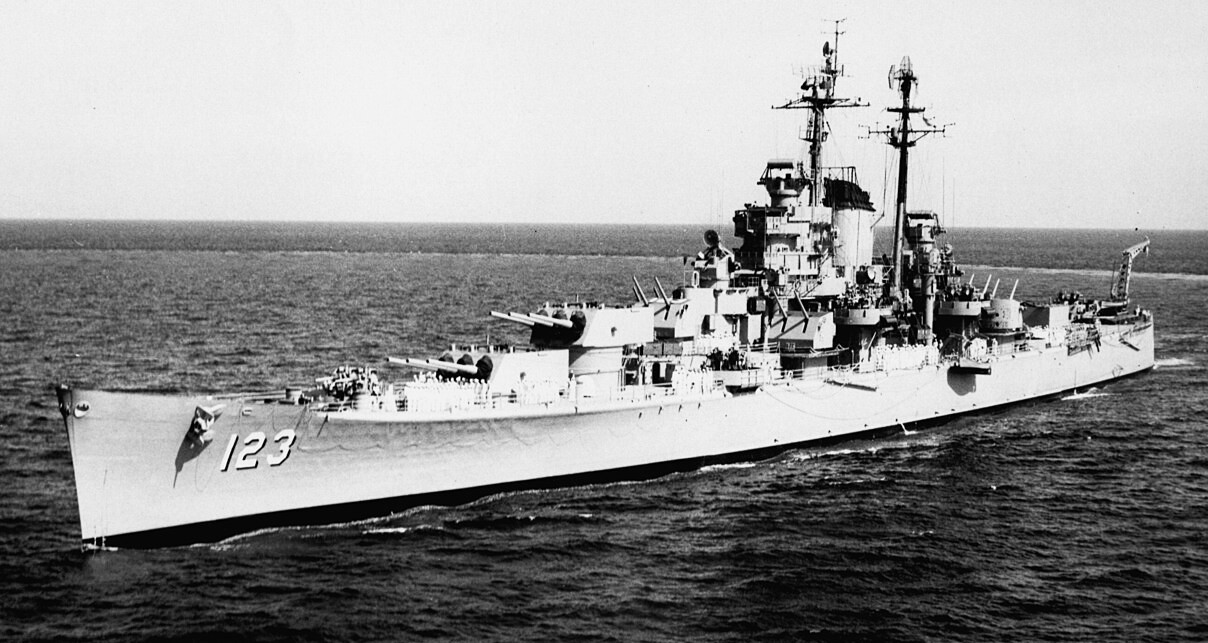
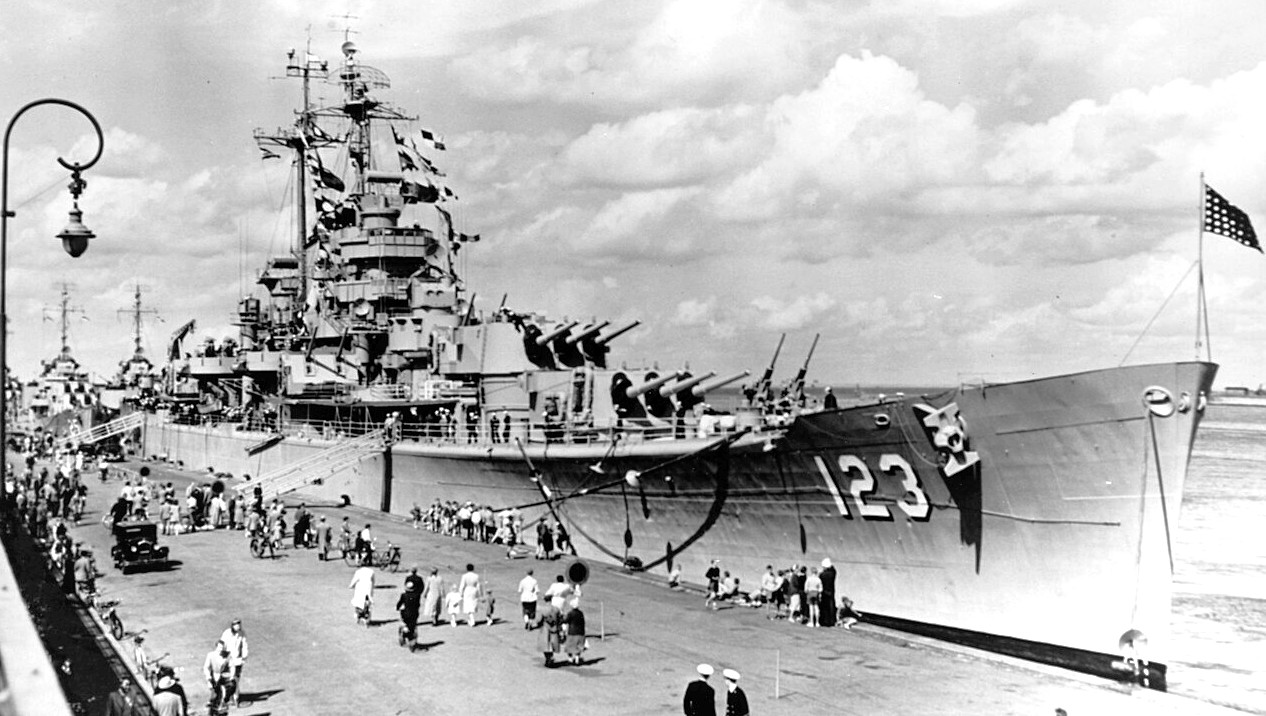
USS Albany ((CA-123)
(USN Photo)
USS Albany (CA-123) underway on 15 January 1955.
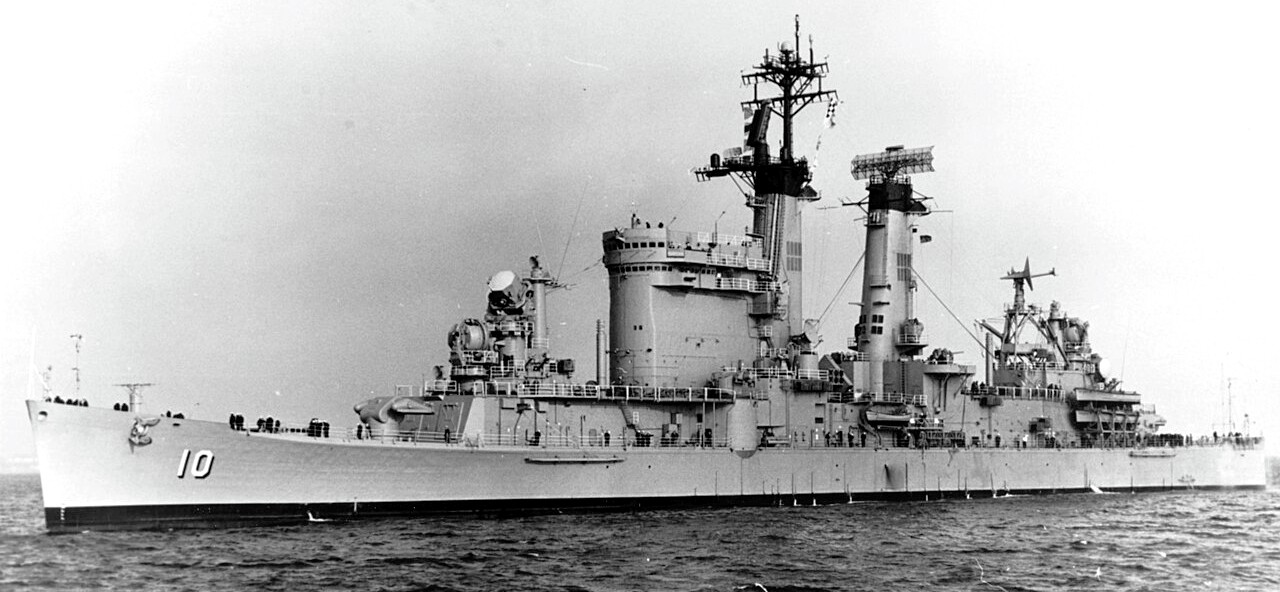
USS Albany (CA-123) was a United States Navy Oregon City-class heavy cruiser, later converted to the guided missile cruiser CG-10. The converted cruiser was the lead ship of the new Albany guided missile cruiser class. She was the fourth ship to carry the name Albany. The ship was laid down on 6 March 1944 at Quincy, Massachusetts, by the Bethlehem Steel Company, launched on 30 June 1945, sponsored by Mrs. Elizabeth F. Pinckney, and commissioned on 15 June 1946 at the Boston Navy Yard. (Wikipedia)
(USN Photo)
USS Albany (CA-123), during her visit to Copenhagen, Denmark, between 18 and 23 June 1951.
(USN Photo)
The U.S. Navy guided missile cruiser USS Albany (CG-10) in Boston harbour, Massachusetts (USA), 26 November 1968.
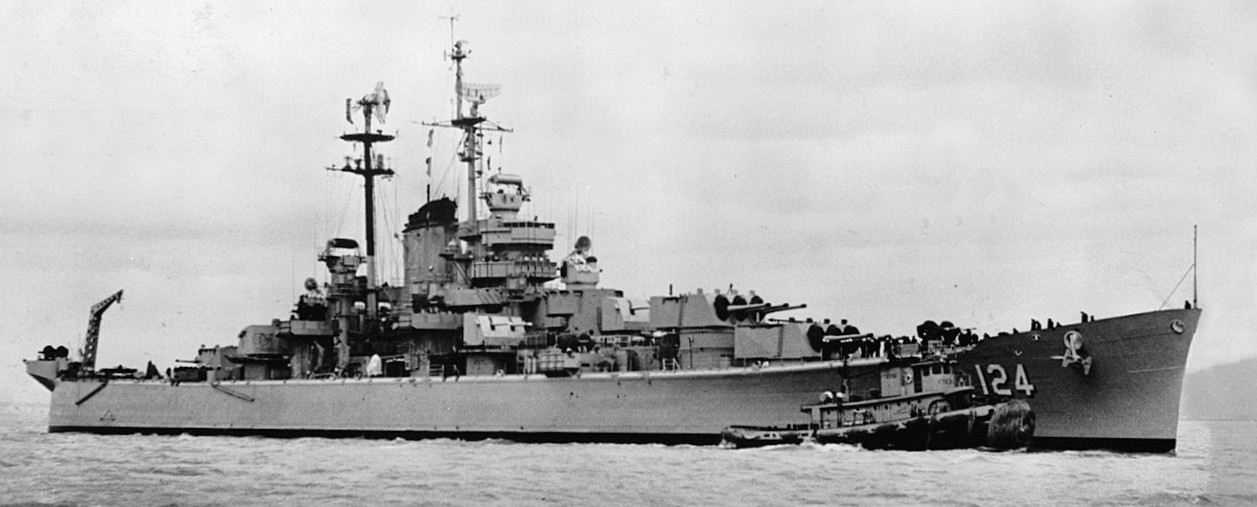
USS Rochester (CA-124)
(USN Photo)
USS Rochester (CA-124) following a regular overhaul at the San Francisco Naval Shipyard, California, in February 1956.
The third USS Rochester (CA-124), an Oregon City-class heavy cruiser, was laid down 29 May 1944 by Bethlehem Steel Co., Quincy, Massachusetts; launched 28 August 1945; sponsored by Mrs. M. Herbert Eisenhart, wife of the president of Bausch & Lomb Optical Co., Rochester, New York; and commissioned 20 December 1946 at the Boston Navy Yard.
Rochester departed Provincetown, Mass., 22 February 1947 for shakedown out of Guantánamo Bay, Cuba. By the end of April, she was at Philadelphia, ready to commence nine extended naval reserve training cruises which took her north to Casco Bay and south to the Caribbean. (Wikipedia)
(USN Photo)
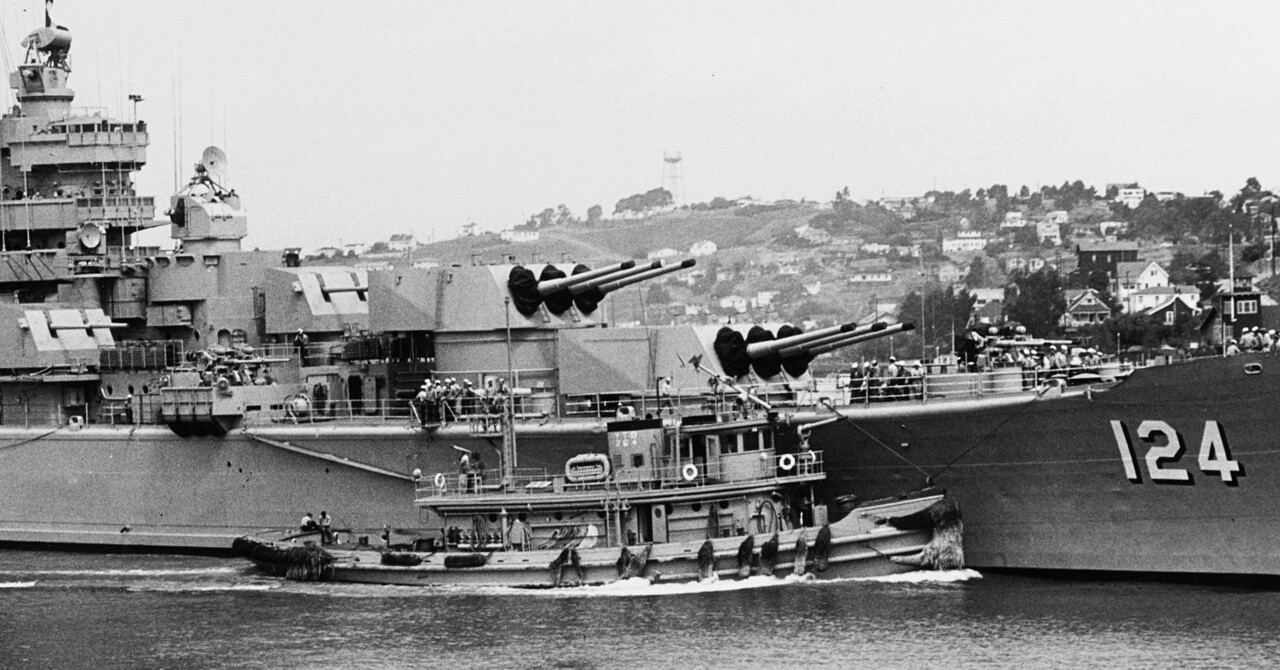
The U.S. Navy tug USS Awatobi (YTB-264) assists the heavy cruiser USS Rochester (CA-124) in departing the Mare Island Naval Shipyard, California (USA), 20 September 1953.
USS Northampton (CA-125)
(USN Photo)
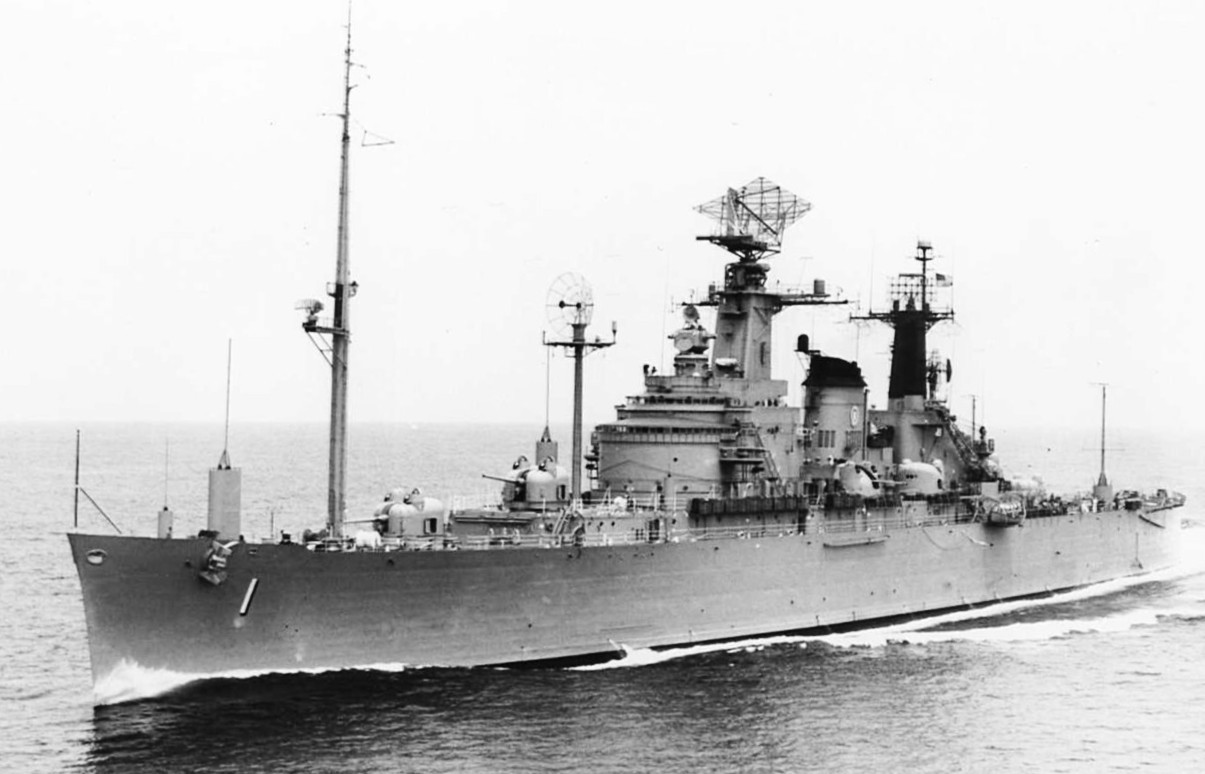
USS Northampton (CLC-1) underway c1959.
The USS Northampton (CLC-1/CC-1) was a US Navy command light cruiser (command ship). The third ship of that name, she was laid down as an Oregon City-class heavy cruiser (CA–125), on 31 August 1944 by the Fore River Yard, Bethlehem Steel Corp., Quincy, Massachusetts. Work suspended between 11 August 1945 and 1 July 1948; she was converted to a command cruiser under project SCB 13 and launched as CLC–1, on 27 January 1951; sponsored by Mrs. Edmond J. Lampron; and commissioned as CLC–1, on 7 March 1953. (Wikipedia)
USS Cambridge (CA-126)
Canceled after construction started.
USS Bridgeport (CA-127)
Canceled after construction started.
USS Kansas City (CA-128)
Canceled after construction started.
USS Tulsa (CA-129)
Canceled.
Baltimore class
(CA-130) Bremerton (1945) – Korea: 2 battle stars.
(CA-131) Fall River (1945) – Operation Crossroads nuclear test participant.
(CA-132) Macon (1945).
(CA-133) Toledo (1946) – Korea: 5 battle stars.
USS Bremerton (CA-130)
(USN Photo)
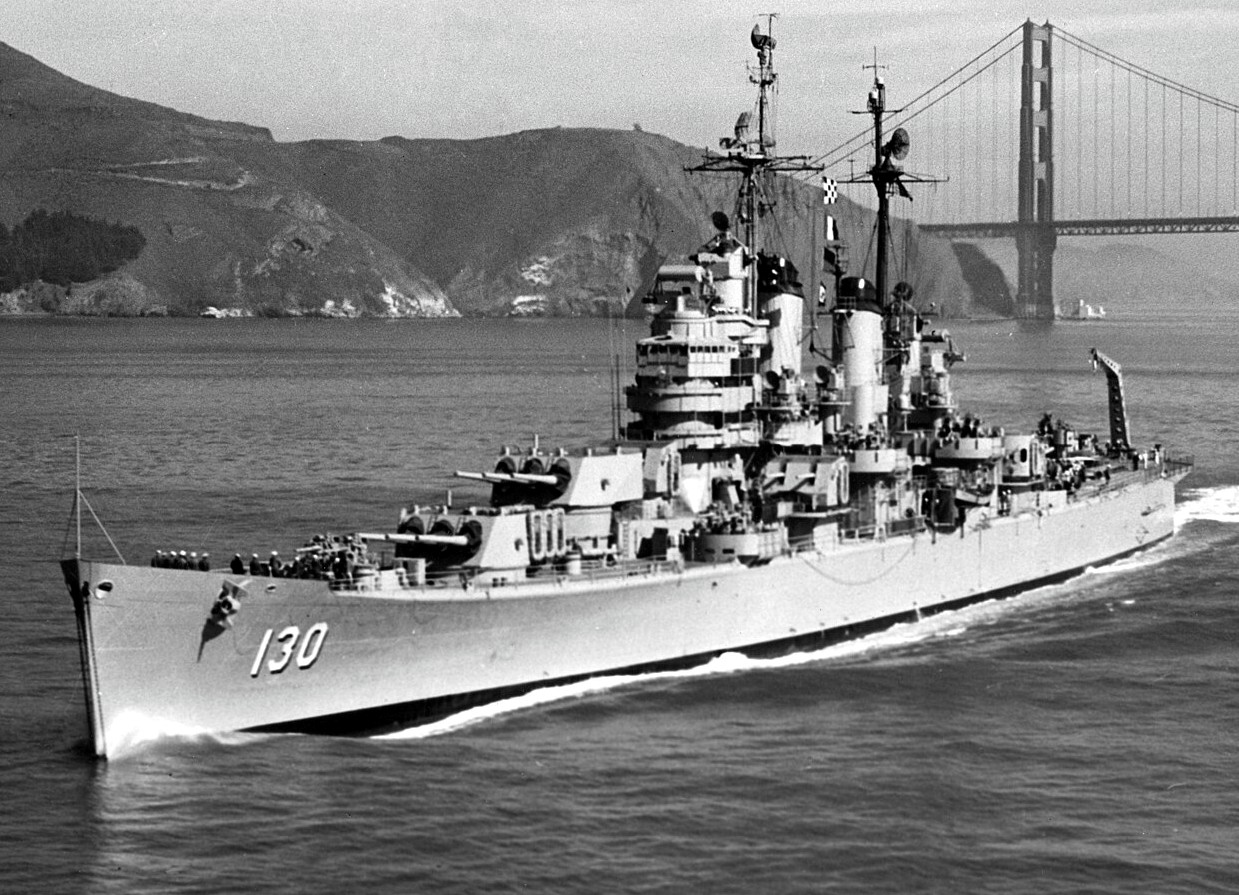
USS Bremerton (CA-130) passing under the Golden Gate Bridge, California (USA), in April 1955.
USS Bremerton (CA-130), was a Baltimore-class heavy cruiser, named for the city of Bremerton in Washington state. She was laid down by the New York Shipbuilding Corporation at Camden in New Jersey on 1 February 1943, launched on 2 July 1944 by Miss Elizabeth K. McGowan and commissioned on 29 April 1945, Captain John Boyd Mallard in command. (Wikipedia)
USS Fall River (CA-131)
(USN Photo)
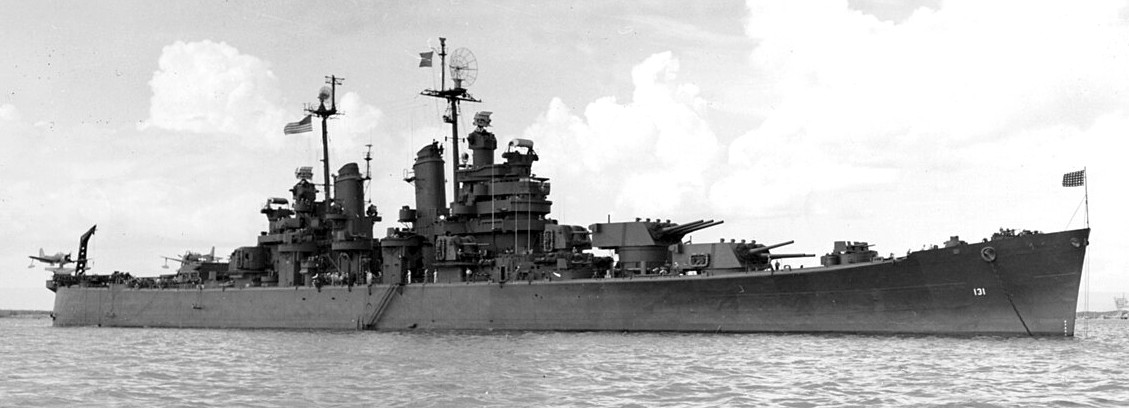
USS Fall River (CA-131) at anchor on 12 August 1945. She is painted in Camouflage Measure 21. Two Curtiss SC-1 Seahawk reconnaissance planes are on the catapults.
USS Fall River (CA-131) was a Baltimore-class heavy cruiser of the United States Navy. It was launched on 13 August 1944 by the New York Shipbuilding Corporation of Camden, New Jersey; sponsored by Mrs. Alexander C. Murray, wife of Fall River mayor Alexander C. Murray; and commissioned on 1 July 1945, Captain David Stolz Crawford in command. Fall River was decommissioned already on 31 October 1947. She became known as the flagship of the nuclear test force at the Bikini Atoll between May and September 1946. (Wikipedia)
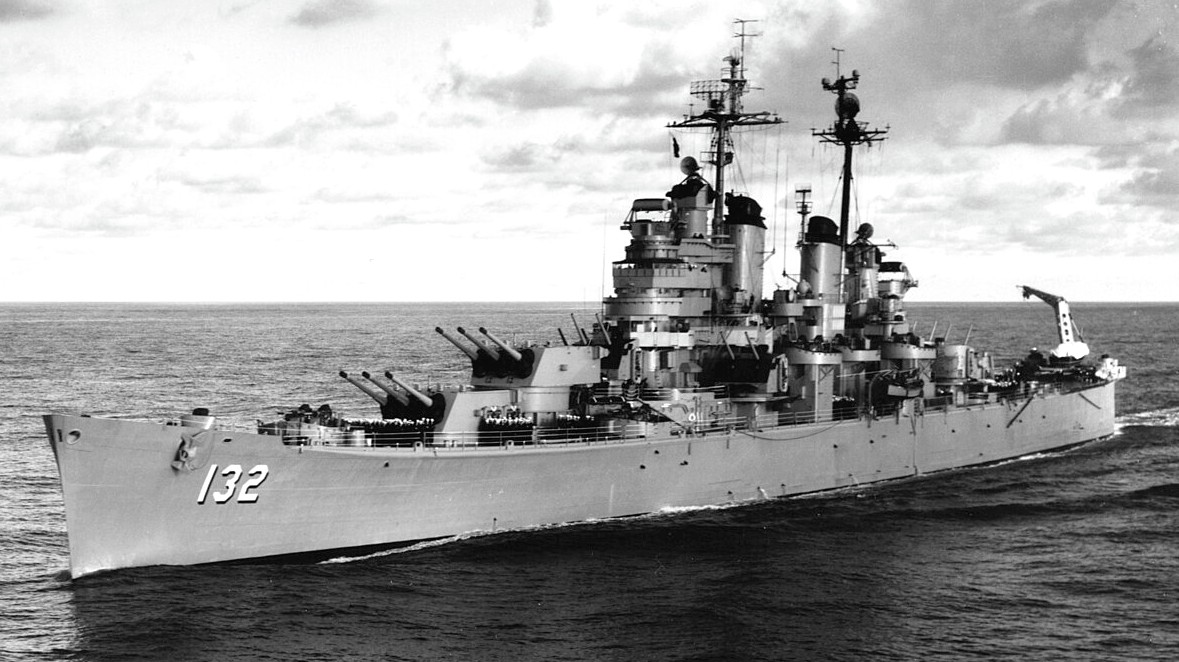
USS Macon (CA-132)
(USN Photo)
USS Macon (CA-132) underway on 6 October 1951.
USS Macon (CA-132), a Baltimore-class heavy cruiser of the United States Navy, was laid down on 14 June 1943 by the New York Shipbuilding Corp., Camden, New Jersey; launched on 15 October 1944; sponsored by Mrs. Charles F. Bowden, wife of the mayor of Macon, Georgia; and commissioned on 26 August 1945 at Philadelphia, Captain Edward Everett Pare in command. (Wikipedia)
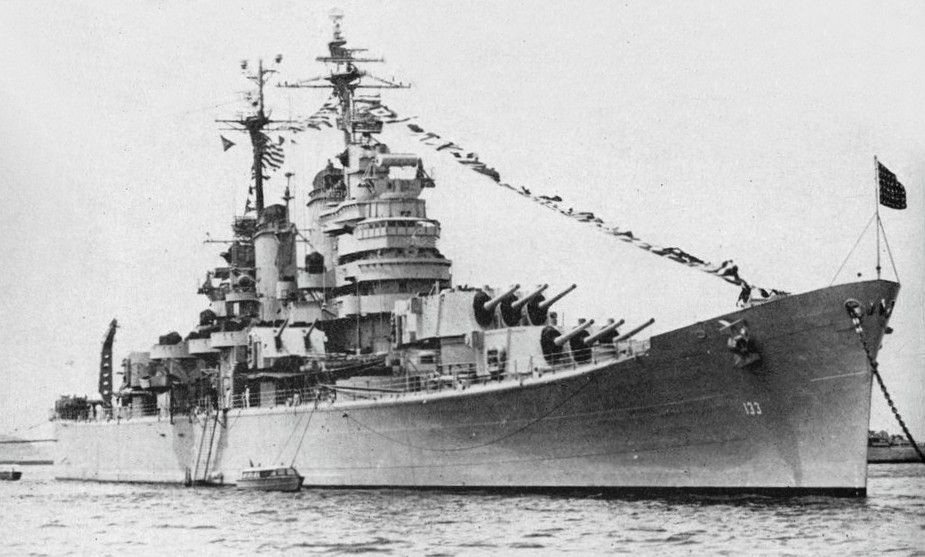
USS Toledo (CA-133)
(USN Photo)
USS Toledo (CA-133) at anchor, circa in 1949.
USS Toledo (CA-133) was a Baltimore-class heavy cruiser of the United States Navy active during the Korean War. Toledo was laid down on 13 September 1943 at Camden, New Jersey, by the New York Shipbuilding Corporation, launched on 6 May 1945, sponsored by Mrs Edward J. Moan, and commissioned at the Philadelphia Naval Shipyard on 27 October 1946, Captain August J. Detzer, Jr., in command. (Wikipedia)
Post-Second World War
The Navy agreed in the waning days of the war to construct a small number of cruisers for the purpose of operationally testing new gun designs and other major improvements incorporating the lessons learned of World War II combat: the ‘CL-154’ and Worcester classes of light cruisers (respectively 5-inch and 6-inch main batteries), and the Des Moines-class of heavy cruisers. Initially the Navy wanted at least one squadron of six ships of each class, but in the end only two Worcester-class and three Des Moines-class cruisers would be completed, and the CL-154 class would be cancelled in its entirety. A total of seventeen hulls from among the three planned classes would be canceled. (Wikipedia)
Des Moines class
(CA-134) Des Moines (1948).
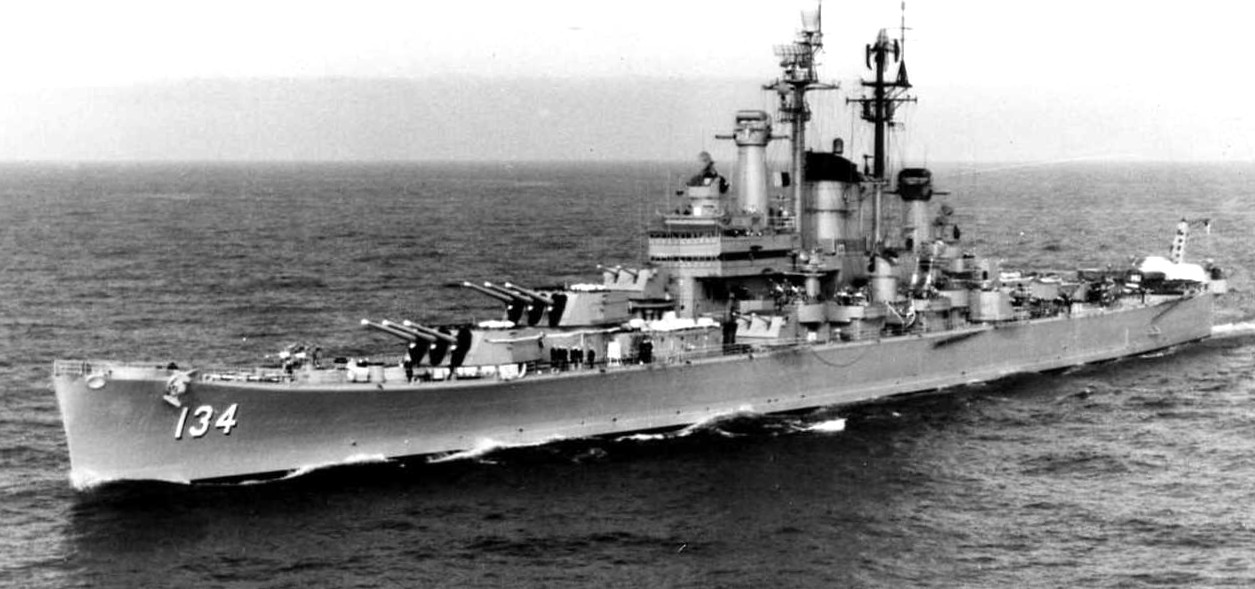
USS Des Moines (CA-134)
(USN Photo)
USS Des Moines (CA-134) underway at sea, ca late 1950s.
USS Des Moines (CA-134) was the lead ship of the class of United States Navy (USN) heavy cruisers. She was the first USN ship to mount the auto-loading 8-inch (203 mm) Mark 16 guns, the first large-caliber auto-loading guns in the world. She was the second ship of the USN to be commissioned with the name of the city of Des Moines, capital of Iowa. Launched 1946, she was commissioned in 1948. She saw duty around the world until her decommissioning in 1961 when she was permanently mothballed. A 1981 survey was done to determine if she was worthy of reactivation for the 600-ship Navy, but the cost was too great so she remained in the reserve. She was struck from the Naval Vessel Register in 1993, which was followed by a campaign to turn her into a museum ship. The campaign failed, and in 2005 she was sold for scrapping, and she was broken up by July 7. Parts of the ship have been donated to various places for display, including at the USS Salem museum, which is the only Des Moines-class ship to avoid the scrapyard. (Wikipedia)
Baltimore class
(CA-135) Los Angeles (1945) – WW2: 1 battle star, Korea: 5 stars.
(CA-136) Chicago (1945) – WW2: 1 battle star, later converted to CG-11.
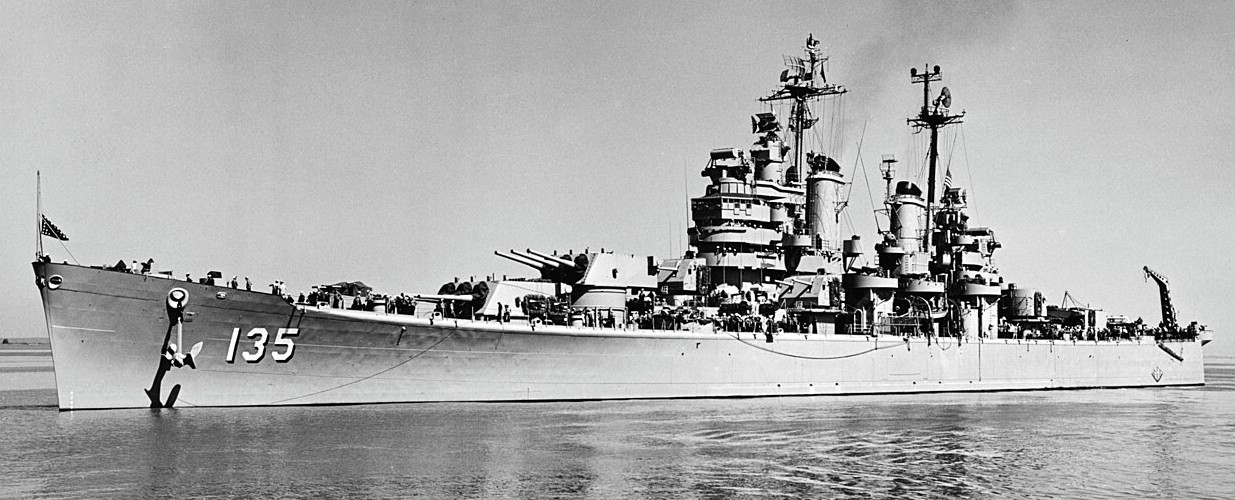
USS Los Angeles (CA-135)
(USN Photo)
USS Los Angeles (CA-135) returns to the Korean theater for its second tour of combat duty with UN Naval Forces, 13 October 1952. Note that the ship’s Jack and National Ensign are flying at half-mast.
The third USS Los Angeles (CA-135) was a Baltimore-class heavy cruiser, laid down by the Philadelphia Navy Yard, Philadelphia, on 28 July 1943 and launched on 20 August 1944. She was sponsored by Mrs. Fletcher Bowron and commissioned on 22 July 1945, with Captain John A. Snackenberg in command. (Wikipedia)
USS Chicago (CA-136)
(USN Photo)
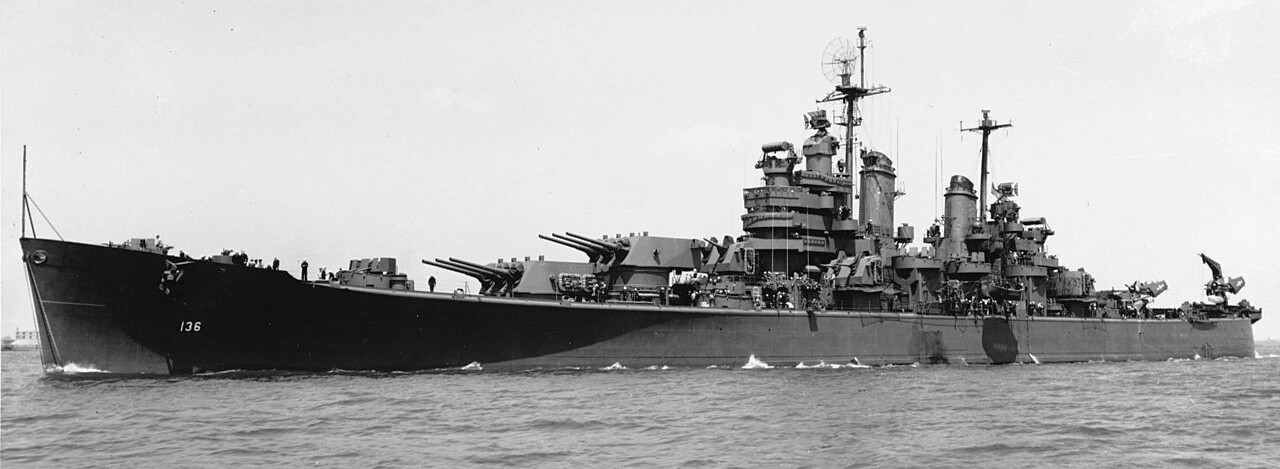
USS Chicago (CA-136) off the Philadelphia Naval Shipyard, Pennsylvania, on 7 May 1945. Note Curtiss SC-1 Seahawk seaplanes on the catapults and her Measure 21 camouflage paint.
USS Chicago (CA-136/CG-11) was a Baltimore-class heavy cruiser laid down on 28 July 1943 at Philadelphia, Pennsylvania, US, by the Philadelphia Navy Yard. Launched on 20 August 1944, she was sponsored by Mrs. Edward J. Kelly, wife of the Mayor of Chicago, Illinois, and commissioned at the Philadelphia Navy Yard on 10 January 1945, Captain Richard R. Hartung, USN, in command. She served in some of the last battles around the Japan home islands in WWII, and as part of the post war occupation fleet. Decommissioned after the war, she was refitted as a missile cruiser beginning in the late 1950s and recommissioned in 1964, serving during the Vietnam War. She served until 1980. (Wikipedia)
Oregon City class
(CA-137) Norfolk – canceled after construction started.
(CA-138) Scranton – canceled after construction started.
USS Norfolk (CA-137)
Canceled after construction started.
USS Scranton (CA-138)
Canceled after construction started.
Des Moines class
(CA-139) Salem (1949), museum ship.
(CA-140) Dallas – canceled after construction started.
CA-141 to 143 – canceled unnamed.
USS Salem (CA-139)
(USN Photo)
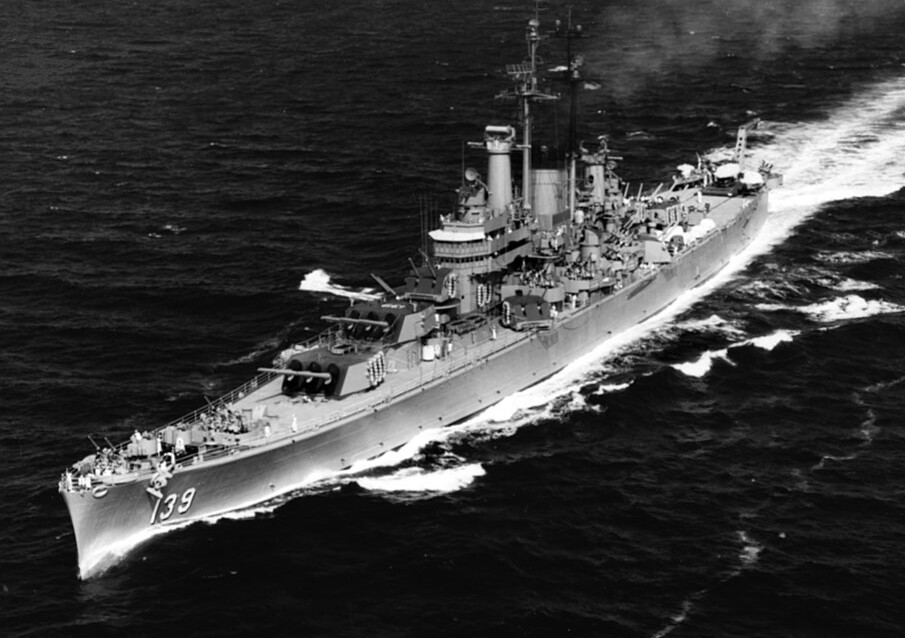
USS Salem (CA-139) underway in the Mediterranean Sea, en route to Trieste (Italy), on 16 June 1952.
USS Salem (CA-139) is a Des Moines-class heavy cruiser completed for the United States Navy shortly after World War II and commissioned in 1949. The second ship of her class, she was the world’s last heavy cruiser to enter service and is the last remaining. She was decommissioned in 1959 after serving in the Atlantic and Mediterranean. She is open to the public as a museum ship in Quincy, Massachusetts. (Wikipedia)

(USN Photo)
USS Salem (CA-139).
USS Dallas (CA-140)
Canceled after construction started.
Unnamed CA-141 to 143
Canceled.
Worcester class
(CL-144) Worcester (1948) – Korea: 2 battle stars.
(CL-145) Roanoke (1949).
(CL-146) Vallejo – canceled after construction started.
(CL-147) Gary – canceled after construction started.
USS Worcester (CL-144)
(USN Photo)
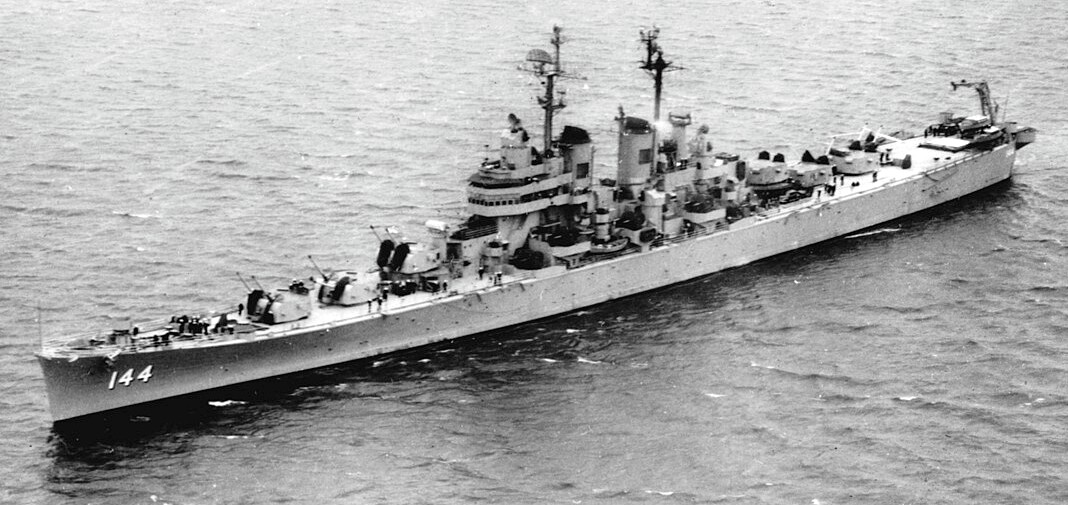
USS Worcester (CL-144) underway off the Philadelphia Naval Shipyard, Pennsylvania (USA), in November 1949. Note the high angle of the 152 mm/47 Mk 16 guns.
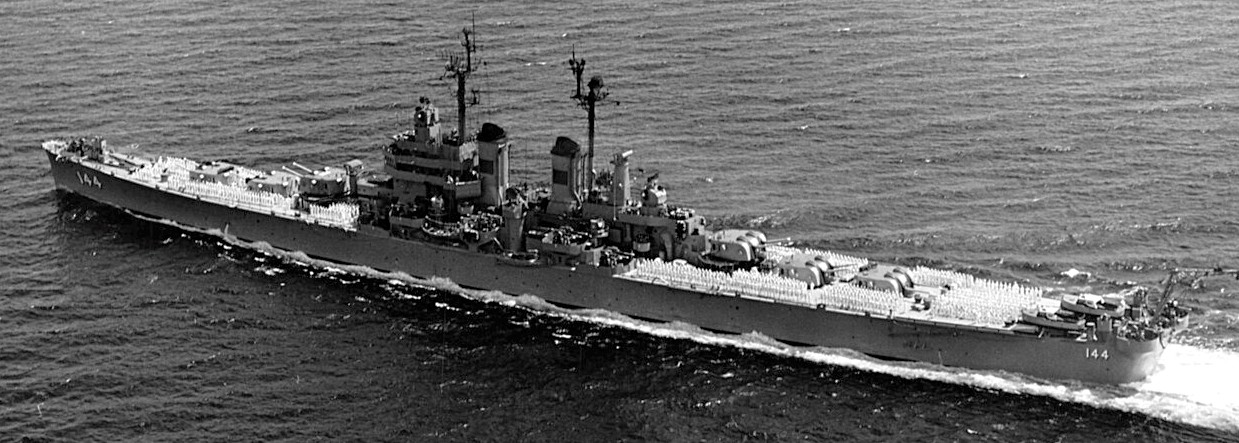
USS Worcester (CL-144) was a light cruiser in the United States Navy. Worcester was the lead ship of the Worcester-class of light cruisers. She was launched just after the Second World War had ended and commissioned in 1948, before being decommissioned in 1958. (Wikipedia)
(USN Photo)
USS Worcester (CL-144) underway, with her crew at quarters during Memorial Day services, 31 May 1952.
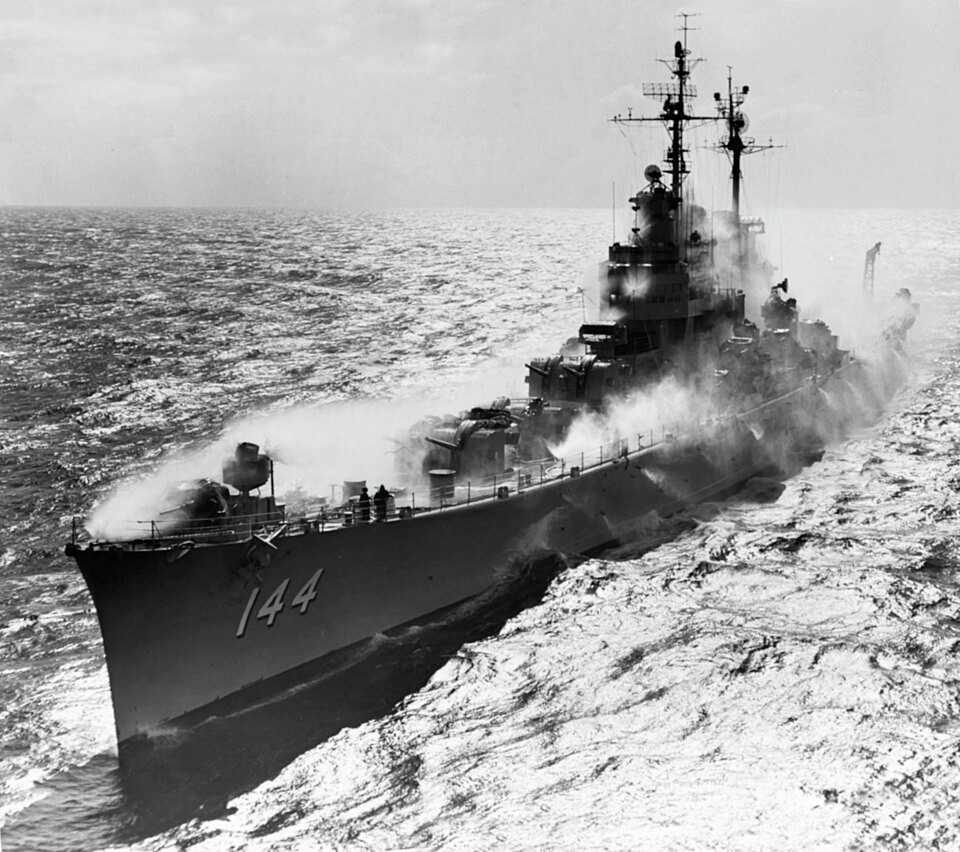
(USN Photo)
The U.S. Navy light cruiser USS Worcester (CL-144) testing her anti-nuclear radiation washdown system on 7 July 1954.
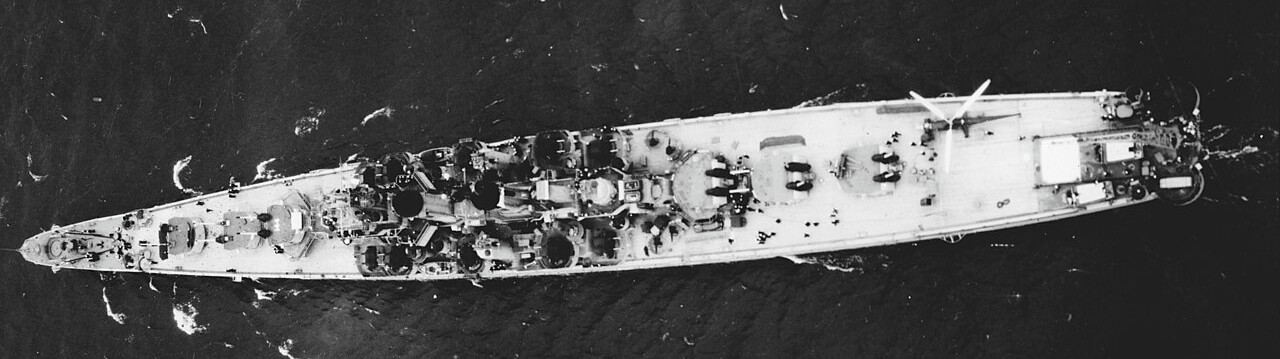
(USN Photo)
USS Worcester (CL-144) in May 1949. Note the Sikorsky HO3S helicopter aft.
USS Roanoke (CL-145)
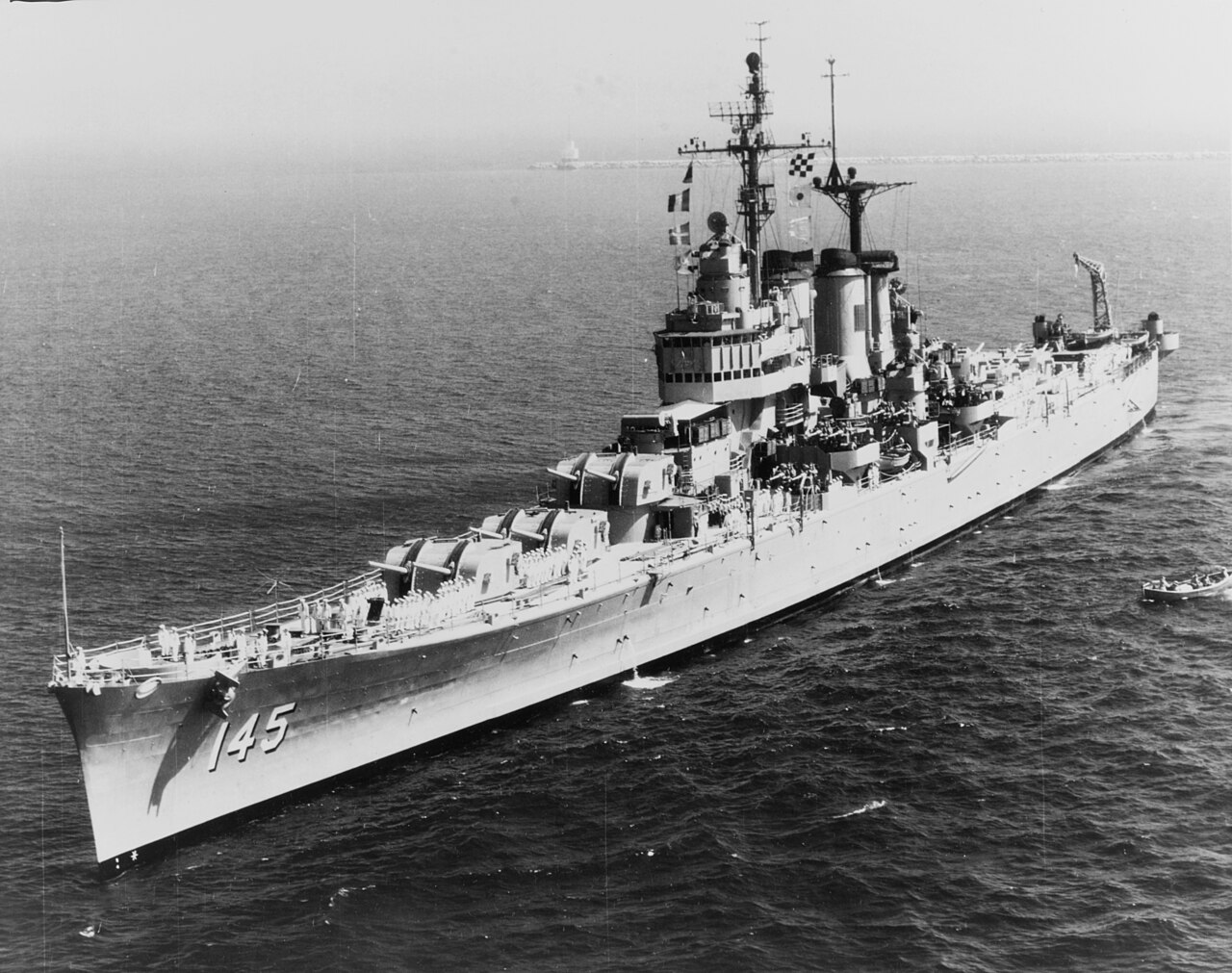
(USN Photo)
USS Roanoke (CL-145) underway at slow speed, circa the early 1950s. Note the ship’s crew at quarters, her call sign “NIQE” flying at the port yardarm, a motor whaleboat off her port side amidships and the lighthouse on the tip of the jetty in the background.
USS Roanoke (CL-145) was the second ship of the Worcester-class light cruisers completed for the U.S. Navy shortly after the end of the Second World War. Commissioned in 1949, she served in the Atlantic, Mediterranean and Pacific before being decommissioned in 1958. She was sold for scrap in 1972. (Wikipedia)
USS Vallejo (CL-146)
Canceled after construction started.
USS Gary (CL-147)
Canceled after construction started.
Des Moines class
(CA-148) Newport News (1949) – Vietnam: 3 battle stars.
(CA-149) – canceled unnamed.
(CA-150) Dallas – canceled.
CA-151 to 153 – canceled unnamed.
USS Newport News (CA-148)
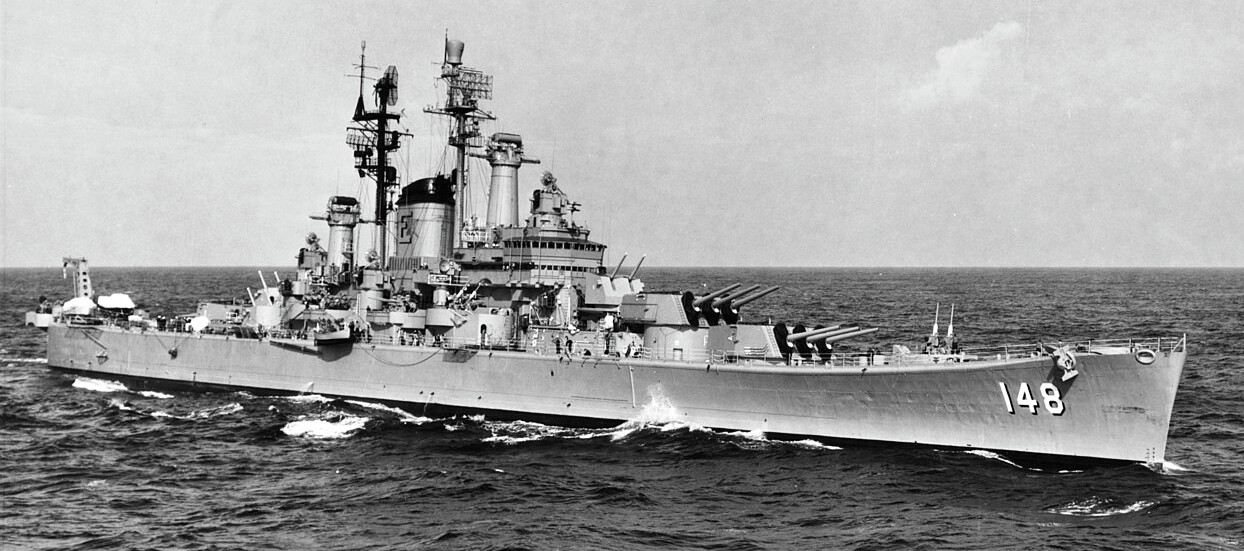
(USN Photo)
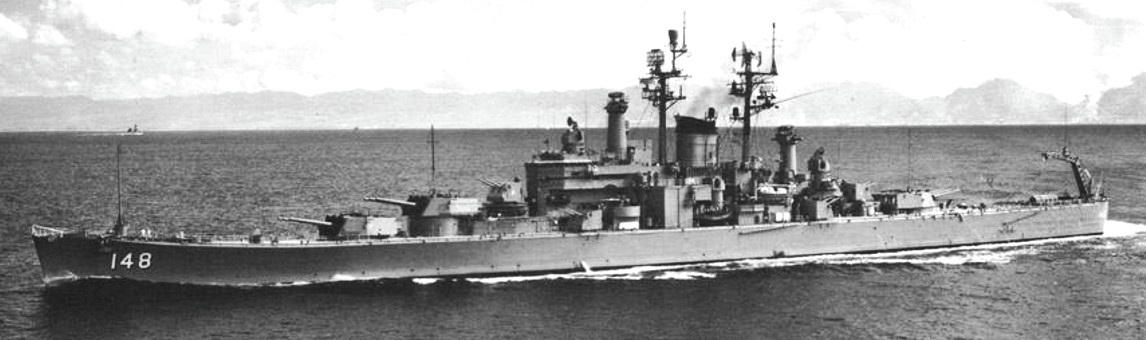
USS Newport News (CA-148) underway on 1 February 1960.
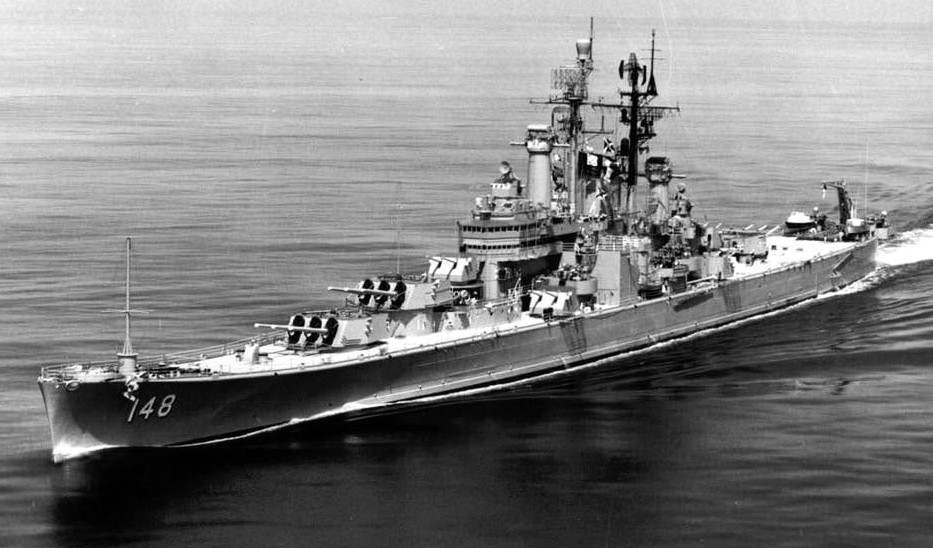
USS Newport News (CA–148) was the third and last ship of the Des Moines-class of heavy cruisers in the United States Navy. She was the first fully air-conditioned surface ship and the last active all-gun heavy cruiser in the United States Navy. Newport News was laid down 1 November 1945, launched on 6 March 1948 by Newport News Shipbuilding and Dry Dock Company, Newport News, Virginia, sponsored by Eliza S. Ferguson and commissioned on 29 January 1949, with Captain Roland N. Smoot in command. (Wikipedia)
(USN Photo)
USS Newport News (CA-148) underway at sea, circa in 1967. Newport News was deployed to the Western Pacific and Vietnam from 5 September 1967 to 13 May 1968.
(USN Photo)
USS Newport News (CA-148).
Unnamed (CA-149)
Canceled.
USS Dallas (CA-150)
Canceled.
Unnamed CA-151 to 153
Canceled.
CL-154 class
CL-154 to 159 – canceled unnamed.
The last ship to be assigned a hull number in the Heavy and Light Cruiser sequence would be the 1950s era nuclear powered Long Beach, though this ship would be assigned another number and designation under the guided missile cruiser hull classification before launch.
Long Beach class
(CLGN/CGN-160) Long Beach, completed as CGN-9 (1961)
USS Long Beach (CLGN/CGN-160)
(USN Photo, PH1/AC E.L. Goligoski)
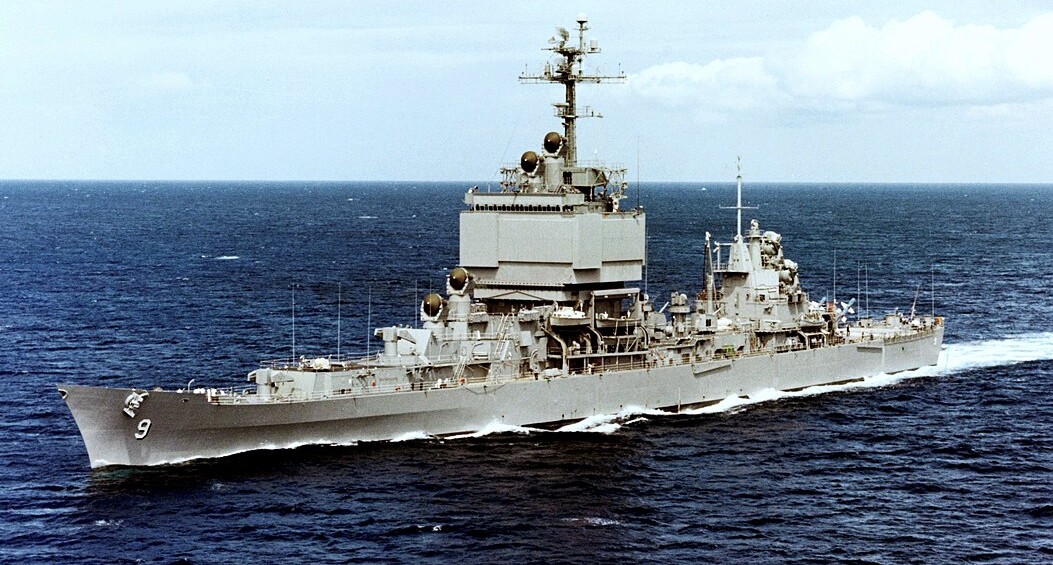
USS Long Beach (CGN-9) underway off Oahu, Hawaii (USA), 9 May 1973.
USS Long Beach (CLGN-160/CGN-160/CGN-9) was a nuclear-powered guided missile cruiser in the United States Navy and the world’s first nuclear-powered surface combatant. She was the third Navy ship named after the city of Long Beach, California. She was the sole member of the Long Beach class, and the last cruiser built for the United States Navy to a cruiser design; all subsequent cruiser classes were built on scaled-up destroyer hulls (and originally classified as destroyer leaders) or, in the case of the Albany class, converted from already existing cruisers.
Long Beach was laid down 2 December 1957, launched 14 July 1959 and commissioned 9 September 1961 under the command of then-Captain Eugene Parks Wilkinson, who previously served as the first commanding officer of the world’s first nuclear-powered vessel, the submarine USS Nautilus. She was deployed to Vietnam during the Vietnam War and served numerous times in the Western Pacific, Indian Ocean and Persian Gulf. But by the 1990s, nuclear power was deemed too expensive to use on surface ships smaller than an aircraft carrier in view of defense budget cutbacks after the end of the Cold War. Long Beach was decommissioned on 1 May 1995 instead of receiving her third nuclear refueling and proposed upgrade. After removal of the nuclear fuel, superstructure, and sections of the bow and stern, the hull segment containing the reactor and machinery spaces was moored at Puget Sound Naval Shipyard and sold for scrap. (Wikipedia)

(USN Photo)
RIM-8 Talos missile launcher on USS Long Beach (CGN-9) 18 July 1961.