
Royal Navy pre-dreadnought battleships: HMS Canopus, HMS Glory, HMS Albion, HMS Ocean, HMS Goliath, HMS Vengeance
The Canopus class was a group of six pre-dreadnought battleships of the British Royal Navy built in the late 1890s. The ships were designed by the Director of Naval Construction, William White, for use on the China Station. The class comprised Canopus, the lead ship, and Glory, Albion, Ocean, Goliath, and Vengeance. The class was armed with a main battery of four BL 12 inch Mk VIII naval guns and a secondary battery of twelve QF 6-inch guns. Compared to the preceding Majestic-class battleships, the Canopus class was smaller, faster, and less heavily armoured, though they adopted new, stronger Krupp armour, which was more effective than the Harvey steel used in the Majestics. In addition to the Krupp steel, the ships also adopted several other changes, including water-tube boilers, in-line funnels, and a full-length armoured belt.
The six ships of the Canopus class served abroad for much of their early careers, with all six of them seeing service on the China Station in the early 1900s. In addition, Canopus also served with the Mediterranean Fleet during this period. In 1905, with the signing of the Anglo-Japanese Alliance, the Royal Navy withdrew most of its heavy units from the Far East, and the six Canopus-class ships returned to British waters, seeing further service with the Home, Channel, and the Atlantic Fleets through 1908. From then to 1910, most of the ships saw service with the Mediterranean Fleet, before being reduced to reserve status or other secondary duties thereafter.
With Britain’s entry into the First World War in August 1914, the ships were mobilized as the 8th Battle Squadron, but they were quickly dispersed to other stations, serving as guard ships and convoy escorts. Canopus participated in the hunt for the German East Asia Squadron, which culminated in the Battle of the Falkland Islands in December 1914. In early 1915, most of the ships were sent to the eastern Mediterranean Sea to take part in the Dardanelles Campaign against the Ottoman Empire. During these operations, Ocean and Goliath were sunk, in March and May 1915, respectively. Canopus and Albion were withdrawn from active service in 1916, thereafter being used as barracks ships. Glory served as the flagship of the British North Russia Squadron, while Vengeance took part in operations off German East Africa in 1916. After the war, all four survivors were quickly broken up in the early 1920s. (Wikipedia)
HMS Canopus
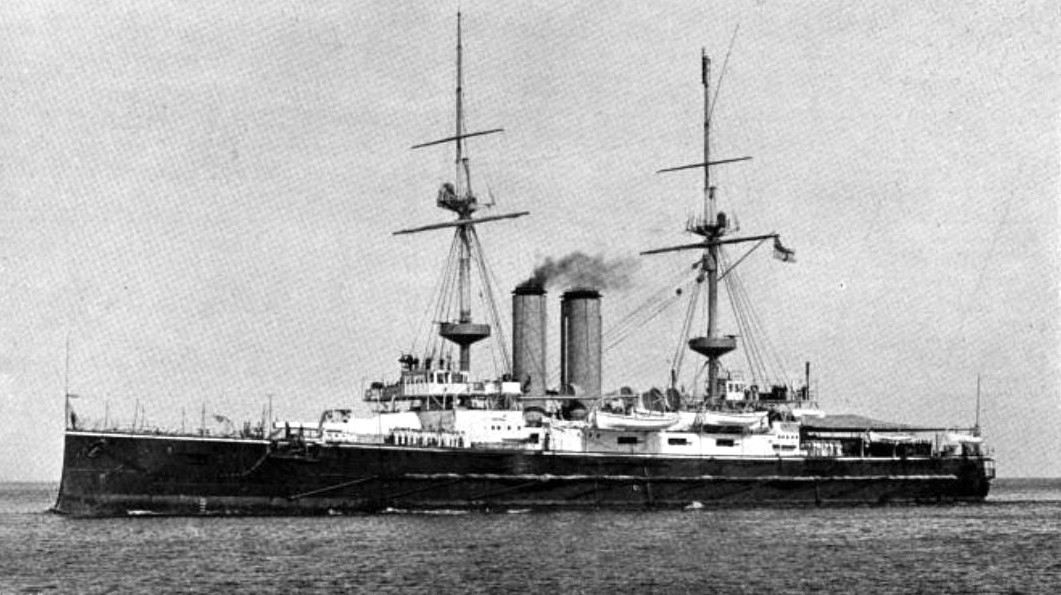
(– Robinson, Charles N Photo)
HMS Canopus was a pre-dreadnought battleship of the British Royal Navy and the lead ship of the Canopus class. Intended for service in Asia, Canopus and her sister ships were smaller and faster than the preceding Majestic-class battleships, but retained the same battery of four 12-inch (305 mm) guns. She also carried thinner armour, but incorporated new Krupp steel, which was more effective than the Harvey armour used in the Majestics. Canopus was laid down in January 1897, launched in October that year, and commissioned into the fleet in December 1899.
Canopus served in the Mediterranean Fleet upon commissioning until 1903, when she was decommissioned for refitting. In 1905, she was sent to East Asia, but the renewal of the Anglo-Japanese Alliance that year rendered her presence in Asian waters unnecessary. She instead returned to Britain and served with several fleet commands in British waters, including the Atlantic Fleet, the Channel Fleet, and finally the Home Fleet. Another short deployment to the Mediterranean followed in 1908–1909. Upon returning to Britain, she was placed in reserve.
At the beginning of the First World War in August 1914, she was mobilized for service in the South America Station, where she patrolled for German commerce raiders. She was involved in the search for the German East Asia Squadron of Vice Admiral Maximilian von Spee. Too slow to follow Admiral Sir Christopher Cradock’s cruisers, she missed the Battle of Coronel in November 1914, where Cradock was defeated. Moored at Port Stanley as a defensive battery, she fired the first shots of the Battle of the Falklands in December, which led Spee to break off the attack before being chased down and destroyed by Admiral Doveton Sturdee’s battlecruisers.
Canopus was transferred to the Mediterranean in early 1915 for the Dardanelles Campaign. She participated in major attacks on the Ottoman coastal fortifications defending the Dardanelles in March 1915, but the British and French fleets proved incapable of forcing the straits. After the Gallipoli Campaign ended with the withdrawal of Allied forces in January 1916, Canopus patrolled the eastern Mediterranean, but saw no further action. She was removed from service in April 1916 and was converted into a barracks ship in early 1918. After the war, the ship was broken up in 1920. (Wikipedia)
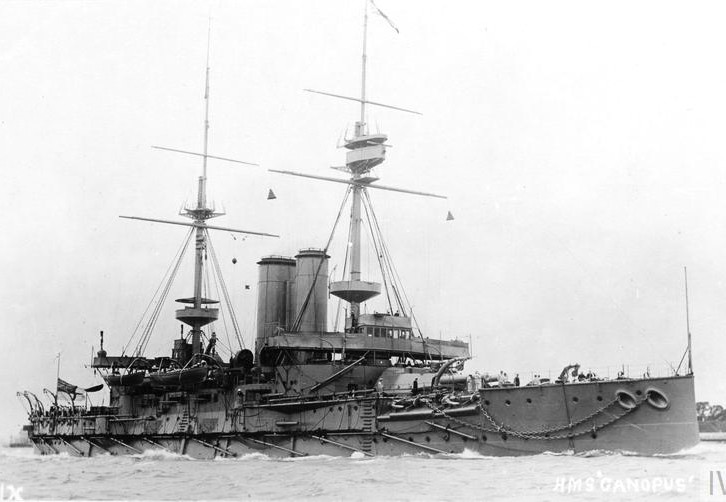
(IWM Photo, Q 75260)
HMS Canopus, 1910
HMS Glory
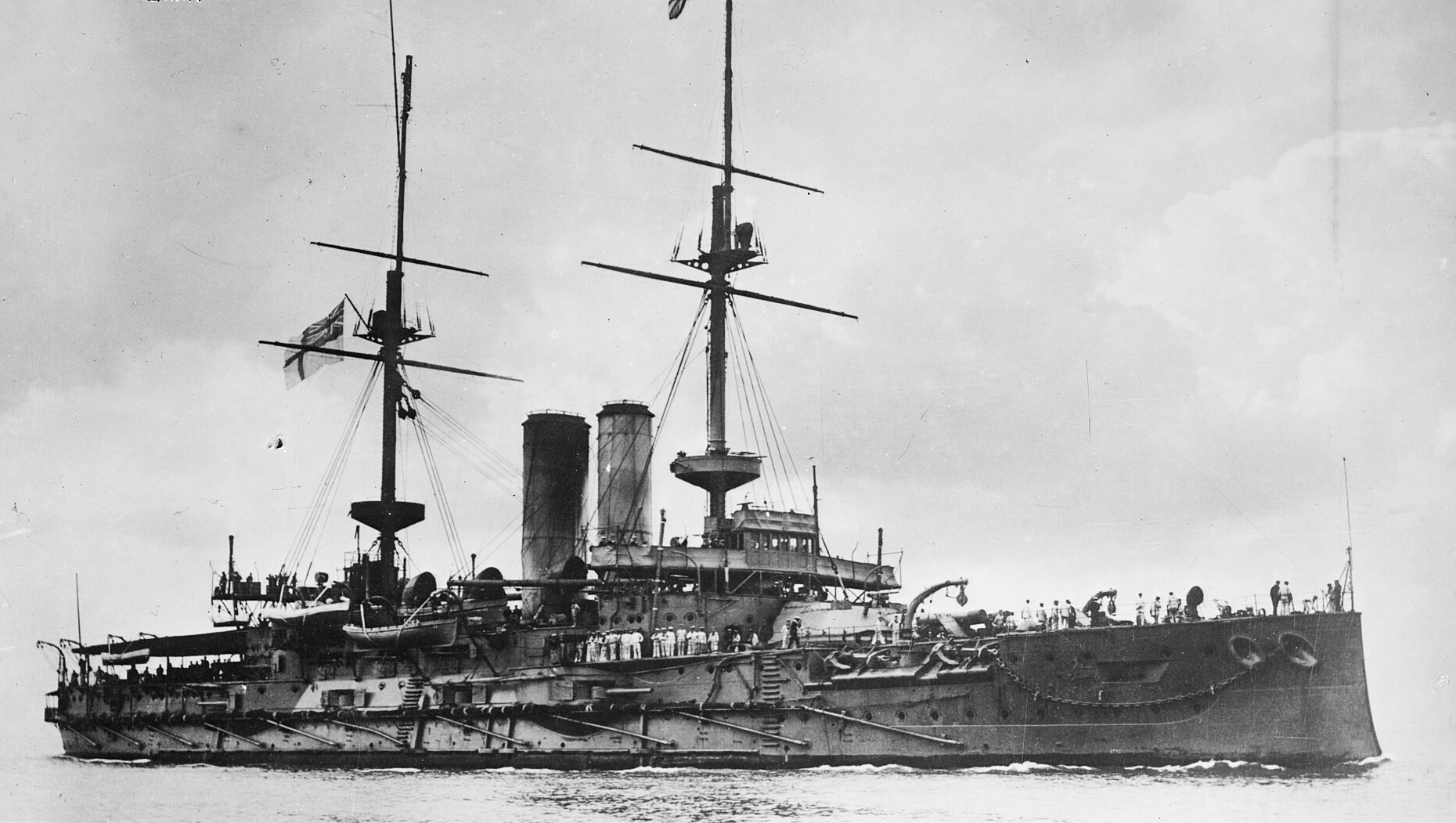
(Library of Congress Photo)
HMS Glory, 1910.
HMS Glory was a pre-dreadnought battleship of the British Royal Navy and a member of the Canopus class. Intended for service in Asia, Glory and her sister ships were smaller and faster than the preceding Majestic-class battleships, but retained the same battery of four 12-inch (305 mm) guns. She also carried thinner armour, but incorporated new Krupp steel, which was more effective than the Harvey armour used in the Majestics. Glory was laid down in December 1896, launched in March 1899, and commissioned into the fleet in November 1900.
Glory spent much of her peacetime career abroad. She was assigned to the China Station from 1901 to 1905, before returning to British waters for a brief stint with the Channel Fleet and then the Home Fleet from late 1905 to early 1907. After a refit in 1907, she was then sent to the Mediterranean Fleet, where she remained until April 1909. She then returned to Britain and was reduced to reserve status. She remained inactive until the outbreak of the First World War in August 1914, at which time she was mobilised into the 8th Battle Squadron.
In October 1914, Glory was transferred to the North America and West Indies Station, where she served as the squadron flagship. In June 1915, she was reassigned to the Mediterranean, and she took part in the Dardanelles Campaign, though she saw little action during that time, as her crew was needed ashore to support the troops fighting in the Gallipoli campaign. In August 1916, Glory was sent to Murmansk, Russia, to support Britain’s ally by keeping the vital port open for supplies being sent for the Eastern Front. There, she served as the flagship of the British North Russia Squadron, including during the Allied intervention in the Russian Civil War. By that time, she was the last British pre-dreadnought still in active service. She returned to Britain in late 1919, was decommissioned, and was renamed HMS Crescent in 1920, before ultimately being sold to ship breakers in December 1922. (Wikipedia)
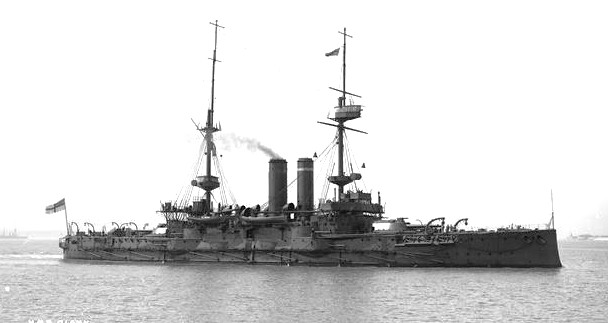
(IWM Photo, Q21291A)
HMS Glory, 1899.
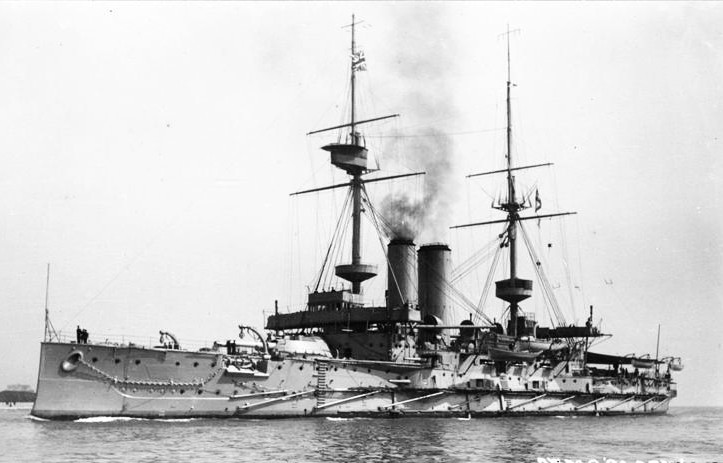
(IWM Photo, Q 75257)
HMS Glory, 1910.
HMS Albion
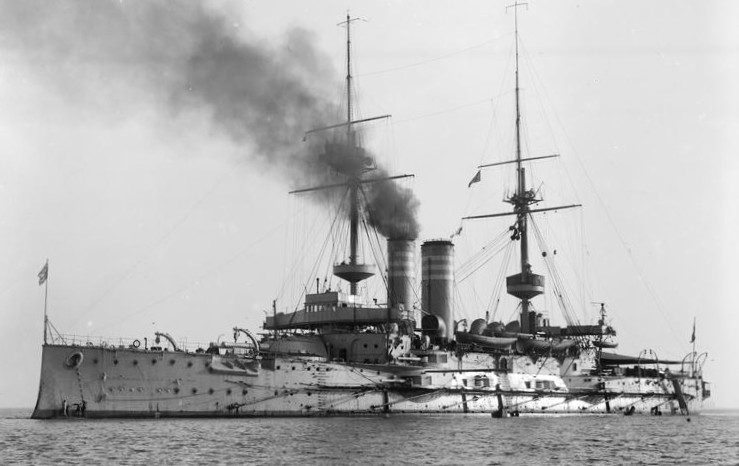
(IWM Photo, Q 20935)
HMS Albion, 1898.
HMS Albion was a pre-dreadnought battleship of the British Royal Navy and a member of the Canopus class. Intended for service in Asia, Albion and her sister ships were smaller and faster than the preceding Majestic-class battleships, but retained the same battery of four 12-inch (305 mm) guns. She also carried thinner armour, but incorporated new Krupp steel, which was more effective than the Harvey armour used in the Majestics. Albion was laid down in December 1896 and launched in June 1898. At the launch a temporary viewing platform was struck by the waves, causing the death of at least 34 people. The ship was commissioned into the fleet in June 1901.
Albion spent the first few years of her career abroad on the China Station from 1901 to 1905, before returning to British waters to serve with the Channel Fleet and later the Atlantic Fleet. After the outbreak of the First World War in August 1914, she was mobilised and returned to the Channel Fleet, but was quickly sent to the Atlantic to help defend against the possibility of German warships breaking out of the North Sea. In December and January 1915, she supported operations against German Southwest Africa.
The ship was transferred to the Mediterranean Sea in January 1915 to participate in the Dardanelles Campaign. She participated in major attacks on the Ottoman coastal fortifications defending the Dardanelles in March 1915, but the British and French fleets proved incapable of forcing the straits. During these operations, Albion was damaged by Ottoman artillery twice. In October 1915, she was transferred to Salonika to support the Allied operations against Bulgaria through then-neutral Greece, but she saw no further action. She was transferred back to Ireland in April 1916 for service as a guard ship, a role she filled until October 1918, when she was reduced to a barracks ship. Albion was sold for scrap in December 1919 and broken up the following year. (Wikipedia)
HMS Ocean
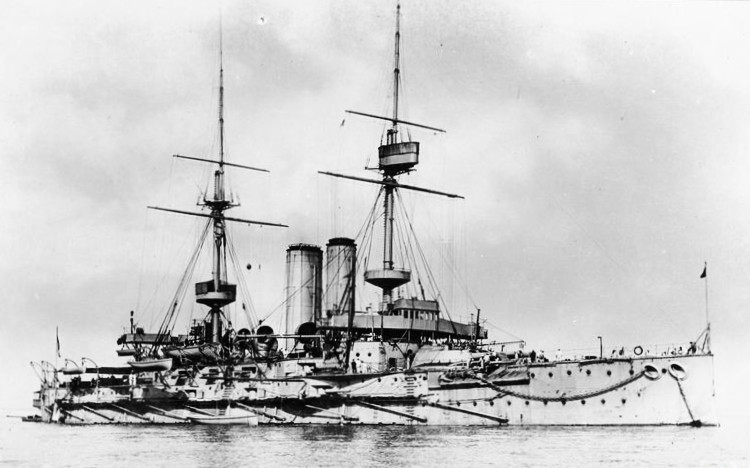
(IWM Photo, Q 75256)
HMS Ocean, 1910.
HMS Ocean was a pre-dreadnought battleship of the British Royal Navy and a member of the Canopus class. Intended for service in Asia, Ocean and her sister ships were smaller and faster than the preceding Majestic-class battleships, but retained the same battery of four 12-inch (305 mm) guns. She also carried thinner armour, but incorporated new Krupp steel, which was more effective than the Harvey armour used in the Majestics. Ocean was laid down in December 1897, launched in July 1898, and commissioned into the fleet in February 1900.
She entered service with the Mediterranean Fleet until January 1901, when she was transferred to the China Station. Ocean was recalled from China in 1905 for service with the Channel Fleet after a period spent in reserve. From 1908 to early 1910, she was again assigned to the Mediterranean Fleet. She was assigned to the Home Fleet in 1910 and saw little activity until the outbreak of the First World War in August 1914. At the start of the conflict, she was assigned to the 8th Battle Squadron and was stationed in Ireland to support a cruiser squadron, but in October she was transferred to the East Indies Station to protect troopship convoys from India.
In late 1914, Ocean participated in an attack on Basra before being transferred to Egypt to defend the Suez Canal. In February 1915, she was reassigned to the Dardanelles Campaign, and she took part in several attacks on the Ottoman fortifications defending the Dardanelles. On 18 March, she attempted to retrieve the battleship Irresistible after the latter had been badly damaged by a mine in Erenköy Bay, but had to abandon her salvage efforts due to heavy Ottoman gunfire. She instead evacuated the surviving crew of Irresistible but struck a mine while making for the open sea. Badly damaged, her crew and the survivors of Irresistible were taken off by destroyers and both battleships sank in Morto Bay. (Wikipedia)
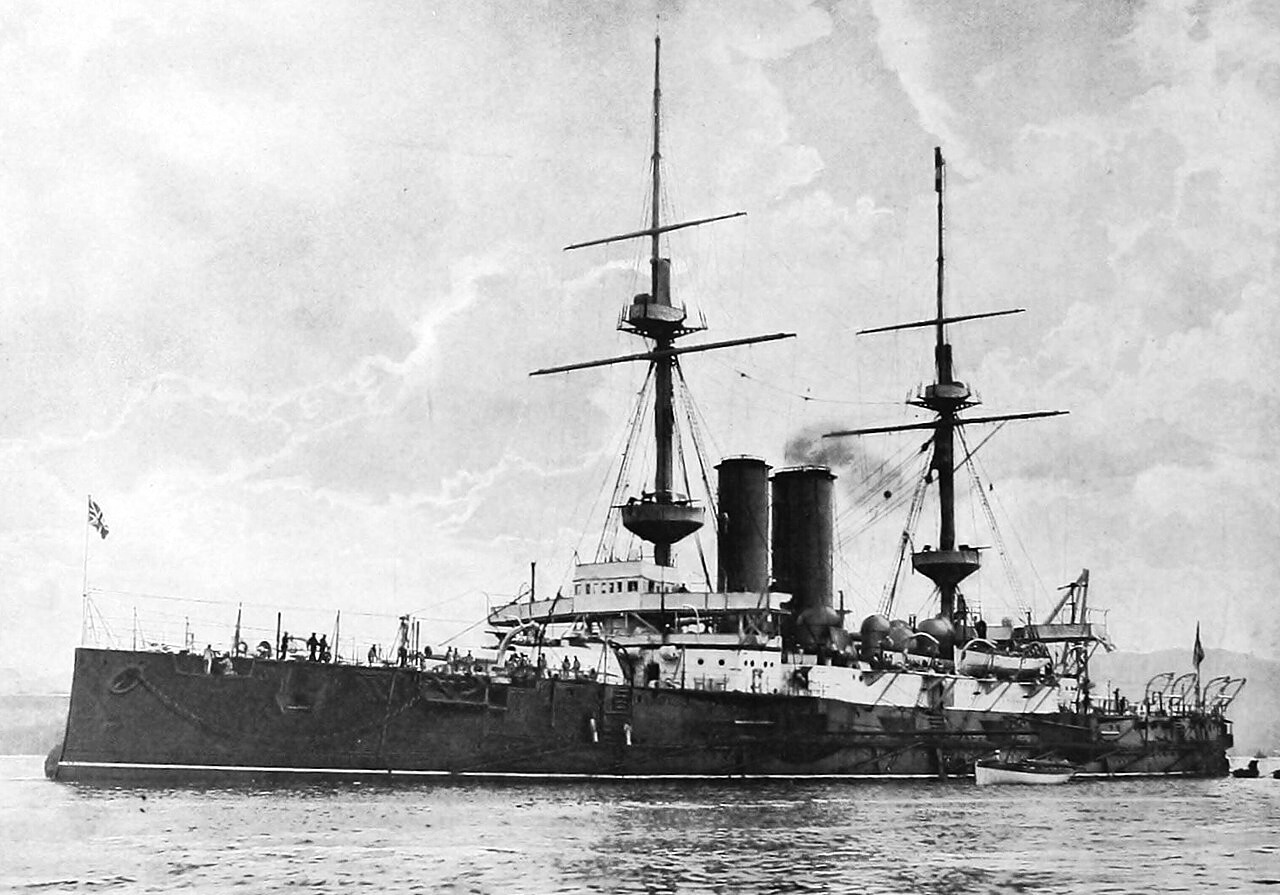
(Bourne & Shepherd, Calcutta for Cassell & Co Photo)
HMS Ocean, 1900.
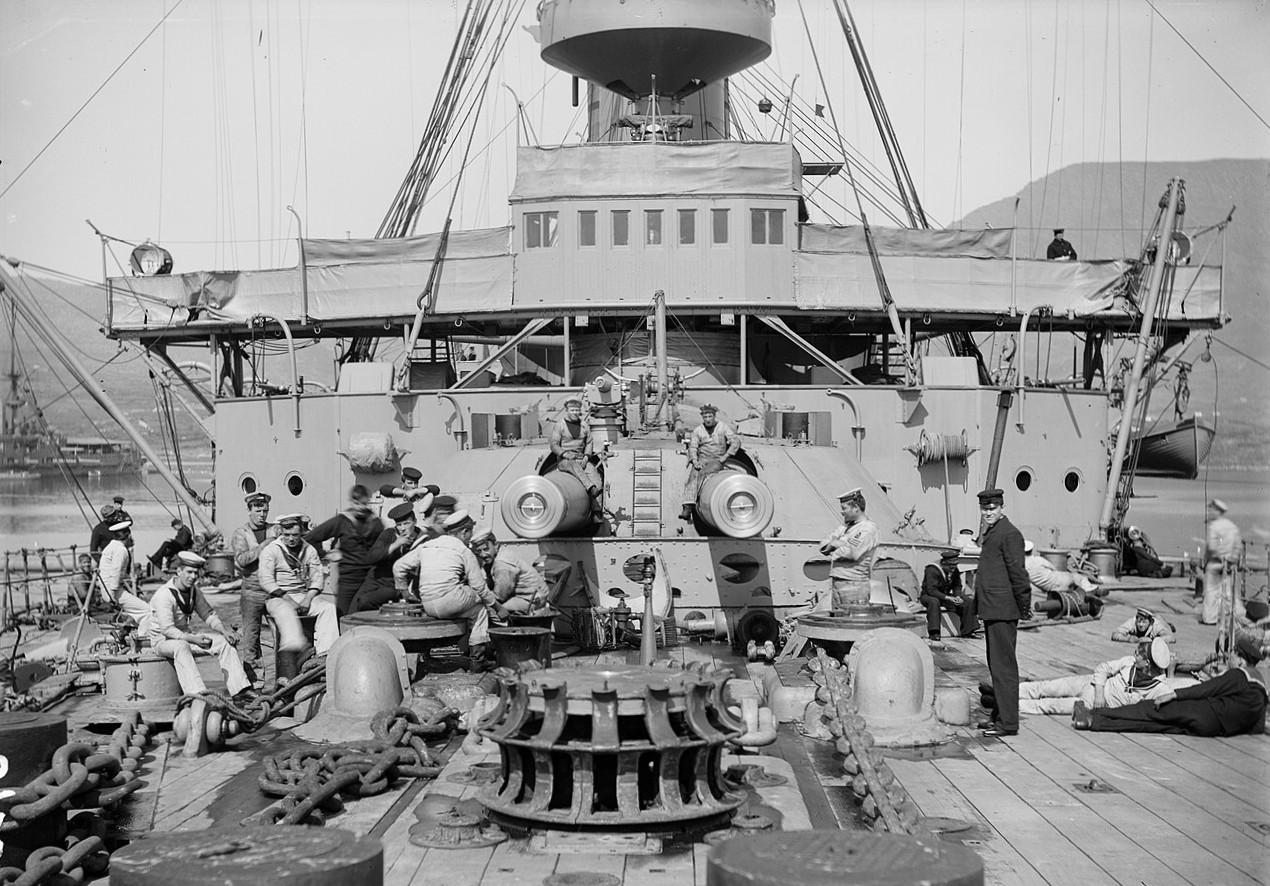
Crew sunning themselves on the forward deck of a Royal Navy Canopus-class battleship, in Castletownbere, Co. Cork, c. 1905.
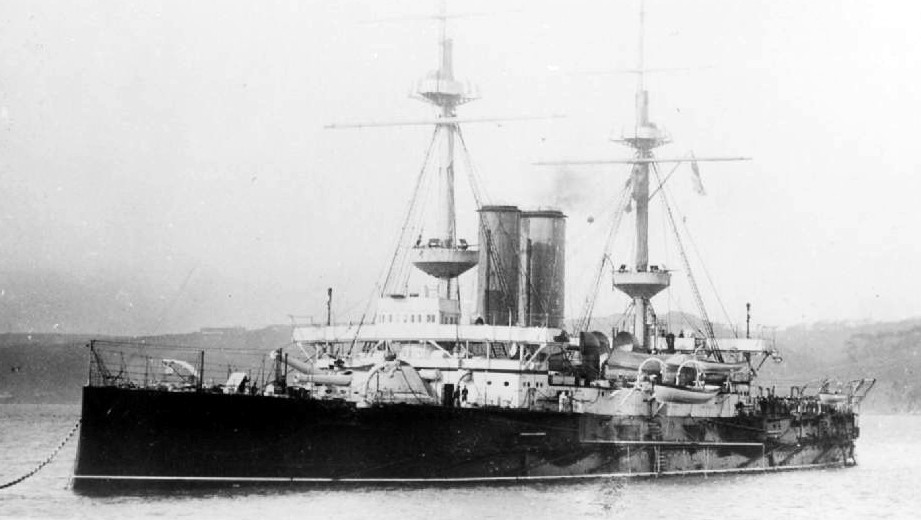
(Royal Navy Photo)
HMS Ocean, c1915.
HMS Goliath
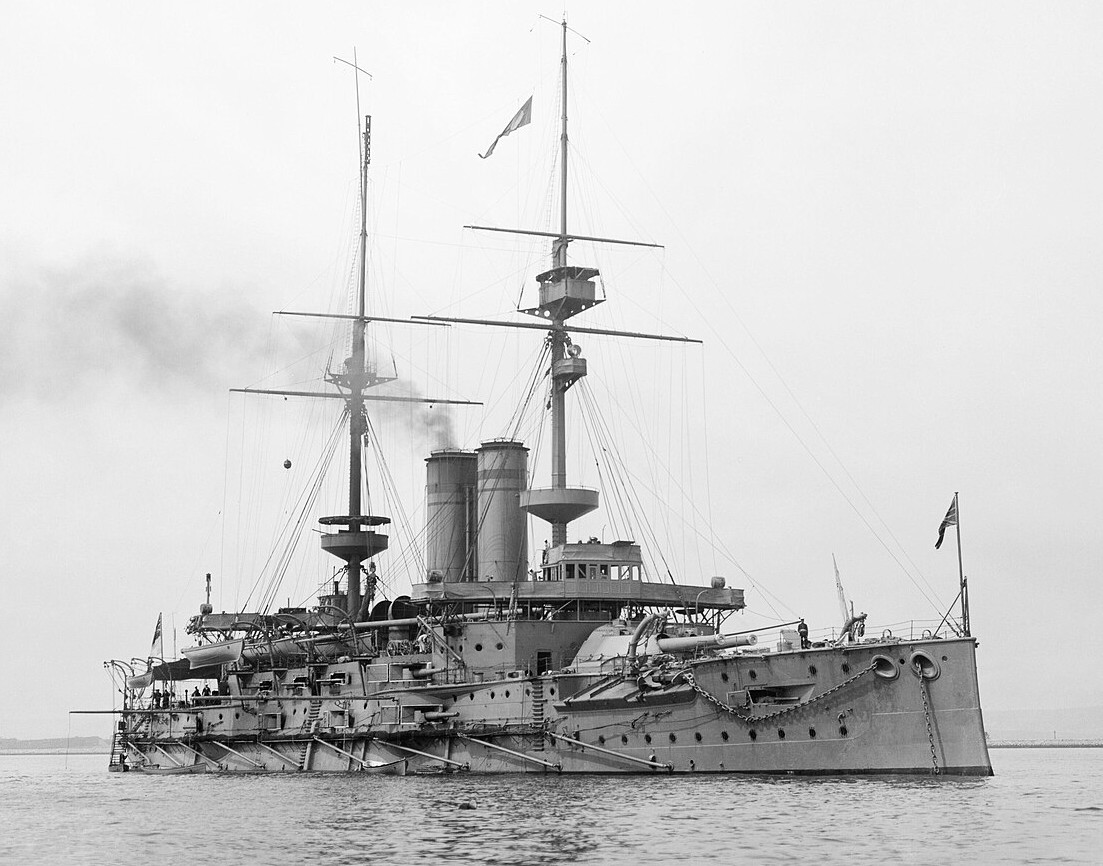
( IWM Photo, Q 21299)
HMS Goliath, c1915.
HMS Goliath was a pre-dreadnought battleship of the British Royal Navy and a member of the Canopus class. Intended for service in Asia, Goliath and her sister ships were smaller and faster than the preceding Majestic-class battleships, but retained the same battery of four 12-inch (305 mm) guns. She also carried thinner armour, but incorporated new Krupp steel, which was more effective than the Harvey armour used in the Majestics. Goliath was laid down in January 1897, launched in March 1898, and commissioned into the fleet in March 1900.
The ship was deployed to the China Station from her commissioning until 1903, when she returned to Britain; she was sent back to East Asian waters, but while en route was reassigned to the Mediterranean Fleet. In early 1906, she was transferred to the Channel Fleet, followed by a stint in the Home Fleet starting in early 1907. She was sent to the Mediterranean a second time in 1908, and later returned to the Home Fleet in 1909, before being decommissioned in 1913. With the outbreak of the First World War in August 1914, Goliath was mobilised into the 8th Battle Squadron. She initially served as a guard ship in Loch Ewe, one of the harbours used by the Grand Fleet, before escorting the crossing of British troops to Belgium in late August.
Goliath then took part in operations against German East Africa, participating in the blockade of the German light cruiser SMS Königsberg in the Rufiji River. From March 1915, she was part of the Dardanelles Campaign, and remained in support of the landings at Gallipoli in April. On 13 May 1915 Goliath was sunk in Morto Bay off Cape Helles by three torpedoes from the Ottoman destroyer Muâvenet-i Millîye. Out of her crew of 750, 570 were killed in the sinking. (Wikipedia)
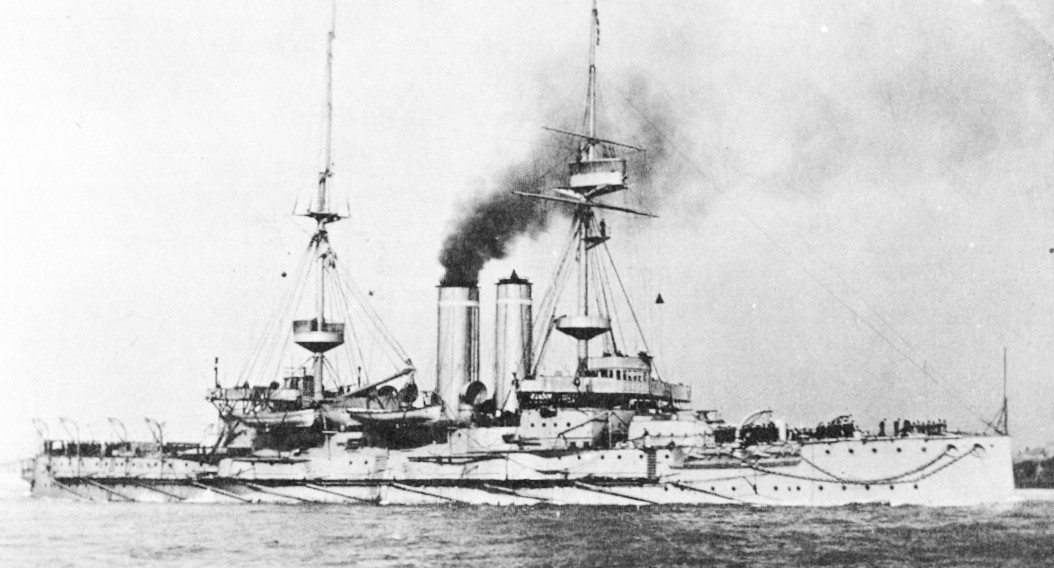
(Royal Navy Photo)
HMS Goliath, 1907.
HMS Vengeance
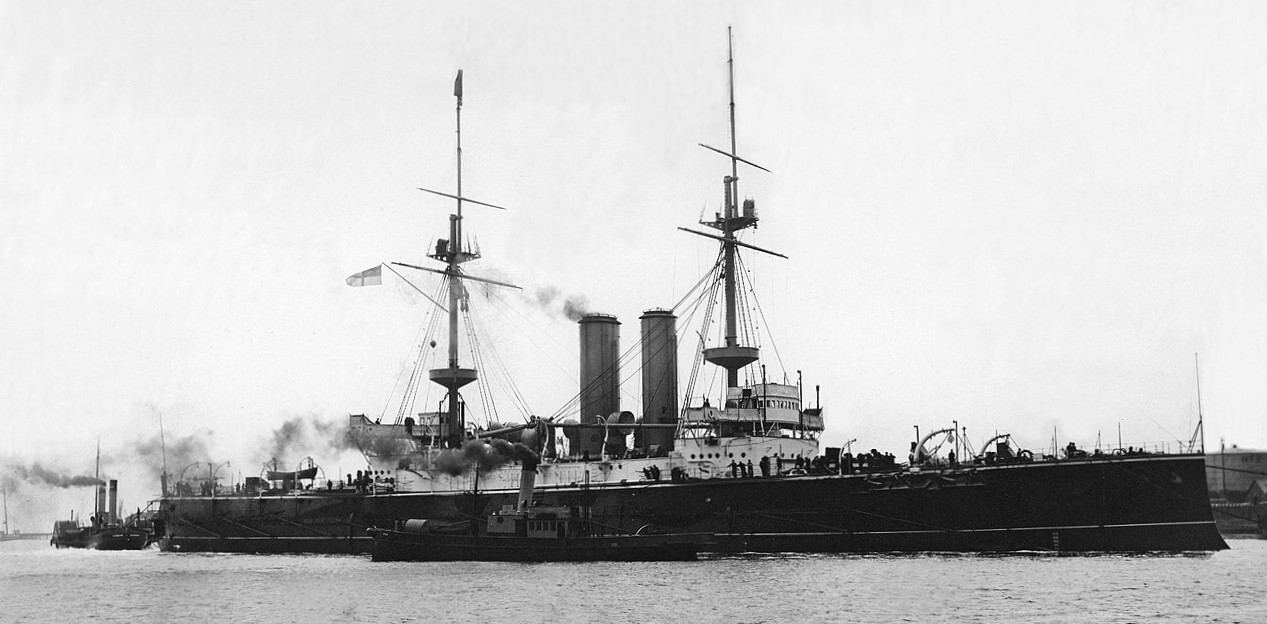
(Municipal Archives of Trondheim Photo)
HMS Vengeance, c1899.
HMS Vengeance was a pre-dreadnought battleship of the British Royal Navy and a member of the Canopus class. Intended for service in Asia, Vengeance and her sister ships were smaller and faster than the preceding Majestic-class battleships, but retained the same battery of four 12-inch (305 mm) guns. She also carried thinner armour, but incorporated new Krupp steel, which was more effective than the Harvey armour used in the Majestics. Vengeance was laid down in August 1898, launched in July 1899, and commissioned into the fleet in April 1902.
On entering service, Vengeance was assigned to the China Station, but the Anglo-Japanese Alliance rendered her presence there unnecessary, and she returned to European waters in 1905. Late that year, she underwent a refit that lasted into 1906. She then served in the Channel Fleet until 1908, when she moved to the Home Fleet, thereafter serving in secondary roles, including as a tender and a gunnery training ship. In 1913, she was transferred to the 6th Battle Squadron of the Second Fleet.
Following Britain’s entrance into the First World War in August 1914, Vengeance patrolled the English Channel with the 8th Battle Squadron before moving to Alexandria to protect the Suez Canal in November 1914. She then joined the Dardanelles Campaign in January 1915, where she saw extensive action trying to force the Dardanelles strait in February and March and later supporting the fighting ashore during the Gallipoli Campaign in April and May. Worn out from these operations, she returned to Britain for a refit. She was recommissioned in December 1915 for service in East Africa, during which she supported the capture of Dar es Salaam in German East Africa. She returned to Britain again in 1917 and was decommissioned, thereafter serving in subsidiary roles until 1921, when she was sold for scrap. Vengeance was broken up the following year. (Wikipedia)
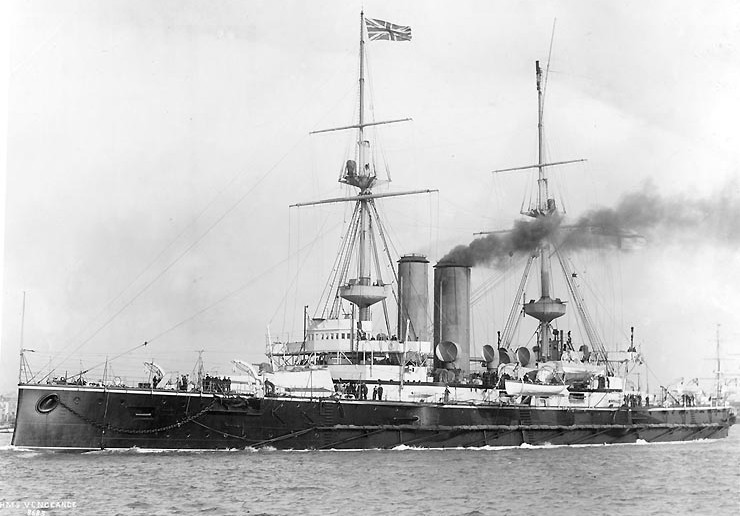
(U.S. Navy Historical Center Photo)
HMS Vengeance prior to the adoption of the overall gray warship color scheme by the Royal Navy c1904.
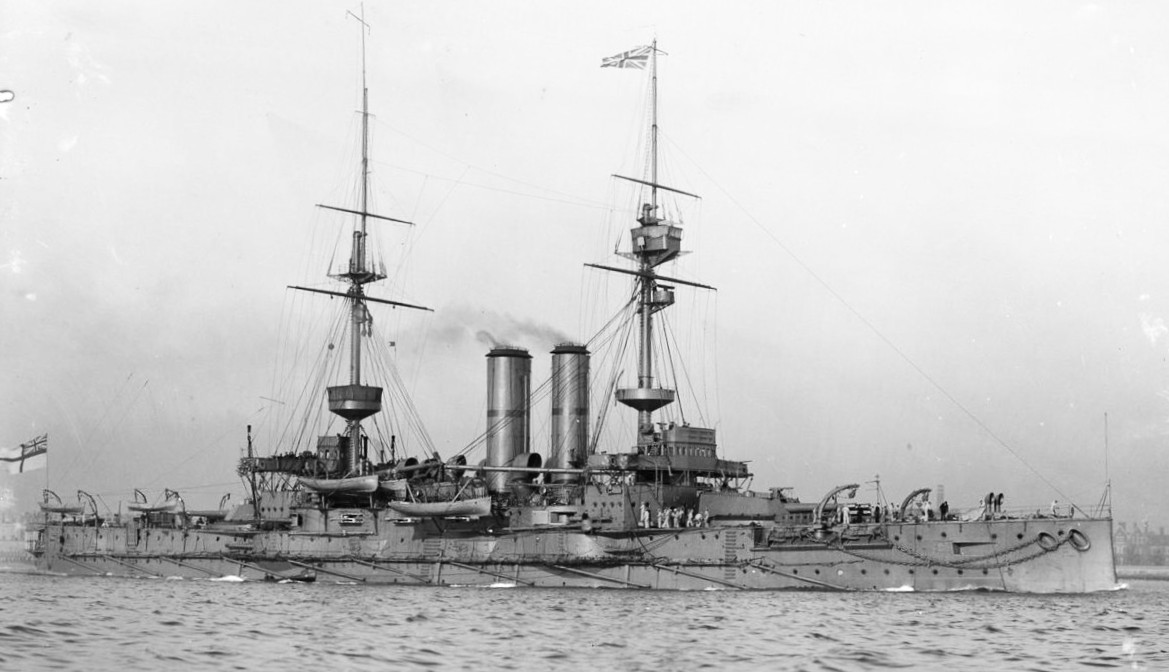
(IWM Photo, Q 40396)
HMS Vengeance, 1908.