US Navy Heavy and Light Cruisers: USS Baltimore (CA-68), USS Boston (CA-69), USS Canberra (CA-70), USS Quincy (CA-71), USS Pittsburgh (CA-72), USS St. Paul (CA-73), USS Columbus (CA-74), USS Helena (CA-75)
Early Second World War
When the United States entered the Second World War it had three major classes of cruisers under construction: the Atlanta and Cleveland light cruiser classes (with 5-inch and 6-inch main batteries, respectively), and the Baltimore-class of heavy cruisers. The Cleveland-class was an improvement of the Brooklyn design, while the Baltimore-class was an improved Wichita. These ships would form the bulk of the cruiser war construction effort, with eight Atlanta-class, twenty-seven Cleveland-class, and fourteen Baltimore-class cruisers ultimately completed. Early in the war nine Cleveland hulls would be diverted for conversion into Independence class light aircraft carriers (CVLs). By the end of the war three Cleveland hulls would be canceled, and one incomplete hull would later be converted to a guided missile cruiser. (Wikipedia)
Baltimore class
(CA-68) Baltimore (1943) – WW2: 9 battle stars.
(CA-69) Boston (1943) – WW2: 10 battle stars, later converted to CAG-1.
(CA-70) Canberra (ex-Pittsburgh) (1943) – WW2: 7 battle stars, later converted to CAG-2.
(CA-71) Quincy (ex-St Paul) (1943) – WW2: 5 battle stars.
(CA-72) Pittsburgh (ex-Albany) (1944) – WW2: 2 battle stars.
(CA-73) St. Paul (1945) – WW2: 1 battle star, Korea: 8 stars, Vietnam: 9 stars.
(CA-74) Columbus (1945) – later converted to CG-12.
(CA-75) Helena (ex-Des Moines) (1945) – WW2: 4 battle stars.
USS Baltimore (CA-68)
(USN Photo)
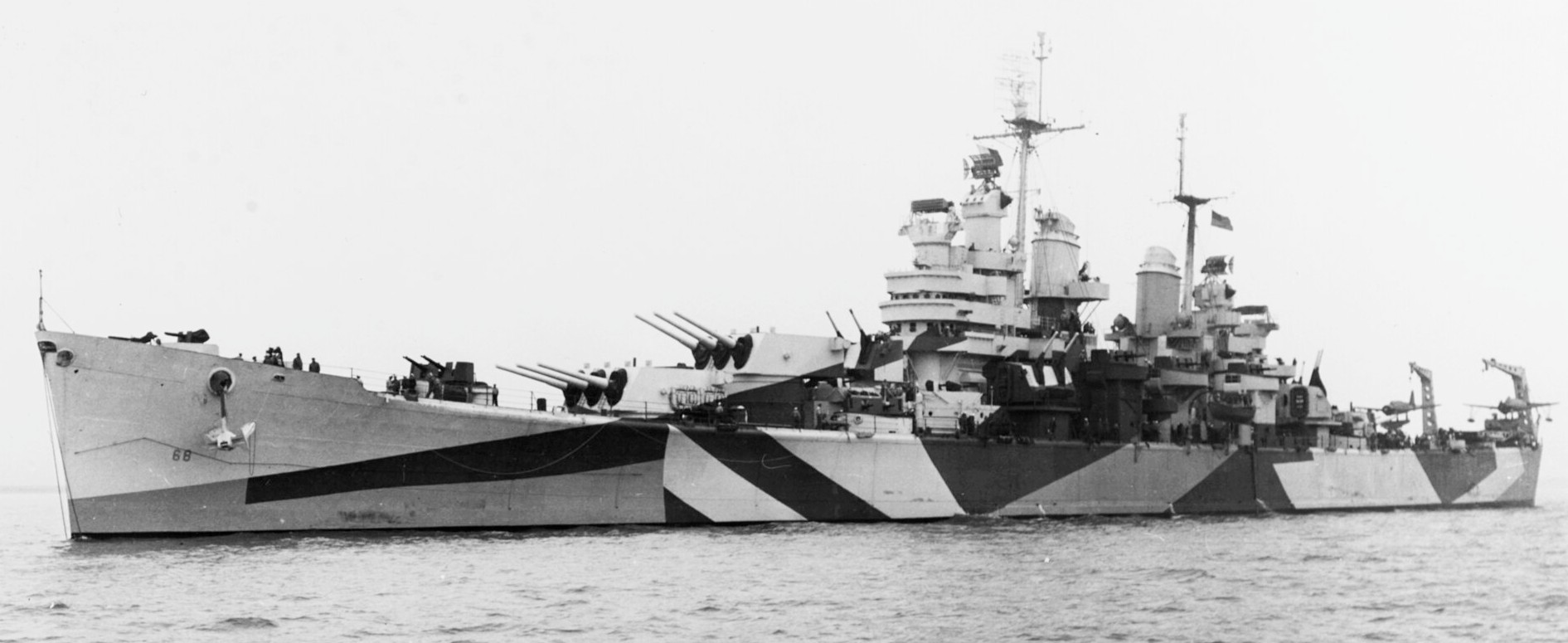
USS Baltimore (CA-68) off the Mare Island Naval Shipyard, California (USA), on 18 October 1944. Her camouflage is Measure 32, Design 16d.
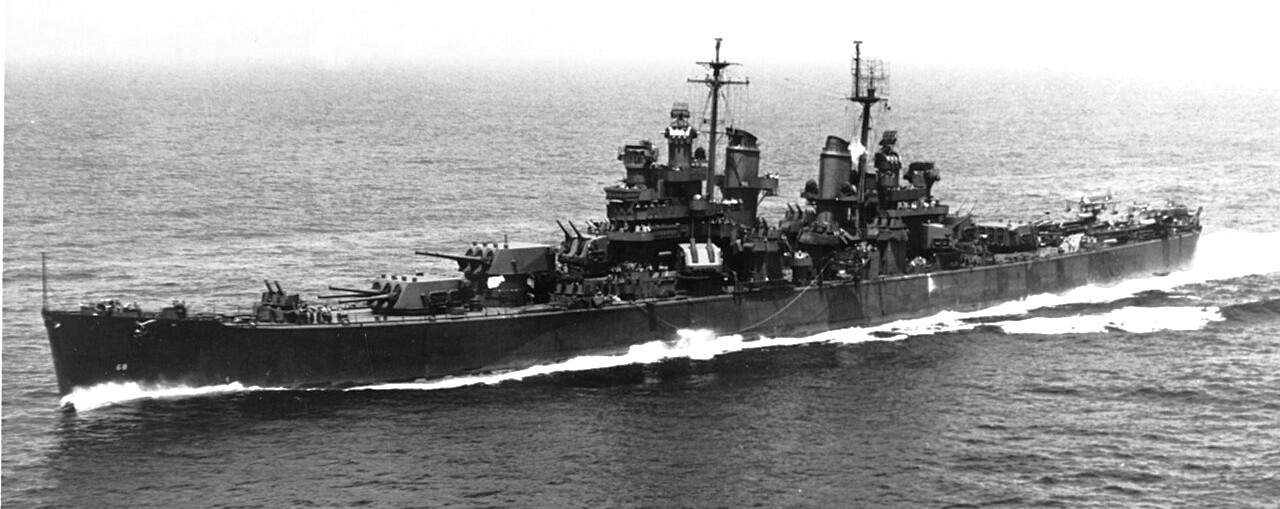
USS Baltimore (CA-68) was the lead ship of her class of heavy cruiser, the fifth ship of the United States Navy named after the city of Baltimore, Maryland. Baltimore was 664 feet (202.4 m) long at the waterline and 673 ft 5 in (205.26 m) long overall. She had a beam of 70 ft 10 in (21.59 m) and a draft of 24 ft (7.3 m). She displaced 14,472 long tons (14,704 t) at standard displacement and 17,031 long tons (17,304 t) at full combat load. The ship had a crew of 1,142 officers and enlisted men. (Wikipedia)
(USN Photo)
USS Baltimore (CA-68) underway off the coast of Massachusetts on 18 June 1943.
USS Boston (CA-69)
(USN Photo)
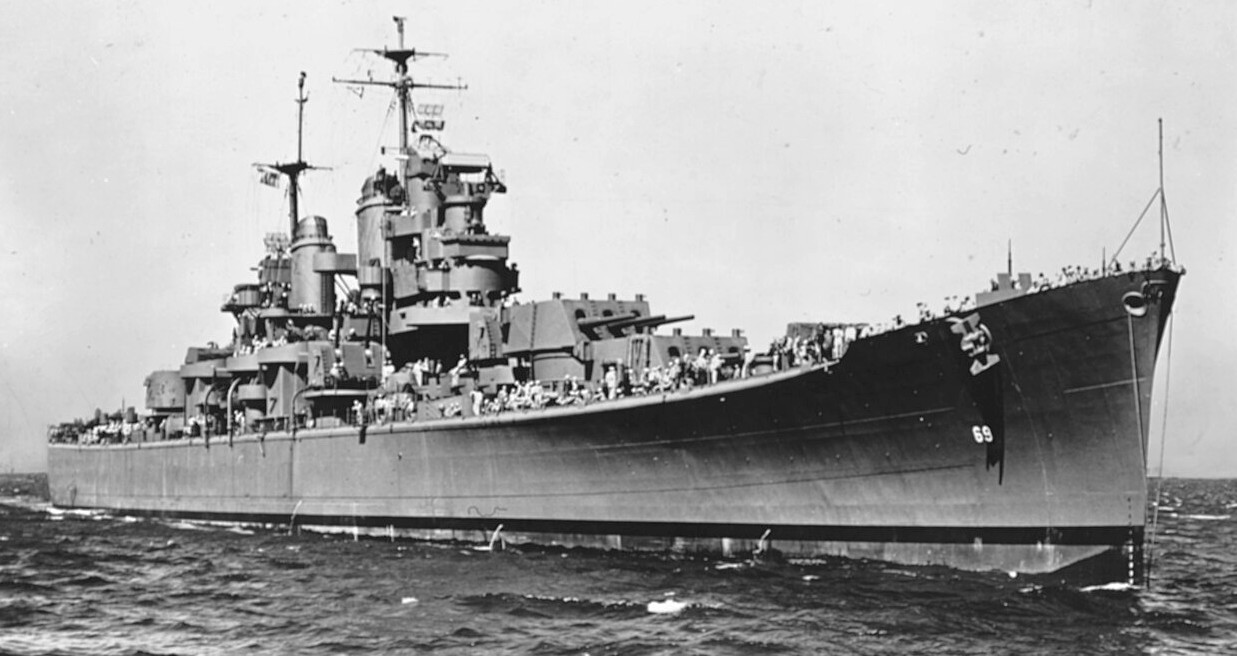
USS Boston (CA-69) underway in Boston Harbor, Massachusetts, on 30 June 1943.
USS Boston (CA-69/CAG-1), a Baltimore-class heavy cruiser and later a Boston-class guided missile cruiser, was the sixth ship of the United States Navy to be named for the U.S. city of Boston, Massachusetts. Boston was launched 26 August 1942 by Bethlehem Steel Company’s Fore River Shipyard in Quincy, Massachusetts, sponsored by Mrs Helen Noonan Tobin, wife of the Mayor of Boston, Maurice J. Tobin, and commissioned 30 June 1943. (Wikipedia)
USS Canberra (CA-70)
(USN Photo)
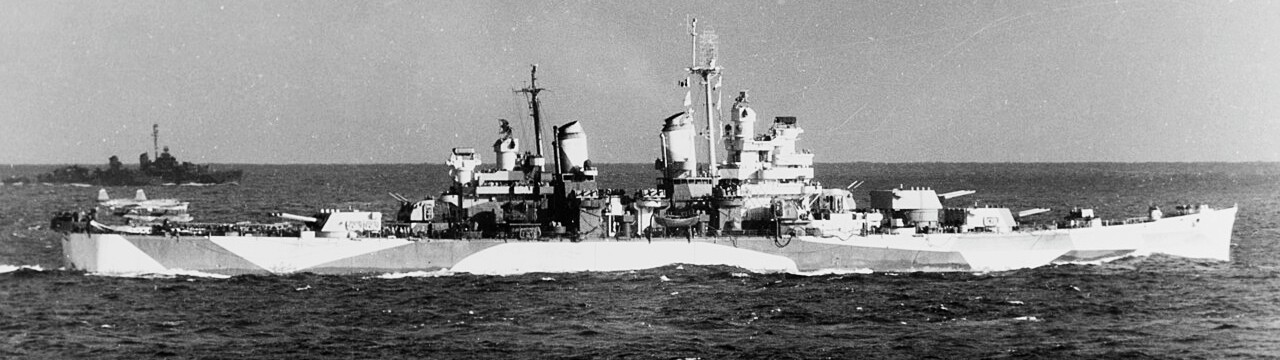
USS Canberra (CA-70) operating with Task Force 38 in the Western Pacific, 10 October 1944, three days before she was torpedoed off Formosa. Her camouflage is Design 18a in the Measure 31-32-33.
USS Canberra (CA-70/CAG-2) was a Baltimore-class cruiser and later a Boston-class guided missile cruiser of the United States Navy (USN). Originally to be named USS Pittsburgh, the ship was renamed before launch to honour the Australian cruiser HMAS Canberra sunk during the Battle of Savo Island. Canberra was the first USN warship named after a foreign capital city, and one of the few named after a foreign warship not captured in battle with a USN ship.
The ship entered service in 1943 and served in the Pacific theater of the Second World War until she was torpedoed during the Aerial Battle of Taiwan-Okinawa and forced to return to the United States for repairs. Placed in reserve after the war, Canberra was selected for conversion into the second guided-missile carrying warship in the USN fleet. Following the conversion, she was host to the ceremony for selecting the Unknown Soldier representing World War II in 1958, undertook an eight-month round-the-world cruise in 1960, participated in the Cuban Missile Crisis naval blockade in 1962, and was deployed to the Vietnam War on five occasions between 1965 and 1969. (Wikipedia)
![r/WarshipPorn - Canberra moving into position for the International Naval Review, in Hampton Roads, Virginia, the United States, 12 June 1957 [1444 x 1768]](https://preview.redd.it/canberra-moving-into-position-for-the-international-naval-v0-ljoqew4wusk21.jpg?auto=webp&s=91424ee46a4e09b06aaefb16d8333dd024a776b9)
(USN Photo)
The Baltimore class heavy cruiser USS Canberra (CA-70) being moved into position for the International Naval Review in Hampton Roads, VA, USA on 12 June 1957. She was originally to be named USS Pittsburgh, the ship was renamed before launch to honour the Australian cruiser HMAS Canberra sunk during the Battle of Savo Island. Canberra was the first USN warship named after a foreign capital city, and one of the few named after a foreign warship not captured in battle with a USN ship.
(USN Photo)
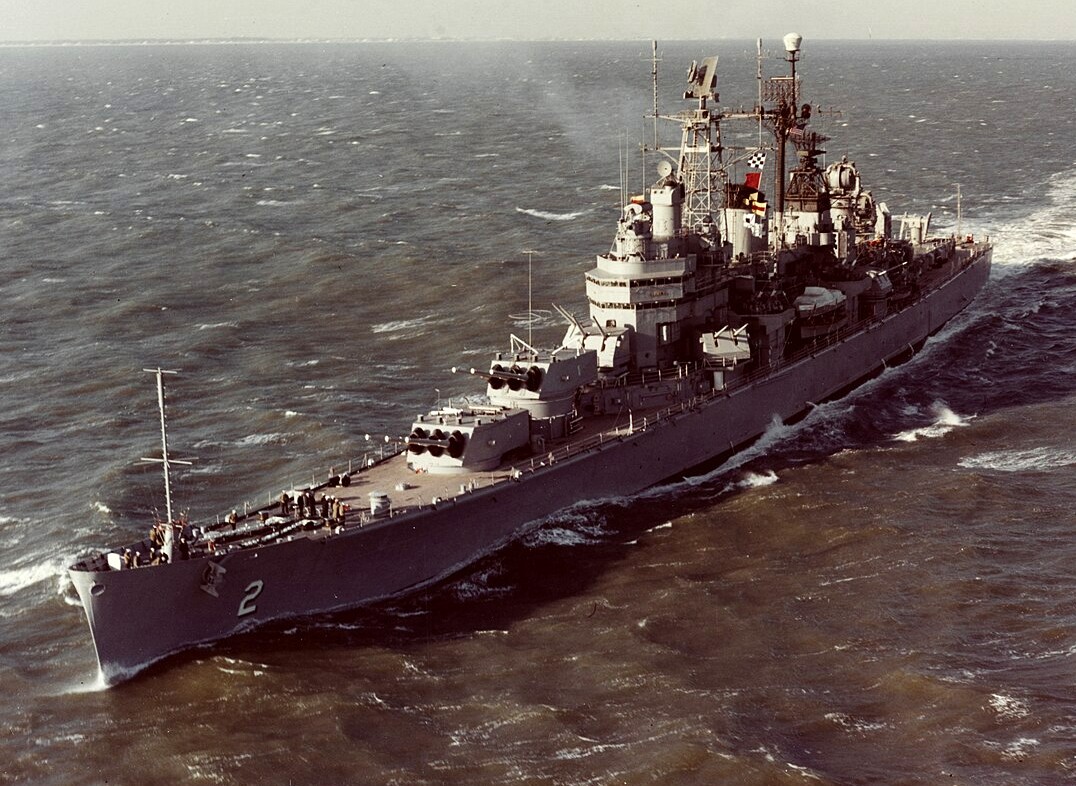
The U.S. Navy guided missile cruiser USS Canberra (CAG-2) underway on 9 January 1961. Note her radar arrangement: CXRX was moved forward from the mainmast, SPS-29 was fitted on the mainmast and SPS-13 was fitted aft. Canberra was the only ship ever equipped with SPS-13.
USS Quincy (CA-71)
(USN Photo)
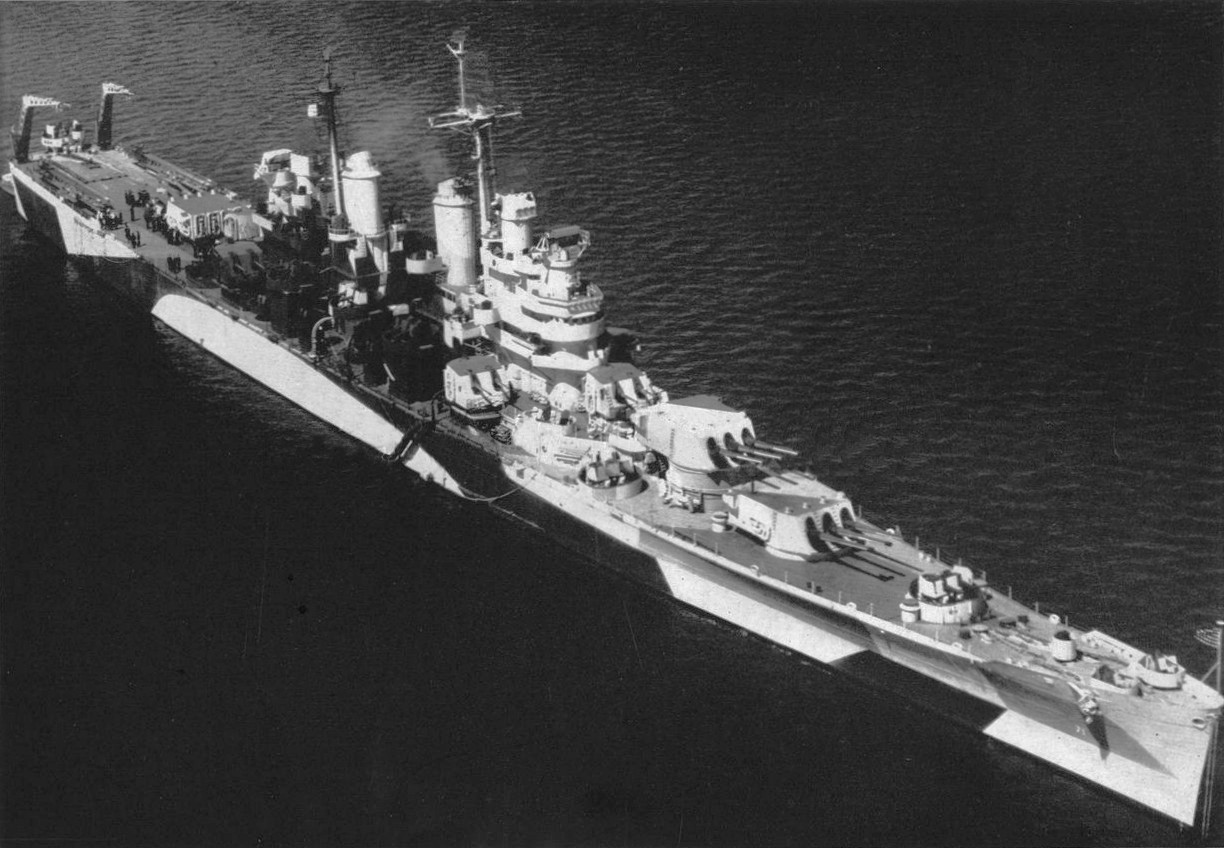
USS Quincy (CA-71) at anchor in early 1944. She is painted in Camouflage Measure 31-32-33 series, Design 18D. Note that the wartime censor has removed the radar antennas.
USS Quincy (CA-71), laid down as St. Paul, was a heavy cruiser of the Baltimore-class of the United States Navy. She was the third ship to carry the name. The third Quincy was authorized on 17 June 1940, and laid down at the Fore River Shipyard of the Bethlehem Steel Company, Quincy, Massachusetts, as St. Paul on 9 October 1941. Renamed Quincy on 16 October 1942, to perpetuate that name, after the destruction of the second Quincy (CA-39) at the Battle of Savo Island on 9 August 1942. She was launched on 23 June 1943; sponsored by Mrs. Catherine Adams-Morgan, wife of Henry S. Morgan, daughter of Charles Francis Adams, and sponsor of the previous Quincy. She was commissioned at the U.S. Naval Drydock, South Boston, Massachusetts, on 15 December 1943, with Captain Elliot M. Senn in command. (Wikipedia)
(USN Photo)
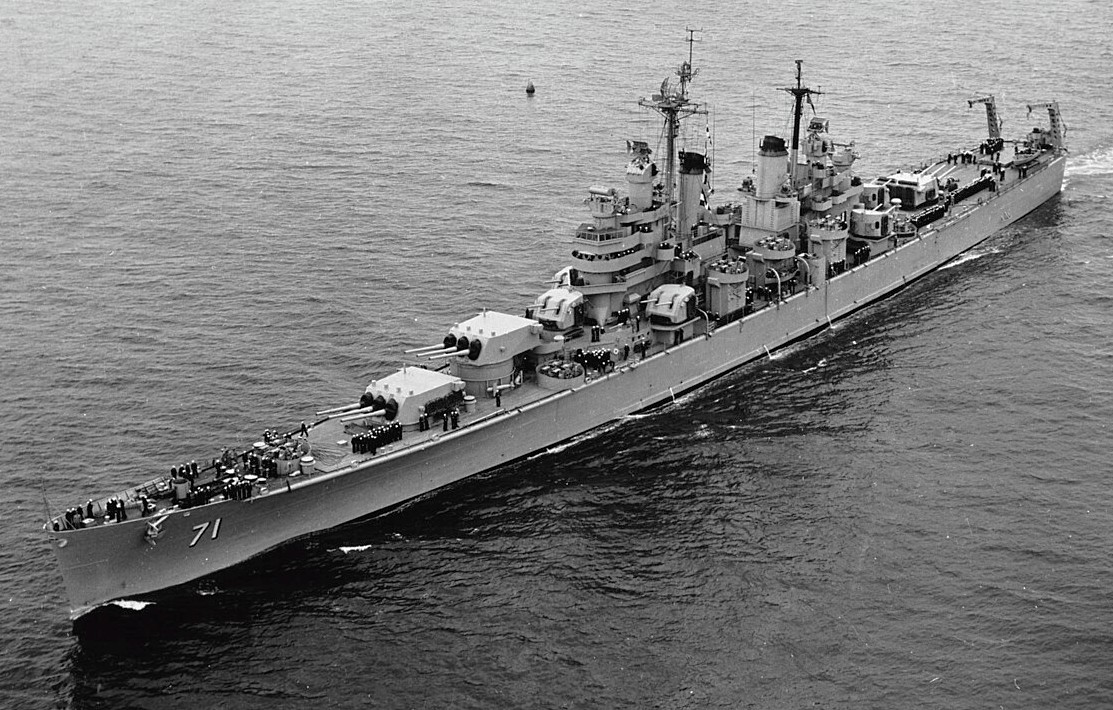
USS Quincy (CA-71) underway in the Pacific Ocean during 1952-54. Quincy‘ appearance after her reactivation in 1952 had not changed much since her deactivation six years earlier: the 20 mm cannons and the catapults were removed and SPS-6 radar replaced SK-1 on the mast.
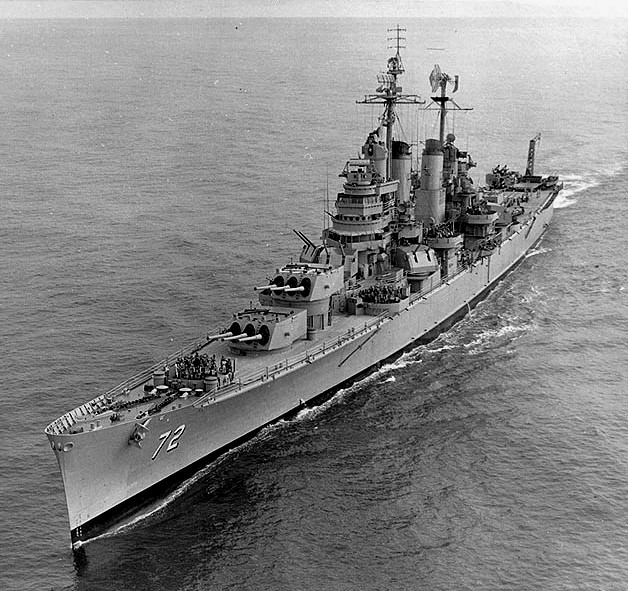
USS Pittsburgh (CA-72)
(USN Photo)
USS Pittsburgh (CA-72) underway on 11 October 1955. She carries SPS-6 radar forward and SPS-8A air search radar aft.
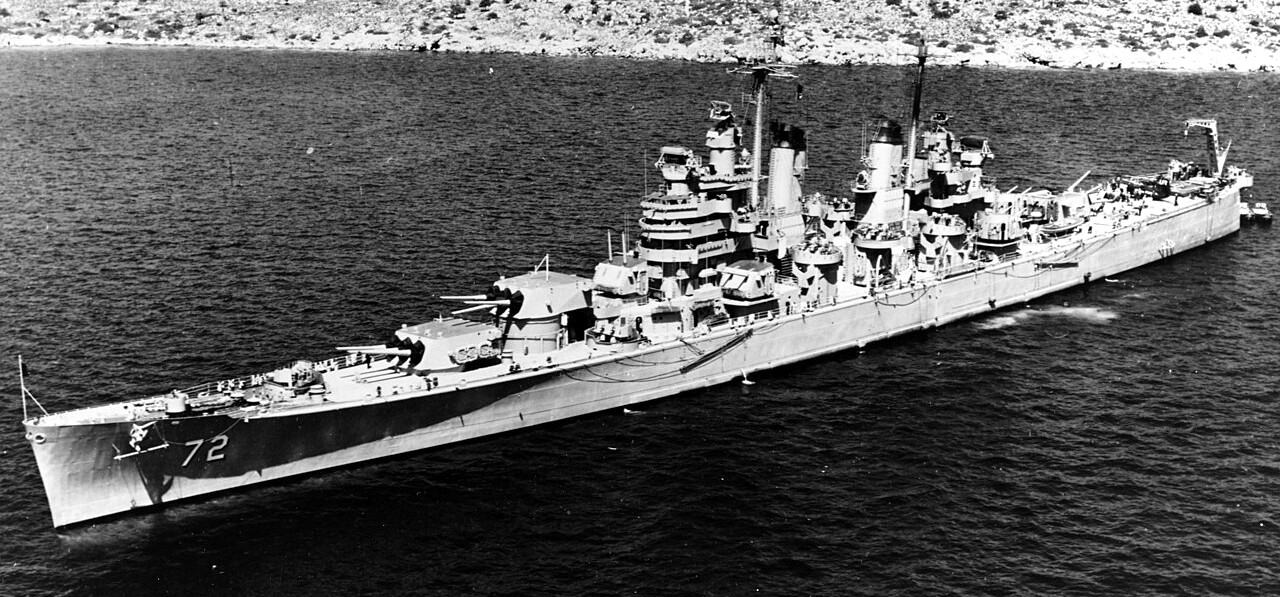
USS Pittsburgh (CA-72), originally named USS Albany (CA-72), was a Baltimore-class heavy cruiser of the US Navy and the third ship to bear the name. She was laid down on 3 February 1943 by the Bethlehem Shipbuilding Corporation’s Fore River Shipyard at Quincy, Massachusetts, launched on 22 February 1944, sponsored by Mrs. Cornelius D. Scully, wife of the Mayor of Pittsburgh and commissioned in Boston, Massachusetts on 10 October 1944, with Capt. John Edward Gingrich in command. (Wikipedia)
(USN Photo)
USS Pittsburgh (CA-72) anchored in Souda Bay, Crete, 8 May 1952.
USS St. Paul (CA-73)
(USN Photo)
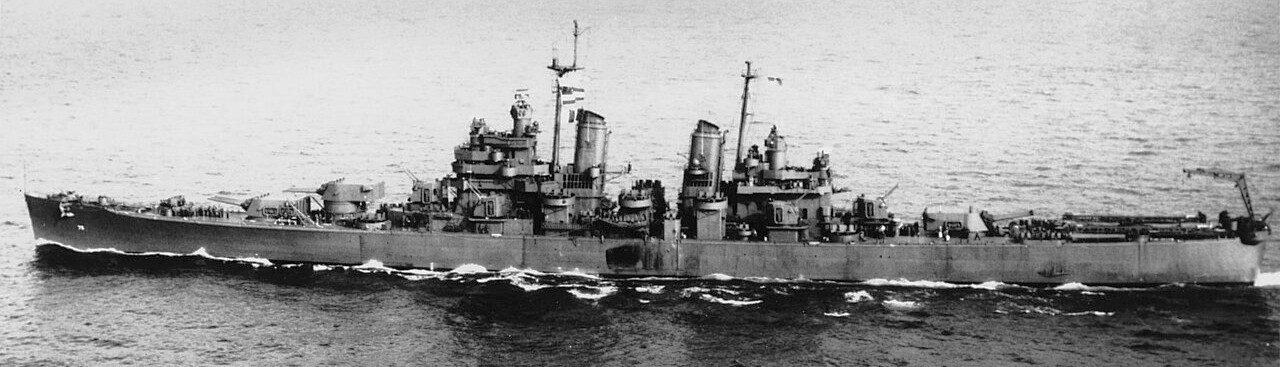
USS Saint Paul (CA-73) underway in Massachusetts Bay, 15 March 1945.
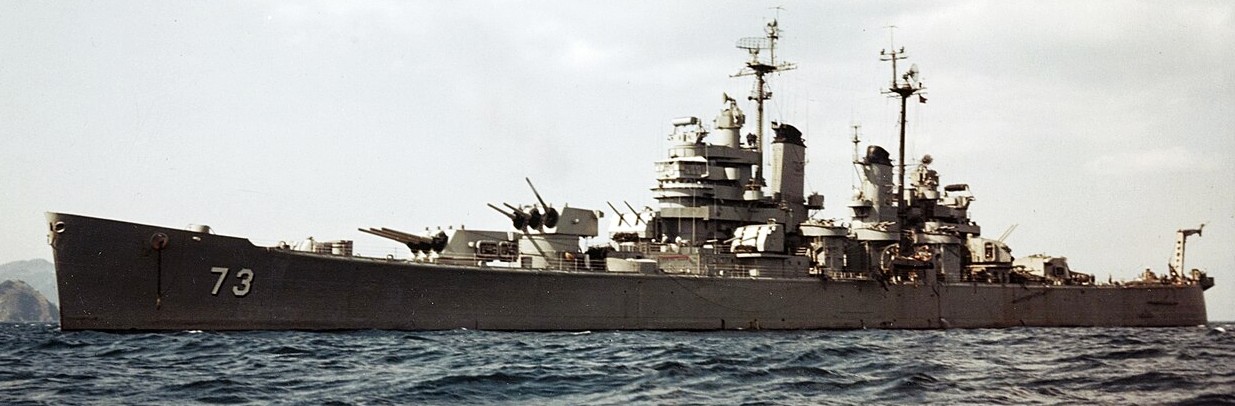
USS Saint Paul (CA-73), a Baltimore-class cruiser, was the second ship of the United States Navy to be named for Saint Paul, Minnesota. Her keel was laid down as Rochester on 3 February 1943 by the Bethlehem Steel Company in Quincy, Massachusetts. She was launched on 16 September 1944 sponsored by Mrs. Marie Gordon McDonough, wife of John J. McDonough, then mayor of Saint Paul; and commissioned on 17 February 1945. She was struck from the Naval Vessel Register on 31 July 1978, and was sold for scrapping in January 1980. (Wikipedia)
(USN Photo)
USS Saint Paul (CA-73) off Wonsan, Korea, with guns ready for bombardment, 20 April 1951.
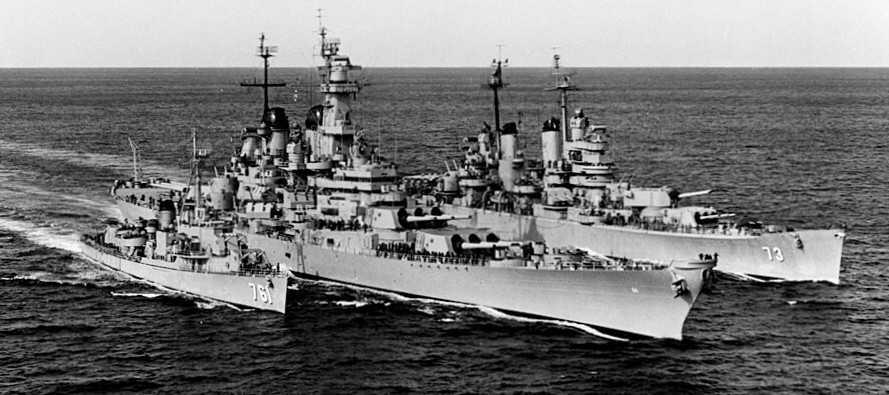
(USN Photo)
USS Buck (DD-761), USS Wisconsin (BB-64) and USS Saint Paul (CA-73) steaming in close formation during operations off the Korean coast on 22 February 1952.
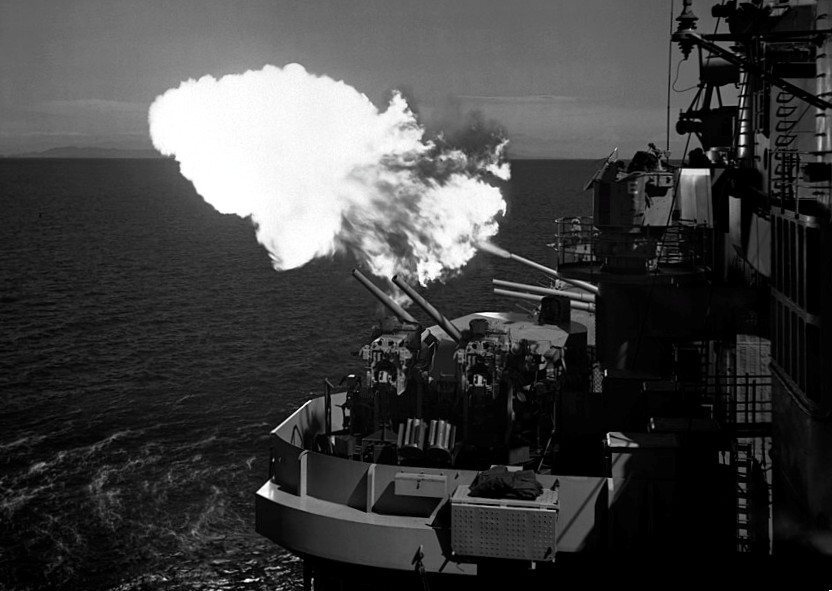
(USN Photo)
USS Saint Paul (CA-73) near Wonsan, Korea, on 27 July 1953, just before signing of truce at Panmunjon. An 8-inch shell is fired from the ship against North Korean shore batteries. This round is believed to have been the last fired on enemy positions by UN Naval units before the armistice. The ship was armed with 9 × 8 in (203 mm)/55 cal guns, 12 × 5 in (127 mm)/38 cal guns, 48 × Bofors 40 mm guns, 22 × Oerlikon 20 mm cannons. She also carried four aircraft.
USS Columbus (CA-74)
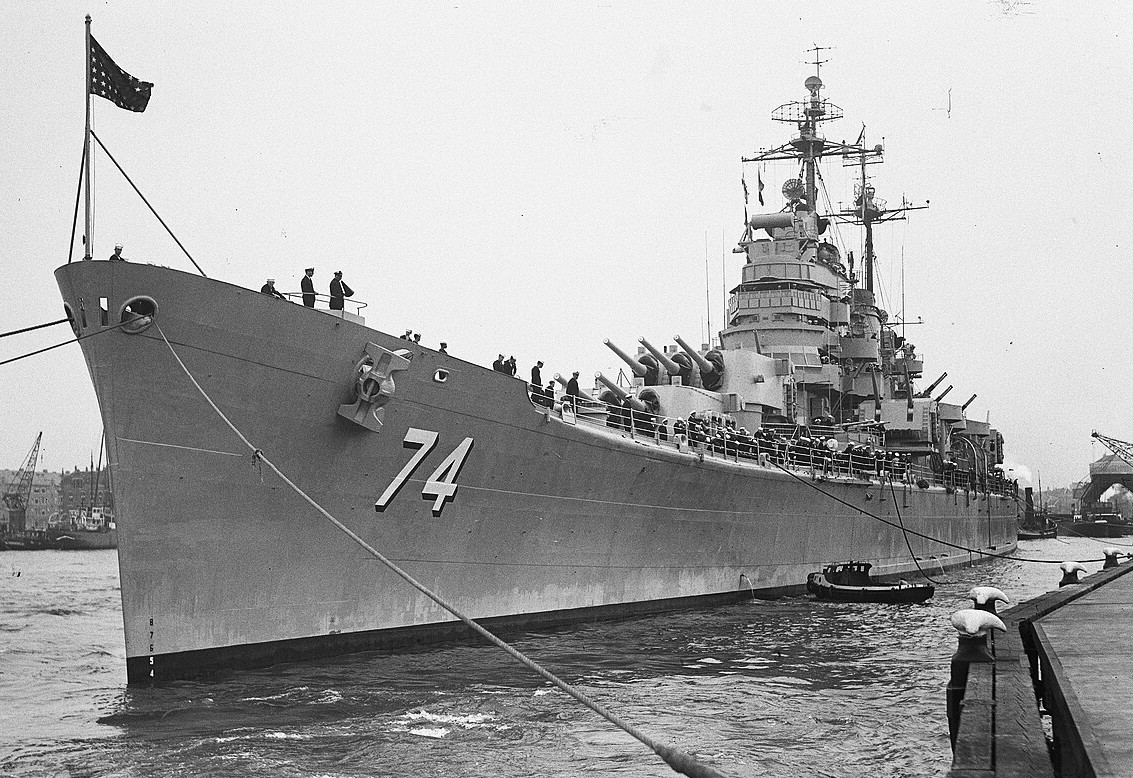
(Jack de Nils Photo)
USS Columbus (CA-74), Rotterdam, 1950.
The third USS Columbus (CA-74/CG-12), a Baltimore-class heavy cruiser, was the first ship of the United States Navy named for Columbus, Ohio. She was launched on 30 November 1944 by Bethlehem Steel Co., Quincy, Massachusetts; she was sponsored by Mrs. E. G. Meyers; and commissioned on 8 June 1945.
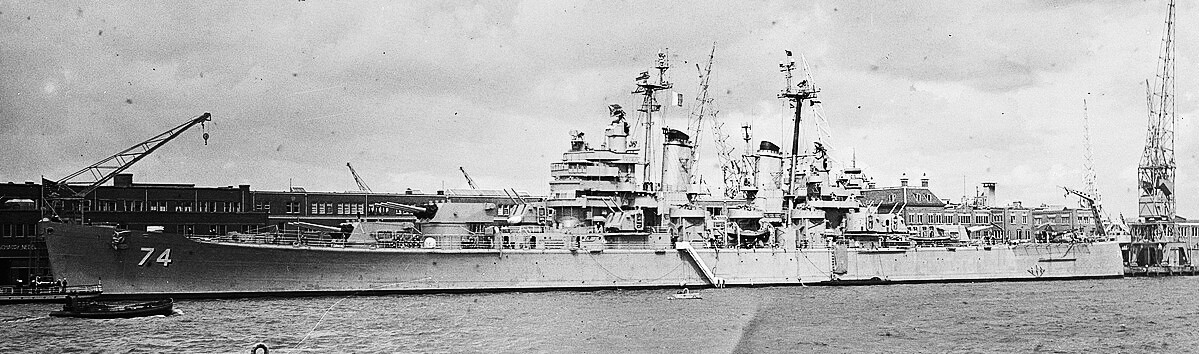
(Jack de Nils Photo)
USS Columbus (CA-74), Rotterdam, 1950.
USS Helena (CA-75)
(USN Photo)
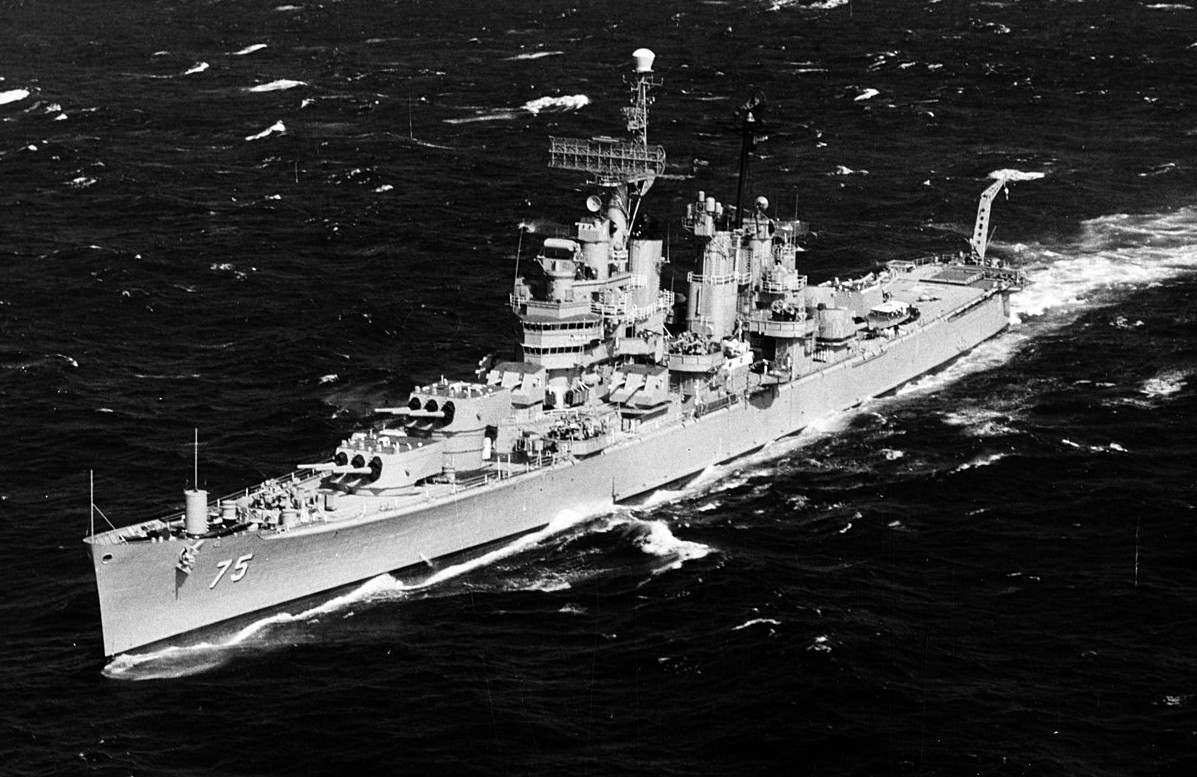
USS Helena (CA-75) at sea in 1961-62, following modernization with a new foremast supporting the very large antenna for the SPS-37A radar.
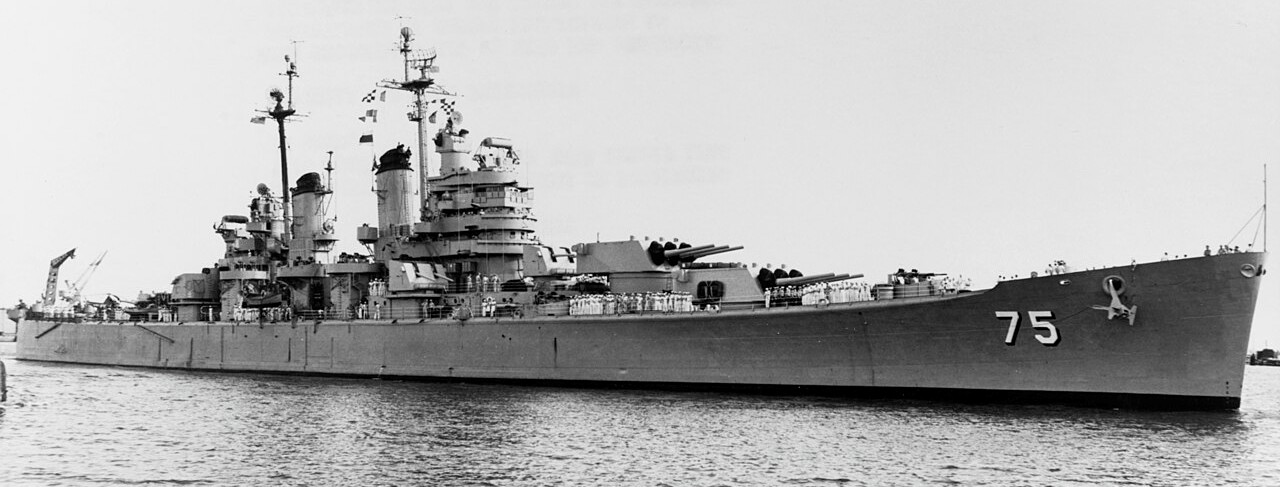
USS Helena (CA-75), a Baltimore-class heavy cruiser, was the third ship of the United States Navy to be named for the city of Helena, Montana. Originally laid down as the USS Des Moines, she was renamed Helena while under construction after the 5 October 1944 cancellation of the Fargo-class light cruiser USS Helena (CL-113). Helena was launched at the Bethlehem Steel Company in Quincy, Massachusetts, on 28 April 1945, sponsored by Mrs. John T. Haytin, wife of the mayor of Helena. She was commissioned on 4 September 1945 with Captain Arthur Howard McCollum in command. (Wikipedia)
(USN Photo)
USS Helena (CA-75) in Apra Harbor, Guam, in December 1952, while en route to the U.S. following her third Korean War combat tour. During this voyage, she carried President-Elect Dwight D. Eisenhower and his party from Guam to Pearl Harbor.