
Kaiserliche Marine unprotected Cruisers: MS Schwalbe, SMS Bussard, SMS Falke, SMS Seeadler, SMS Condor, SMS Cormoran, SMS Geier, SMS Gefion
At the same time that Caprivi began ordering new protected cruisers, he also authorized the construction of smaller unprotected cruisers for use in Germany’s overseas colonies. The first of these, the Schwalbe class, were laid down in 1886 and 1887. A further six vessels of the Bussard class, which were improved versions that were larger and faster than their predecessors, followed over the next five years. A final, much larger vessel, SMS Gefion, was laid down in 1892; her design was based on contemporary protected cruisers like SMS Kaiserin Augusta. She represented another attempt to merge the colonial cruiser and fleet scout, which was unsuccessful. As a result, the German naval designers began work on the Gazelle class, which provided the basis for all future German light cruisers.
All nine cruisers served extensively in Germany’s colonies, particularly in Africa and Asia. They participated in the suppression of numerous rebellions, including the Abushiri Revolt in German East Africa in 1889–1890, the Boxer Uprising in China in 1900–1901, and the Sokehs Rebellion in the Caroline Islands in 1911. Most of the ships had been recalled to Germany and decommissioned by the early 1910s, having been replaced by the newer light cruisers. Bussard and Falke were scrapped in 1912, but the rest continued on in secondary roles. Of the remaining seven ships, only Cormoran and Geier remained abroad at the start of the First World War in August 1914. Cormoran was stationed in Qingdao, but her engines were worn out, so she was scuttled to prevent her capture. Geier briefly operated against British shipping in the Pacific before running low on coal. She put into Hawaii, where she was interned by the US Navy. After the United States declared war on Germany in April 1917, she was seized and commissioned into American service as USS Schurz, though she was accidentally sunk in a collision in June 1918. Seeadler, employed as a mine storage hulk in Wilhelmshaven during the war, was destroyed by an accidental explosion in 1917. Condor, Schwalbe, and Sperber were all broken up for scrap in the early 1920s, while Gefion was briefly used as a freighter, before she too was scrapped, in 1923. (Wikipedia)
SMS Schwalbe
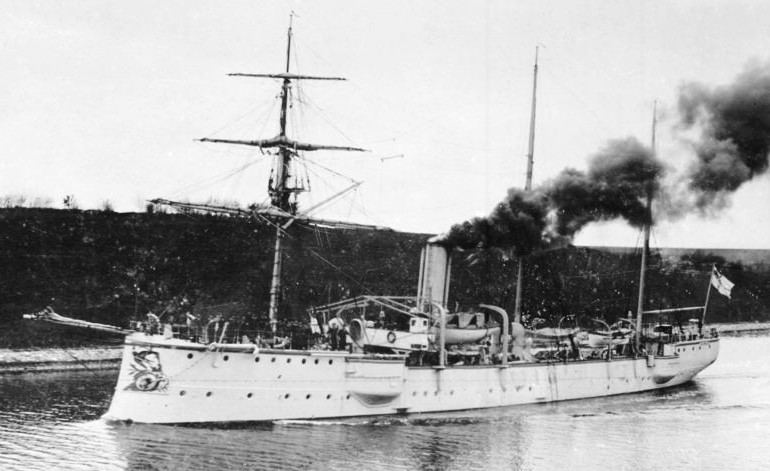
(Bundesarchiv, Bild 134-B0211 / CC-BY-SA 3.0)
SMS Schwalbe (“His Majesty’s Ship Schwalbe—Swallow”) was an unprotected cruiser built for the German Kaiserliche Marine (Imperial Navy), the lead ship of the Schwalbe class. She had one sister ship, Sperber. Schwalbe was built at the Kaiserliche Werft (Imperial Dockyard) in Wilhelmshaven; her keel was laid down in April 1886 and her completed hull was launched in August 1887. She was commissioned for service in May 1888. Designed for colonial service, Schwalbe was armed with a main battery of eight 10.5-centimeter (4.1 in) guns and had a cruising radius of over 3,000 nautical miles (5,600 km; 3,500 mi); she also had an auxiliary sailing rig to supplement her steam engines.
Schwalbe spent the majority of her career overseas. She served in German East Africa from 1889 to 1893, and during this period she assisted in the suppression of the Abushiri Revolt. In 1893, she returned to Germany for a major overhaul. She was decommissioned until 1898, when she returned to service for another tour abroad. She initially returned to German East Africa, where she patrolled South African waters to protect German shipping during the Second Boer War. The outbreak of the Boxer Uprising in China in 1900 prompted the Kaiserliche Marine to send Schwalbe to join the European forces battling the Boxers. Schwalbe spent 1901 and 1902 in Chinese waters, blockading the mouth of the Yangtze and suppressing local unrest. The ship returned to Germany in 1903 for another major overhaul and another stint in reserve. She ended her career as a barracks ship during World War I, and as a target ship in 1918. She was ultimately broken up for scrap in 1922. (Wikipedia)
SMS Bussard
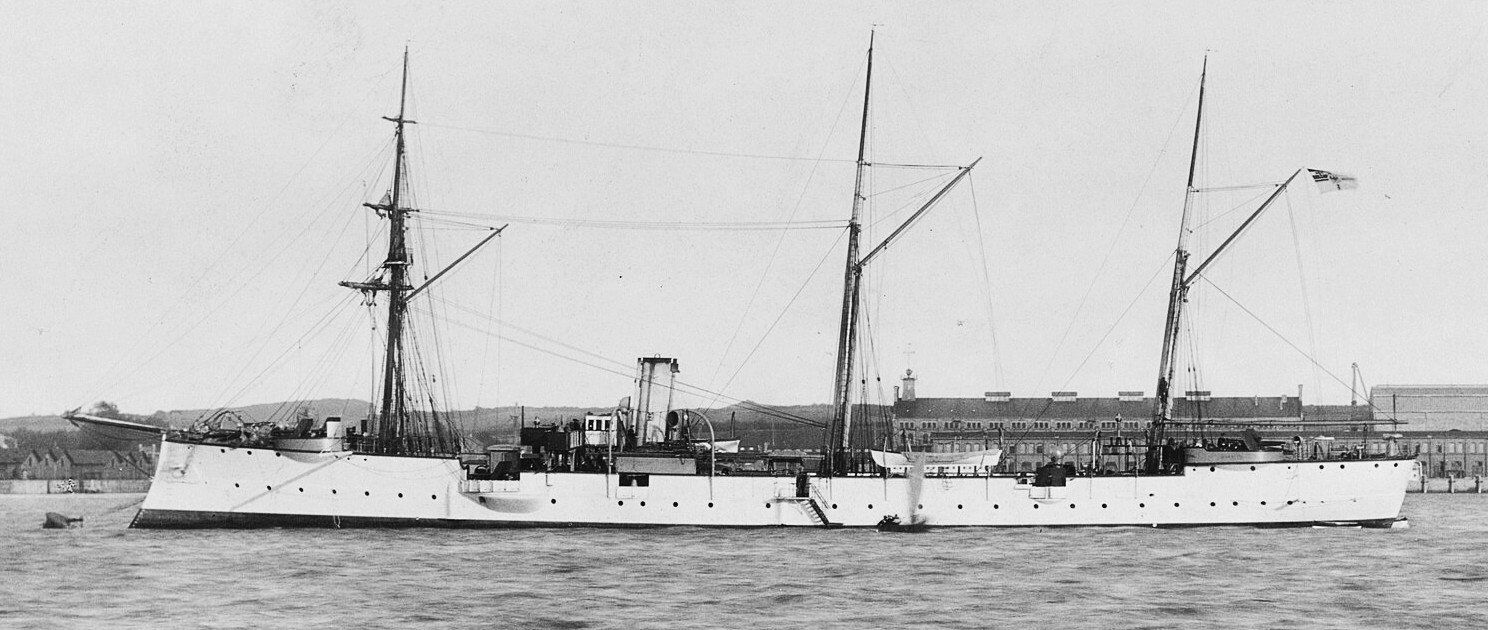
(Kaiserliche Marine Photo)
SMS Bussard (“His Majesty’s Ship Bussard—Buzzard”) was an unprotected cruiser of the Imperial German Navy, built in the 1880s. She was the lead ship of her class, which included five other vessels. The cruiser’s keel was laid in 1888, and she was launched in January 1890 and commissioned in October of that year. Intended for overseas duty, Bussard was armed with a main battery of eight 10.5-centimeter (4.1 in) guns, and could steam at a speed of 15.5 knots (28.7 km/h; 17.8 mph).
Bussard served abroad for the majority of her career, first in the East Asia Division in the mid-1890s, and in German East Africa for the first decade of the 20th century. She had a relatively peaceful career; her only major action came while stationed in Asia in 1894. There, she assisted in suppressing a local revolt in Samoa. In 1910, she returned to Germany, where she remained in service for only two more years; she was stricken in October 1912 and scrapped the following year in Hamburg. (Wikipedia)
SMS Falke
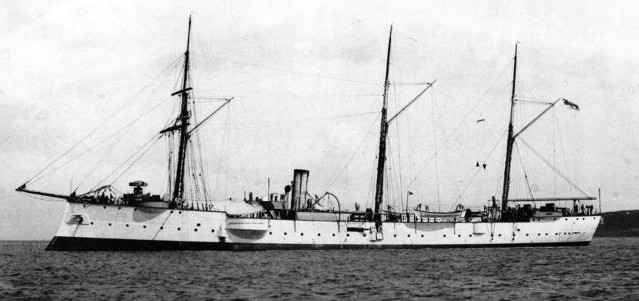
(Arthur Renard Photo)
SMS Falke (“His Majesty’s Ship Falke – Falcon”) was an unprotected cruiser of the Bussard class, built for the Imperial German Navy. She was the second member of the class of six vessels. The cruiser was laid down in 1890, launched in April 1891, and commissioned into the fleet in September of that month. Designed for overseas service, she carried a main battery of eight 10.5-centimeter (4.1 in) guns and had a top speed of 15.5 knots (28.7 km/h; 17.8 mph).
Falke served abroad for the majority of her career, seeing duty in East Asia, the Central Pacific, and the Americas. She assisted in the suppression of a revolt in Samoa in 1893, and was damaged in a later uprising there in 1899. In 1901, Falke was transferred to the American Station, and the following year she took part in the Venezuela Crisis of 1902–03, during which she helped enforce an Anglo-German blockade of the Venezuelan coast. In 1907, Falke was recalled to Germany. She was stricken from the naval register in late 1912 and subsequently broken up for scrap. (Wikipedia)
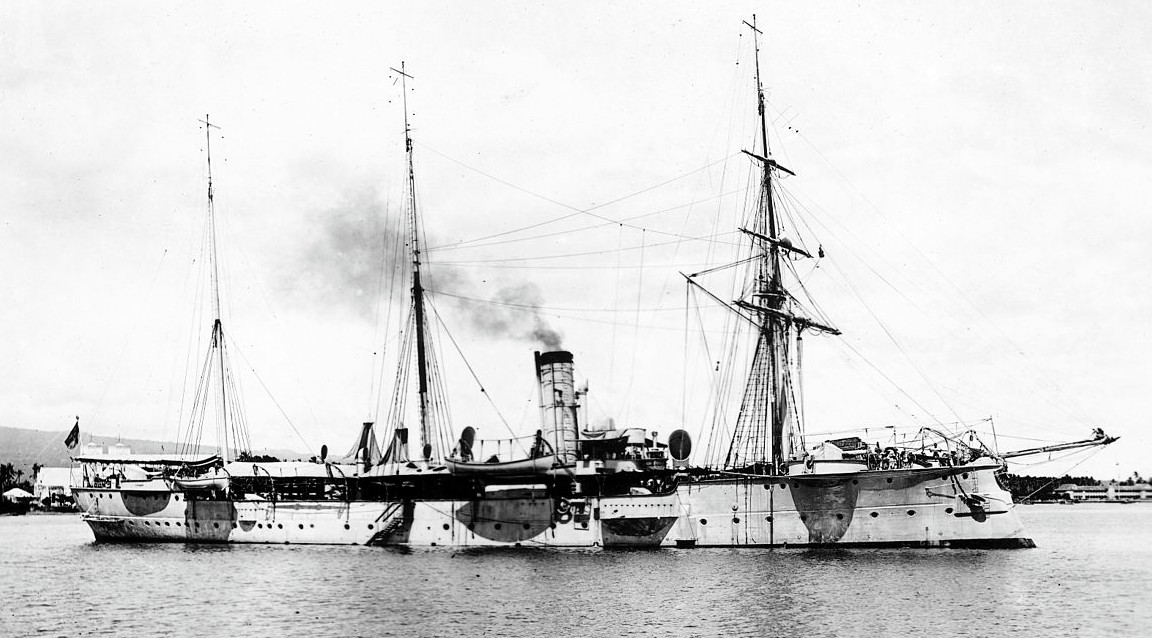
(Alfred John Tattersall Photo)
SMS Falke in Apia Harbour, 1900s.
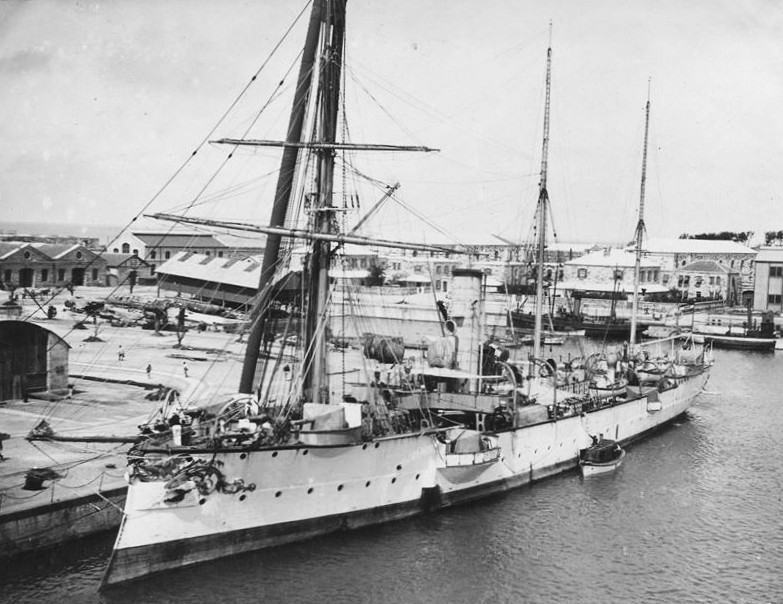
(British Government (Admiralty) Photo)
SMS Falke of the Hohenzollern Kaiserliche Marine at the Great Wharf in the North Yard of the Royal Naval Dockyard on Ireland Island, in the British Imperial fortress colony of Bermuda in 1903.
SMS Seeadler
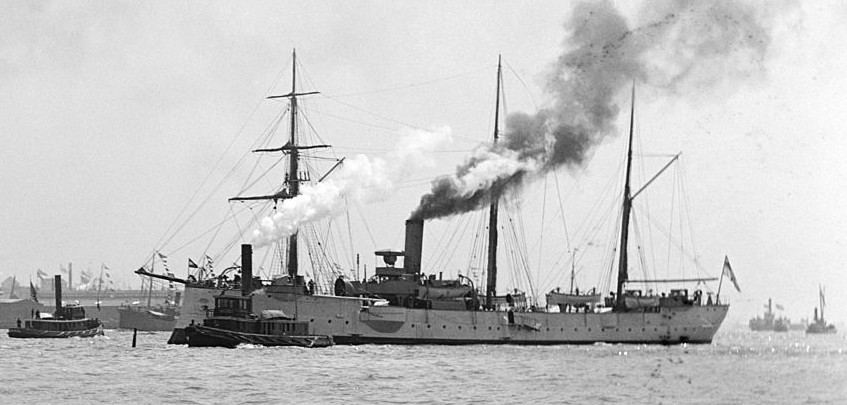
(Detroit Photographic Co. Photo, 1893)
SMS Seeadler (“His Majesty’s Ship Sea Eagle”) was an unprotected cruiser of the Bussard class, the third member of a class of six ships built by the German Kaiserliche Marine (Imperial Navy). Her sister ships included Bussard, the lead ship, along with Falke, Condor, Cormoran, and Geier. Seeadler was built at the Kaiserliche Werft (Imperial Shipyard) in Danzig in late 1890, launched in February 1892, and commissioned in August of that year. Intended for colonial service, Seeadler was armed with a main battery of eight 10.5-centimeter (4.1 in) guns and had a top speed of 15.5 knots (28.7 km/h; 17.8 mph).
Seeadler spent almost her entire career abroad. Following her commissioning, she joined the protected cruiser Kaiserin Augusta in 1893 on a visit to the United States for the 400th anniversary of Christopher Columbus’s discovery of the Americas. She thereafter went to German East Africa, where she was stationed until 1898. She returned to Germany briefly for a modernization in 1898–1899, before being assigned to the South Seas Station in German New Guinea. During her tour in the Pacific, she participated in the suppression of the Boxer Uprising in Qing China in 1900. Her assignment in the Pacific was interrupted by the 1905 Maji-Maji Rebellion in German East Africa, which prompted the German Navy to send Seeadler there.
Seeadler remained in East Africa for the next nine years, returning to Germany finally in January 1914. She had spent over thirteen years abroad since her 1899 modernization, the longest period of continuous overseas service of any major German warship. After arriving in Germany, she was decommissioned. She was not mobilized after the outbreak of World War I in August 1914, being too old to be of any fighting value. She was instead used as a mine storage hulk outside Wilhelmshaven. On 19 April 1917, her cargo of mines exploded and destroyed the ship, though there were no casualties. Her wreck was never raised for scrapping. (Wikipedia)
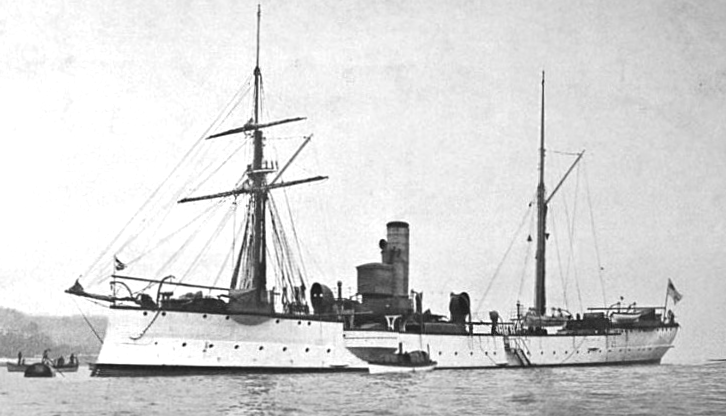
(Kaiserliche Marine Photo)
SMS Seeadler, 1899.
SMS Condor
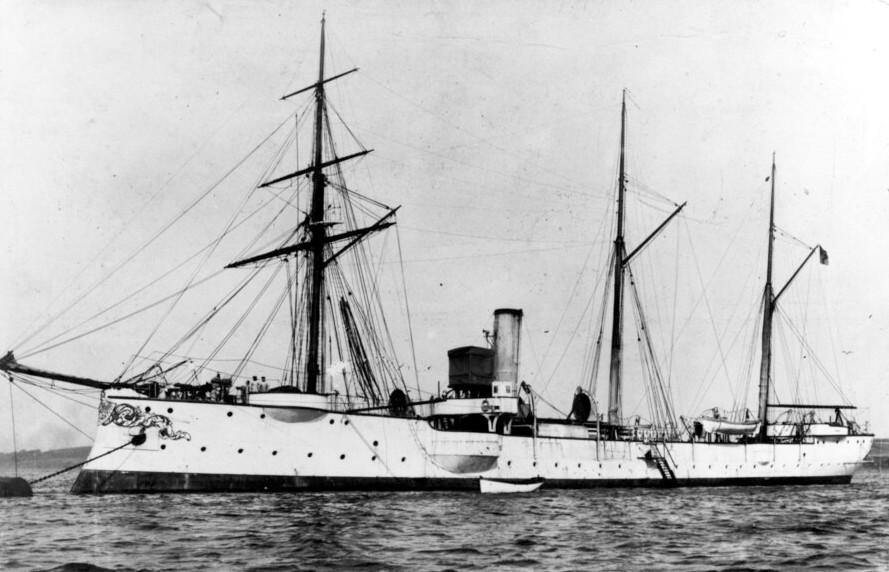
(Kaiserliche Marine Photo)
SMS Condor probably photographed about the time of her sea trials. Note that the ship is high in the water and lacks her armament of eight 105mm. And various lesser guns.
SMS Condor (“His Majesty’s Ship Condor”) was an unprotected cruiser of the Imperial German Navy. She was the fourth member of the Bussard class, which included five other vessels. The cruiser’s keel was laid down in Hamburg in 1891, she was launched in February 1892, and was commissioned in December of that year. Intended for overseas duty, Condor was armed with a main battery of eight 10.5-centimeter (4.1 in) guns, and could steam at a speed of 15.5 knots (28.7 km/h; 17.8 mph).
Condor served abroad for the majority of her career, first in German East Africa in the 1890s, followed by a stint in the South Seas Station in the Pacific Ocean in the 1900s. She was present in East Africa amid rising tensions with Britain during the Second Boer War in 1899, and frequently suppressed uprisings in Germany’s Pacific island holdings in the decade before the outbreak of World War I. Badly worn out, she returned to Germany in March 1914 and was removed from service. In 1916, she was converted into a storage hulk for mines. After the end of the First World War, she was discarded and broken up for scrap in 1921. (Wikipedia)
SMS Cormoran
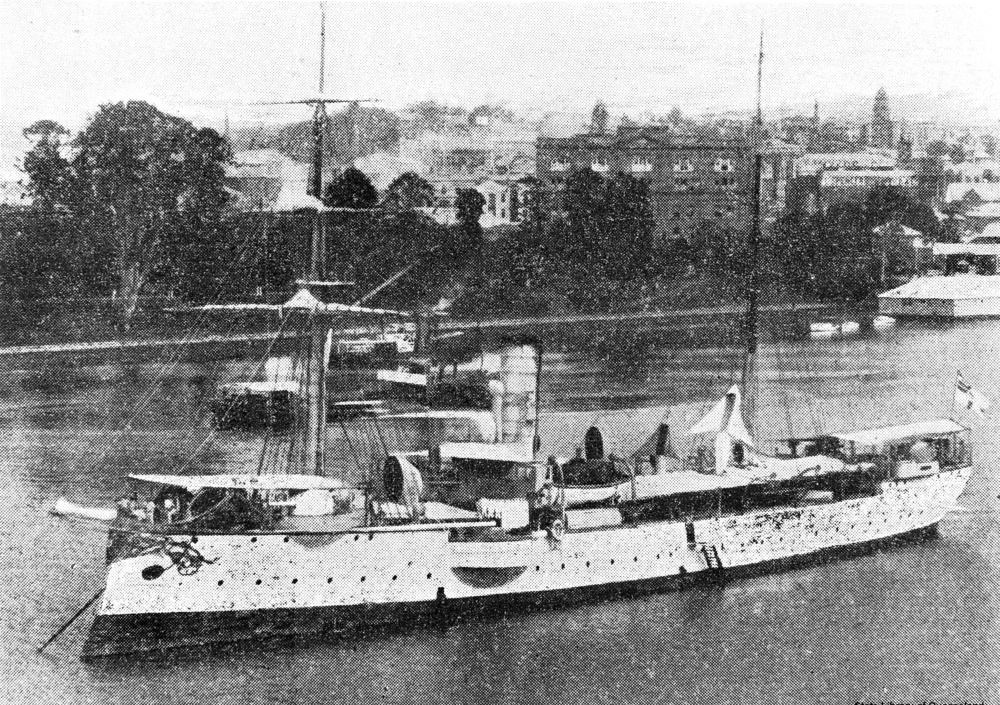
(Kaiserliche Marine Photo)
SMS Cormoran (“His Majesty’s Ship Cormorant”) was an unprotected cruiser of the Bussard class, the fifth member of a class of six ships. She was built for the Imperial German Navy for overseas duty. The cruiser’s keel was laid down in Danzig in 1890; she was launched in May 1892 and commissioned in July 1893. Cormoran was armed with a main battery of eight 10.5-centimeter (4.1 in) guns, and could steam at a speed of 15.5 knots (28.7 km/h; 17.8 mph).
Cormoran spent the majority of her career abroad, usually in Germany’s South Pacific colonies in the Samoan Islands. Her duties there typically consisted of survey work and suppressing colonial unrest. She briefly cruised in South African waters in late 1894 and early 1895 before steaming to the Pacific. She participated in the seizure of the Jiaozhou Bay Leased Territory in the Shandong Peninsula in China in 1897. Cormoran returned to Germany in 1903 and was modernized in 1907–08. The following year, she returned to the South Pacific, where she remained until the outbreak of World War I in August 1914. Docked in Tsingtau for repairs at the onset of hostilities, she was unable to actively take part in the fighting. She was therefore disarmed and scuttled in the harbor; her guns were used to strengthen the defenses of the port. (Wikipedia)
SMS Geier
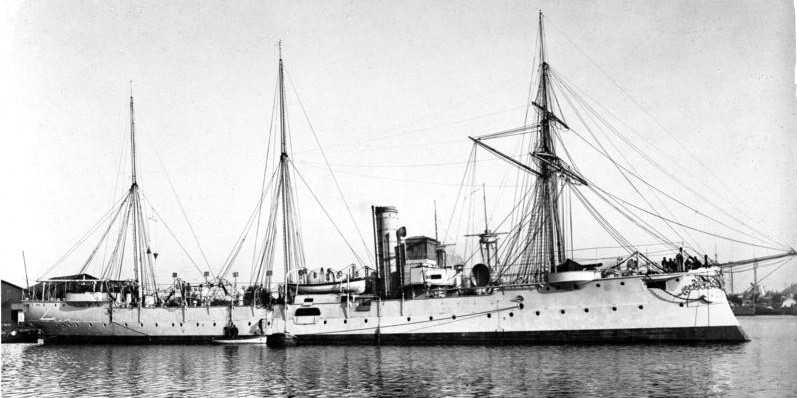
(Bundesarchiv, Bild 134-C0105 / CC-BY-SA 3.0)
SMS Geier (“His Majesty’s Ship Vulture”) was an unprotected cruiser of the Bussard class built for the German Imperial Navy (Kaiserliche Marine). She was laid down in 1893 at the Imperial Dockyard in Wilhelmshaven, launched in October 1894, and commissioned into the fleet a year later in October 1895. Designed for service in Germany’s overseas colonies, the ship required the comparatively heavy armament of eight 10.5 cm (4.1 in) SK L/35 guns and a long cruising radius. She had a top speed of 15.5 kn (28.7 km/h; 17.8 mph).
Geier spent the majority of her career on foreign stations, including tours in the Americas, East Asia, and Africa. In 1897, she was deployed to the Caribbean, and during the Spanish–American War the following year, she ferried Europeans out of the war zone to Mexico by crossing the blockade lines around Cuban ports. After being transferred to the western coast of the Americas in 1899, Geier was reassigned to China to help suppress the Boxer Uprising in 1900. She remained in East Asian waters through 1905 before being recalled to Germany for major repairs. In 1911, the ship was assigned to the colony in German East Africa, though she served little time in the area, as the Italo-Turkish War of 1911–1912 and the Balkan Wars of 1912–13 required German warships in the Mediterranean to safeguard German interests. Geier returned to East Africa in early 1914, but in June that month, the new light cruiser Königsberg arrived, and Geier headed to China for second deployment there.
Geier was still en route to the German base in Qingdao when war broke out in Europe in August 1914. Slipping out of still-neutral British Singapore days before Britain declared war on Germany, she crossed the central Pacific in an attempt to link up with Maximilian von Spee’s East Asia Squadron. While at sea, she captured one British freighter, but did not sink her. In need of engine repairs and coal, Geier put into the neutral United States port at Honolulu, Hawaii, in October 1914, where she was eventually interned. After the American entrance into the war in April 1917, the US Navy seized Geier, commissioned her as USS Schurz, and placed her on convoy duty. She was ultimately sunk following a collision with a freighter off the coast of North Carolina, with one man killed and twelve injured. She rests at a depth of 115 feet (35 m) and is a popular scuba diving site. (Wikipedia)
SMS Gefion
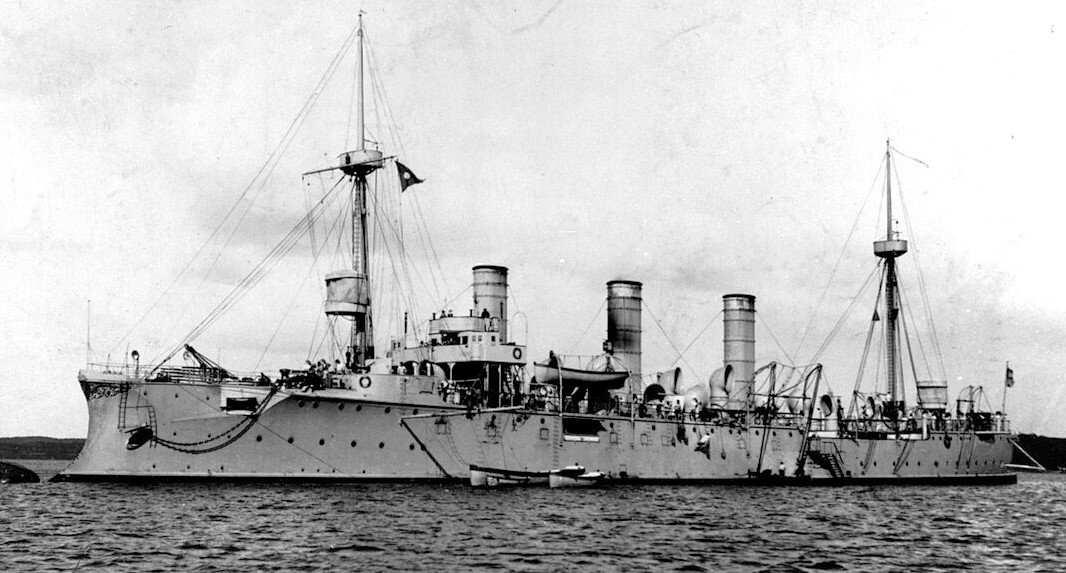
(Kaiserliche Marine Photo)
SMS Gefion (“His Majesty’s Ship Gefion”) was an unprotected cruiser of the German Kaiserliche Marine (Imperial Navy), the last ship of the type built in Germany. She was laid down in March 1892, launched in March 1893, and completed in June 1895 after lengthy trials and repairs. The cruiser was named after the earlier sail frigate Gefion, which had been named for the goddess Gefjon of Norse mythology. Intended for service in the German colonial empire and as a fleet scout, Gefion was armed with a main battery of ten 10.5-centimeter (4.1 in) guns, had a top speed in excess of 19.5 knots (36.1 km/h; 22.4 mph), and could steam for 3,500 nautical miles (6,500 km; 4,000 mi), the longest range of any German warship at the time. Nevertheless, the conflicting requirements necessary for a fleet scout and an overseas cruiser produced an unsuccessful design, and Gefion was rapidly replaced in both roles by the newer Gazelle class of light cruisers.
Gefion initially served with the main German fleet and frequently escorted Kaiser Wilhelm II’s yacht Hohenzollern on trips to other European countries, including a state visit to Russia in 1897. In late 1897, Gefion was reassigned to the East Asia Squadron; she arrived there in May 1898. The ship took part in the Battle of Taku Forts in June 1900 during the Boxer Uprising in China. She returned to Germany in 1901 and was modernized, but she did not return to service after the work was finished in 1904. She was to be mobilized after the outbreak of the First World War in August 1914, but a crew could not be assembled due to shortages of personnel. Instead, she was used as a barracks ship in Danzig from 1916 to the end of the war. In 1920, she was sold, converted into a freighter, and renamed Adolf Sommerfeld. She served in this capacity for only three years, and was broken up for scrap in Danzig in 1923. (Wikipedia)
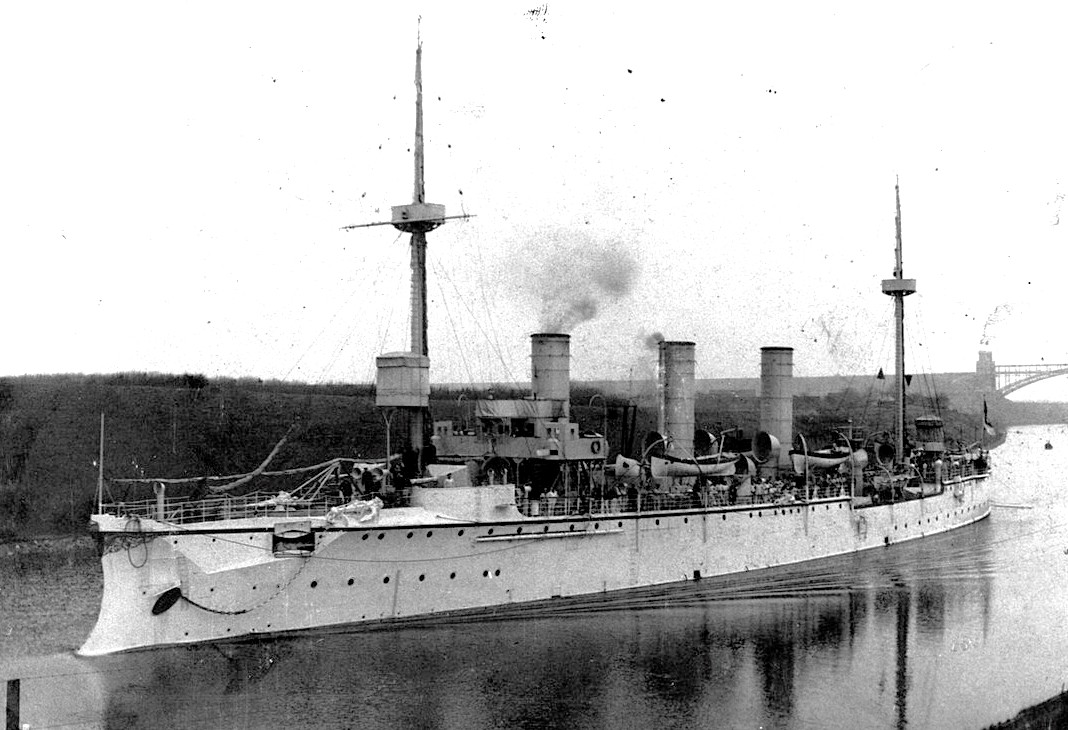
(Kaiserliche Marine Photo)
SMS Gefion in the Kiel Canal in the mid 1890s.
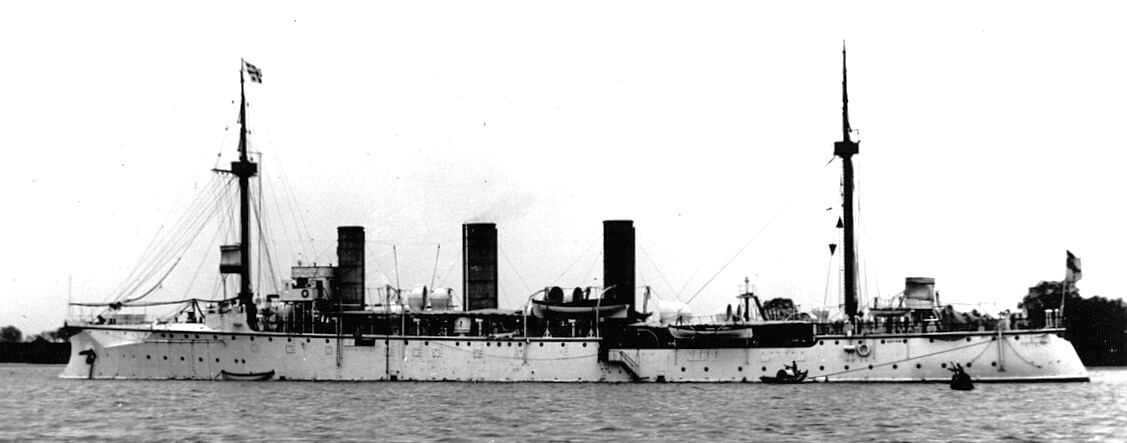
(Kaiserliche Marine Photo)
SMS Gefion, probably during her deployment to the East Asia Squadron, c1898~1901.