
Kaiserliche Marine Cruisers: SMS Irene, SMS Prinzess Wilhelm, SMS Kaiserin Augusta, SMS Victoria Louise, SMS Hertha, SMS Freya, SMS Vineta, SMS Hansa
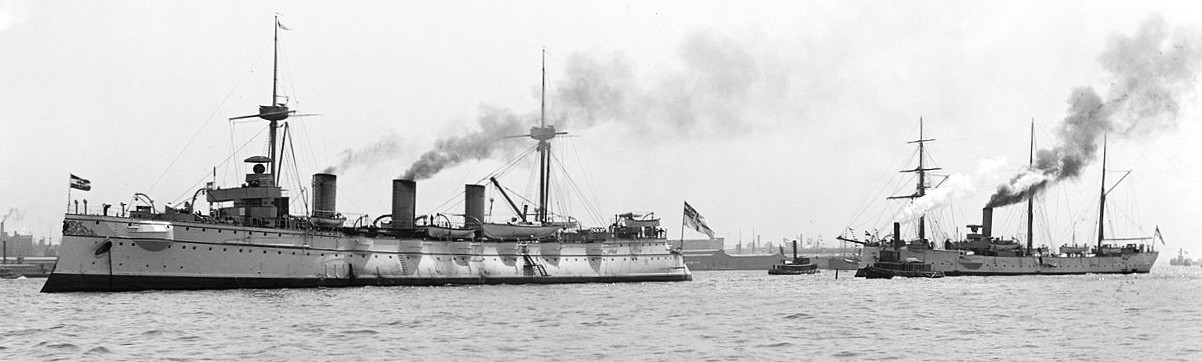
(Library of Congress Photo)
The Imperial German Navy cruisers SMS Kaiserin Augusta (left) and SMS Seeadler in New York in 1893. The ships arrived on 26 April.
Starting in the 1880s, the German Kaiserliche Marine (Imperial Navy) began building a series of cruisers. The first designs—protected and unprotected—were ordered to replace aging sail and steam-powered frigates and corvettes that were of minimal combat value. After several iterations of each type, these cruisers were developed into armoured and light cruisers, respectively, over the following decade. They were built to fill a variety of roles, including scouts for the main battle fleet and colonial cruisers for Germany’s overseas empire. The armored cruisers in turn led to the first German battlecruiser, SMS Von der Tann.
The protected and unprotected cruisers had been withdrawn from active service by the 1910s, though some continued in secondary roles. Most of the armored and light cruisers saw action in the First World War, in all of the major theaters of the conflict. Their service ranged from commerce raiding patrols on the open ocean to the fleet engagements in the North Sea such as the Battle of Jutland. Many were sunk in the course of the war, and the majority of the remainder were either seized as war prizes by the victorious Allies, scuttled by their crews in Scapa Flow in 1919, or broken up for scrap. The Treaty of Versailles forced Germany to surrender most of its remaining vessels. Only six old pre-dreadnought battleships and six old light cruisers could be kept on active duty. These ships could be replaced when they reached twenty years of age, and the cruisers were limited to a displacement of 6,000 metric tons (5,900 long tons; 6,600 short tons).
In the 1920s, Germany began a modest program to rebuild its fleet, now renamed the Reichsmarine. It began with the new light cruiser, Emden, in 1921, followed by five more light cruisers and three new heavy cruisers, the Deutschland class. A further five heavy cruisers—the Admiral Hipper class—were ordered in the mid-1930s, though only the first three were completed. At the same time, the German navy was renamed the Kriegsmarine. Plan Z, a more ambitious reconstruction program that called for twelve P-class cruisers, was approved in early 1939 but was cancelled before the end of the year following the outbreak of the Second World War. Of the six heavy cruisers and six light cruisers that were finished, only two survived the war. One, Prinz Eugen, was sunk following nuclear weapons tests during Operation Crossroads in 1946; the other, Nürnberg, saw service in the Soviet Navy until she was scrapped around 1960. (Wikipedia)
Protected Cruisers
The German Imperial Navy (Kaiserliche Marine) built a series of protected cruisers in the 1880s and 1890s, starting with the two ships of the Irene class. The Navy only completed two additional classes of protected cruisers, comprising six more ships: the unique SMS Kaiserin Augusta, and the five Victoria Louise-class ships. The type was then superseded by the armored cruiser at the turn of the century, beginning with Fürst Bismarck.[1] Because of limited budgets in the pre-Tirpitz era, the German Navy attempted to build vessels that could serve as overseas cruisers and scouts for the fleet, though the ships were not satisfactory.[2] The protected cruiser designs generally copied developments in foreign navies. The Victoria Louise design resembled contemporary German battleships, which favored smaller-caliber main guns and more secondary guns than on their foreign counterparts.[3]
Most of the German protected cruisers served on overseas stations throughout their careers, primarily in the East Asia Squadron in the 1890s and 1900s. Prinzess Wilhelm participated in the seizure of the Jiaozhou Bay Leased Territory in November 1897, which was used as the primary base for the East Asia Squadron. Kaiserin Augusta, Hertha, and Hansa assisted in the suppression of the Boxer Uprising in China in 1900, and Vineta saw action during the Venezuela Crisis of 1902–1903, where she bombarded several Venezuelan fortresses. Irene, Prinzess Wilhelm, and Kaiserin Augusta were relegated to secondary duties in the 1910s, while the Victoria Louise class was used to train naval cadets in the 1900s. All eight ships were broken up for scrap in the early 1920s. (Wikipedia)
Irene class
The Irene class was the first protected cruiser design built by the German Imperial Navy. Built between 1886 and 1889 at the AG Vulcan shipyard in Stettin and the Germaniawerft shipyard in Kiel, the class comprised two ships, Irene and Prinzess Wilhelm. As built, the ships were armed with a main battery of fourteen 15-centimeter (5.9 in) breech-loading guns, of which four were L/30 models and ten shorter L/22 guns. They had a top speed of 18 knots (33 km/h; 21 mph). They were modernized in 1899–1905, and their armament was upgraded with new, 10.5 cm (4.1 in) SK L/35 quick-firing guns.
Both ships served in the East Asia station with the East Asia Squadron; Prinzess Wilhelm played a major role in the seizure of the Jiaozhou Bay Leased Territory in November 1897, under command of Admiral Otto von Diederichs. The two ships were sent to safeguard German interests in the Philippines after the Battle of Manila Bay during the Spanish–American War. There, Irene’s presence caused tensions with the American squadron occupying the islands.[6] Both ships returned to Germany at the turn of the century, and remained in European waters until 1914, when they were removed from active service. They were reduced to secondary roles—Irene was used as a submarine tender and Prinzess Wilhelm was hulked—and continued to serve until the early 1920s, when they were sold for scrap.
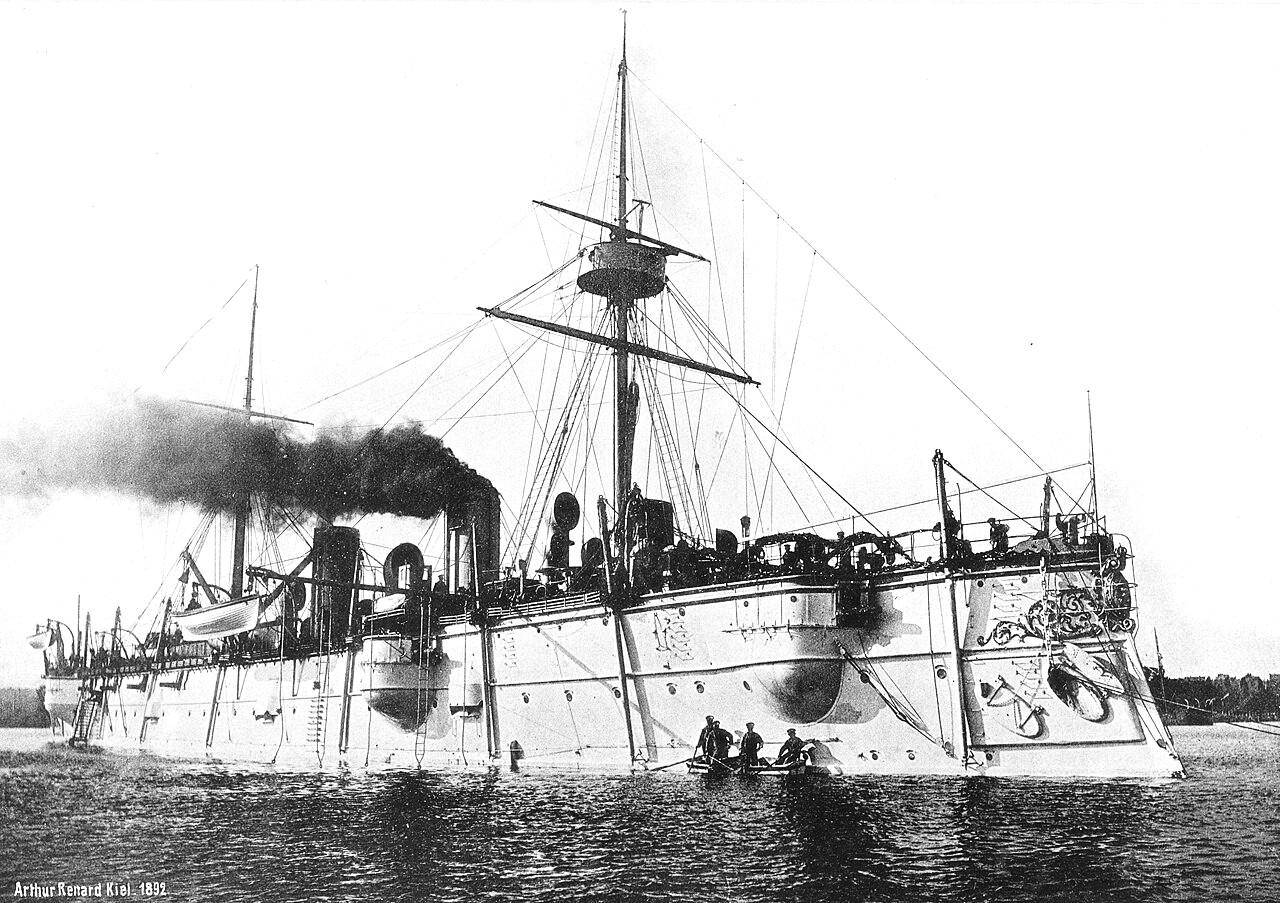
(Arthur Renard Photo, 1892)
SMS Irene was a protected cruiser or Kreuzerkorvette of the German Imperial Navy (Kaiserliche Marine) and the lead ship of the Irene class. She had one sister, Prinzess Wilhelm; the two ships were the first protected cruisers built by the German Navy. Irene was laid down in 1886 at the AG Vulcan shipyard in Stettin, launched in July 1887, and commissioned into the fleet in May 1888. The cruiser was named after Princess Irene of Hesse and by Rhine, sister-in-law of Kaiser Wilhelm II. As built, the ship was armed with a main battery of fourteen 15 cm (5.9 in) guns and had a top speed of 18 knots (33 km/h; 21 mph).
Irene saw extensive service with the German fleet in the first years of her career, frequently escorting Kaiser Wilhelm II’s yacht on cruises throughout Europe. In 1894, she was deployed to East Asian waters; she was in dock for engine maintenance in November 1897 when Otto von Diederichs seized the naval base Jiaozhou Bay, and so she was not present during the operation. She was present in the Philippines in the immediate aftermath of the Battle of Manila Bay between American and Spanish squadrons during the Spanish–American War in 1898. Irene eventually returned to Germany in 1901. She remained in service until early 1914, when she was retired from front-line service and converted into a submarine tender. She served in this capacity until 1921, when she was sold for scrap and broken up the following year. (Wikipedia)
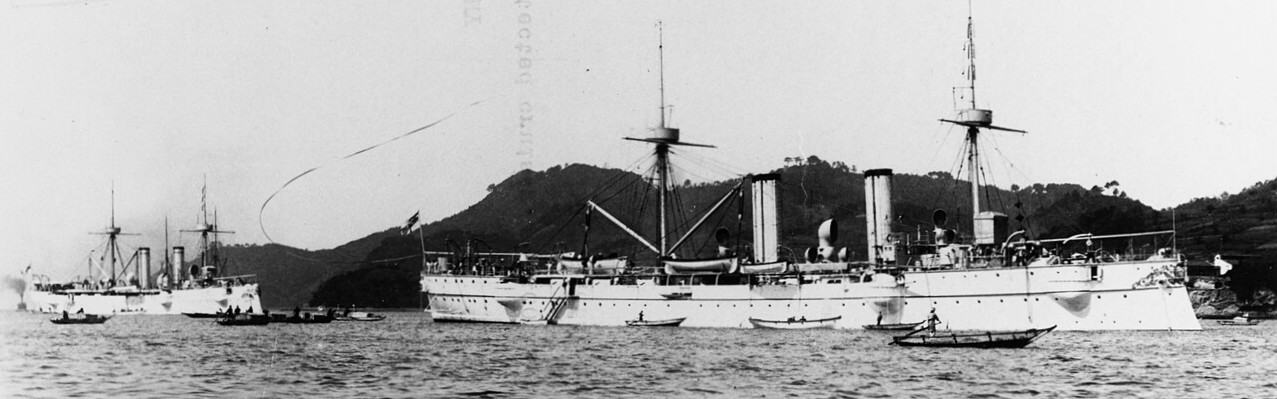
(Kaiserliche Marine Photo)
SMS Irene (right) and SMS Prinzess Wilhelm (left distance), c1895-1899.
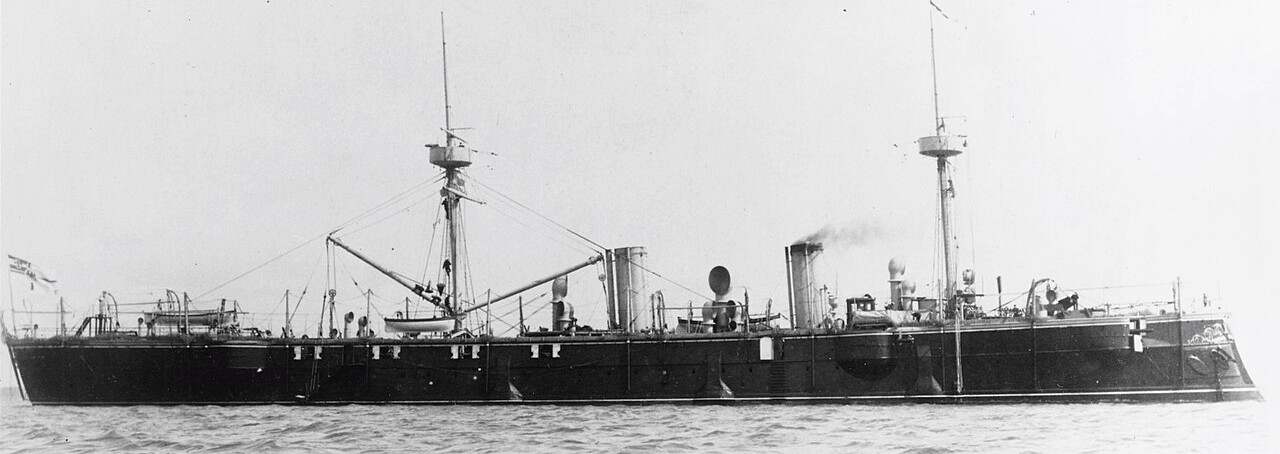
(IWM Photo, Q 22336)
SMS Irene, 1890.
SMS Prinzess Wilhelm
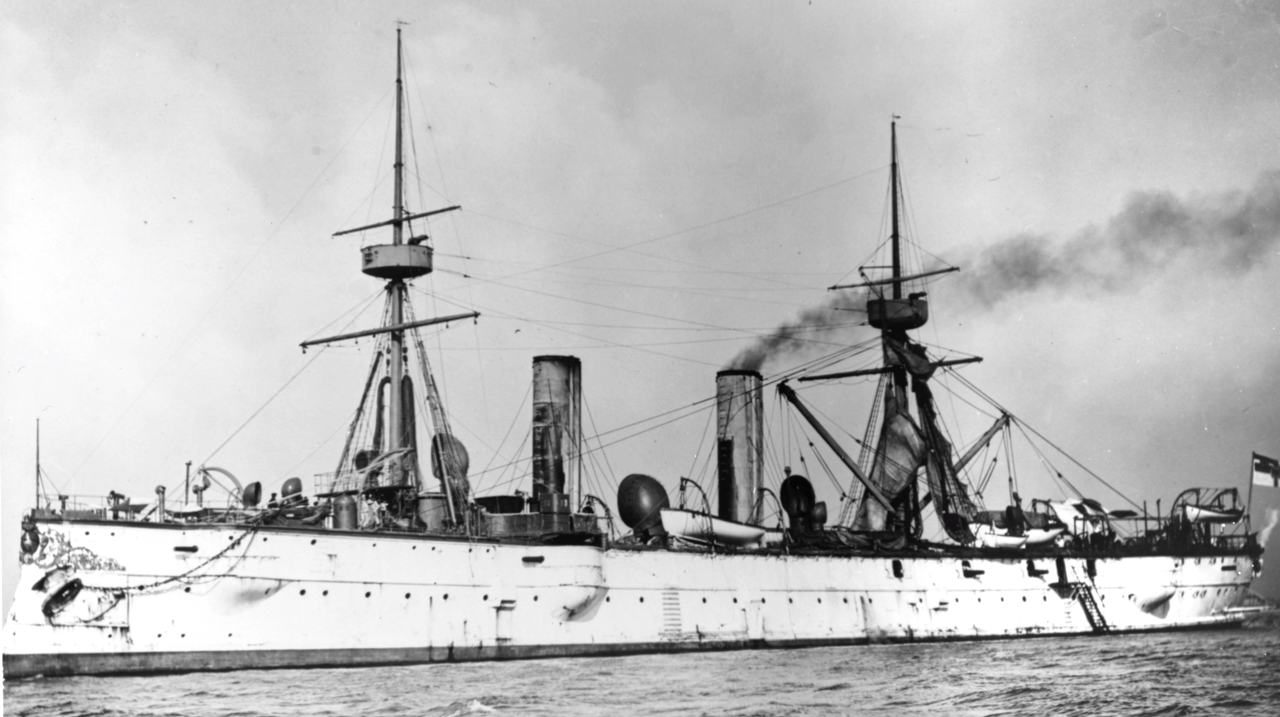
(Kaiserliche Marine Photo)
SMS Prinzess Wilhelm (“His Majesty’s Ship Princess Wilhelm”)[a] was a protected cruiser of the German Imperial Navy (Kaiserliche Marine). She was the second Irene-class cruiser; her only sister ship was SMS Irene. Prinzess Wilhelm[b] was laid down in 1886 at the Germaniawerft shipyard in Kiel, launched in September 1887, and commissioned into the fleet in November 1889. The cruiser was named after Augusta Victoria of Schleswig-Holstein, first wife of Kaiser Wilhem II. As built, the ship was armed with a main battery of fourteen 15 cm (5.9 in) guns and had a top speed of 18 knots (33 km/h; 21 mph).
In 1895, Prinzess Wilhelm was deployed to East Asian waters, where she frequently served as the flagship of the East Asia Cruiser Division. She was one of the three ships that participated in the seizure of the Jiaozhou Bay Leased Territory under the command of Rear Admiral Otto von Diederichs. She subsequently was present in the Philippines in the immediate aftermath of the Battle of Manila Bay between American and Spanish squadrons during the Spanish–American War in 1898. Prinzess Wilhelm returned to Germany in 1899 and was modernized in 1899–1903. She was reduced to a mine hulk in February 1914 and ultimately broken up for scrap in 1922. (Wikipedia)
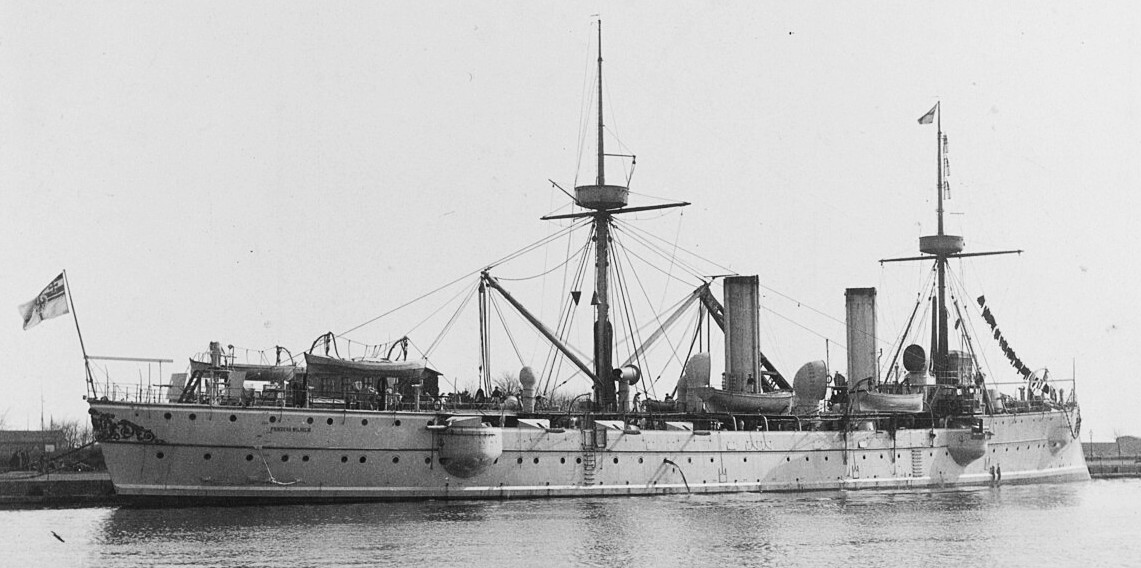
(Naval History and Heritage Command Photo)
SMS Kaiserin Augusta
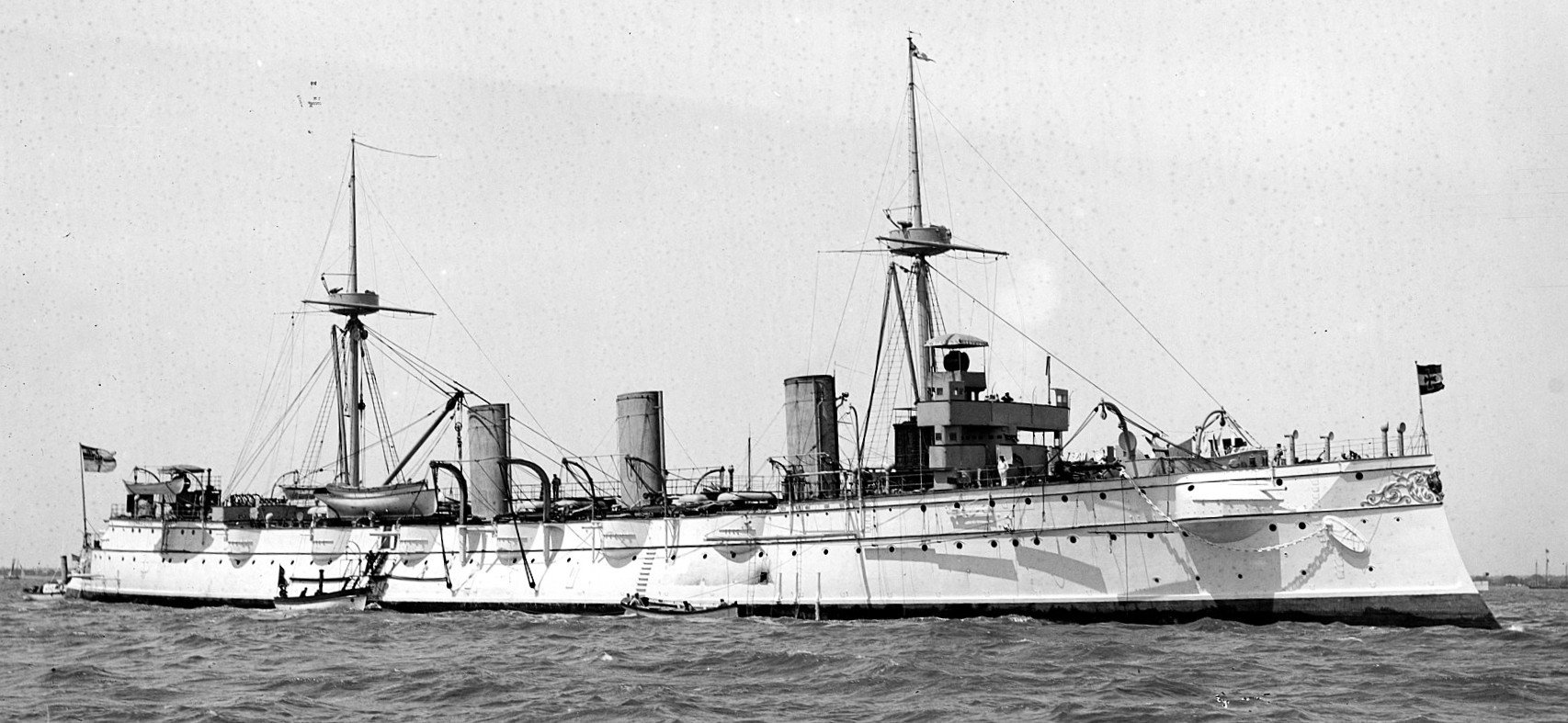
(Library of Congress Photo, 1893)
SMS Kaiserin Augusta was a unique protected cruiser, built for the German Kaiserliche Marine (Imperial Navy) in the early 1890s. Named for Empress Augusta, who died in January 1890, she was laid down in 1890, launched in January 1892, and completed in November of that year. Owing to budgetary restrictions, Kaiserin Augusta was designed to fill both fleet scout and colonial cruiser roles. The ship was initially armed with a main battery of four 15 cm (5.9 in) and eight 10.5 cm (4.1 in) guns, which by 1896 was replaced with twelve new model 15 cm guns. She was the first ship in the German Navy to feature a three-shaft propeller arrangement.
Kaiserin Augusta served abroad between 1897 and 1902, primarily in the East Asia Squadron under the command of Admiral Otto von Diederichs. During this time, the ship’s crew assisted in the suppression of the Boxer Uprising in 1900. In 1902, she returned to Germany for an extensive overhaul that lasted until 1907, after which she went into reserve. Following the outbreak of World War I in 1914, Kaiserin Augusta was mobilized to serve as a gunnery training ship. She served in this role throughout the war; the ship was ultimately sold for scrapping in October 1919 and broken up the following year. (Wikipedia)
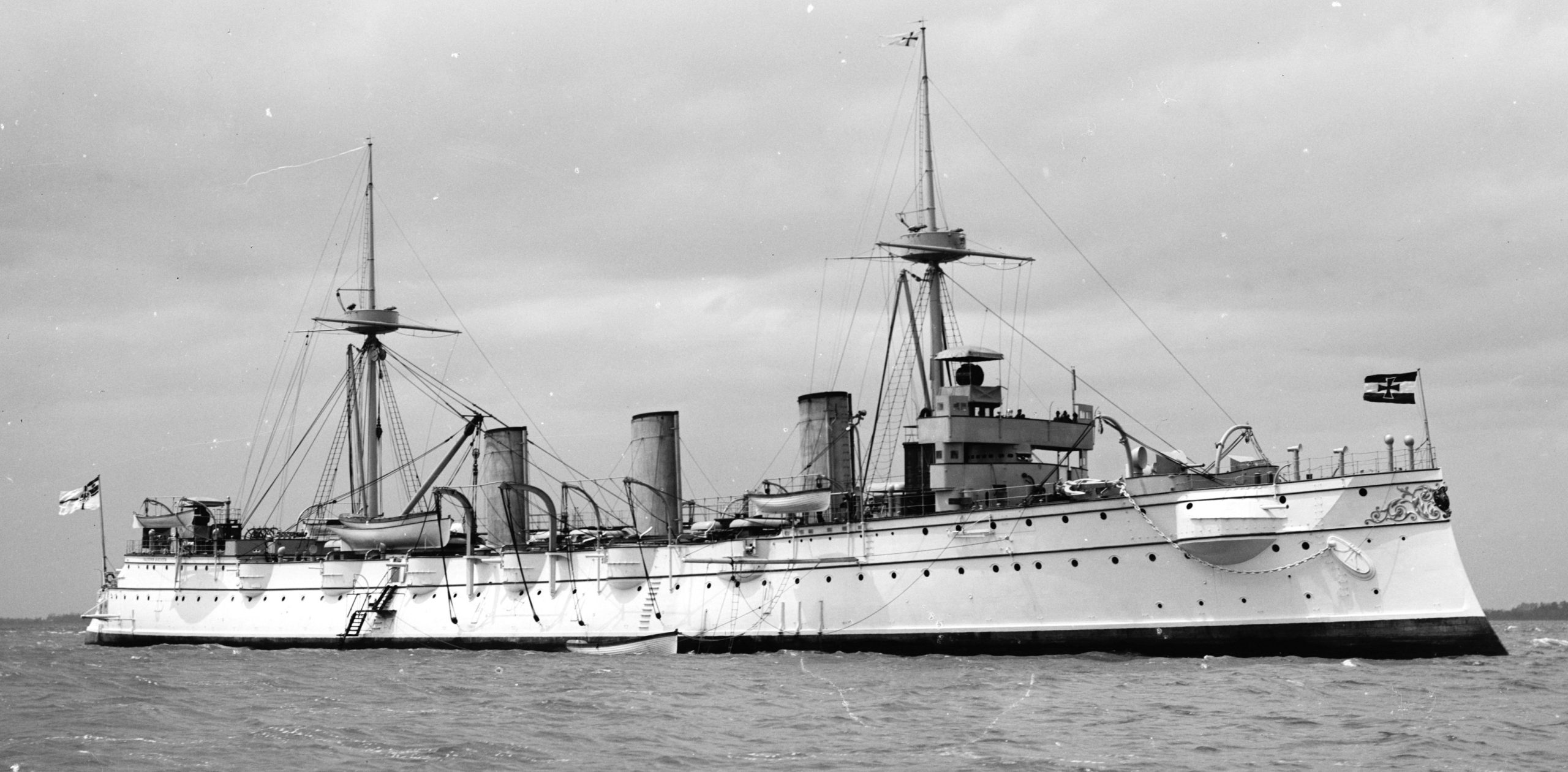
(Library of Congress Photo)
SMS Kaiserin Augusta in New York (USA) in 1893. The ship arrived with SMS Seeadler on 26 April.
Victoria Louise class
The Victoria Louise class was the last class of protected cruisers built for the German Navy. The class design introduced the combined clipper and ram bow and the blocky sides that typified later German armored cruisers. The class comprised five vessels: the lead ship Victoria Louise, Hertha, Freya, Vineta, and Hansa. The ships were laid down in 1895 and 1896, launched in 1897 and 1898, and commissioned into the fleet over the following year. Problems with the Niclausse boilers installed on Vineta prompted the Navy to standardize boiler types in future warships; from then on, only Schulz-Thornycroft or Marine type boilers would be used. All five ships were armed with a main battery of two 21 cm SK L/40 guns and eight 15 cm SK L/40 guns.
The ships of the class served in various units in the German fleet, including on the America Station, in the East Asia Squadron, and with the home fleet. Hertha and Hansa participated in the suppression of the Boxer Uprising in China in 1900,[17] and Vineta was involved in the Venezuela Crisis of 1902–1903.[18] All five ships were modernized between 1905 and 1911, after which they served as training ships for naval cadets. They were mobilized into the 5th Scouting Group at the outbreak of World War I, but were quickly withdrawn from front-line service. They served in various secondary roles for the rest of the war. Afterward, Victoria Louise was converted into a merchant ship, but was broken up in 1923. The other four ships were scrapped in 1920 and 1921. (Wikipedia)
SMS Victoria Louise
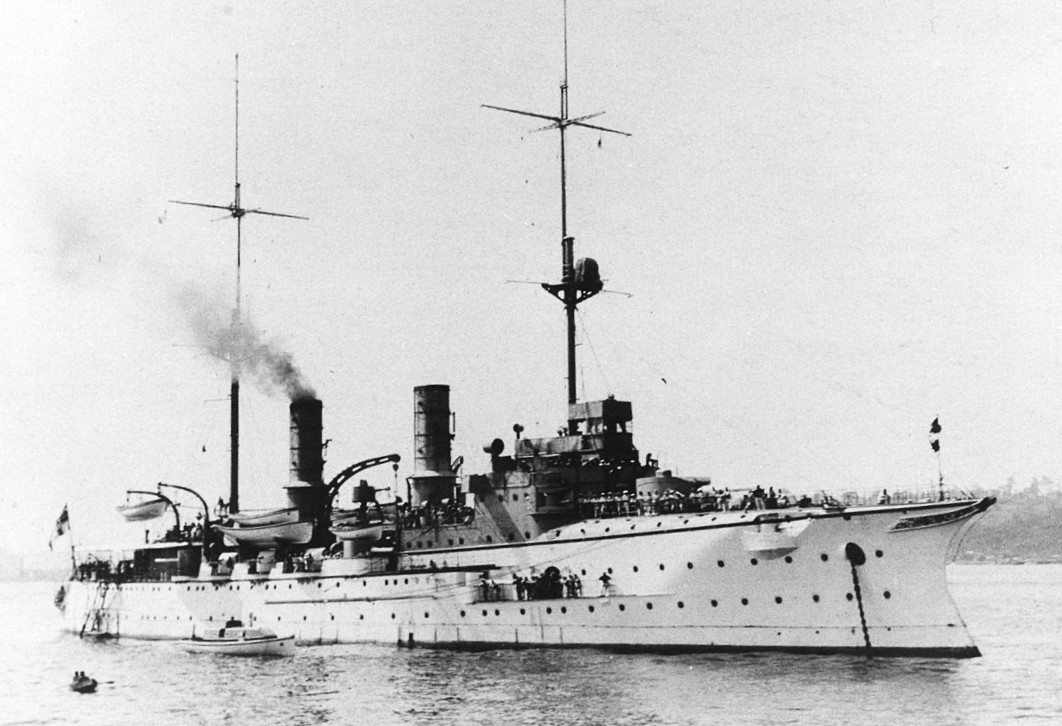
(Kaiserliche Marine Photo, 1909)
SMS Victoria Louise was the lead ship of her class of protected cruisers, built for the German Imperial Navy (Kaiserliche Marine) in the late 1890s. She was laid down at the AG Weser shipyard in 1895, launched in March 1897, and commissioned into the German fleet in February 1899. She was named after Princess Victoria Louise, the daughter of Kaiser Wilhelm II. The ship was armed with a battery of two 21 cm guns and eight 15 cm guns and had a top speed of 19.2 knots (35.6 km/h; 22.1 mph). Though the five Victoria Louise-class cruisers proved to be disappointing in some ways, they marked the beginning of a decade of German cruiser construction.
Victoria Louise served with the fleet in home waters for the first seven years of her career. During this time, she was assigned to I Battle Squadron, part of the Heimatflotte (Home Fleet), and she took part in routine peacetime training exercises. She represented Germany during the funeral of Queen Victoria in 1901. The ship was transferred to I Scouting Group, the fleet’s reconnaissance unit, in 1903. Later that year, she participated in a cruise to Spain.
In 1906, she was modernized and after 1908, used as a training ship for naval cadets. In 1909, she visited the United States, and at the outbreak of the First World War, was mobilized into V Scouting Group. She was attacked unsuccessfully by the British submarine HMS E1 in October 1914, and at the end of the year she was withdrawn from service. She was used as a mine storage hulk and barracks ship based in Danzig for the rest of the war. Victoria Louise was sold in 1919 and converted into a freighter the following year, though she served in this capacity until late 1922, when she was broken up for scrap. (Wikipedia)
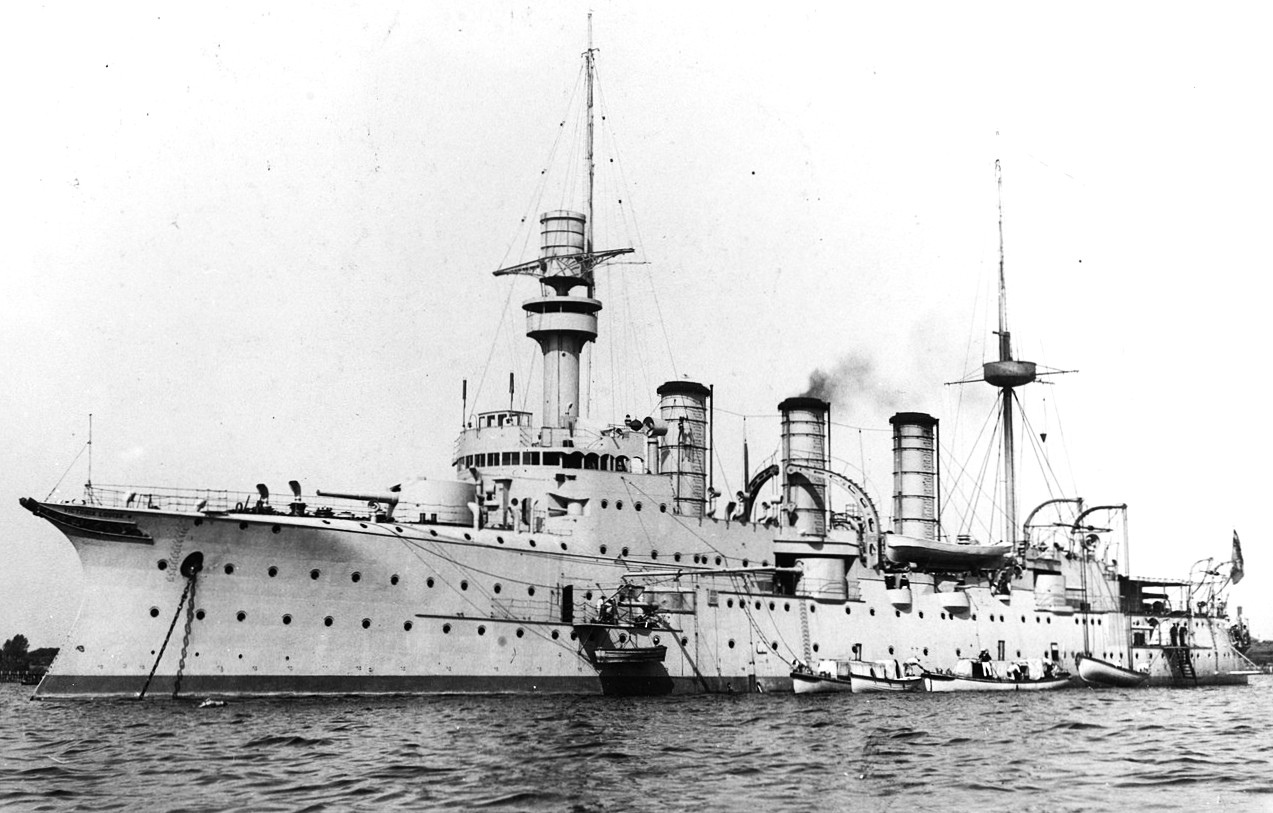
(Kaiserliche Marine Photo)
SMS Victoria Louise, c1904.
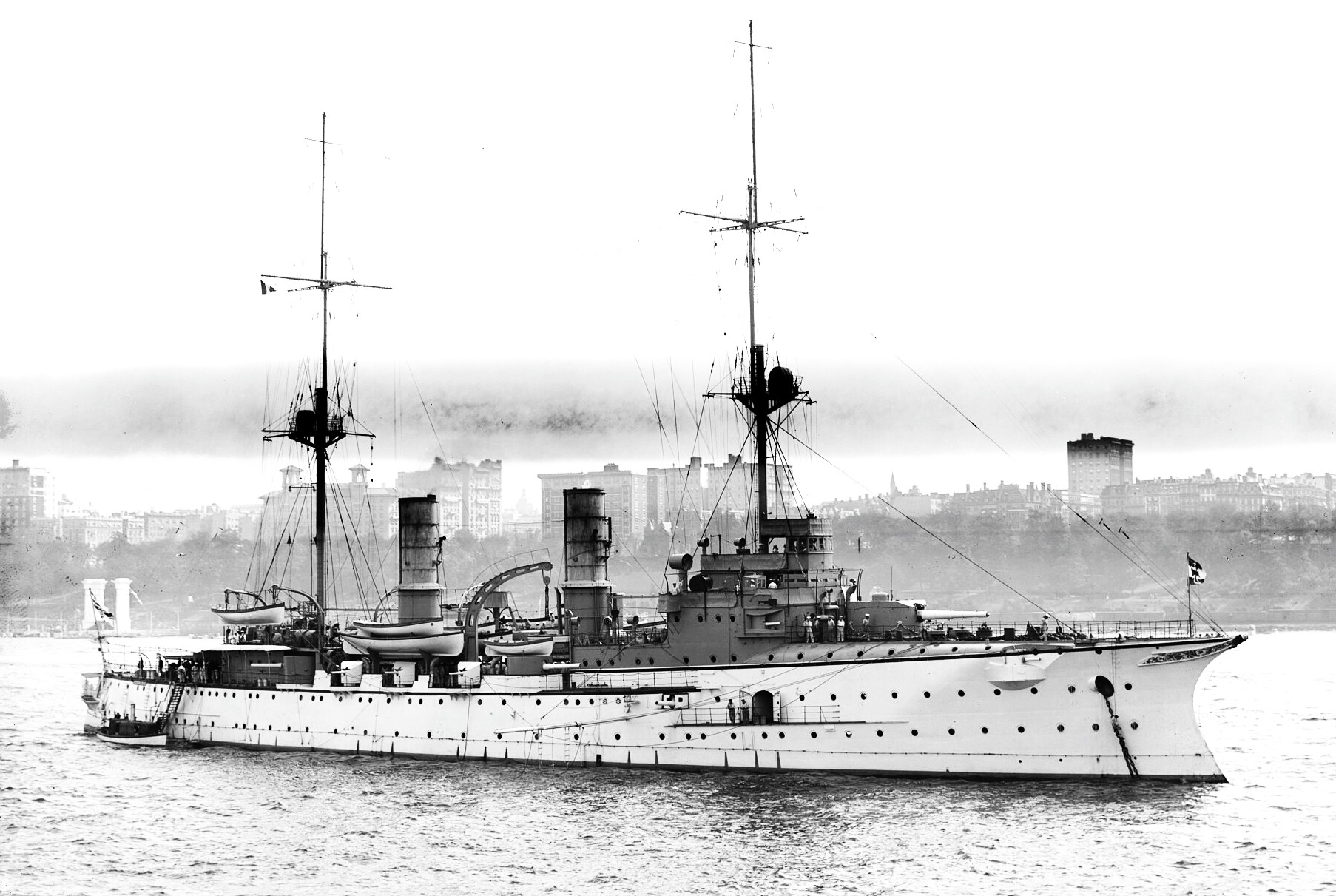
(Library of Congress Photo)
SMS Victoria Louise anchored on the Hudson River, New York City, during the Hudson-Fulton Celebration, Sep 1909.
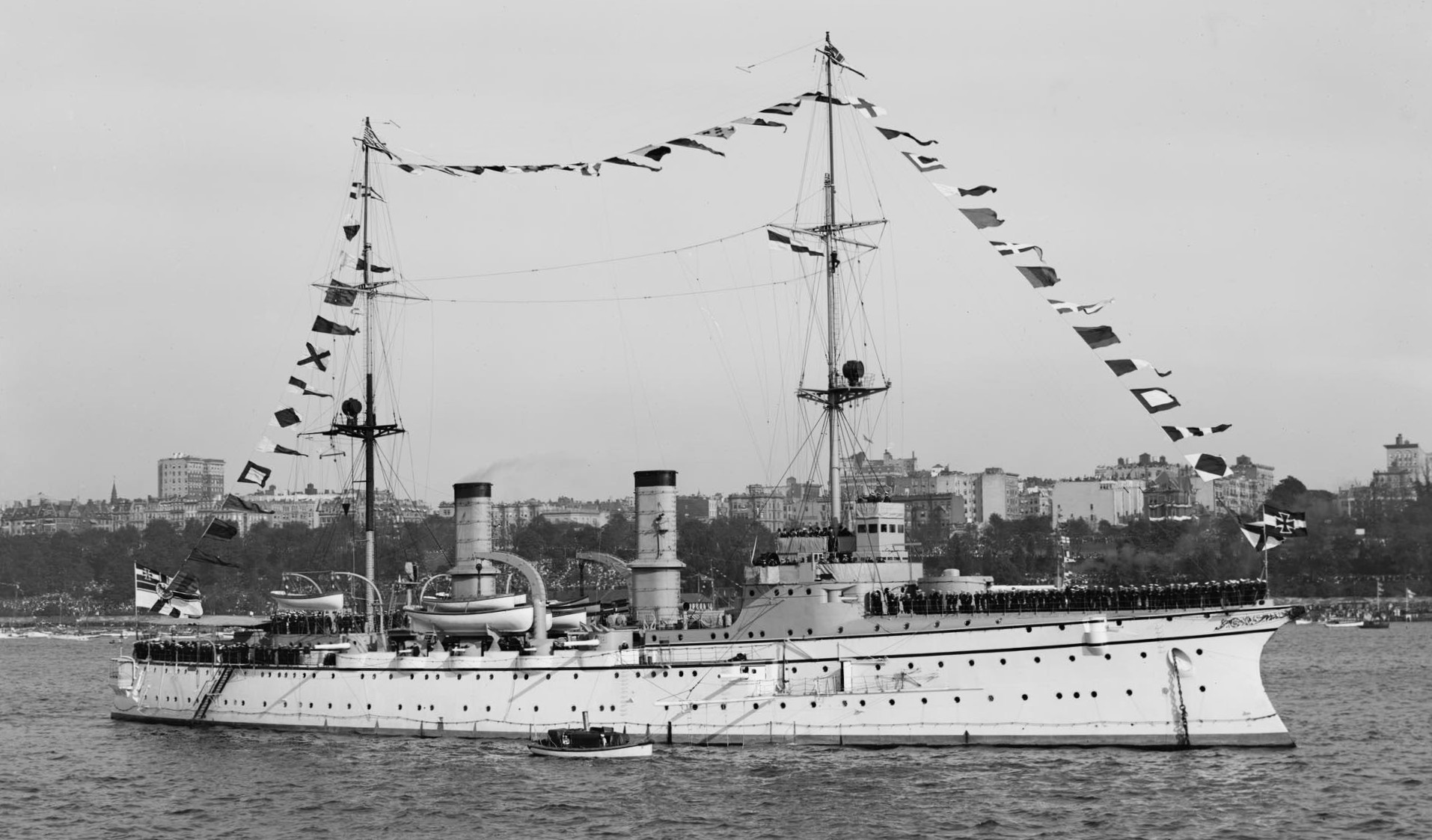
(Library of Congress Photo)
The German protected cruiser SMS Victoria Louise anchored on the Hudson River, New York City, during the Hudson-Fulton Celebration sometime between September 25th to October 9th 1909. The two-week international naval event commemorated the 300th anniversary of Henry Hudson’s discovery of the river and the 100th anniversary of Robert Fulton’s steamboat.
SMS Hertha
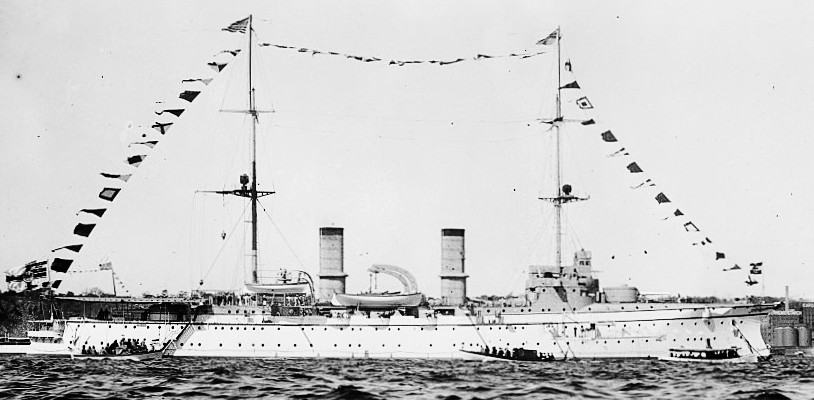
(Library of Congress Photo, c19105-1914)
SMS Hertha was a protected cruiser of the Victoria Louise class,[a] built for the German Imperial Navy (Kaiserliche Marine) in the 1890s. Hertha was laid down at the AG Vulcan shipyard in 1895, launched in April 1897, and commissioned into the Navy in July 1898. The ship was armed with a battery of two 21 cm guns and eight 15 cm guns and had a top speed of 19 knots (35 km/h; 22 mph). Though the five Victoria Louise-class cruisers proved to be disappointing in some ways, they marked the beginning of a decade of German cruiser construction.
The ship’s first major operation was a cruise to the Mediterranean Sea to escort Kaiser Wilhelm II; while there, Hertha received orders to join the East Asia Squadron. She operated there for the first six years of her career, and during that time, she served briefly as the Squadron flagship in 1900. Her crew saw significant action during the Boxer Uprising in 1900; Hertha contributed landing parties to the Seymour Expedition and to the force that captured the Taku Forts. The following four years passed peacefully for the ship, but by late 1904 she was in need of a thorough overhaul that necessitated a return to Germany.
After arriving in Germany in 1905, she was modernized and used as a training ship in 1908, following the completion of the refit. Hertha made several training cruises over the following years, including a visit to the United States in 1909. She cruised with the Mediterranean Division in 1912. At the outbreak of World War I, Hertha was mobilized into V Scouting Group, but served in front-line duty only briefly. She was used as a barracks ship after 1915, and ultimately sold for scrapping in 1920. (Wikipedia)
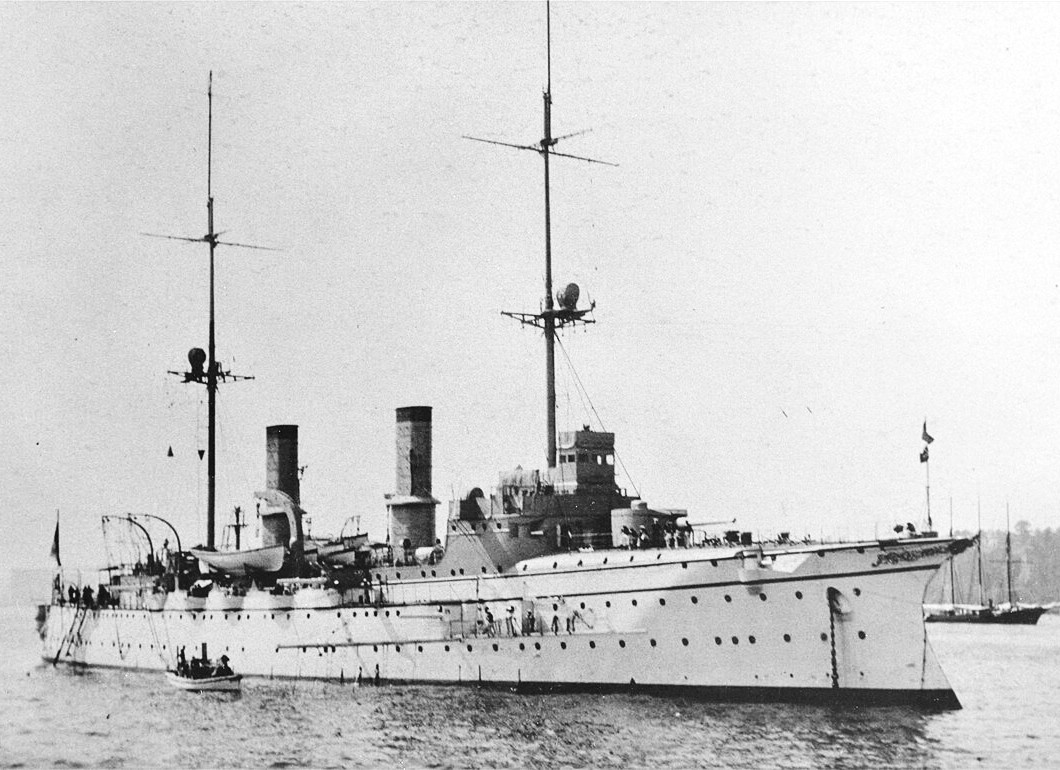
(Library of Congress Photo, c1909)
SMS Hertha.

(Library of Congress Photo, c1909)
SMS Hertha.
SMS Freya
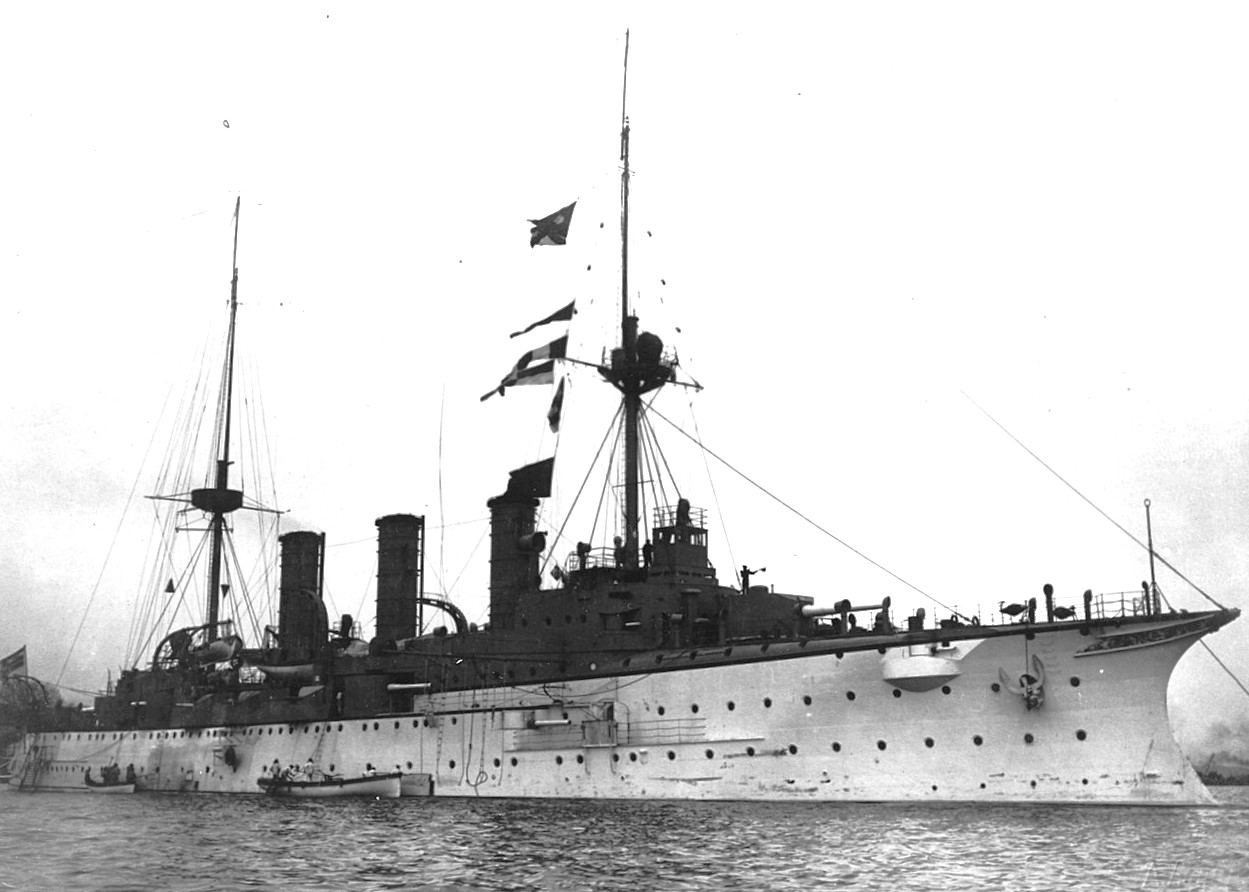
(Arthur Renard Photo, c1907)
SMS Freya was a protected cruiser of the Victoria Louise class, built for the German Imperial Navy (Kaiserliche Marine) in the 1890s, along with her sister ships Victoria Louise, Hertha, Vineta, and Hansa. Freya was laid down at the Imperial Dockyard in Danzig in 1895, launched in April 1897, and commissioned into the Navy in October 1898. The ship was armed with a battery of two 21 cm guns and eight 15 cm guns and had a top speed of 19 knots (35 km/h; 22 mph). Though the five Victoria Louise-class cruisers proved to be disappointing in some ways, they marked the beginning of a decade of German cruiser construction.
Freya served as a gunnery training ship for the German fleet for the initial years of her career, unlike her sister ships, all of which served abroad on foreign stations. As a result, she led a fairly uneventful career; in addition to conducting shooting practice, she also participated in training exercises with the fleet between 1901 and 1904. After a modernization in 1905–1907, Freya was used as a school ship for cadets, and over the next several years embarked on training cruises. Two major cruises to the Mediterranean took place in 1908 and 1909, and in 1910, Freya crossed the Atlantic to visit Mexico, along with islands in the Caribbean Sea.
Another major refit followed between 1911 and 1913, after which she was placed in the reserve fleet. At the outbreak of World War I, Freya was mobilized into V Scouting Group, but served in front-line duty only briefly. After a serious accident that nearly sank the ship in August 1914, she was returned to use as a training ship, a role she filled for the rest of the war. She was ultimately sold for scrapping in 1921. (Wikipedia)
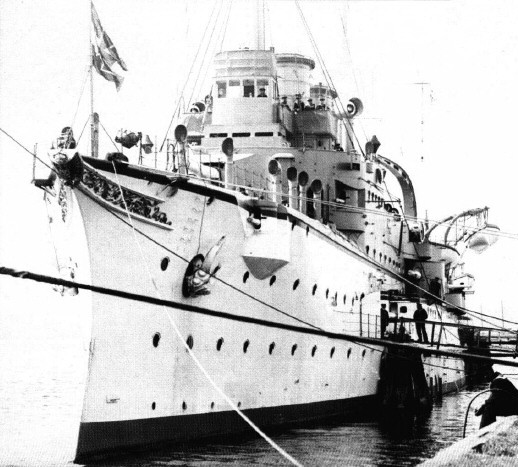
(Kaiserliche Marine Photo)
SMS Freya, c1911.
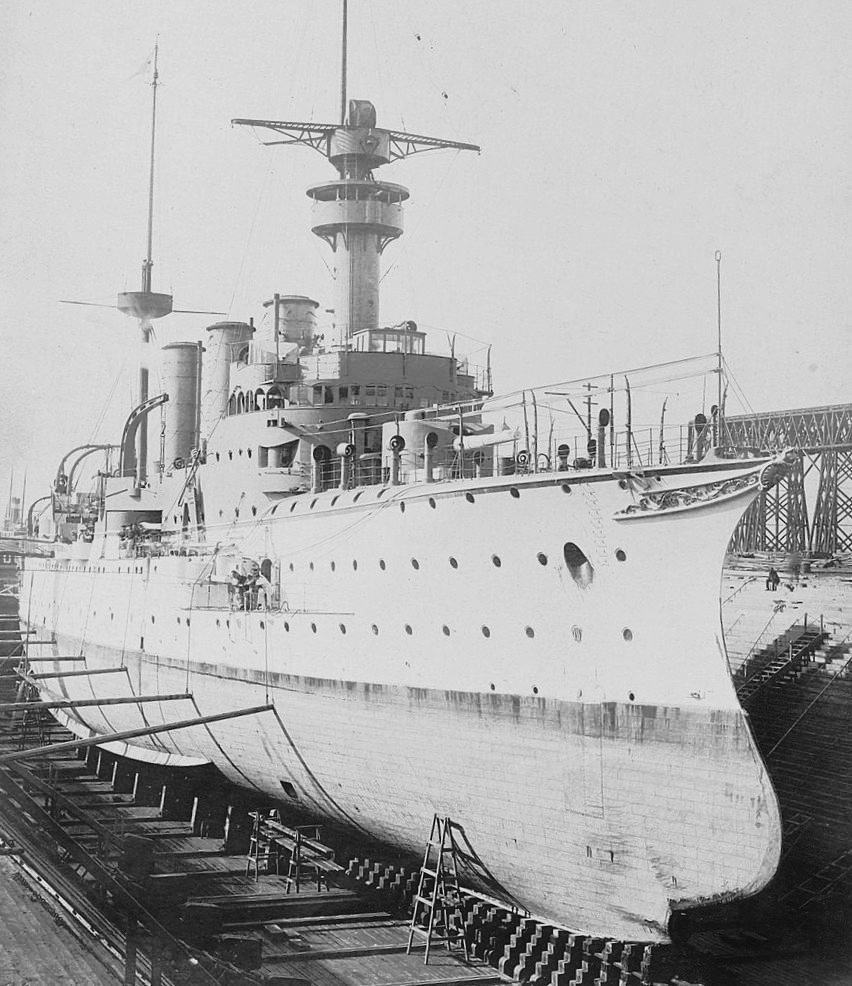
SMS Vineta
(USN Photo)
SMS Vineta was a protected cruiser of the Victoria Louise class, built for the German Imperial Navy (Kaiserliche Marine) in the 1890s. Vineta was laid down at the AG Vulcan shipyard in 1895, launched in April 1897, and commissioned into the Navy in July 1898. The ship, named for the earlier screw frigate SMS Vineta, was armed with a battery of two 21 cm guns and eight 15 cm guns and had a top speed of 19 knots (35 km/h; 22 mph). Though the five Victoria Louise-class cruisers proved to be disappointing in some ways, they marked the beginning of a decade of German cruiser construction.
Vineta served abroad in the American Station for the first several years of her career. During her deployment in the Americas, she participated in the Venezuela Crisis of 1902–1903 and shelled several Venezuelan fortresses, including the bombardment of Fort San Carlos. Notably, the ship suffered an ammunition fire during the cruise, which informed the navy about the instability of its propellant charges, leading to reformulation that spared several German warships from destruction during battles in World War I. Vineta returned to Germany in 1905, by way of the country’s colonies in German South West Africa and German West Africa. She was used as a torpedo training ship from 1906 to 1908.
She was modernized in 1909–1911, after which she was used as a training ship for naval cadets, conducting training cruises in the early 1910s. In November 1912, while cruising in the Mediterranean Sea, she participated in an international naval protest of the First Balkan War. During another training voyage to the Caribbean Sea in early 1914, she embarked the deposed Haitian president Michel Oreste as he fled into exile. At the outbreak of the First World War later in 1914, Vineta was mobilized into V Scouting Group, but served in front-line duty only briefly. She was used as a barracks ship after 1915, and ultimately sold for scrapping in 1920. (Wikipedia)
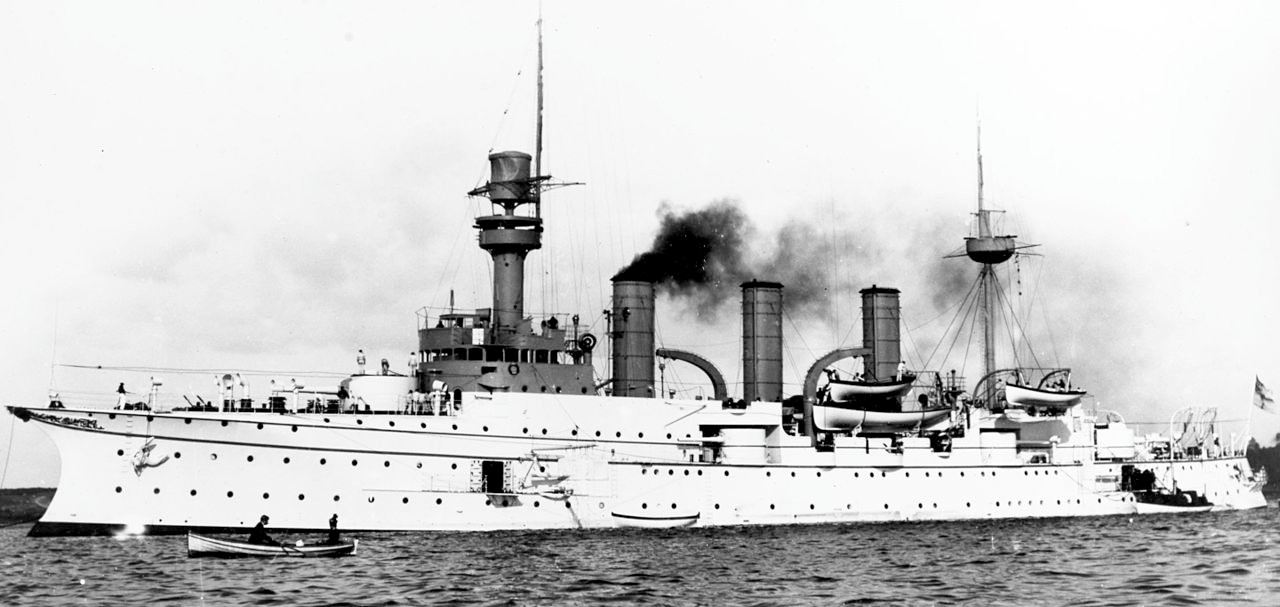
SMS Hansa
(Arthur Renard Photo)
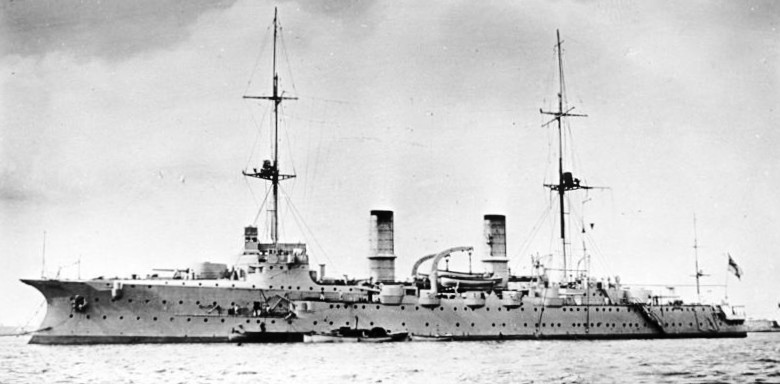
SMS Hansa was a protected cruiser of the Victoria Louise class, built for the German Imperial Navy (Kaiserliche Marine) in the 1890s, along with her sister ships Victoria Louise, Hertha, Vineta, and Freya. Hansa was laid down at the AG Vulcan shipyard in Stettin in 1896, launched in March 1898, and commissioned into the Navy in April 1899. The ship was armed with a battery of two 21 cm guns and eight 15 cm guns and had a top speed of 19 knots (35 km/h; 22 mph). Though the five Victoria Louise-class cruisers proved to be disappointing in some ways, they marked the beginning of a decade of German cruiser construction.
Hansa served abroad in the East Asia Squadron for the first six years of her career, and during the first few years of this deployment, she served as the deputy commander’s flagship. She saw action during the Boxer Uprising in Qing China in 1900, contributing a landing party to the force that captured the Taku Forts and the subsequent Seymour Expedition. Over the next four years, she toured the region, visiting numerous ports from Japan to Australia. In August 1904, she participated in the internment of the Russian battleship Tsesarevich after the Battle of the Yellow Sea during the Russo-Japanese War.
After returning to Germany in 1906, she was modernized and used as a training ship in 1909, following the completion of the refit. Over the next few years, she embarked on numerous training cruises, including a major voyage to the Mediterranean Sea in 1909–1910 and another to the United States in 1911–1912. At the outbreak of the First World War, Hansa was mobilized into V Scouting Group, serving as its flagship, but she served in front-line duty only briefly. She was used as a barracks ship after 1915, and ultimately sold for scrapping in 1920. (Wikipedia)
(Bundesarchiv, DVM 10 Bild-23-61-10 / CC-BY-SA 3.0)
SMS Hansa,1898.