
US Navy Essex-class aircraft carriers:
USS Lake Champlain (CV-39), USS Tarawa (CV-40), USS Valley Forge (CVA 45), USS Iwo Jima (CV-46), USS Philippine Sea (CV-47), USS Saipan (CVL-48), USS Wright (CVL-49/AVT-7)
The Essex class is a retired class of aircraft carriers of the United States Navy. The 20th century’s most numerous class of capital ship, the class consisted of 24 vessels which came in “short-hull” and “long-hull” versions. Thirty-two ships were ordered, but as the Second World War wound down, six were canceled before construction and two were canceled after construction had begun. Fourteen saw combat during the Second World War. None was lost to enemy action although several sustained crippling damage due to aerial attacks. Essex-class carriers were the backbone of the U.S. Navy from mid-1943 and, with the three Midway-class carriers added just after the war, continued to be the heart of U.S. naval strength until supercarriers joined the fleet starting in the 1950s. Several of the carriers were rebuilt to handle heavier and faster aircraft of the early jet age and saw service in the Vietnam War, with Lexington decommissioned as a training carrier in 1991. Of the 24 ships in the class, four – Yorktown, Hornet, Lexington, and Intrepid – have been preserved as museum ships. (Wikipedia)
USS Essex (CV-9), USS Yorktown (CV-10), USS Intrepid (CV-11), USS Hornet (CV-12), USS Franklin (CV-13), USS Ticonderoga (CV-14), USS Randolph (CV-15), USS Lexington (CV-16), USS Bunker Hill (CV-17), USS Wasp (CV-18), USS Hancock (CV-19), USS Bennington (CV-20), USS Boxer (CV-21), USS Bon Homme Richard (CV-31), USS Shangri-La (CV-38) are listed on a separate page on this website.
USS Lake Champlain (CV-39)
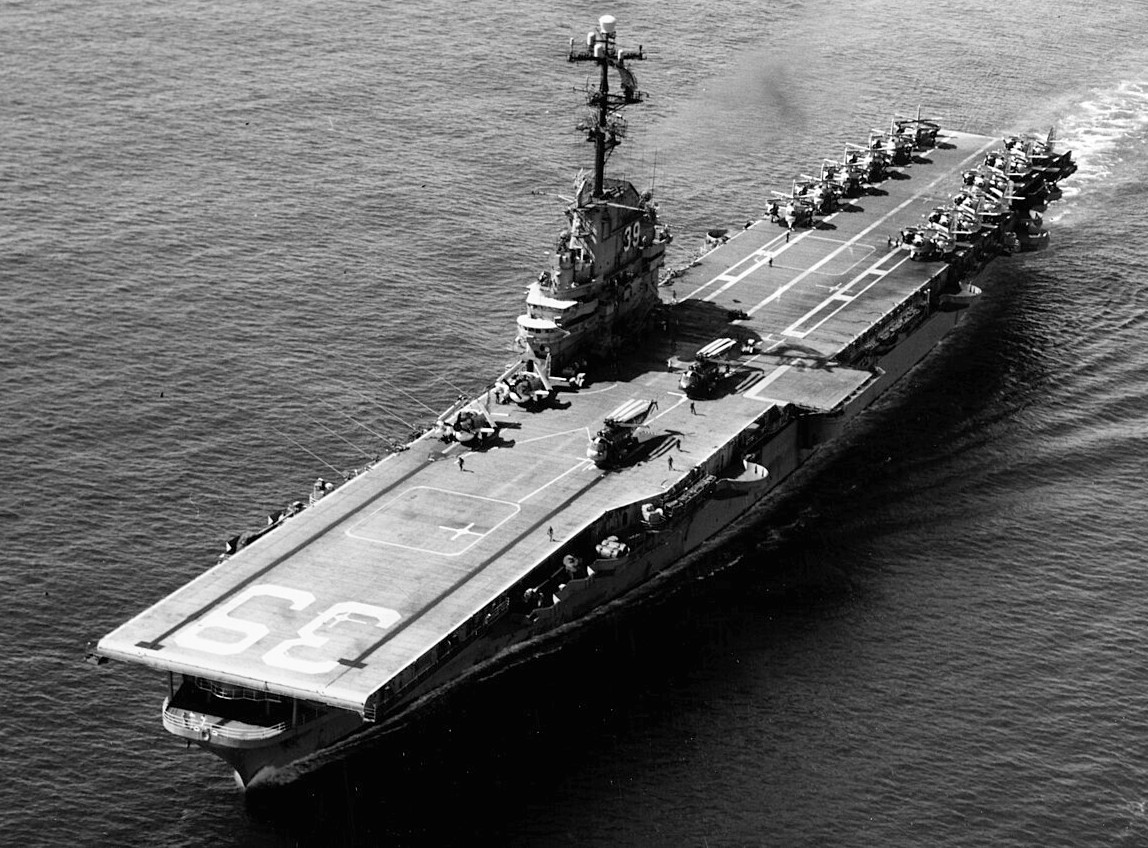
(USN Photo)
USS Lake Champlain (CVS-39) underway in February 1965. Aircraft of Carrier Anti-Submarine Air Group 54 (CVSG-54) are visible on deck.
USS Lake Champlain (CV/CVA/CVS-39) was one of 24 Essex-class aircraft carriers completed during or shortly after the Second World War for the United States Navy. She was the second US Navy ship to bear the name, named for the Battle of Lake Champlain in the War of 1812. Commissioned on 3 June 1945, Lake Champlain did not participate in the Second World War combat operations. She served as a transport, bringing troops home from Europe as part of Operation Magic Carpet. Like many of her sister ships, she was decommissioned shortly after the war but was modernized and recommissioned in the early 1950s. Redesignated as an attack carrier (CVA), she participated in the Korean War before spending the rest of her career in the Atlantic, Caribbean, and Mediterranean. In the late 1950s, she was redesignated as an antisubmarine carrier (CVS).Lake Champlain was the prime recovery ship for the first crewed Project Mercury mission (Freedom 7), the second uncrewed Gemini mission (Gemini 2), and the third crewed Gemini mission (Gemini 5). Lake Champlain had a unique modernization history. She was the only Essex-class ship to receive the SCB-27A modernization program conversion, which involved a rebuild of the superstructure, flight deck, and other features, but did not also receive the SCB-125 conversion for an angled flight deck and hurricane bow. Therefore, she was the last operational US aircraft carrier with an axial flight deck. Lake Champlain was decommissioned in 1966 and sold for scrap in 1972. (Wikipedia)
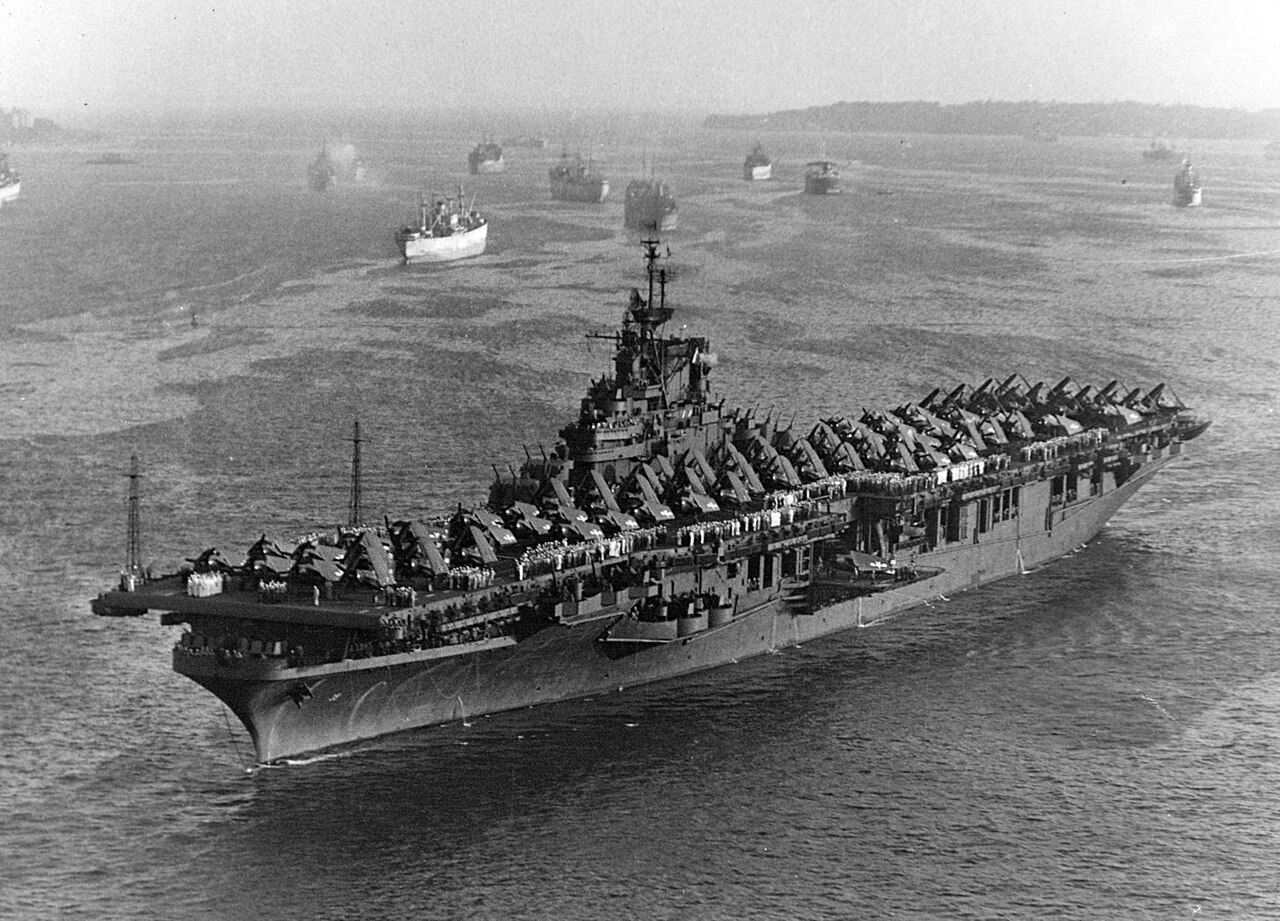
(USN Photo)
USS Lake Champlain (CV-39) at anchor at Norfolk, Virginia (USA), with aircraft of Carrier Air Group 150 (CVG-150) on board, August 1945.
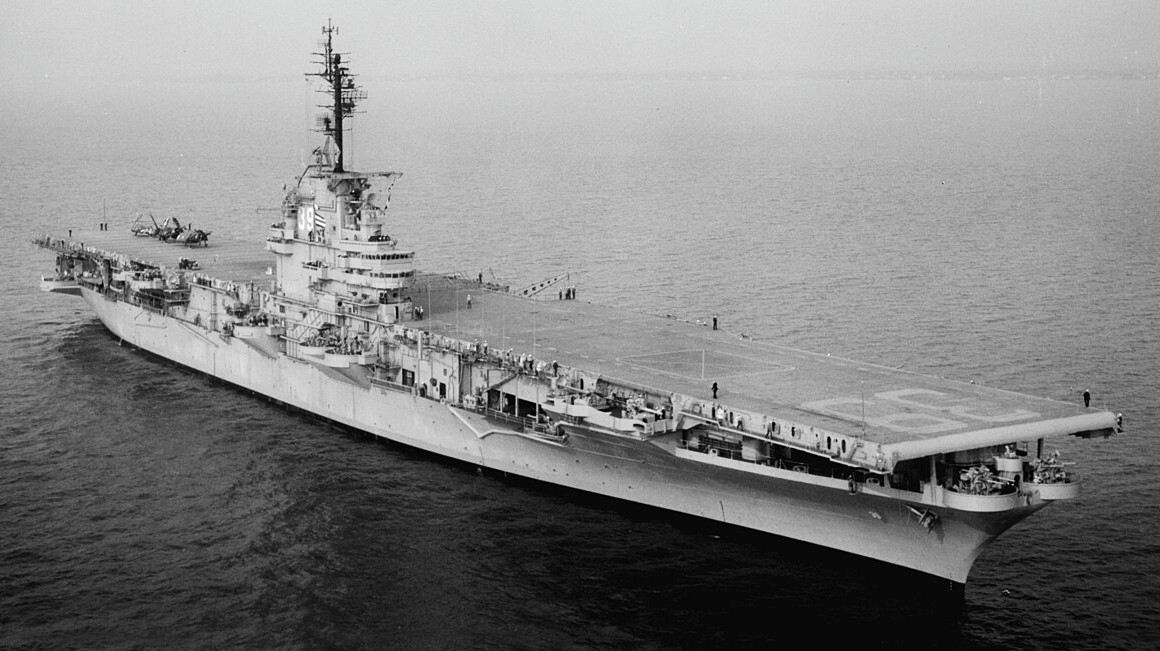
(USN Photo)
USS Lake Champlain (CVA-39) following her SCB-27A modernisation at Newport News Shipbuilding and Drydock Company, Virginia, in November 1952.
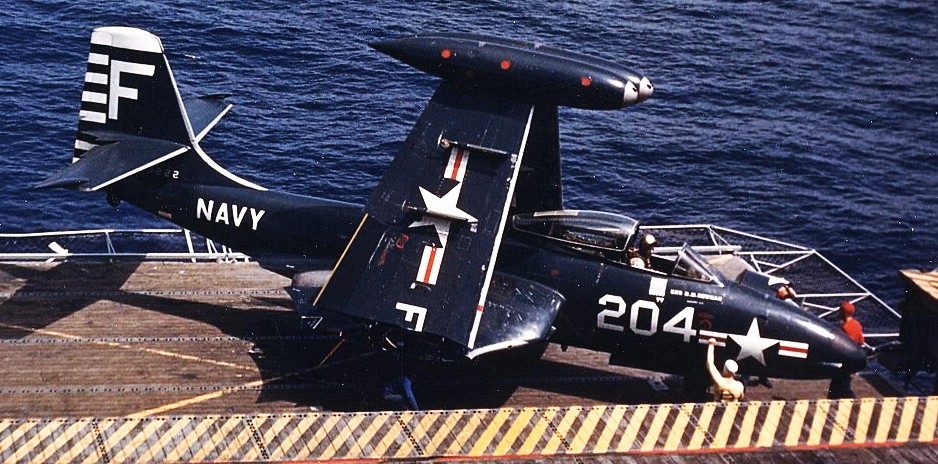
(USN Photo)
U.S. Navy McDonnell F2H-2 Banshee (BuNo. 123222) of Fighter Squadron VF-62 “Gladiators” aboard the deck edge elevator of the aircraft carrier USS Lake Champlain (CVA-39) off Korea. VF-62 was assigned to Carrier Air Group 4 (CVG-4) aboard the Lake Champlain for a deployment to the Mediterranean Sea, the Indian Ocean, and Korea from 26 April to 4 December 1953.
(USN Photo)
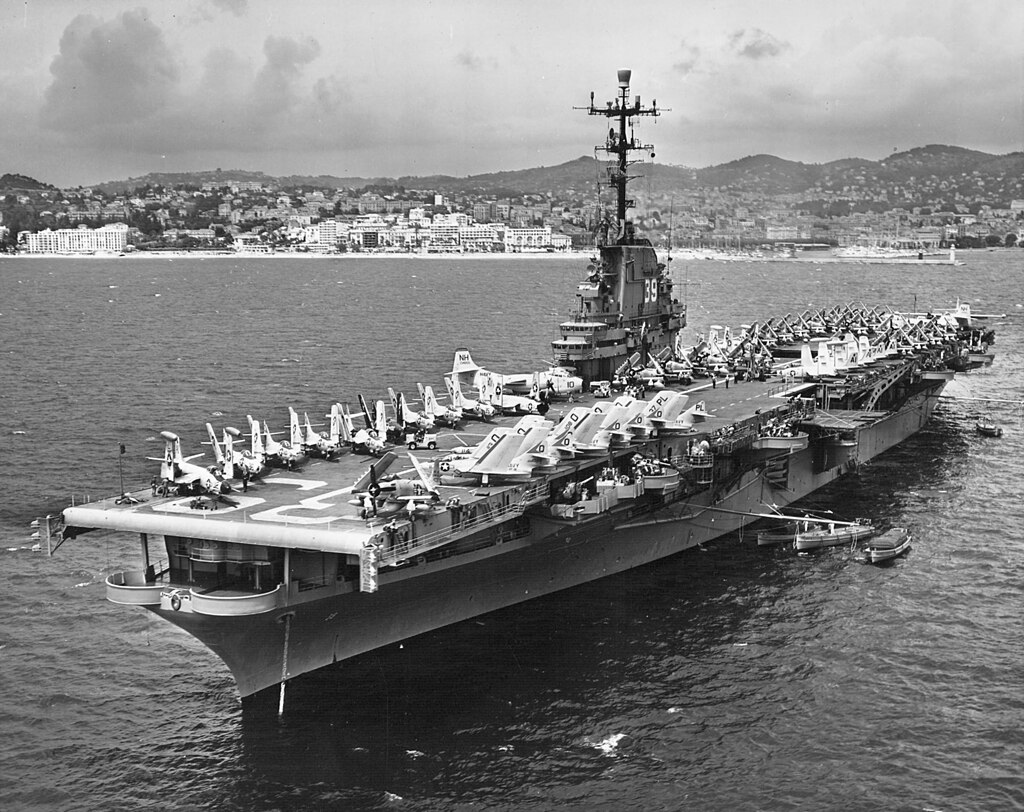
USS Lake Champlain (CVA-39) at anchor off Cannes, France, on 19 June 1957, during her final deployment as an attack aircraft carrier. Lake Champlain, with assigned Air Task Group 182 (ATG-182), was deployed to the Mediterranean Sea from 21 January to 27 July 1957.
(USN Photo)
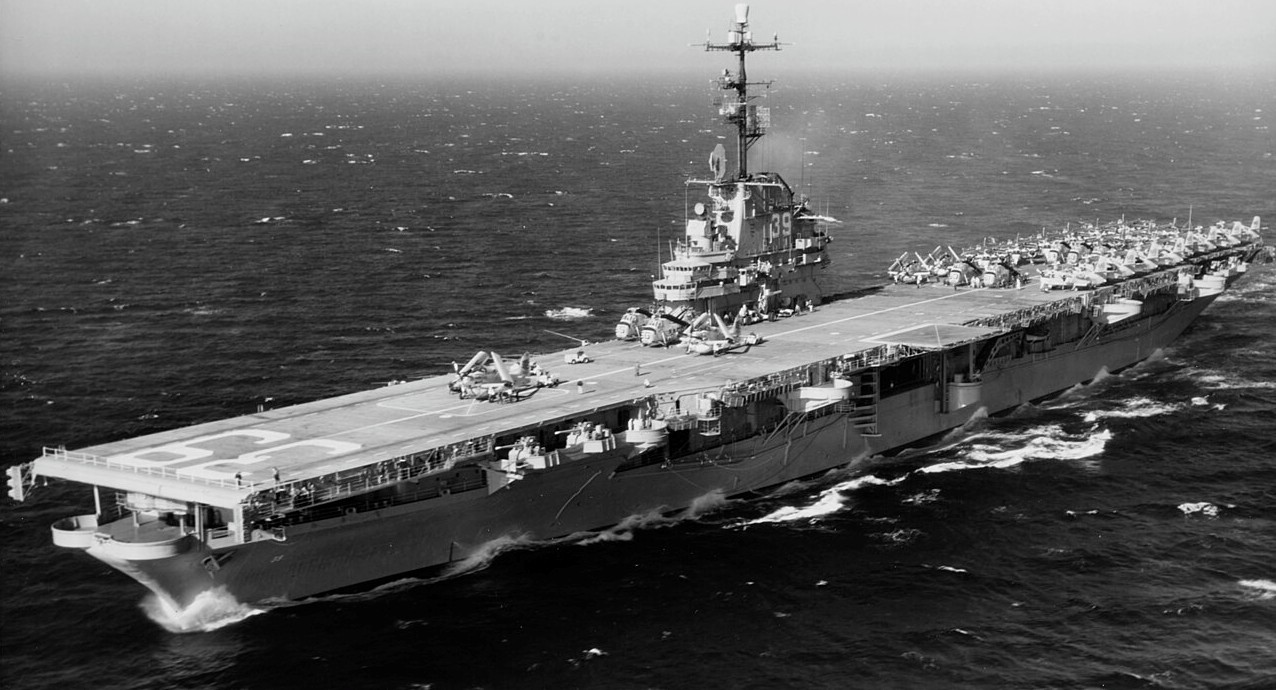
USS Lake Champlain (CVS-39) at sea in July 1960 with various aircraft of Carrier Anti-Submarine Air Group 54 (CVSG-54) on deck. Visible are four Douglas AD-5W Skyraider AEW-aircraft of VAW-12 Det. 34 “Bats”, several Sikorsky HSS Seabat helicopters of HS-5 “Nightdippers” and numerous Grumman S2F Tracker anti-submarine aircraft of VS-22 “Checkmates” and VS-32 “Norsemen”.
(USN Photo)
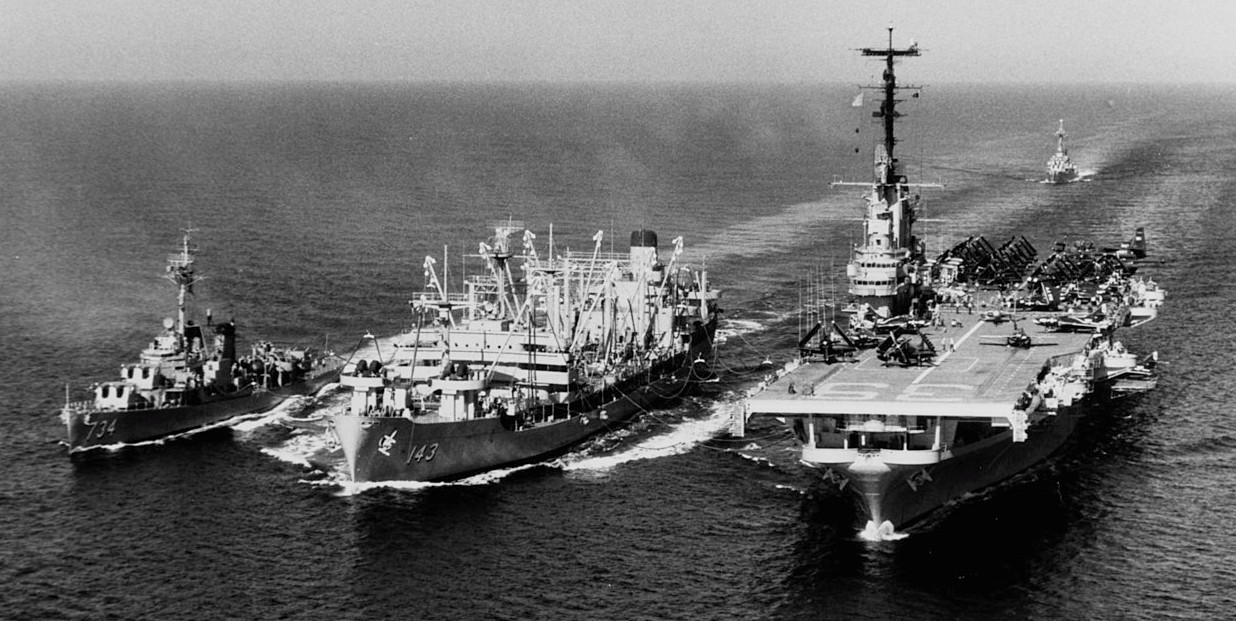
USS Lake Champlain (CVA-39) and the destroyer USS Purdy (DD-734) refueling at sea from the fleet oiler USS Neosho (AO-143) in the Mediterranean Sea on 20 October 1955. Lake Champlain, with assigned Carrier Air Group 6 (CVG-6), was deployed to the Mediterranean Sea from 9 October 1955 to 30 April 1956.
USS Tarawa (CV-40)
(USN Photo)
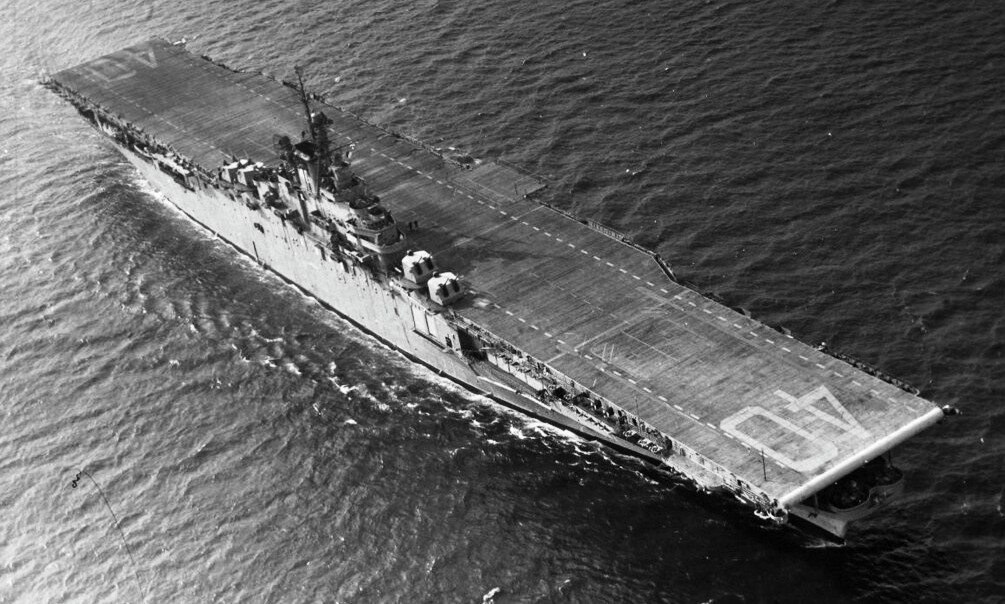
USS Tarawa (CV-40) underway, circa in 1948.
USS Tarawa (CV/CVA/CVS-40, AVT-12) was the first US Navy ship to bear the name, and was named for the bloody 1943 Battle of Tarawa. Tarawa was commissioned in December 1945, too late to serve in the Second World War. After serving a short time in the Far East, she was decommissioned in 1949. She was soon recommissioned after the Korean War began, serving in the Atlantic as a replacement for carriers sent to Korea. In the early 1950s, she was redesignated an attack carrier (CVA) and then an antisubmarine warfare carrier (CVS). Except for one tour in the Far East, she spent her entire second career operating in the Atlantic and Caribbean. Consequently, Tarawa was the only ship of her class to never see combat action. Unlike many of her sisters, Tarawa received no major modernizations, and thus throughout her career retained the classic appearance of a Second World War Essex-class ship. She was decommissioned in 1960, and while in reserve was redesignated an aircraft transport (AVT). She was sold for scrap in 1968. (Wikipedia)
(USN Photo)
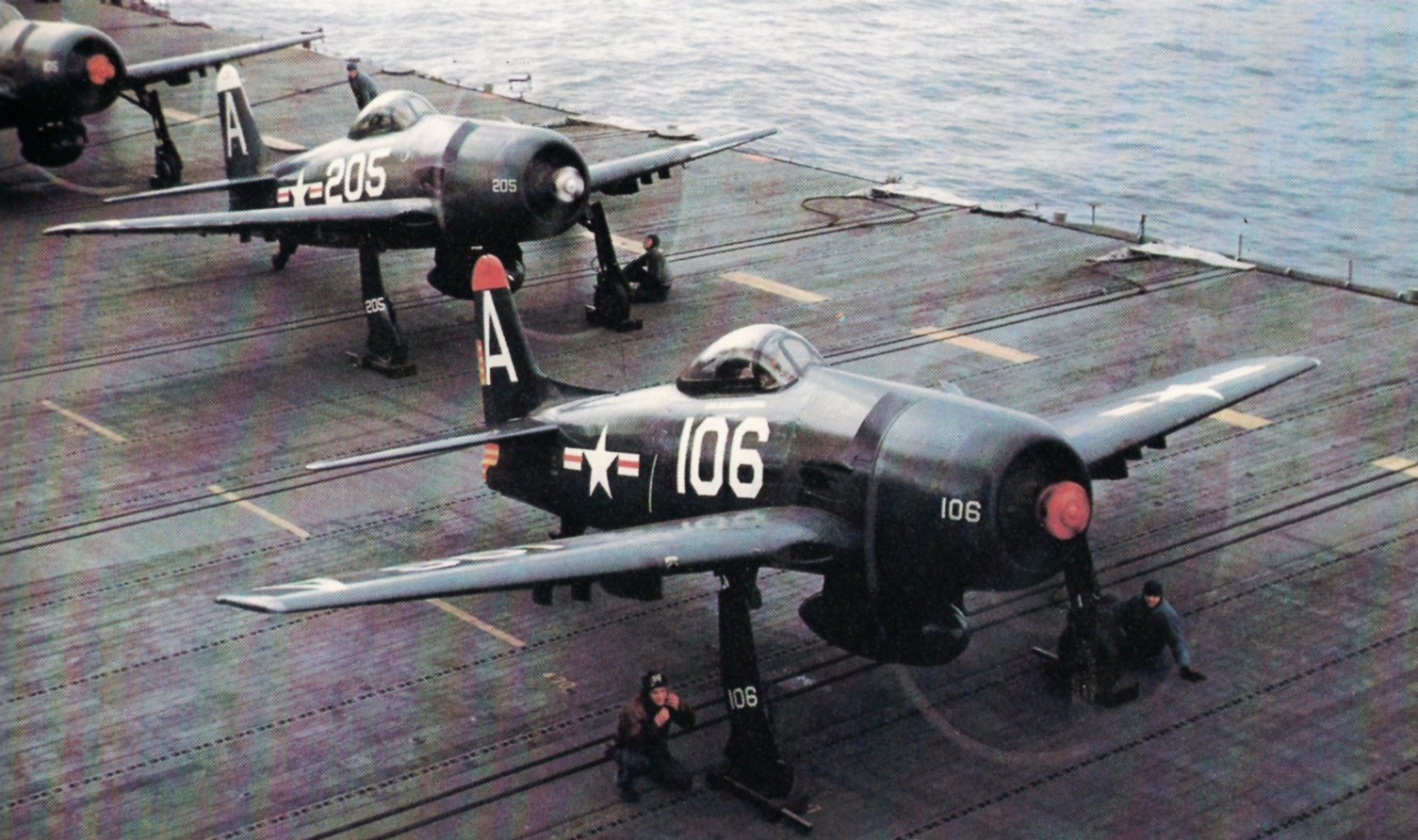
U.S. Navy Grumman F8F-1 Bearcat fighters prepare to launch from the aircraft carrier USS Tarawa (CV-40) in 1948. The aircraft were from Fighter Squadron VF-15A “Fighting 15A” (A-106, A-105), and VF-16A “Copperheads”, assigned to Carrier Air Group 15 (CVAG-15).
(USN Photo)
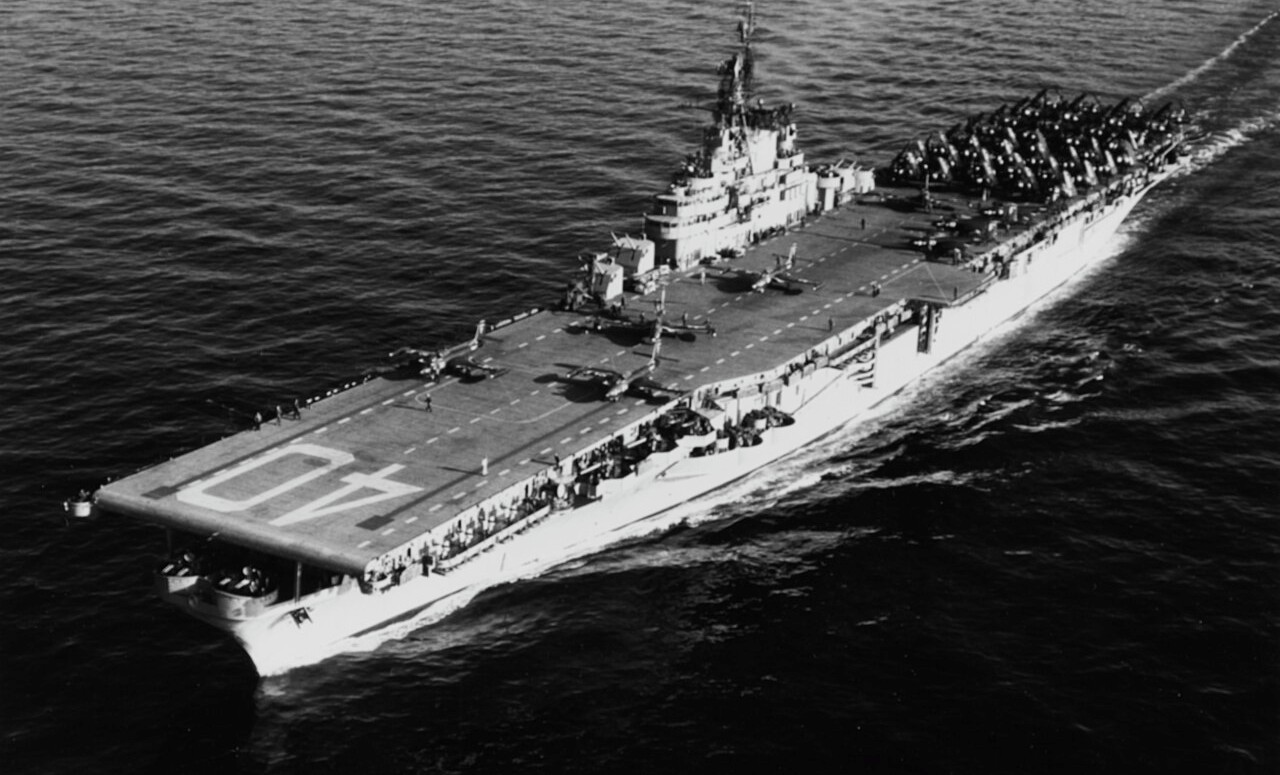
USS Tarawa (CVA-40) underway at sea on 18 December 1952. Note: the official description reads “… underway in the Mediterranea Sea, north of the Straits of Messina, Sicily, on 18 December 1952. She has F2H Banshee jet fighters on her catapults.” However, this cannot be correct as Tarawa returned from the Mediterranean Sea to the U.S. on 11 June 1952 and left again on 7 January 1953. On neither deployment she carried F2H-2 Banshee fighters. Fighter Squadron 62 (VF-62) flew F2H-2 with the tail code “F” (as shown here). This was the tail code of Carrier Air Group 4 which was deployed to the Mediterranean Sea aboard USS Coral Sea (CVB-43), 19 April to 12 October 1952, and USS Lake Champlain (CVA-39), 26 April to 4 December 1953. Assuming that the date is correct, the carrier was working up for her coming deployment off the U.S. East Coast.
(USN Photo)
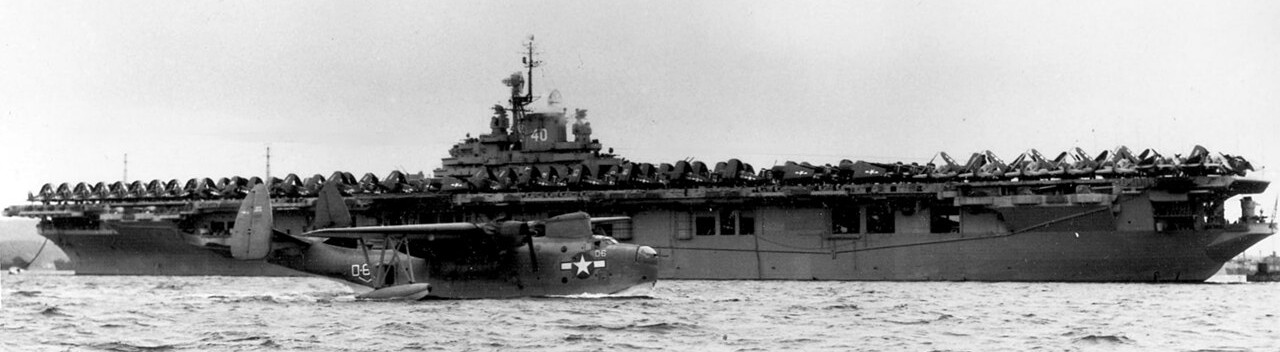
U.S. Navy Martin PBM Mariner taxis in front of the aircraft carrier USS Tarawa (CV-40), in 1946-47. On deck are various aircraft of Carrier Air Group 4 (CVG-4).
USS Valley Forge (CVA 45)
(USN Photo)
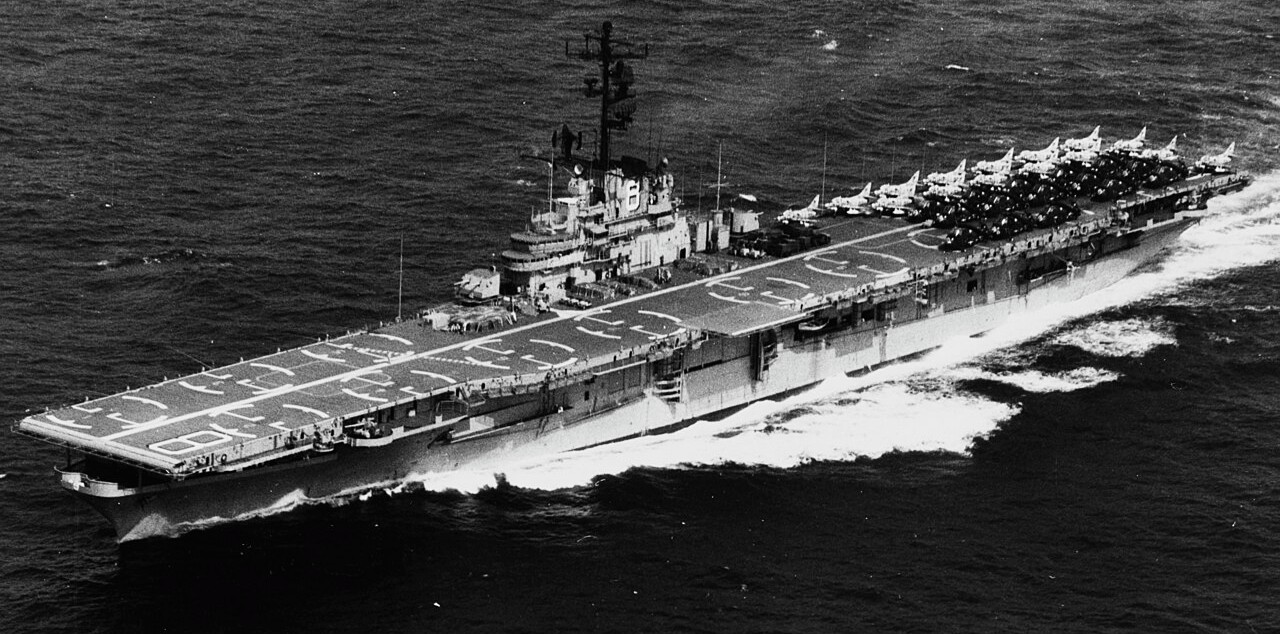
U.S. Navy amphibious assault ship USS Valley Forge (LPH-8) transporting Douglas A-4 Skyhawk attack planes in addition to her usual complement of Sikorsky UH-34D Seahorse helicopters, circa 1965. She also has cargo and vehicles stowed on her flight deck, near the island.
USS Valley Forge (CV/CVA/CVS-45, LPH-8) was one of 24 Essex-class aircraft carriers built during and shortly after World War II for the United States Navy. The ship was the first US Navy ship to bear the name, and was named after Valley Forge, the 1777–1778 winter encampment of General George Washington’s Continental Army. Valley Forge was commissioned in November 1946, too late to serve in World War II, but saw extensive service in the Korean War and the Vietnam War. She was reclassified in the early 1950s as an attack carrier (CVA), then to an antisubmarine carrier (CVS), and finally to an amphibious assault ship (LPH), carrying helicopters and Marines. As a CVS she served in the Atlantic and Caribbean. She was the prime recovery vessel for an early uncrewed Mercury space mission. After conversion to an LPH she served extensively in the Vietnam War. Valley Forge was awarded eight battle stars for Korean War service and nine for Vietnam War service, as well as three Navy Unit Commendations. Although she was extensively modified internally as part of her conversion to an amphibious assault ship, external modifications were minor, so throughout her career Valley Forge retained the classic appearance of a World War II Essex-class ship. She was decommissioned in 1970, and sold for scrap in 1971. (Wikipedia)
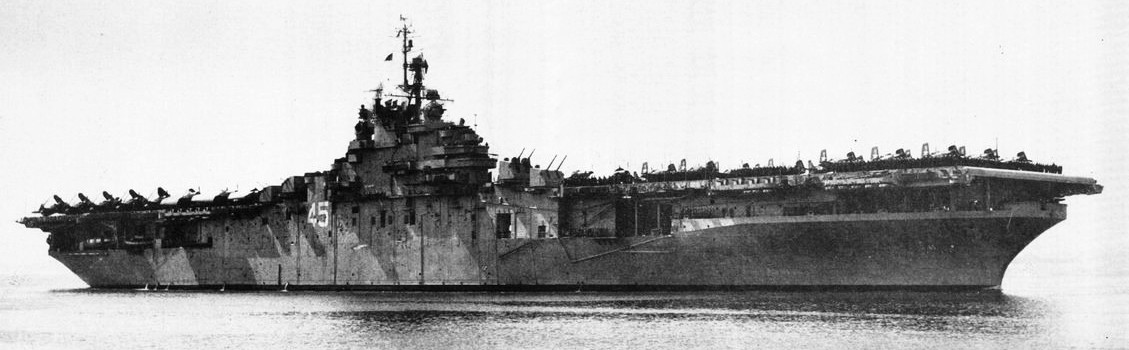
(USN Photo)
U.S. Navy aircraft carrier USS Valley Forge (CV-45) at sea. Valley Forge, with assigned Carrier Air Group 11 (CVAG-11) circumnavigated the globe between 9 October 1947 and 11 June 1948.
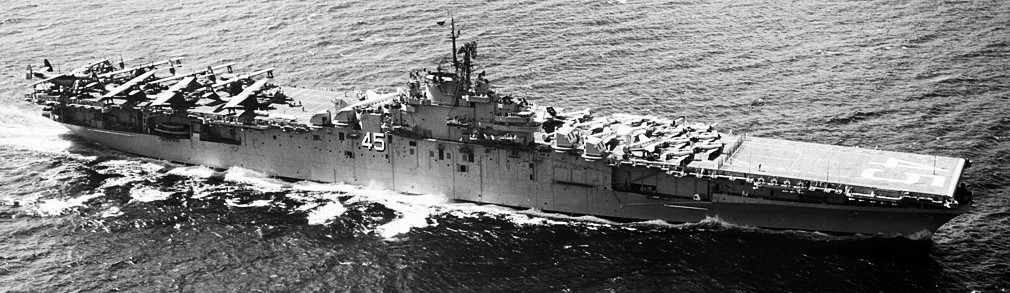
(USN Photo)
USS Valley Forge (CV-45) rounds Diamond Head, Oahu, while en route from Pearl Harbor, Hawaii, to San Diego, California (USA), on 17 May 1949. She was transporting the headquarters of Rear Admiral H.B. Sallada, Commander, Air Force, Pacific Fleet, from Pearl Harbor to San Diego, and carried a deck load of flying boats and land-based planes. Aircraft types visible on her flight deck include one Martin PBM Mariner, six Consolidated PBY-5A/-6 Catalina and two Vought F4U Corsair parked aft. Those visible amidships include one Douglas R4D Skytrain, two Grumman F7F Tigercat, seven Beechcraft JRB/SNB Expeditor and seven North American SNJ Texan.
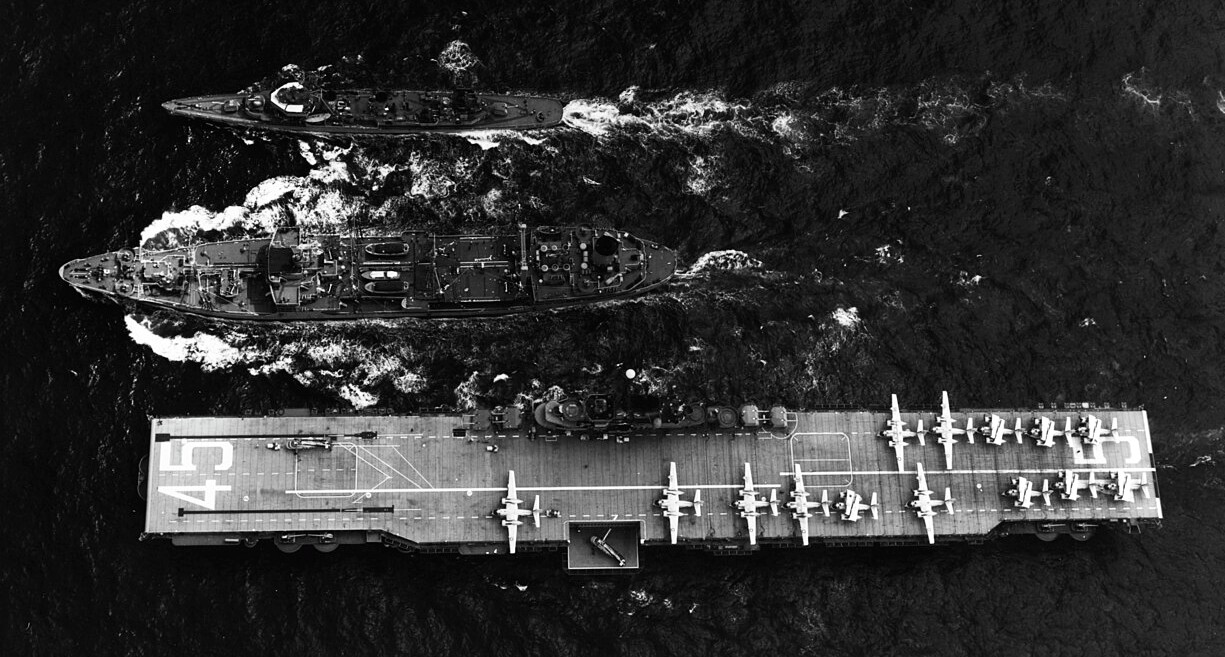
(USN Photo)
U.S. Navy fleet oiler USS Pawcatuck (AO-108) refueling the aircraft carrier USS Valley Forge (CVS-45) and the destroyer USS Eaton (DDE-510) on 18 June 1959. 14 Grumman S2F-1/-2 Tracker of Anti-Submarine Squadron 36 (VS-36) “Gray Wolves” and two Sikorsky HSS-1 Seabat helicopters of Helicopter Anti-Submarine Squadron 7 (HS-7) “Big Dippers” are parked on the carrier’s flight deck and deck-edge elevator.
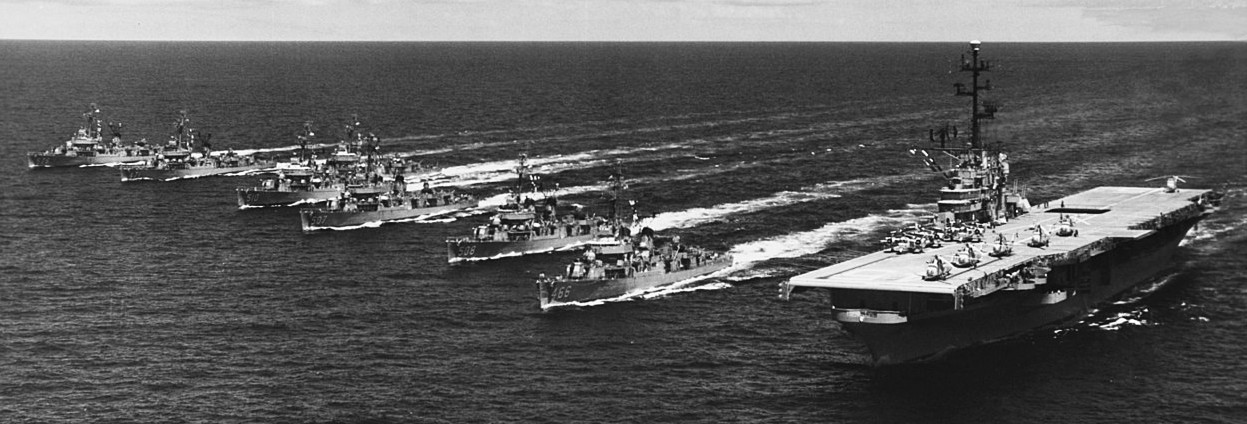
(USN Photo)
USS Valley Forge (CVS-45) steams in formation with other units of Task Force ALFA, during anti-submarine exercises in the Atlantic, in 1959. The other ships present are (from left): USS Murray (DDE-576), USS Beale (DDE-471), USS Bache (DDE-470), USS Eaton (DDE-510), USS Conway (DDE-507), USS Cony (DDE-508) and USS Waller (DDE-466). The photograph was released for publication on 3 August 1959.
(USN Photo)
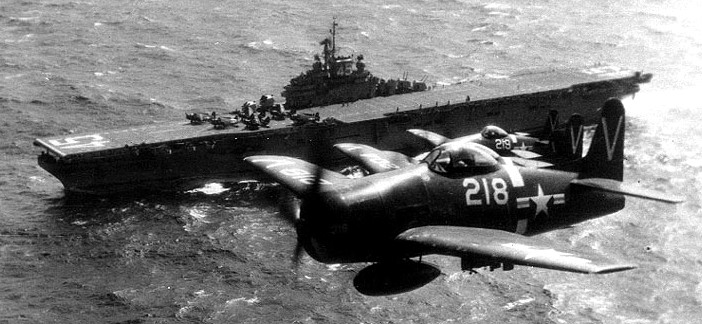
Four Grumman F8F-1 Bearcats of fighter squadron VF-12A Fighting Twelve flying past the aircraft carrier USS Valley Forge (CV-45) on 28 April 1948. The Valley Forge with Carrier Air Group Eleven (CVAG-11) aboard was on a world cruise from 9 October 1947 to 11 June 1948 from San Diego (California, USA) via the Suez and Panama Canals back to San Diego. Grumman TBM Avengers of VA-12A and Curtiss SB2C-5 Helldivers of VA-11A can be seen on deck. VA-12A was re-designated VF-112 on 15 July 1948.
(USN Photo)
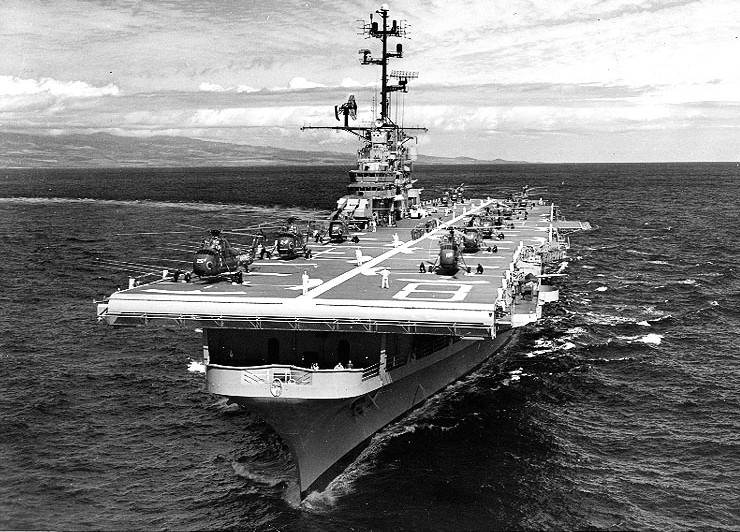
U.S. Navy amphibious assault ship USS Valley Forge (LPH-8) underway in the Pacific Ocean, circa 1962-63, prior to her “FRAM II” overhaul. She has fifteen U.S. Marine Corps Sikorsky UH-34D helicopters spotted in take-off positions on her flight deck.
(USN Photo)
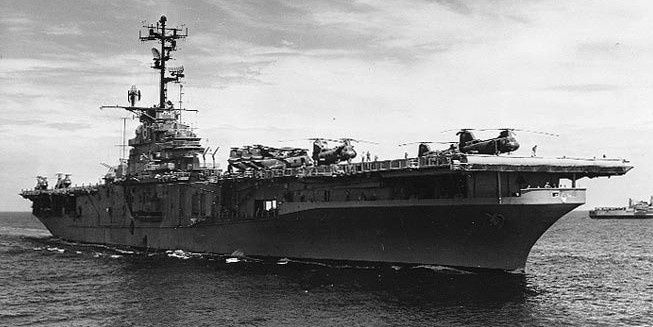
U.S. Navy amphibious assault ship USS Valley Forge (LPH-8) with Marine Corps Boeing-Vertol CH-46 Sea Knight helicopters embarked, probably during operations off South Vietnam, circa 1968.
(USN Photo)
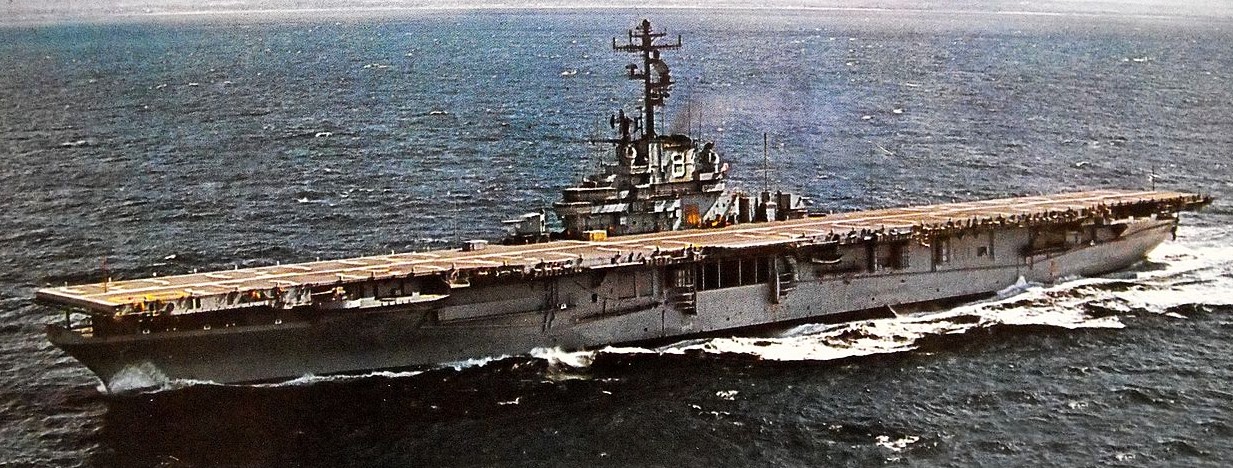
U.S. Navy amphibious assault ship USS Valley Forge (LPH-8) underway, circa 1964.
USS Iwo Jima (CV-46)
Canceled while under construction. Scrapped 1946 in slip at Newport News
USS Philippine Sea (CV-47)
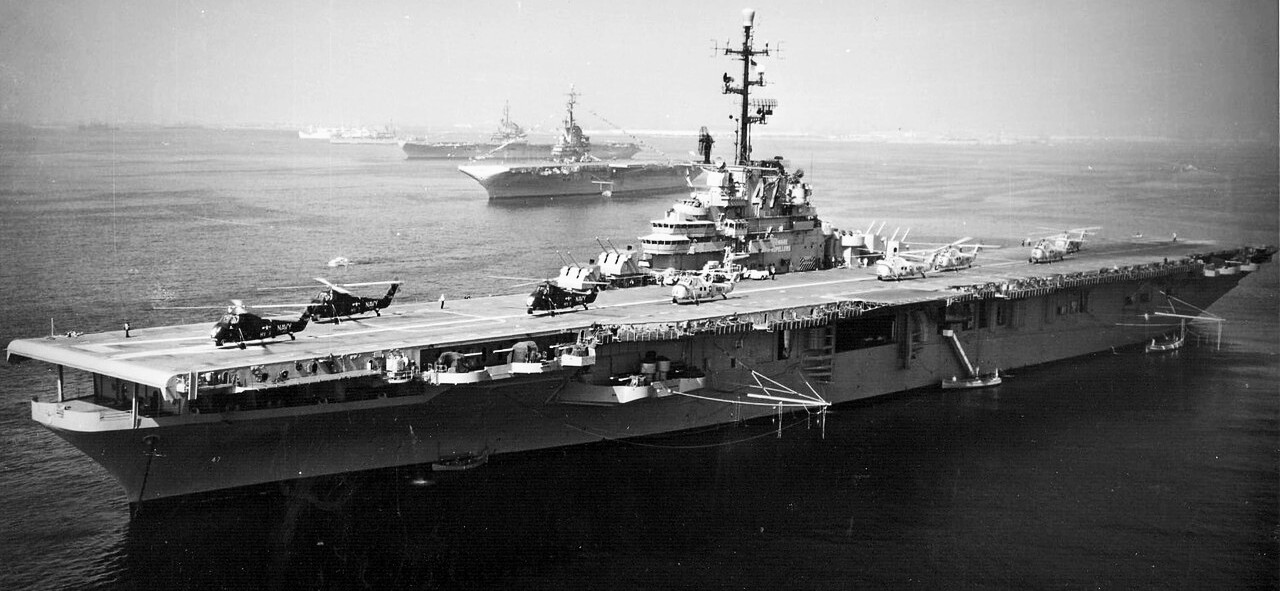
(USN Photo)
USS Philippine Sea (CVS-47) during a Fleet Review at Long Beach, California (USA), on the occasion of Navy Day. The carriers USS Bennington (CVA-20) and USS Shangri-La (CVA-38) are also anchored.
USS Philippine Sea (CV/CVA/CVS-47, AVT-11) was the first ship to be named for the Battle of the Philippine Sea. She was launched on 5 September 1945, after the end of the Second World War, and sponsored by the wife of the Governor of Kentucky. During her career, Philippine Sea served first in the Atlantic Ocean and saw several deployments to the Mediterranean Sea as well as a trip to Antarctica as a part of Operation Highjump. Sent to the Korean Peninsula at the outbreak of the Korean War, she sent aircraft in support of United Nations ground troops, first during the Battle of Pusan Perimeter and then during the Inchon Landings and the Second Battle of Seoul. She subsequently supported UN troops during the surprise Chinese attack and the Chosin Reservoir Campaign. Philippine Sea saw three tours to Korea during the war, receiving nine battle stars for her service. For the remainder of her service, she operated primarily out of San Diego and San Francisco, seeing several deployments to the Far East and being redesignated an anti-submarine warfare carrier. She was decommissioned on 28 December 1958 and sold for scrap in 1970. (Wikipedia)
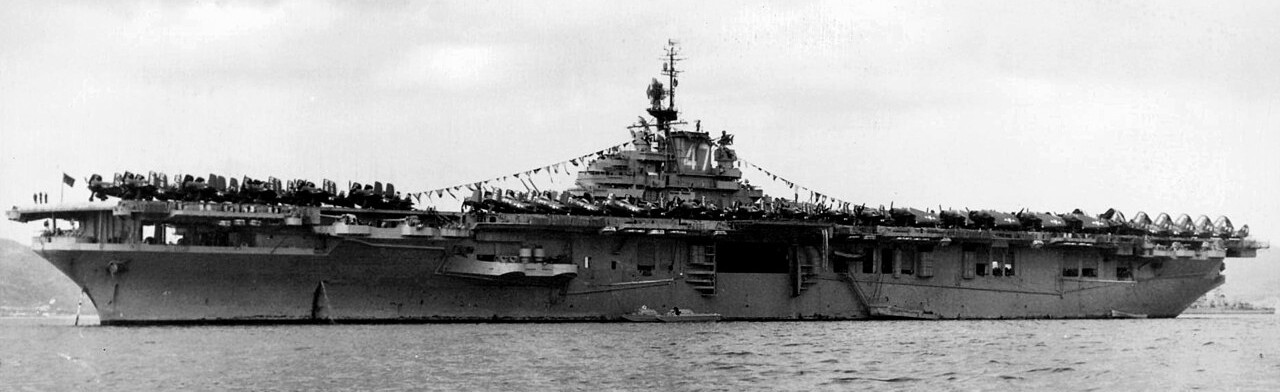
(USN Photo)
USS Philippine Sea (CV-47) at anchor in Argostolion, Greece, dressed out for the Greek Independence Day. Philippine Sea was deployed the Mediterranean Sea from 9 February to 26 June 1948 with Carrier Air Group 9 (CVG-9) embarked.
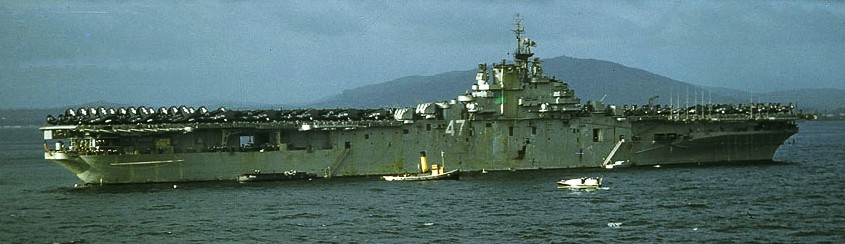
(USN Photo)
USS Philippine Sea (CV-47) at Gibraltar in February or March 1948. Philippine Sea, with assigned Carrier Air Group Nine (CVAG-9), was at the beginning of her deployment to the Mediterranean Sea from 9 February to 26 June 1948.
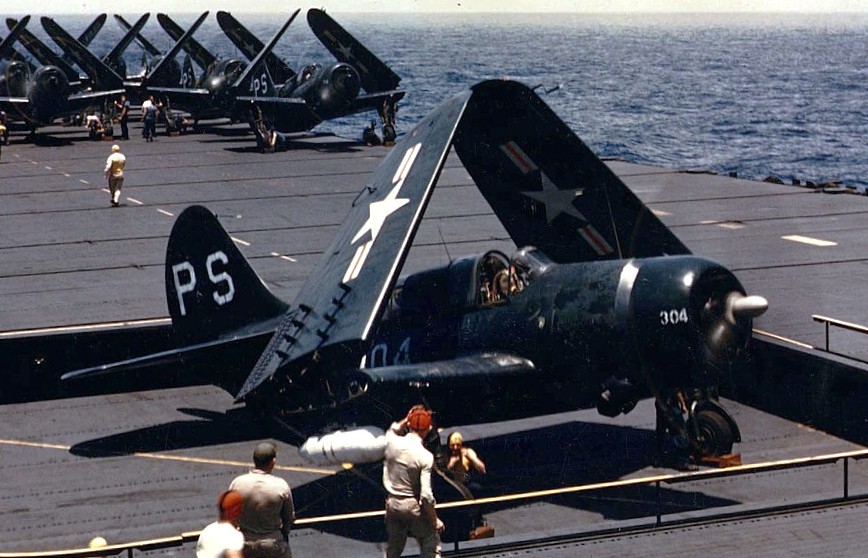
(USN Photo)
U.S. Navy Curtiss SB2C-5 Helldiver of attack squadron VA-9A “Tough Kitties” is lifted to the flight deck of the aircraft carrier USS Philippine Sea (CV-47) in preparation for launch from the carrier. Other squadron aircraft are visible aft, in 1948. Redesignated from bombing squadron VB-20 in November 1946, VA-9A completed one cruise to the Mediterranean aboard the Philippine Sea during the period 9 February to 26 June 1948. VA-9A was redesignated VA-94 in August 1948 and disestablished in November 1949.
(USN Photo)
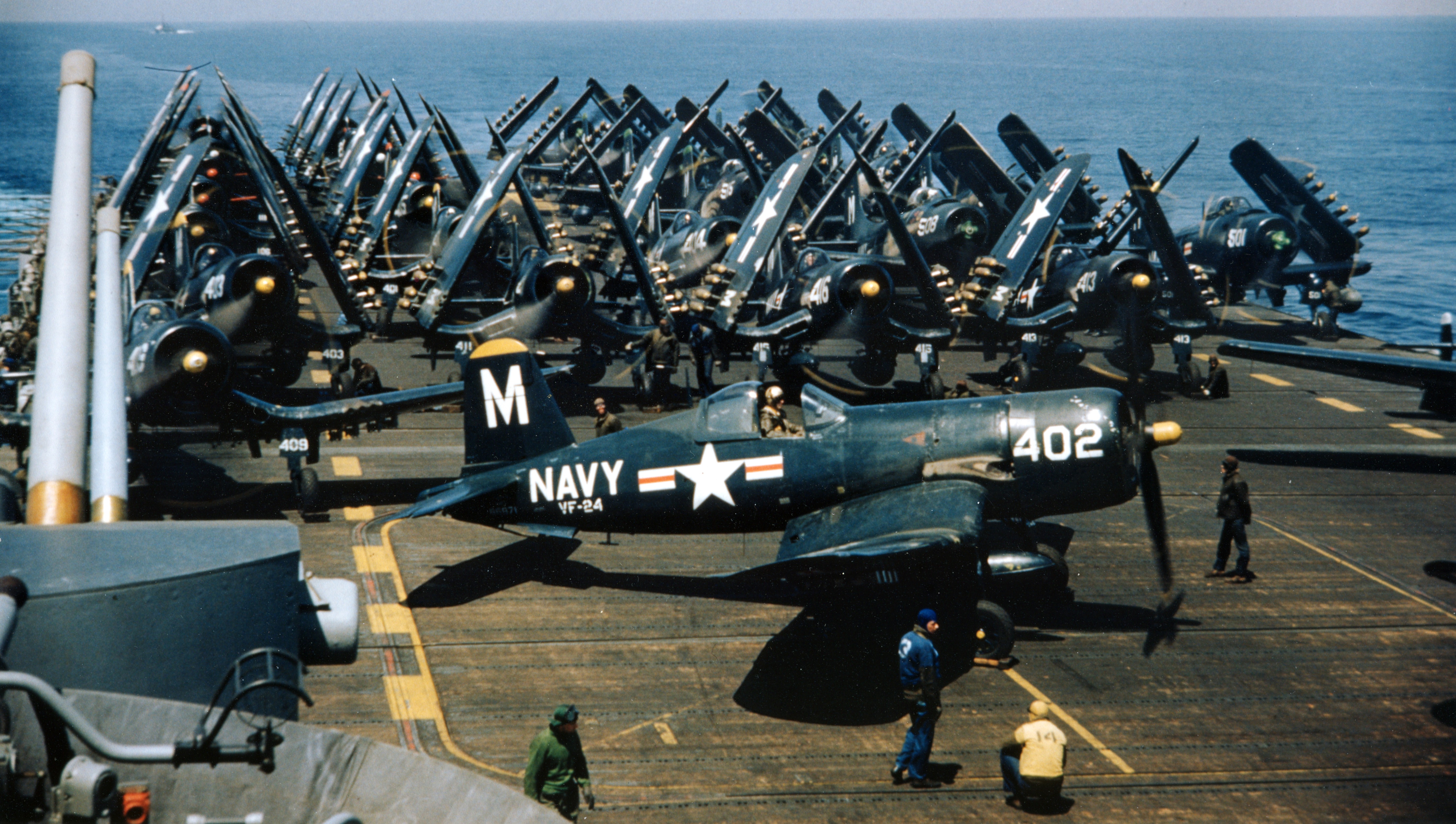
USS Philippine Sea (CV-47) with aircraft of Carrier Air Group 2 (CVG-2) armed for a strike in Korea. In the foreground is a Vought F4U-4 Corsair (BuNo 96871) of Fighter Squadron 24 (VF-24) “Corsairs”. VF-24 was assigned to CVG-2 aboard the Philippine Sea for a deployment to the Western Pacific and Korea from 1 April to 9 June 1951.
(USN Photo)
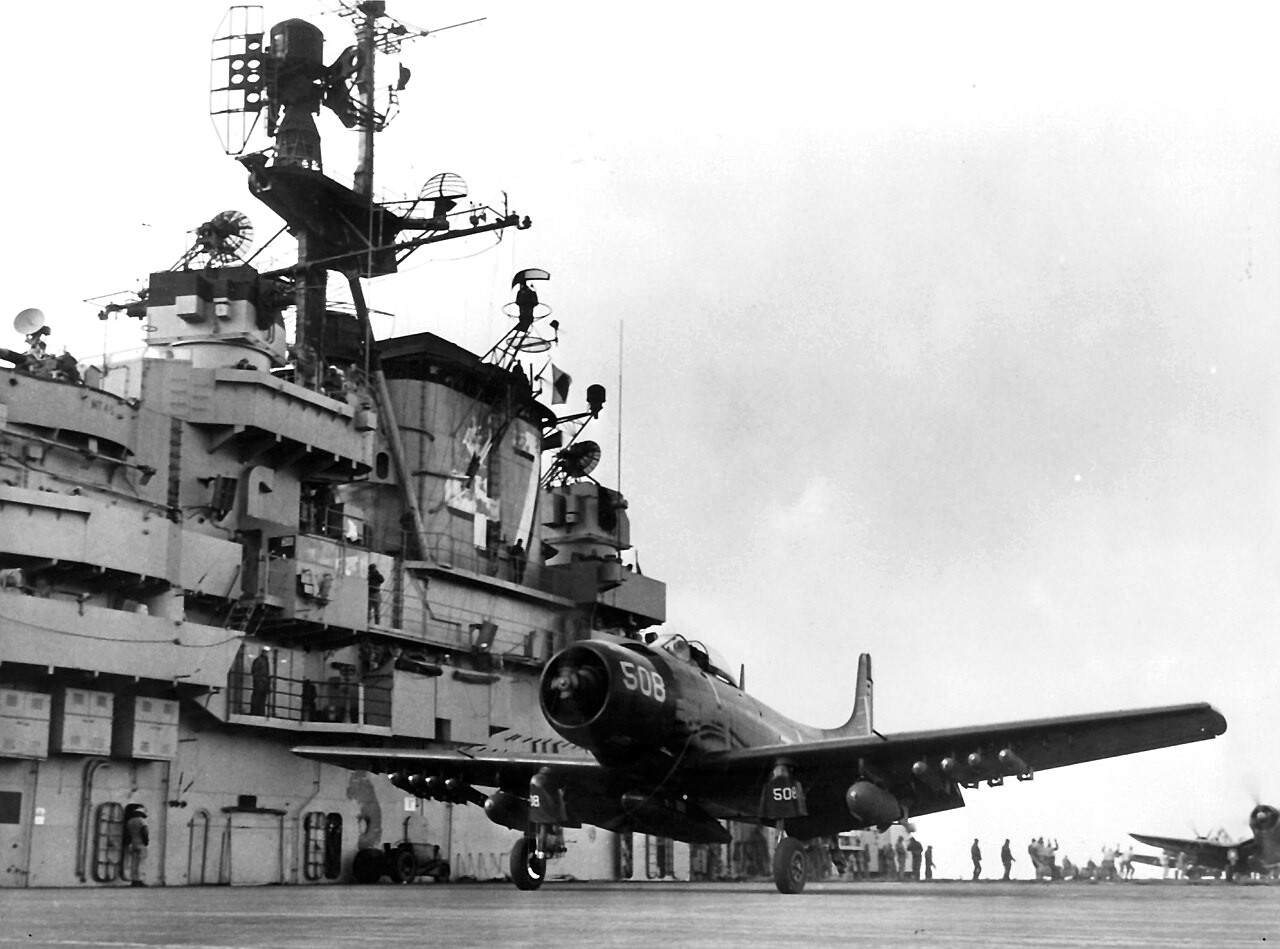
U.S. Navy Douglas AD-4 Skyraider of Attack Squadron 115 (VA-115) “Arabs” takes off from the aircraft carrier USS Philippine Sea (CV-47) on 25 November 1950. VA-115 was assigned to Carrier Air Group 11 (CVG-11) aboard the Philippine Sea for a deployment to Korea from 5 July 1950 to 26 March 1951. Note the plane’s load of two large and eight small bombs. Also note details of the ship’s island and very weathered “47” painted on her stack.
(USN Photo)
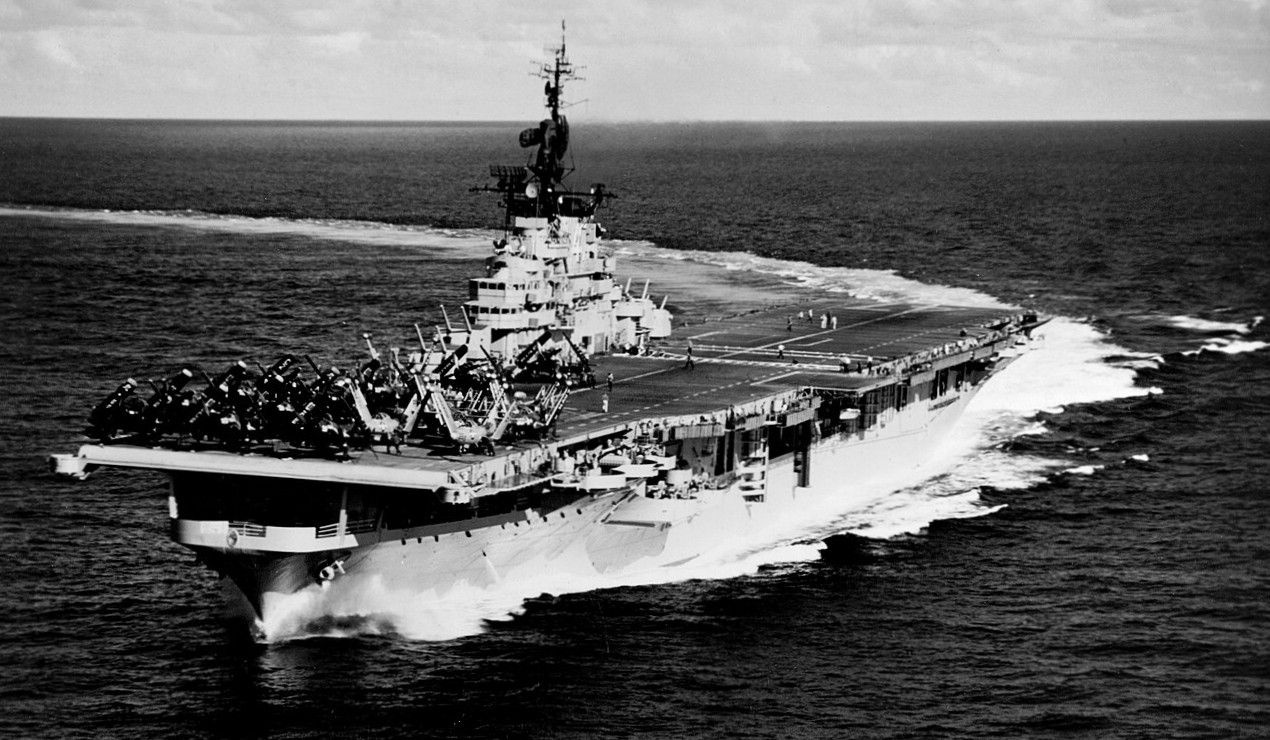
USS Philippine Sea (CVA-47) makes a sharp turn to starboard, while steaming in the Western Pacific with the U.S. Seventh Fleet, 9 July 1955. Philippine Sea, with assigned Air Task Group 2 (ATG-2), was deployed to the Western Pacific from 1 April to 23 November 1955.
USS Saipan (CVL-48)
(USN Photo)
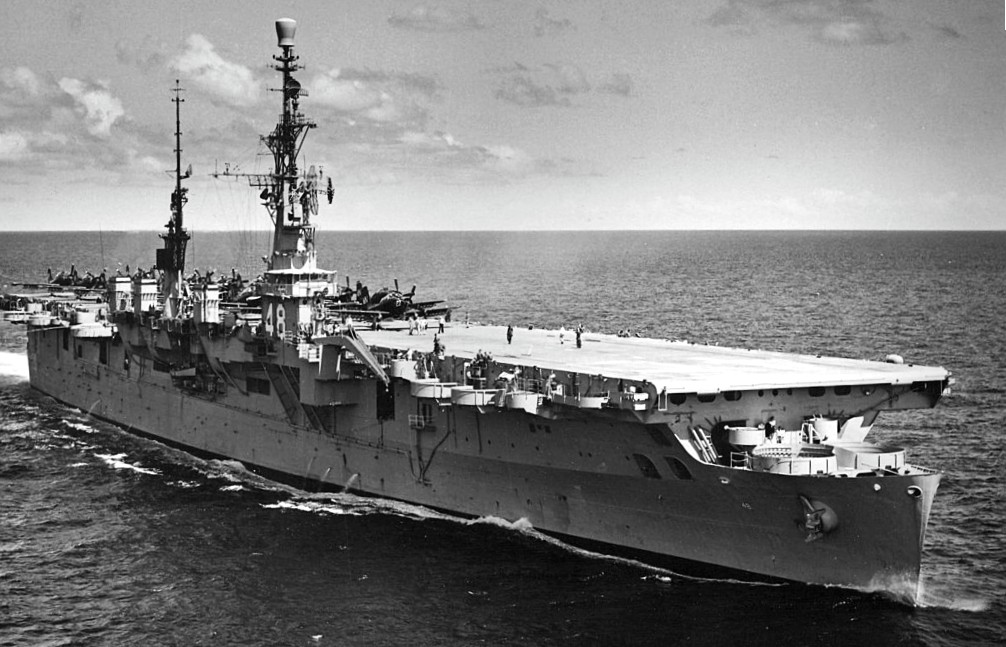
USS Saipan (CVL-48) underway, circa in the mid-1950s. On deck are Douglas AD-5 Skyraiders of Marine Attack Squadron VMA-333 “Fighting Shamrocks”
The first USS Saipan (CVL-48/AVT-6/CC-3/AGMR-2) was a light aircraft carrier of the United States Navy, she was the lead ship of her class. She was later selected for conversion into a command ship in 1963–1964, but instead was converted to the Major Communications Relay Ship Arlington (AGMR-2) in 1965. Saipan was laid down on 10 July 1944, by the New York Shipbuilding Corporation, Camden, New Jersey, launched on 8 July 1945, sponsored by Mrs. John W. McCormack, and commissioned on 14 July 1946, with Captain John G. Crommelin in command. On 21 August 1969, she arrived for the first time at her nominal homeport, Long Beach, and four days later shifted to San Diego, to begin inactivation. She was decommissioned on 14 January 1970, and berthed with the Inactive Fleet at San Diego. The ship was stricken from the Navy List on 15 August 1975, and was sold by the Defense Reutilization and Marketing Service (DRMS) for scrapping on 1 June 1976. (Wikipedia)
(USN Photo)
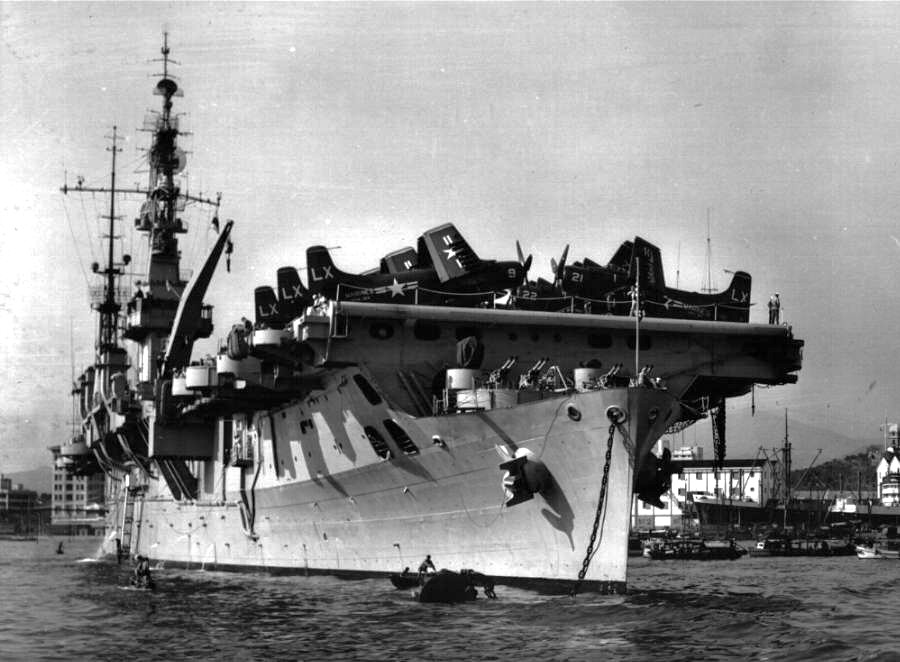
USS Saipan (CVL-48) at anchor at the British Crown Colony Hong Kong in February 1954. Douglas AD Skyraiders of Marine Attack Squadron 324 (VMA-324) Vagabonds are parked on the bow.
(USN Photo)
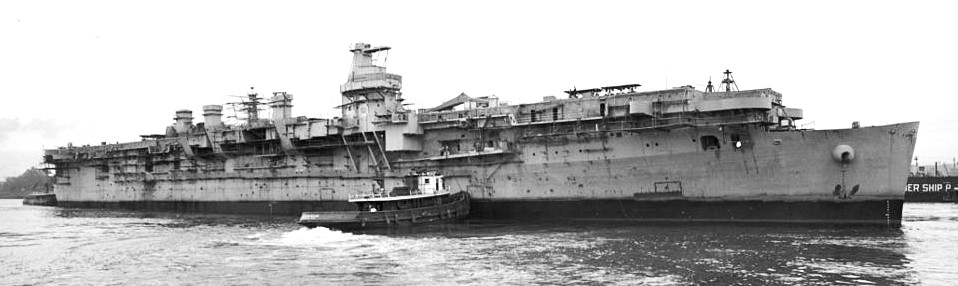
USS Saipan (CVL-48) being reactivated. Saipan was decommissioned at Bayonne, New Jersey (USA), on 3 October 1957. She remained in the Atlantic Reserve Fleet until March 1963. She then entered the Alabama Drydock and Shipbuilding Company yard at Mobile, Alabama, to begin conversion to a command ship. Very briefly designated CC-3, she was instead reclassified as Major Communications Relay Ship AGMR-2 on 1 September 1964 while still undergoing conversion. On 8 April 1965, she was renamed Arlington, in honour of Arlington County, Virginia, the site of one of the U.S. Navy’s first radio stations; and, on 12 August 1966, she completed her conversion. As USS Arlington (AGMR-2), she was recommissioned on 27 August 1966.
(USN Photo)
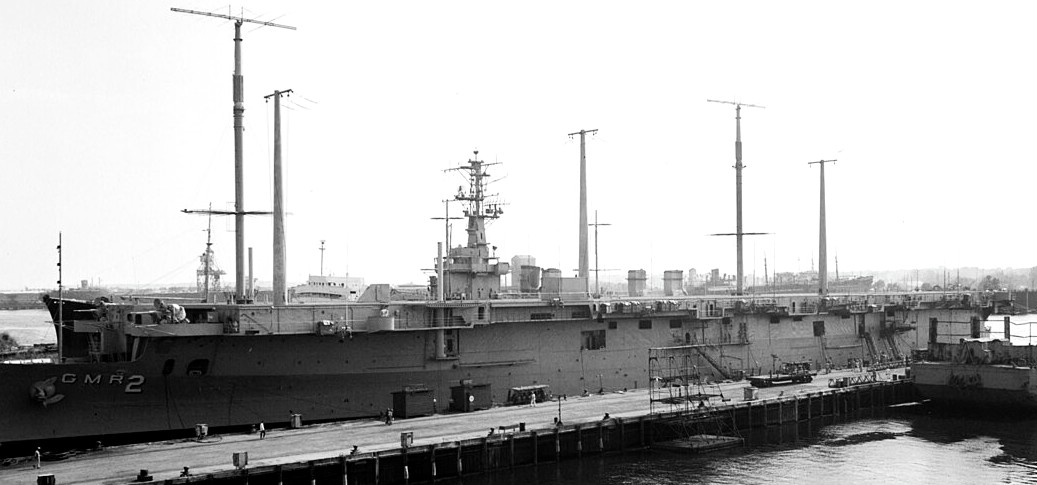
U.S. Navy major communications relay ship USS Arlington (AGMR-2), c1966.
(USN Photo)
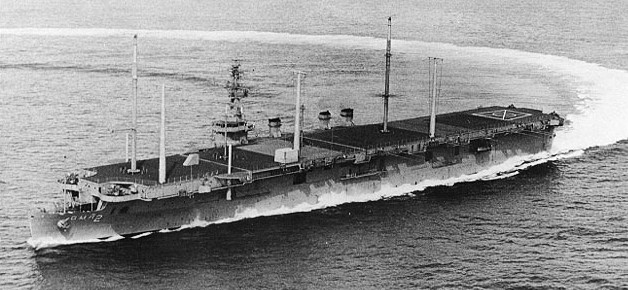
U.S. Navy communications relay ship USS Arlington (AGMR-2) underway, circa 1967.
USS Wright (CVL-49/AVT-7)
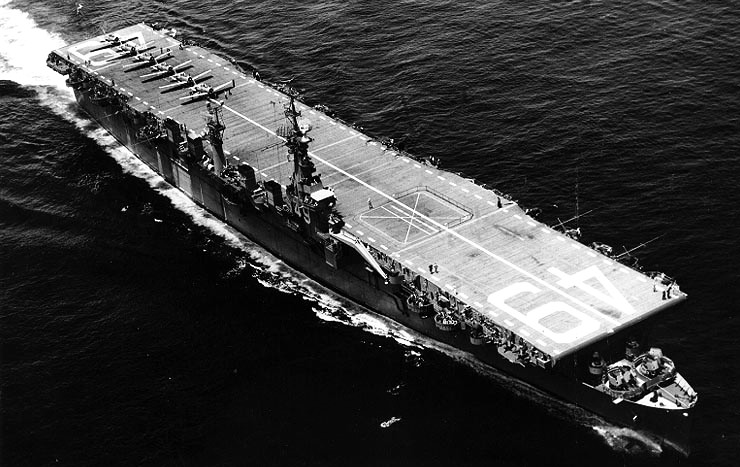
(USN Photo)
USS Wright (CVL-49) operating on training duty, with six North American SNJ Texan aircraft on deck lined up for takeoff, circa the later 1940s or early 1950s.
USS Wright (CVL-49/AVT-7) was a Saipan-class light aircraft carrier of the U.S. Navy, later converted to the command ship CC-2. It is the second ship named “Wright”. The first Wright (AV-1) was named for Orville Wright; the second honored both Wright brothers: Orville and Wilbur. Wright was laid down on 21 August 1944, at Camden, New Jersey, by the New York Shipbuilding Corporation, launched on 1 September 1945, sponsored by Mrs. Harold S. Miller, a niece of the Wright brothers, and commissioned at the Philadelphia Naval Shipyard on 9 February 1947. Ultimately decommissioned on 27 May 1970, Wright was placed in reserve at the Philadelphia Naval Shipyard. The ship was stricken from the Navy List on 1 December 1977, and sold by the Defense Reutilization and Marketing Service (DRMS) for scrapping on 1 August 1980. (Wikipedia)
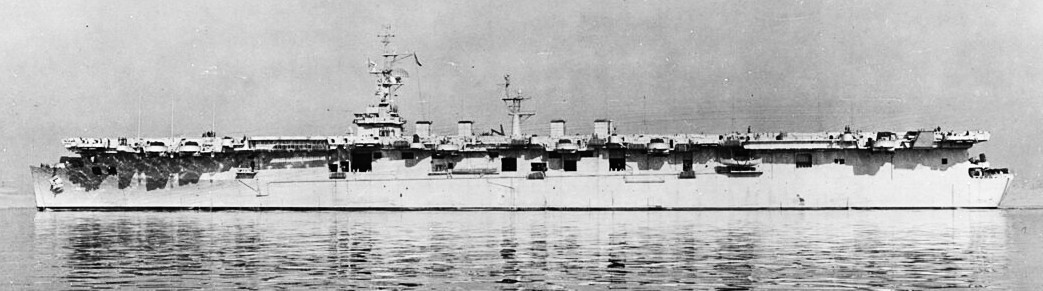
(USN Photo)
USS Wright (CVL-49), 1 May 1947.
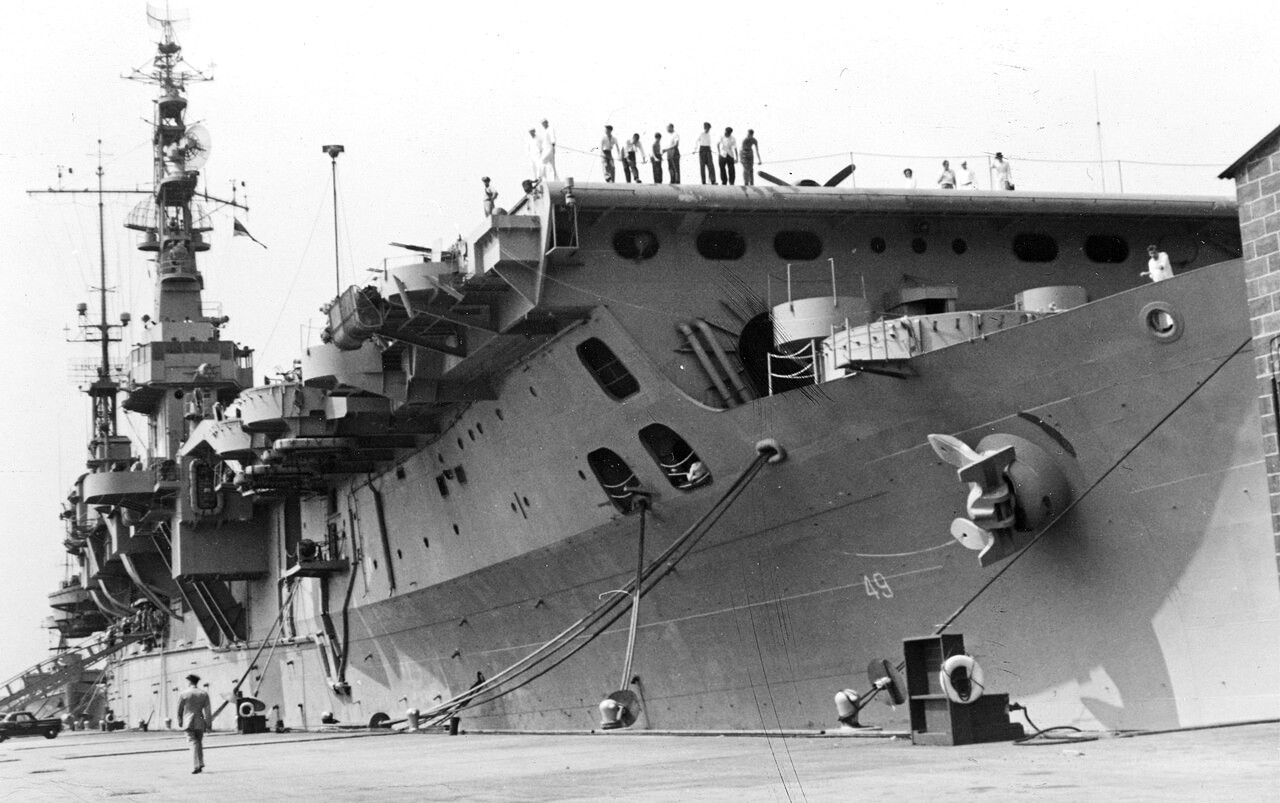
(Harley Flowers Photo)
USS Wright (CVL- 49), 1949.
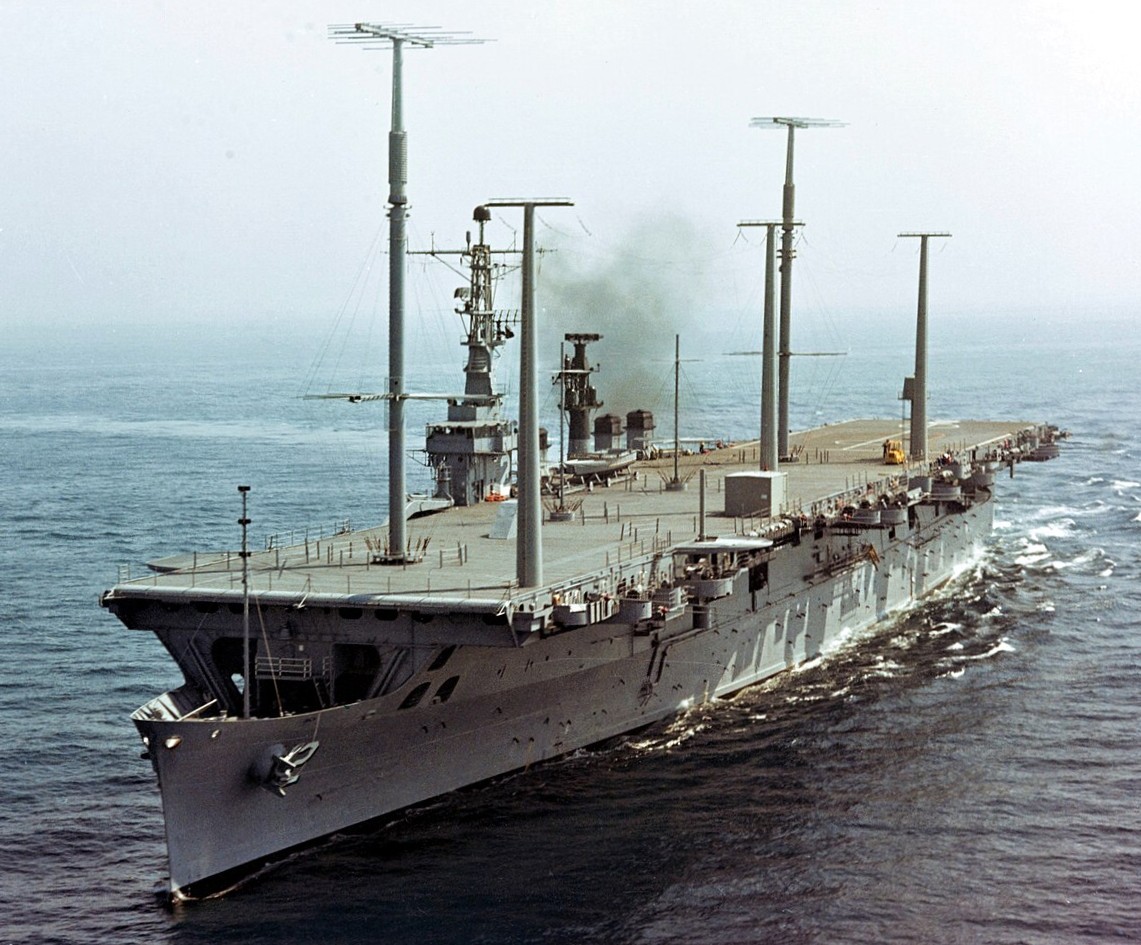
(USN Photo)
U.S. Navy command ship USS Wright (CC-2) underway off the southern California coast, 25 September 1963, shortly after conversion to a command ship. Note her extensive array of communications antennas and their associated masts.