
USN pre-dreadnought battleships
Indiana class: USS Indiana (BB-1), USS Massachusetts (BB-2), USS Oregon (BB-3), USS Iowa (BB-4)
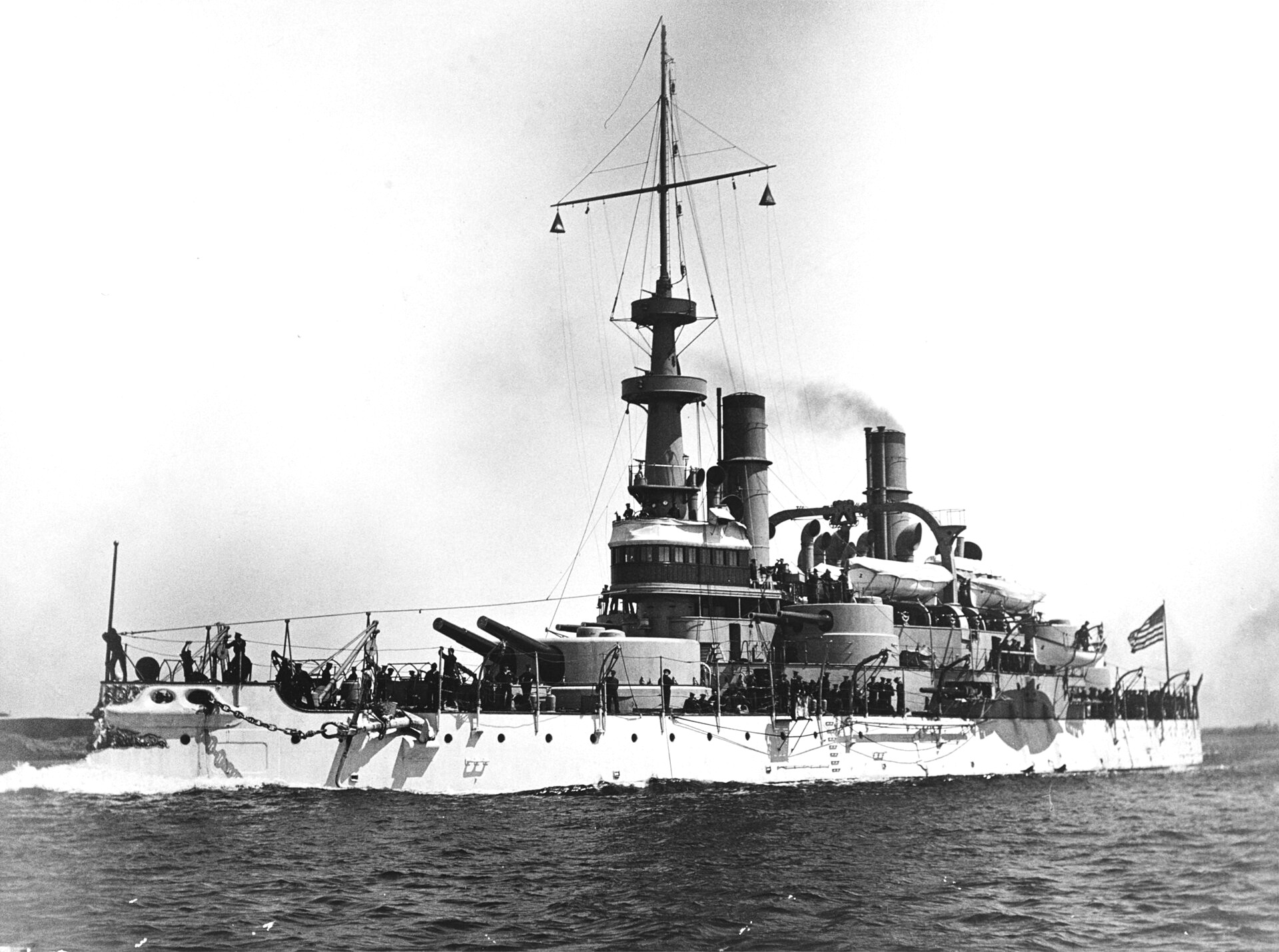
(Naval History and Heritage Command Photo, NH 73975)
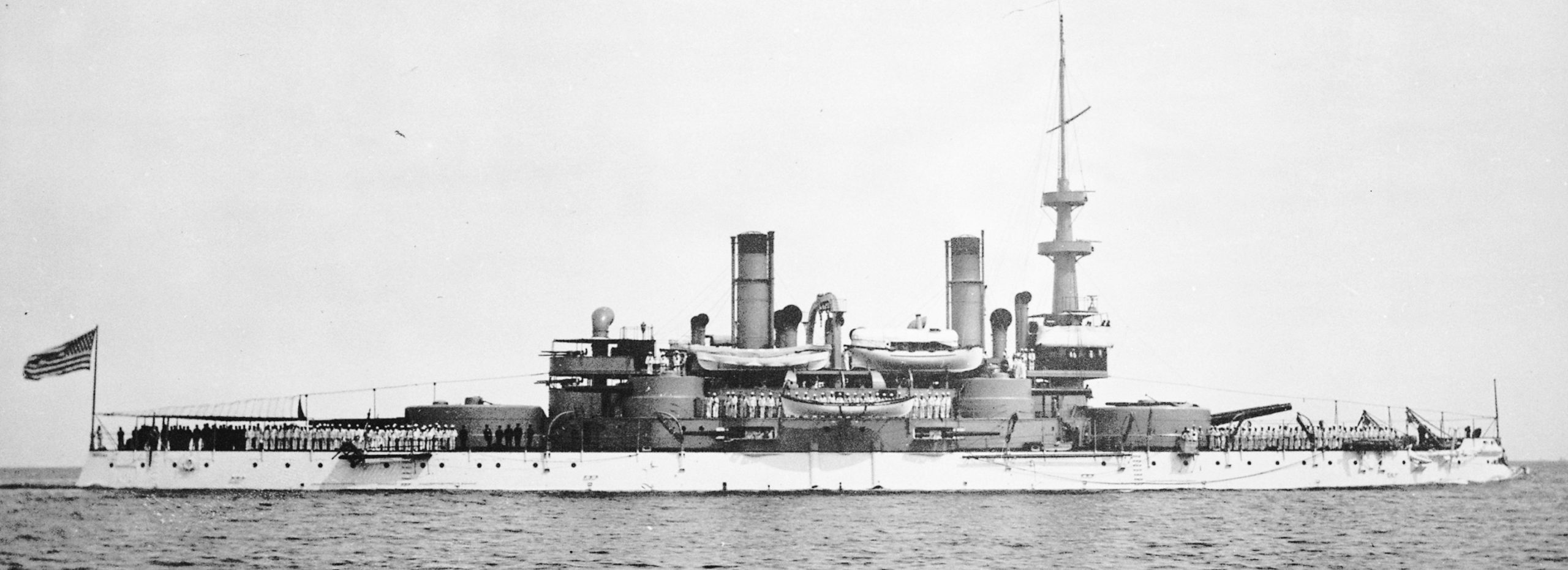
USS Indiana (BB-1), c1895-1900.
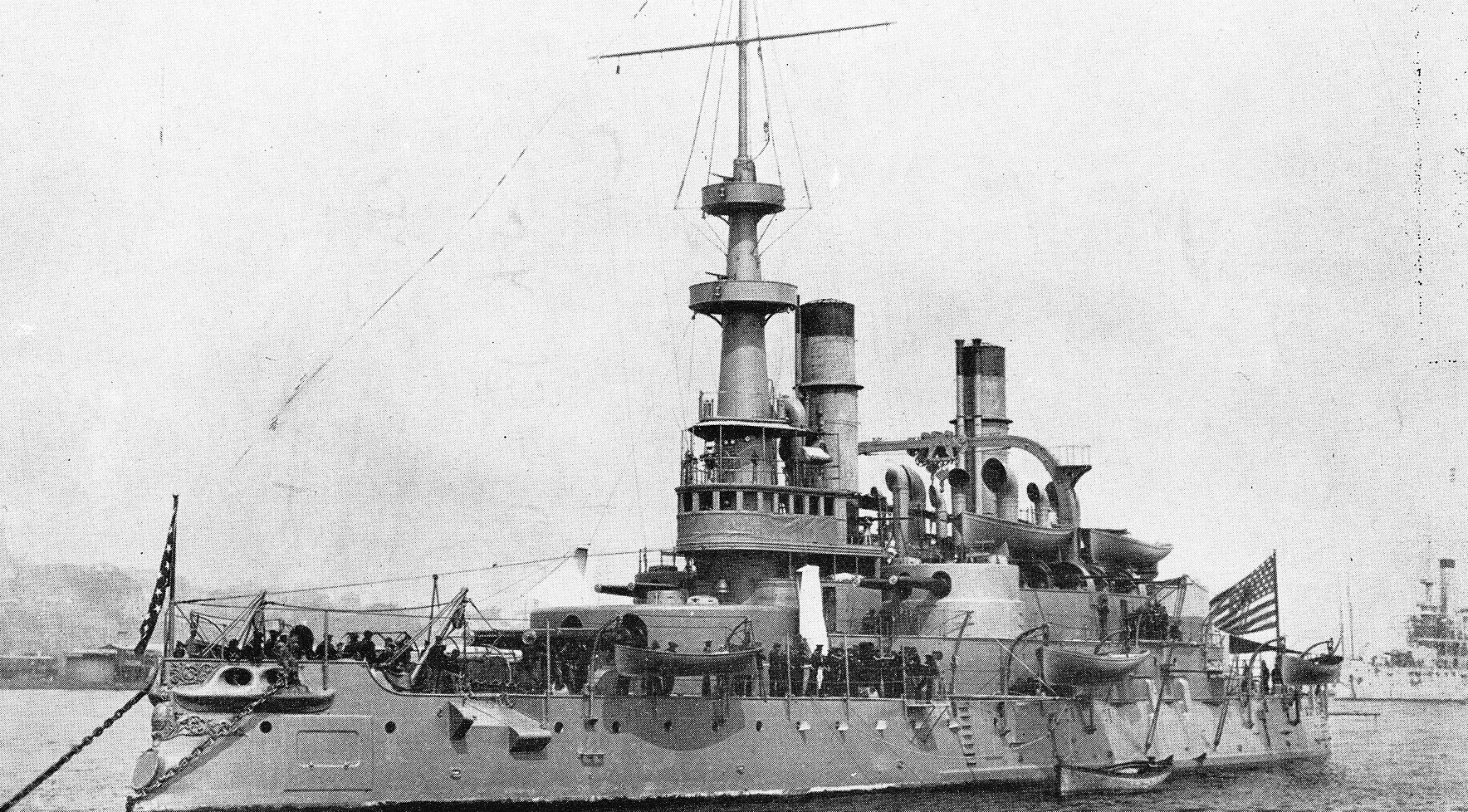
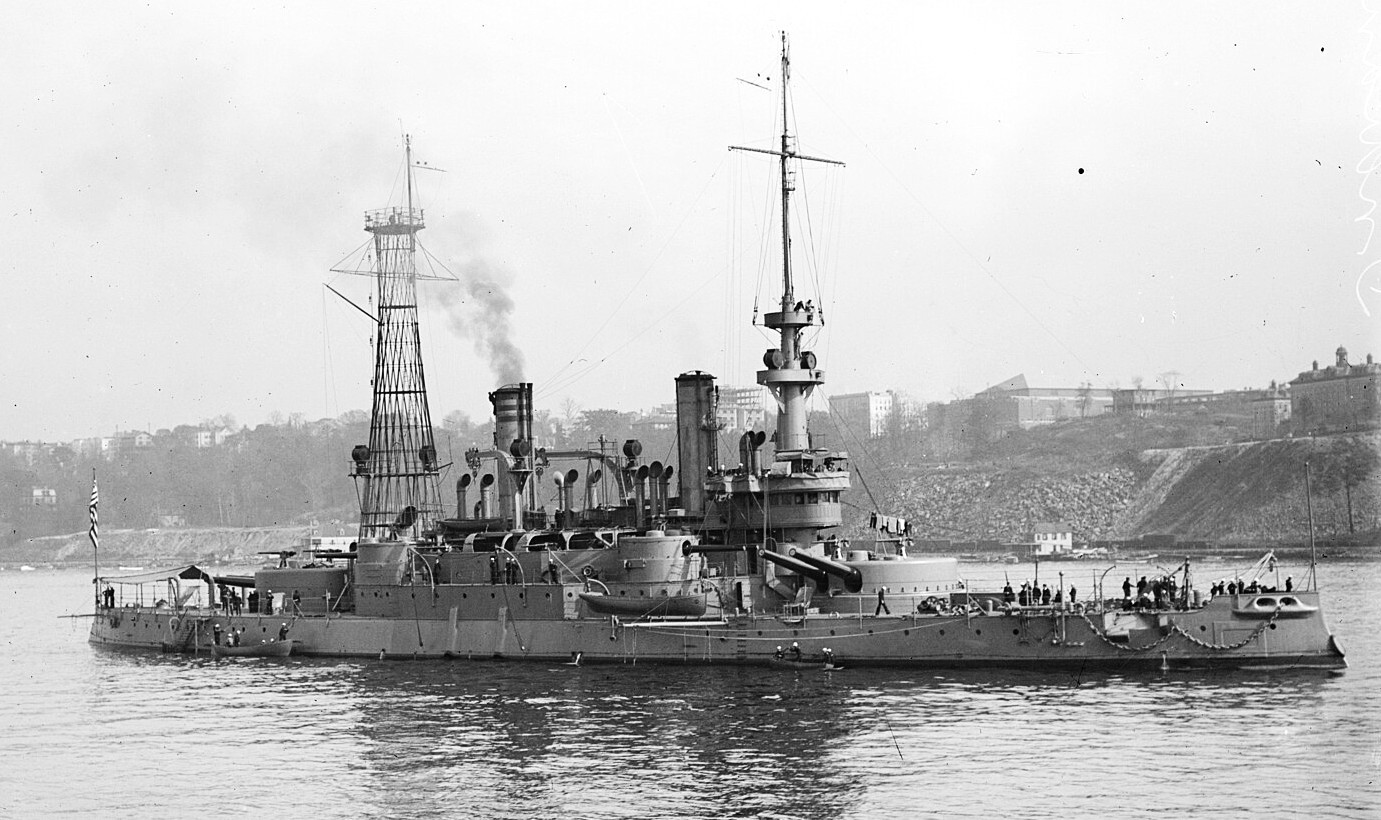
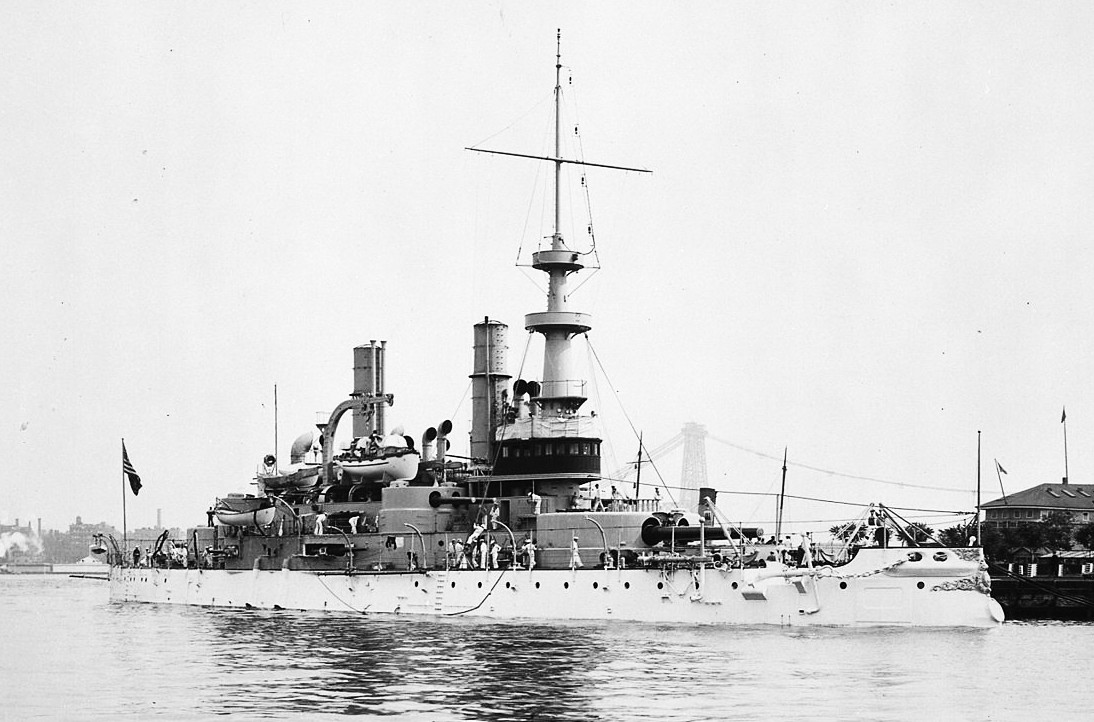
USS Indiana was the lead ship of her class and the first battleship in the United States Navy comparable to foreign battleships of the time. Authorized in 1890 and commissioned five years later, she was a small battleship, though with heavy armor and ordnance. The ship also pioneered the use of an intermediate battery. She was designed for coastal defense and as a result, her decks were not safe from high waves on the open ocean.
Indiana served in the Spanish–American War (1898) as part of the North Atlantic Squadron. She took part in both the blockade of Santiago de Cuba and the Battle of Santiago de Cuba, which occurred when the Spanish fleet attempted to break through the blockade. Although unable to join the chase of the escaping Spanish cruisers, she was partly responsible for the destruction of the Spanish destroyers Plutón and Furor. After the war, she quickly became obsolete—despite several modernizations—and spent most of her time in commission as a training ship or in the reserve fleet, with her last commission during the First World War as a training ship for gun crews. She was decommissioned for the third and final time in January 1919 and was shortly after reclassified Coast Battleship Number 1 so that the name Indiana could be reused. She was sunk in shallow water as a target in aerial bombing tests in 1920, and her hull was sold for scrap in 1924.
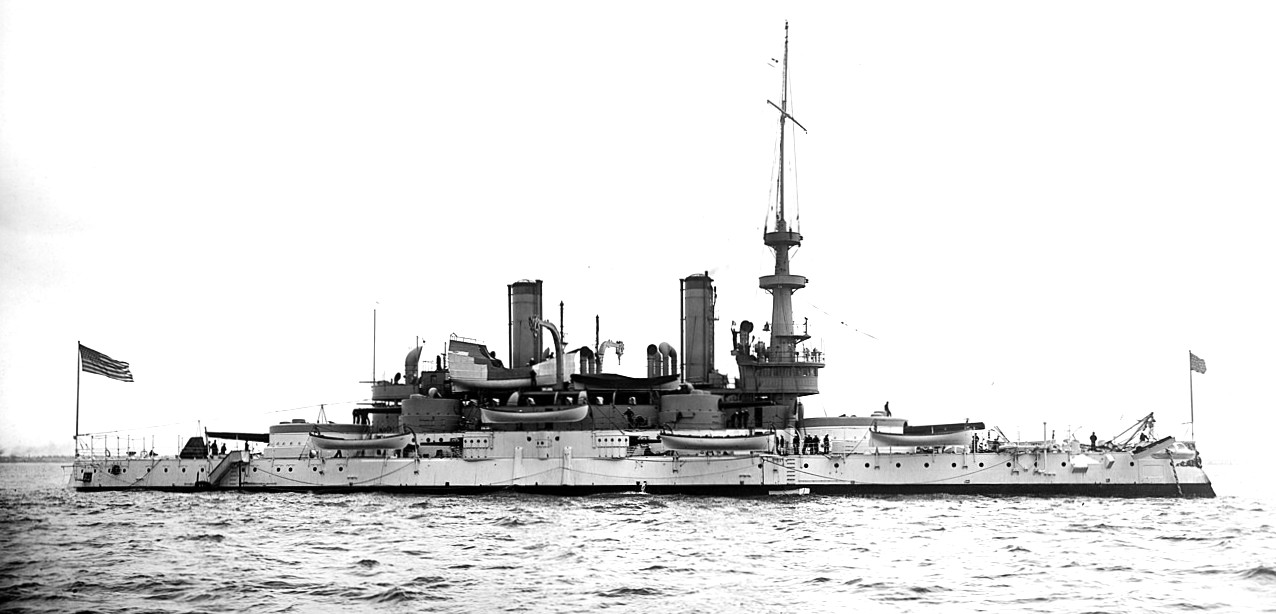
(USN Photo)
(USS Indiana (BB-1).
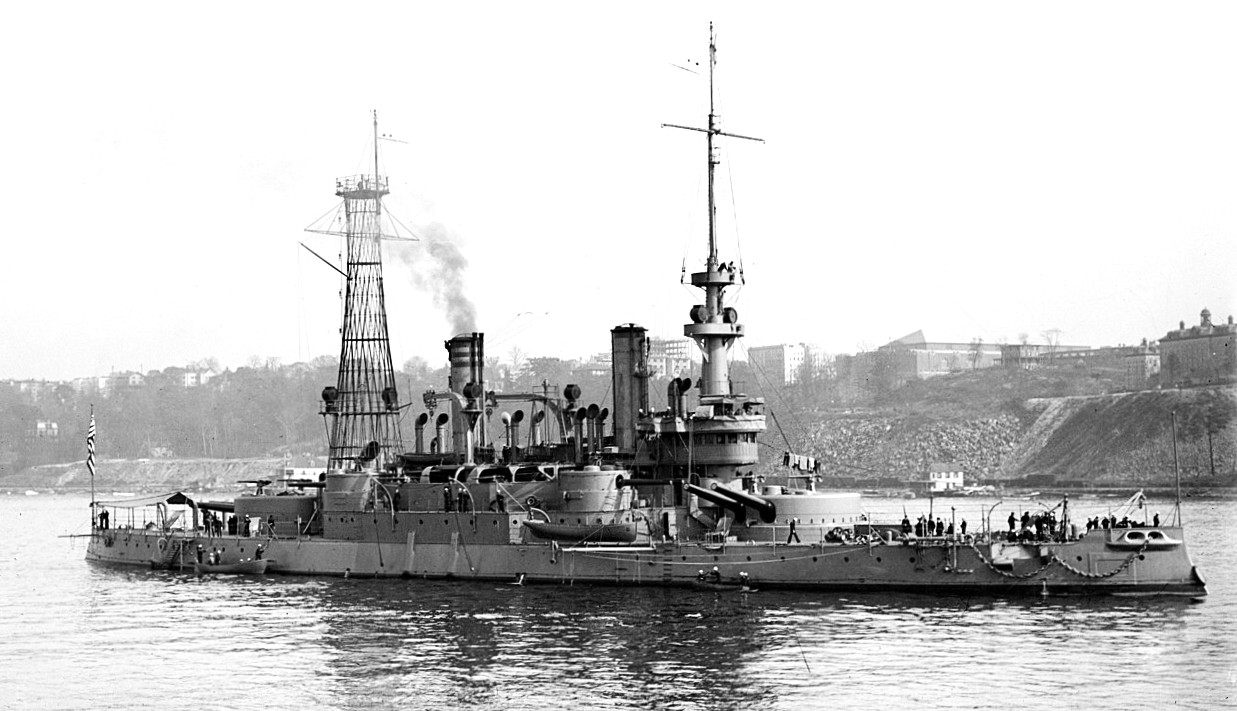
(USN Photo)
USS Indiana (BB-1), c1910.
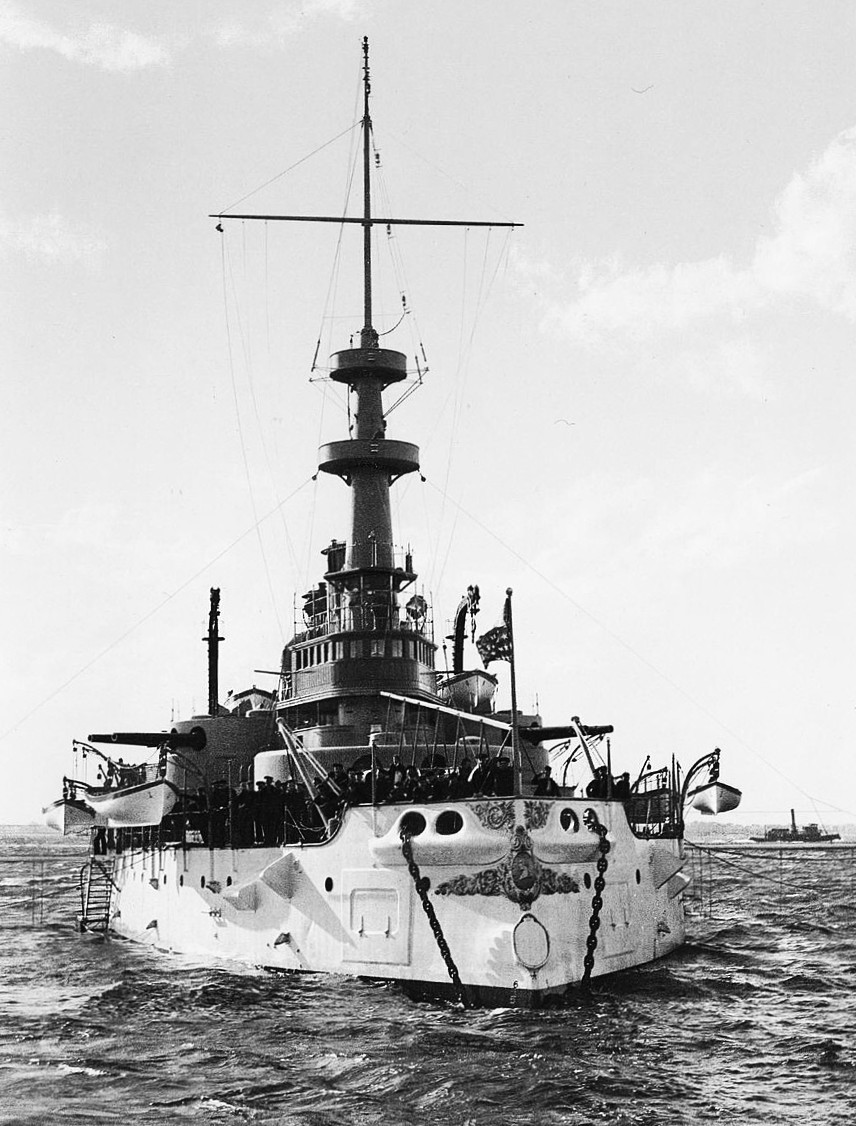
(Detroit Photographic Company Photo)
USS Indiana (BB-1), c1910.
(USN Photo)
USS Indiana (BB-1), c1910.
(USN Photo)
USS Indiana (BB-1), c1900.
(Library of Congress Photo)
USS Indiana (BB-1), c1900.
(U.S. National Archives Photo)
USS Massachusetts (BB-2).
USS Massachusetts was an Indiana-class, pre-dreadnought battleship and the second United States Navy ship comparable to foreign battleships of its time.[5] Authorized in 1890, and commissioned six years later, she was a small battleship, though with heavy armor and ordnance. The ship class also pioneered the use of an intermediate battery. She was designed for coastal defense and as a result, her decks were not safe from high waves on the open ocean.
Massachusetts served in the Spanish–American War as part of the Flying Squadron and took part in the blockades of Cienfuegos and Santiago de Cuba. She missed the decisive Battle of Santiago de Cuba after steaming to Guantánamo Bay the night before to resupply coal. After the war she served with the North Atlantic Squadron, performing training maneuvers and gunnery practice. During this period she suffered an explosion in an 8-inch (203 mm) gun turret, killing nine, and ran aground twice, requiring several months of repair both times. She was decommissioned in 1906, for modernization.
Although considered obsolete in 1910, the battleship was recommissioned and used for annual cruises for midshipmen during the summers, and otherwise laid up in the reserve fleet, until her decommissioning in 1914. In 1917, she was recommissioned to serve as a training ship for gun crews during World War I. She was decommissioned for the final time in March 1919, under the name Coast Battleship Number 2 in anticipation that her name could be reused for USS Massachusetts (BB-54) (laid down April 1921). In 1921, she was scuttled in shallow water in the Gulf of Mexico, off Pensacola, Florida, and used as a target for experimental artillery. The wreck was never scrapped, and in 1956, it was declared the property of the State of Florida. Since 1993, the wreck has been a Florida Underwater Archaeological Preserve and it is included in the National Register of Historic Places. It serves as an artificial reef and diving spot. (Wikipedia)
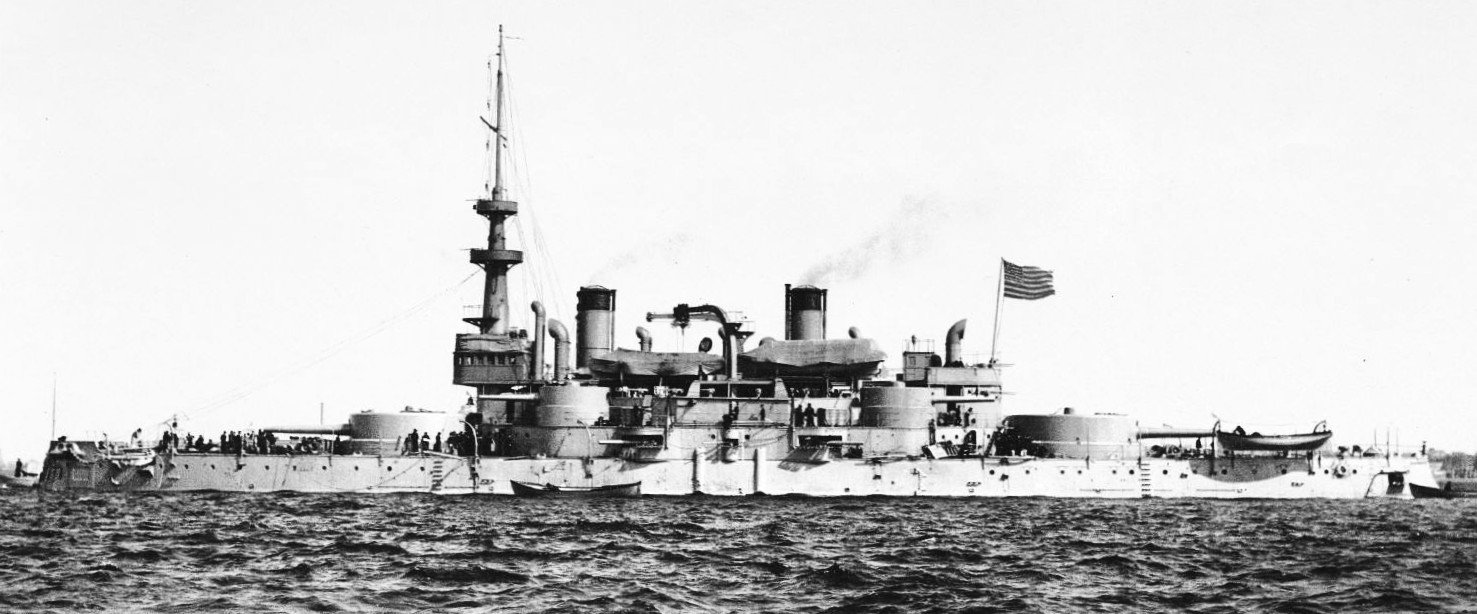
(Detroit Photographic Company Photo)
USS Massachusetts (BB-2), c1896-1901.
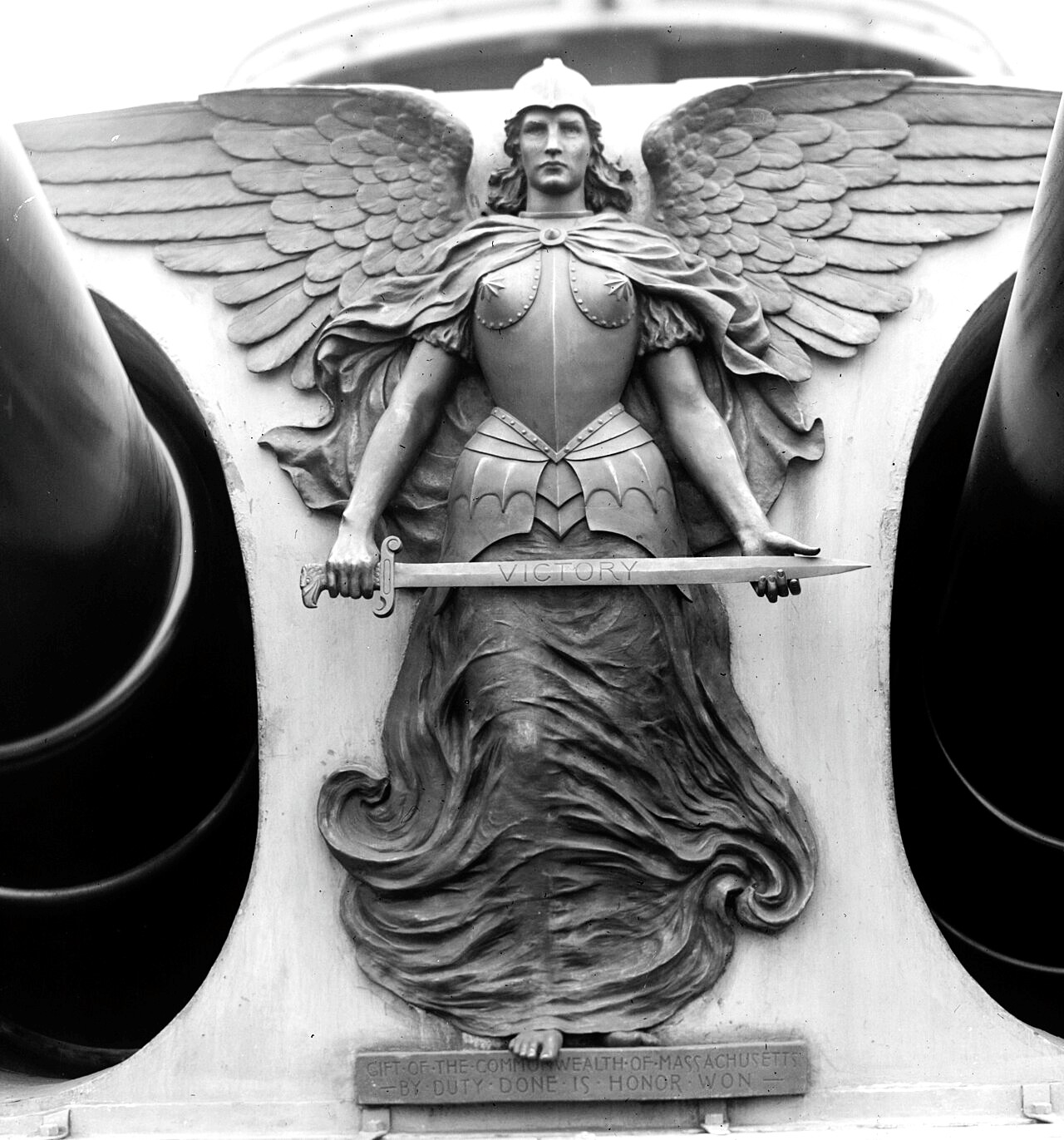
(Detroit Photographic Company Photo)
USS Massachusetts (BB-2), figure of Victory sculpture by Bela Lyon Pratt, c1896-1901.
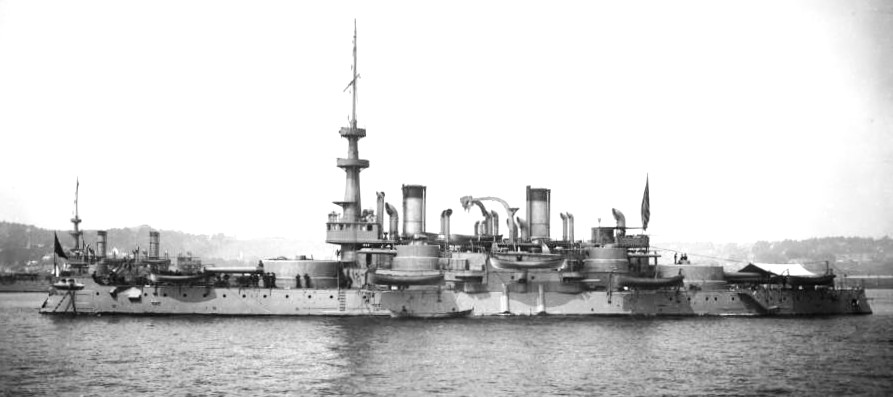
(George Eastman House Photo)
USS Massachusetts (BB-2), 1898.
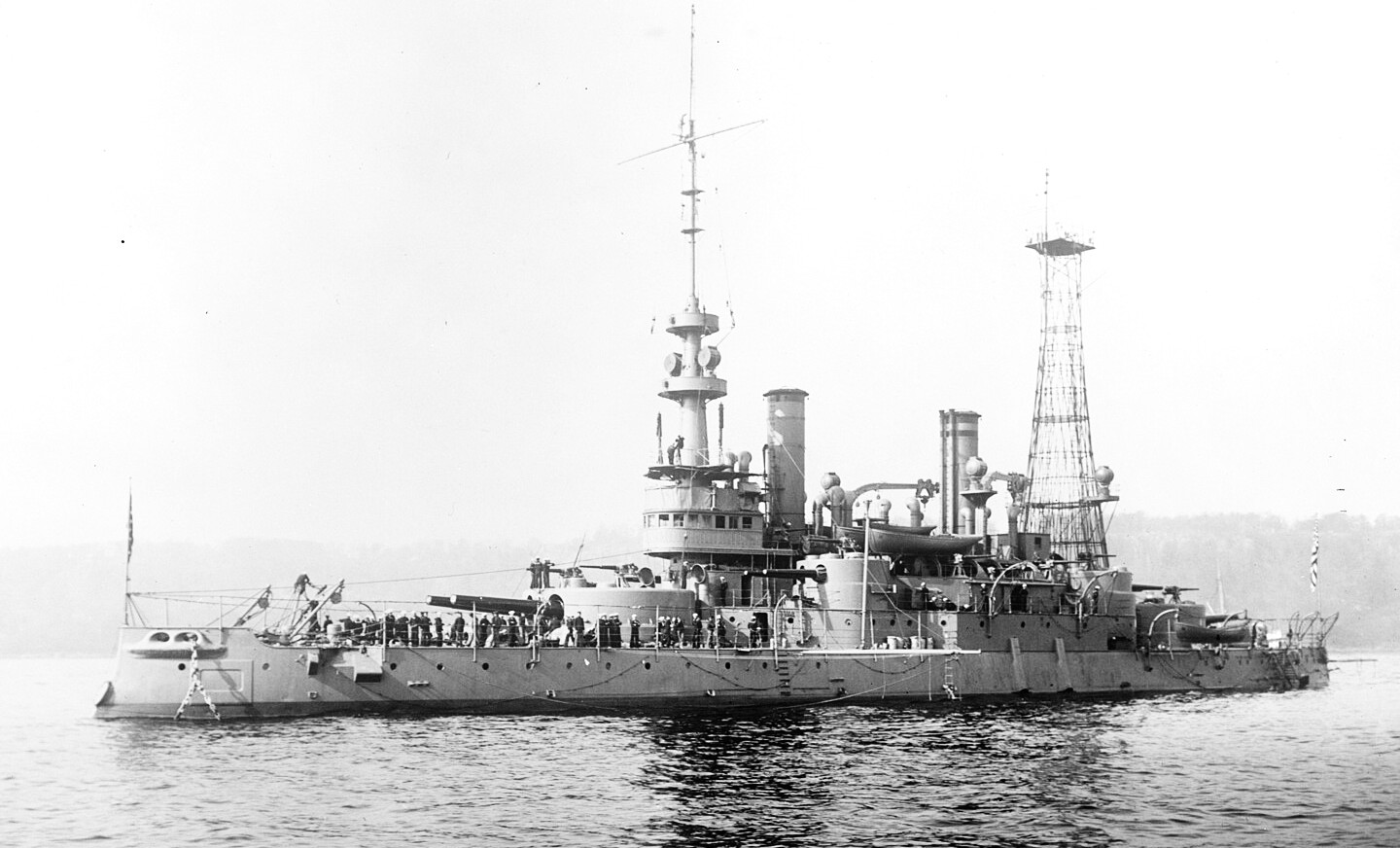
(Library of Congress Photo)
USS Massachusetts (BB-2), 1916-1917.
(Edward H. Hart Photo)
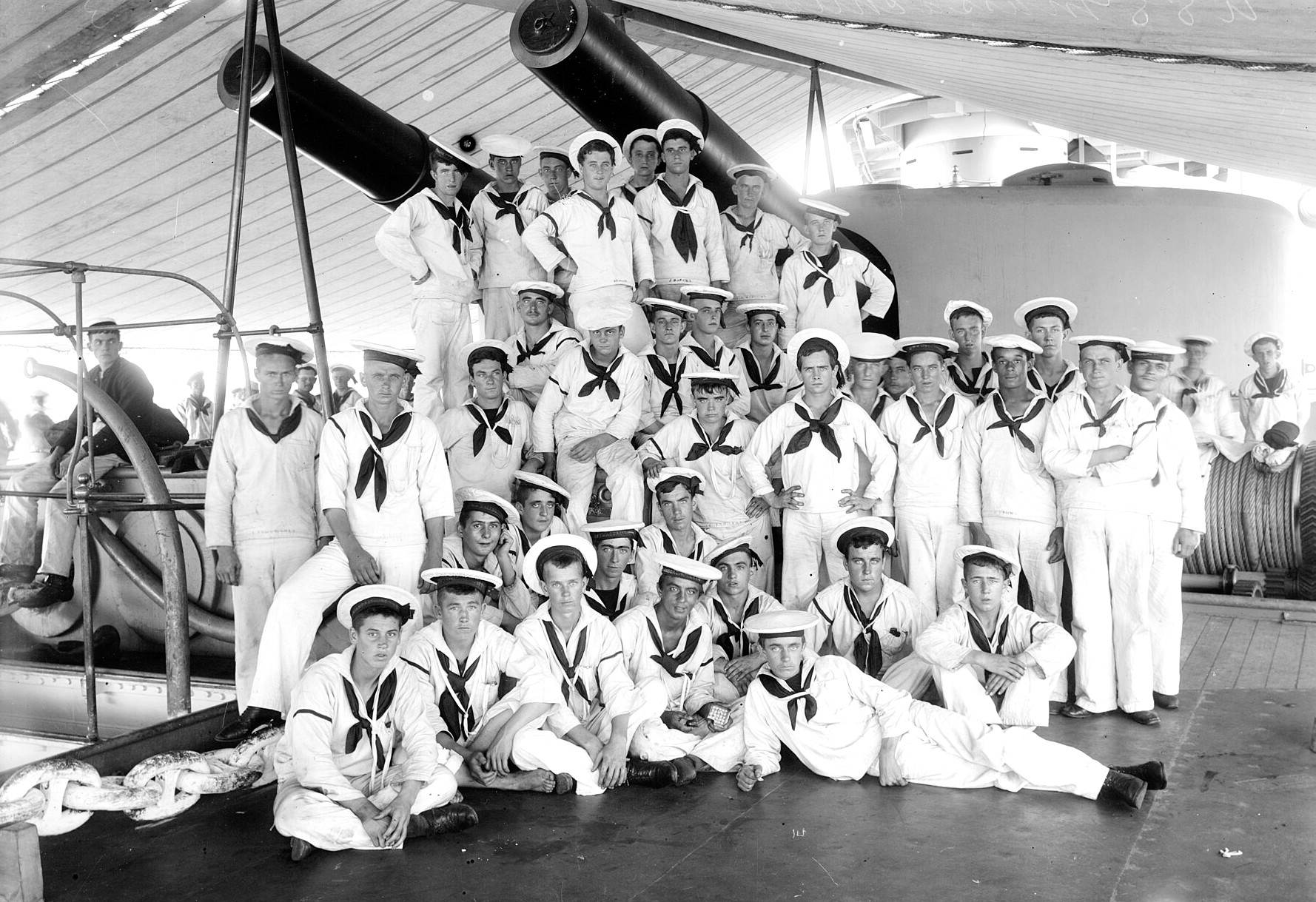
USS Massachusetts (BB-2) apprentices, c 1896-1901.
(Detroit Publishing Company Photo)
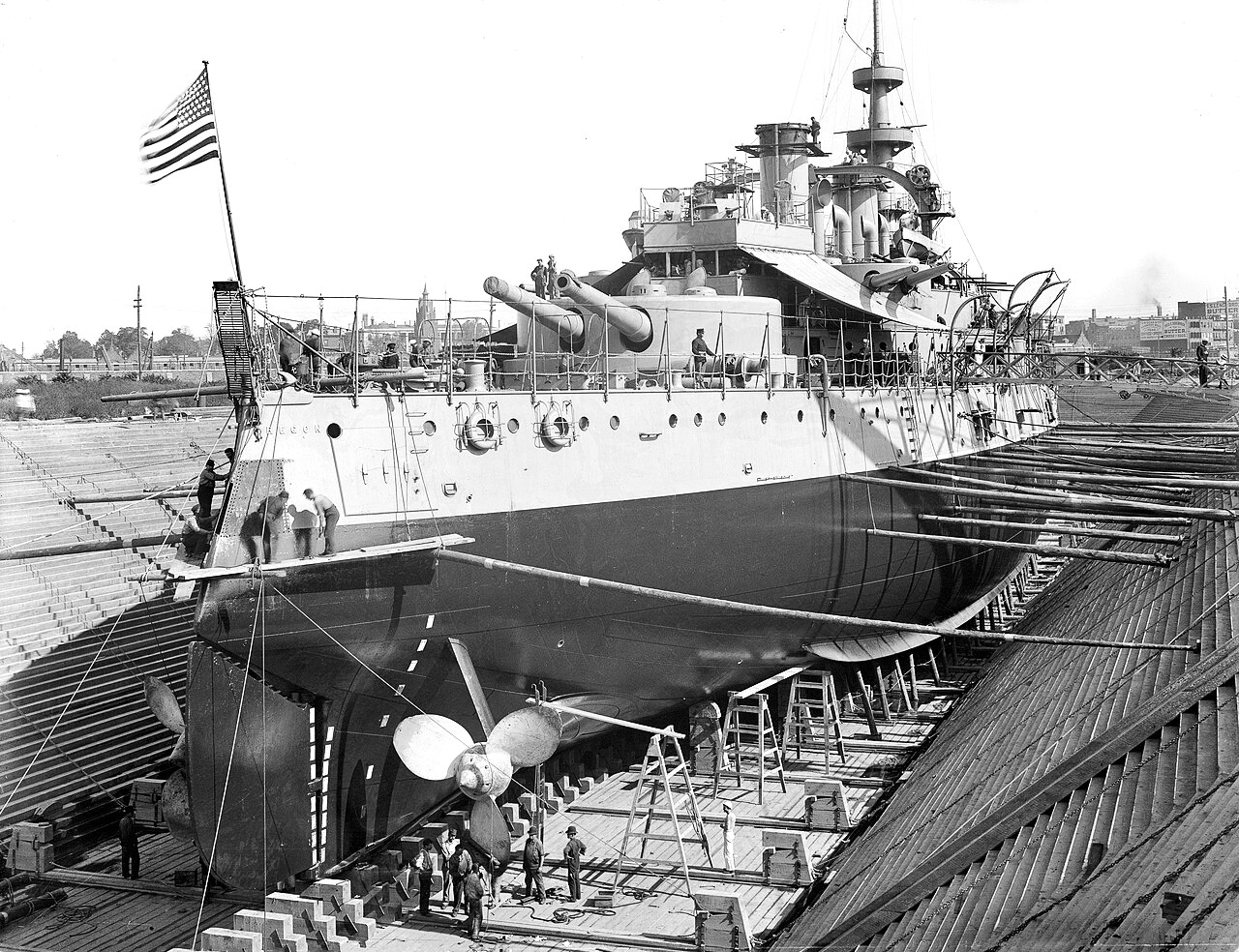
USS Oregon (BB-3) in dry dock, Brooklyn Navy Yard, 1 Sep 1898.
USS Oregon (BB-3) was the third and final member of the Indiana class of pre-dreadnought battleships built for the United States Navy in the 1890s. The three ships were built as part of a modernization program aimed at strengthening the American fleet to prepare for a possible conflict with a European navy. Designed for short-range operations in defense of the United States, the three Indiana-class ships had a low freeboard and carried a main battery of four 13-inch (330 mm) guns in a pair of gun turrets. Oregon and her sister ships were the first modern battleships built for the United States, though they suffered from significant stability and seakeeping problems owing to their small size and insufficient freeboard.
After entering service in 1896, Oregon briefly served with the Pacific Squadron before being transferred to the East Coast of the United States as tensions with Spain over Cuba grew in early 1898. She completed a 14,000-nautical-mile (26,000 km; 16,000 mi) journey around South America in the span of 66 days, arriving shortly after the start of the Spanish–American War. She thereafter took part in the blockade of Santiago de Cuba, which culminated in the Battle of Santiago de Cuba on 3 July, where Oregon contributed to the destruction of the Spanish squadron in Cuba. After the war, Oregon was deployed to the Asiatic Squadron, serving during the Philippine–American War and the Boxer Rebellion in Qing China. The ship returned to the United States in 1906, when she was decommissioned and placed in reserve for the next five years, during which she was modernized.
Reactivated in 1911, Oregon spent the next several years cruising off the West Coast of the United States, frequently going in and out of service. During the Allied intervention in the Russian Civil War in 1918, she escorted a convoy for the Siberian expedition. The ship was decommissioned in 1919 and allocated the hull number BB-3 the following year. Efforts by naval enthusiasts in the early 1920s led the Navy to loan Oregon to her namesake state for use as a museum ship. After the start of World War II, the Navy decided in late 1942 to scrap the ship for the war effort, but after work began the Navy requested the ship’s return for use as an ammunition hulk for the upcoming invasion of Guam in 1944. She remained off the island through the mid-1950s before being sold for scrap in 1956 and broken up in Japan. (Wikipedia)
(U.S. National Archives Photo)
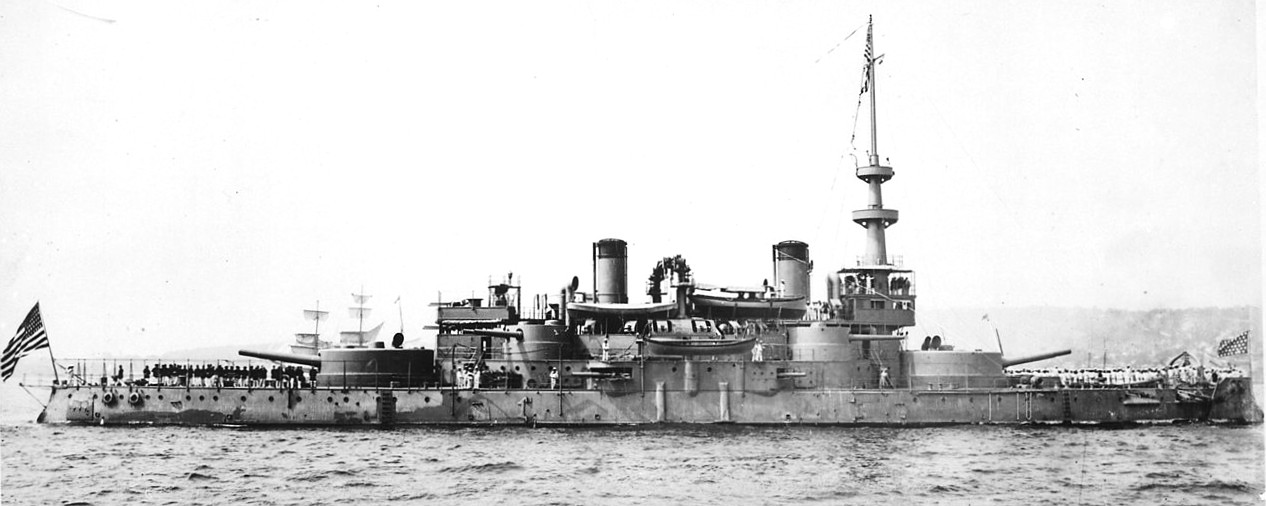
USS Oregon (BB-3), 1898.
(U.S. National Archives Photo, NH 105573)
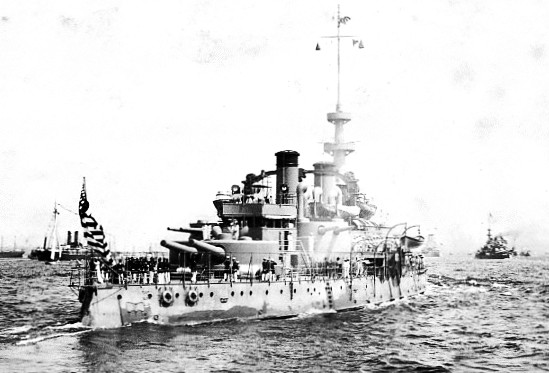
USS Oregon (BB-03) underway in New York Harbor during the Spanish-American War victory naval review, August 1898.
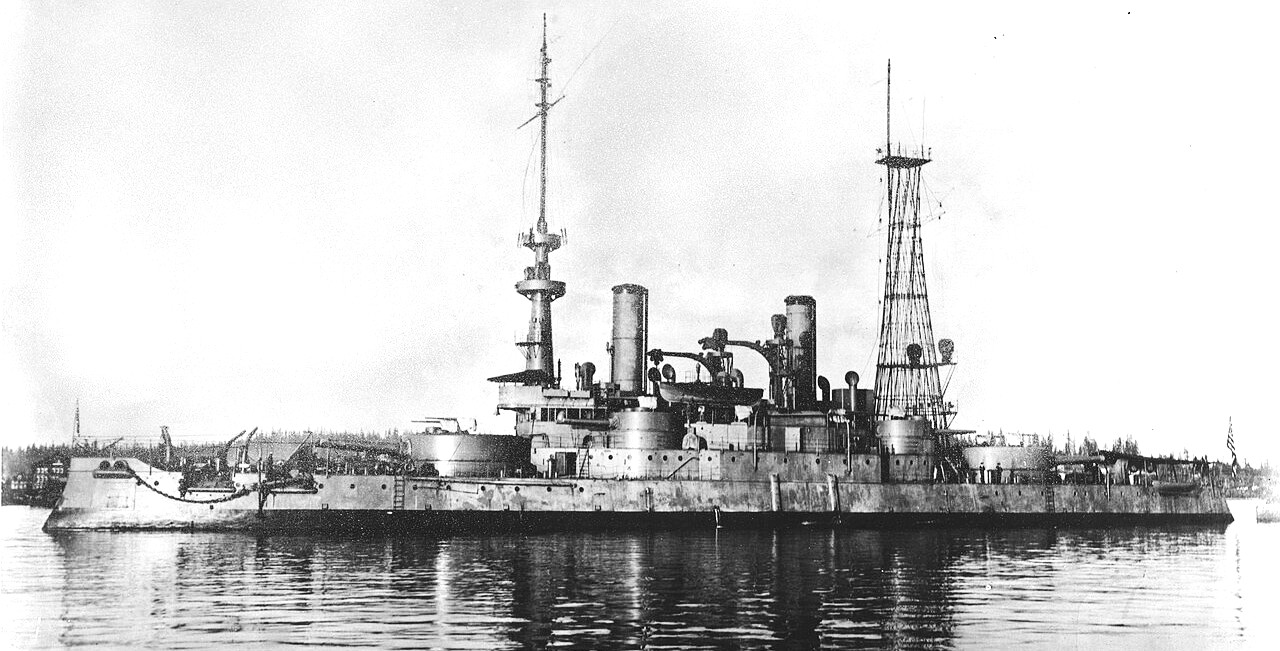
U.S. National Archives Photo)
USS Oregon (BB-03), January 1914.
(Detroit Publishing Company Photo)
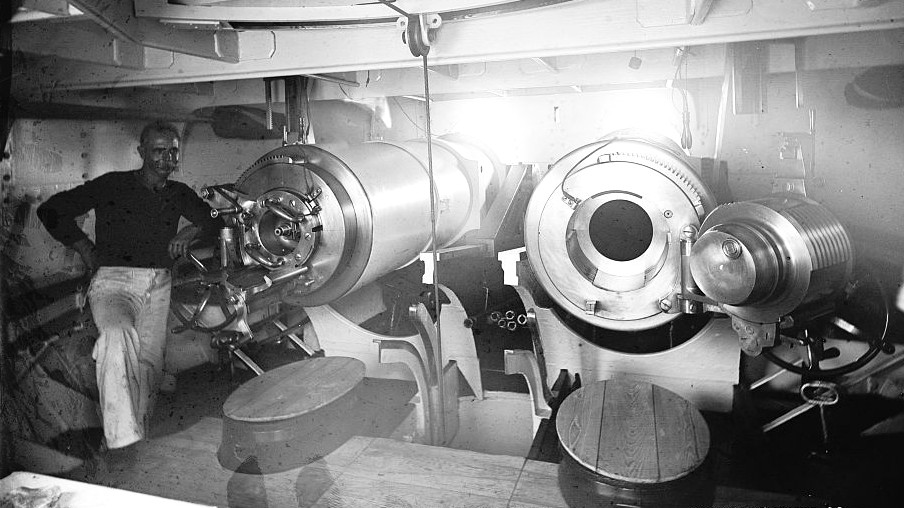
USS Oregon (BB-3) breech of 13-inch guns in after turret, 1896-1901.
(University of Washington Photo)
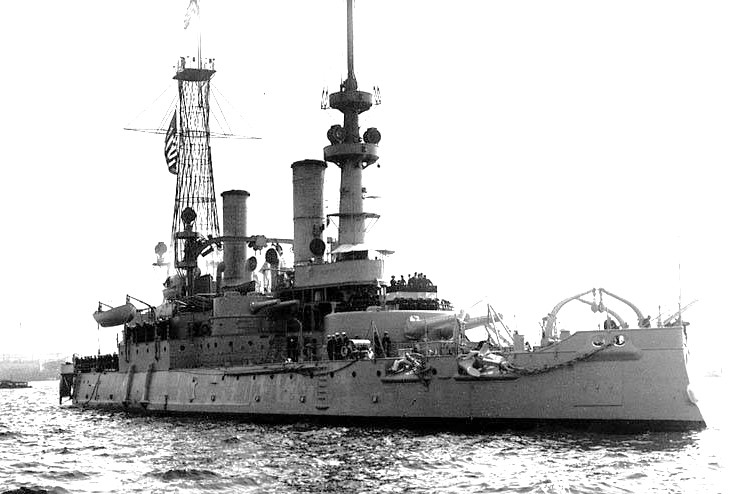
USS Oregon (BB-3) serving as flagship of President Woodrow Wilson for his review of the Pacific Fleet in Seattle harbor, 12 Sep 1919.
(James Grant Wilson and John Fiske Photo)
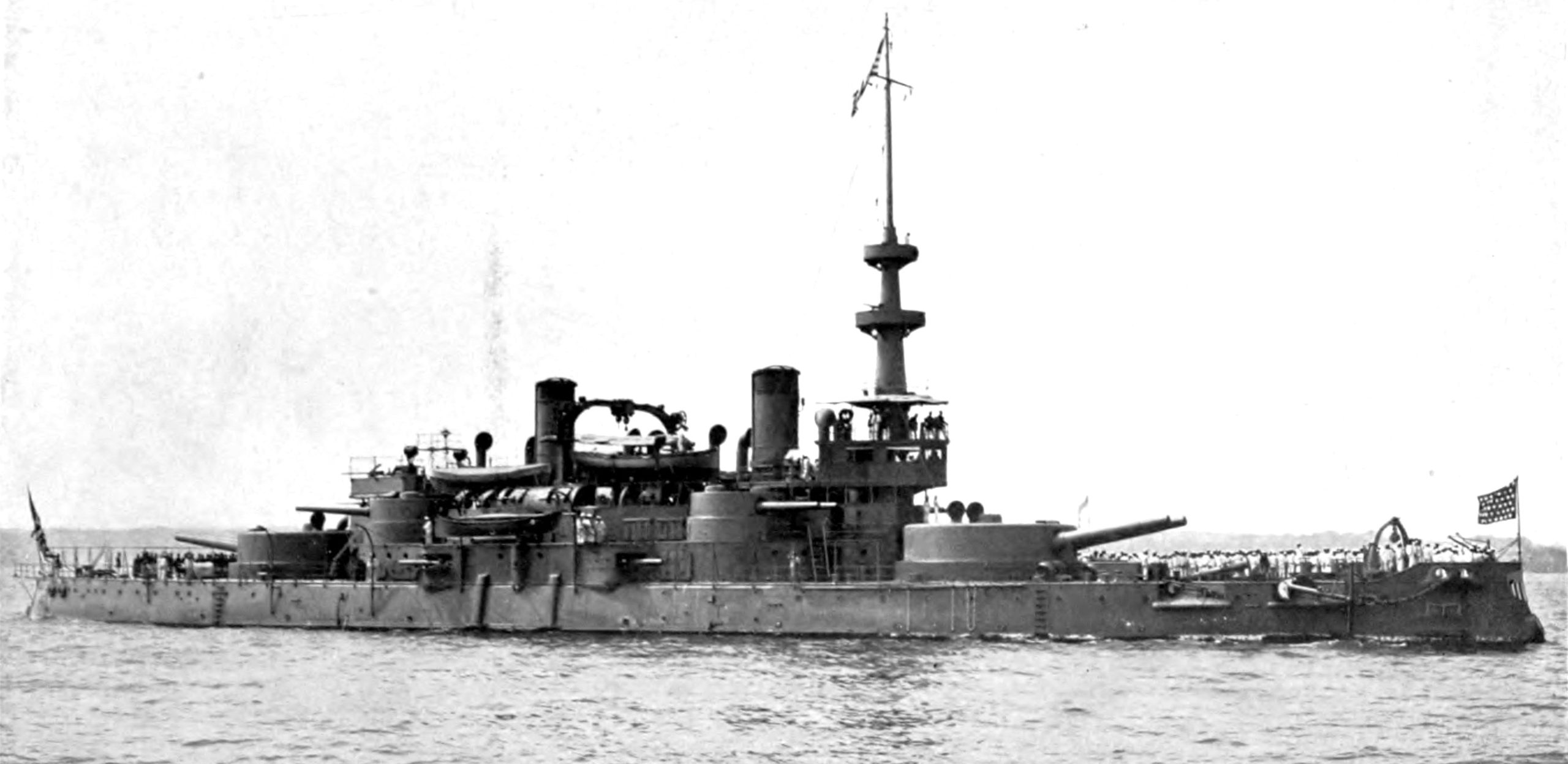
USS Oregon (BB-3), 1900.
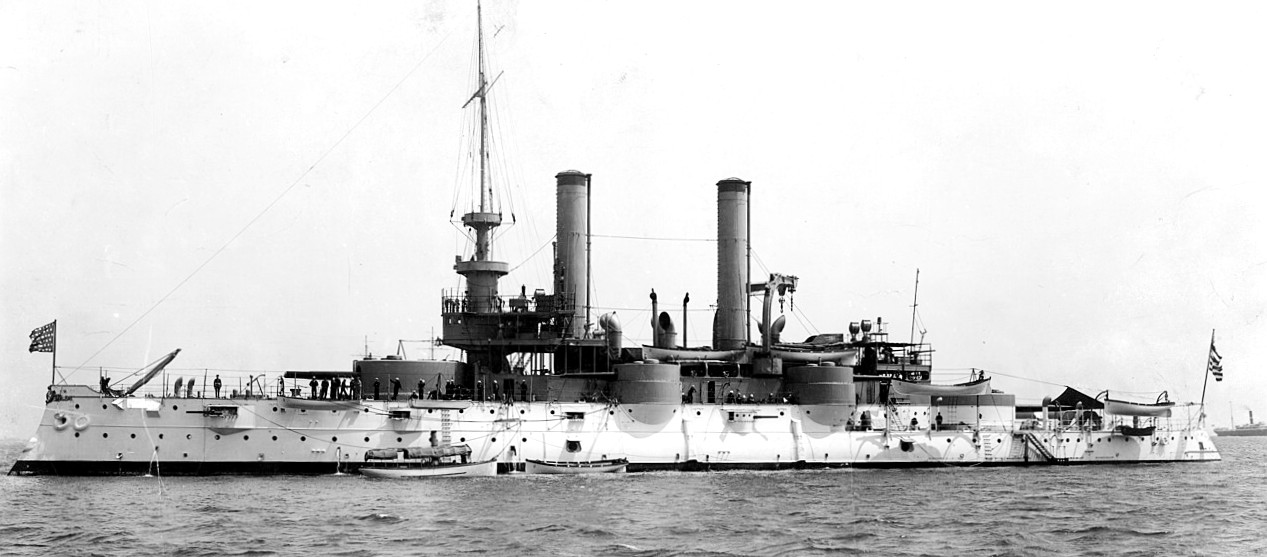
(U.S. Naval History and Heritage Command Photo)
USS Iowa (BB-4) in a harbour, ca early 1900s.
USS Iowa was a pre-dreadnought battleship built for the United States Navy in the mid-1890s. The ship was a marked improvement over the previous Indiana-class battleships, correcting many of the defects in the design of those vessels. Among the most important improvements were significantly better seaworthiness owing to her greater freeboard and a more efficient arrangement of the armament. Iowa was designed to operate on the high seas, which had been the impetus to increase the freeboard. She was armed with a battery of four 12-inch (305 mm) guns in two twin-gun turrets, supported by a secondary battery of eight 8-inch (203 mm) guns.
Upon entering service in June 1897, Iowa conducted training operations in the Atlantic Ocean before moving to the Caribbean in early 1898 as tensions between the United States and Spain over Cuba grew, leading to the Spanish–American War. The ship took part in the bombardment of San Juan, Puerto Rico, and then participated in the blockade of Cuba during the war, and after the Spanish cruiser squadron was found in Santiago de Cuba, she patrolled off the harbor to block their escape. In the Battle of Santiago de Cuba on 3 July, Iowa assisted in the destruction of three of the four Spanish cruisers. After the war, Iowa spent the next several years conducting routine training exercises, serving with the Pacific Squadron from 1898 to 1902, the South Atlantic Squadron until 1904, and the North Atlantic Squadron until 1906, when the latter two units were merged to form the Atlantic Fleet.
Iowa was modernized between 1908 and 1910; she thereafter served as a training ship for naval cadets from the United States Naval Academy and for naval militia crews. Removed from service in 1913 and decommissioned in 1914, she was reactivated after the United States entered World War I in April 1917, initially serving as a receiving ship and then as a training vessel and guard ship. She was decommissioned again in 1919, renamed Coast Battleship No. 4, and converted into a radio-controlled target ship. She was used in bombing experiments off the Virginia Capes in 1921 before being sunk as part of Fleet Problem I off the coast of Panama in March 1923 by the battleship USS Mississippi. (Wikipedia)
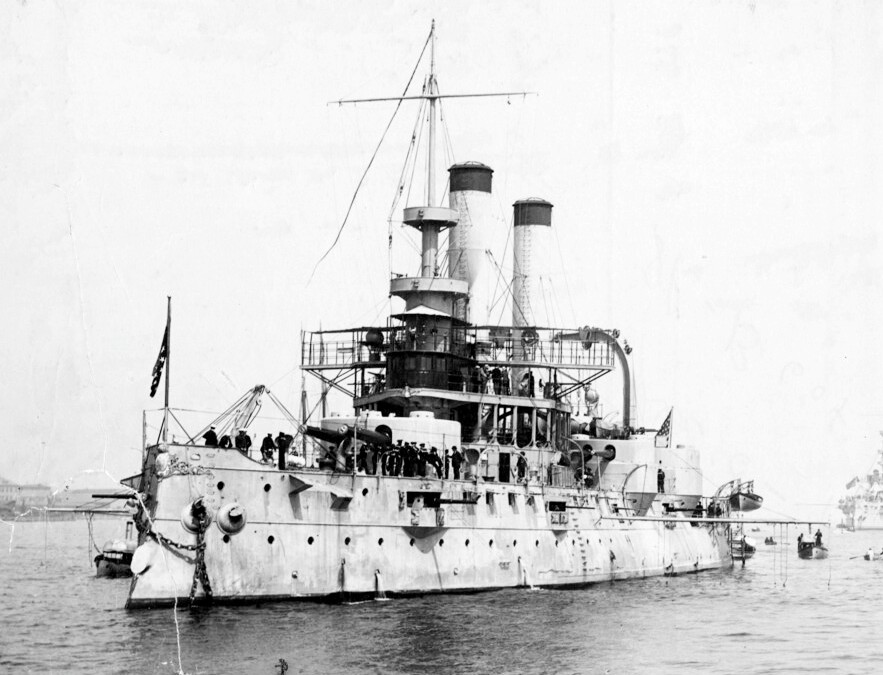
(U.S. Naval History and Heritage Command Photo)
USS Iowa (BB-4), anchored off New York City during the Spanish-American War Victory Fleet Review, August 1898.
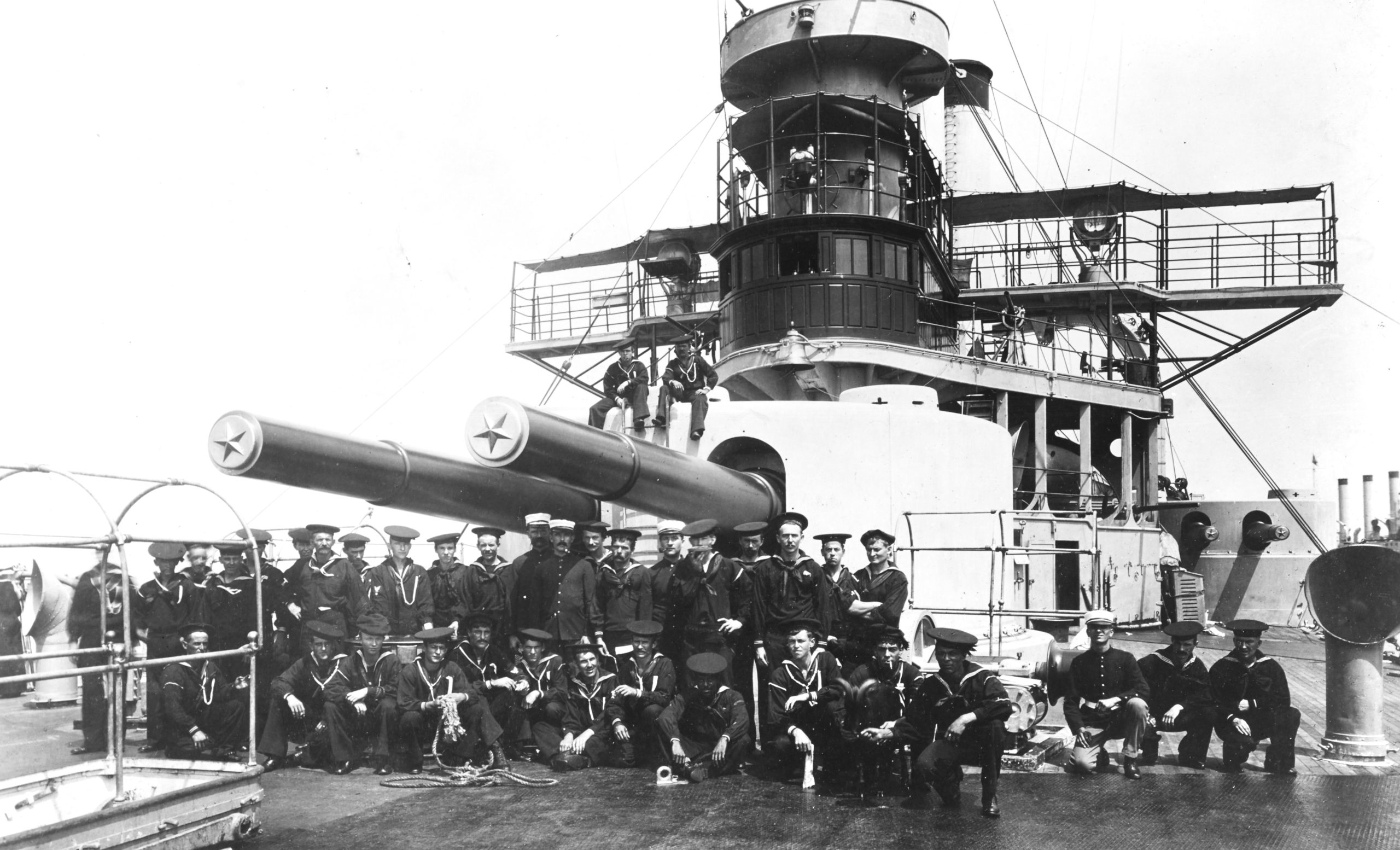
(U.S. Naval History and Heritage Command Photo)
USS Iowa (BB-4), Sailors and Marines of the ship’s crew posed in front of her forward 12/35 gun turret, ca August 1898.
Iowa was armed with a main battery of four 12 in (305 mm)/35 caliber guns mounted in two twin-gun turrets that were mounted on the centerline, one forward and the other aft of the superstructure. The built-up guns were the Mark II type, which were placed in elliptical Mark III turrets. The training gear was hydraulically operated, but elevation was hand-operated only. The gun mounts allowed elevation to 14 degrees and depression to −5 degrees; to reload the guns, they had to be returned to 3 degrees elevation. The ammunition hoists that retrieved shells and propellant charges from the magazines were also hydraulically operated. The guns fired an 850 lb (390 kg) shell with a 425 lb (193 kg) charge of brown powder. Muzzle velocity was 2,100 ft/s (640 m/s), and at the muzzle, the shells could penetrate up to 24 in (610 mm) of mild steel; at a range of 2,500 yd (2,300 m), their penetration capability fell to 19 in (483 mm). The average rate of fire was one shot every five minutes, though fresh, well-trained crews could achieve rates as fast as one shot every three minutes.
The primary armament was supported by a secondary battery of eight 8 in (203 mm)/35 cal guns that were carried in four twin-gun wing turrets. Two were placed on either side of the ship, abreast of the funnels. Since the 12-inch guns had a long reloading time, the 8-inch guns were incorporated to increase the number of weapons that could defeat light armor.[8] The 8-inch guns were the Mark IV version, which had a rate of fire of one shot per minute. They had a muzzle velocity of 2,080 ft/s (630 m/s), firing 250 lb (110 kg) armor-piercing shells. They were initially supplied with brown powder charges, but after the advent of smokeless powder, new, smokeless charges were adopted that increased the rate of fire by twenty seconds. Mounted in Mark VIII turrets with a range of elevation from −7 to 13 degrees, reloading was fixed at 0 degrees.
Six 4 in (102 mm)/40 cal quick-firing guns rounded out the secondary battery; these were intended to use their high rate of fire, coupled with high-explosive shells to damage unarmored parts of enemy warships. Four of these were placed in individual casemates in the forecastle deck, two in sponsons in the bow and the other two located amidships. The remaining two guns were in open shielded mounts on the aft superstructure, superfiring over the rear main battery turret.[8] They fired a 33 lb (15 kg) high-explosive shell at a muzzle velocity of 2,000 ft/s (610 m/s).[11] For defense against torpedo boats, the ship carried a battery of twenty 57 mm (2.2 in) 6-pounder Hotchkiss guns and four 37 mm (1.5 in) 1-pounder guns These guns were dispersed around the ship in a variety of individual mounts, including in the fighting top of the military mast, the superstructure, and in sponsons in the hull. She also carried four M1895 Colt–Browning machine guns chambered in 6mm Lee Navy.
As was standard practice for capital ships of the era, Iowa carried four above-water, 14-inch (356 mm) torpedo tubes in her hull, two on each broadside. These launched the Howell torpedo,[5][7] which had a range of 400 yards (370 m) and traveled at a speed of 25 knots (46 km/h; 29 mph). They carried a 400 lb (180 kg) warhead.
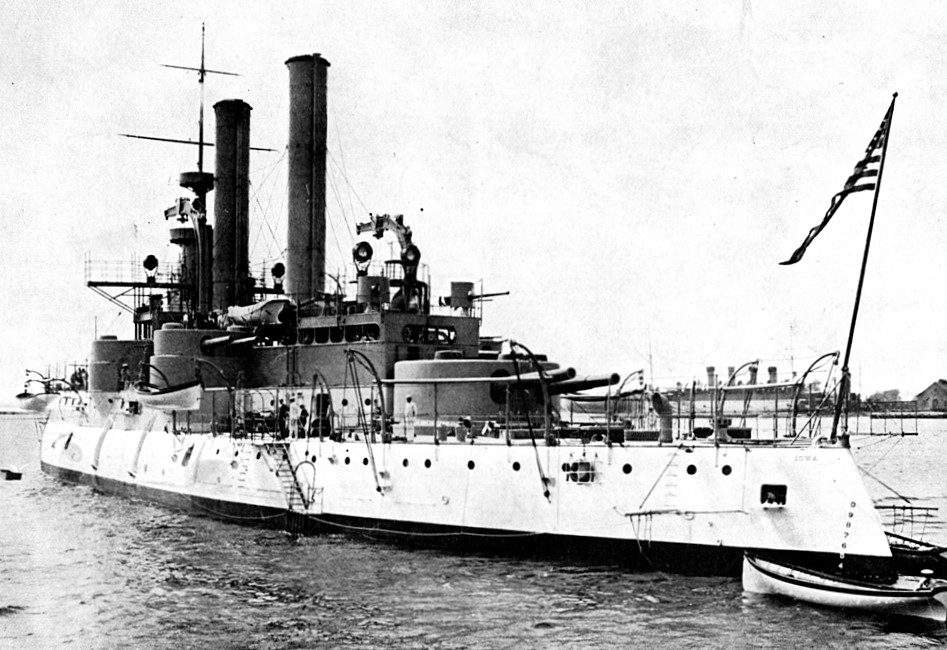
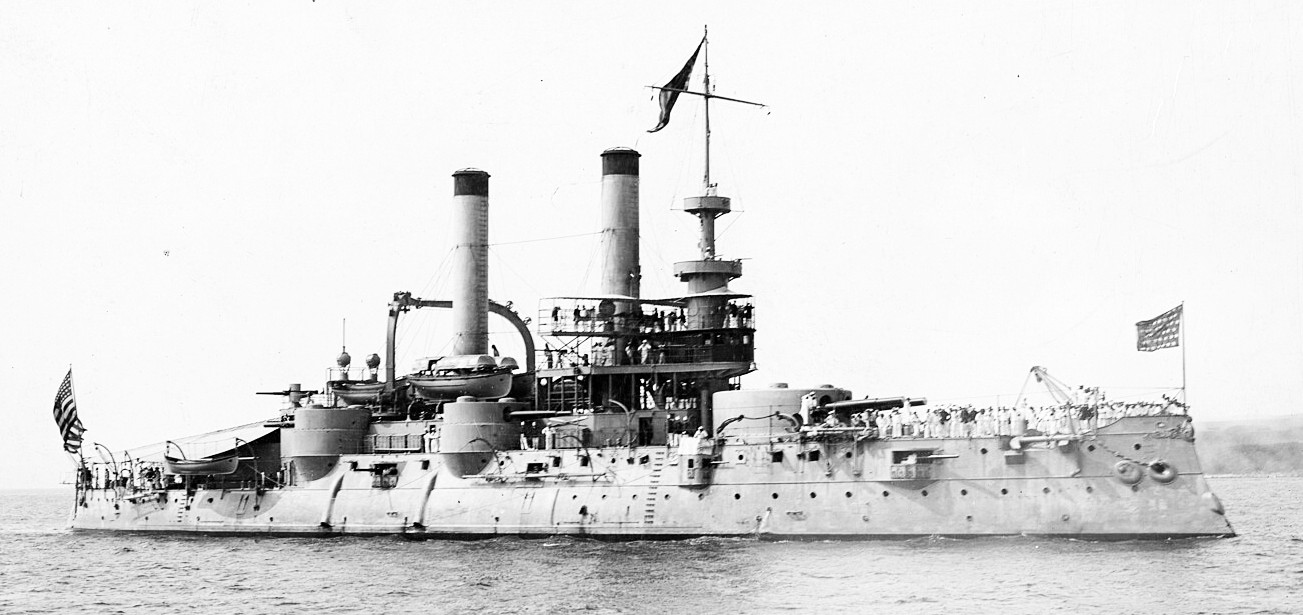
(U.S. Naval History and Heritage Command Photo, NH 53257)
USS Iowa (BB-4) seen from the stern, 1897-1898.
(U.S. Naval History and Heritage Command Photo)
USS Iowa (BB-4) in New York Harbor during the Spanish-American War Victory Fleet Review, August 1898.
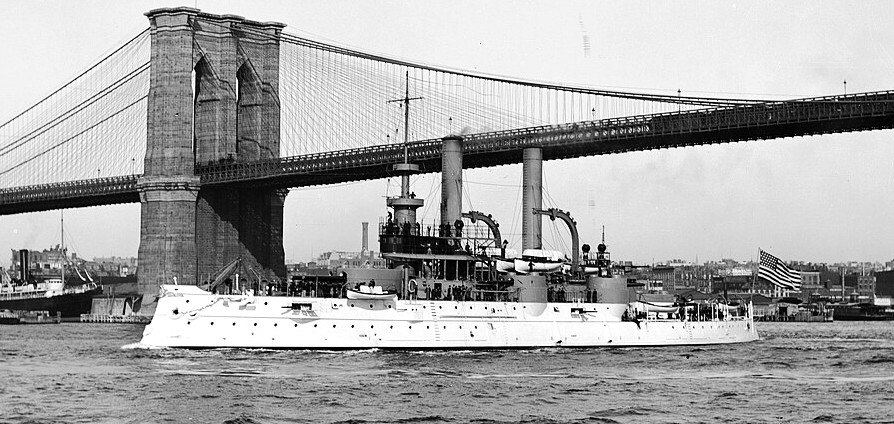
(Detroit Publishing Company Photo)
USS Iowa (BB-4), port view, going under the Brooklyn Bridge, ca 1897–1901.
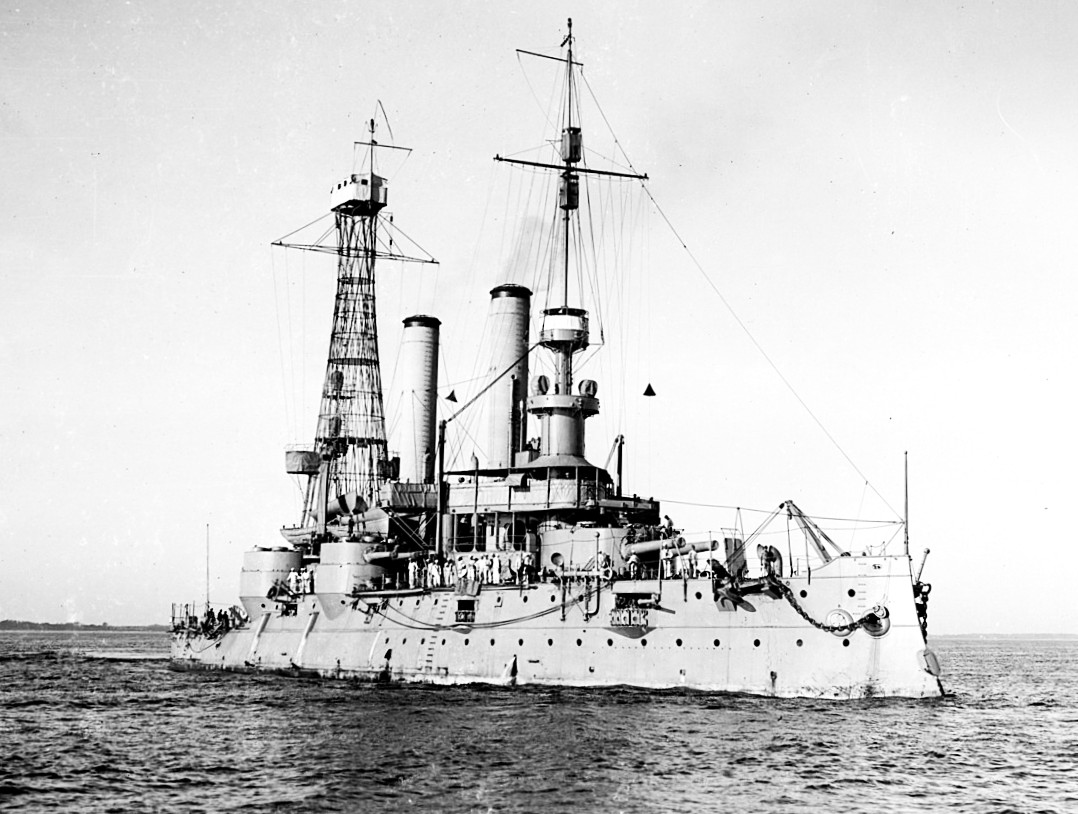
(U.S. National Archives Photo)
USS Iowa (BB-4), underway, ca 1918, during her First World War service.
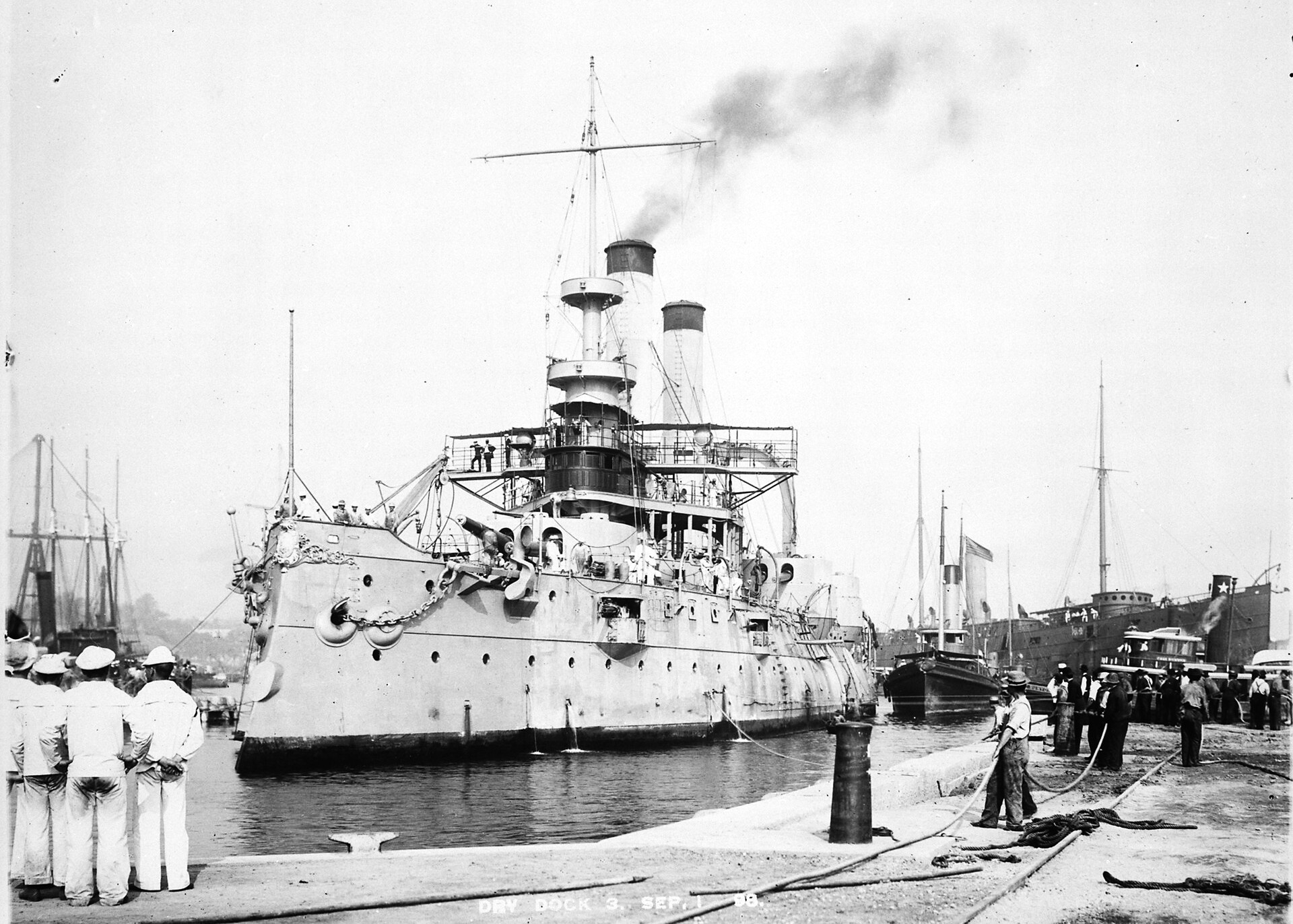
(National Archives at College Park Photo)
USS Iowa (BB-4), entering the drydock at the New York (Brooklyn) Navy Yard, 1 September 1898.
Standard type battleships: The so-called “Standard-type” was a series of battleships ordered between 1911 and 1916, and incorporating a number of new features including “all or nothing” armor. Twelve of these battleships were constructed across five classes, and were commissioned between 1916 and 1923. The older ships underwent major reconstructions during the late 1920s and early 1930s. Battleships USS Nevada (BB-36) to USS Kentucky (BB-66) are listed separately on this website.
The United States Navy began the construction of battleships with USS Texas in 1892, although its first ship to be designated as such was USS Indiana. USS Texas and USS Maine, commissioned three years later in 1895, were part of the New Navy program of the late 19th century, a proposal by then Secretary of the Navy William H. Hunt to match Europe’s navies that ignited a years-long debate that was suddenly settled in Hunt’s favour when the Brazilian Empire commissioned the battleship Riachuelo.
In 1890, Alfred Thayer Mahan’s book The Influence of Sea Power upon History was published and significantly influenced future naval policy—as an indirect result of its influence on Secretary Benjamin F. Tracy, the Navy Act of 30 June 1890 authorized the construction of “three sea-going, coast-line battle ships” which became the Indiana class.
The Navy Act of 19 July 1892 authorized construction of a fourth “sea-going, coast-line battle ship”, which became USS Iowa. Despite much later claims that these were to be purely defensive and were authorized as “coastal defense ships”, they were almost immediately used for offensive operations in the Spanish–American War. By the start of the 20th century, the United States Navy had in service or under construction the three Illinois-class and two Kearsarge-class battleships, making the United States the world’s fifth strongest power at sea from a nation that had been 12th in 1870.
Except for the USS Kearsarge, named by an act of Congress, all U.S. Navy battleships have been named for states, and each of the 48 contiguous states has had at least one battleship named for it except Montana; two battleships were authorized to be named Montana but both were cancelled before construction started. Alaska and Hawaii did not become states until 1959, after the end of battleship building, but the battlecruiser, or “Large Cruiser,” USS Alaska was built during the Second World War and her sister, USS Hawaii, was begun but never completed. The pre-dreadnoughts USS Zrinyi (formerly the Austrian SMS Zrínyi), USS Radetzky (formerly the Austrian SMS Radetzky), and the dreadnought USS Ostfriesland (formerly the German SMS Ostfriesland), taken as prizes of war after the First World War, were commissioned in the US Navy, but were not assigned hull classification symbols.
No American battleship has ever been lost at sea, though four were sunk during the attack on Pearl Harbor. Of these, only USS Arizona (BB-39) and USS Oklahoma (BB-37) were permanently destroyed as a result of enemy action. Several other battleships have been sunk as targets, and USS Utah, demilitarized and converted into a target and training ship, was permanently destroyed at Pearl Harbor. The hulk of the USS Oklahoma was salvaged, but was lost at sea while being towed to the mainland for scrapping. Two American-built pre-dreadnought battleships, USS Mississippi (BB-23) and her sister USS Idaho (BB-24), were sunk in 1941 by German bombers during their Second World War invasion of Greece. The ships had been sold to Greece in 1914, becoming Kilkis and Lemnos respectively. (Wikipedia)
USS Maine and USS Texas were part of the “New Navy” program of the 1880s. Texas and BB-1 to BB-4 were authorized as “coast defense battleships”, but Maine was ordered as an armoured cruiser and was only re-rated as a “second class battleship” when she turned out too slow to be a cruiser. The next group, BB-5 Kearsarge through BB-25 New Hampshire, followed general global pre-dreadnought design characteristics and entered service between 1900 and 1909. The definitive American pre-dreadnought was the penultimate class of the type, the Connecticut class, sporting the usual four-gun array of 12-inch (305 mm) weapons, a very heavy intermediate and secondary battery, and a moderate tertiary battery. They were good sea boats and heavily armed and armoured for their type. The final American pre-dreadnought class, the Mississippi-class, were an experiment in increasing numbers with slower ships of limited range. The Navy soon rejected the concept and within 6 years of commissioning, sold these to Greece in 1914 to pay for a new super-dreadnought USS Idaho (BB-42).
The dreadnoughts, BB-26 South Carolina through BB-35 Texas, commissioned between 1910 and 1914, uniformly possessed twin turrets, introduced the superimposed turret arrangement that would later become standard on all battleships, and had relatively heavy armor and moderate speed (19–21 knots, 35–39 km/h, 22–24 mph). Five of the ten ships used the established vertical triple expansion (VTE) propulsion rather than faster direct-drive turbines, used by the British which had higher fuel consumption. The ships had 8 (South Carolina class), 10 (Delaware and Florida) or 12 (Wyoming class) 12-inch guns, or 10 (New York class) 14-inch (356 mm) guns. The dreadnoughts gave good service, the last two classes surviving through World War II before being scrapped. However, they had some faults that were never worked out, and the midships turrets in the ten and twelve-gun ships were located near boilers and high-pressure steam lines, a factor that made refrigeration very difficult and problematic in hot climates. One of their number, Texas (BB-35), is the last remaining American battleship of the pre–Second World War era and the only remaining dreadnought in the world.
Next came the twelve Standards, beginning with BB-36 Nevada, commissioned over the period 1914 to 1920. The last ship commissioned was BB-48 West Virginia (BB-49 through 54 were also Standards, but were never commissioned, and scrapped under the Washington Naval Treaty). Oklahoma (BB-37) was the last American battleship commissioned with triple expansion machinery; all the other Standards used either geared steam turbines (Nevada, the Pennsylvania class, Idaho and Mississippi) or turbo-electric propulsion (New Mexico, the Tennessee and Colorado classes). The Standards were a group of ships with four turrets, oil fuel, a 21-knot (39 km/h; 24 mph) top speed, a 700-yard (640 m) tactical diameter at top speed, and heavy armor distributed on the “All or Nothing” principle. Armament was fairly consistent, starting with ten 14-inch guns in the Nevada class, twelve in the Pennsylvania, New Mexico and Tennessee classes, and eight 16-inch (406 mm) guns in the Colorado class. (Wikipedia)
After the 1930s “builders holiday,” the USN commissioned ten more battleships of an entirely new style, the so-called fast battleship. These ships began with BB-55 North Carolina and the last ship laid down was BB-66 Kentucky (the last completed ship was BB-64 Wisconsin). These ships were a nearly clean break from previous American design practices. All ten ships were built to a Panamax design (technically post-Panamax, as they exceeded normal Panamax beam by two feet, but they were still able to transit the canal). They were fast battleships, and could travel with the aircraft carriers at cruising speed (their speed was not intended for that role, but rather so they could run down and destroy enemy battlecruisers). They possessed almost completely homogeneous main armament (nine 16-inch guns in each ship, the sole difference being an increase in length from 45 to 50 calibers with the Iowa-class vessels), very high speed relative to other American designs (28 knots, 52 km/h, 32 mph in the North Carolina and South Dakota classes, 33 knots, 61 km/h, 38 mph in the Iowa class), and moderate armor. The North Carolina class was of particular concern, as their protection was rated as only “adequate” against the 16-inch super-heavy shells. They had been designed with, and armored against, a battery of three quadruple 14-inch guns, then changed to triple 16-inch guns after the escalator clause in the Second London Naval Treaty had been triggered. Secondary armament in these ships was almost homogeneous as well: Except for South Dakota, configured as a flagship, the other nine ships of this group sported a uniform 20-gun 5-inch (127 mm) secondary battery (South Dakota deleted two 5-inch mounts to make room for flag facilities).
Visually, the Second World War ships are distinguished by their three-turret arrangement and the massive columnar mast that dominates the superstructure. The last ship, Wisconsin (BB-64), commissioned in 1944 (Wisconsin was approved last; however, Missouri (BB-63) was commissioned three months later, due to delays from additional aircraft carrier construction). Missouri (BB-63), famous for being the ship on which the Japanese Instrument of Surrender was signed, was the last battleship in the world to be decommissioned on 31 March 1992. Seven of these ten ships are still in existence. South Dakota, Washington and Indiana were scrapped, but the remainder are now museum ships. There was intended to be another class of five of these ships, the Montana class (BB-67 Montana through BB-71 Louisiana), but they were cancelled before being laid down in favor of a greater number of aircraft carriers. The Montana-class ships would have been built to a 60,000-ton post-Panamax design, and carried a greater number of guns (twelve 16-inch guns) and heavier armour than the other ships; otherwise they would have been homogeneous with the rest of the Second World War battleships. In October 2006, the last battleships, (USS Iowa and USS Wisconsin), were stricken from the Naval Registry. (Wikipedia)