
US Navy light aircraft carriers: USS Langley (CVL-27), USS Cabot (CVL-28/AVT-3), USS Bataan (CVL-29/AVT-4), USS San Jacinto (CVL-30)
(USN Photo)
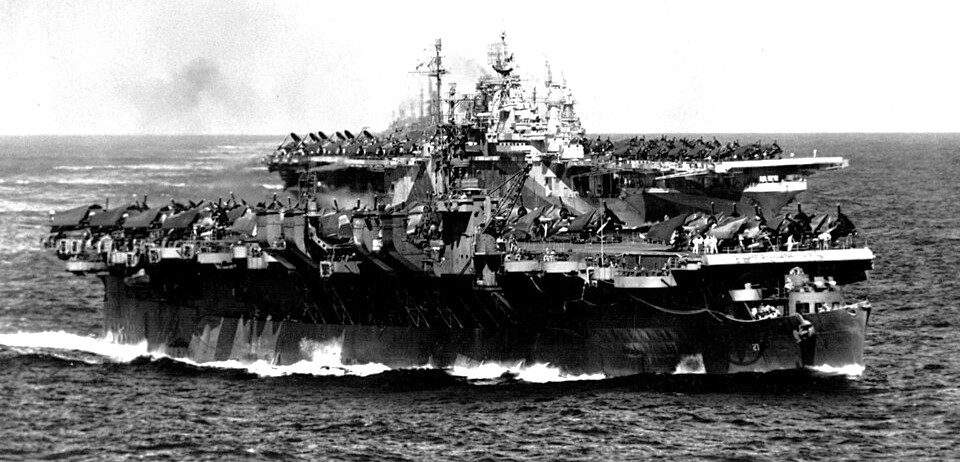
USS Langley (CVL-27) and USS Ticonderoga (CV-14) underway off Ulithi on 12 December 1944.
USS Langley (CVL-27) was an Independence-class light aircraft carrier that served the United States Navy from 1943 to 1947, and French Navy as La Fayette from 1951 to 1963.
(USN Photo)
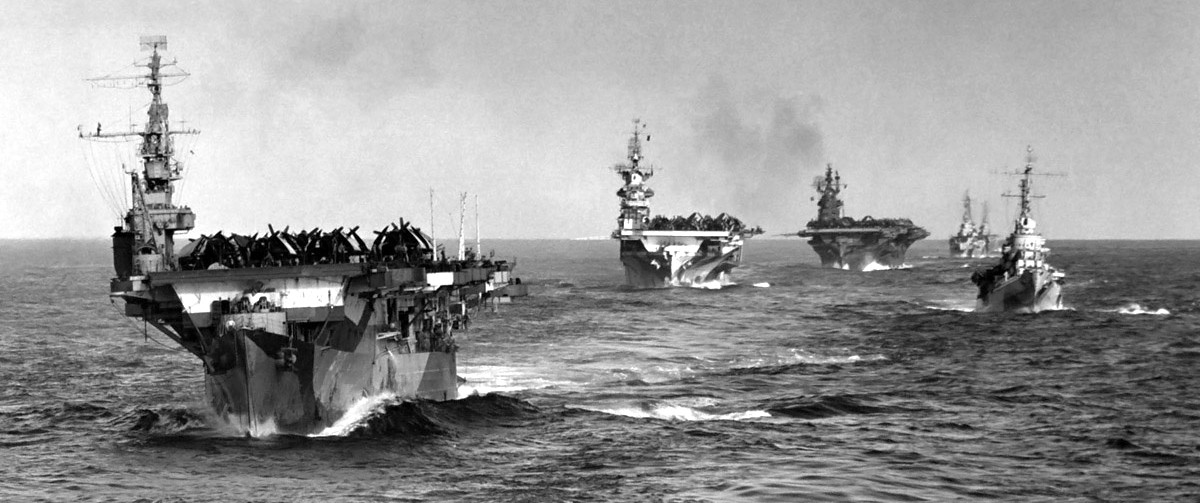
U.S. Navy Task Group 38.3 enters Ulithi anchorage in column, 2 December 1944, while returning from strikes on targets in the Philippines. Ships are (from front): USS Langley (CVL-27), USS Ticonderoga (CV-14), USS Washington (BB-56), USS North Carolina (BB-55), USS South Dakota (BB-57), USS Santa Fe (CL-60), USS Biloxi (CL-80), USS Mobile (CL-63), and USS Oakland (CL-95).
(USN Photo)
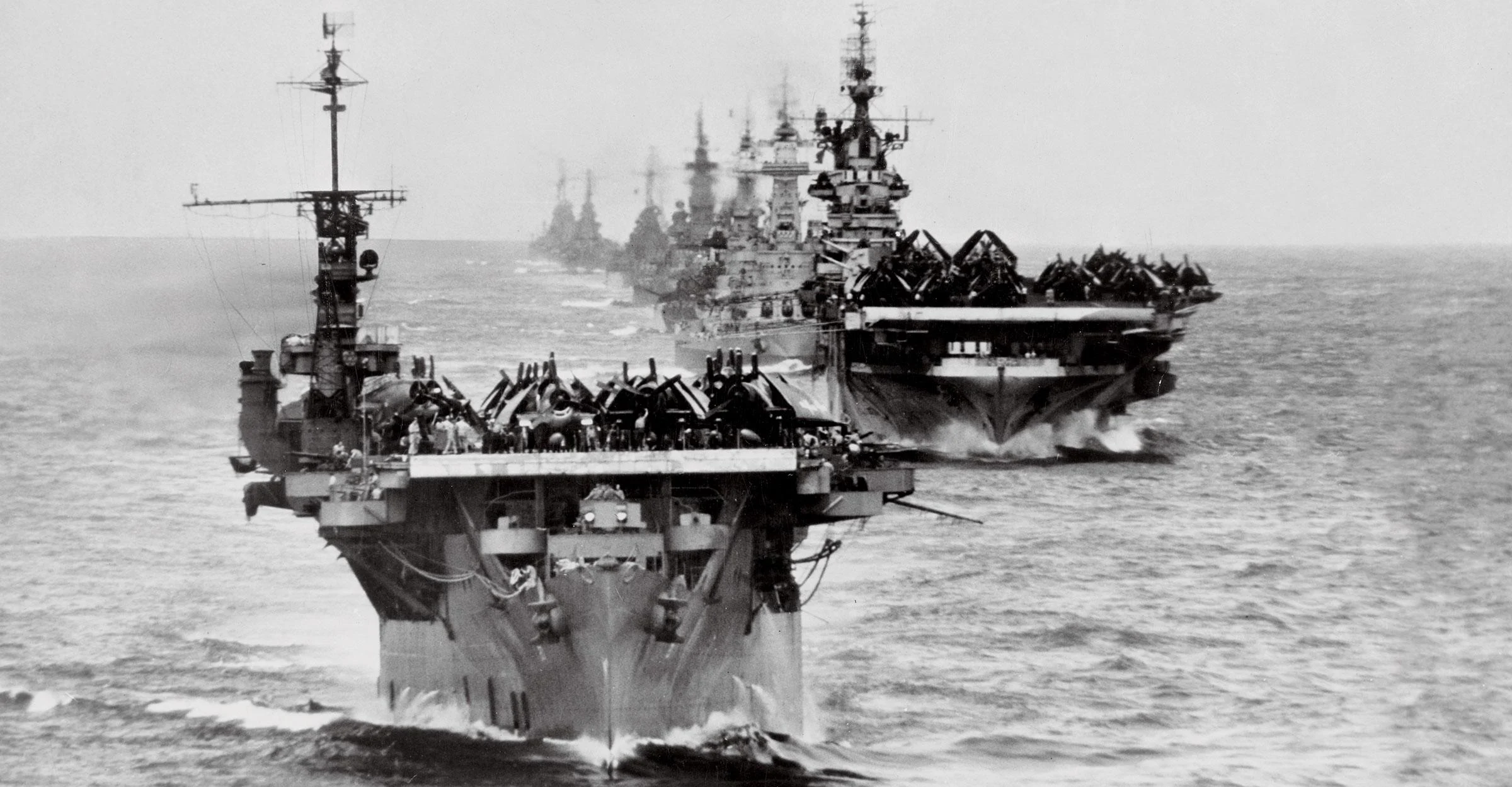
U.S. Navy Task Group 38.3 enters Ulithi anchorage in column, 2 December 1944, while returning from strikes on targets in the Philippines. Ships are (from front): USS Langley (CVL-27), USS Ticonderoga (CV-14), USS Washington (BB-56), USS North Carolina (BB-55), USS South Dakota (BB-57), USS Santa Fe (CL-60), USS Biloxi (CL-80), USS Mobile (CL-63), and USS Oakland (CL-95).
(USN Photo)
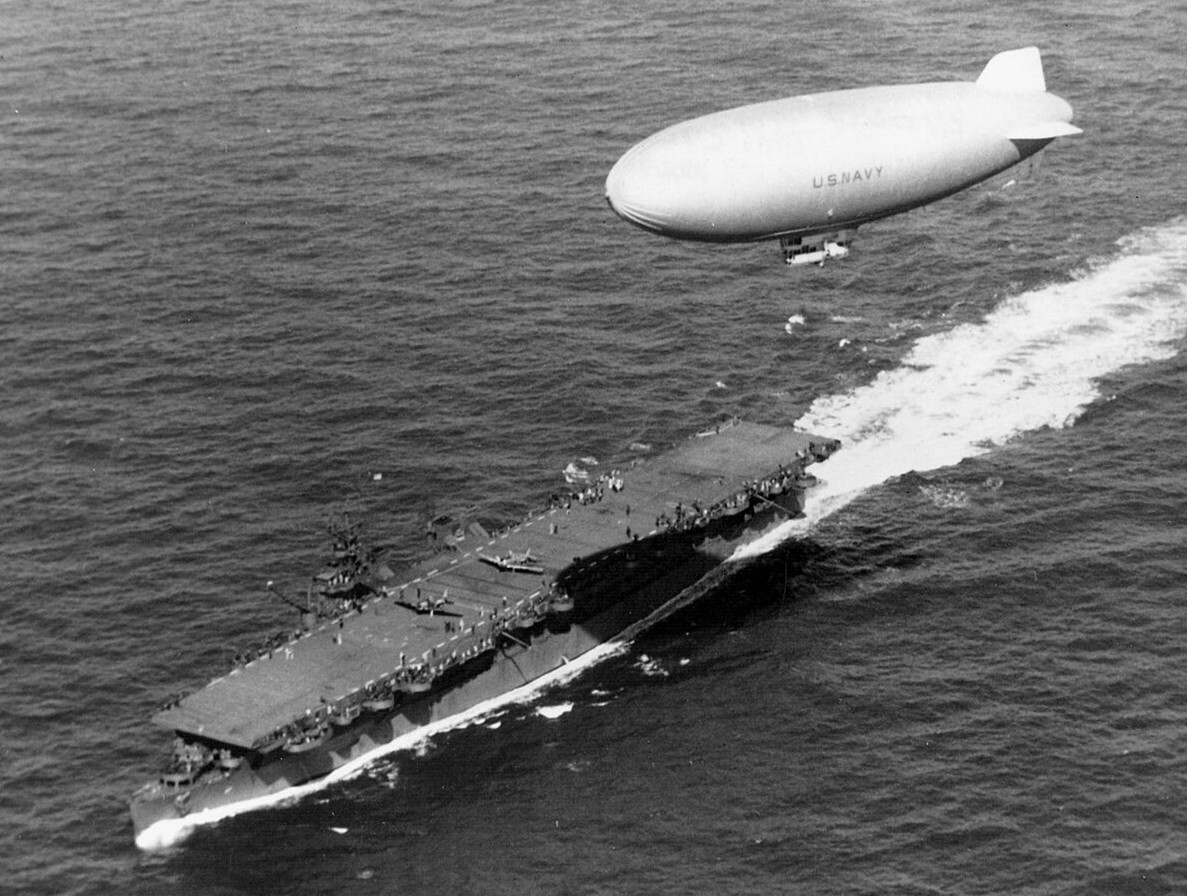
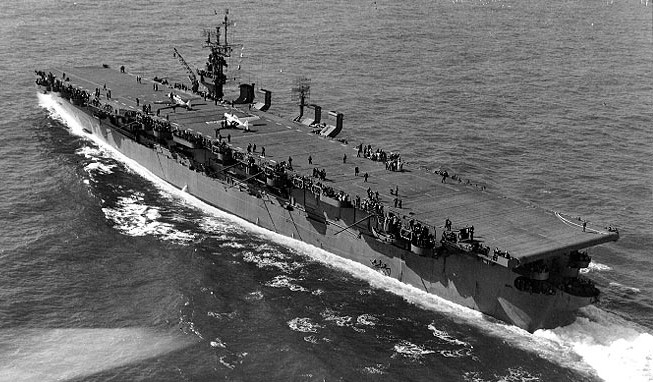
A U.S. Navy K-class airship of Blimp Patrol Squadron ZP-14 pictured in flight over the light aircraft carrier USS Langley (CVL-27) as she steams in the waters off Cape Henry, Virginia (USA), with two North American SNJ Texan training planes on her flight deck, 6 October 1943.
(USN Photo)
The U.S. Navy light aircraft carrier USS Langley (CVL-27) underway off Cape Henry, Virginia (USA), with two North American SNJ Texan training planes on her flight deck, 6 October 1943.
USS Cabot (CVL-28/AVT-3)
((SN Photo)
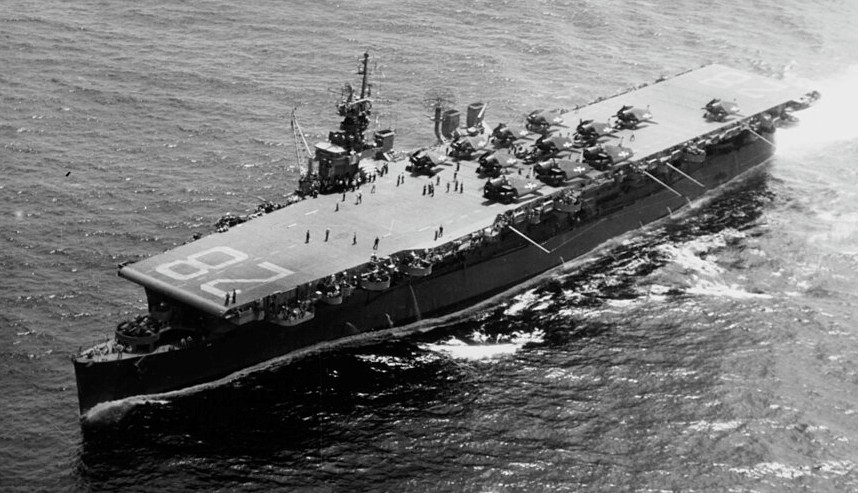
U.S. light aircraft carrier USS Cabot (CVL-28) underway at sea, 26 July 1945. On deck are aircraft of Carrier Air Group 32 (CVG-32). Cabot had departed Pearl Harbor, Oahu, Hawaii (USA), on 24 July as part of Task Force 12.3. En route to Eniwetok, the carrier launched three strikes on Wake Island on 1 August, whereas the battleship USS Pennsylvania (BB-38) and destroyers bombarded the island.
USS Cabot (CVL-28/AVT-3) was an Independence-class light aircraft carrier in the United States Navy, the second ship to carry the name, after the explorer John Cabot. Cabot was commissioned in 1943 and served until 1947. She was recommissioned as a training carrier from 1948 to 1955. From 1967 to 1989, she served in Spain as Dédalo. After attempts to preserve her failed, she was scrapped in 2002. (Wikipedia)
(USN Photo)
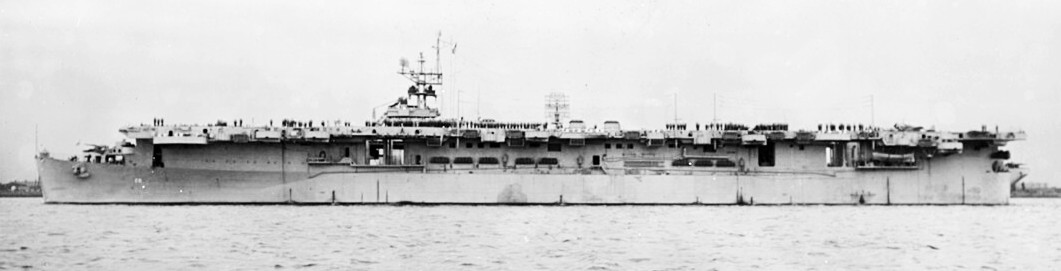
U.S. Navy light aircraft carrier USS Cabot (CVL-28) off the Philadelphia Navy Yard, Pennsylvania (USA), on 27 August 1943.
(USN Photo)
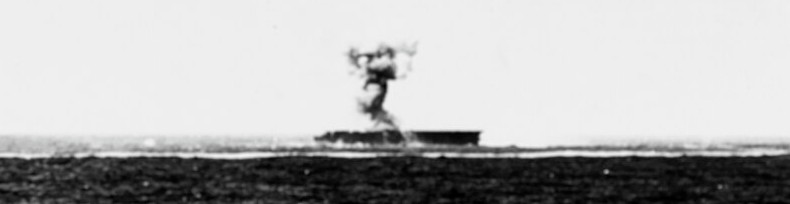
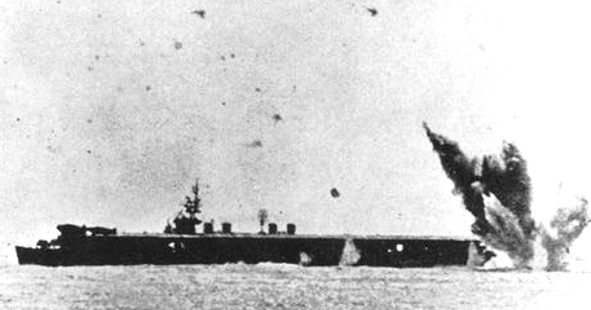
U.S. Navy light aircraft carrier USS Cabot (CVL-28) is hit by a kamikaze, while operating with Task Group 38.2 off Luzon, 25 November 1944. The kamikaze, already flaming from hits, crashed on the flight deck on the port side, destroying a still-firing 20 mm gun platform, disabling 40 mm mounts and a gun director. Another kamikaze crashed close aboard and showered the port side with shrapnel and burning debris. 62 men were killed or wounded. While Cabot continued to maintain her station in formation and operate effectively, temporary repairs were made. On 28 November, she arrived at Ulithi for permanent repairs, returning to combat on 11 December 1944.
(USN Photo)
U.S. Navy light aircraft carrier USS Cabot (CVL-28) under air attack, in 1944.
(USN Photo)
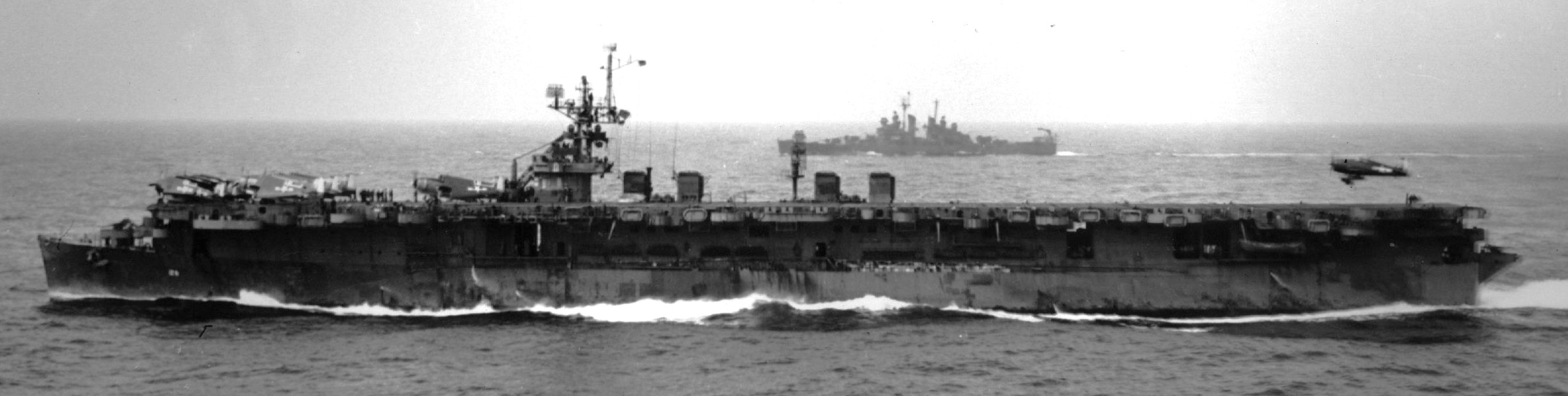
A U.S. Navy Grumman F6F Hellcat fighter of fighting squadron VF-29 approaching the light aircraft carrier USS Cabot (CVL-28) in 1944. A Cleveland class light cruiser is visible in the background. Note the “g-symbol” air group identification on Cabot´s planes, three white horizontal stripes and a white rudder, ordered in October 1944.
(USN Photo)
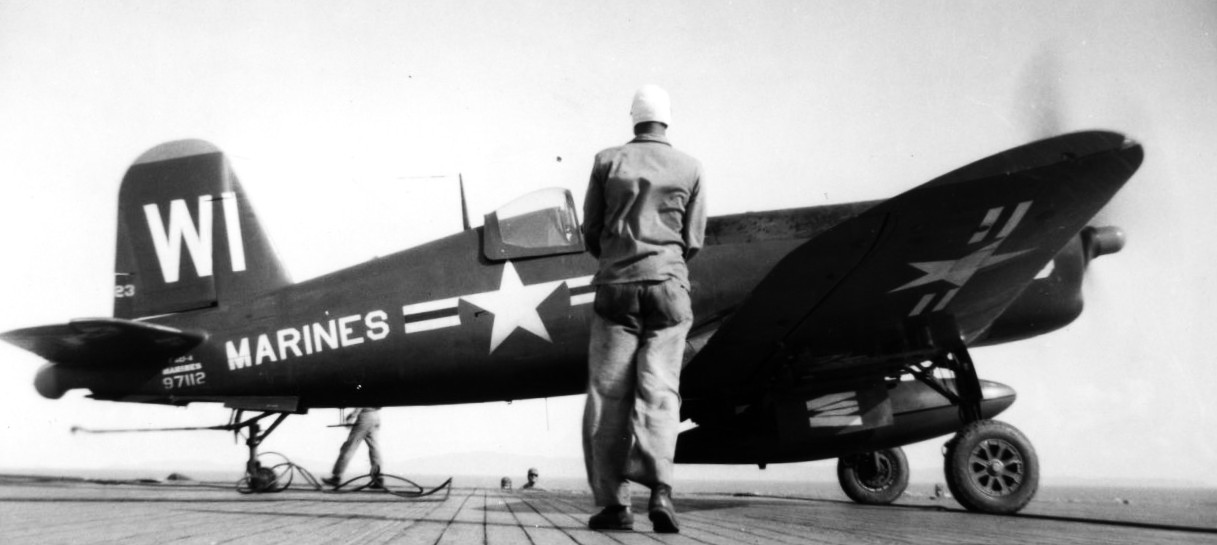
A U.S. Marine Corps Vought F4U-4 Corsair (BuNo. 97112) of Marine fighter squadron VMF-225 on deck of the light aircraft carrier USS Cabot (CVL-28).
(USN Photo)
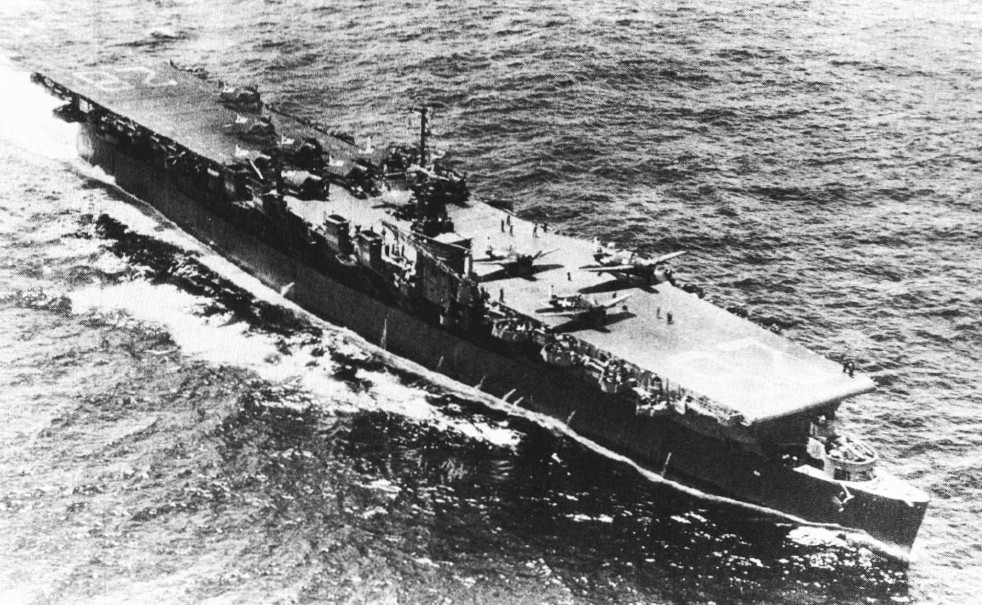
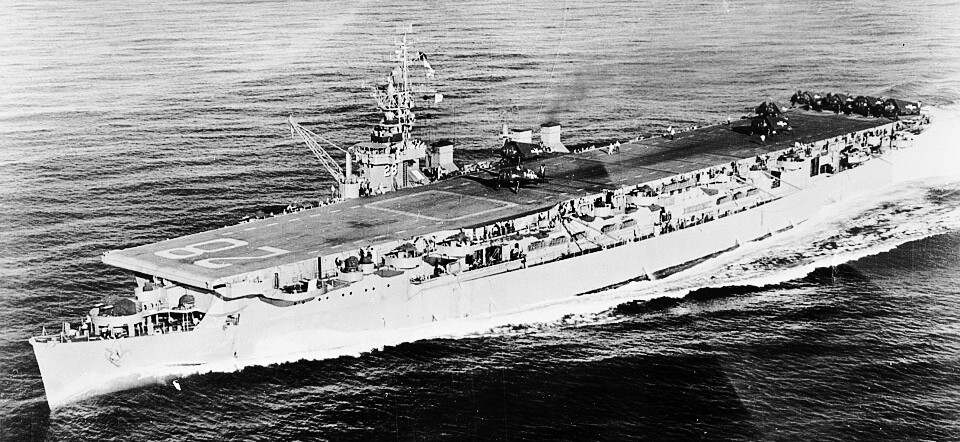
U.S. Navy light aircraft carrier USS Cabot (CVL-28) underway at sea in 1945. The aircraft on deck are probably from Carrier Air Group 29 (CVG-29).
(USN Photo)
Eight Grumman F6F-5 Hellcat fighters assigned to the U.S. Naval Air Reserve at Naval Air Station Glenview, Illinois (USA), pictured on the deck of the light aircraft carrier USS Cabot (CVL-28) during training operations in the Gulf of Mexico, 1950.
(USN Photo)
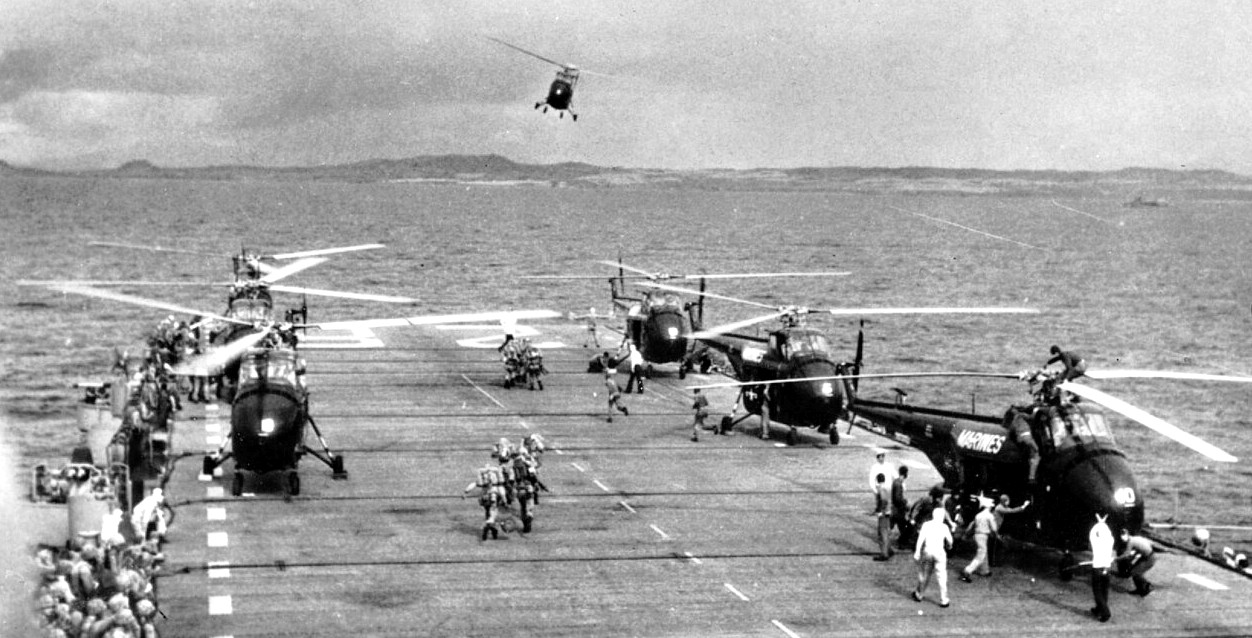
U.S. Marine Corps Sikorsky HRS helicopters during flight operations aboard the U.S. Navy aircraft carrier USS Cabot (CVL-28), c1952.
(USN Photo)
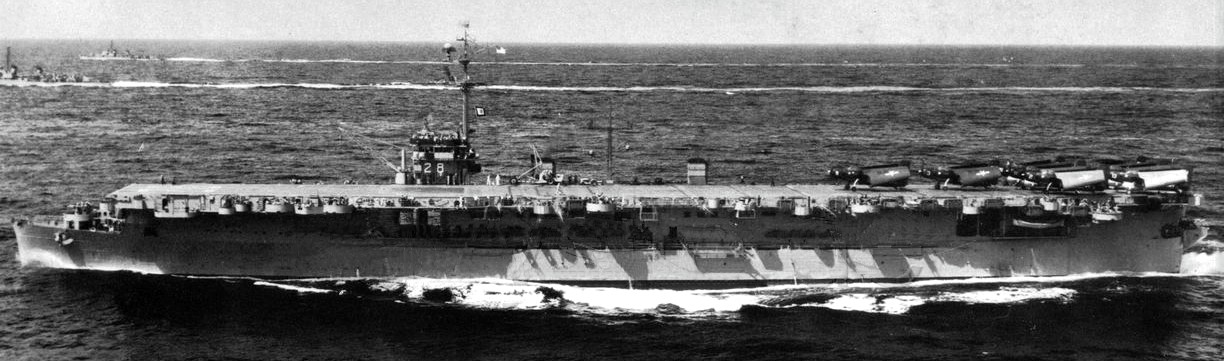
U.S. Navy light aircraft carrier USS Cabot (CVL-28) underway at sea in early 1952. Cabot, with assigned Air Anti-Submarine Squadron 24 (VS-24) “Duty Cats”, was deployed to the Mediterranean Sea from 9 January to 26 March 1952.
USS Bataan (CVL-29/AVT-4)
(USN Photo)
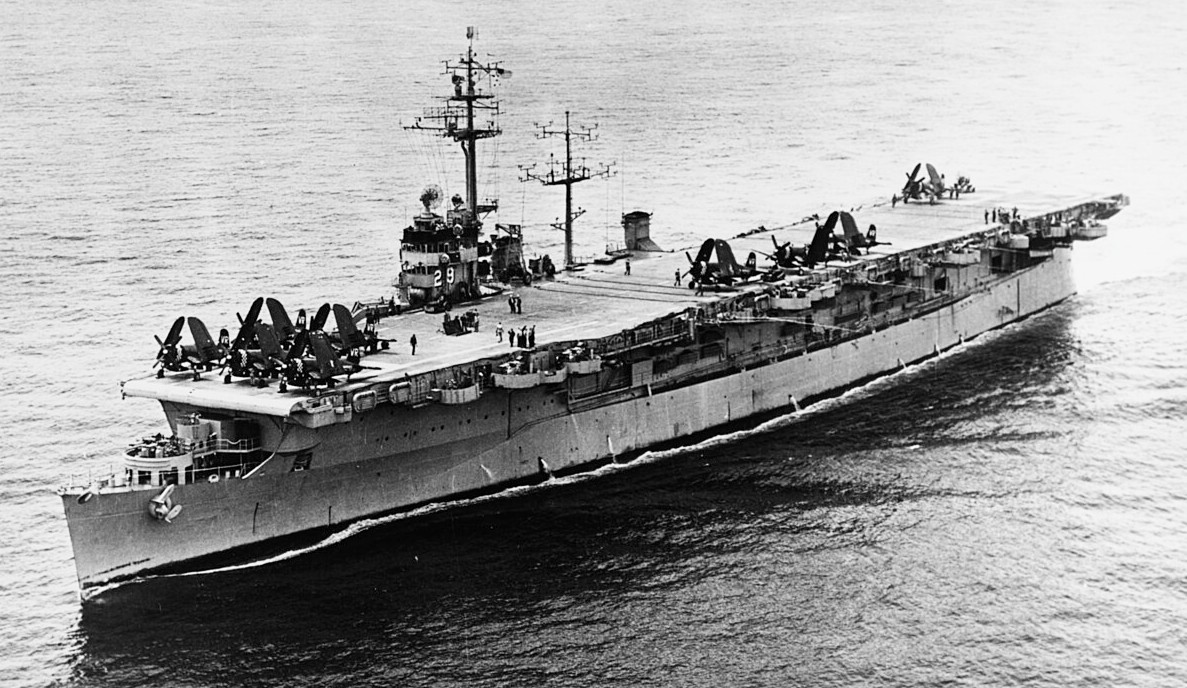
USS Bataan (CVL-29/AVT-4), originally planned as USS Buffalo (CL-99) and also classified as CV-29, was an 11,000 ton Independence-class light aircraft carrier which was commissioned in the United States Navy during World War II on 17 November 1943. Serving in the Pacific Theatre for the rest of the war, taking part in operations around New Guinea, the Invasion of the Mariana Islands, the Battle of the Philippine Sea, the Battle of Okinawa, and attacks on the Japanese home islands. After World War II’s end she was converted into an anti-submarine carrier and placed in reserve on 11 February 1947.
She was reactivated on 13 May 1950 at Philadelphia in order to participate in the Korean War. After the war she returned to Pearl Harbor, and reported for a preinactivation overhaul on 26 August 1953. After moving to the San Francisco Naval Shipyard, Bataan was decommissioned on 9 April 1954 and assigned to the Pacific Reserve Fleet at San Francisco. Although she was reclassified an auxiliary aircraft transport and redesignated AVT-4 on 15 May 1959, her name was struck from the Navy List on 1 September 1959. She was sold to Nicolai Joffe Corp., Beverly Hills, California, on 19 June 1961 for scrapping. (Wikipedia)
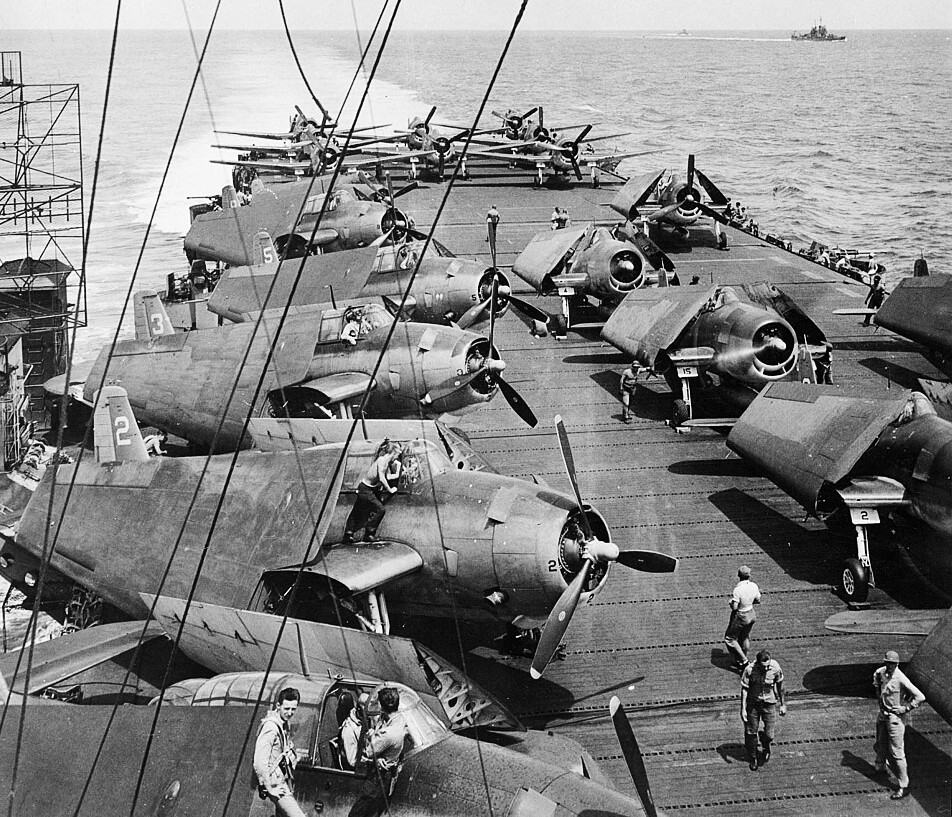
(USN Photo)
U.S. Navy Grumman TBM-1 Avenger torpedo bombers and Grumman F6F Hellcat fighters (right and aft) of Carrier Air Group 50 (CVLG-50) on the deck of the light aircraft carrier USS Bataan (CVL-29) in 1944.
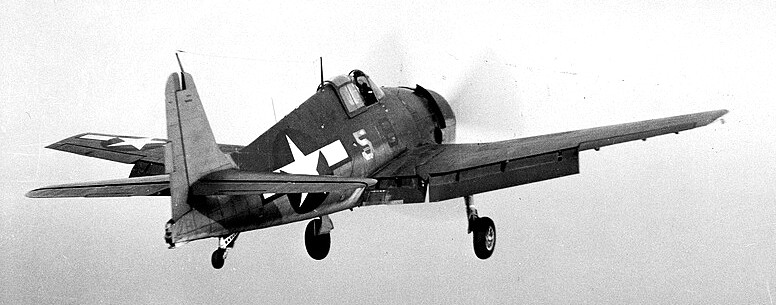
(USN Photo)
A U.S. Navy Grumman F6F-3 Hellcat is launched from the light aircraft carrier USS Bataan (CVL-29) on 1 January 1944. Bataan was commissioned on 17 November 1943 and conducted preliminary shakedown training in Chesapeake Bay before leaving on her shakedown cruise to the West Indies on 11 January 1944.
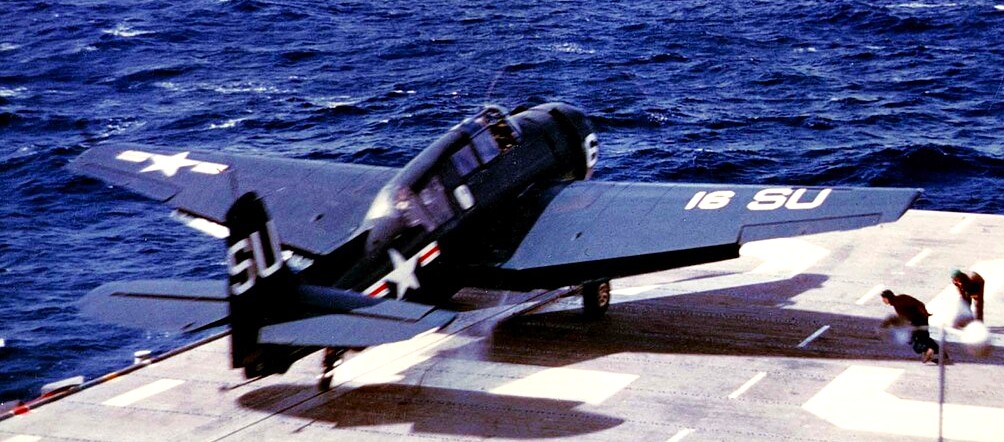
(USN Photo)
A U.S. Navy Grumman TBM-3W Avenger of Anti-Submarine Squadron VS-871 is launched from the light aircraft carrier USS Bataan (CVL-29). VS-871 was reserve squadron which was called to active duty on 1 July 1951. Two years later, it was redesignated VS-37 “Rooster Tails”.
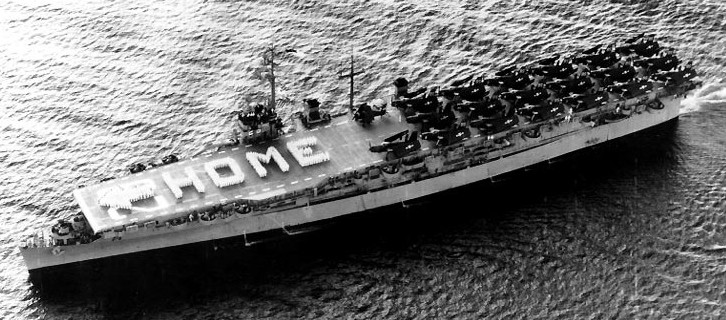
(USN Photo)
U.S. Navy light aircraft carrier USS Bataan (CVL-29) photographed on 22 May 1953, as she was en route to Naval Air Station San Diego, California (USA), following a deployment to Korean waters. Note the crew paraded on the flight deck spelling out the word “HOME” and an arrow pointing over her bow. The aircraft on deck include 19 Grumman AF Guardian anti-submarine planes and a solitary Vought F4U Corsair fighter (parked amidships on the starboard side).
(USN Photo)
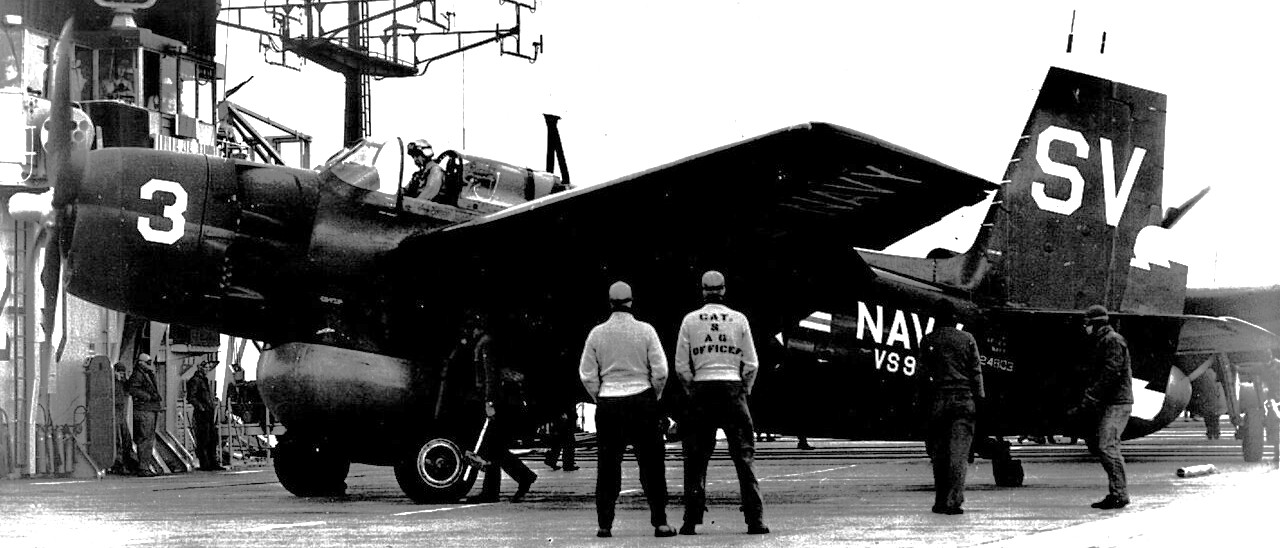
A U.S. Navy Grumman AF-2W Guardian of Anti-Submarine Squadron 931 (VS-931) on the deck of the light aircraft carrier USS Bataan (CVL-29), circa 1951. The squadron had been established as U.S. Naval Reserve composite squadron VC-931 in 1948. It was activated as VS-931 on 1 March 1951 and redesignated VS-20 on 4 February 1953. It was already disestablished again in 1957.
(USN Photo)
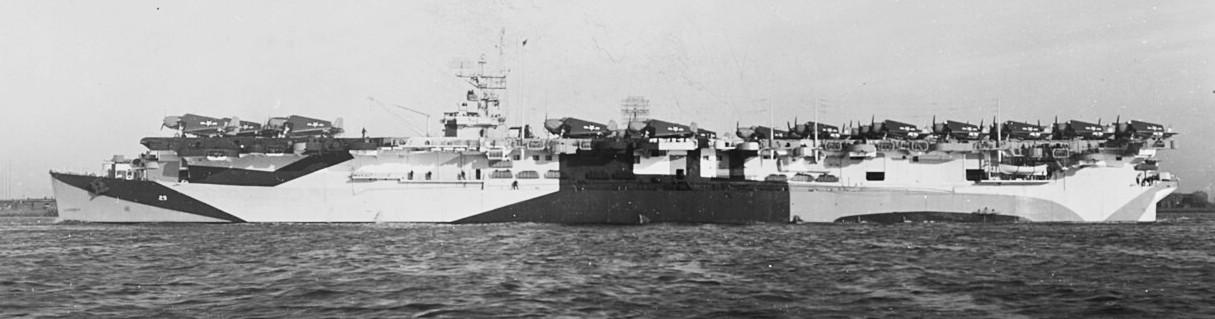
USS Bataan (CVL-29) Off the Philadelphia Navy Yard Pennsylvania March 1944.
(USN Photo)
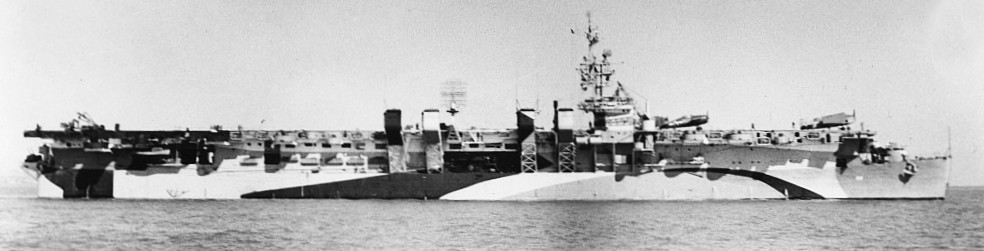
U.S. Navy light aircraft carrier USS Bataan (CVL-29) off the San Francisco Naval Shipyard, Hunters Point, California (USA), on 6 October 1944. This view shows the starboard side of her camouflage scheme Measure 32 Design 8A.
(USN Photo)
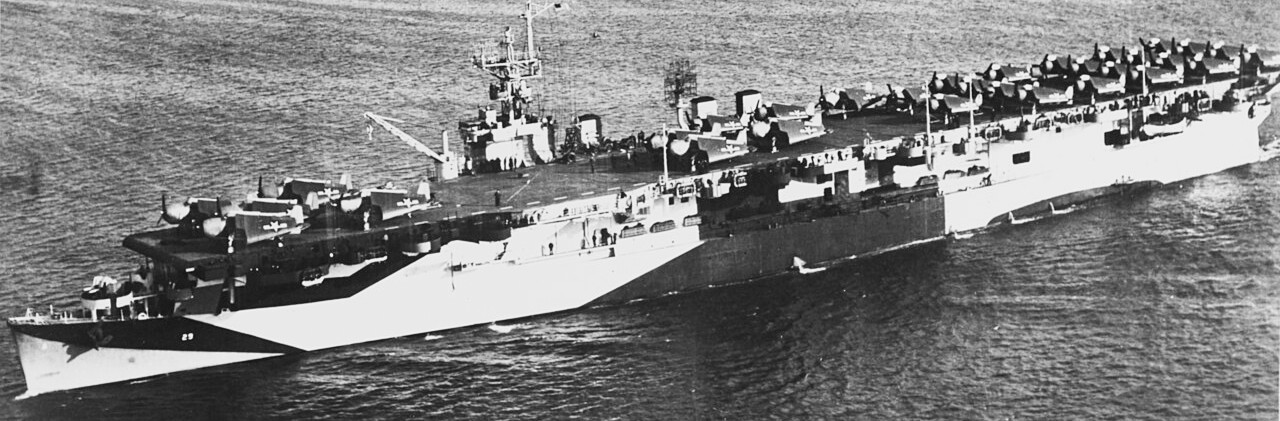
U.S. Navy light aircraft carrier USS Bataan (CVL-29) in the Delaware River near the Philadelphia Naval Shipyard, Pennsylvania (USA), on 2 March 1944. She is painted in camouflage Measure 32 Design 8A. Bataan left for the Pacific on this day.
(USN Photo)
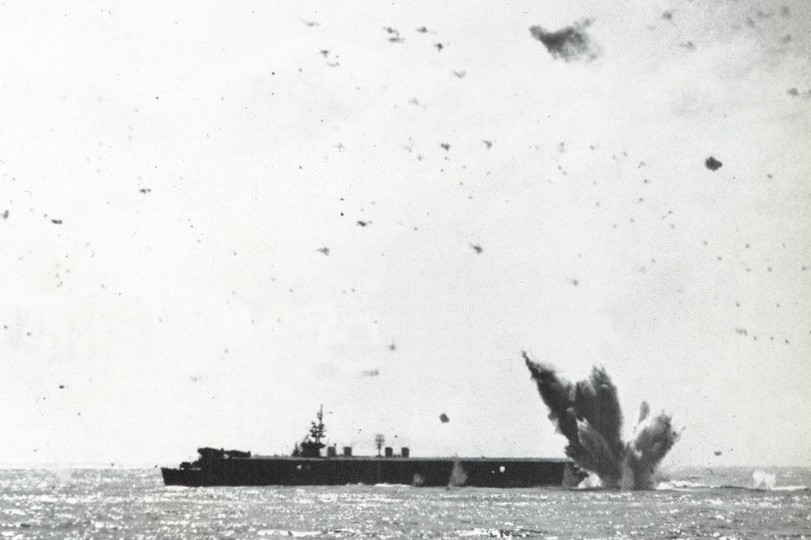
A Japanese Yokosuka D4Y Suisei (Allied reporting name “Judy”) crashes close to the U.S. Navy light aircraft carrier USS Bataan (CVL-29) on 20 March 1945.
(USN Photo)
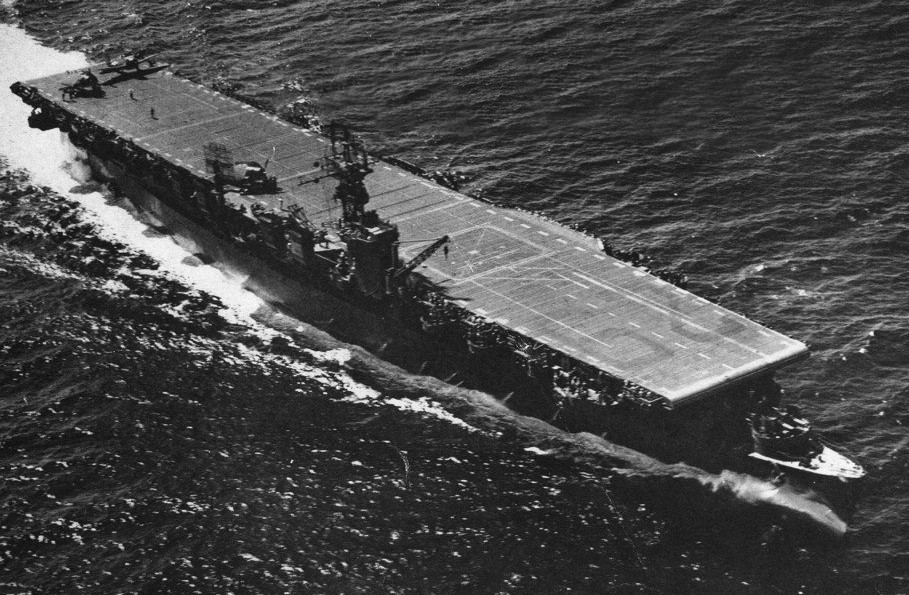
U.S. Navy light aircraft carrier USS Bataan (CVL-29) underway, circa 1945.
USS San Jacinto (CVL-30)
(USN Photo)
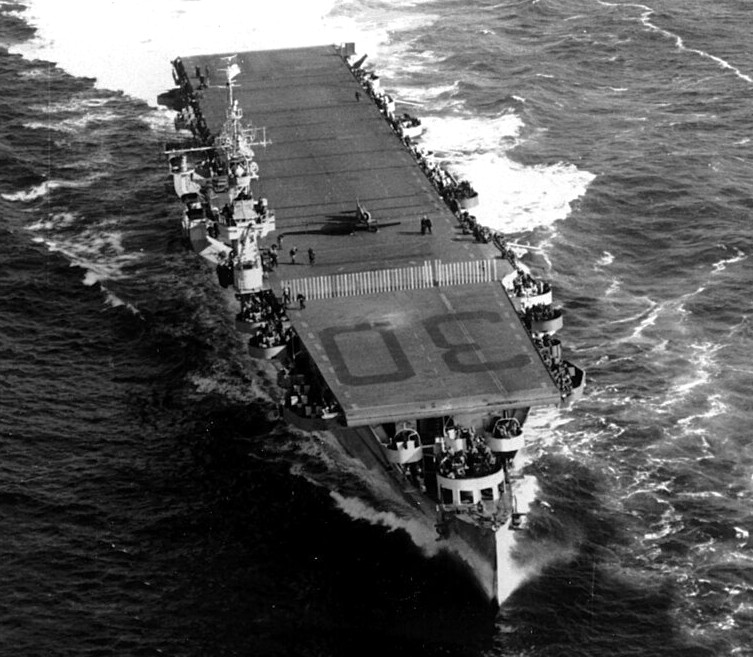
U.S. Navy light aircraft carrier USS San Jacinto (CVL-30) underway off the U.S. East Coast (position 36 55’N, 75 07’W) on 23 January 1944, with a North American SNJ Texan training plane parked on her flight deck.
USS San Jacinto (CVL-30) of the United States Navy was an Independence-class light aircraft carrier that served during the Second World War. She was named for the Battle of San Jacinto during the Texas Revolution. Future U.S. President George H. W. Bush served aboard the ship during the Second World War. (Wikipedia)
(USN Photo)
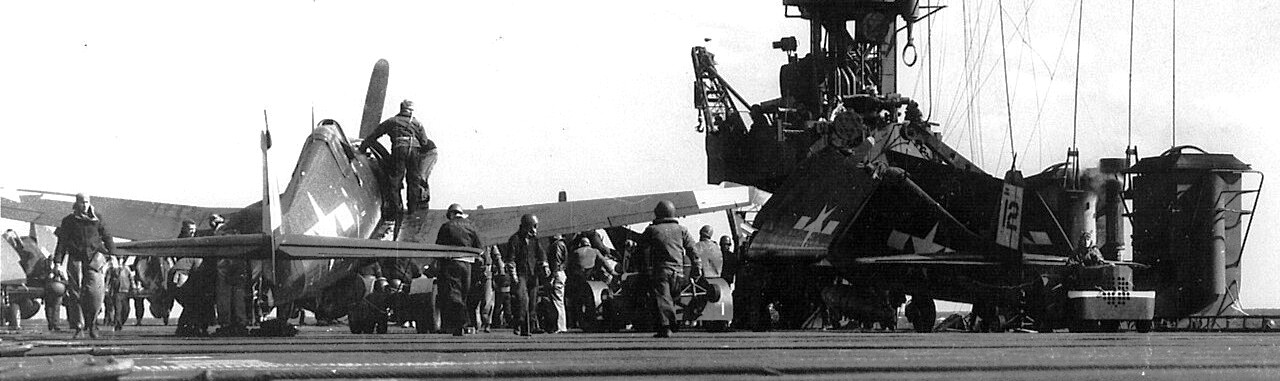
U.S. Navy Grumman F6F-5 Hellcat aircraft of fighter squadron VF-45 on the flight deck of light aircraft carrier USS San Jacinto (CVL-30), March 1945. Note the geometric identification symbols for San Jacinto´s air group on the tail surfaces and the right wings.
(USN Photo)
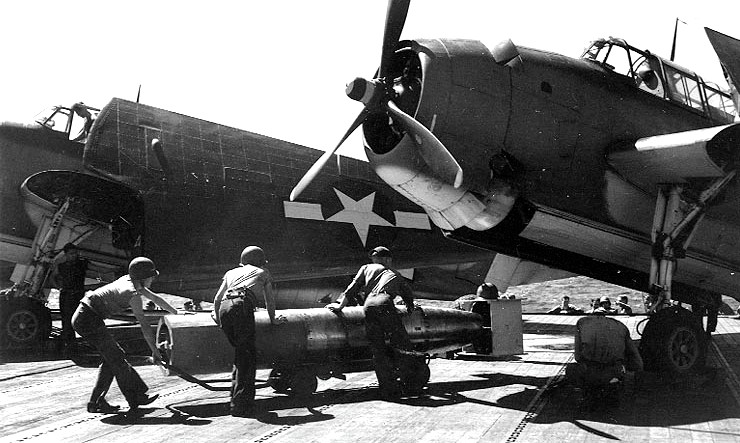
A U.S. Navy Battle off Cape Engaño Grumman TBM Avenger of Torpedo Squadron 51 (VT-51) is armed with a Mark XIII torpedo aboard the light aircraft carrier USS San Jacinto (CVL-30), during the Battle off Cape Engaño on 25 October 1944. The photo was probably taken before the squadron’s planes attacked the Japanese carrier force. The torpedo is fitted with a wooden stabilizer around its tail and drag ring around its nose.
(USN Photo)
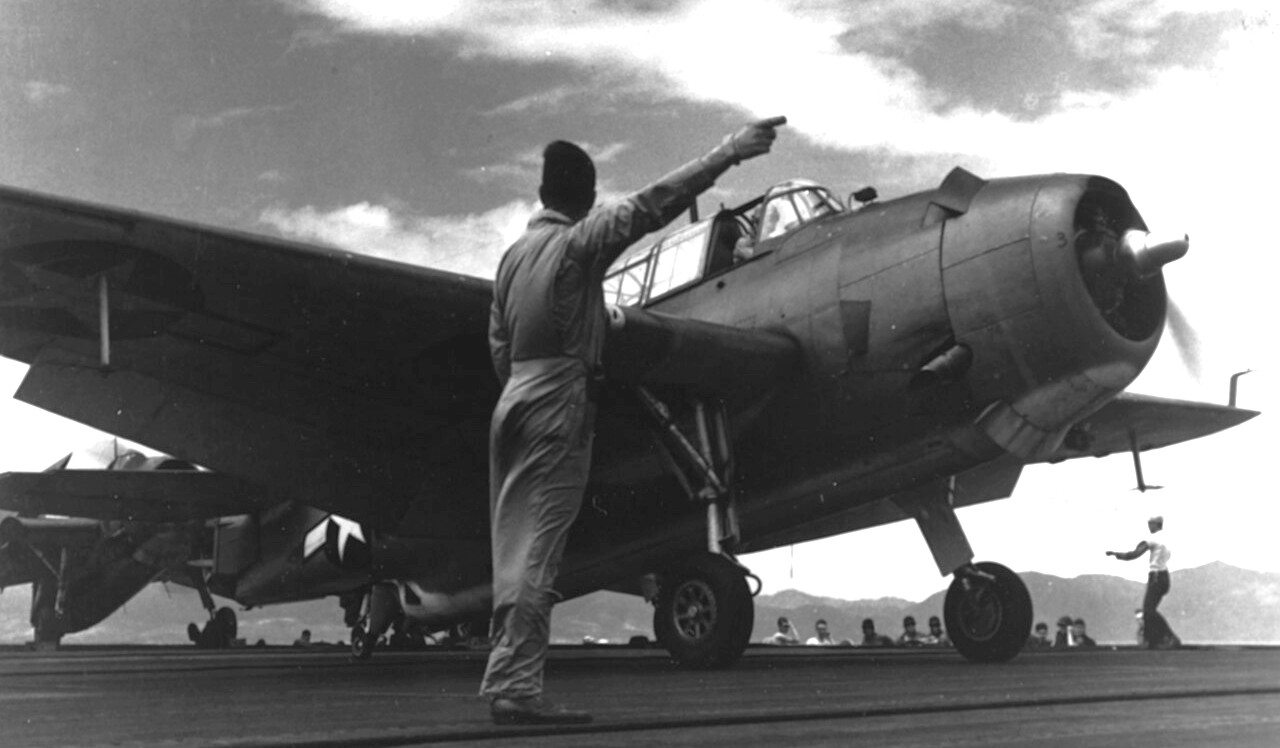
U.S. Navy Lieutenant Commander Albert B. Cahn gives the take-off signal to a Grumman TBM-1C Avenger of Torpedo Squadron 51 (VT-51) aboard the light aircraft carrier USS San Jacinto (CVL-30), during exercises on 16 May 1944.
(USN Photo)
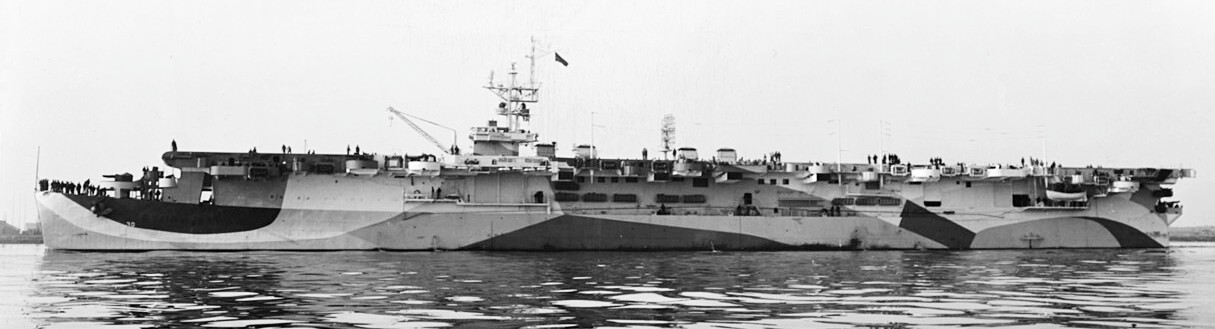
U.S. Navy light aircraft carrier USS San Jacinto (CVL-30) off the Philadelphia Naval Shipyard, Pennsylvania (USA), on 17 January 1944. She is painted in camouflage Measure 33, Design 7a.
(USN Photo)
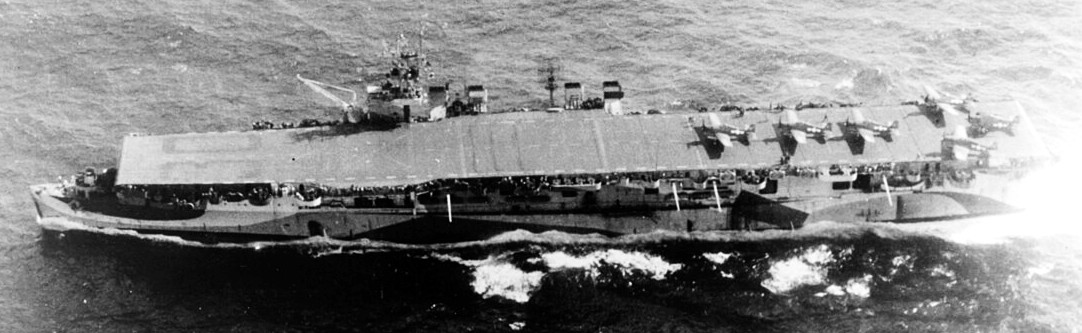
U.S. Navy light aircraft carrier USS San Jacinto (CVL-30) launching Grumman F6F Hellcats from Fighting Squadron 51 (VF-51) in the vicinity of Majuro Atoll on 31 May 1944. San Jacinto wears Camouflage Measure 33, Design 7A.
(USN Photo)
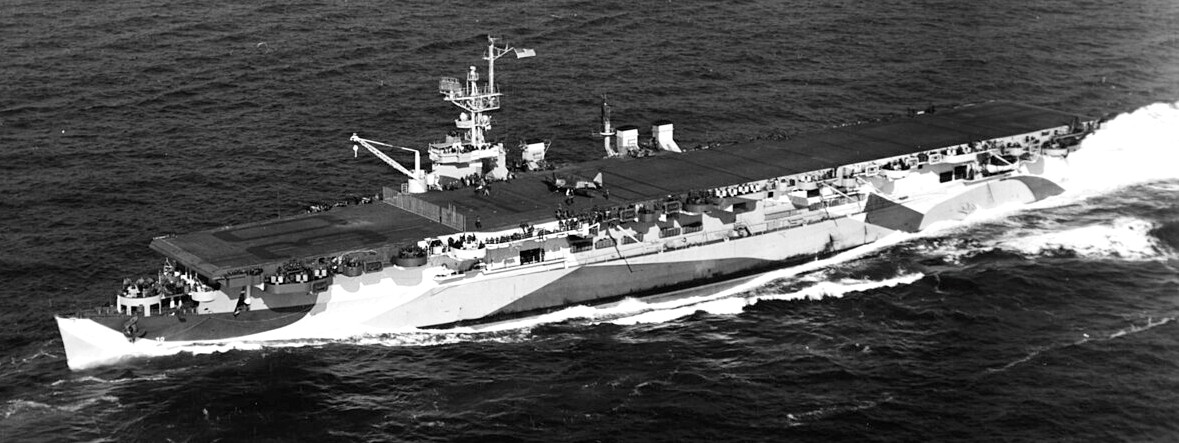
U.S. Navy light aircraft carrier USS San Jacinto (CVL-30) underway off the U.S. East Coast on 23 January 1944, with a North American SNJ Texan training plane parked on her flight deck. The ship is painted in Camouflage Measure 33, Design 7A.
(USN Photo)
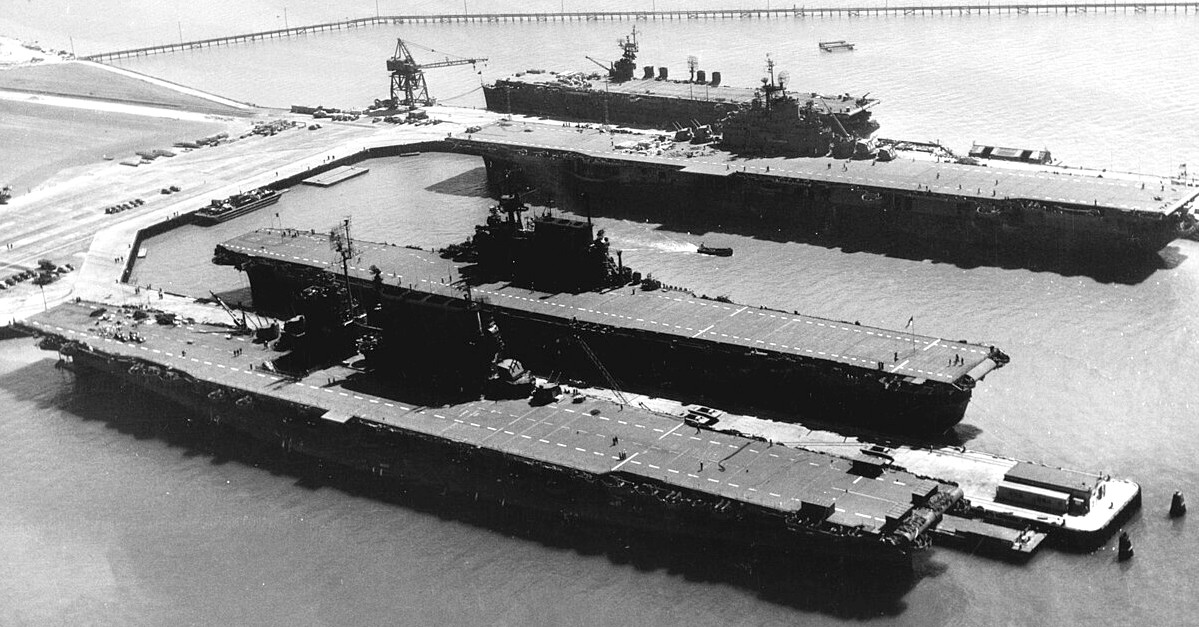
Four U.S. Navy aircraft carriers representing four separate classes (Lexington, Yorktown, Essex, Independence) docked at the Naval Air Station Alameda, California (USA), circa mid-September 1945. The ships are (from front to back): USS Saratoga (CV-3); USS Enterprise (CV-6); USS Hornet (CV-12) and USS San Jacinto (CVL-30). Note the Consolidated PBY Catalina amphibians parked at the far left.