USS Independence (CVL-22), USS Princeton (CVL-23), USS Belleau Wood (CVL-24), USS Cowpens (CV-25/CVL-25/AVT-1), USS Monterey (CVL-26)
(USN Photo)
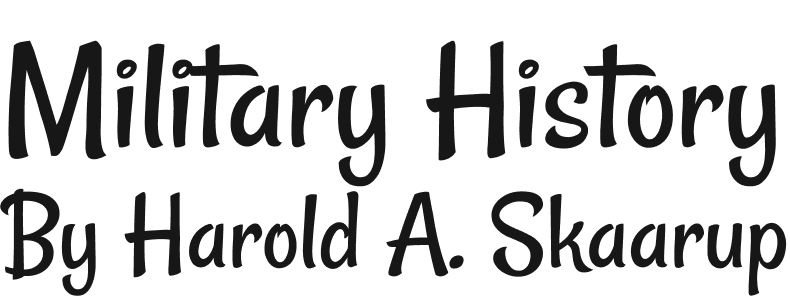
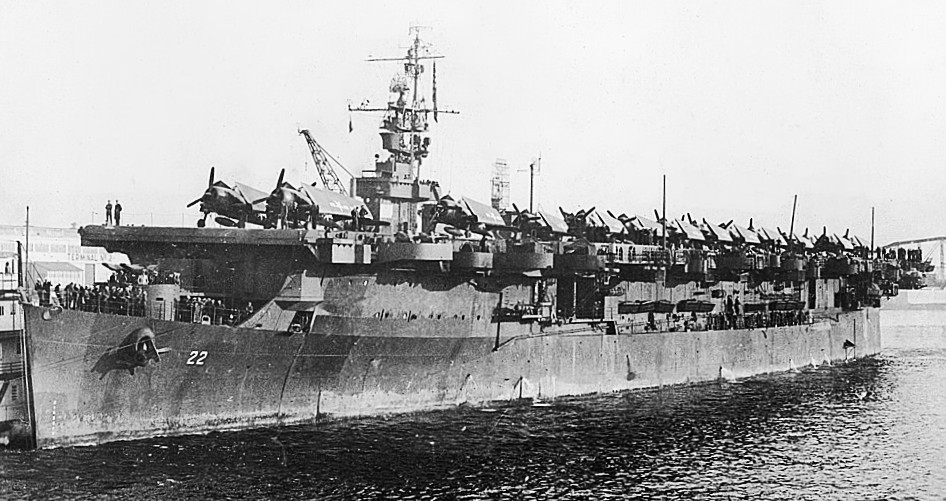
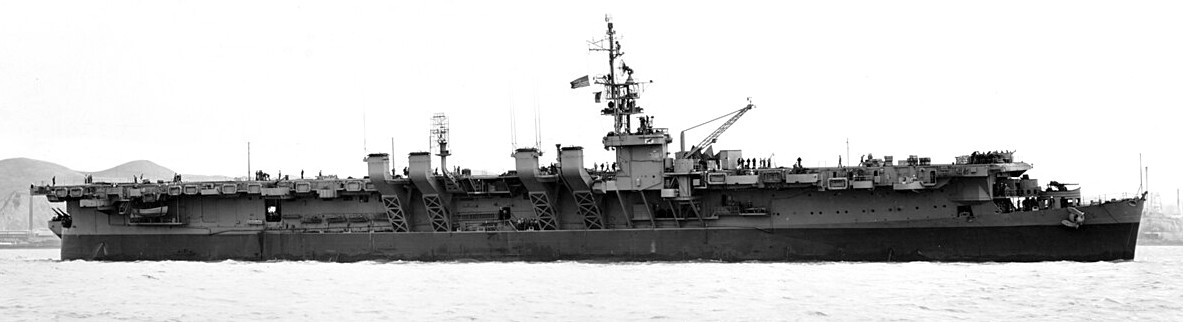
U.S. Navy light aircraft carrier USS Independence (CVL-22) in San Francisco Bay (USA) on 15 July 1943. Note that she still carries Douglas SBD Dauntless dive bombers. Before entering combat the air group would only consist of Grumman F6F Hellcat fighters and TBF Avenger torpedo bombers.
USS Independence (CVL-22) (also CV-22) was a United States Navy light aircraft carrier. The lead ship of her class, she served during the Second World War. Converted from the hull of a Cleveland-class light cruiser USS Amsterdam (CL-59), she was built by the New York Shipbuilding Corporation and commissioned in January 1943. She took part in the attacks on Rabaul and Tarawa before being torpedoed by Japanese aircraft, necessitating repairs in San Francisco from January to July 1944.
After repairs, she launched many strikes against targets in Luzon and Okinawa. Independence was part of the carrier group that sank the remnants of the Japanese Mobile Fleet in the Battle of Leyte Gulf and several other Japanese ships in the Surigao Strait. Until the surrender of Japan, she was assigned to strike duties against targets in the Philippines and Japan. She finished her operational duty off the coast of Japan supporting occupation forces until being assigned to return American veterans back to the United States as part of Operation Magic Carpet.
Independence was later used as a target during the Operation Crossroads atomic bomb tests. After being transported back to Pearl Harbor and San Francisco for study, she was later sunk near the Farallon Islands. (Wikipedia)
(USN Photo)
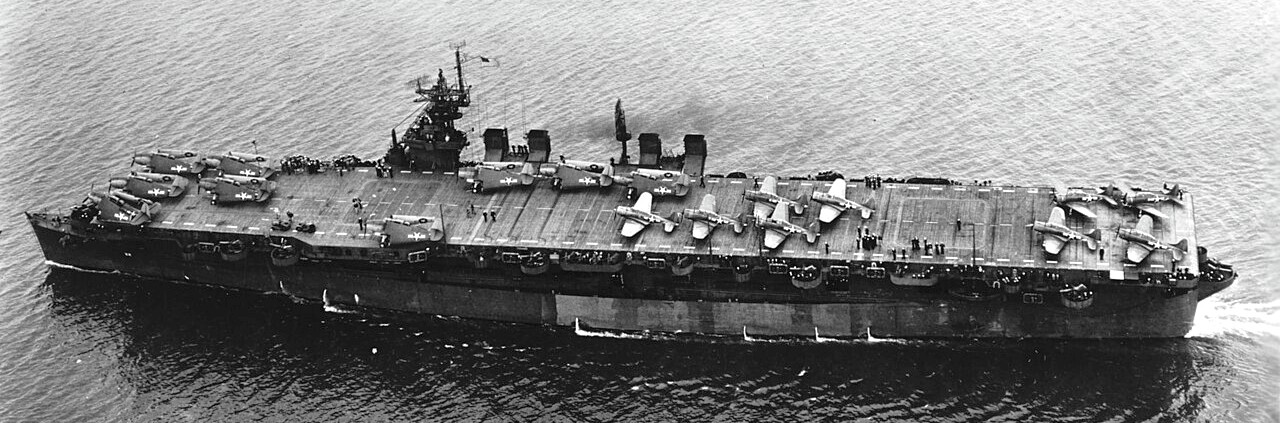
U.S. Navy light aircraft carrier USS Independence (CV-22) off the Mare Island Navy Yard, California, on 13 July 1943. Her hull number was changed to CVL-22 two days later.
(USN Photo)
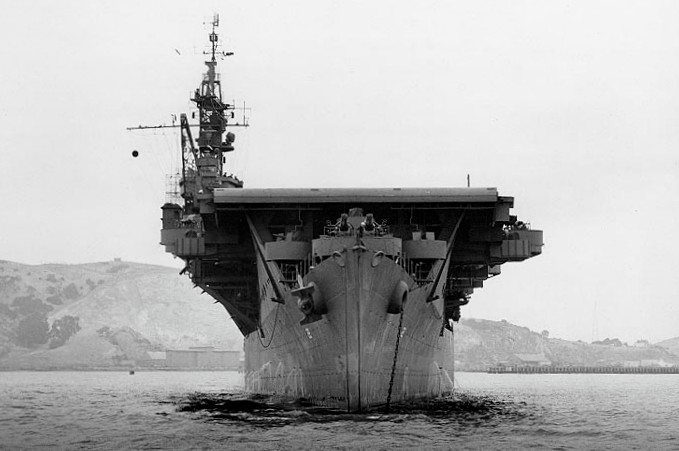
The U.S. Navy light aircraft carrier USS Independence (CV-22) photographed soon after completion, circa early 1943, while she still carried a 127 mm/38 gun at the bow. Independence was redesignated CVL-22 on 15 July 1943.
(USN Photo)
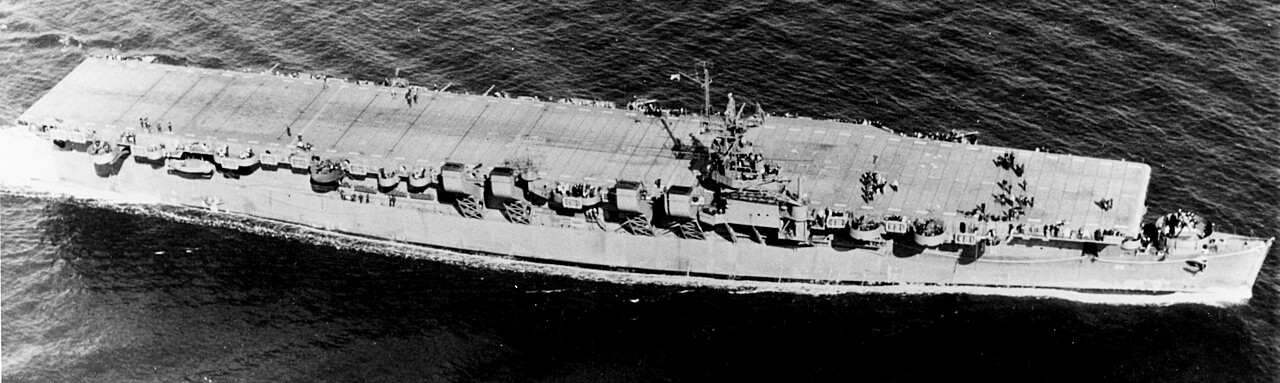
USS Independence (CVL-22), 1945.
USS Princeton (CVL-23)
(USN Photo)
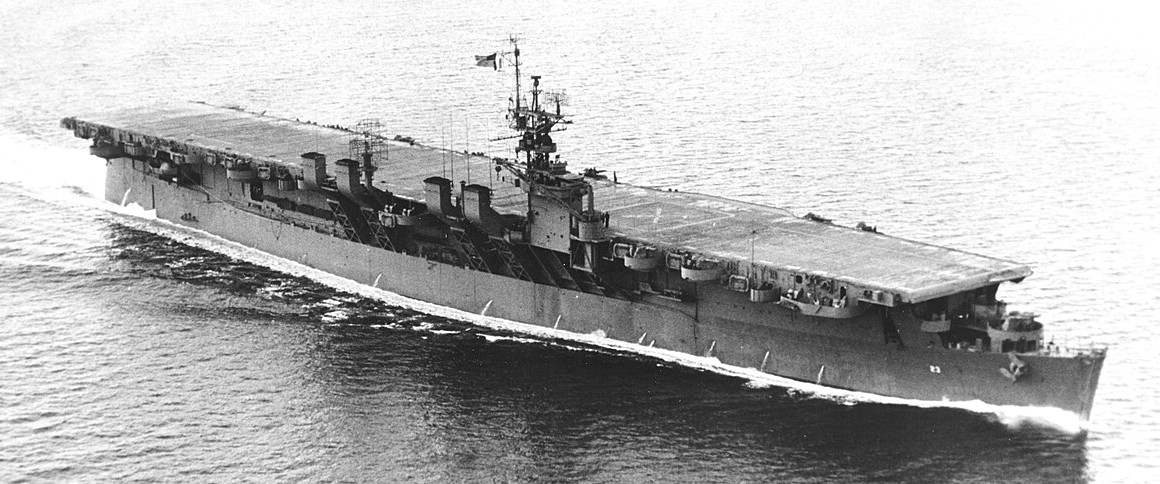
U.S. Navy light aircraft carrier USS Princeton (CVL-23) steaming at 20 knots off Seattle, Washington, on 3 January 1944.
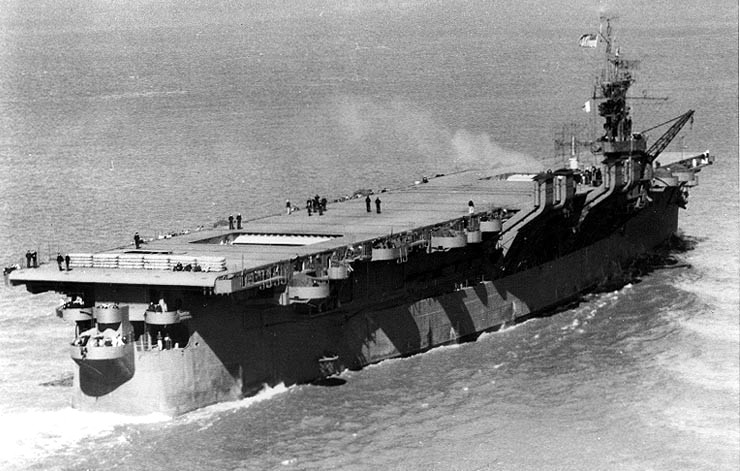
The fourth USS Princeton (CVL-23) was a United States Navy Independence-class light aircraft carrier active in the Pacific Ocean during World War II. She was launched in 1942 and lost at the Battle of Leyte Gulf in 1944.
(USN Photo)
U.S. Navy light aircraft carrier USS Princeton (CV-23) underway in the Delaware River, off the Philadelphia Navy Yard, Pennsylvania (USA), on 28 March 1943. Princeton was redesignated CVL-23 on 15 July 1943.

(USN Photo)
A Japanese airplane crashes near USS Princeton (CVL-23), during an air raid off Formosa, 14 October 1944. Battleship in the left distance is probably USS South Dakota (BB-57) or USS Alabama (BB-60).
On 20 October 1944, landings were made at Dulag and San Pedro Bay, Leyte. Princeton, in Task Group 38.3, cruised off Luzon and sent her planes against airfields there to prevent Japanese land-based aircraft attacks on Allied ships massed in Leyte Gulf.
On 24 October, however, the task group was found by enemy planes from Clark and Nichols fields. Shortly before 10:00 a.m. Princeton was attacked by a lone Yokosuka D4Y ‘Judy’. The dive bomber dropped a single bomb, which struck the carrier between the elevators, punching through the wooden flight deck and hangar before exploding. Although structural damage was minor, a fire broke out and quickly spread owing to burning gasoline, causing further explosions.
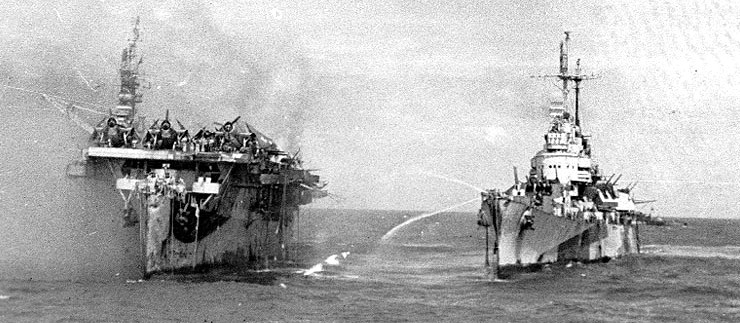
Cruisers and destroyers came alongside to render assistance. USS Irwin approached and attempted to fight the fire in the forward section of the hangar deck. The cruiser USS Birmingham, being the largest ship, took the lead role in fire fighting. During the operation, Princeton collided with and damaged the assisting ships.
At 15:24, a second and larger explosion shook the Princeton, possibly caused by an explosion of one or more bombs in the magazine. Birmingham suffered extensive damage to her superstructure and considerable casualties. Irwin was also damaged, but stayed close and launched boats to rescue survivors from the sea. Irwin rescued 646 crewmen from the Princeton; the ship later received a Navy Unit Commendation award for her actions.
Efforts to save the carrier continued, but by 16:00, the fires were out of control. The remaining personnel were evacuated, and shortly after 17:06, Irwin commenced firing torpedoes at the burning hulk. However, Irwin abandoned this effort due to torpedo malfunctions (her torpedo tubes possibly damaged in the collision with Princeton) that caused her torpedoes to circle back and almost hit her. USS Reno, at 17:46, took over the task of scuttling Princeton. Three minutes later, an even larger explosion occurred on Princeton, destroying the entire forward section and sending flames and debris up to 1,000–2,000 feet (300–610 m) into the air. Princeton sank at approximately 17:50.
Casualties on Princeton herself were relatively light considering the intensity of her fires; 108 men (10 officers and 98 enlisted men) were lost, while 1,361 crewmen were rescued. Princeton’s Captain Buracker was later awarded the Purple Heart, Legion of Merit with the Combat “V”, and the Navy Cross for his actions during the sinking.
Casualties were much heavier aboard Birmingham which was devastated by secondary explosions aboard Princeton while fighting fires, with 241 killed and 412 wounded. Three other ships were more lightly damaged while assisting Princeton:
Birmingham: heavy topside damage, two 5 in., two 40 mm and two 20 mm guns lost.
Morrison: foremast lost, portside smashed.
Irwin: forward 5 in. mounts and director out, starboard side smashed.
Reno: one 40 mm smashed.
Captain John M. Hoskins, who had been prospective commanding officer of CVL-23, was also rescued, but lost his right foot. He would later become the new commanding officer of the fifth Princeton, launched as a replacement in 1945.
Birmingham’s commanding officer Thomas Inglis said “I should take the same action – providing the same factors were involved and I had no crystal ball.” By the end of 1945, he had been promoted to rear admiral and chief of Naval Intelligence. Birmingham earned a Navy Unit Commendation for her performance on 24 October 1944. According to a second hand account told by a Birmingham survivor, when the cruiser returned to port for repairs, the civilian workers brought in to clean up the ship before repairs allegedly refused to do the job due to the stench of rotting flesh, so naval enlisted men took over the job.
Lt. Robert G. Bradley was posthumously awarded the Navy Cross for his actions on Princeton on 24 October 1944. He was later the namesake of USS Robert G. Bradley (FFG-49). Princeton’s executive officer Cdr. Joseph Nathaniel Murphy who assumed command was later awarded the Navy Cross for his tireless effort to save the ship and get the crew to safety.
Princeton earned nine battle stars during the Second World War. (Wikipedia)
(USN Photo)
USS Birmingham (CL-62) comes alongside the burning USS Princeton (CVL-23) to assist with fire fighting, 24 October 1944.
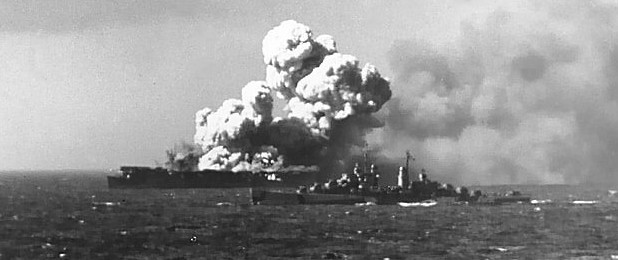
(USN Photo)
U.S. Navy light aircraft carrier USS Princeton (CVL-23) afire at about 1004 hours on 24 October 1944, soon after she was hit by a Japanese bomb during operations off the Philippines. This view shows smoke rising from the ship’s second large explosion, as USS Reno (CL-96) steams by in the foreground. Photographed from USS South Dakota (BB-57).
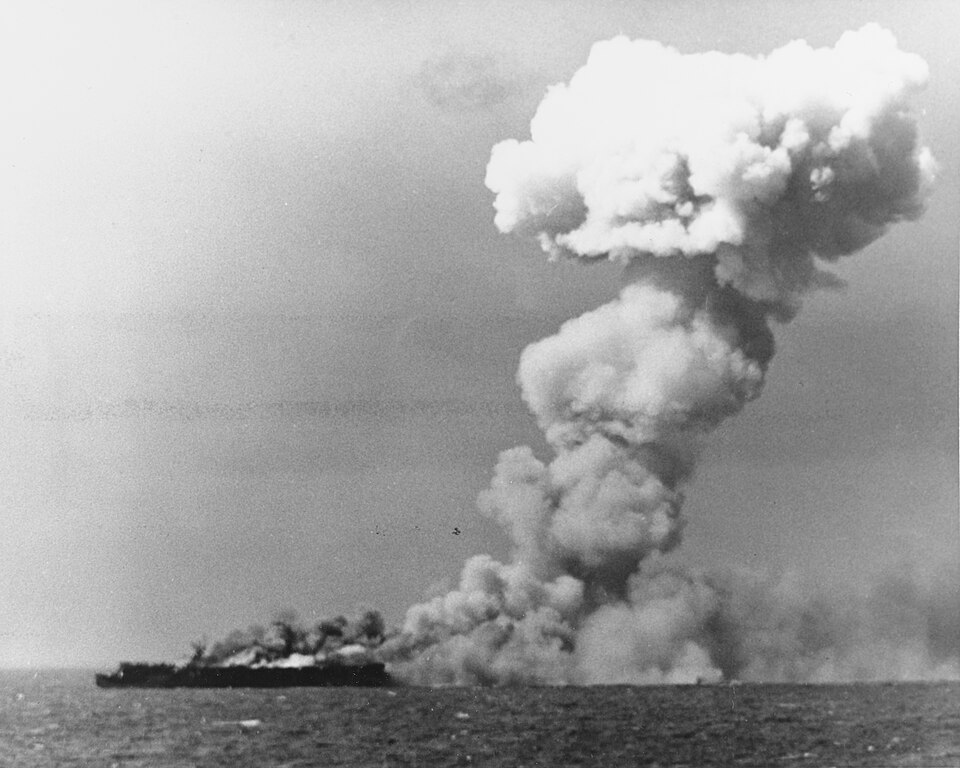
(USN Photo)
U.S. Navy light aircraft carrier USS Princeton (CVL-23) burning soon after she was hit by a Japanese bomb while operating off the Philippines on 24 October 1944. This view, taken from the battleship USS South Dakota (BB-57) at about 1001 hrs., shows the large smoke column aft following a heavy explosion in the carrier’s hangar bay.
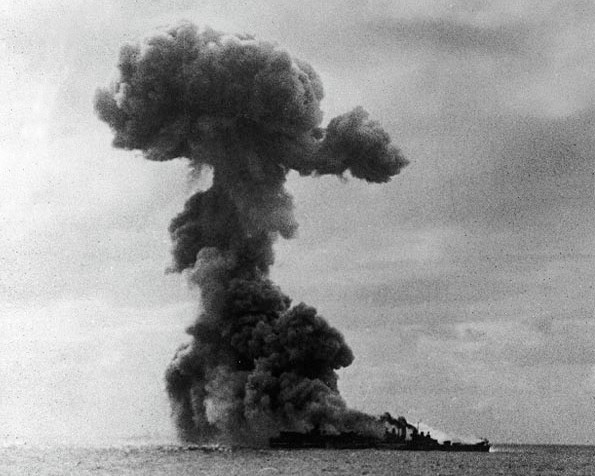
(USN Photo)
Heavy (second) explosion aft aboard the U.S. Navy light aircraft carrier USS Princeton (CVL-23), with the light cruiser USS Birmingham (CL-62) alongside, 24 October 1944.

(USN Photo)
U.S. Navy light cruiser USS Birmingham (CL-62), at left, and a destroyer pull away from the light aircraft carrier USS Princeton (CVL-23) following the big explosion that destroyed the carrier’s stern at about 1523 hrs, on 24 October 1944. This blast killed over two hundred men aboard Birmingham, which was alongside Princeton fighting fires. Note the light smoke over Birmingham‘s midships and stern areas. Princeton‘s stern, and a good deal of her after superstructure, has been blown off.
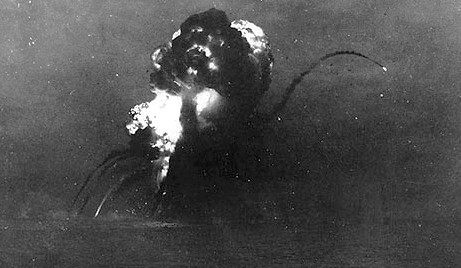
(USN Photo)
U.S. Navy light aircraft carrier USS Princeton (CVL-23) blows up after being torpedoed by the light cruiser USS Reno (CL-96) on 24 October 1944. Princeton had been fatally damaged by Japanese air attack earlier in the day, and was scuttled by torpedoing to permit U.S. forces to clear the area.
USS Belleau Wood (CVL-24)
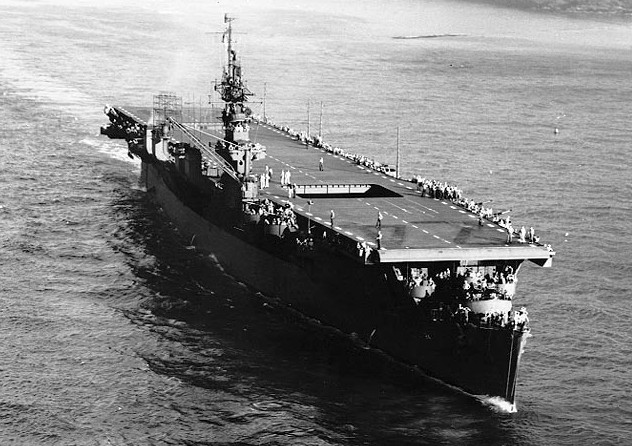
(USN Photo)
U.S. Navy light aircraft carrier USS Belleau Wood (CVL-24) underway on 22 December 1943.
USS Belleau Wood (CVL-24) was a United States Navy Independence-class light aircraft carrier active during World War II in the Pacific Theater from 1943 to 1945. The Independence class were ordered as light cruisers of the Cleveland class, but during construction, they were converted into light carriers owing to the need for additional vessels of that type during the war. The ship was originally named New Haven, but was renamed Belleau Wood after conversion work had begun, after the Battle of Belleau Wood of World War I.
Belleau Wood saw extensive action during World War II, participating in the Gilbert and Marshall Islands campaigns in late 1943 and early 1944, and the Mariana and Palau Islands campaign in mid-1944. There, she saw action at the Battle of the Philippine Sea, where her aircraft contributed to the sinking of the Japanese carrier Hiyō. She fought in the Philippines campaign later that year, and saw action at the Battle of Leyte Gulf. Shortly thereafter, she was damaged by a kamikaze. After repairs, she supported the invasion of Iwo Jima in March 1945 and operations against the Japanese Home Islands. After the war, she participated in Operation Magic Carpet missions before being placed in reserve in 1947.
The ship was loaned to the French Marine Nationale in the 1950s and served in the First Indochina War. During this period, she was renamed Bois Belleau, the French equivalent of her original name. The ship was returned to the United States in 1960, but was not retained in US Navy service; she was instead broken up for scrap that same year. (Wikipedia)
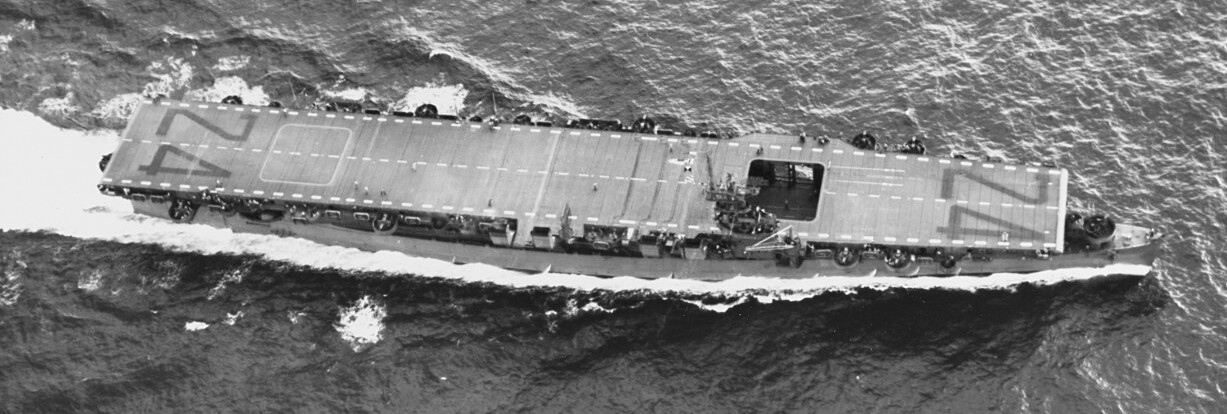
(USN Photo)
Aerial view of the U.S. Navy light aircraft carrier USS Belleau Wood (CVL-24) underway on 22 December 1943.
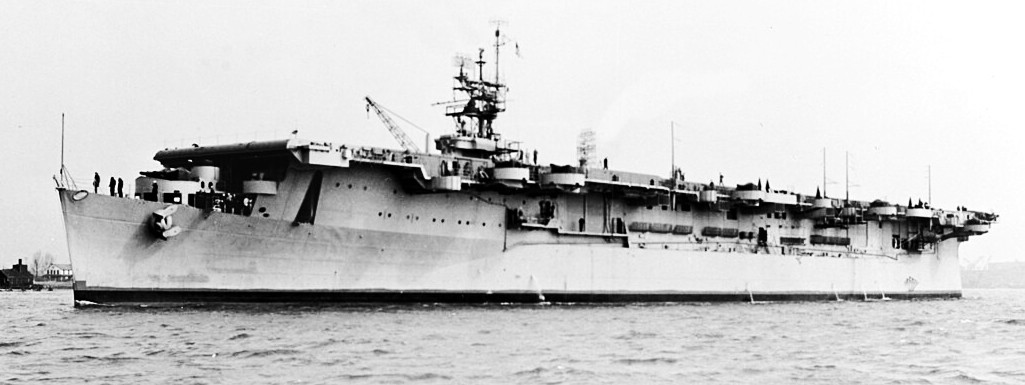
(USN Photo)
U.S. Navy aircraft carrier USS Belleau Wood (CV-24) in the Delaware River off the Philadelphia Naval Shipyard, Pennsylvania (USA), 18 April 1943. Note the SK-1, SC and SG radar and YE aircraft homing beacon antennas. Belleau Wood was redesignated “CVL-24” on 15 July 1943.
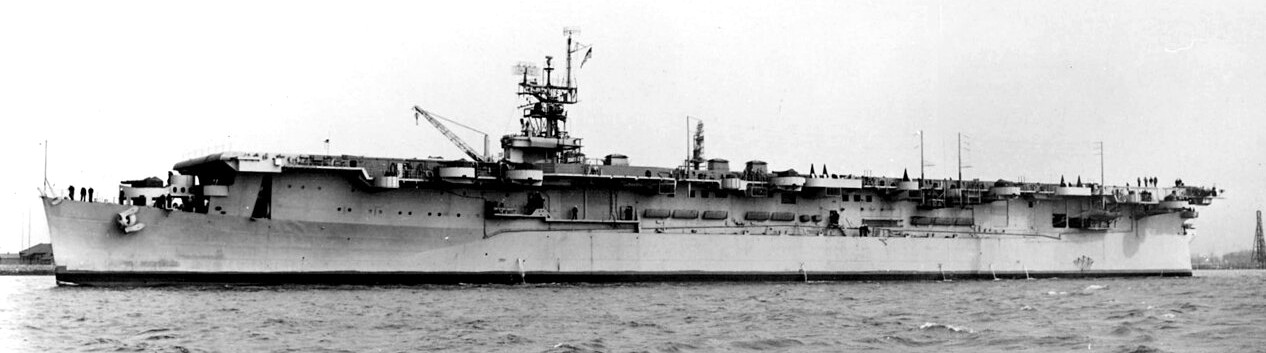
(USN Photo)
U.S. Navy light aircraft carrier USS Belleau Wood (CV-24) in the Delaware River, off the Philadelphia Naval Shipyard, Pennsylvania (USA), on 18 April 1943. Belleau Wood was redesignated “CVL-24” on 15 July 1943.

(USN Photo)
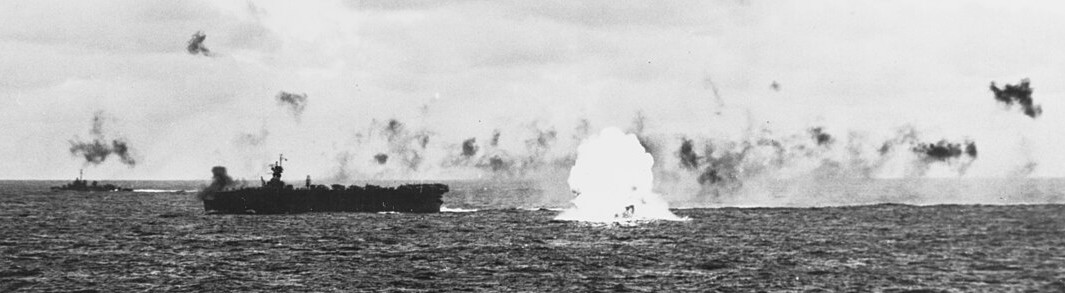
A Japanese bomber flies through tracers and “flak” bursts just aft of the U.S. Navy light aircraft carrier USS Belleau Wood (CVL-24), during an attack on Task Group 58.2 off the Mariana Islands, 23 February 1944. The plane crashed and exploded a few seconds later, missing the ship. The photo was taken from USS Essex (CV-9).
(USN Photo)
A Japanese bomber explodes as it crashes into the sea near the U.S. Navy light aircraft carrier USS Belleau Wood (CVL-24), during an attack on Task Group 58.2 off the Mariana Islands, 23 February 1944. The photo was taken from USS Essex (CV-9).
(USN Photo)
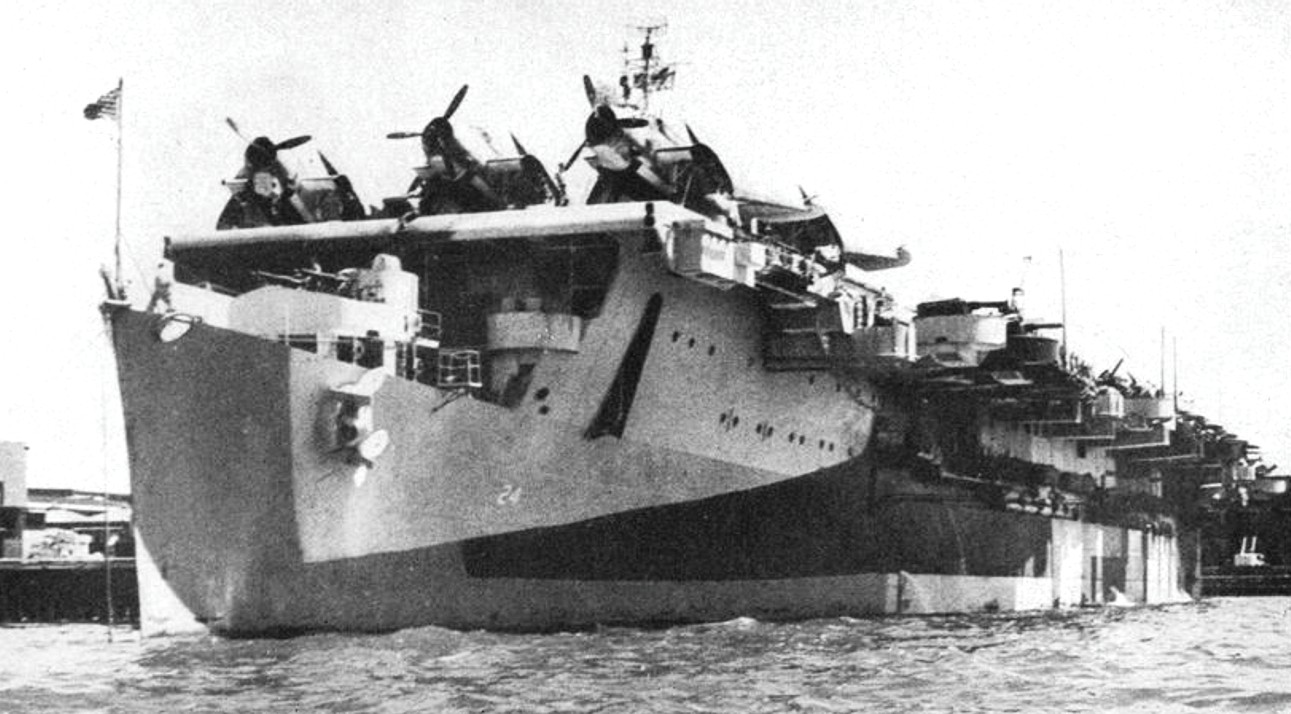
U.S. Navy light aircraft carrier USS Belleau Wood (CVL-24) at Pearl Harbor, Hawaii (USA), in July 1944. She has just been painted in Camouflage Measure 33, Design 3D. On deck are aircraft of Carrier Air Group 21 (CVG-21).
(USN Photo)
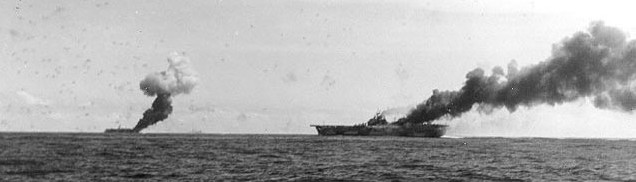
USS Franklin (CV-13), at right, and USS Belleau Wood (CVL-24) afire after being hit by Japanese “Kamikaze” suicide planes, while operating off the Philippines on 30 October 1944. Photographed from USS Brush (DD-745. Note “flak” bursts over the ships.
(USN Photo)
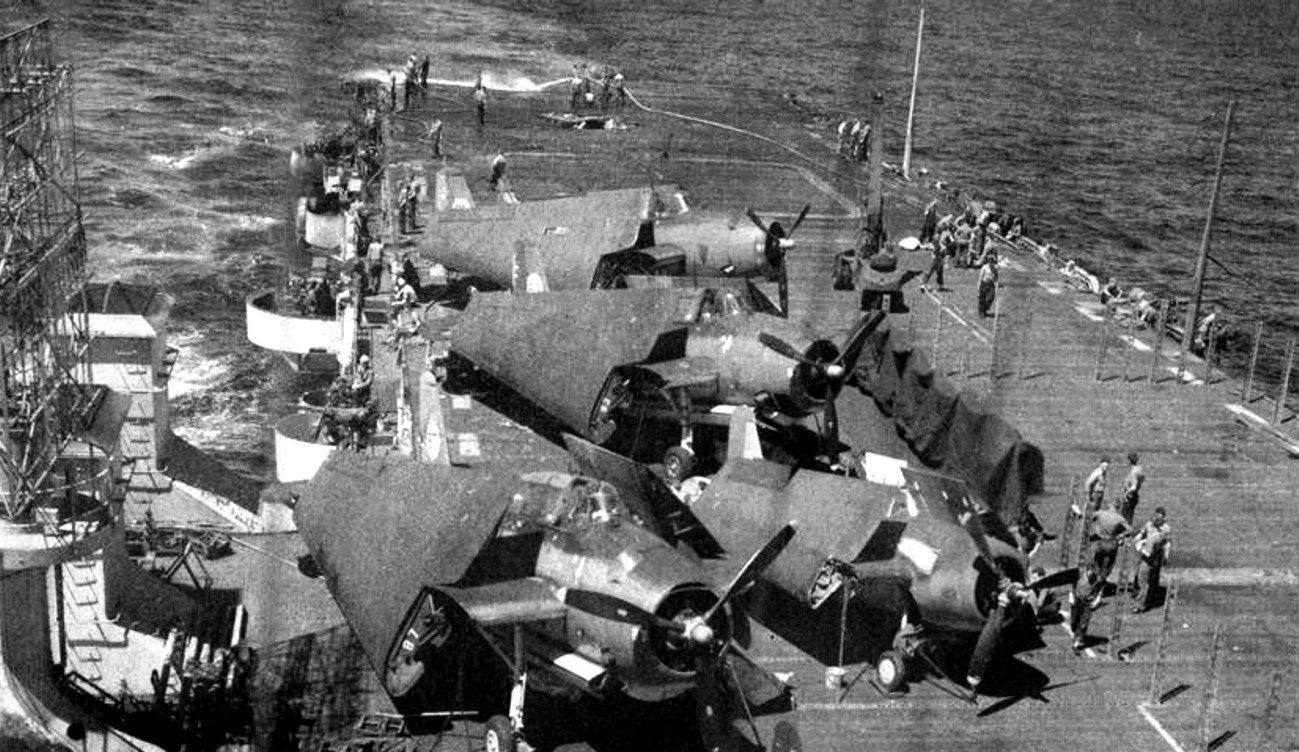
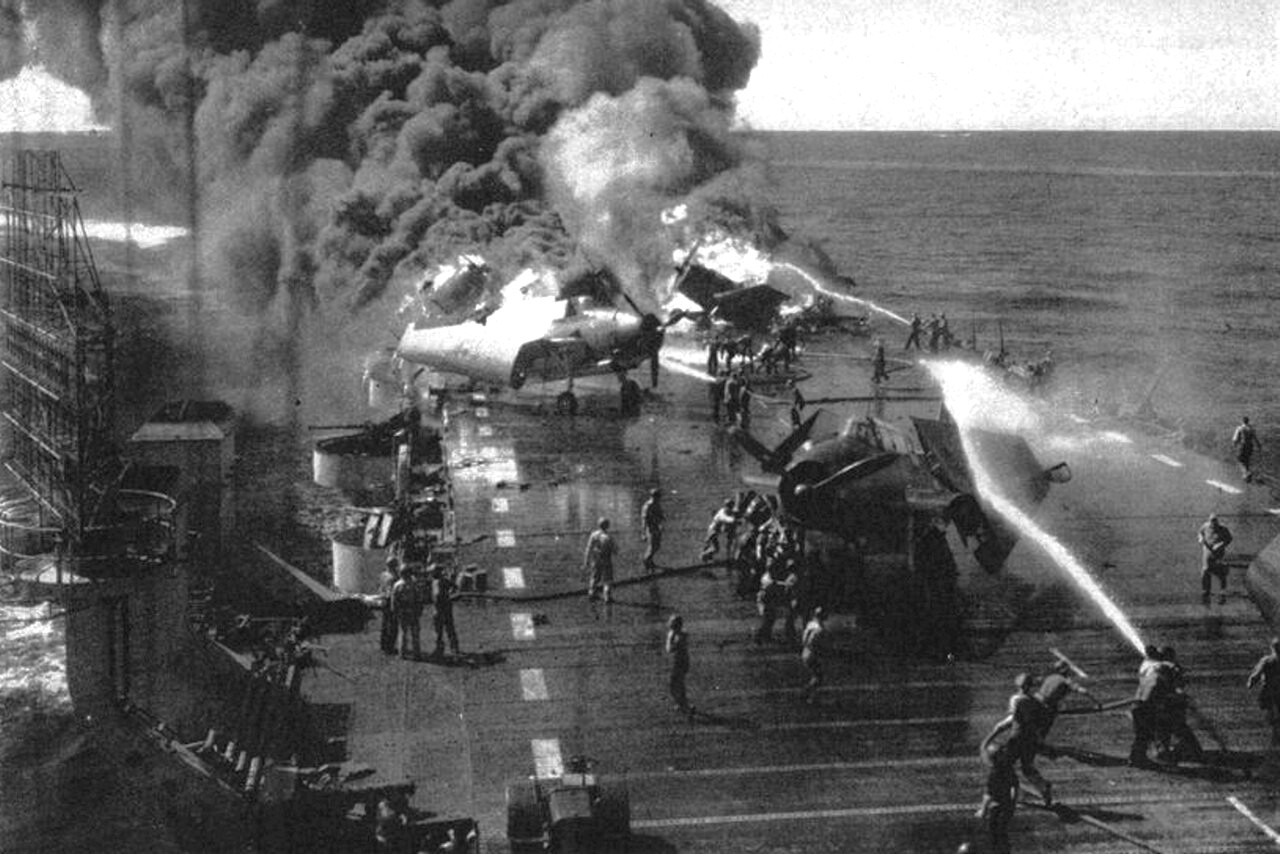
Crewmen aboard the U.S. Navy light aircraft carrier USS Belleau Wood (CVL-24) extinguish the last fires after she was hit by a kamikaze, while operating off Luzon, Philippines, on 30 October 1944. Note the hole where the kamikaze hit. Three Grumman TBF Avenger of Torpedo Squadron 21 (VT-21) are visible in the foreground and a single General Motors FM Wildcat, a type which was normally only operating from escort carriers.
(USN Photo)
U.S. Navy light aircraft carrier USS Belleau Wood (CVL-24) burning aft after she was hit by a Kamikaze, while operating off Luzon, Philippines, on 30 October 1944. Flight deck crewmen are moving undamaged Grumman TBM Avenger planes of Torpedo Squadron 21 (VT-21) away from the flames as others fight the fires.
(USN Photo)
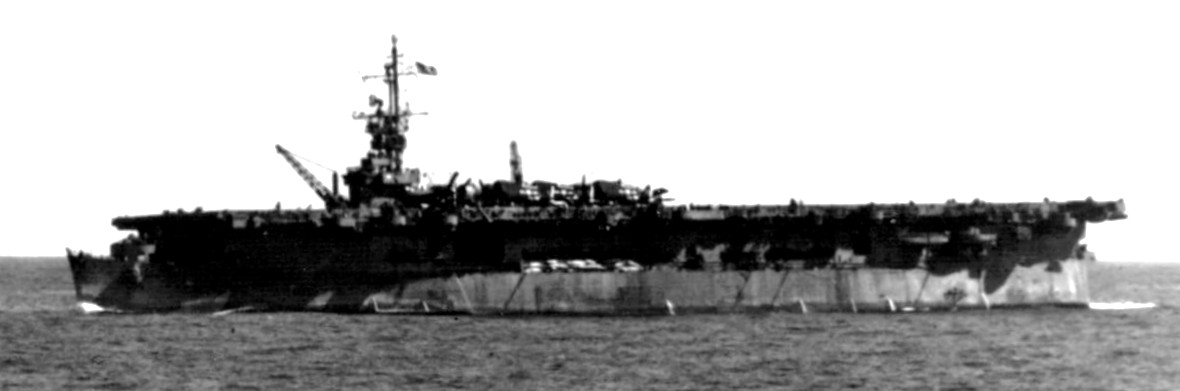
U.S. Navy light aircraft carrier USS Belleau Wood (CVL-24) underway off Iwo Jima, in early 1945.
USS Cowpens (CV-25/CVL-25/AVT-1)
(USN Photo)
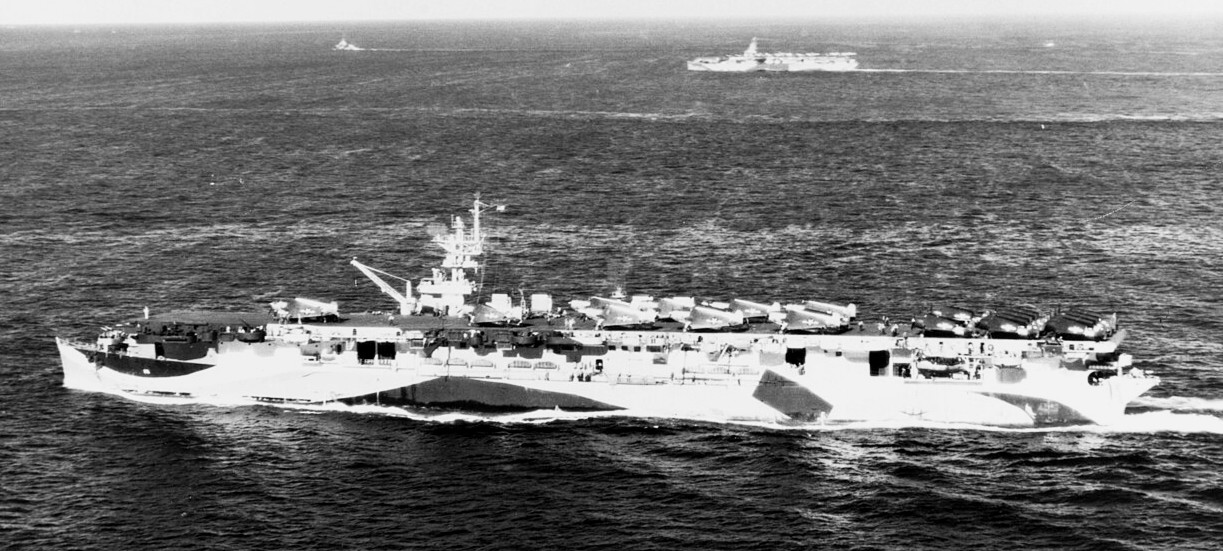
U.S. Navy light aircraft carrier USS Cowpens (CVL-25) at sea, 31 August 1944. She wears Camouflage Measure 33, Design 7A. USS Independence (CVL-22) is visible in the distance, wearing Measure 32, Design 8A.
USS Cowpens (CV-25/CVL-25/AVT-1), nicknamed The Mighty Moo, was an 11,000-ton Independence-class light aircraft carrier that served the United States Navy from 1943 to 1947.
Cowpens, named for the Battle of Cowpens of the Revolutionary War, was launched on 17 January 1943 at the New York Shipbuilding Corporation, in Camden, New Jersey, sponsored by Mrs. Margaret Bradford Spruance (née Halsey, daughter of Fleet Admiral William F. Halsey Jr.) and commissioned on 28 May 1943 by Captain R. P. McConnell. She was reclassified CVL-25 on 15 July 1943. Cowpens completed her active service at the end of 1946. (Wikipedia)
(USN Photo)
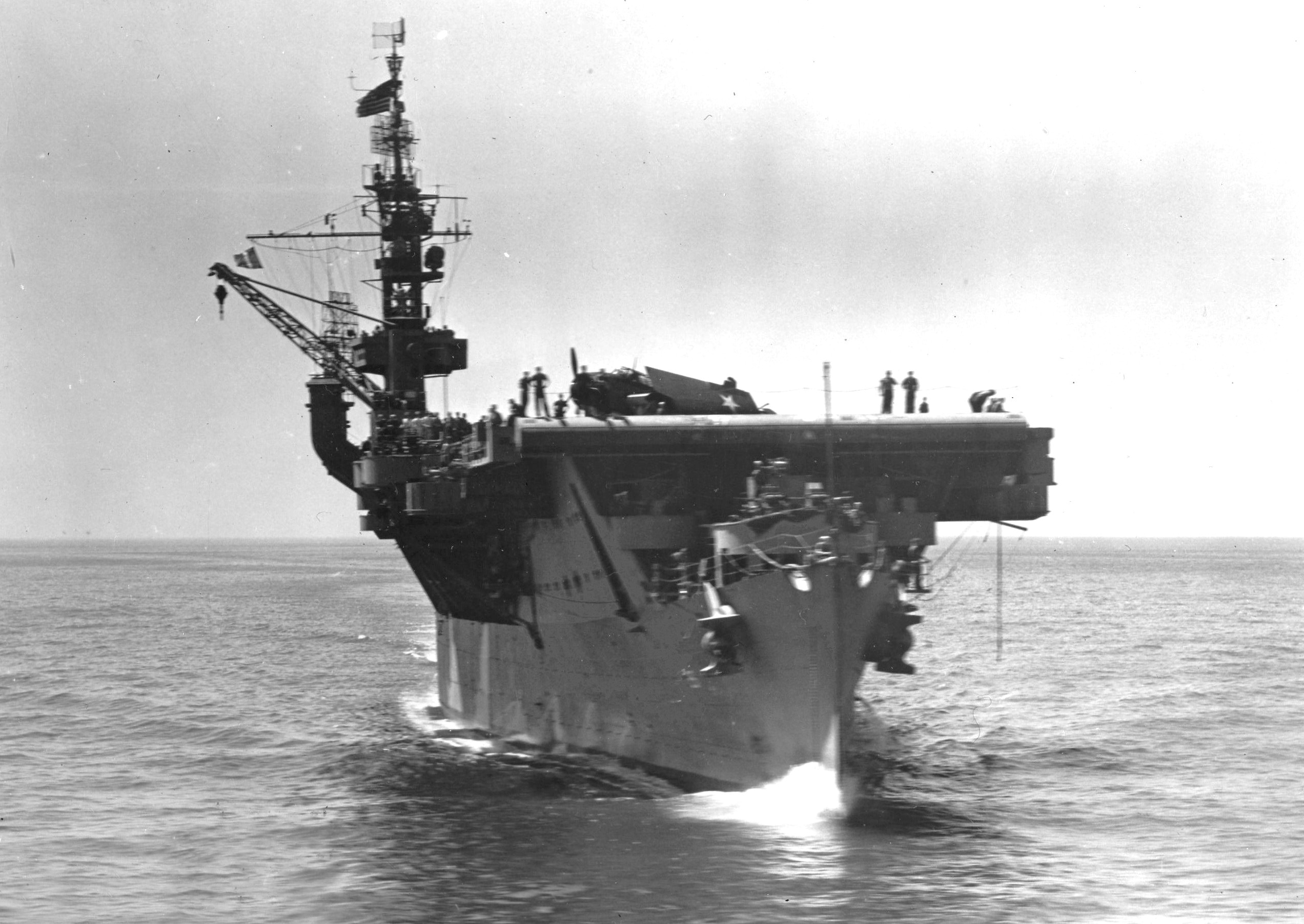
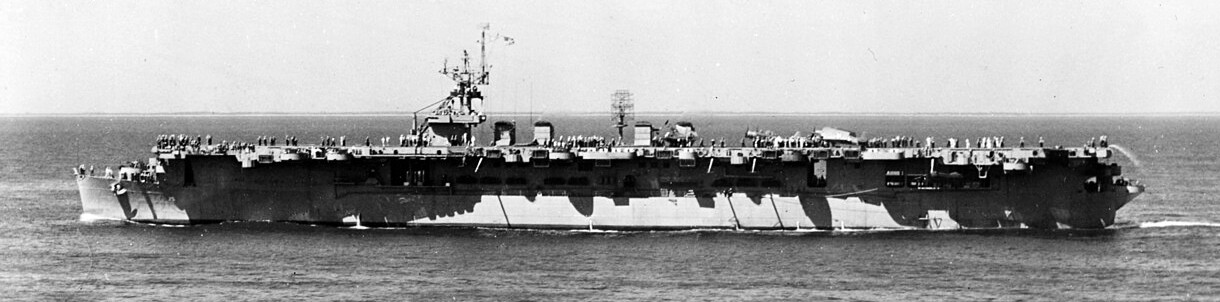
U.S. Navy light aircraft carrier USS Cowpens (CV-25) underway on 25 June 1943. She was redesignated CVL-25 on 15 July 1943.
(USN Photo)
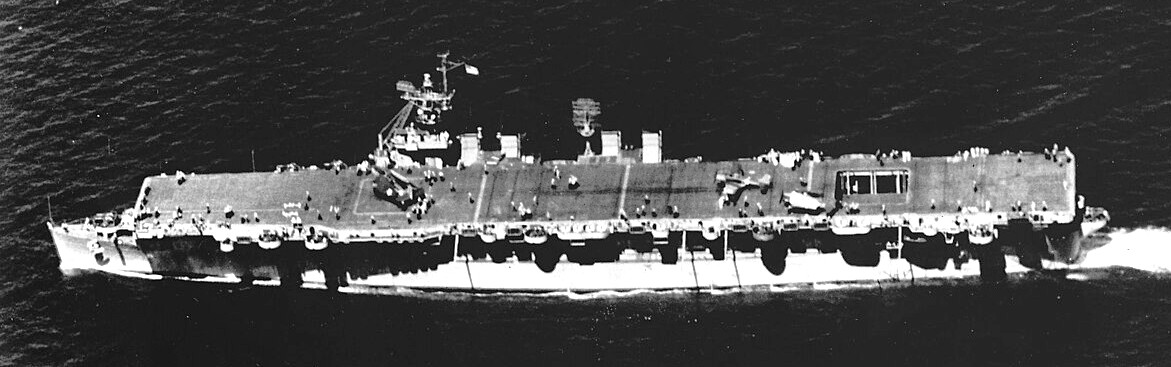
U.S. Navy light aircraft carrier USS Cowpens (CV-25) underway, circa in June 1943. She was redesignated CVL-25 on 15 July 1943.
(USN Photo)
U.S. Navy light aircraft carrier USS Cowpens (CV-25) underway on 25 June 1943. She was redesignated CVL-25 on 15 July 1943.
(USN Photo)
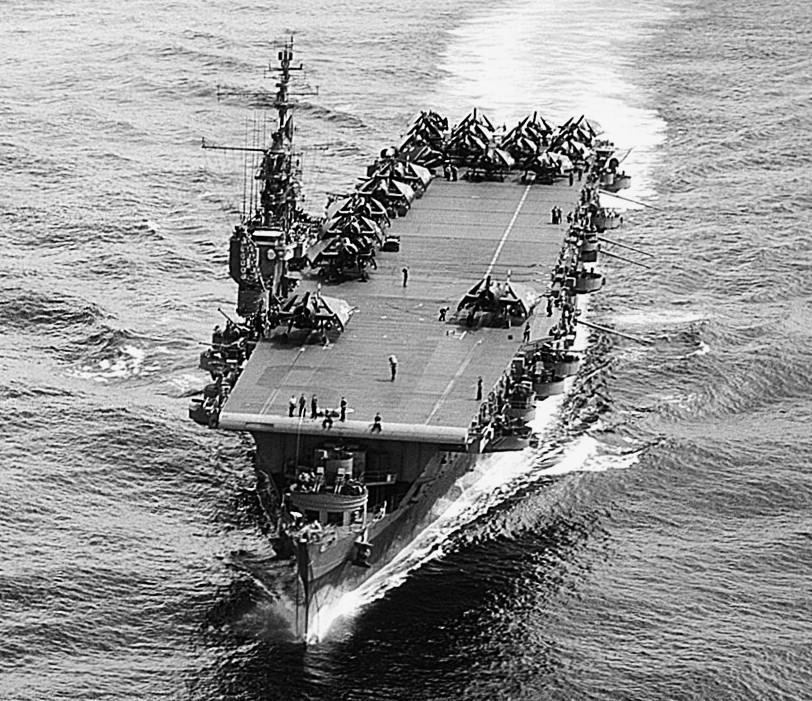
The light aircraft carrier USS Cowpens (CVL-25) in 1945. Aircraft of Carrier Air Group 22 are parked on the deck.
(USN Photo)
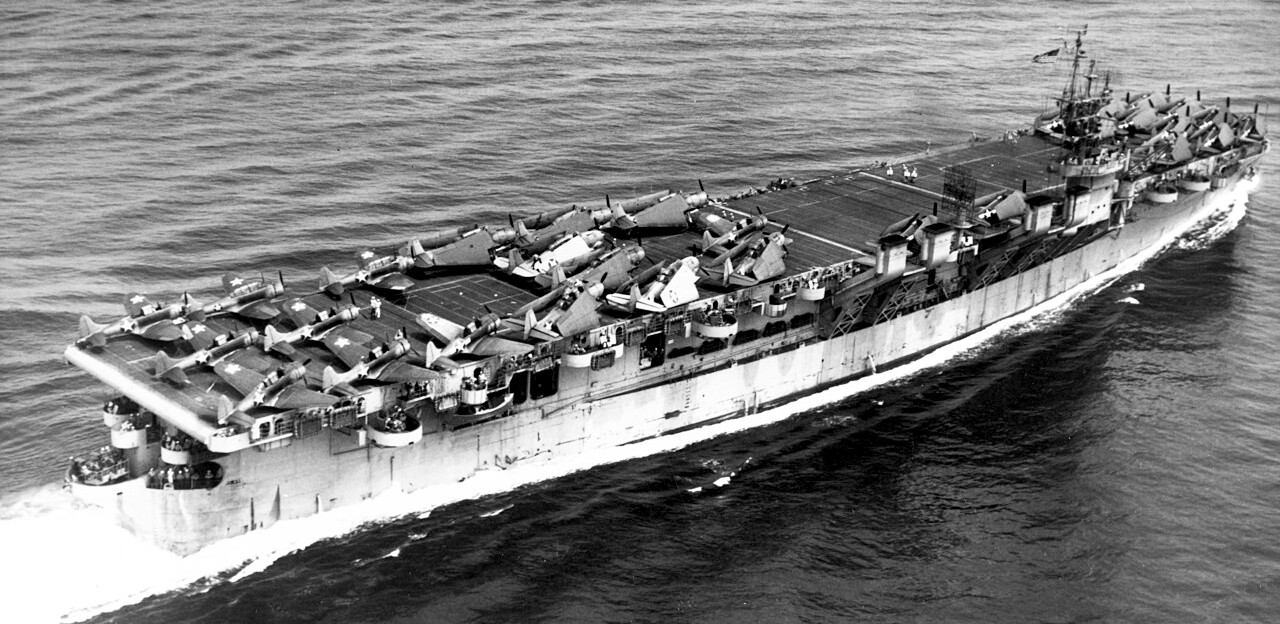
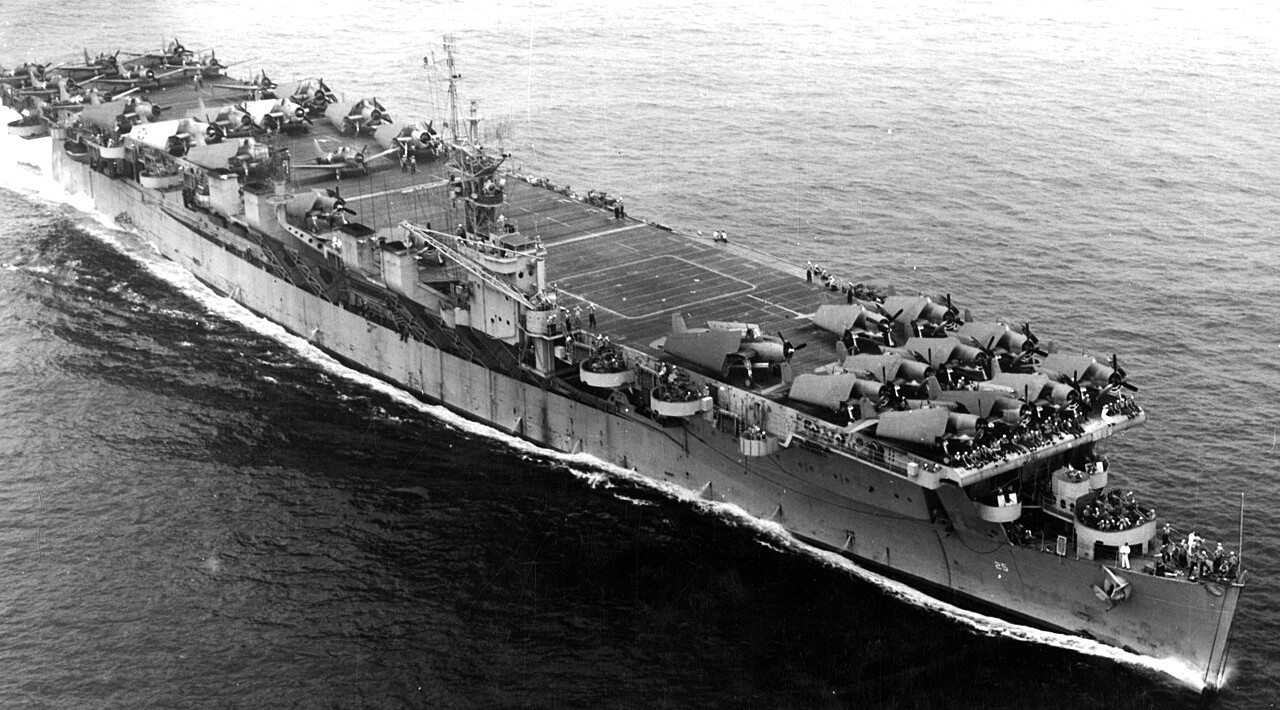
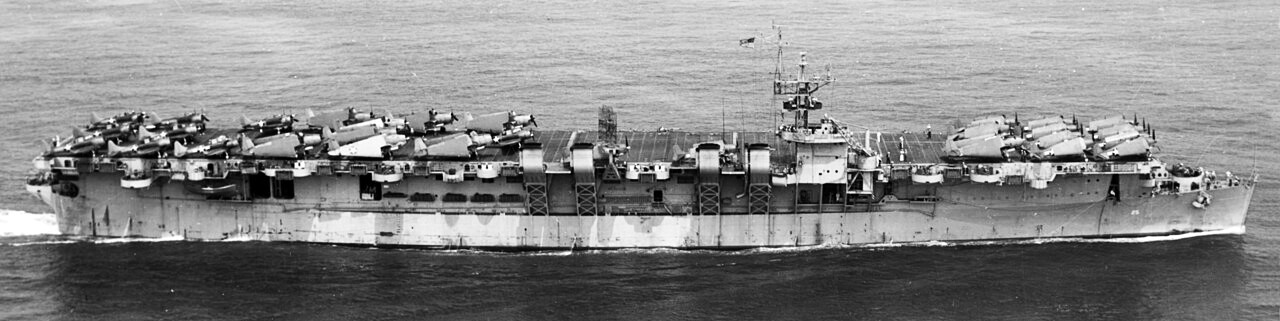
U.S. Navy light aircraft carrier USS Cowpens (CVL-25) underway at sea on 17 July 1943. Note that she still carries Douglas SBD-5 Dauntless dive bombers as part of her air group. Before entering combat, only Grumman F6F-3 Hellcat fighters and Grumman TBF-1 Avenger torpedo bombers, both with folding wings, equipped the air groups of the light carriers.
(USN Photo)
U.S. Navy light aircraft carrier USS Cowpens (CVL-25) underway in the Atlantic Ocean at 1235 hrs on 17 July 1943, course 90°, circa 40 km off the coast of Virginia (USA). The photo was taken by a blimp from Naval Air Station Weeksville, North Carolina (USA), from an altitude of 50 meters.
(USN Photo)
U.S. Navy light aircraft carrier USS Cowpens (CVL-25) underway in the Atlantic Ocean on 17 July 1943. Cowpens had been redesignated “CVL-25” from “CV-25” two days before. Note that may of her aircraft have not received the white bars to the national inisgnia, which were ordered on 1 July 1943.
(USN Photo)
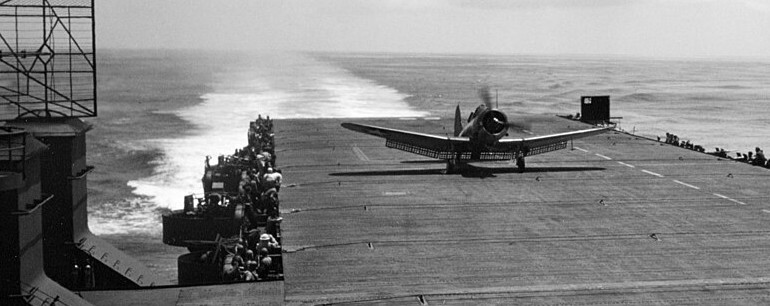
U.S. Navy Douglas SBD Dauntless landing aboard the light aircraft carrier USS Cowpens (CVL-25), circa in mid-1943.
(USN Photo)
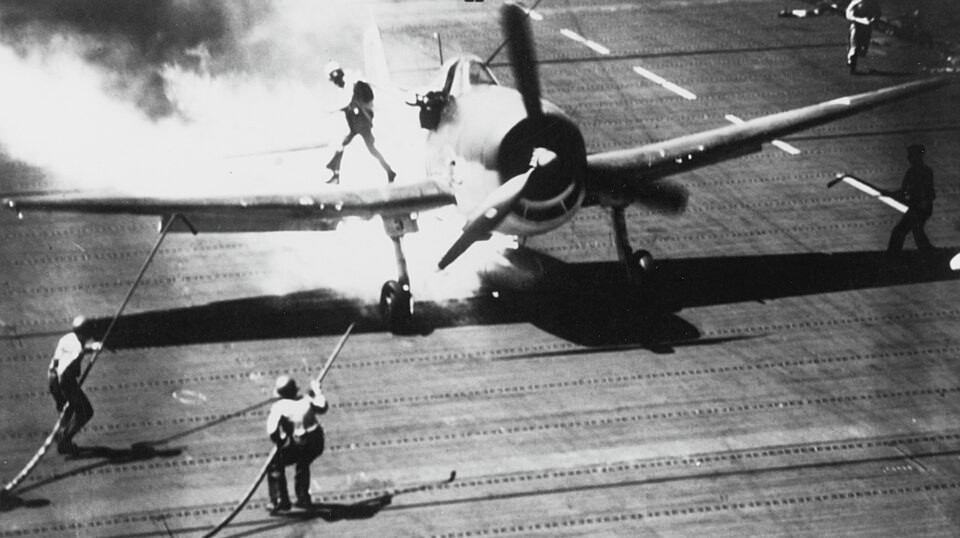
A U.S. Navy pilot from Fighting Squadron 25 (VF-25) aboard the light aircraft carrier USS Cowpens (CVL-25) evacuates his burning Grumman F6F-3 Hellcat (BuNo 66101) after landing unaware that it was on fire, during the Gilberts Operation, 24 November 1943. Firefighters are rushing to the plane, and put out the flames in a minute and a half, with no casualties. The fire started as the Hellcat approached Cowpens for an emergency landing. The pilot was Lieutenant (Junior Grade) Alfred W. Magee Jr., USNR.
(USN Photo)
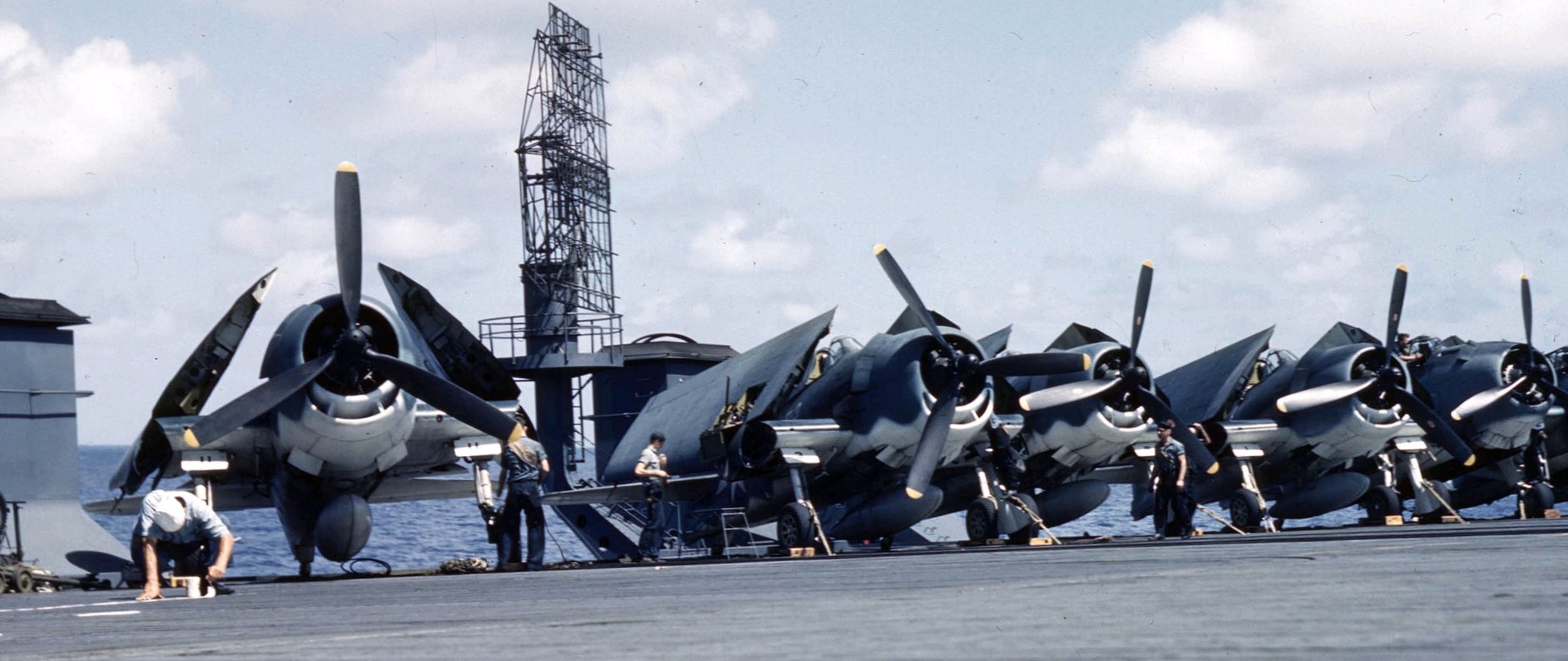
Grumman F6F-3 Hellcats and Grumman TBF-1 Avengers on the flight deck of the U.S. Navy light aircraft carrier USS Cowpens (CVL-25), circa in 1943. Note the crewman painting the deck.
(USN Photo)
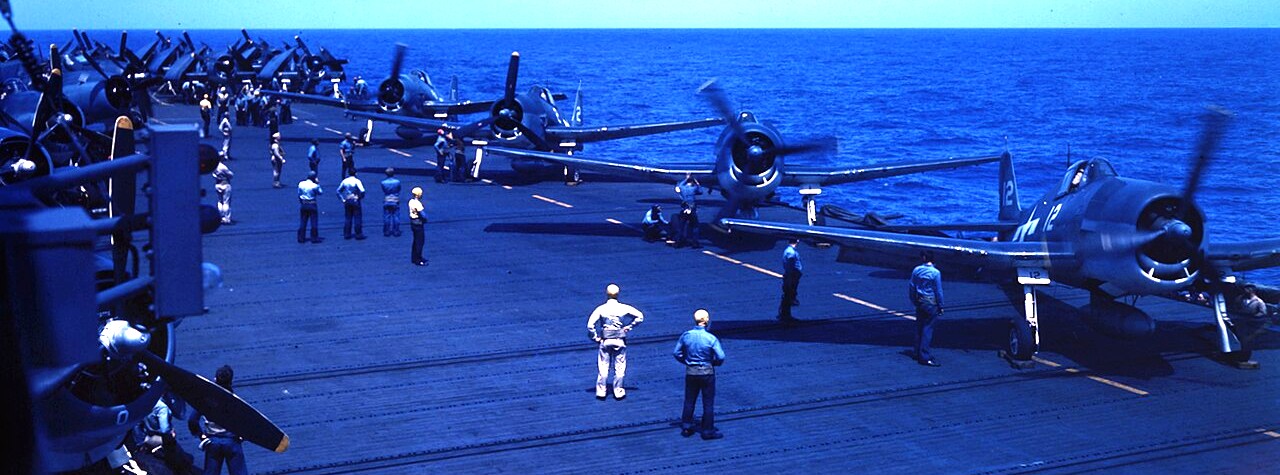
U.S. Navy Grumman F6F-3 Hellcats of Fighting Squadron 25 (VF-25) warming up on the flight deck of the light aircraft carrier USS Cowpens (CVL-25), while the carrier was operating with Task Group 58.3 during raids on the Marshall Islands, circa January 1944.
(USN Photo)
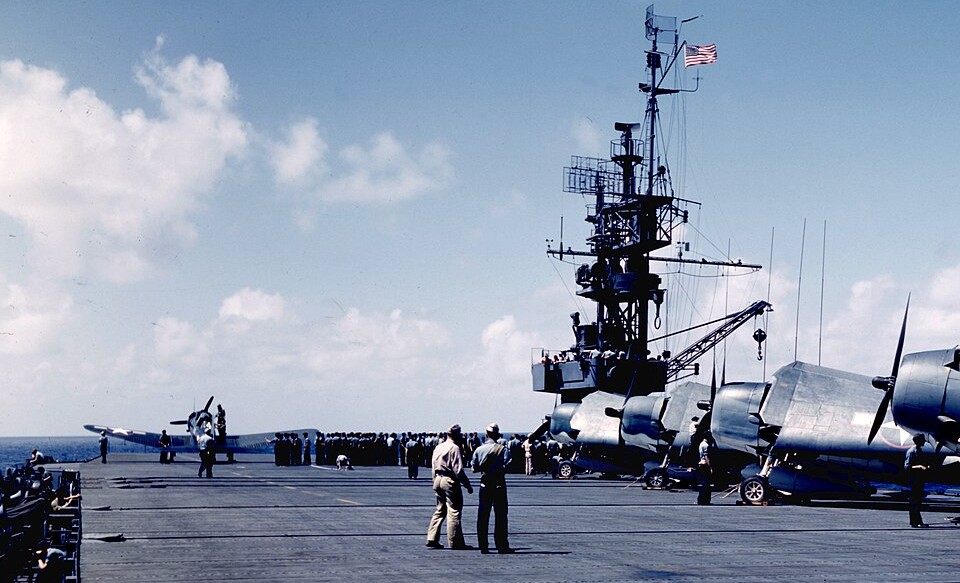
View on the flight deck of the U.S. Navy light aicraft carrier USS Cowpens (CVL-25), probably during working up exercises in the summer of 1943. Note Grumman F6F-3 Hellcat, Grumman TBF-1 Avenger and Douglas SBD-5 Dauntless aircraft. The red borders to the national insignia on the planes, were only used in the summer of 1943.
(USN Photo)
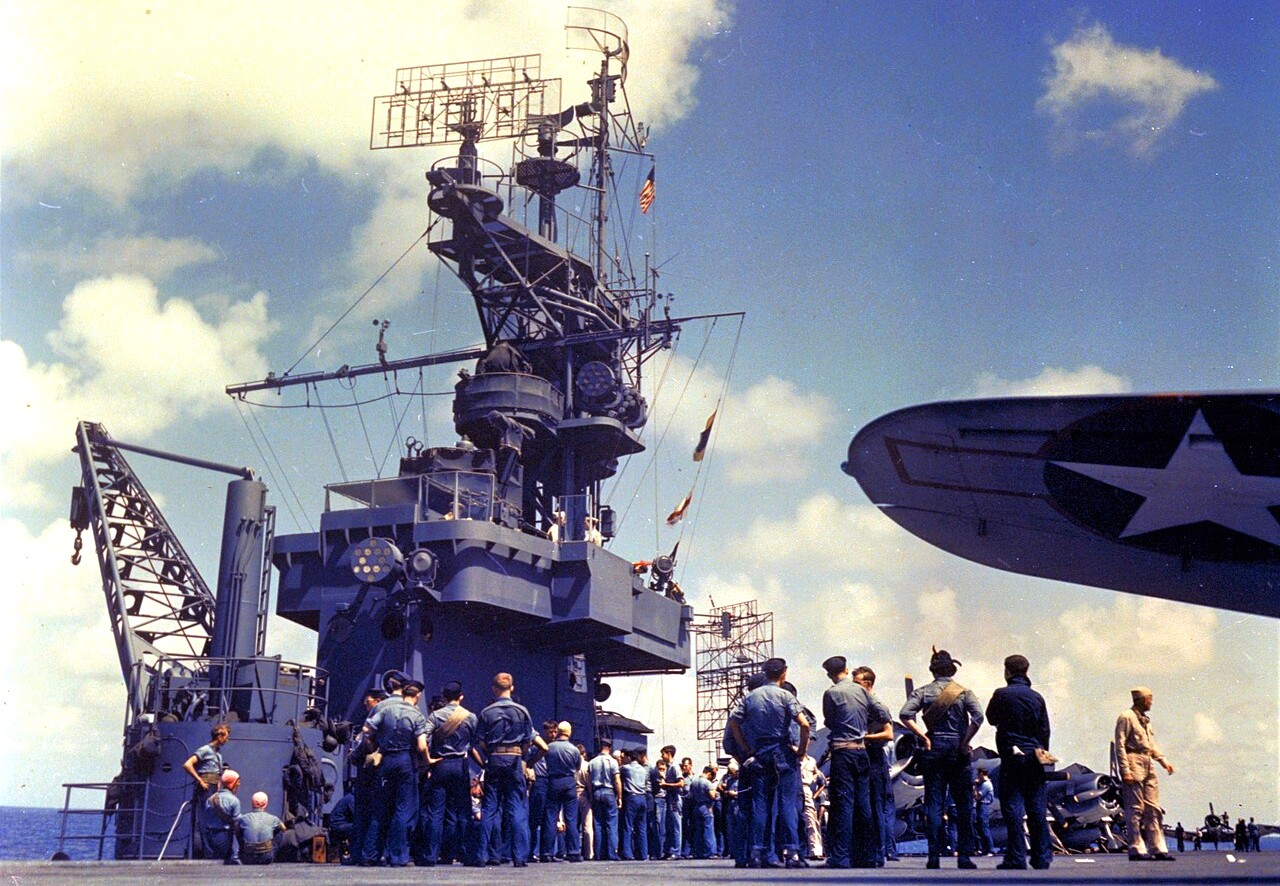
View of the flight deck of the U.S. Navy light aircraft carrier USS Cowpens (CVL-25), looking aft toward the carrier’s island during raids on the Marshall Islands, November-December 1943. Note the crane and other features on and around the island. The radar antennas atop the foremast include SC (larger antenna, in front); SG (small antenna, in middle). A YE homing beacon antenna is mounted on the topmast. The large radar antenna behind the island is a SK-1. Note: The part of the wing in the foreground is of a Douglas SBD dive bomber, also the right plane in the background. These were only part of the air group until mid-1943. Also, the national insignia is surrounded by a red line, which was only used in July-August 1943. Therefore the photo may have been taken while the carrier was working up in the Atlantic Ocean, in mid-1943.
(USN Photo)
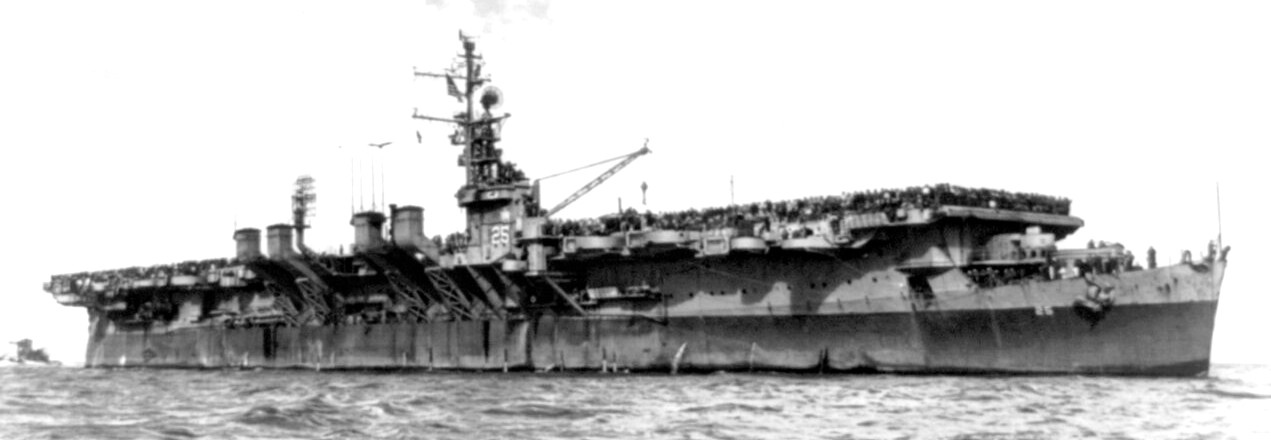
U.S. Navy light aircraft carrier USS Cowpens (CVL-25) in late 1945 or early 1946, with her deck full of passengers. From 8 November 1945 to 28 January 1946 Cowpens made two voyages to Pearl Harbor, Guam, and Okinawa to return soldiers to the United States during “Operation Magic Carpet”
(USN Photo)
U.S. Navy light aircraft carrier USS Cowpens (CVL-25) in late 1945 or early 1946, with her deck full of passengers. From 8 November 1945 to 28 January 1946 Cowpens made two voyages to Pearl Harbor, Guam, and Okinawa to return soldiers to the United States during “Operation Magic Carpet”.
USS Monterey (CVL-26)
(USN Photo)
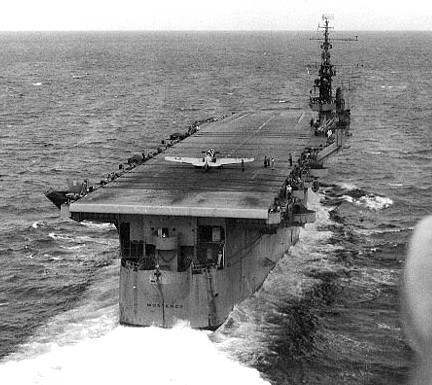
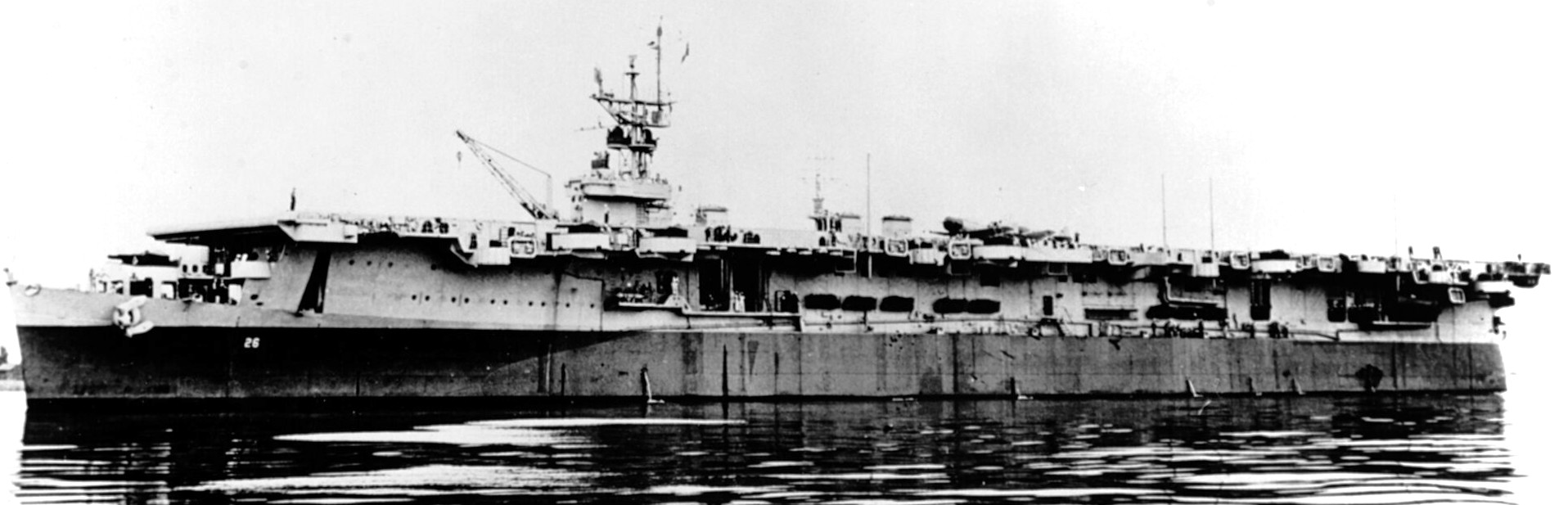
USS Monterey (CVL-26) underway in the Gulf of Mexico on 28 August 1951, while serving as a training carrier. An SNJ training plane is on her flight deck, aft.
USS Monterey (CVL-26) was an Independence-class light aircraft carrier of the United States Navy, in service during World War II and used in training for several years thereafter.
Originally laid down as light cruiser Dayton (CL-78) on 29 December 1941 by New York Shipbuilding, Camden, New Jersey, the ship was reclassified CV-26 on 27 March 1942 and renamed Monterey four days later, launched on 28 February 1943, sponsored by Mr. Patrick N. L. Bellinger, and commissioned on 17 June 1943, Captain Lestor T. Hundt in command. It was the third US Navy vessel to be named after the Battle of Monterey. Future U.S. President Gerald R. Ford served aboard the ship during the Second World War. (Wikipedia)
(USN Photo)
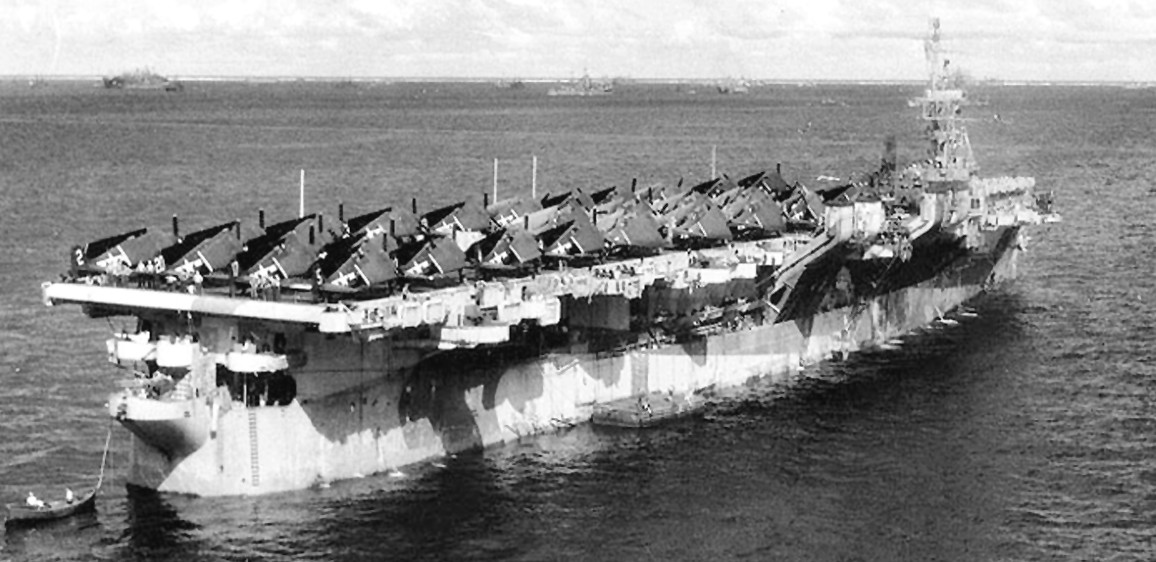
U.S. Navy light aircraft carrier USS Monterey (CVL-26) at anchor in the Ulithi Atoll, Caroline Islands, on 24 November 1944. Note F6F-5 fighters of Carrier Air Group 28 (CVG-28) parked aft on her flight deck.
(USN Photo)
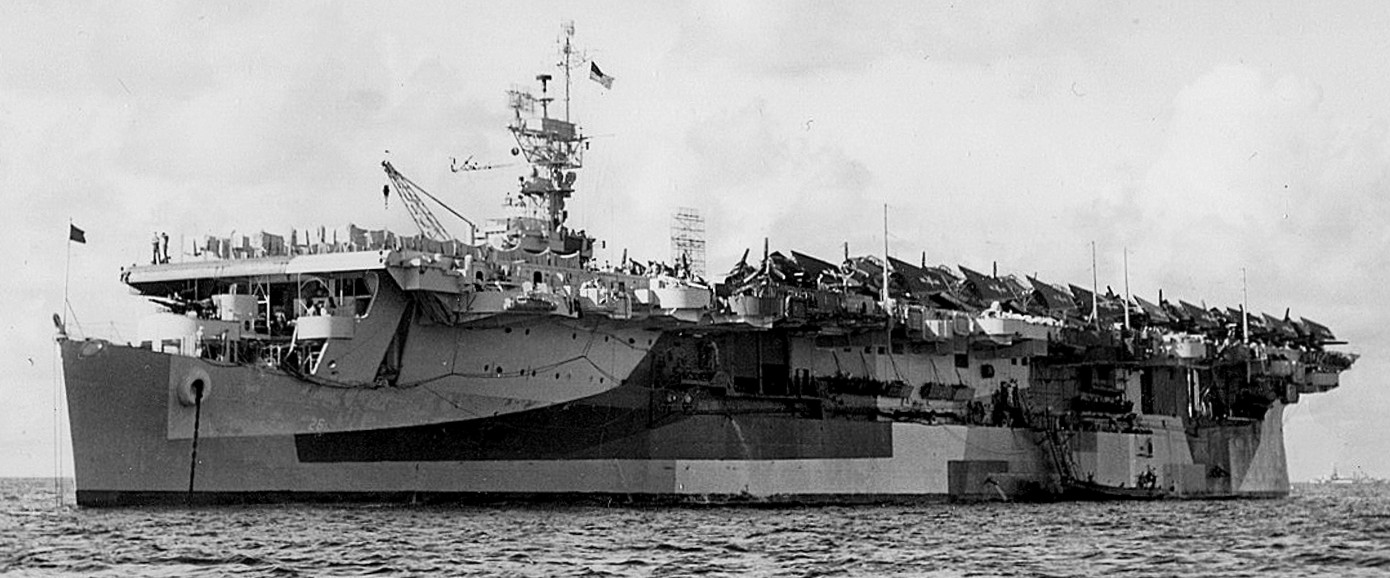
U.S. Navy light aircraft carrier USS Monterey (CVL-26), circa in 1943. She is painted in Camouflage Measure 22.
(USN Photo)
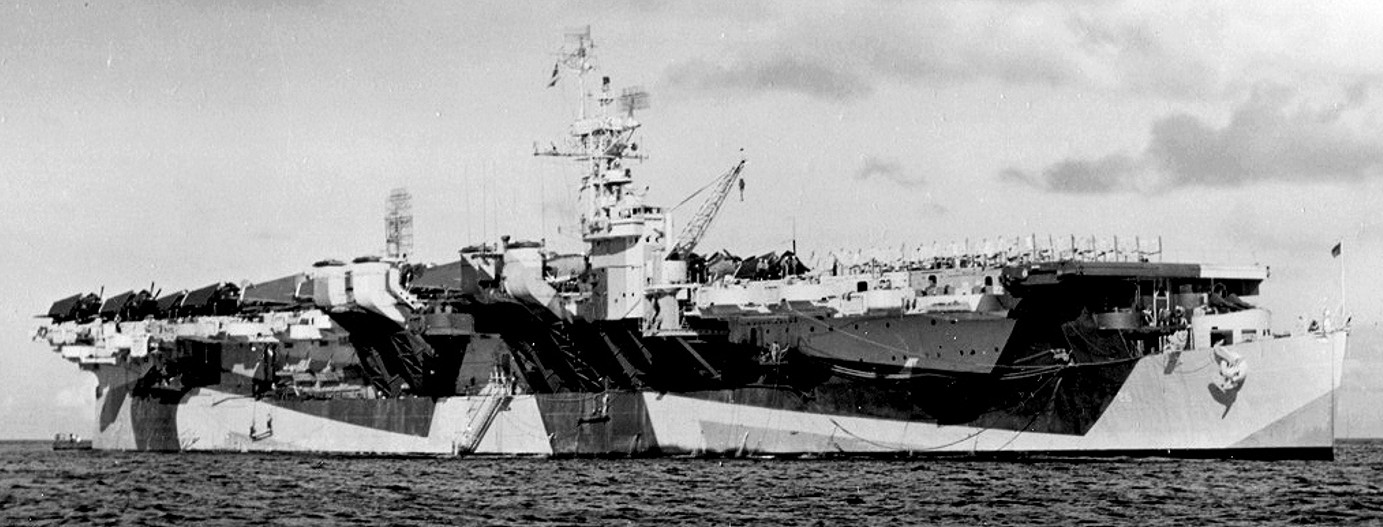
U.S. Navy light aircraft carrier USS Monterey (CVL-26) at Eniwetok on 6 September 1944. She is painted in Camouflage Measure 33, Design 3D.
(USN Photo)
U.S. Navy light aircraft carrier USS Monterey (CVL-26) at Eniwetok on 6 September 1944. She is painted in Camouflage Measure 33, Design 3D.
(USN Photo)
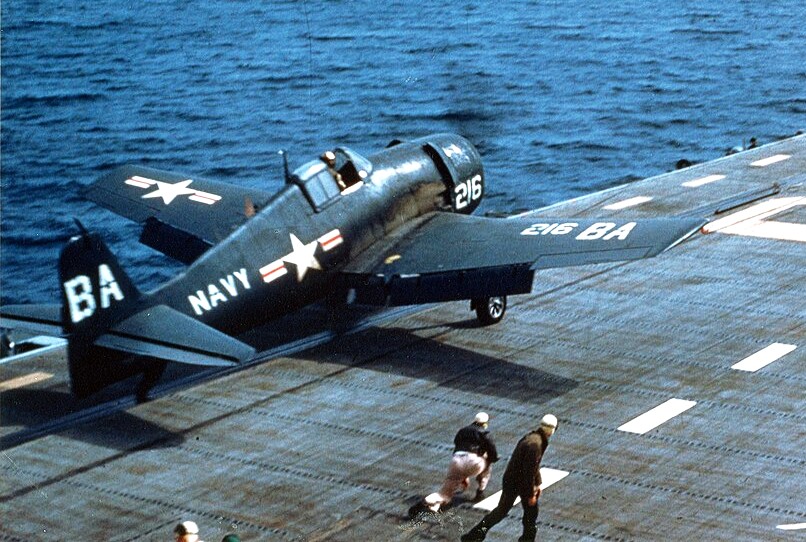
A U.S. Naval Reserve Grumman F6F-5 Hellcat is launched from the light aircraft carrier USS Monterey (CVL-26) during carrier qualifications in the Gulf of Mexico, 1953. “BA” would be the tail code for the reserve attack squadron from NAS Atlanta, Georgia.
(USN Photo)
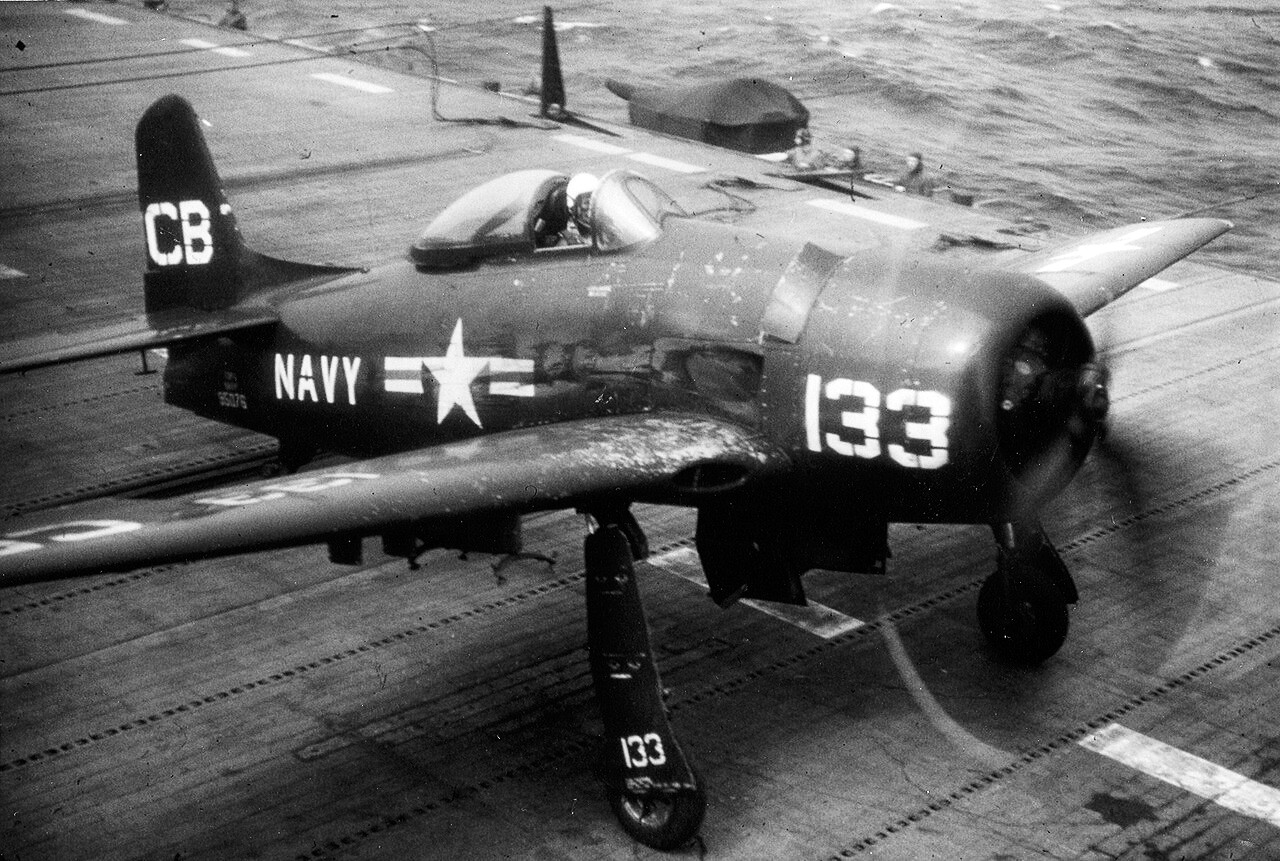
A U.S. Naval Reserve Grumman F8F-1 Bearcat (BuNo 95076) taxis on the flight deck during carrier qualifications aboard the light aircraft carrier USS Monterey (CVL-26), 1951. “CB” was the tail code for the reserve attack squadron from NAS Columbus, Ohio.
(USN Photo)
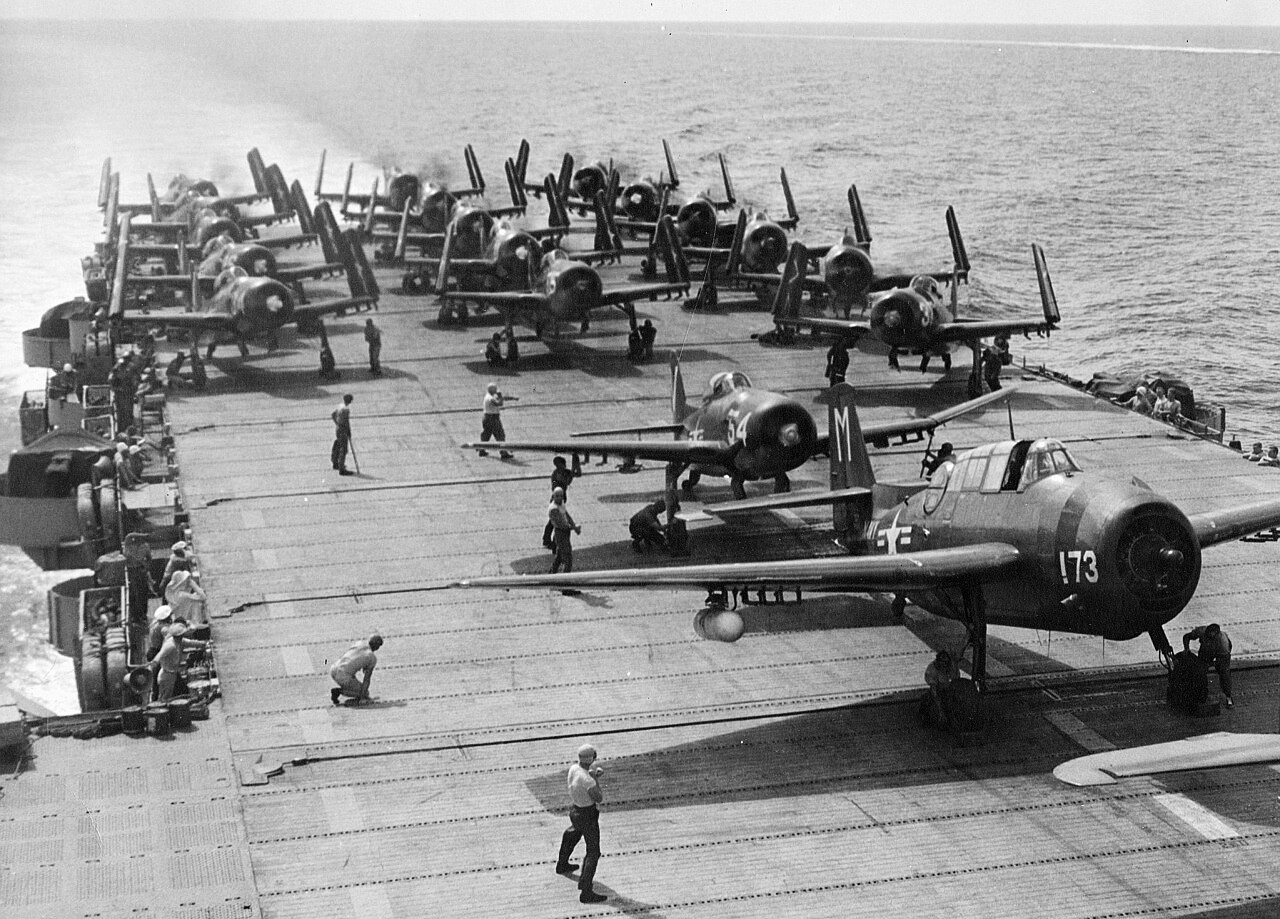
A U.S. Naval Reserve Grumman TBM-3E Avenger assigned the Naval Air Reserve Training Unit at NAS Memphis, Tennessee (USA), and 17 Grumman F8F-1 Bearcats assigned to the Naval Air Reserve Training Unit at NAS Glenview, Illinois, pictured during flight operations aboard the light aircraft carrier USS Monterey (CVL-26), probably in the Gulf of Mexico, circa 1951. Note the orange fuselage band on the Avengers, characteristic of markings carried on U.S. Naval Reserve aircraft.
(USN Photo)
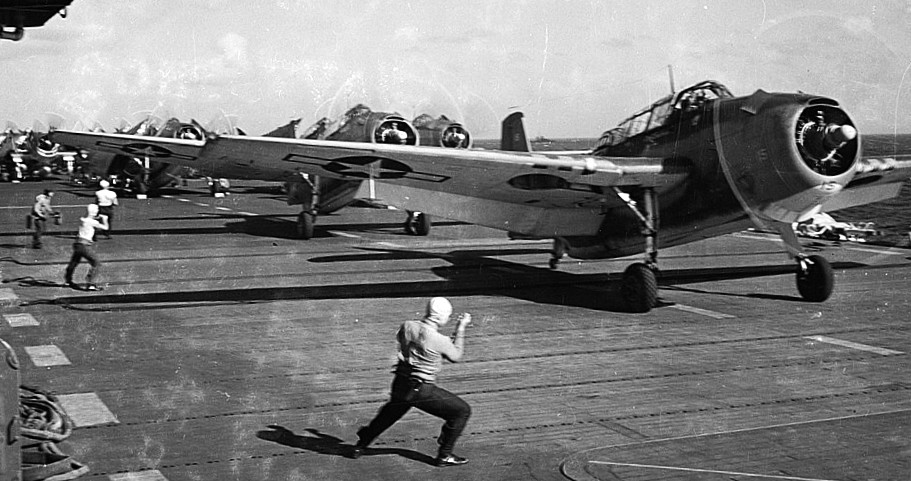
U.S. Navy Grumman TBF Avengers from Torpedo Squadron 28 (VT-28) aboard USS Monterey (CVL-26) preparing for take off for a bombing mission over Tinian Island, the nearest Japanese held island to Saipan in the Marianas in June 1944.
(USN Photo)
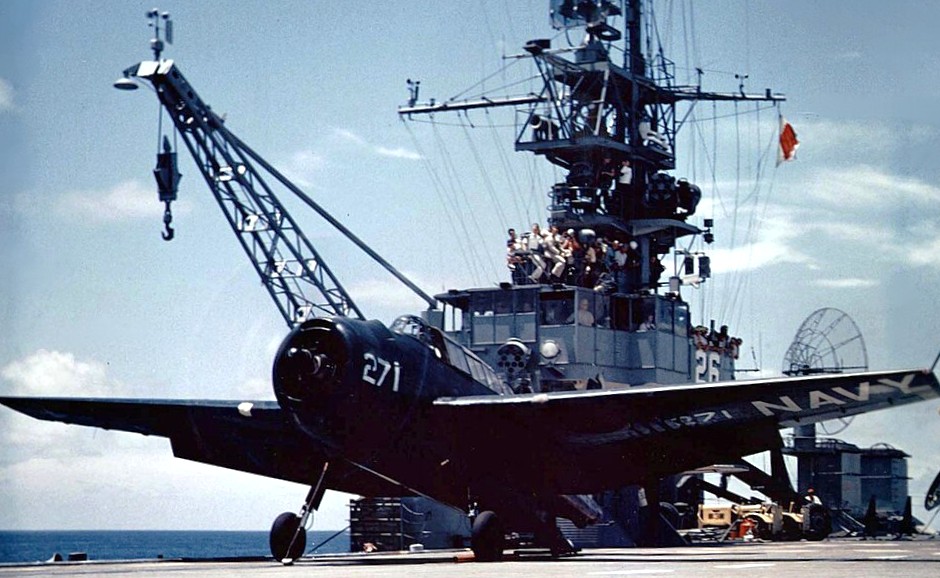
A U.S. Navy Grumman TBM-3E Avenger of Basic Training Unit 3 (BTU-3) about to launch from the training carrier USS Monterey (CVL-26).
(USN Photo)
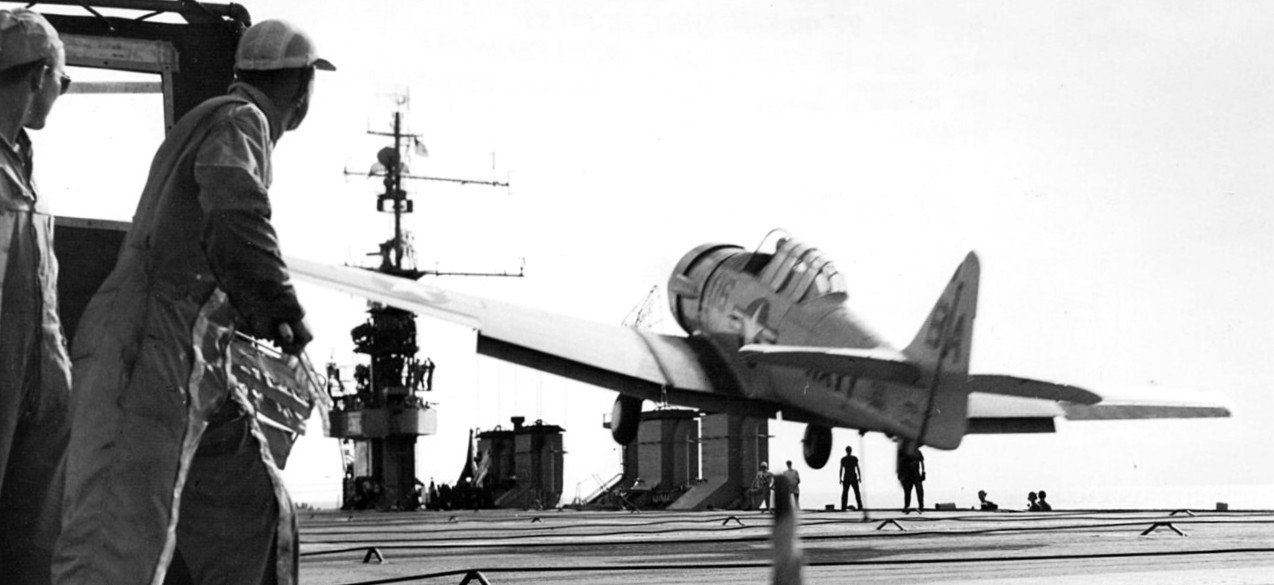
A U.S. Navy North American SNJ assigned to Carrier Qualification Training Unit (CQTU) 4 at the Naval Auxiliary Air Station Barin Field, Alabama (USA), traps on board the carrier USS Monterey (CVL-26) in the Gulf of Mexico.
(USN Photo)
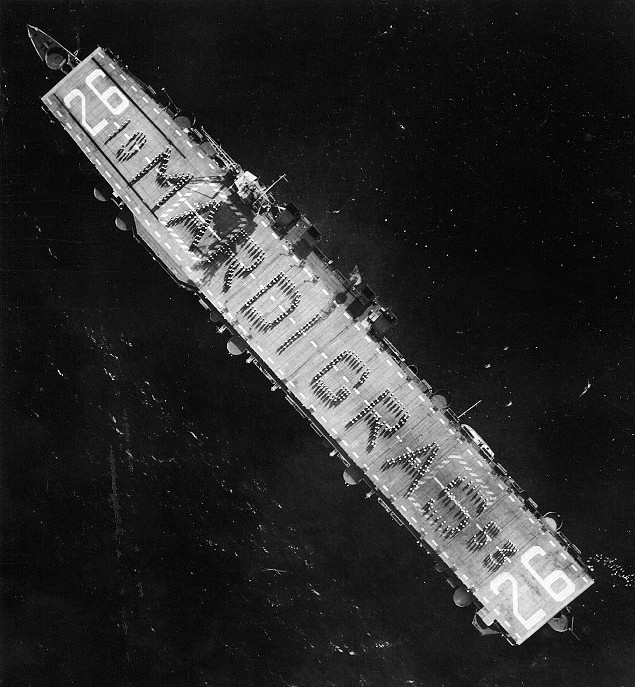
U.S. Navy light aircraft carrier SS Monterey (CVL-26) underway in the Gulf of Mexico, 29 January 1953, with her crew on her flight deck spelling out “MARDI GRAS 53”. Note that all her guns have been removed. She was then serving as training carrier, operating out of Pensacola, Florida (USA), a duty she performed from January 1951 until June 1955.