
New Mexico-class battleships, USS New Mexico (BB-40), USS Mississippi (BB-41), USS Idaho (BB-42)
The New Mexico-class was a class of three super-dreadnought battleships built for the United States Navy in the late 1910s. The class comprised three ships: New Mexico, the lead ship, Mississippi, and Idaho. Part of the standard series, they were in most respects copies of the Pennsylvania-class battleships that immediately preceded them, carrying over the same main battery arrangement of twelve 14-inch (356 mm) guns, but now increased to 50-caliber. They incorporated several other improvements, including a better arrangement of the secondary battery that increased its usability, a clipper bow that improved seakeeping, and an experimental turbo-electric propulsion system adopted on New Mexico. Like the other standard-type battleships, they had a top speed of 21 knots (39 km/h; 24 mph) that allowed the fleet to operate as a tactically homogeneous unit.
All three ships spent the bulk of their peacetime careers in the Pacific Fleet; throughout the 1920s and 1930s, they were involved in numerous Fleet Problems, which were large-scale training exercises that helped develop the doctrine later employed during the Pacific War. By 1941, the three ships were moved to the East Coast to join the Neutrality Patrols that protected American merchant ships from German U-boat attacks during the Battle of the Atlantic. Following the Japanese attack on Pearl Harbor in December, they were quickly transferred back to the Pacific, though they spent most of 1942 escorting convoys off the west coast of the United States. Beginning in mid-1943, they supported amphibious operations during the Aleutian Islands, Gilbert and Marshall Islands, and the Mariana and Palau Islands Campaigns. The Philippines Campaign followed in late 1944, though Mississippi was the only member of the class to participate in the early stages of the campaign, the other vessels being under refit at the time. There, she was present for the Battle of Surigao Strait on24 October, the last battleship engagement in history.
Mississippi and New Mexico took part in the Invasion of Lingayen Gulf, part of the Philippines Campaign, in early 1945 and both were hit by kamikazes. As theywere both under repair, only Idaho participated in the Battle of Iwo Jima, but all three ships were part of the bombardment force for the Battle of Okinawa, where all were damaged by kamikazes. They were present for the occupation of Japan in August and September, thereafter returning to the United States. New Mexico and Idaho were quickly decommissioned and sold for scrap, but Mississippi remained in service, having been converted into a gunnery testing and training ship. In this capacity, her crew experimented with anti-aircraft missiles in the mid-1950s before the ship was sold to ship breakers in 1956. (Wikipedia)
USS New Mexico (BB-40)
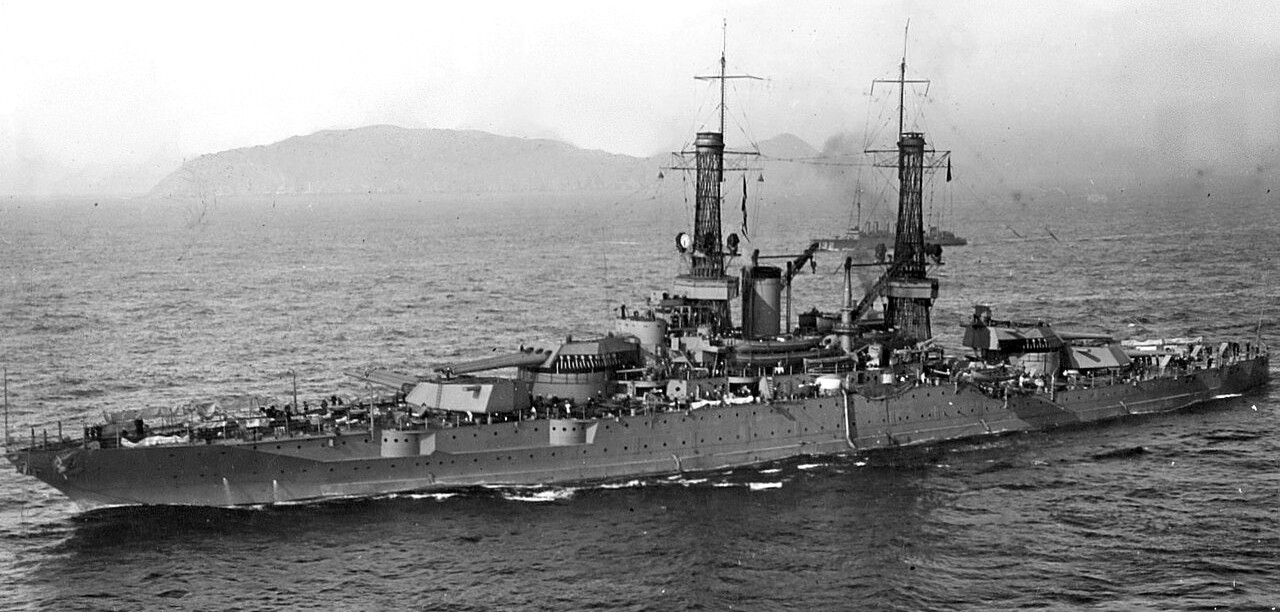
(USN Photo)
U.S. Navy battleship USS New Mexico (BB-40), San Pedro, California, in 1921.
USS New Mexico (BB-40) was a battleship inservice with the United States Navy from 1918 to 1946. She was the lead ship ofa class of three battleships, and the first ship to be named for the state ofNew Mexico. Her keel was laid down on 14 October 1915 at the New York NavyYard, from which she was launched on 23 April 1917 and commissioned on 20 May1918. New Mexico was the U.S. Navy’s most advanced warship and its firstbattleship with a turbo-electric transmission, which helped her reach a maximumspeed of 21 knots (39 km/h; 24 mph).
Shortly after completing initial training, New Mexico escorted the ship thatcarried President Woodrow Wilson to Brest, France to sign the Treaty ofVersailles. Thereafter she was made the first flagship of the newly createdUnited States Pacific Fleet. The interwar period was marked by repeatedexercises with the Pacific and Atlantic Fleets, use as a trial ship for PIDcontrollers, and a major modernization between March 1931 and January 1933. NewMexico’s first actions during World War II were neutrality patrols in theAtlantic Ocean. She returned to the Pacific after the Japanese attack on PearlHarbor and participated in shore bombardments during operations at Attu andKiska, Tarawa, the Marshall Islands, the Mariana and Palau islands, Leyte,Luzon, and Okinawa; these were interspersed with escort duties, patrols, andrefits. The ship was attacked by kamikazes on several occasions. New Mexico wasawarded six battle stars for her service in the Pacific campaign and was presentin Tokyo Bay for Japan’s formal surrender on 2 September 1945. Four days later,she sailed for the United States and arrived in Boston on 17 October.
New Mexico was decommissioned in Boston on 19 July 1946 and struck from the Naval Vessel Register on 25 February 1947. She was sold for scrapping to the Lipsett Division of Luria Bros in November 1947, but attempts to bring her to Newark, New Jersey for breaking up were met with resistance from city officials. City fireboats were sent to block the passage of the battleship and the Lipsett tugboats, while the United States Coast Guard declared intentions to guarantee safe passage. The Under Secretary of the Navy Department was sent to defuse what the media began to call the “Battle of Newark Bay”; the city agreed to break up New Mexico and two other battleships before scrapping operations in Newark Bay ceased, while Lipsett was instructed to dismantle the ships in a set timeframe or suffer financial penalties. Scrapping commenced in November and was completed by July 1948. (Wikipedia)
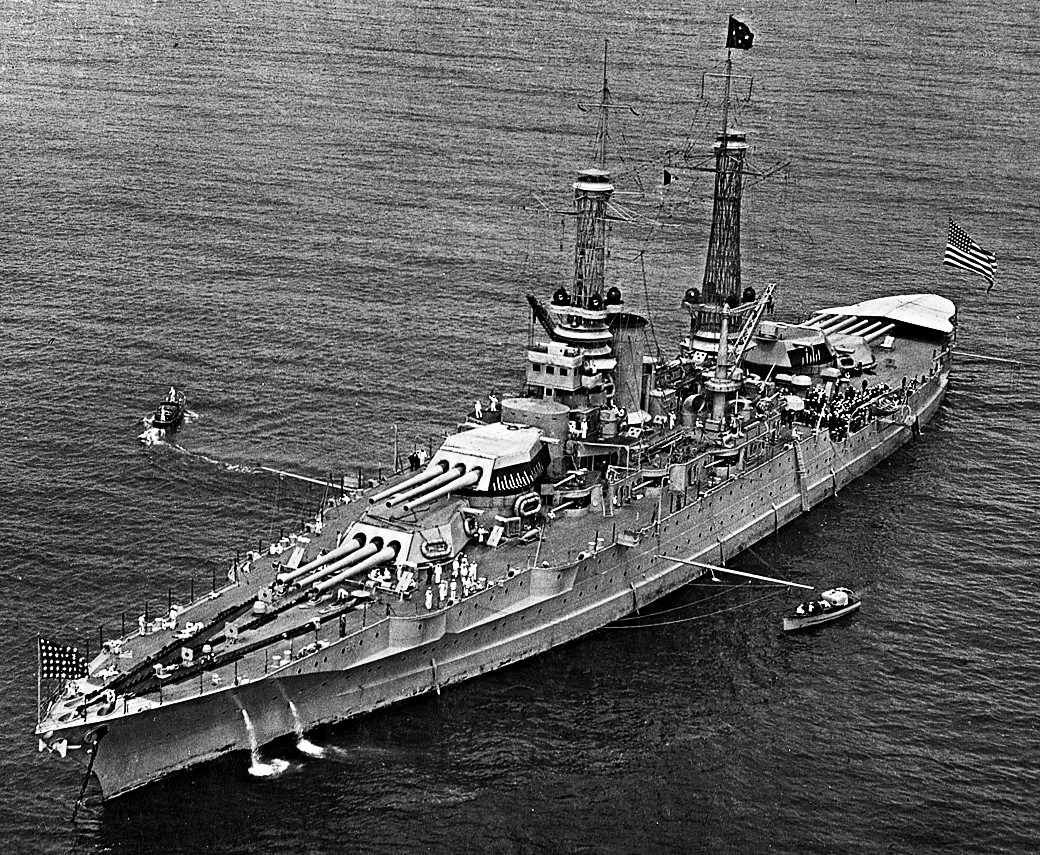
(USN Photo)
U.S. Navy battleship USS New Mexico (BB-40) at anchor in 1920.
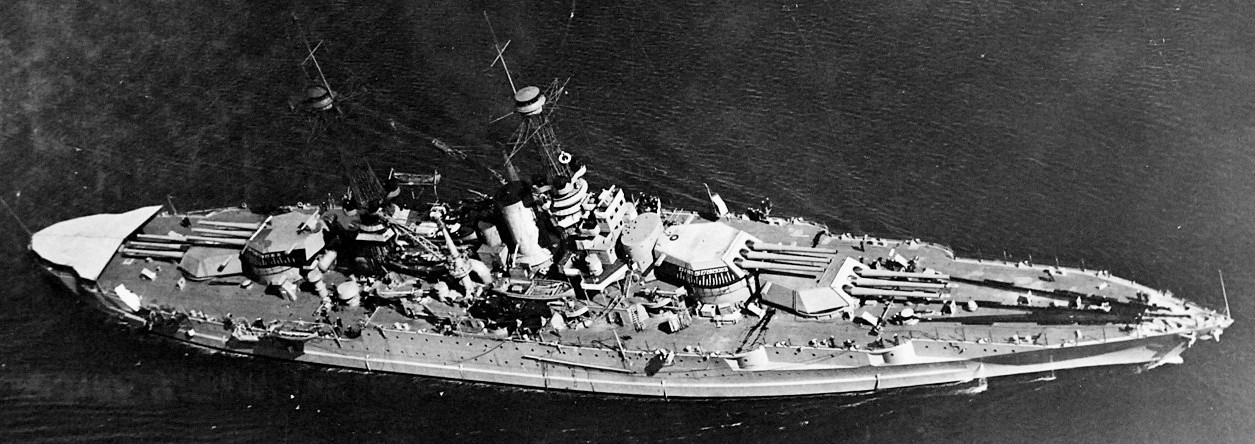
(USN Photo)
USS New Mexico (BB 40), aerial oblique. 1921.
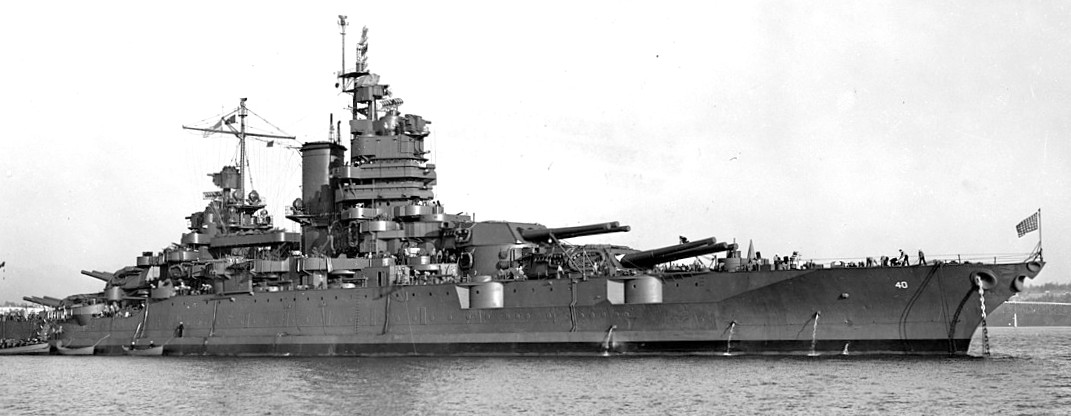
(USN Photo)
USS New Mexico (BB-40).
USS Mississippi (BB-41)
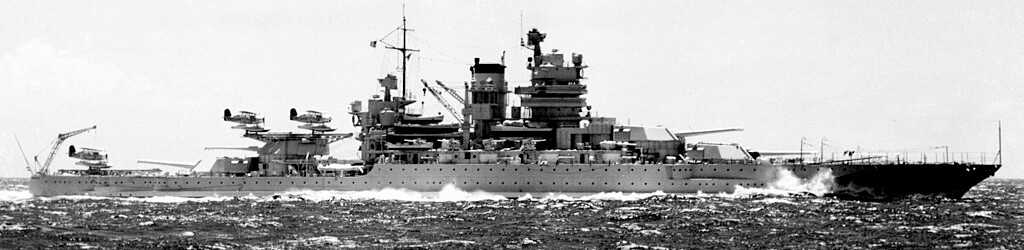
(USN Photo)
U.S. Navy battleship USS Mississippi (BB-41) operating at sea during the later 1930s. She has three Curtiss SOC Seagull aircraft on her catapults.
USS Mississippi (BB-41/AG-128), the second of three members of the New Mexico class of battleship, was the third ship of the United States Navy named in honor of the 20th state. The ship was built at the Newport News Shipbuilding Company of Newport News, Virginia, from her keel laying in April 1915, her launching in January 1917, and her commissioning in December that year. She was armed with a battery of twelve 14-inch (356 mm)guns in four three-gun turrets, and was protected by heavy armor plate, with her main belt armor being 13.5 inches (343 mm) thick.
The ship remained in North American waters during World War I, conducting training exercises to work up the crew. Throughout the 1920s and 1930s, the ship served in the Pacific Fleet. In May 1941, with World War II and the Battle of the Atlantic raging, Mississippi and her two sister ships were transferred to the Atlantic Fleet to help protect American shipping through the Neutrality Patrols. Two days after the Japanese attack on Pearl Harbor, Mississippi departed the Atlantic to return to the Pacific Fleet; throughout her participation in the Second World War, she supported amphibious operations in the Pacific. She shelled Japanese forces during the Gilbert and Marshall Islands and the Philippines campaigns and the invasions of Peleliu and Okinawa. The Japanese fleet attacked American forces during the Philippines campaign, and in the ensuing Battle of Leyte Gulf, Mississippi took part in the Battle of Surigao Strait, the last battleship engagement in history.
After the war, Mississippi was converted into a gunnery training ship, and was also used to test new weapons systems. These included the RIM-2 Terrier missile and the AUM-N-2 Petrel missile. She was eventually decommissioned in 1956 and sold to ship breakers in November that year. (Wikipedia)
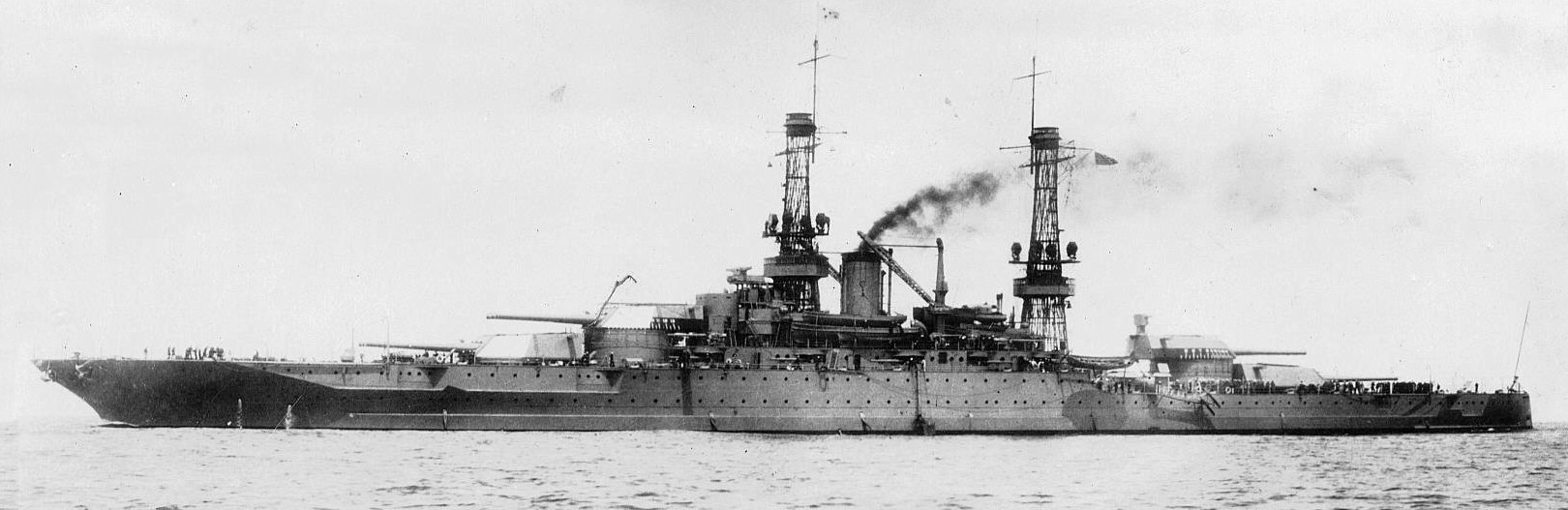
(USN Photo)
U.S. Navy battleship USS Mississippi (BB-41) during operations at sea, in the 1920s. Note the cage masts still on the ship prior to her 1931-1933 modernization.
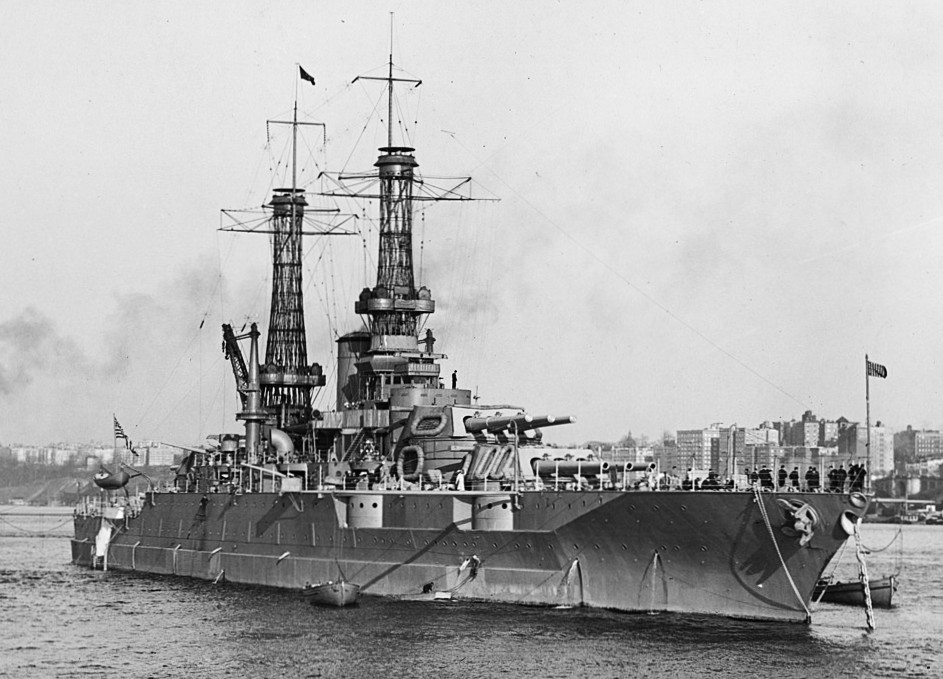
(USN Photo)
USS Mississippi (BB-41) anchored off New York City c. 1918.
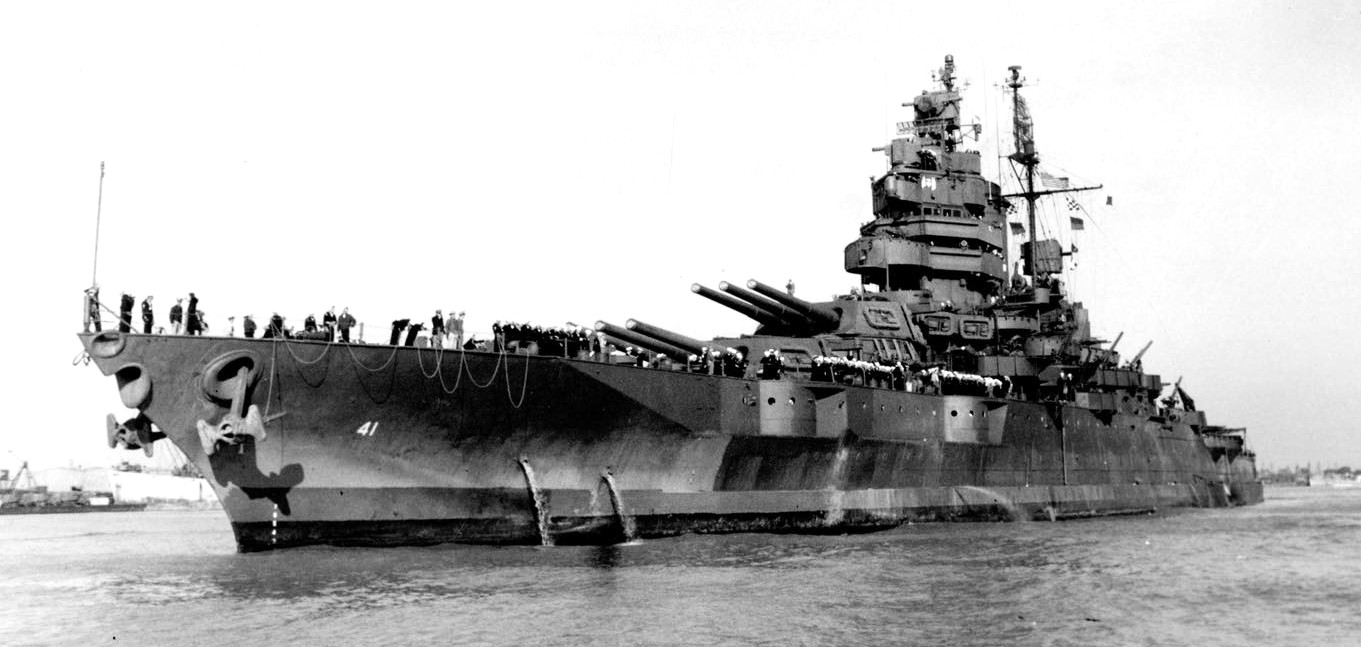
(USN Photo)
U.S. Navy battleship USS Mississippi (BB-41) in the Mississippi River, en route to take part in Navy Day celebrations at New Orleans, Louisiana, 16 October 1945. Note her anchors suspended below their normal stowed position at the bow.
USS Idaho (BB-42)
(USN Photo)
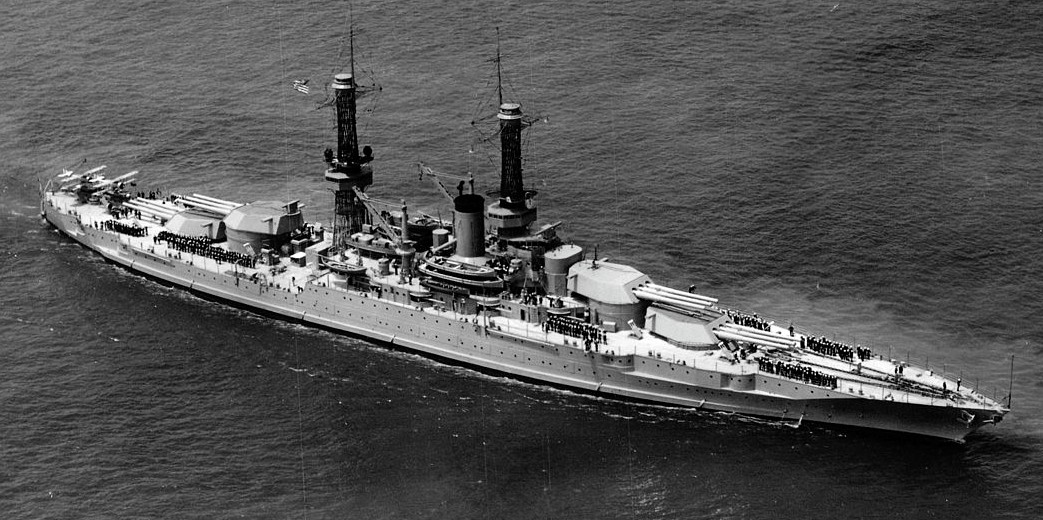
U.S. Navy battleship USS Idaho (BB-42) during a presidential naval review in Hampton Roads, Virginia (USA), 4 June 1927.
USS Idaho (BB-42), a New Mexico-class battleship, was the fourth ship of the United States Navy to be named for the43rd state. She was the third of three ships of her class. Built by the New York Shipbuilding Corporation of Camden, New Jersey, she was launched in June1917 and commissioned in March 1919. She was armed with a battery of twelve 14-inch (356 mm) guns in four three-gun turrets, and was protected by heavy armour plate, with her main belt armor being 13.5 inches (343 mm) thick.
Idaho spent most of the 1920s and 1930s in the Pacific Fleet, where she conducted routine training exercises. Like her sister ships, she was modernized in the early 1930s. In mid-1941, before the United States entered the Second World War, Idaho and her sisters were sent to join the Neutrality Patrols that protected American shipping during the Battle of the Atlantic. After Japan attacked Pearl Harbor on 7 December 1941, Idaho and her sisters were sent to the Pacific, where she supported amphibious operations in the Pacific. She shelled Japanese forces during the Gilbert and Marshall Islands and the Philippines campaigns and the invasions of Peleliu, Iwo Jima, and Okinawa.
Idaho was among the ships present in Tokyo Bay when Japan formally surrendered on 2 September 1945. With the war over, the ship was decommissioned in July 1946. She was sold to ship breakers in November 1947 and subsequently dismantled. (Wikipedia)
(USN Photo)
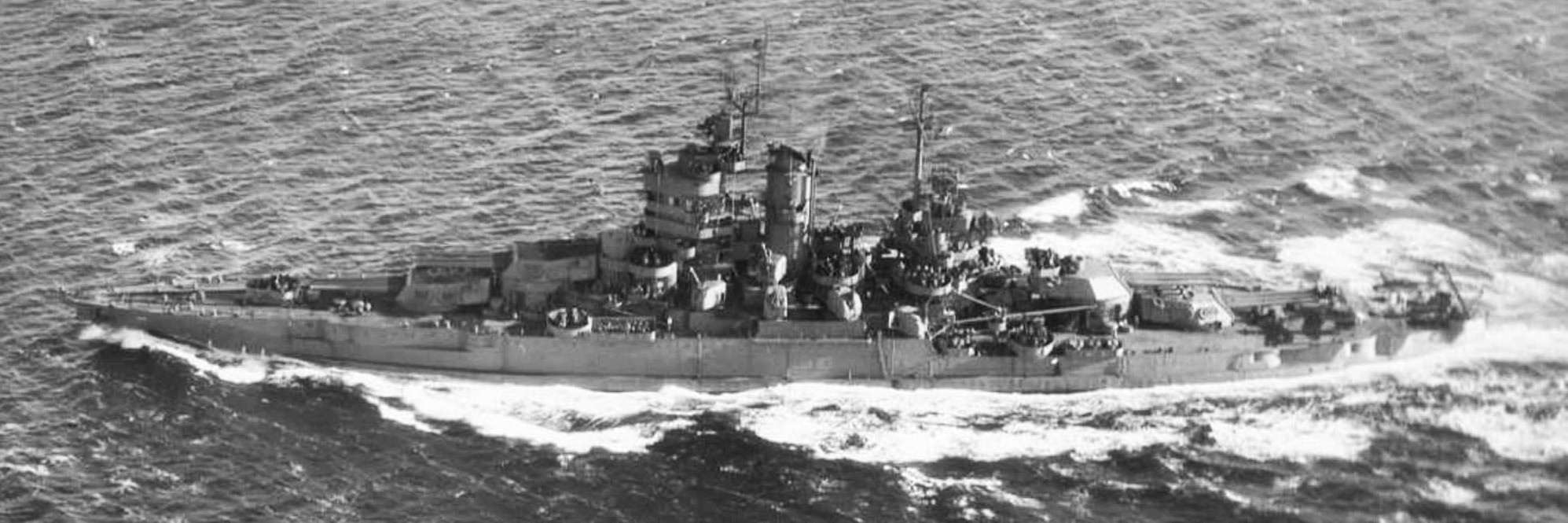
USS Idaho (BB-42) aerial view.
(USN Photo)
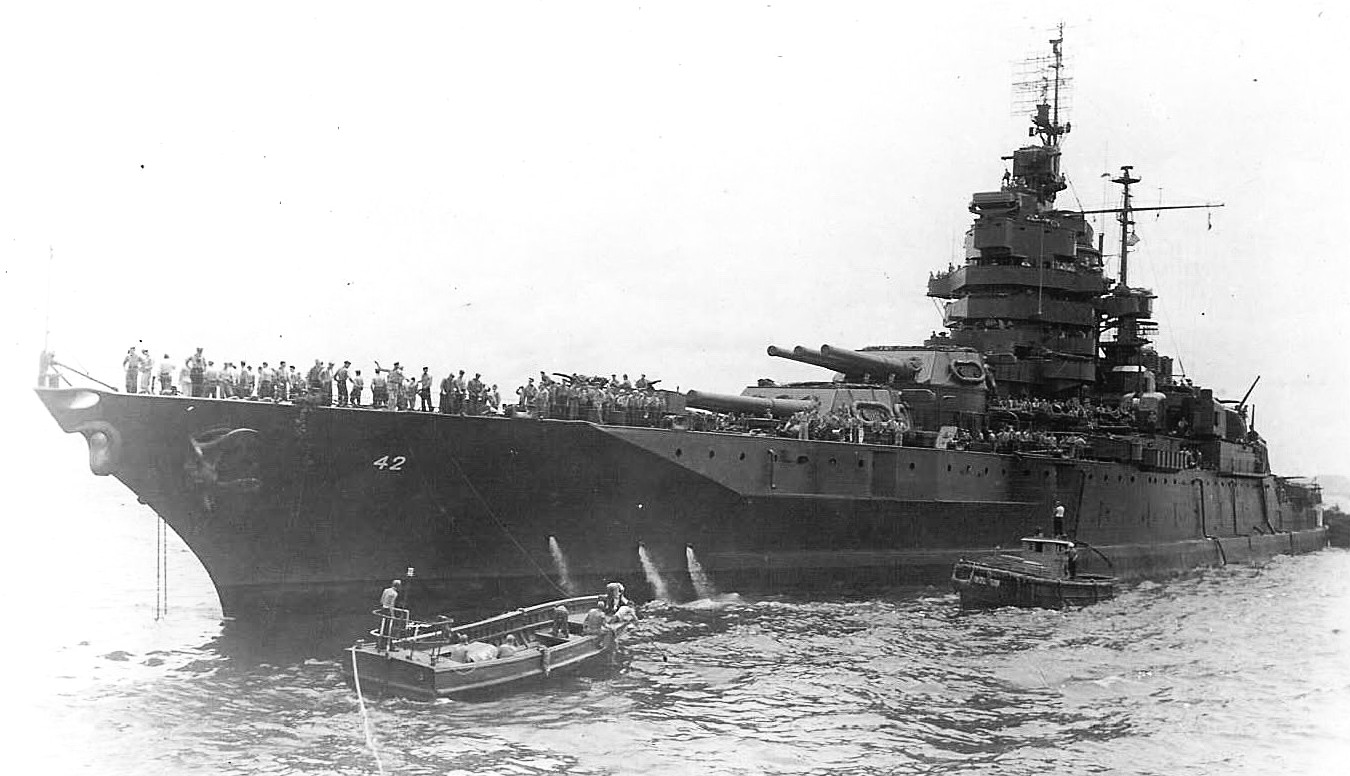
USS Idaho (BB-42) entering a floating drydock in 1945.
(USN Photo)
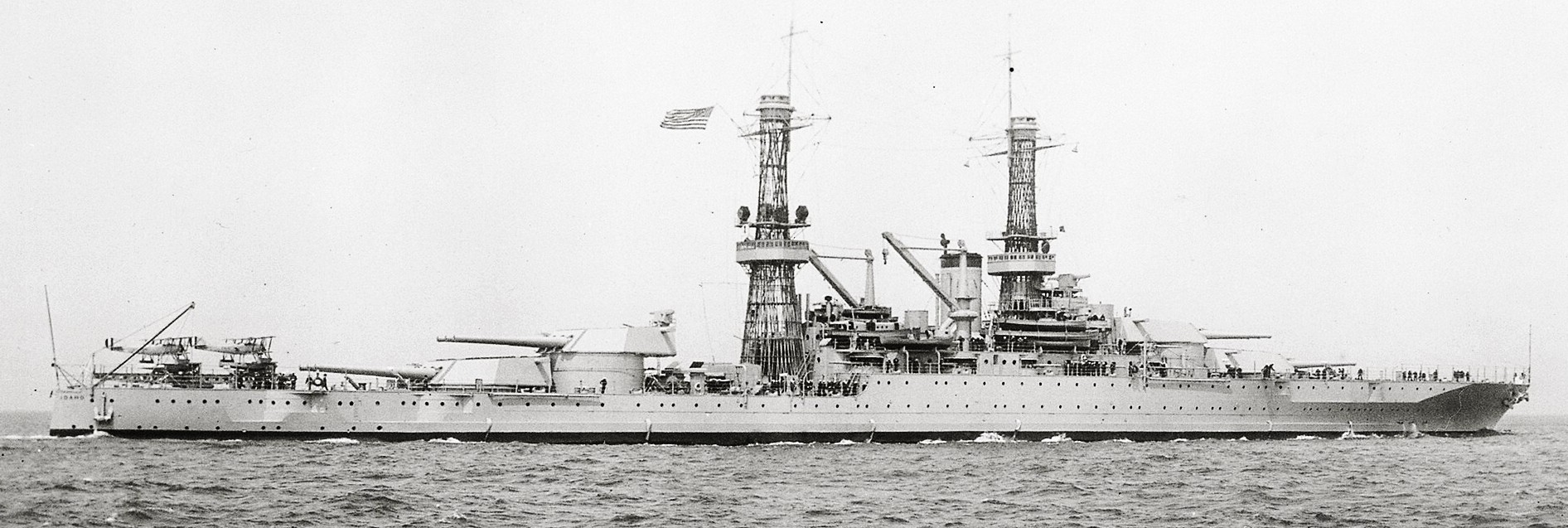
USS Idaho (BB-42) in 1927.
(USN Photo)
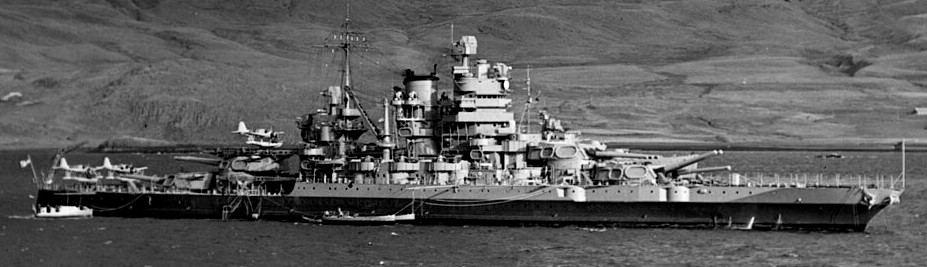
U.S. Navy battleship USS Idaho (BB-42) anchored in Hvalfjörður, Iceland, October 1941.
(USN Photo)
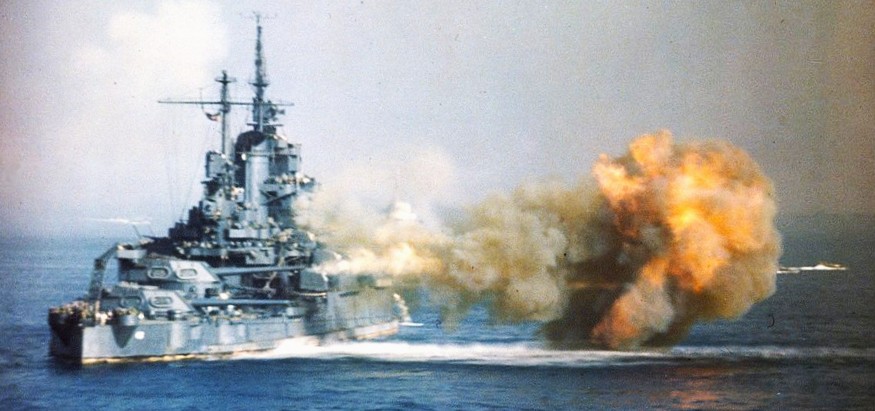
U.S. Navy battleship USS Idaho (BB-42) fires the 14″/50 guns of turret Three at nearly point-blank range, during the bombardment of Okinawa, 1 April 1945.
(LIFE Magazine Archives – Thomas Mcavoy Photographer WWP-PD)
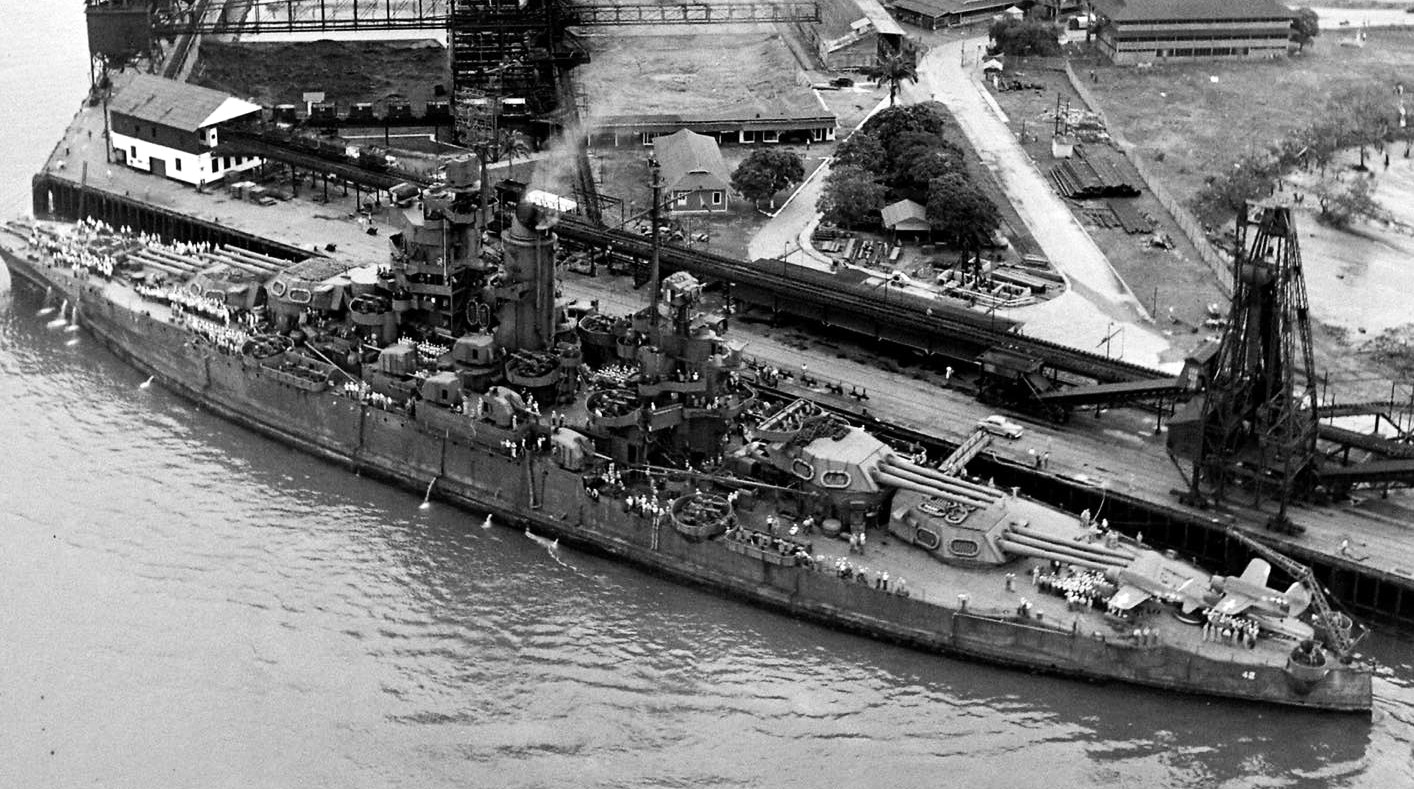
USS Idaho BB-42 docked at the entrance to the Panama Canal on the Pacific side – October 1945. Note the 5-inch/38 secondary guns in single “destroyer style” enclosed mounts, ten of these mounts (five per side) were installed during a refit in October 1944. The remaining 5-inch/51 guns and all of the 5-inch/25 guns were replaced by these 5-inch/38 gun mounts.
All comments are subject to our Comment Policy. You must be at least 18 years old to comment.
See a comment that violates our guidelines? Report it here.