
Royal Navy (RN), His Majesty’s Ships (HMS) in Canadian ports at the turn of the century
The Imperial navy base in Halifax was known as the “Warden of the North”.
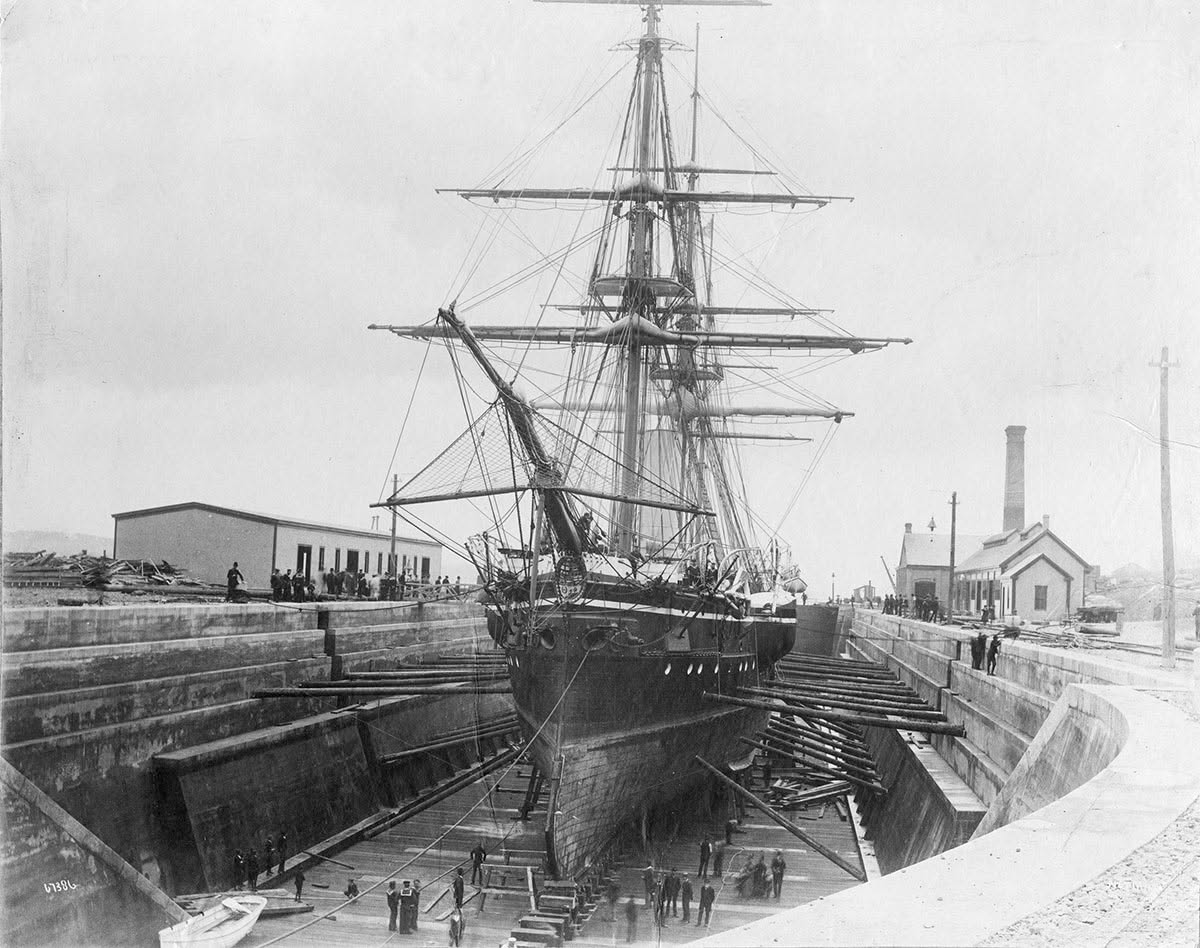
(Nova Scotia Archives Photo)
HMS Canada, North America and West Indies Squadron in drydock, Halifax Graving Yards, Halifax, Nova Scotia, 20 Sep 1889.
HMS Canada was a Comus-class screw corvette of the Royal Navy. She was launched in 1881 and sold for scrap in 1897. Her bow badge was removed prior to being sold for scrap and is displayed in the Maritime Museum of British Columbia. Canada was laid down at Portsmouth Dockyard in 1879, one of nine ships of the Comus class. She was launched on 26 August 1881 and completed later that year. HMS Canada served on the North America and West Indies Station based at the Royal Naval Dockyard at Bermuda between 1881 and 1886, during which period the future King George V served aboard her as a Royal Navy lieutenant. In 1892, she was refitted at Portsmouth, returning to the North America and West Indies Station between 1893 and 1896. She was paid off into reserve in December 1896. She was sold in 1897. (Wikipedia)
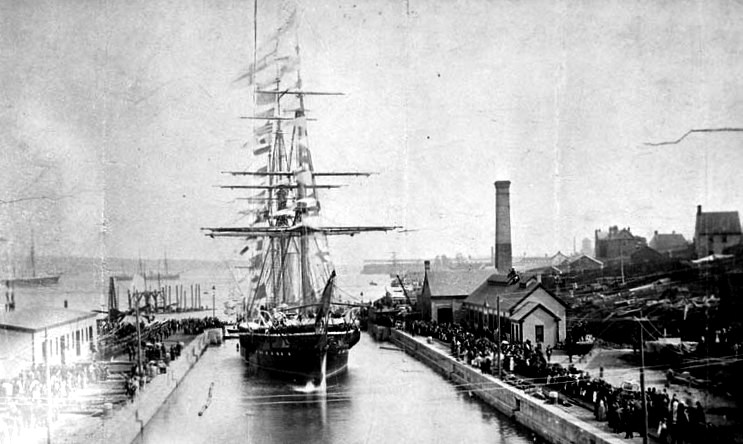
(Library and Archives Canada Photo, MIKAN No. 3192245)
HMS Canada, North America and West Indies Squadron in drydock, Halifax Graving Yards, Halifax, Nova Scotia, 20 Sep 1889.
Four ships of the Royal Navy have been named HMS Canada:
HMS Canada (1765), a 74-gun third rate ship of the line launched in 1765. She became a prison ship in 1810, and was sold and broken up in 1834.
HMS Canada was to have been a 112-gun first rate ship of the line. She was laid down in 1814, but cancelled in 1832 and broken up on the stocks.
HMS Canada (1881) was a screw corvette launched in 1881 and sold in 1897.
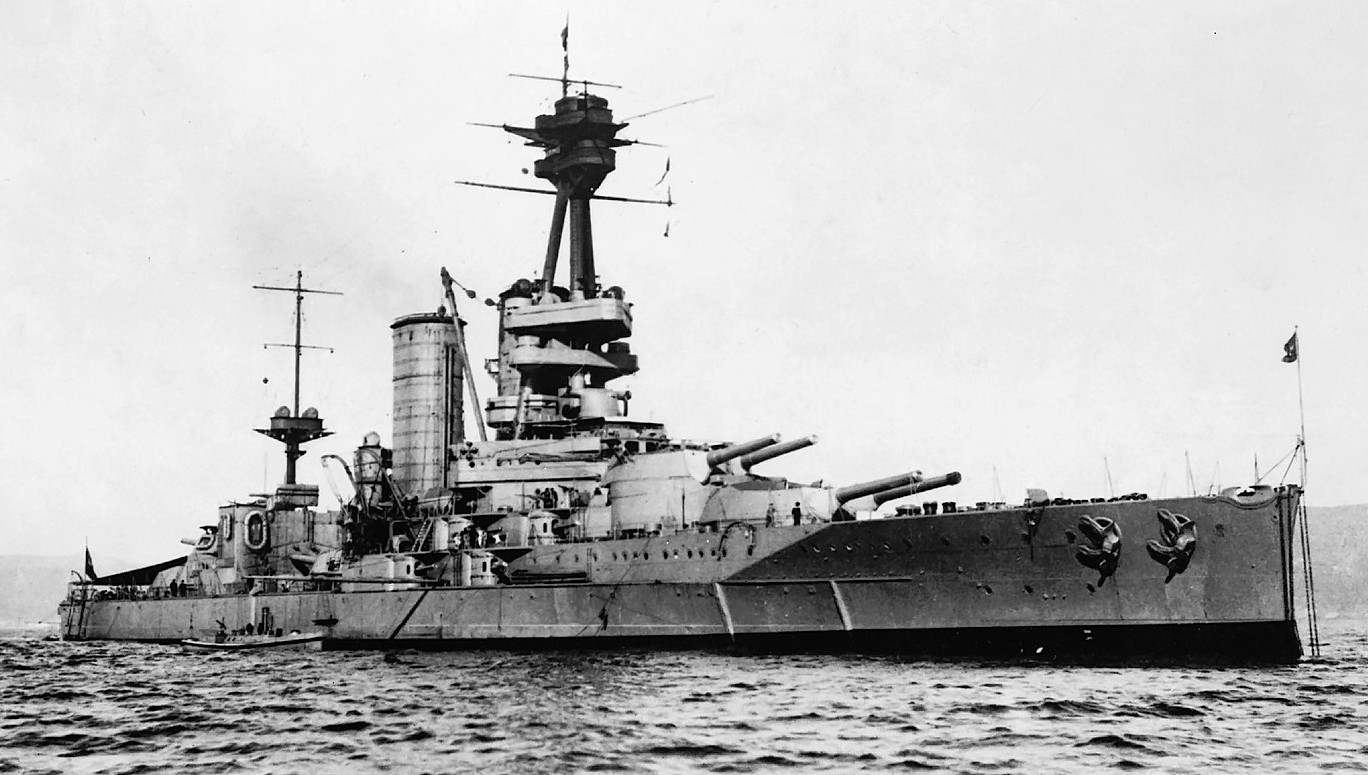
(Chilean Navy Photo)
HMS Canada (1913) was a battleship that the Chilean navy had ordered as Almirante Latorre. She was launched in 1913, but the British government purchased her in 1914 after the outbreak of the First World War. The British government resold her to Chile in 1920, and as Almirante Latorre (shown in service on 24 Dec 1921), she served the Chilean Navy until she was broken up in Japan after 1959.
Almirante Latorre, named after Juan José Latorre, was a super-dreadnought battleship built for the Chilean Navy (Armada de Chile). It was the first of a planned two-ship class that would respond to earlier warship purchases by other South American countries. Construction began at Elswick, Newcastle upon Tyne soon after the ship was ordered in November 1911, and was approaching completion when it was bought by the United Kingdom’s Royal Navy for use in the First World War. Commissioned in September 1915, it served in the Grand Fleet as HMS Canada for the duration of the war and saw action during the Battle of Jutland.
Chile repurchased HMS Canada in 1920 and renamed it Almirante Latorre. The ship was designated as Chile’s flagship, and frequently served as a presidential transport. She underwent a thorough modernization in the United Kingdom in 1929–1931. In September 1931, crewmen aboard Almirante Latorre instigated a mutiny, which the majority of the Chilean fleet quickly joined. After divisions developed between the mutineers, the rebellion fell apart and the ships returned to government control. Almirante Latorre was placed in reserve for a time in the 1930s because of the Great Depression, but it was in good enough condition to receive interest from the United States after the attack on Pearl Harbor. The Chilean government declined the overture and the ship spent most of the Second World War on patrol for Chile. Almirante Latorre was scrapped in Japan beginning in 1959. Wikipedia. Burt, R. A. British Battleships of World War One. (Annapolis, MD: Naval Institute Press, 1986), and Scheina, Robert L. Latin America: A Naval History 1810–1987. (Annapolis, MD: Naval Institute Press, 1987).
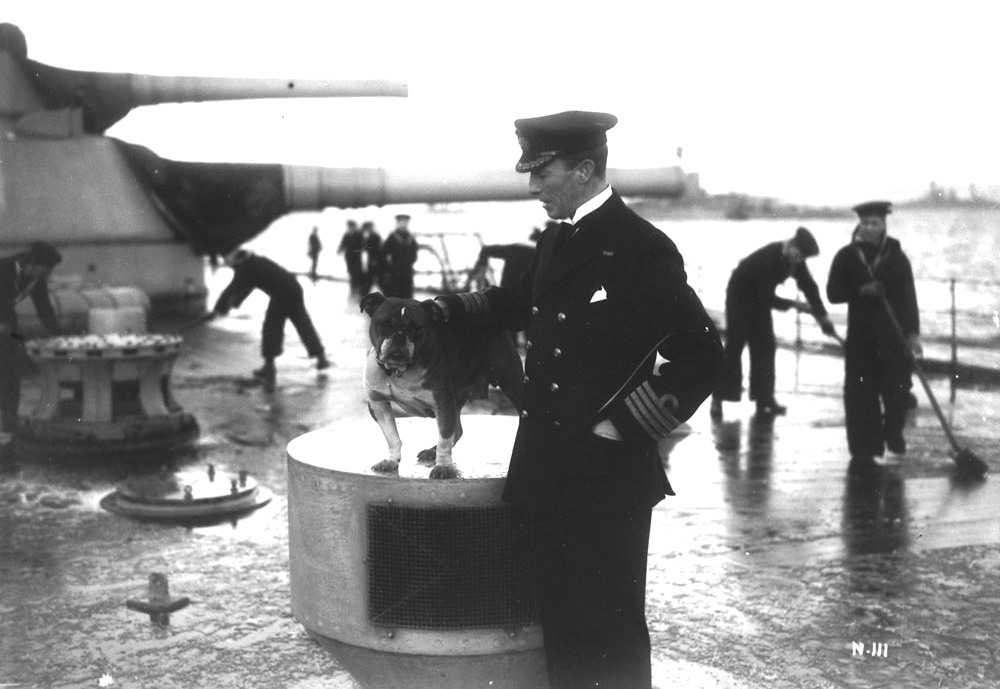
(Library and Archives Canada Photo, MIKAN No. 3398281)
Captain Ley commanding HMS Canada, persuades the ship’s mascot to pose for a portrait. The ship’s aft 14-inch guns are in background trained to starboard.
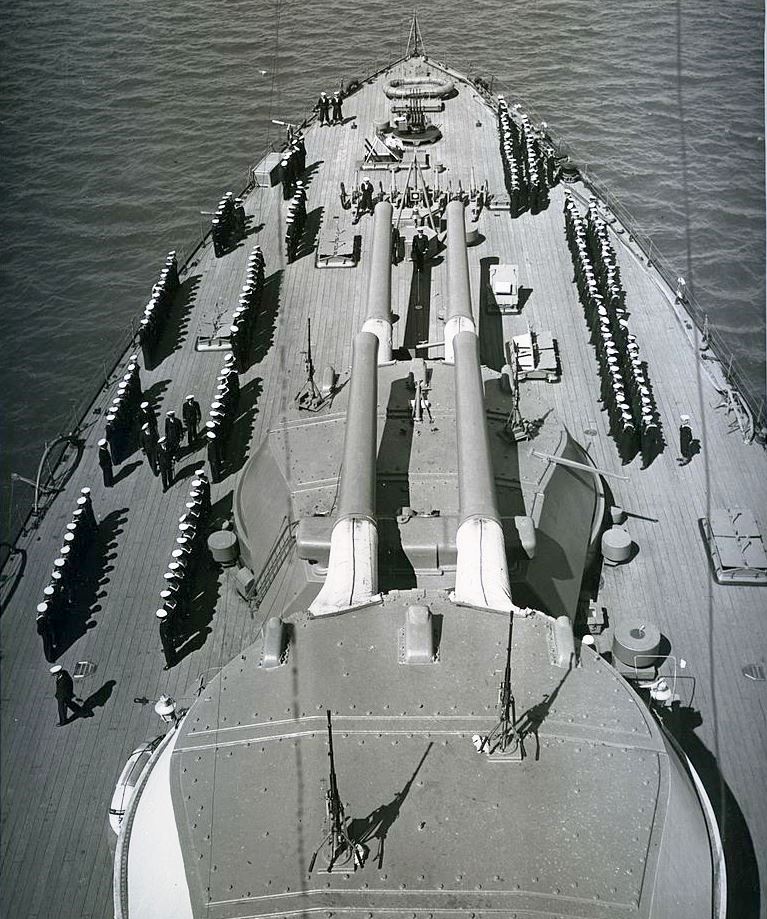
(US National Archives and Records Administration Photo)
Review aboard the Chilean battleship Almirante Latorre, sailors on the bow of the ship.
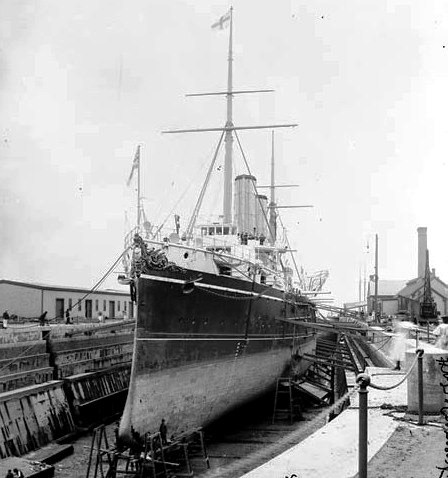
(Library and Archives Canada Photo, MIKAN No. 3332850)
HMS Crescent, Flagship of the North America and West Indies Squadron, Halifax, Nova ScotiaS, 1900. HMS Crescent was a first class cruiser of the Edgar class in the British Royal Navy. Crescent, and her sister ship HMS Royal Arthur, were built to a slightly modified design and are sometimes considered a separate class. She was launched in 1892, saw early service at the Australia Station and the North America and West Indies Station, served in the First World War, and was sold for breaking up in 1921. (Wikipedia)
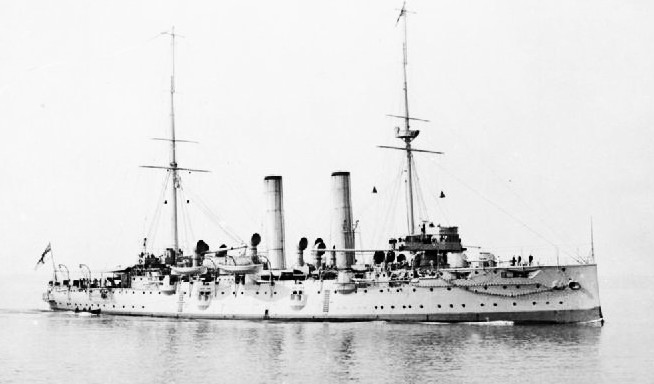
(IWM Photo, C 21126)
British Edgar class cruiser HMS Crescent, 1914.
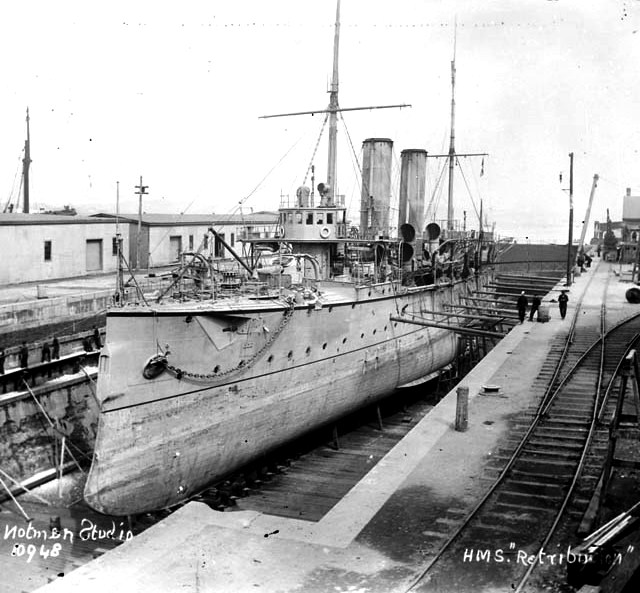
(Library and Archives Canada Photo, MIKAN No. 3332915)
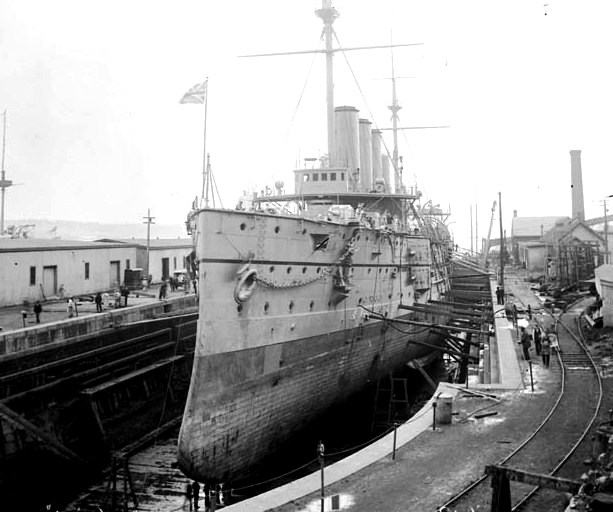
HMS Retribution, North America and West Indies Squadron in drydock, Halifax, NS, 1903.
HMS Retribution was a second-class protected cruiser of the Aeolus class serving in the Royal Navy’s North America and West Indies Station. During that year, the ship spent time undergoing maintenance in drydock at Halifax, Nova Scotia, before departing the harbour alongside the cruisers HMS Tribune and HMS Ariadne on 15 August 1903.
(Library and Archives Canada Photo, MIKAN No. 3332917)
HMS Ariadne, North America and West Indies Squadron in drydock, Halifax, NS, 1903.
(Library and Archives Canada Photo, MIKAN No. 3332926)
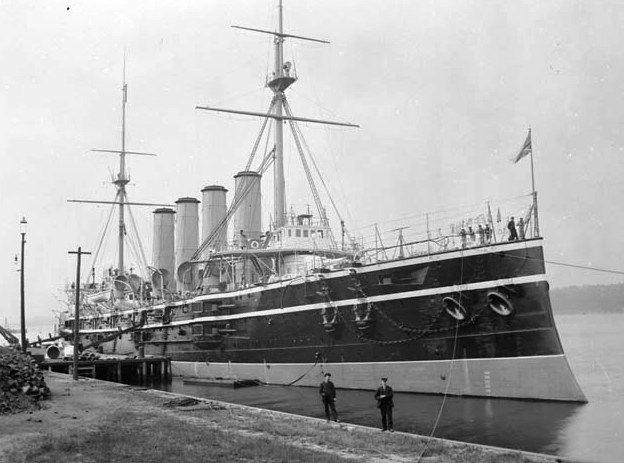
HMS Ariadne, North America and West Indies Squadron, Halifax, NS, 1903.
HMS Ariadne was a first-class protected cruiser of the Royal Navy’s Diadem class, designed for trade protection and fleet support duties in the late Victorian era. Built by J&G Thompson at Clydebank under the 1896–1897 Naval Estimates programme, she was laid down on 29 October 1896, launched on 22 April 1898, completed in March 1900, and commissioned on 5 June 1902. (Grokipedia)
On 26 July 1917, while steaming down the English Channel toward Portsmouth loaded with approximately 400 mines, Ariadne was attacked by the German submarine UC-65 under the command of Kapitänleutnant Otto Steinbrinck. The torpedo struck amidships on the port side, causing a huge explosion that detonated most of the onboard mines; the ship initially sank upright before rolling over to her starboard side and foundering off Beachy Head. (Grokipedia)
(Library and Archives Canada Photo, MIKAN No. 3332914)
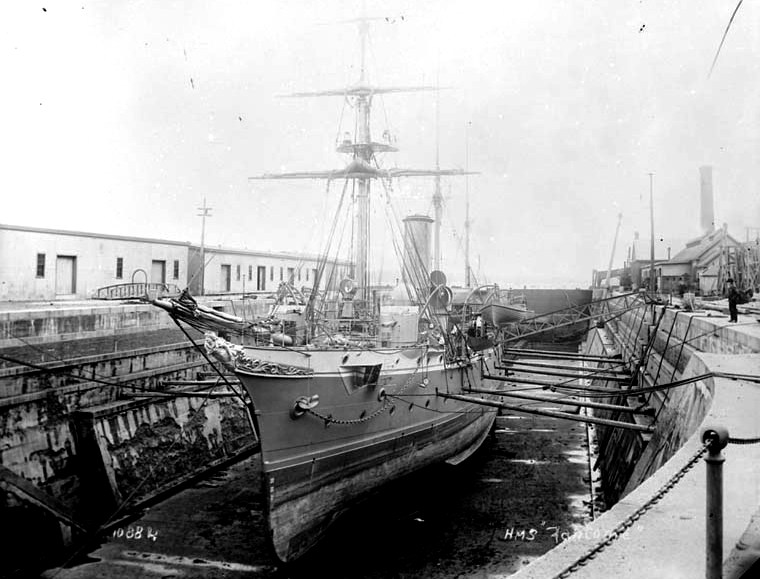
British Cadmus class sloop HMS Fantome, North America and West Indies Squadron, in drydock at Halifax, Nova Scotia, c1903.
HMS Fantome was commissioned at Sheerness Dockyard on 5 June 1902, by Commander Hugh Thomas Hibbert, with a complement of 113 officers and men, for service on the North America and West Indies Station. She arrived at the station head quarters at Halifax, Nova Scotia, on 13 October 1902, and later the same month visited the other head quarters at Bermuda, before going to Saint Lucia. After running ashore, a court of inquiry was reported in early 1903 to exonerate her commander as the chart which he had was wrong.
While serving on the North America and West Indies Station in late 1902 and early 1903, she took part in enforcing a blockade of the Venezuelan coast, where the Royal Navy contingent was led by Commodore Montgomerie in Charybdis. After the end of this conflict, she returned with other ships to Trinidad in late February 1903.
From 1906, HMS Fantome was operated by the Royal Naval survey service and conducted survey operations in Australian waters until the outbreak of war in 1914. The ship was transferred to the Royal Australian Navy on 27 November 1914 and commissioned as HMAS Fantome, but was paid off in February 1915. She was recommissioned on 27 July 1915 as a patrol vessel armed with two 4-inch and four 12-pounder guns. (Wikipedia)
(Royal Navy Photo)
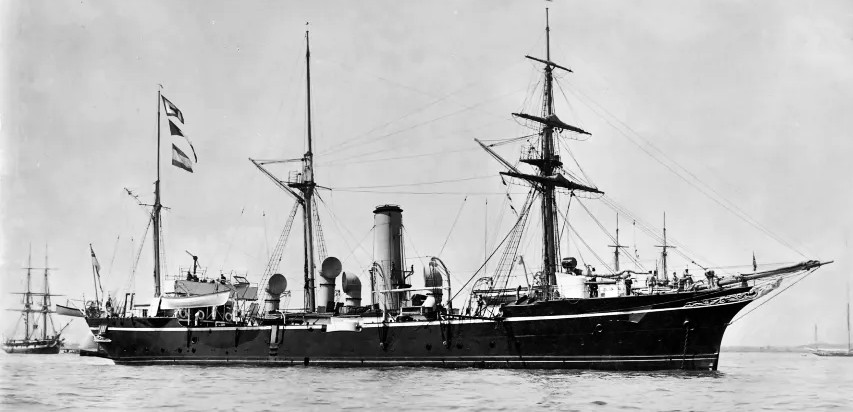
Cadmus Class Sloop HMS Fantome pictured at Port Melbourne. Note the extensive small boats. The class was designed to carry a 23-foot steam cutter, two 27-foot whalers, a 25-foot cutter, and two 16-foot skiffs.
(Library and Archives Canada Photo, MIKAN No. 3332928)
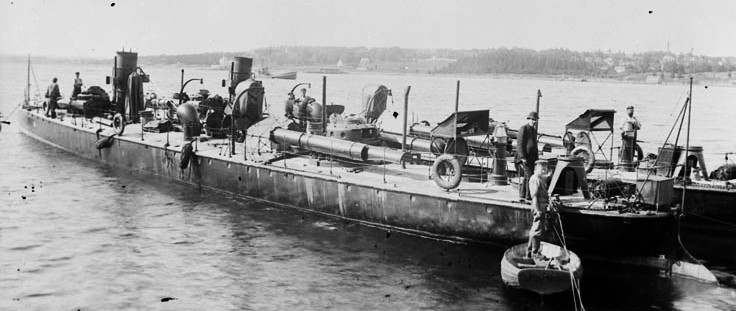
Two fast Royal Navy torpedo boats were sent to Halifax, Nova Scotia, shown here in port in 1901. One of these may be TB No. 61.
Torpedo Boats for Halifax
Daily Mail and Empire, 25 January 1896
It is stated in naval circles that two first-class torpedo boats will be sent to Halifax in the spring. They will be larger and more powerful than those now there. The torpedo boats will be accompanied to Halifax by one of the transports.
Torpedo Boat Attack on Fleet Planned by Admiral
The Montreal Gazette; 28 August 1901
Halifax, N.S., August 27.—Admiral Bedford has ordered a torpedo boat attack on the fleet on Thursday at midnight. During the day the ships will leave port and, during the night attempt to enter the harbour. An attack will be made on all the vessels by the torpedo boats. The manoeuvres will be the first of the kind attempted here.
All of the vessels of the fleet will be engaged by the attacking force, and it is the intention to bring very gun into use. The torpedo boats will be laying in wait in one of the coves for the fleet and will suddenly pounce upon the war vessels. The admiral and officers will have no previous knowledge as to the whereabouts of the torpedo boats. The torpedo boats destroyer Quail will act as an advance guard and she, with the assistance of the search lights on the cruisers, will endeavour to locate the enemy and when located the entire fleet will engage them.
Torpedo Boat, With Ten Miles Start, Will Be Chased by Destroyer
The Evening News (San Jose, California), 26 August 1899
(Library and Archives Canada Photo, MIKAN No. 3332863)
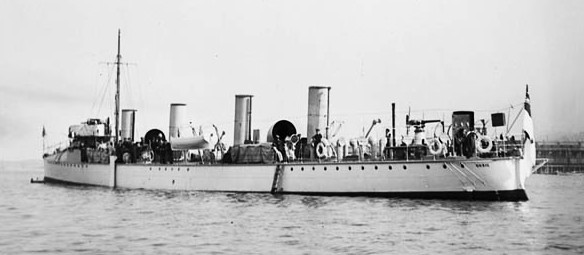
HMS Quail at Halifax, Nova Scotia..
It is learned that a notable speed test between the torpedo boat destroyer Quail and torpedo boat No. 61 is to be held off Halifax soon. The proposed test will have two objects, says the New York Press, in that it will demonstrate how long it will take a torpedo boat destroyer of the Quail’s class to overtake a torpedo boat of 22 knots when the torpedo boat has a ten mile stat, and also it will decide whether the torpedo boat in these days is of much importance to a fleet.
No. 61 will be given 30 minutes start to enable her to get ten miles out to sea. Then the Quail will stat in pursuit. In a run of 100 miles, it is said, she will overtake the torpedo boat on her way back, pass her, and anchor in the dockyard 50 minutes ahead.
All comments are subject to our Comment Policy. You must be at least 18 years old to comment.
See a comment that violates our guidelines? Report it here.