
Royal Navy dreadnought-class battleships: HMS St Vincent, HMS Collingwood, HMS Vanguard
The St Vincent-class was a line of three, originally four, dreadnought battleships, HMS St Vincent, HMS Collingwood, and HMS Vanguard. With the exception of their more powerful 50-calibre Mk. XI (305 mm) main guns and twenty 50-calibre Mk VII (102 mm) secondaries, the St Vincent class closely followed the design of the Bellerophon class.[43][44] Two sets of Parsons steam turbines and the four shafts they powered gave the 536-foot (163 m) long sisters a top speed of 21.7 knots (40.2 km/h; 25.0 mph) despite a displacement of 19,700 long tons (20,000 t). Finally, the sisters were protected by a Krupp cemented armour belt 8–10 inches (203–254 mm) thick, as was the case for the Bellerophon class.
Upon commissioning, the St Vincent-class battleships were all assigned to the 1st Battle Squadron of the Home Fleet. The ships were present at the Coronation Review of King George V on 24 June 1911 and HMS Collingwood became the flagship of the 1st Squadron two days later. After a lengthy refit in mid-1914, the sisters participated in the mobilisation and British responses to the July Crisis and joined the Home Fleet at Scapa Flow on 22 July 1914. All three sisters participated in the Battle of Jutland and fired upon SMS Wiesbaden; Collingwood and Vanguard also fired at SMS Moltke and SMS Derfflinger. The three sisters inflicted little damage, despite firing 98 shots during the battle. After the battle, Collingwood and St Vincent joined their sister Vanguard in the 4th Squadron, who had been transferred there in April 1916, and continued to serve with the Home Fleet until the end of the war. On 9 July 1917, one of Vanguard’s magazines exploded, killing 840 of her crew and two Australian sailors aboard HMAS Sydney. After the war, St Vincent became a gunnery training ship March 1919, before being made the flagship of the Reserve Fleet in June. In December, she was relieved and then sold for scrap 1 December 1921. Collingwood was also assigned to the Reserve Fleet, briefly served as a training vessel, and then was also sold for scrap 12 December 1922. (Wikipedia)
HMS St Vincent
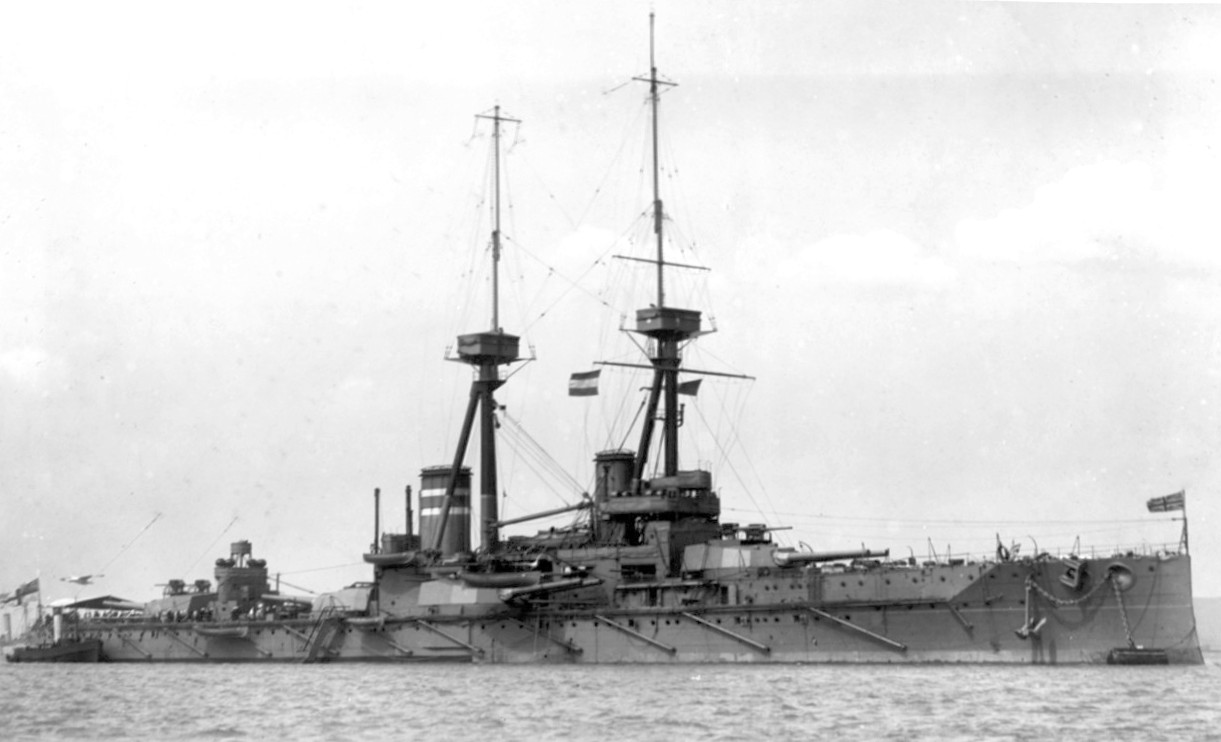
(USN Photo)
HMS St Vincent was the lead ship of her class of three dreadnought battleships built for the Royal Navy in the first decade of the 20th century. After commissioning in 1910, she spent her whole career assigned to the Home and Grand Fleets, often serving as a flagship. Aside from participating in the Battle of Jutland in May 1916, during which she damaged a German battlecruiser, and the inconclusive action of 19 August several months later, her service during the First World War generally consisted of routine patrols and training in the North Sea. The ship was deemed obsolete after the war and was reduced to reserve and used as a training ship. St Vincent was sold for scrap in 1921 and broken up the following year. (Wikipedia)
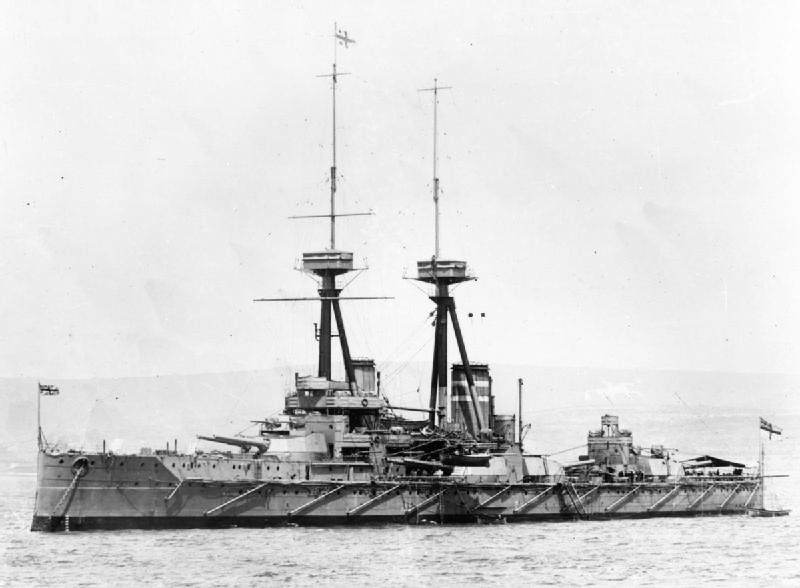
(IWM Photo, Q 21794)
HMS St Vincent, 1910.
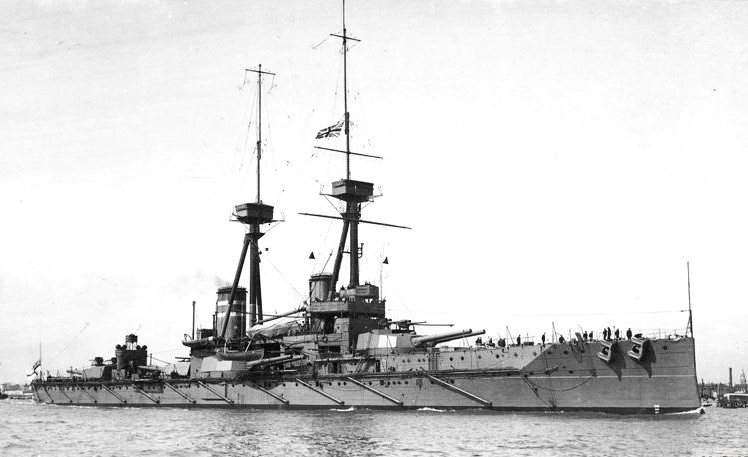
(IWM Photo, Q 75225)
HMS St Vincent, 1910.
HMS Collingwood
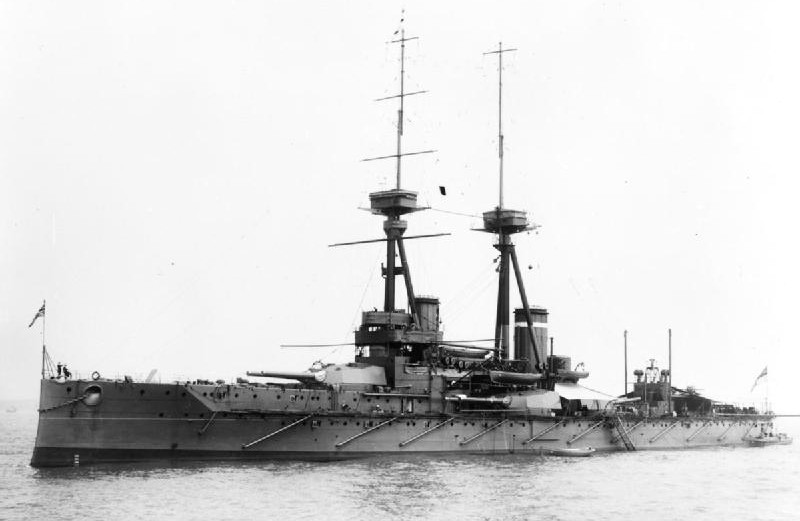
(IWM Photo, Q 38493)
HMS Collingwood was a St Vincent-class dreadnought battleship built for the Royal Navy in the first decade of the 20th century. She spent her whole career assigned to the Home and Grand Fleets and often served as a flagship. Prince Albert (later King George VI) spent several years aboard the ship before and during World War I. At the Battle of Jutland in May 1916, Collingwood was in the middle of the battleline and lightly damaged a German battlecruiser. Other than that battle, and the inconclusive action of 19 August, her service during the war generally consisted of routine patrols and training in the North Sea. The ship was deemed obsolete after the war; she was reduced to reserve and used as a training ship before being sold for scrap in 1922. (Wikipedia)
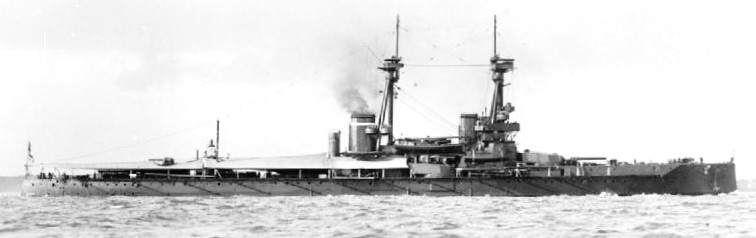
(IWM Photo, Q 21101)
HMS Collingwood.
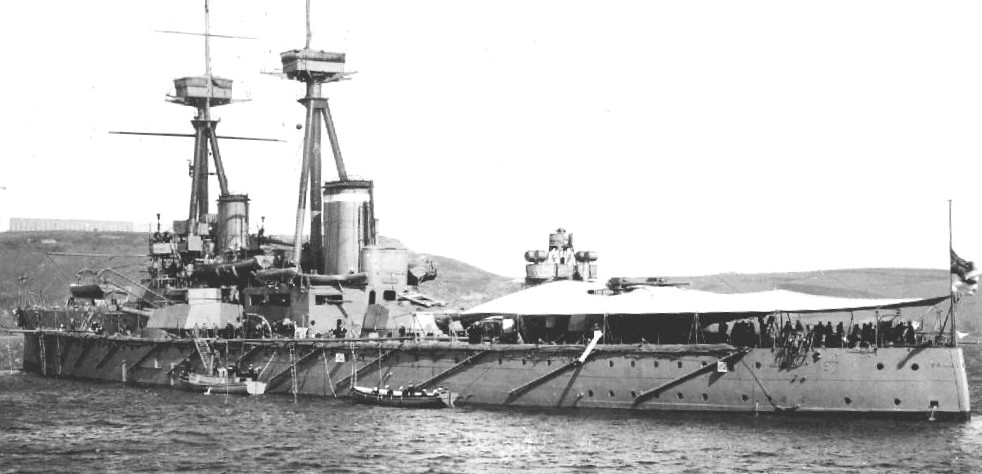
(Royal Navy Photo)
HMS Collingwood.
HMS Vanguard
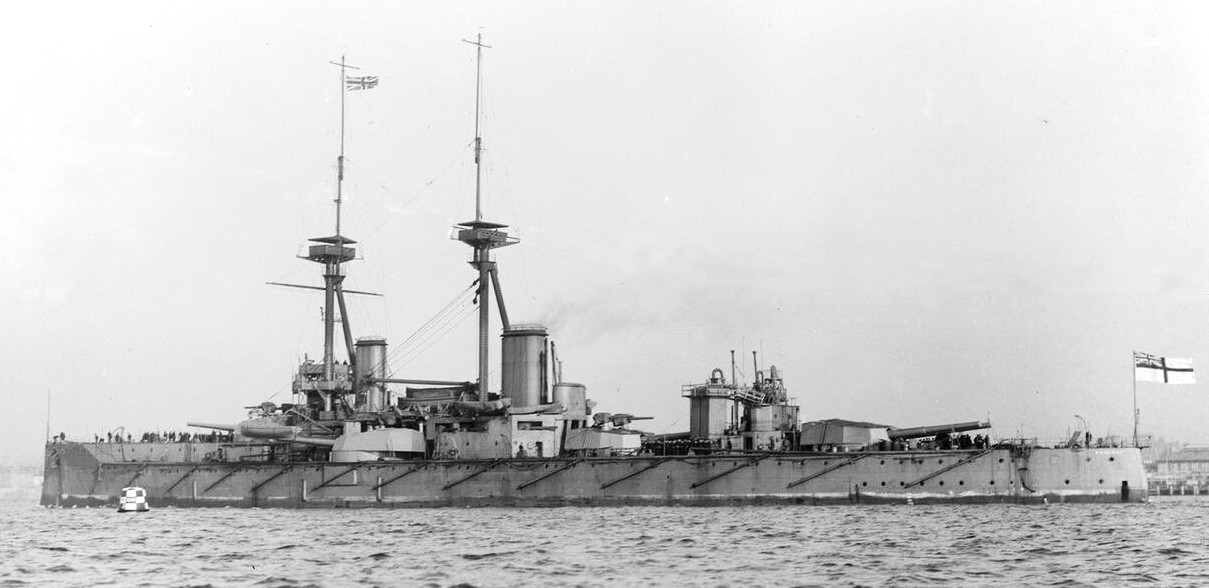
(IWM Photo, Q 40389)
HMS Vanguard was one of three St Vincent-class dreadnought battleships built for the Royal Navy in the first decade of the 20th century. She spent her career assigned to the Home and Grand Fleets. Aside from participating in the Battle of Jutland in May 1916 and the inconclusive action of 19 August several months later, her service during World War I mostly consisted of routine patrols and training in the North Sea.
Shortly before midnight on 9 July 1917 at Scapa Flow, Vanguard suffered a series of magazine explosions. She sank almost instantly, killing 843 of the 845 men aboard. The wreck was heavily salvaged after the war, but was eventually protected as a war grave in 1984. It was designated as a controlled site under the Protection of Military Remains Act 1986, and diving on the wreck is generally forbidden. (Wikipedia)
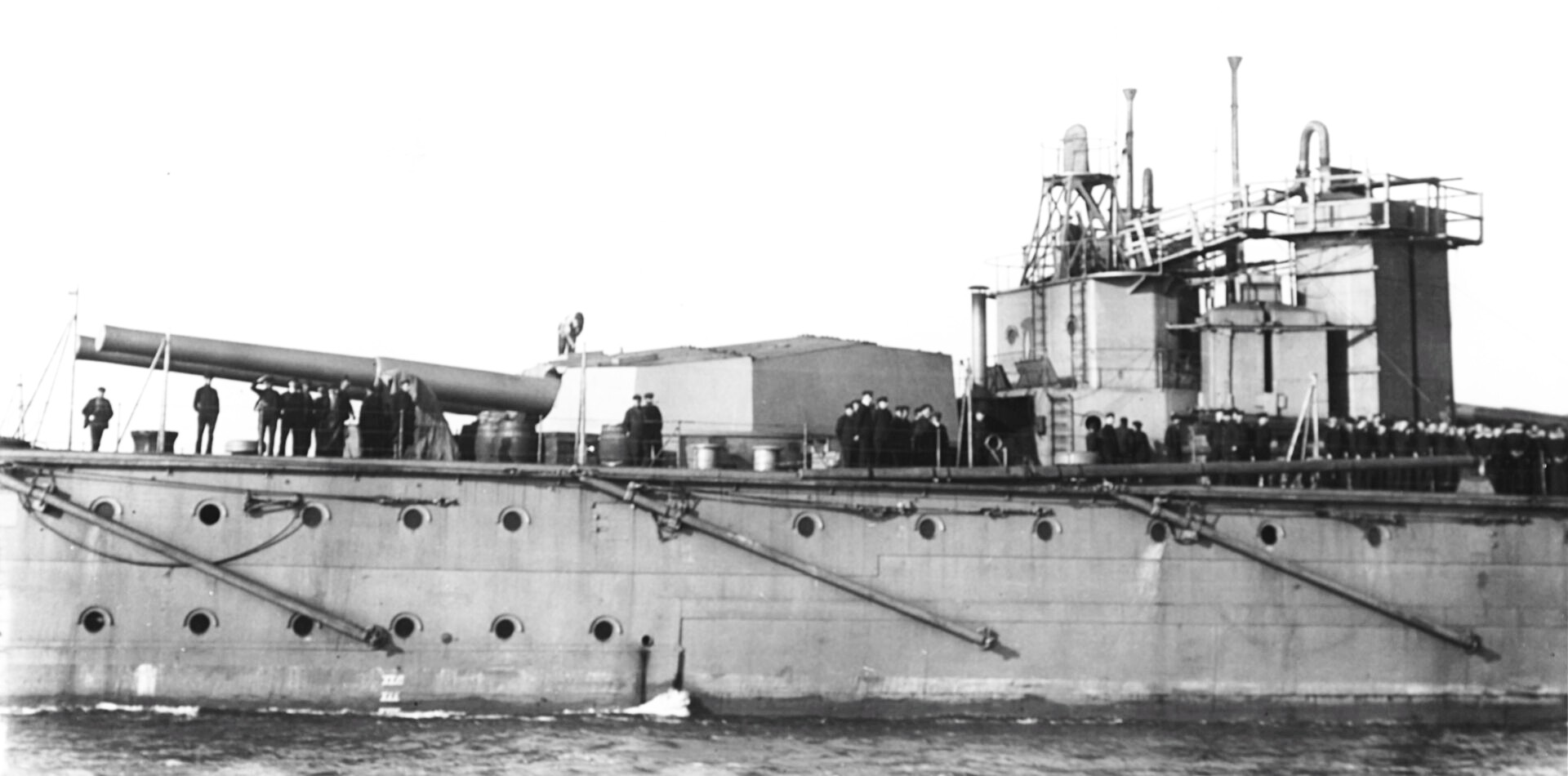
(Royal Navy Photo)
Aft Mk. XI 12-inch guns of HMS Vanguard.
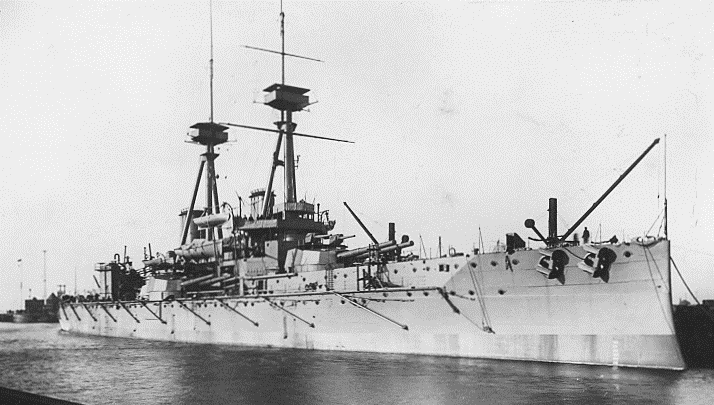
(Royal Navy Photo)
HMS Vanguard.
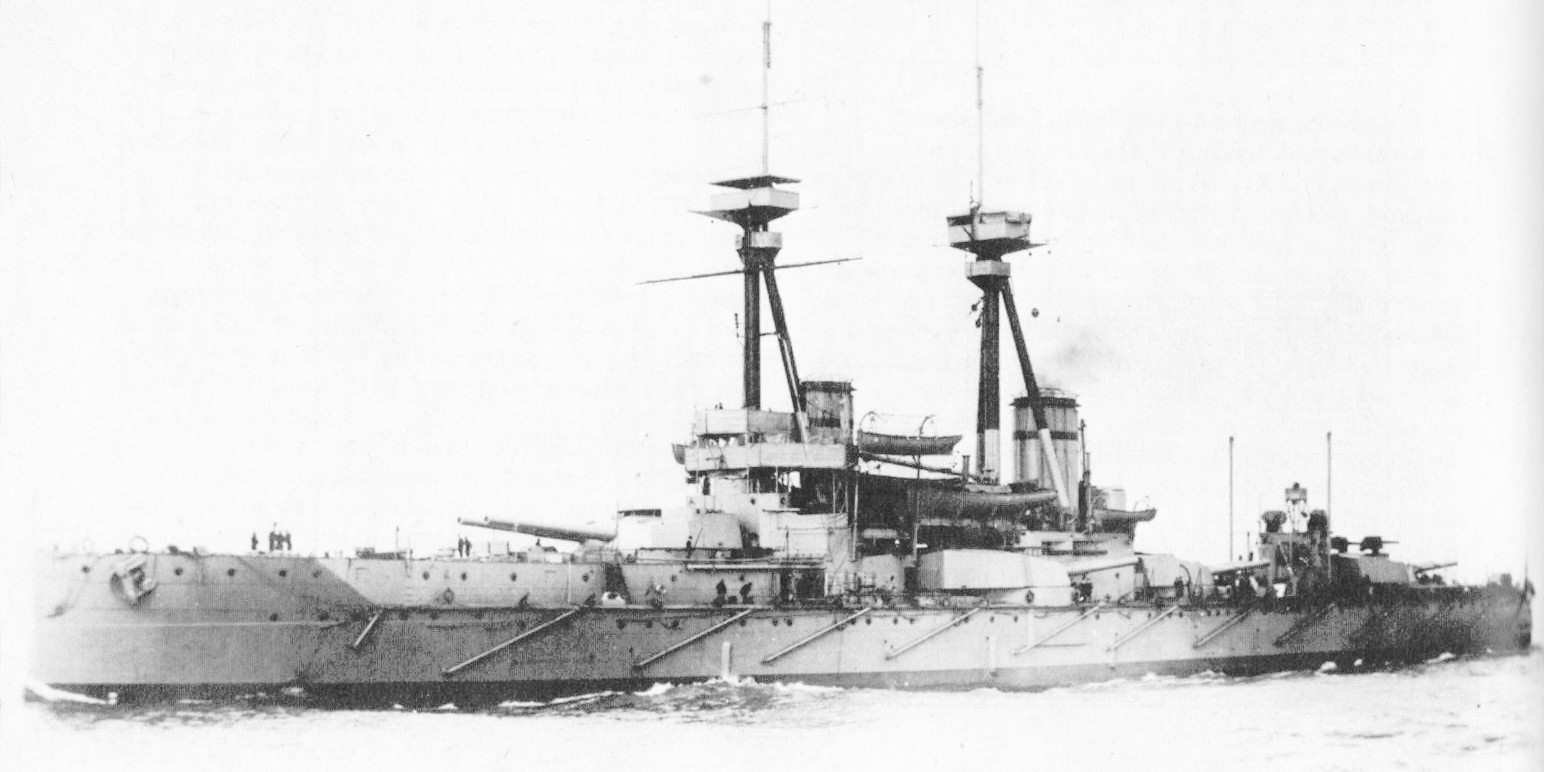
(Royal Navy Photo)
HMS Vanguard.