
Royal Navy Dreadnought-class battleships: HMS Iron Duke, HMS Marlborough, HMS Benbow, HMS Emperor of India
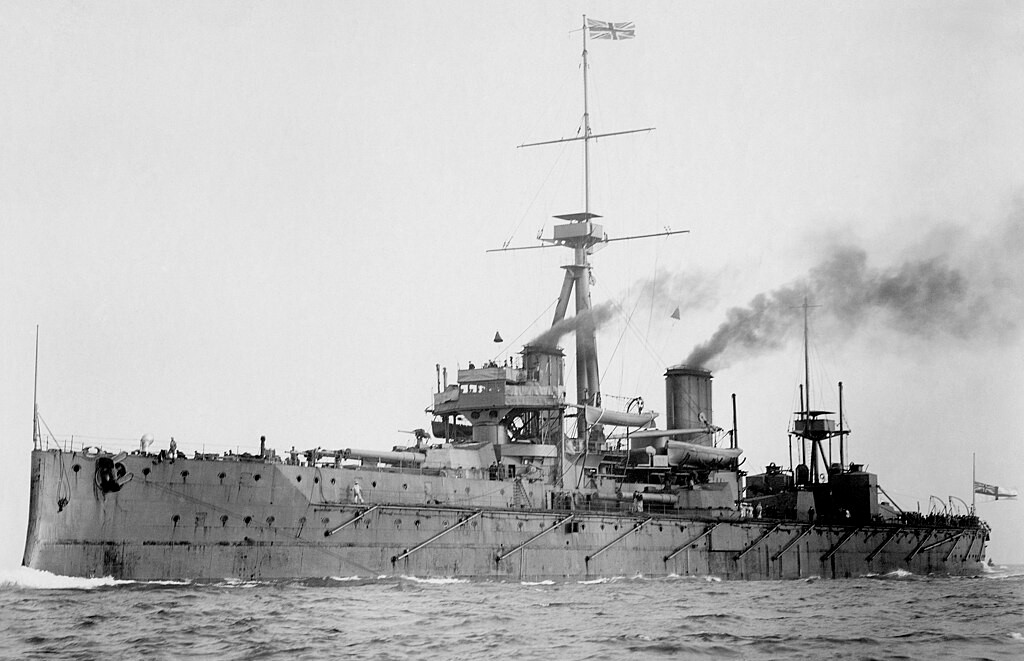
(U.S. Naval Historical Centre Photo)
The Royal Navy’s revolutionary HMS Dreadnought, launched in 1906, gave its name to the type.
The dreadnought was the predominant type of battleship in the early 20th century. The first of the kind, the Royal Navy’s HMS Dreadnought, had such an effect when launched in 1906 that similar battleships built after her were referred to as “dreadnoughts”, and earlier battleships became known as pre-dreadnoughts. Her design had two revolutionary features: an “all-big-gun” armament scheme, with an unprecedented number of heavy-calibre guns, and steam turbine propulsion. As dreadnoughts became a crucial symbol of national power, the arrival of these new warships renewed the naval arms race between the United Kingdom and Germany. Dreadnought races sprang up around the world, including in South America, lasting up to the beginning of the First World War. Successive designs increased rapidly in size and made use of improvements in armament, armour, and propulsion throughout the dreadnought era. Within five years, new battleships outclassed Dreadnought herself. These more powerful vessels were known as”super-dreadnoughts”. Most of the original dreadnoughts were scrapped after the end of the First World War under the terms of the Washington Naval Treaty, but many of the newer super-dreadnoughts continued serving throughout the Second World War.
Dreadnought-building consumed vast resources in the early 20th century, but there was only one battle between large dreadnought fleets. At the Battle of Jutland in 1916, the British and German navies clashed with no decisive result. The term dreadnought gradually dropped from use after the end of the First World War, especially after the Washington Naval Treaty, as virtually all remaining battleships shared dreadnought characteristics; it can also be used to describe battlecruisers, the other type of ship resulting from the dreadnought revolution.
The major naval powers avoided the cripplingly expensive expansion programmes by negotiating the Washington Naval Treaty in 1922. The Treaty laid out a list of ships, including most of the older dreadnoughts and almost all the newer ships under construction, which were to be scrapped or otherwise put out of use. It furthermore declared a ‘building holiday’ during which no new battleships or battlecruisers were to be laid down, save for the British Nelson class. The ships which survived the treaty, including the most modern super-dreadnoughts of all three navies, formed the bulk of international capital ship strength through the interwar period and, with some modernization, into the Second World War. The ships built under the terms of the Washington Treaty (and subsequently the London Treaties in 1930 and 1936) to replace outdated vessels were known as treaty battleships. (Wikipedia)
Iron Duke-class battleships
The Iron Duke class was a group of four dreadnought battleships built for the British Royal Navy before the First World War. The class comprised four ships: Iron Duke, Marlborough, Benbow, and Emperor of India. Launched from October 1912 to November 1913, this was the third class of Royal Navy super-dreadnoughts. The ships were essentially repeats of the King George V-class battleships; they retained the same ten 13.5inch (34.3 cm) guns in five twin gun turrets on the centreline. However, the Iron Dukes had improved armour and a more powerful secondary armament of 6-inch weapons instead of the 4-inch mounted on the earlier ships.
The four ships were the most advanced battleships in the Royal Navy at the outbreak of the First World War, though they were soon surpassed by the five ships of the Queen Elizabeth class. They all saw extensive service during the war with the Grand Fleet, where Iron Duke acted as the flagship for the fleet commander, Admiral John Jellicoe. Three of the ships, Iron Duke, Benbow, and Marlborough, were present at the Battle of Jutland; Emperor of India missed the battle by being in dock for periodic refit. The four Iron Duke-class battleships saw limited active duty following the end of the war; they were all demilitarized under the terms of the London Naval Treaty signed in 1930. Iron Duke was reduced to a training and depot ship and lasted in that role until 1946 when she was scrapped. Benbow was scrapped in 1931 and Marlborough followed in 1932. Emperor of India was sunk as a gunnery target in 1931 though was later re-floated to be scrapped in 1932. (Wikipedia)
HMS Iron Duke
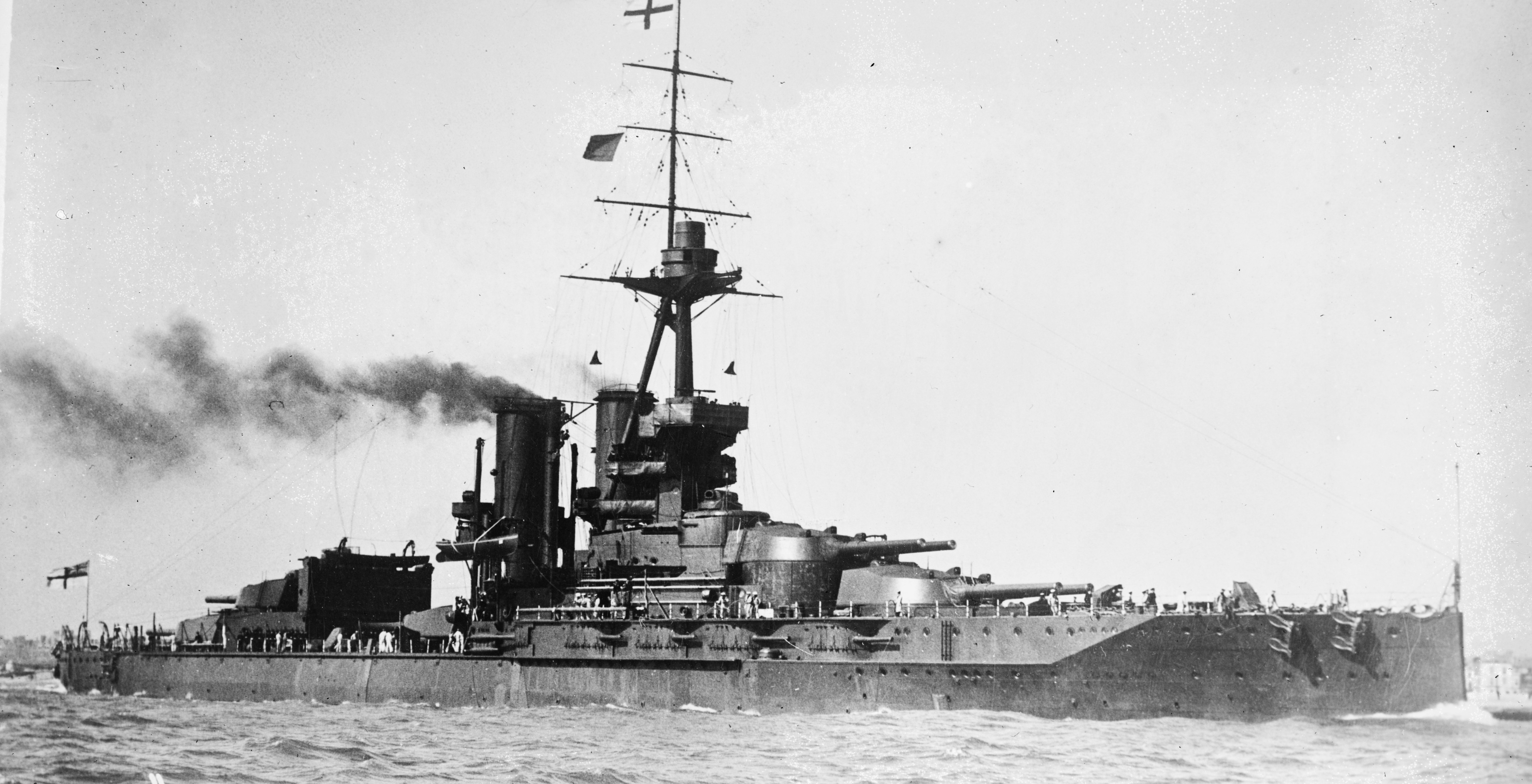
(IWM Photo, Q 75209)
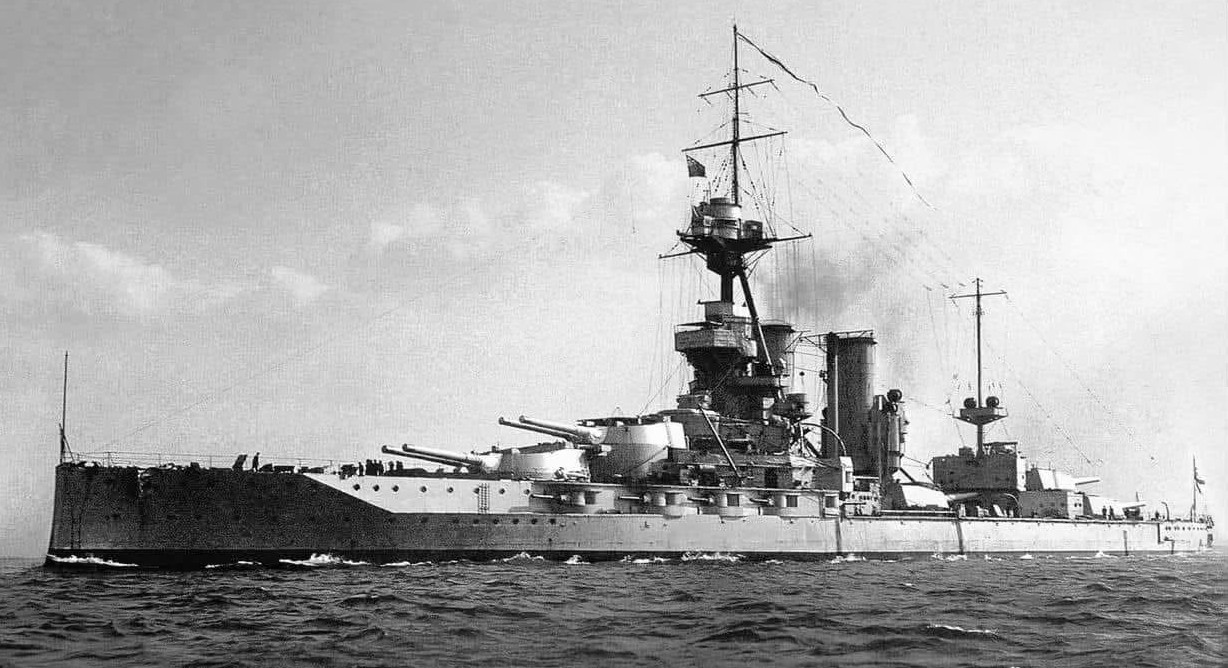
HMS Iron Duke was a dreadnought battleship of the Royal Navy, the lead ship of her class, named in honour of Arthur Wellesley, 1st Duke of Wellington. She was built by Portsmouth Dockyard, and her keel laid in January 1912. Launched ten months later, she was commissioned into the Home Fleet in March 1914 as the fleet flagship. She was armed with a main battery of ten 13.5-inch (343 mm) guns and was capable of a top speed of 21.25 knots (39.36 km/h; 24.45 mph).Iron Duke served as the flagship of the Grand Fleet during the First World War, including at the Battle of Jutland. There, she inflicted significant damage on the German battleship SMS König early in the main fleet action. In January 1917, she was relieved as fleet flagship. After the war, Iron Duke operated in the Mediterranean as the flagship of the Mediterranean Fleet. She participated in both the Allied intervention in the Russian Civil War in the Black Sea and the Greco-Turkish War. She also assisted in the evacuation of refugees from Smyrna. In 1926, she was assigned to the Atlantic Fleet, where she served as a training ship.
HMS Iron Duke remained on active duty for only a few more years; in 1930, the London Naval Treaty specified that the four Iron Duke-class battleships be scrapped or otherwise demilitarised. Iron Duke was therefore converted into a gunnery training ship; her armour and much of her armament was removed to render her unfit for combat. She served in this capacity until the outbreak of the Second World War in September 1939, when she was moored in Scapa Flow as a harbour defence ship. In October, she was badly damaged by German bombers and was run aground to avoid sinking. She continued to serve as an anti-aircraft platform for the duration of the war, and was eventually refloated and broken up for scrap in the late 1940s. (Wikipedia)
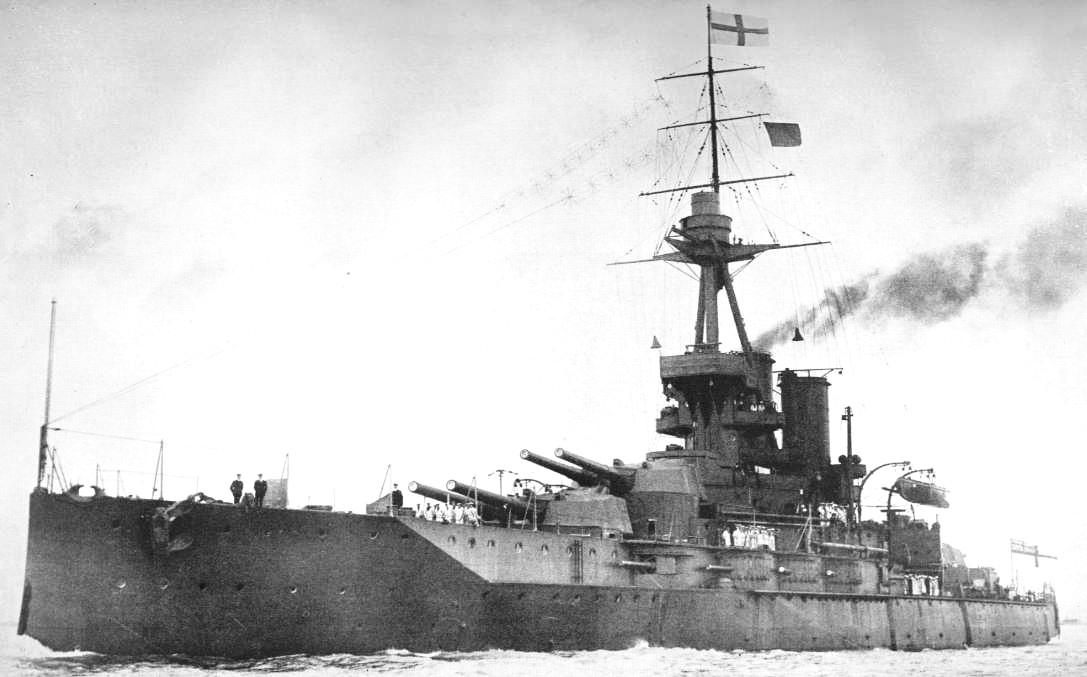
(Royal Navy Photo)
HMS Iron Duke, 1912.
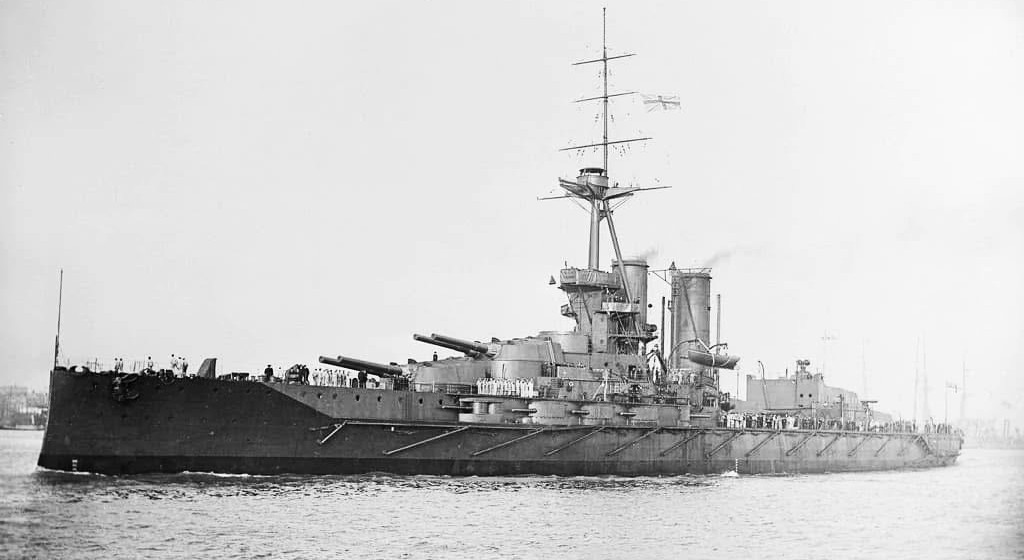
(Royal Navy Photo)
HMS Iron Duke, during her sea trials sometime between 25 Nov 1913 and her completion in March 1914. During her sea trials she was fitted with anti-torpedo nets. The nets were removed before she was commissioned. (Bill Cox)
(Royal Navy Photo)
The lead ship of her class the battleship HMS Iron Duke flying her paying off pennant circa 1922. In that year Iron Duke was refitted and her flying off platform which can be seen on B turret was removed.
HMS Marlborough
(Royal Navy Photo)
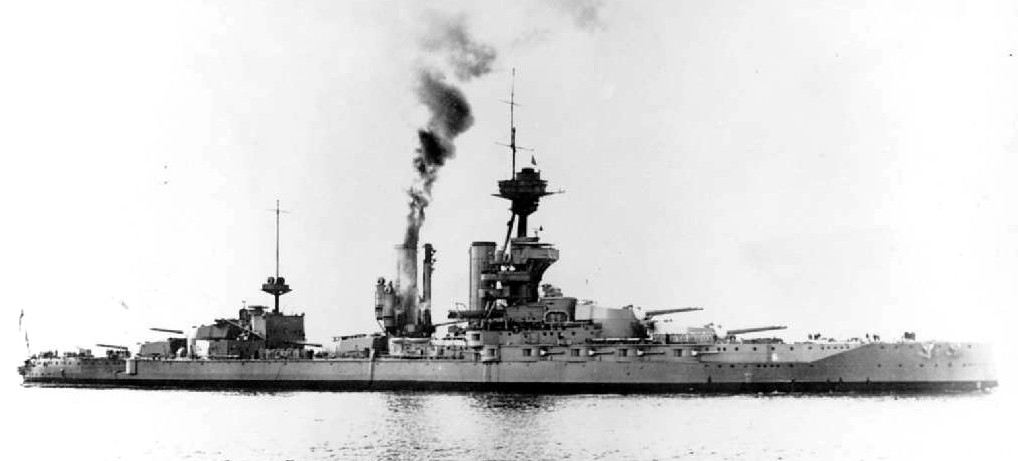
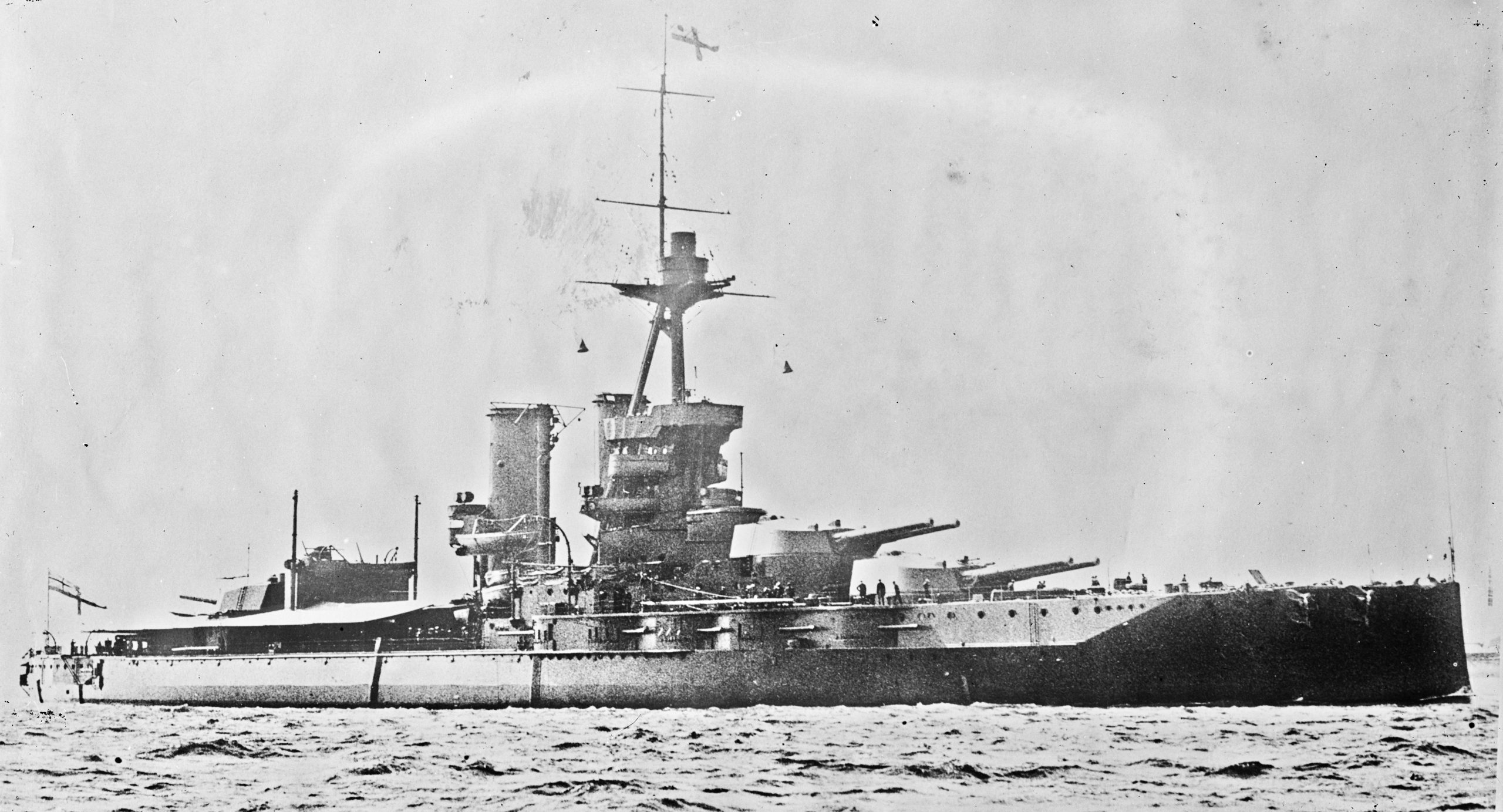
HMS Marlborough was the most heavily engaged ship of the class during the battle of Jutland; she fired a total of 162 heavy-calibre shells, out of a total of 292 for the entire class. She was assigned to the 6th Division of the 1st Battle Squadron, towards the rear of the British line. She served as the flagship of Vice Admiral Cecil Burney.
During the battle, she was hit by a torpedo amidships; the torpedo tore a hole that was 21 m by 6 m (70 ft by 20 ft). Despite the damage, she was able to keep her position in the line, though her speed was reduced to 17 kn (31 km/h; 20 mph). Marlborough continued to fire her main guns until the list increased to the point that prevented her guns from being effectively employed. The ship eventually withdrew to the Humber, where she undertook 3 months of repairs.
Post-war, Marlborough joined Iron Duke in the Mediterranean, where she remained until 1926. She was then transferred to the Atlantic Fleet; her tour of duty there lasted until 1929, at which point she was withdrawn from active duty. The ship was sold for scrapping in 1932. (Wikipedia)
(Bibliothèque nationale de France Photo)
HMS Marlborough, 1922.
HMS Benbow
(IWM Photo), SH 1885)
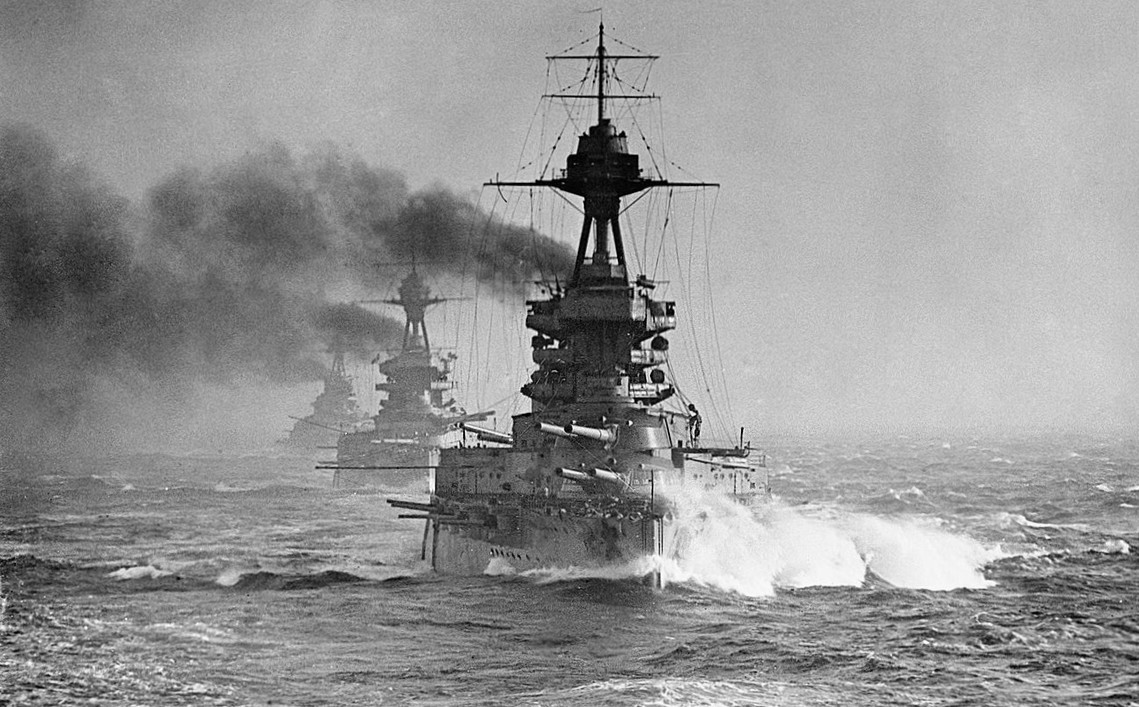
HMS Benbow with other battleships in line ahead, 1917.
Like her sisters, HMS Benbow was assigned to the Grand Fleet for the duration of the First World War. She was assigned to the 4th Battle Squadron on 10 December 1914. Benbow was the flagship of Admiral Doveton Sturdee, the commander of the 4th Division of the 4th Battle Squadron, during the battle of Jutland. The 4th Division was directly ahead of the 3rd Division, where Admiral Jellicoe commanded the fleet from Benbow’s sister Iron Duke. Throughout the battle the ship remained undamaged. Like Iron Duke and Marlborough, Benbow was transferred to the Mediterranean in 1919, and she provided artillery support to White Russian forces in the Black Sea. She followed Marlborough to the Atlantic Fleet in 1926; she too was stricken in 1929 and sold for scrap. (Wikipedia)
HMS Emperor of India
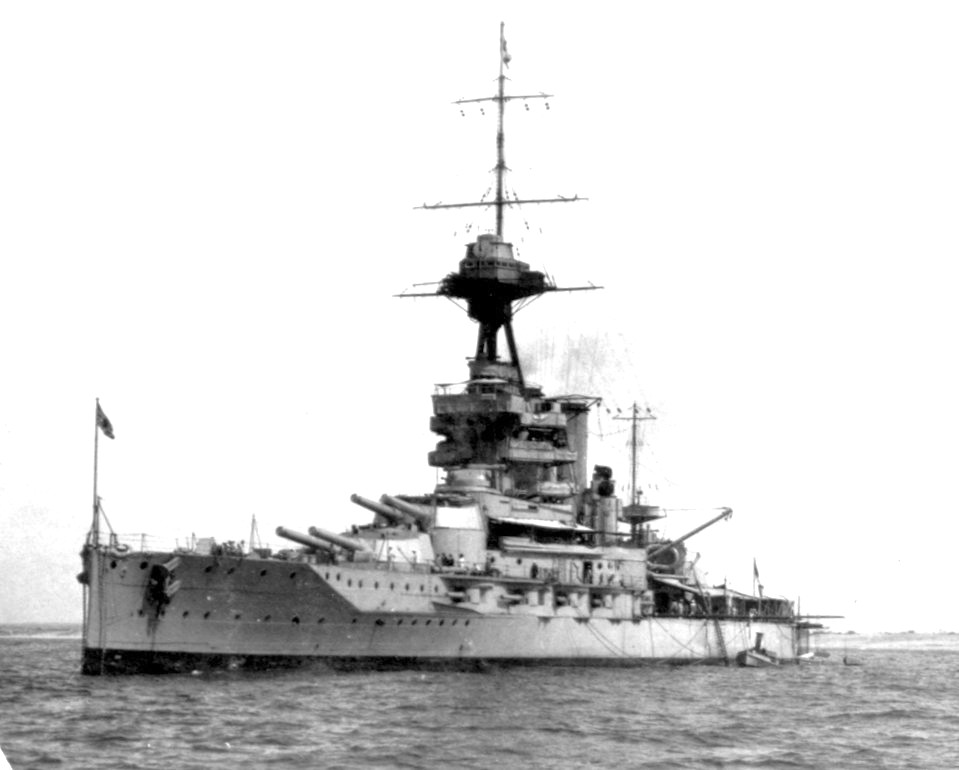
(Library of Congress Photo, 1920)
HMS Emperor of India was also assigned to the 4th Battle Squadron, in December 1914. She missed Jutland because she was in dock for a periodic refit. After the end of the war, she was transferred to the Mediterranean along with the other three ships of the class. Emperor of India returned to England in 1922 for a refit, after which she resumed her duties in the Mediterranean. She likewise joined the Atlantic Fleet in 1926, alongside her sisters, and stricken in 1929. Instead of being scrapped, however, she was used as a gunnery target, and sunk in 1931. She was raised shortly thereafter and sold to ship breakers on 6 February 1932. (Wikipedia)
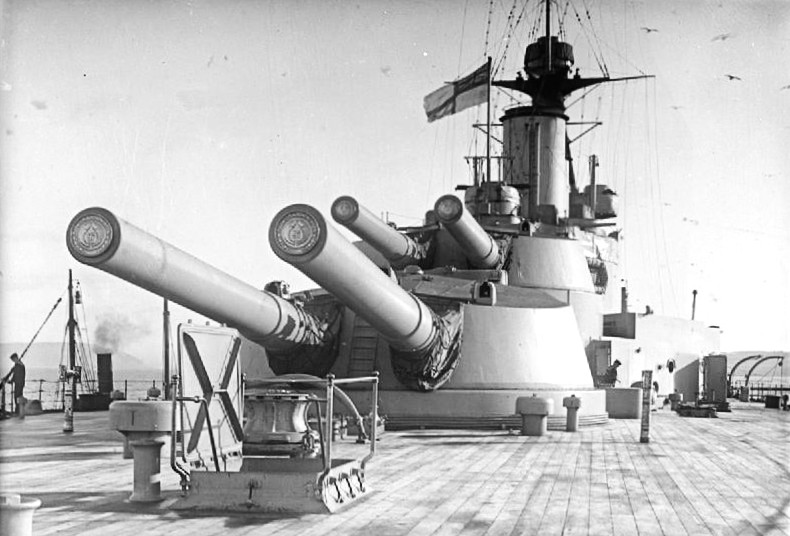
(IWM Photo, SP 1745)
The after 13.5-inch (X and Y) turrets of the battleship HMS Emperor of India.
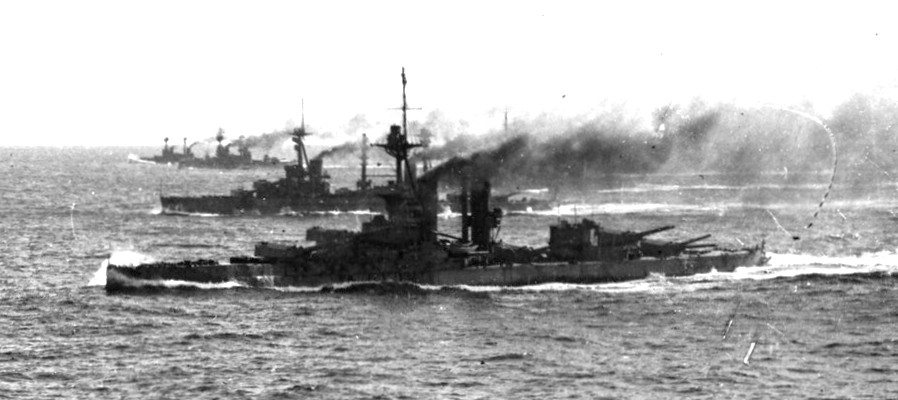
(Royal Navy Photo)
The 4th Battle Squadron in 1915; the closest vessel is either HMS Benbow or HMS Emperor of India.
All comments are subject to our Comment Policy. You must be at least 18 years old to comment.
See a comment that violates our guidelines? Report it here.