
Courageous/Glorious class large light cruisers converted to aircraft carriers
HMS Furious (47), HMS Courageous (50), HMS Glorious (77)
Glorious group 19,320 tons, 4 × 15 in, 18 × 4 in.
HMS Furious (47)
(RN Photo)
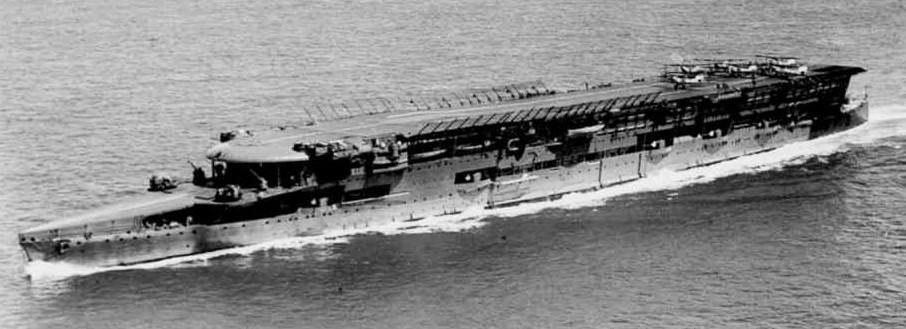
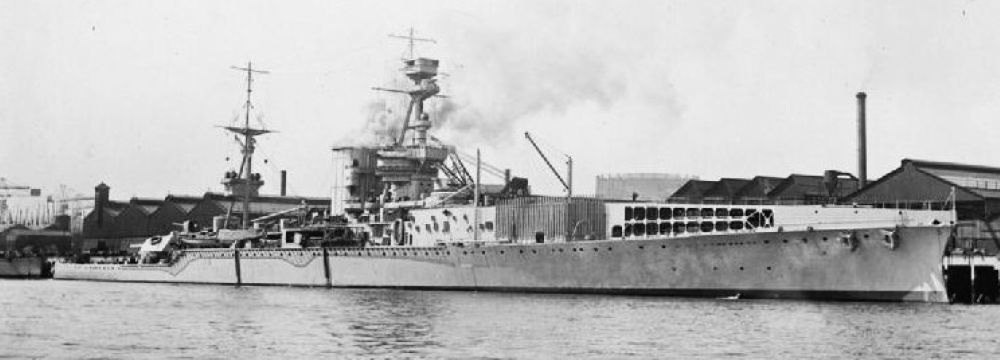
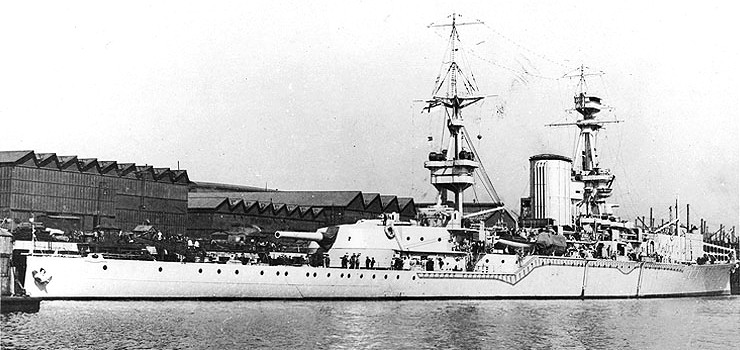
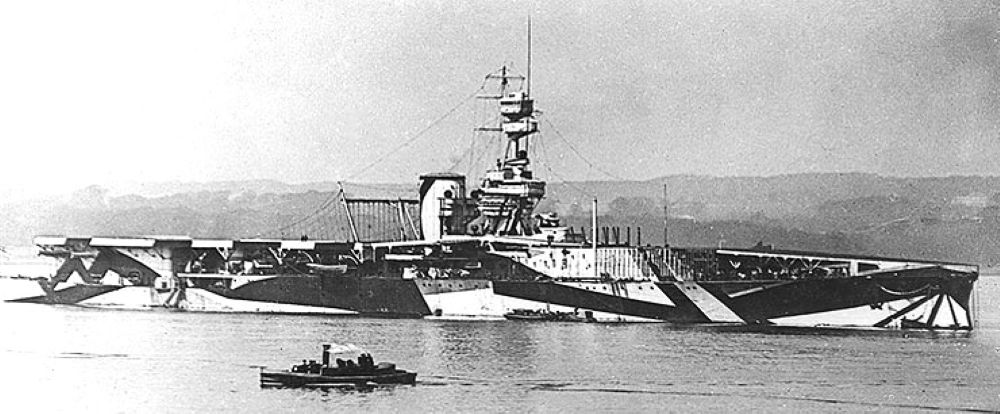
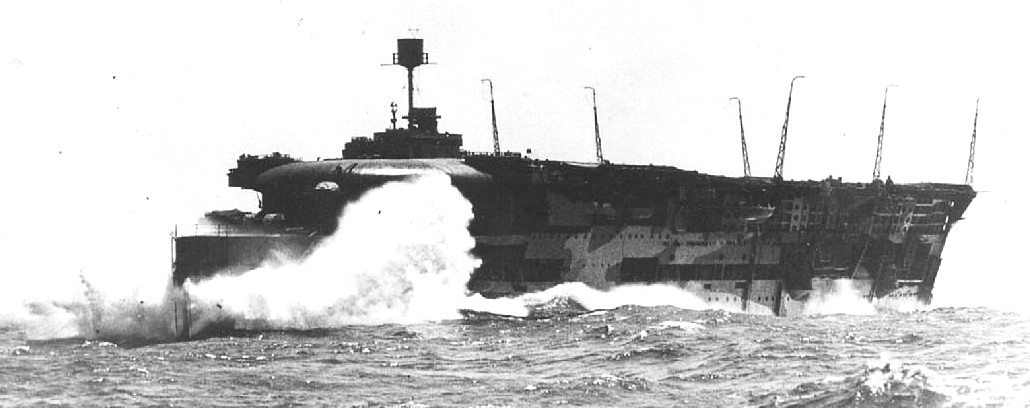
HMS Furious (47), 19,513 tons, 2 × 18 in, 11 × 5.5 in., completed as an aircraft carrier. HMS Furious was a modified Courageous-class battlecruiser built for the Royal Navy (RN) during the First World War. Designed to support the Baltic Project championed by the First Sea Lord, Lord Fisher, the ship was very lightly armoured and designed with a main battery of only two 18-inch (457 mm) guns. Furious was modified as an aircraft carrier while under construction. Her forward turret was removed and a flight deck was added in its place, such that aircraft had to manoeuvre around the superstructure to land. Later in the war, the ship had her rear turret removed and a second flight deck installed aft of the superstructure, but this was less than satisfactory due to air turbulence. Furious was briefly laid up after the war before she was reconstructed with a full-length flight deck in the early 1920s. Her half-sisters Courageous and Glorious were also rebuilt as aircraft carriers around that time.After her conversion, Furious was used extensively for trials of naval aircraft, and later as a training ship once large, modern fleet carriers such as Ark Royal entered service in the 1930s. During the early months of the Second World War, the carrier spent her time hunting for German raiders in the North Atlantic and escorting convoys. This changed dramatically during the Norwegian Campaign in early 1940, when her aircraft provided air support to British troops ashore in addition to attacking German shipping. The first of what would be numerous aircraft ferry missions was made by the carrier during the campaign. After the withdrawal of British troops in May, Furious made several anti-shipping strikes in Norway with little result before beginning a steady routine of ferrying aircraft for the Royal Air Force.
At first, Furious made several trips to West Africa, but she began to ferry aircraft to Gibraltar in 1941. An unsuccessful attack on German-occupied ports on the Arctic Ocean interrupted the ferry missions in mid-1941. Furious was given a lengthy refit in the United States and spent a few months training after her return in April 1942. She made several more ferry trips in mid-1942 before her aircraft attacked airfields in Vichy French Algeria as part of the opening stages of Operation Torch in November 1942. The ship remained in the Mediterranean until February 1943 when she was transferred to the Home Fleet.Furious spent most of 1943 training, but made a number of attacks on the German battleship Tirpitz and other targets in Norway during the first half of 1944. By September 1944, the ship was showing her age and she was placed in reserve. Furious was decommissioned in April 1945, but was not sold for scrap until 1948. (Wikipedia)
(IWM Photo, SP 89)
HMS Furious as originally completed in 1917 with a forward flying-off deck.
(RN Photo)
HMS Furious when first completed in 1917, with a single 18-inch gun aft and flying-off deck forward.
(USN Photo)
HMS Furious in 1918, after she had been fitted with a landing-on deck aft. Note the large crash barrier rigged behind her funnel, her “dazzle” camouflage, and the steam launch passing by in the foreground.
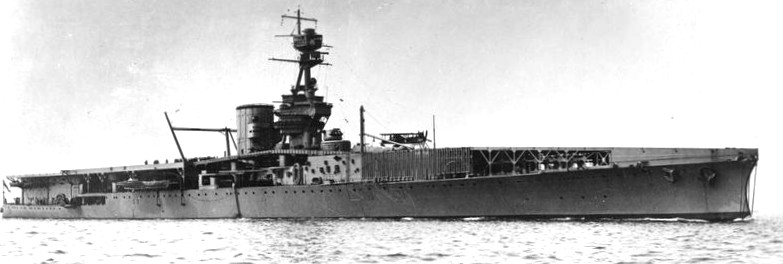
(IWM Photo, Q 75338)
HMS Furious with aircraft on deck, c1920.
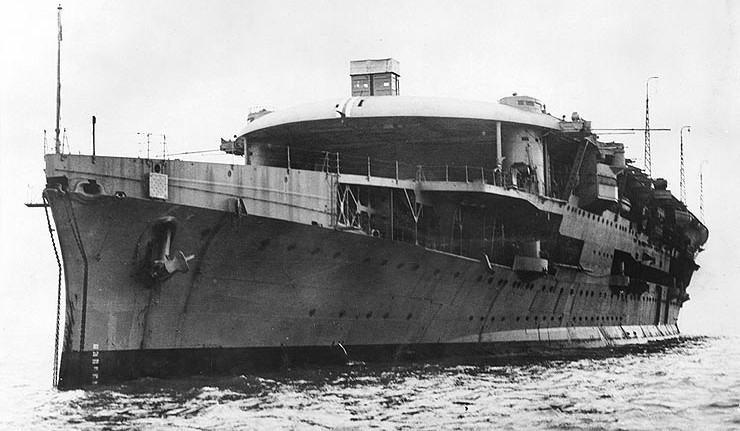
(USN Photo)
HMS Furious, soon after completion of her 1921-1925 reconstruction.
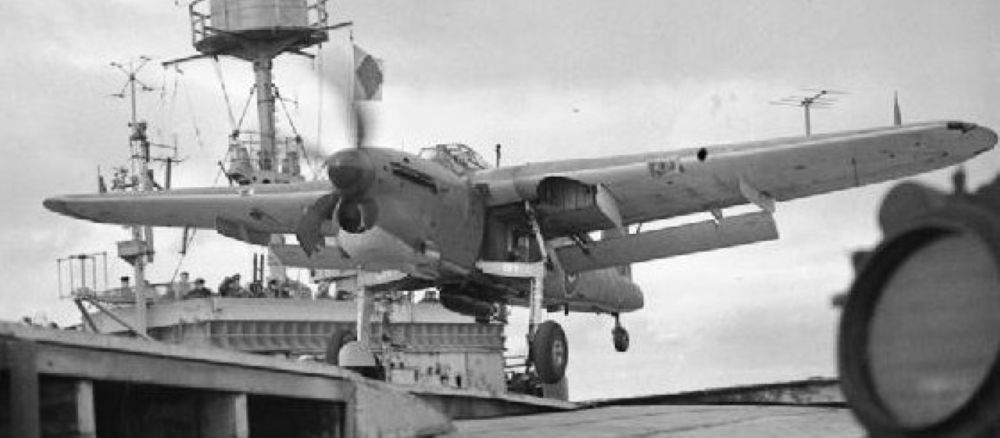
(IWM Photo,
A Fairey Barracuda of No. 830 Squadron, Fleet Air Arm taking off from HMS Furious with a 1600 lb bomb showing beneath it, to attack shipping and installations off Norway. This may have taken place during Operation Mascot, a strike against the German Battleship Tirpitz on 17 July 1944.
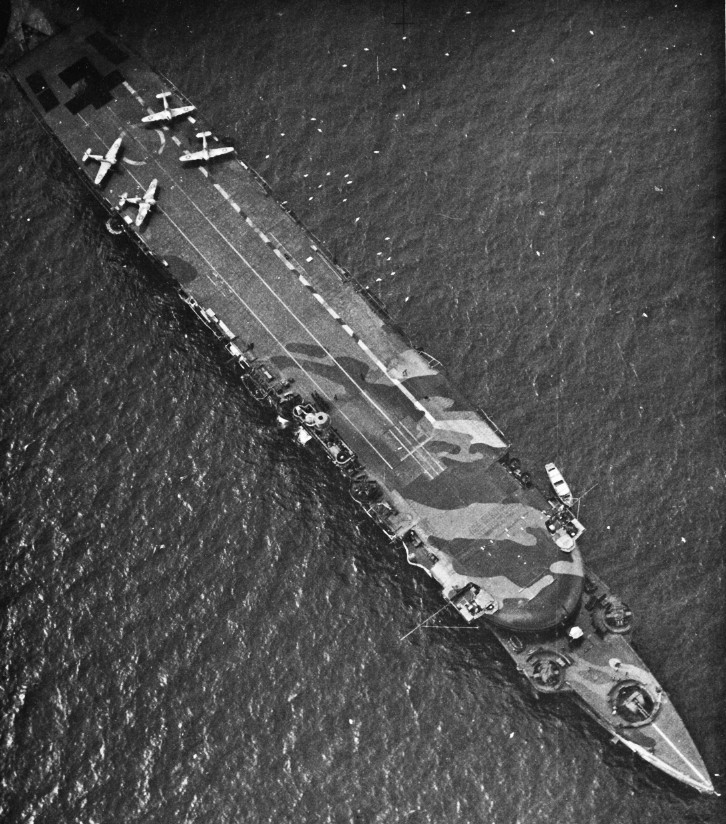
(MOD Photo)
HMS Furious (47) aerial view, 1941.
(RN Photo)
HMS Furious (47).

Colour profile, HMS Furious.
HMS Courageous (50)
(IWM Photo, Q 65692)
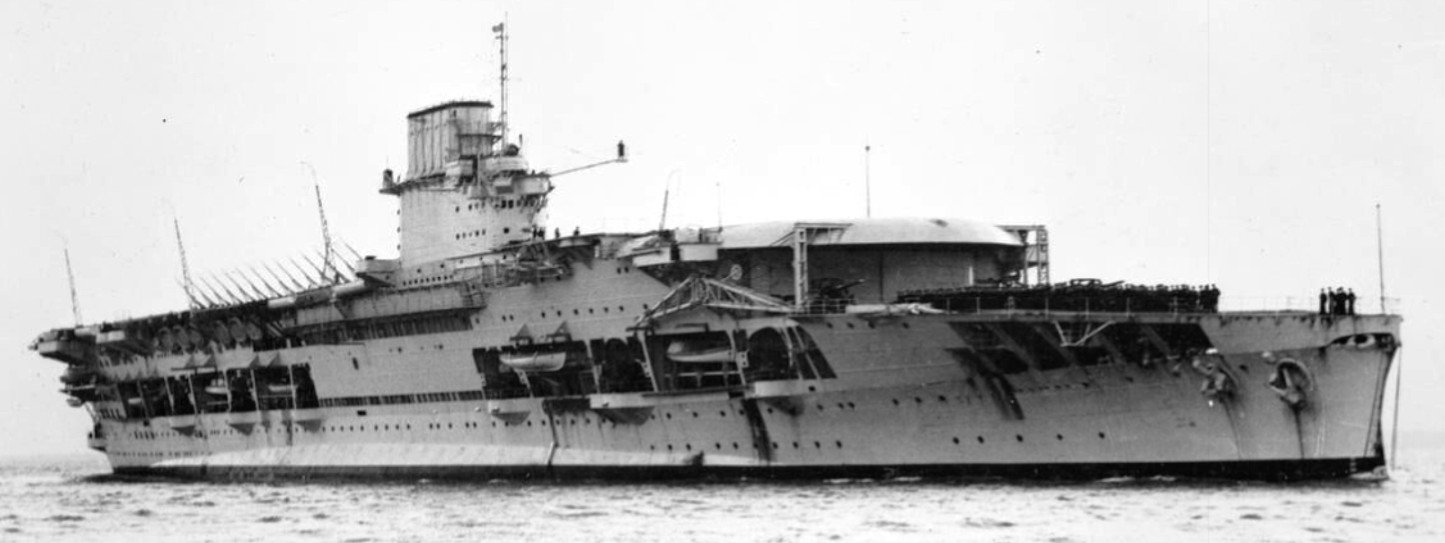
HMS Courageous (50), 1935.
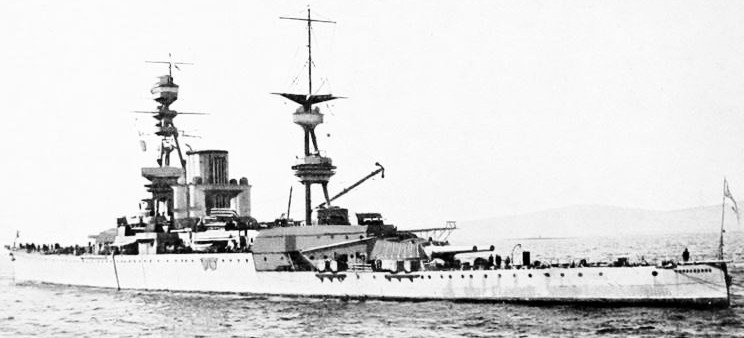
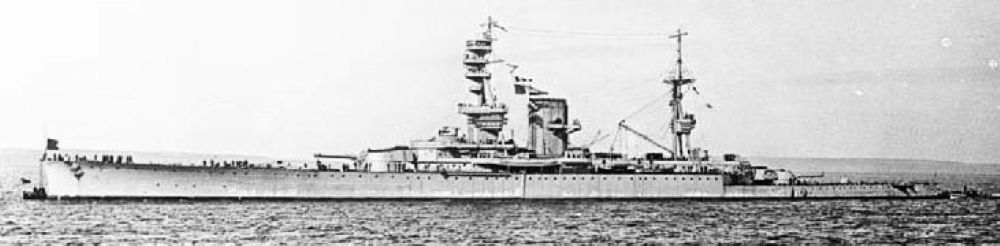
HMS Courageous (50), converted to aircraft carrier 1924–1928. HMS Courageous was the lead ship of her class of three battlecruisers built for the Royal Navy in the First World War. Designed to support the Baltic Project championed by First Sea Lord John Fisher, the ship was very lightly armoured and armed with only a few heavy guns. Courageous was completed in late 1916 and spent the war patrolling the North Sea. She participated in the Second Battle of Heligoland Bight in November 1917 and was present when the German High Seas Fleet surrendered a year later.
Courageous and Glorious were decommissioned after the war and laid up, then rebuilt as aircraft carriers in the mid-1920s. Courageous and Glorious could carry 48 aircraft, compared with 36 carried by their half-sister Furious on about the same displacement. After recommissioning Courageous spent most of her career operating off Great Britain and Ireland. She briefly became a training ship, but reverted to her normal role a few months before the start of the Second World War in September 1939. Later that month, German U-boat U-29 torpedoed Courageous, which sank with the loss of more than 500 of her crew. (Wikipedia)
HMS Courageous served with the Home Fleet at the start of the Second World War with 811 and 822 Squadrons aboard, each squadron equipped with a dozen Fairey Swordfish. In the early days of the war, hunter-killer groups were formed around the fleet’s aircraft carriers to find and destroy U-boats. On 31 August 1939 she went to her war station at Portland and embarked the two squadrons of Swordfish. Courageous departed Plymouth on the evening of 3 September 1939 for an anti-submarine patrol in the Western Approaches, escorted by four destroyers. On the evening of 17 September 1939, she was on one such patrol off the coast of Ireland. Two of her four escorting destroyers had been sent to help a merchant ship under attack and all her aircraft had returned from patrols. U-29, commanded by Captain-Lieutenant Otto Schuhart, stalked Courageous for more than two hours. The carrier then turned into the wind to launch her aircraft. This put the ship right across the bow of the submarine, which fired three torpedoes. Two of the torpedoes struck the ship on her port side before any aircraft took off, knocking out all electrical power, and she capsized and sank in 20 minutes with the loss of 519 of her crew, including her captain. The US cargo ship Collingsworth, Ellerman Lines cargo ship Dido, and Dutch ocean liner Veendam rescued survivors. The two escorting destroyers counterattacked U-29 for four hours, but the submarine escaped.
An earlier unsuccessful attack on HMS Ark Royal by U-39 on 14 September, followed three days later by the sinking of Courageous, the first British ship sunk in the war in enemy action, prompted the Royal Navy to withdraw its carriers from anti-submarine patrols. Courageous was the first British warship to be sunk by German forces. (Wikipedia)
(RN Photo)
HMS Courageous (50) in her original configuration as a large cruiser.
(IWM Photo, SP 1780)
HMS Courageous (50) shortly after completion, in her original configuration as a large cruiser.
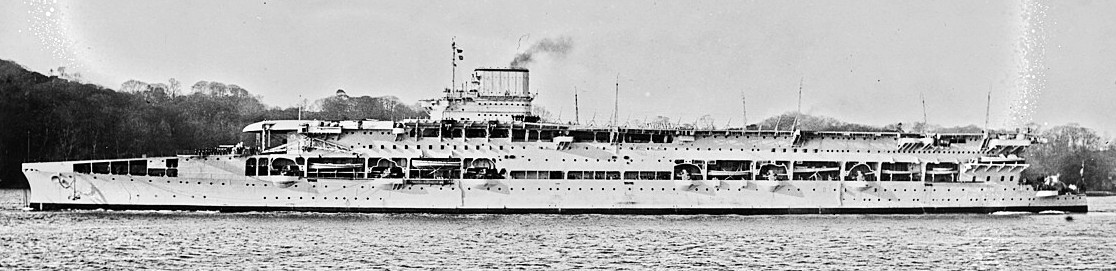
(Central News/Agence photographique)
HMS Courageous (50), 1928.
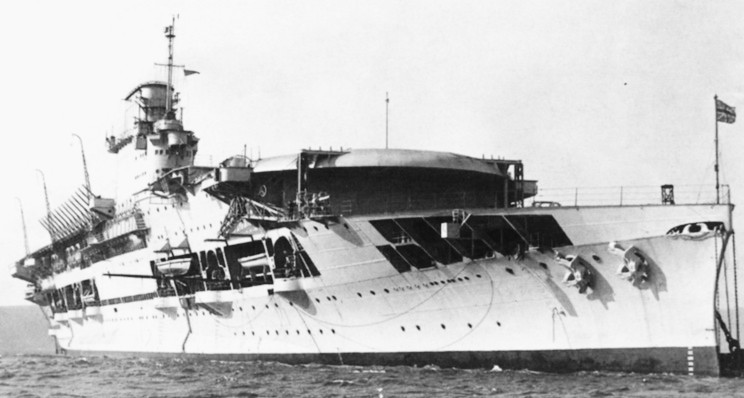
(RN Photo)
HMS Courageous (50), 1920s.
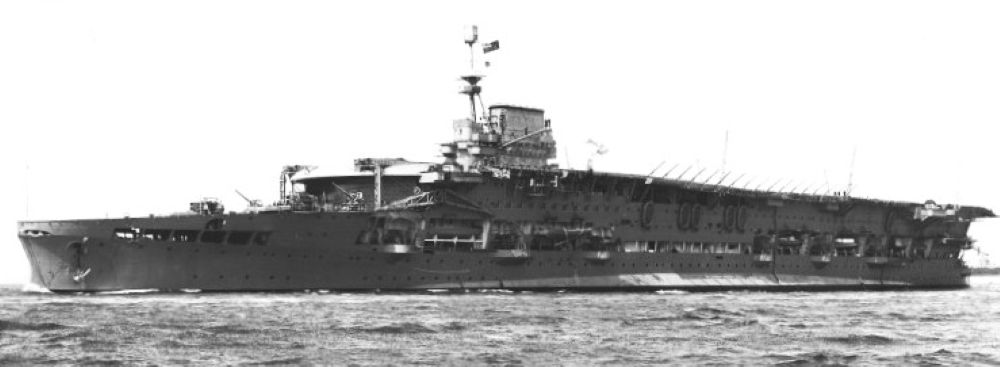
(RN Photo)
HMS Courageous (50), July 1936.
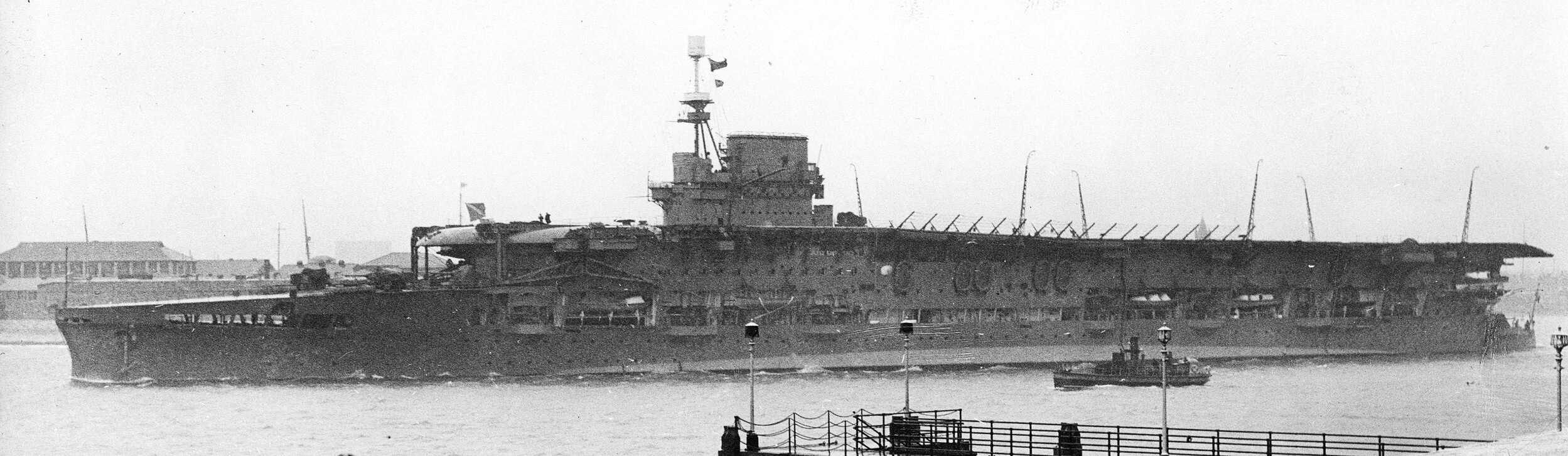
(beeldbank.spaarnestadphoto)
HMS Courageous (50), 1939.
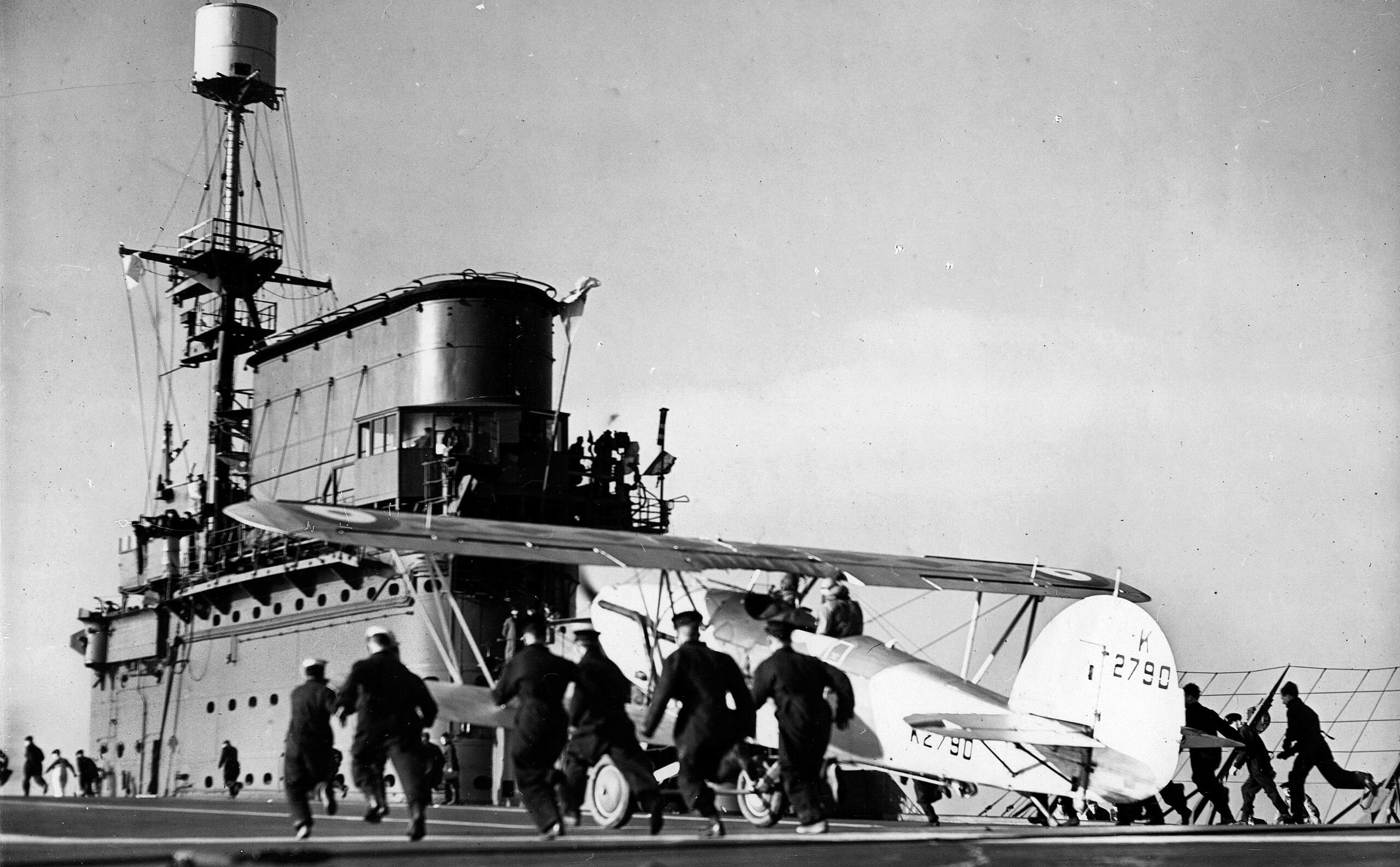
(beeldbank.spaarnestadphoto)
HMS Courageous (50), with a Hawker Hind (Serial No. K2790), a British light bomber of the inter-war years, in 1939.
Courageous could carry up to 48 aircraft; following completion of her trials and embarking stores and personnel, she sailed for Spithead on 14 May 1928. The following day, a Blackburn Dart of 463 Flight made the ship’s first deck landing. The Dart was followed by the Fairey Flycatchers of 404 and 407 Flights, the Fairey IIIFs of 445 and 446 Flights and the Darts of 463 and 464 Flight. The ship sailed for Malta on 2 June to join the Mediterranean Fleet.
From 1933 to the end of 1938 Courageous carried No. 800 Squadron, which flew a mixture of nine Hawker Nimrod and three Hawker Osprey fighters. 810, 820 and 821 Squadrons were embarked for reconnaissance and anti-ship attack missions in the same period. They flew the Blackburn Baffin, the Blackburn Shark, the Blackburn Ripon and the Fairey Swordfish torpedo bombers as well as Fairey Seal reconnaissance aircraft. As a deck landing training carrier, in early 1939 Courageous embarked the Blackburn Skua and Gloster Sea Gladiator fighters of 801 Squadron and the Swordfish torpedo bombers of 811 Squadron, although both of these squadrons were disembarked when the ship was relieved of her training duties in May. (Wikipedia)
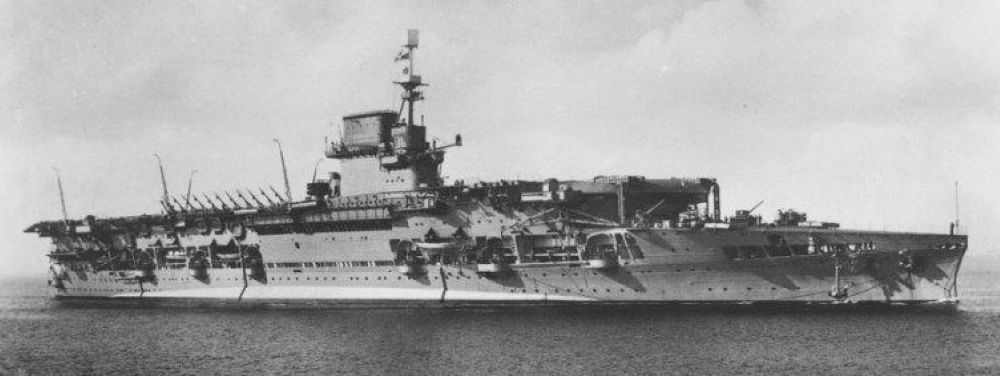
(RN Photo)
HMS Courageous (50).
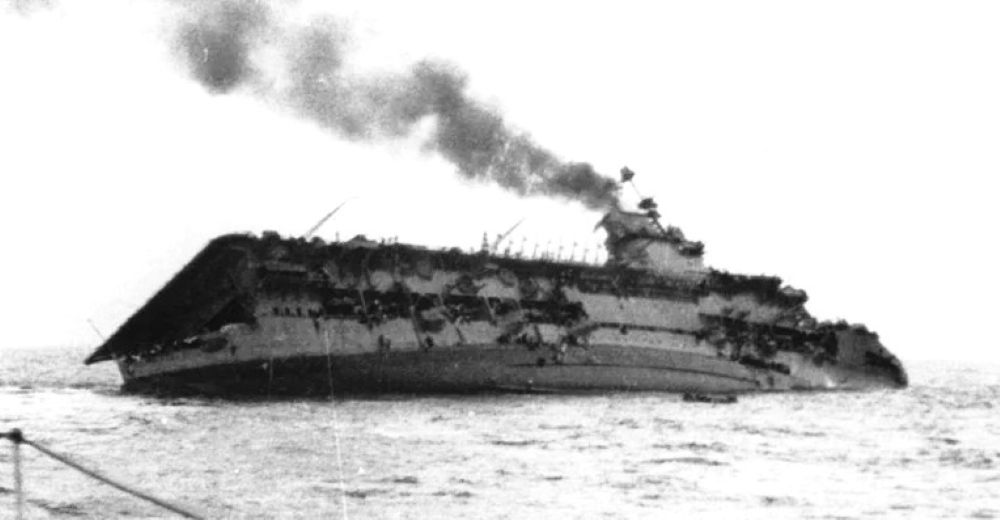
(RN Photo)
Loss of HMS Courageous (50), 17 September 1939.
HMS Glorious (77)
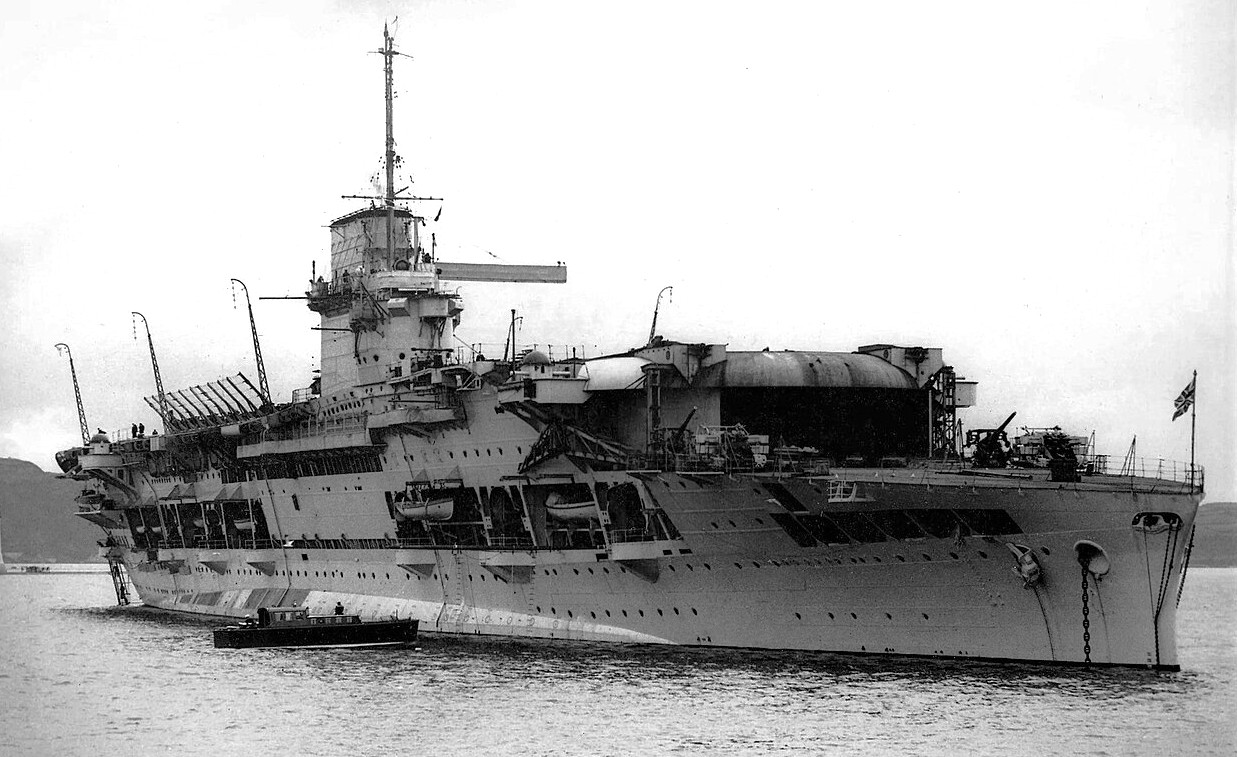
(IWM Photo, FL22991)
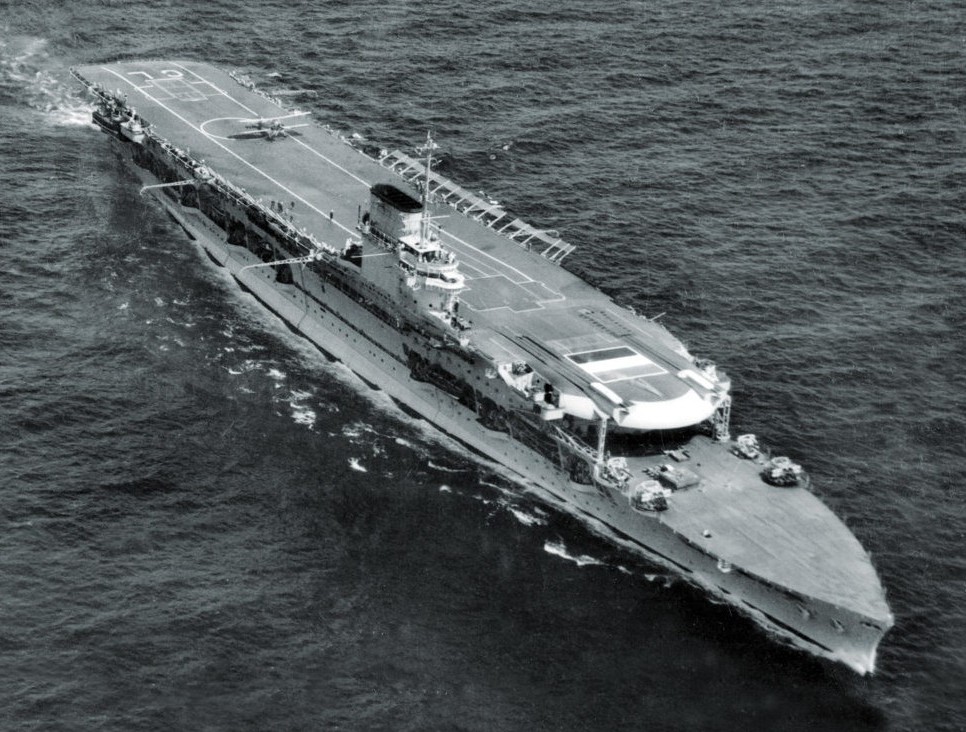
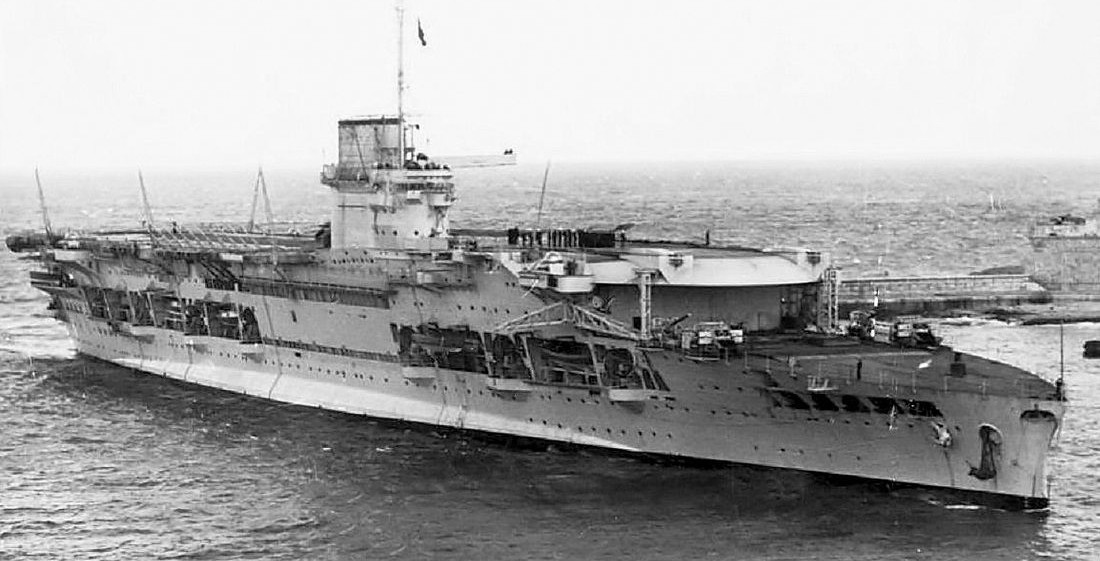
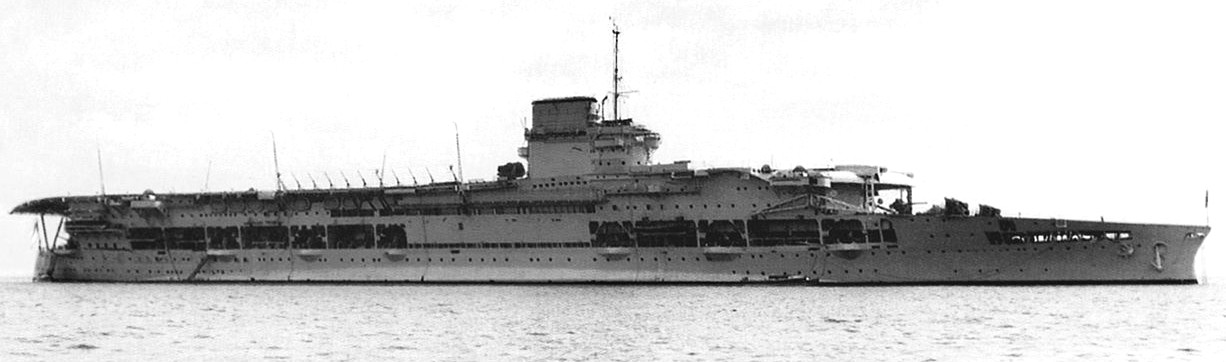
HMS Glorious (77) converted to aircraft carrier 1924–1930; sunk in 1940.
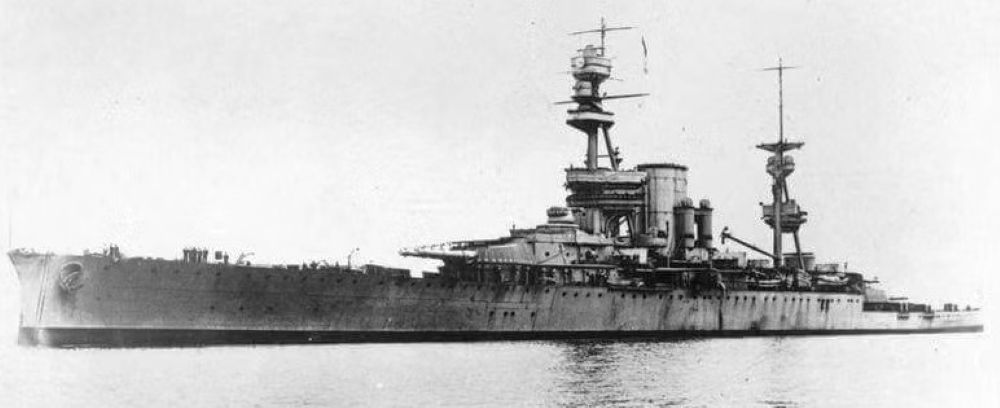
HMS Glorious was the second of the three Courageous-class battlecruisers built for the Royal Navy during the First World War. Designed to support the Baltic Project championed by the First Sea Lord, Lord Fisher, they were relatively lightly armed and armoured. Glorious was completed in late 1916 and spent the war patrolling the North Sea. She participated in the Second Battle of Heligoland Bight in November 1917 and was present when the German High Seas Fleet surrendered a year later.
Glorious was paid off after the war, but was rebuilt as an aircraft carrier during the late 1920s. She could carry 30 per cent more aircraft than her half-sister Furious which had a similar tonnage. After re-commissioning in 1930, she spent most of her career operating in the Mediterranean Sea. After the start of the Second World War in 1939, Glorious spent the rest of the year hunting for the commerce-raiding German cruiser Admiral Graf Spee in the Indian Ocean before returning to the Mediterranean. She was recalled home in April 1940 to support operations in Norway. While evacuating British aircraft from Norway in June, the ship was sunk by the German battleships Scharnhorst and Gneisenau in the North Sea with the loss of over 1,200 lives. (Wikipedia)
(IWM Photo, Q 75663)
HMS Glorious as a battlecruiser.
(Pastpix/SSPL/ULG/Bridgeman Images)
HMS Glorious (77), in 1939.
(RN Photo)
HMS Glorious (77).
(RN Photo)
HMS Glorious (77).
(RN Photo)
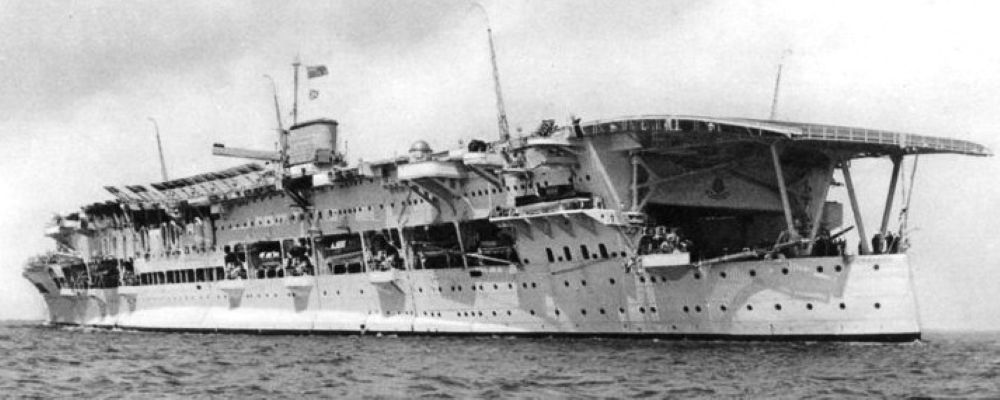
HMS Glorious (77).
(RN Photo)
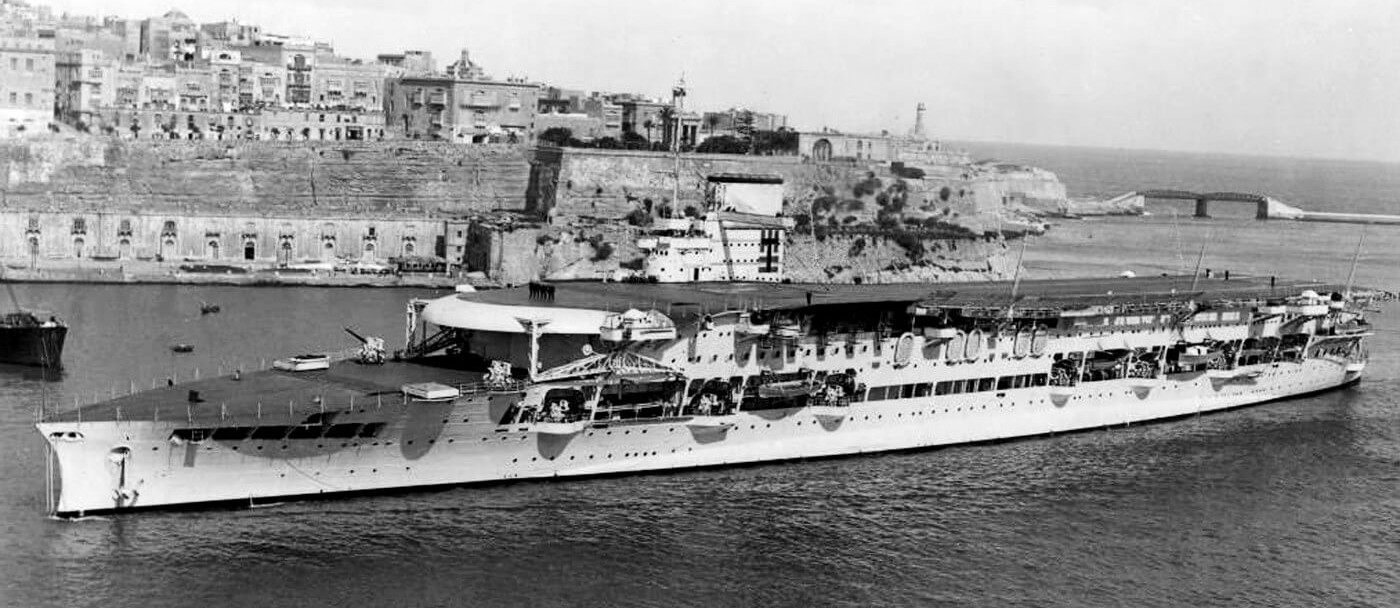
HMS Glorious (77) in Malta’s Grand Harbour in the 1930s.
(RN Photo)
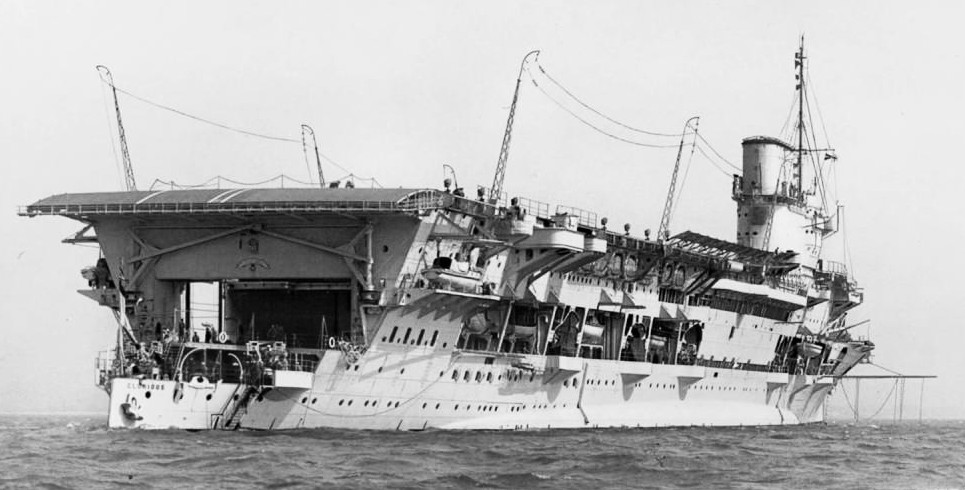
HMS Glorious (77).
(RN Photo)
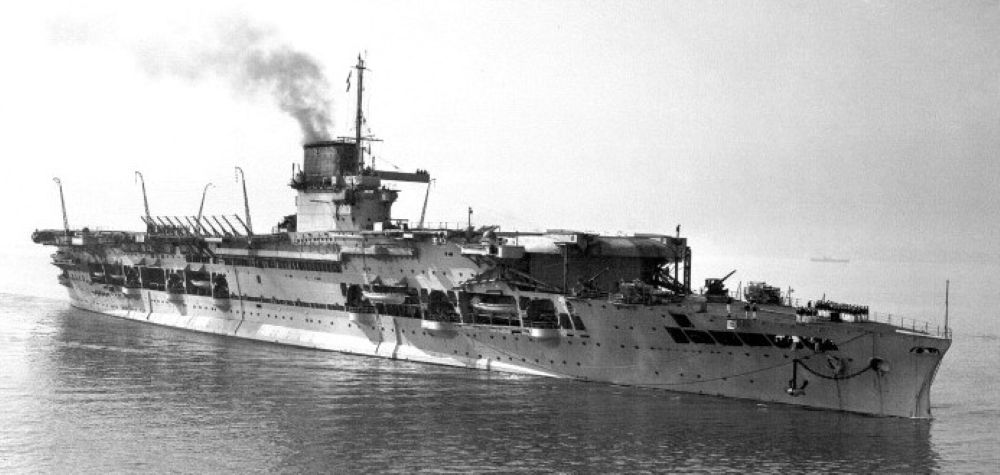
HMS Glorious (77).
(USN Photo)
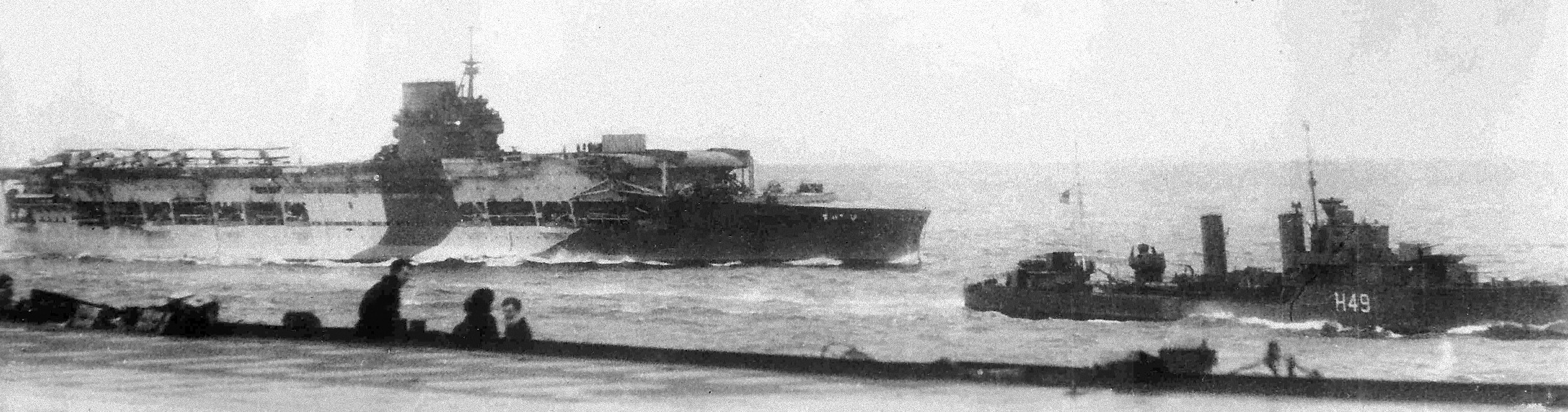
HMS Glorious (77) photographed in May 1940 from the deck of HMS Ark Royal (91). The destroyer with her is HMS Diana (H49).
(Bundesarchiv Photo)
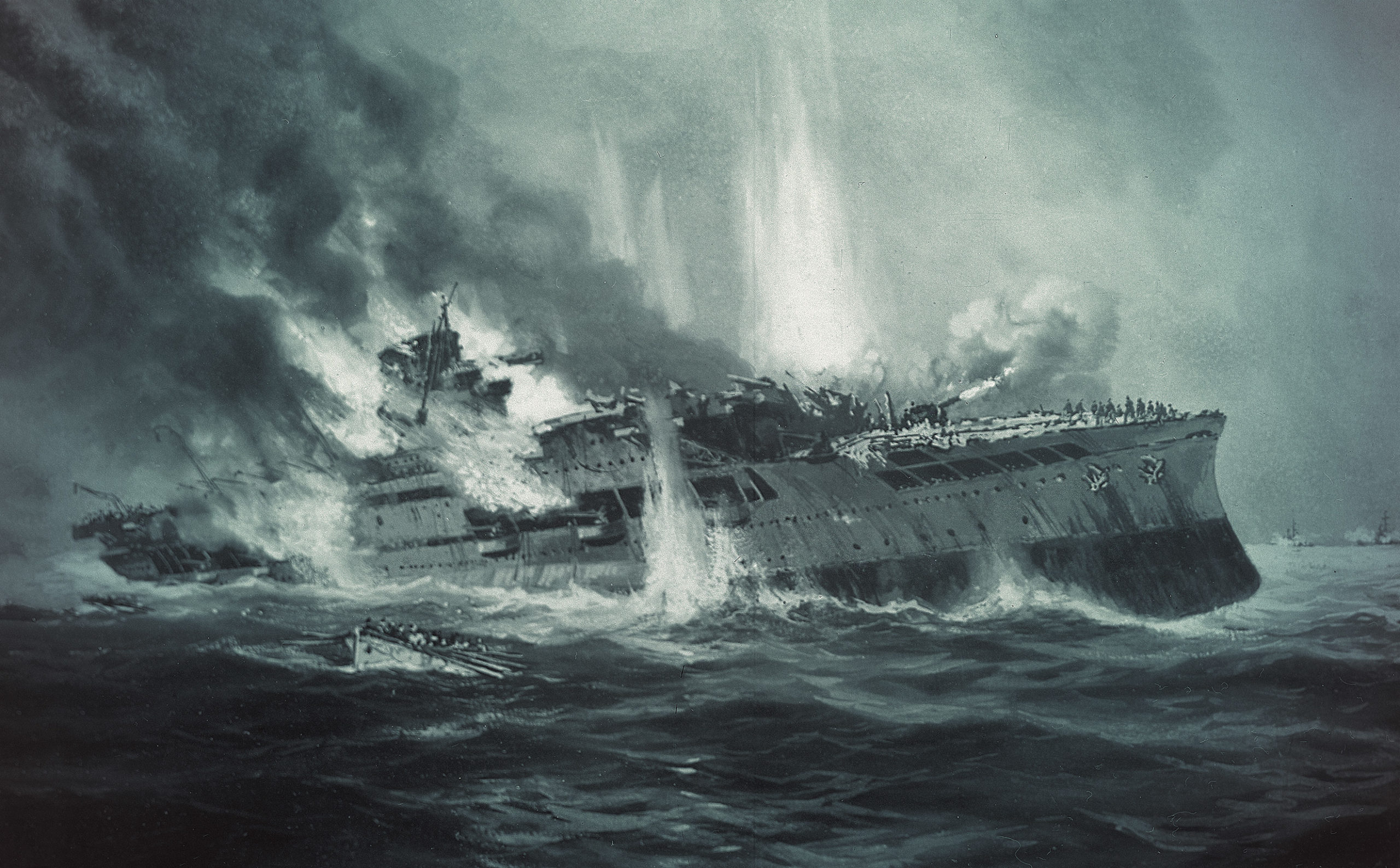
The sinking of HMS Glorious (77) depicted here in a German painting from the early 1940s.