RCN Dun class tankers HMCS Dundalk, HMCS Dundurn
HMCS Dundalk Z40 /501
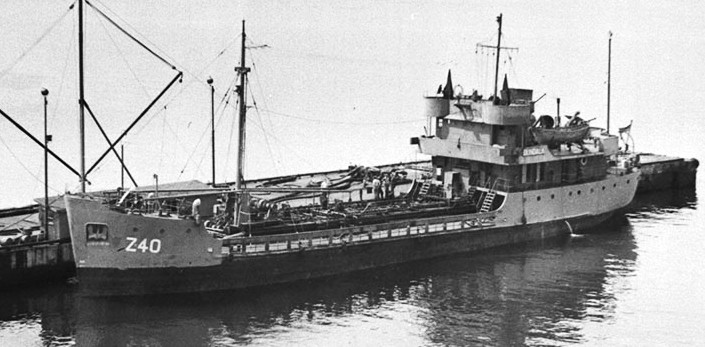
(RCN Photo)
The Dun Class tanker HMCS Dundalk was built originally for the Royal Canadian Navy to fill a Second World War need. Prior to building HMCS Dundalk, a barge and a dredge had been converted to tankers, but they were not sufficient to answer all demands. For this reason, orders were placed for the construction of 2 small ships, HMCS Dundalk and HMCS Dundurn. They were small tankers but had the carrying capacity sufficient to refill escort vessels for the hazardous voyages they undertook to protect merchant ship convoys as well as to maintain supplies inthe storage tanks of ports along the east coast of Canada. HMCS Dundalk was built in Walkerville, Ontario and commissioned there on November 13, 1943.
HMCS Dundalk was used to deliver fuel oil from Halifax, Nova Scotia refineries to bases on the east coast of Canada and in Newfoundland. Occasionally HMCS Dundalk served as alighter, a vessel used to load and unload other ships.
At war’s end, the navy expressed an interest in retaining HMCS Dundalk as a naval auxiliary vessel, emphasizing their preference for her over commercial tankers. Both the Atlantic and Pacific coasts required one each for ship fueling and coastal fuel deliveries. It was decided to keep HMCS Dundalk in Halifax while her sister was transferred to the Pacific Coast. HMCS Dundalk was paid off at Halifax on April 9, 1946, and subsequently served with a civilian crew as Canadian Naval Auxiliary Vessel (CNAV) and Canadian Forces Auxiliary Vessel (CFAV) HMCS Dundalk until 17 Dec 1982.
Displacement: 950tons. Dimensions: 54.5 m x 10.1 m x 4 m. Speed: 11knots. Crew: 30. Armament: (wartime) one 12-pound(5.45 kg) gun and two 20-mm guns (2 x I).
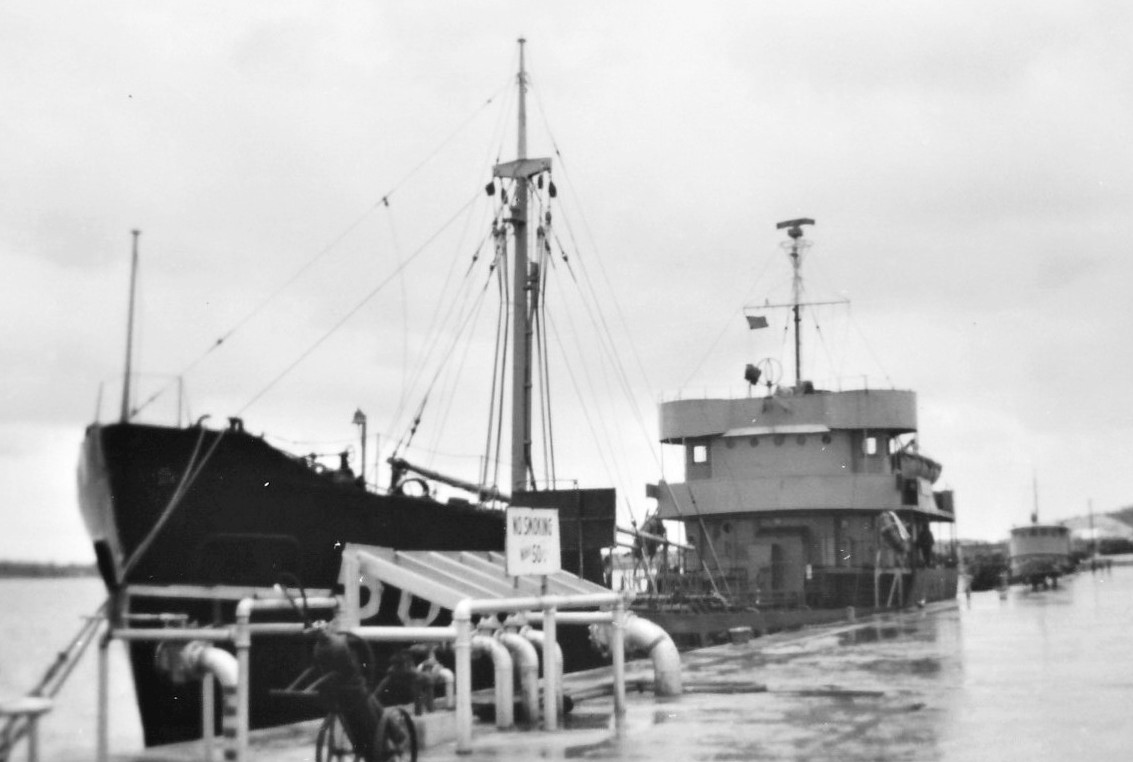
(RCN Photo)
HMCS Dundalk, 1950.
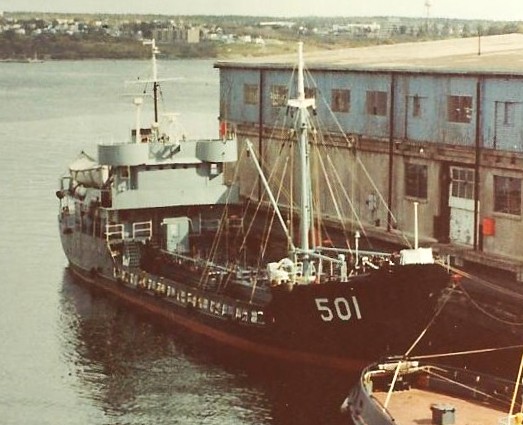
(Hugh Muir Photo)
CFAV Dundalk, Jetty 9, Halifax, Nova Scotia, 7 Oct 1981.
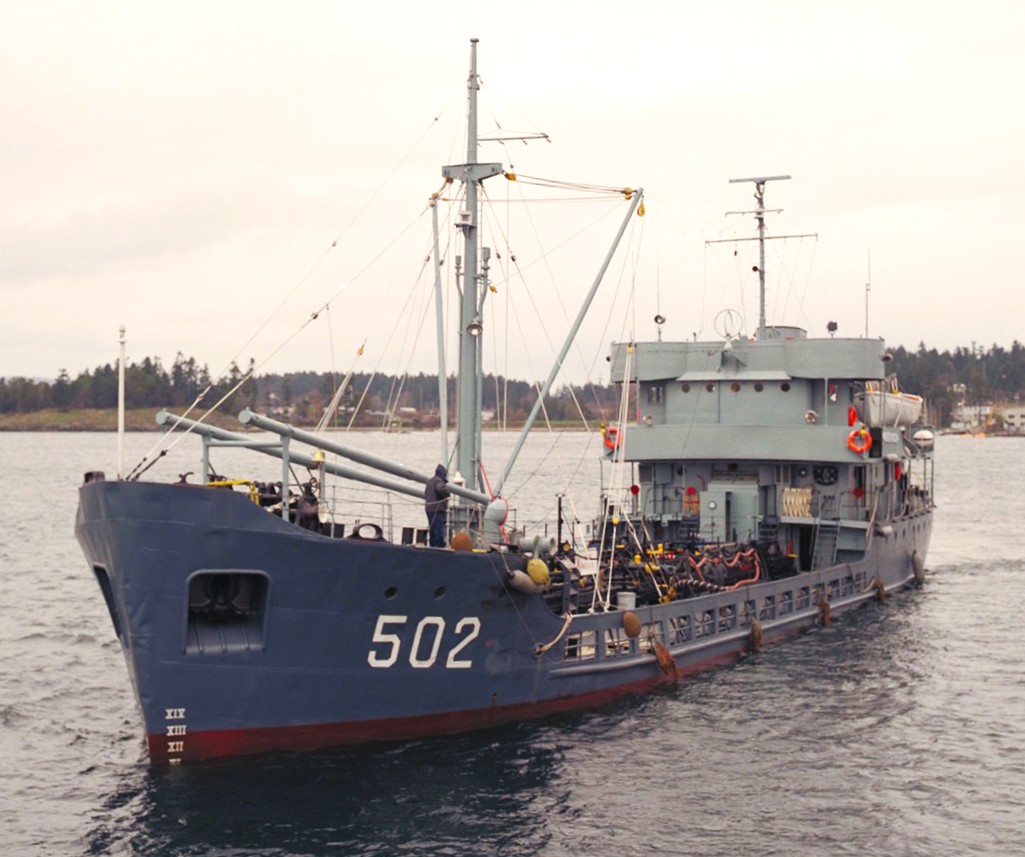
HMCS Dundurn Z41 / 502
(RCN Photo)
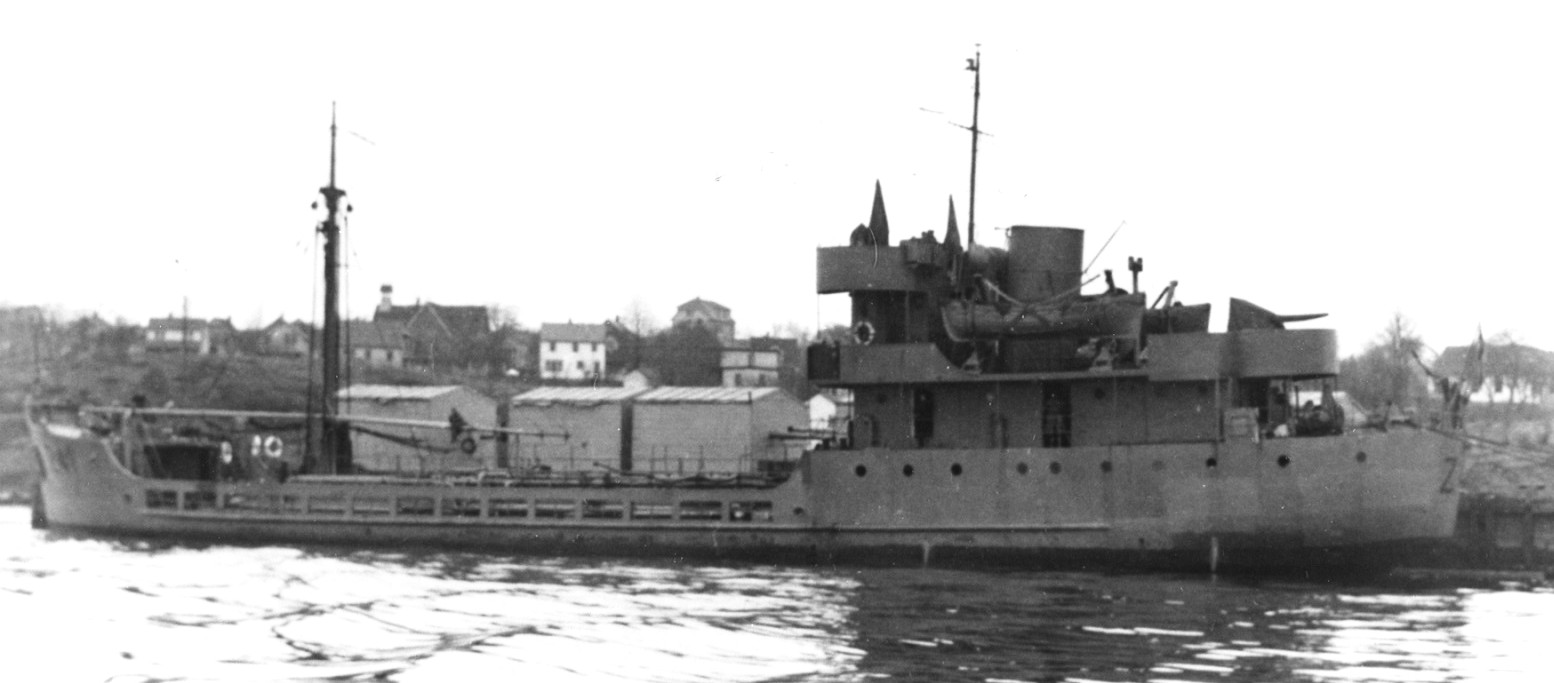
The Dun Class tanker HMCS Dundurn was built originally for the Royal Canadian Navy to fill a Second World War need. Prior to building HMCS Dundurn, a barge and a dredge had been converted to tankers, but they were not sufficient to answer all demands. For this reason, orders were placed for the construction of 2 small ships, HMCS Dundurn and HMCS Dundalk. They were small tankers but had the carrying capacity sufficient to refill escort vessels for the hazardous voyages they undertook to protect merchant ship convoys as well as to maintain supplies in the storage tanks of ports along the east coast of Canada. HMCS Dundurn was built in Walkerville, Ontarioand commissioned there on 25 Nov 1943.
HMCS Dundurn set sail for Halifax, Nova Scotia, the same day shewas commissioned, in order to escape the freeze-up in the Saint-Lawrence River. On arrival, she was berthed at the Halifax Shipyards, so that the work still outstanding could be completed. On 3 May 1944, she sailed with a cargo of oil, in a convoy to Sydney, Nova Scotia. After she had discharged the cargo, she remained at Sydney to refuel escort ships lying there. This was the first of many similar voyages along the coast from Halifax to Sydney and other ports,such as Shelburne, Digby and Liverpool in Nova Scotia, Saint John, New Brunswick,and St John’s, Newfoundland. Occasionally, on these missions she sailed independently, but more often, while the U-boats continued to lurk in those dark waters, in convoy. After the war, HMCS Dundurn was employed in Sydney,landing stores and fuel from the escort ships that were pending disposal.
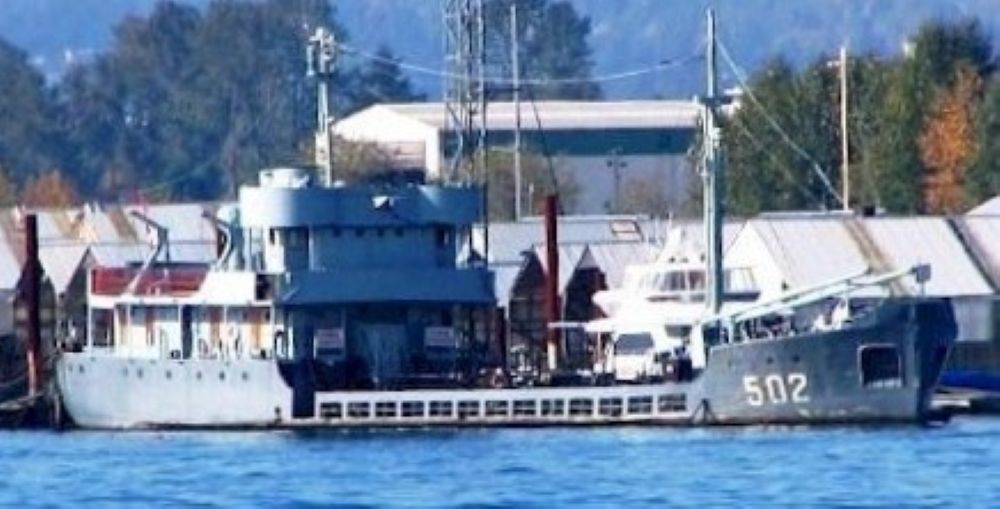
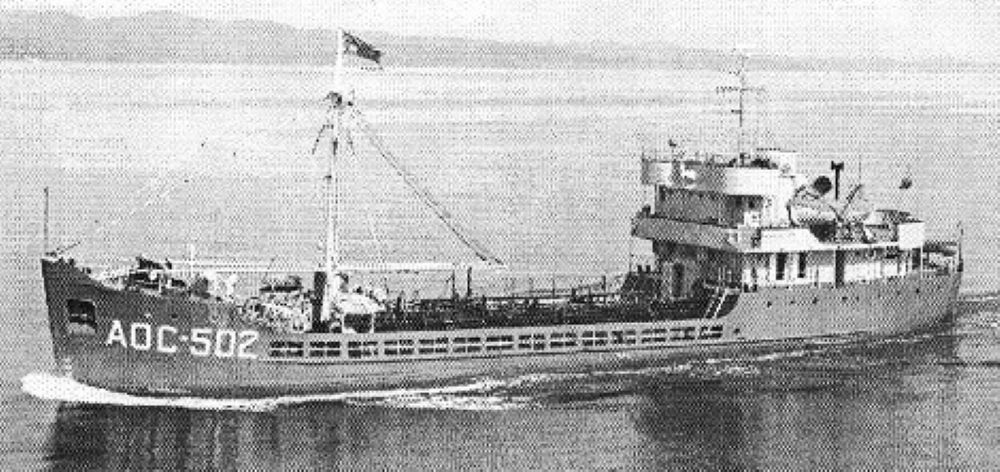
At war’s end the navy expressed an interest in retaining HMCS Dundurn as a naval auxiliary vessel, emphasizing their preference for her over commercial tankers. Both the Atlantic and Pacific coasts required one each for ship fueling and coast fuel deliveries. It was decided to sail HMCS Dundurn to Esquimalt, British Columbia while her sister-ship remained in Halifax. Manned with a naval reserve crew, augmented by a few able seamen from the merchant navy, HMCS Dundurn left on 10 Nov 1946 in water ballast and arrived in Esquimalt on 29 Dec 1946. She was paid off on 2 Jan 1947, and subsequently served with a civilian crew as Canadian Naval Auxiliary Vessel( CNAV) and Canadian Forces Auxiliary Vessel (CFAV) Dundurn, bringing oil fromVancouver, British Columbia, to the storage tanks at the base in Esquimalt anddelivering to ships in refit and to those too big to go alongside the fuelingjetties. She served until 1993.
Displacement: 950tons. Dimensions: 54.5 m x 10.1 m x 4 m. Speed: 11knots. Crew: 30. Armament: (wartime) one 12-pound(5.45 kg) gun and two 20-mm guns (2 x I).
(RCN Photo)
HMCS Dundurn.
(Don Gorham Photo)
HMCS Dundurn.
(CFB Esquimalt Naval and Military Museum Photo)
HMCS Dundurn.