Royal Canadian Navy Destroyers (Tribal Class): HMCS Athabaskan (G07), HMCS Athabaskan II (R79) (219), HMCS Cayuga (R04) (218), HMCS Haida (G63) (215)
The Tribal class destroyers were built for the RN, the RCN and the RAN and served during and after the Second World War. They were originally intended to serve as light fleet cruisers, but in response to new designs by Japan, Italy, and Germany, the Tribals evolved into fast, powerful destroyers, with greater emphasis on guns over torpedoes than previous destroyers. The Tribals were well admired by their crews and the public when they were in service. The Tribal class destroyers served with distinction in nearly all theatres of the Second World War. Canadian Tribals saw service in the Korean War.
âHMCS Athabaskan (G07)
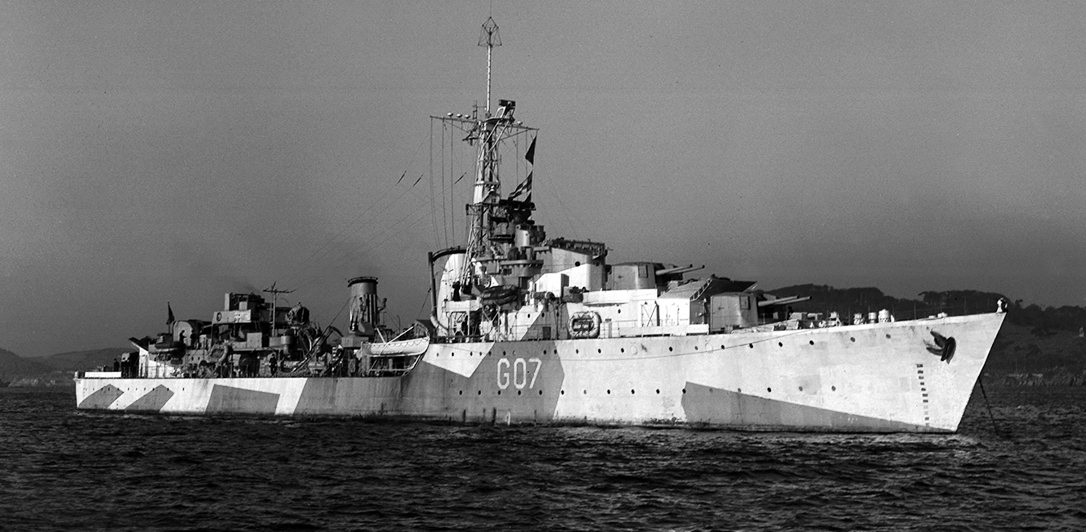
(DND Photo)
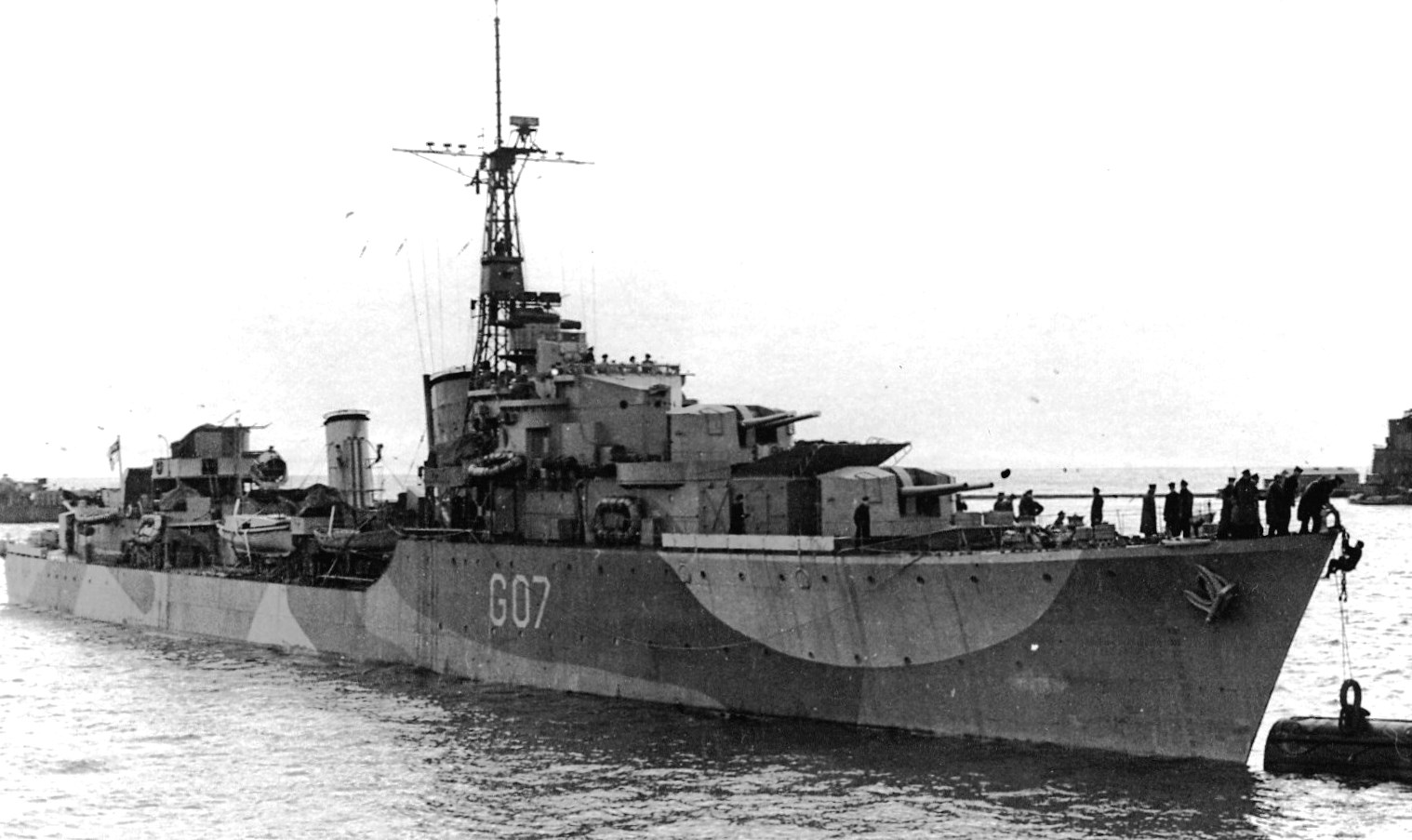
HMCS Athabaskan (G07). Commissioned on 3 Feb 1943 at Newcastle-on-Tyne and assigned to the British Home Fleet, HMCS Athabaskan left on 29 Mar 1943 to patrol the Iceland-Faeroes Passage for blockade runners. Stress of weather caused hull damage that required five weeks’ repairs at South Shields, UK, following which, in Jun 1943, she took part in Operation Gearbox III, the relief of the garrison at Spitsbergen. On 18 Jun 1943 she collided with the boom defence vessel Bargate at Scapa Flow, occasioning a month’s repair at Devonport. In Jul and Aug 1943 she was based at Plymouth, carrying out A/S patrols in the Bay of Biscay, and on 27 Aug 1943 was hit by a glider bomb off the Spanish coast. She managed to reach Devonport, where she remained under repair until 10 Nov 1943; returning to Scapa Flow in Dec 1943.
While on patrol in the Bay of Biscay Patrol area at 13:00 hours on August 27, 1943, HMCS Athabaskan was attacked by eighteen enemy Dornier-217s. HMS Egret (a British Sloop) was sunk. A glide bomb hit HMCS Athabaskan at the junction of “B” gun-deck and the wheel-house. It passed under the plot room, through the Chief Petty Officer’s Mess, and out the starboard side. It exploded barely a few feet beyond and bomb fragments pierced HMCS Athabaskan‘s side and bridge in a number of places. The Captain, Commander Miles was knocked down by the blast and several officers, including Lieutenant-Commander Dunn Lanthier and Sub-Lieutenant John A. Brebner had severe leg injuries. Able Seaman Joseph McGrath, a bridge lookout, died the next day. The crew of “B” gun bore the worst of the injuries with Able Seaman William Pickett and Petty Officer Ernest Latimer being killed. Leading Seaman John Gordon took charge despite the fact that he was injured and several others were burned. Several members of “A” gun were also burned and wounded. Leading Cook Frank Prudhomme also died. HMCS Athabaskan took on board the 35 survivors from HMS Egret. HMCS Athabaskan continued on at 14 knots, correcting a serious list to starboard. The ship reached Devonport, where she remained under repair until 10 Nov 1943; returning to Scapa Flow in Dec 1943.
On 29 April 1944 at about 0300 hours, HMCS Athabaskan was patrolling with her sister Tribal-class destroyer HMCS Haida in support of a British minelaying operation off the coast of France near the mouth of the Morlaix River. She received the first of a series of Admiralty orders to intercept German warships near Ile de Bas as spotted by coastal radar in southern England. During the subsequent engagement with German naval vessels, HMCS Athabaskan was torpedoed and sank. 128 men were lost, 44 were rescued by HMCS Haida and 83 were taken prisoner by three German minesweepers which sortied from the coast after the departure of HMCS Haida.
Accounts of the night battle vary. Some survivors recount that the ship was initially struck by shore-battery gunfire, and then by a torpedo launched by German torpedo boat T24. At least one survivor tells of a second torpedo hit fifteen minutes after the first, but the official history of the Royal Canadian Navy attributes the second major explosion to the fires touching off the ammunition magazine.
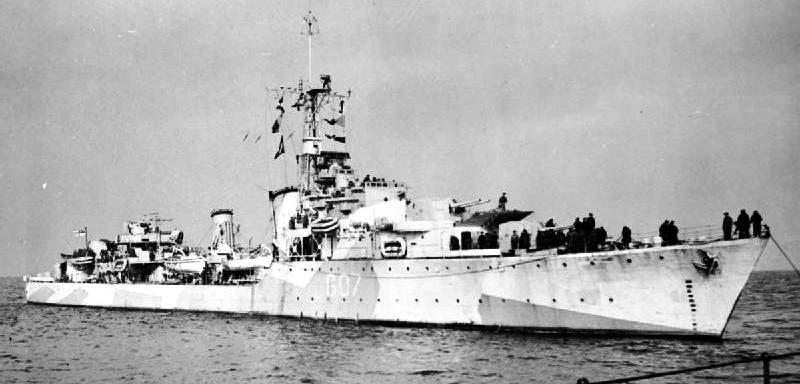
(IWM Photo, A22987)
HMCS Athabaskan (G07), ca 1944.
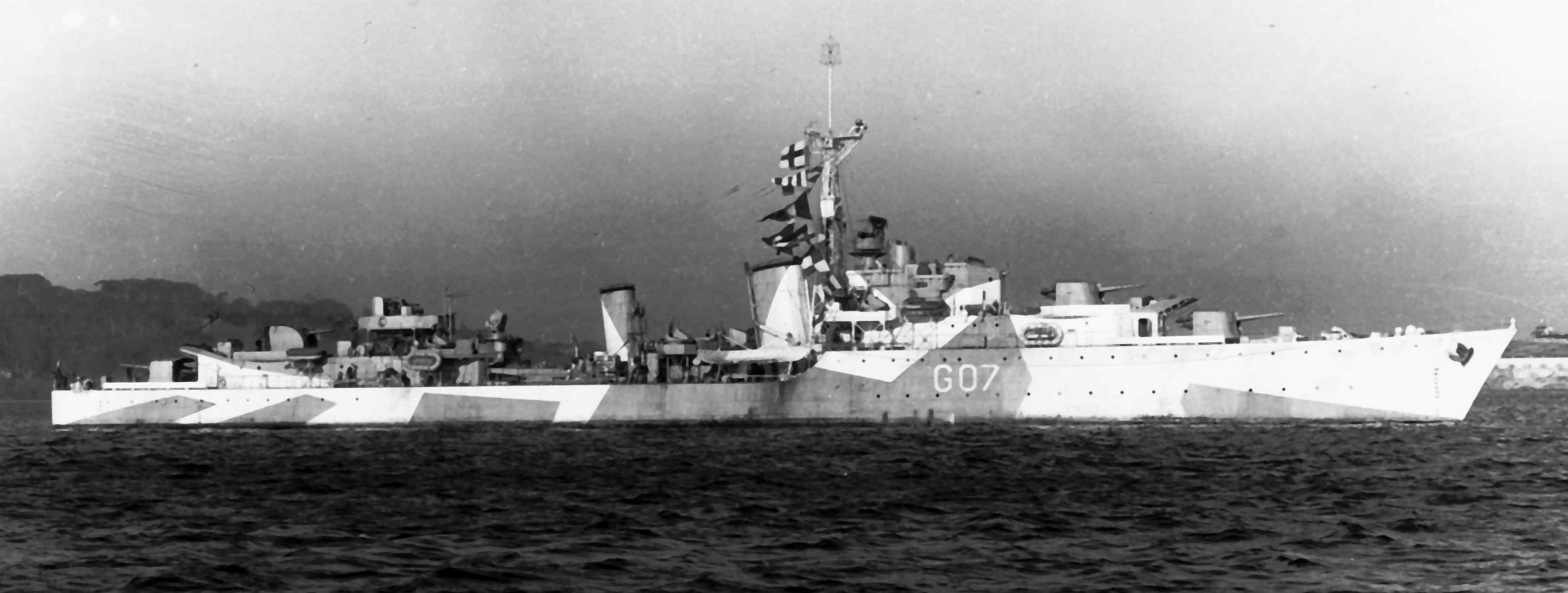
(CFB Esquimalt Naval and Military Museum Photo)
HMCS Athabaskan (G07), ca 1944.
(DND Photo)
HMCS Athabaskan (G07), ca 1944.
HMCS Athabaskan II (R79) (219)
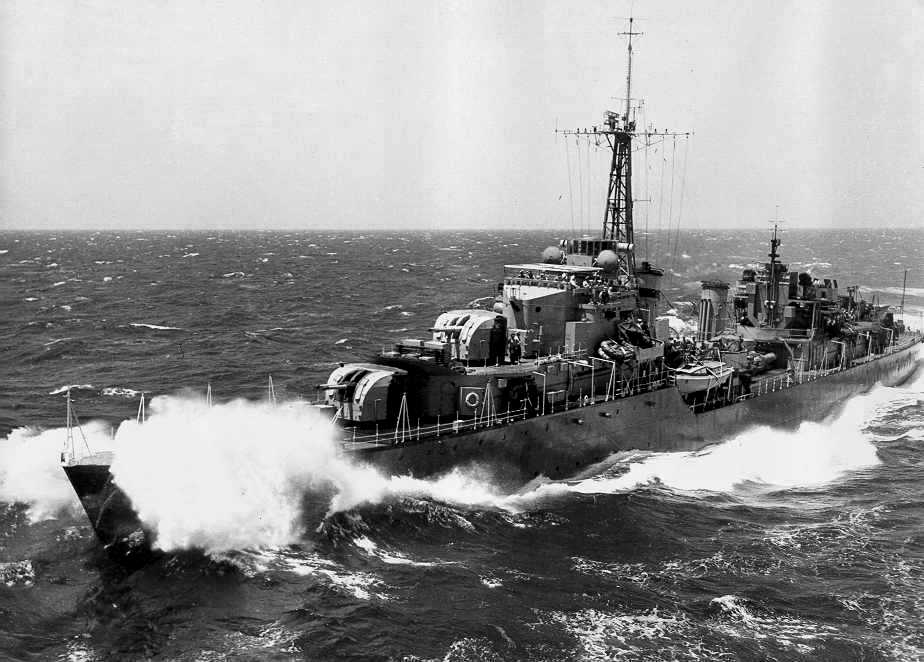
(USN Photo)
HMCS Athabaskan (R79), off the Korean coast, ca 1950. The last of her class to be completed, “Athabee” was commissioned at Halifax on 20 Jan 1948, and sailed in mid-May 1948 for the west coast, where she trained new entries and officer cadets until the outbreak of the Korean War. She sailed from Esquimalt on 05 Jul 1950, for the first of three tours of duty in Korean waters, returning 11 Dec 1953, from the last of them. In Oct 1954, she emerged from an extensive conversion classed as a destroyer escort 9219), and resumed her training role. On 7 Aug 1955, while on a Pacific Training Cruise with HMCS Cayuga, HMCS Athabaskan docked at Long Beach, California, with a stowaway on board. Joycelyn Joan Pilapil, a 16 year old Hawaiian girl, had hid in the after awning stores and was discovered there the day after the ship sailed from Hilo. She was turned over to authorities in Long Beach and was eventually returned to Hilo. In Jan 1959, HMCS Athabaskan left for the east coast to become part of a homogeneous Tribal class squadron. On 16 Feb 1959, HMCS Athabaskan and HMCS Cayuga arrived in Halifax. Their west coast crews returned to BC with HMCS St. Laurent and HMCS Saguenay. In Dec 1959, during a 6-week deployment that included a NATO Exercise, HMCS Bonaventure, in company with HMCS Algonquin, HMCS Iroquois, HMCS Sioux and, HMCS Athabaskan encountered a major storm that battered the squadron. In the summer of 1963, after completing a refit at Marine Industries, Sorel, Quebec, HMCS Athabaskan was acting a plane guard for HMCS Bonaventure, exercising in the North Atlantic. On completion of this exercise she was to proceed to Portsmouth for radar calibration. While so employed, she was fueling from HMCS Bonaventure when the two ships collided. HMCS Bonaventure received some minor damage, while HMCS Athabaskan‘s was more serious. HMCS Athabaskan proceed to Belfast, Northern Ireland for temporary repairs before proceeding to Portsmouth for radar calibration and permanent repairs. On 1 Mar 1964, HMCS Athabaskan rescued 34 of 36 crew members from the Liberian tanker Amphialos which broke up and sank approx 250 nautical miles south of Liverpool, NS. After five more years of training cruises and NATO exercises she was placed in reserve at Halifax and, on 21 Apr 1966, paid off for disposal. She was broken up at La Spezia, Italy, in 1970.
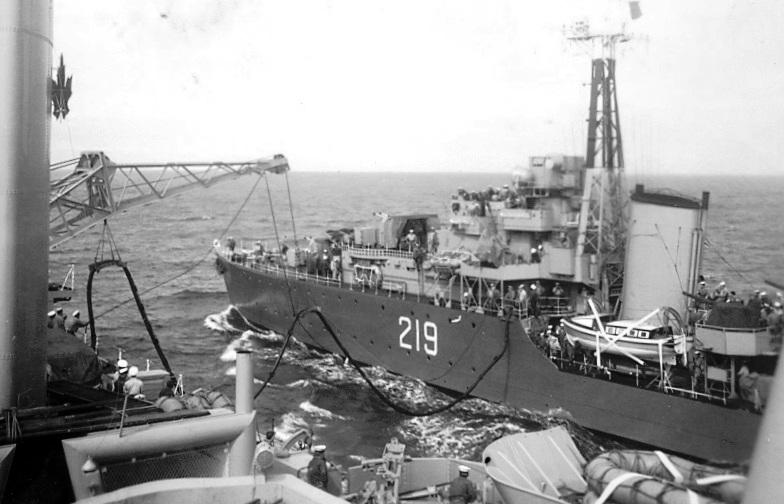
(Cathy Robinson Photo)
HMCS Athabaskan (219) fueling from (possibly) HMCS Ontario.
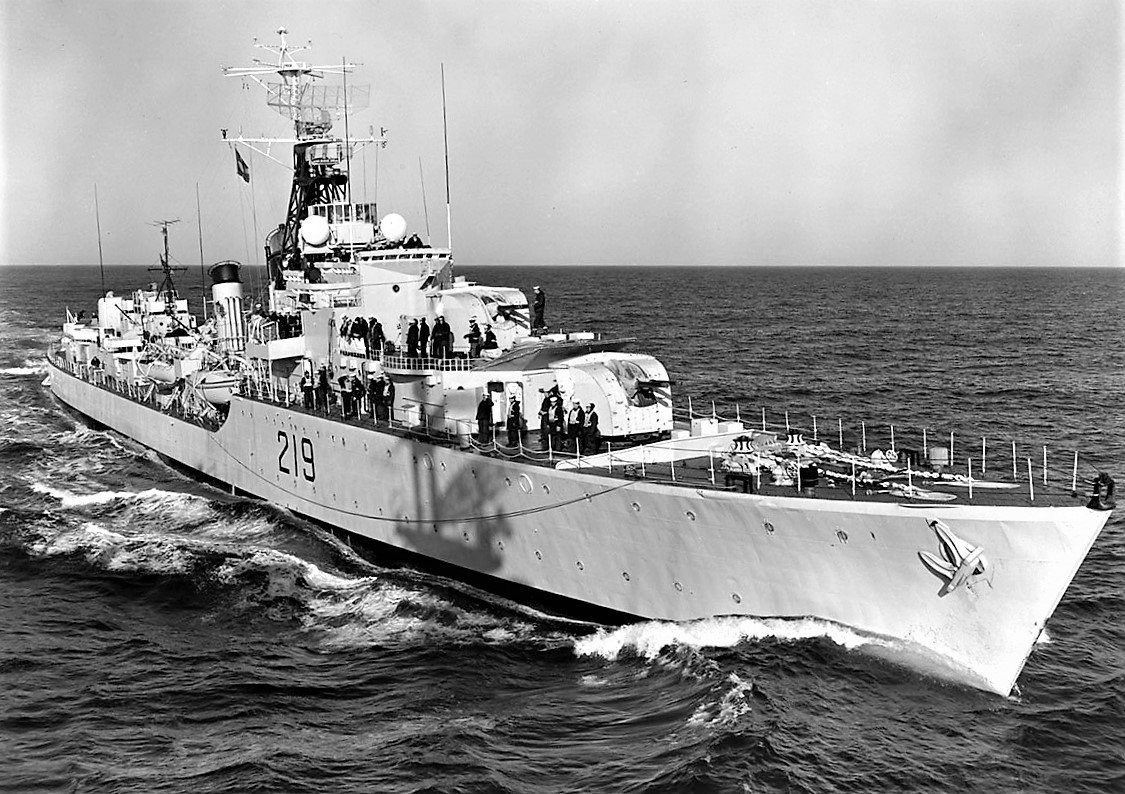
(RCN Photo)
HMCS Athabaskan (219), c1952.
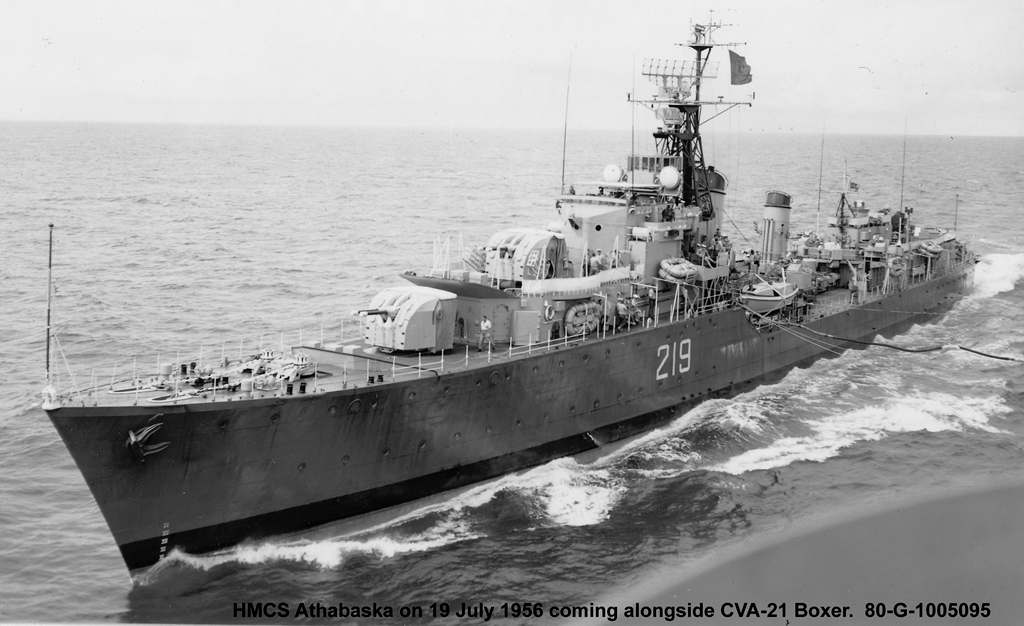
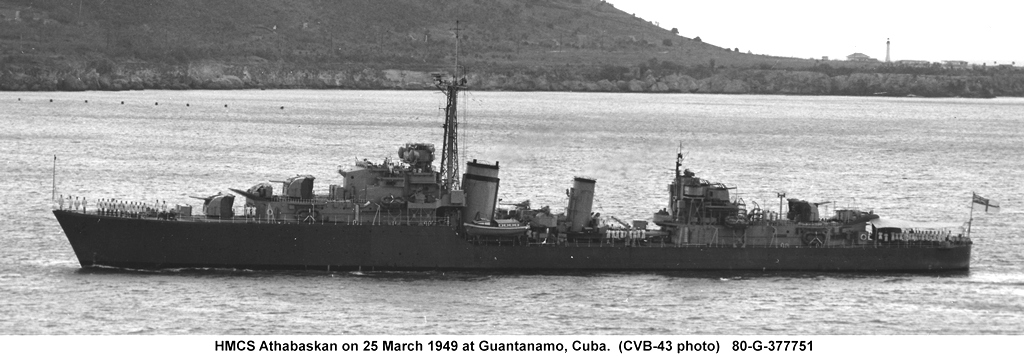
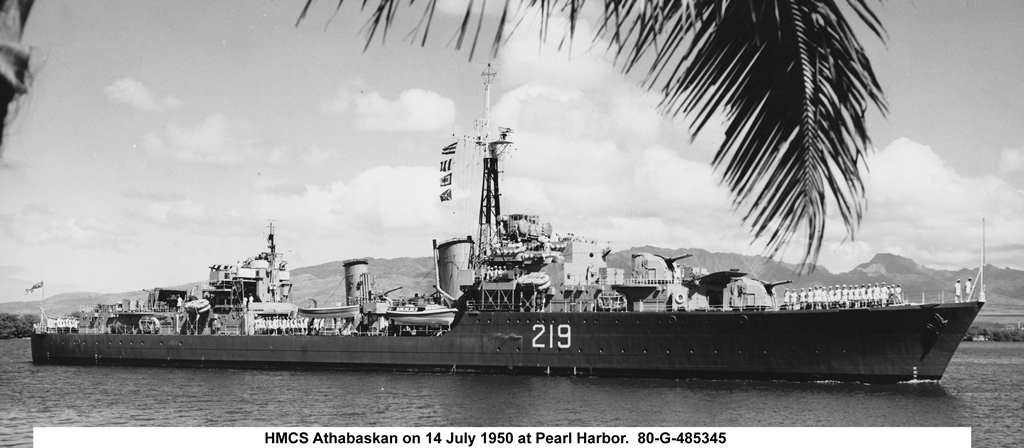
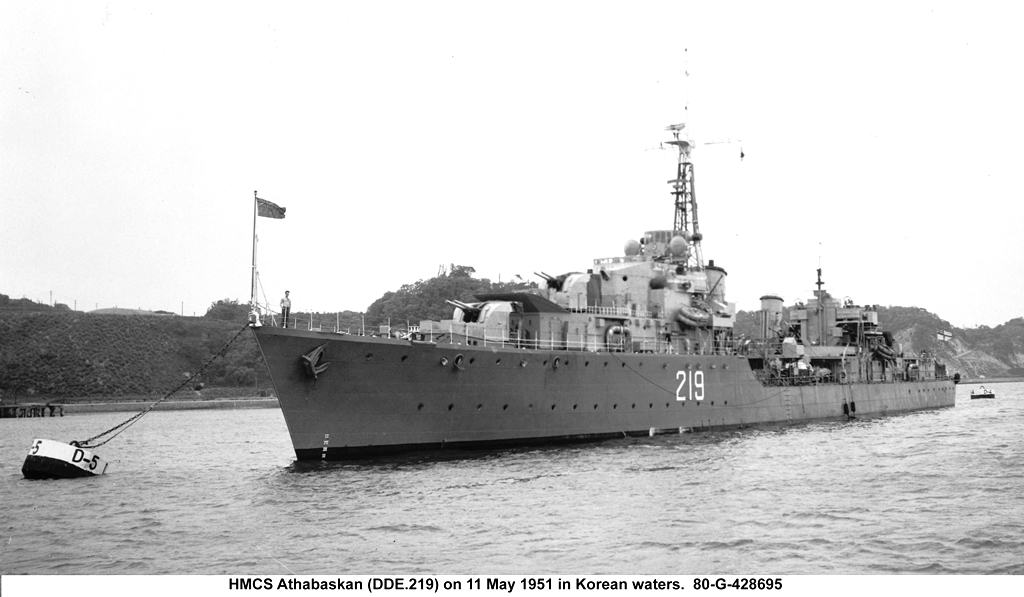
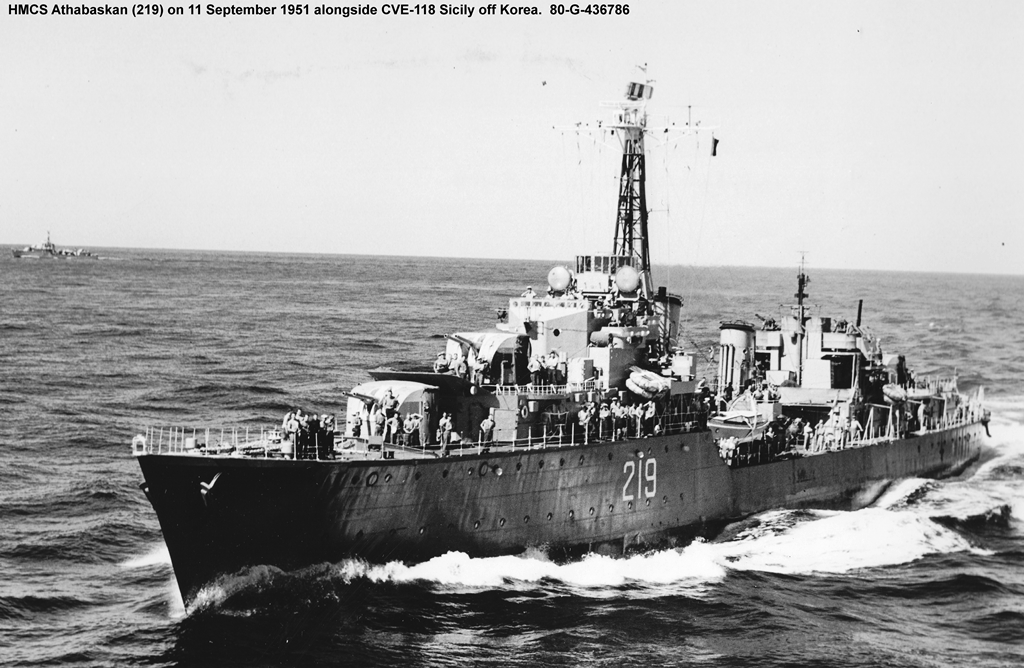
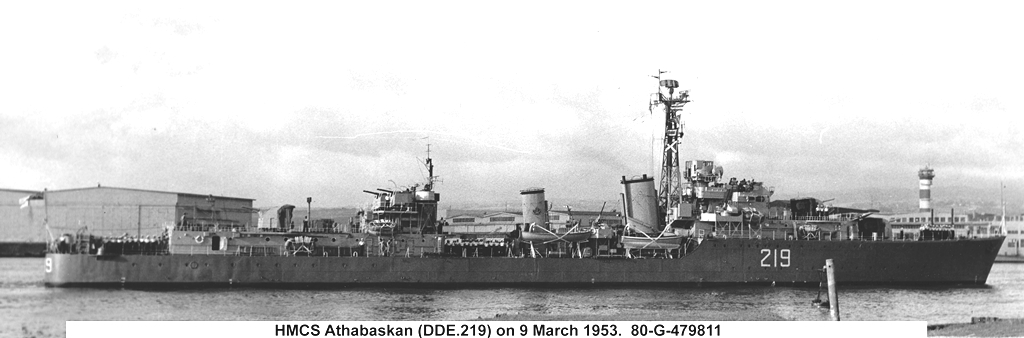
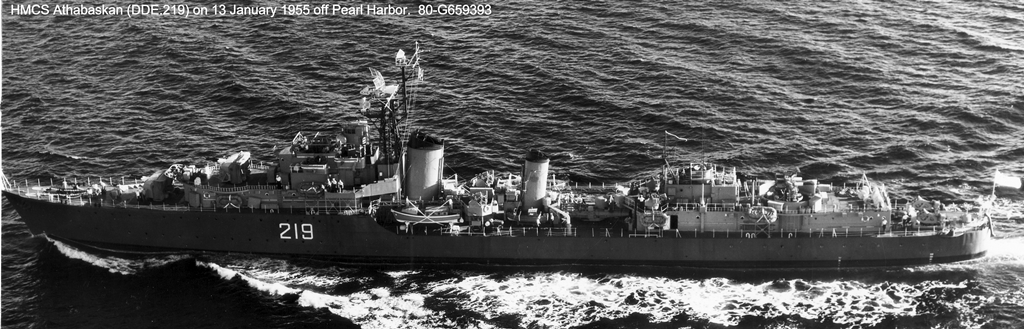
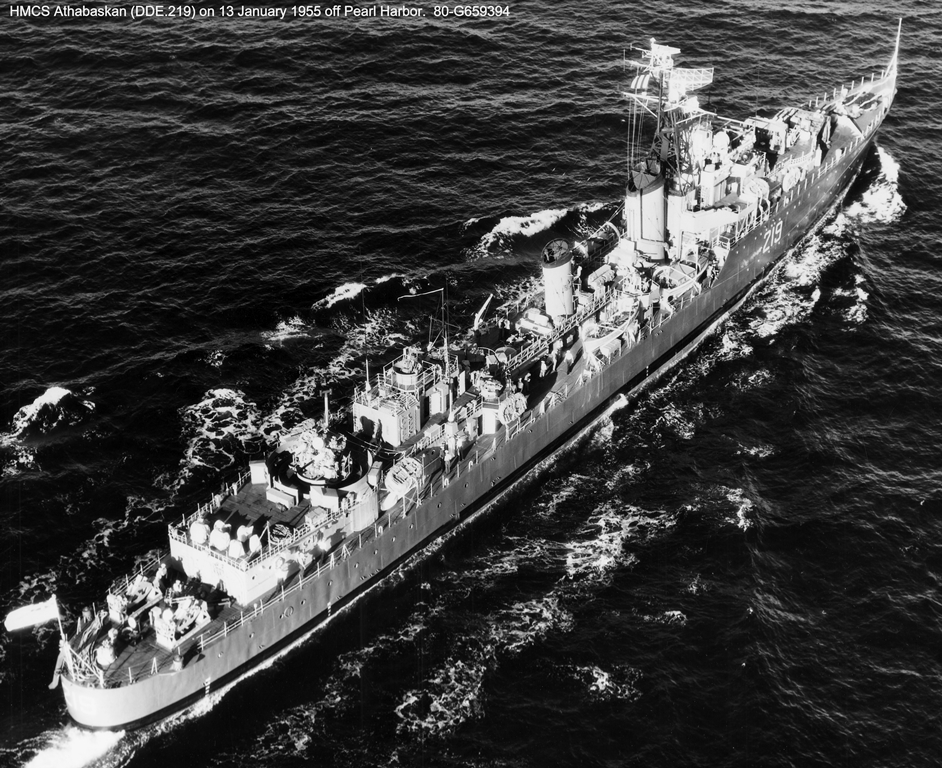
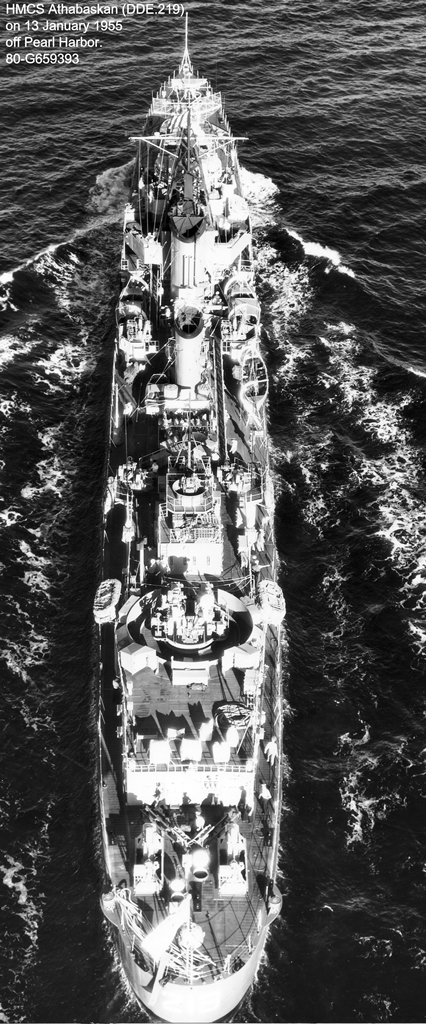
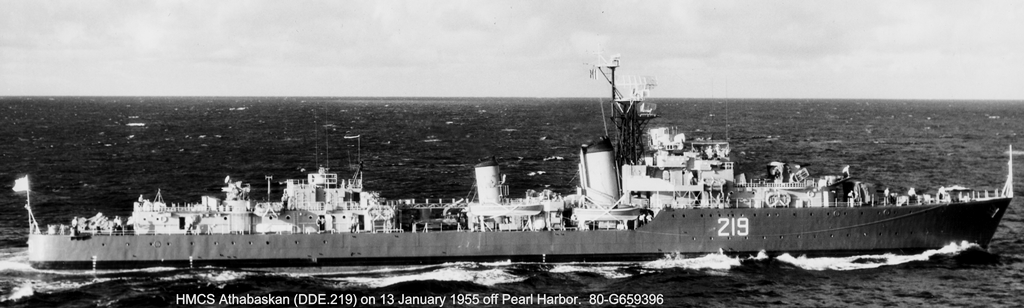
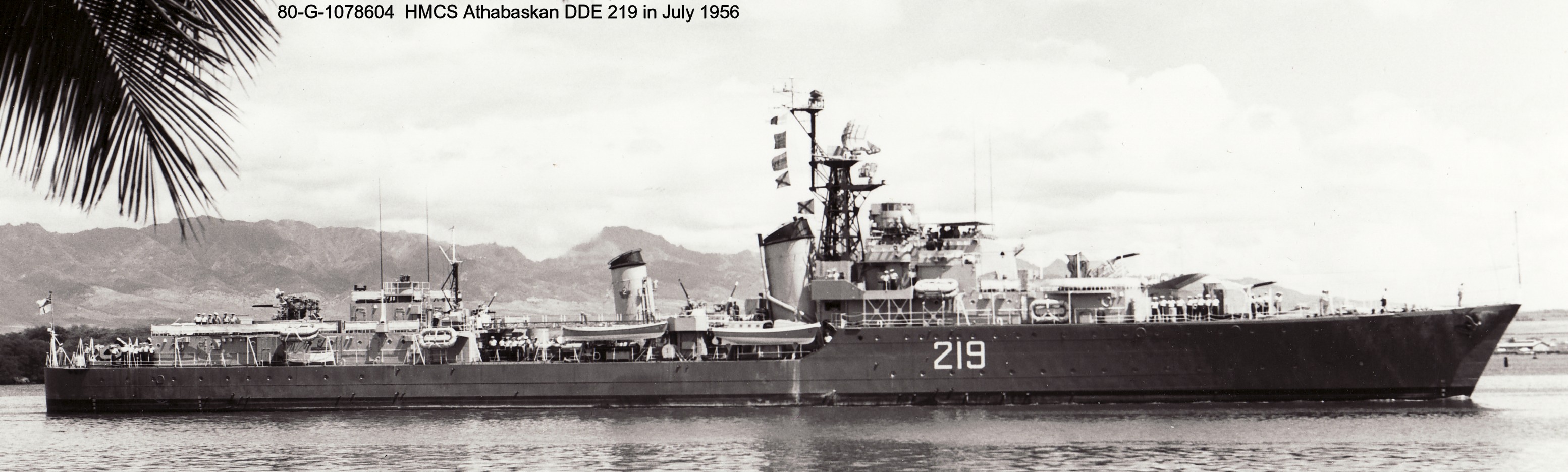
(USN Official Naval Archives Photos)
HMCS Athabaskan (219).
HMCS Cayuga (R04) (218)
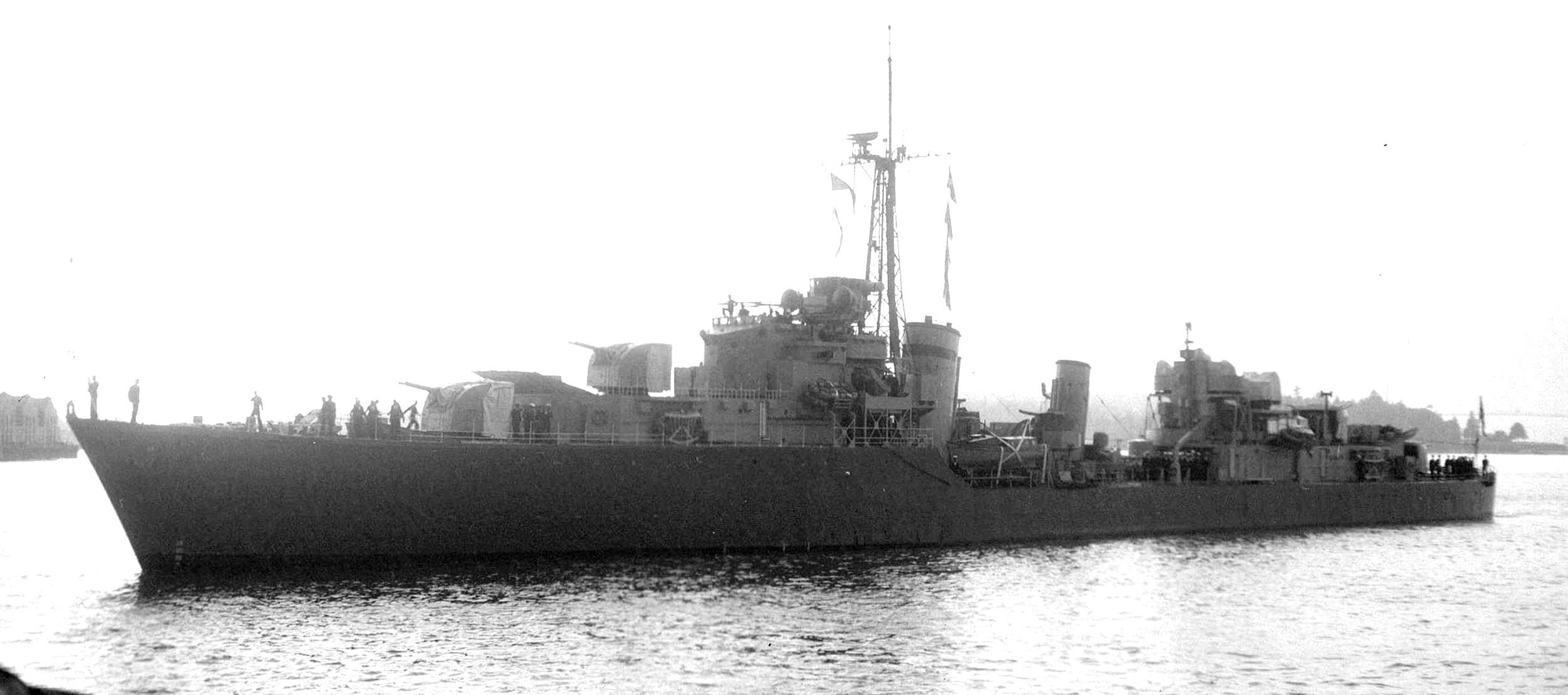
(City of Vancouver Archives Photo)
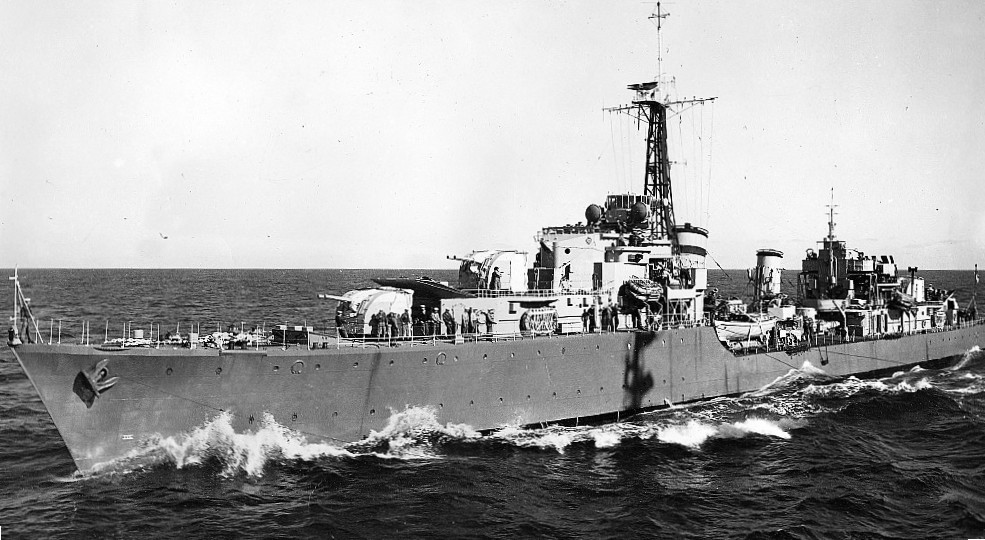
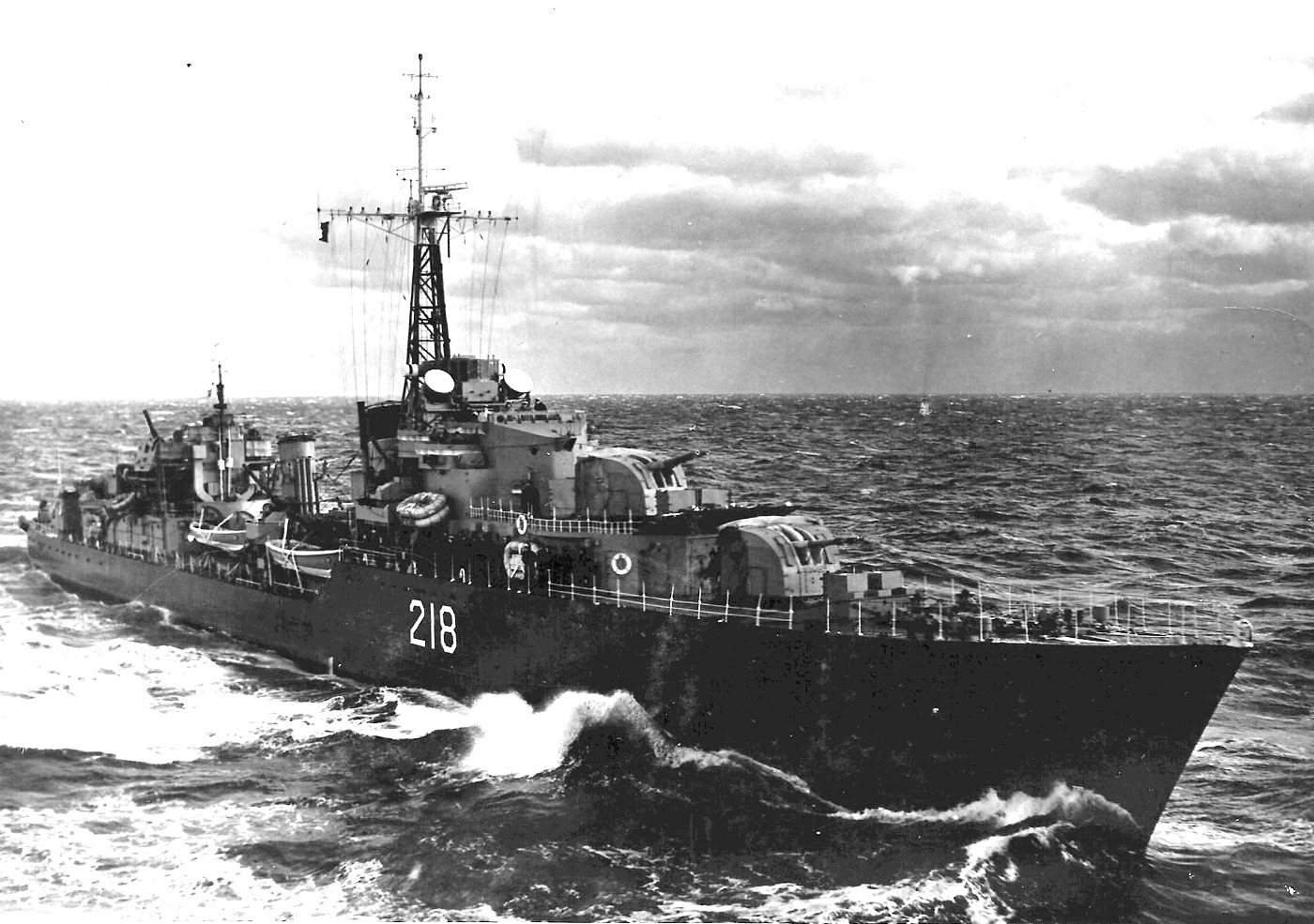
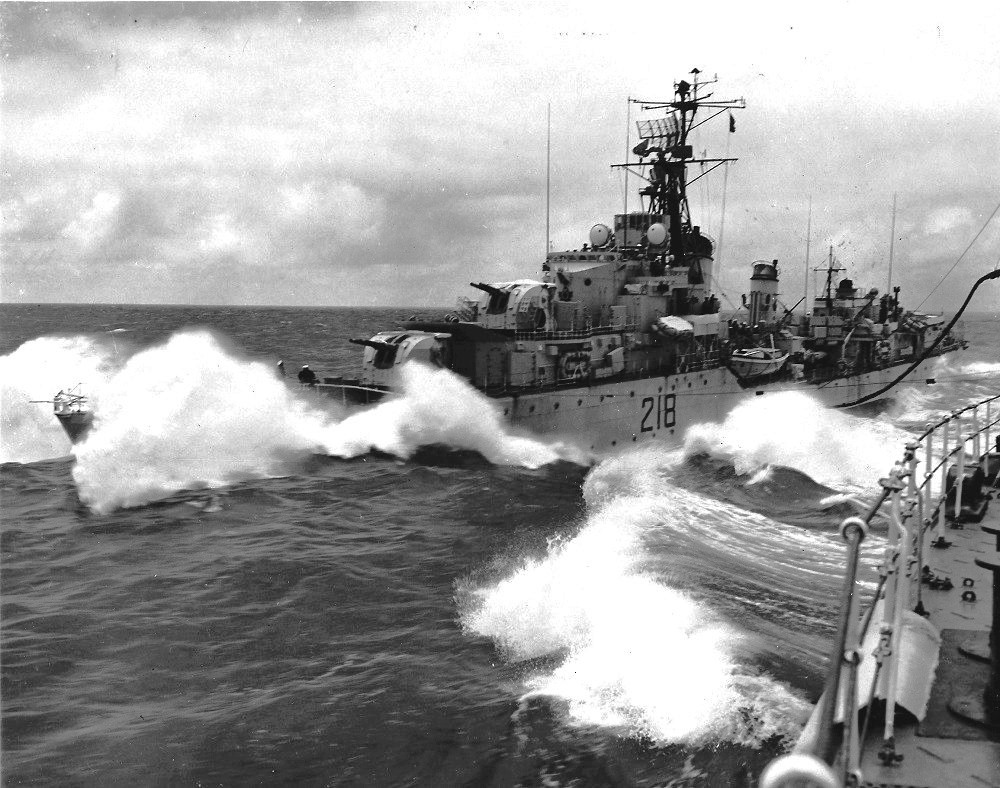
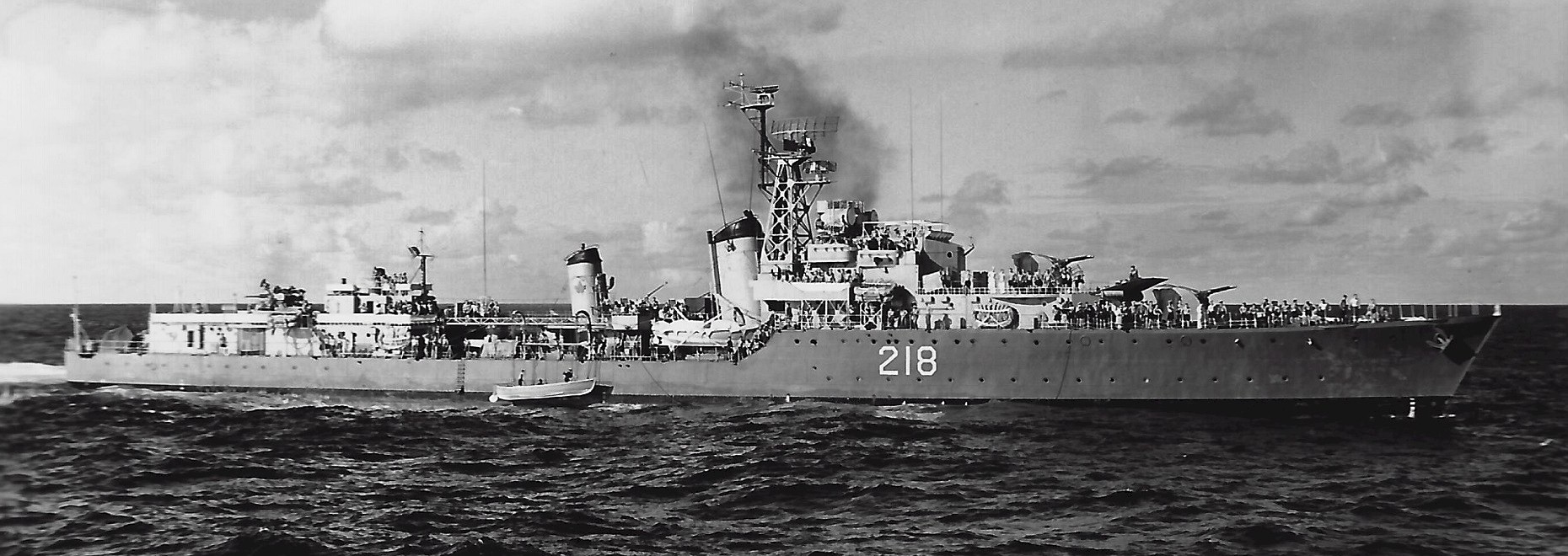
HMCS Cayuga (R04). Commissioned at Halifax on 19 Oct 1947, she sailed on 4 Feb 1948, for Esquimalt, her assigned base. On 13 Jan 1950 HMCS Cayuga made a run from Esquimalt at the height of one of the worst blizzards to hit the West Coast. The Tribal class destroyer is the only ship to put out of Vancouver Island during the gale, and when she docked at Vancouver, her superstructure was covered in two inches of ice. Despite a rough passage and up to 65-knot winds, HMCS Cayuga carried the Navy’s junior hockey team safely to Vancouver for a featured exhibition game, and returned home the following day with Army personnel participating in an exercise appropriately named Operation Brass Monkey. At 0815 on 14 Feb 1950, HMCS Cayuga was ordered to proceed with all dispatch to a search area off the Queen Charlotte Sound and Hecate Strait to search for USAF Convair B36 Peacemaker (Serial No. 2075), which had gone down in the early morning hours. This was a BROKEN ARROW (a missing nuclear weapon) operation. HMCS Cayuga remained on station as OTC co-ordinating the search on Princess Royal Island until 22 Feb 1950 when the search was called off. All but 5 of the crew were found. (the crash site was not found till several years later. On 5 Jul 1950, HMCS Cayuga departed Esquimalt, as Senior Officer’s ship of the first three Canadian destroyers to serve in Korean waters. On 4 Dec 1950, a United Nations force including HMCS Cayuga, HMCS Athabaskan and HMCS Sioux covered the withdrawal at Chinnampo, Korea. During her first tour 1950-51, she went into drydock in Sasebo, Japan – once to have the sonar dome checked and ship painted; and a 2nd time to check the screws for damage as she backed over the ship’s whaler. She carried out three tours of duty there, the last in 1954 after the armistice. In 1952, between the second and third tours, she was rebuilt as a destroyer escort (218). For four years after her return from Korea in Mid-Dec 1954, HMCS Cayuga carried out training on the west coast. On 16 Jan 1958, she departed Esquimalt in company with HMCS Crescent 226, HMCS Fraser 233, HMCS Margaree 230, and HMCS Skeena, to take part in a Far-East training cruise. In Jan 1959, HMCS Cayuga left Esquimalt for the east coast to become part of a homogeneous Tribal class squadron. On 16 Feb 1959, HMCS Athabaskan and HMCS Cayuga arrived in Halifax. Their west coast crews returned to BC with HMCS St. Laurent and HMCS Saguenay. In Apr 1963, 12 RCN ships, HMCS Algonquin, Micmac, Cayuga, St. Croix, Terra Nova, Kootenay, Swansea, La Hulloise, Buckingham, Cape Scott, CNAV Bluethroat and CNAV St. Charles, took part in NATO Exercise New Broom Eleven, an exercise designed to test convoy protection tactics. In Oct 1963, HMCS Bonaventure, Algonquin, Cayuga, Micmac and Saskatchewan took part in a NATO exercise in which all participating ships were battered by a severe North Atlantic storm. Paid off at Halifax on 27 Feb 1964, she was broken up at Faslane, Scotland, the following year.
(RCN Photo)
HMCS Cayuga (R04).
(Bob Theriault Photo)
HMCS Cayuga (218), Korea, 1950.
(Stephen Hlasny Photo)
HMCS Cayuga (218), refueling from HMCS Ontario, 1958.
(Stephen Hlasny Photo)
Whaler from HMCS Sioux (225) being exchanged with the whaler from HMCS Cayuga (218), 1954.
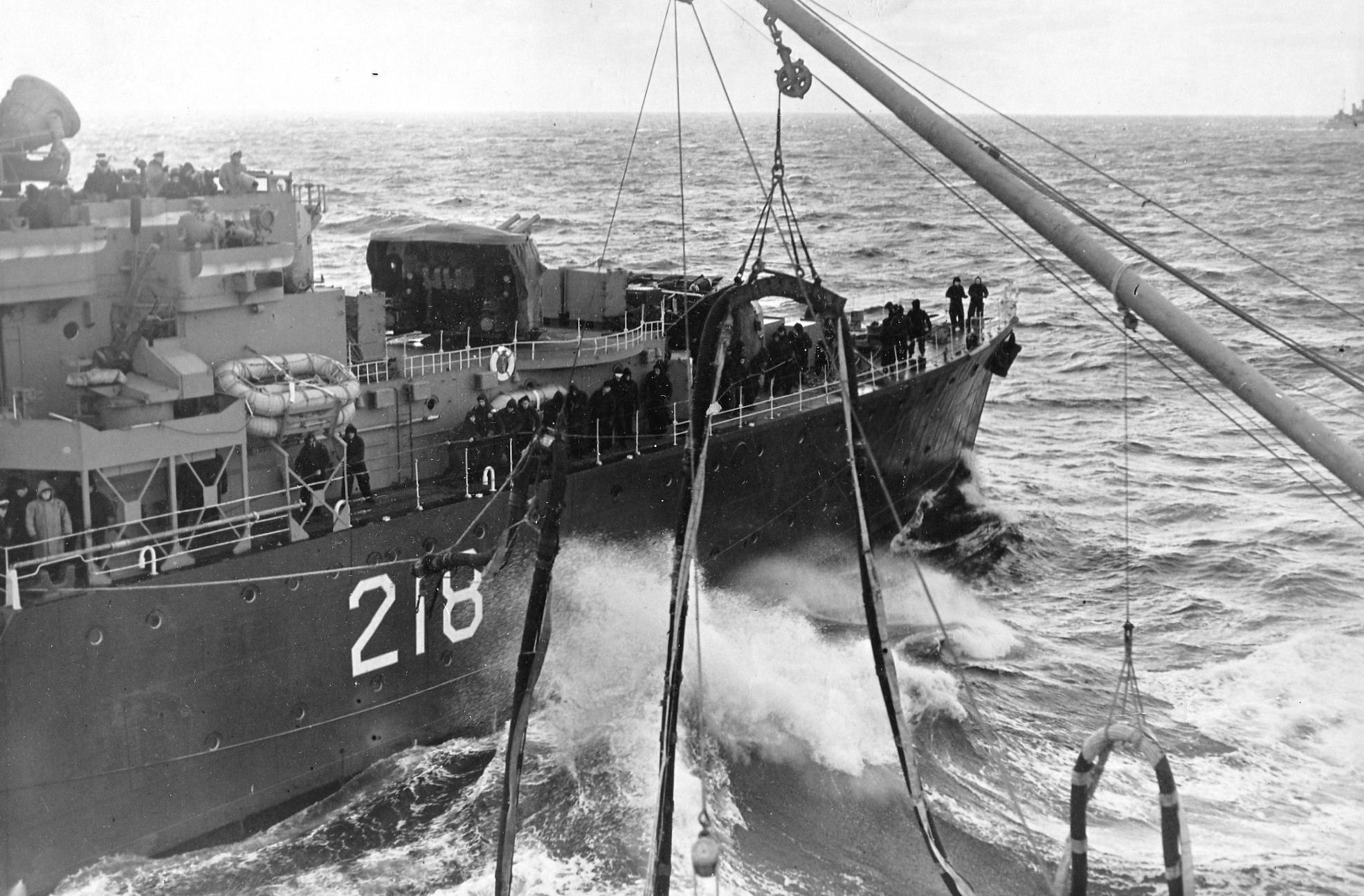
(Erin Brownlee Photo)
HMCS Cayuga (218), RASing with unknown ship.
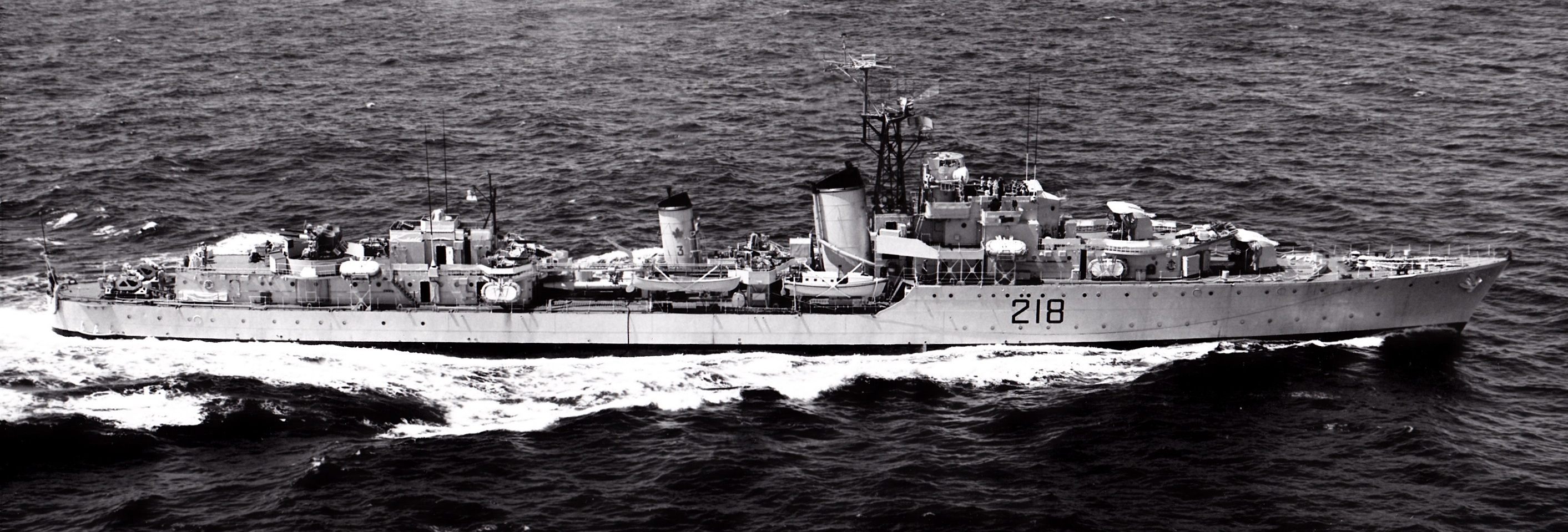
(Dennis McGillivray Photo)
HMCS Cayuga (218).
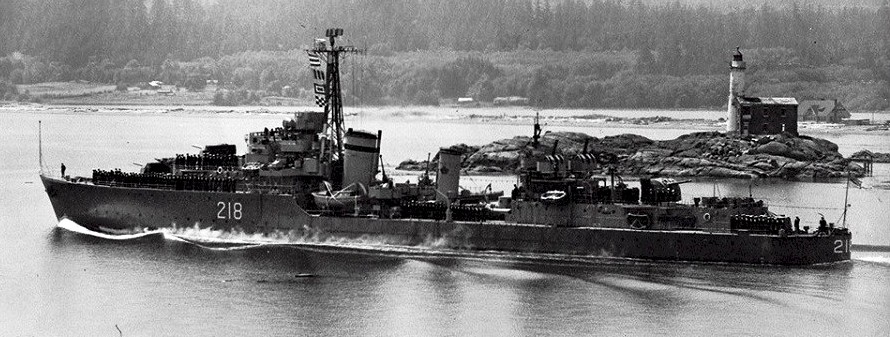
(Peter Chance Photo)
HMCS Cayuga leaving for Korea from Esquimalt, British Columbia, June 1951.
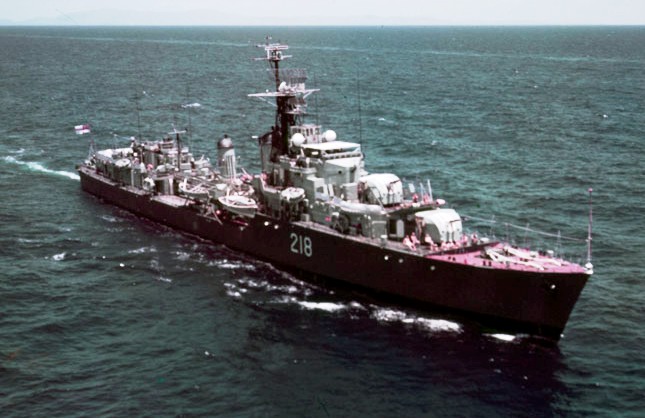
(Library and Archives Canada Photo, MIKAN No. 4821142)
HMCS Cayuga (218).
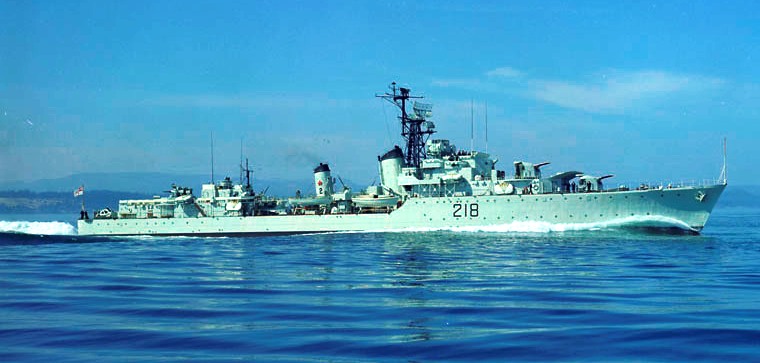
(Library and Archives Canada Photo, MIKAN No. 4476764)
HMCS Cayuga (218), 20 Aug 1958.
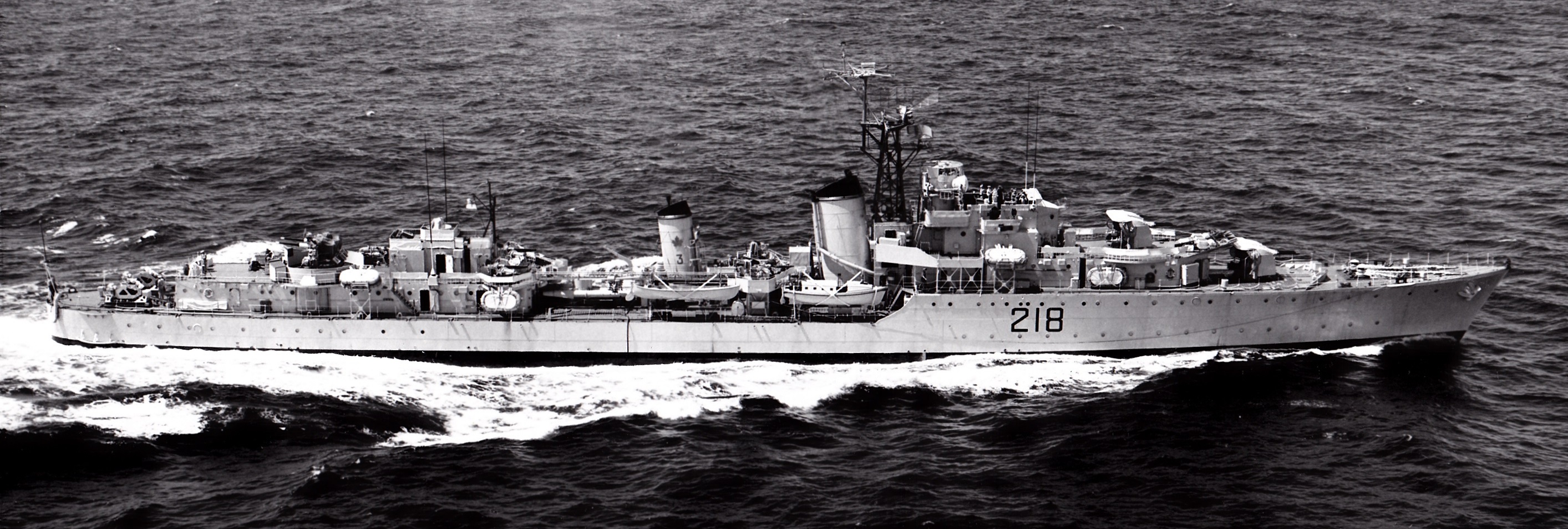
(DND Photo)
HMCS Cayuga (218).
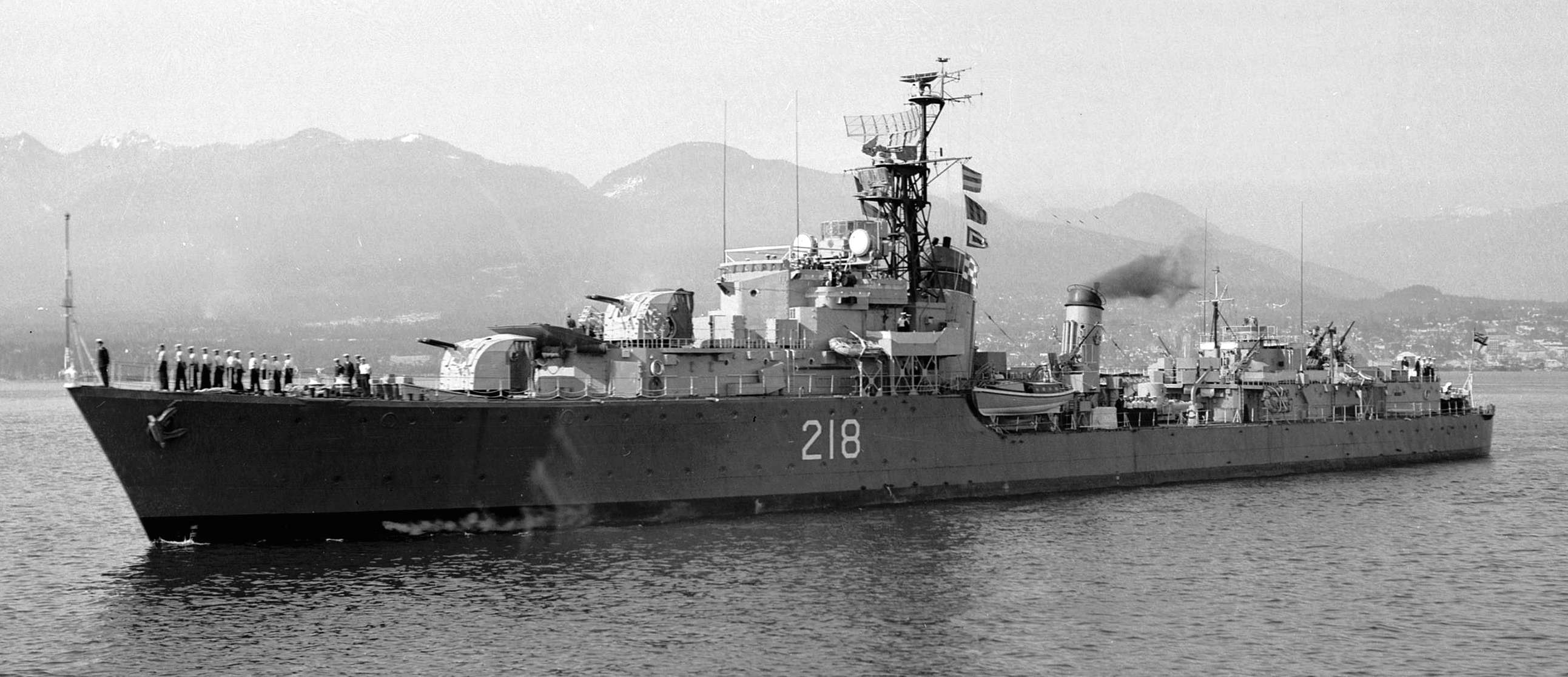
(City of Vancouver Archives Photo)
HMCS Cayuga (218), 11 June 1955.
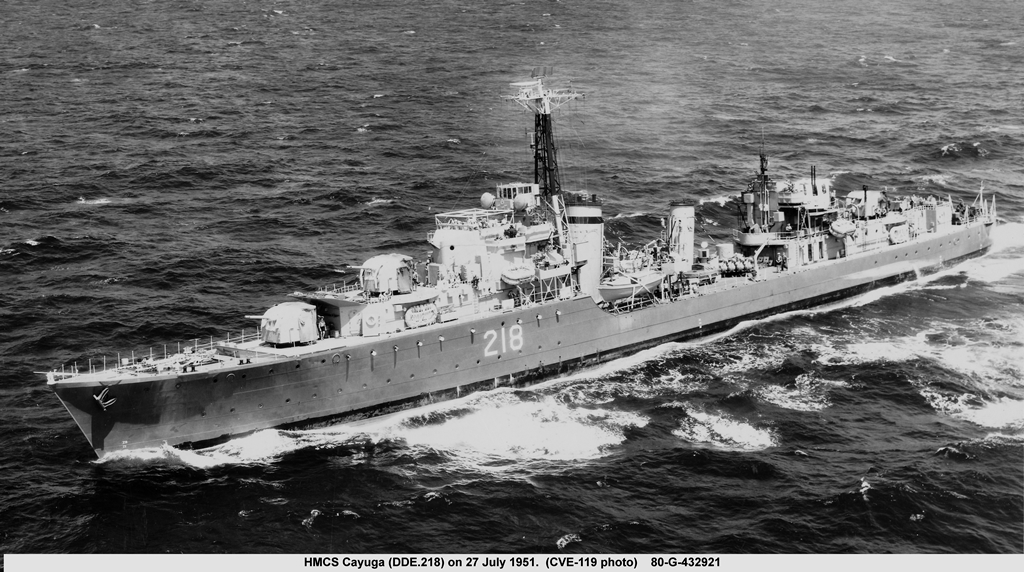
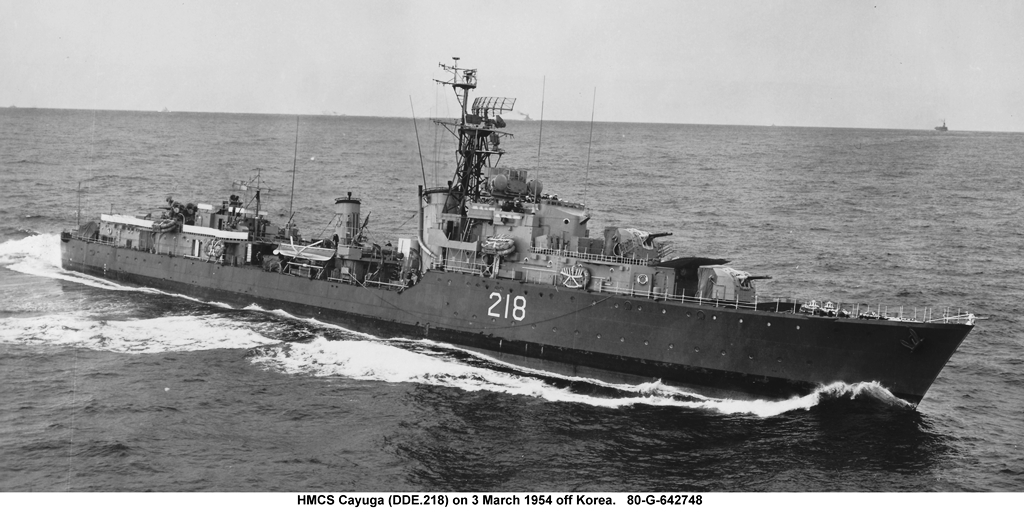
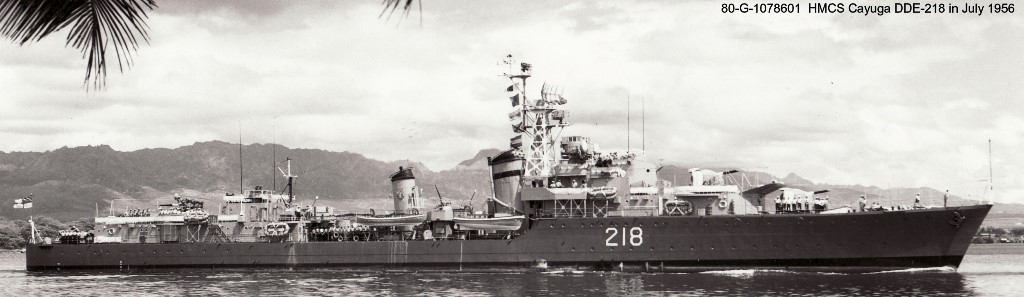
USN Official Naval Archives Photo)
HMCS Cayuga (218).
HMCS Haida (G63) (215)
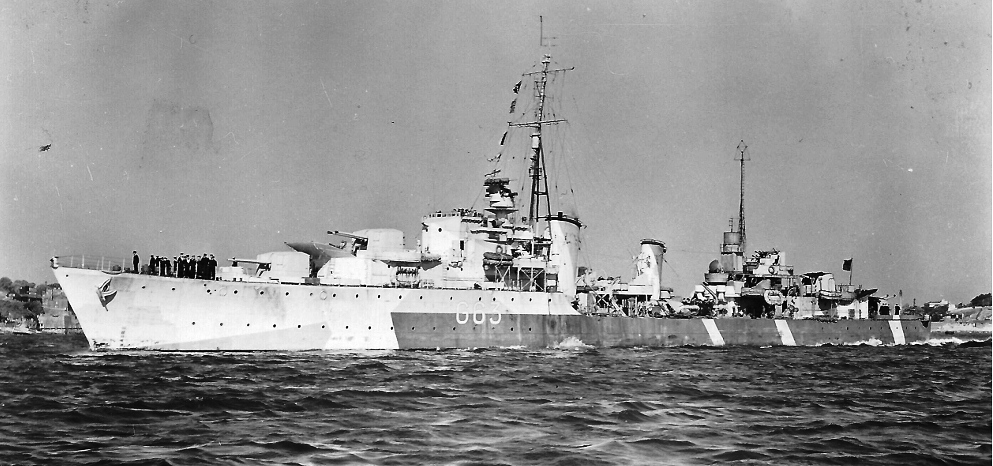
Library and Archives of Canada Photo, PA 112359)
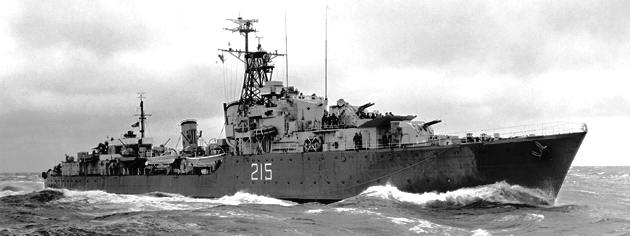
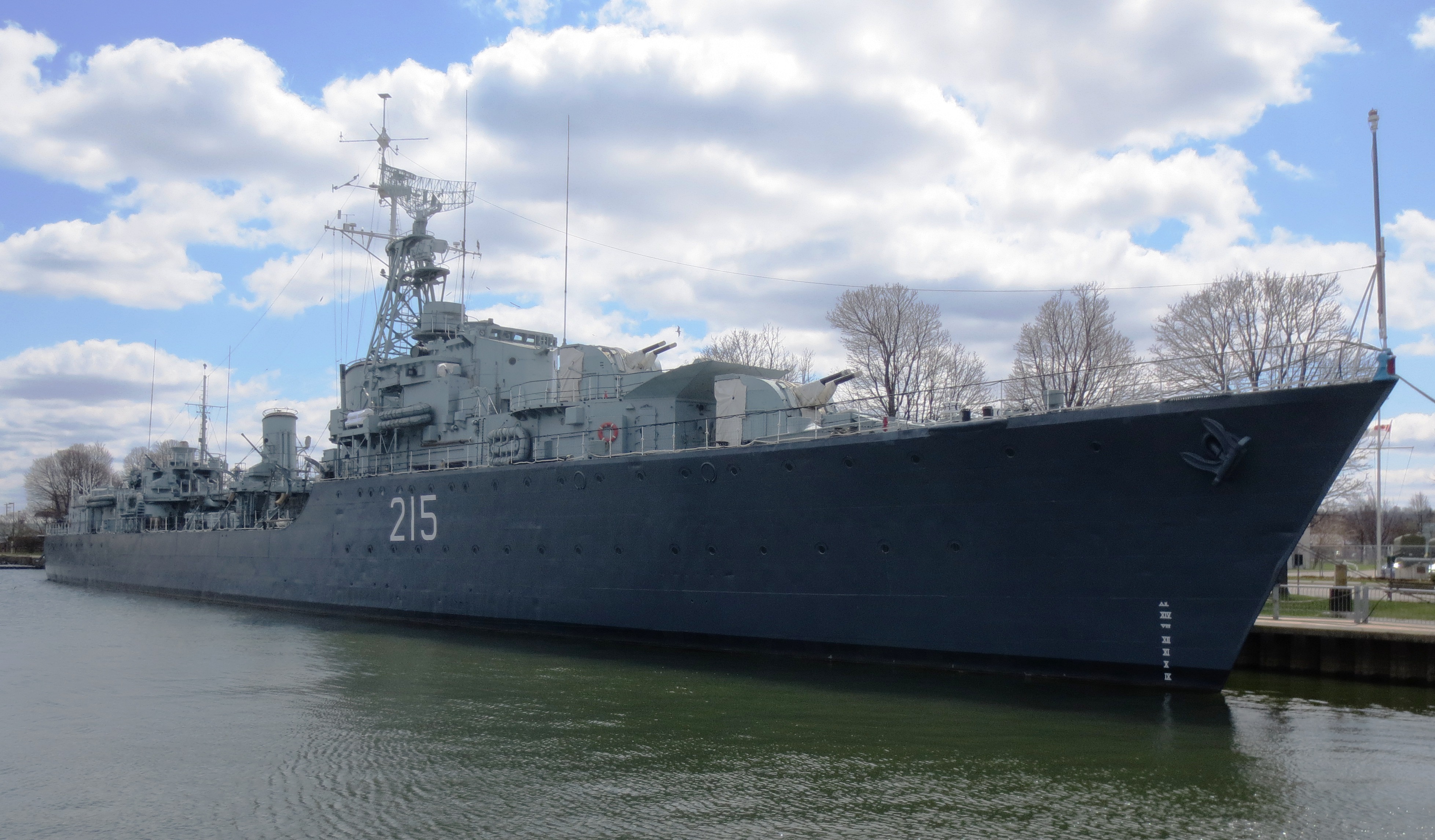
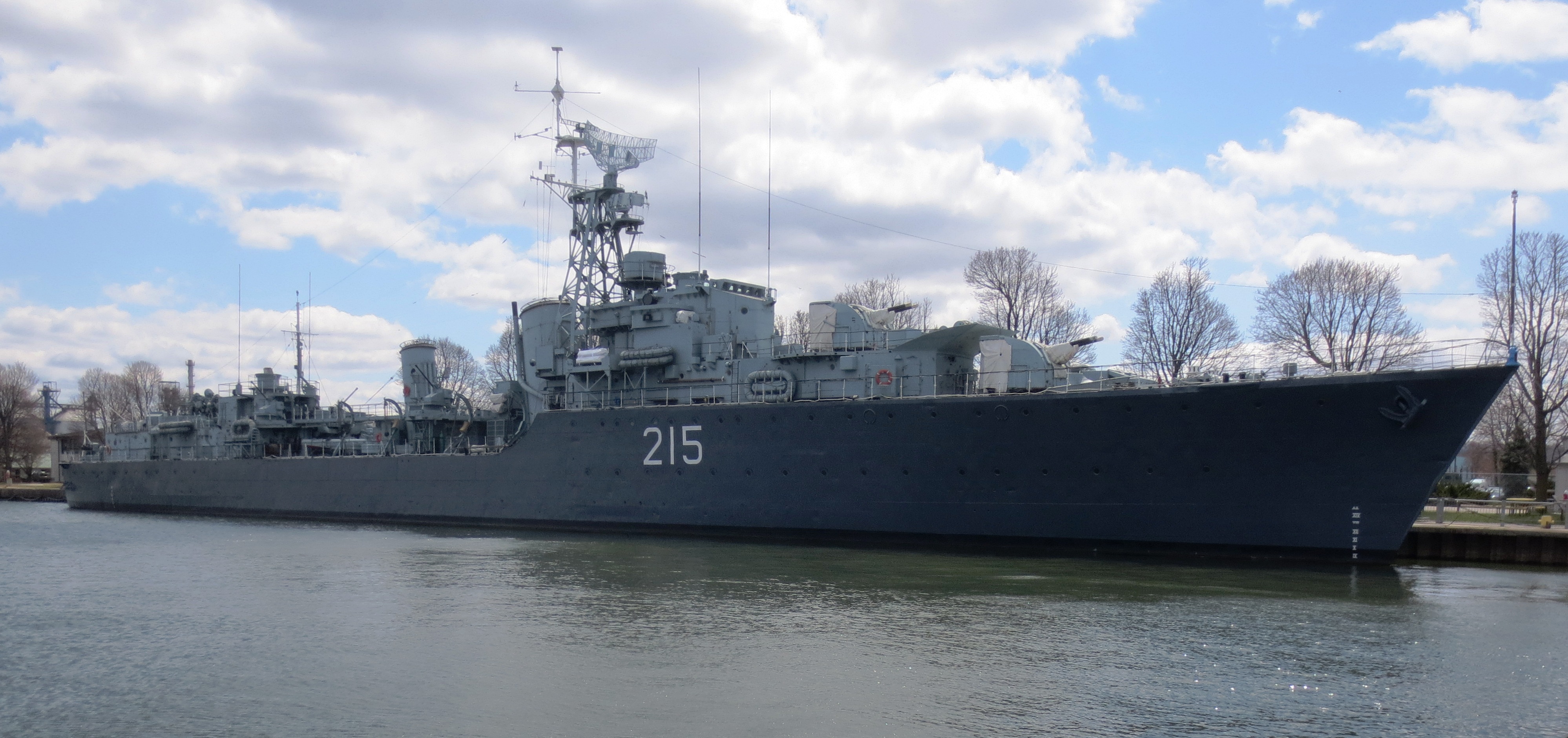
HMCS Haida (G63) is a Tribal-class destroyer that served in the RCN from 1943 to 1963, participating in both the Second World War and the Korean War. She was named for the Haida First Nations tribe. She is the only surviving Tribal-class destroyer out of 27 vessels constructed for the RCN, RN and RAN between 1937 and 1945. HMCS Haida sank more enemy surface tonnage than any other Canadian warship and as such is commonly referred to as the “Fightingest Ship in the Royal Canadian Navy“. HMCS Haida was designated as a National Historic Site of Canada in 1984, and she now serves as a museum ship berthed next to HMCS Star, an active RCNR Division, in Hamilton, Ontario. In 2018, HMCS Haida was designated the ceremonial flagship of the RCN.
Commissioned on 30 Aug 1943, at Newcastle-on-Tyne, HMCS Haida was assigned to the British Home Fleet and during the first three months of her career made two trips to North Russia as a convoy escort. In Jan 1944, she joined the 10th Flotilla at Plymouth, and for the next eight months was engaged in sweeps and patrols in the Channel and the Bay of Biscay. She was present on D-Day. During this period she took part in the sinking of several enemy vessels, including torpedo boat T29, on April 26 off Ushant; T27, on 29 Apr 1944 off Ushant; destroyer Z 32 was sunk in a gun duel with HMCS Haida G63 and HMCS Huron G24, on 9 Jun 1944 off Ile de Bas; U-971, on June 24 off Land’s and minesweeper M486, on 6 Aug 1944 off Ile d’Yeu. In Sep 1944 she sailed for Canada to refit at Halifax, returning to Plymouth in Jan 1945. In Mar 1945 she returned to Scapa Flow and escorted another convoy to Murmansk, as well as carrying out strikes against German shipping off the Norwegian coast. On 16 Apr 1945, HMCS Haida G63, HMCS Huron G24 and HMCS Iroquois G89 departed Clyde with convoy JW.66 for Kola Inlet; arriving at Kola Inlet on 25 Apr 1945. They departed Kola Inlet for Clyde with convoy RA.66 on 29 Apr 1945. On 29 Apr 1945 HMCS Haida G63 and HMCS Iroquois G89 were attacked by U-427 (Oblt Karl-Gabriel Graf von Gudenus). The attack resulted in near misses by U-427. They arrived at Clyde on 08 May 1945.
On 4 Jun 1945, HMCS Haida departed Greenock, arriving at Halifax on 10 Jun 1945 to begin tropicalization refit, but with the surrender of Japan this was cancelled and she was paid off on 20 Mar 1946. She was re-commissioned at Halifax in 1947 and for the next three years took part in training and NATO exercises . On 19 Nov 1949, approx 300 miles north of Bermuda, HMCS Haida rescued 18 airmen from a B-29 Bomber that went down on 16 Nov 1949 while en route from the USAF Base at St. George Bermuda to England. In Jul 1950, HMCS Haida entered refit and began an extensive modernization. She was re-commissioned (215) on 11 Mar 1952, to prepare for service in Korean waters. Between 1952 and 1954 she did two tours of duty in that theatre, then resumed her training role. In the summer of 1963, HMCS Haida took part in the summer training on the Great Lakes for the officers and men of the Naval Reserve. She was paid off for the last time on 11 Oct 1963, at Sydney. Purchased by a private group of citizens, she arrived at Toronto in tow on 25 Aug 1964, to become a floating memorial, and in 1970 was accorded a berth at Ontario Place and later, on 30 Aug 2003 – after having spent a year at Port Welland, Ontario, having her hull redone – she was moved to her current berth at Pier 9 in Hamilton.
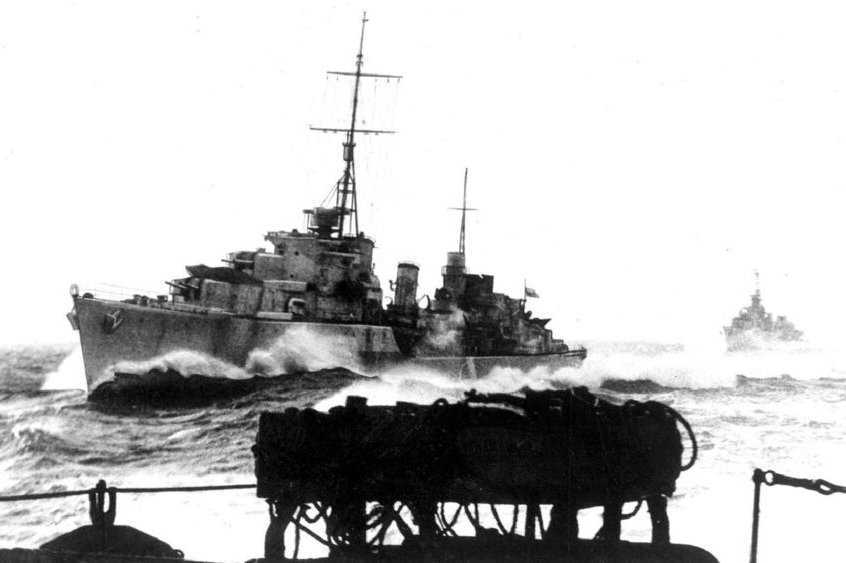
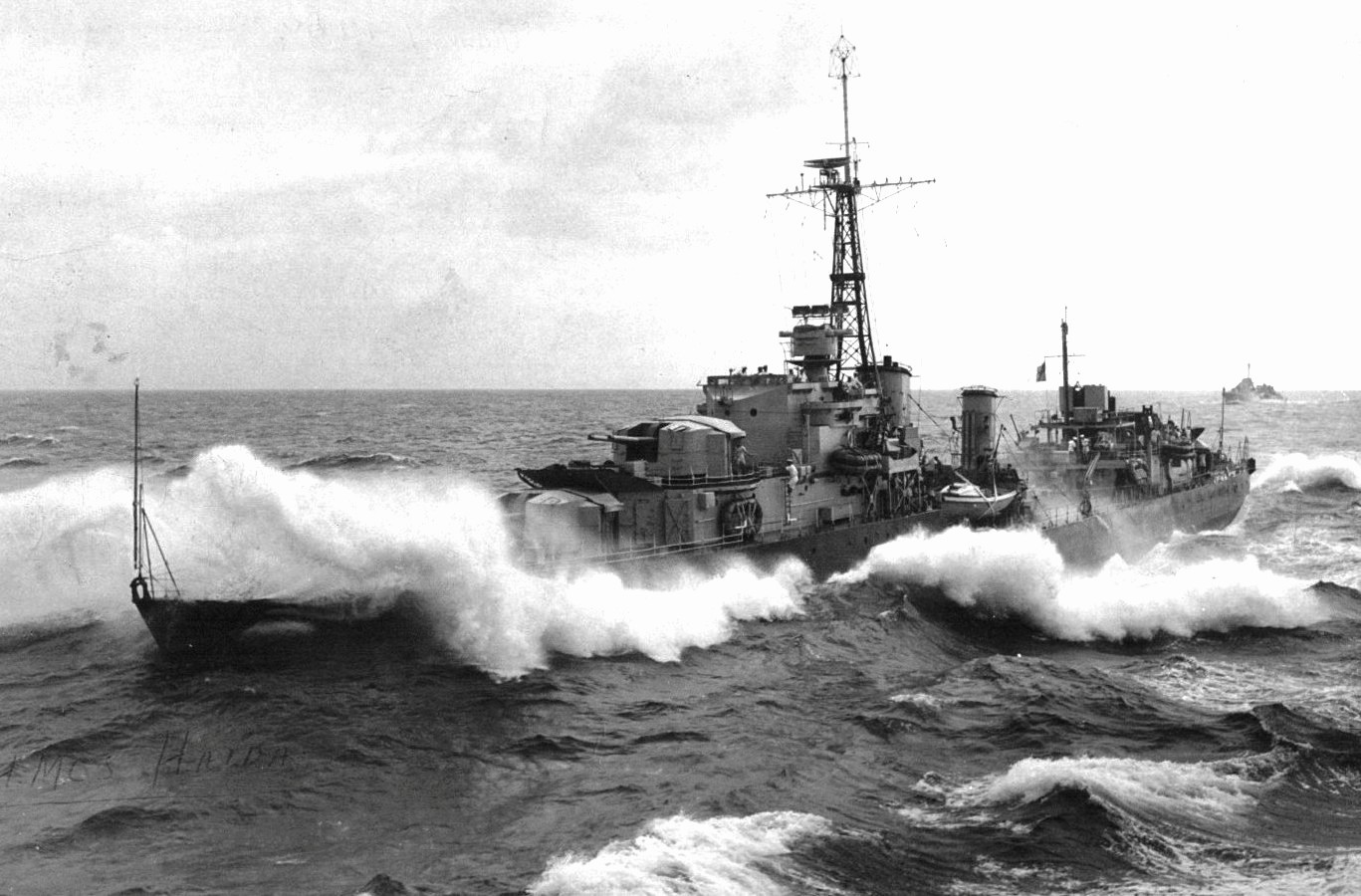
(DND Photo)
HMCS Haida and HMCS Athabaskan performing high speed maneuvers, early 1944.
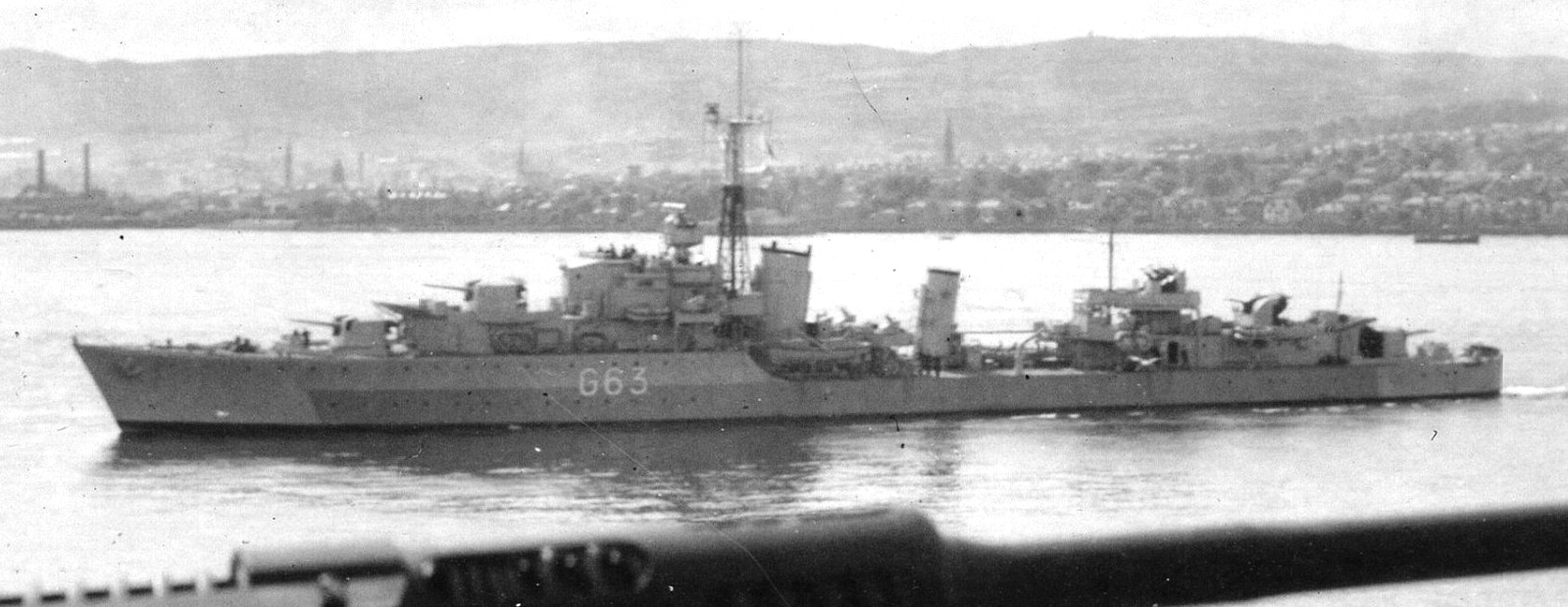
(Jim Silvester Photo)
HMCS Haida (G63).
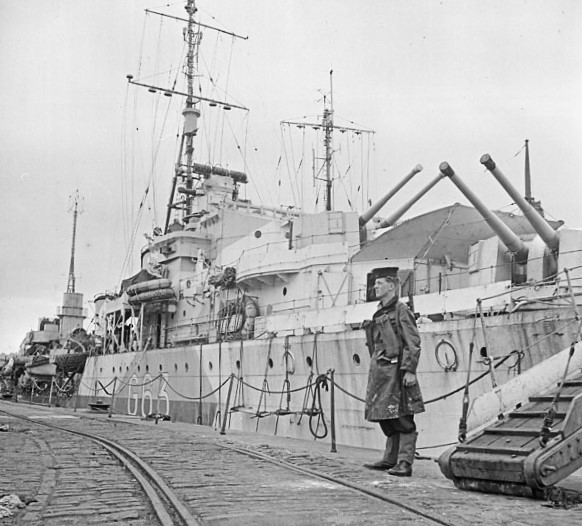
(Library and Archives Canada Photo, MIKAN No. 4117978)
HMCS Haida, (G63), sailor standing at the gangway.
(RCN Photo)
HMCS Haida (G63), alongside HMCS Magnificent, 16 March 1949. She gained entry in the Trainbusters Club, destroying a Chinese supply train and engine off Tanchâon, South Korea.
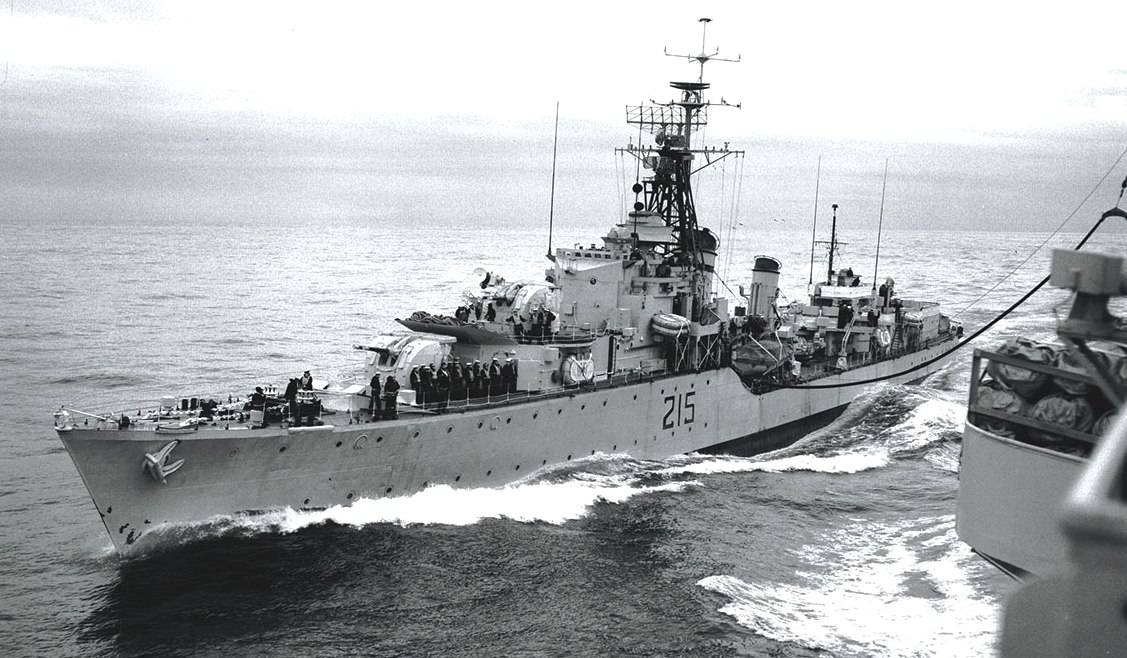
(RCN Photo)
HMCS Haida (215).
(RCN Photo)
HMCS Haida (215) off the coast of Korea, ca. 1952-1954.
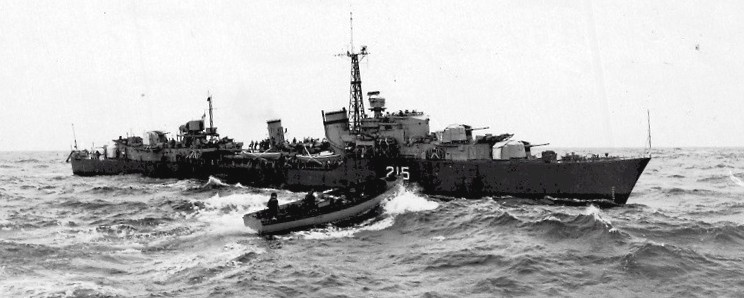
(Francis Dowdall Photo)
HMCS Magnificent‘s doctor being transferred to HMCS Haida (215), on 19 Nov 1949. A USAF Boeing B-29 Superfortress crashed in the Atlantic and approximately one week later, the survivors were picked up by HMCS Haida. HMCS Magnificent‘s doctor was transferred to HMCS Haida to tend to the survivors.
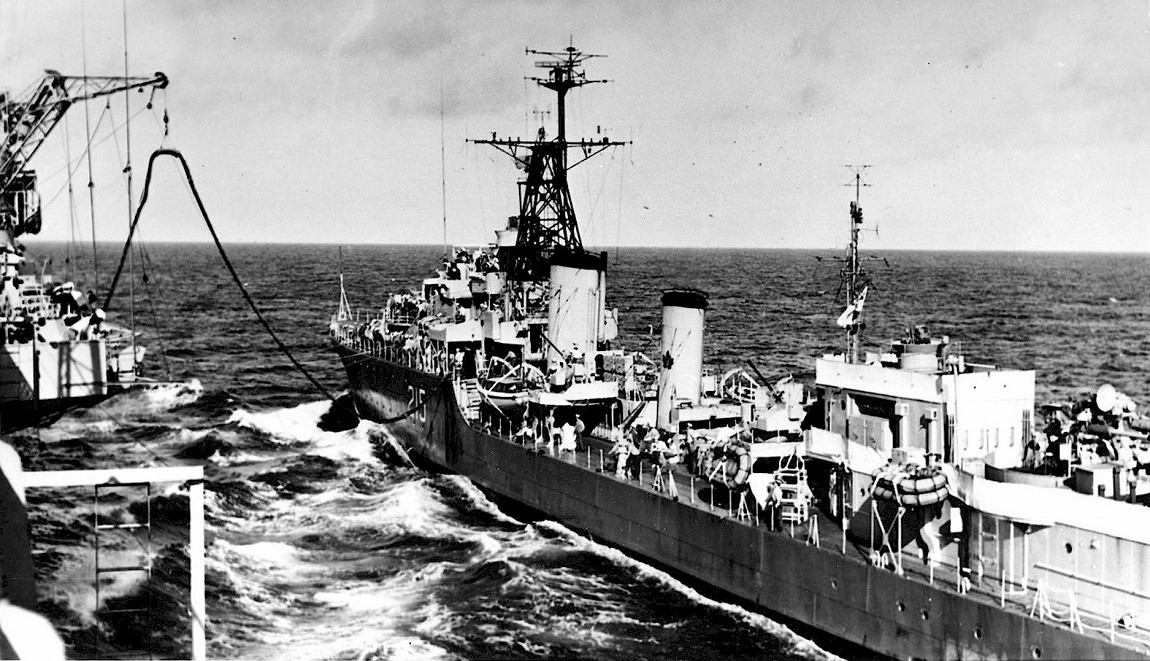
(Gerald Sullivan Photo)
HMCS Haida (215) fueling from HMCS Magnificent, ca 1952, not long after Haida completed a refit before being deployed to Korea. Note the 3″50 on the gun deck.
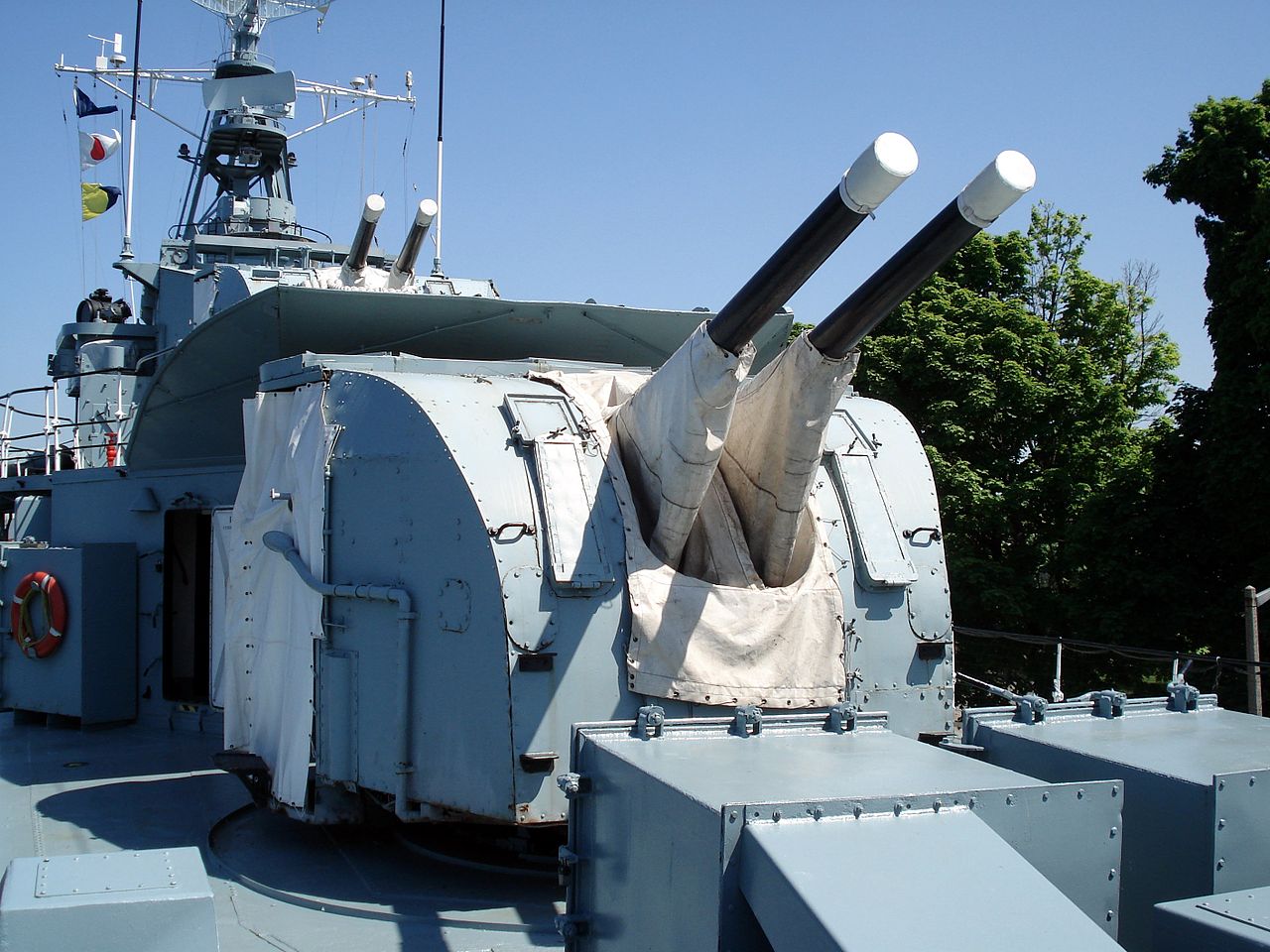
(Balcer Photo)
HMCS Haida, one of two main twin 4-inch Mk 16 gun turrets.
(Author Photo)
(Author Photo)
HMCS Haida (G63), Hamilton harbour, Ontario.
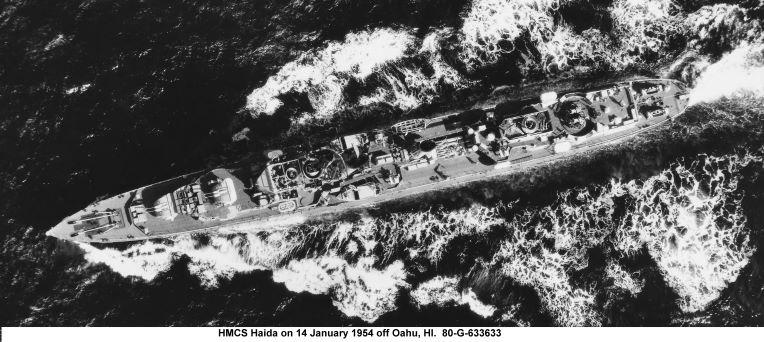
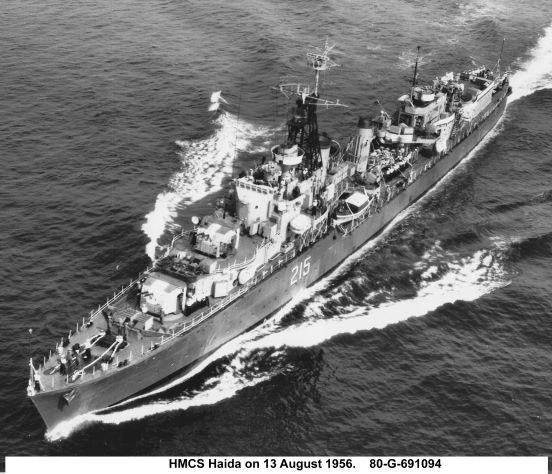
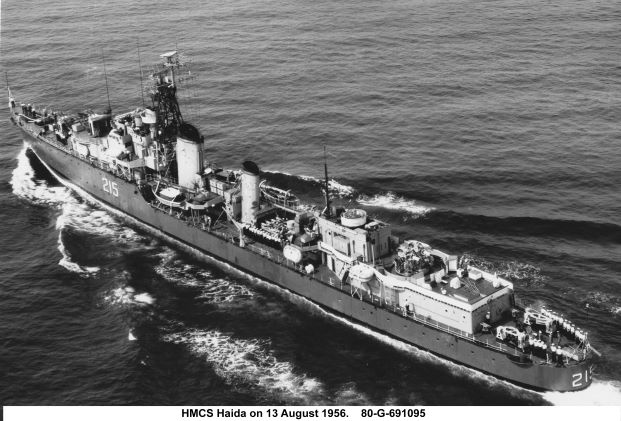
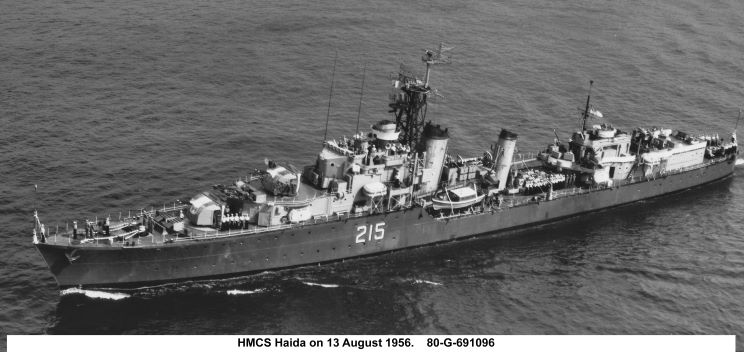
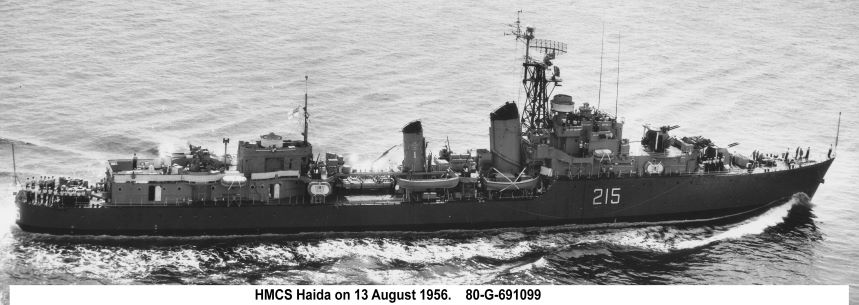
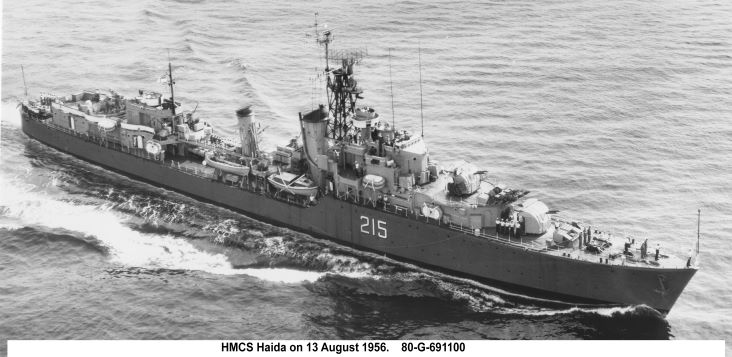
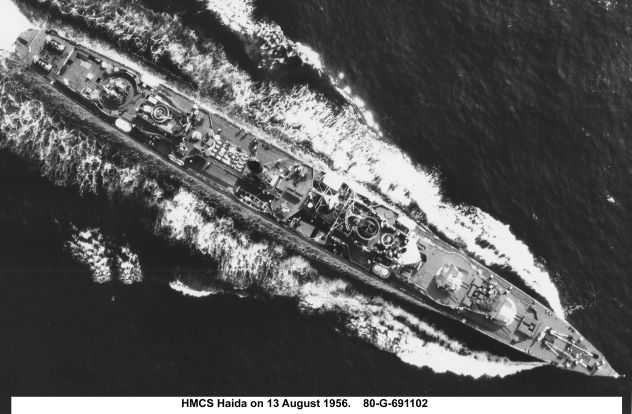
(USN Naval History and Heritage Photos)
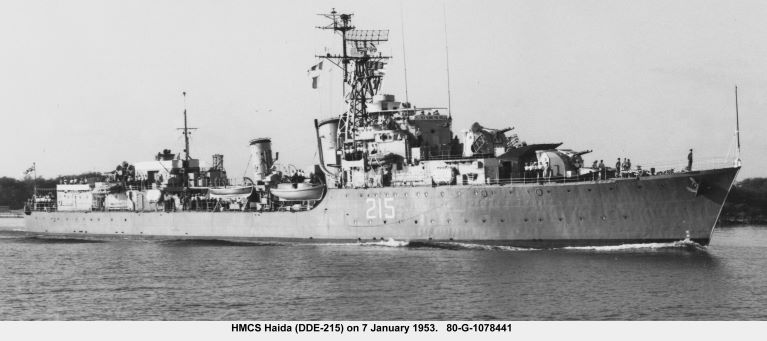
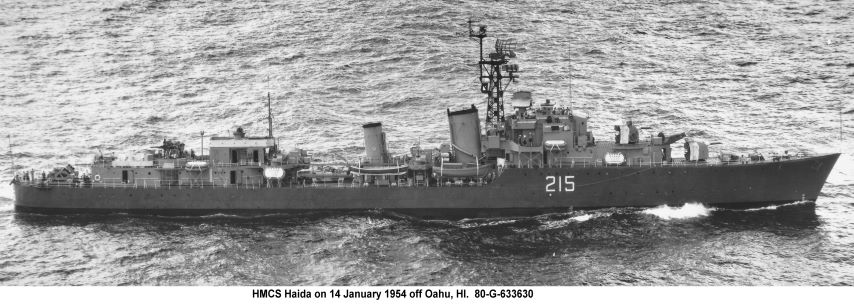
HMCS Haida (G63).
Royal Canadian Navy (RCN) Destroyers (V, and C 1943 class) are listed on a separate page on this website.