
Kaiserliche Marine ironclads: SMS Kaiser, SMS Deutschland
SMS Kaiser
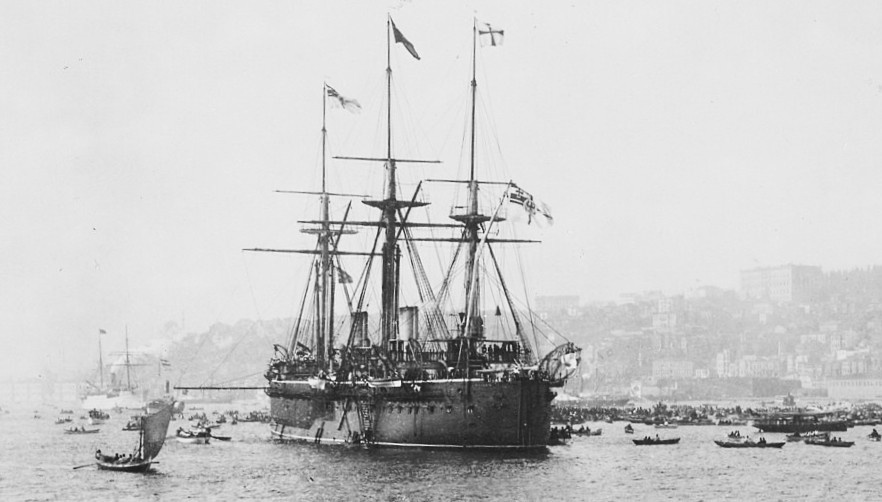
(Library of Congress Photo)
The German armoured frigate SMS Kaiser in Istanbul, Ottoman Empire, in 1889. Emperor Wilhelm II was embarked on a tour visiting Genoa, Athens, Istanbul and Venice. The 7,650 ts SMS Kaiser was built by Samuda Brothers, London (UK), launched in 1874, and commissioned on 13 February 1875. She was present at the German annexion of Tsingtao, China, in 1897. She became a depot ship in 1905 and was renamed SMS Uranus. She was scrapped in 1920.
SMS Kaiser was the lead ship of the Kaiser-class ironclads; SMS Deutschland was her sister ship. Named for the title “Kaiser” (German: Emperor), held by the leader of the then newly created German Empire, the ship was laid down in the Samuda Brothers shipyard in London in 1871. The ship was launched in March 1874 and commissioned into the German fleet in February 1875. Kaiser mounted a main battery of eight 26 cm (10.2 in) guns in a central battery amidships.
Kaiser served with the fleet from her commissioning until 1896, though she was frequently placed in reserve throughout her career. The ship was a regular participant in the annual fleet training maneuvers conducted with the exception of the mid-1880s, when she was temporarily replaced by newer vessels. She participated in several cruises in the Baltic and Mediterranean, often escorting Kaiser Wilhelm II on official state visits. Kaiser was rebuilt in the early 1890s as an armored cruiser, though she was too slow to perform satisfactorily in this role. Nevertheless, she spent several years as the flagship of the East Asia Squadron before returning to Germany in 1899. She was used in secondary roles after 1904, until after the end of the First World War in 1919, when she was broken up for scrap. (Wikipedia)
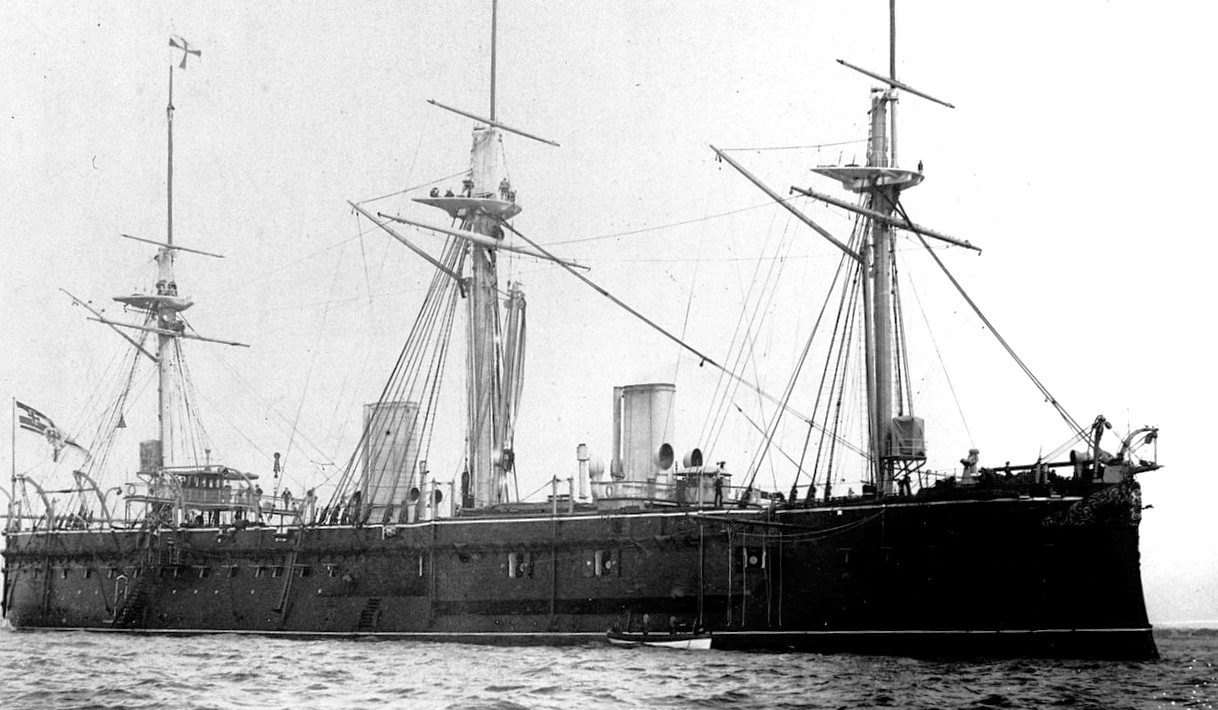
(Kaiserliche Marine Photo)
The German Kaiser-class ironclad SMS Kaiser, 1887.
SMS Deutschland
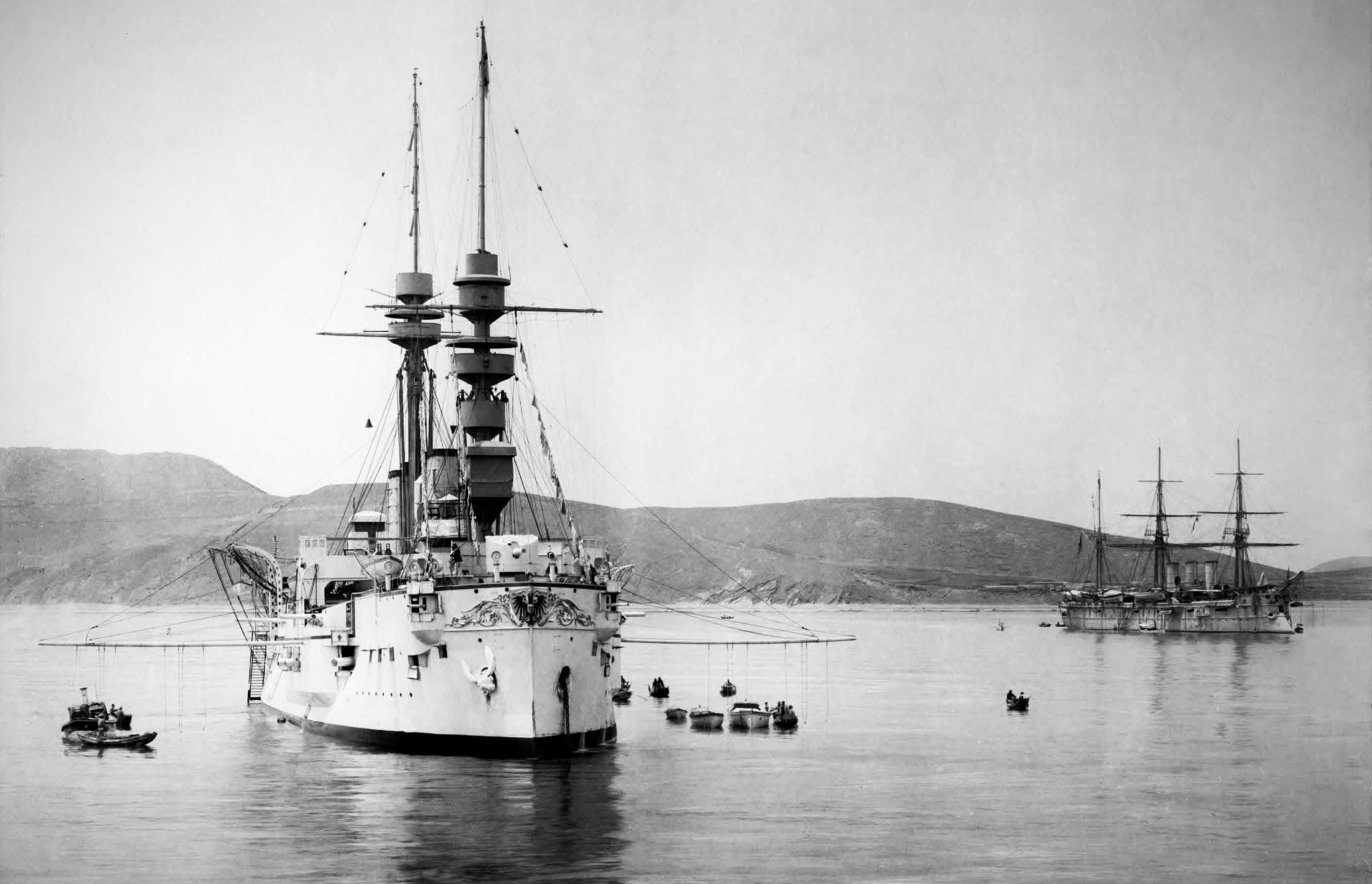
(Kaiserliche Marine Photo)
The German Kaiser-class ironclad SMS Deutschland (foreground) pictured with the Russian Armoured Cruiser Pamiat Azova at Port Arthur in 1898. The SMS Deutschland was built by Samuda Brothers based at Cubitt Town on the Isle of Dogs in London. She was the last capital ship built for the German Imperial Navy by a foreign ship-builder. Commissioned on 20 July 1875 the 7,524 long ton ship was armed with 8 × Krupp 26 cm RK L/20 guns and 1 × Krupp 21 cm RK L/22.
SMS Deutschland was the second and final ship of the Kaiser-class ironclads; SMS Kaiser was her sister ship. Named for Germany (Deutschland in German), the ship was laid down in the Samuda Brothers shipyard in London in 1872. The ship was launched in September 1874 and commissioned into the German fleet in July 1875. Deutschland mounted a main battery of eight 26 cm (10.2 in) guns in a central battery amidships. She was the last capital ship built for the German Navy by a foreign ship-builder; all subsequent ships were built in Germany.
Deutschland served with the fleet from her commissioning until 1896, though she was frequently placed in reserve throughout her career. The ship was a regular participant in the annual fleet training maneuvers conducted with the exception of the mid-1880s, when she was temporarily replaced by newer vessels. She participated in several cruises in the Baltic and Mediterranean, often escorting Kaiser Wilhelm II on official state visits. Deutschland was rebuilt in the early 1890s as an armored cruiser, though she was too slow to perform satisfactorily in this role. Nevertheless, she spent three years in the East Asia Squadron before returning to Germany in 1900. She was used in secondary roles after 1904, until 1908 when she was sold and broken up for scrap. (Wikipedia)
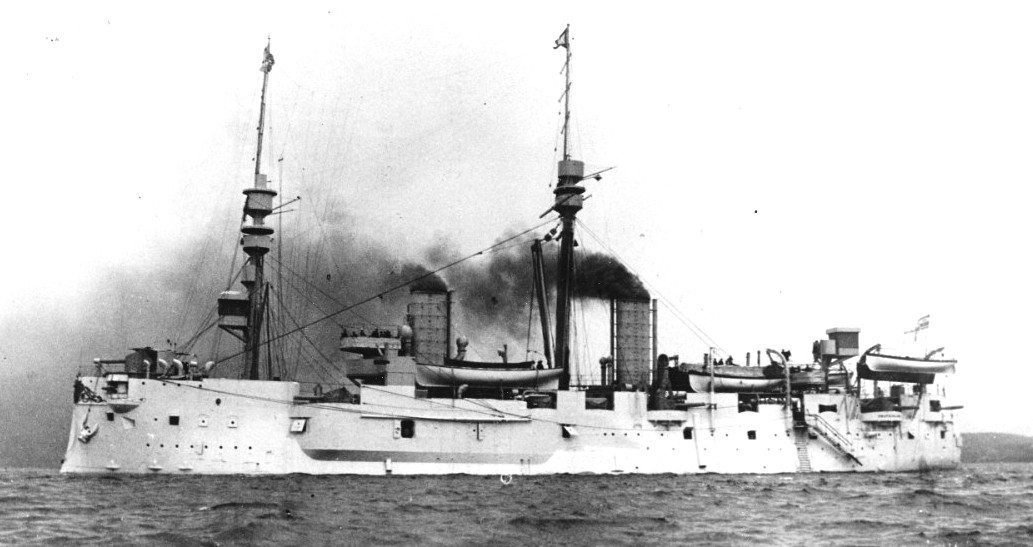
(Naval Heritage Command Photo)
SMS Deutschland c1896, following her 1894-1897 modernization, when she was rated as a large cruiser.
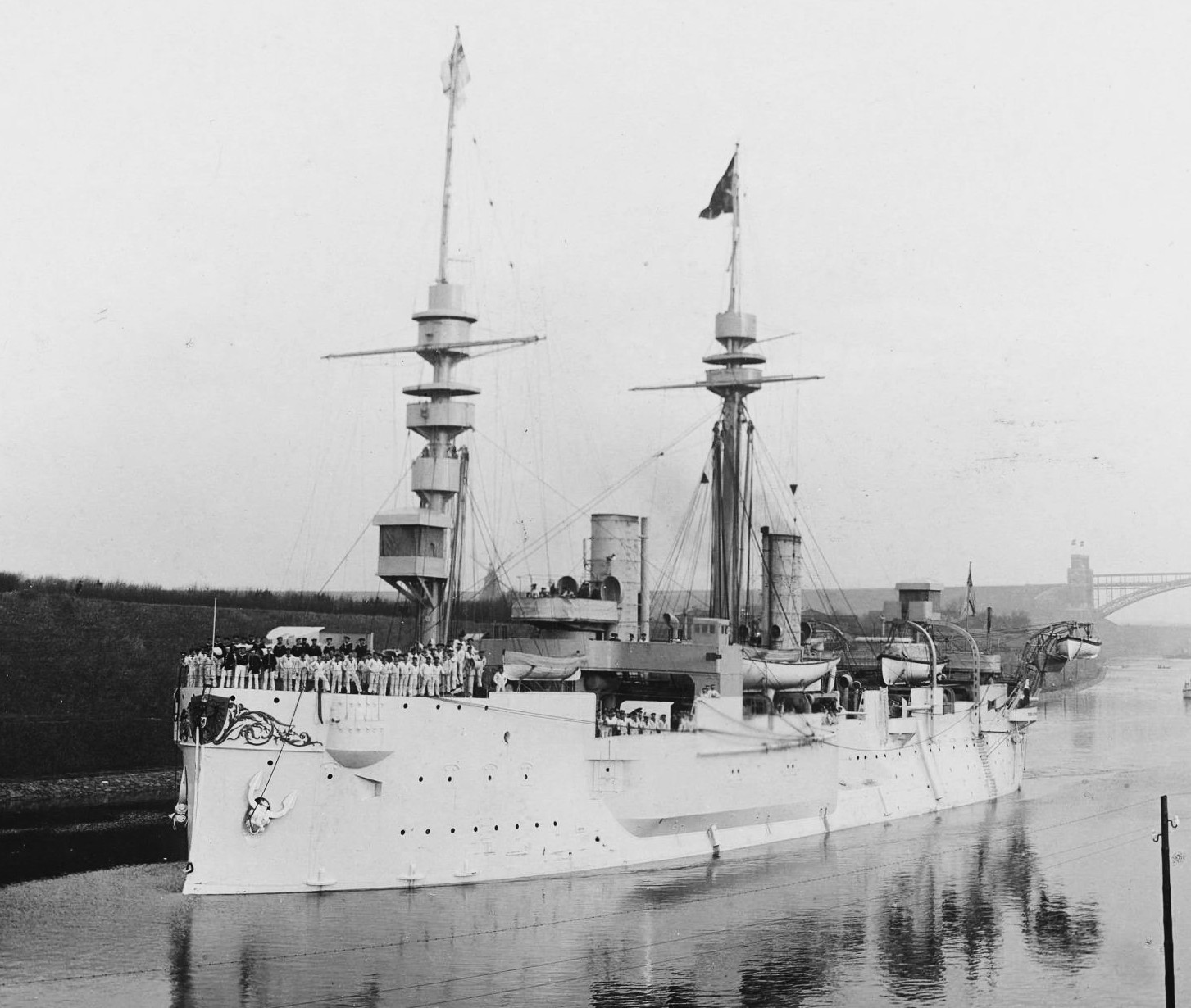
(Kaiserliche Marine Photo
SMS Deutschland in the Kiel Canal with the Levensauer Hochbrücke in the background, 1897.
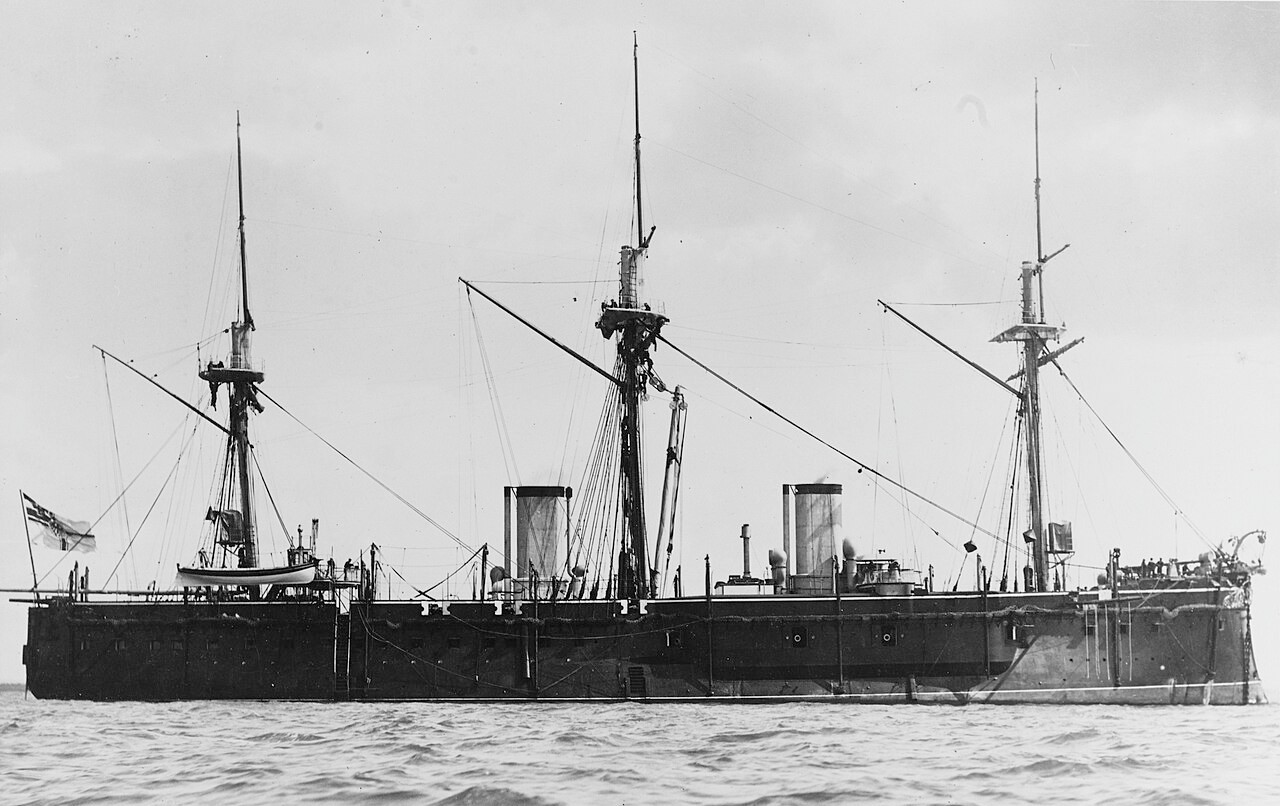
(Kaiserliche Marine Photo)
SMS Deutschland before 1896.