
Warplanes of the USA: Boeing B-314 Clipper and C-98 flying boat
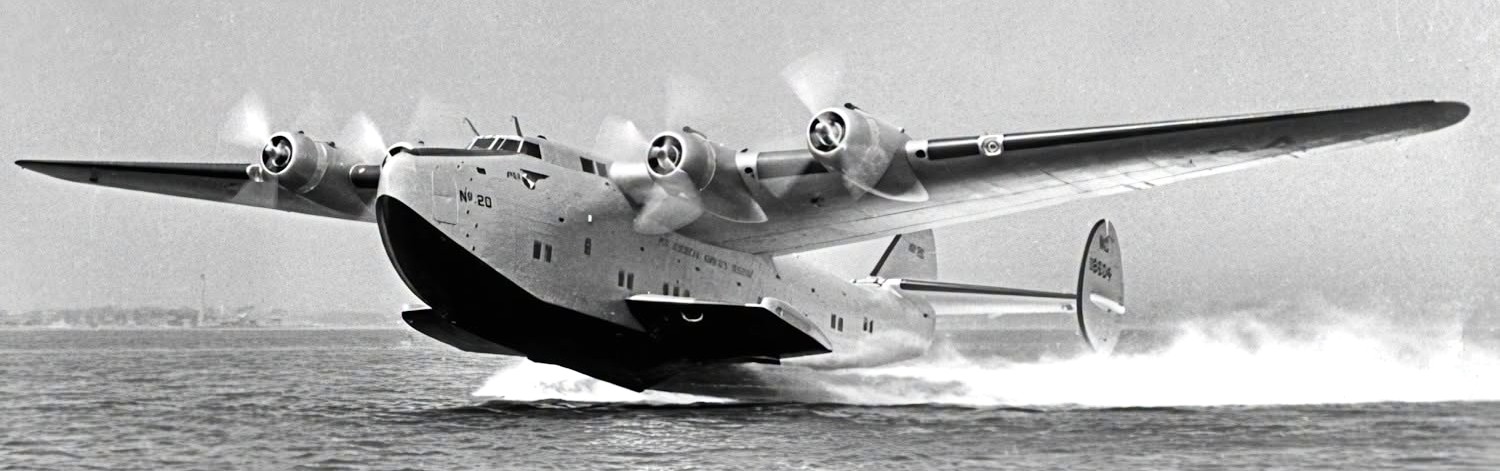
(PANAM Photo)
The Boeing 314 Clipper was an American long-range flying boat produced by Boeing from 1938 to 1941. One of the largest aircraft of its time, it had the range to cross the Atlantic and Pacific oceans. For its wing, Boeing re-used the design from the earlier XB-15 bomber prototype. Twelve Clippers were built, nine of which served with Pan Am. It was the first aircraft to carry a sitting American president, when in 1943 Franklin D. Roosevelt flew from Miami to the Casablanca Conference in Morocco, via Trinidad, Brazil, and The Gambia. (Wikipedia)
After the United States entered the Second World War in December 1941, Pan American’s fleet of 314s was requisitioned on 14 December, 1941, by the American War Department, who assigned them to the United States Army and Navy. The aircraft were then leased back to Pan American for a dollar, with the understanding that all would be operated by the Navy once four-engined replacements for the Army’s four Clippers were in service. Only the markings on the aircraft changed. Since the Pan American’s civilian personnel had both extensive expertise in using flying boats for extreme long-distance over-water flights and in maintaining them, they continued to be flown and maintained by the company.
The Army gave the aircraft the designation C-98, but the Navy, which used a different designation system at the time, operated the aircraft under the company designation B-314.
Throughout the war the flying boats were employed to transport high-priority passengers (such as high-ranking officers, scientists, war correspondents and USO entertainers), mail and vital military cargo on long distance international routes to the European and Pacific fronts, and to Africa. On outbound flights, the cargo could be as important as vital blood plasma, medical supplies, while on the return they could be vital materials such as beryllium, mica, and raw rubber. The 314 was then the only aircraft in the world that could make the 2,150-statute-mile (3,460 km) crossing over the South Atlantic.[52] This allowed passengers and military cargo to be carried via Natal, Brazil to Liberia, to connect with the British forces in Egypt and even the Soviets, via the Persian Corridor.
In February 1942, forty women were hired by Pan American to replace male mechanics in the hangars at LaGuardia to perform service, repair and overhaul of the Clippers for the European service. Maintenance demands were such that it took “141 mechanics, working three 8-hour shifts, to perform in two days the complete inspection of servicing routine which must be carried out before a Clipper just in from Europe can be sent on the return trip.” In January 1943, President Franklin D. Roosevelt traveled most of the way to and from the Casablanca Conference in a Pan-Am crewed Dixie Clipper.
While attempting to land at Cabo Ruivo Seaplane Base, in Lisbon, Portugal on 22 February 1943, the Yankee Clipper NC18603 crashed killing 24 passengers and crew. Among that flight’s passengers were prominent American author and war correspondent Benjamin Robertson, who was killed, and the American singer and actress Jane Froman, who was seriously injured.
During US participation in the Second World War from December 1941 through to 31 October 1944, the Pan American 314s flew 9.9 million miles during which they carried 72,621 passengers completing 1,299 flights over the Pacific and 1,595 crossings of the Atlantic.
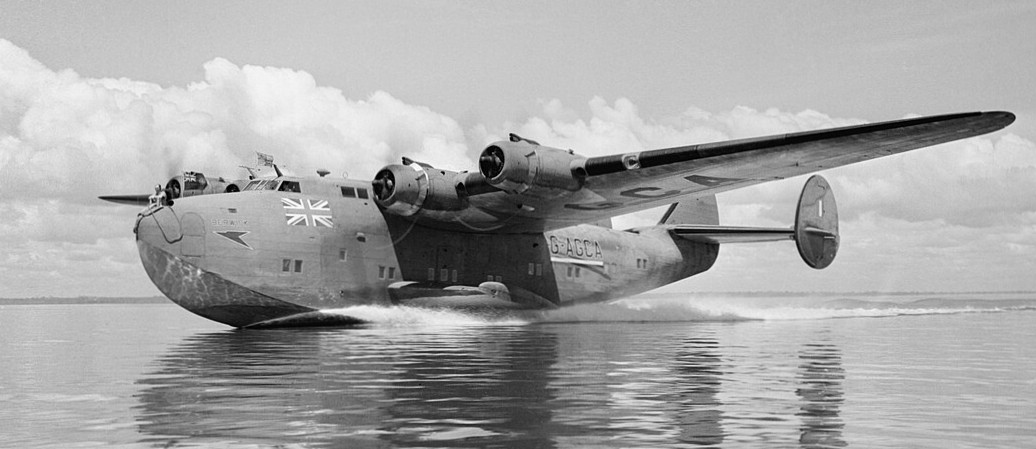
BOAC Clipper Berwick taxiing on Lagos Lagoon, Lagos, Nigeria.
Following the end of the war, the Clippers, though still owned by the American government, were used by Pan American to transport civilian passengers up until their last scheduled service on April 8–9, 1946, when the American Clipper NC18602 flew from Honolulu to San Francisco. The Clipper had carried 24 passengers and taken 16 hours and 39 minutes, compared with a Lockheed L-049 on that same day transporting 42 passengers, and taking nine hours and nine minutes to cover the same route.[58] The last Pan American 314 to be retired, the American Clipper had accumulated more than a million flight miles by 1946. The Clippers were then offered to Pan American by the War Assets Administration (WAA) at an asking price of $50,000 each.
By this point, the 314s operated by Pan American had each accumulated more than 18,000 flight hours, and together had completed approximately 5,000 ocean crossings and flown more than 12.5 million miles. However, even before hostilities had ended, the 314 had become obsolete, which was recognised by Pan American, and they declined to take up the option to purchase them. The flying boat’s advantage had been that it did not require long concrete runways, but during the war many such runways had been built for heavy bombers. New long-range airliners such as the Lockheed Constellation and Douglas DC-4 were not only faster but relatively easy to fly, and did not require the extensive pilot training programs mandated for flying boat operations. One of the 314’s most experienced pilots said, “We were indeed glad to change to DC-4s, and I argued daily for eliminating all flying boats. The landplanes were much safer. No one in the operations department… had any idea of the hazards of flying boat operations. The main problem now was lack of the very high level of experience and competence required of seaplane pilots.”
Of the 12 Boeing 314 Clippers built, three were lost to accidents, although only one of those resulted in fatalities, the loss of Yankee Clipper. After being taken out of service Anzac Clipper, Atlantic Clipper, Capetown Clipper and Pacific Clipper were stored at Floyd Bennett Field in Brooklyn and were advertised for sale by the WAA at the end of January 1946. California Clipper and Dixie Clipper were stored at Alameda near San Francisco and were soon joined by American Clipper and Atlantic Clipper, with these four also being offered for sale in April 1946. All seven were offered for sale with a large quantity of spare parts, including engines, instruments and servicing equipment.”
The four Alameda-stored aircraft were flown south to the milder weather conditions of San Diego which would reduce the deterioration from corrosion. Initially they were anchored in the bay; once their beaching cradles arrived, they were moved out of the water onto the seaplane ramp at the Convair facility at Lindbergh Field in San Diego. (Wikipedia)
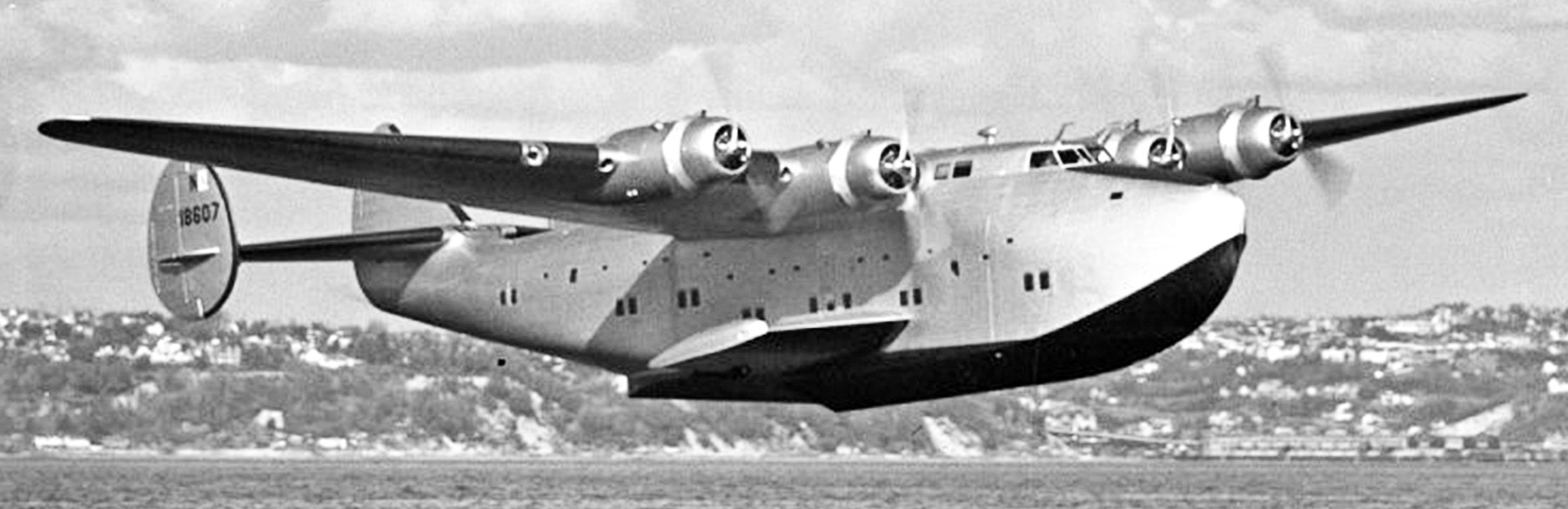
(Library of Congress Photo)
Boeing 314 (c/n 2081; US civil registration NC18607), 1941. This Clipper was built for the British Overseas Airways Corporation (BOAC) and served with the UK, Reg. No. G-AGBZ from 1941 to 1948. It was sold to the General Phoenix Corporation, Baltimore, Maryland, as Reg. No. NC18607, in 1948 and later scrapped.
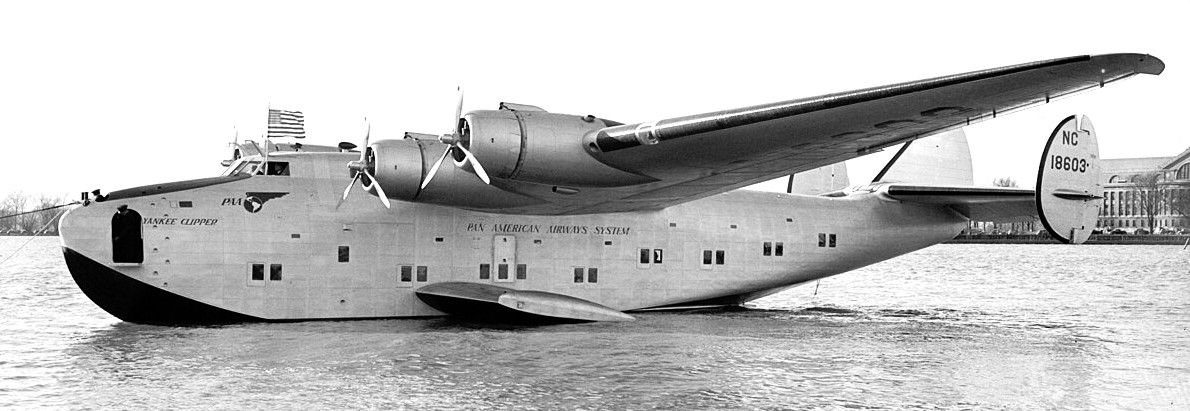
(Library of Congress Photo)
Pan American World Airways Boeing 314 Yankee Clipper, Reg. No. NC18603), c1939. This aircraft started the Transatlantic mail service. It crashed in Lisbon, Portugal, on 22 February 1943 and was written off.
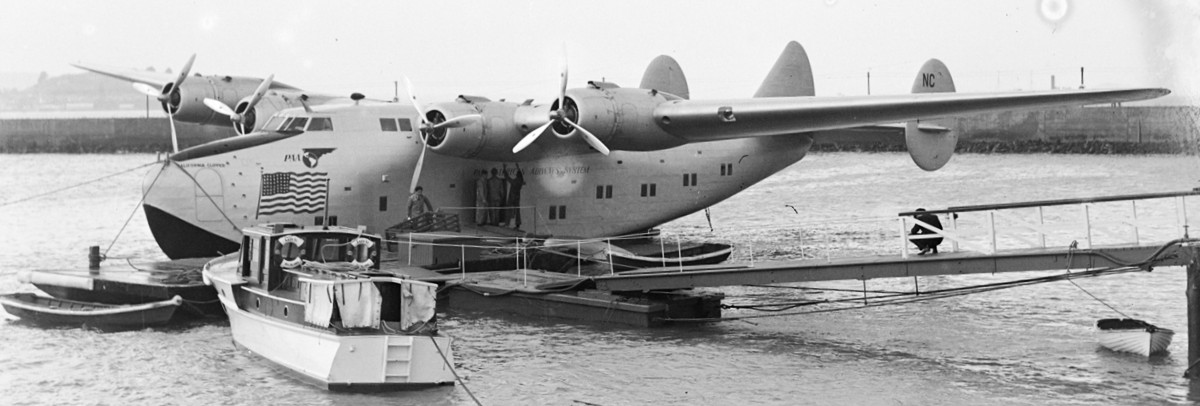
(Aukland Museum Photo)
Pan American Boeing 314A, Aukland, New Zealand, Aug 1939.
(Bill Larkins Photo)
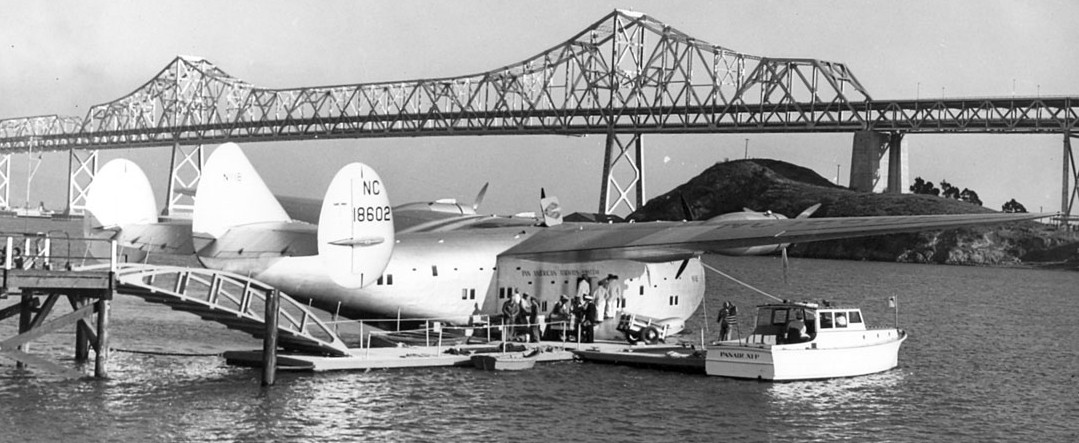
Pan American’s Boeing 314A, Reg. No. NC18602, at the Pan Am base at Treasure Island in 1940. The San Francisco-Oakland Bay Bridge is in the background.
(USN Photo)
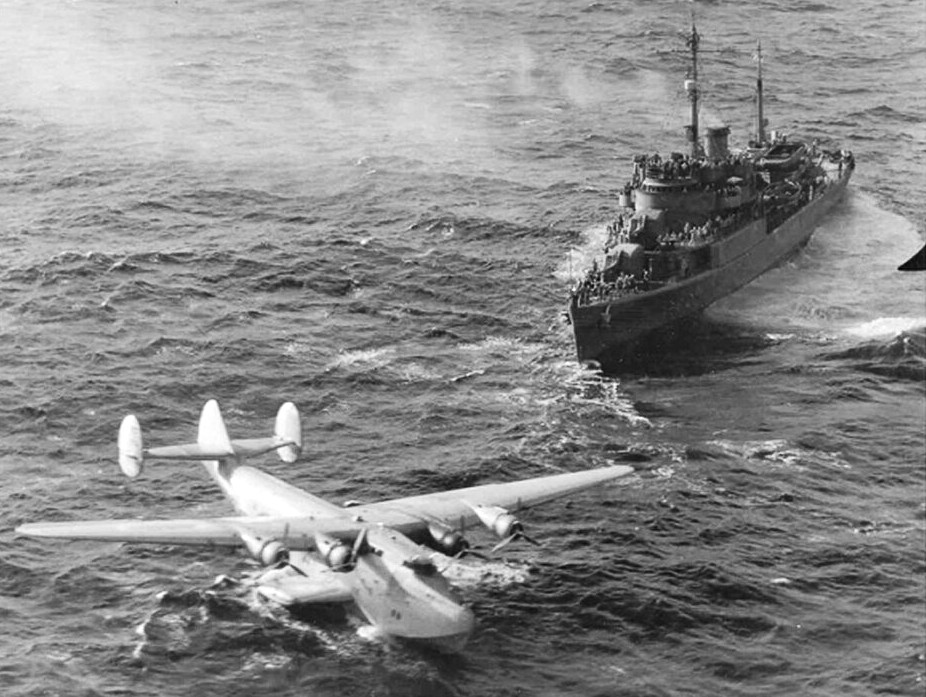
Pan American Honolulu Clipper Boeing 314 Flying Boat, Reg. No. NX-18601, being intentionally sunk by the USS San Pablo. Honolulu Clipper departed Hawaii on 3 November 1945 with an Operation Magic Carpet flight carrying 26 military personnel returning to the United States after service in the Pacific. The aircraft lost power in both starboard engines after five hours of flying, and successfully landed 650 miles east of Oahu shortly before midnight. The merchant tanker Englewood Hills maintained radio contact, found the aircraft and removed the passengers on the morning of 4 November. The escort carrier Manila Bay arrived and sent over aircraft mechanics who were unable to repair the engines at sea. Manila Bay then attempted to tow the aircraft; but the tow line parted as weather deteriorated. The seaplane tender San Pablo was assigned to tow the flying boat into port. The tow proceeded slowly until 7 November when Honolulu Clipper rode down the crest of a wave and smashed into the side of San Pablo. The collision crushed the airplane’s bow and sheared off the starboard wingtip. Honolulu Clipper was intentionally sunk on 14 November by perforating the hull with 1200 20mm Oerlikon shells, after salvage was deemed impractical.
(IWM Photo, CH 14069)
Boeing Model 314A ‘Clipper’, G-AGCA “Berwick”, of British Overseas Airways Corporation (BOAC), on Lagos Lagoon, Nigeria, likely taxiing for moorings at the West African flying boat terminal at Iquoi, 1940.
(IWM Photo, CH 7068)
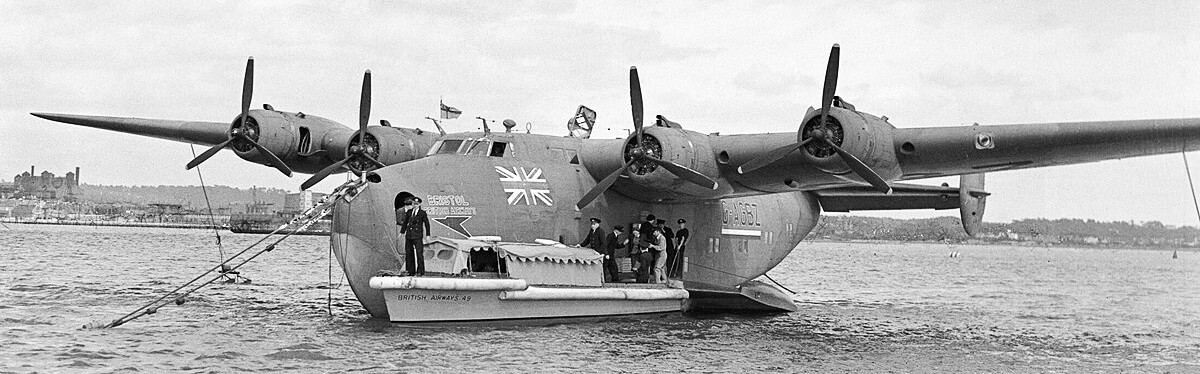
A BOAC tender comes alongside Boeing Model 314A Clipper flying boat, G-ABGZ “Bristol”, at Poole, Dorset, to take ashore Digvijaysinhji Ranjitsinhji, the Maharajah Jam Sahib of Nawanagar and Sir A Ramaswamy Mudaliar who arrived from India for talks with the War Cabinet.