
Kaiserliche Marine (Imperial German Navy) battlecruisers:
SMS Blücher (1908), SMS Von der Tann (1909), SMS Moltke (1910), SMS Goeben (1910), SMS Seydlitz (1912), SMS Derfflinger, SMS Lützow, SMS Hindenburg.
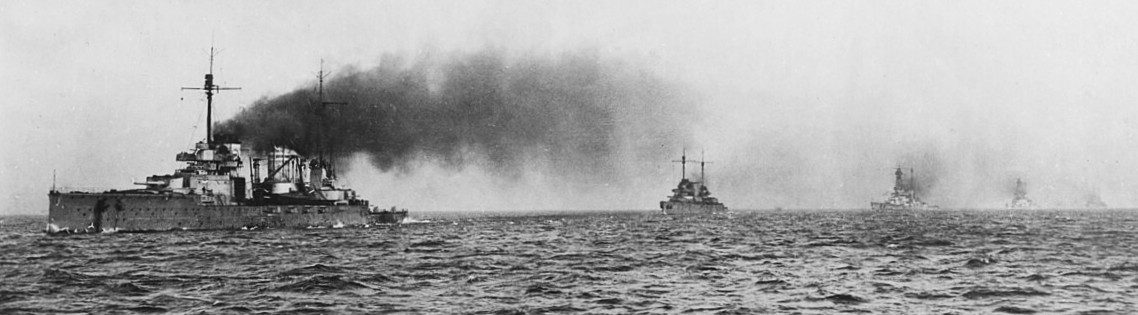
(IWM Photo, Q 19284)
SMS Seydlitz (German Battle Cruiser, 1913-1919) leads her fellow battle cruisers toward Scapa Flow and internment on Thursday 21 November 1918. SMS Moltke is next astern, followed by the two remaining Derfflinger class ships, Hindenburg and Derfflinger (Lützow had been sunk at the Battle of Jutland in 1916). Von der Tann is the fifth ship in the column.
The Kaiserliche Marine, the navy of the German Empire, built a series of battlecruisers in the first half of the 20th century. The battlecruiser type was an outgrowth of older armored cruiser designs; they were intended to scout for the main battle fleet and attack the reconnaissance forces of opposing fleets. Kaiser Wilhelm II insisted that the new battlecruisers be able to fight in the line of battle with battleships to counter Germany’s numerical inferiority compared to Britain’s Royal Navy.
SMS Von der Tann was the first German battlecruiser, built in 1908–1910. The Kaiserliche Marine eventually built four more battlecruisers before the start of the First World War to serve with the High Seas Fleet, and another two were completed during the conflict. A further seven were planned, including four of the Mackensen and three of the Ersatz Yorck-class ships. Two of the Mackensens, the name ship and Graf Spee, were launched but never completed, and the other two were in earlier stages of work when they were canceled towards the end of the war. Serious work never began on the three Ersatz Yorck-class ships.
Six of the seven battlecruisers completed before or during World War I saw relatively heavy combat, primarily in the North Sea. All of the ships, with the exception of Goeben, which had been assigned to the German Mediterranean Division, were assigned to the I Scouting Group under the command of Admiral Franz von Hipper. The unit conducted several raids of the English coast between 1914 and 1916, which culminated in the Battle of Jutland during 31 May – 1 June 1916, in which they were expected to draw parts of the British fleet onto the German battleship line. The German flagship Lützow was scuttled by her crew, on the way back to port, and the other ships were heavily damaged. For their own part, during the battle Von der Tann sank her counterpart HMS Indefatigable,Seydlitz sank Queen Mary, and Derfflinger and Lützow together destroyed Invincible. The four remaining battlecruisers—Von der Tann, Moltke, Seydlitz, and Derfflinger saw little further activity in 1917 and 1918, during which time they were reinforced by Hindenburg. The ships were interned with the bulk of the German fleet at the British naval base at Scapa Flow following the end of the war in November 1918. There, they were scuttled by their crews in 1919 to prevent them from falling into the hands of the Allied Powers. Goeben was transferred to the Ottoman Navy at the outbreak of hostilities, and operated against the Russian Black Sea Fleet for the majority of the war. She was heavily damaged by British naval mines near the end of the war, but was repaired and went on to serve the Turkish Navy until the 1950s; she was eventually broken up for scrap in the 1970s.
The eventual successor to the Kaiserliche Marine, the Kriegsmarine of Nazi Germany, considered building three O-class battlecruisers before the Second World War as part of the Plan Z buildup of the navy. The outbreak of war in 1939 caused the plans to be shelved, and none of these ships were built. (Wikipedia)
SMS Blücher
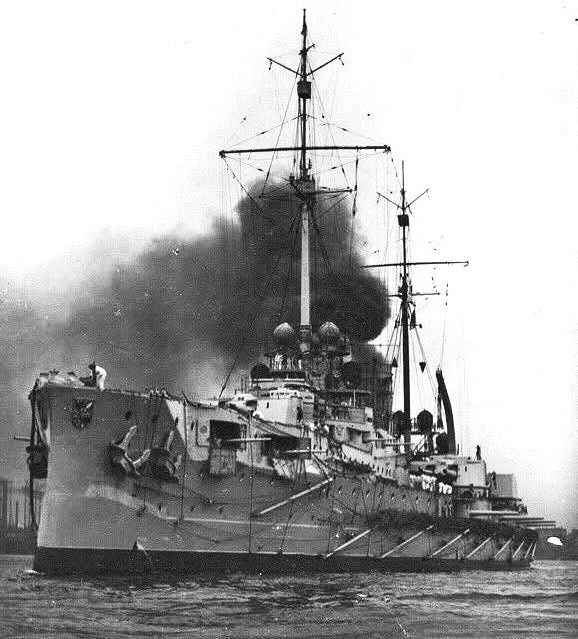
(Kaiserliche Marine Photo via Bill Cox)
SMS Blücher was the last armoured cruiser built for the German Kaiserliche Marine (Imperial Navy) beginning in 1907. She was designed in response to the latest British armored cruisers, but the British had already begun work on the Invincible-class battlecruisers, which marked a significant increase in firepower over earlier armored cruisers. Blücher was armed with a main battery of twelve 21 cm (8.3 in) guns, compared to the eight 30.5 cm (12 in) guns of the British ships. Blücher entered service after the Invincibles were commissioned, and as a result, was obsolescent at the start of her career.
Blücher was built at the Kaiserliche Werft shipyard in Kiel between 1907 and 1909, and commissioned on 1 October 1909. The ship initially served in the I Scouting Group for most of her career after entering service in 1910, but in late 1911 was transferred to serve as a gunnery training ship, where she remained until the outbreak of World War I in August 1914. She then returned to I Scouting Group, operating primarily in the North Sea against British forces. She took part in the operation to bombard Yarmouth and the raid on Scarborough, Hartlepool and Whitby in November and December 1914, respectively.
At the Battle of Dogger Bank on 24 January 1915, Blücher was slowed significantly after being hit by gunfire from the British battlecruiser squadron under the command of Vice Admiral David Beatty. Rear Admiral Franz von Hipper, the commander of the German squadron, decided to abandon Blücher to the pursuing enemy ships in order to save his more valuable battlecruisers. Under heavy fire from the British ships, she was sunk, and British destroyers began recovering the survivors. However, the destroyers withdrew when a German zeppelin began bombing them, mistaking the sinking Blücher for a British battlecruiser. The number of casualties is unknown, with figures ranging from 747 to around 1,000. Blücher was the only warship lost during the engagement. (Wikipedia)
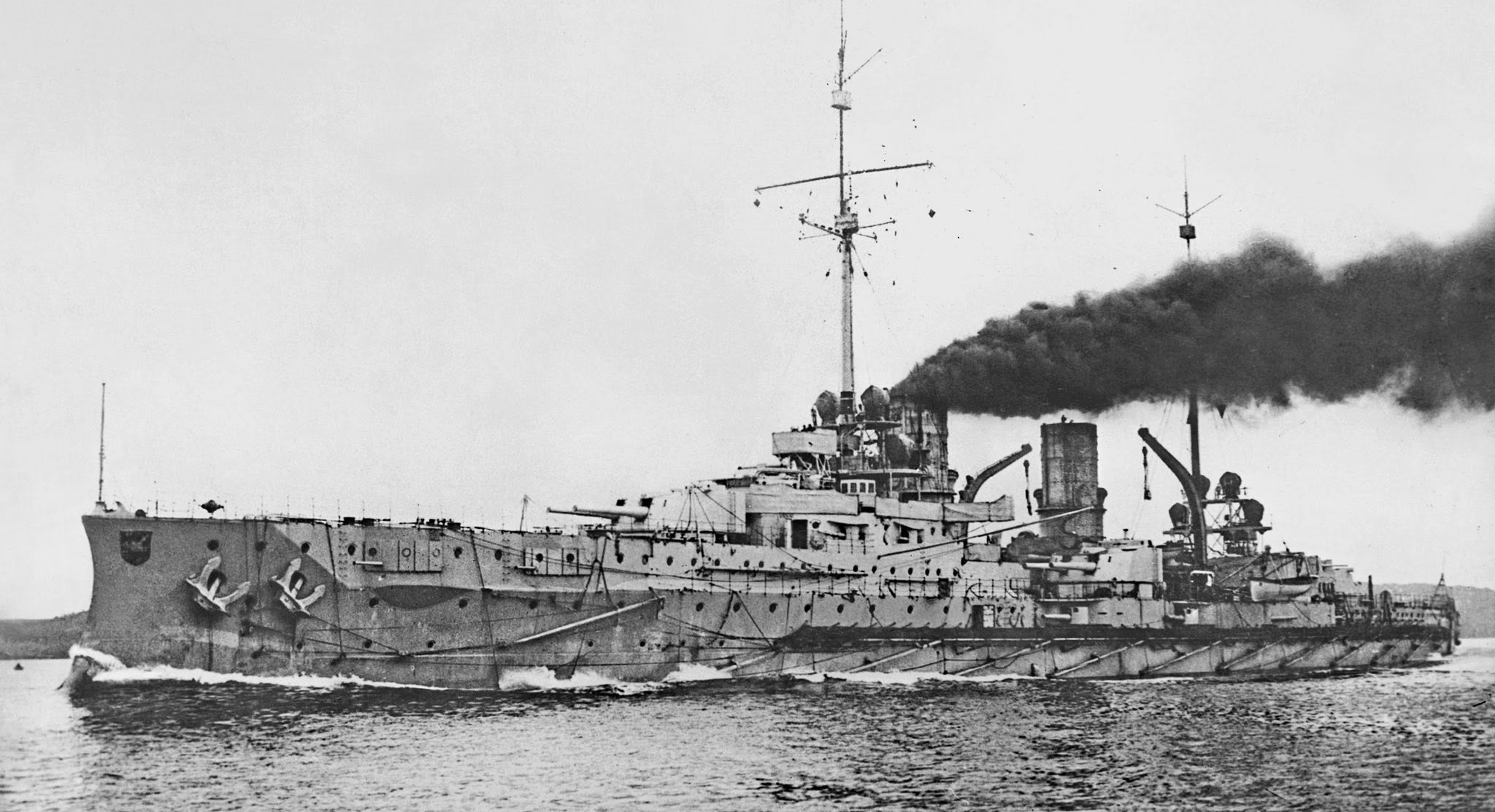
(Kaiserliche Marine Photo via Bill Cox)
SMS Blücher.
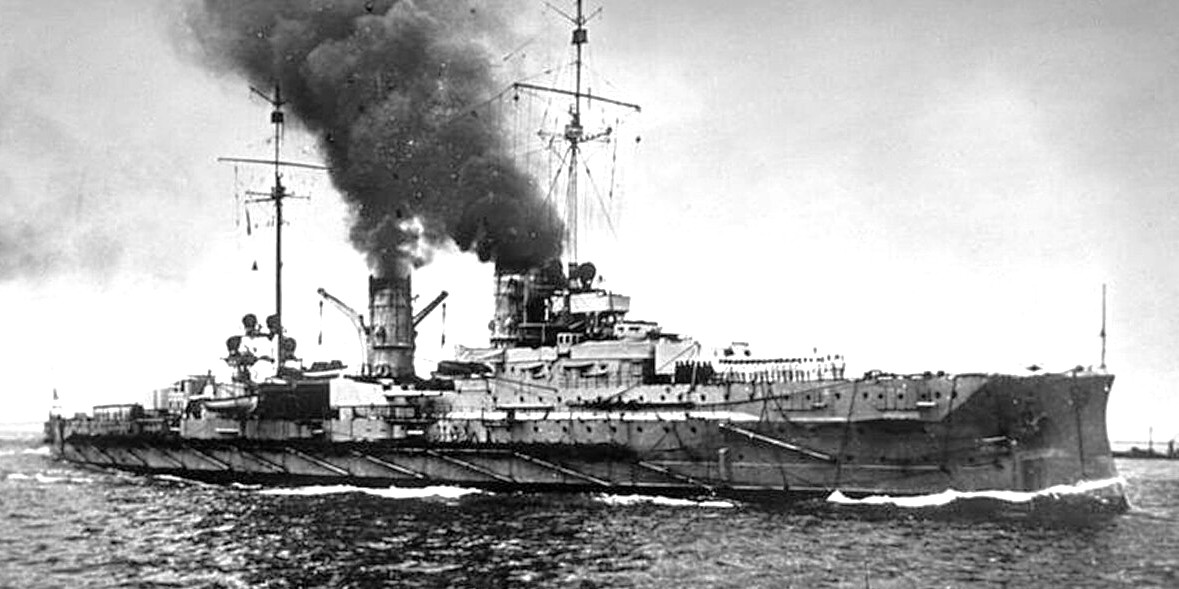
(Bundesarchiv, DVM 10 Bild-23-61-11 / CC-BY-SA 3.0)
SMS Blücher, 1912.
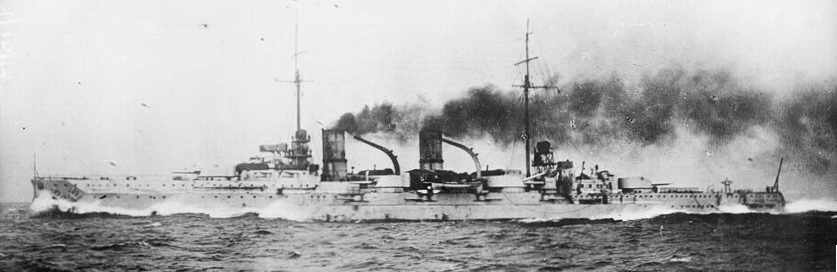
(Library of Congress Photo)
SMS Blücher, 1915.
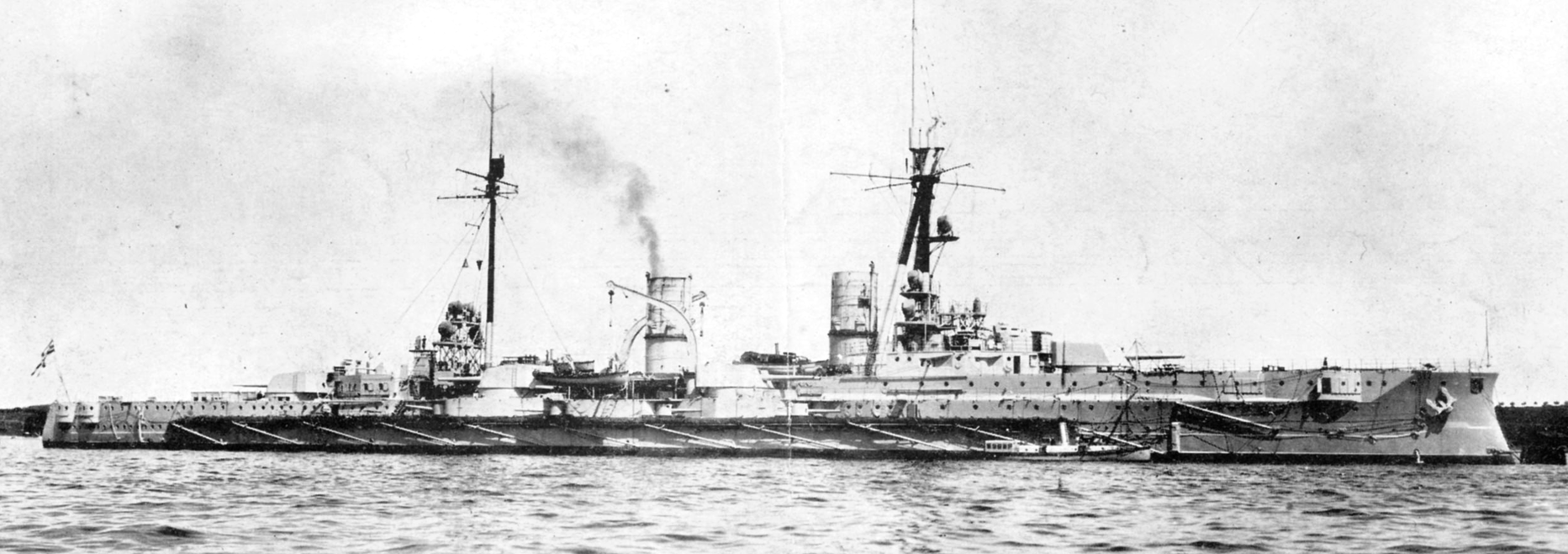
(Kaiserliche Marine Photo)
SMS Blücher, 1914.
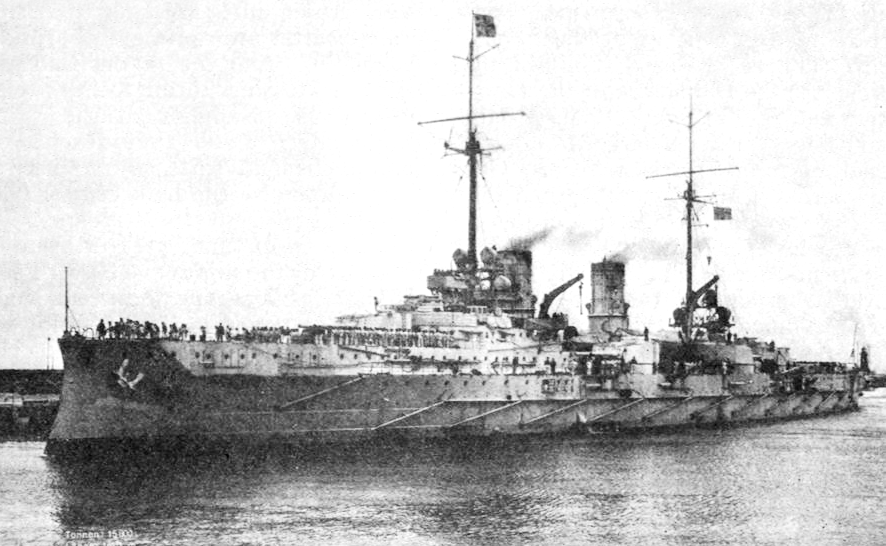
(Kaiserliche Marine Photo)
SMS Blücher, 1913.
SMS Von der Tann battlecruiser
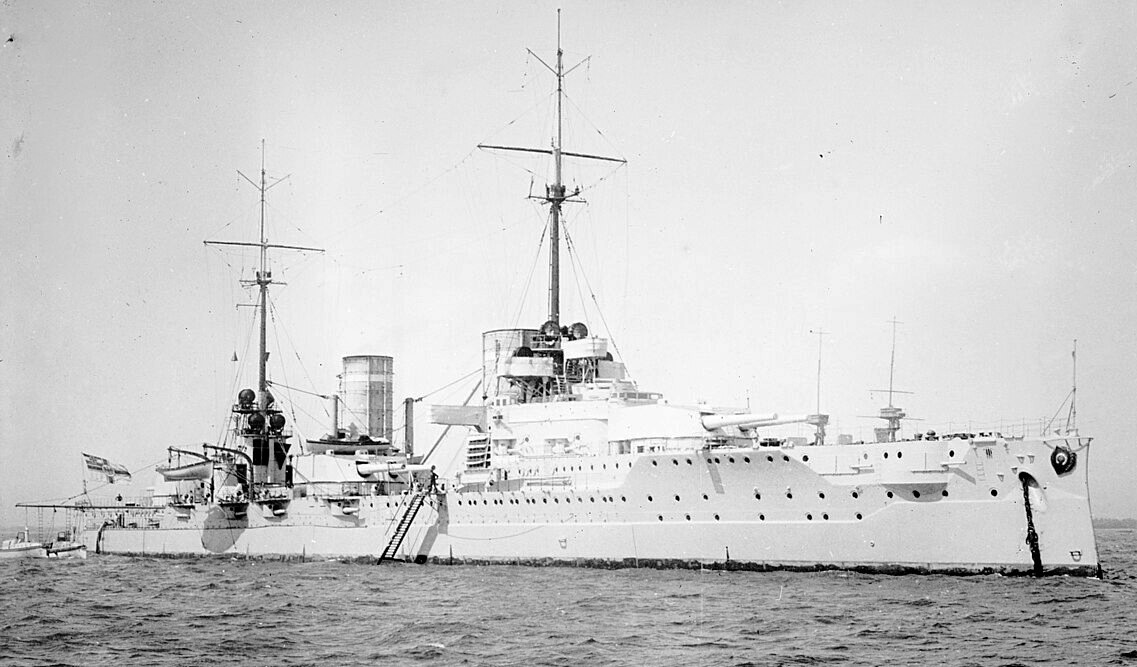
(Library of Congress Photo)
The German battlecruiser SMS Von der Tann at anchor. The photo was probably taken during Von der Tann´s cruise to South America in 1911.
SMS Von der Tann was the first German battlecruiser, ordered in 1907. She was designed in response to the British Invincible-class battlecruisers, construction on which had begun the previous year. As the first of a new type, the design process for Von der Tann was highly controversial. Admiral Alfred von Tirpitz, the State Secretary for the Imperial German Navy, wanted the ship to follow the British example, incorporating large guns, relatively light armor, and high speed. Kaiser Wilhelm II, along with other senior navy officers instead argued that, owing to Germany’s numerical inferiority, the new ships should have armor strong enough to permit their use in the battle line. The ships would therefore sacrifice the caliber of their main batteries to offset the greater weight of heavier armor protection. A significant increase in speed compared to earlier armored cruisers was obtained by replacing old triple-expansion steam engines with more powerful steam turbines; Von der Tann was the first large German warship to be fitted with turbine propulsion.
Upon entering service, Von der Tann joined the fleet’s main reconnaissance unit, I Scouting Group. The ship was present for most of the German fleet operations during World War I, including several raids of the English coast between 1914 and 1916. At the Battle of Jutland on 31 May – 1 June 1916, Von der Tann was the last ship in the German battlecruiser squadron. She engaged HMS Indefatigable and, after 15 minutes of firing, Von der Tann scored a hit with one of her 28 cm shells that caused a magazine explosion, destroying Indefatigable. Von der Tann was herself badly damaged in the course of the action, and had at one point had all four of her turrets disabled, but was repaired after the battle and returned to service. She saw no further action, however, as the Germans turned to the U-boat campaign against British merchant shipping after Jutland. At the end of the war, Von der Tann was interned in Scapa Flow and eventually scuttled with the rest of the fleet. She was raised in 1930 and broken up for scrap between 1931 and 1934. (Wikipedia)
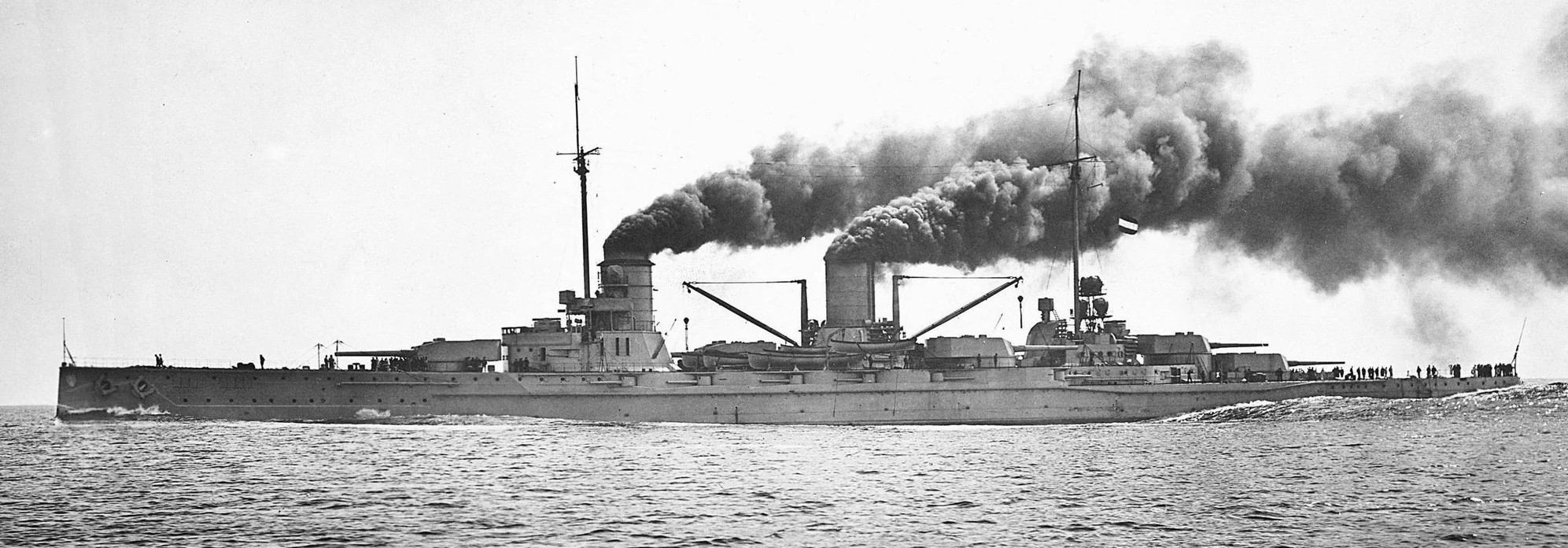
Moltke-class battlecruiser
(Kaiserliche Marine Photo)
SMS Moltke, underway c1915.
SMS Moltke and SMS Goeben, improvements over the preceding Von der Tann, were ordered in 1908 and 1909, respectively. While their design was not as contentious as with the Von der Tann, there were still disagreements between Tirpitz and elements of the German naval administration over whether the main battery guns should be increased in number or caliber. Tirpitz and the Construction Office favored the increase to ten guns, while the General Office preferred repeating Von der Tann but with eight 30.5 cm (12 in) guns, to mirror the development from the contemporary Nassau and Helgoland classes of dreadnought battleships. It was eventually decided that ten 28 cm guns would be mounted, though new, longer-barreled versions were adopted. The longer barrels increased muzzle velocity, which in turn offered improved armor penetration. In addition to the increased main battery, the two Moltke-class ships were slightly larger and better armored than Von der Tann.
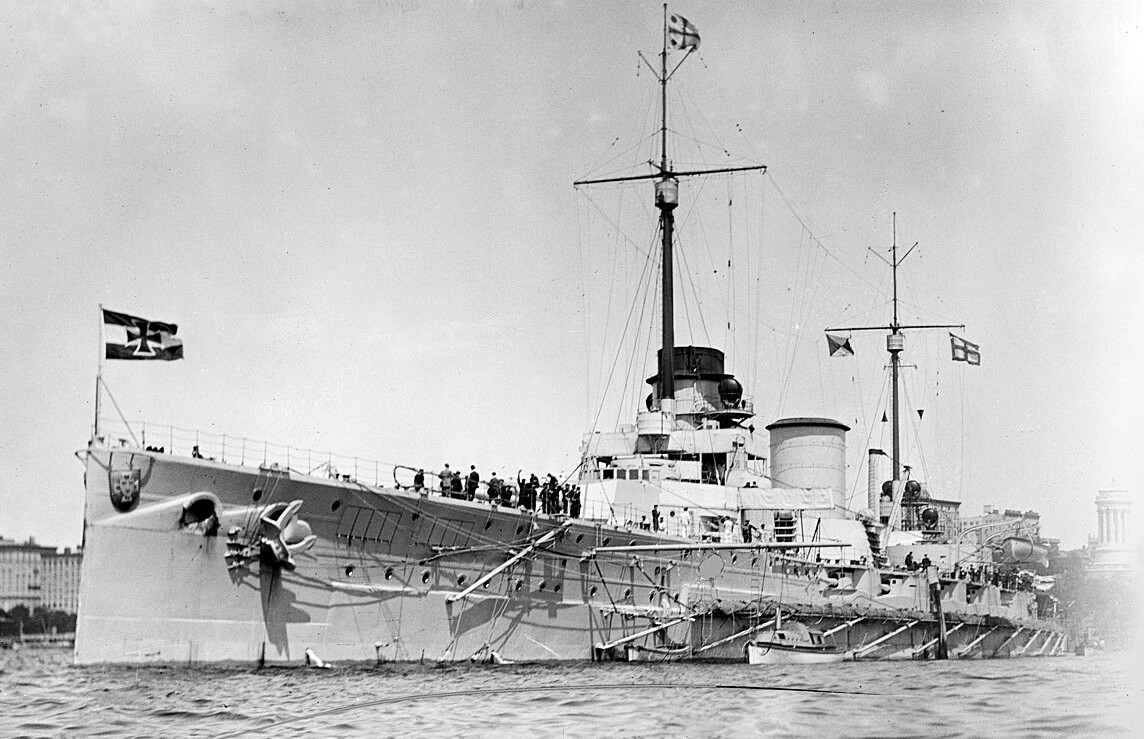
SMS Moltke battlecruiser
(Library of Congress Photo)
SMS Moltke visiting New York in 1912.
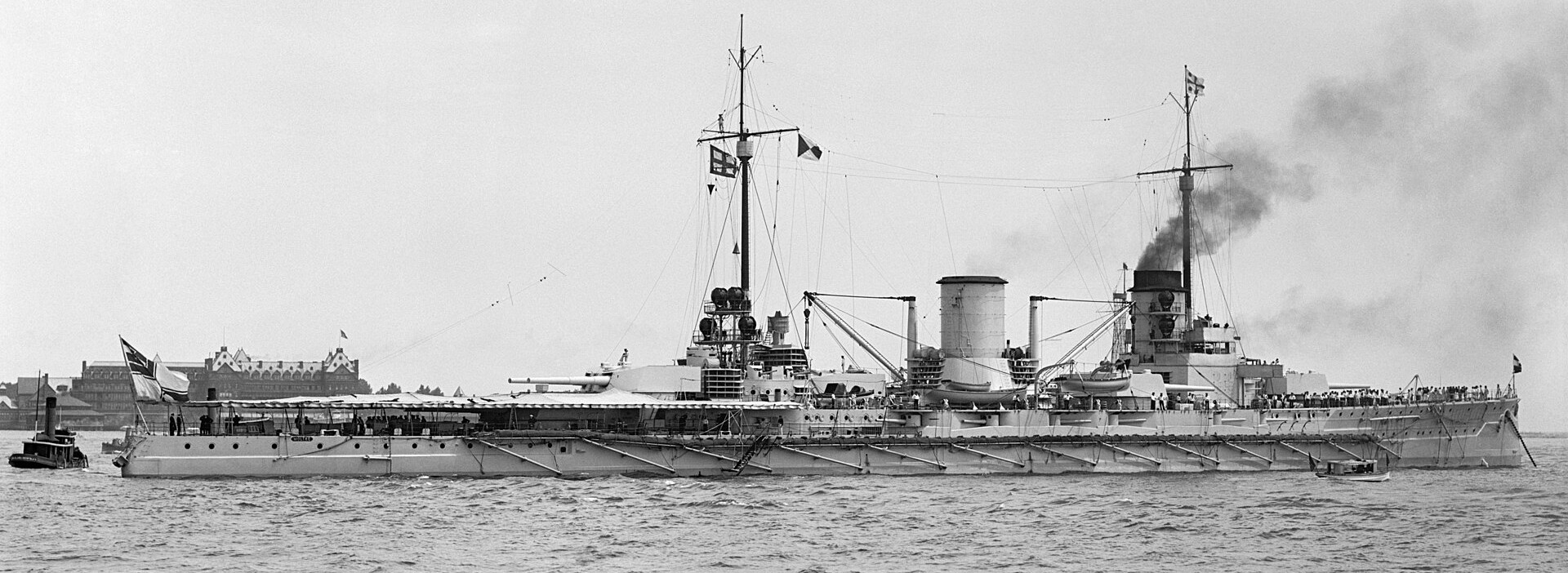
SMS Moltke joined Von der Tann in the battlecruiser squadron upon her commissioning, and saw action against the British in the North Sea, including the Battle of Dogger Bank in January 1915, in addition to the coastal raids carried out in the first two years of the war. The ship also saw significant duty in the Baltic Sea against the Russian navy; in 1915 she was present at the Battle of the Gulf of Riga, where she was torpedoed by a British submarine, and in 1917, she returned to the Baltic as the flagship of the invasion force that conducted Operation Albion. Moltke was also interned in Scapa Flow at the end of the war and scuttled in 1919.
(Library of Congress Photo)
SMS Moltke, visiting Hampton Roads in 1912.
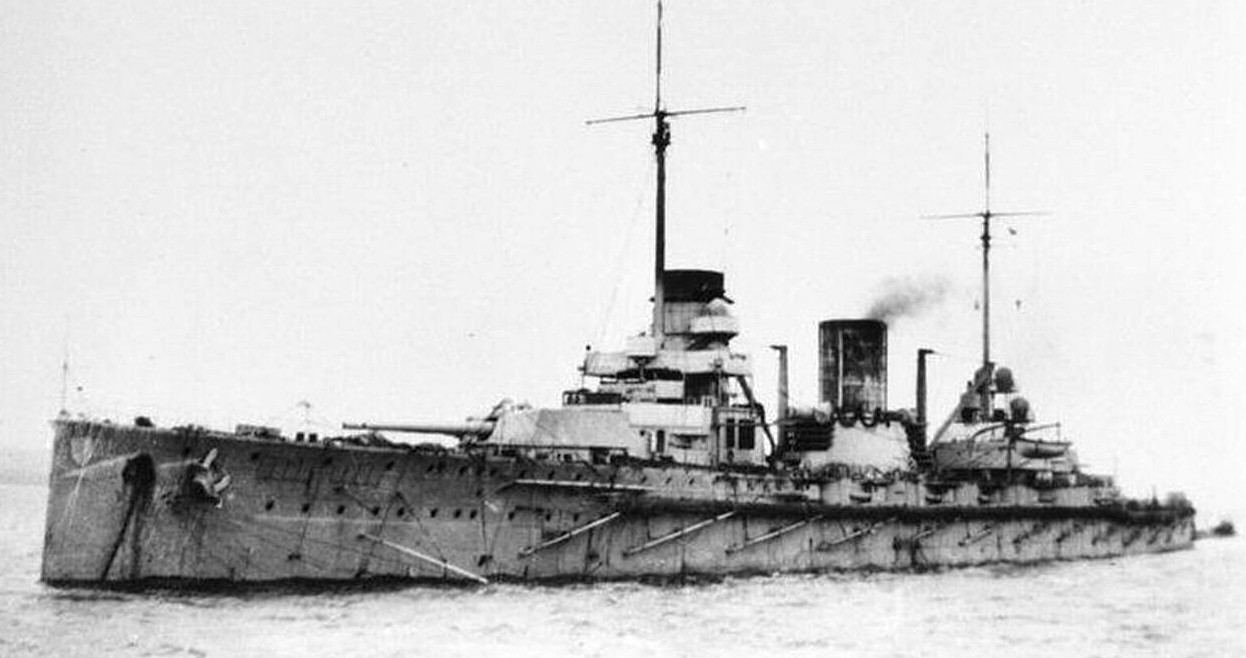
SMS Goeben battlecruiser
(Bundesarchiv Bild 134-D0004)
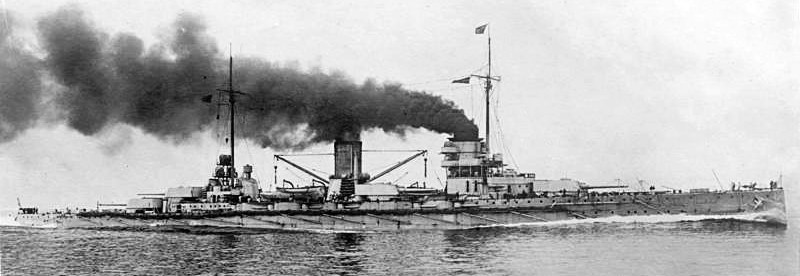
SMS Goeben, was assigned to the Mediterranean in 1912 to serve as the flagship of the Mediterranean Division. At the outbreak of war in 1914, Goeben and the light cruiser Breslau evaded the British fleet and escaped to Constantinople, where they were transferred to the Ottoman Navy, though they remained under German command and with their original crews. The ship primarily operated in the Black Sea against the Russians, seeing combat at the Battle of Cape Sarych and the actions of 10 May 1915 and 8 January 1916. She attacked British forces outside the Dardanelles in 1918 and struck three mines. The ship continued in Turkish service until 1973 when she was sold for scrapping.
(Bundesarchiv Bild 134-B0032)
SMS Goeben underway in 1914.
SMS Seydlitz battlecruiser
(U.S. Naval Historical Center Photograph)
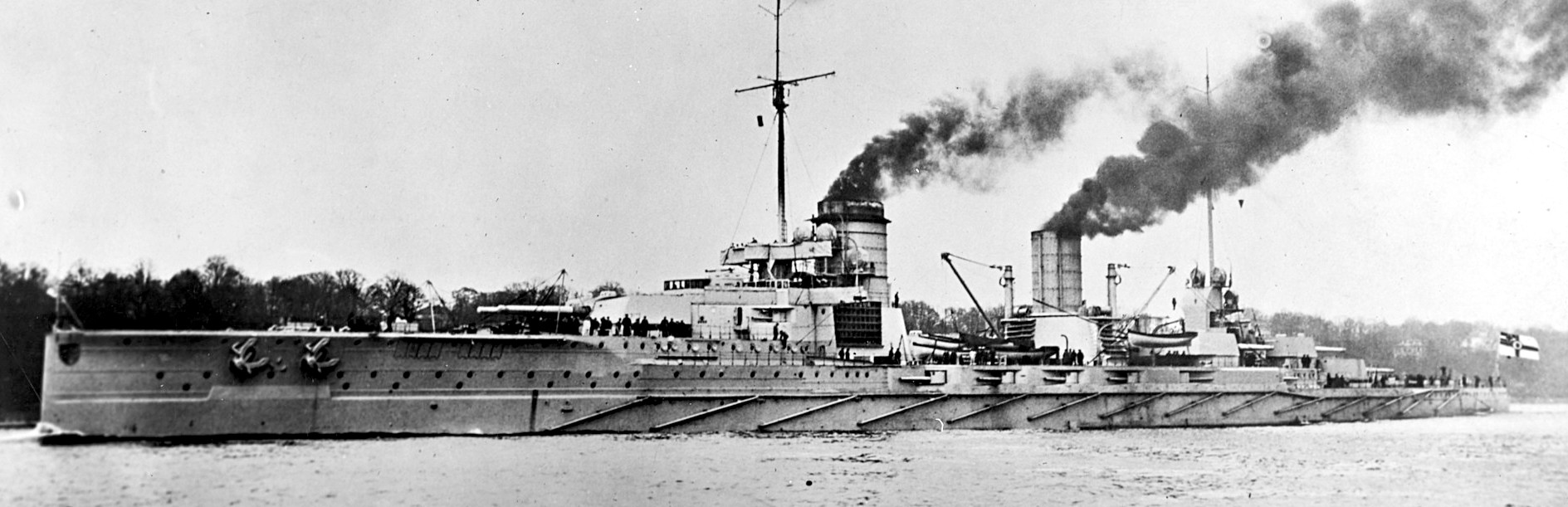
SMS Seydlitz underway, soon after she entered service on 22 May 1913.
SMS Seydlitz represented an incremental improvement over the Moltke class; the limited nature of the improvements was in large part dictated by the Reichstag (Imperial Diet), which rejected the possibility of any increase in cost for the next battlecruiser. Improvements to the Moltke design were secured only through pressure Tirpitz was able to place on steel suppliers and the ship’s builder for discounts, which provided the necessary budgetary room to alter the design. Tirpitz still pressed for a British-style battlecruiser with light armor and larger guns, but his views were again rejected. Seydlitz was slightly larger than the two previous ships, carried slightly thicker belt armor, and had a taller forecastle to improve seakeeping in bad weather. Seydlitz mounted the same ten 28 cm guns as in the Moltke class in the same arrangement.
Upon commissioning into the fleet, Seydlitz became the flagship of Rear Admiral Franz von Hipper, the commander of I Scouting Group. The ship took part in most of the major fleet operations during the war. At the Battle of Dogger Bank, Seydlitz was hit in her after turrets by two or three 34.4 cm (13.5 in) shells from HMS Lion; the shells burned out the turrets and nearly destroyed the ship. By April 1916, she had been replaced as Hipper’s flagship by the new battlecruiser Lützow. At Jutland, Seydlitz and Derfflinger inflicted fatal damage on the British battlecruiser HMS Queen Mary early in the action. Seydlitz was badly mauled in later parts of the battle, receiving 21 large-caliber hits, suffering more than 150 casualties, and taking in over 5,300 t (5,200 long tons; 5,800 short tons) of water. Despite the immense damage, Seydlitz was able to make the trip back to Wilhelmshaven, where she was repaired. As with Von der Tann and Moltke, Seydlitz was interned and eventually scuttled in Scapa Flow. (Wikipedia)

(U.S. Naval Historical Center Photograph)
SMS Seydlitz prior to the First World War. The ship’s anti-torpedo nets and booms were removed in 1916.
Derfflinger-class battlecruisers
The three Derfflinger-class ships were the last battlecruisers completed for the German navy. The ships’ primary armament was radically modified compared to the older ships. The number of guns was reduced to eight, but their diameter was increased to 30.5 cm (12 in). They were also placed in two superfiring pairs, fore and aft of the main superstructure. The first unit, the name ship, was completed shortly after the outbreak of the First World War. Lützow followed in August 1915, and Hindenburg joined the fleet in May 1917. Derfflinger was involved in most of the fleet actions during the war. At Jutland she fired on Queen Mary and contributed to her destruction, along with Seydlitz. Derfflinger and Lützow later concentrated their fire on Invincible and destroyed her. However, during the battle, Lützow was severely damaged by at least 24 heavy-caliber shells and was unable to make it back to Germany. She was scuttled early the following morning. Hindenburg’s career was much less eventful; she was completed so late in the war that she saw no significant action against the British fleet. She and Derfflinger were interned and scuttled in Scapa Flow with the rest of the fleet. (Wikipedia)
SMS Derfflinger battlecruiser
(IWM Photo)
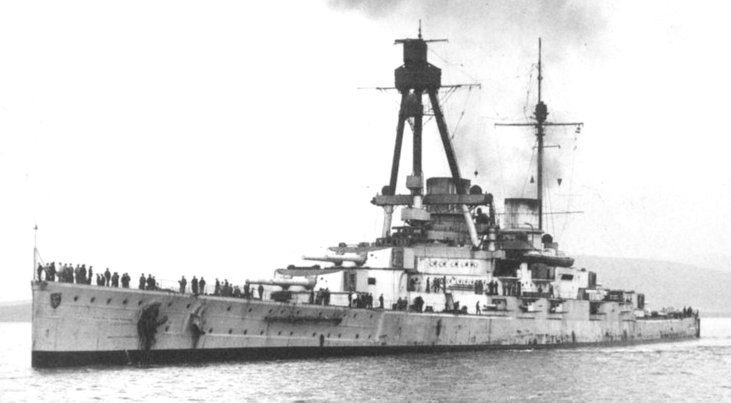
SMS Derfflinger, Scapa Flow, 1918.
SMS Derfflinger was a battlecruiser of the German Kaiserliche Marine (Imperial Navy) built in the early 1910s during the Anglo-German naval arms race. She was the lead ship of her class of three ships; her sister ships were Lützow and Hindenburg. The Derfflinger-class battlecruisers were larger and featured significant improvements over the previous German battlecruisers, carrying larger guns in a more efficient superfiring arrangement. Derfflinger was armed with a main battery of eight 30.5 cm (12 in) guns, compared to the 28 cm (11 in) guns of earlier battlecruisers. She had a top speed of 26.5 knots (49.1 km/h; 30.5 mph) and carried heavy protection, including a 30-centimeter (11.8 in) thick armoured belt.
Derfflinger was completed shortly after the outbreak of World War I in 1914; after entering service, she joined the other German battlecruisers in I Scouting Group of the High Seas Fleet, where she served for the duration of the conflict. As part of this force, she took part in numerous operations in the North Sea, including the Raid on Scarborough, Hartlepool and Whitby in December 1914, the Battle of Dogger Bank in January 1915, and the Bombardment of Yarmouth and Lowestoft in April 1916. These operations culminated in the Battle of Jutland on 31 May – 1 June 1916, where Derfflinger helped to sink the British battlecruisers HMS Queen Mary and Invincible. Derfflinger was seriously damaged in the action and was out of service for repairs for several months afterward.
The ship rejoined the fleet in late 1916, though by this time the Germans had abandoned their strategy of raids with the surface fleet in favor of the U-boat campaign. As a result, Derfflinger and the rest of the High Seas Fleet saw little activity for the last two years of the war apart from patrol duty in the German Bight. The fleet conducted one final operation in April 1918 in an unsuccessful attempt to intercept a British convoy to Norway. After the end of the war in November 1918, the fleet was interned in Scapa Flow. On the order of Rear Admiral Ludwig von Reuter, the interned ships were scuttled on 21 June 1919 to prevent them from being seized by the Allied powers. (Wikipedia)
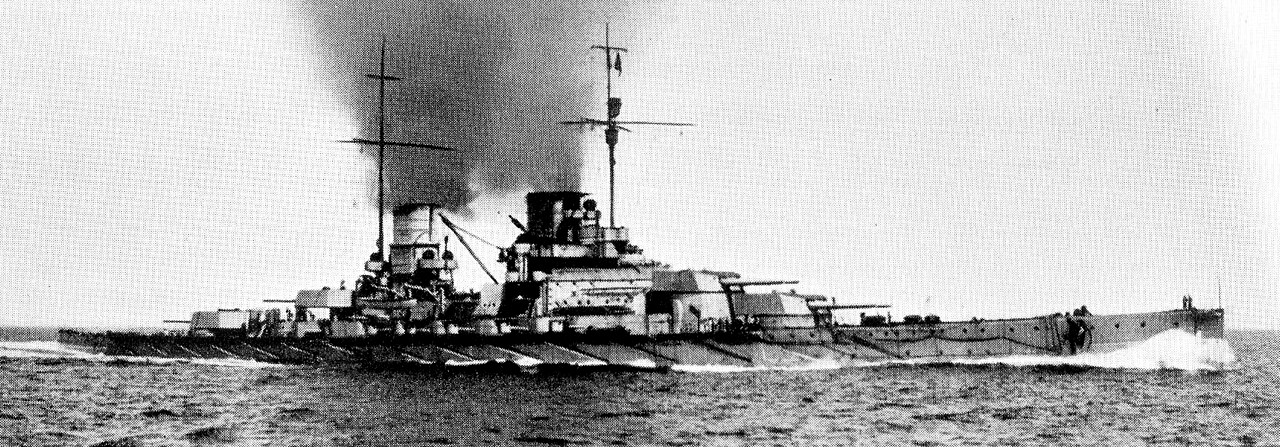
SMS Lützow
(Kaiserliche Marine Photo)
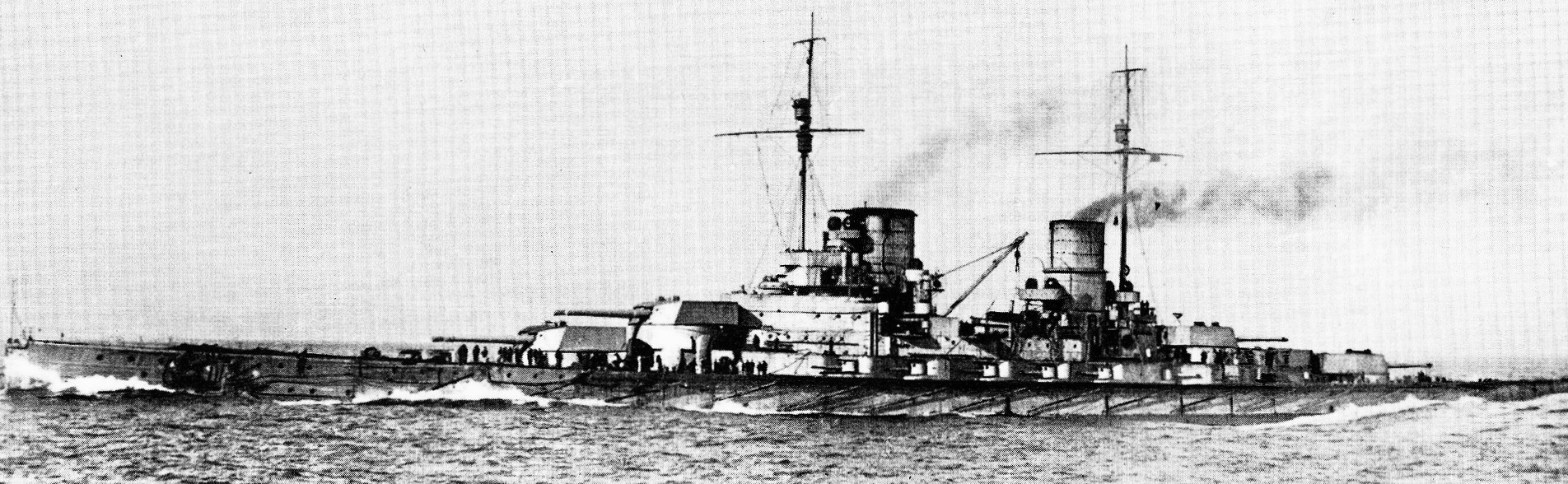
SMS Lützow underway, April 1916.
SMS Lützow was the second Derfflinger-class battlecruiser built by the German Kaiserliche Marine (Imperial Navy) before World War I. Ordered as a replacement for the old protected cruiser Kaiserin Augusta, Lützow was launched on 29 November 1913, but not completed until 1916. Lützow was a sister ship to Derfflinger from which she differed slightly in that she was armed with an additional pair of 15 cm (5.9 inch) secondary guns and had an additional watertight compartment in her hull. She was named in honor of the Prussian general Ludwig Adolf Wilhelm von Lützow who fought in the Napoleonic Wars.
SMS Lützow was commissioned on 8 August 1915, but did not join I Scouting Group until 20 March due to engine damage during trials. This was after most of the major actions conducted by the German battlecruiser force had taken place. As a result, Lützow saw very little action during the war. She took part in only one bombardment operation: the Bombardment of Yarmouth and Lowestoft on 24–25 April 1916, after which she became Admiral Franz von Hipper’s flagship. One month later, the ship was heavily engaged during the Battle of Jutland, on 31 May–1 June. During the battle, Lützow sank the British battlecruiser HMS Invincible and is sometimes given credit for sinking the armored cruiser HMS Defence. However, she was heavily damaged by an estimated 24 heavy-caliber shell hits. With her bow thoroughly flooded, the ship was unable to make the return voyage to Germany; her crew was evacuated and she was sunk by torpedoes fired by one of her escorts, the torpedo boat G38. (Wikipedia)
(Kaiserliche Marine Photo)
SMS Lützow underway, April 1916.
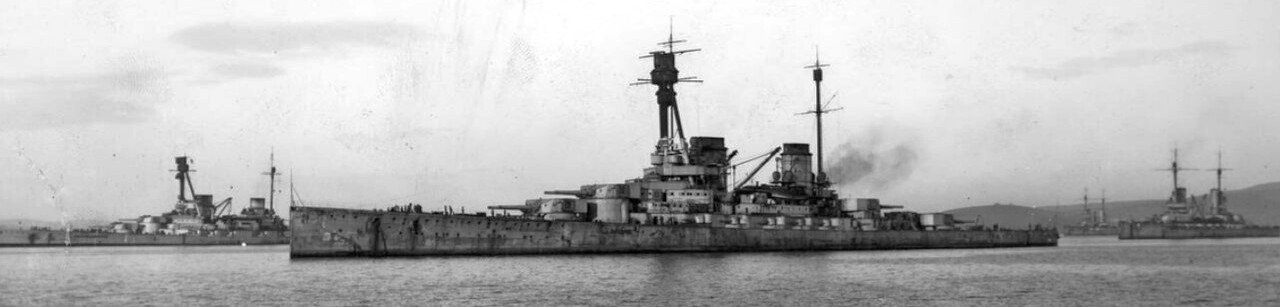
SMS Hindenburg
(IWM Photo, 2965)
SMS Hindenburg interned at Scapa Flow. Partially seen on the left edge of the photo is her sister ship SMS Derfflinger. 1918.
SMS Hindenburg was a battlecruiser of the German Kaiserliche Marine (Imperial Navy), the third ship of the Derfflinger class, built to a slightly modified design. She was laid down in October 1913 and launched in August 1915. She carried the same battery of eight 30.5 cm (12 in) guns, but in improved turrets that allowed them to fire further. The ship was also slightly larger and faster than her two sister ships. She was named in honor of Field Marshal Paul von Hindenburg, the victor of the Battle of Tannenberg and the Battle of the Masurian Lakes, as well as the supreme commander of the German armies from 1916. Construction of the ship was slowed after the start of World War I by shortages of material and manpower, the need to repair damaged ships, and shifting priorities. As a result, Hindenburg was the last capital ship of any type built for the German navy during the war, finally entering service in May 1917.
Hindenburg was commissioned late in the war and as a result had a brief service career. The ship took part in a handful of short fleet operations as the flagship of I Scouting Group in 1917–1918, though saw no major action with British forces. The proposed final sortie of the fleet in the last weeks of the war came to nothing when the crews of the capital ships mutinied. Following Germany’s defeat in November 1918, Hindenburg was interned with the rest of the German battlecruisers at Scapa Flow in November 1918. Rear Admiral Ludwig von Reuter ordered the ships be scuttled on 21 June 1919, and Hindenburg was the last of the ships to sink. She was raised in 1930 and broken up for scrap over the following two years. (Wikipedia)
All comments are subject to our Comment Policy. You must be at least 18 years old to comment.
See a comment that violates our guidelines? Report it here.