
Imperial Japanese Navy armoured cruisers (Sōkō jun’yōkan): Asama, Tokiwa, Yakumo, Azuma, Izumo, Iwate, Kasuga, Nisshin, Tsukuba, Ikoma, Ibuki, Aso, Kurama
Armoured cruisers (Sōkō jun’yōkan)
Ship. Builder. Class and type. Displacement (tons). Commissioned into IJN. Fate.
IJN armoured cruiser Asama.
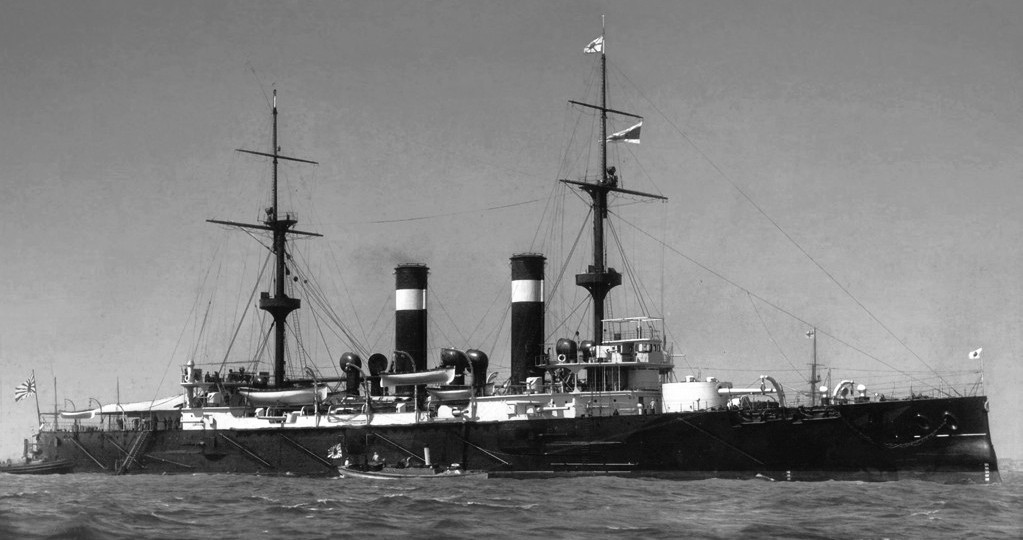
(IJN Photo, 1902)
Asama. Armstrong Whitworth, UK, Asama-class armoured cruiser 9,700, 18 March 1899, 30 November 1945; scrapped.
Asama (淺間) was the lead ship of her class of armored cruisers (Sōkō jun’yōkan) built for the Imperial Japanese Navy (IJN) in the late 1890s. As Japan lacked the industrial capacity to build such warships herself, the ship was built in Britain. She served in the Russo-Japanese War of 1904–05 during which she participated in the Battle of Chemulpo Bay and the Battle of the Yellow Sea without damage, although her luck did not hold out during the Battle of Tsushima. Early in World War I, Asama unsuccessfully searched for German commerce raiders until she was severely damaged when she ran aground off the Mexican coast in early 1915. Repairs took over two years to complete and she was mainly used as a training ship for the rest of her career. The ship made a total of 12 training cruises before she was crippled after running aground again in 1935. Asama then became a stationary training ship until she was broken up in 1946–1947. (Wikipedia)
IJN armoured cruiser Tokiwa
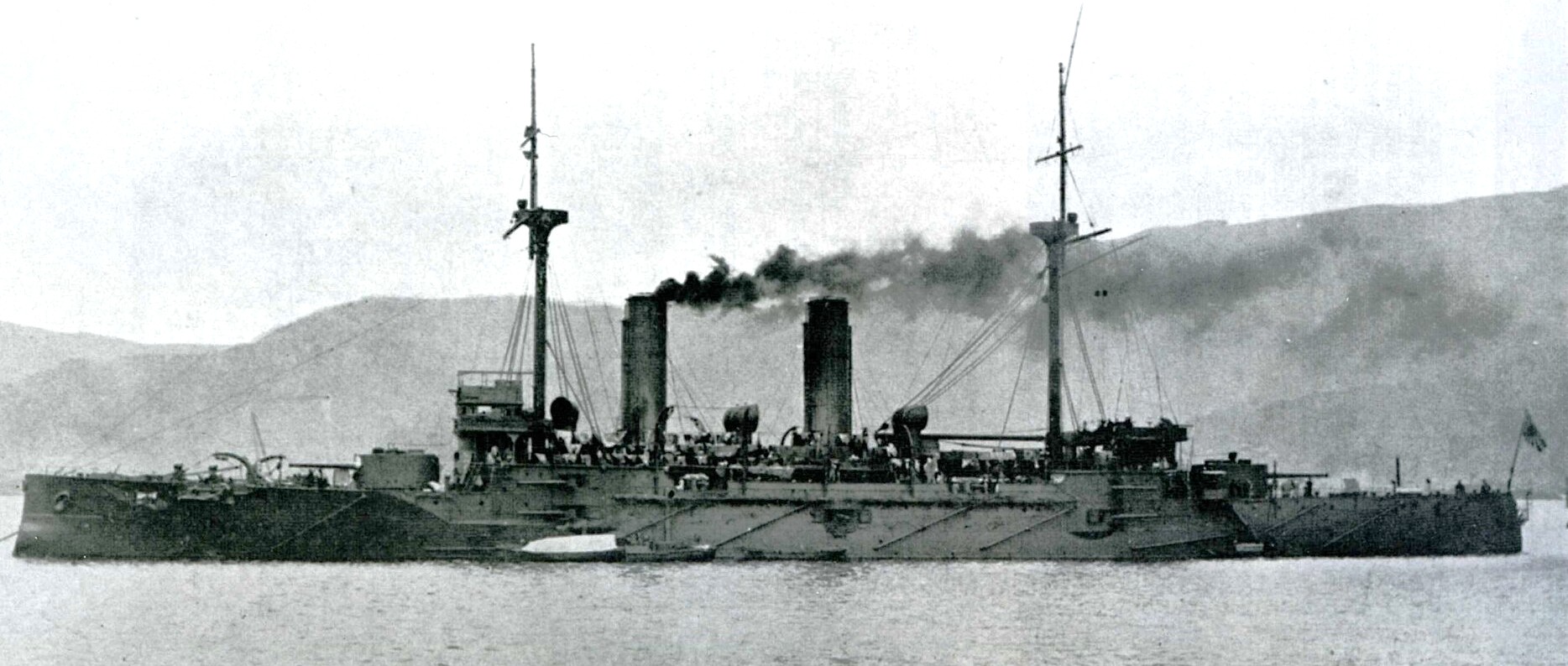
(IJN Photo)
IJN armoured cruiser Tokiwa. Armstrong Whitworth, UK, Asama-class armoured cruiser 9,700, 18 May 1899, 9 August 1945; destroyed by USN aircraft at Ominato.
Tokiwa (常盤) was the second and last Asama-class armored cruiser (Sōkō jun’yōkan) built for the Imperial Japanese Navy (IJN) in the late 1890s. As Japan lacked the industrial capacity to build such warships herself, the ship was built in Britain. She played minor roles in the Boxer Rebellion of 1900 and World War I, but was very active during the Russo-Japanese War of 1904–05 where she participated in the Battle of Port Arthur, the Battle off Ulsan, and the Battle of Tsushima. After the war she was sometimes used as a training ship for naval cadets.
Tokiwa was converted into a minelayer in 1922–24. She was placed in reserve in 1927 after she was damaged by an accidental explosion of several mines. The ship was deployed to Northern China in 1932–33 after the Japanese invasion of Manchuria. After her refit in 1937, Tokiwa returned to active duty and was assigned to the 4th Fleet in 1939. During the Pacific War, she participated in the occupation of the Gilbert Islands and Rabaul and Kavieng in New Guinea. Damaged by American aircraft shortly afterwards, the ship was forced to return to Japan for repairs. Tokiwa laid minefields during 1944–45 until she was twice damaged by American mines in 1945. After repairs were completed, the ship was badly damaged by American aircraft and her crew was forced to beach her lest she sink shortly before the end of the war. Tokiwa was salvaged in 1947 and subsequently broken up for scrap. (Wikipedia)
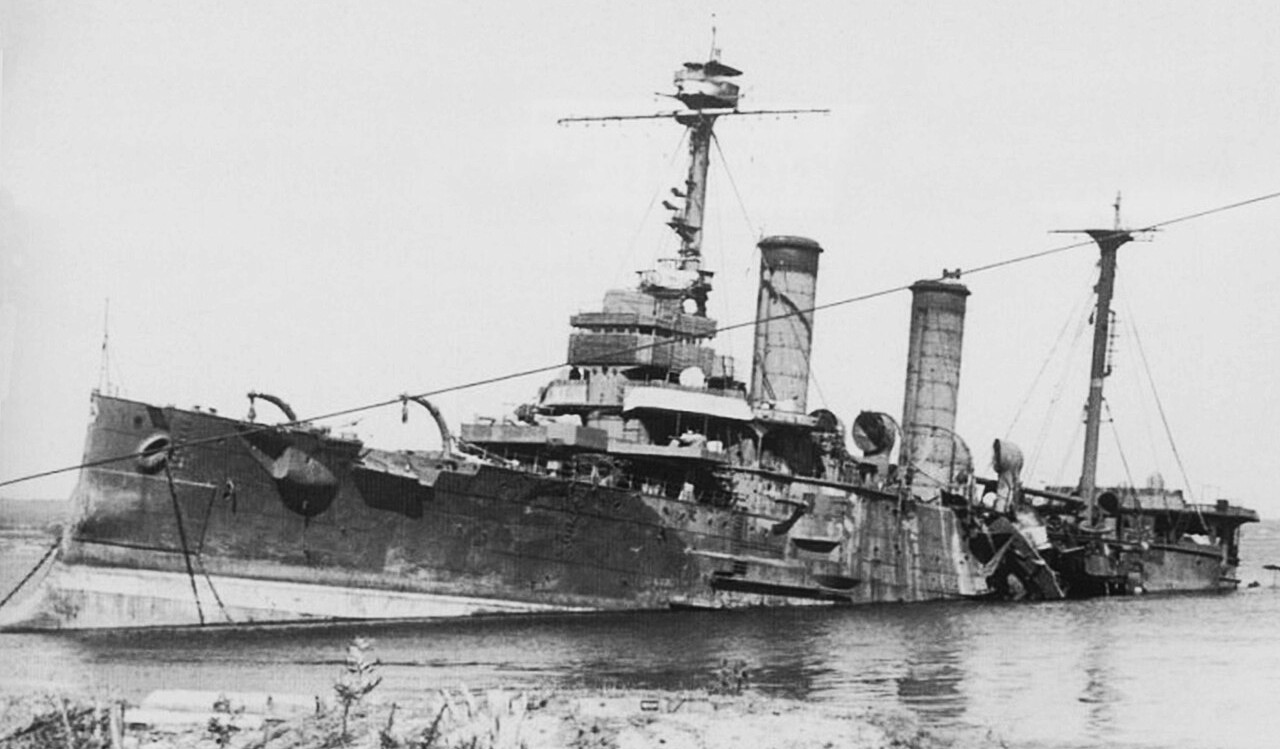
(USN Photo)
Wreck of Japanese cruiser Tokiwa in 1945.
IJN armoured cruiser Yakumo
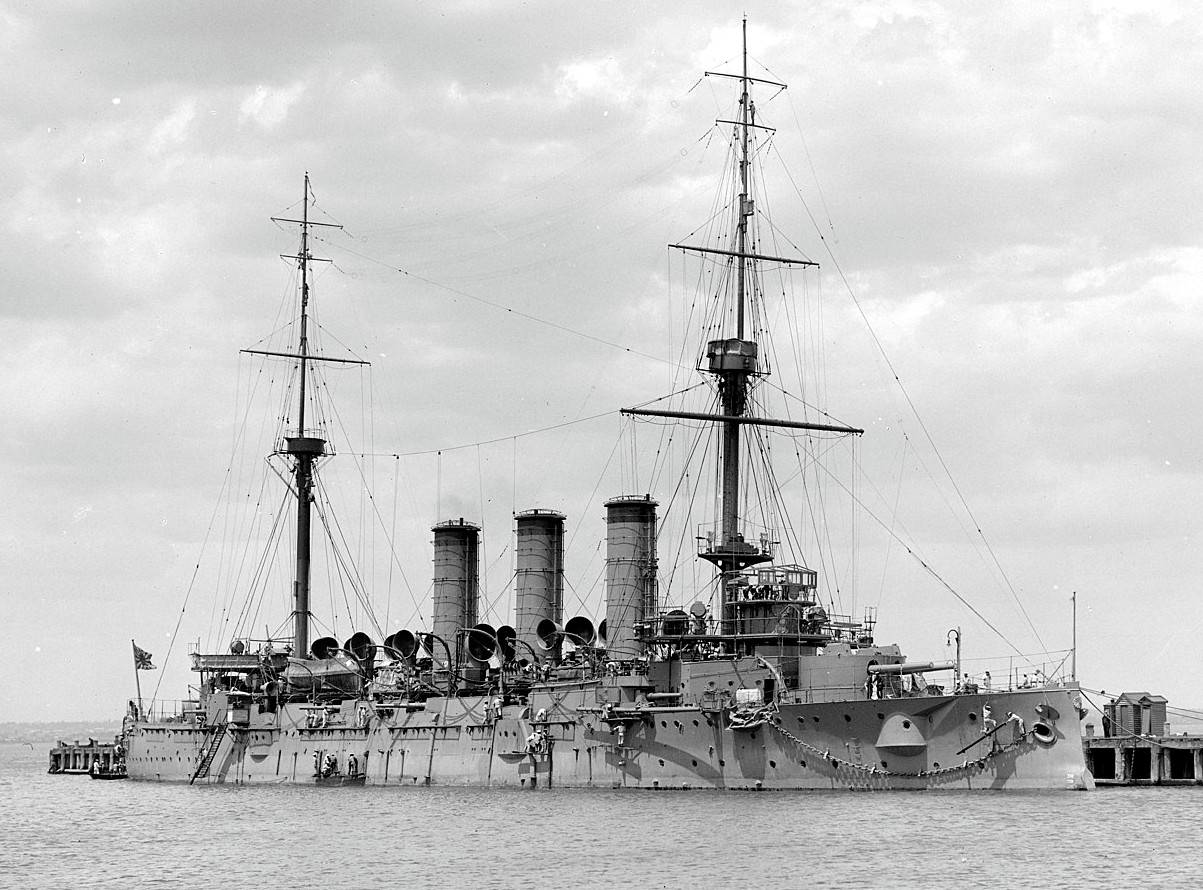
(State Library of Victoria, Yakumo during a visit to Australia in 1928)
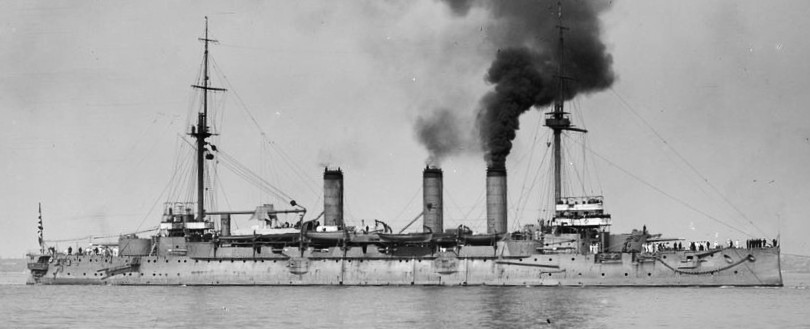
IJN armoured cruiser Yakumo. Stettiner Vulcan AG, Germany, Armoured cruiser 9,646, 20 June 1900, 20 July 1946; scrapped.
Yakumo (八雲; Eight Clouds) was an armored cruiser (Sōkō jun’yōkan) built for the Imperial Japanese Navy (IJN) in the late 1890s. As Japan lacked the industrial capacity to build such warships itself, the ship was built in Germany. She participated in most of the naval battles of the Russo-Japanese War of 1904–05, and was lightly damaged during the Battle of the Yellow Sea and the Battle of Tsushima. Yakumo saw no combat during World War I and began the first of many training cruises in 1917, although she was not officially reclassified as a training ship until 1931. Her last training cruise was in 1939, but the ship continued to conduct training in home waters throughout the Pacific War. Yakumo became a repatriation transport after the war and was broken up in 1946–47. (Wikipedia)
IJN armoured cruiser Azuma
(State Library of Victoria, 1930)
IJN armoured cruiser Azuma. Saint-Nazaire shipyards, France, Armoured cruiser 9,307, 28 July 1900, 15 February 1944; Scrapped.
Azuma (吾妻) (sometimes transliterated (archaically) as Adzuma) was an armoured cruiser (Sōkō jun’yōkan) built for the Imperial Japanese Navy (IJN) in the late 1890s. As Japan lacked the industrial capacity to build such warships itself, the ship was built in France. She participated in most of the naval battles of the Russo-Japanese War of 1904–05 and was lightly damaged during the Battle off Ulsan and the Battle of Tsushima. Azuma began the first of five training cruises in 1912 and saw no combat during World War I. She was never formally reclassified as a training ship although she exclusively served in that role from 1921 until she was disarmed and hulked in 1941. Azuma was badly damaged in an American carrier raid in 1945, and subsequently scrapped in 1946. (Wikipedia)
IJN armoured cruiser Izumo
(National Archives Photo)
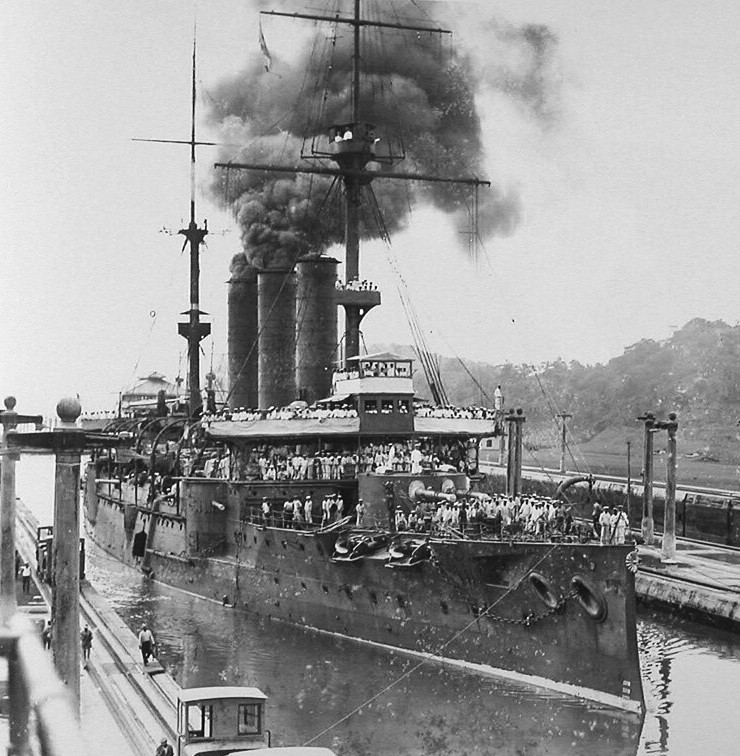
IJN armoured cruiser Izumo leaving Miraflores Locks, Panama Canal, Northbound, 15 Oct 1921.
IJN armoured cruiser Izumo. Armstrong Whitworth, UK, Izumo-class armoured cruiser 9,750, 25 September 1900, 24 July 1945; destroyed at mooring by USN aircraft at Kure.
Izumo (出雲; sometimes transliterated Idzumo) was the lead ship of her class of armored cruisers (Sōkō jun’yōkan) built for the Imperial Japanese Navy (IJN) in the late 1890s. As Japan lacked the industrial capacity to build such warships itself, the ship was built in Britain. She often served as a flagship and participated in most of the naval battles of the Russo-Japanese War of 1904–1905. The ship was lightly damaged during the Battle off Ulsan and the Battle of Tsushima. Izumo was ordered to protect Japanese citizens and interests in 1913 during the Mexican Revolution and was still there when World War I began in 1914.
She was then tasked to search for German commerce raiders and protect Allied shipping off the western coasts of North and Central America. The ship assisted the armored cruiser Asama in early 1915 when she struck a rock off Baja California. In 1917, Izumo became the flagship of the Japanese squadron deployed in the Mediterranean Sea. After the war, she sailed to Great Britain to take control of some ex-German submarines and then escorted them part of the way back to Japan.
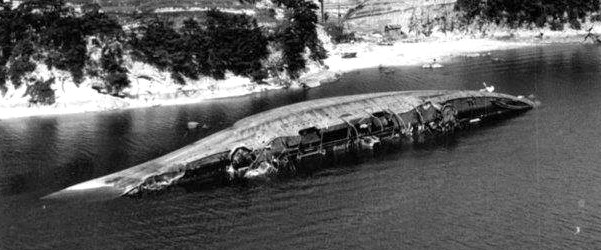
The ship spent most of the 1920s as a training ship for naval cadets and became flagship of the IJN’s China forces in 1932 during the First Shanghai Incident. Izumo participated in the Battle of Shanghai five years later and was not damaged, despite repeated aerial attacks. The ship played a minor role in the Pacific War, supporting Japanese forces during Philippines Campaign until she struck a mine. She returned to Japan in 1943 and again became a training ship for naval cadets. Izumo was sunk by American carrier aircraft during the attack on Kure in July 1945. Her wreck was refloated and scrapped in 1947. (Wikipedia)
(USN Photo)
Izumo was sunk by American carrier aircraft during the attack on Kure in July 1945.
IJN armoured cruiser Iwate
(City of Vancouver Archives Photo)
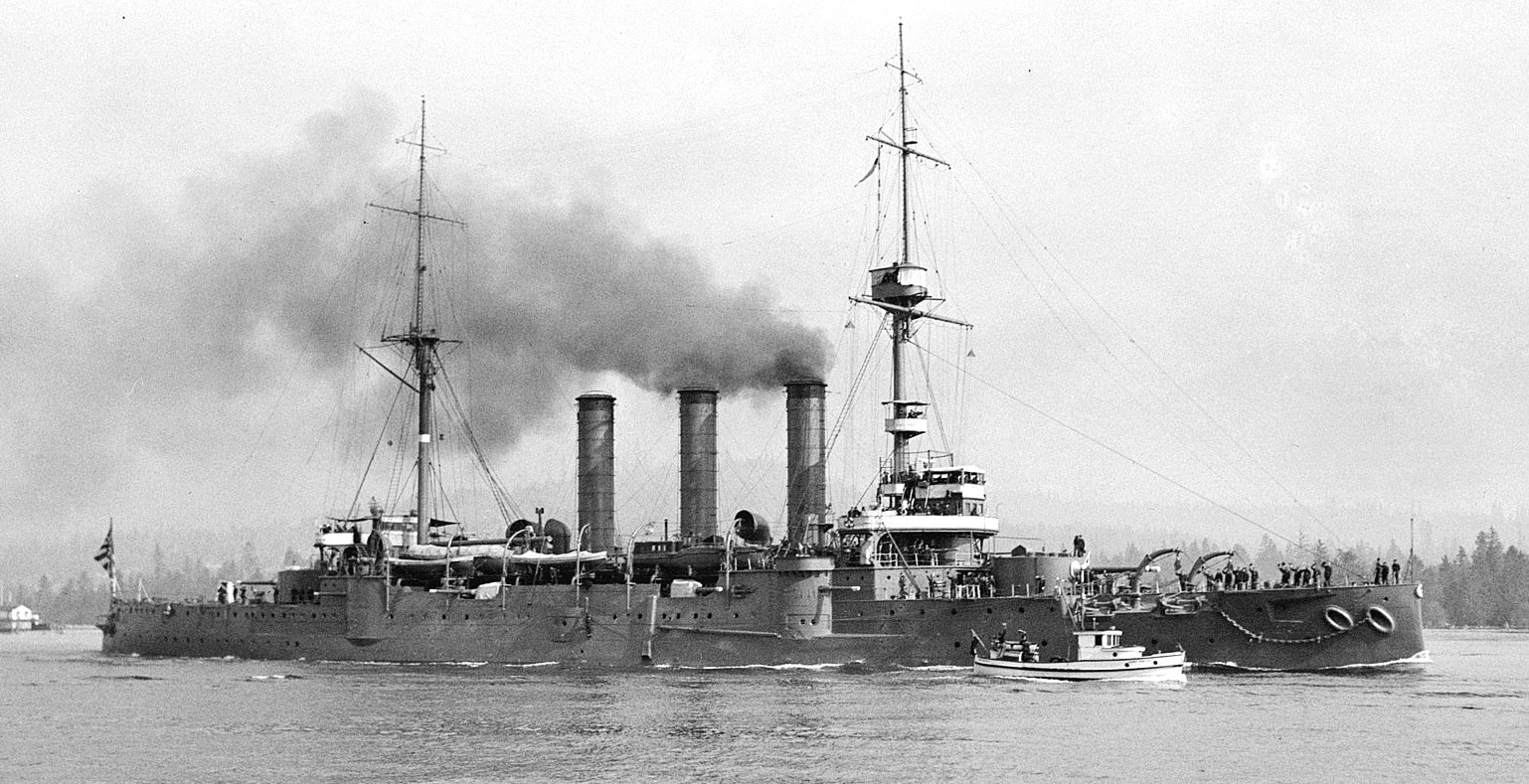
IJN armoured cruiser Iwate at Vancouver, British Columbia, Canada, 1933.
Iwate. Armstrong Whitworth, UK, Izumo-class armoured cruiser 9,750, 18 March 1901, 26 July 1945; destroyed at mooring by USN aircraft at Kure.
Iwate (磐手) was the second and last Izumo-class armored cruiser (Sōkō jun’yōkan) built for the Imperial Japanese Navy (IJN) in the late 1890s. As Japan lacked the industrial capacity to build such warships herself, the ship was built in Britain. She participated in most of the naval battles of the Russo-Japanese War of 1904–1905. The ship was moderately damaged during the Battle of Port Arthur, the Battle off Ulsan, and the Battle of Tsushima. Iwate played a minor role in the First World War and began the first of her many training cruises for naval cadets in 1916, a task that would last until the end of 1939. The ship continued to conduct training in home waters throughout the Pacific War. Iwate was sunk by American carrier aircraft during the attack on Kure in July 1945. Her wreck was refloated and scrapped in 1946–1947. (Wikipedia)
IJN armoured cruiser Kasuga
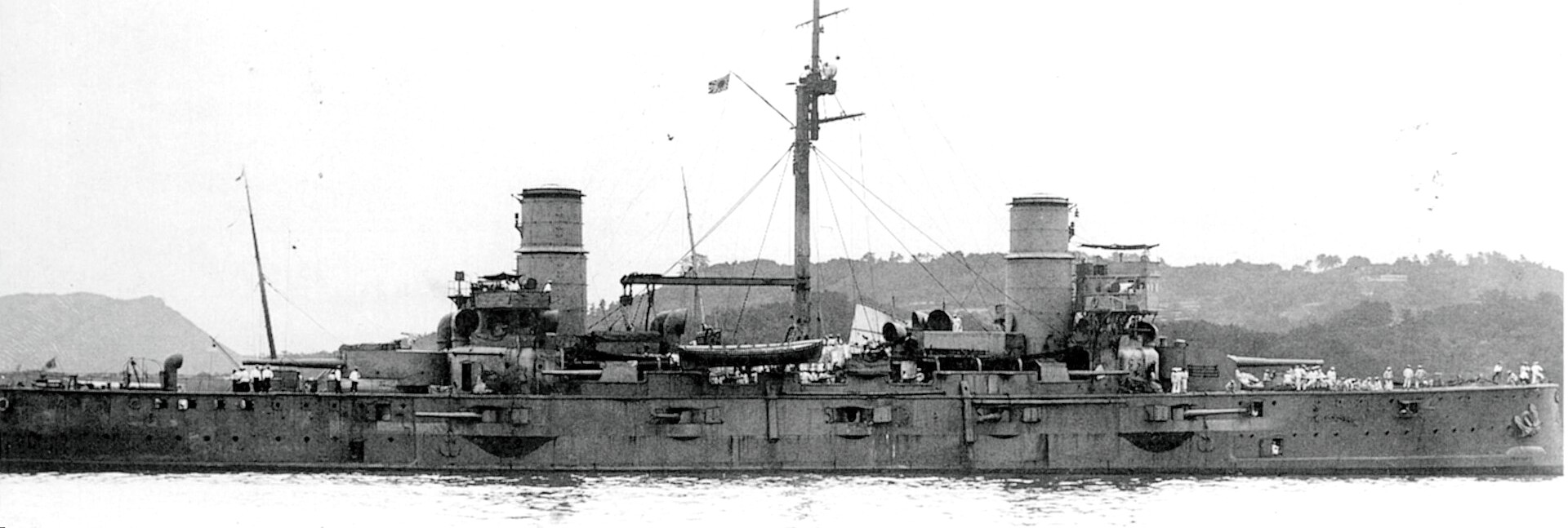
(Yokohama Maritime Museum Photo)
Kasuga. Gio. Ansaldo & C., Italy, Kasuga-class armoured cruiser 7,680, 4 January 1904, 18 July 1945; destroyed at mooring by USN aircraft at Yokosuka.
Kasuga (春日, Vernal Sun) was the name ship of the Kasuga-class armored cruisers of the Imperial Japanese Navy, built in the first decade of the 20th century by Gio. Ansaldo & C., Sestri Ponente, Italy, where the type was known as the Giuseppe Garibaldi class. The ship was originally ordered by the Royal Italian Navy as Mitra in 1901 and sold in 1902 to the Argentine Navy who renamed her Bernardino Rivadavia during the Argentine–Chilean naval arms race, but the lessening of tensions with Chile and financial pressures caused the Argentinians to sell her before delivery. At that time tensions between the Empire of Japan and the Russian Empire were rising, and the ship was offered to both sides before she was purchased by the Japanese.
During the Russo-Japanese War of 1904–05, Kasuga participated in the Battle of the Yellow Sea and was lightly damaged during the subsequent Battle of Tsushima. In addition, she frequently bombarded the defenses of Port Arthur. The ship played a limited role in the First World War and was used to escort Allied convoys and search for German commerce raiders in the Indian Ocean and Australasia. Kasuga became a training ship in the late 1920s and was then disarmed and hulked in 1942 for use as a barracks ship. The ship capsized shortly before the end of the Second World War in 1945 and was salvaged three years later and broken up for scrap. (Wikipedia)
IJN armoured cruiser Nisshin
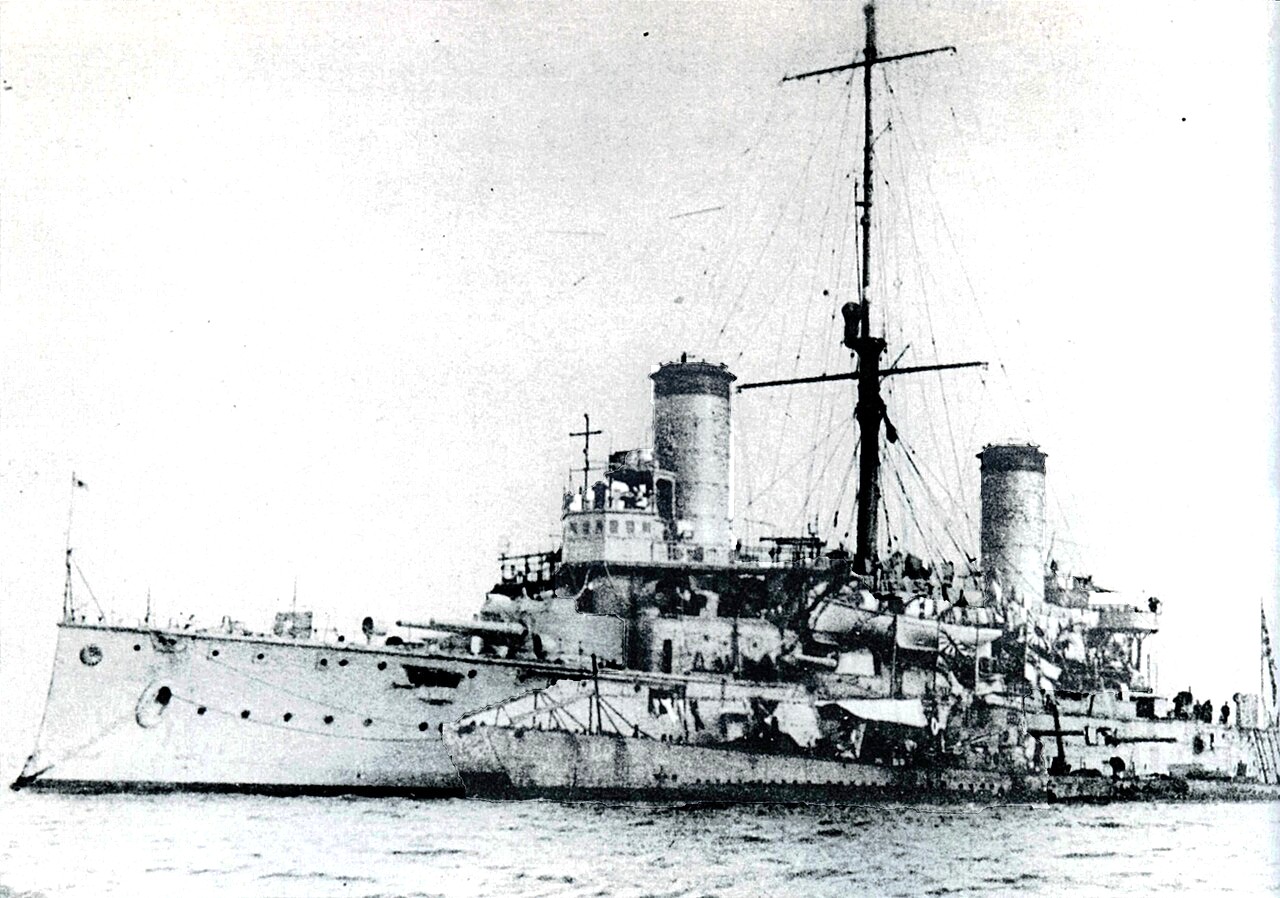
(IWM Photo)
IJN armoured cruiser Nisshin at Malta with captured German UC-90 U-boat, March 1919.
IJN armoured cruiser Nisshin. Gio. Ansaldo & C., Italy, Kasuga-class armoured cruiser 7,689, 7 January 1904, 18 January 1942; scuttled 1946.
IJN armoured cruiser Nisshin (日進), also transliterated as Nissin, was a Kasuga-class armored cruiser of the Imperial Japanese Navy, built in the first decade of the 20th century by Gio. Ansaldo & C., Sestri Ponente, Italy, where the type was known as the Giuseppe Garibaldi class. The ship was originally ordered by the Royal Italian Navy in 1901 as San Rocco and sold the next year to the Argentine Navy who renamed her Mariano Moreno during the Argentine–Chilean naval arms race, but the lessening of tensions with Chile and financial pressures caused the Argentinians to sell her before delivery. At that time tensions between the Empire of Japan and the Russian Empire were rising, and the ship was offered to both sides before she was purchased by the Japanese.
During the Russo-Japanese War of 1904–05, Nisshin participated in the Battle of the Yellow Sea and was damaged in the subsequent Battle of Tsushima. In addition, she frequently bombarded the defenses of Port Arthur. The ship played a limited role in the First World War and was used to escort Allied convoys and search for German commerce raiders in the Indian Ocean and Australasia. In 1918, Nisshin was deployed to the Mediterranean and then escorted the surrendered German submarines allocated to Japan from Britain after the war. She became a training ship in 1927 and was sunk as a target ship in 1936. Her wreck was later refloated and used as a target again in 1942. (Wikipedia)
IJN armoured cruiser Tsukuba
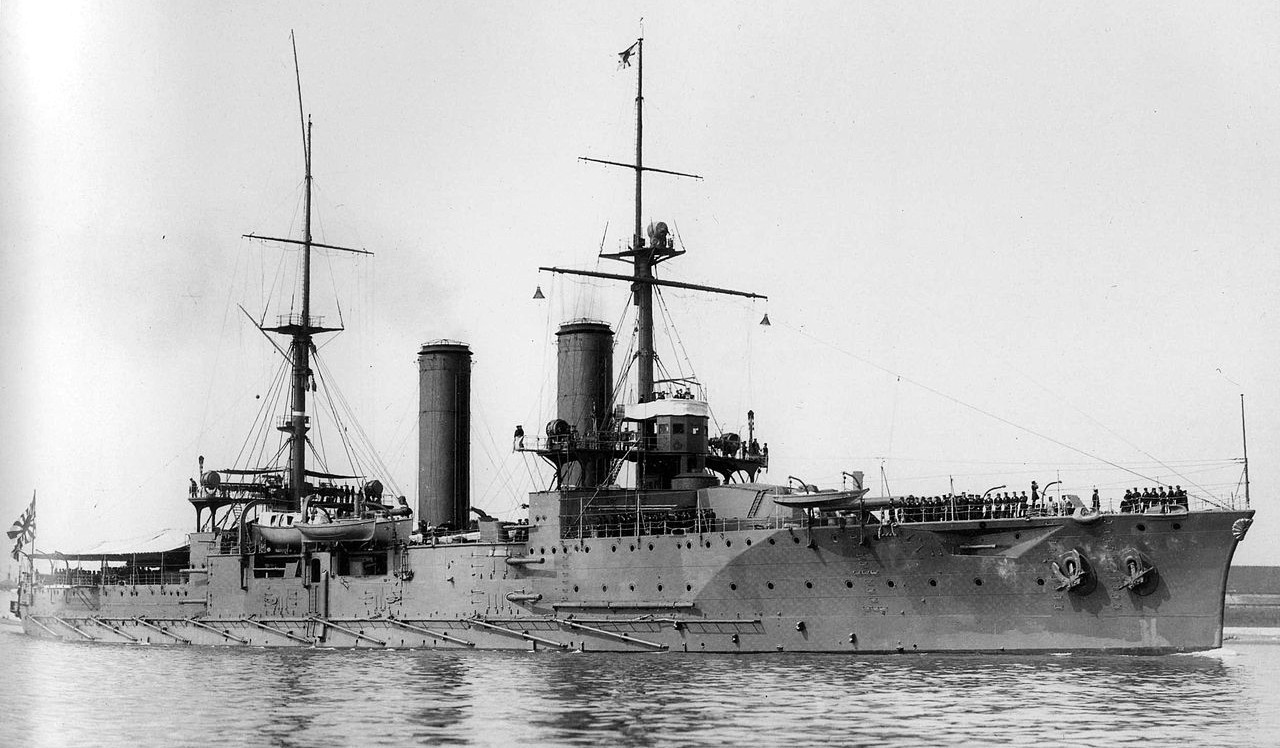
(IJN Photo, 1907)
IJN armoured cruiser Tsukuba. Kure Naval Arsenal, Japan, Tsukuba-class armoured cruiser 13,750, 14 January 1907, 14 January 1917; accidental explosion. Tsukuba (筑波) was the lead ship of the two-ship Tsukuba class of armoured cruisers in the Imperial Japanese Navy. She was named after Mount Tsukuba located in Ibaraki prefecture north of Tokyo. On 28 August 1912, Tsukuba was re-classified as a battlecruiser.
IJN armoured cruiser Tsukuba was laid down on 14 January 1905, launched 26 December 1905 and commissioned on 14 January 1907 at Kure Naval Arsenal, with Captain Heitarō Takenouchi as her chief equipping officer and first commander. Shortly after commissioning, and with Vice Admiral Ijuin Gorō on board, Tsukuba and Chitose were sent on a voyage to the United States to attend the International Naval Review by President Theodore Roosevelt as a part of Jamestown Exposition of 1907, the tricentennial celebrations marking the founding of the Jamestown Colony. They then traveled on to Portsmouth, England to pay respect to the fellow Royal Navy in the Anglo-Japanese Alliance, and attended the 25th anniversary of Kiel Regatta in Kiel, Germany, where she received the imperial visit of Kaiser Wilhelm II. She then visited Flushing and Ostend in Flanders, Holland; Brest and Bordeaux in France; Vigo, Lisbon, Naples, Malta, Venice and Trieste before returning to Japan via the Suez Canal and Indian Ocean, thus circumnavigating the globe.
After her return to Japan, Tsukuba was assigned to Commander Hirose Katsuhiko (the brother of the war hero Hirose Takeo) and escorted the United States Navy’s Great White Fleet through Japanese waters on its around-the-world voyage in October 1908. Commander Isamu Takeshita was the commander of Tsukuba from July through September 1912, followed by Captain Kantarō Suzuki to May 1913, and Commander Katō Hiroharu from December 1913 to May 1914.
Tsukuba served in the First World War, initially during the blockade of the German port of Qingdao in China during the siege of Qingdao from September 1914 as part of Japan’s contribution to the Allied war effort under the Anglo-Japanese Alliance. After the fall of the city, Tsukuba was sent out as part of the search for the German East Asia Squadron in the South Pacific until the destruction of the German squadron in the Battle of the Falklands in December 1914. Tsukuba remained in Japanese home waters in 1915 and 1916.
On 4 December 1915, Tsukuba was in a fleet review off of Yokohama, attended by Emperor Taishō in which 124 ships participated. A similar fleet review was held again off Yokohama on 25 October 1916. On 14 January 1917, Tsukuba exploded while in port at Yokosuka. Some 200 crewmen were killed immediately, and over 100 more were drowned as the battlecruiser sank in shallow waters within twenty minutes, with a total loss of 305 men. The force of the explosion broke windows in Kamakura, more than twelve kilometers away. At the time of the disaster, more than 400 crewmen were on shore leave, which is why so many survived. The cause of the explosion was later attributed to a fire in her ammunition magazine, possibly through spontaneous combustion from deterioration of the Shimose powder in her shells.
The masts, bridge and smokestacks of the vessel remained above water, and afterwards, her hulk was raised, and used as a target for naval aviation training. It was formally removed from the navy list on 1 September 1917 and broken up for scrap in 1918. (Wikipedia)
IJN armoured cruiser Ikoma
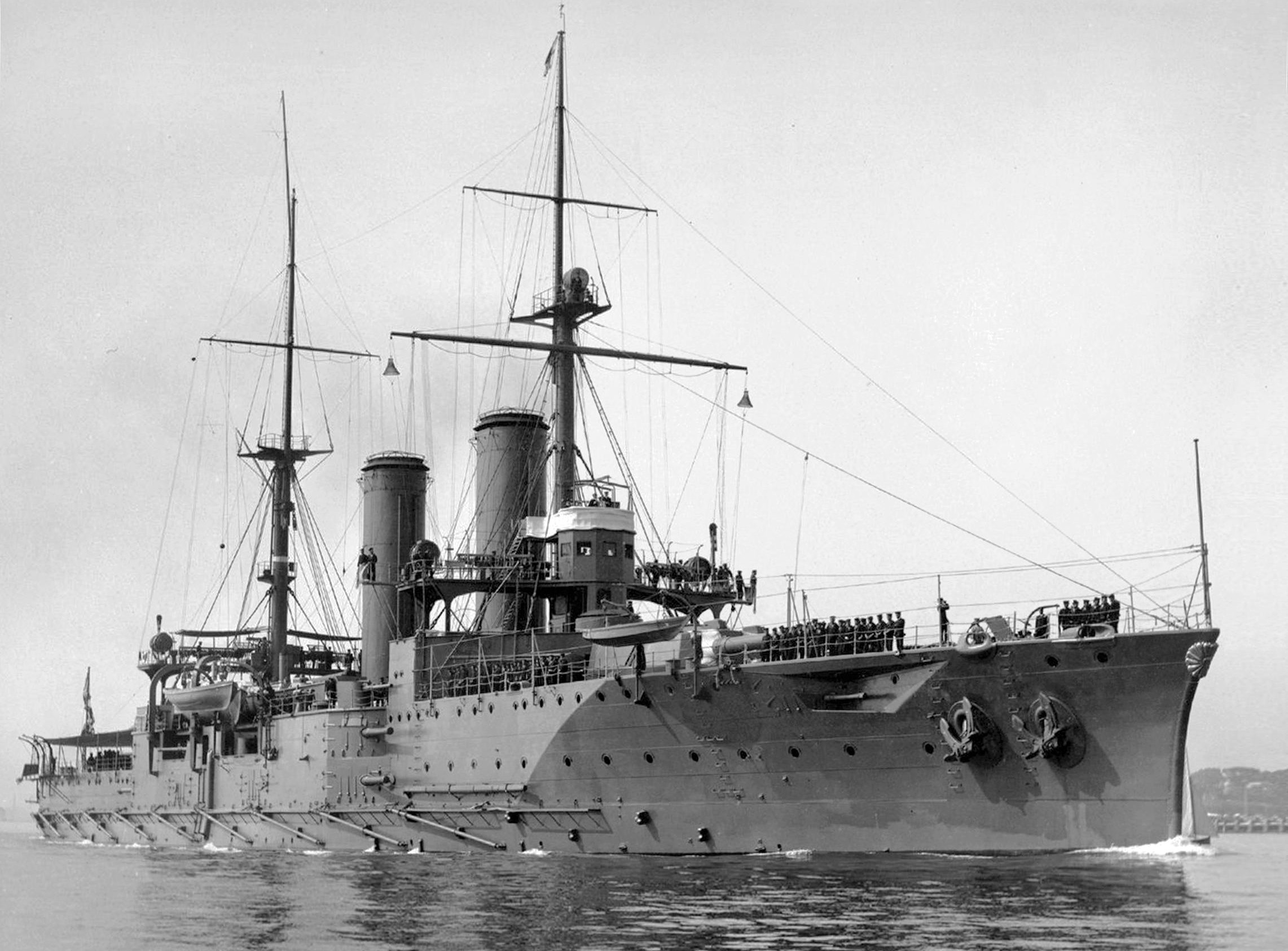
(IJN Photo)
IJN armoured cruiser Ikoma. Kure Naval Arsenal, Japan, Tsukuba-class armoured cruiser 13,750, 28 March 1908, 20 September 1923; scrapped. Ikoma (生駒) was the second vessel in the two-ship Tsukuba class of armoured cruisers in the Imperial Japanese Navy. She was named after Mount Ikoma located on the border of Osaka and Nara prefecture. On 28 August 1912, Ikoma was re-classified as a battlecruiser.
IJN armoured cruiser Ibuki
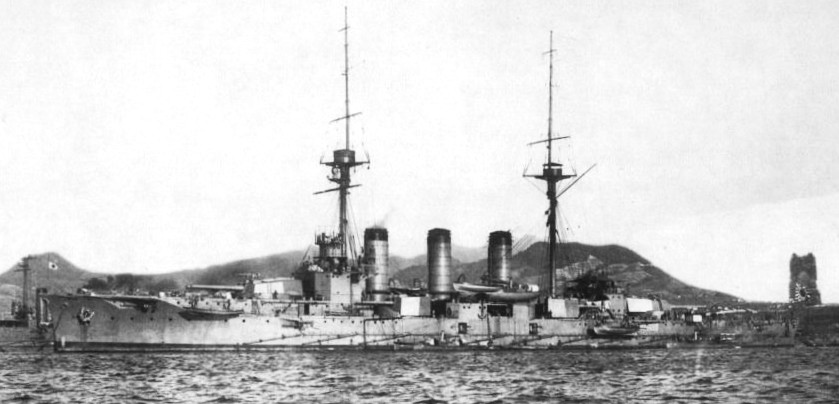
(IJN Photo, 1910)
IJN armoured cruiser Ibuki. Kure Naval Arsenal, Japan, Ibuki-class armoured cruiser 14,636, 1 November 1909, 20 September 1923; scrapped. Ibuki (伊吹) was the lead ship in the Ibuki class of armored cruisers in the Imperial Japanese Navy. Ibuki was named after Mount Ibuki, located between Gifu and Shiga prefectures in Honshū. On 28 August 1912, the Ibukis were re-classified as battlecruisers.
IJN armoured cruiser Aso
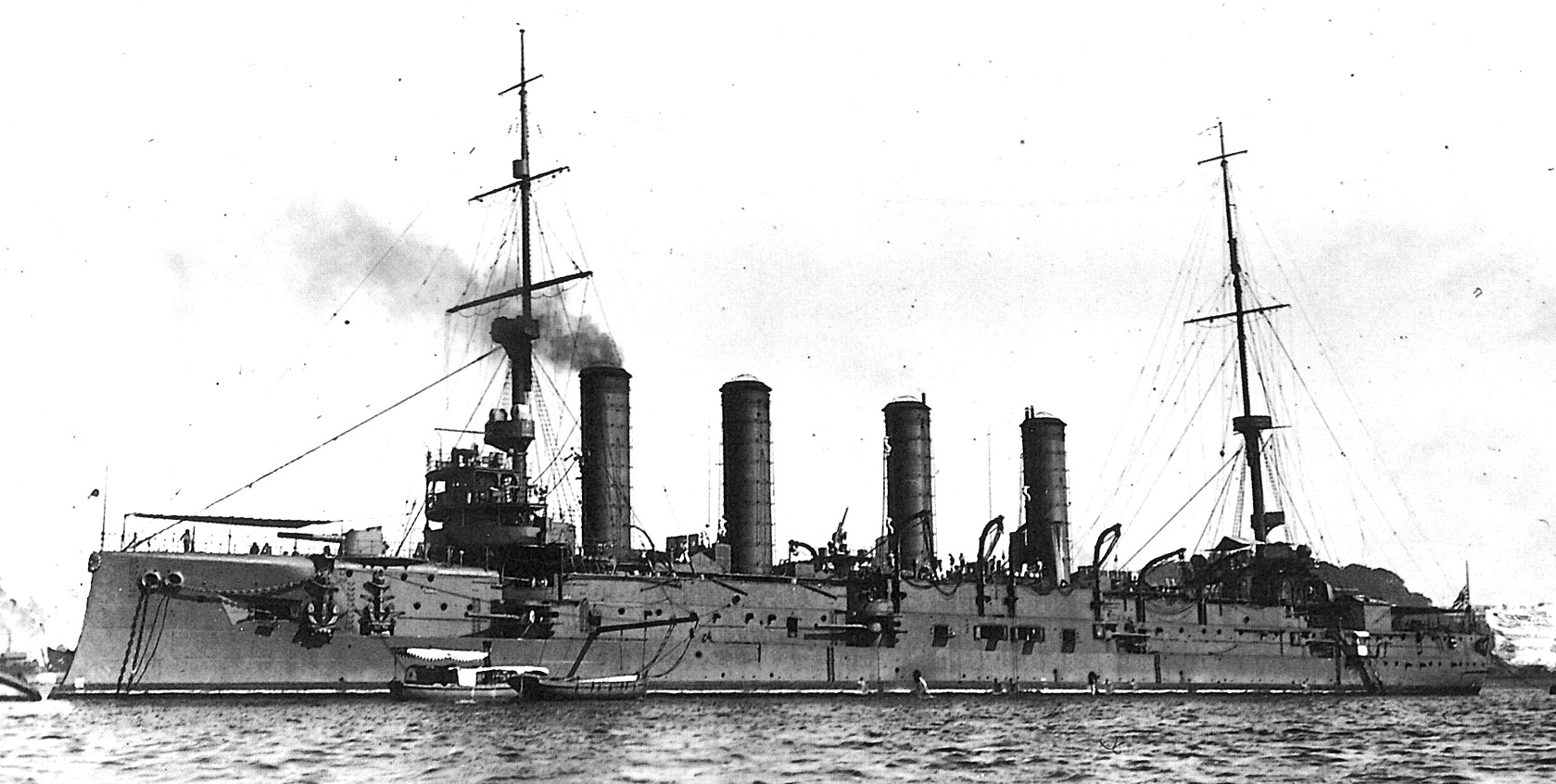
(IJN Photo, Aso at Yokosuka, 1924)
IJN armoured cruiser Aso. (La Seyne-sur-Mer), France, Bayan-class armoured cruiser 7,726, 30 November 1908, 1 April 1931; retired; subsequently expended as a target off Izu Oshima.
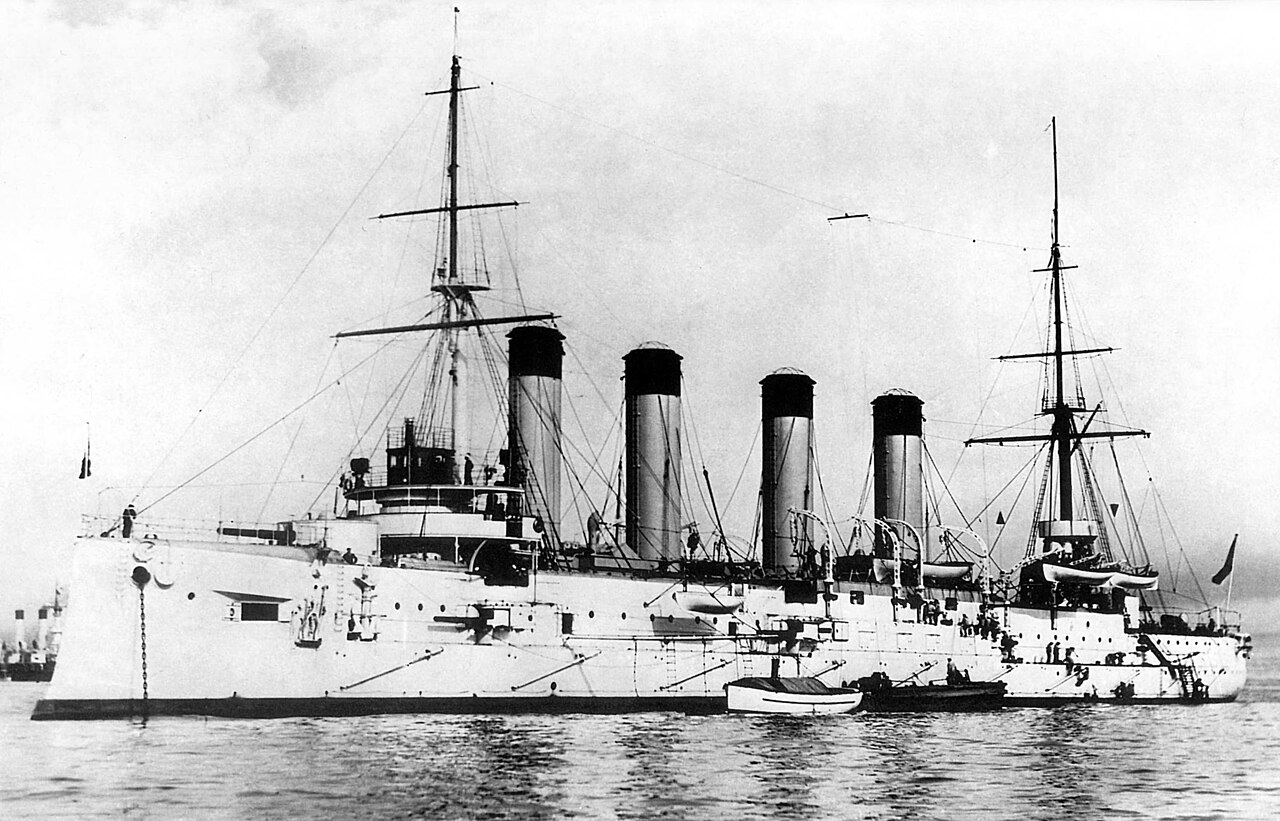
(Imperial Russian Navy Photo)
Imperial Russian Armoured cruiser Bayan (I) in Kronstadt, summer 1903.
Bayan (Russian: Баян) was the name ship of the four Bayan-class armoured cruisers built for the Imperial Russian Navy in the first decade of the 20th century. The ship had to be built in France because there was no available capacity in Russia. Bayan was assigned to the First Pacific Squadron after completion and based at Port Arthur from the end of 1903. She suffered minor damage during the Battle of Port Arthur at the beginning of the Russo-Japanese War of 1904–05 and supported destroyers as they patrolled outside the harbour. After bombarding Japanese positions in July 1904, the ship struck a mine and was out of action for the next several months. Bayan was sunk during the Siege of Port Arthur and was then salvaged by the Japanese after the war.
Renamed Aso by the Imperial Japanese Navy she served as a training ship after extensive repairs. The ship was converted into a minelayer in 1917 and was decommissioned in 1930 to serve as a target ship. She was eventually sunk as a target in 1932. (Wikipedia)
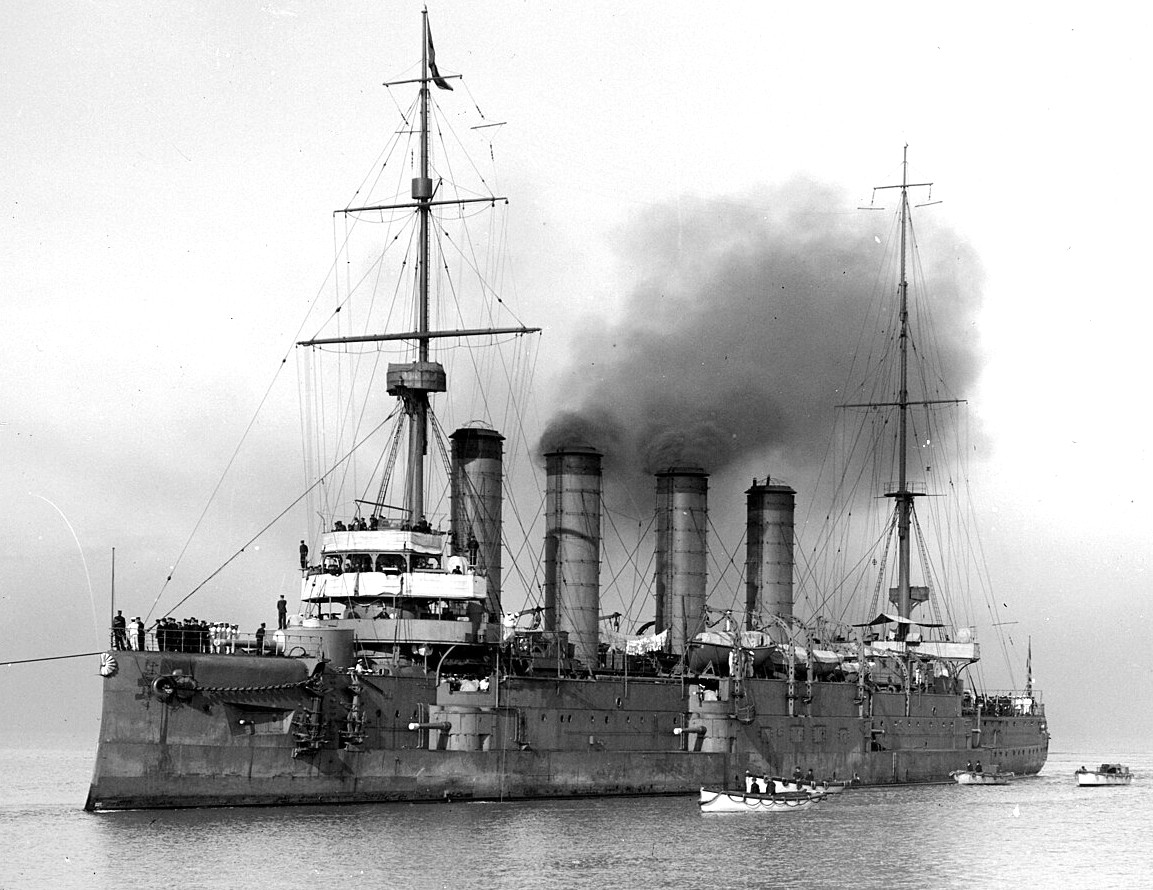
(Alan C. Green Photo)
The Imperial Japanese first rank cruiser Aso during a visit to Australia, 1915.
IJN armoured cruiser Kurama
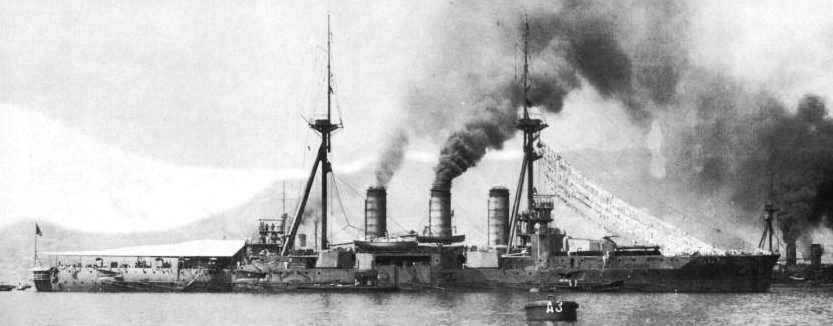
(IJN Photo)
IJN armoured cruiser Kurama. Yokosuka Naval Arsenal, Japan, Ibuki-class armoured cruiser 14,636, 28 February 1911, 20 September 1923; scrapped.
Kurama (鞍馬) was the final vessel of the two-ship Ibuki class of armored cruisers in the Imperial Japanese Navy. Kurama was named after Mount Kurama located in Kyoto, Japan. On 28 August 1912, the Ibukis were re-classified as battlecruisers. Ibuki was designed with geared steam turbines which promised more power and hence, more speed; however, problems with these engines led Kurama to be completed with conventional vertical triple expansion reciprocating engines. Kurama was built at Yokosuka Naval Arsenal.
Shortly after commissioning, Kurama, with Admiral Hayao Shimamura on board, was sent on a voyage to Great Britain to attend the Coronation Fleet Review for King George V at Spithead on 25 June 1911.
Kurama served in the First World War as part of Japan’s contribution to the Allied war effort, protecting British merchant shipping in the South Pacific, and (together with the battlecruisers Kongō and Hiei ) supporting the landings to occupy German-held Caroline Islands and Mariana Islands. In the 1920s, she was assigned to the northern fleet, covering the landings of Japanese troops in Russia during the Siberian Intervention in support of White Russian forces. After the war, Kurama fell victim to the Washington Naval Treaty and was scrapped. (Wikipedia)