
The Pyramids of Xi’an, China
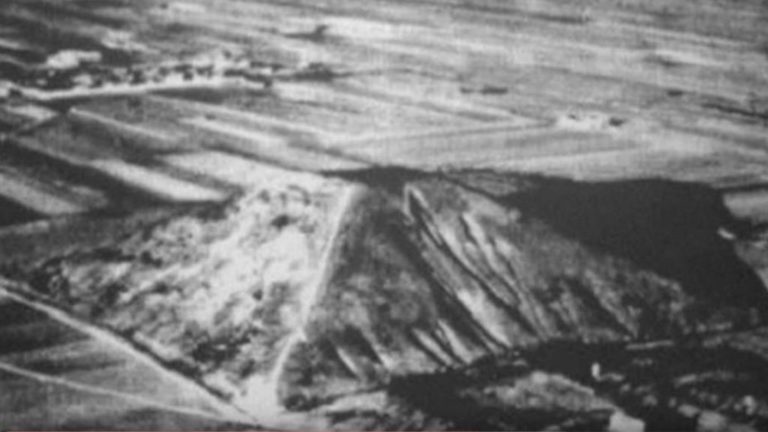
(USAAF Photo)
U.S. pilot James Gaussman discovered the intricate walls of one large structure in 1945, near the end of the Second World War. While returning from a mission to support the Chinese forces and making his way to his base in Assam, India, his engine broke down. Gaussman was astounded to see a massive pyramid in the distance as he flew above Xi’an in the Shaanxi Province. “It was completely white on all sides. The capstone, a sizable chunk of jewel-like substance that might have been crystal, was stunning. We wanted to land, but there was no way. The immensity of the thing struck us,” he remarked. The pilot made the most of this rare occasion and flew above, snapping pictures that would later be included in a report delivered to U.S. government officials.
Another American pilot, fascinated by the legend surrounding Gaussman’s mysterious “Great White” Chinese pyramid, flew close enough to the monument in 1947 to have a glimpse for himself. He calculated the height of the ancient marvel to be close to 1500 feet, much higher than the magnificent pyramid of Giza in Egypt, which is only 480 feet tall from base to the vertex.
The Science News Letter stated in 1947, “American scientists who have been in the area suggest that the pyramids have a height of 1,000 feet (300 m), more than twice as high as any of the Egyptian pyramids.”
Two years later, Colonel Maurice Sheahan, the Far Eastern director for Trans World Airlines, described the same event. However, Chinese authorities maintained the existence of this great pyramid a closely-kept secret, hiding it from the prying eyes of a global probe.
One-hundred kilometers outside of Xi’an, an ancient city in central China, among green grasses, farms, and forests, rise a hundred pyramid-shaped mounds that have been shrouded in mystery for thousands of years.
Westerners first learned there were Chinese pyramids when Fred Meyer Schroder, an American travel agent and trader, first discovered them in 1912. At the time, he was traveling through the Shaanxi Province with a guide, where he recorded a thorough description in his diary, noting he’d seen one giant pyramid approximately 1,000 feet tall and nearly twice that size in length, surrounded by a number of smaller pyramids.
Schroder’s guide explained that the pyramids he happened upon were the subject of local legends and that their history could be found in ancient monastic documents. To put things into perspective, the great white pyramid of Xi’an is nearly twice as large as the Great Pyramid of Egypt. In 2000, Chinese officials declared there were around 400 pyramids north of Xi’an, though that doesn’t include the White Pyramid. Excavation of many of the other sites revealed mausoleums shaped more like Mesoamerican pyramids, differing from those in Egypt, as they are flat-topped and covered with vegetation.
The Chinese government has explained that the reason no one is allowed to enter, is that overzealous archaeologists and tourists could potentially damage the artifacts. Officials claim they are waiting until technology advances enough to properly excavate the pyramids and their precious contents. Some of the pyramids are believed to be more than 8,000 years old, hence the reason to be careful.
Through modern technology, researchers have been able to chart the locations of dozens of the Xi’an pyramids, and taken particular interest in their spatial relationships. They’ve been particularly struck by how these mausoleums are in precise astrological alignment. While most of the monuments are positioned according to cardinal directions, with about half of them aligned true North, it was found that a few of them were about 14 degrees off. The explanation for this is believed to be astronomical in nature. Computer analysis has revealed that the layout coincides with the Gemini constellation as it would’ve been positioned on the spring equinox in 10,500 B.C.
(Tasha Shayne)
The Chinese Shan Xi Pyramids are a collection of more than 38 pyramid mounds that challenge the conventional view of pyramid construction. They are notably devoid of the external formwork stones which characterize the Egyptian pyramids. Instead, they are made of earth and clay. This structural difference has sparked debate among archaeologists and historians about whether these mounds should be considered true pyramids. Some claim they served as burial mounds for emperors, while others suggest astronomical connections.
One of the most discussed pyramids in China is the Mausoleum of Mao Ling , traditionally associated with Emperor Wu of the Han dynasty. This tomb, which is not a true pyramid, resembles the shape of a pyramid and is considered the resting place of the emperor. The interior is believed to consist of a complex array of chambers and passageways, but the mausoleum remains largely unexplored for preservation reasons.
One of the most intriguing aspects of the Chinese pyramids is their potential alignment with celestial bodies. Some researchers believe that the location of these structures corresponds to certain constellations or has astronomical significance. This fueled speculation about the advanced knowledge of ancient Chinese civilizations in the fields of astronomy and mathematics. Although efforts have been made to study and preserve these structures, challenges persist. Urbanization and modern development threaten these archaeological sites, highlighting the importance of ongoing research and conservation efforts to safeguard the remains of China’s ancient past. China’s pyramids stand like silent sentinels, guarding the secrets of a bygone era. Their enigmatic nature invites speculation, curiosity and a thirst for understanding. As archaeologists continue to unearth clues and researchers delve deeper into the mysteries of these structures, we get closer to unlocking the secrets that lie beneath China’s soil. (Archaia Creations)
(kazeuma Photo)
(Giulio Magli Photo)
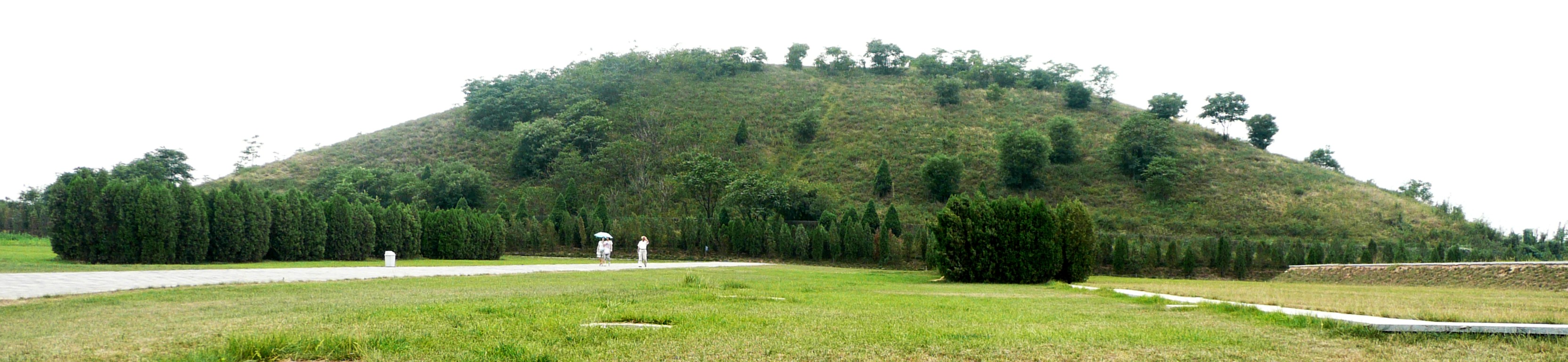
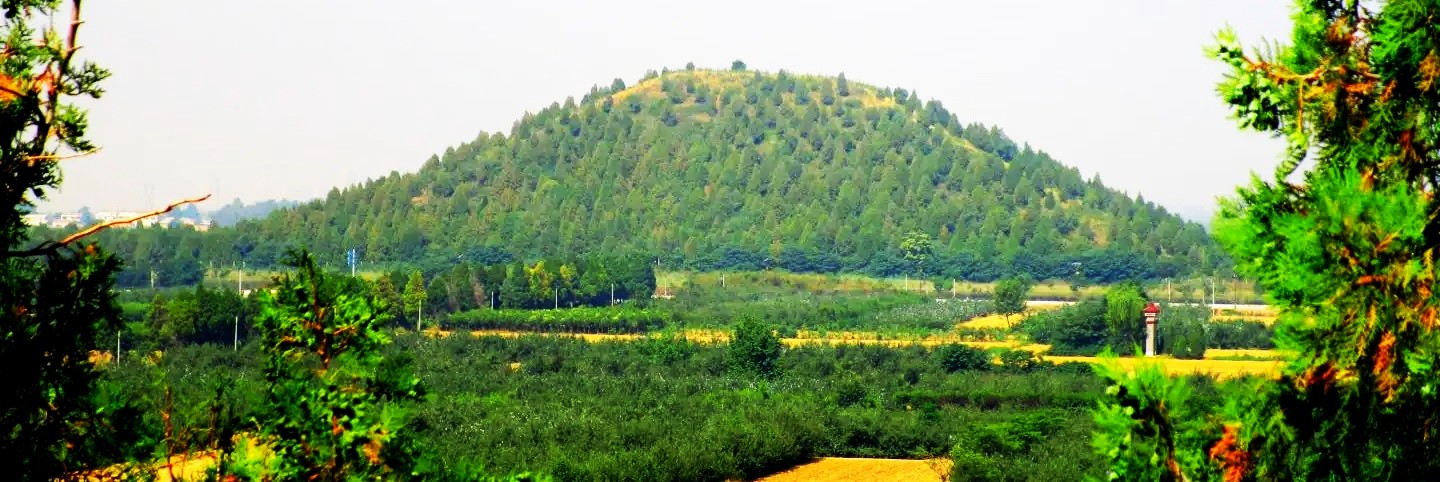
The Maoling Mausoleum of Han Emperor Wu. There are over 40 “pyramid” mausoleums in China, which are huge artificial earth hills. Only two of these sites have been partly excavated. One of the sites is the pyramid tomb China’s First Emperor Qin Shi Huang, which is guarded by the famous Terracotta Army. There is evidence that ancient Greeks may have helped design the Terracotta Army, potentially offering fresh insight into China’s early contact with the west. Giulio Magli notes that the ancient Chinese pyramids fall into two categories. One group of tombs is oriented “with good precision” to the cardinal points of north, south, east and west. The second group of pyramids is oriented away from true north. Specifically, these tombs orient to the west of north, when looking toward the monument. It is possible that the ancient pyramid builders were accounting for the rotation of the Earth’s axis, which, over long periods of time, alters the position of the stars in the night sky. (James Rogers)
.jpg)
(Legolas1024 Photo)
Aerial view of Yanling, mausoleum of Emperor Cheng of Han, located outside of Xi’an.
Other Chinese Pyramids
The Western Xia Imperial Tombs – Located at the foot of the Helan Mountains in the west of Yinchuan City, Ningxia, China, this mysterious Western Xia Dynasty was established in 1038 and was completely wiped out by Genghis Khan’s Mongolian cavalry in 1227. Many of the ground structures have long turned into yellow earth remnants, leaving only solitary earth-filled tomb towers standing silently, known as the “pyramids” of the East.
The Mausoleum of Shaohao – Located in the Old County Village of Qufu City, Shandong Province, it is the burial site of one of the legendary ancient Five Emperors, Shaohao (少昊). With a base width of 28.5 meters, a height of 8.73 meters, and a top height of 12 meters, it is made up of over 10,000 square stone slabs and overall takes on a dome-like shape, resembling a pyramid.
The “pyramid” style architectural site of the Hongshan Culture in Niuhuailiang: Located at the junction of Lingyuan and Jianping counties in Liaoning Province, it has a history of approximately 5,500 years and may be related to rituals, astronomical observations, or the tombs of tribal leaders. It is a circular hill-shaped structure made of earth and stones. The center is a sunken earth mound (with a diameter of 40 meters), surrounded by stone blocks on the periphery, with a remaining height of about 7 meters. It is estimated that the amount of compacted earth is 100,000 cubic meters.
The Anlong Pyramid – In the mountainous area within Anlong County, Guizhou Province, there are seven strangely-shaped Karst peaks, whose shapes are extremely similar to those of the pyramids in Egypt. They are called “pyramids” and reach a height of 150-200 meters. The pyramids in Egypt were built by the ancient Egyptians as tombs for their pharaohs, while the Anlong “pyramids” are karst peaks formed from limestone that existed 200 million years ago.
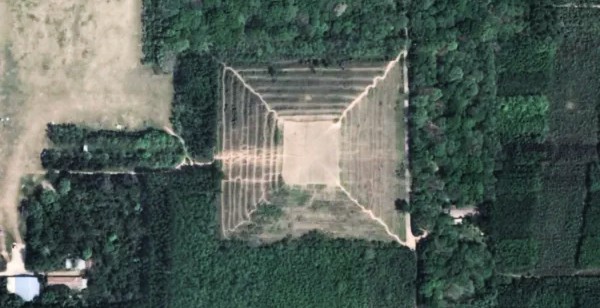 Chinese Pyramids: Complete Guide to the Imperial Tombs | The Locations Unveiled
The Chinese pyramids are over 40 ancient burial mounds in the form of truncated, flat-topped pyramids, built between the Qin (third century BCE) and Tang (seventh century CE) dynasties as the imperial mausolea of China’s emperors and their highest officials. They are built of rammed earth rather than dressed stone, are heavily eroded today, and cluster in the Wei River valley of Shaanxi-Shanxi region around the modern city of Xi’an. The most famous is the Mausoleum of Qin Shi Huang, beneath which the Terracotta Army stands guard.
The earliest is the site of Niuheliang in Liaoning, which features a pyramidal structure. It dates back to 4700 to 2900 BC. The Pyramids span several dynasties including the Zhou Dynasty, Han Dynasty and Tang Dynasty. The approximate range is from 1050 BC to 907 AD.
The Mausoleum of Qin Shi Huang in the Lintong District of Xi’an is the most famous of all Chinese pyramid tombs. Built for China’s first emperor (died 210 BCE), the central mound was originally about 76 metres (249 ft) tall — soil erosion has reduced it to roughly 47 metres today. The complex contains the Terracotta Army, the ~7,000 life-sized clay figures of warriors, horses, officials, acrobats and musicians excavated since 1974. Surrounding it in the Wei River valley are the great Han imperial pyramids, the largest of which is the Maoling Mausoleum of Emperor Wu of Han, often described as “the Chinese pyramid” because of its enormous scale and the wealth of its grave goods. The Han Yang Ling Mausoleum is now an open-air museum displaying its excavated burial pits.
Beyond Shaanxi, the Western Xia Mausoleums near Yinchuan in Ningxia preserve nine massive earthen pyramid-tombs of the Tangut emperors who ruled north-west China between 1038 and 1227. And though largely a legend, the so-called “White Pyramid of Xi’an” — a flat-topped white mound photographed by American pilots in 1947 — has been identified in modern times as the Maoling complex itself; the giant secret pyramid of the earlier popular accounts does not exist. (History Piece)
Google Earth photos of a few of the Chinese pyramids:
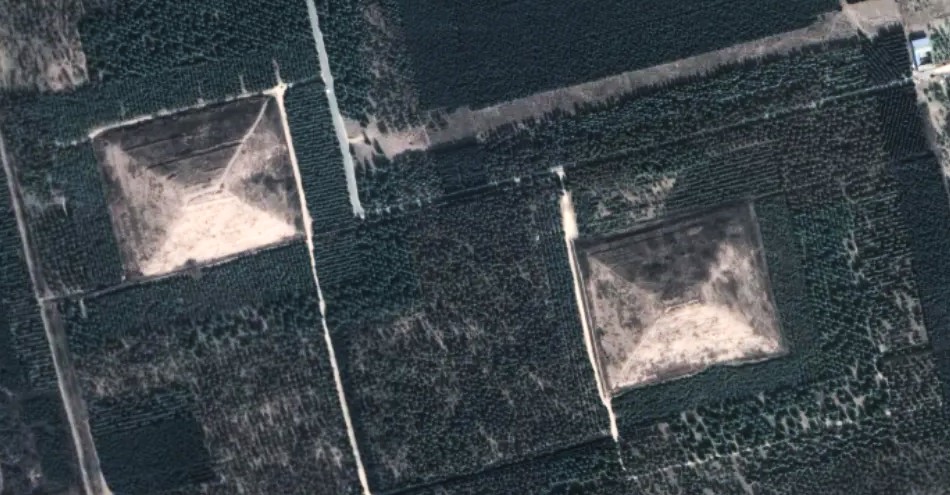
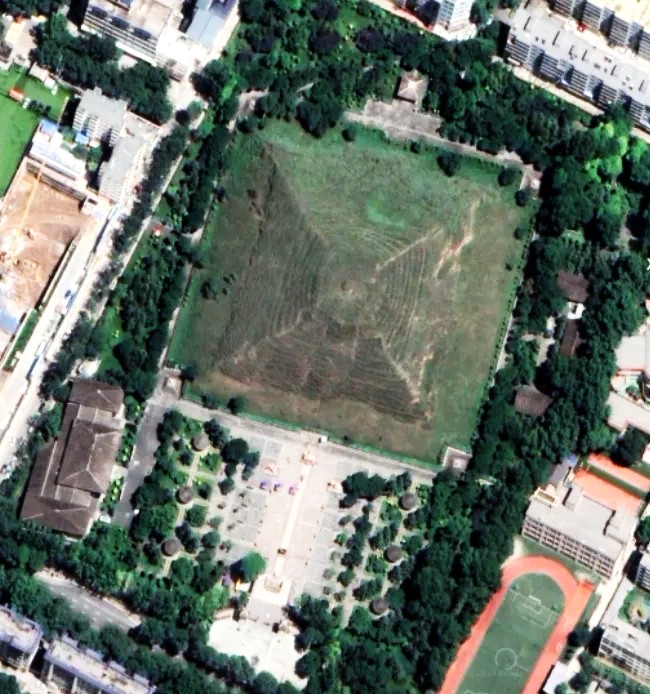
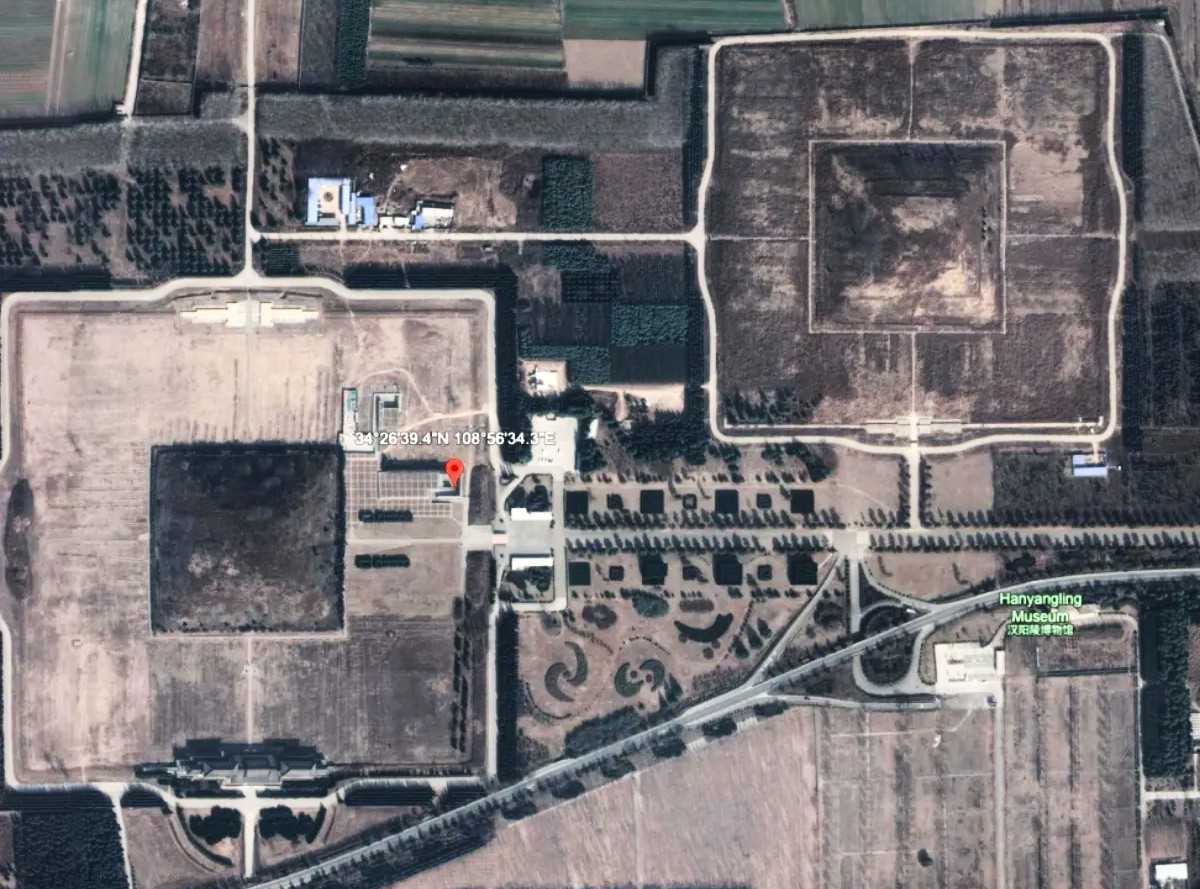
Zhou dynasty tombs complex near Luoyang, Henan.
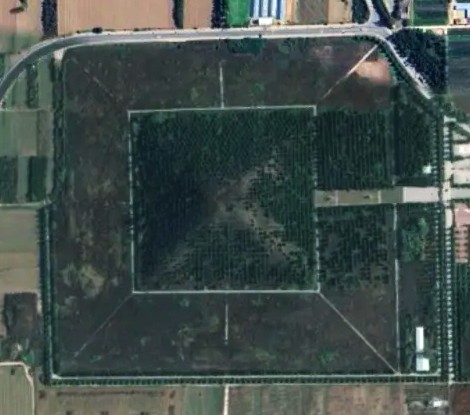
Tomb of Emperor Wu of Han.
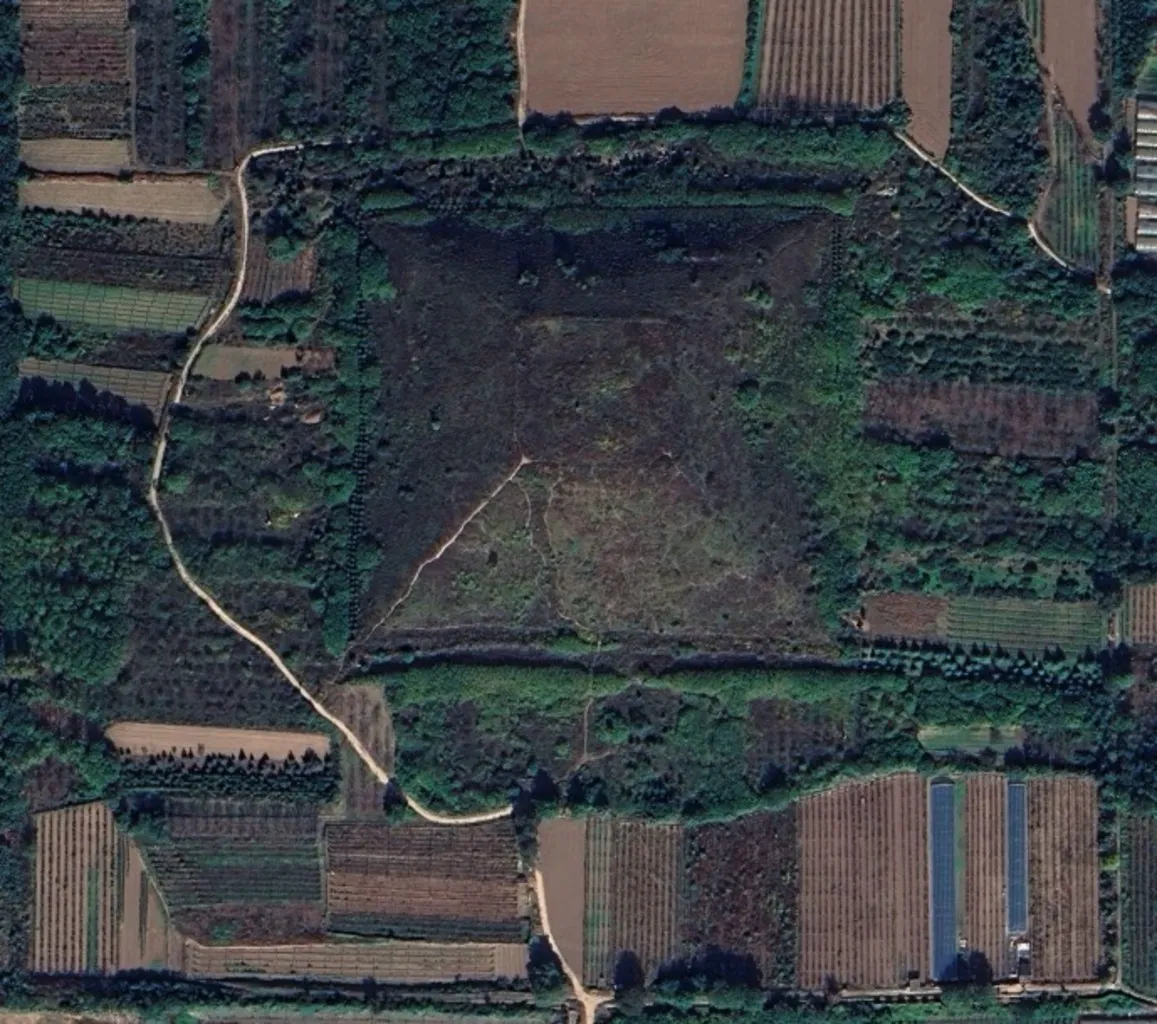
Tomb of Emperor Chang of Han.
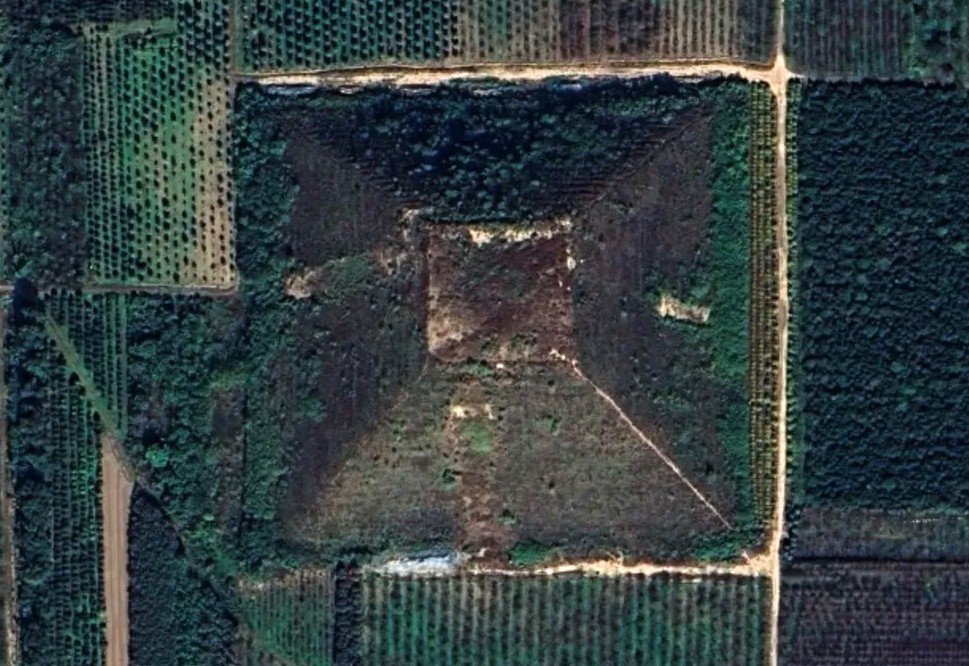
Tomb of Empress Shangguong.
All comments are subject to our Comment Policy. You must be at least 18 years old to comment.
See a comment that violates our guidelines? Report it here.