
Artillery on the Yorktown Battlefield, Colonial National Historic Park, Virginia
One of the aims of this website is to locate, identify and document every historical piece of artillery and all armoured fighting vehicles preserved in Virginia. Many contributors have assisted in the hunt for these tangible pieces of our military history and the list you see here is constantly being revised as new finds are discovered and the data is updated. The photos have come from various contributors, but the author likes to “ground truth” the reports, so a good number of the photos are by the author unless otherwise credited. Any errors found here are by the author. It often happens that military monuments that are relatively mobile, have been moved for restoration or scrapped, sometimes they are repainted with different markings and serial numbers, or they are replaced with a different piece of kit. For those reasons, any additions, deletions, corrections or amendments that you may be able to add to this list of Artillery and AFVs in Virginia would be most welcome and may be e-mailed to the author at hskaarup@rogers.com. The primary aim is preserve our military history and to keep the record accurate.
(National Park Service Digital Image Archives Photo)
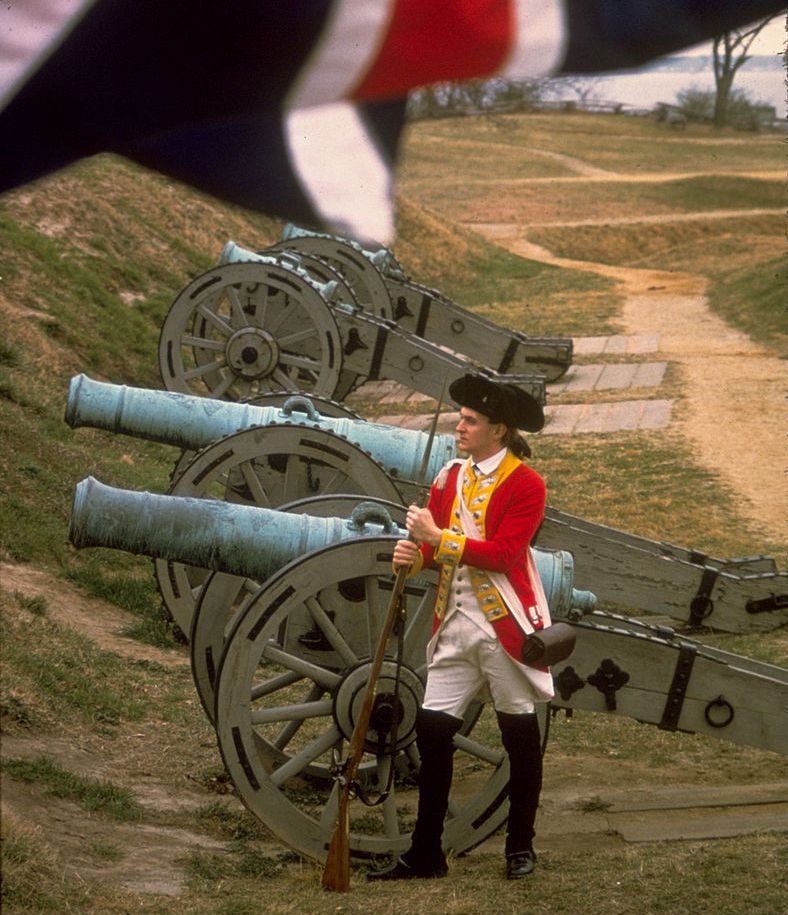
Yorktown Battlefield (Part of Colonial National Historical Park), re-enactor with British bronze 24-pounder smoothbore muzzleloading (SBML) guns on field carriages.
National Park Service Summary
By the summer of 1781, the United States had been at war with England for over six years. The first shots had been fired in April 1775 on the village green in Lexington and at North Bridge in Concord, Massachusetts. Merely sustaining the army had been a major accomplishment for the Americans, who did not have much money, food or clothing. The winters of 1777-78 at Valley Forge and 1779-80 at Morristown were particularly devastating, with many soldiers freezing and starving to death, and some giving up and returning home. A deep belief in the cause and an enduring faith in their leader, George Washington, kept this army together.
In the summer of 1780, the Americans received a major boost to their cause when 5,500 French troops, commanded by Comte de Rochambeau, arrived at Newport, Rhode Island. France had been sending supplies to the United States all along, but after France and England declared war against each other in 1778, French King Louis XVI sent troops and naval assistance to the United States to engage the enemy.
When Rochambeau’s forces arrived, the British were operating on two fronts. General Clinton, commander of British forces in North America, was occupying New York City after a largely unsuccessful attempt to control the northern and middle colonies. General Lord Cornwallis was leading through the southern colonies an army that had already captured Savannah and Charleston. The main American army under Washington was stationed along the Hudson River above New York City.
In the spring of 1781, Washington traveled to Rhode Island to meet with Comte de Rochambeau and plan an attack on Clinton. A French fleet was expected to arrive in New York later that summer, and Washington wanted to coordinate the attack with the fleet’s arrival. As planned, Rochambeau’s army marched in July and joined with Washington’s troops outside New York City, only to learn that the French fleet was sailing to the lower Chesapeake Bay.
Washington changed his strategy to make Clinton think he was planning to attack him, while instead sneaking away to the south to trap Cornwallis. In order to fool Clinton, Washington had his men build big army camps and huge brick bread ovens visible from New York to give the appearance of preparations for a stay. Washington also prepared false papers under his signature discussing plans for an attack on Clinton, and let these papers fall into British hands. Leaving a small force behind, Washington and Rochambeau set out for Yorktown in mid-August. By early September they were parading before the Continental Congress in Philadelphia, and they arrived in Williamsburg, 13 miles west of Yorktown, in mid September.
Cornwallis was in Yorktown because he had been ordered by Clinton during the summer to provide a protected harbor for the British fleet in the lower Chesapeake Bay. Cornwallis chose Yorktown because of its deep-water harbor on the York River. His army spent the latter part of the summer fortifying Yorktown and Gloucester Point across the York River.
The French fleet, as part of the overall plan, entered the lower Chesapeake Bay in the end of August and disembarked 3,000 French troops to wait for Washington and Rochambeau in Williamsburg. On September 5, they encountered the British fleet in a naval engagement known as the Battle of the Capes. The British suffered damage to their ships and returned to New York, while the French, commanded by Admiral de Grasse, remained in the lower Chesapeake and established a blockade.
By the end of September, approximately 17,600 American and French soldiers were gathered in Williamsburg, while 8,300 British soldiers were occupying Yorktown.
The British forces included a small number of German auxiliary troops hired to help fight the war. Cornwallis recognized the odds were in the allies’ favor, and he sent Clinton a note asking for help. Clinton responded that a British fleet with 5,000 men would sail for Yorktown from New York on October 5.
Cornwallis had his men construct a main line of defense around Yorktown that consisted of ten small enclosed forts (called redoubts), batteries with artillery and connecting trenches. The Americans and French marched from Williamsburg to Yorktown on September 28 and began digging a trench 800 yards from the British defense line to begin a siege. By October 9, the allies’ trench was finished and their artillery had been moved up. Firing at the British continuously, they had virtually knocked the British guns out of action by October 11. Cornwallis had the additional misfortune to learn at that time that Clinton’s departure from New York had been delayed.
During the night of October 11, the allies began a second trench 400 yards from the British. The next days were spent bringing up artillery and strengthening the new line. The new line could not be completed, however, without capturing British redoubts 9 and 10. On the night of October 14, 400 French stormed redoubt 9 and 400 Americans stormed redoubt 10, capturing them in less than 30 minutes. Nine Americans and 15 French died in this brief and heroic action.
On October 16, the British tried two desperation moves. Early that morning they attacked the allied center, attempted to silence a French Battery, but the French cannons were firing again in less than six hours. Late that night they tried to evacuate Yorktown by crossing the York River in small boats to Gloucester Point. A violent windstorm arose at midnight, however, scattering the boats and forcing an abandonment of the escape.
Realizing the situation was hopeless, Cornwallis sent forth a British drummer on October 17, followed by a British officer with a white flag and note indicating a request for a cease fire. A number of notes passed between Cornwallis and Washington that day as they set the framework for the surrender. The next day, October 18, four officers–one American, one French and two British–met at the Moore House, one mile outside Yorktown, to settle surrender terms.
On October 19, in a spectacle incredible to all who witnessed it, most of Cornwallis’ army marched out of Yorktown between two lines of allied soldiers–Americans on one side and French on the other–that stretched for more than one mile. The British marched to a field where they laid down their arms, and returned to Yorktown. They did not know that on that very day, Clinton sailed for Yorktown from New York with 5,000 troops.
News of the British defeat at Yorktown spread quickly. Celebrations took place throughout the United States. London was shocked. The British prisoners were marched to prison camps in Winchester, Virginia and Frederick, Maryland. The American army returned to the Hudson River, while the French army remained in Yorktown and Williamsburg for the winter. Clinton and Cornwallis eventually returned to England where they engaged in a long and bitter public controversy over who was to blame for the British defeat at Yorktown.
Though the British still had 26,000 troops in North America after Yorktown, their resolve to win the war was nothing like it had been before Yorktown. The war had been lengthy and costly. Replacing Cornwallis’ captured army was a questionable proposition, particularly because the British also were engaged in military struggles in India, Gibraltar, the West Indies and Ireland. Thus, the British Parliament in March 1782 passes a resolution saying the British should not continue the war against the United States. Later that year, commissioners of the United States and Great Britain signed provisional articles of peace. In September 1783, the final treaty was signed which ended the war and acknowledged American independence.
Yorktown Battlefield, Colonial National Historic Park, Virginia
In the fall of 1781, General George Washington, with allied American and French forces, besieged General Charles Lord Cornwallis’s British army at Yorktown. On 19 October, Cornwallis surrendered, effectively ending the war, which led directly to the peace negotiations that ended the war in 1783 and gave America its independence.
(US Army Photo)
WATERVLIET ARSENAL, N.Y. — On 14 Oct 1781, two British earthen forts prevented Gen. George Washington from completing his second siege at Yorktown, Virginia. Redoubts 9 and 10 would have to be taken by an infantry charge. So as darkness began to blanket the field, a bold attack was being readied in the Allied Army lines.
The French left wing of the army under Baron Viomenil would assault Redoubt 9 with 400 men led by Count Deux Ponts. The American right wing under 24-year old Frenchman Major-General Marquis de Lafayette would attack Redoubt 10 with 400 men led by Lieutenant-Colonel Alexander Hamilton.
Upon receiving the signal of six guns fired in rapid succession, the Allied Army advanced with unloaded muskets towards the unsuspecting British in their earthworks. Hamilton’s men swarmed around Redoubt 10 while miner’s and sappers cleared away the abatis and fraises impeding their progress. Quickly gaining the rear entrance of the 70-man fortification, the Americans surged into the redoubt and captured it within 10 minutes. Viomenil’s French column was not far behind and after an additional 20 minutes, filled with brutal hand-to-hand combat, they gained possession of their objective. Washington was overjoyed and could now finish his second siege parallel that would be within 400 yards of the British inner defense line. The close range artillery barrage that was to follow spelled the eventual disaster for Lord Cornwallis’ Army.
(Author Photo)
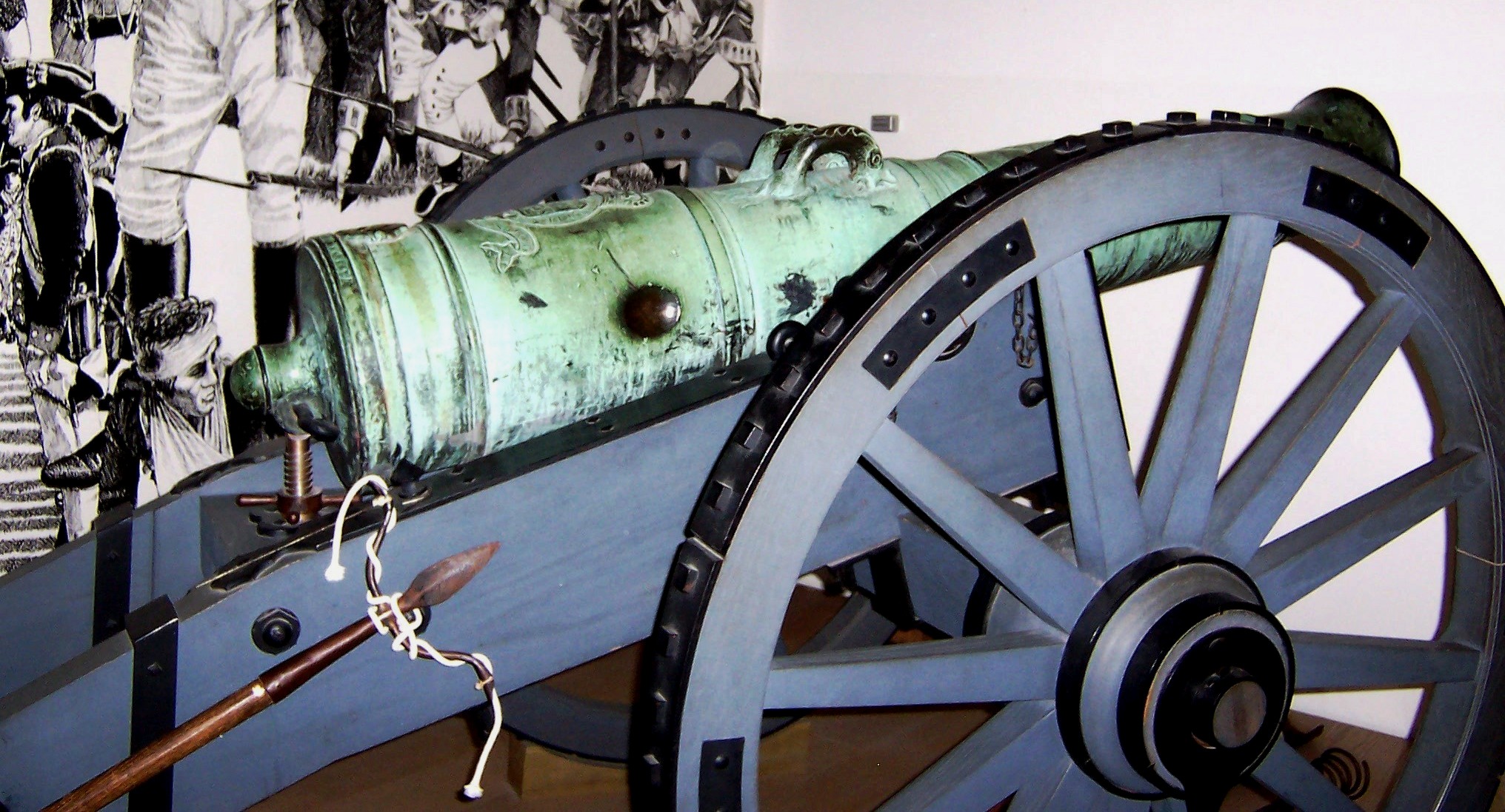
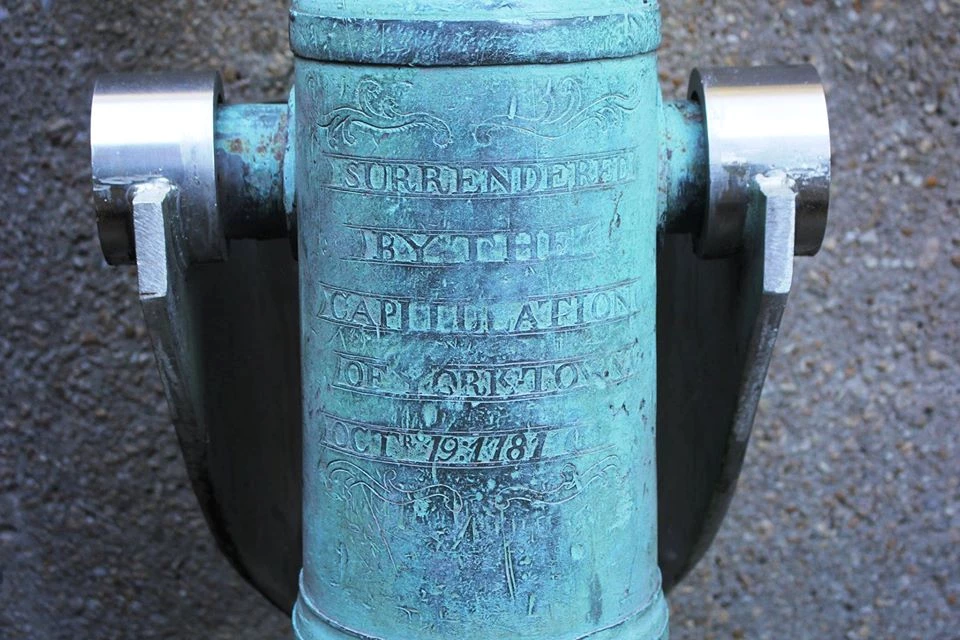
Among the captured British equipment in Redoubt 10 was a British bronze 12-pounder smoothbore muzzleloading (SBML) gun, cast by William Bowen, circa 1759. This gun was among the captured British equipment in Redoubt 10. It had been previously disabled. Ripped from its carriage, it bore a large indentation on its right side where it had been hit by French enfilading fire. Taking possession of the damaged gun, Lafayette had it inscribed “Surrendered at the Capitulation of Yorktown October 19, 1781” and turned the weapon over to the American Chief of Artillery General Henry Knox for use against its previous owners. The gun may have been used once again, in the War of 1812.
(National Park Service Photo)
The siege of Yorktown would prove to be the final battle of the Revolutionary War. Britain’s citizens had grown weary of the war and its great expense. The Treaty of Paris officially brought the war to a close on 3 Sep 1783, but the “Lafayette Gun’s” service to its new nation was far from over. The venerable old 12-pounder was likely used against British troops during the War of 1812. When the Treaty of Ghent was signed on 24 Dec 1814, assuring the United States yet another victory over England, the “Lafayette Gun” was sent to Watervliet Arsenal for storage.
In August 1824, President James Monroe invited the Marquis de Lafayette to visit the United States as its honored guest while it celebrated its 50th anniversary. Over the course of the next 13 months, the aging general visited each of the 24 states and was greeted by admiring crowds at every stop. One of those stops was Watervliet Arsenal.
Lafayette arrived by packet boat on 18 Sep 1824, at a side-cut of the Erie Canal. He had become familiar with the area many years before while making his way to Gen. Philipp Schuyler’s headquarters during the Revolutionary War. As temporary arsenal Commander Lt. Thomas J. Baird gave him a personal tour, Lafayette was struck by a vision from his past. As he stared in disbelief at a British 12-pounder cannon with a large indentation on its right side, memories flooded back to the old general. With moistened eyes, he embraced the gun and pronounced that this was an old friend.
On the occasion of Lafayette’s death a decade later on May 20, 1834, President Andrew Jackson ordered that the Marquis be given the same funeral honors that had been given to General Washington. Twenty-four gun salutes representing each state in the Union were fired from every military post in the nation. At Watervliet Arsenal, the twenty-fourth and final salute was fired from the general’s old friend the “Lafayette Gun.”
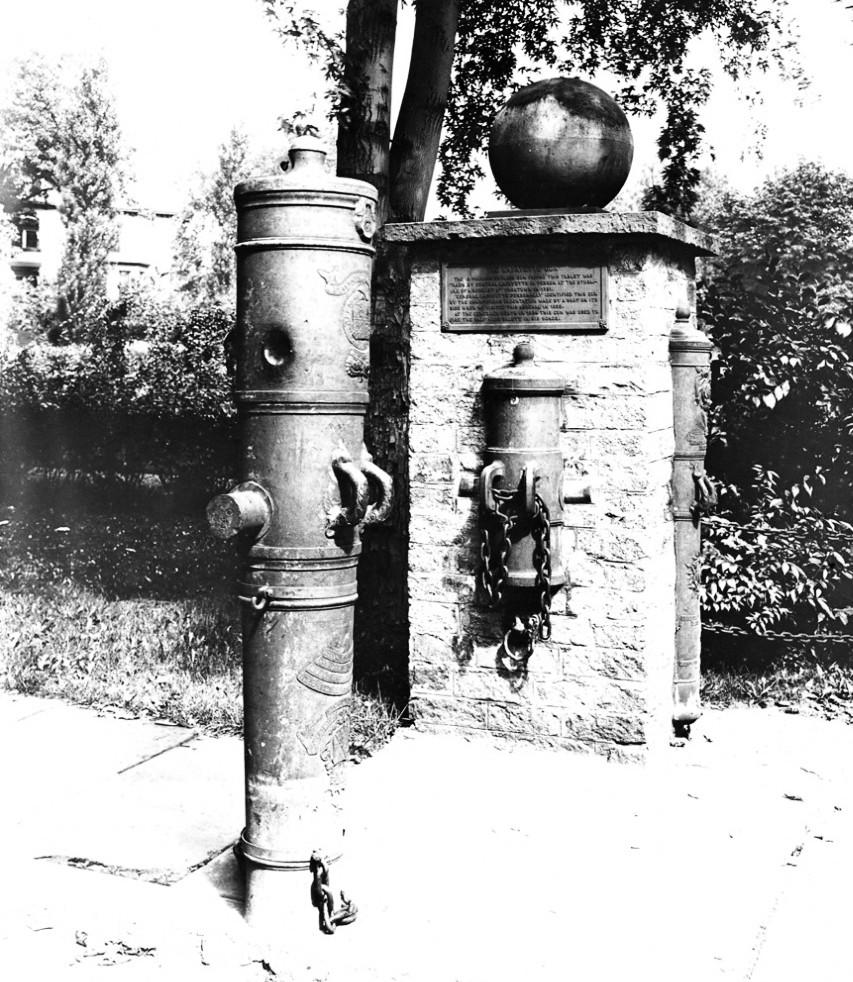
As years passed, the meaning and significance of the British 12-pounder seems to have been forgotten. The “Lafayette Gun” was removed from its carriage and cemented vertically into the sidewalk at the corner of the arsenal’s Dalliba and Farley Streets. The historic gun was now used as a gate post securing a chain that stretched across the roadway to a sister British 12-pounder captured at Fort George, Ontario in 1813.
Lafayette’s “old Friend” suffered this indignity until 1938 when the Yorktown National Monument began seeking all of the original guns that were used during the climactic 1781 siege. In response, the second session of the United States 71st Congress enacted a bill that “authorized the transfer of certain guns of the Revolutionary War period from the War Department and the Navy Department to the Department of the Interior.”
On February 25th of that year, workmen carefully removed the concrete from around the muzzle of the 12-pounder and extricated it from its long-time position in the arsenal sidewalk. Shipped to Yorktown, Va., the “Lafayette Gun” was conserved by the National Park Service curatorial staff and placed upon a reproduction carriage. Today it sits in proud dignity as the show piece of the visitor center at Yorktown National Battlefield where it was captured 229 years before. Lafayette’s “old friend” has come full circle and the Marquis would be proud to know that it carries his name in tribute to his selfless service to his adopted nation. (Watervliet Arsenal)
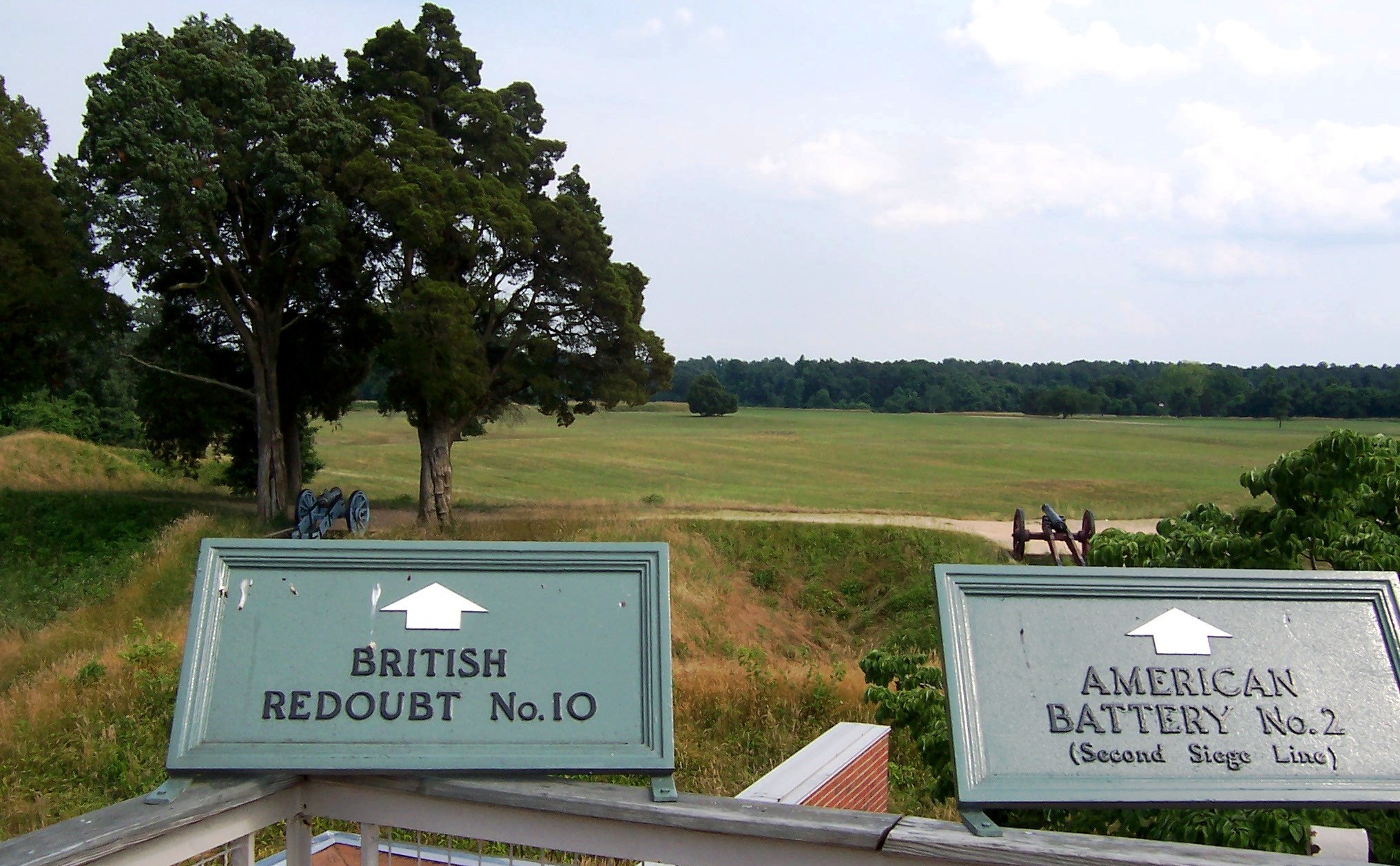
(Author Photo)
The Siege of Yorktown, Battle of Yorktown or Surrender at Yorktown, the latter taking place on 19 October 1781 at Yorktown, Virginia, was a decisive victory by a combined force of American Continental Army troops led by General George Washington and French Army troops led by the Comte de Rochambeau over a British Army commanded by British Lieutenant General Lord Cornwallis. The siege proved to be the last major land battle of the American Revolutionary War, and the culmination of the Yorktown campaign, as the surrender by Cornwallis, and the capture of both him and his army, prompted the British government to negotiate an end to the conflict. The battle boosted faltering American morale and revived French enthusiasm for the war, as well as undermining popular support for the conflict in Britain. After initial preparations, the Americans and French built their first set of parallel assault trenches and began the bombardment of the British positions. With the British defense weakened, Washington, on 14 October 1781 sent two columns to attack the last major remaining British outer defences. A French column took redoubt No. 9 and an American column captured redoubt No. 10. With these defences taken, the American and French allies were able to finish their second parallel trench works. As the American artillery moved in closer and its fire became more intense, the British situation began to deteriorate rapidly and Cornwallis asked for capitulation terms on 17 October. After two days of negotiation, the surrender ceremony took place on 19 October. Lord Cornwallis, claiming to be ill, was absent from the ceremony. With the capture of over 7,000 British soldiers, negotiations between the United States and Great Britain began, resulting in the Treaty of Paris in 1783.
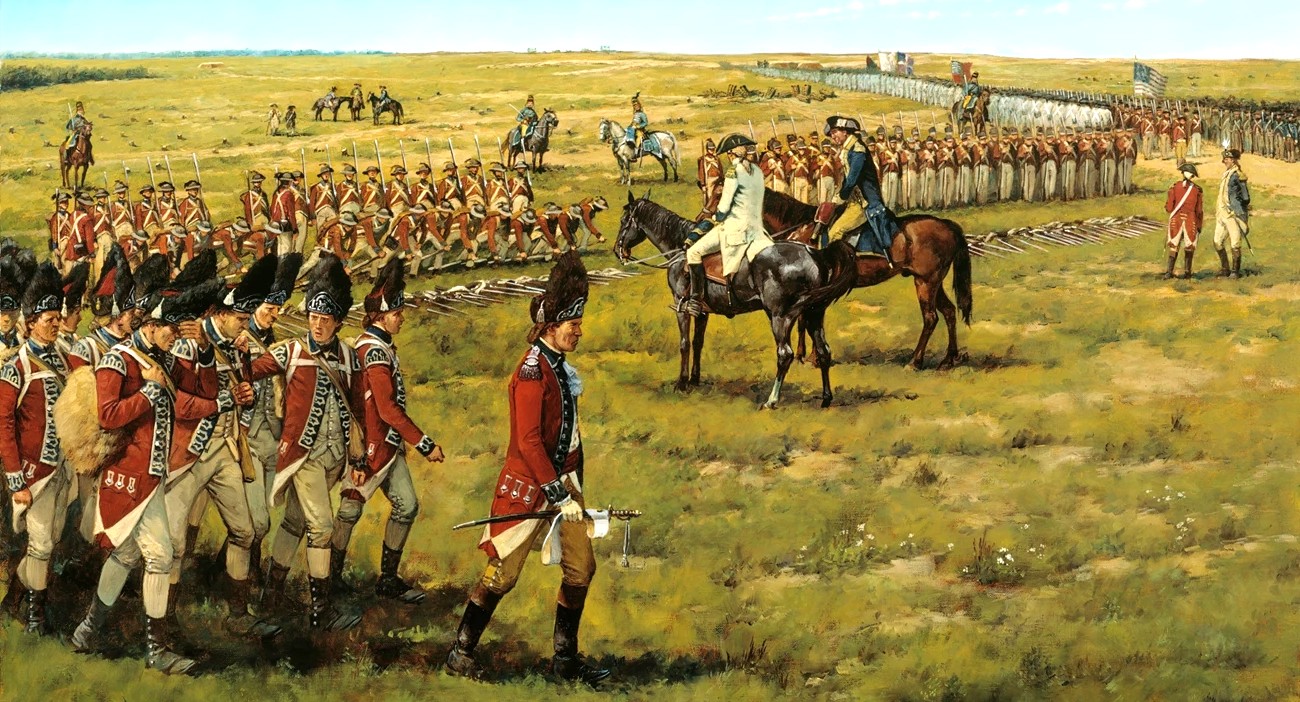
(Keith Rocco painting)
Yorktown Surrender Ceremony, 19 Oct 1781.
National Park Service Summary of the Surrender Negotiations
At 10 o’clock on the morning of October 17, 1781, a drummer beating a “parley,” and a British officer with a flag of truce, mounted a parapet south of Yorktown. The allies saw the signal, and soon the incessant, devastating artillery fire ceased. A hushed stillness fell over the field.
Lord Cornwallis, realizing the defeat of his army was inevitable, sent a message to General George Washington:
“Sir, I propose a cessation of hostilities for twenty-four hours, and that two officers may be appointed by each side, to meet at Mr. Moore’s house, to settle terms for the surrender of the posts of York and Gloucester.”
Why Cornwallis selected the Moore House for the negotiations was not explained, however, there are a number of possibilities.The Moore House was well outside the line of siege fire, and therefore, not damaged. It was a neutral location, hiding the British situation in town, and possibly selected in the hope of securing better surrender terms. And finally, it was a convenient location for both sides to reach, as it was situated along the York River
Washington agreed to only a two hour cease fire for Cornwallis to submit general terms of surrender. Messages continued to pass over the battlefield between the two commanders.
Finally, on the afternoon of October 18, the two British commissioners, Lieutenant Colonel Thomas Dundas and Major Alexander Ross met in “Mr. Moore’s house” with the allied officers, Lieutenant Colonel John Laurens, for the Americans, and Second Colonel Viscount de Noailles (Marquis de Lafayette’s brother-in-law), representing the French.
The negotiations ended before midnight, and Laurens carried a rough draft of the articles to General Washington. Washington, however, was not completely happy with the results and made a few minor changes. Once the articles were revised and redrafted, a copy was sent to Cornwallis in Yorktown for his signature.
The Articles
The Articles of Capitulation were terms for the surrender of Cornwallis’s British army. The 14 articles directed the surrender from the disposition of the troops, artillery, and arms, to even the surrender ceremony itself.
The articles directed where the troops, now prisoners of war, were to be sent. The soldiers were marched off to camps in Frederick, Maryland, and Winchester, Virginia. One field officer for every 50 men was allowed to reside near their respective regiments to witness their treatment and deliver clothing and other necessaries to the soldiers at the camps. All other officers were paroled and allowed to go to Europe, New York, or any other American post then in possession of the British forces, on the condition they would no longer fight until properly exchanged.
Another article provided for the care of the sick and wounded prisoners. Proper hospitals would be furnished, with patients attended by their surgeons on parole. Medicine and supplies were to be provided by the American hospitals, the British stores in both York and Gloucester, and passports would be issued to procure further supplies from New York if necessary.
The third article referred to the surrender ceremony and contained the provision that deprived the British of the honors war. Customary honors allowed the surrendering troops to march out of their works with their regimental flags flying and playing an enemy’s tune in honor of the victor. George Washington was not going to allow these honors, instead he stated, ” The same honors will be granted to the surrendering army as granted to the garrison of Charlestown”. In May, 1780, an American army was captured at Charleston, South Carolina and not given the honors of war, therefore, in retaliation, the British would not be granted them at Yorktown. The troops, the article read, were to “…march out…with shouldered arms, colors cased, and drums beating a British or German march. They are then to ground their arms and return to their encampment, where they will remain until they are dispatched to the places of their destination…”
By the afternoon of October 19th, 1781, both commanders had signed the Articles of Capitulation, and the defeated British army was marching out from Yorktown to lay down their arms, ending the last major battle of the American Revolution.
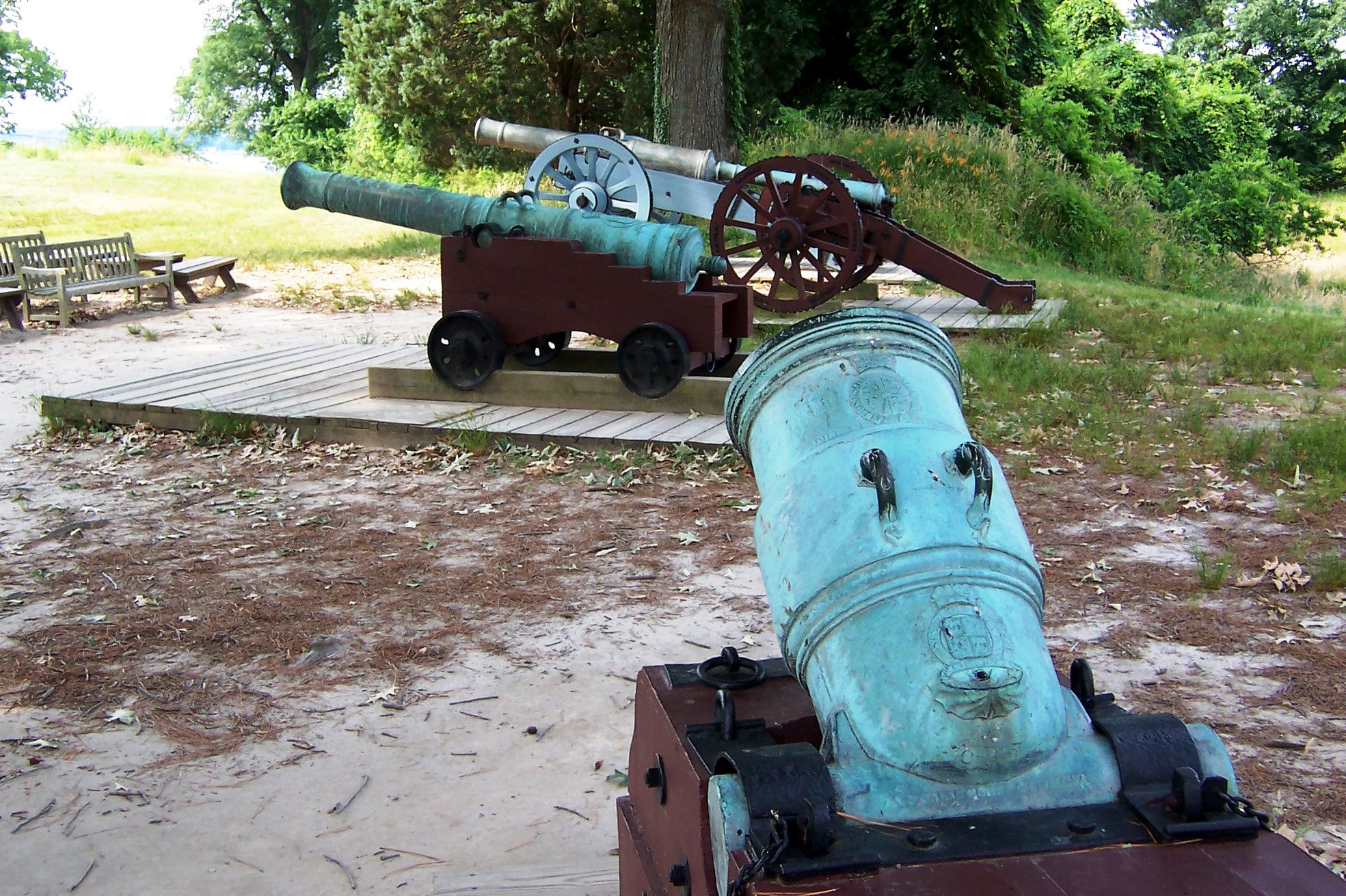
(Author Photo)
Three types of artillery were in use during the Revolutionary War at the Battle of Yorktown, Guns (Cannon), Howitzers and Mortars. Field Guns included lightweight, mobile pieces and heavy siege guns which had limited mobility. Field guns, firing solid shot, grapeshot and canister in a fairly flat trajectory, could tear large holes in the enemy’s infantry ranks. Siege guns fired solid shot, destroying fortifications and buildings. Heated rounds of hot shot were used against ships. These included a superheated cannon ball that could set a ship on fire; and bar shot and chain shot, (two halves of a cannon ball attached by either a bar or chain) that could pull down a ship’s mast and rigging.
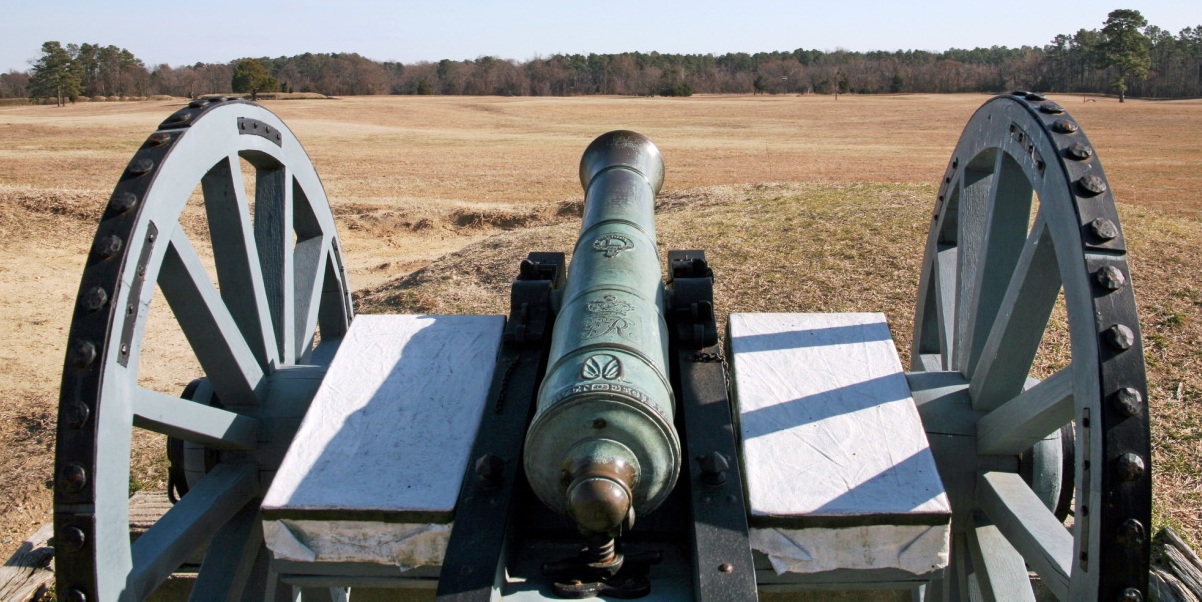
(Cliff Photo)
British bronze 6-pounder SBML gun mounted on a field carriage at Yorktown.
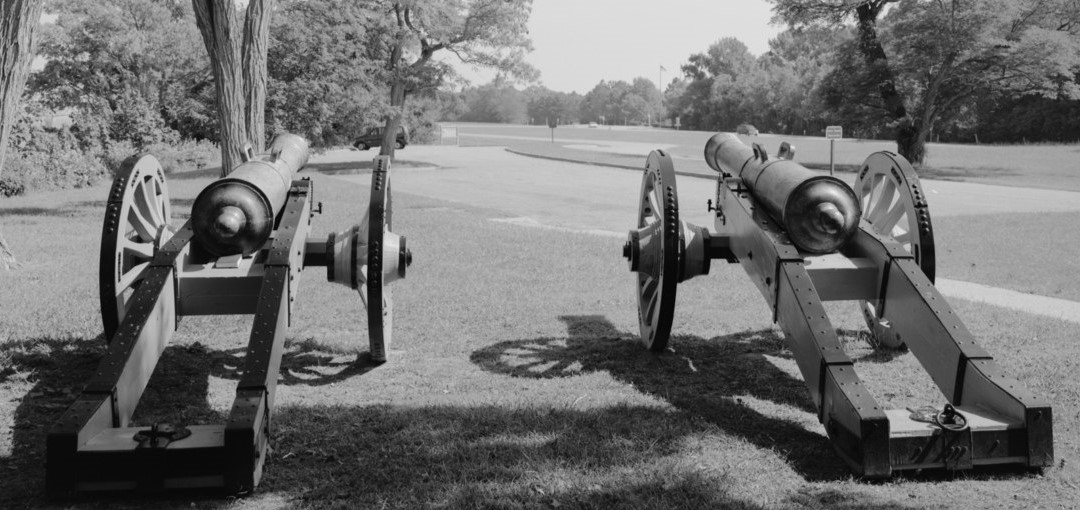
(Jack Boucher Photo)
General view from the Southwest of Fusilier’s Redoubt Overlook. The York River bridge is visible in the the background, Colonial Parkway, Yorktown to Jamestown Island, Yorktown, York County, Virginia.
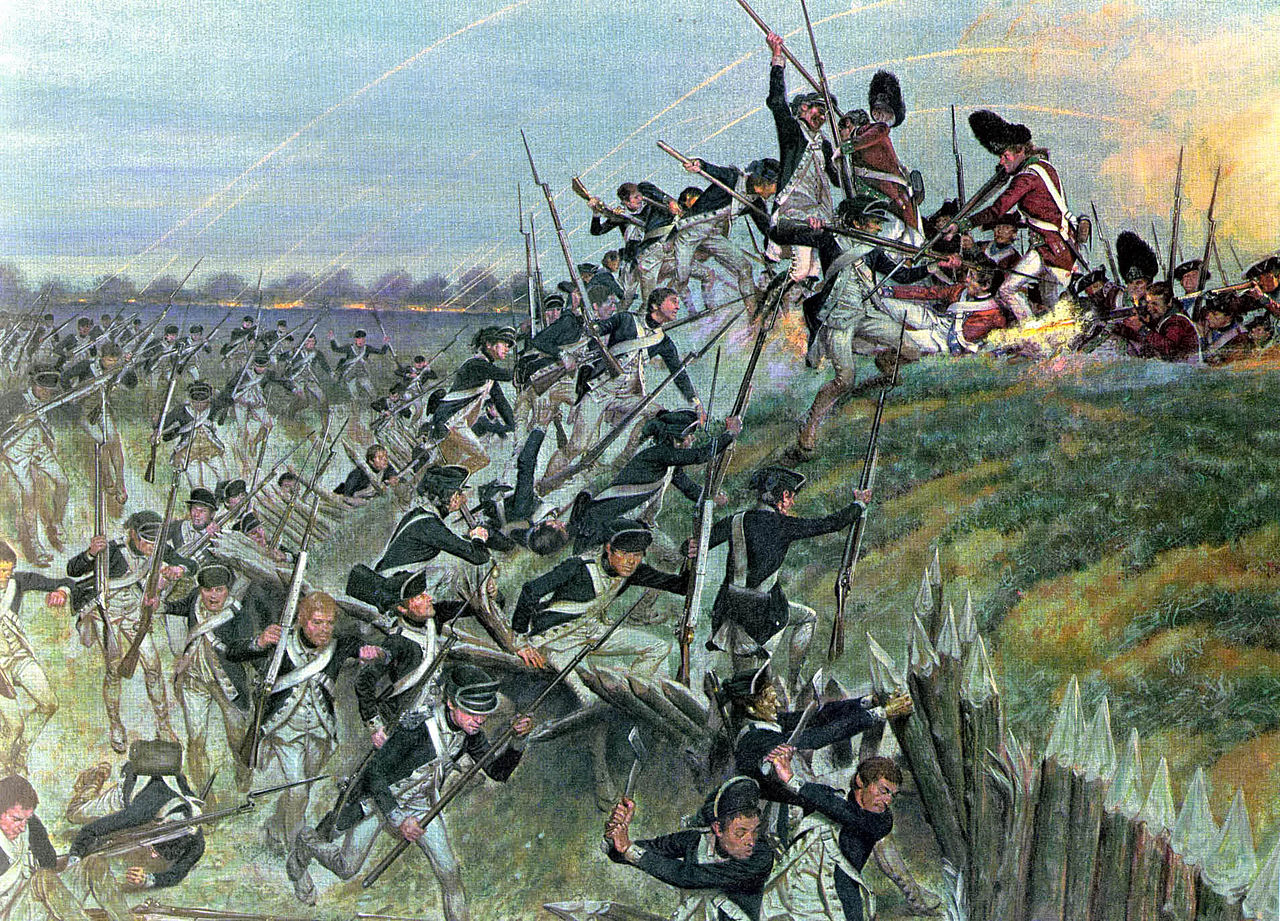
Storming of redoubt # 10 during the Siege of Yorktown. Hugh Charles McBarron Jr.
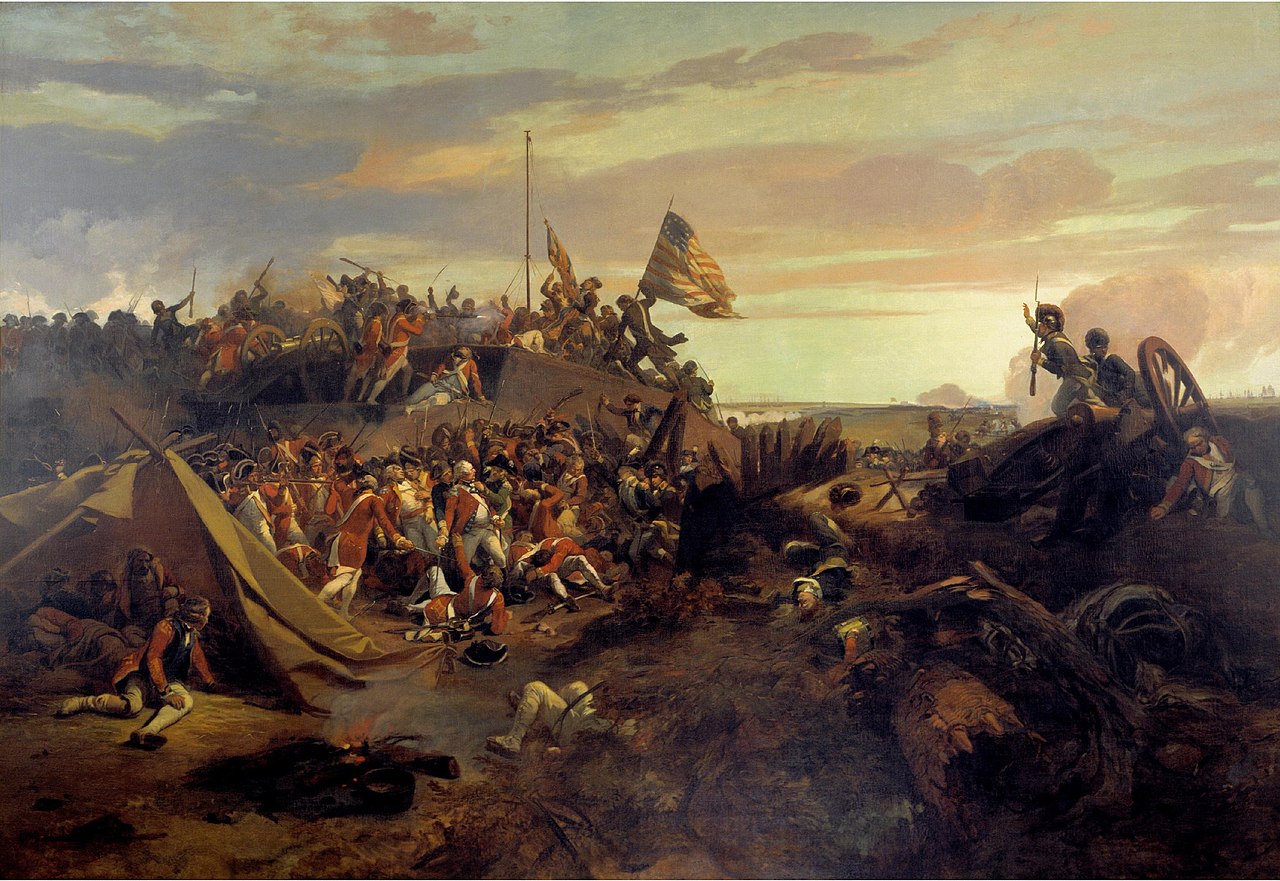
Storming of redoubt # 10 during the Siege of Yorktown. Eugène Louis Lami.
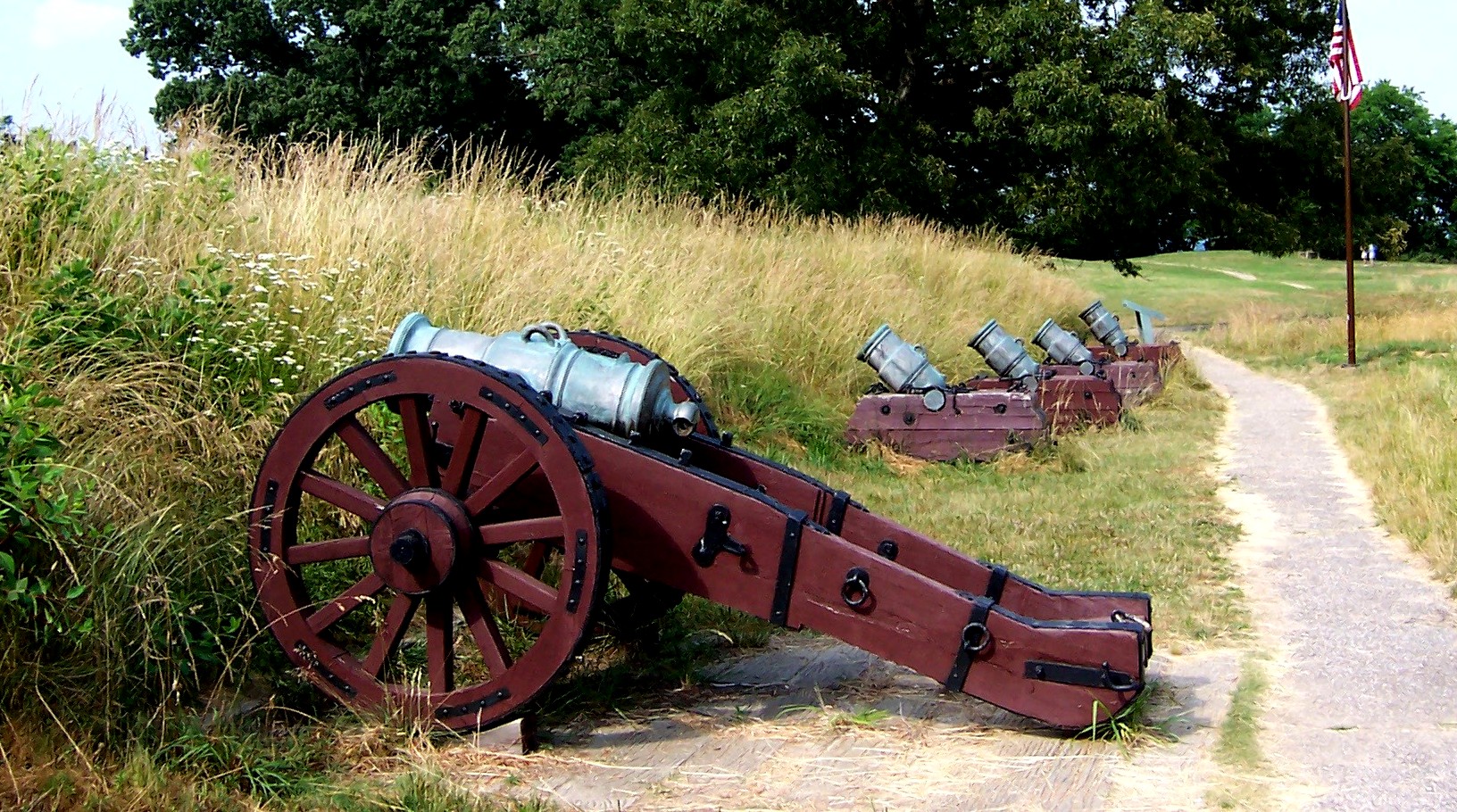
(Author Photo)
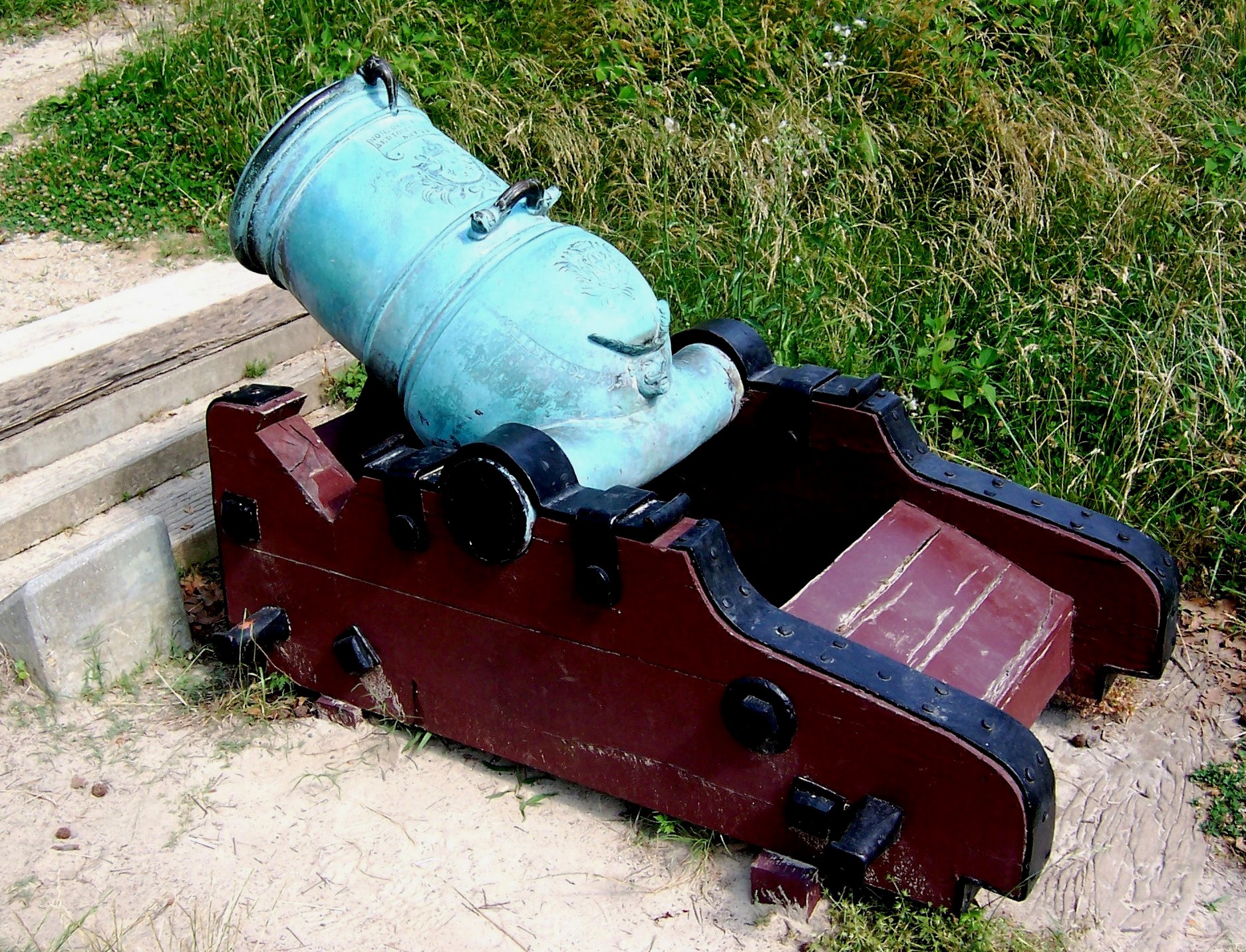
(Author Photo)
French bronze 4-pounder SBML mortar, “La Perileuse”, cast by Jean Bérenger at Strasbourg, circa 1758
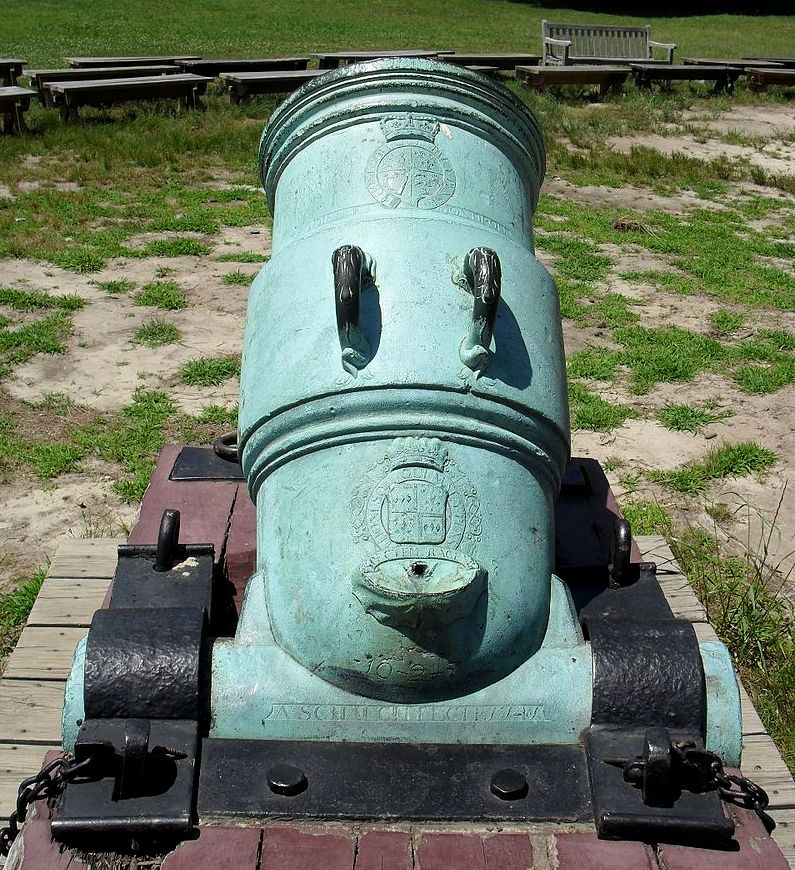
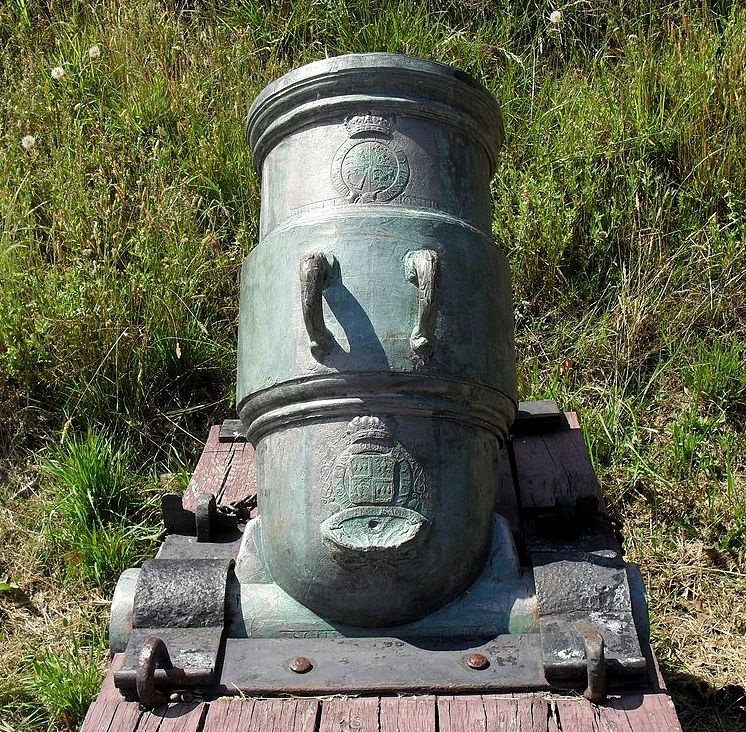
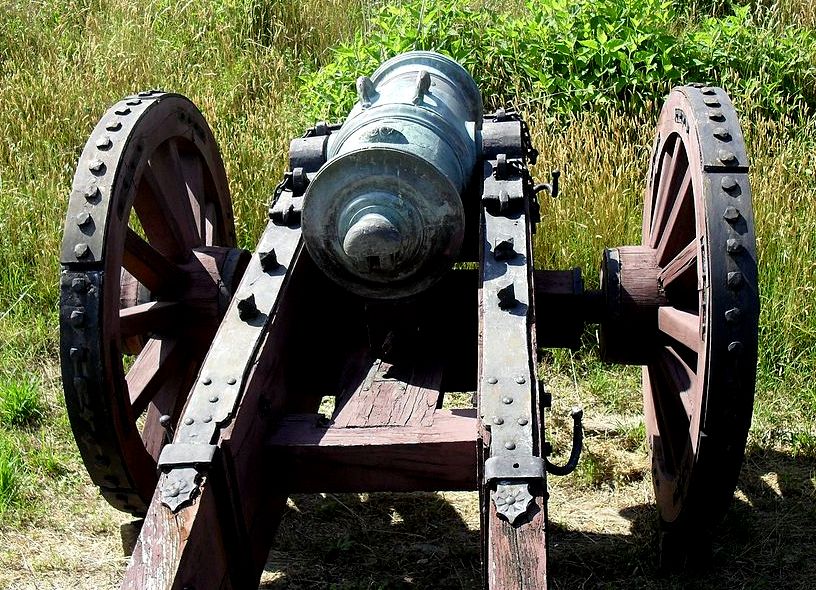
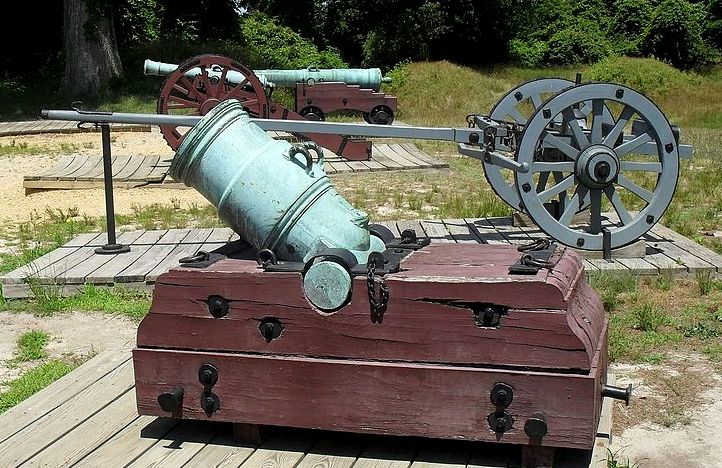
Mortars differed from cannon in both appearance and firing principles. A mortar was mounted on a flat bed, resembling a large block of wood. An elevating wedge raised the barrel, enabling the mortar to fire an exploding shell, called a “bomb,” in a high trajectory. Fired properly, the bomb would fly over earthworks and explode while still airborne, raining shrapnel over the enemy.
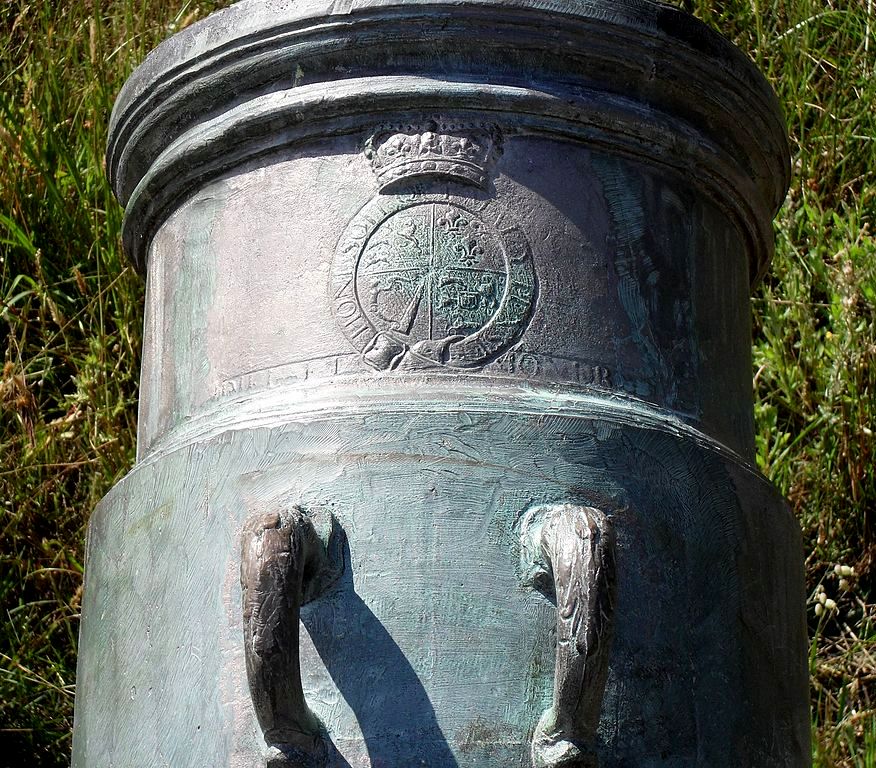
(DrStew82 Photo)
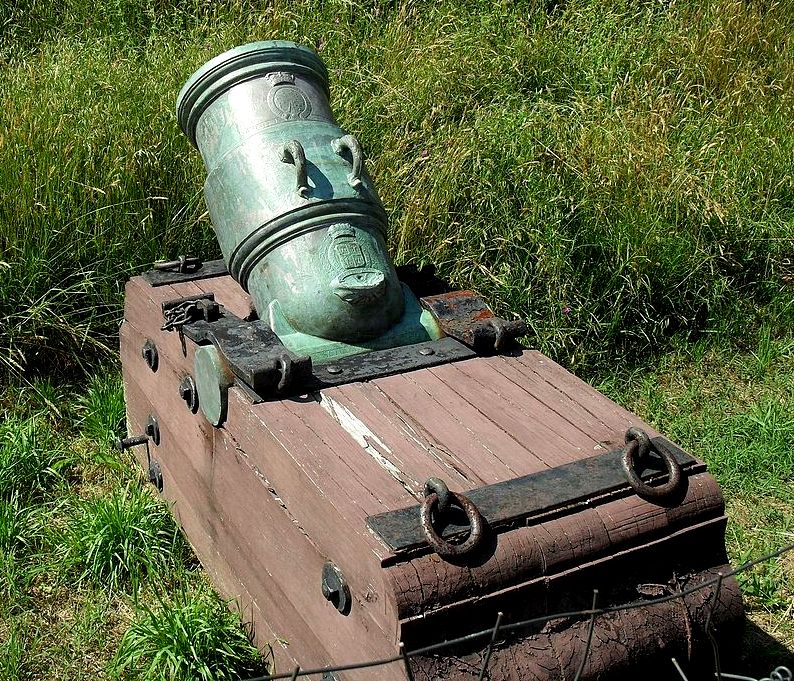
(DrStew82 Photo)
British bronze mortar with cypher.
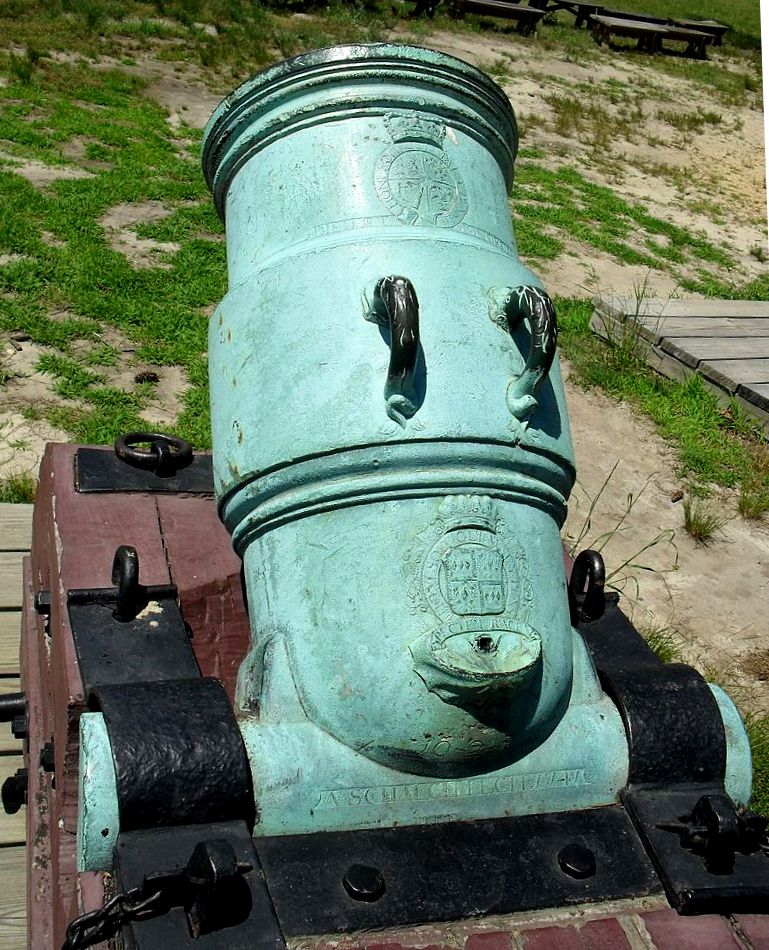
(DrStew82 Photo)
(DrStew82 Photo)
(DrStew82 Photo)
British bronze mortar with cypher.
(DrStew82 Photo)
(John Athayde Photo)
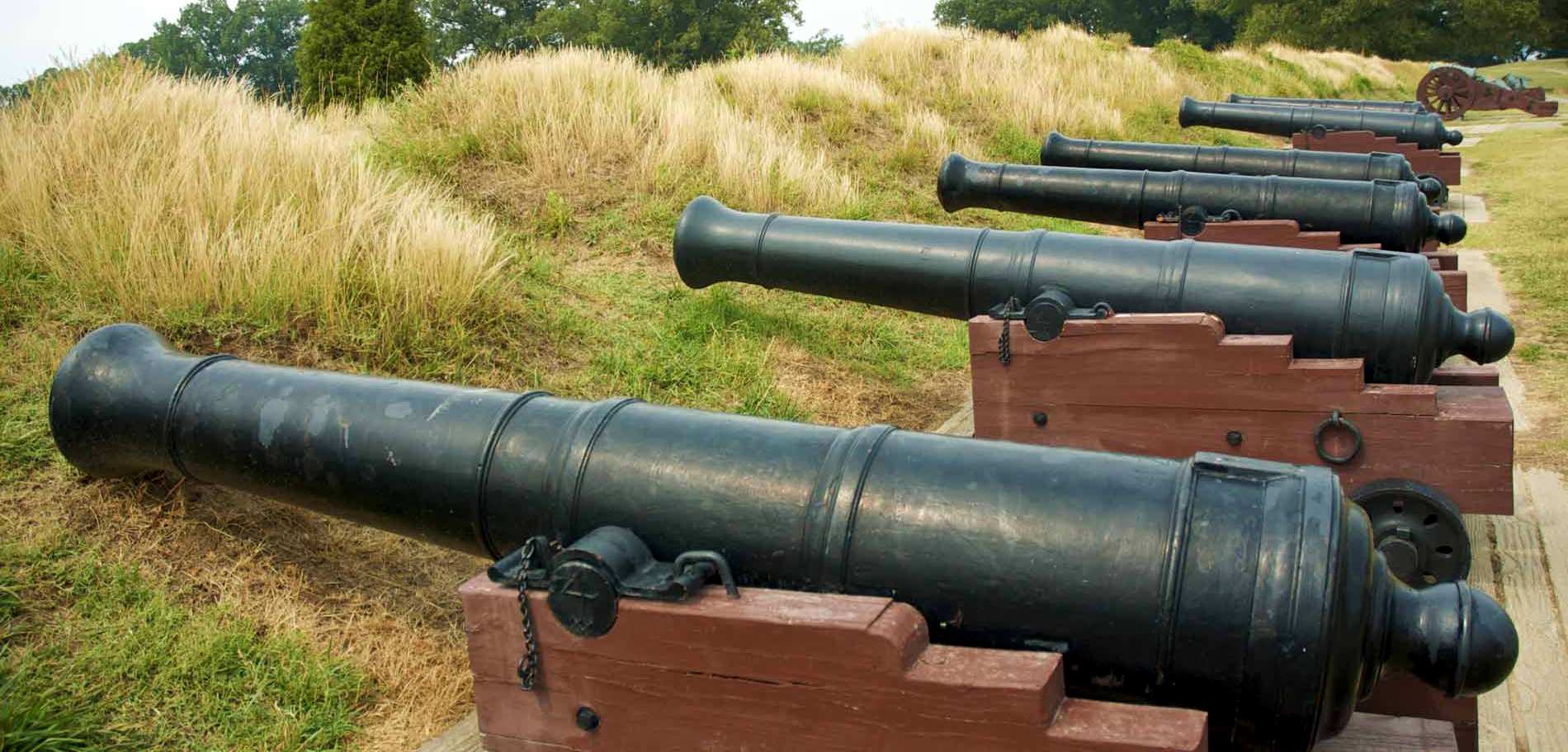
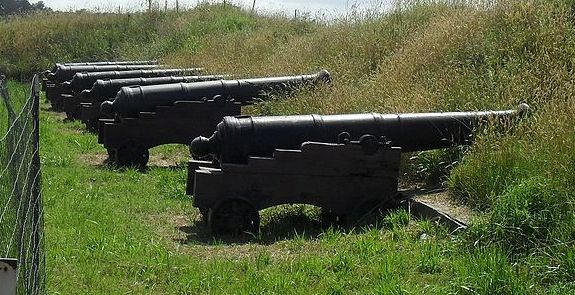
Replica cast iron 24-pounder SBML guns on wood naval gun carriages.
During the Siege of Yorktown in 1781, French artillery along the banks of the York River targeted British warships.
The weapon of choice used was a clever modification made to traditional cannonballs, making hot-shot or heated shot. Artillery crews would heat iron round-shot with fire until it was red-hot, and when fired into the ship, these heated rounds would catch wood, cloth, and anything flammable on fire. To protect the gun crews, wetted wadding was inserted into the bore of the cannon between the gunpowder charge and the hot shot to protect against self-detonation during loading. The British fleet’s flagship, HMS Charon, took hot shot rounds in at least three places. With a depleted crew and most of the ship burning from the hold to mastheads, she broke from her moorings and drifted into another transport ship at Gloucester Point catching both ships ablaze burning to the waterline. (National Park Service)
(DrStew82 Photo)
(DrStew82 Photo)
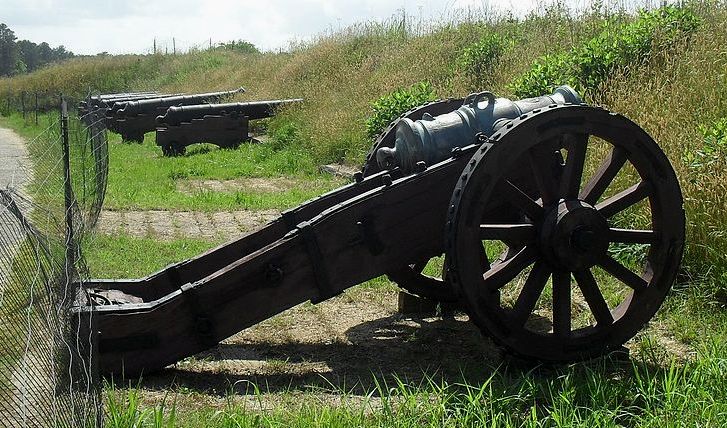
Field gun with naval SBML guns in land use in background. Revolutionary War artillery on display at Yorktown Battlefield.
(DrStew82 Photo)
(DrStew82 Photo)
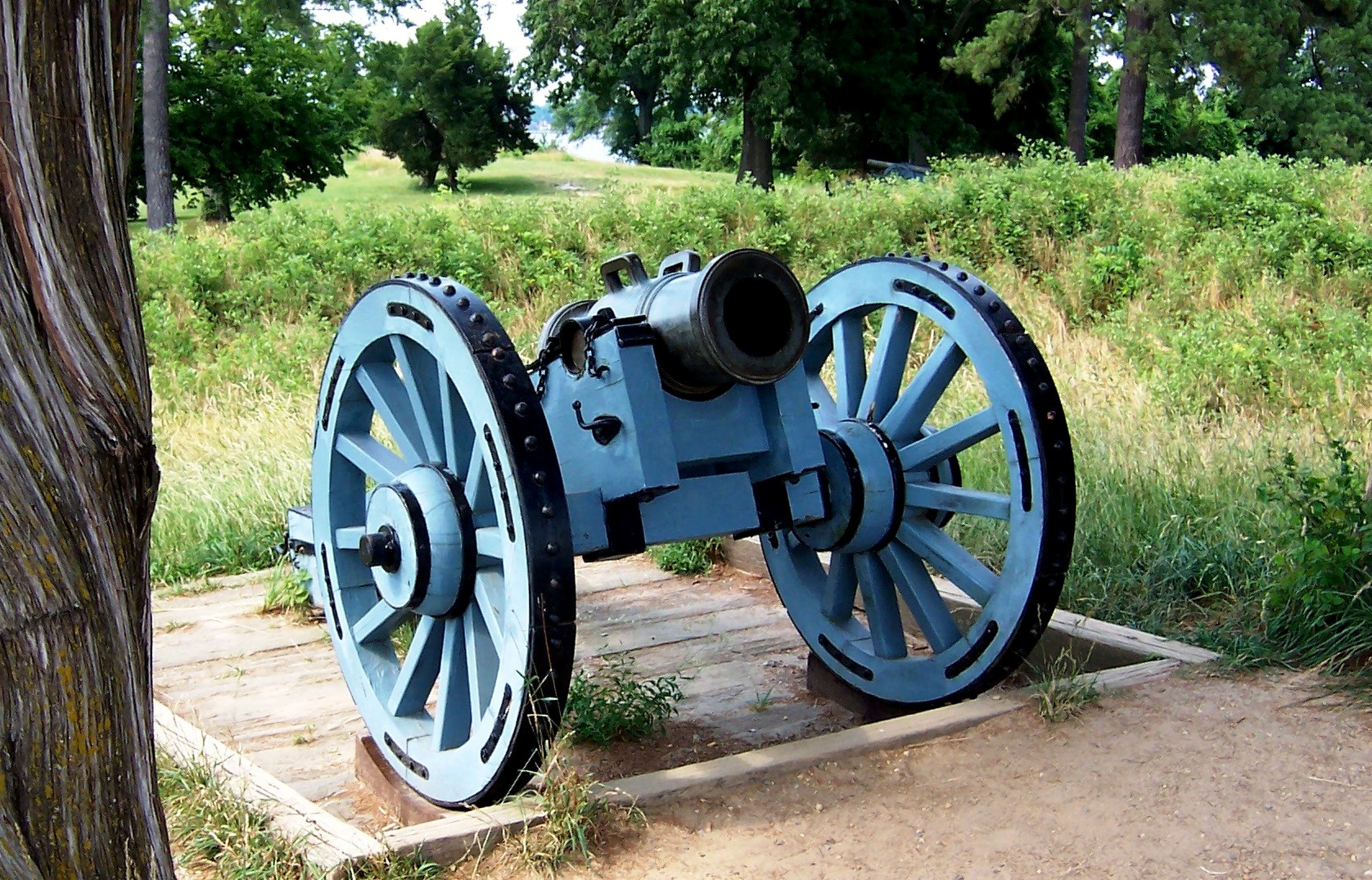
(Author Photo)
British bronze ight 3-pounder SBML gun, cast by Jan and Pieter Verbruggen, circa 1776, mounted on a field carriage.
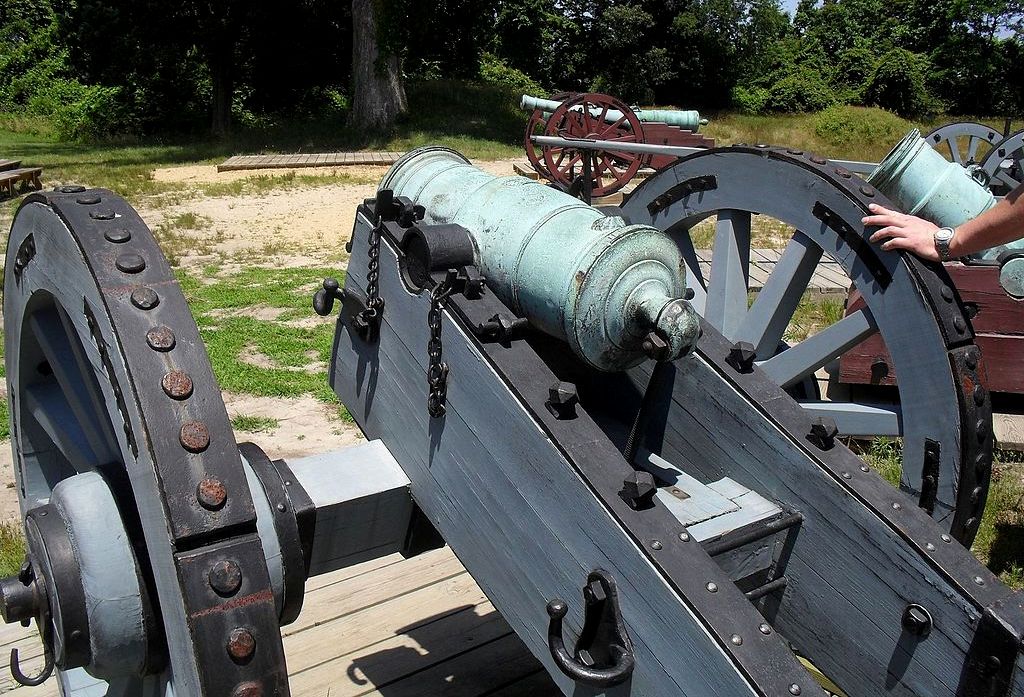
The howitzer combined the principles of both the cannon and the mortar. Mounted on a field carriage, the howitzer fired both bombs and cannon balls at a flat or high trajectory. When the British surrendered at Yorktown, the American forces collected 244 artillery pieces of mainly lightweight field guns. These had been ineffective against the the American earthworks. While General Washington’s forces had considerably fewer guns, approximately 131, it was their superior number of siege guns and their skilled gun crews, such as Colonel Lamb’s Artillery, that made the difference.
American and French artillery was a key element that led to Allied victory at Yorktown in 1781. Utilizing siege cannon, seasoned American gunners and professional French artillerists fired over 15,000 rounds into British lines during the nine day bombardment. Their effectiveness, accuracy and destructiveness helped convince Britain’s Lord Cornwallis to surrender.
One of the American artillery units at Yorktown was the Second Regiment of the Continental Artillery, commanded by Colonel John Lamb. After the British surrender, Lamb was placed in temporary command of all the artillery, and oversaw its return to New York. On 30 Sep 1783, Lamb was brevetted a brigadier general.Today, a volunteer living history gun crew, representing Colonel Lamb’s artillery regiment, conducts periodic firing demonstrations with a reproduction 18-pounder siege gun, commemorating the merit and distinction which Lamb’s artillery displayed during the siege of Yorktown.
American cast iron 6-pounder SBML gun, cast by Samuel and Daniel Hughes, circa 1775-1783, and a French bronze 4-pounder SBML gun, “La Bellone”, cast by D.E. Dupont at Rochefort, circa 1773, are also on display in the battlefield park.
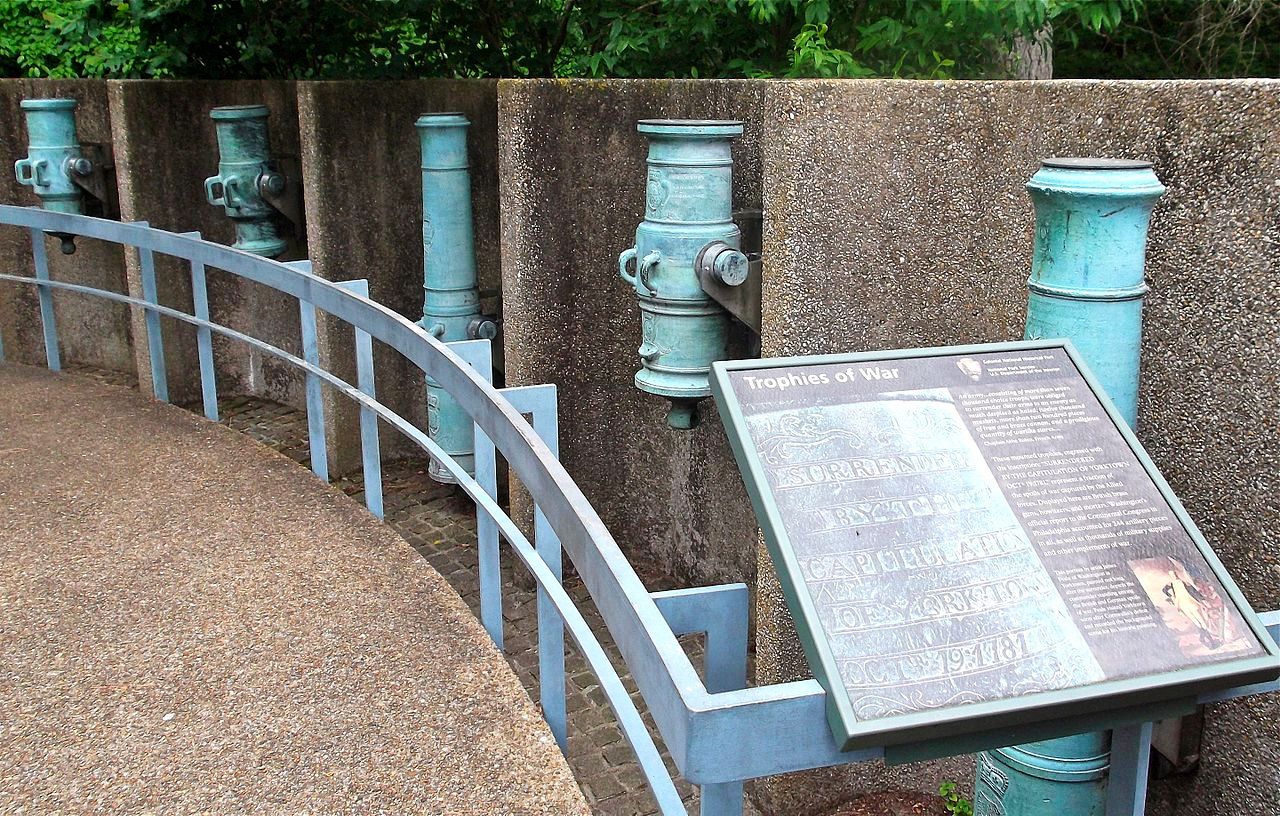
(MPSharwood Photo)
British bronze guns captured at Yorktown.
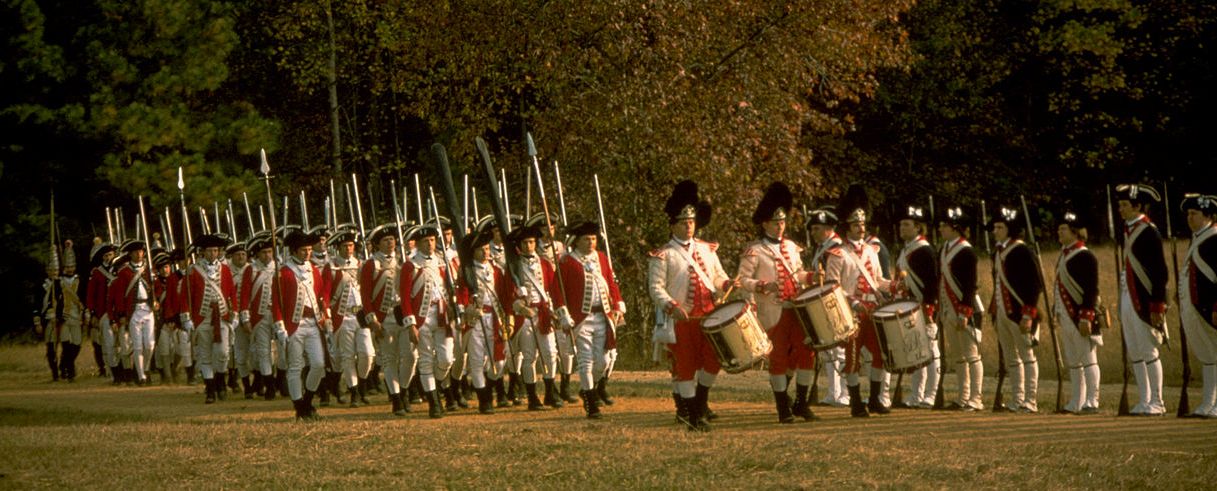
(National Park Service Digital Image Archives Photo)
As the American artillery moved in closer and its fire became more intense, the British situation began to deteriorate rapidly and Cornwallis asked for capitulation terms on 17 October. After two days of negotiation, the surrender ceremony took place on 19 October. Lord Cornwallis, claiming to be ill, was absent from the ceremony. With the capture of over 7,000 British soldiers, negotiations between the United States and Great Britain began, resulting in the Treaty of Paris in 1783. Yorktown Battlefield (Part of Colonial National Historical Park), re-enactors recreating the surrender ceremony.
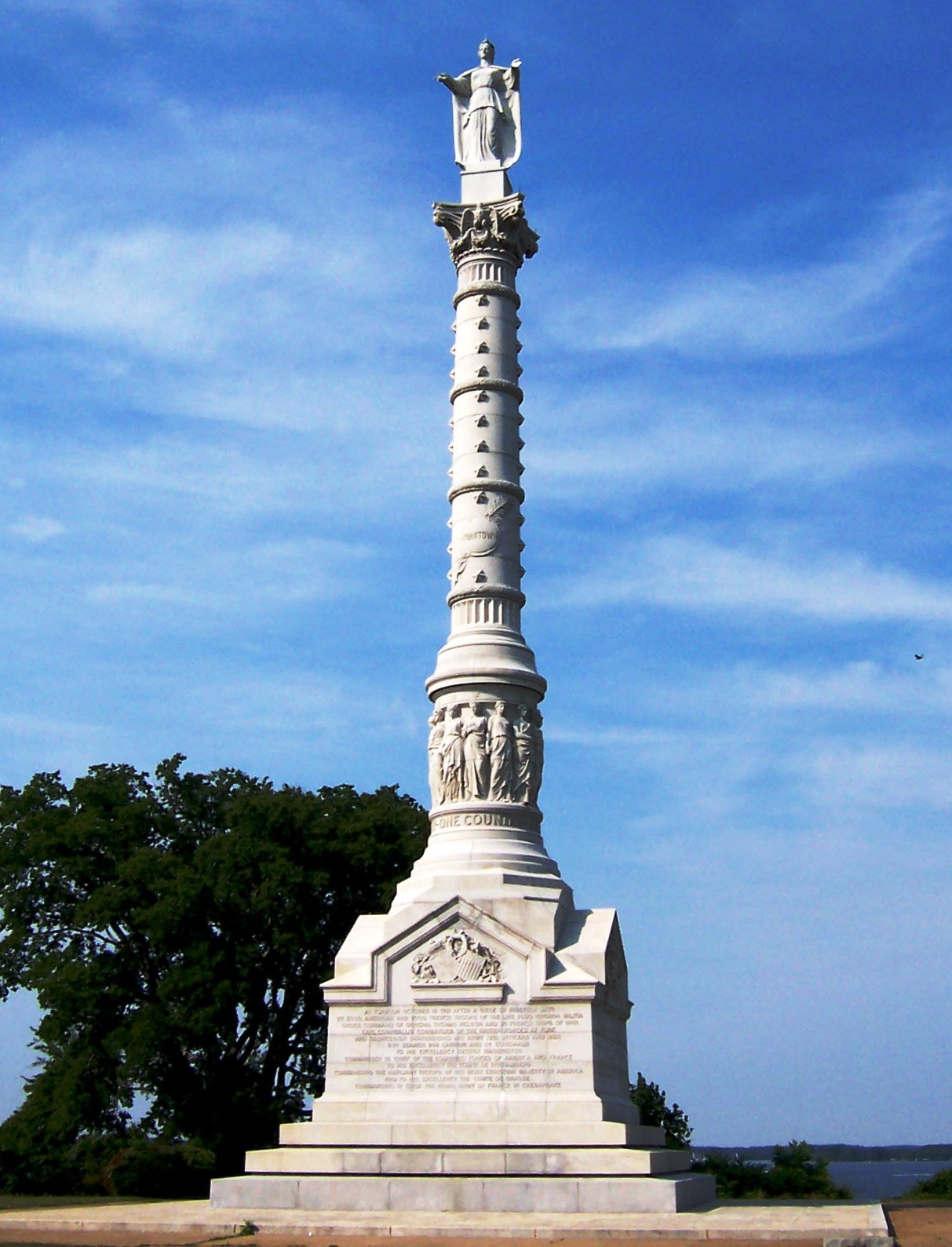
(Author Photo)
Yorktown Victory Monument.
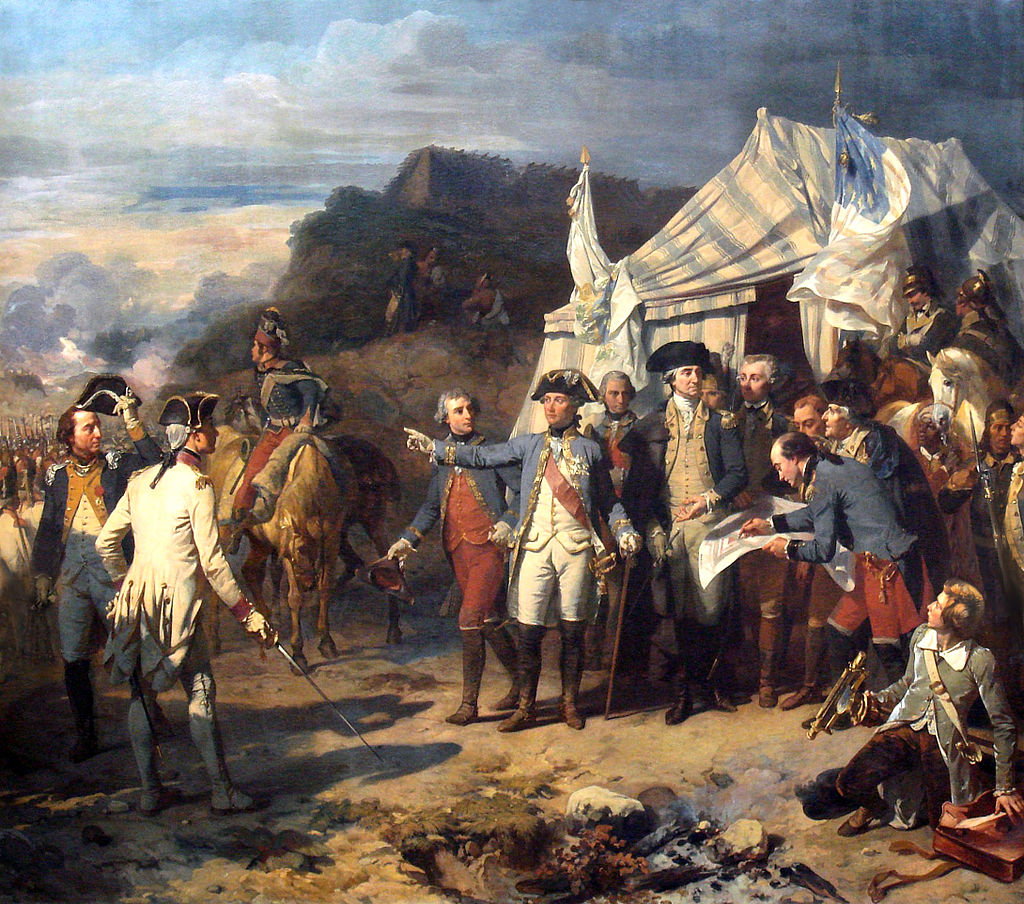
The Siege of Yorktown by Auguste Couder.
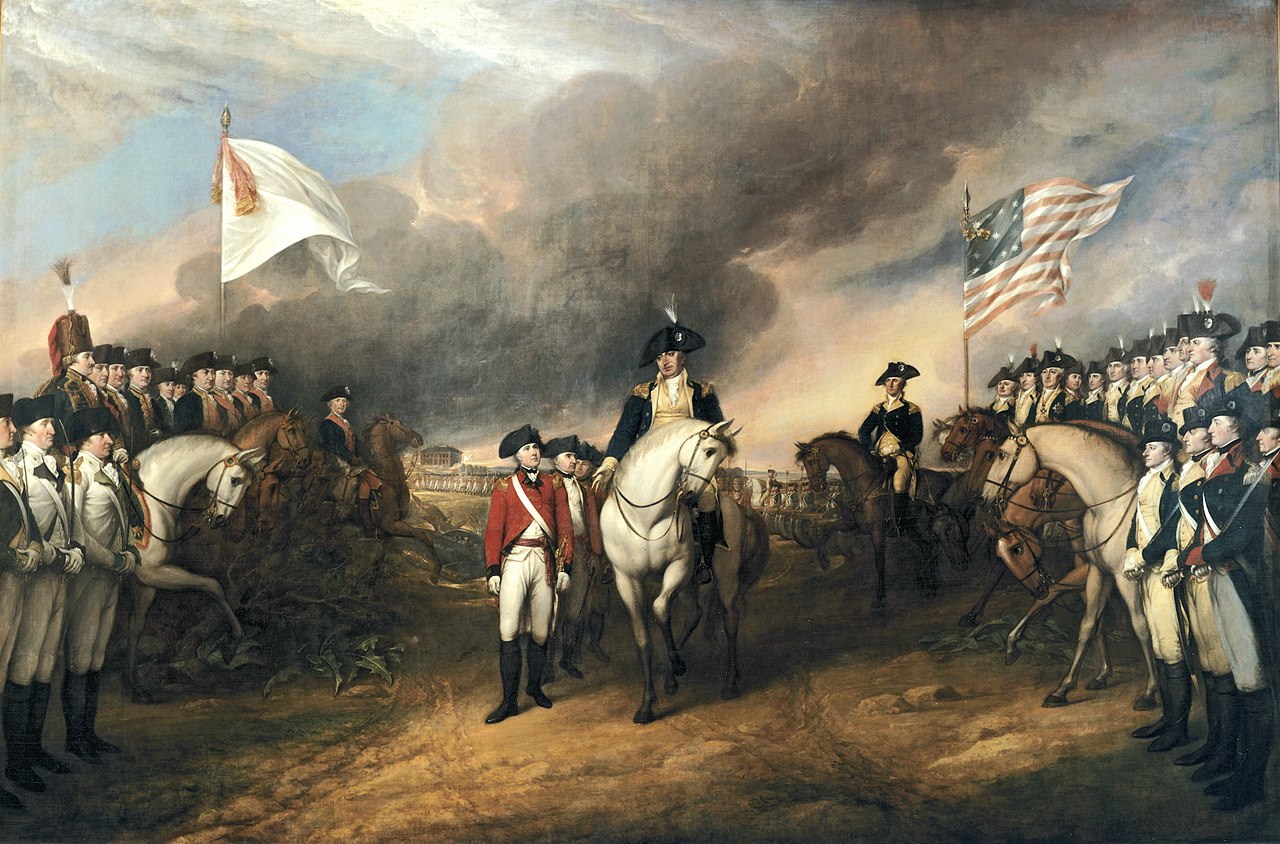
This painting depicts the forces of British Major General Charles Cornwallis, 1st Marquess Cornwallis (1738–1805) (who was not himself present at the surrender), surrendering to French and American forces after the Siege of Yorktown (September 28 – October 19, 1781) during the American Revolutionary War. The central figures depicted are Generals Charles O’Hara and Benjamin Lincoln. The United States government commissioned Trumbull to paint patriotic paintings, including this piece, for them in 1817, paying for the piece in 1820.
National Park Service summary of what happened after the Battle at Yorktown, from 1781 to 1783.
|
Many visitors to Yorktown Battlefield are confused by the time lapse between the battle and the ratification of the Treaty of Paris, in September 1783. They often wonder, and occasionally ask, what happened during this time, and why did the treaty take so much time to work out? The defeat at Yorktown caused a change in the British government. Prime Minister Lord North and the Tory party were ousted, and the Whigs, under Rockingham, assumed power. This new government opened negotiations with the American commissioners in Paris. The American had eight main goals, four of which were considered to be essential to any peace settlement, and the other four to be favorable additions. The four essential terms included 1) Independence from Great Britain and removal of all British troops from United States territory; 2) Settlement of all boundaries; 3) Canadian territory to revert to those boundaries before the Quebec Act; and 4) American rights to fish in the Grand Banks and use of Canadian shores to dry and cure the catch. (The optional terms included Britain ceding all of Canada to the United States, British payment for damage caused by British military action, a formal apology by Parliament admitting that Britain was wrong to have caused the war, and allowing American ships and merchants to have the same rights and privileges of commerce as their British counterparts within the British Empire.) By November 1782, the British and American commissioners had reached agreement and signed preliminary terms of peace. However, under the terms of the Franco-American alliance, this peace treaty could not go into effect until Britain and France reach agreement. In turn, France had an additional alliance with Spain, so no Anglo-French treaty could go into effect until Britain and Spain also reach agreement. Because of Spain’s contribution to the war they desired the return of Gibraltar by Great Britain. The French proposed that Gibraltar be returned to Spain, that Great Britain be compensated by awarding her several French islands in the Caribbean, and that Spain cede control of Santa Domingo to France. The war-weary British expressed interest in this plan. In September 1782, Spain had mounted an expedition, attempting to retake Gibraltar. Negotiations were frozen as all eyes turned expectantly to view the result. It was a humiliating failure, which, together with the French naval defeat in the Caribbean, reinvigorated the British and hardened their negotiating position. Spain and France were now forced to be more accommodating at the negotiating table. The British put forth a proposal in which they would retain Gibraltar, but Spain would be bought off by awarding her East and West Florida. The Spanish were also reluctant to accept the Mississippi River as the western border of the United States, having their own claims to the territory between the Mississippi and the Appalachian Mountains. (Spain had gained control of Louisiana after the Seven Years War.) France, on the verge of bankruptcy, pressured Spain to accept this settlement and thus end the war. Finally, on January 20, 1783, all parties reached agreement and an armistice was declared. A change of British government and minor modifications to the French and Spanish treaties, as well as Anglo-Dutch negotiations, delayed the final ratification of the Treaty of Paris until September 3, but on that day the War for American Independence officially concluded. In the words of the French negotiators, “England has been plucked all over; but to pluck the bird without make her squawk, voila, le grand art!” |