Canadian Army in the Korean War, 1950 – 1953
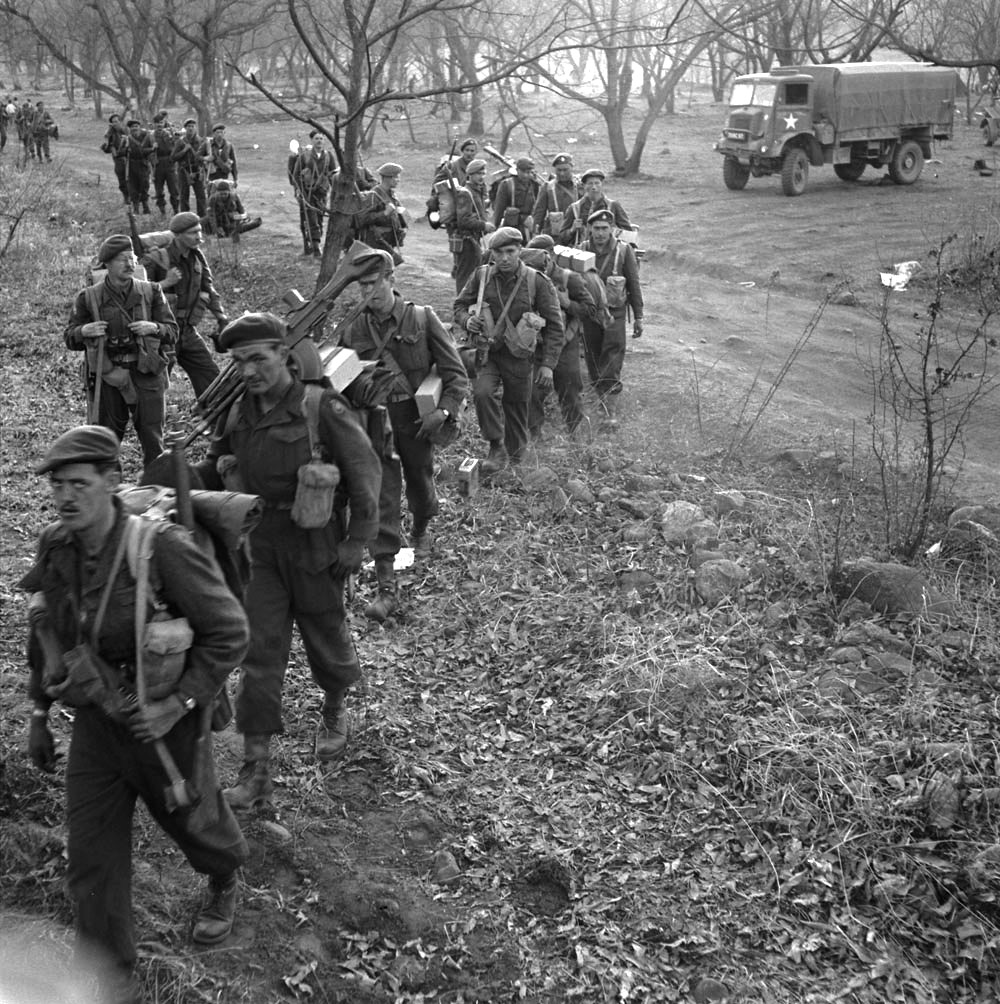
(Library and Archives Canada Photo, MIKAN No. 4476730)
2nd Battalion Princess Patricia’s Canadian Light Infantry in combat area, Korea.
On 15 August 1950, following the invasion of the Republic of Korea (ROK or South Korea) by the Chinese Communist-dominated North Korea, the Second Battalion of the Regiment was formed as part of the Canadian Army Special Force. On the same date, the serving unit was designated First Battalion. The Second Battalion trained at Sarcee (in Calgary), Wainwright and Fort Lewis, USA. On 25 November 1950 under the command of LCol J.R. Stone, DSO, MC, the battalion sailed from Seattle on the USNS Private Joe P. Martinez bound for Pusan, South Korea.
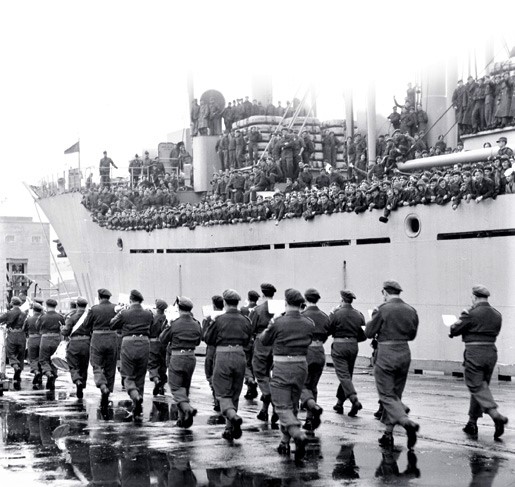
(DND Photo)
On 30 November 1950, a Third Battalion of the Regiment was formed. This battalion trained in Wainwright, Camp Borden and Ipperwash, Ontario. It provided replacements for both the First and Second Battalions during their tours of duty in Korea.
The Second Battalion arrived in Korea on 8 December and spent the next eight weeks undergoing training in mountain warfare and small unit tactics. On 6 February 1951, Second Battalion joined the 27th British Commonwealth Brigade, IX Corps, U.S. Eighth Army and became the first Canadian infantry battalion to be involved in the Korean conflict.
On 22 April 1951, the Chinese began a major offensive against the United Nations Forces. The Chinese immediately broke through the first line of defences, held by the 6th ROK Division. All that stood between the Chinese army and the South Korean capital of Seoul was 2 PPCLI, Third Battalion Royal Australian Regiment and A Company 72nd US Heavy Tank Regiment. All three units were tasked to defend the Kapyong Valley. The Chinese attacked in overwhelming force and eventually managed to push the Australians off their position. Second Battalion was then cut-off but held off the Chinese forces and by doing so saved Seoul and countless UN lives. In recognition of “outstanding heroism and exceptionally meritorious conduct,” a United States Presidential Unit Citation was awarded to Second Battalion, the Australians and the American tank company for their actions at Kapyong on 24-25 April 1951.
On 25 May 1951, Second Battalion was transferred to the 25th Canadian Infantry Brigade, 1st Commonwealth Division. The Second Battalion was relieved in Korea by the First Battalion in the fall of 1951 and returned to Calgary to take over the airborne role.
The Third Battalion relieved the First Battalion in Korea in the fall of 1952 and was occupying Hill 355, “Little Gibraltar,” when the Korean War ended on 27 July 1953. After twelve months on active service, 3 PPCLI was reduced to nil strength on 8 January 1954. The CO, RSM, and selected others transferred to the Second Battalion, Canadian Guards, to form the nucleus of the new unit. Third Battalion would not be reactivated again until April 1970 when the Queen’s Own Rifles of Canada (QOR of C) was reverted to Militia. The QOR of C’s 1st Battalion, based in Victoria, B.C., became 3 PPCLI. (https://ppcli.com/ppcli-museum-description/regimental-history/korea/)
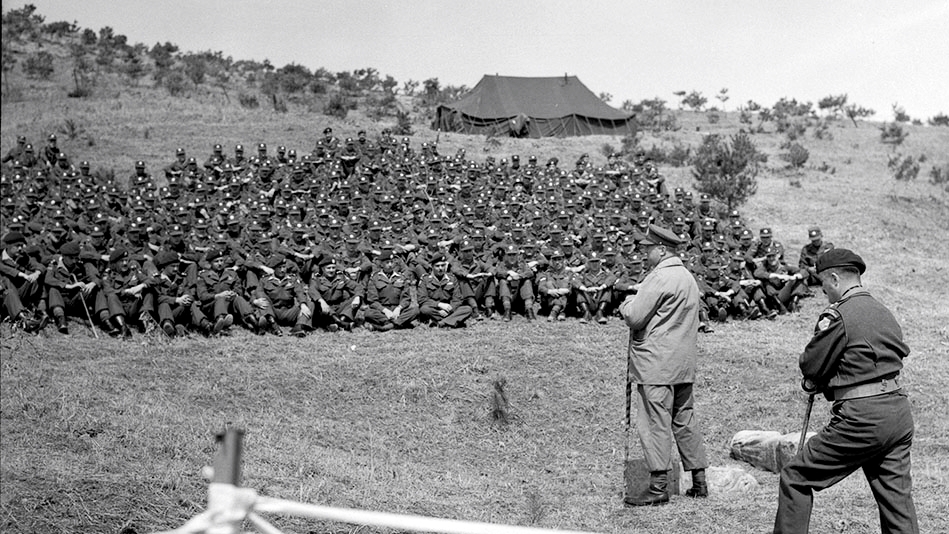
(Library and Archives Canada Photo, MIKAN No. 3224880)
Major-General M.M. Alston-Roberts-West, G.O.C. 1st Commonwealth Division, thanking personnel of the 1st Battalion, RCR, on completion of the unit’s service in the Far East, 22 March 1953.
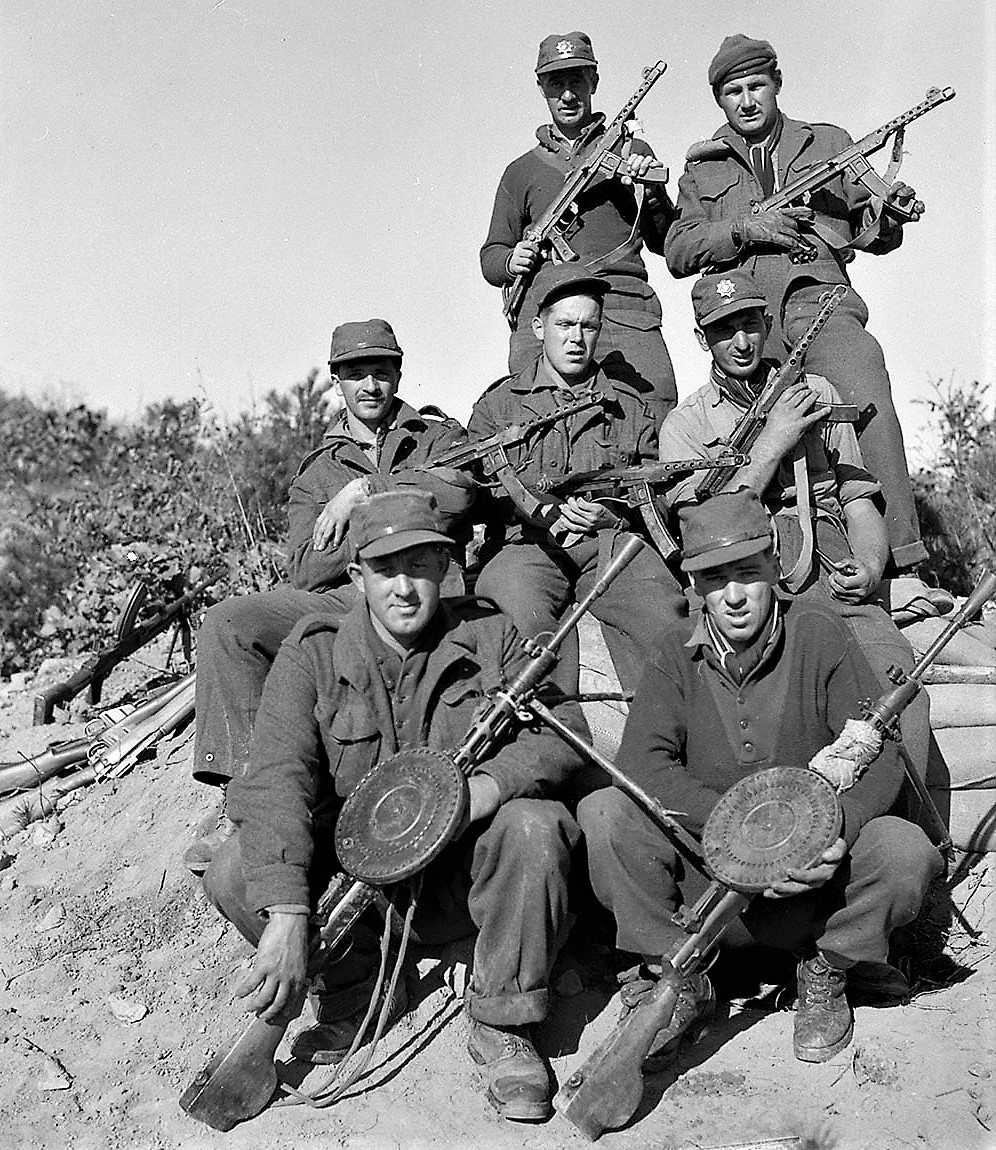
(Library and Archives Canada Photo, MIKAN No. 3524492)
Soldiers of the 2nd Battalion, RCR in Korea, with captured Chinese weapons, (Front, L-R): Ptes. E.J. Paquette, Bill Brayley, (Centre, L-R): Ptes, Raymond Schiedel, Cliff Bertrom, L/Cpl. Ernie Lounsby, 3 November 1951. The two men in front are holding Degtyaryov DP-27 machine-guns, the five in the back are holding PPS-43 7.62-mm submachine-guns.
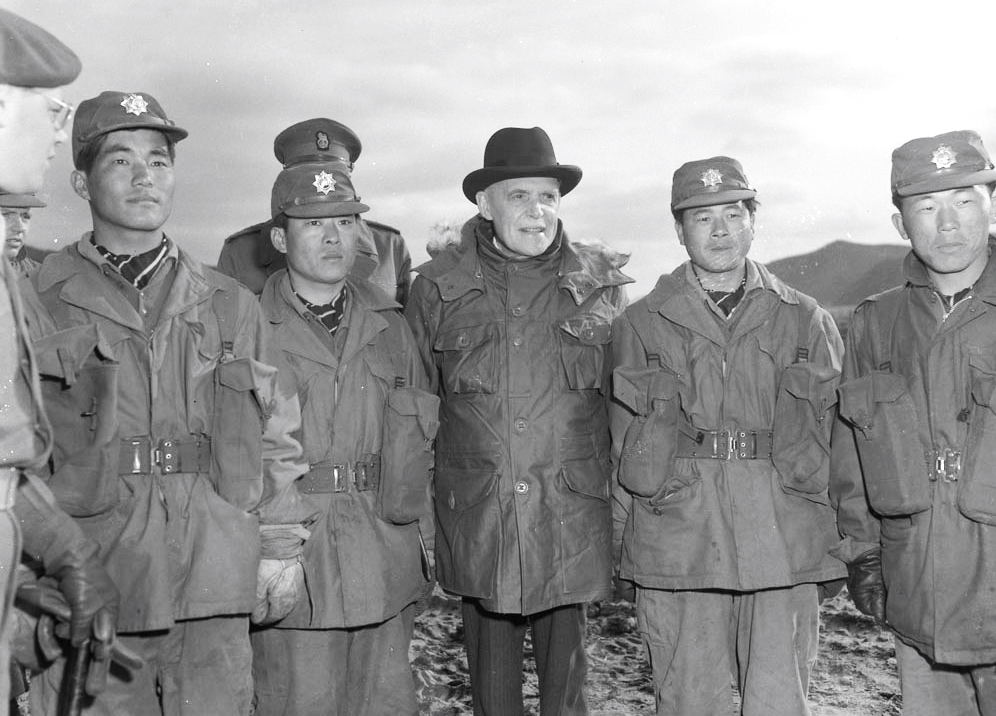
(Library and Archives Canada Photo, MIKAN No. 4929234)
Prime Minister Louis St. Laurent visits 3rd Bn, RCR, at the rifle range in Korea. Major Jenkins in command, March 1954.
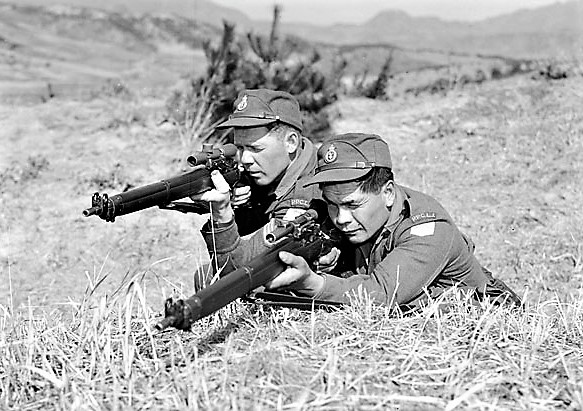
(Library and Archives Canada Photo, MIKAN No. 3600137)
PPCLI snipers in Korea, March 1953.
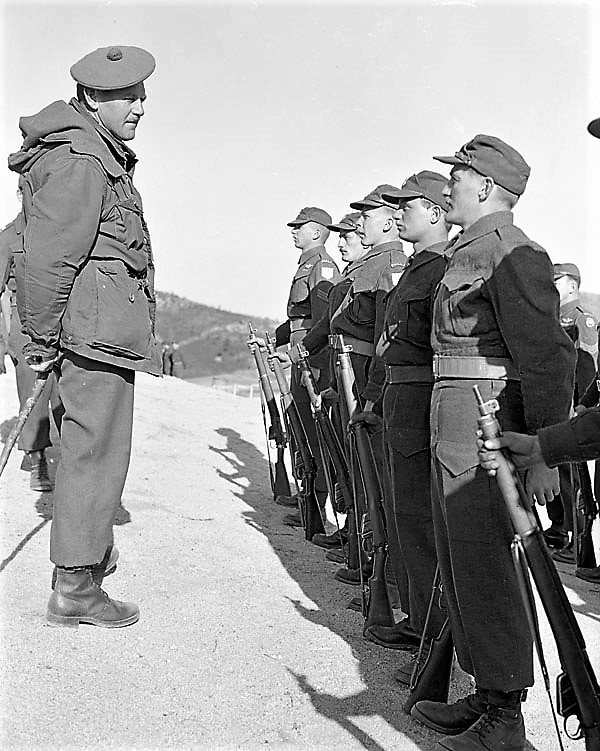
(Library and Archives Canada Photo, MIKAN No. 4939527)
PPCLI Scouts and Sniper Platoon, Korea, ca 1953.
(Library and Archives Canada Photo, MIKAN No. 3199590)
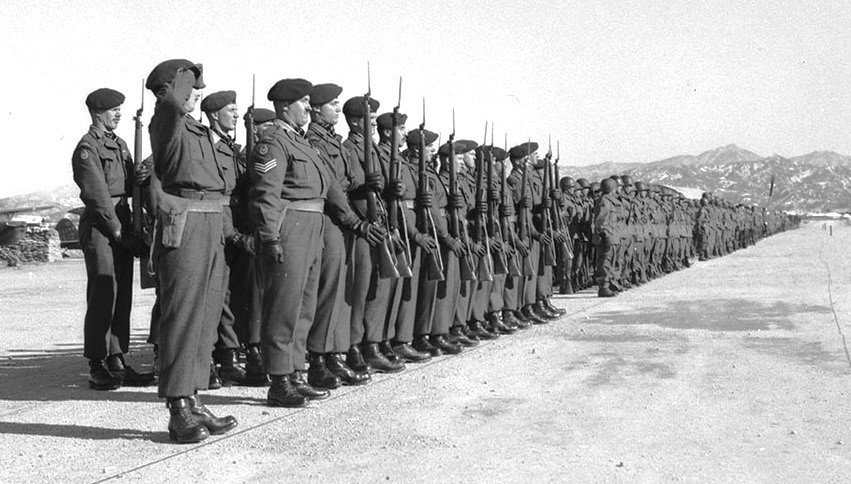
1st Battalion of the Royal Canadian Regiment presenting arms as U.S. President Dwight D. Eisenhower arrives for a visit to Korea. During the presidential campaign of 1952, Republican candidate Eisenhower was critical of the Truman administration’s foreign policy, particularly its inability to bring an end to the conflict in Korea. President Truman challenged Eisenhower on 24 October to come up with an alternate policy. Eisenhower responded with the startling announcement that if he were elected, he would personally go to Korea to get a firsthand view of the situation. The promise boosted Eisenhower’s popularity and he handily defeated Democratic candidate Adlai E. Stevenson. Shortly after his election, Eisenhower fulfilled his campaign pledge, and as shown here, went to Korea.
After taking office, Eisenhower adopted a get-tough policy toward the communists in Korea. He suggested that he would “unleash” the Nationalist Chinese forces on Taiwan against communist China, and he sent only slightly veiled messages that he would use any force necessary (including the use of nuclear weapons) to bring the war to an end unless peace negotiations began to move forward. The Chinese, exhausted by more than two years of war, finally agreed to terms and an armistice was signed on 27 July 1953.
(Library and Archives Canada Photo, MIKAN No. 3199043)
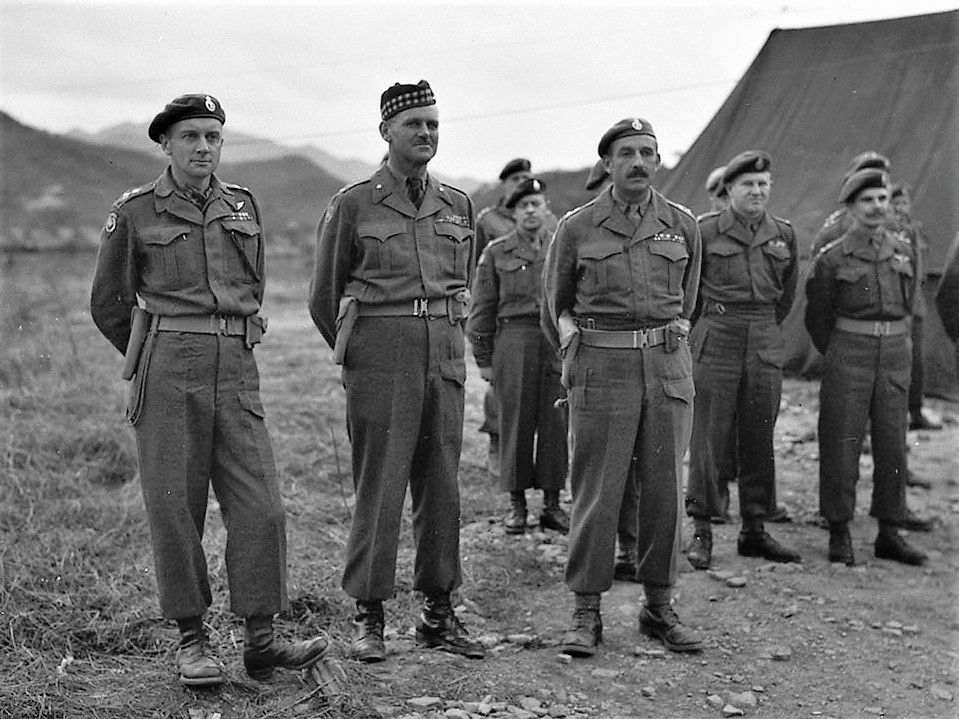
Changeover parade in Korea, 2nd Battalion to 1st Battalion PPCLI. Watching the band are (L.-R.:) 1st Bn CO LCol N.G. Wilson-Smith, Brigade Commander Brigadier J.M. Rockingham, 2nd Bn CO LCol Jim Stone, 5 November 1951.
(Library and Archives Canada Photo, MIKAN No. 3509558)
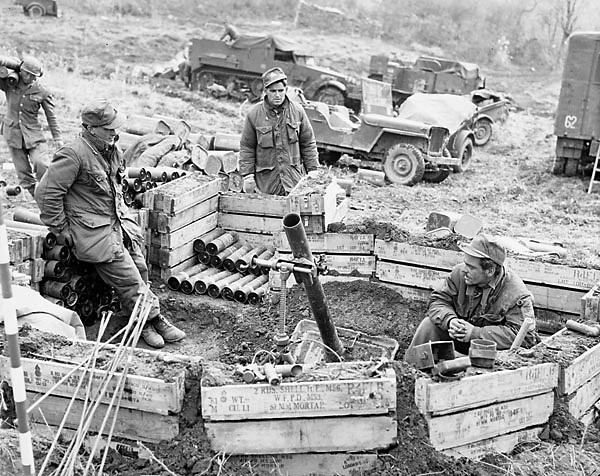
The morning after a hard fought battle, a Royal 22nd Regiment mortar platoon is ready to fire, November 1951.
(Library and Archives Canada Photo, MIKAN No. 3405766)
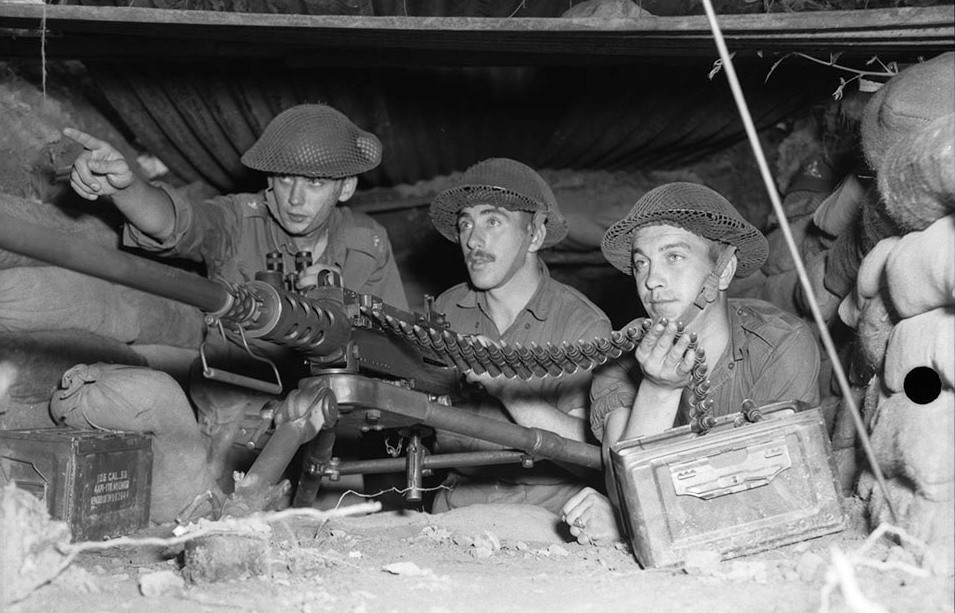
Personnel of Baker Company, 3rd Battalion, Royal 22e Regiment manning machine gun, Korea, 18 June 1953.
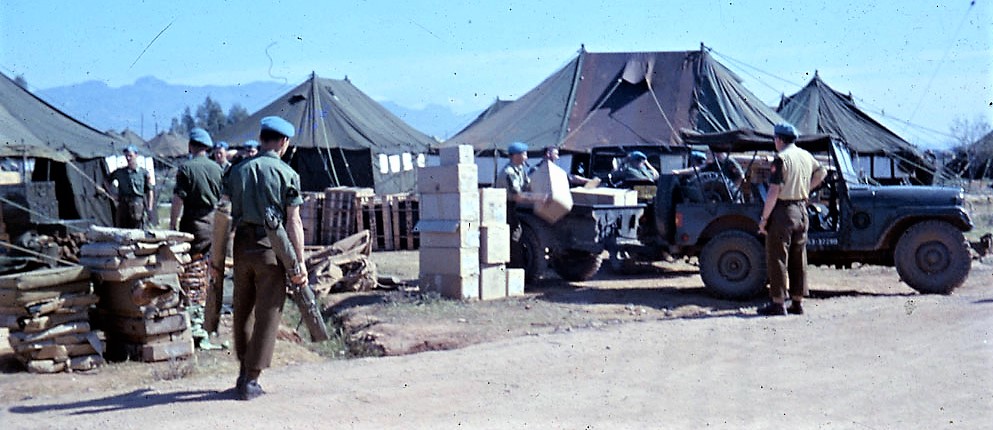
(Library and Archives Canada Photo, MIKAN No. 4235621)
Personnel of the Royal 22e Regiment on a familiarization tour in Korea, c1953.
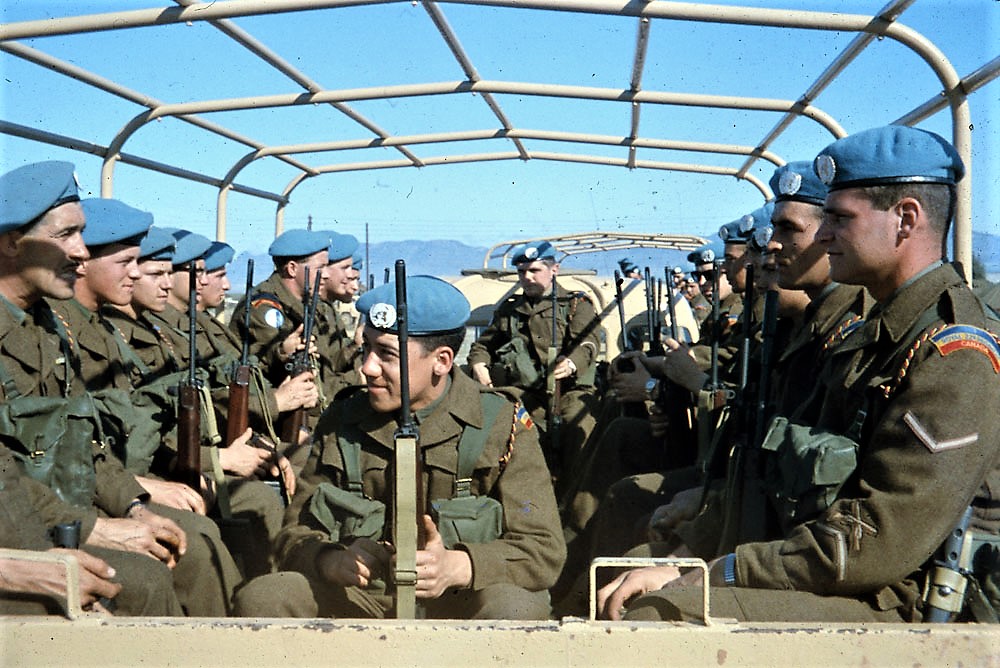
(Library and Archives Canada Photo, MIKAN No. 4235617)
Personnel of the Royal 22e Regiment on a familiarization tour in Korea, c1953.
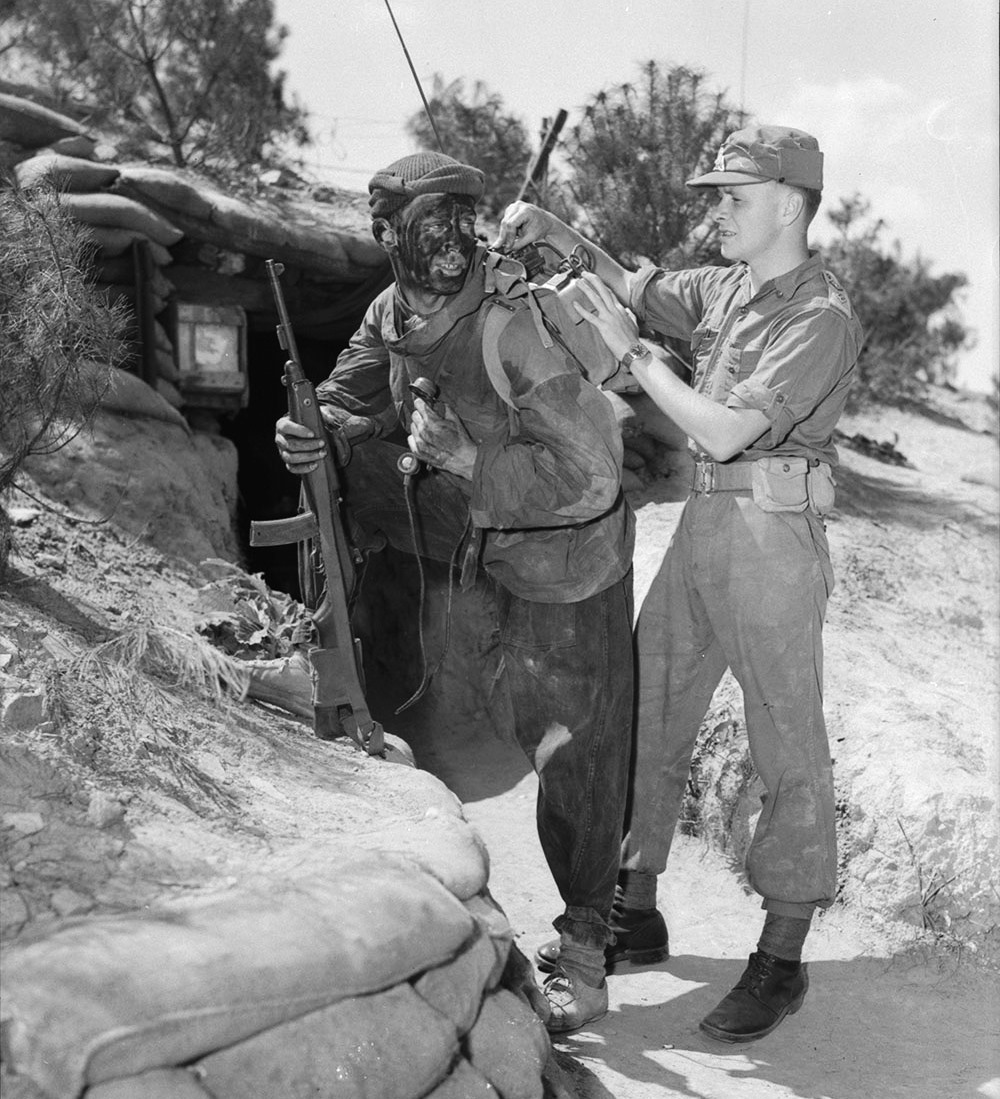
(Library and Archives Canada Photo, MIKAN No. 3199116)
Royal Canadian Corps of Signals (RCCS) in Korea. Lt. Paul Ranger checks Pte. Jean-Guy Lacroix’s wireless set as he prepares for night patrol with soft shoes, dark clothing and a black face make-up, 14 June 1952.
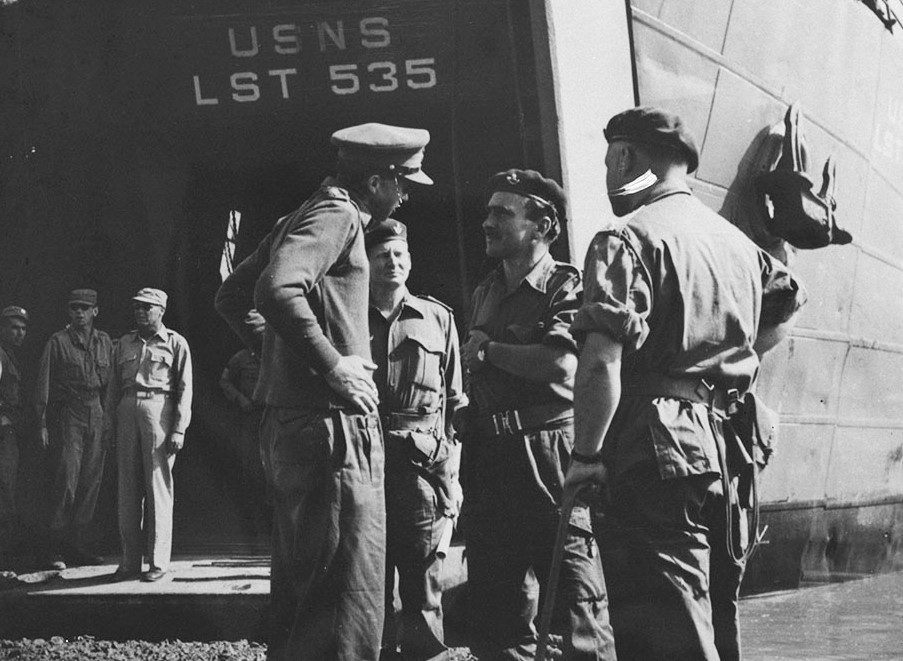
(Library and Archives Canada Photo, MIKAN No. 3199109)
British and Canadian Troops landing in Koje-do Island. Colonel P.R. Henderson, CO of the Commonwealth Forward Maintenance Area, Korea (wearing cap) confers with Major Dawnay Bancroft of the King’s Shropshire Light Infantry (KSLI) before troops disembark.
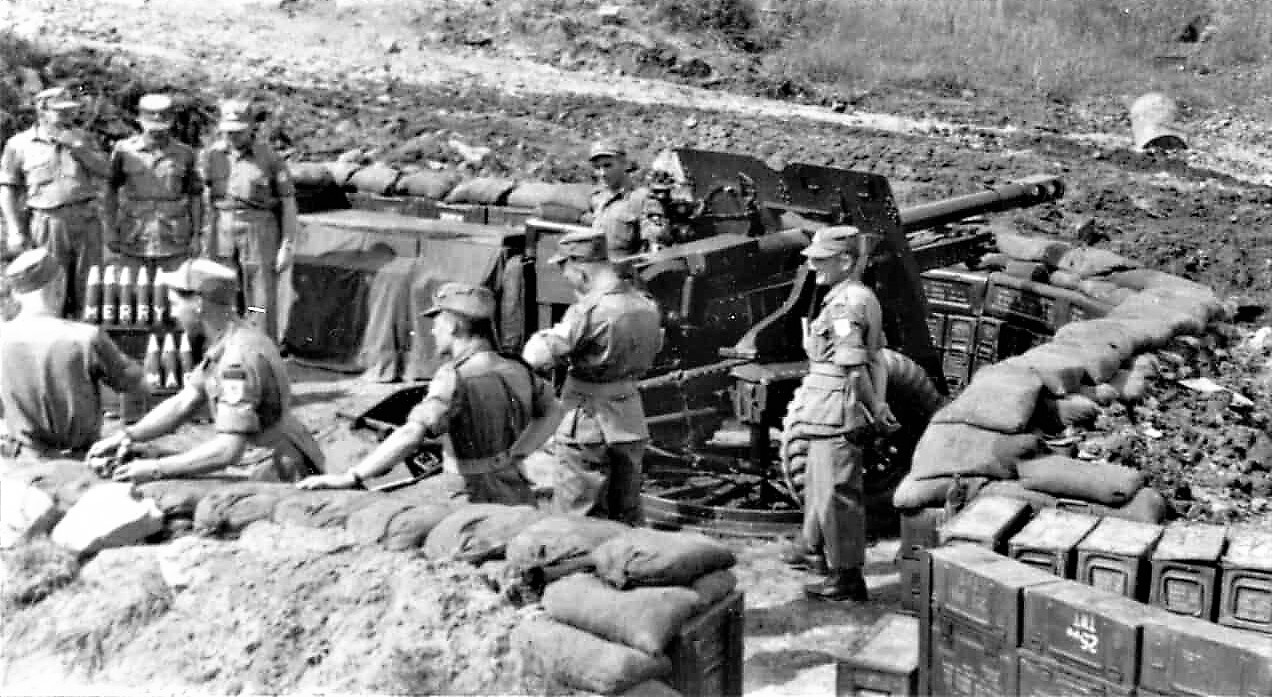
(RCA Museum Photo)
RCA 25-pounder field gun in action in Korea, 1952.
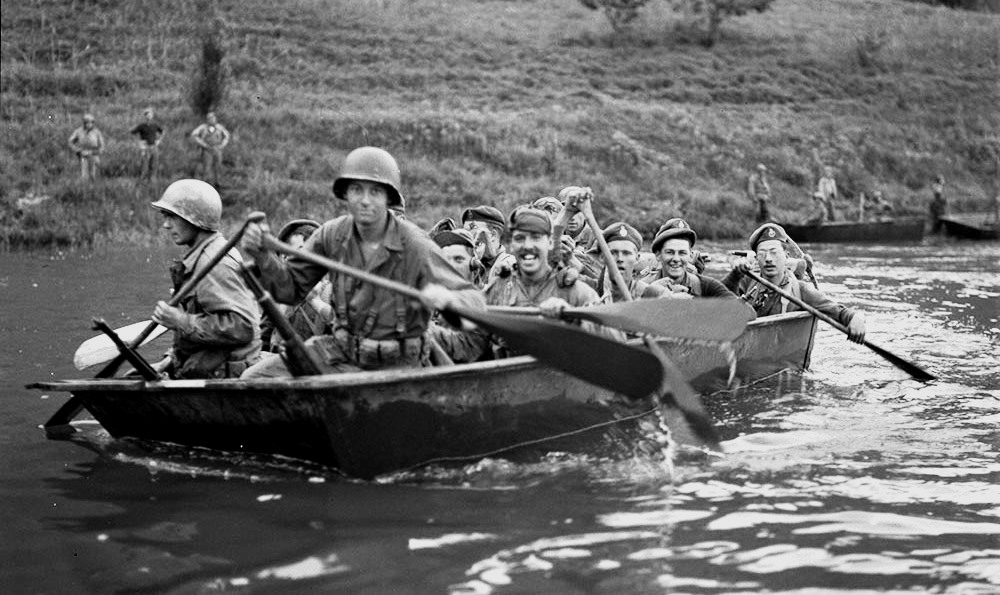
(Library and Archives Canada Photo, MIKAN No. 3397764)
Personnel of the 2nd Battalion, PPCLI, crossing the Imjin River in assault boats, Korea, 6 June 1951.
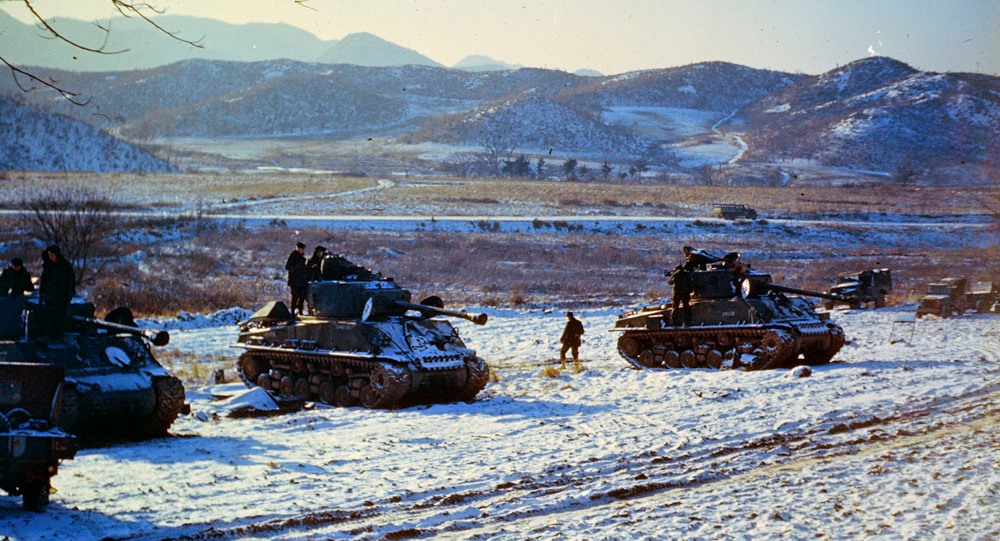
(Library and Archives Canada Photo, MIKAN No. 4235604)
Canadian M4A3(76)W HVSS Sherman tanks (most likely LdSH), in Korea. A, B and C Squadrons LdSH fought independently in Korea from 19 April 1951 to 27 July 1953 as part of the 25th Canadian Infantry Brigade Group, 1st Commonwealth Division. D Squadron was from the Royal Canadian Dragoons. All four Squadrons were equipped with M4A3(76)W HVSS Sherman tanks.
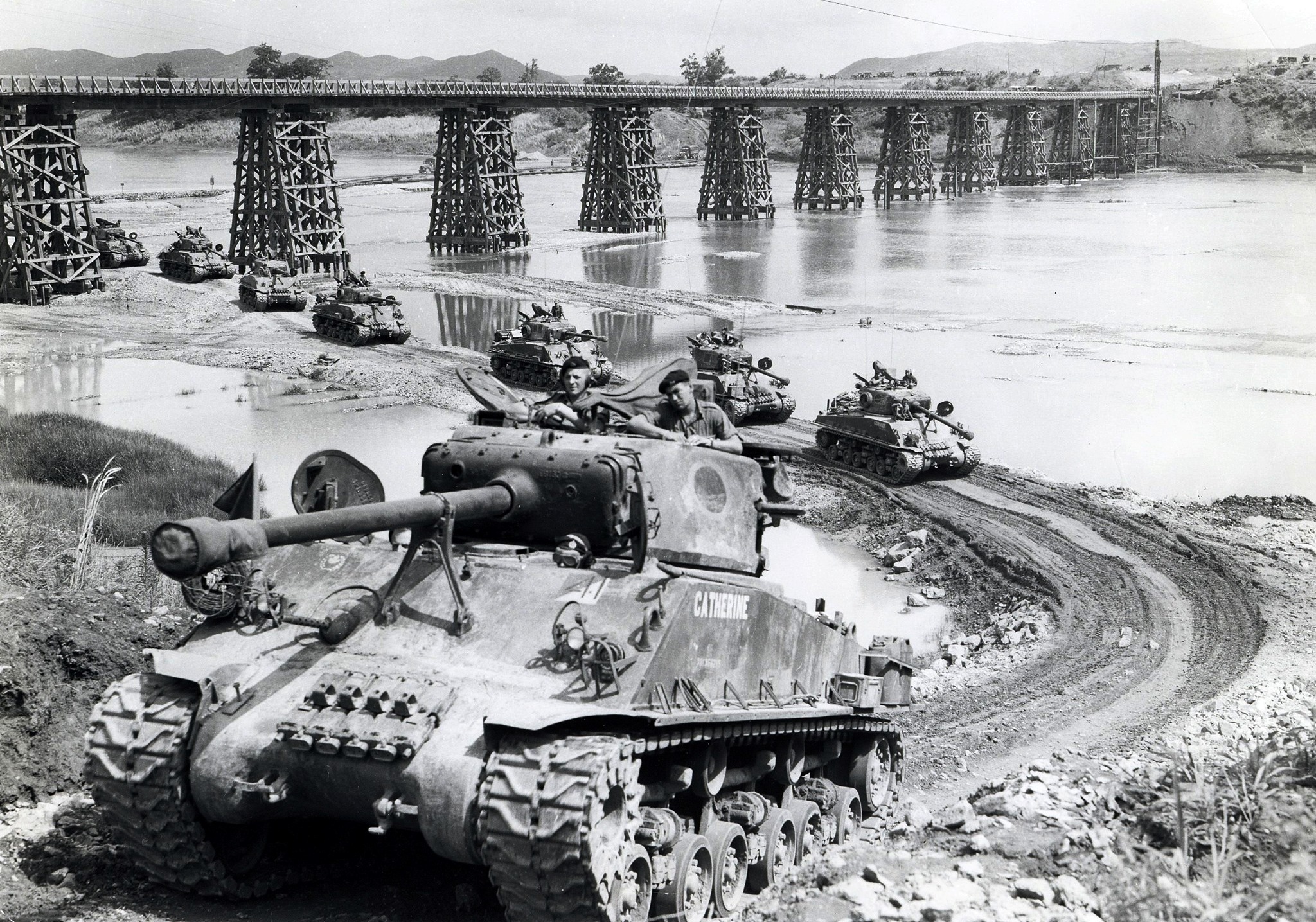
(Library and Archives Canada Photo, PA115496)
Canadian Sherman M4A3(76)W HVSS tank “Catherine“, B Sqn, LdSH (RC), Imjin River, Korea, 16 July 1952. The tanks came from US Army stocks. Canadians also deployed M10s in Korea.
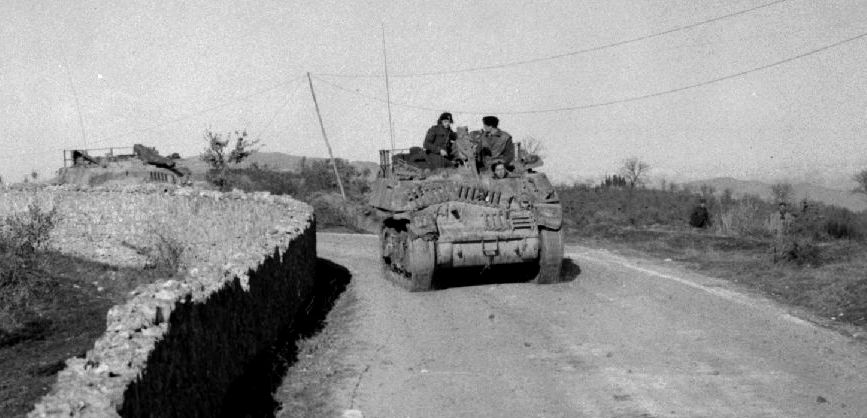
(Library and Archives Canada Photo, MIKAN No. 3607685)
M3A3 Stuart Recce AFV, Italy, 5 Feb 1945.
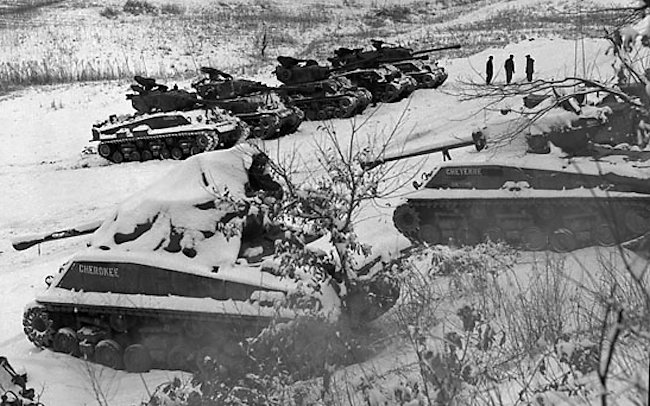
(Stan Lucian, Tanks Encyclopedia Photo)
C Squadron Lord Strathcona’s Horse (Royal Canadians) in the snow during the Korean War.
A Squadron Tanks had triangle markings on the side of the turret, B Squadron had square markings and C Squadron had circle markings. The inside was painted black to cover up the US White five pointed star.
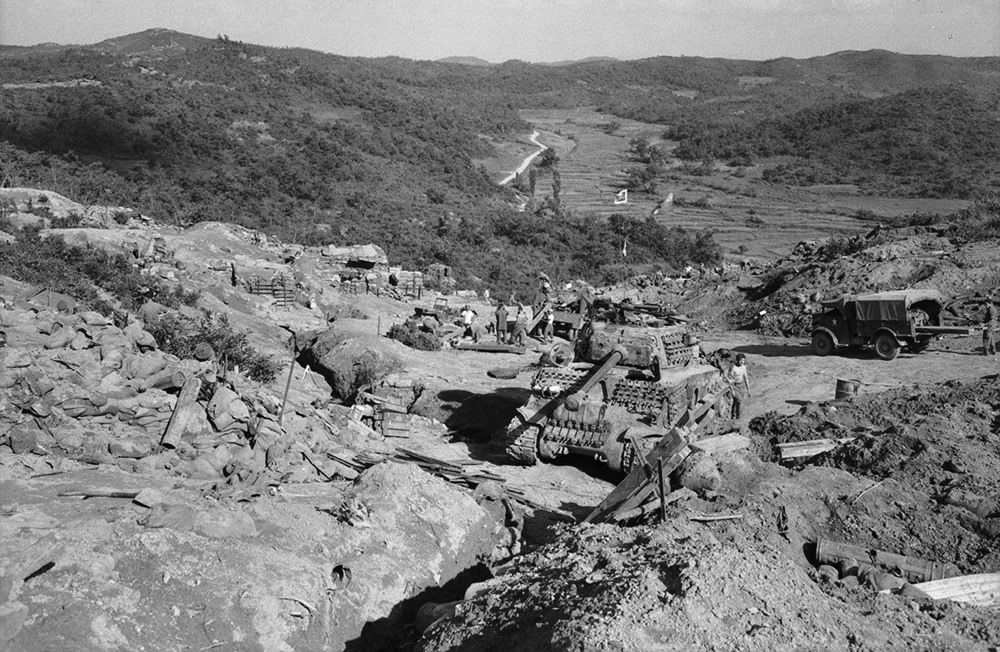
(Library and Archives Canada Photo, MIKAN No. 3524711)
Dismantling Canadian Line Positions, General view of the Royal Canadian Regiment, ‘Baker’ Company area, being cleared out. In foreground, a Lord Strathcona Horse Sherman tank. Korea, 28 July 1953.
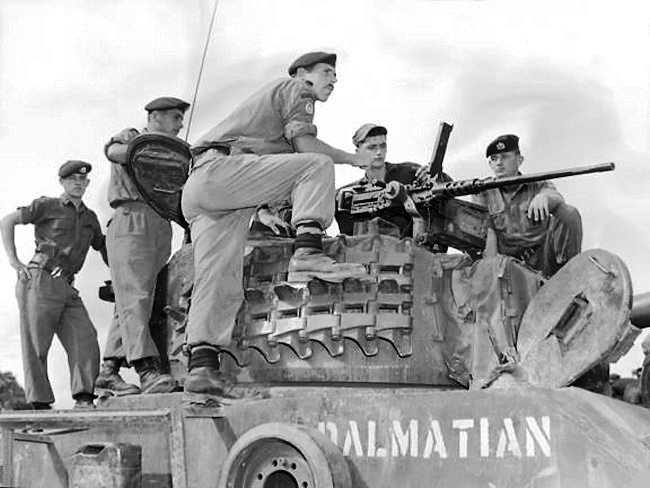
(Stan Lucian, Tanks Encyclopedia Photo).
Canadian Sherman M4A3(76)W HVSS tank “Dalmatian”, Royal Canadian Dragoon’s D Squadron in Korea. D Squadron was a mixed unit but their Sherman tanks had spare tracks fitted onto the Sherman’s turret, where the Squadron marker would normally be painted. A ‘lazy D’ symbol was painted on the rear of the turret instead. The D was turned 90 degrees. The curve of the D at the bottom and the straight line of the D at the top.
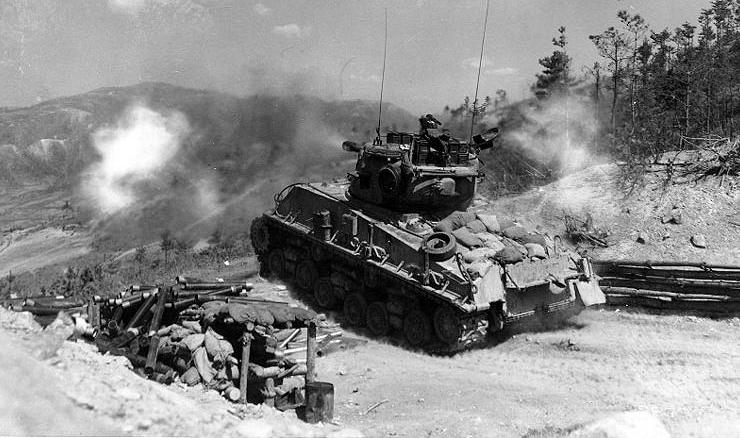
(Army Signal Corps Collection, U.S. National Archives. Photo No. SC 398704).
M4A3E8 Sherman Tank of Company B, 72nd Tank Battalion, 2nd Infantry Division, US Army firing its 76-mm gun at enemy bunkers on “Napalm Ridge”, in support of the 8th ROK Division, 11 May 1952. Note the prepared firing position, with ammunition cases piled at left, and sandbags piled on the tank hull’s rear upper surfaces. Canadians tanks fought in similar circumstances.
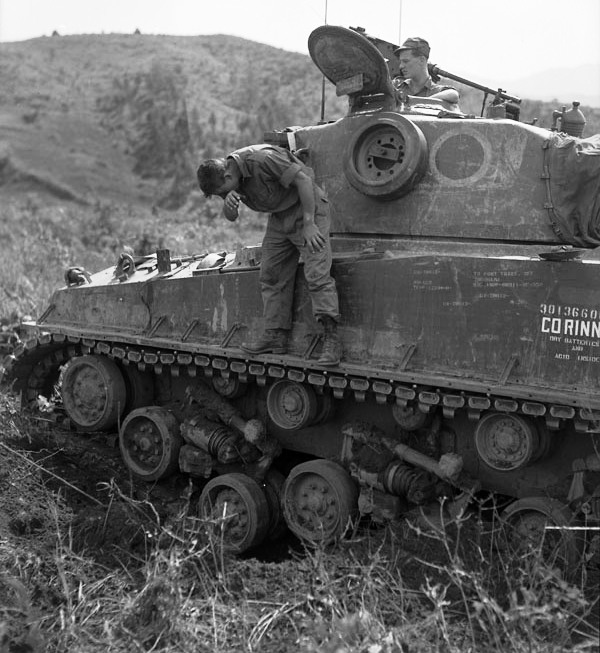
(Library and Archives Canada Photo, MIKAN No. 3883681)
Canadian Sherman M4A3(76)W HVSS tank in a mine crater with damaged running gear, Koreaca 1952.
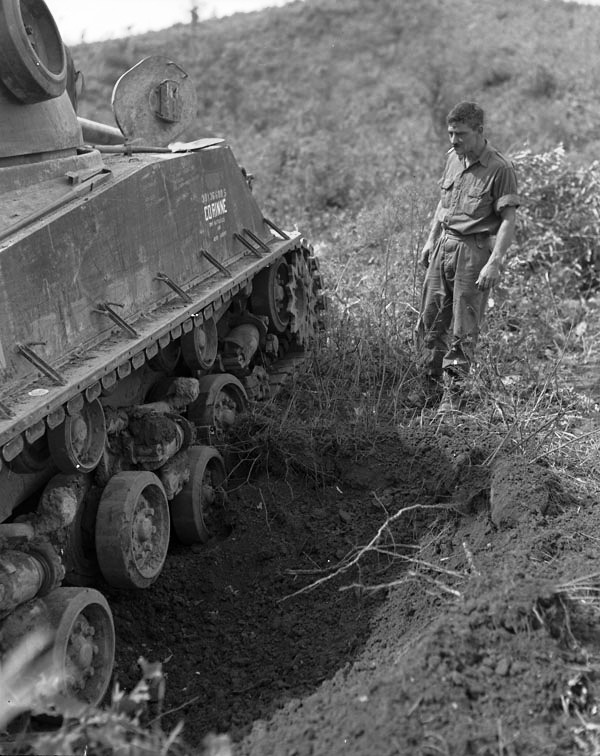
(Library and Archives Canada Photo, MIKAN No. 3883687)
Canadian Sherman M4A3(76)W HVSS tank in a mine crater with damaged running gear, Korea, c1952.
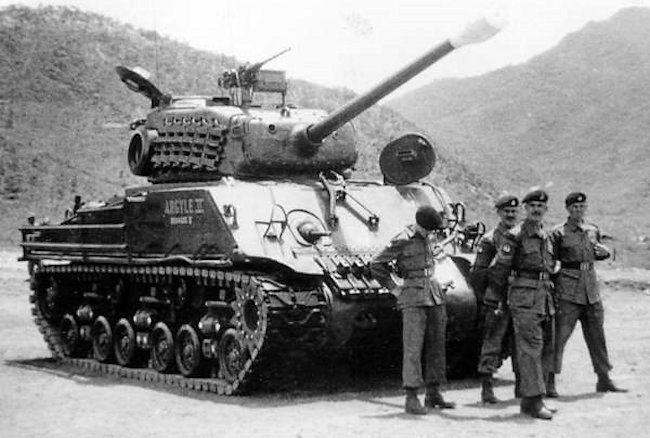
(Stan Lucian, Tanks Encyclopedia Photo)
Canadian Sherman M4A3(76)W HVSS tank “Argyle II”, Lord Strathcona’s Horse (Royal Canadians), 2nd Armoured Regiment, Royal Canadian Armoured Corps (RCAC) in Korea.
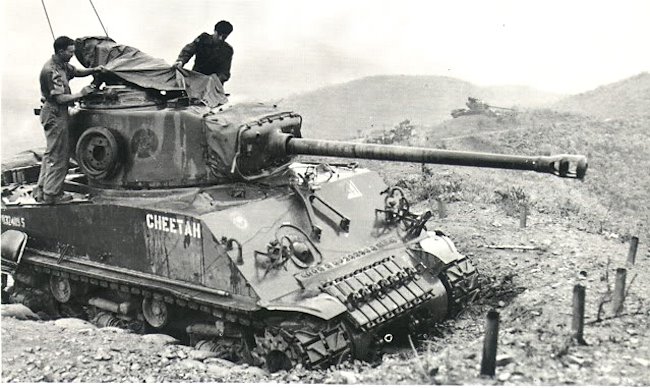
(Stan Lucian, Tanks Encyclopedia Photo)
Canadian Sherman M4A3(76)W HVSS tank “Cheetah”, C Squadron, LdSH (RC) in Korea. There is a White Star visible under the circle Squadron identity marker painted on top.
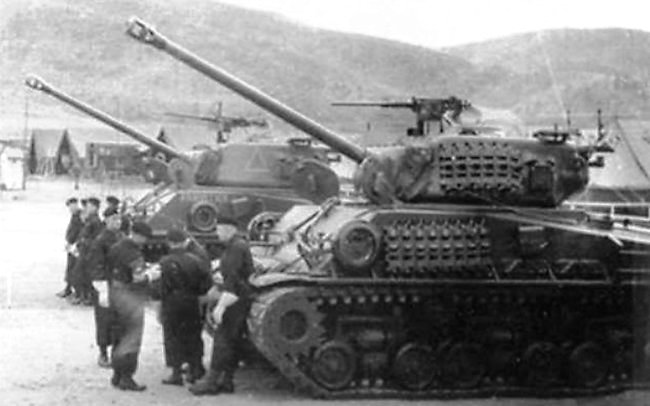
(Stan Lucian, Tanks Encyclopedia Photo)
Canadian Sherman M4A3(76)W HVSS tanks of A Squadron, Lord Strathcona’s Horse (Royal Canadians), 2nd Armoured Regiment in Korea.
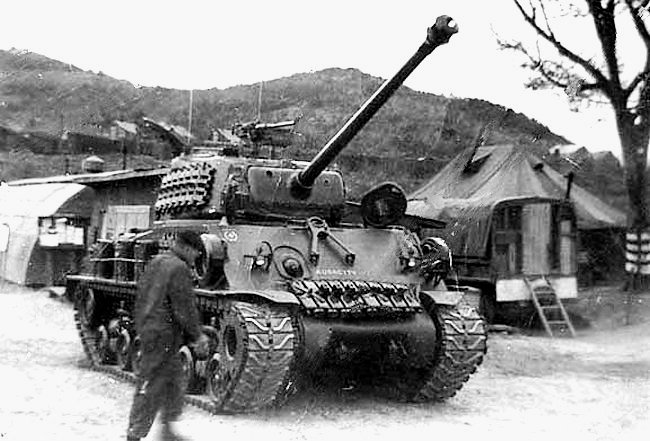
(Stan Lucian, Tanks Encyclopedia Photo)
Canadian Sherman M4A3(76)W HVSS tank, Lord Strathcona’s Horse (Royal Canadians), 2nd Armoured Regiment, Royal Canadian Armoured Corps (RCAC) in Korea.
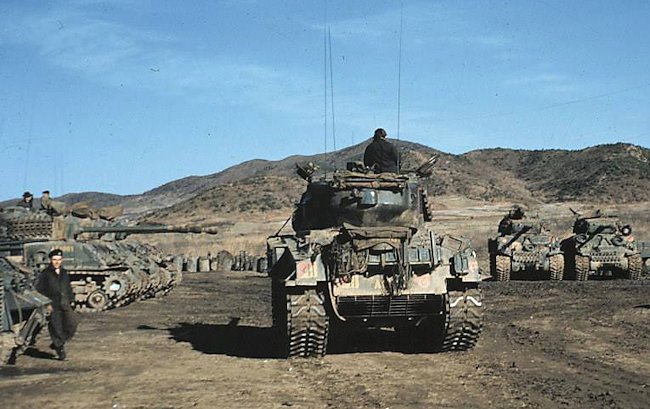
(Stan Lucian, Tanks Encyclopedia Photo)
Canadian Sherman M4A3(76)W HVSS tanks of A Squadron, Lord Strathcona’s Horse (Royal Canadians), 2nd Armoured Regiment in Korea.
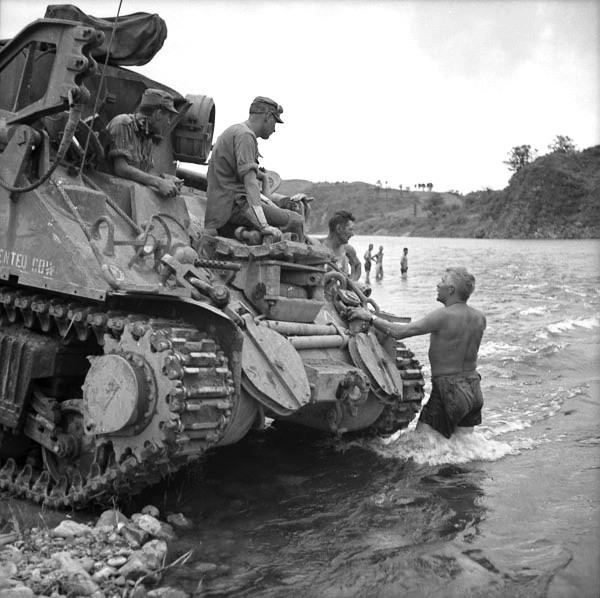
(Library and Archives Canada Photo, MIKAN No. 3780239)
C SQN Lord Strathcona’s Horse (Royal Canadians), M32B3 VVSS armoured recovery vehicle (ARV) operations on the Imjim River, Korea, 25 July 1951. The ARV’s name is “CONTENTENTED COW”, commanded by RCEME Sgt Gord Hunter.
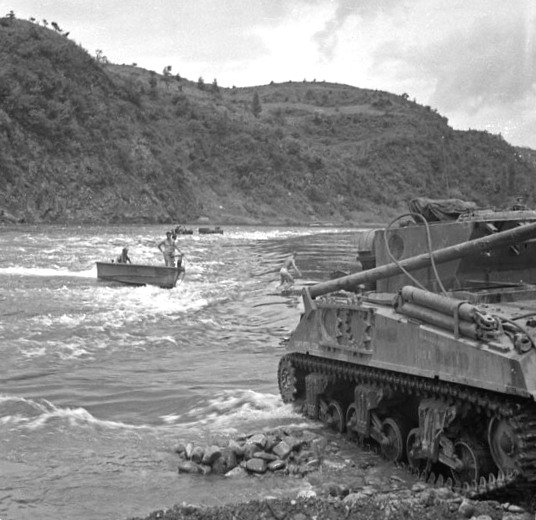
(Library and Archives Canada Photo, MIKAN No. 3780241)
Canadian recovery operations on the Imjim River, Korea, 25 July 1951.
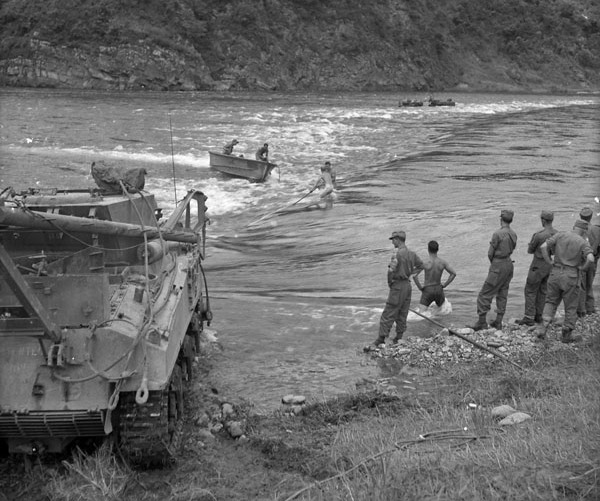
(Library and Archives Canada Photo, MIKAN No. 3780243)
Canadian recovery operations on the Imjim River, Korea, 25 July 1951.
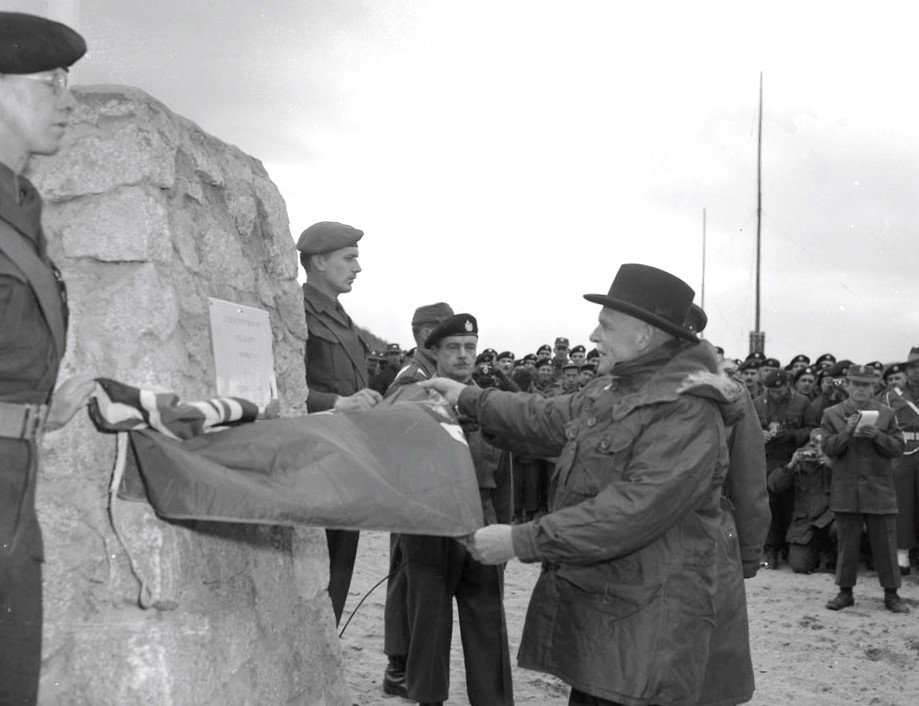
(Library and Archives Canada Photo, MIKAN No. 4929233
)Prime Minister St. Laurent unveils a monument at Maple Leaf Park in Korea, March 1954.
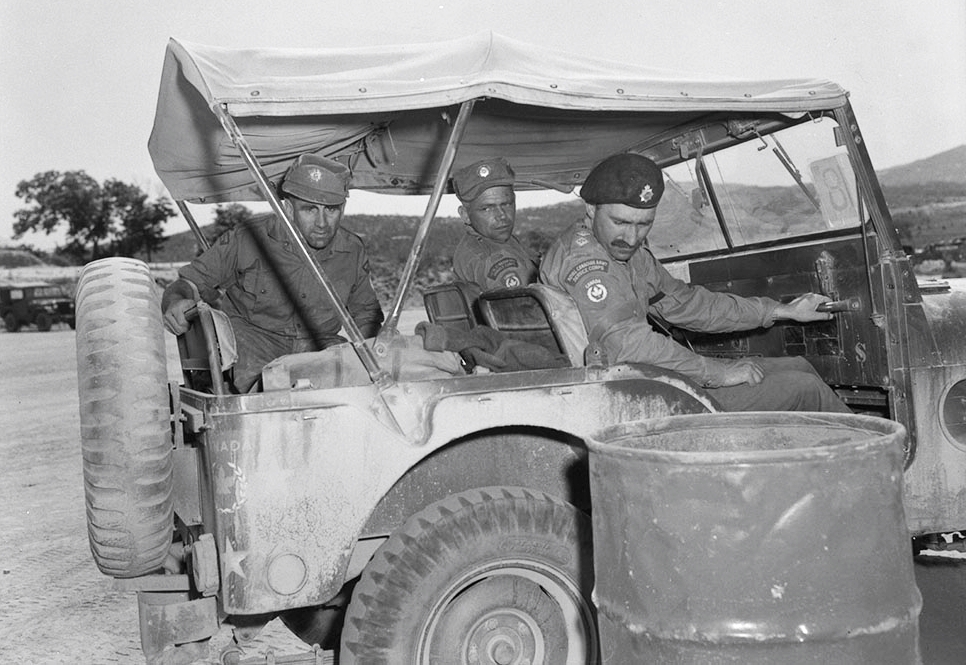
(Library and Archives Canada Photo, MIKAN No. 3524574)
Canadian personnel of the 1st Commonwealth Division competing in jeep rally. (Left to right): Pte. Bill Murphy, L/Cpl. Thomas Latta, Lt. Don Laut. Korea, 23 June 1954
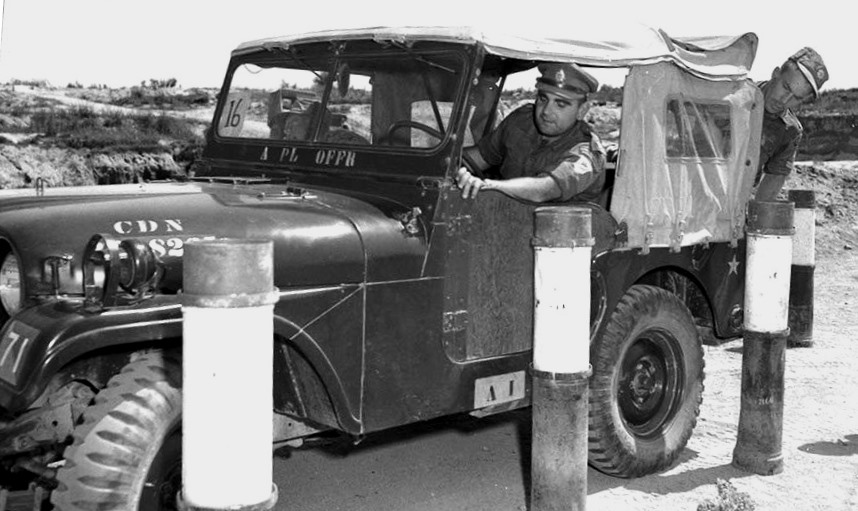
(Library and Archives Canada Photo, MIKAN No. 3524575)
Canadian personnel of the 1st Commonwealth Division competing in jeep rally. Left to right: Pte. Frank Bevins, Lt. Edward Blake, Cpl. Herb Read, Korea, 23 June 1954.
All comments are subject to our Comment Policy. You must be at least 18 years old to comment.
See a comment that violates our guidelines? Report it here.