M3 and M5 Stuart tank
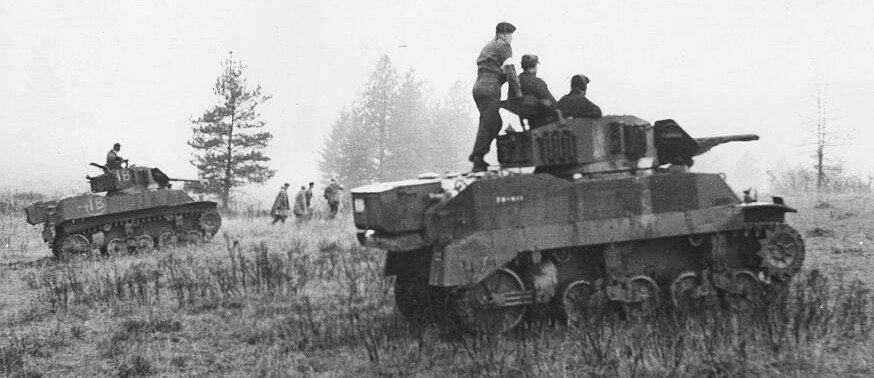
(Okanagan Military Museum Photo)
Two Stuarts of the British Columbia Dragoons Supporting infantry while training at the Glenemma Range near Vernon, BC.
The M3 Stuart was an American light tank used by Canadians during and after the Second World War. An improved version entered service as M5. It was supplied to Canada and other Commonwealth forces under lend-lease prior to the entry of the Americans into the war, and saw service with the Allied forces until the end of the war.
The British service name “Stuart” came from the American Civil War Confederate General J.E.B. Stuart and was used for both the M3 and the derivative M5 Light Tank. In American Army service, the tanks were officially known as “Light Tank M3” and “Light Tank M5”. Late in the Second World War, the M3 was used for reconnaissance and screening.
Production of the vehicle started in March 1941 and continued until October 1943. The M3 was initially armed with a 37-mm M5 gun and five .30-06 Browning M1919A3 machine guns, with one mounted coaxial with the main gun, one on top of the turret in an M20 anti-aircraft mount, one in a ball mount in the right bow position, and one in the right and left hull sponsons. The main gun was eventually replaced with the slightly longer M6, and the sponson machine guns were removed. For a light tank, the Stuart was fairly heavily armoured. It had 38-mm of armour on the upper front hull, 44-mm on the lower front hull, 51-mm on the gun mantlet, 38-mm on the turret sides, 25-mm on the hull sides, and 25-mm on the hull rear.
The M3 and M3A1 variants were powered by an air-cooled radial engine, either a gasoline-fueled 7-cylinder Continental W-670 (8,936 built) or a 9-cylinder Guiberson T-1020 diesel (1,496 built). A new version was developed using twin Cadillac V8 automobile engines and twin Hydra-Matic transmissions operating through a transfer case. This version of the tank was quieter, cooler and roomier, and the automatic transmission also simplified crew training. The new model was initially called M4 but was redesignated M5 to avoid confusion with the M4 Sherman. It featured a redesigned hull with a raised rear deck over the engine compartment, a sloped glacis plate and had the driver’s hatches moved to the top. Although the main criticism from units using the Stuarts was that it lacked firepower, the improved M5 series kept the same 37-mm gun. The M5 gradually replaced the M3 in production from 1942. Total M5 and M5A1 tank production was 8,885.
The turret was removed from some examples to save weight and improve speed and range. These became known as the “Stuart Recce”. A few were converted to armoured personnel carriers known as the “Stuart Kangaroo”, and some were converted into command vehicles and known as the “Stuart Command”. M3s, M3A3s, and M5s continued in British and Canadian service until the end of the war, but British units had a smaller proportion of these light tanks than American units. (Wikipedia)
Serial Numbers for Canadian post-war Stuarts compiled by Anthony Sewards can be found here: The M5A1 Stuart in Post-War Service – Canadian Arms and Armour
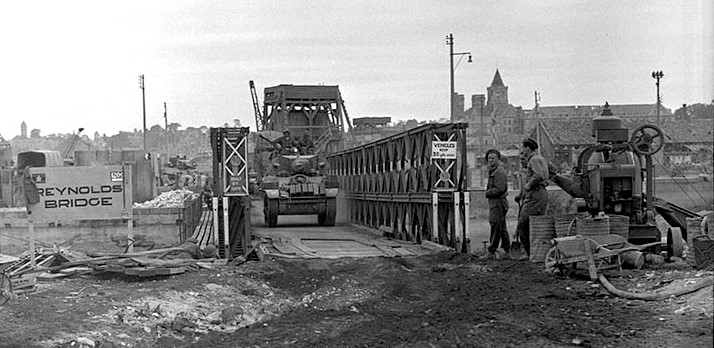
(Library and Archives Canada Photo, MIKAN No. 3225635)
M3 Stuart M3 light tank crossing “Reynolds Bridge” in Normandy, 29 July 1944.
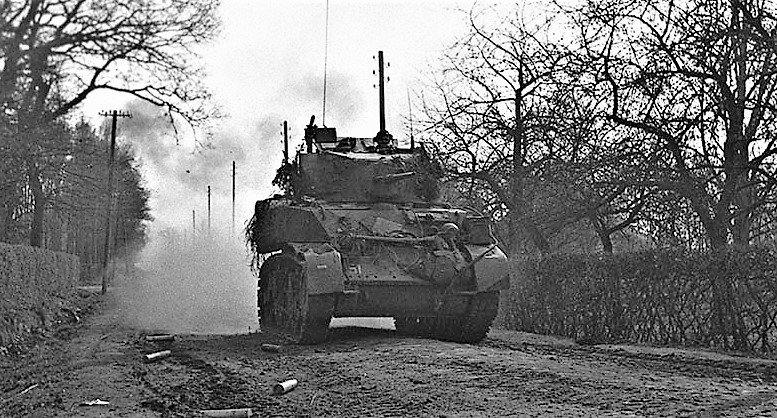
(Library and Archives Canada Photo, MIKAN No. 3223901)
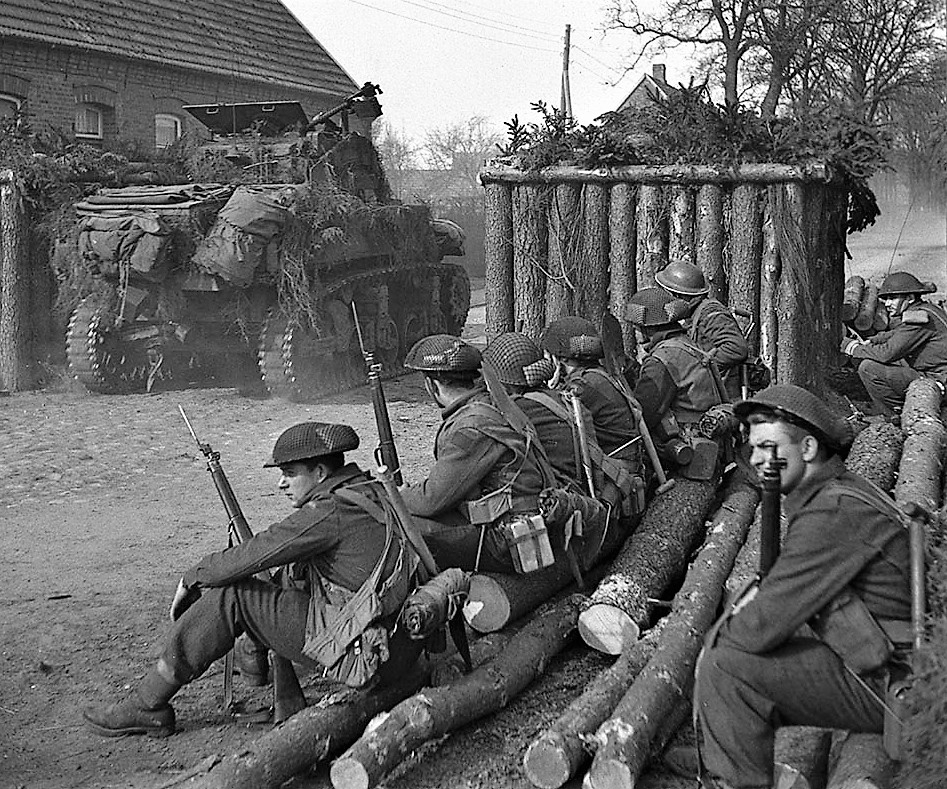
M5A1 Stuart tank, Governors General Foot Guards, 4th Canadian Armoured Division, 11 April 1945.
(Library and Archives Canada Photo, MIKAN No. 3223902)
Personnel of the Lincoln and Welland Regiment with an M5A1 Stuart tank of the 4th Canadian Armoured Division awaiting orders to go through a roadblock, 11 April 1945.
(Library and Archives Canada Photo, MIKAN No. 3524627)
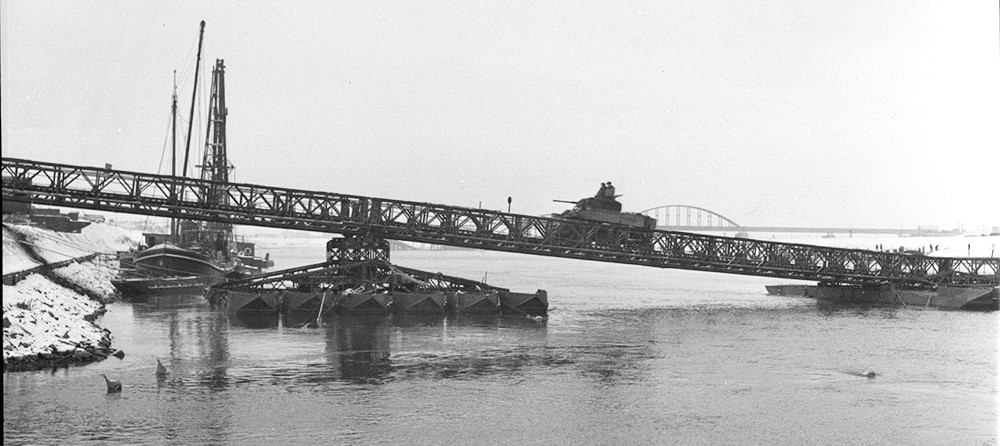
Looks like an M3 Stuart light tank crossing the double landing bay of the ‘Quebec’ bailey bridge installed by the Royal Canadian Engineers (RCE) over the River Maas. Ravenstein, Netherlands, 1 February 1945.
(Library and Archives Canada Photo, MIKAN No. 3607530)
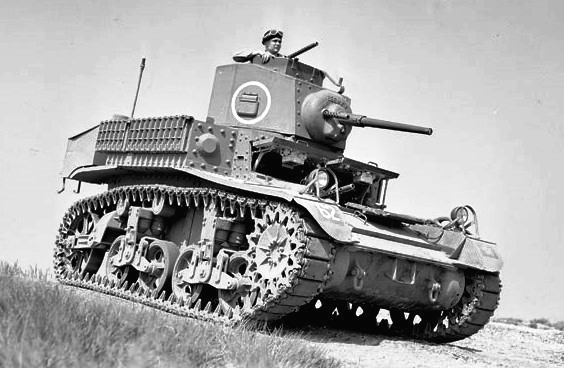
M3 Stuart Mk. I light tank of C Sqn, 5th Armoured Regiment (8th Princess Louise’s (New Brunswick) Hussars), 2nd Canadian Armoured Brigade, 5th Canadian Armoured Division, Aldershot, England, May 1942.
(Library and Archives Canada Photo, MIKAN No. 3191555)
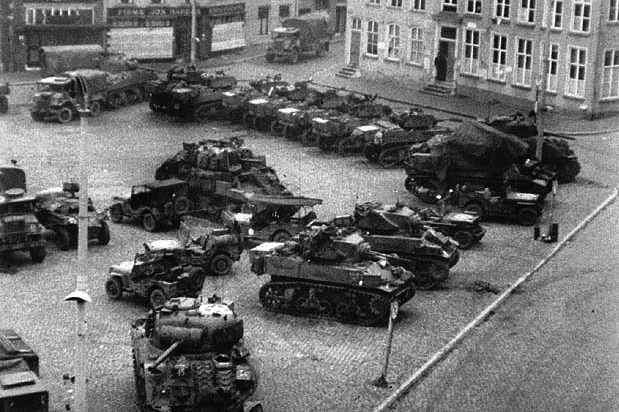
Sherman V and Stuart tanks, 4th Canadian (Armoured) Division – 29th Armoured Reconnaissance Regiment (The South Alberta Regiment) in the village square, Bergen-op-Zoom, Netherlands, 31 Oct 1944.
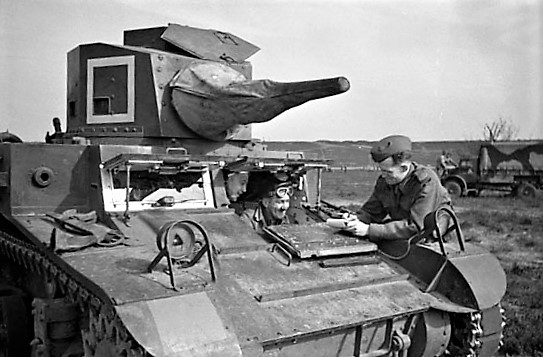
(Library and Archives Canada Photo, MIKAN No. 3590671)
War correspondent Ross Munro of the Canadian Press and Lieutenant George Noble examining an M2A4 tank in England, 27 March 1942. The M2A4 light tank led to the US M3-series and M5-series of Stuart light tanks.
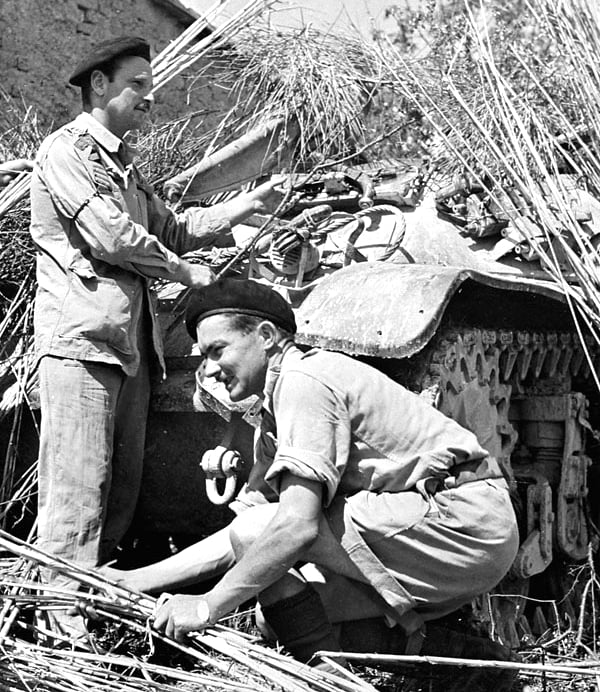
(Library and Archives Canada Photo, MIKAN No. 3238411)
Sergeant R. Gladnick and Trooper W.J. Whan of the Three Rivers Regiment camouflaging their Stuart V recce tank “Ajax“, Italy, 11 September 1944.
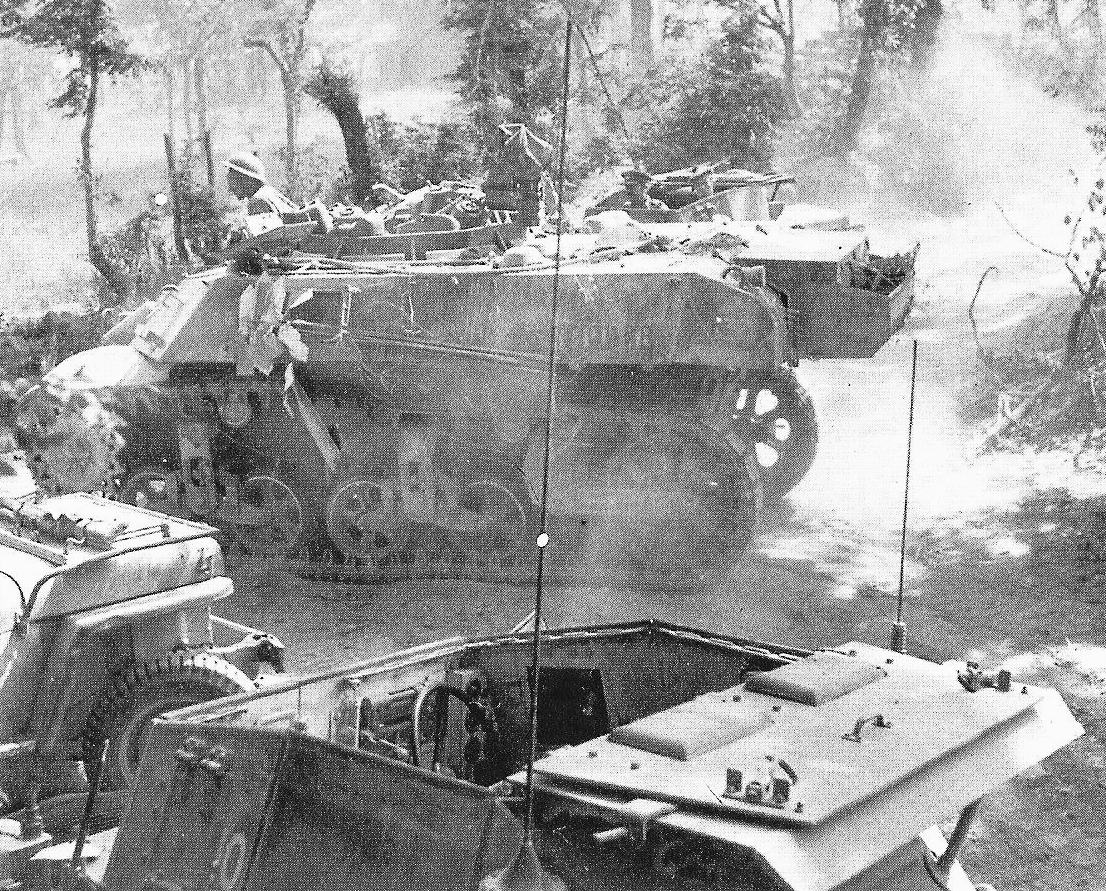
(RCAC Illustrated History, LAC, PA204157)
M3A3 Stuart recce tank without turret, LdSH (RC) in action at the Melfa River, May 1944.
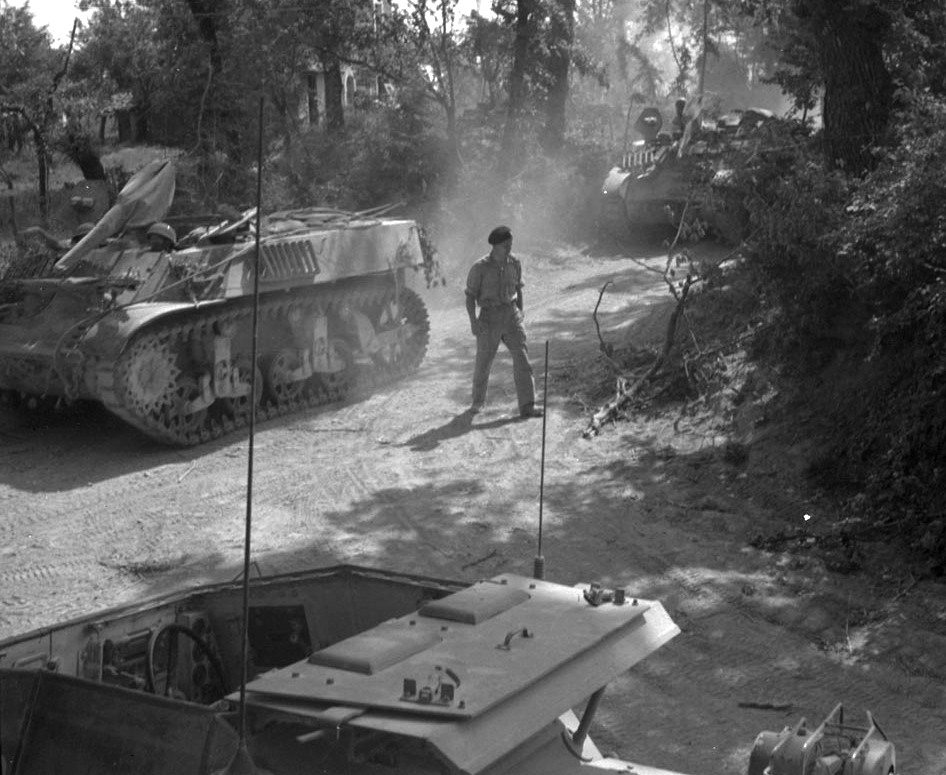
(Library and Archives Canada Photo, MIKAN No. 4166584)
M5A1 Stuart recce tank without turret, LdSH (RC) at a crossroads in Italy, ca. 1943.
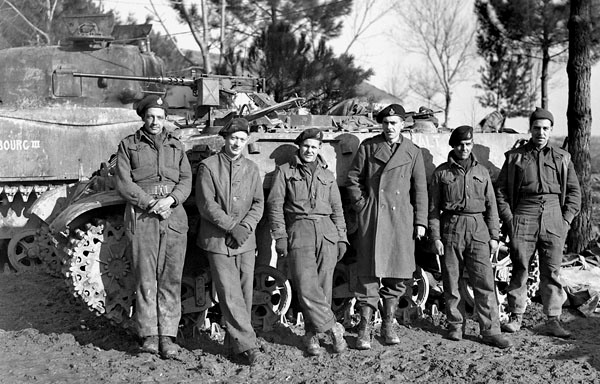
(Library and Archives Canada Photo, MIKAN No. 3240406)
Stuart recce tank minus the turret, 1st Tp, C Sqn, Governor General’s Horse Guards, Cervia, Italy, 19 Jan 1945.
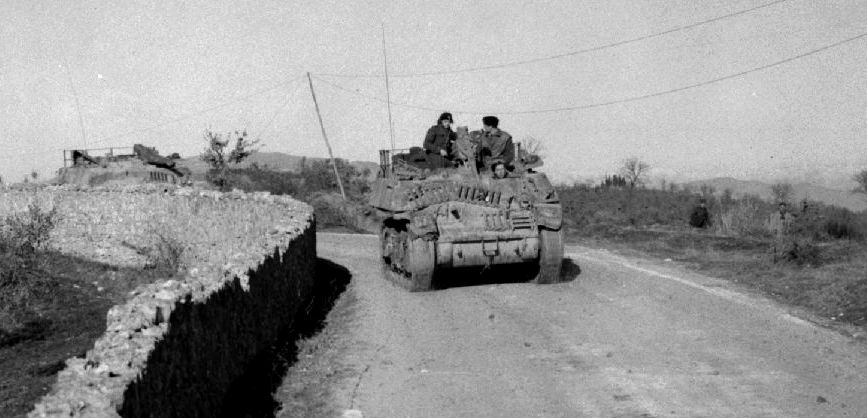
(Library and Archives Canada Photo, MIKAN No. 3607685)
M3A3 Stuart Recce AFV, Italy, 5 Feb 1945.
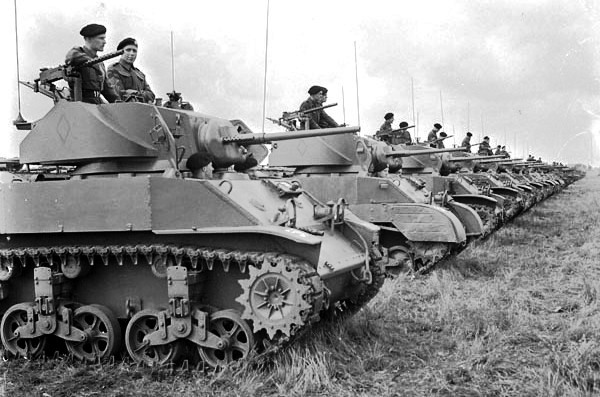
(Library and Archives Canada Photo, MIKAN No. 3524784)
M5A1 Stuart Mk. VI light tanks of the Reconnaissance troop, Headquarters Squadron, 2nd Armoured Regiment (Lord Strathcona’s Horse (Royal Canadians)), (5th Canadian Armoured Division), taking part in an inspection and marchpast, Eelde, Netherlands, 23 May 1945.
Post War Stuarts (from an article on the CANADIAN ARMS AND ARMOUR web page, with Anthony Sewards, Colin Allford, Stephan Leegwater and Stuart Robertson) credited in the sources)
The Canadian Armoured Corps was no stranger to the Stuart light tank by 1946. They had first received small numbers of the M3 models for training in the United Kingdom and even had 7 obsolete M2A4 on strength for a short time. With the change from Universal Carriers to light tanks in the British Armoured force doctrine, in 1943 Canada received up to 77 M3A3 and later M5A1 tanks for use by reconnaissance units operating on the continent. Some of these vehicles were converted to a very effective reconnaissance variant by means of the removal of the turret and ammunition storage. By the spring of 1945 Canadian forces in northwest Europe were well equipped with the latest M5A1 models.
At the end of the war in Europe, it was decided by the Canadian government to leave its war weary tanks in the vehicle dumps of England and the Netherlands and to source replacement, newly refurbished models from the United States Army North American inventories. This was acknowledged as an advantageous way of obtaining newer vehicles for the smaller peacetime army with fewer costs associated with repair and shipping of those held in Europe. During the war, decisions had been made to standardize on American designs of armoured fighting vehicles and, as a result, Canada was able to purchase 294 M4A2E8 76mm(W) Sherman medium tanks and 96 M5A1 Stuart light tanks from the US in September of 1946. The Sherman tanks were new vehicles held back from wartime Soviet orders and the Stuart tanks were older examples that had previously been refurbished by American Car and Foundry for the United States Government and were being held in reserve stores at the Schenectady General Depot in New York State. The deal for the vehicles was originally agreed upon as 300 Shermans and 90 Stuarts but this seems to have been altered by the time of delivery.
The Stuarts arrived At Longue Point Ordnance Depot, near Montreal, by rail in late 1946. After processing the tanks were issued on a small scale to the reconnaissance troops of a number of armoured units across the country. Regiments known to have used the M5A1 at this time include, but aren’t limited to, The British Columbia Dragoons, The Kings Own Calgary Regiment, The Lord Strathcona’s Horse (RC) and the Fort Garry Horse. In addition to the regimental use of the tanks a number were held by the Armoured Corps school at Borden. The remainder were held in Ordnance stores awaiting future use.
There are very few features of note on the Canadian Stuarts, as they were refurbished before arriving in Canada, but items of interest include the mixture of steel and rubber track, bustle bins on some examples, the mismatching of later turrets with earlier hulls and vise-versa, (most likely done during the mass rebuild at American Car), and the fitting of No.19 Set radio and antenna mounts. Markings on the Canadian tanks seem limited to a Canadian Department of National Defence (DND) number prefixed by “78” on both sides of the hull and occasional squadron markings or “Command” shield. In some instances the original US army markings have also been found under the Canadian paint.
About the same time of the Stuart purchase, Canada acquired a small number of M24 Chaffee light tanks but these appear to have seen limited use as well. After this, there was a notable shift away from US armoured vehicles back to British designs with the acquisition of 124 Ferret scout cars for use by reconnaissance units. By 1954 the light tank no longer had viable role in the Royal Canadian Armoured Corps. In July 1955 the Canadian government identified the entire inventory of 96 M5A1 Light tanks, complete with one year of spares and limited manuals, as being surplus to our requirements and available to NATO partners as part of the Mutual Defense Assistance Program (MDAP). Listed in the 1955/56 MDAP program the vehicles were identified solely by Portugal as being an acquisition interest. In September 1955, the Portuguese government made an initial request for 68 of the 96 tanks but this was amended in October to encompass the entire 96 vehicles. In a somewhat re-occurring theme with the Stuarts, of the 96 requested by Portugal, 90 were transferred by the Canadian government in late 1956.
Once in Portugal the Stuarts were adopted by the Exército Português as the “CC M5A1 Stuart 15 ton 3.7 cm m / 957”. As Portugal already had M47 Patton and M24 Chaffee tanks in service, the M5A1’s were once again issued in limited numbers with the majority remaining in storage at the Depósito Geral de Material do Exército (DGME) in Bierolas, Lisboa.
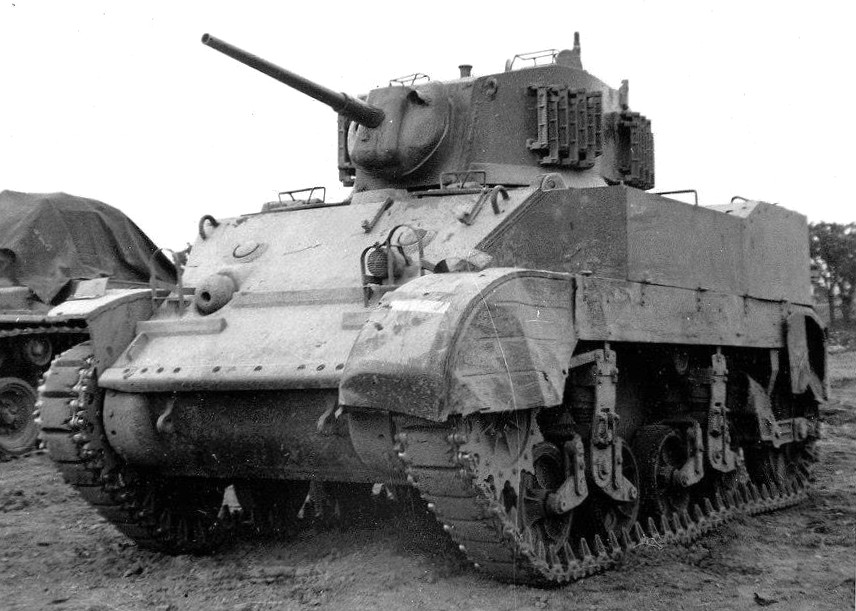
(FGH Museum Photo via Anthony Sewards)
A Stuart of the Fort Garry Horse.
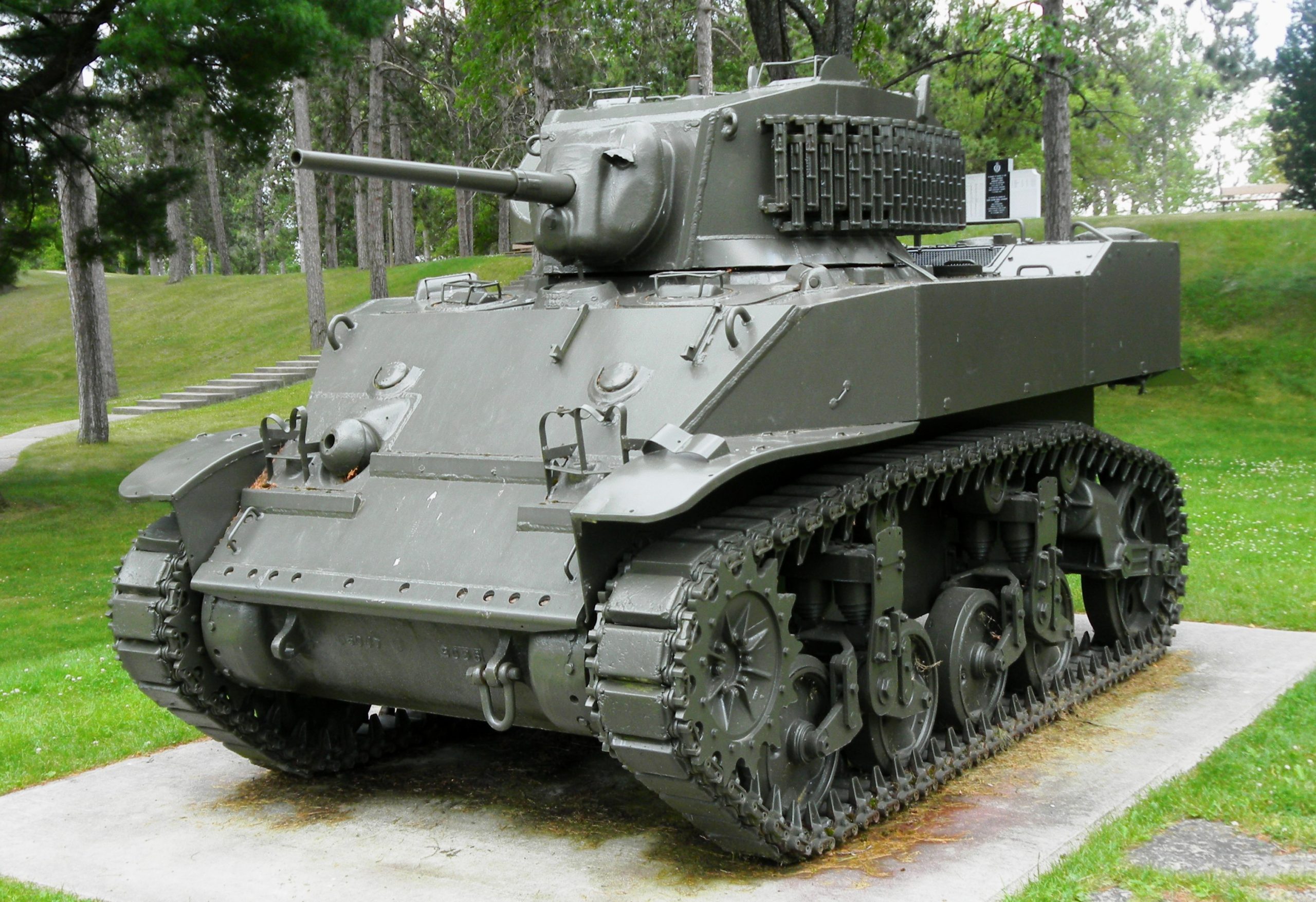
(Author Photo)
M5A1 Stuart Light Tank, (Serial No. 3894), MGen Worthington Memorial Park, No. 1 beside the memorial marker. These two tanks were put in place at the time of the official unveiling of the Canadian Armoured Corps Memorial in October 1949. The tank and its sister remain at the memorial to this day having been held back from the 1956 transfer to Portugal.
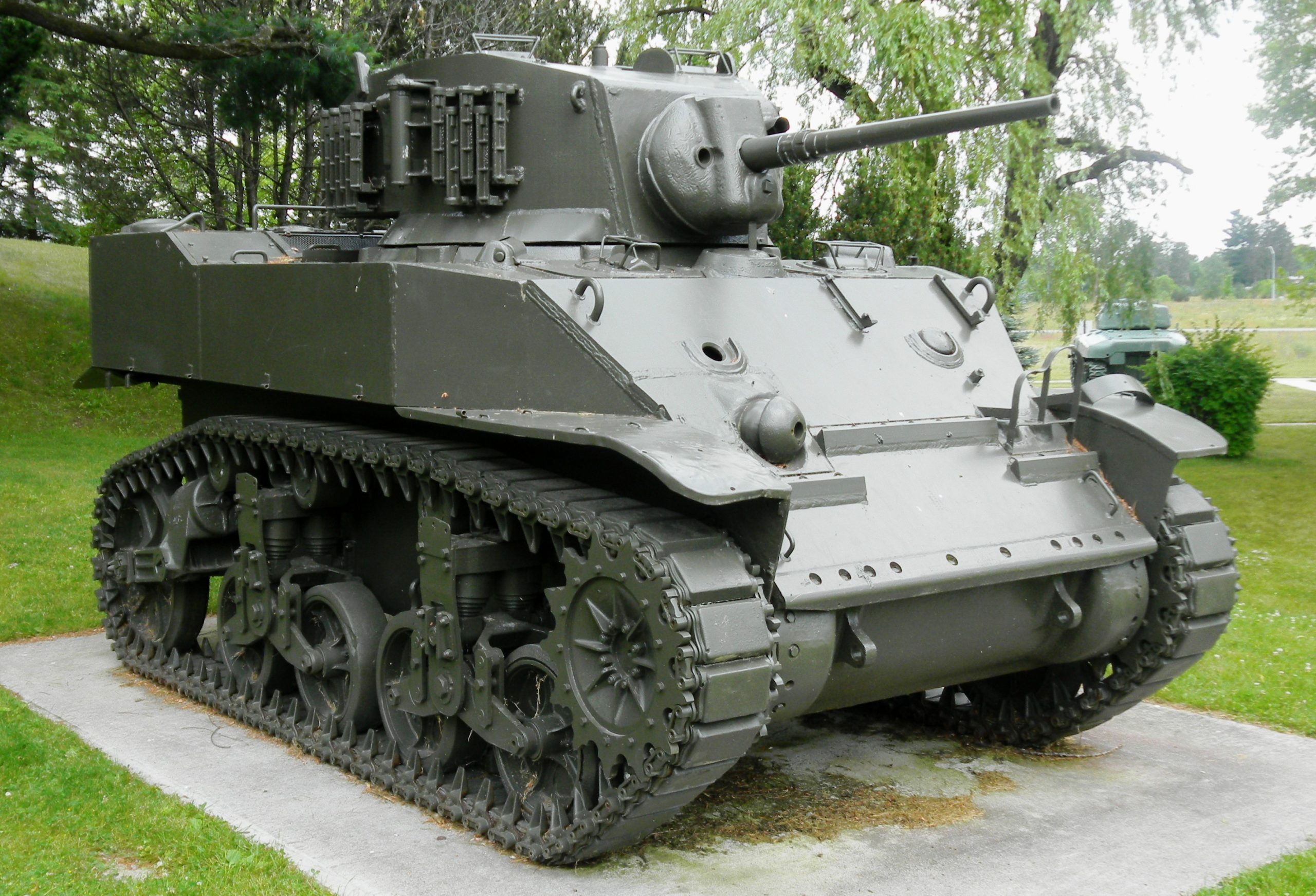
(Author Photo)
M5A1 Stuart Light Tank (Serial No. 5193), MGen Worthington Memorial Park, No. 2 beside the memorial marker.
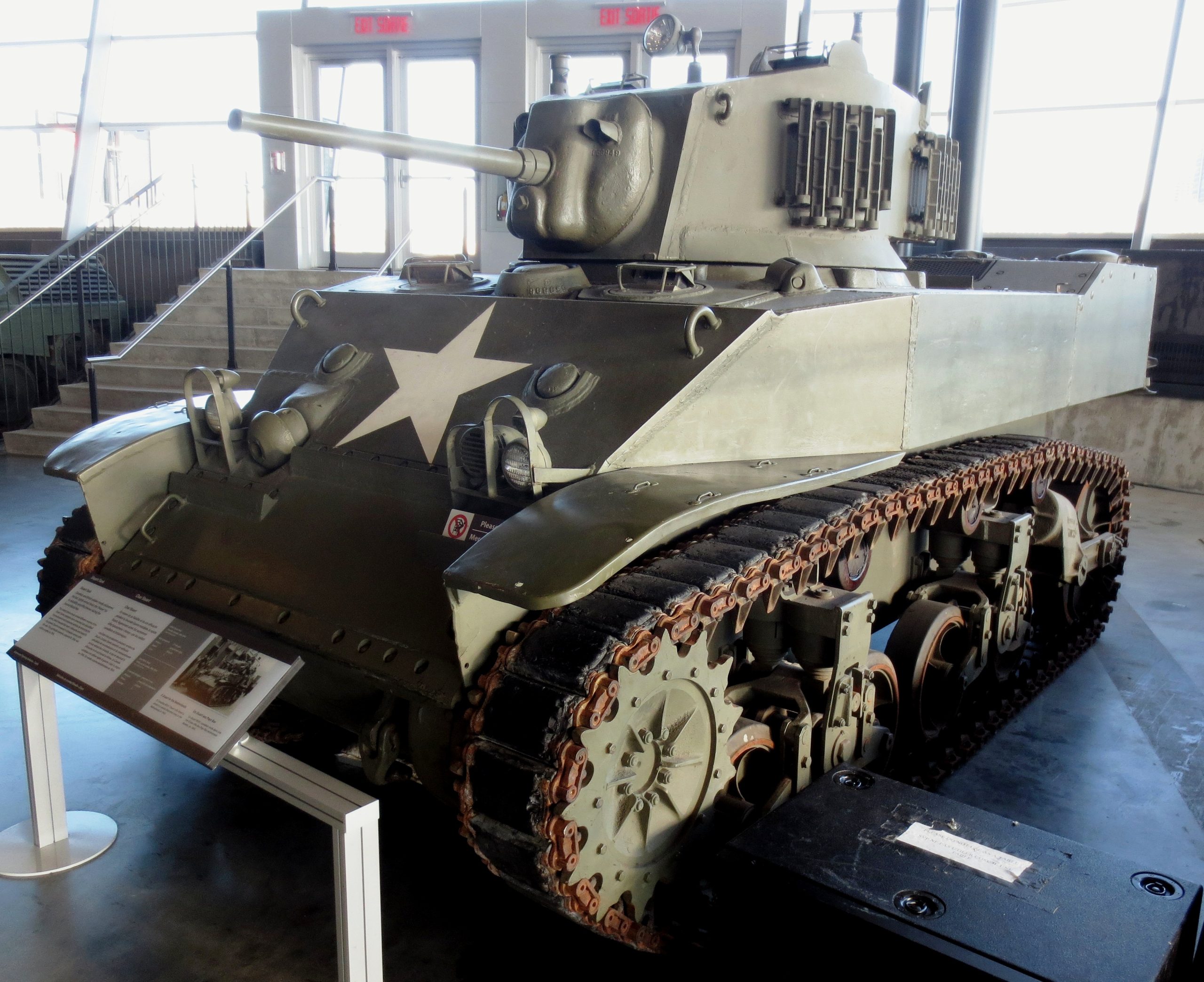
(Author Photo)
M3 Stuart Light Tank, on loan from Australia since July 2015. Canadian War Museum, Ottawa, Ontario.
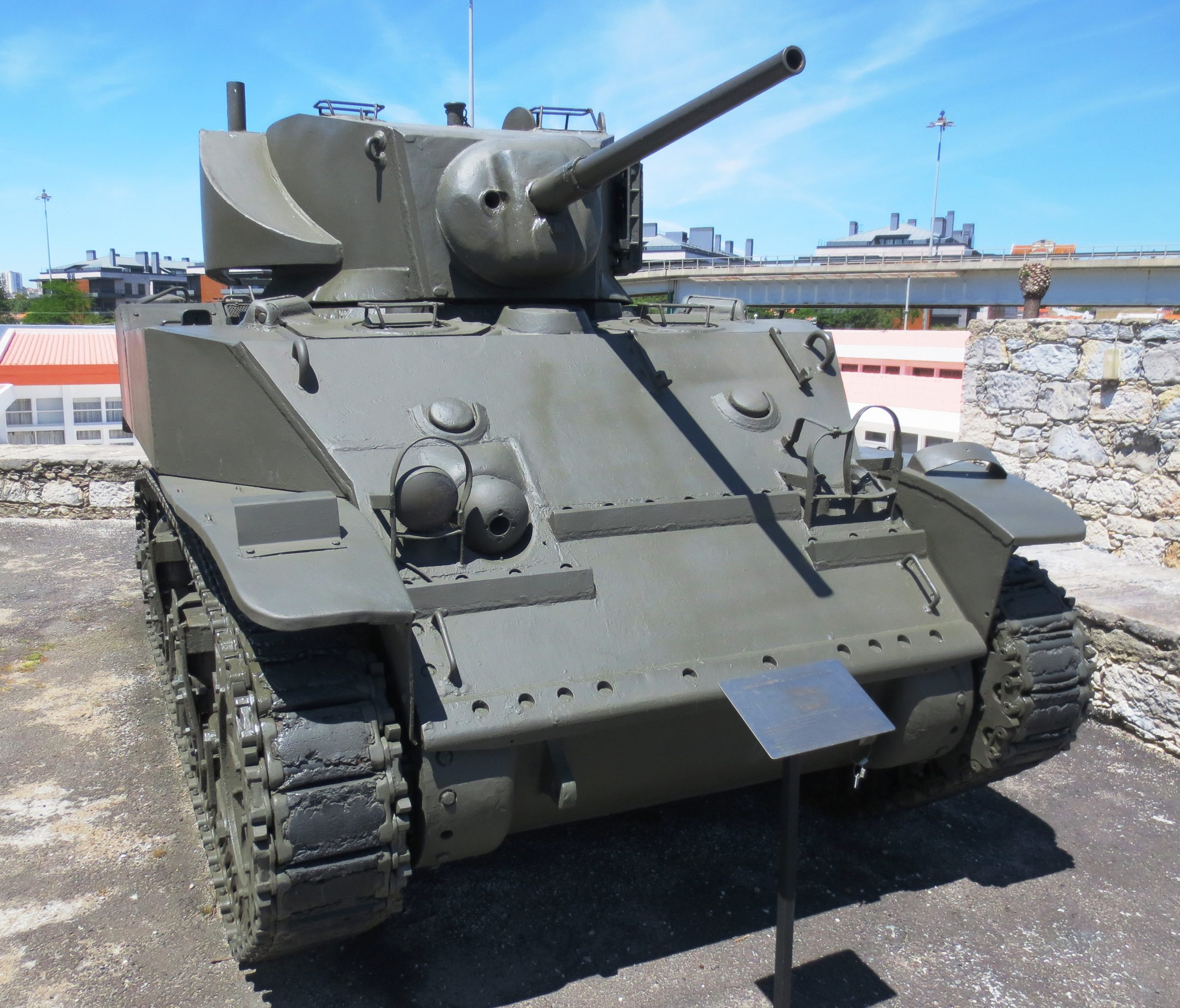
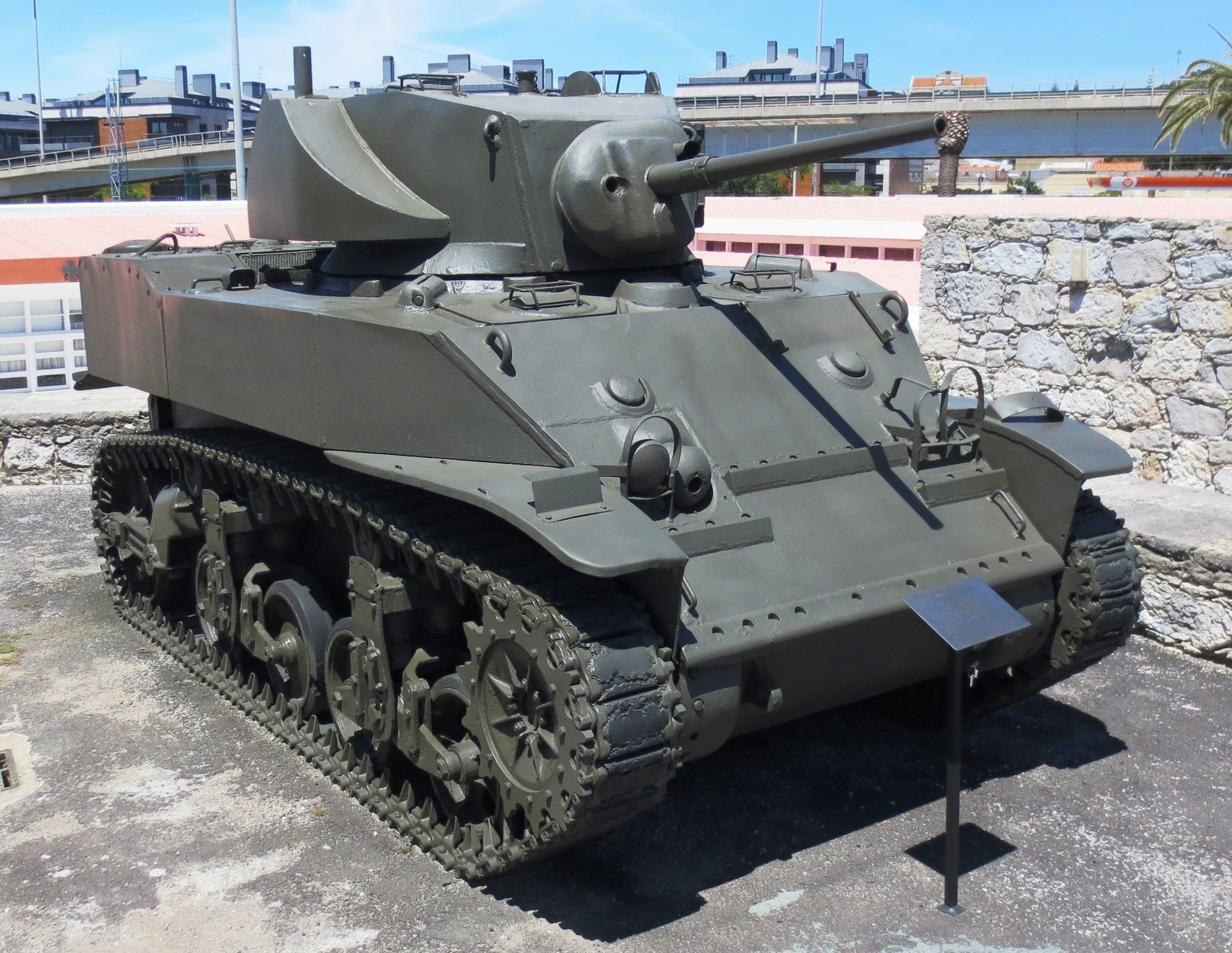
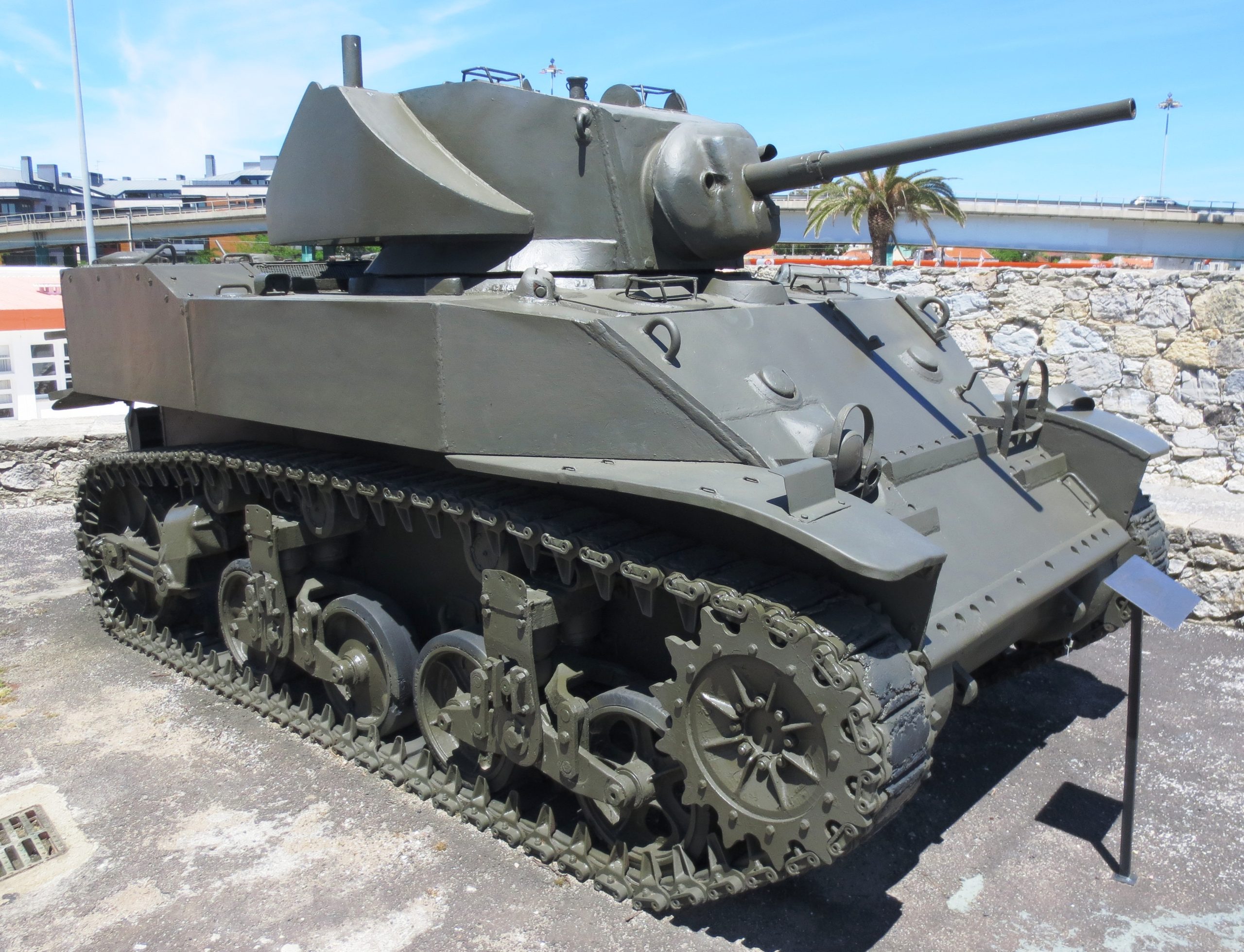
(Author Photos)
M5A1 Stuart light tank on display in Fort do Bom Sucesso, Museu do Combatente – Fort of Good Success, Combatant Museum, Lisbon, Portugal. During the 1960s and 1970s, Canada provided the Portuguese Army with used tanks as military aid.
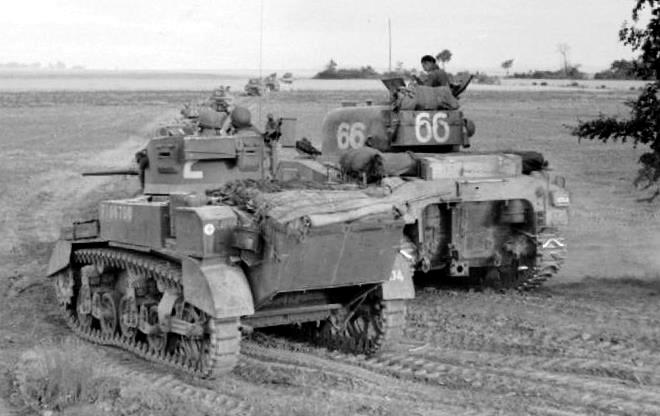
(IWM Photo, B66549)
A British M3A1 Stuart with a Sherman tank during the attack on Caen, Normandy, on 8 July 1944.
2 thoughts on “Canadian Armour: M3 Stuart Tank”
Hi Harold – Thank you for this great Stuart info. Hoping you can help me on the subject, please. Based on your research, could you please recommend four WD numbers for Stuarts, preferably vehicles of the 4th Armoured Division or, even more specifically, the British Columbia or South Alberta regiments, please? Even just the typical digit series following ‘CT’ would be of help. I’m going to be modeling same. Many thanks for any help you could offer.
Cheers,
Mike
Spokane, WA USA
Hello Michael, you can find the list of all Canadian Stuart tank serial numbers here: https://canadianarmsandarmour.ca/m5a1-stuart/
Some examples: 78-640, 78-643, 78-663 etc. Anthony Sewards is the go to expert for Canadian armour, most of the data on this site has been compiled by him.
All comments are subject to our Comment Policy. You must be at least 18 years old to comment.
See a comment that violates our guidelines? Report it here.