First Canadian Army in Europe, 1944-1945
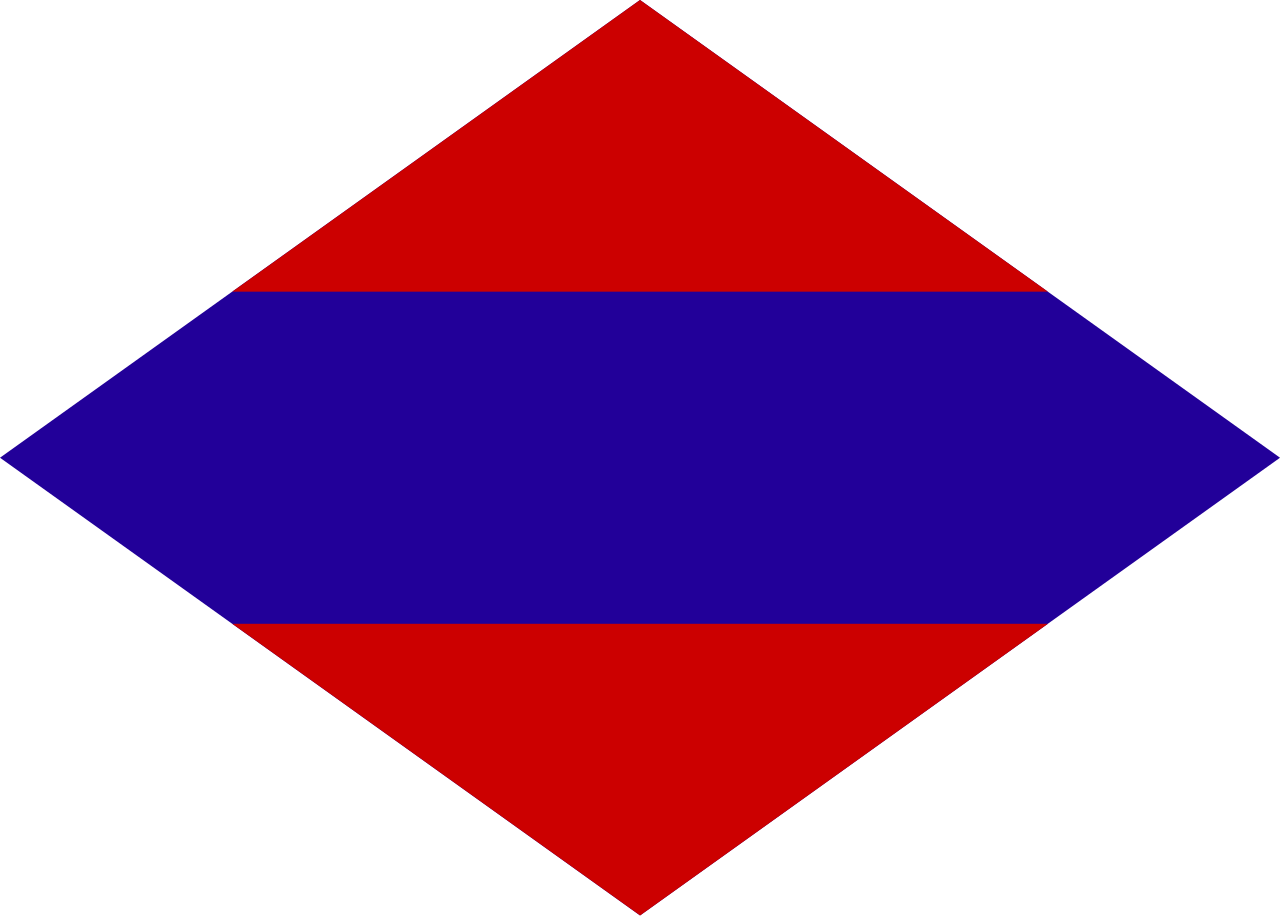
First Canadian Army formation patch.
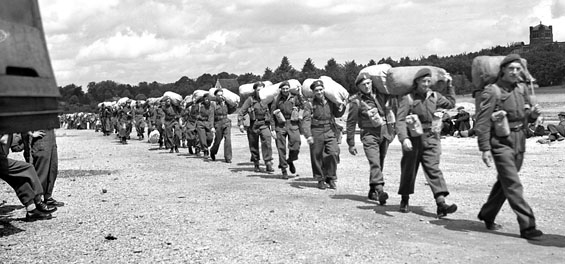
(Library and Archives Canada Photo, MIKAN No. 3230277)
Personnel of the 4th Canadian Reinforcement Battalion (Canadian Army Miscellaneous Units) boarding a train en route to England, Nijmegen, Netherlands, 1 June 1945.
Canadian Army Miscellaneous Units
The First Canadian Army, active in North West Europe from July 1944 to May 1945, operated as a large multinational force under Lieutenant-General H.D.G. Crerar. It commanded I Canadian Corps, II Canadian Corps, and various British, Polish, and American formations to clear the Channel ports, open Antwerp, and liberate the Netherlands.
Key Miscellaneous and Support Units (1944-1945):
Armoured/Specialized: 1st Canadian Armoured Personnel Carrier Regiment (1 CACR, formed Oct 1944) and “F” Squadron, 25th Armoured Delivery Regiment (The Elgin Regiment).
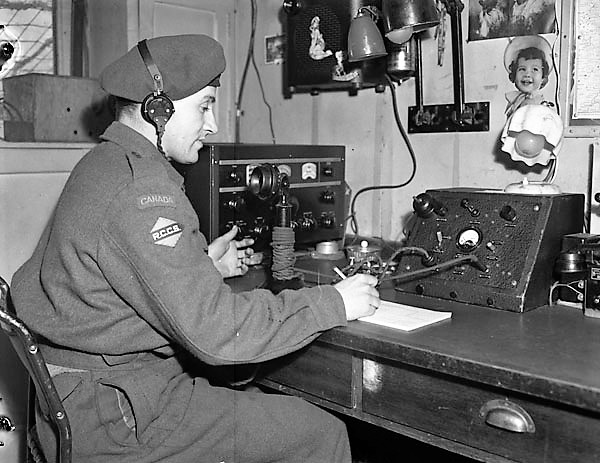
Army Troops/Engineers: First Canadian Army Troops Engineers and First Army Signals, Royal Canadian Corps of Signals (RCCS).
Logistics/Transport: Nos. 41, 45, 47, 63 & 64 Army Transport Companies (RCASC) and Army Troops Composite Companies.
Medical/Services: No. 6 Casualty Clearing Station, Field Transfusion Units (4, 5, 6, 7), and Field Dressing Stations (9, 10, 11).
Headquarters Defence: First Canadian Army Defence Battalion, originally the Lorne Scots, later the Royal Montreal Regiment.
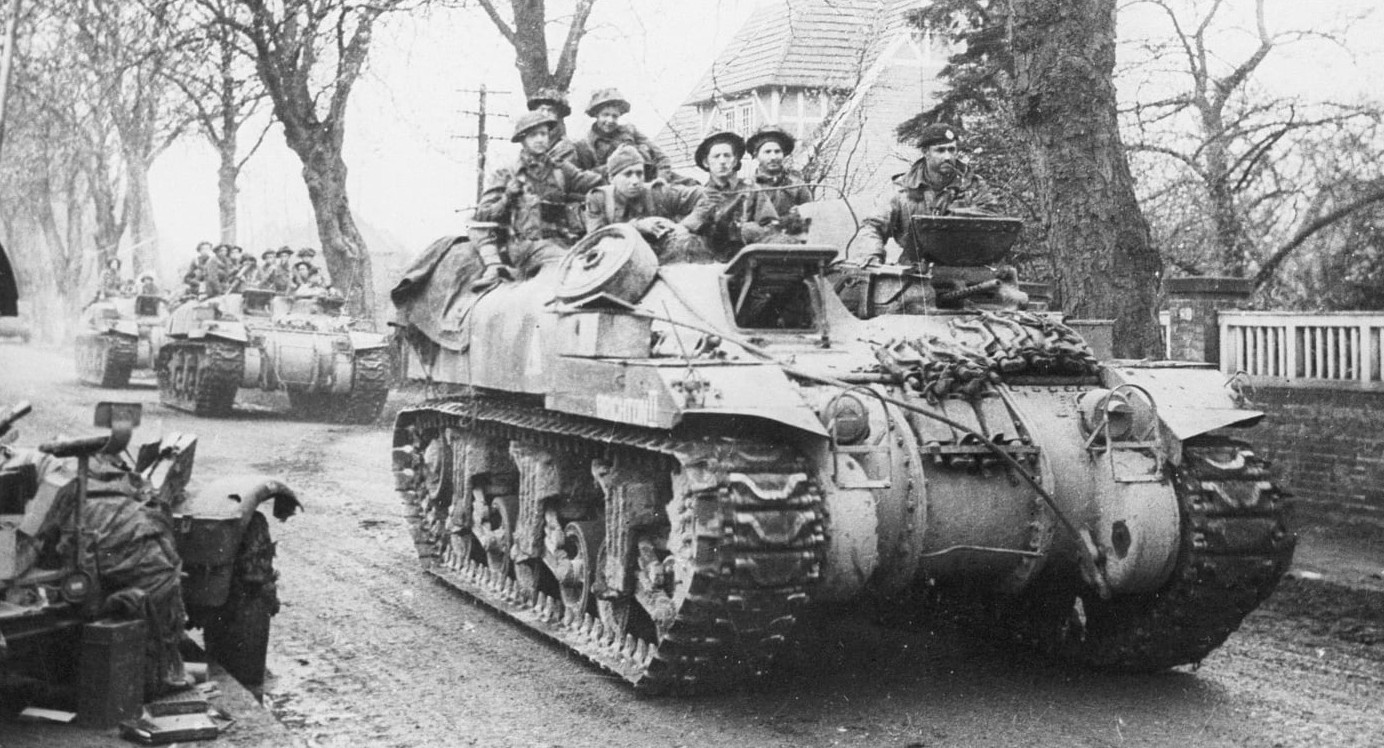
(The Tank Museum Photo)
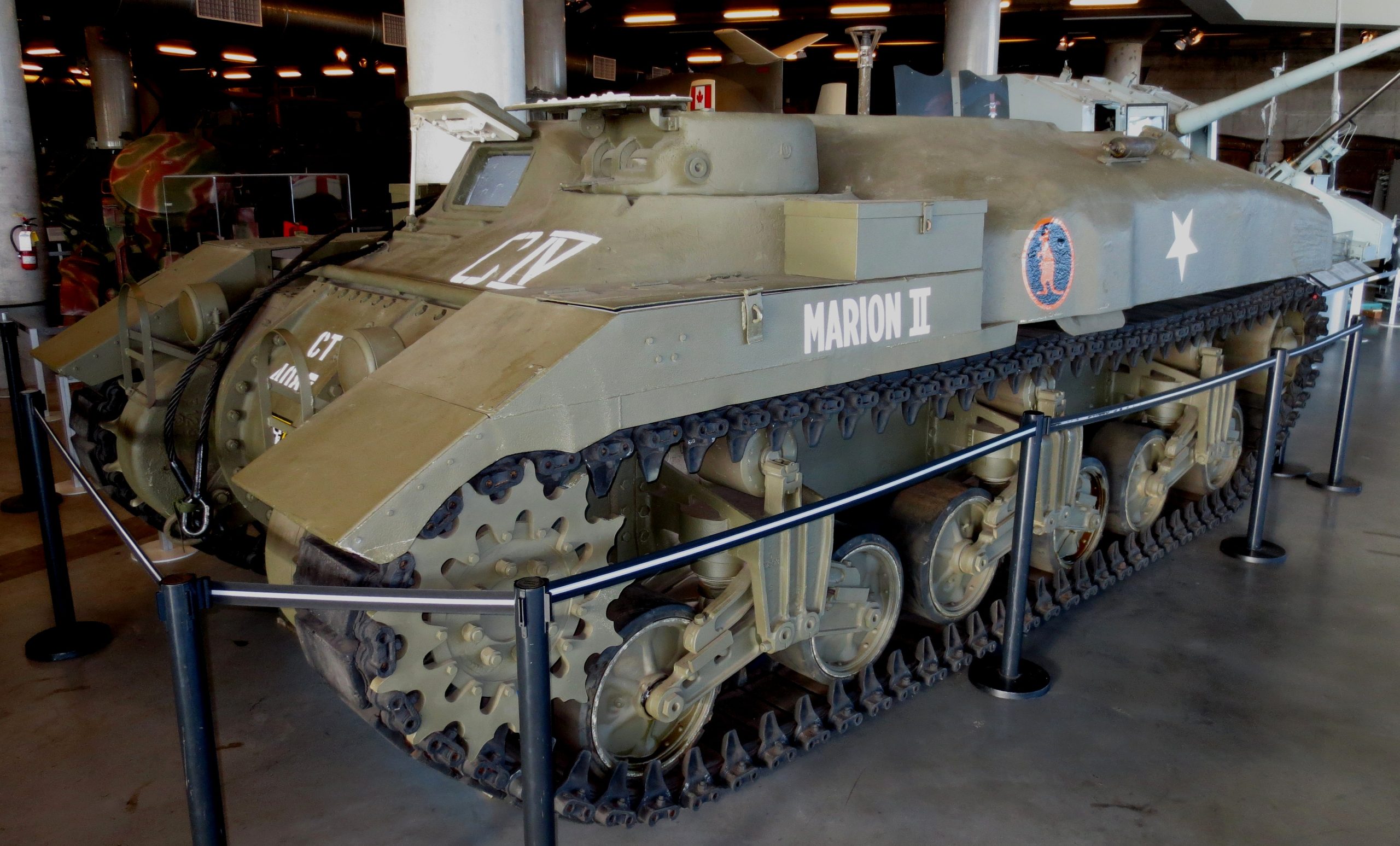
Kangaroo armoured troop carrier transporting personnel c1944. By 1945 the Ram Kangaroo was a vital part of Allied combined arms warfare, as it allowed infantry the same mobility and similar protection to tank crews. Two units used them in North-West Europe, the 1st Canadian Armoured Carrier Regiment supported troops of First Canadian Army, and 49th Armoured Personnel Carrier Regiment did the same for Second British Army
The 1st Canadian Armoured Carrier Regiment (1CACR) (also known as the 1st Canadian Armoured Personnel Carrier Regiment) was an armoured regiment of the Canadian Army formed during the late stages of the Second World War in the north west European theatre. It was formed in October 1944 at Tilburg in the Netherlands, with the original 1st Canadian Armoured Personnel Carrier Squadron as its core. The new regiment’s purpose was to serve as a specialized armoured unit equipped with modified tanks used to carry infantry safely to their objectives. The concept of such armoured personnel carriers was an entirely new innovation, and it was through the 1CACR’s efforts that their effectiveness was proven, revolutionizing the tactical handling of infantry in battle. It was the only Canadian regiment to be both formed and disbanded overseas. (DND)
(Author Photo)
Kangaroo Armoured Personnel Carrier “Marion II“, Canadian War Museum, Ottawa.
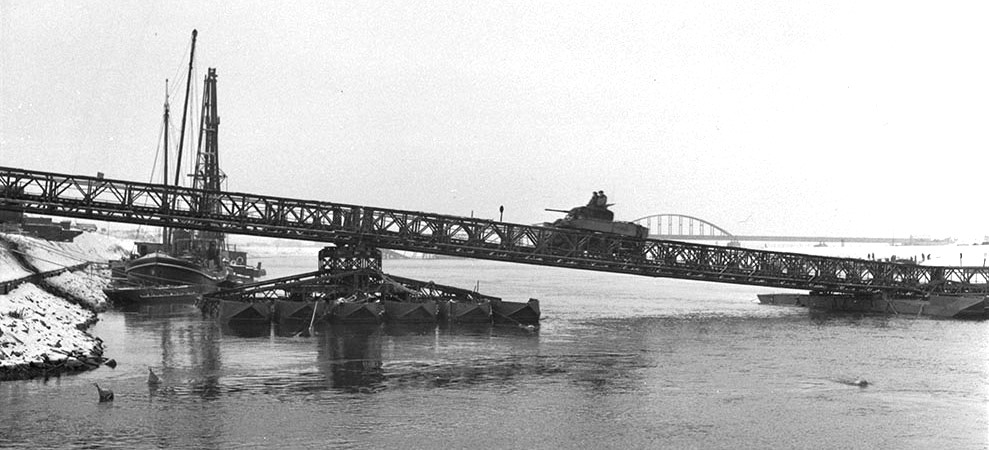
First Canadian Army Engineers, Royal Canadian Engineers (RCE)
(Library and Archives Canada Photo, MIKAN No. 3524627)
View of the double landing bay of the ‘Quebec’ bailey bridge installed by the Royal Canadian Engineers (RCE) over River Maas, Ravenstein, Netherlands, 1 Feb 1945.
(Author Photo)
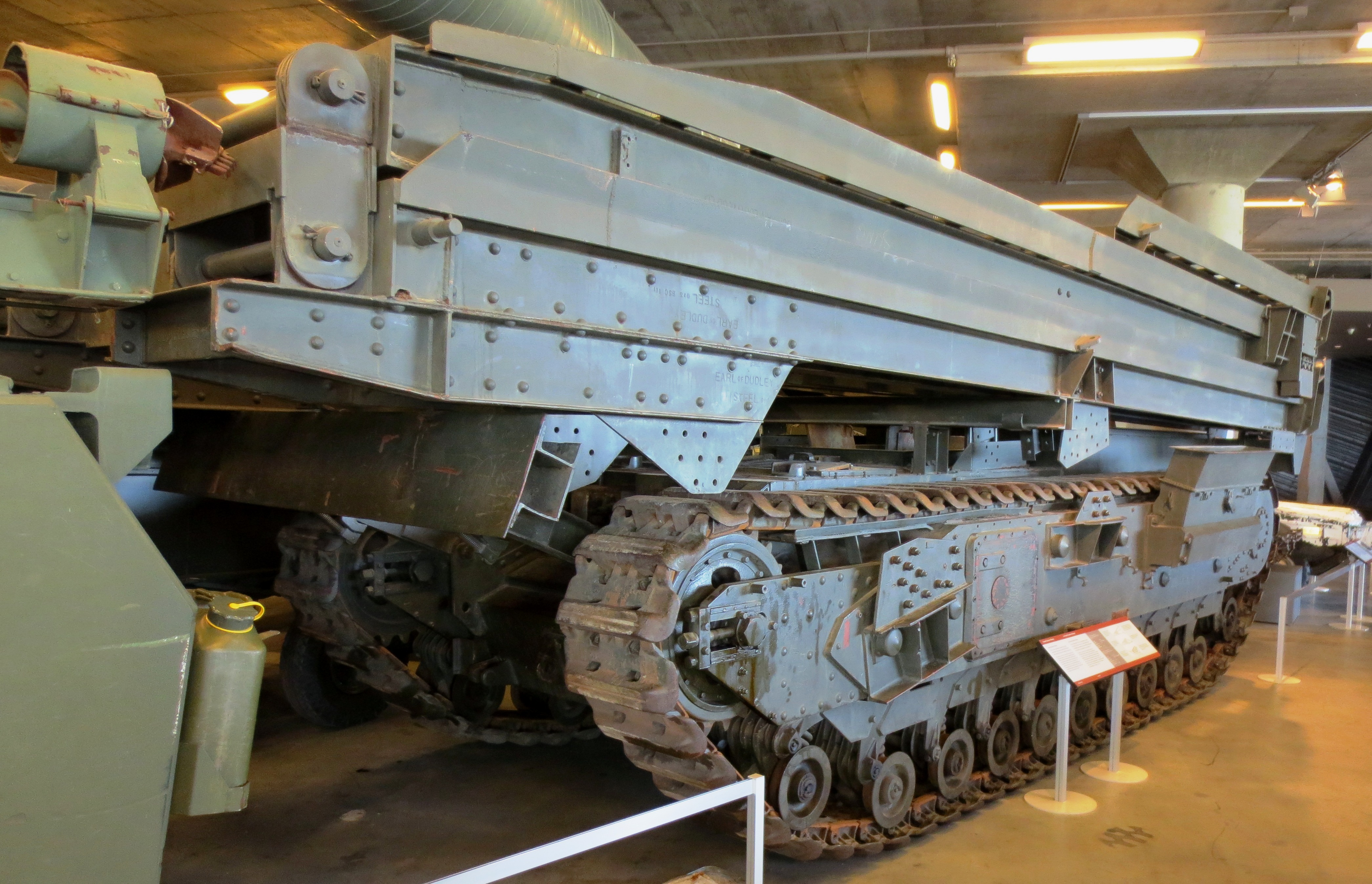
The Churchill Great Eastern was a specialized Armoured Ramp Carrier (ARK) developed during the Second World War to assist vehicles in crossing large vertical or horizontal obstacles, such as seawalls or deep trenches. Based on a Churchill Mk. IV chassis, only ten were produced, with one survivor displayed in the Canadian War Museum, Churchill Infantry Tank Mk IV RE, (Serial No. BW9229), Great Eastern Armoured Ramp (Serial No. WD No T172796/D.
The Great Eastern Tank Ramp, although designed in 1944 the Great Eastern ARC was not available before 1945 and not in time for the D Day landings. It was fitted with two ramps, one 27ft long and the other 25ft long. This was to enable higher obstacles to be traversed than the normal ARK’s. It carried a massive deployable wooden bridge on a turretless chassis. It was meant for Normandy but did not see combat, though it was used for training and later testing in Canada. The center ramp section was designed to be launched by firing three-inch rockets attached to the rear of the vehicle. The example in Ottawa was recovered from a scrap yard in Kemptville, Ontario, in 1972. (CWM)
First Army Signals, Royal Canadian Corps of Signals (RCCS)
(Library and Archives Canada Photo, MIKAN No. 3405827)
Signalman J.T. Prime of 1st Canadian Army Signals, Royal Canadian Corps of Signals (RCCS), operating a local radio receiver and remote unit, Zeddam, Netherlands, 4 April 1945.
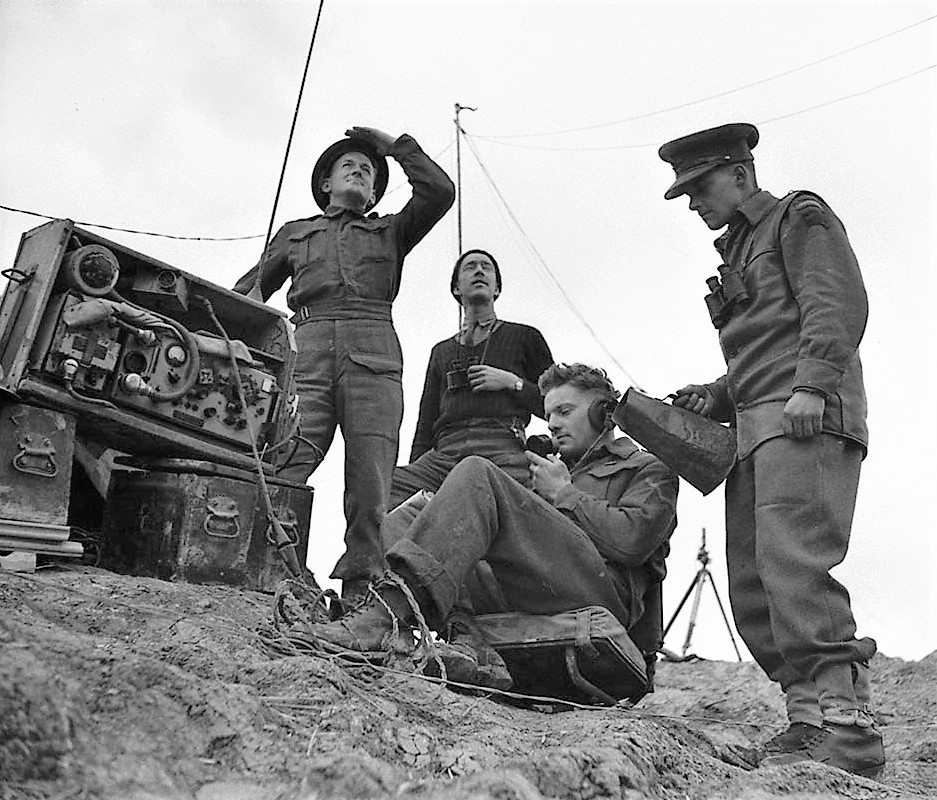
(Library and Archives Canada Photo, MIKAN No. 3524498)
Personnel of the 17th Field Regiment. RCA, receiving signals from Taylorcraft Auster A.O.P. III aircraft of the RAF. Left to right: Bdr Barney Little. Lt. Leonard Rasberry, L/Bdr Aby Castel, Lt. David Armour, 10 February 1944.
Nos. 41, 45, 47, 63 and 64 Army Transport Companies, Royal Canadian Army Service Corps (RCASC), and Army Troops Composite Companies.
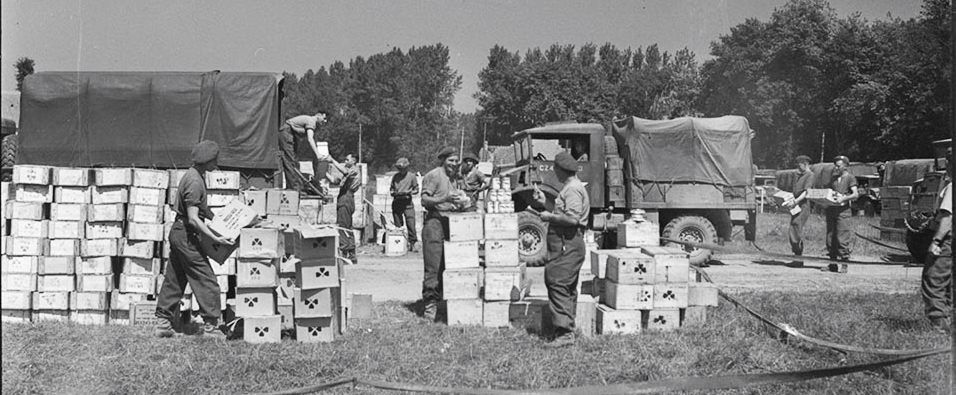
(Library and Archives Canada Photo, MIKAN No. 3205474)
Service point for rations, Royal Canadian Army Service Corps (RCASC), 7 August 1944.
Medical/Services: No. 6 Casualty Clearing Station, Field Transfusion Units (4, 5, 6, 7), and Field Dressing Stations (9, 10, 11).
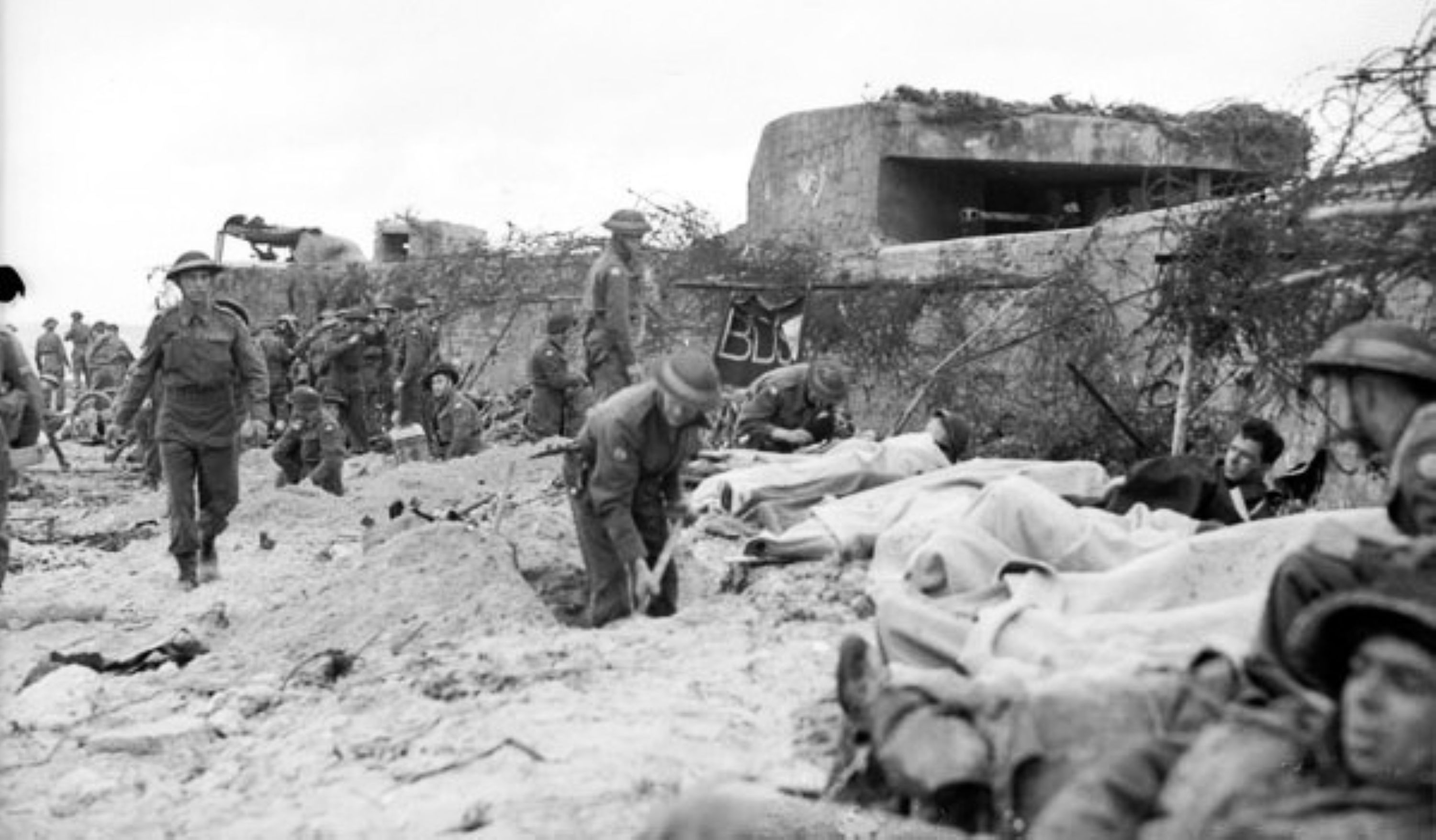
(Library and Archives Canada Photo, MIKAN No. 3397090)
Wounded Canadian soldiers awaiting evacuation to a Casualty Clearing Station of the Royal Canadian Army Medical Corps (RCAMC) on D-Day, Courseulles-sur-Mer, in the Normandy beachhead, France, 6 June 1944.
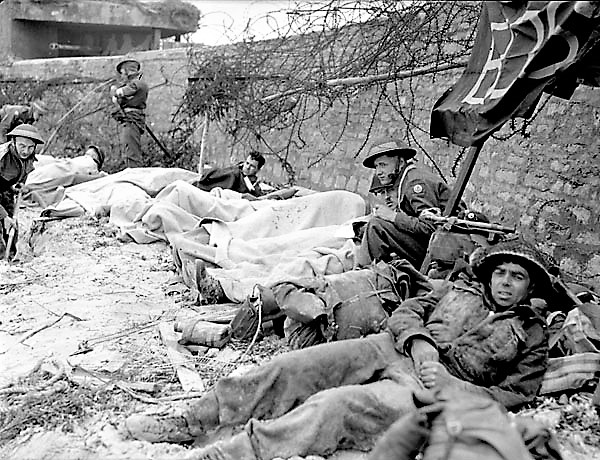
(Library and Archives Canada Photo, MIKAN No. 3203237)
Wounded Canadian soldiers awaiting evacuation to a Casualty Clearing Station of the Royal Canadian Army Medical Corps (RCAMC) in the Normandy beachhead, France, 6 June 1944.
Headquarters Defence: First Canadian Army Defence Battalion, originally the Lorne Scots, later the Royal Montreal Regiment.
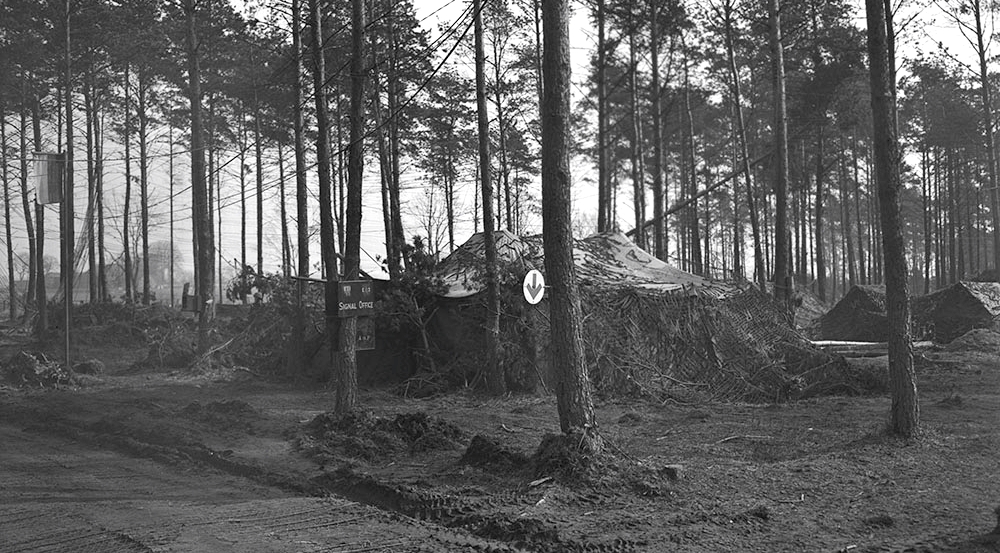
(Library and Archives Canada Photo, MIKAN No. 3224836)
II Canadian Corps Headquarters, 15 March 1945.
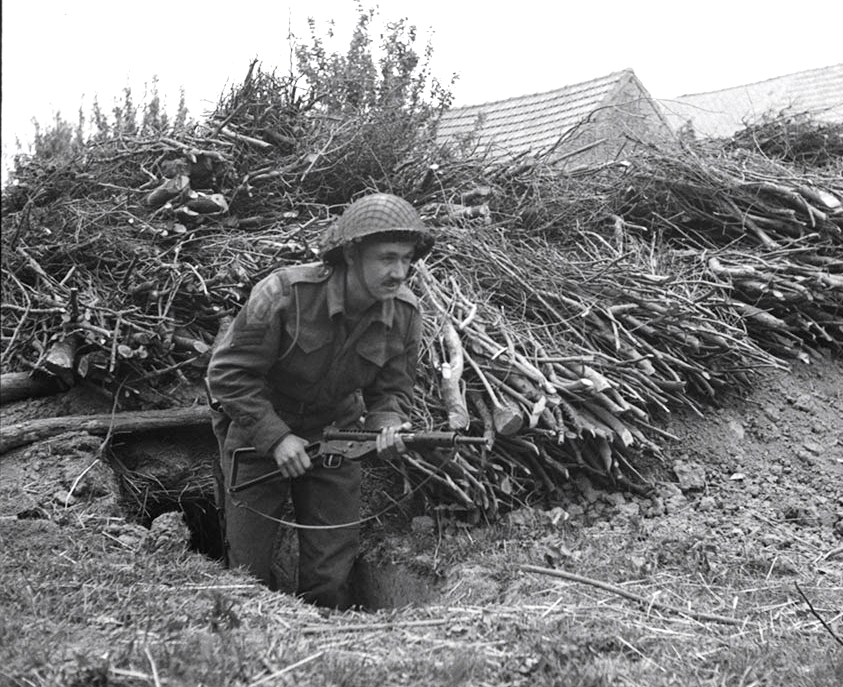
(Library and Archives Canada Photo, MIKAN No. 3205679)
A Canadian infantryman standing guard in a dugout outside No. 3 Canadian Public Relations Group (Canadian Army Miscellaneous Units) headquarters in the Normandy beachhead, France, 9 June 1944.
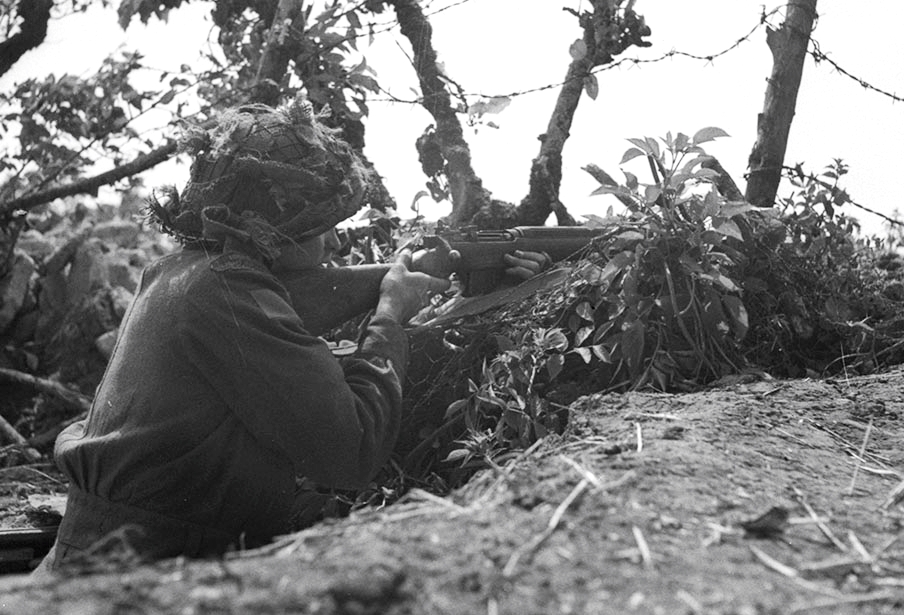
(Library and Archives Canada Photo, MIKAN No. 3198834)
Pte. H.W. Allen of Grimsby, Ontario, manning a platoon outpost, Normandy, 20 June1944.
All comments are subject to our Comment Policy. You must be at least 18 years old to comment.
See a comment that violates our guidelines? Report it here.