
ROLL CALL, NEWSLETTER OF THE FRIENDS OF THE NEW BRUNSWICK MILITARY HISTORY MUSEUM
AMIS/AMIESDE MUSEÉ D’HISTOIRE MILITAIRE DU NOUVEAU-BRUNSWICK
Volume 10,Issue 2 October 2024
Roll Call is published four times a year: Spring, Summer, Fall, and Winter. This issue isthe second for 2024. Submissions orcomments can be sent to the Editor, Hal Skaarup at hskaarup@rogers.com. For details on joining the Friends, please contact the Museum at 506-422-1304 or email us at: friendsnbmhm@gmail.com.
Friends of the New Brunswick Military History Museum Executive:
President-BrianMacDonald
Vice-President-Hal Skaarup
Secretary-Doug Hall
Treasurer-RandallHaslett
Directors-Paul Belliveau, Gary Campbell, Robert Dallison, Brent Wilson, Harold Wright
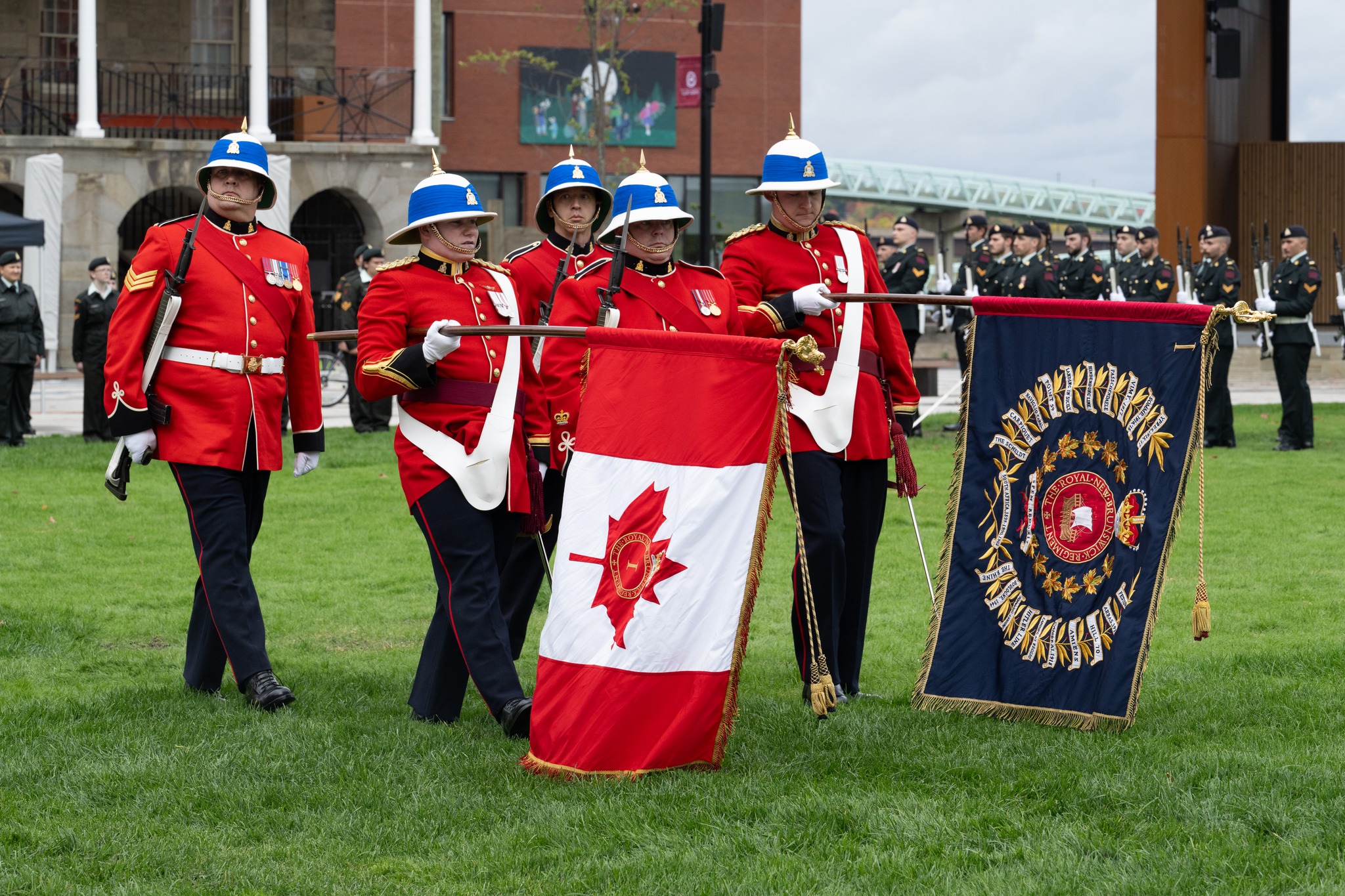
The RNBR Changing of the Colours
(DND Photo, Cpl Brian Waters)
Trooping of the Colours.
(DND Photo, Cpl Brian Waters)
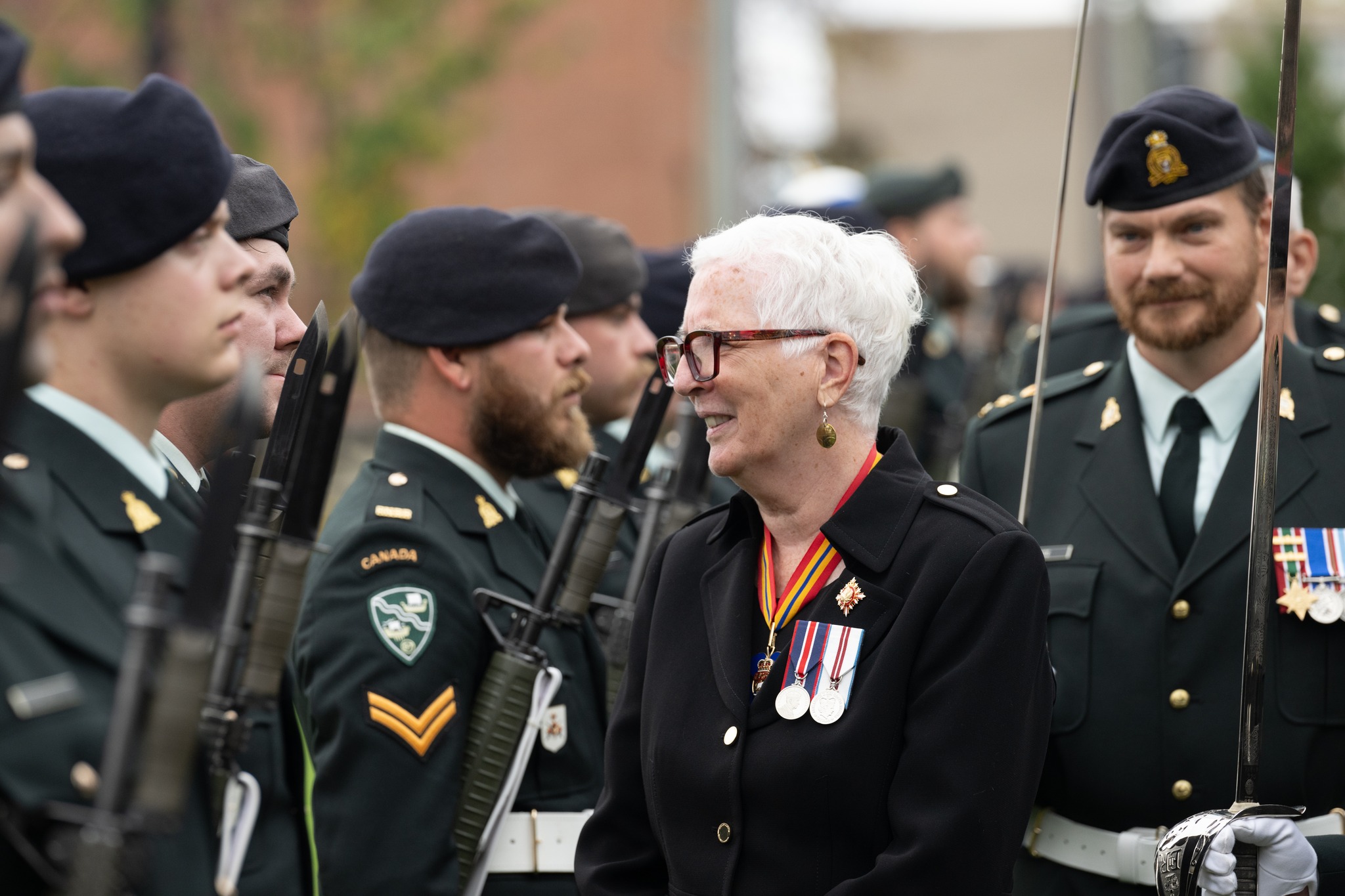
NB Lieutenant-Governor Brenda Murphy presiding over the consecration of the new colours for the RNBR, 5 October 2024.
(Author Photo)
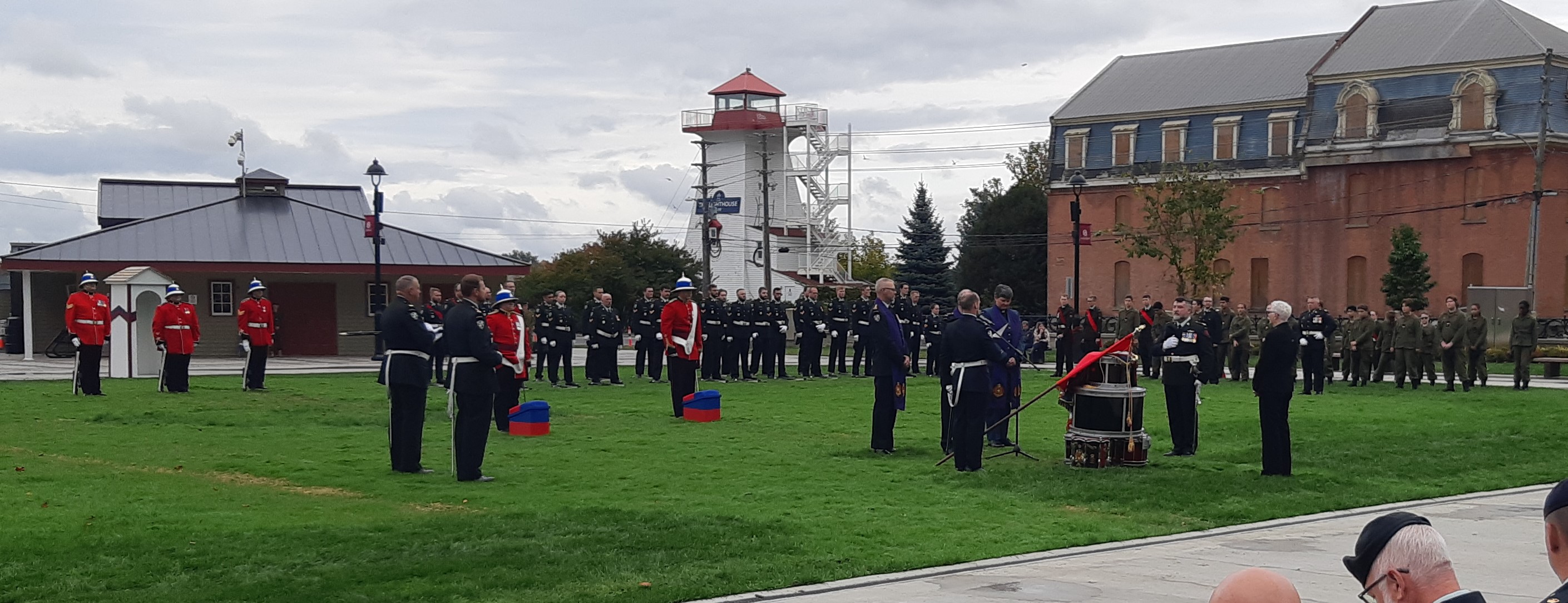
NB Lieutenant-Governor Brenda Murphy presiding over the consecration of the new colours for the RNBR, 5 October 2024.
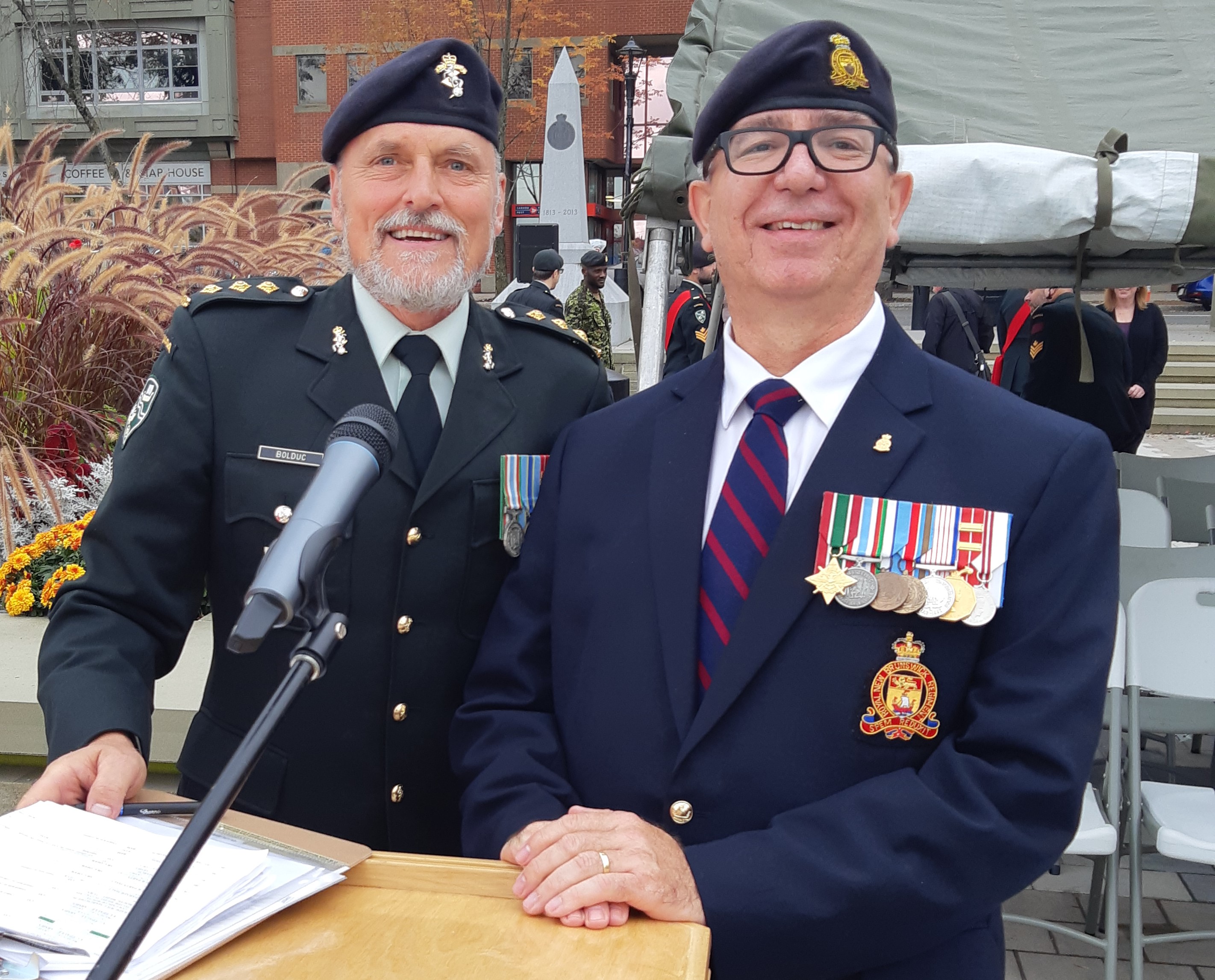
(Author Photo)
Capt Roger Bolduc and Capt (Retired) David Hughes.
The RNBR Changing of the Colours ceremony tookplace today in Officers Square, Fredericton. As the RNBR Historian, Dave presented some of the history of the regiment’snew colours. Coloursare an organization’s most prized possession. They are presented personally bythe Sovereign or by an individual, normally the Governor General, nominated toact on the Sovereign’s behalf. Historically, Colours marked and provided arallying point for army regiments in the line of battle. Today, they are nolonger carried in action or held by a unit in a theatre of war. They continue,however, as visible symbols of pride, honour and devotion to Sovereign andcountry.
The Royal New Brunswick Regiment (RNBR) is a reserve infantry regimentof the Canadian Army based in New Brunswick. It was formed in 1954 byamalgamation of The Carleton and York Regiment, The New Brunswick Scottish andThe North Shore (New Brunswick) Regiment as the New Brunswick Regiment. The”Royal” designation was added in 1956. The Royal New BrunswickRegiment is part of 37 Canadian Brigade Group, 5th CanadianDivision. The RNBR holds 65 battle honours mostly by perpetuation of theregiments it was formed from. The parade was very well attended by the public.
New Brunswick’s 236th Battalion MacLean Kilties Exhibit
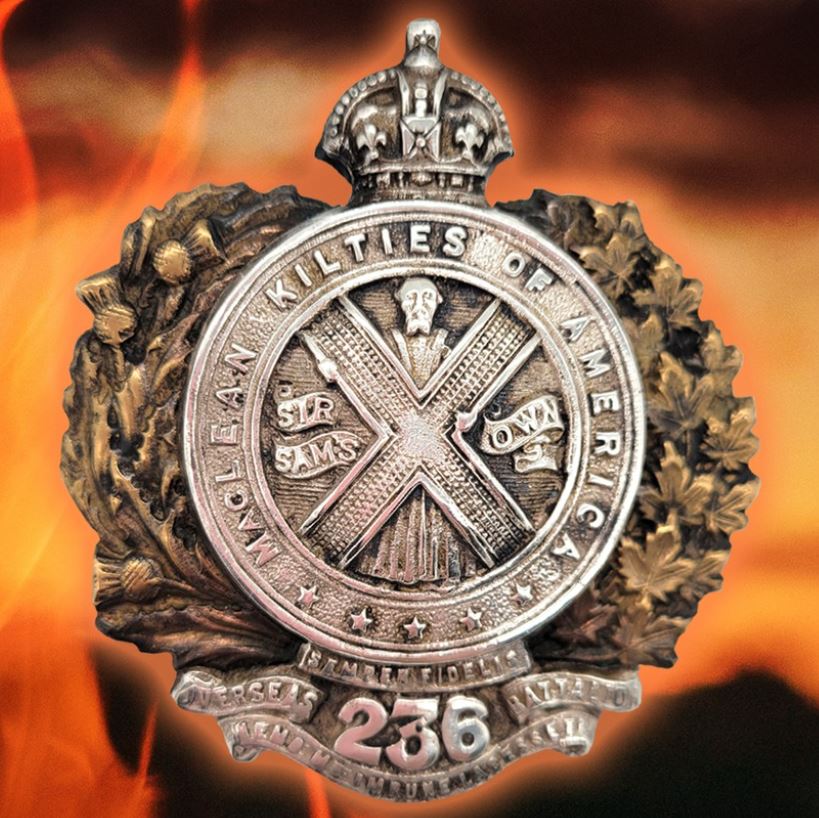
The Grand Opening of The Kilties are Coming! New Brunswick’s 236th Battalion MacLean Kilties Exhibit opened on 29 September 2024 at Government House in Fredericton, New Brunswick.The Honourable Brenda Murphy, Lieutenant Governor of NB kindly hosted the Grand Opening. This Feature Exhibit will be open to the public in her residence at Government House for one year. Many thanks to the many organizations and individuals that helped with this exhibit. Your support is greatly appreciated.
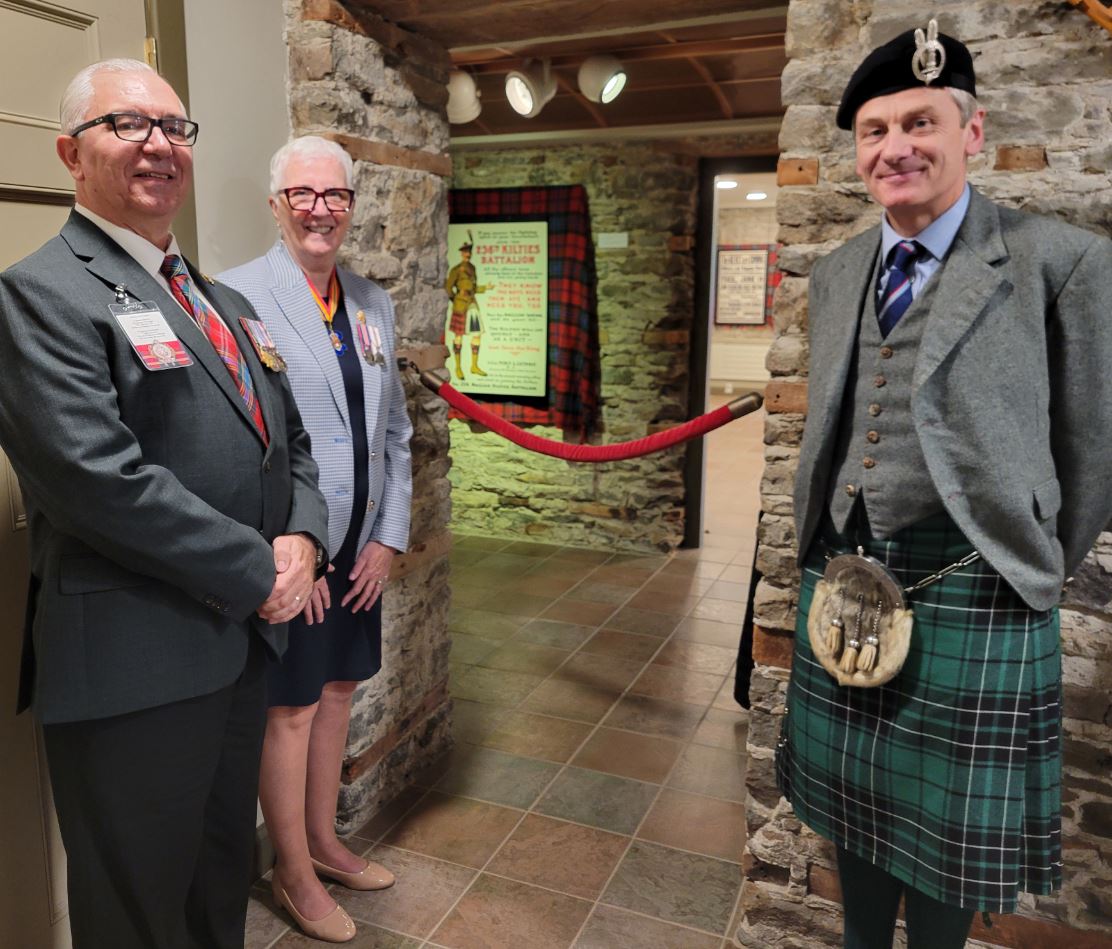
About to open the exhibit (left to right) Manager of the NBMHM David Hughes, Her Honour, Brenda Murphy, Lieutenant Governor of NB, and Malcolm Maclean the younger of Duart and Morvern, heir to Sir Lachlan Maclean, 28th Chief of Clan Maclean.
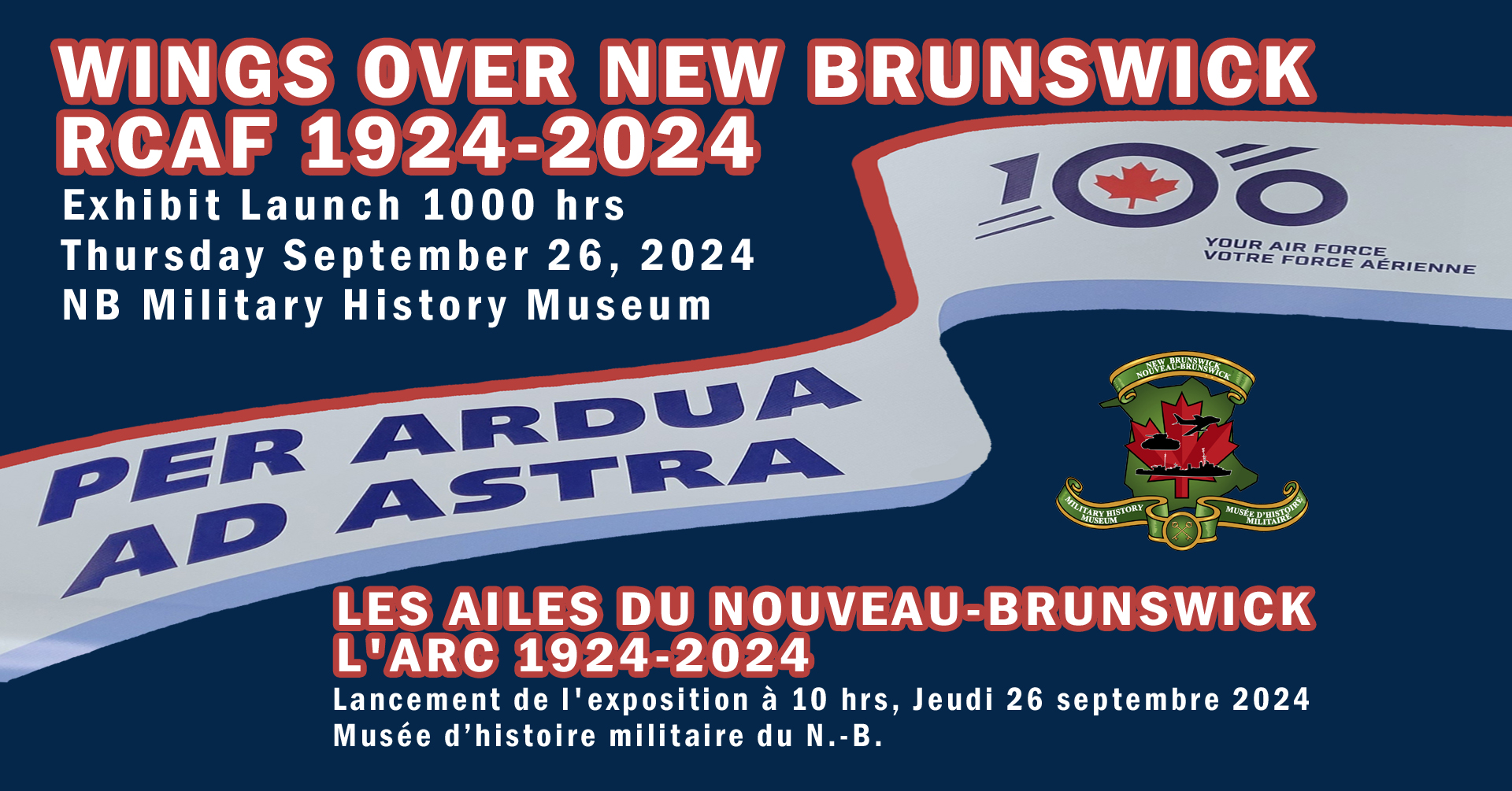
Wings Over New Brunswick – RCAF 1924 to 2024 celebrates the Royal Canadian Air Force in New Brunswick over the last 100 years.
Four books to commemorate the RCAF’s 100th Anniversary
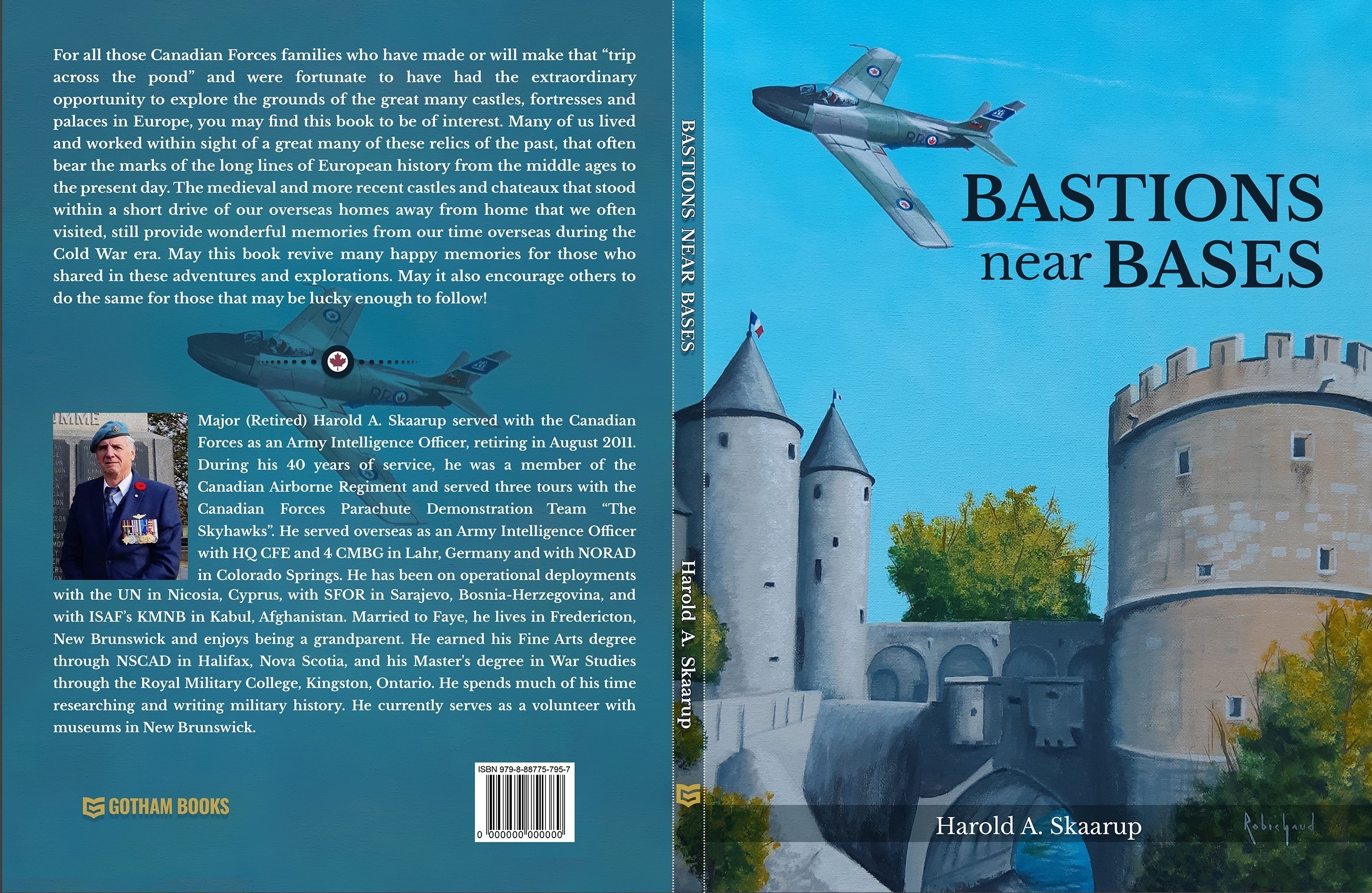
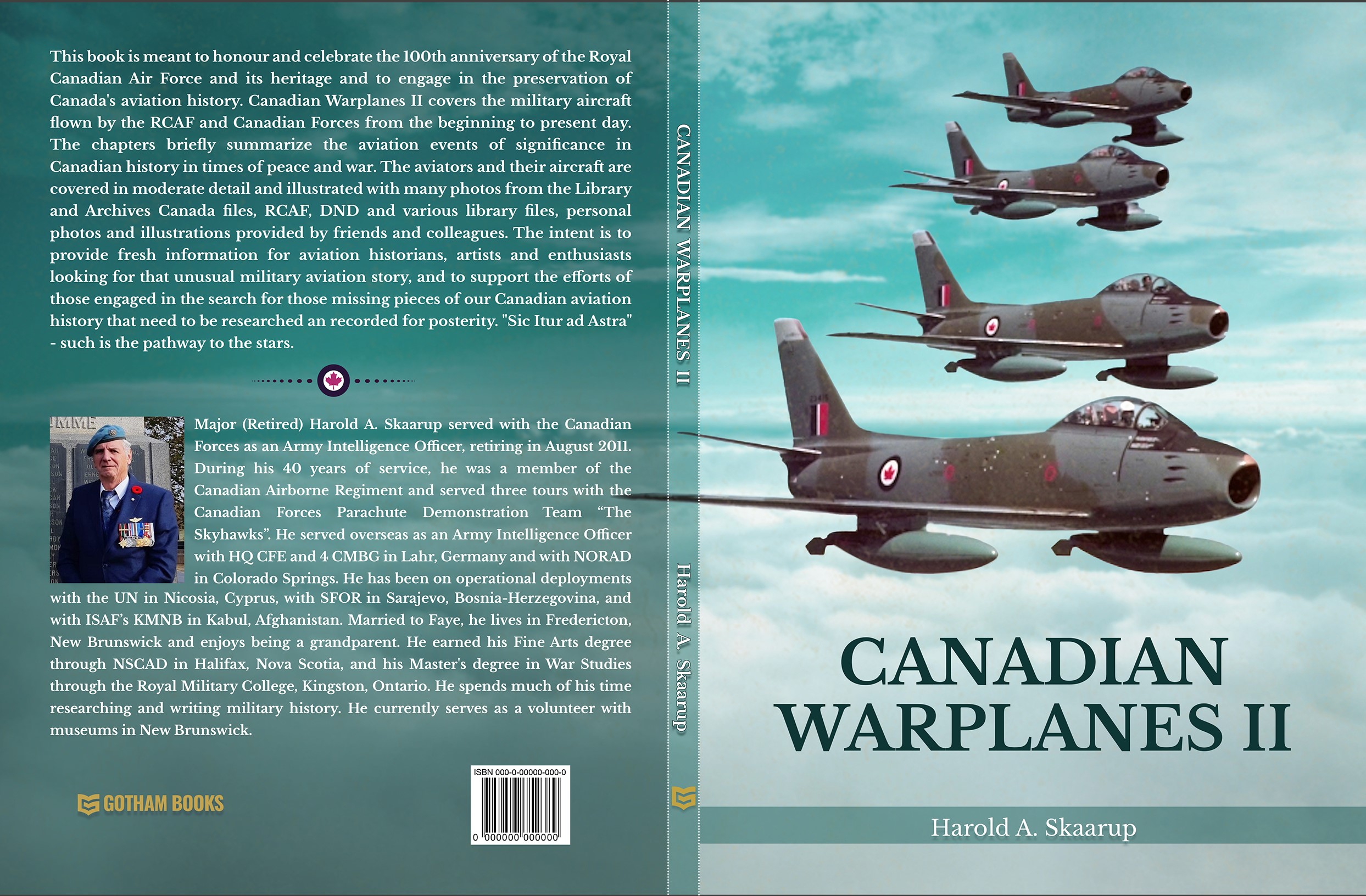
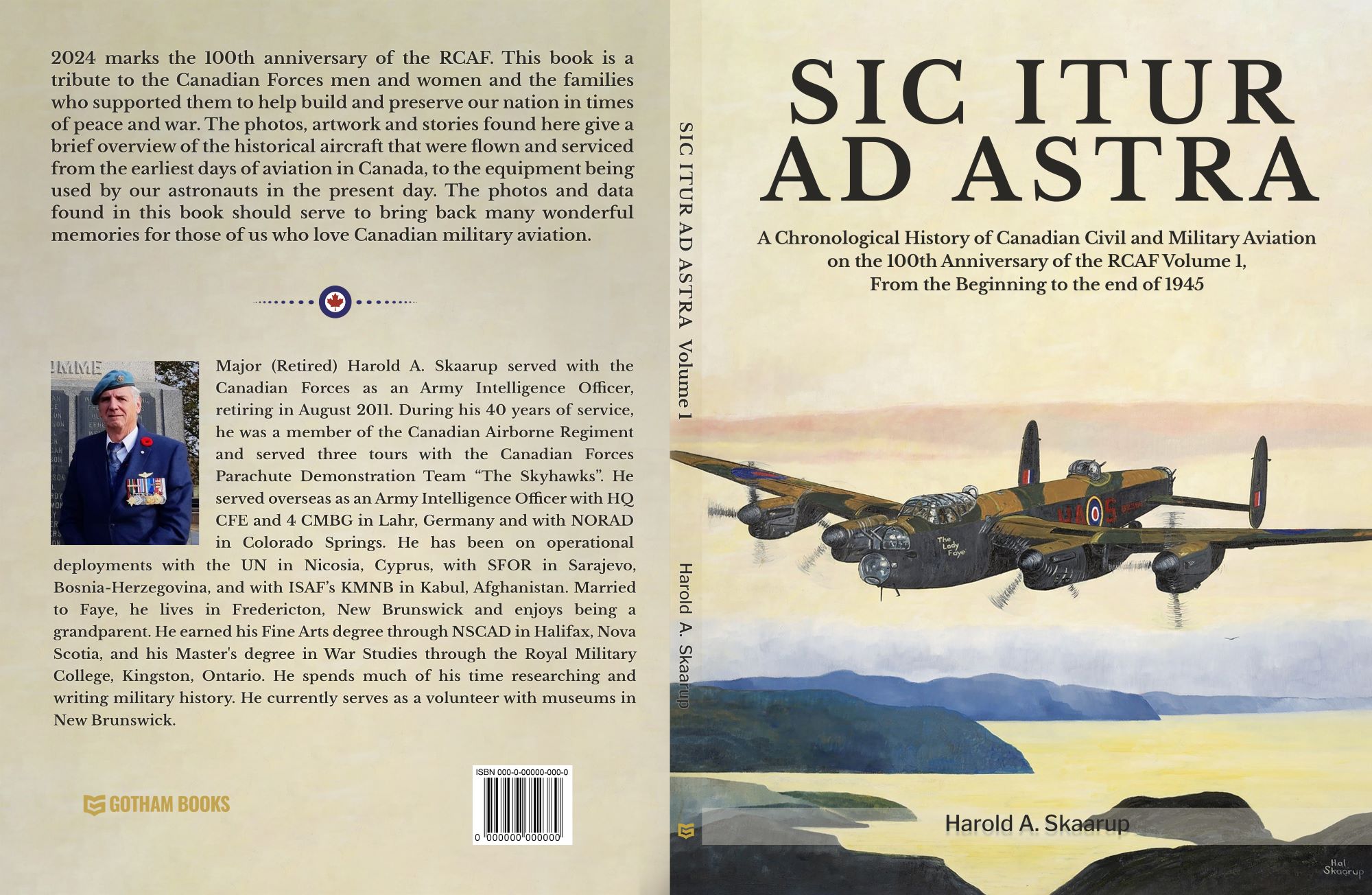
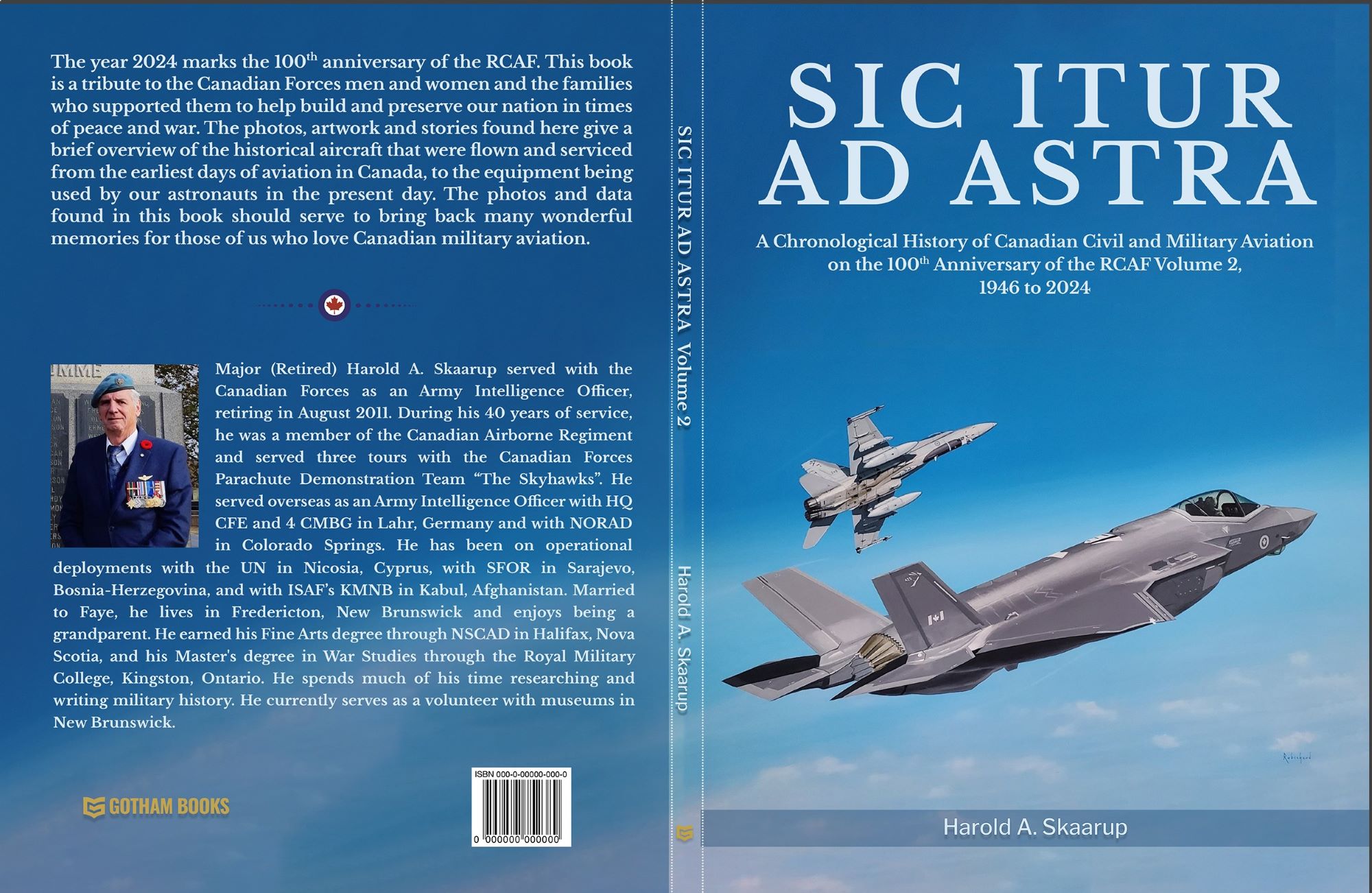
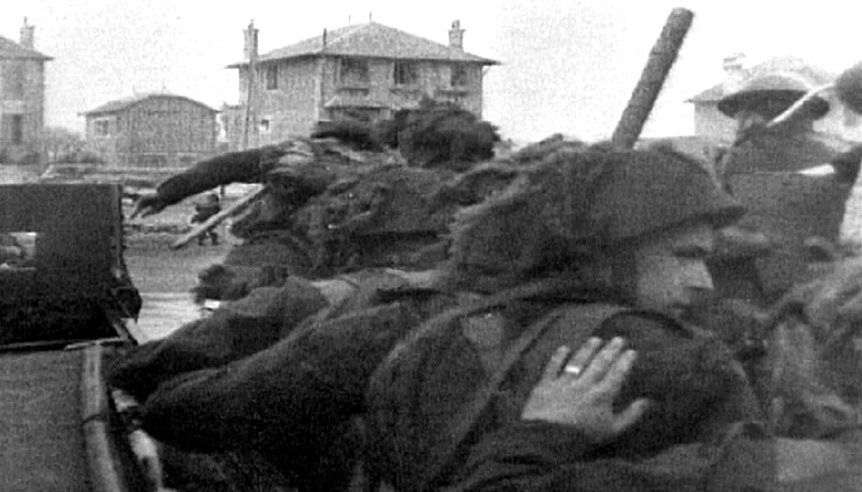
North Shore (New Brunswick) Regiment leaving their landing craft near Saint-Aubin-sur-Mer. As they move to leave the landing craft, one soldier with a wedding ring on his hand pats the soldier in front on the back. This puts a human face on what was a massive event with global significance. The soldier who turned to face the camera was Private George Herman Baker, a member of Major MacNaughton’s company.
80th Anniversary of D-Day Commemorative Event
Randall Haslett.
In September 2023, I suggested to the Board of Directors that the Friends hold a gala event to commemorate the 80th Anniversary of D-Day. The Board was in agreement and an organizing committee was established. The original plan was to host a cocktail party at the Museum and then walk over to the Warrant Officers’ and Sergeants’ Mess, but the cost per plate made it very difficult to make it a fundraiser without putting the price per ticket in the stratosphere.
So, we looked to the Fredericton Delta as the venue and the date was available and they agreed to be a sponsor and gave us a really good price per plate and reduction on the room rental. When we approached Signature Light & Sound to provide us sound and stage quality lighting, they were more than happy to support our event with complimentary service.
With a venue booked, the committee agreed we needed some form of 1940’sentertainment, so singers and swing dancers were contacted and they agreed to support our event. For dinner music, the3 Field Regiment RCA Band was contacted and they decided as they didn’t have a previous commitment that day, they would be happy to support. But that soon changed.
The next step was to organize our marketing plan. Melynda suggested we use the iconic picture of the North Shore (NB) Regiment landing at Saint Aubin-sur-Mer Normandy part of “Juno Beach”. This photo was redrawn and became our logo.
Everything was going smoothly until April 2024 when the 3 Fd RCA Band received an official tasking to support the national D Day commemoration in Dieppe by the Minister of Veteran’s Affairs. This left the committee no choice but to pivot and to come up with an event at the Museum since we did not have live musicians. With a full house it didn’t leave space for‘40s swing dancers, so that was eliminated from the entertainment program. So, our main thread was the reading of Father (later Major) Hickey, who wrote the story of his experiences with the North Shore Regiment, Scarlet Dawn. Music and song was provided by St Peter’s Anglican Church Choir who opened the commemoration with the singing of “O Canada” and God Save the King!! The readings and the personal connection of each reader to their passage was very poignant. A full house of approximately 65 folks attended the evening.
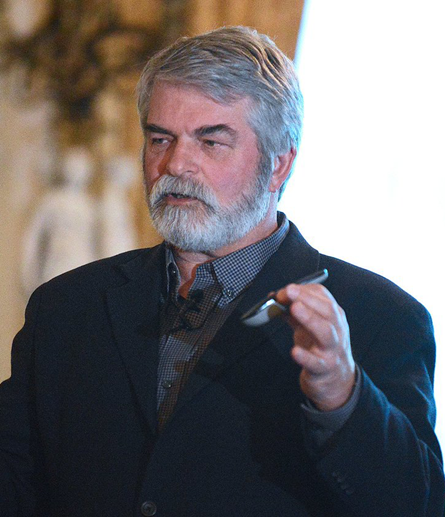
The program ran longer than planned but the audience was primed to hearf rom Dr Marc Milner as he delivered an interactive lecture on the Canadianssuccess on 6 June 1944 and the following first 45 days.
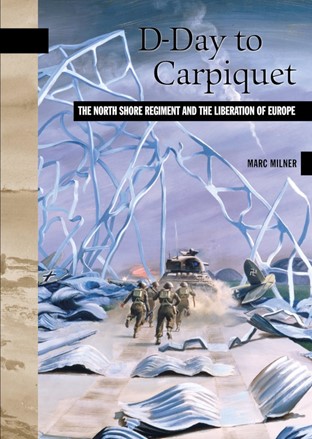
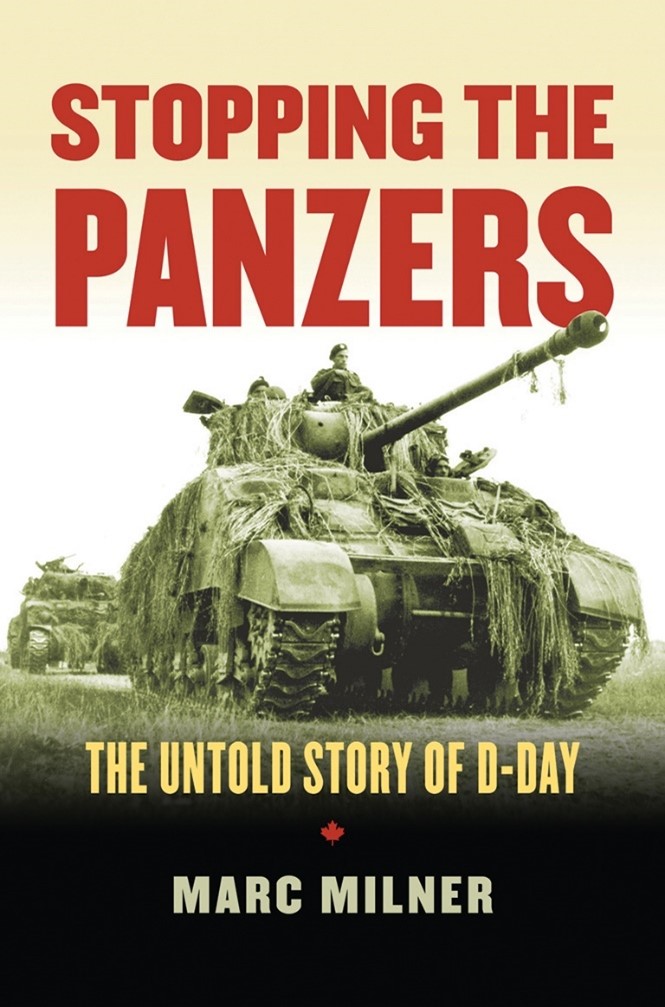
The committee organized a book sale of Dr Milner’s book D-Day to Carpiquet and replica badges including the North Shore Regiment which were gobbled up quickly by the attendees and the winner of the 50/50 draw, Stephen Smith donated his winnings back to the Friends as a donation!!
All in all, it turned out to be a wonderful evening and a dignified event to honour this historical day.
In the spirit of Father Hickey’s dedication to the men of the North Shore Regiment, what follows is an excerpt from The Scarlet Dawn, which speaks to his experiences on D-Day, June 6, 1944, after landing at Saint Aubin sur Mer in the first wave of the Normandy invasion.
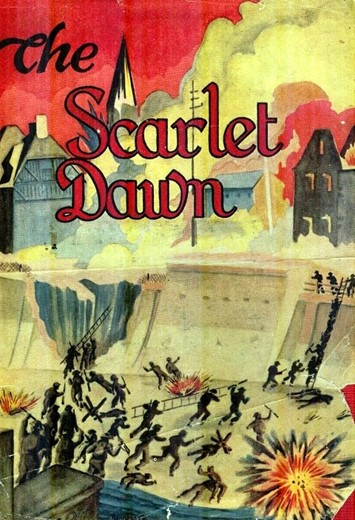
The Scarlet Dawn
Into the night we sailed as silently as thieves bent on their journey under the cover of darkness. Not a light showed in all that vast expanse of boats, but here and there, by the reflection of the water, you could make out the indistinct form of a boat, like a giant whale sleeping. Only the dull throbbing of the engines broke the silence. We went down to our bunks, but it was hard to get sleep. We have been warned to keep our gas masks handy, for, in case of a German air attack, a smoke screen would be laid to blot out the fleet. It was warm and stuffy down there and, of course, the thought of stepping into battle at daybreak wasn’t a thought to lull you to sleep; but we weren’t jittery. The last I remember before dozing to sleep was Captains Gammon, McQuarrie and LeBlanc shooting a game of dice on the floor near my bunk. I found a shilling in my pocket and, as money had such little value there, I invested the whole of it in the game and dozed asleep.
I awoke with a start. Somebody was saying something about daybreak. The engines had stopped, and the boat was still. We rushed u pto the deck and there about ten miles away was the coast of France about to awaken to a tragic day. Overhead our planes droned past and in a few minutes the coast lit up with the well-known flares of bombing; then, with a terrific crash, our heavy guns on the destroyers behind us opened up and the air was filled with the whistling of shells speeding on their way to destruction and death. Breathless we stood and watched – and there before us broke the scarlet dawn! No sun come up; the clouds hung low and dark; the waves rose cold and unfriendly like, and along the coast our bursting bombs and shells threw up a crimson curtain.
We lined up on the deck just as we had done on schemes. I took the pyx from my tunic pocket and received Holy Communion; then, as shells screamed and whistled and our planes droned above, I gave my men a general absolution. “To boats,” came the command, and in perfect order, groups of thirty stepped into the little gasoline boats on the deck. Slowly they were swung out, then down, down, down, till they struck the water. It was seven o’clock. We pushed away from the “Brigadier” like lifeboats leaving a sinking ship. The sea was rough. Soon the area was dotted with our little boats bobbing up and down like sea gulls on a choppy sea. We lined up in position and started slowly over the ten miles to shore. The German guns had now opened up and their shells came screaming back to answer ours. In we moved. The last three miles were to be covered with a burst of speed. The German small arms fire was now reaching us. Suddenly our boat leaped forward with a burst of speed into the jaws of death! No time was lost, the boats dumped as they turned, many were sunk; the water was covered with wreckage. Joel Murray from Cross Point and I landed together in the water, but we could reach bottom and made shore. A young lad next to me fell, a bullet got him. I dragged him ashore, and there in that awful turmoil I knelt for a second that seemed an eternity and anointed him – the first of the long, long list I anointed in action. There was a long fifty yards of wide, open beach between the water’s edge and the cement wall; if you could make the wall, you were safe, for a time at least, from the enemy fire; but ah, so many of our fine young men didn’t make it. There on the open beach they lay, dead or dying. It was our duty to get to them, so with our stretcher bearers and first aid men, Doctor Patterson and I crawled back again across those fifty yards of hell.
The beach was sprayed from all angles by the enemy machine guns and now their mortars and heavy guns began hitting us. Crawling along in the sand, I just reached a group of three badly wounded men when a shell landed among us killing the others outright. That is why the report got around that I had been killed in action. Someone saw the shell hit and figured I had got it too. The noise was deafening; you couldn’t even hear our huge tanks that had already landed and were crunching their way through the sand; some men, unable to hear them, were run over and crushed to death. A blast shook the earth like an earthquake, it was the engineers blowing the wall. All the while enemy shells came screaming in faster and faster; as we crawled along, we could hear the bullets and shrapnel cutting into the sand around us ;when a shell came screaming over, you dug into the sand and held your breath, waited for the blast and the shower of stones and debris that followed; then when it cleared a little, right next to you, perhaps someone you had been talking to half an hour before, lay dead. Others dying, might open their eyes as you reached them. By the little disc around their neck, I knew their religion. If Catholic, I gave them Extreme Unction with one unction on the forehead, but whether Catholic or Protestant, I would tell the man he was dying and be sorry for his sins, and often I was rewarded by the dying man opening his eyes and nodding to me knowingly. It was a hard job to get the wounded on the stretchers and carry them to the shelter of the wall. I will never forget the courage of the stretcher bearers and first aid men that morning. If some men are living today, next to Almighty God they can thank men like Lieutenant Hisslip of Vancouver and his stretcher bearers, and I will always remember the bravery of these first aid from our own regiment, Edward Hachey, Buddy Daley, and Bob Adair. They stayed with us on the open beach until we carried all the wounded we could to safety behind the wall and gave them what help we could.
Major Ralph Daughney crept along the wall to where I was. “Father,” he said, “there’s some of our men badly wounded up among the houses.” I followed him. A ramp had been placed against the wall by now. Over it we went to what could have been sudden death, for the houses facing us about fifty yards away were still held by German snipers. I often wonder why we both weren’t picked off as we came over the wall. I like to think a German sniper spared me; I like to think that a German sniper had me in his telescopic sight, but when he saw by my collar and red cross arm band that I was a chaplain, he stayed his finger – well, I like to think it. Ralph and I never reached those men. Two stretcher bearers ahead of us stepped on a mine just as they reached them, and a terrific explosion killed the stretchers bearers and all the wounded. The awful concussion drove Ralph and me back; half dazed, we jumped down again behind the wall.
Like a hospital patient you lost all idea of time in action. Time meant nothing. We were told after that we had been on the beach for two hours. By now what was left of the regiment was up in the village clearing the German out of their strongholds. It was a hard slow struggle. Doc Patterson and I kept close to each other. We left the beach and, following a little path that led through an apple orchard, we reached the one cobble stone street of Saint Aubin.
The first French people I saw that day were some men, women and children crouching in a little cave near the beach. Up in the village the people had run to whatever protection they could find in cellars and out in the fields; some, unable to get away, were killed, others badly wounded. A man ran across the street, he wanted help; we followed him into his house and there on the floor lay his young wife badly wounded. Doc stopped the bleeding with a first aid dressing, and she tried to bless herself when I told her I was a priest and would give her absolution and extreme unction. Their children, three little girls of about four, six and eight, looked on terrified, maybe as much because of us as their mother. I spoke to them, but it only seemed to terrify them all the more. Then I remembered I had three chocolate bars in my pocket, part of my day’s rations. I gave them to the little girls. Oh, the power of a chocolate bar! The terror vanished from six brown eyes, and even there as terror reigned, three little girls attempted a smile as I patted their curly heads. “I think she’ll live”, said Doc. I told the husband what the Doctor had said. “Thank God, thank God and you,” he answered, and a new light was dancing in three sets of big brown eyes and Doc and I hurried away, feeling we had already made friends in France. I often wonder if the little woman lived. I would like to go back to St. Aubin and visit that home again. Alexandre Constant, I think, was the family name.
As we came out, we were caught in a barrage of German mortars. The handiest shelter was a cellar already packed with civilians. We huddled there for a while until Doc spoke his famous words: “We’re no good here Father.” How often we were to hear that from the Doc. When tempted to get under shelter and stay there, when we could be of help somewhere else, the Doc would remind us that “we were not good there.” So, with that reminder, we started on again. We found B Company under Major Forbes and Capt. McCann in difficulty; they were trying to take a German pill box. A pill box looks just like a beaver’s house, but you can’t see what is underground. This one, as we learned later, had two underground shelters. They held on there till late in the afternoon; but when our flamethrowers went into action over a hundred of them came out and surrendered.
Somehow, Doc and I lost one another, but our plans told us we were to meet at the church. Sure enough, I found him in the rectory which was already turned into a dressing station. It was filled with wounded civilians and soldiers. We made the rounds, then on we went to catch up to the regiment that was now moving up to attack the German headquarters at Tailleville. The place was an old chateau hidden in a clump of trees; it looked as silent as an abandoned farmhouse, but, when we got in range, every tree spoke with a tongue of fire. Quickly we dug in with the small shovels we carried on our backs. How you can dig when you’re digging for your life! Foot by foot our men advanced through the network of trenches and barbed wire around the chateau. The Germans took their last stand inside the building and fought on till our tanks came up and blasted the side out of the place. Finally, about twenty Germans, with their hands in the air, ran out to surrender. The rest of their garrison lay around the yard or in the chateau, dead. They were the first German prisoners I had seen. They stood trembling with their hands up, you could see they thought we were going to shoot them. And now, when I recollect, I almost think shooting would have been more merciful than the awful barrage of words and tongue lashing they got from Captain McElwain.
The place was a maze of trenches and underground passages. One trench ran right to the beach. We knocked down the door of one underground passage and out trotted a dozen horses, three or four cows and a flock of hens, cackling their indignation. The Germans must have intended to make a stand there. What we were most afraid of now were booby traps. Bobby traps were simply tricky ways of blowing you up. You might innocently open a door and step right into the next world; you might press the starter of a newly acquired German car and go sailing through the air with it. One fellow picked an innocent looking beer bottle off a windowsill and the whole side of the house fell on him with a terrific bang.
All was quiet now. Did some of us foolishly think it was all over? Maybe we did, but we were to learn. Little did we realize then, as we learned afterwards, that only a few miles ahead, in the gathering dusk, the great German General, Kurt Meyer, now in Dorchester penitentiary, stood with his crack army anxiously awaiting orders from Hitler to strike. That hesitation right there in the gathering dusk is what lost the war for Hitler. We learned, after the war, that Meyer wanted to meet us on the beach and fight us there. Had he been allowed to do it, I’d have little to write about and perhaps I wouldn’t be here to write it. But every order had to come from Hitler, and his plan was to let us land and then hit us; but when, on the third night, Hitler gave orders to attack, Meyer’s army found us too many and too strong.
Expecting the German artillery to open up, Colonel Buell and I jumped down into a German trench. “How is it going Colonel?” I asked him. “Well, Father, we’re not near our objective yet; we should be in much farther than we are,” he said, and I noticed a strained look on his face. “Let us thank God we’re here at all,” I answered, and by way of encouraging him more I added: “And look at all the nice hens and cows and horses we got out of it.” Even in that tense moment that smile of his played on his lips. The Colonel doesn’t know how much that smile encouraged me, it told me he was master of the situation. Then he was quiet, and I was quiet too, for I began asking myself how I would ever stand perhaps three or four years of this. Something answered and told me not to be foolish, that it could be all over for me very soon; that maybe in the matter of minutes or hours I would be lying with those already gone, for now bits of news were coming in; yes, so and so was killed; another was badly wounded; someone else was missing. Suddenly the booming of guns behind us and the whistling of shells overhead told us our artillery was in; but will you believe it, right there an old French woman made us and our artillery look ridiculous ;for, with a pail in her hand, she sauntered cross the field, sat down on her milking stool and calmly milked her cow.
Night came on. All around you could her the clatter of picks and shovels as each man dug in for himself. I made the rounds of all the companies and returned about midnight and started digging in for myself. “Come in with us Father,” someone sang out in the dark. I went over to find Fred Druet of Chatham and John Leet of Bathurst snuggled in a fine trench. There is always room for one more man in a trench you know, so in I crawled; but the part I’ll never forget is the can of self-heating soup Fred Druet opened and handed to me. That was the first food I tasted that day. No sir, the Savoy in London never produced the like of it!
An Anxious Night
“Boys, it’s dark!” said Leet. “Dark,it’s as dark as the inside of a black cow,” answered Druet. He hadn’t saidthe words, when from the black distance came the unmistakable”ou-ou-ou” of German planes. Nearer and nearer they came, whensuddenly, right above us, lights began to appear as though a little altar boywere lighting candles in the sky. Earthward they slowly moved and as they did,they expanded and brightened. They were flares, a kind of torch attached to asmall parachute dropped from planes to light up the bombers’ target. They litup everything as bright as day. To me that was the most nerve-wracking thing inaction. You lay there in a little trench feeling that a German pilot had hiseye right on your and that he had private orders from Hitler to get you. Nearerand nearer the flares came; you would think they were coming right for yourtrench; you took a breath each time one of them hit the ground and went out. Wesoon learned to watch for the red flares, for as I heard an old timer tell a newcomerone night: “Look son, them red things up there wasn’t hung up there for acolor design.” No, as we learned, when everything was lit up with thewhite flares, a lone plane would come in, choose the target, and drop redflares over it; this was a signal to the bombers coming behind to drop theirload there.
As we lay there the red flares came on. I thoughtthey were coming right for our trench; you always think that. It was the beachthey were after where men and equipment were still pouring off the endless lineof boats. We were about a mile from the beach then, but that’s not acomfortable distance in a bombing. The first German bombs came whistling downand, as they did, as though someone pressed an electric button, a curtain ofack-ack fire from our guns leaped heavenward for miles and miles along the coast.Even in its awfulness it was pretty, as our guns, like so many fountains,sprayed the clouds with golden nuggets, and the red tracer bullets, like giantsparks from Vulcan’s chimney, rocketed skywards.
Morning dawned – none too soon. It was quiet now,so quiet you could hear the lark singing as the sun started to come up justdown at the water’s edge where we landed yesterday it seemed. I received HolyCommunion. I doubted of every seeing my Mass kit again. Yes, we washed andshaved and set about preparing our “Compo” breakfast. Who will everforget the twenty-four hour compo package with its two squares of oatmealwhich, when soaked in water, produced something like the paste mother used tomake for wall papering and the stick of gum on which, Montgomery said, a goodsoldier could march all day, and the “boiled sweets,” a half-brotherto the old fashioned Christmas candy of 1880? One lad, stirring away at themagic porridge, sang out to me: “Father, this porridge should be treatedlike you treat Newfoundland flippers.” To my question: “And what areflippers?” he looked surprised and said, “Well, them’s the sidepaddles on a seal, and the best way to prepare them is, you open the flipperand nail it to a board; then you hang it out in the sun for a day; then youtake it in, take it off the board, then you throw away the flipper and eat theboard.” Yes, there was humor even though death lay around and stalked uson every side; it had to be that way, for when a man lost his sense of humor inaction he was done.
Then came the darker side of war as we set about tobury yesterday’s dead. One by one we identified them, wrapped them in theirblanket and lowered them into their narrow grave. On some of the German dead Ifound rosaries and badges of The Sacred Heart. Quietly the men gathered aroundand stood bare headed as I blessed the graves and said, for the first time inaction, the prayer I was to say so often: “Requiem aeternam donaeis Domine” – “Eternal rest grant to them, O Lord.”
An excerpt from The Scarlet Dawn (1949), by Rev. (Major) R. M, Hickey,MC
Roman Catholic Chaplain for the North Shore Regiment who landed on the shoresof St. Aubin sur Mer on June 6, 1944. pages 192-203.
Dr. John F Stevenson’s sword is home in New Brunswick
Troy Middleton CD, VP New Brunswick Historical Society, Pres 20thMaine Co. I
A day back in January2024, I was visiting Harold Wright and picking up a few items to deliver to the New BrunswickMilitary History Museum. As usual our conversation centered around MilitaryHistory. Harold was telling me about artifacts that have been lost over theyears, disappearing either in private collections or have been thrown out bythose who do not know or understand what they have. I mentioned that acollector in Ontario has the sword of Dr. Stevenson up for sale. I proceeded totell everything I knew of Dr. Stevenson. Where he was born, buried and hisservice in the 29th Conn Inf during the American Civil War.Highlighting the significance of the 29th as one of the many BlackRegiments raised during that war. Harold says, ‘ Lets start a fundraiser andget it.” We decided that when we are able to raise the funds that it would goto the New Brunswick Historical Society for display at the home of anotherAmerican Civil War Dr, Dr. David Merritt, the Loyalist House. As Harold put it,it is the home of American civil war research in New Brunswick with my groupsresearch (with several members also on the board of the NBHS) spanning 25 plusyears and Greg Marquis publishing a book on the subject.
So, it was settled we would do our best to raise the $8000 asking price.
When I returned home the first thing, I did was contact the seller.After a short conversation telling the seller who I was and what we wish to dowith the artifact he said he would drop the price to $6000 and hold it as longas necessary. I was delighted with his offer. As the seller said to me “Itbelongs in New Brunswick and not with some collector in the states.” A Go Fund me was set and over the followingmonths funds started coming in. Through private donations from individuals,from reenactments groups and Veterans associations. By the first of May we werealmost at our goal. Being short by about $500. A local Paranormal group,Canadian Paranormal expeditions, who had done a few fundraisers for theLoyalist House Museum offered to do another one for the remainder of balance.With this fundraiser, a cheque was sent, and the sword was shipped landing inNew Brunswick in early June.
While this fundraiser was taking place word had reached one of thecurators at the Canadian Museum of History. I was delightfully surprised when Ireceived an email from him. Over the course of several emails and zoom calls anoffer was made “what can we and the Canadian War Museum do to assist you inyour efforts to tell this critical part of Canadian History? Would you like adisplay case?” Again, I was delightfully surprised at their generous offer. So ofcourse, I said “yes, thank you.” It did take awhile due to summer vacations andother projects for them to ship the case, but it eventually arrived at theLoyalist House Museum. It did not take me very long to get it set up. having long prepared for this day. Not onlydoes the case contain Dr. Stevenson’s sword and bio it also contains info onthe three Black New Brunswicker’s and one Nova Scotian who also served in the29th Conn. The case was also large enough to also include info onDr. Merritt and several other New Brunswickers who took part in the Civil War.Included in the display are some artifacts from the battle of Gettysburg that Ihave in my own personal collections.
This small display will be incorporated into an exhibit for the NewBrunswick Military History Museum that I hope will be ready for the new year.The NBMHM is my sponsor for my final project for the Heritage program I amtaking through Athabasca University. I had the pleasure of meeting Her Honourthe Lt Governor Brenda Murphy at Harold Wright and Dave Goss book launch atFernhill Cemetery on Aug 26th. I showed Her Honour the sword andtold her about Dr. Stevenson and received an invitation to have it on displayat Government house sometime in the future. I am in hopes that after it is onexhibit at the NBMHM we can then move it to the Government House.
If it were not for that chance conversation back in January with Haroldand his assistance this story would not be told. And the very chance that thissword would end up like so many other artifacts, lost to history.
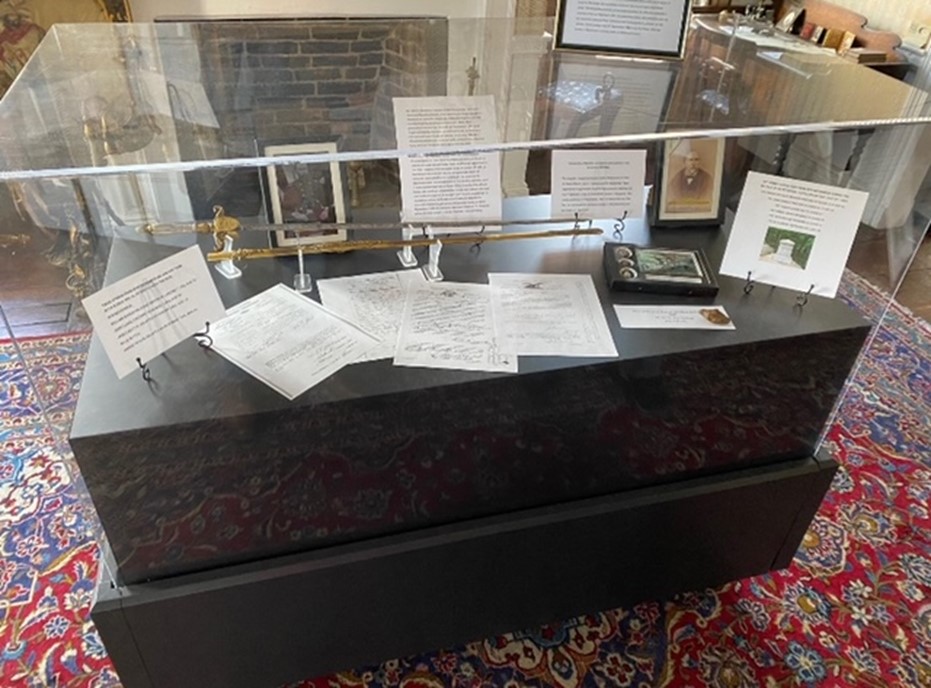
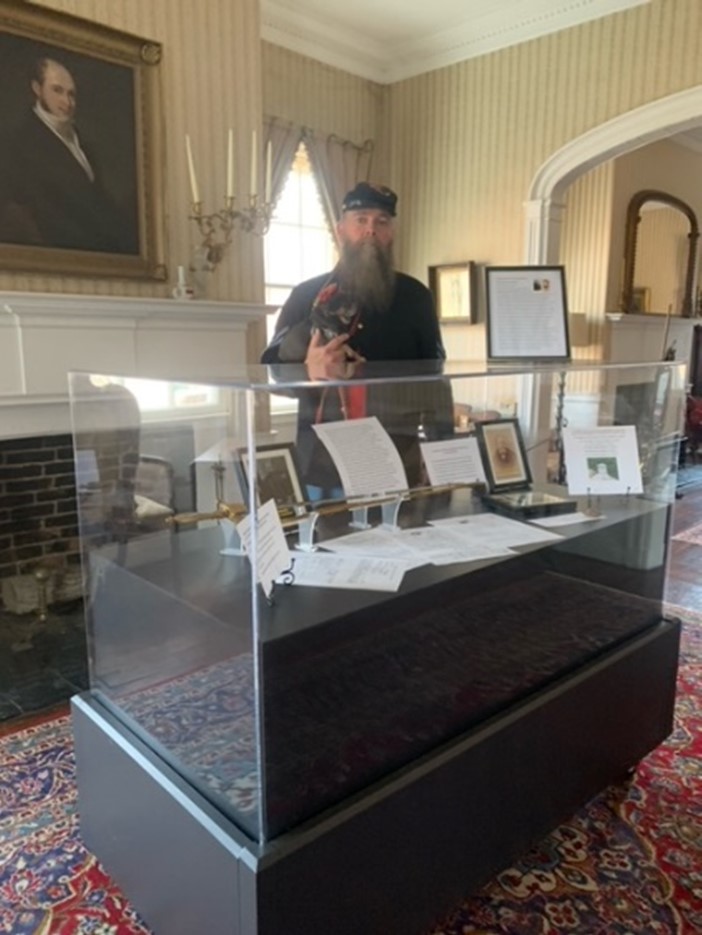
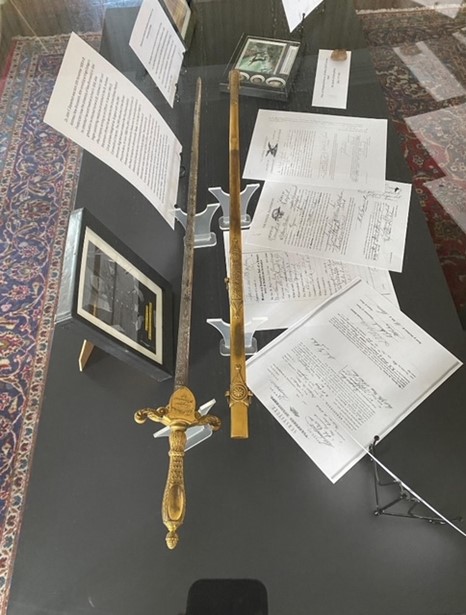
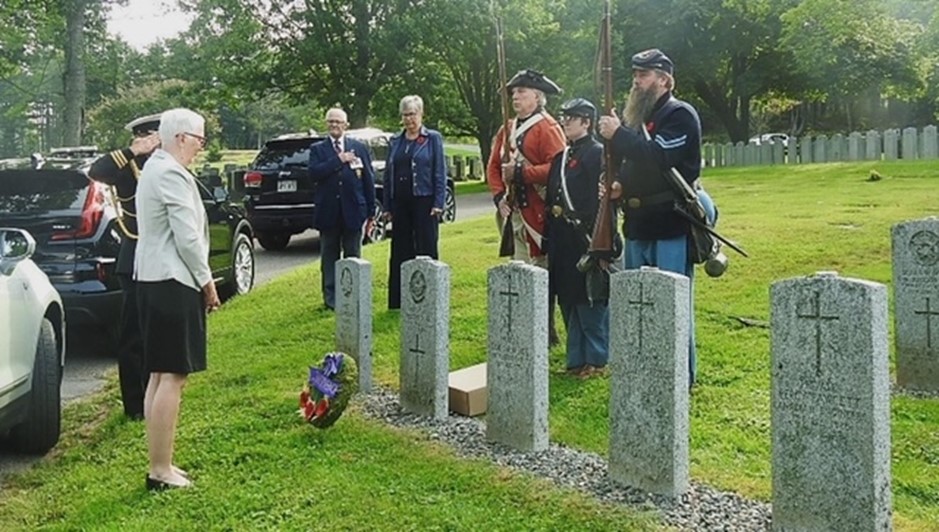
Her Honor Lieutenant-Governor Brenda Murphy attending a ceremony for the fallen.
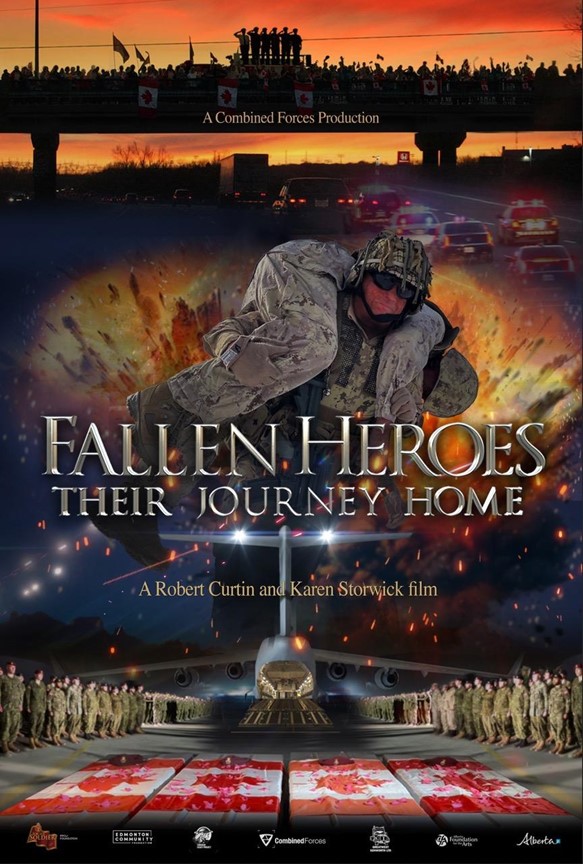
Please join us for the film screening of Fallen Heroes: Their Journey Home!
3 November 2024, 10:30am – 12:00pm
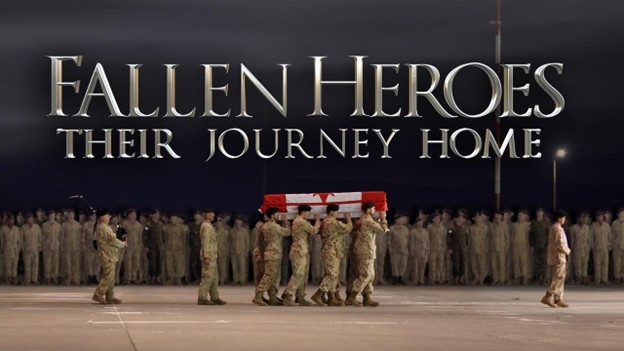
Fallen Heroes is a powerful documentary about the CanadianArmed Forces in Afghanistan. It highlights the war’s impact on Canadians and isa tribute to the courage and bravery of our men and women in uniform.
CLICK HERE TICKETS ON SALE NOW!:https://www.eventbrite.com/e/1035012900447?aff=oddtdtcreator
ClickHere to view the 2 min 30 sec Fallen Heroes Trailer
Ticket Price: $25.00General Public
$17.50 Military, Family, Veterans, Children under 15 and Seniors
Date: 3 November 2024
Show Time: Doors open 10:00am for 10:30am – 12:00 pm show.
Theatre Location: CineplexCinemas Fredericton
1381 Regent Street, Fredericton, NB
BACKGROUNDER
More than 40,000 Canadian Armed Forces members served in Afghanistanover the 14-year campaign. Very few Canadians understand why we were inAfghanistan and why it was important, yet it was Canada’s longest war. FallenHeroes is the template for a 10-part documentary series on the war inAfghanistan preserving this little-known history for future generations.
Afghanistan was the most significant operation for the Canadian ArmedForces in two generations. The war in Afghanistan put Canada in the centre ofthe global map. Along with our NATO partners, we were commanding combatoperations in Kandahar, ships in the Persian Gulf, and, unprecedented forCanada, we had Generals in command of all NATO forces.
It was an unusual time in Canadian history where both governing andopposition parties were working in concert in support of the war. All politicalobstacles and red tape were lifted to equip our soldiers in the field aseffectively as possible. For an extended period of 5 years, Canada alone wasresponsible for security in the most volatile region of the country where wewere punching far above our weight. We had an important seat at the table andgained an immeasurable amount of respect from other NATO nations. Our effortswere second only to the United States. Although certainly, the Britishcontribution was as significant, proportionately Canada lost more soldiers thanBritain and we were better equipped. Canada was the only country with tanks inthe field, our pilots were the most daring, our snipers the best in the world,our infantry incredibly courageous and kinetic. And, uniquely Canadian, oursoldiers brought their values into the field. Our soldiers were intuitivelysensitive to the needs of the people and in Afghanistan they made lifelongfriends with their Afghan partners. In many cases our soldiers would read theKoran ahead of their deployment in order to better understand the people theywere going over to help.
Canada lost 159 soldiers and 4 civilians in Afghanistan. Three times thatnumber came home with physical wounds and countless more with moral and stressinjuries. Over 200 Canadian soldiers have committed suicide since their return home from the war.
All comments are subject to our Comment Policy. You must be at least 18 years old to comment.
See a comment that violates our guidelines? Report it here.