Republic P-47 Thunderbolt
(RAF Photo)
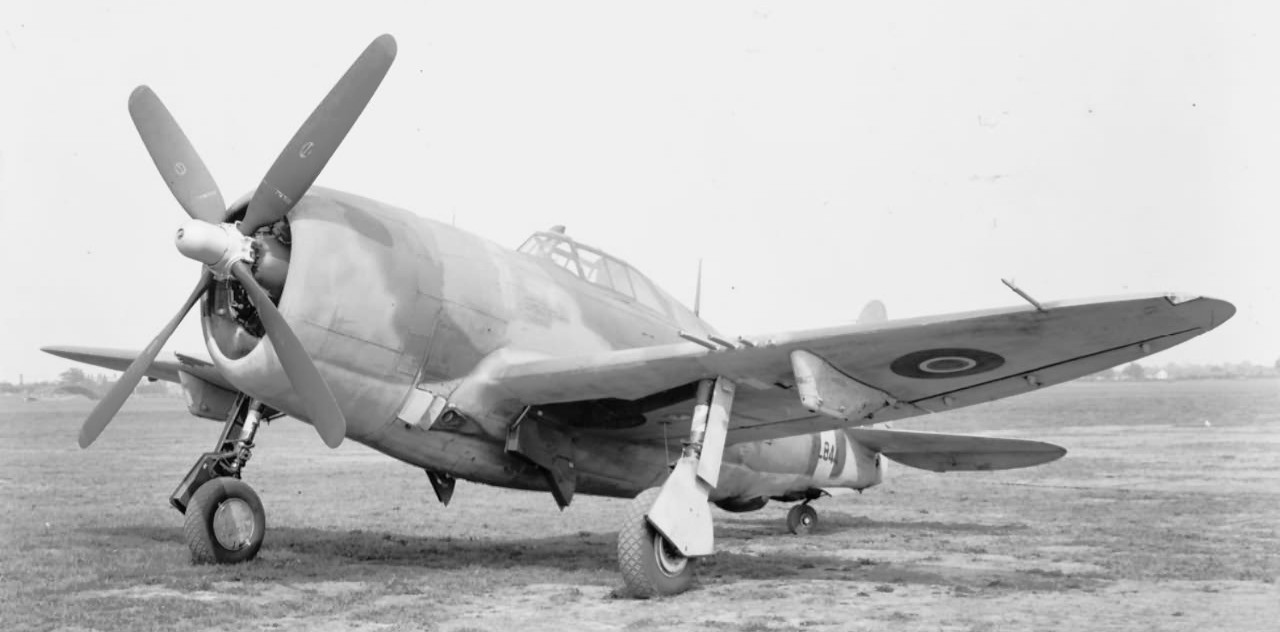
RAF Republic Thunderbolt Mk. I (Serial No. FL844) at Heston, UK
(RAF Photo)
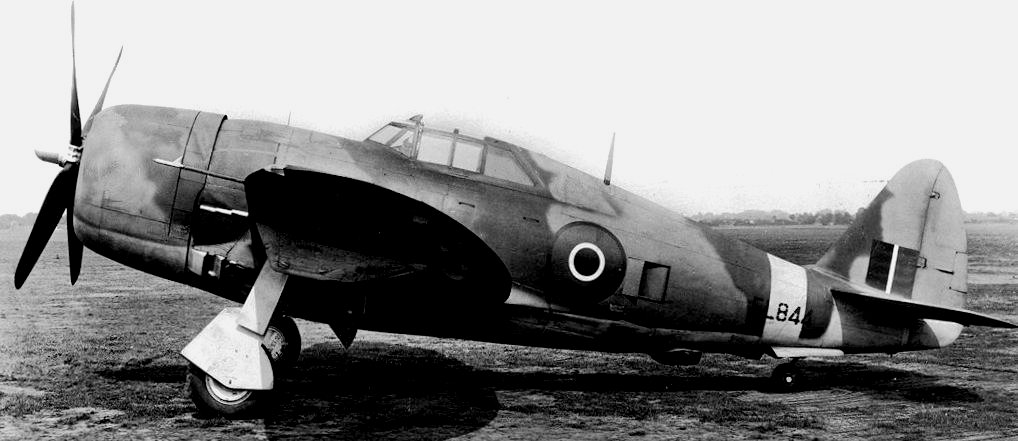
Republic P-47D Thunderbolt Mk. I, RAF (Serial No. FL844), c1944.
The RAF received 240 razorback P-47Ds, which they designated Thunderbolt Mark I, and 590 bubbletop P-47D-25s, designated Thunderbolt Mark IIs. With no need for another high-altitude fighter, the RAF adapted their Thunderbolts for ground attack, a task for which the type was well suited. Once the Thunderbolts were cleared for use in 1944, they were used against the Japanese in Burma by 16 RAF squadrons of the South East Asia Command from India. Operations with army support (operating as “cab ranks” to be called in when needed), attacks on enemy airfields and lines of communication, and escort sorties. They proved devastating in tandem with Spitfires during the Japanese breakout attempt at the Sittang Bend in the final months of the war. The Thunderbolts were armed with three 500 lb (230 kg) bombs or, in some cases, British “60 lb (27 kg)” RP-3 rocket projectiles. Long-range fuel tanks[29] gave five hours of endurance. Thunderbolts flew escort for RAF Liberators in the bombing of Rangoon. Thunderbolts remained in RAF service until October 1946. Postwar RAF Thunderbolts were used in support of the Dutch attempts to reassert control of Batavia. Those squadrons not disbanded outright after the war re-equipped with British-built aircraft such as the Hawker Tempest. (Wikipedia)
The Republic P-47 Thunderbolt (nicknamed the “Jug”) is a Second World War-era fighter aircraft produced by the American company Republic Aviation from 1941 through 1945. One of the main United States Army Air Forces (USAAF) fighters, it found success in the European and Pacific theaters as an escort fighter well-suited to high-altitude air-to-air combat. It also served as the foremost American fighter-bomber in the ground-attack role.
The P-47 was noted for its firepower: its primary armament was eight .50-caliber machine guns, and it could carry 5-inch rockets or a bomb load of 2,500 lb (1,100 kg). When fully loaded, the aircraft weighed up to 8 tons, making it one of the heaviest fighters of the war. It was also noted for its ability to remain airworthy with battle damage.
The P-47 was designed around the powerful Pratt & Whitney R-2800 Double Wasp 18-cylinder radial engine, which also powered the U.S. Navy/U.S. Marine Corps Grumman F6F Hellcat and Vought F4U Corsair. An advanced turbosupercharger ensured the aircraft’s eventual dominance at high altitudes, while also influencing its size and design. The armored cockpit was relatively roomy and comfortable and the sliding bubble canopy introduced on the D variant offered good visibility.
The P-47 also served with the air forces of France, the United Kingdom, and the Soviet Union, and with Allied Mexican and Brazilian squadrons. (Wikipedia)
(IWM Photo, TR 2637)
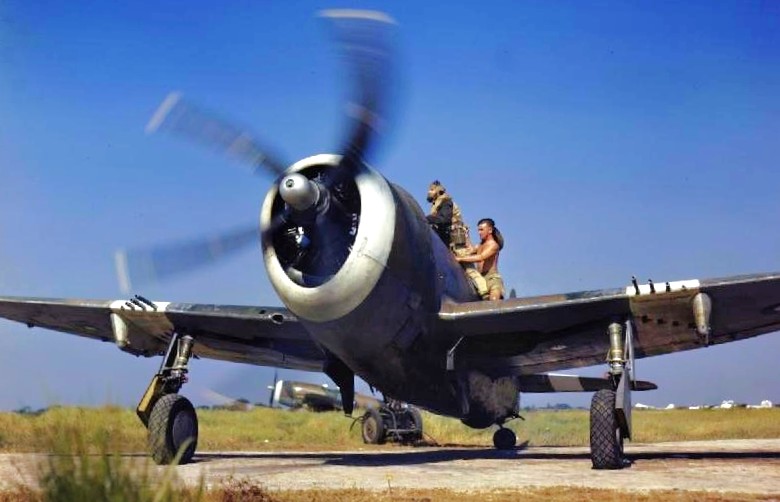
The pilot climbs in to the cockpit of his Republic Thunderbolt Mk.II of No. 30 Squadron, Royal Air Force before taking off from Jumchar for a sortie over Burma. The fighter wears the special South East Asia Command striping round the nose and tail surfaces, which served as a friendly identification marking.
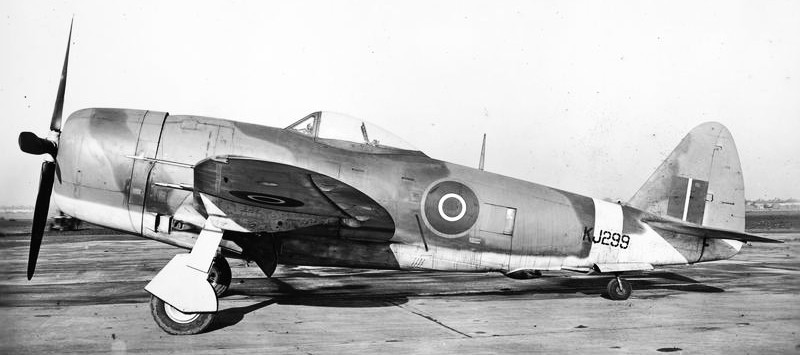
(IWM Photo, ATP 13307C)
Thunderbolt Mk. II (Serial No. KJ299) at Heston, Middlesex, following assembly by the Heston Aircraft Co.
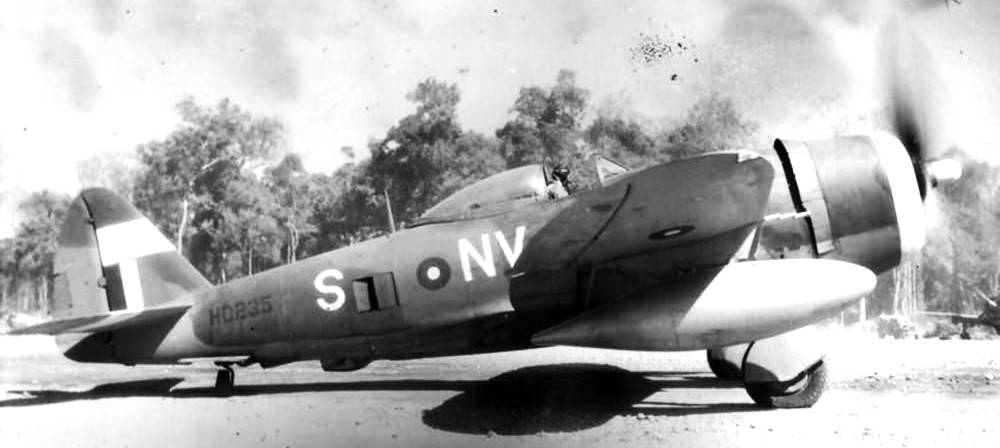
(RAF Photo)
Republic Thunderbolt Mk. II (Serial No. HD235), coded NV-S, No. 79 Squadron RAF, Burma, 1944.
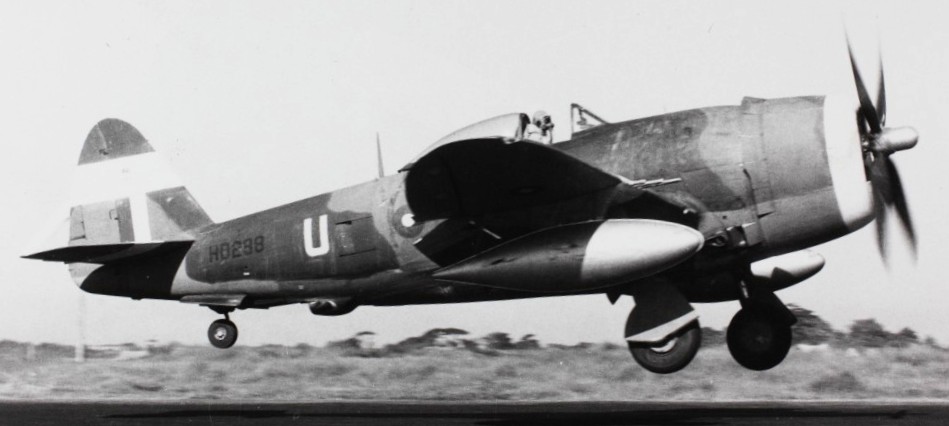
(SDASM Photo)
Republic P-47D Thunderbolt USAAF (Serial No. 42-26911), acquired by the RAF as (Serial No. HD298). This is an RAF Thunderbolt Mk. II fighter with long-range tanks slung under the main plane, just airborne off a forward RAF airstrip on the Burma front. It was part of the 135th Squadron, Chittagong, Nov 1944. It was wrecked when it was struck by Thunderbolt (Serial No. HD294), USAAF (Serial No. 42-26907) on ground at Chittagong, on 17 Nov 1944.
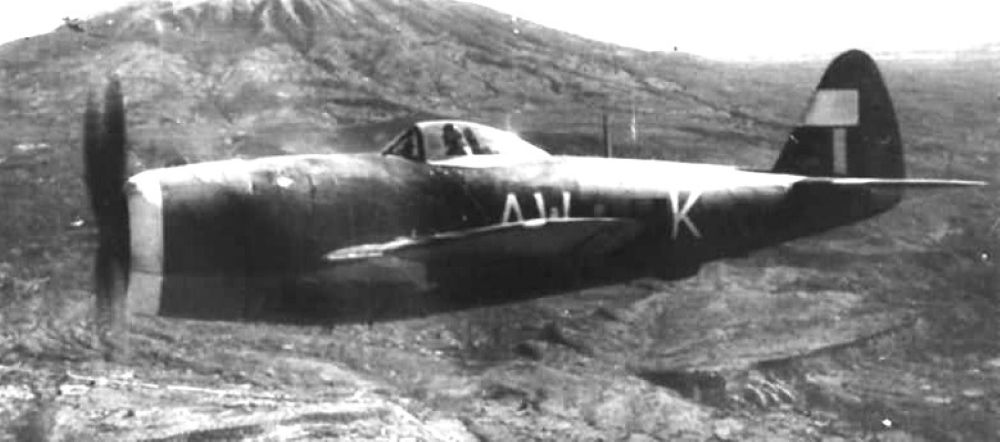
(RAF Photo)
Thunderbolt Mk. II, coded AW-K of No. 22 Squadron RAF, in flight, Burma.
(IWM Photo, CF 842)
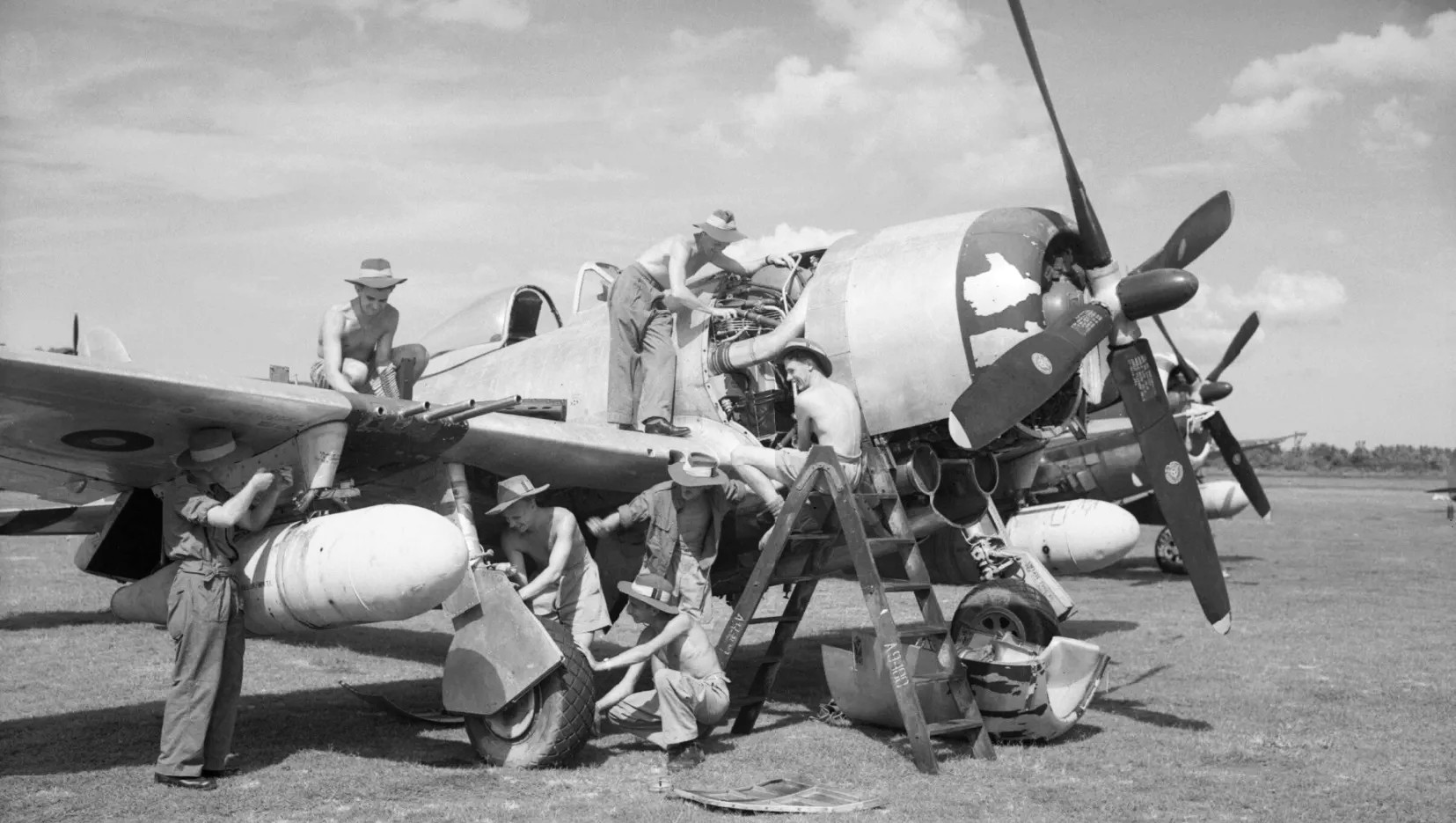
Republic Thunderbolt Mk. II, ex-USAAF P-47D-25/-30-RE/30/-40-RA, of No. 81 Squadron, RAF, being prepared for action against Indonesian nationalists at Kemajoran airfield, Batavia, in readiness for operations against Indonesian nationalists at Surabaya (Soerabaja) in Java. The unit, which had been No. 123 (East India) Squadron RAF until 10 June 1945 when it was rebadged, shifted from Chittagong to the Dutch East Indies in November along with No. 60 Squadron (also a Thunderbolt Mk II outfit) and remained there until June 1946, flying tactical reconnaissance duties and covering Allied road convoys, while attacking nationalist held airfields and ammunition dumps.
(Mike Freer – Touchdown-aviation Photo)
(Roland Turner Photos)
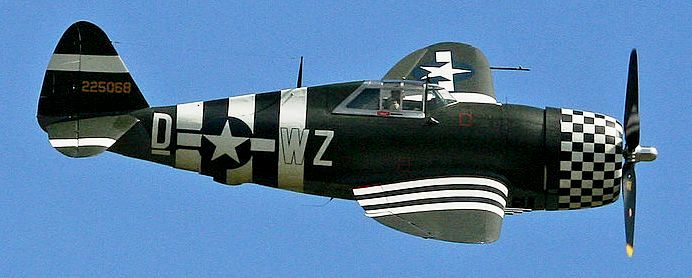
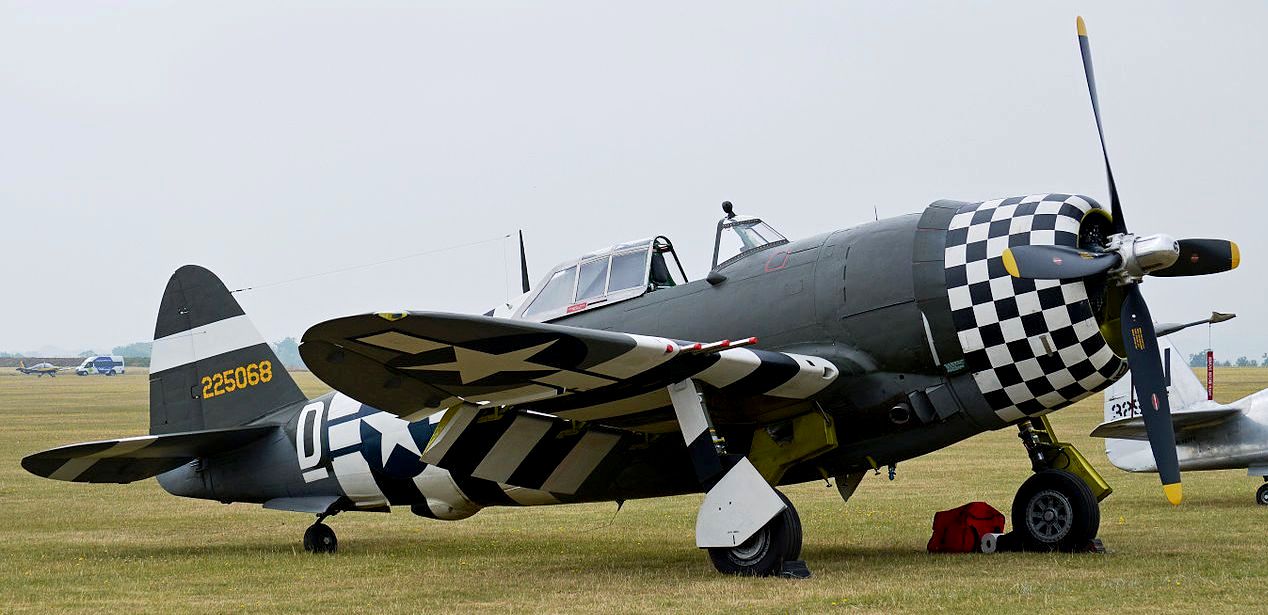
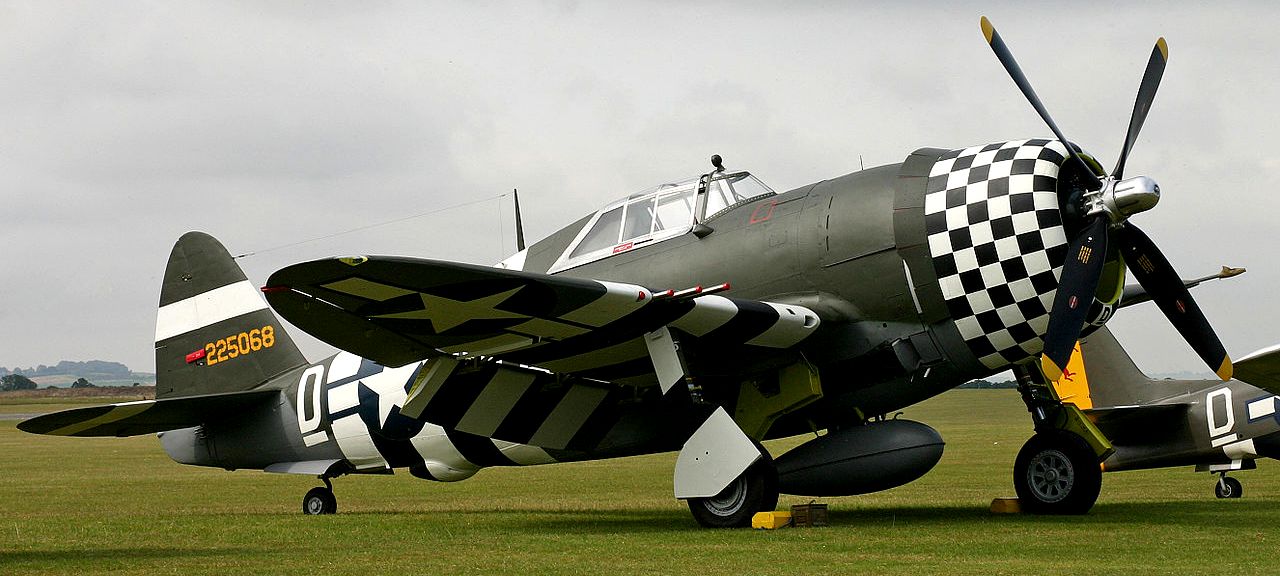
(Alan Wilson Photos)
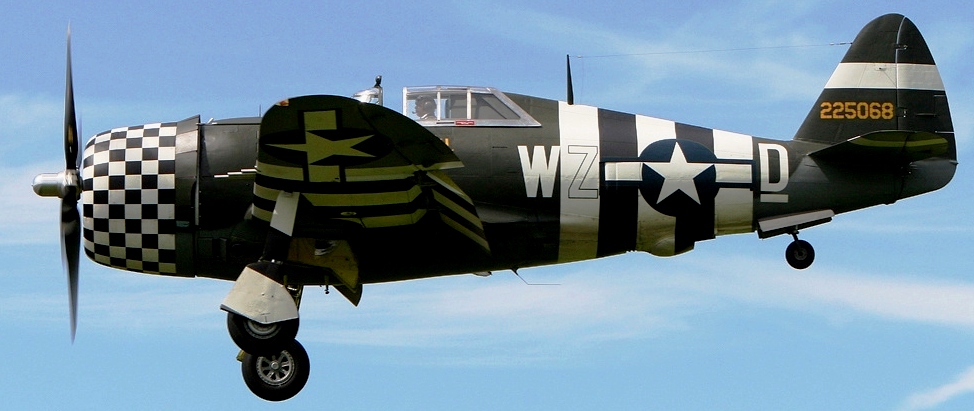
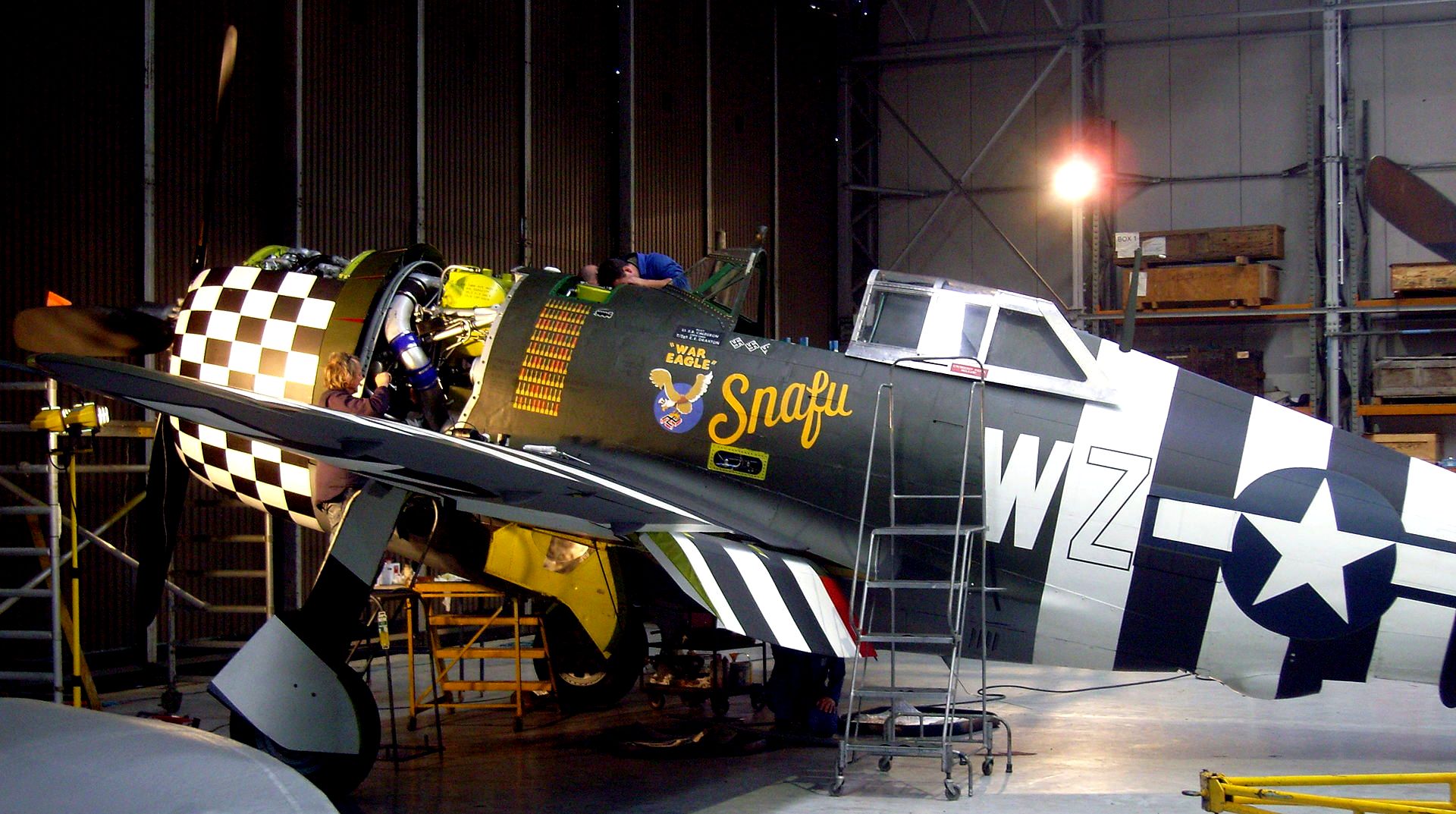
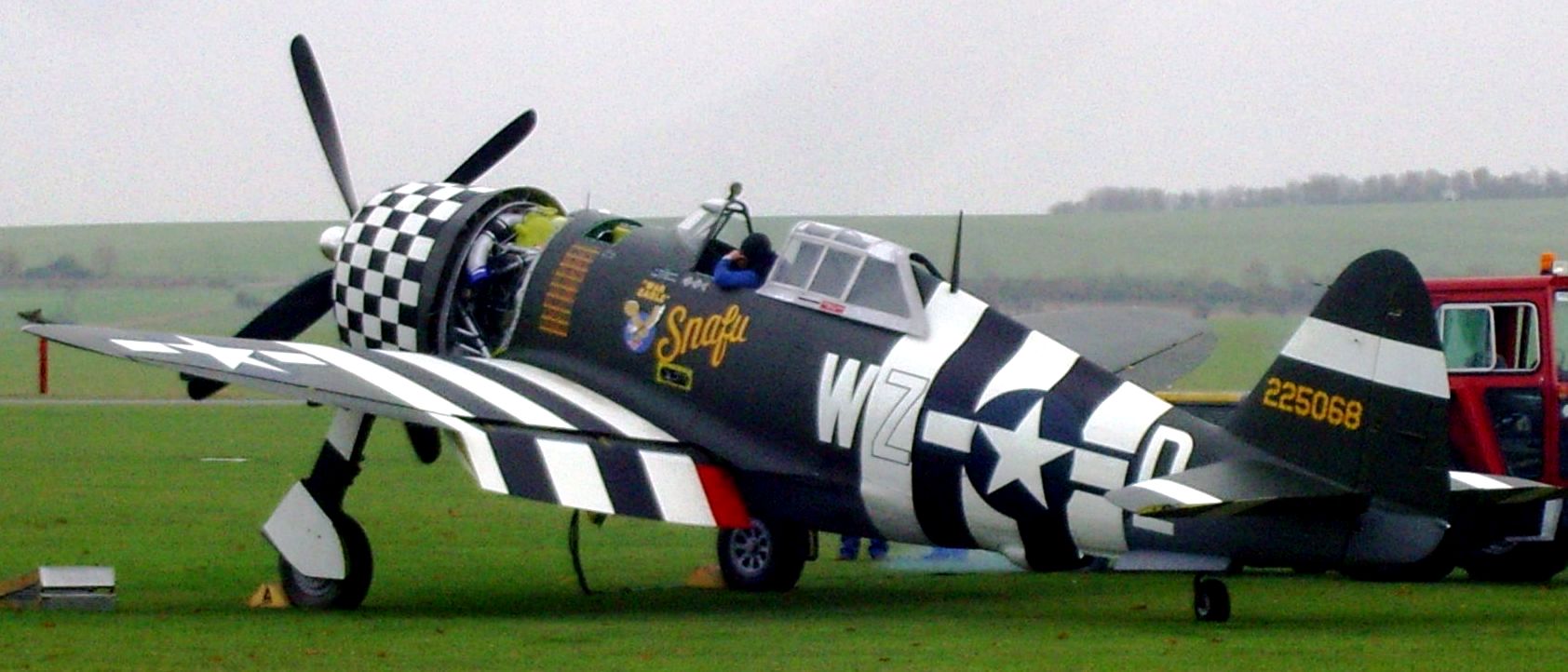
Republic P-47D Thunderbolt Mk. I (Serial No. 42-25068), WZ-D, “Snafu“, the mount of Lt Severino B. Calderon, 84th Fighter Squadron, USAAF in late 1944. Imperial War Museum, Duxford, Cambridgeshire.
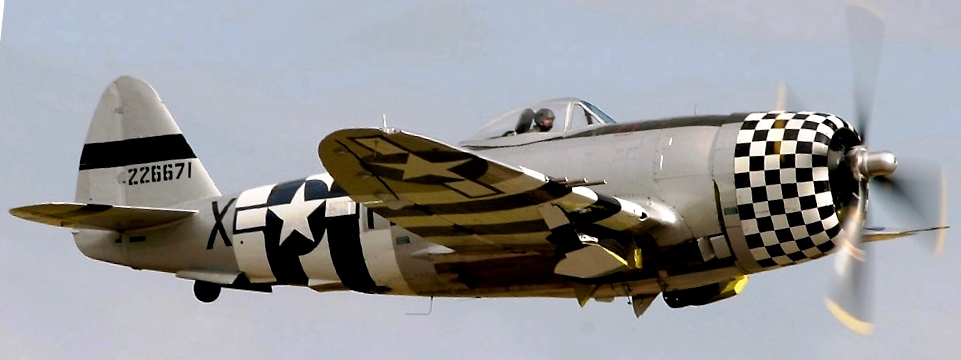
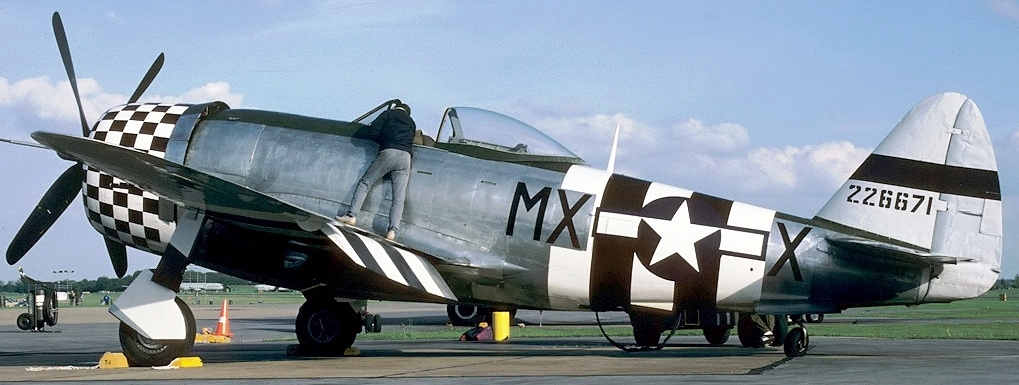
(Mike Freer – Touchdown-aviation Photos, 2004)
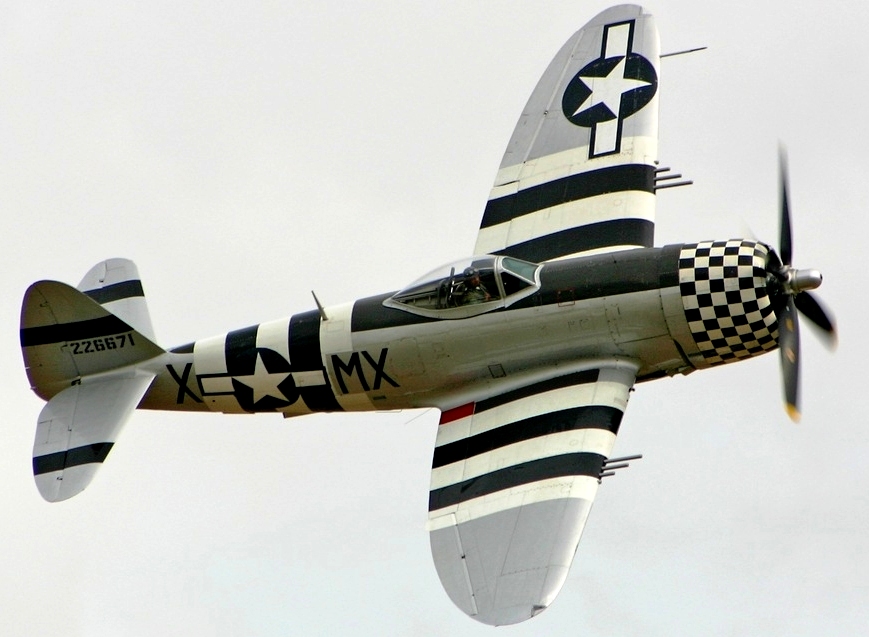
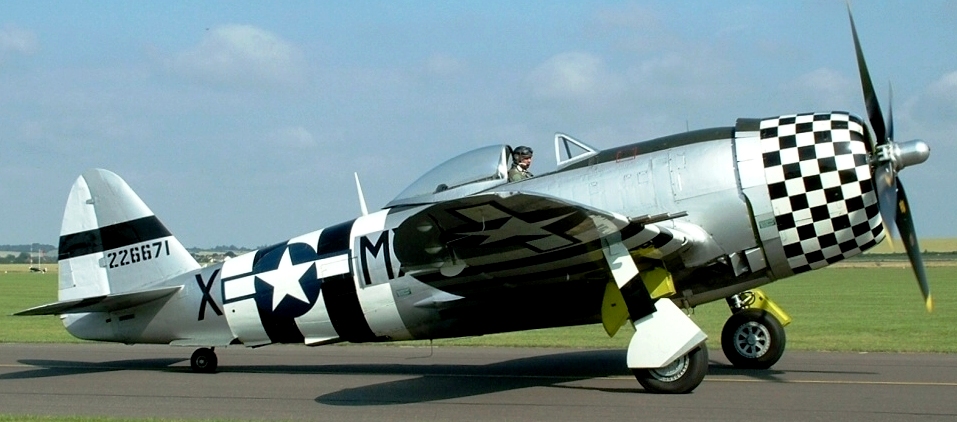
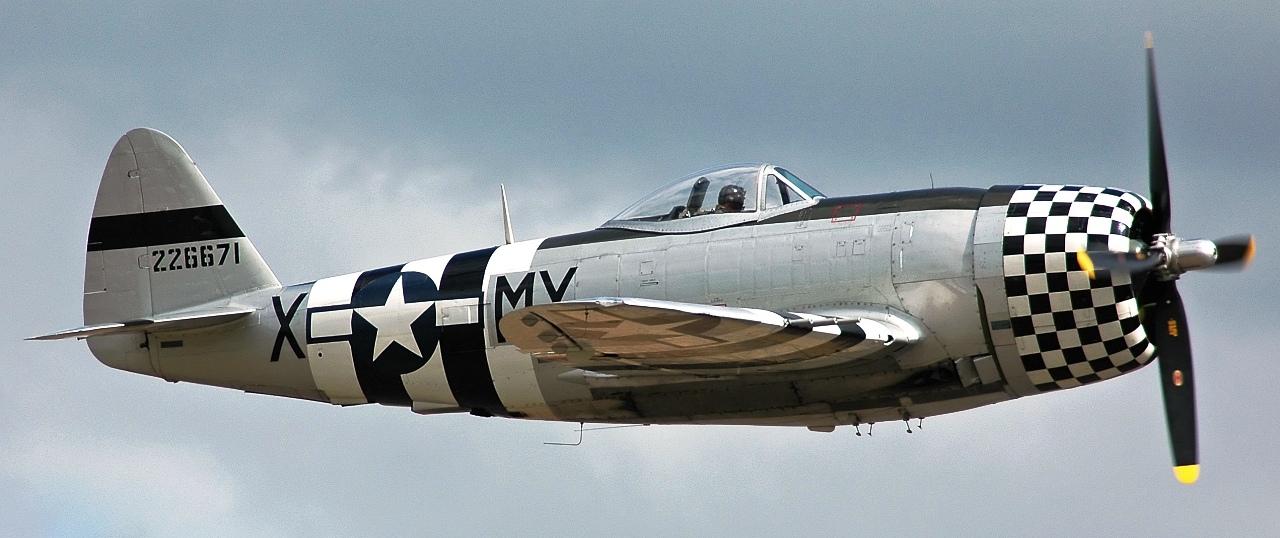
(Peter Bakema Photos, 2006)
Republic P-47D Thunderbolt (Serial No. 42-26671), Reg. No. N47DD, Imperial War Museum, Duxford, Cambridgeshire.
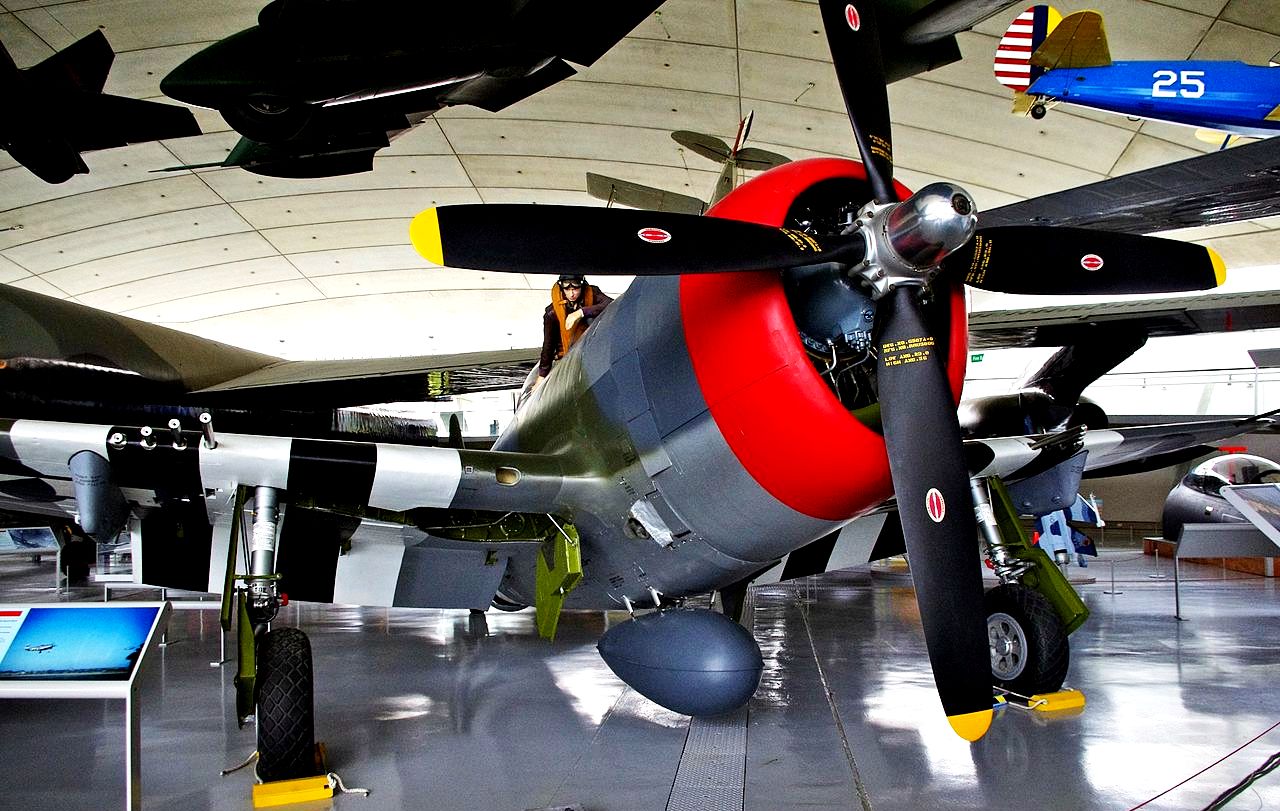
(David Merrett Photo)
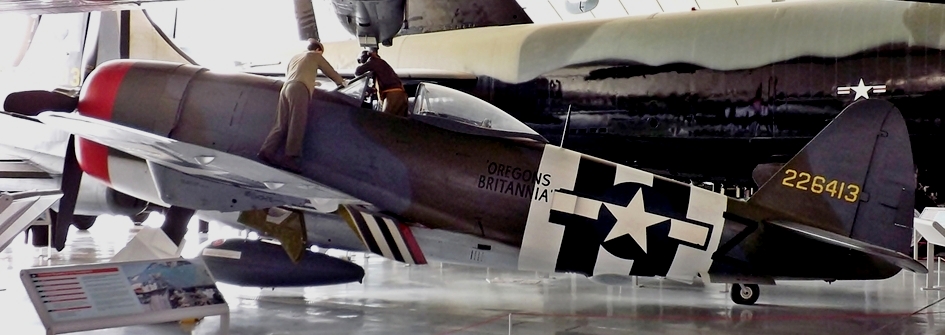
(Mike Harkin Photo)
Republic P-47D Thunderbolt (Serial No. 42-26671), painted as (Serial No. 42-26413), “Oregon’s Britannia”, Reg. No. N47DD, Imperial War Museum, Duxford, Cambridgeshire.
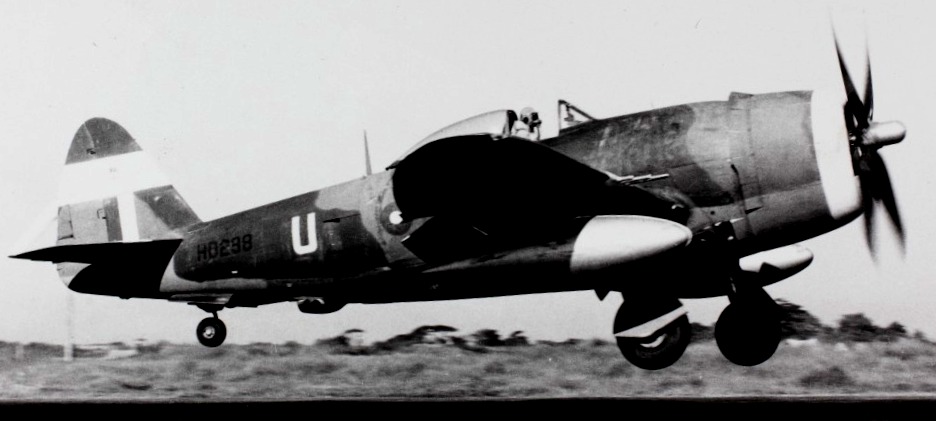
(SDA&SM Photo)
Republic P-47D-27-RE Thunderbolt II (Serial No. 42-26911), acquired by the RAF and designated (Serial No. HD298). This Thunderbolt II is equipped with long-range tanks slung under the main plane, and is just getting airborne from a forward RAF airstrip on the Burma front. It was part of the 135th Squadron, Chittagong, in Nov 1944.
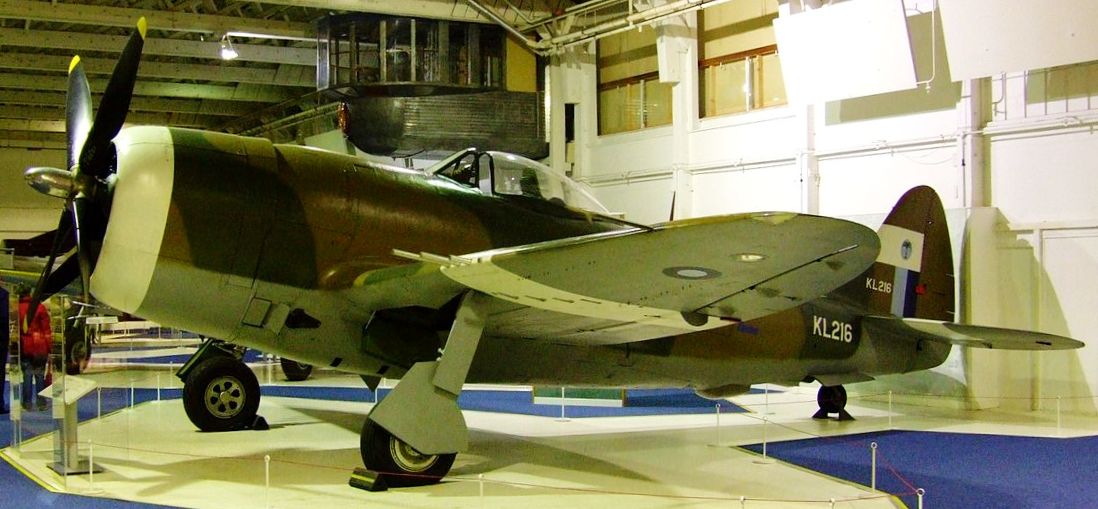
(Les Chatfield Photo)
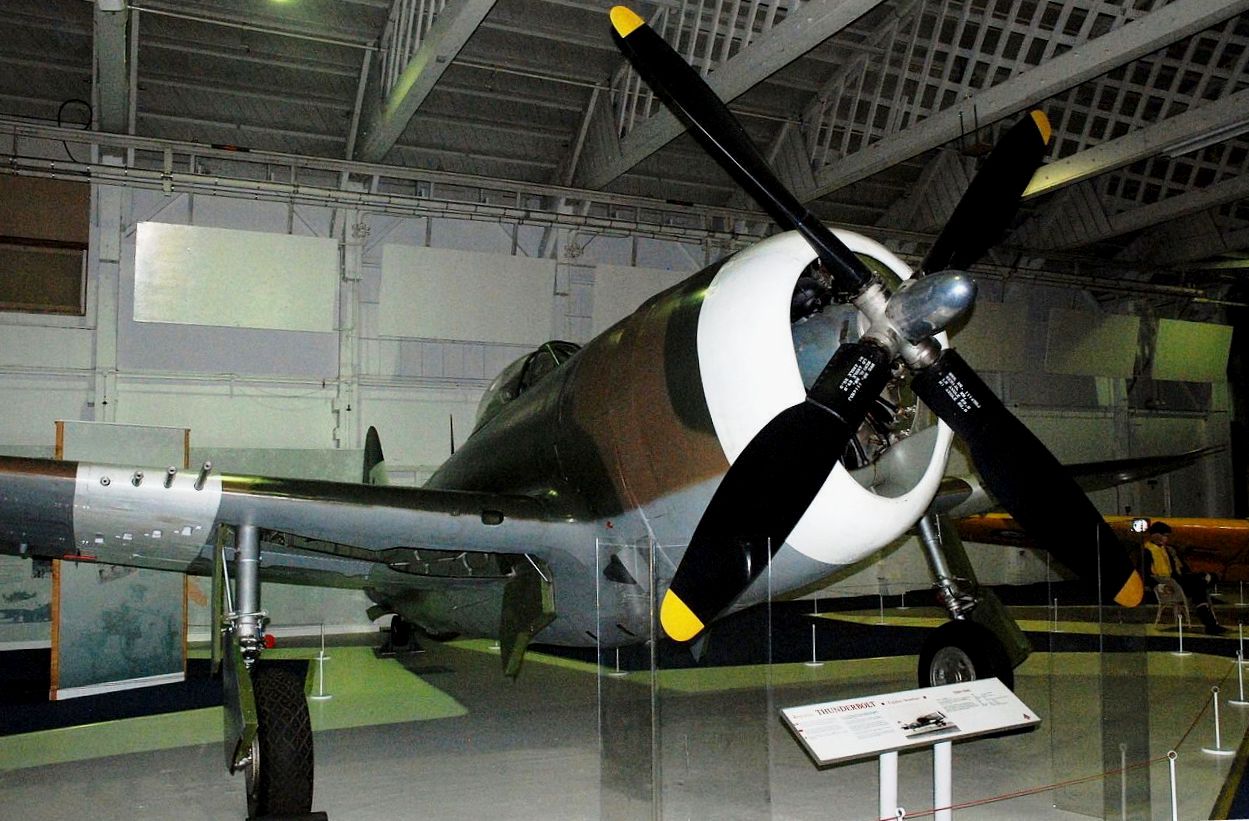
(Roland Turner Photo)
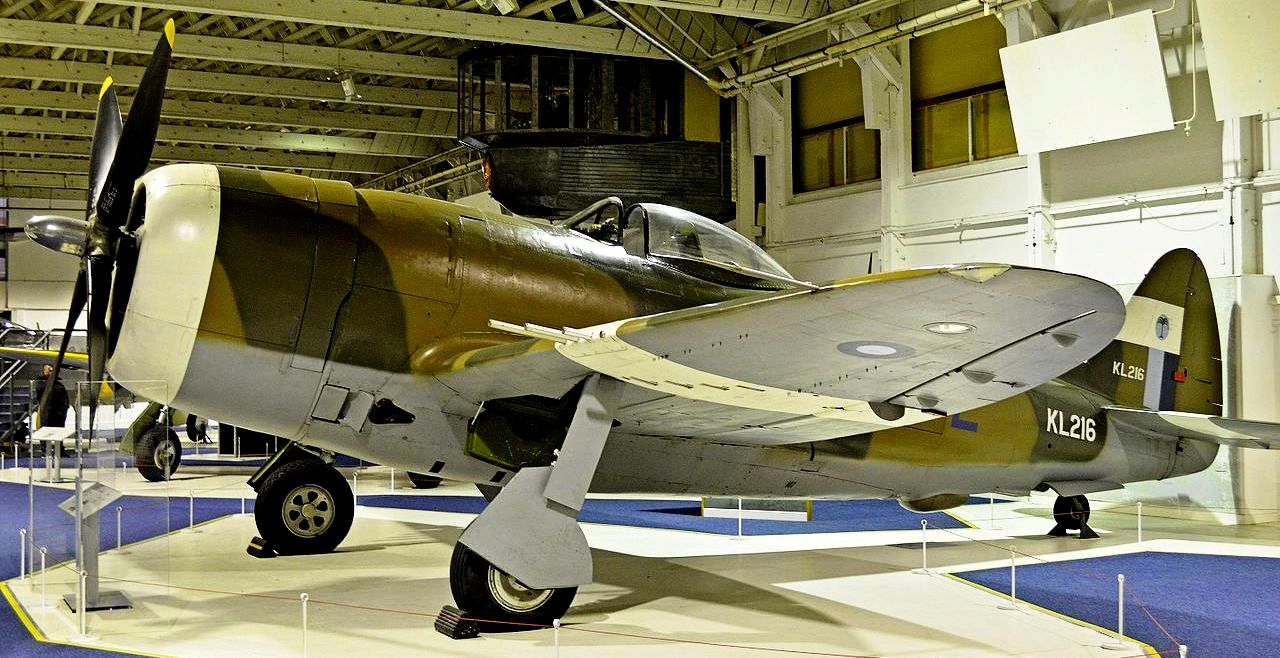
(Alan Wilson Photo)
Republic P-47D Thunderbolt Mk. II (Serial No. 45-49295), painted as (RAF Serial No. KL216). There are no actual RAF P-47s in existence. Royal Air Force Museum London, Hendon.
(Kogo Photo)
Republic P-47D-40-RA Thunderbolt (Serial No. 45-49192), C/N 399-55991, painted to represent F4-J, “Nellie”, which flew with the 492nd Fighter Squadron, 48th Fighter Group of the Ninth Air Force. Reg. No. G-THUN, Fighter Aviation Engineering, Dunmow, Essex, UK. This aircraft was previously based in the USA, painted in the colours of LCol Ben Mayo, CO of the 82nd Fighter Squadron, 78th Fighter Group, MX-X, “No Guts No Glory“, Reg. No. N147PF.
All comments are subject to our Comment Policy. You must be at least 18 years old to comment.
See a comment that violates our guidelines? Report it here.