
Early F-104A’s in flight (Block 15 or F-104-LO-15, the last F-104As produced).
The Lockheed F-104 Starfighter is an American single-engine, supersonic interceptor which was extensively deployed as a fighter-bomber during the Cold War. Created as a day fighter by Lockheed as one of the “Century Series” of fighter aircraft for the United States Air Force (USAF), it was developed into an all-weather multi-role aircraft in the early 1960s and produced by several other nations, seeing widespread service outside the United States.
After a series of interviews with Korean War fighter pilots in 1951, Kelly Johnson, then lead designer at Lockheed, opted to reverse the trend of ever-larger and more complex fighters to produce a simple, lightweight aircraft with maximum altitude and climb performance. On 4 March 1954, the Lockheed XF-104 took to the skies for the first time, and on 26 February 1958, the production fighter was activated by the USAF. Just a few months later, it was pressed into action during the Second Taiwan Strait Crisis, when it was deployed as a deterrent to Chinese MiG-15 and MiG-17 fighters. Problems with the General Electric J79 engine and a preference for fighters with longer ranges and heavier payloads meant its service with the USAF was short-lived, though it was reactivated for service during the Berlin Crisis of 1961 and the Vietnam War, when it flew more than 5,000 combat sorties.
While its time with the USAF was brief, the Starfighter found much more lasting success with other NATO and allied nations. In October 1958, West Germany selected the F-104 as its primary fighter aircraft. Canada soon followed, along with the Netherlands, Belgium, Japan, and Italy. The European nations formed a construction consortium that was the largest international manufacturing program in history to that point, although the Starfighter’s export success was marred in 1975 by the discovery of bribe payments made by Lockheed to many foreign military and political figures for securing purchase contracts.
The Starfighter eventually flew with fifteen air forces, but its poor safety record, especially in Luftwaffe service, brought it substantial criticism. The Germans lost 292 of 916 aircraft and 116 pilots from 1961 to 1989, its high accident rate earning it the nickname Witwenmacher (“widowmaker”) from the German public. The final production version, the F-104S, was an all-weather interceptor built by Aeritalia for the Italian Air Force. It was retired from active service in 2004, though several F-104s remain in civilian operation with Florida-based Starfighter Inc.
The Starfighter featured a radical design, with thin, stubby wings attached farther back on the fuselage than most contemporary aircraft. The wing provided excellent supersonic and high-speed, low-altitude performance, but also poor turning capability and high landing speeds. It was the first production aircraft to achieve Mach 2, and the first aircraft to reach an altitude of100,000 ft (30,000 m) after taking off under its own power. The Starfighter established world records for airspeed, altitude, and time-to-climb in 1958, becoming the first aircraft to hold all three simultaneously. It was also the first aircraft to be equipped with the M61 Vulcan autocannon. (Wikipedia)
(USAF Photo)
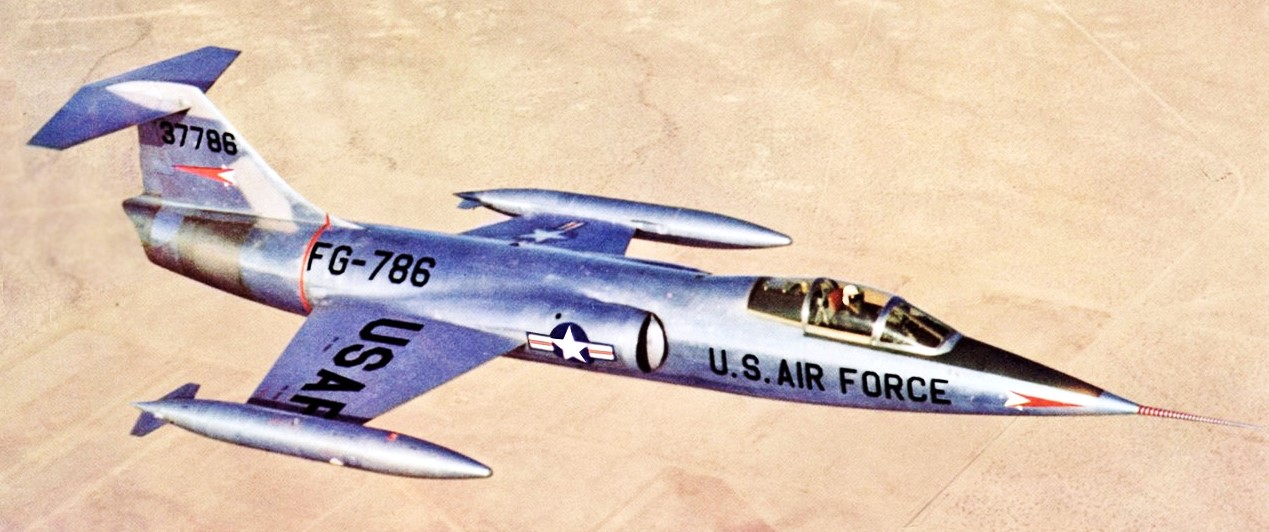
Lockheed XF-104 (Serial No. 53-7786) in flight, the first of two, 1957.
(USAF Photo)
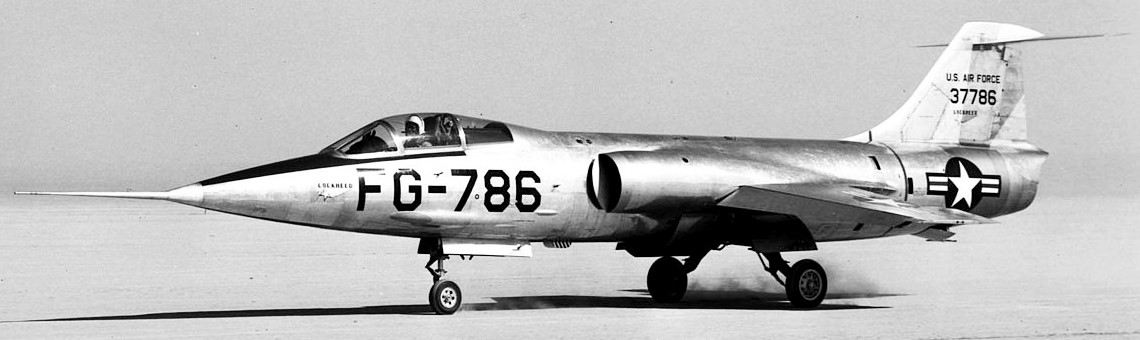
Lockheed XF-104 (Serial No. 53-7786), on Rogers Dry Lake, Air Force Flight Test Center, Edwards Air Force Base, California.
(USAF Photo)
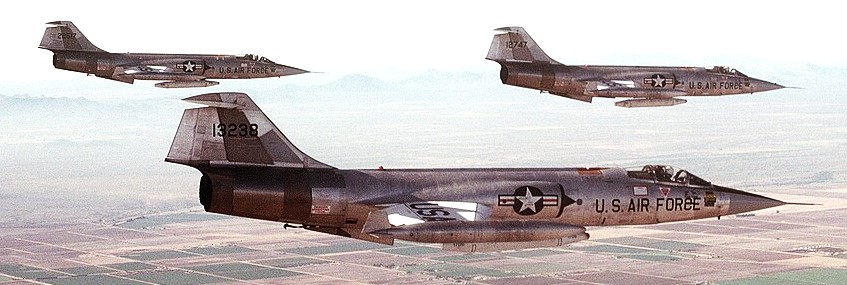
Three German Lockheed F-104G Starfighter aircraft (Serial Nos. 63-13238, 65-12747, and 67-22517) with the 69th Tactical Fighter Training Squadron from Luke Air Force Base flying over Arizona. The F-104Gs were used for the flight training of Luftwaffe (German Air Force) pilots, and, although German, the F-104s had USAF markings. F-104G (Serial No. 65-12747) was licence-built by Messerschmitt with the German Serial No. “KE+398”. All three planes were later sold to Taiwan.
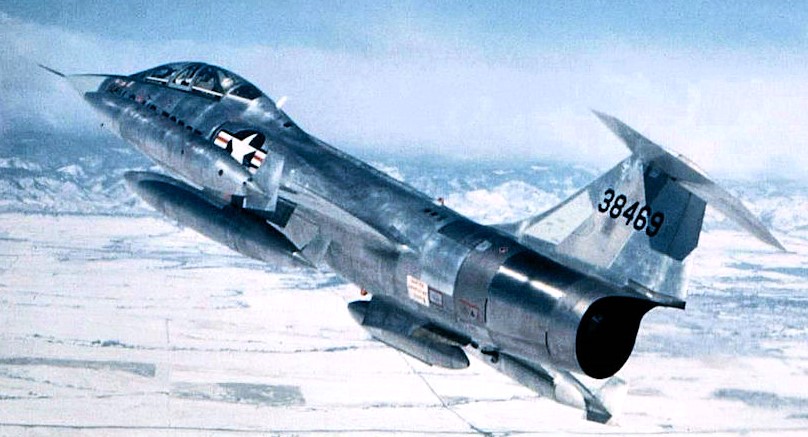
(USAF Photo)
German Air Force Lockheed TF-104G Starfighter (Serial No. 63-8469), being operated by the 418th Tactical Fighter Training Squadron, Luke AFB, Arizona. Luftwaffe 27+71 was sold to Norway in 1977 after the squadron was inactivated.
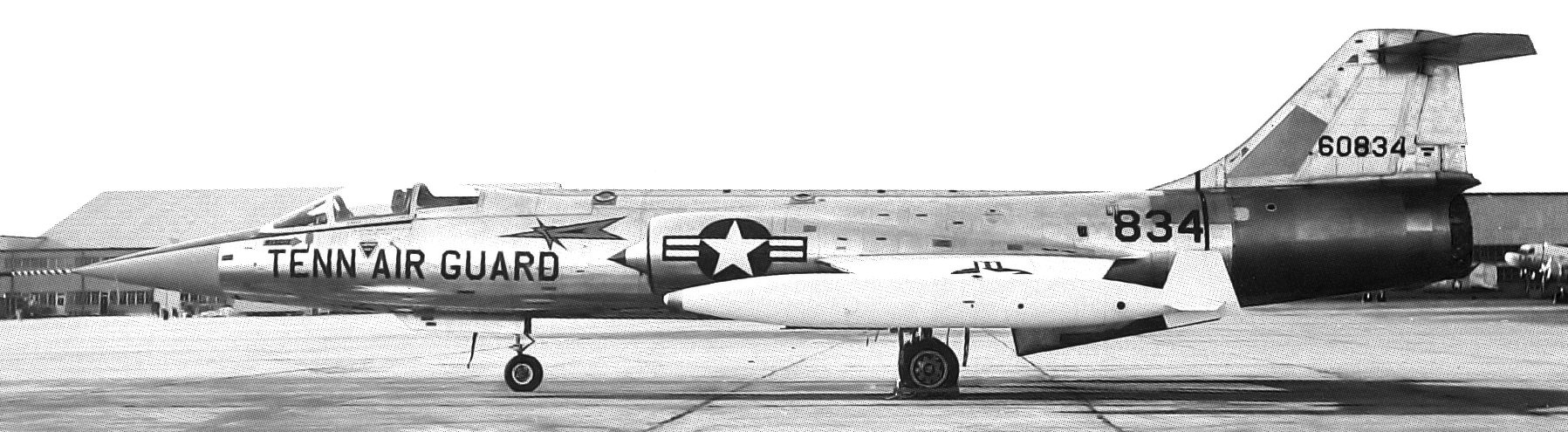
(USAF Photo)
A U.S. Air Force Lockheed F-104A-25-LO Starfighter (Serial No. 56-0834) of the 151st Fighter Interceptor Squadron, Tennessee Air National Guard, in front of the 151st hangar at Ramstein Air Base, West Germany, in 1961, during the 1961 Berlin Crisis. The inscription “TENN AIR GUARD” was later replaced replaced by “U.S. AIR FORCE”.
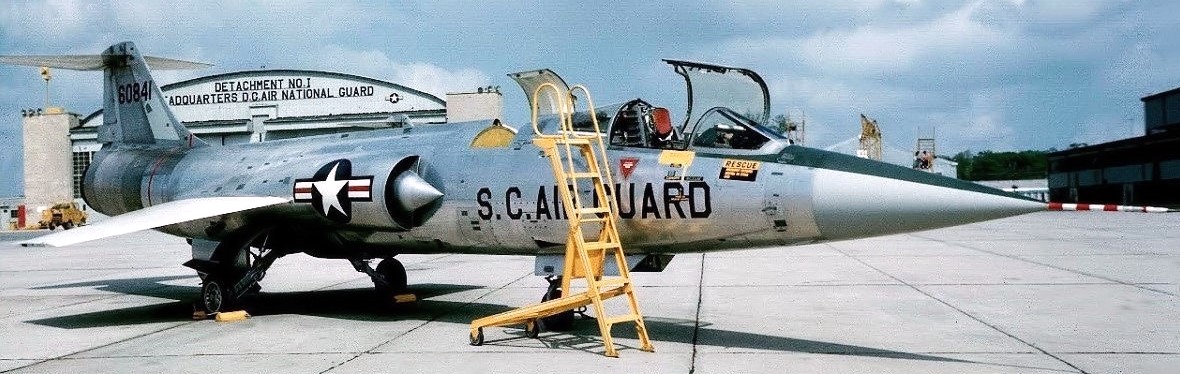
(USAF Photo)
157th Fighter-Interceptor Squadron – Lockheed F-104A Starfighter (Serial No. 56-0841).
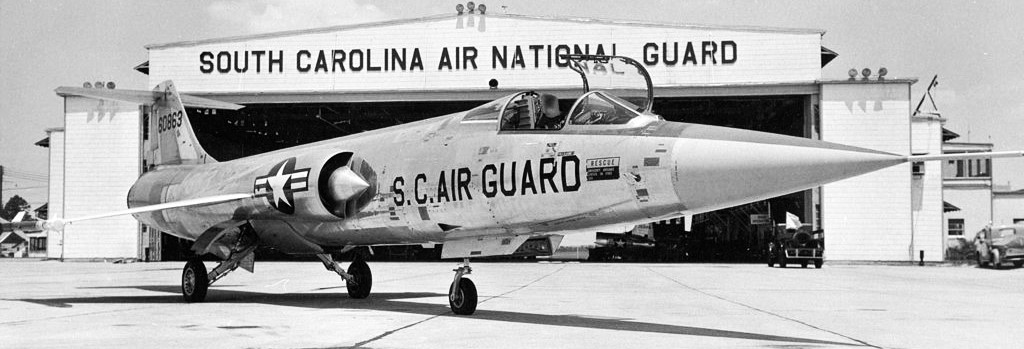
(USAF Photo)
A U.S. Air Force Lockheed F-104A-25-LO Starfighter (Serial No. 56-0863) from the 157th Fighter Interceptor Squadron, South Carolina Air National Guard, at McEntire Air National Guard Base, South Carolina, in the 1960s.
(USAF Photo)
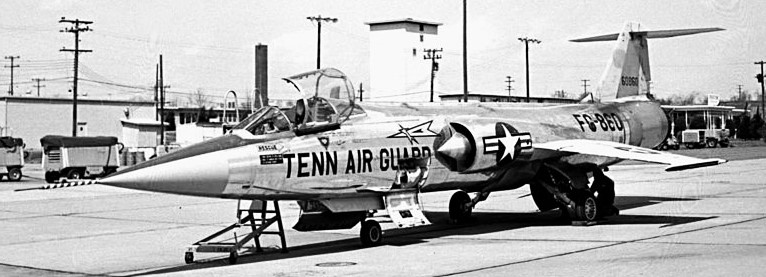
A U.S. Air Force Lockheed F-104A-25-LO Starfighter (Serial No. 56-0860) assigned to the 151st Fighter-Interceptor Squadron, 134th Fighter Group, Tennessee Air National Guard, at McGhee Tyson Air Force Base, Knoxville, Tennessee, between 1960 and 1963.
(USAF Photo)
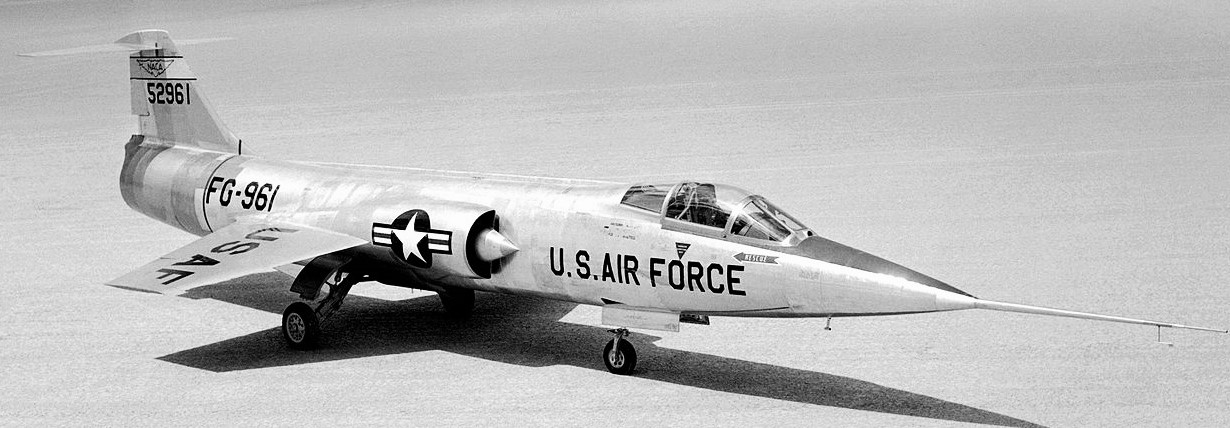
Lockheed YF-104A Starfighter (Serial No. 55-2961) on Rogers Dry Lake at Edwards AFB, California.
(NASA Photo)
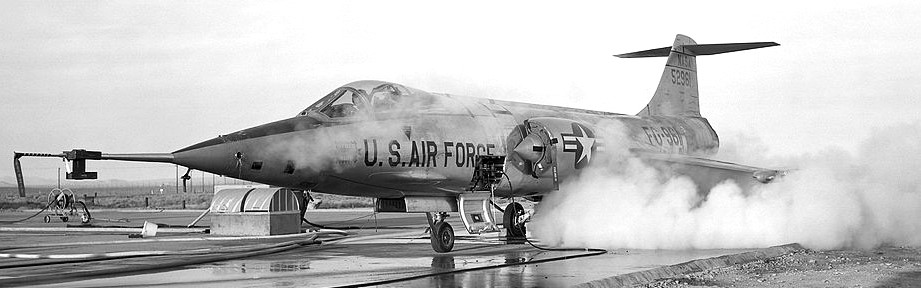
Lockheed JF-104A, formerly YF-104A, (Serial No. 55-2961) ground testing its reaction control system. The aircraft was modified with a hydrogen peroxide reaction control system (RCS). Following a zoom climb to altitudes in the vicinity of 80,000 feet, the RCS gave the jet controllability in the thin upper atmosphere where conventional control surfaces are ineffective.
(NMUSAF Photo)
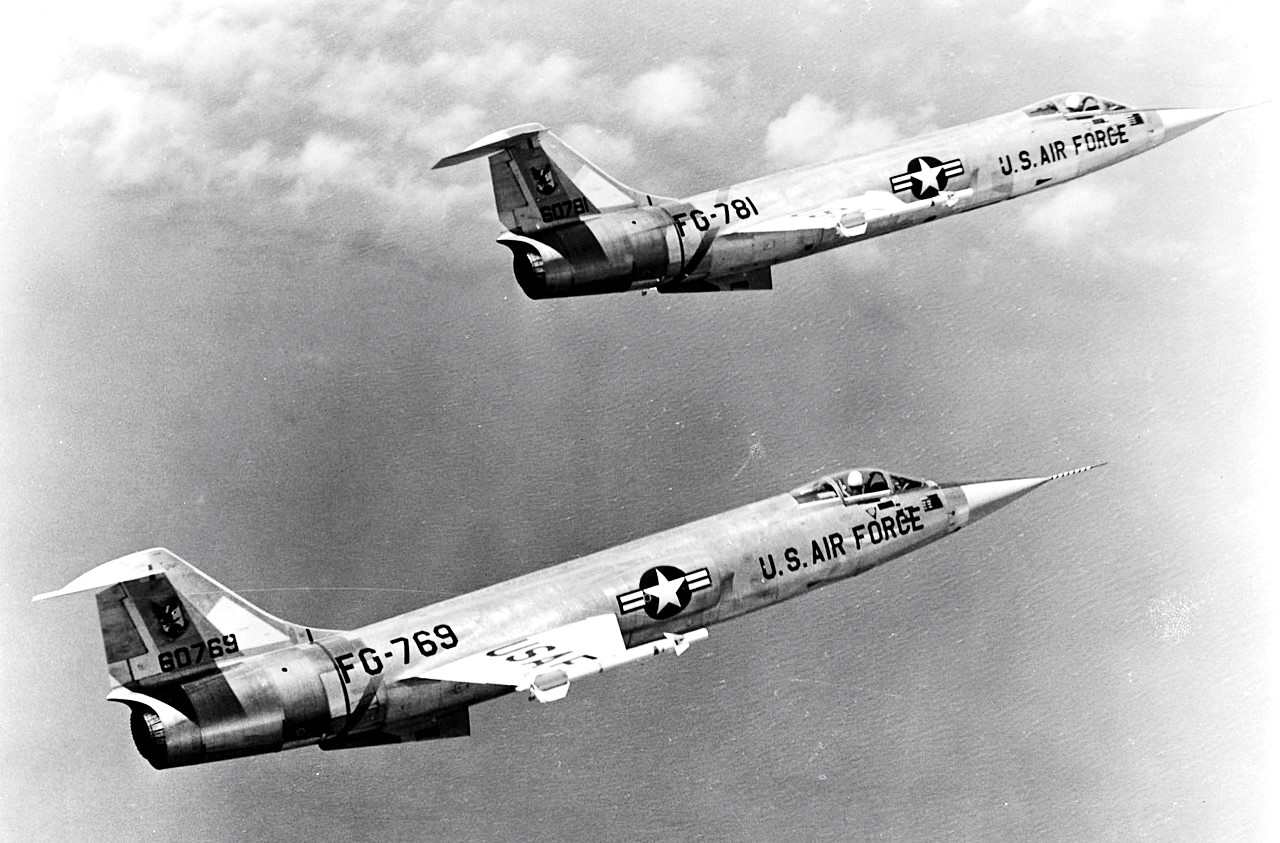
A formation of two U.S. Air Force Lockheed F-104A-15-LO Starfighters (Serial Nos. 56-0769 and 56-0781) in flight, 1960.
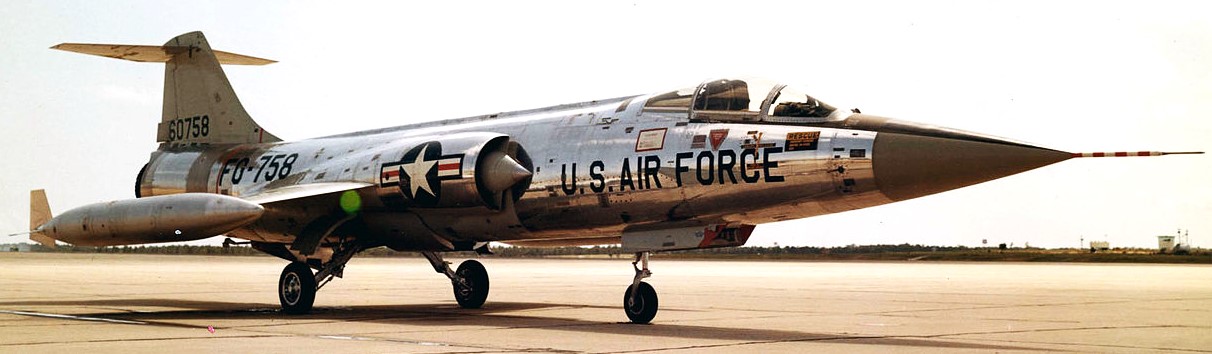
(USAF Photo)
Lockheed F-104A-10-LO (Serial No. 56-0758).
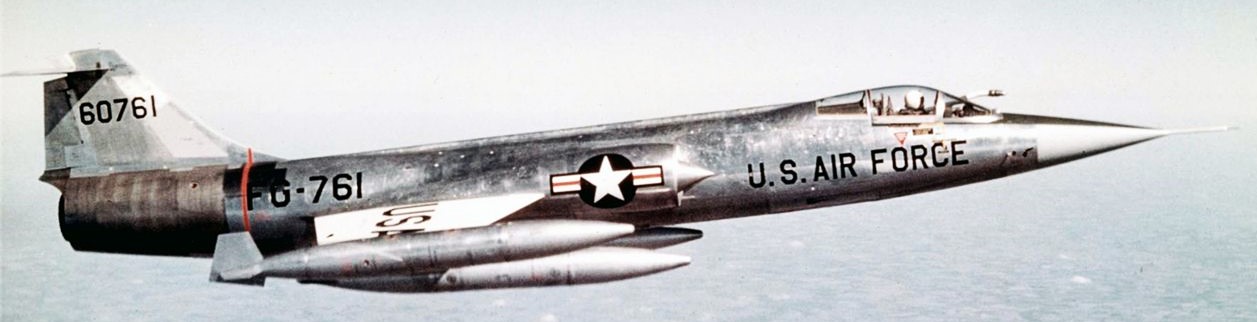
(USAF Photo)
A U.S. Air Force Lockheed F-104A-10-LO Starfighter (Serial No. 56-0761). This aircraft is equipped with an inflight refueling probe.
.

(USAF Photo)
USAF Lockheed F-104C Starfighters from the 435th Tactical Fighter Squadron, 479th Tactical Fighter Wing, at Udorn Royal Thai Air Force Base (today Udon Thani), in 1965.
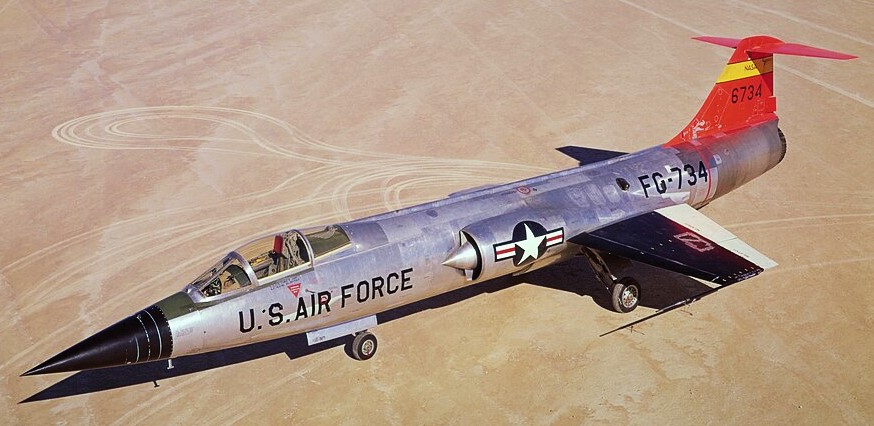
(NASA Photo)
Lockheed F-104A Starfighter (Serial No. 56-0851), 16 Nov 1960.
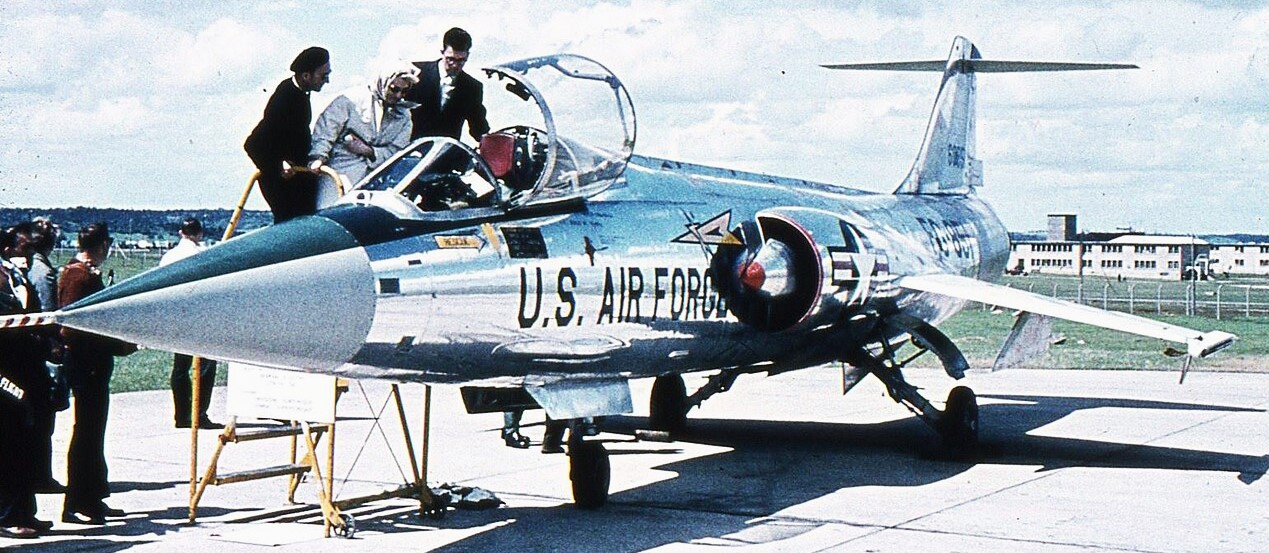
(USAF Photo)
Lockheed F-104A Starfighter (Serial No. 56-0851).
(USAF Photo)
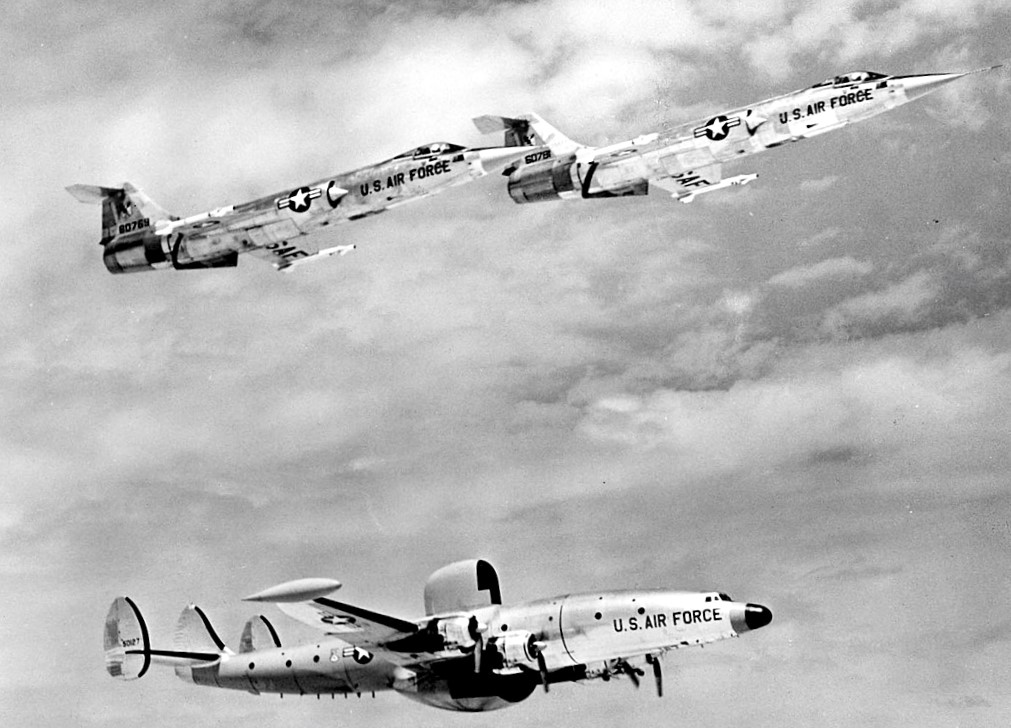
Two U.S. Air Force Lockheed F-104A-15-LO Starfighters (Serial Nos. 56-0769 and 56-0781) from the 83rd Fighter Interceptor Squadron from Hamilton Air Force Base, California, in flight with a Lockheed RC-121D-LO Warning Star (Serial No. 55-0127) from the 552d AEW&C Wing, McClellan AFB, California, in 1958.
(USAF Photo)
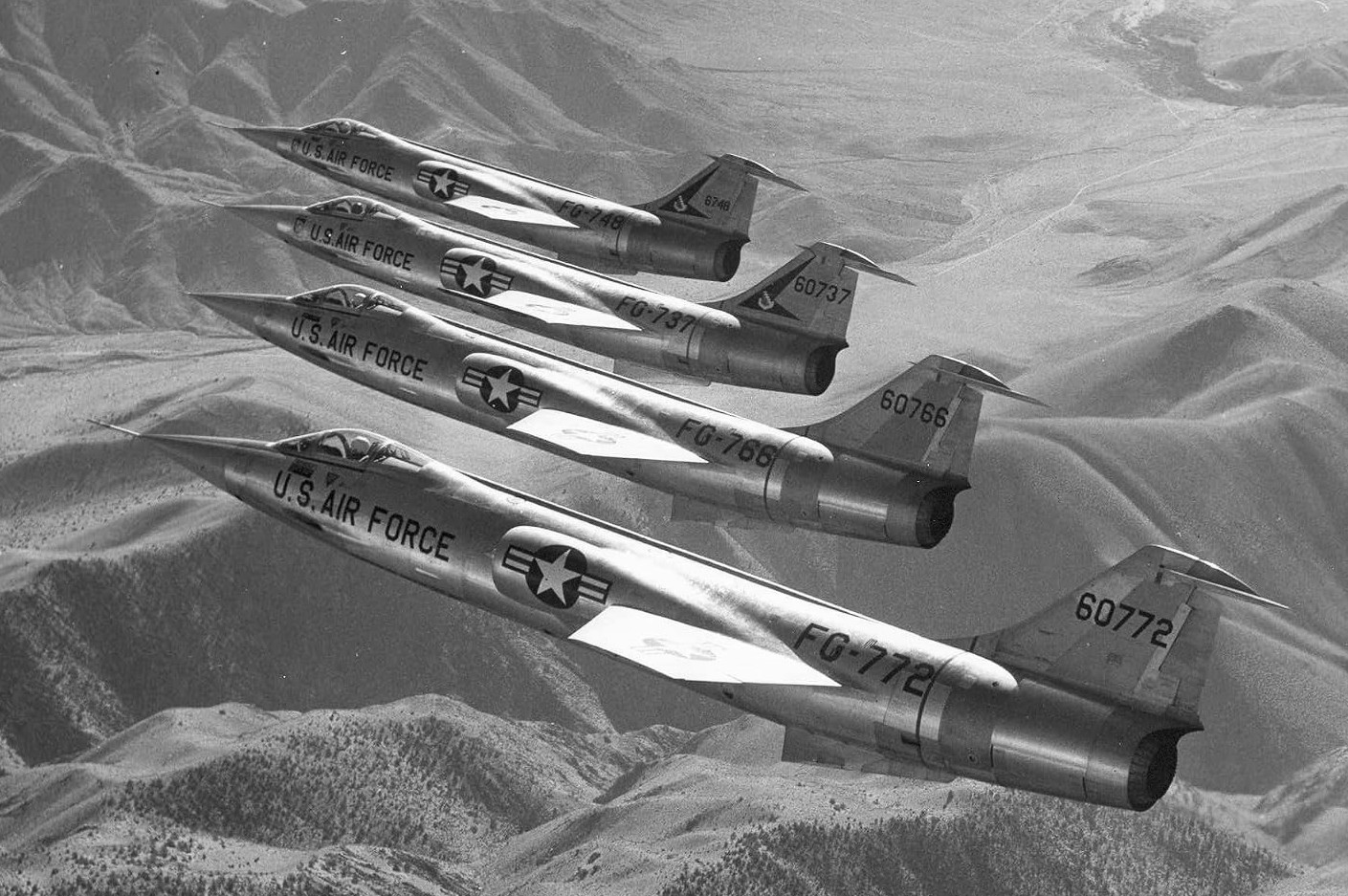
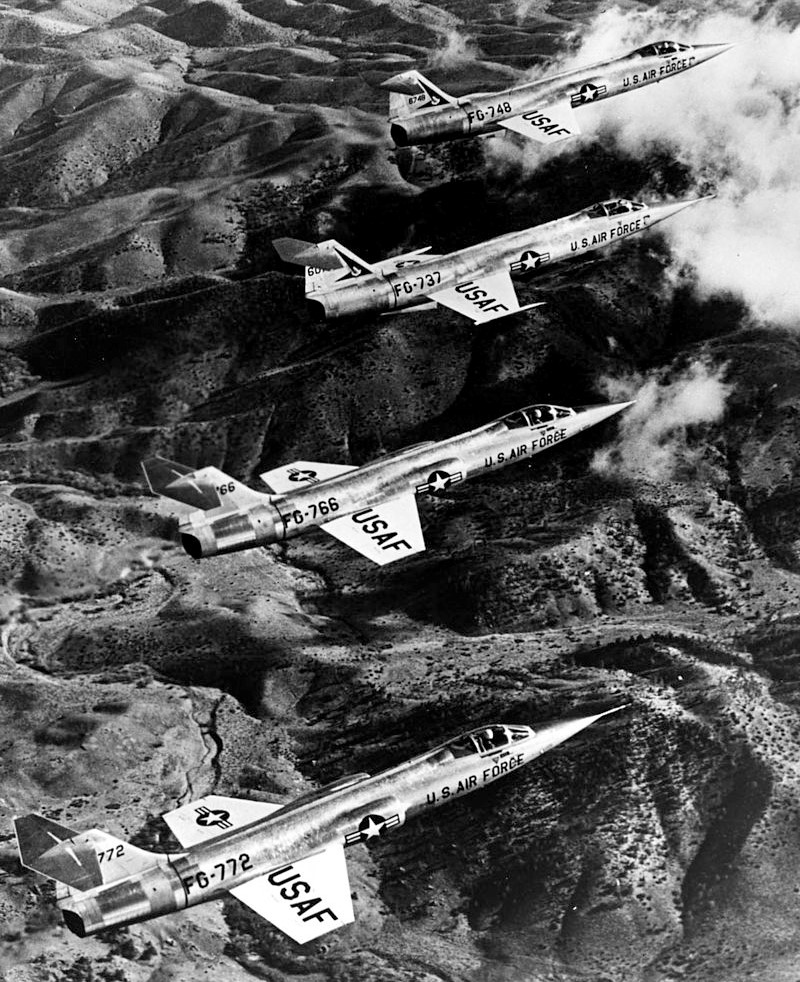
Four U.S. Air Force Lockheed F-104A Starfighters (Serial Nos. 56-0737, 56-0748, 56-0766 and 56-0772) in flight.
(USAF Photo)
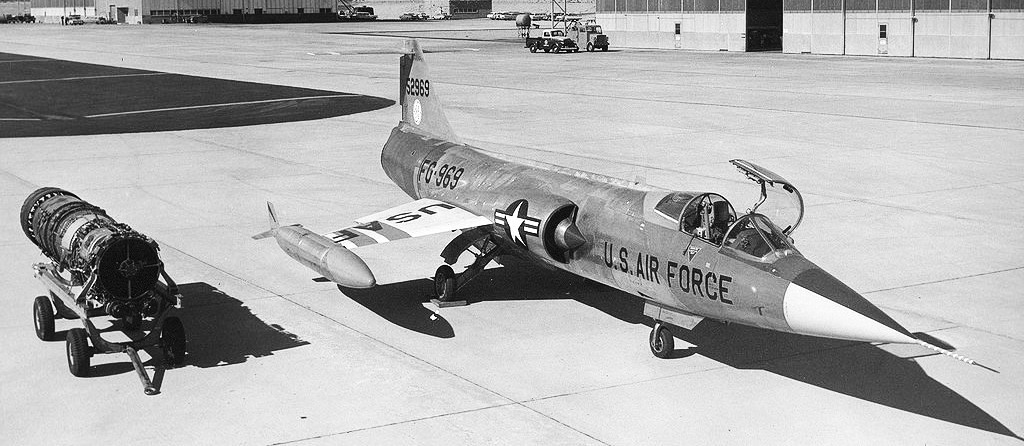
J79 engine with a Lockheed F-104 Starfighter (Serial No. 55-5969.
(SDASM Archives and USAF Photo)
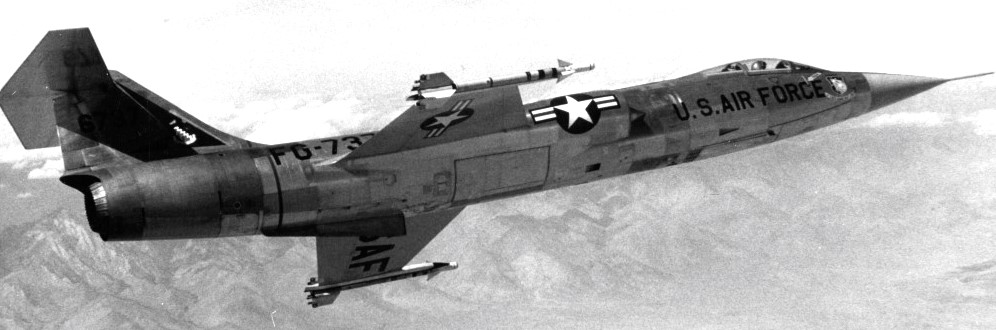
Lockheed F-104A Starfighter (Serial No. 56-0737), HQ ADC Colorado Springs, Colorado.
(USAF Photo)
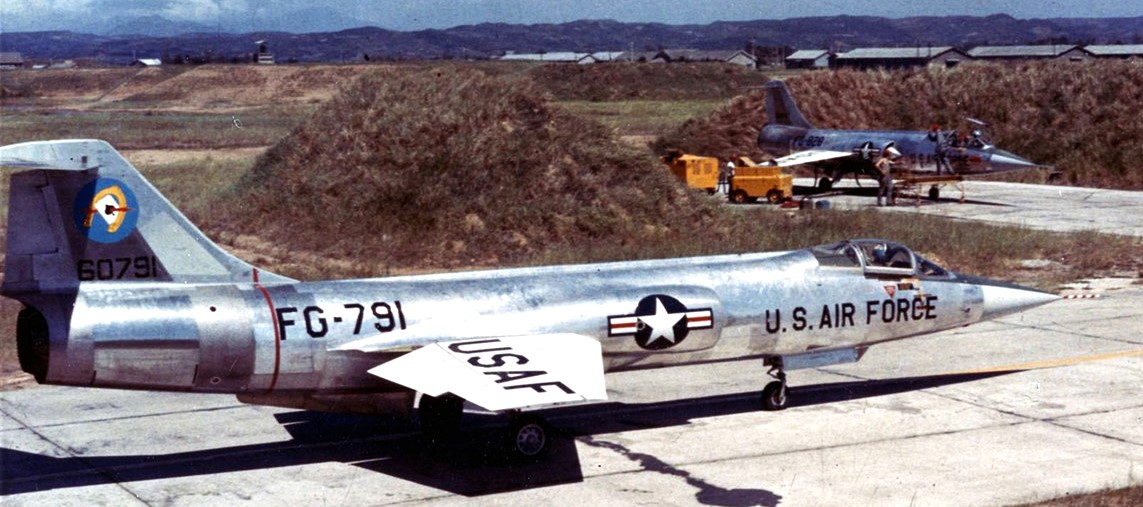
A U.S. Air Force Lockheed F-104A-20-LO Starfighter (Serial No. 56-0791) of the 83rd Fighter Interceptor Squadron at Taoyuan Air Base, Taiwan, on 15 September 1958, during the Quemoy Crisis (Operation “Jonah Able”).
(Bill Larkins Photo)
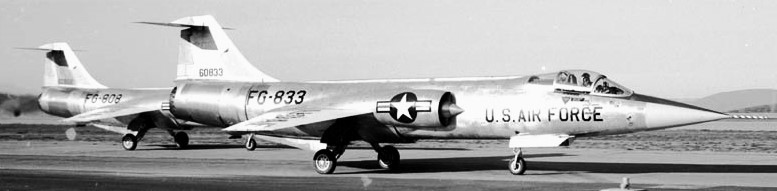
Lockheed F-104A (Serial No. 66-0833), Hamilton Field, 1959.
(NASA Photo)
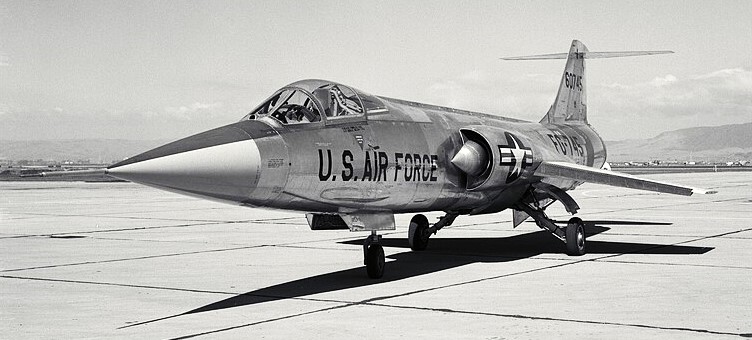
Lockheed JF-104A (AF56-745A), (Serial No. 56-0745) Starfighter airplane piloted by Fred Drinkwater conducted flight testing that demonstrated steep approaches that were ultimately used by the space shuttle. Steep descent testing, including power-off landing approaches and demonstration of minimum lift-to-drag ratio (L/D) landings came out of the interest in the use of low L/D lifting bodies for recovery to landing from space.

(USAF Photo)
A U.S. Navy Lockheed F-104A-5-LO Starfighter (Serial No. 56-0740) carrying a Sidewinder 1-C missile at the Naval Air Weapons Center China Lake, California (USA), on 29 July 1960. The Sidewinder 1-C was developed into the Sidewinder 1C Mod 30 (AIM-9C) with an semiactive radar head (SARAH), and the Sidewinder 1C Mod 29 (AIM-9D) with an infrared alternative head (IRAH) seeker. The F-104A 56-740 crashed into a mountain north of Los Angeles on 22 September 1960. The pilot, Capt. Harold O. Casada Jr., was killed.
(USN Photo)
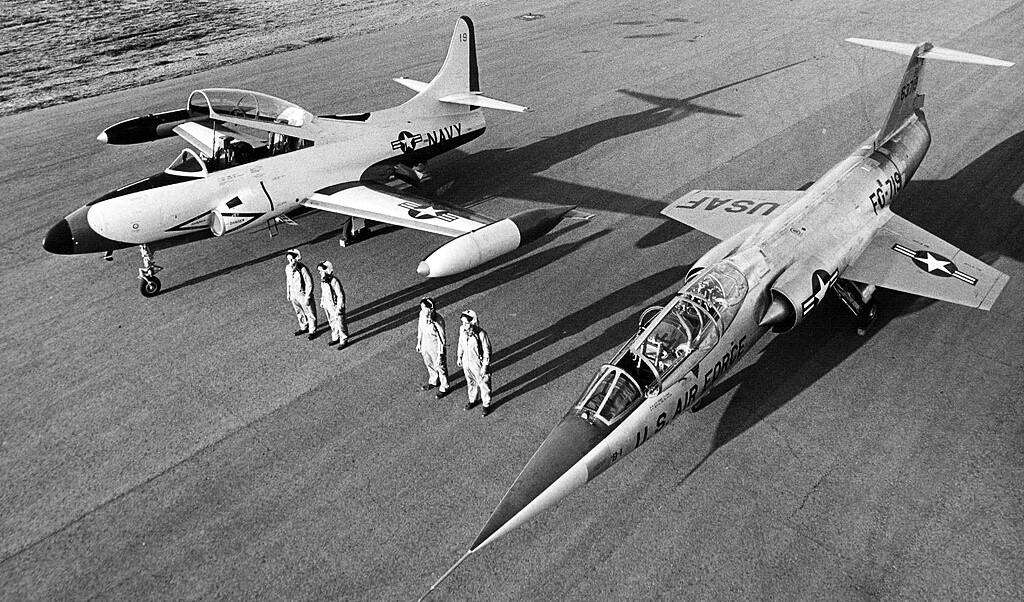
A U.S. Navy Lockheed T2V-1 Seastar parked next to a U.S. Air Force Lockheed F-104B-1-LO Starfighter (Serial No. 56-3719).
(USAF Photo)
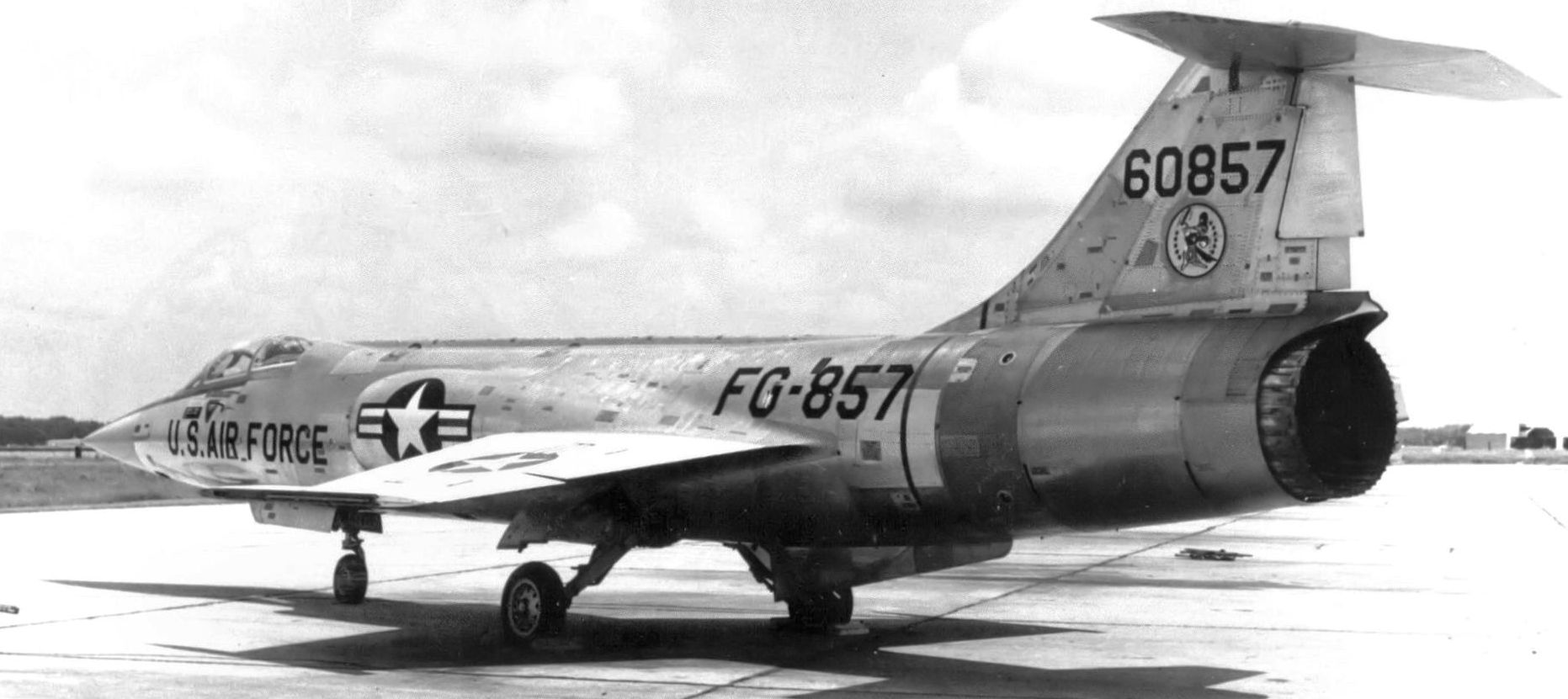
Lockheed F-104A-25-LO Starfighter (Serial No. 56-0857), 56th Fighter-Interceptor Squadron, Wright-Patterson AFB, Ohio, May 1958.

(USN Photo)
A U.S. Navy Lockheed F-104A-5-LO Starfighter (Serial No. 56-0740) carrying a Sidewinder 1-C missile at the Naval Air Weapons Center China Lake, California, on 29 July 1960. The Sidewinder 1-C was developed into the Sidewinder 1C Mod 30 (AIM-9C) with an semiactive radar head (SARAH), and the Sidewinder 1C Mod 29 (AIM-9D) with an infrared alternative head (IRAH) seeker. The F-104A 56-740 crashed into a mountain north of Los Angeles on 22 September 1960. The pilot, Capt. Harold O. Casada Jr., was killed.
(USAF Photo)
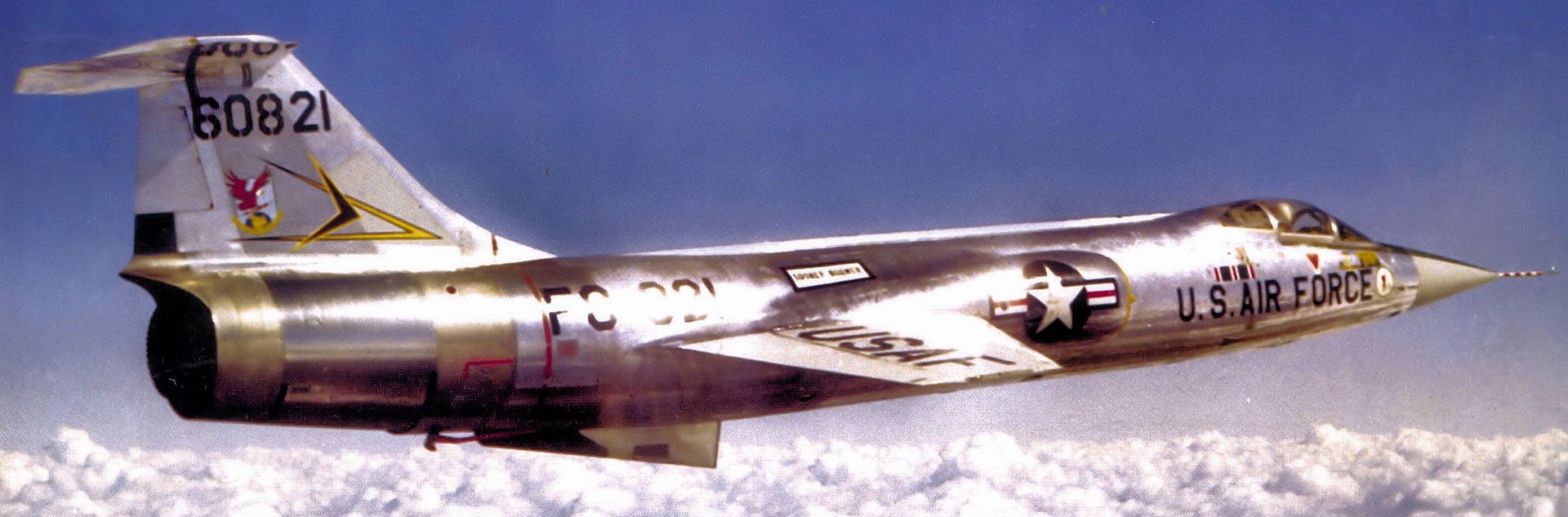
Lockheed F-104A-20-LO Starfighter (Serial No. 56-0821), 331st Fighter-Interceptor Squadron, Webb AFB, Texas February 1964.
(USAF Photo)
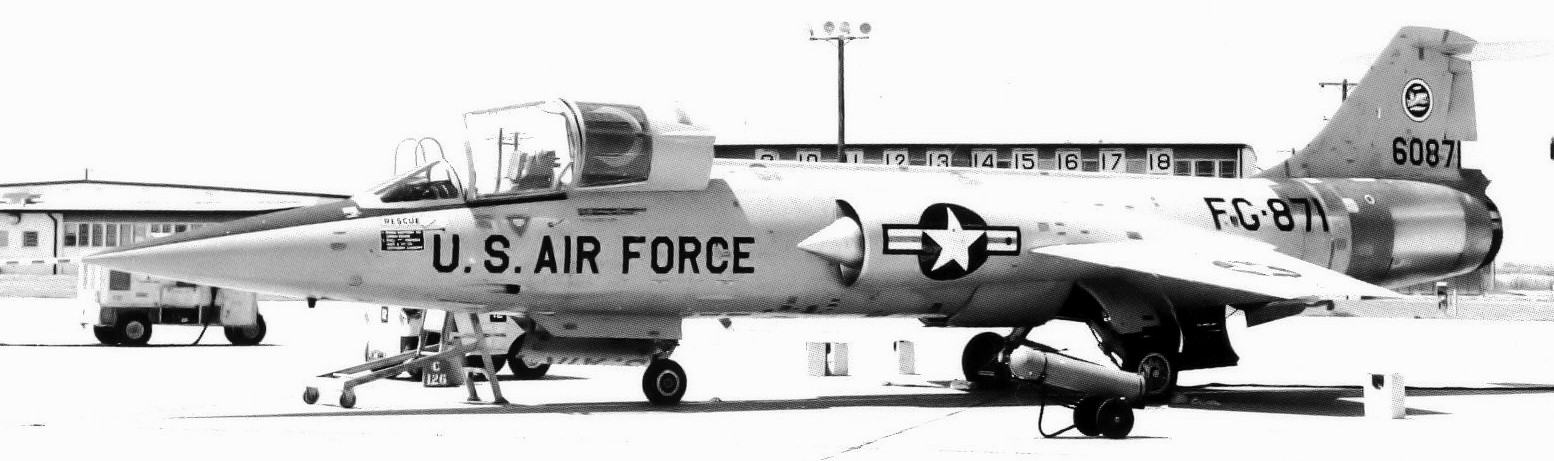
Lockheed F-104A-25-LO Starfighter (Serial No. 56-0871), 331st Fighter-Interceptor Squadron, Webb AFB, Texas April 1965.
(USAF Photo)
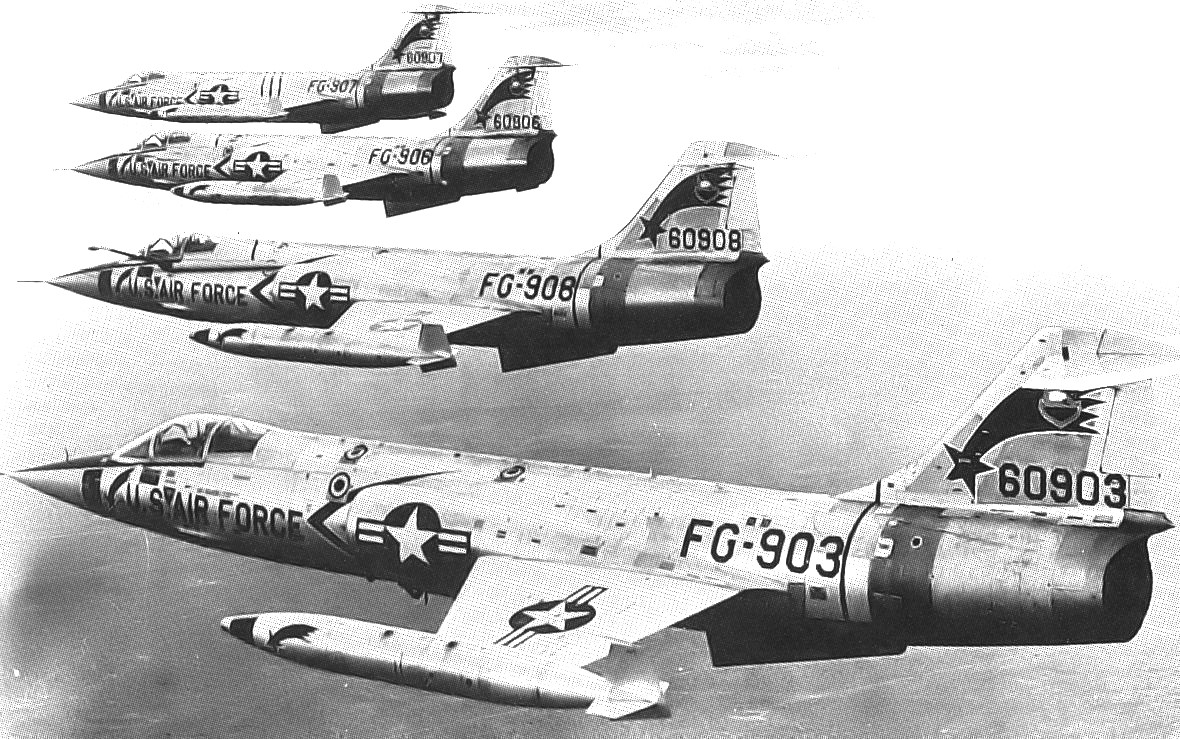
Lockheed F-104C-5-LO Starfighters (Serial Nos. 56-0903, 56-0908, 56-0906 and 56-0907, TAC 479th Tactical Fighter Wing, 476th TFS, George AFB, California, 1960.
(USAF Photo)
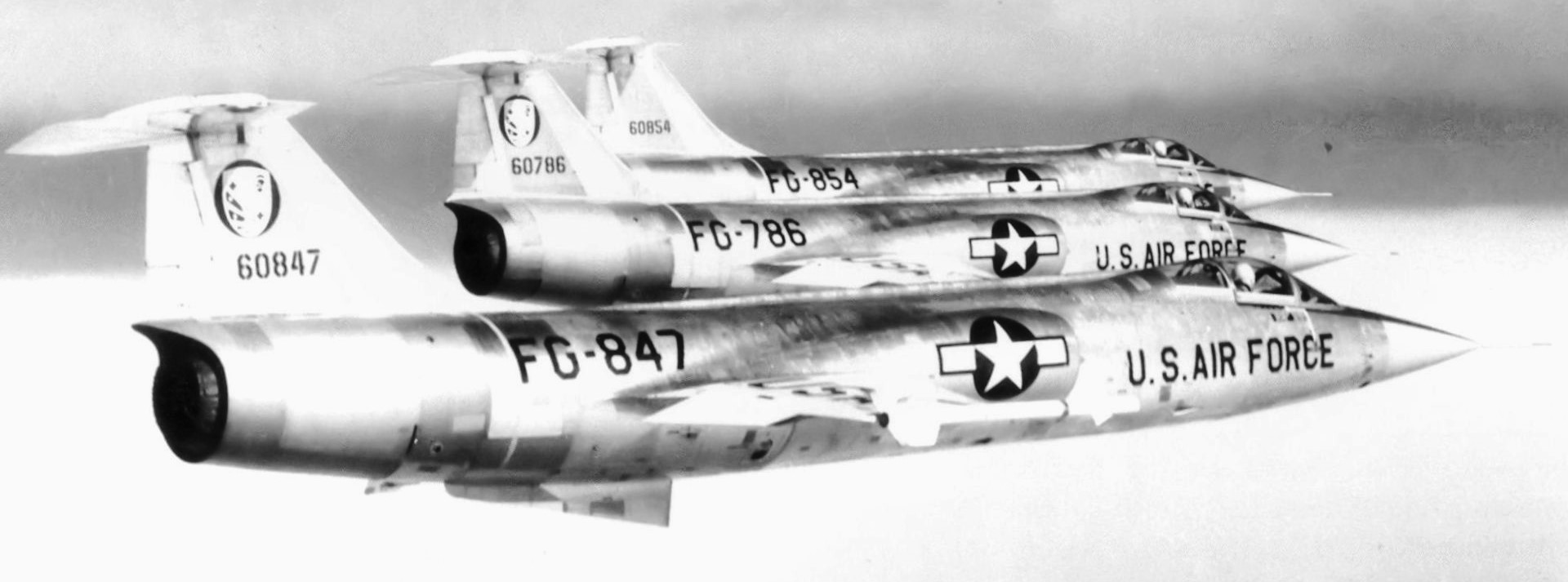
Lockheed F-104A Starfighters (Serial Nos. 56-0847, 56-0854 and 56-0786, 538th Fighter-Interceptor Squadron, Larson AFB, Washington, 1958.
(USAF Photo)
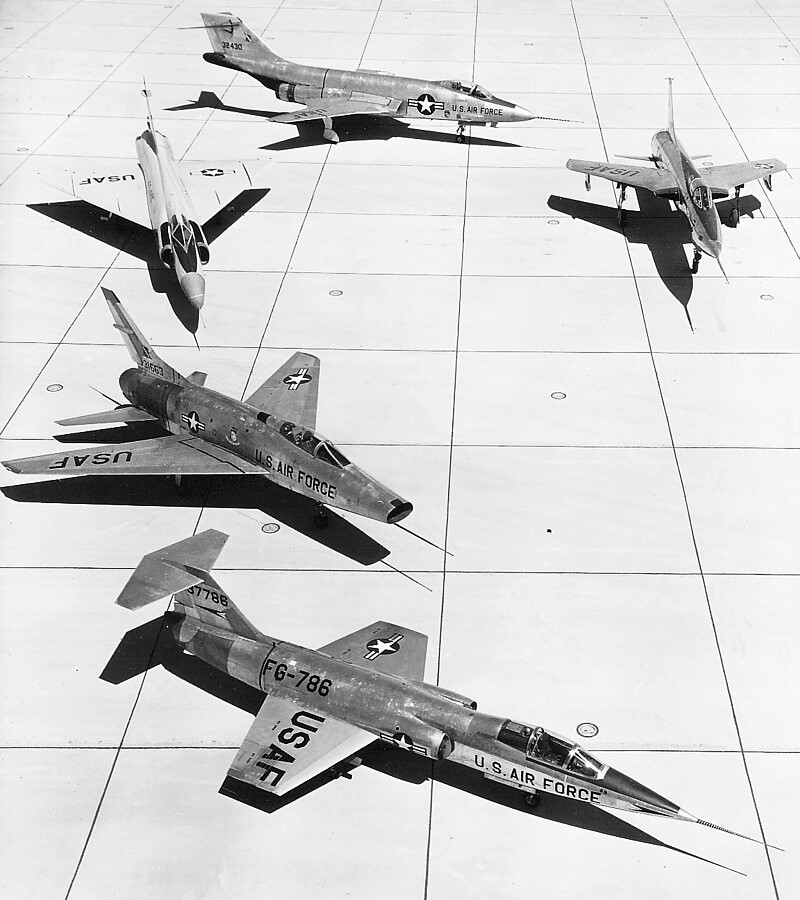
The first five Century series fighters (North American F-100 Super Sabre, McDonnell F-101 Voodoo, Convair F-102 Delta Dagger, Lockheed XF-104 Starfighter, Republic F-105 Thunderchief).
(USAF Photo)
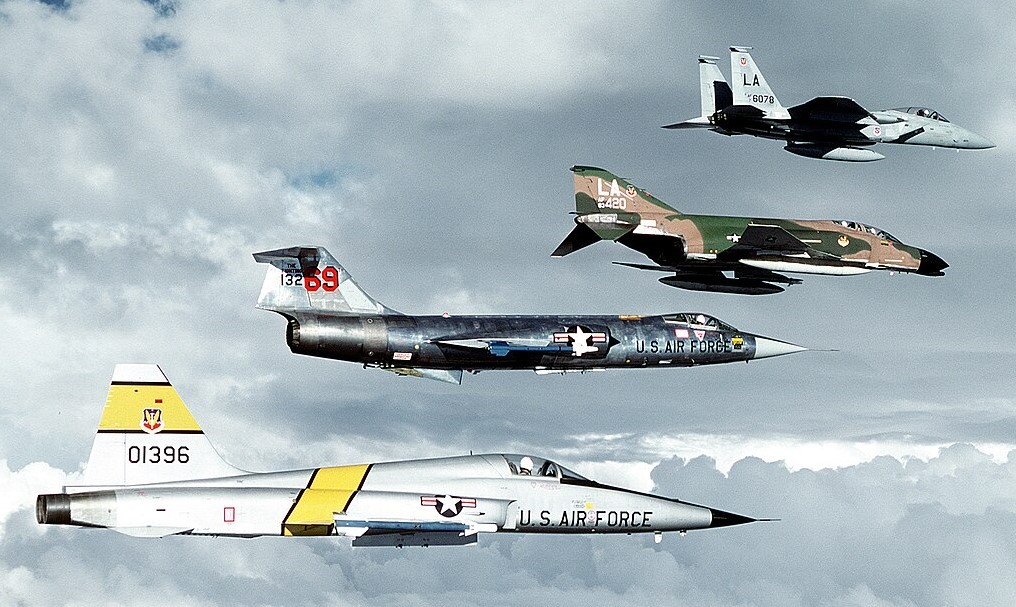
Three U.S. Air Force fighters and a German F-104G from the 58th Tactical Training Wing from Luke Air Force Base, Arizona, in flight on 1 August 1979 (front to back): A Northrop F-5E Tiger II (Serial No. 72-01396) from the 425th Tactical Fighter Training Squadron; a German Lockheed F-104G Starfighter (USAF Serial No. 63-13269, built by Fokker) from the 69th Tactical Fighter Training Squadron (although German, the Luke-based F-104s has USAF markings for administrative reasons); a McDonnell F-4C-15-MC Phantom II (Serial No. 63-7420) from the 310th Tactical Fighter Training Squadron; and a McDonnell Douglas F-15A-16-MC Eagle (Serial No. 76-078) from the 555th Tactical Fighter Training Squadron.
(USAF Photo)
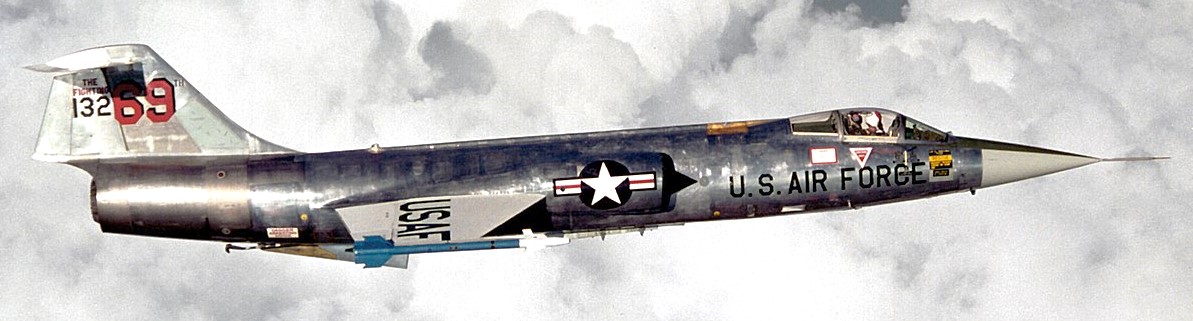
A Lockheed F-104G Starfighter (Serial No. 63-13269) during a training flight on 1 August 1979, armed with two (training) AIM-9J Sidewinder air-to-air-missiles. The aircraft, from the 69th Tactical Fighter Training Squadron, 58th Tactical Training Wing, 12th Air Force, was used to train German Luftwaffe (air force) pilots at Luke Air Force Base, Arizona. This aircraft had actually been licence built by Fokker in the Netherlands and had the original German registration “KG 102”. After the retirement of the German Starfighters this aircraft was handed back to the U.S. and sold to Taiwan.
Lockheed F-104 Starfighters preserved
Airworthy
TF-104G-M
54251 – based at Starfighters Inc in Cape Canaveral, Florida.
54258 – based at Starfighters Inc in Cape Canaveral, Florida.
54261 – based at Starfighters Inc in Cape Canaveral, Florida.
Variants and Starfighters on display
XF-104. This was the prototype aircraft; two examples were built and powered by Wright J65 engines (the J79 was not yet ready). The second prototype was equipped with the M61 cannon as an armament test bed. Both aircraft were destroyed in crashes.
- YF-104A. The YF-104A was a pre-production aircraft used for engine, equipment, and flight testing; 17 were built, with the first flight taking place on 17 February 1956 and reaching Mach 2 for the first time on 27 April 1956.
- QF-104A. A total of 24 F-104As (4 YF-104As, 20 early F-104As) were converted into radio-controlled drones and test aircraft. These target drones were able to be flown by onboard pilots as well as remotely controlled by pilots using radio-control equipment either on the ground or flying in other aircraft
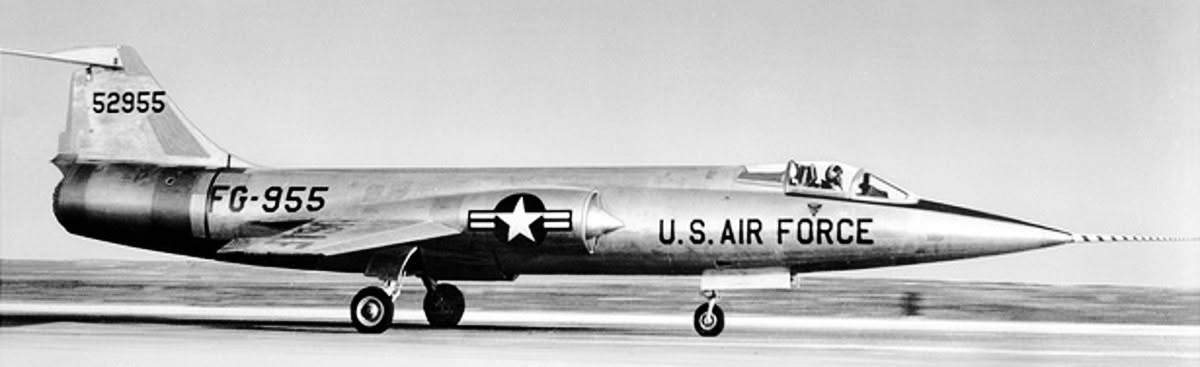
(USAF Photo)
55-2955 – YF-104A.
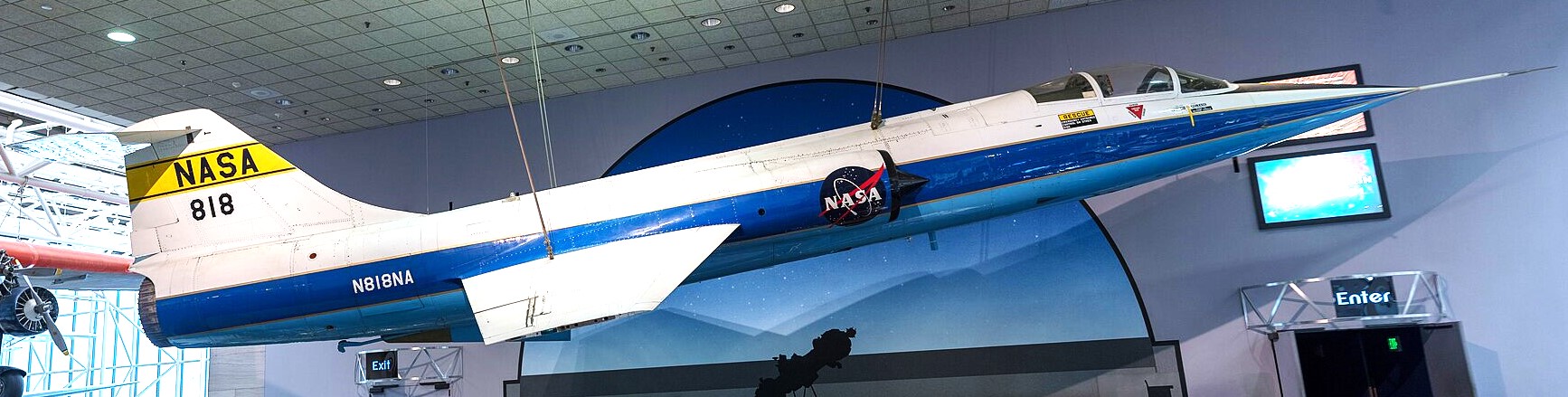
(Mys 721tx Photo)
55-2961 (NASA N818NA) – hanging from the ceiling of the Smithsonian’s National Air and Space Museum, Washington, D.C. This Lockheed F-104 Starfighter was one of 11 were operated by NASA Dryden Flight Research Center, at Edwards Air Force Base, Calif.. Modification: Lockheed F-104A (formerly a YF-104A), military serial number 55-2961, NASA number 818. First NASA flight on August 27. 1956, last operational flight on August 26. 1975, 1.439 flights over this period. 19 NASA pilots flew the 818, among them were three Apollo astronauts, including Neil Armstrong. Photo taken in Smithsonian National Air and Space Museum, Washington, DC, USA in 2004.
F-104A. This aircraft was the initial production single-seat interceptor version, very similar to the YF-104A. A total of 153 were built. The F-104A was in USAF service from 1958 through 1960, then transferred to the Air National Guard until 1963. At that time they were recalled by the USAF Air Defense Command for the 319th and 331st Fighter Interceptor Squadrons. Some were released for export to Jordan, Pakistan, and Taiwan, each of which used it in combat. The 319th F-104As and Bs had their engines replaced in 1967 with the J79-GE-19, which provided 17,900 lbf (79.6 kN) of thrust in afterburner; the service ceiling with this engine was in excess of 73,000 ft (22,000 m). In 1969, all the F-104A/Bs in ADC service were retired. On 16 May 1958, an F-104A flown by USAF Captain Walter W. Irwin set a world flight airspeed record of 1,404.012 mph (2,259.538 km/h). (Wikipedia)
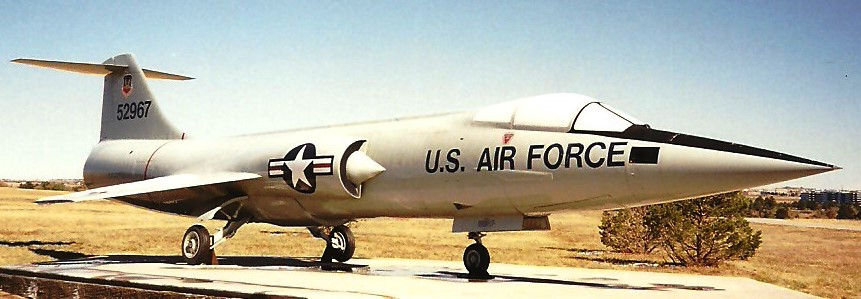
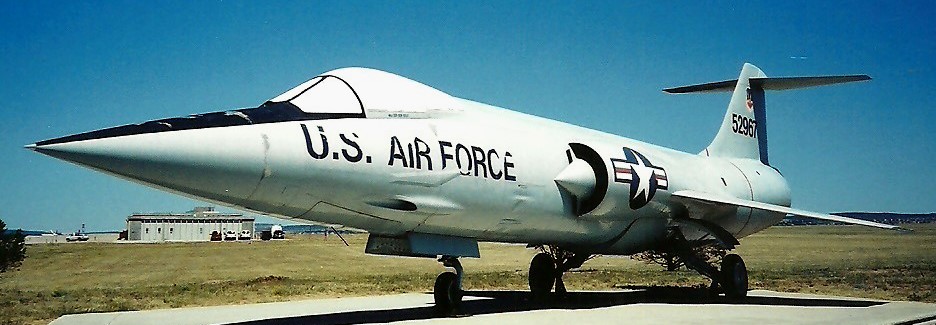
(Author Photos)
Lockheed F-104A Starfighter (Serial No. 55-2967). Pueblo Weisbrod Aircraft Museum, Pueblo, Colorado. Previously on display at the USAF Academy in Colorado Springs.
56-0732 – McGhee Tyson Air National Guard Base, Alcoa, Tennessee. Formerly on display at Octave Chanute Aerospace Museum, Chanute AFB (formerly), Rantoul, Illinois.
56-0748 – Linear Air Park, Dyess AFB, Abilene, Texas.
56-0750 – Michigan 104, Canton, Michigan.
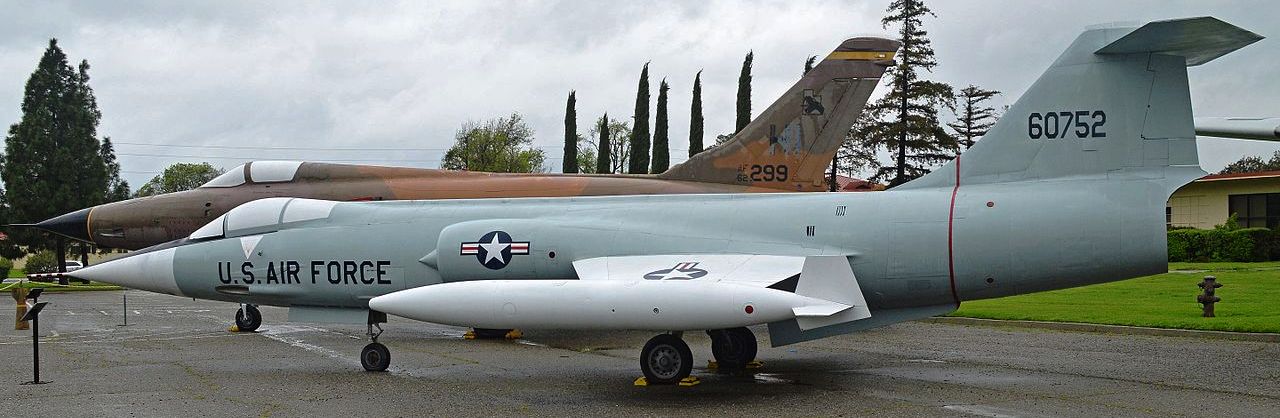
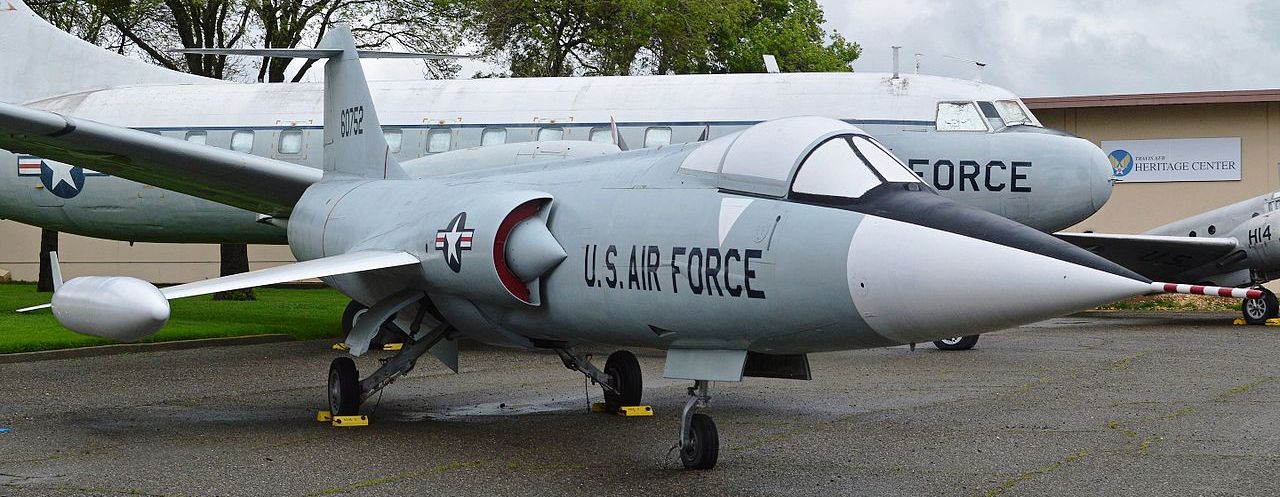
(Alan Wilson Photos)
56-0752 – Travis AFB Heritage Center, Travis AFB, Fairfield, California.
56-0753 – Hill Aerospace Museum, Utah.
56-0754 – National Museum of the United States Air Force, Wright-Patterson AFB, Dayton, Ohio. Mounted on a pylon.
56-0755 – March Field Air Museum, Riverside, California.
56-0756 (painted as 56-0751) – Nevada County Air Park, Grass Valley, California.
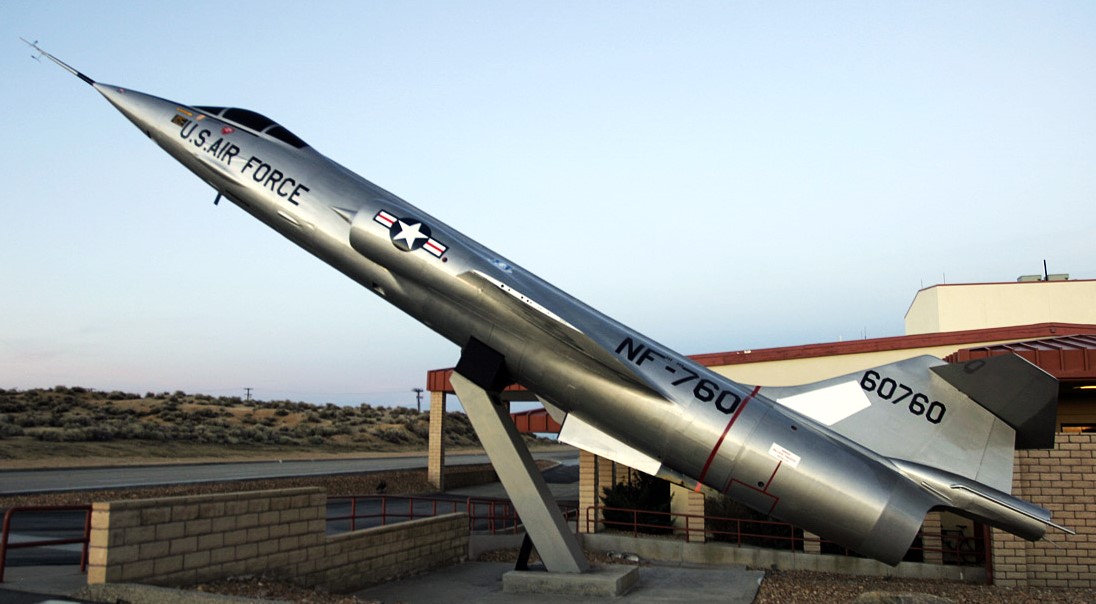
NF-104A. The NF-104A was used for three demilitarized versions with an additional 6,000 lbf (27 kN) Rocketdyne LR121/AR-2-NA-1 rocket engine, used for astronaut training at altitudes up to 120,800 ft (36,800 m).
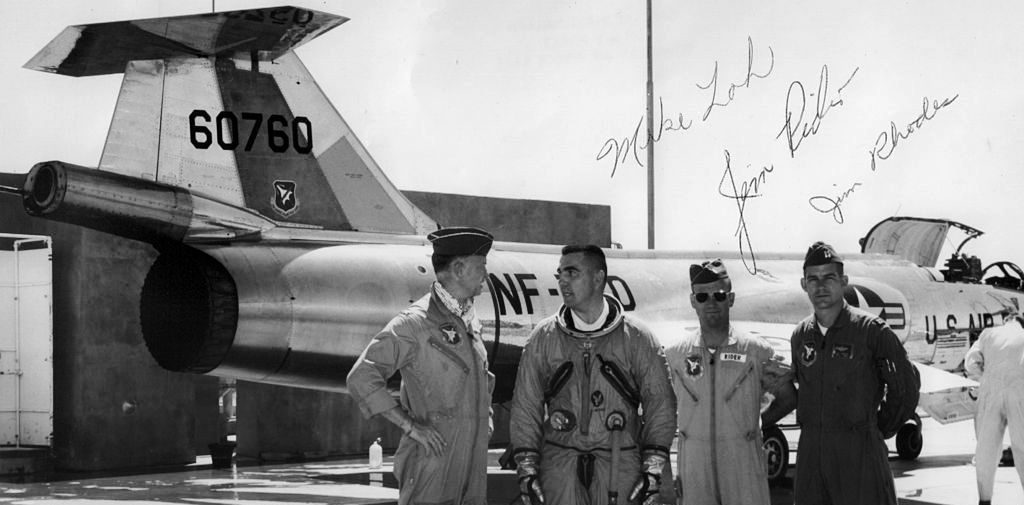
(USAF Photo)
Lockheed NF-104A Starfighter (Serial No. 56-0760), c/n 183-1048, NF-760, composite with parts from (Serial No. 56-0756), this aircraft was the SR-71 first flight chase plane. Mounted on a pylon outside the Test Pilot School. USAF Aerospace Research Pilot School (ARPS) commandant Eugene Deatrick (51A), student Mike Loh (67B), and instructors Jim Rider (65C) and Jim Rhodes (66A) in front of Lockheed NF-104A (Serial No. 56-0760), 1 June 1968.
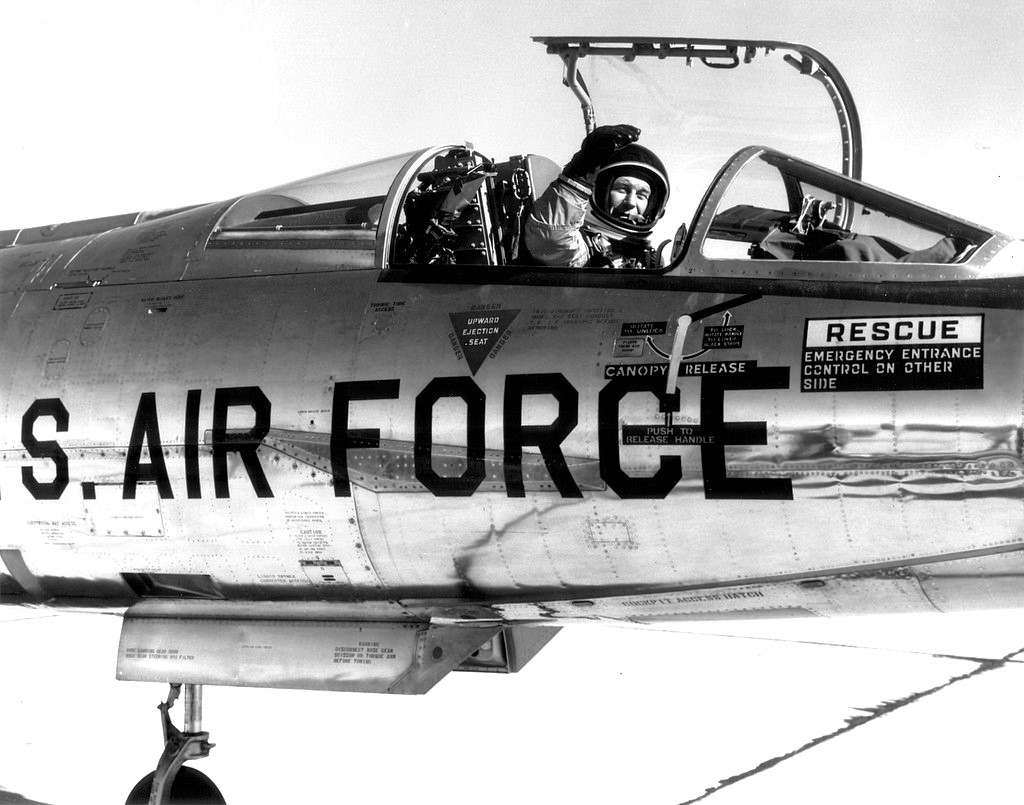
(USAF Photo)
Chuck Yeager in in the cockpit of Lockheed NF-104, 4 December 1963
(Kaszeta Photo)
56-0760 – USAF Test Pilots School, Edwards AFB, Palmdale, California. Rocket assisted.
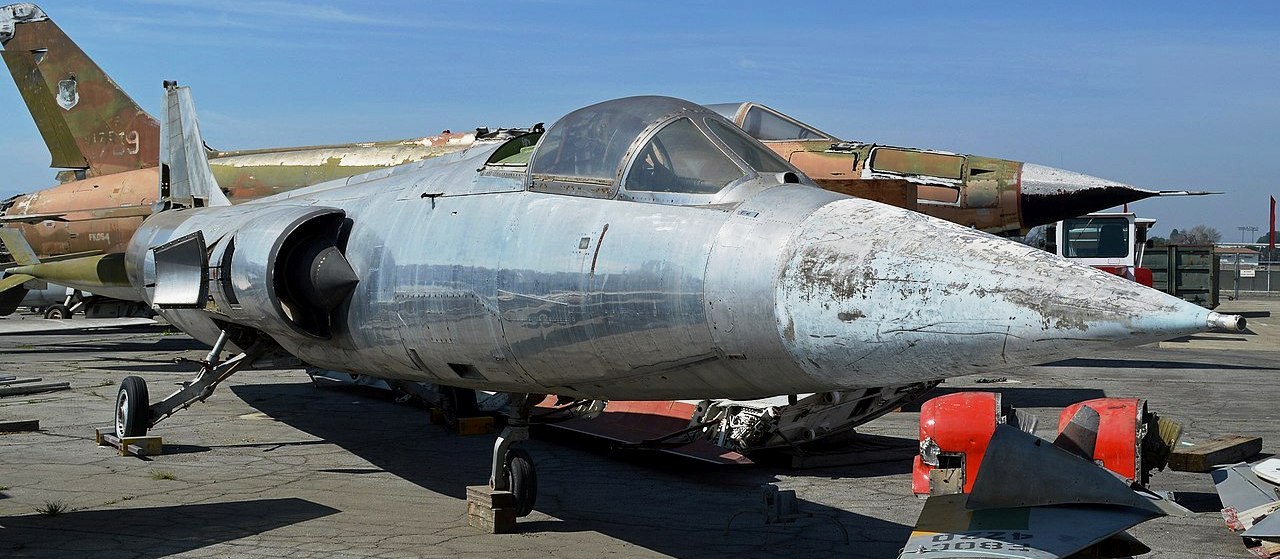
56-0778 – Warhawk Air Museum, Nampa, Idaho.
(Alan Wilson Photo)
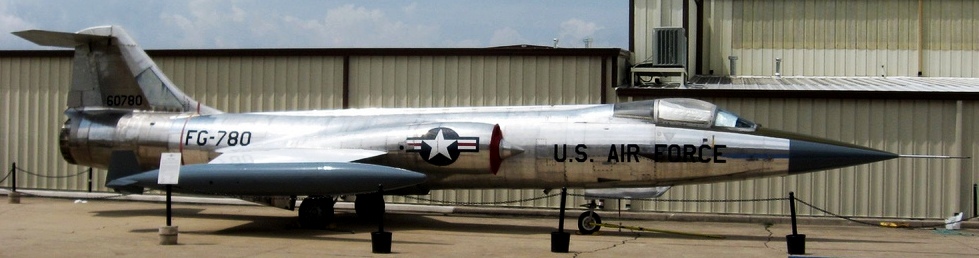
56-0779 – Yanks Air Museum, Chino, California.
(nyvhek Photo)
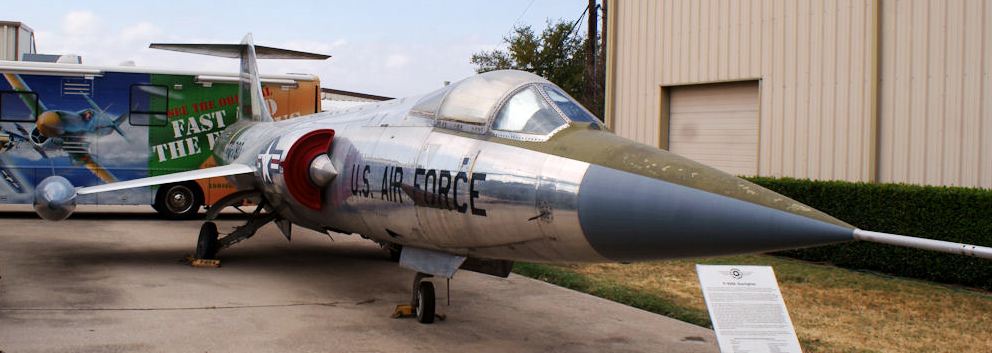
(Valder137 Photos)
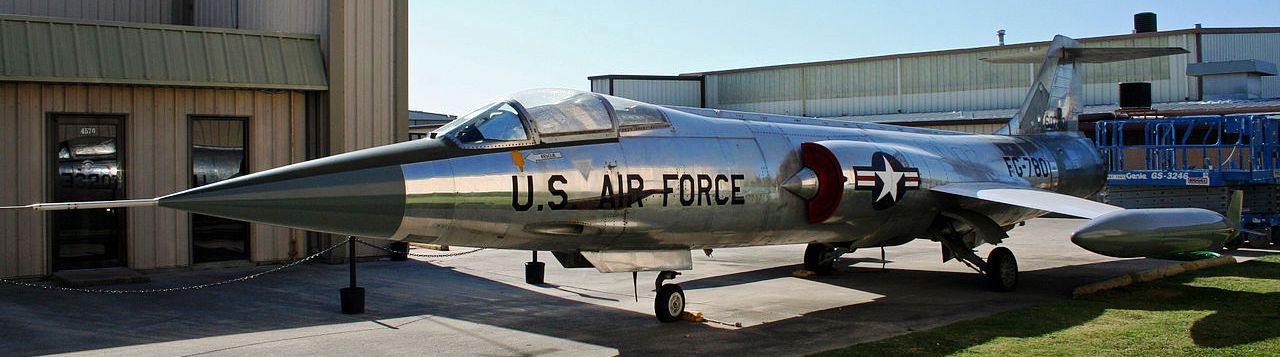
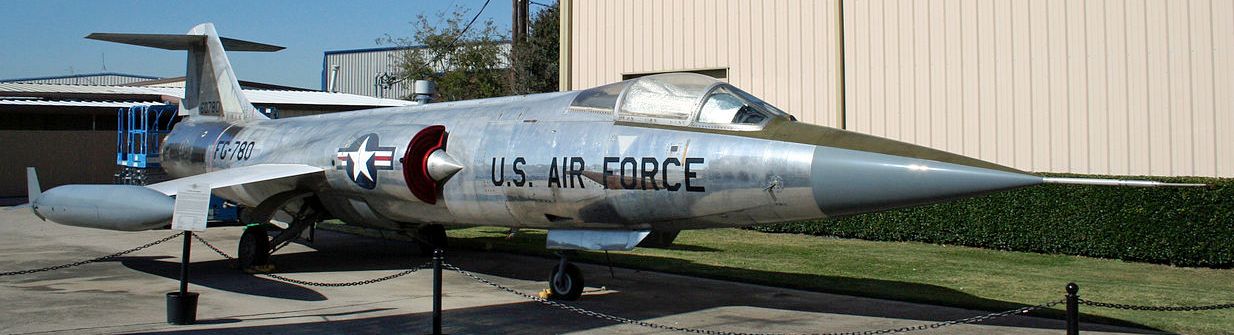
(Perry Quan Photos)
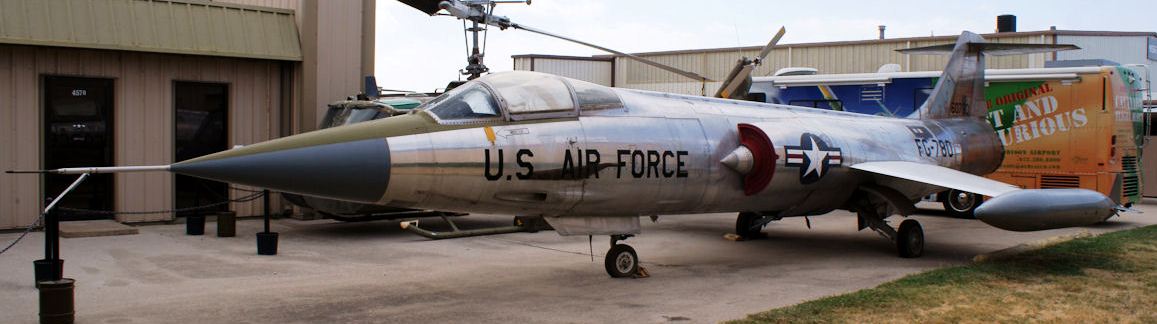
56-0780 (formerly 56-0779) – Cavanaugh Flight Museum, Addison, Texas. Removed from public display when the museum indefinitely closed on 1 January 2024. To be moved to North Texas Regional Airport in Denison, Texas.
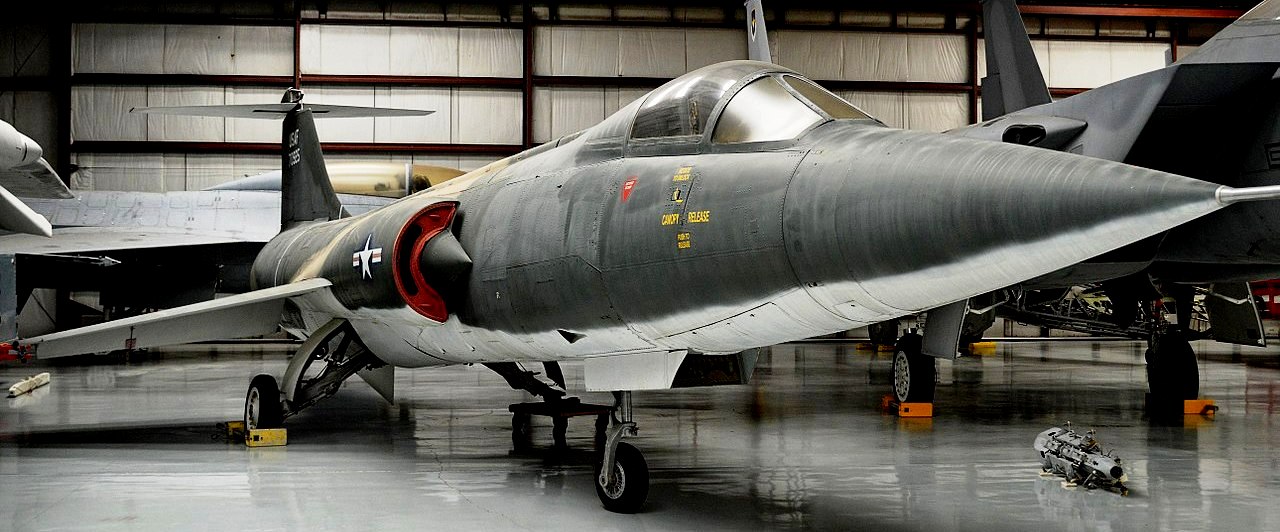
(Alan Wilson Photo)
56-0785 – Yanks Air Museum, Chino, California.
56-0786 – Cavanaugh Flight Museum, Addison, Texas. Removed from public display when the museum indefinitely closed on 1 January 2024. To be moved to North Texas Regional Airport in Denison, Texas.
56-0790 (NASA N820NA) – Century Circle at Edwards Air Force Base, near Rosamond, California.
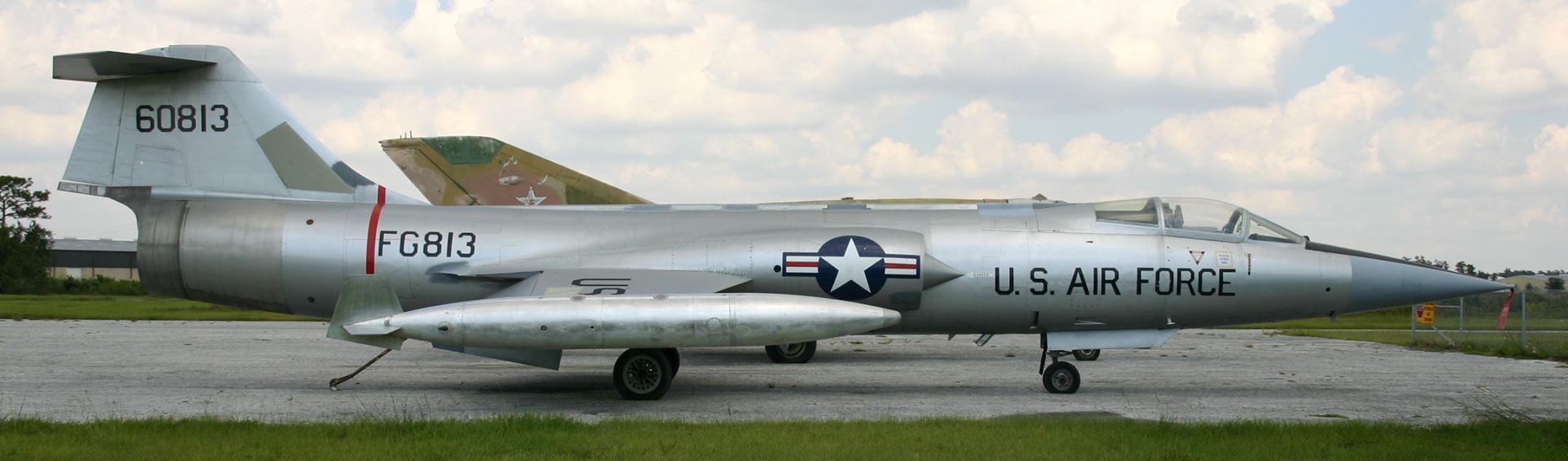
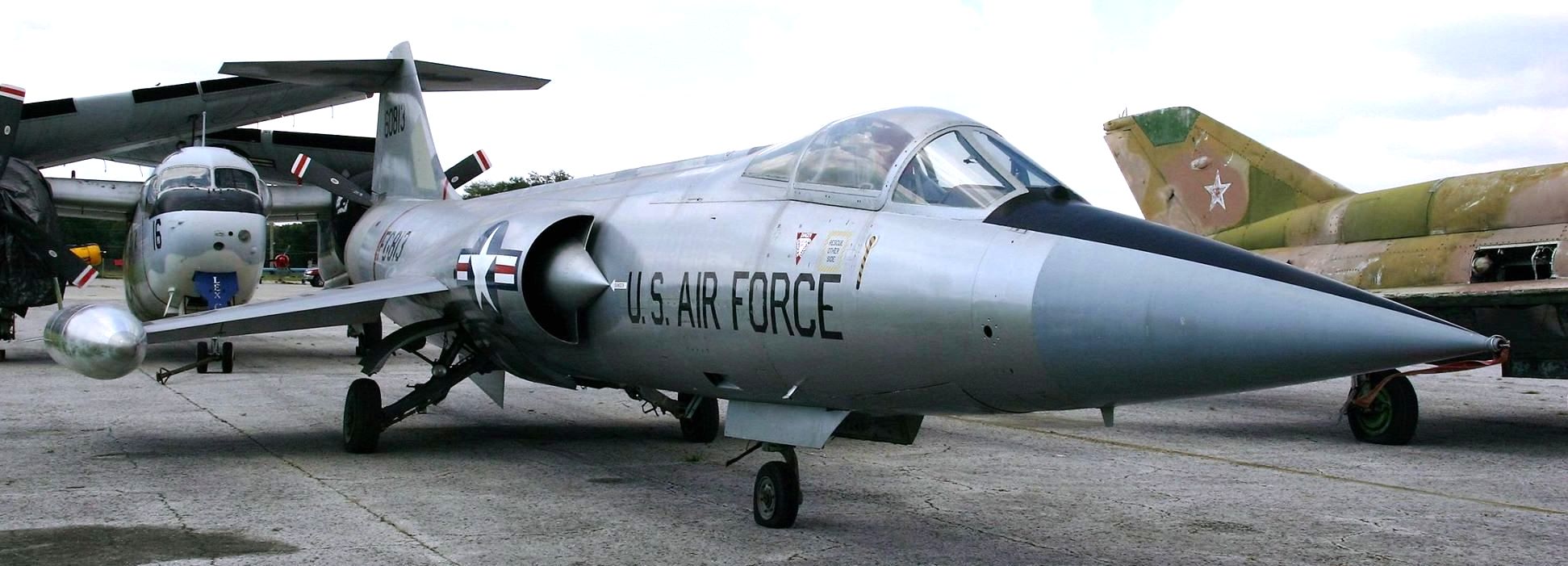
(Hector Vazquez Photos)
56-0813 – Easton Airport (Maryland), Easton, MD.
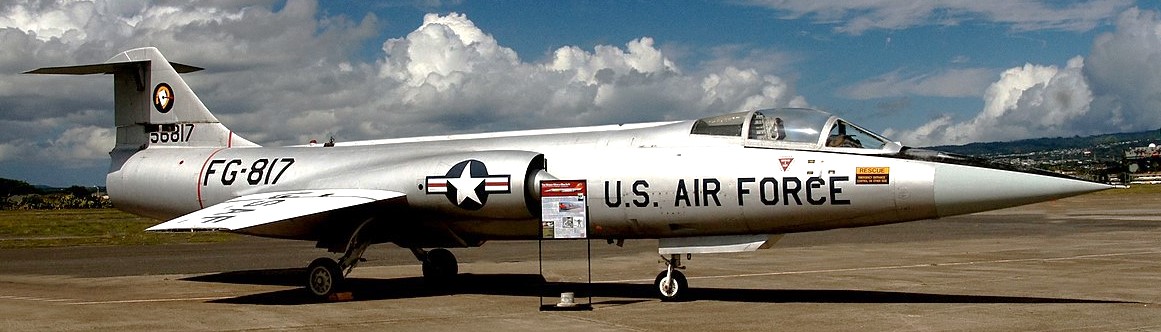
(Bernard Sprague Photo)
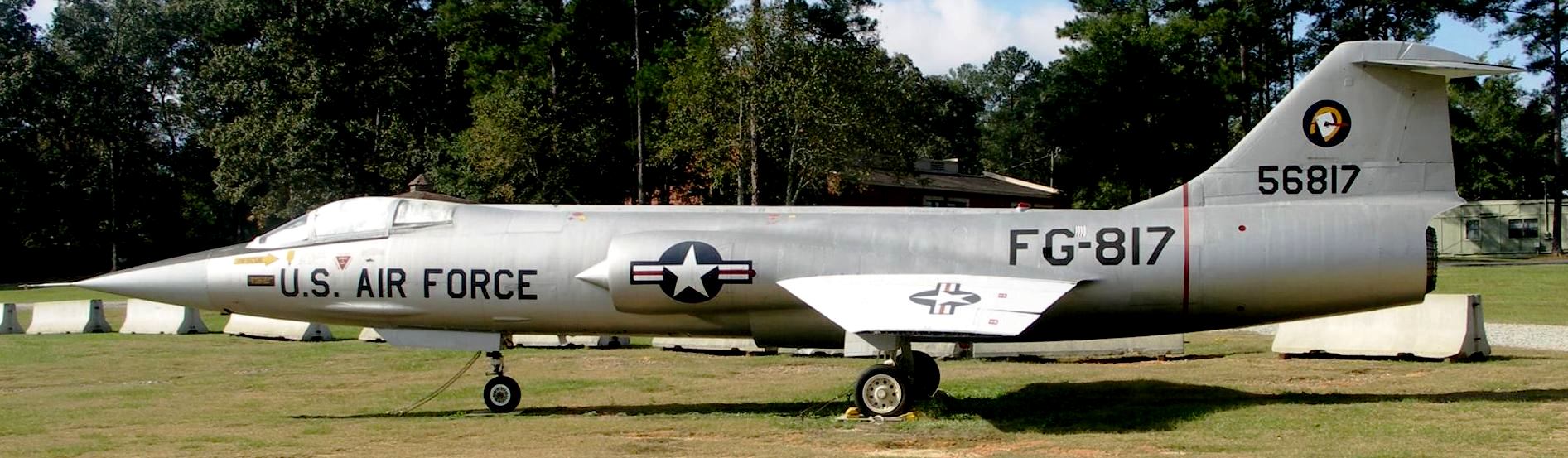
(Ray Wilhite Photo)
56-0817 – Pacific Aviation Museum on loan from Museum of Aviation, Robins AFB, Warner Robins, Georgia.
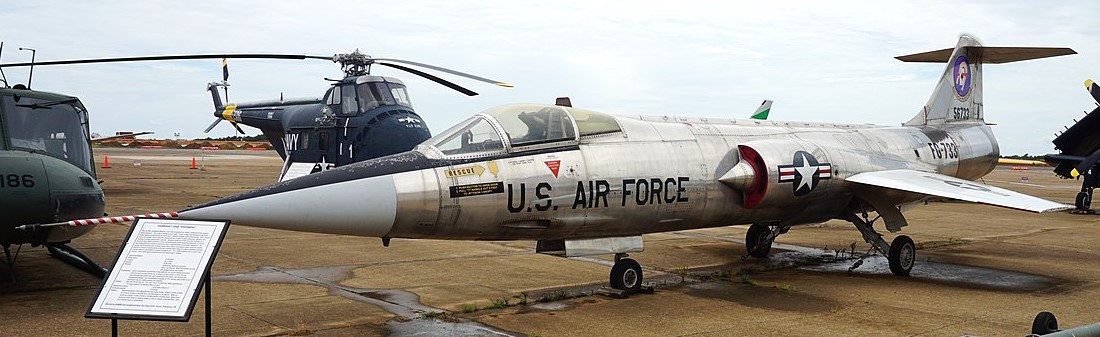
(Michael Barera Photo)
56-0826 – Historic Aviation Memorial Museum, Tyler, Texas.
F-104B. The F-104B was a tandem two-seat, dual-control trainer version of the F-104A. A total of 26 built, the F-104B had an enlarged rudder and ventral fin, no cannon, and reduced internal fuel, but was otherwise combat-capable. A few were supplied to Jordan, Pakistan, and Taiwan.
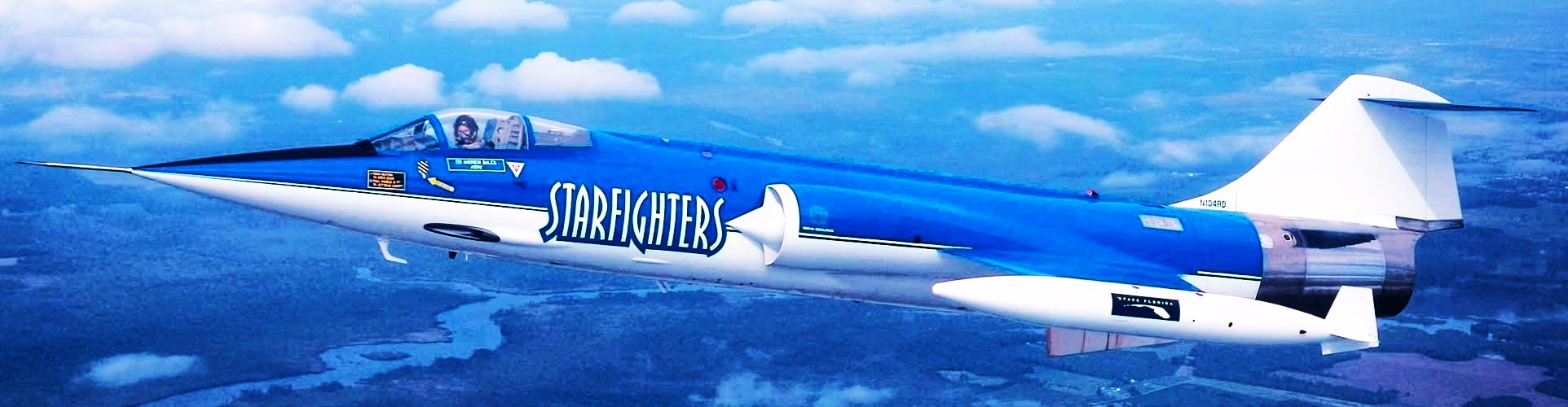
(Roger Seroo Photo)
56-1296 – Reg. No. N104RD, undergoing restoration to airworthiness by Starfighters Inc in Cape Canaveral, Florida.
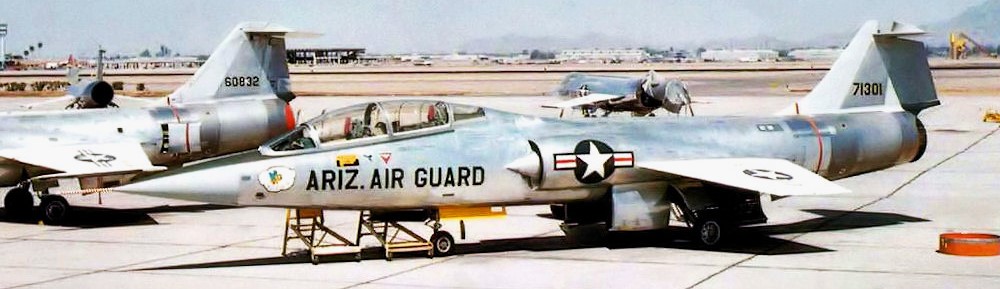
(USAF Photo)
Lockheed F-104B-5-LO Starfighter (Serial No. 57-1301), 197th Fighter-Interceptor Squadron, Arizona Air National Guard. This aircraft was retired to MASDC Dec 4, 1967. Returned to service with AFTC, Edwards AFB. This aircraft was at Florence, in the South Carolina Space Museum. Noted Oct 2003 at the Kansas Cosmosphere and Space Center, Hutchinson, Kansas.
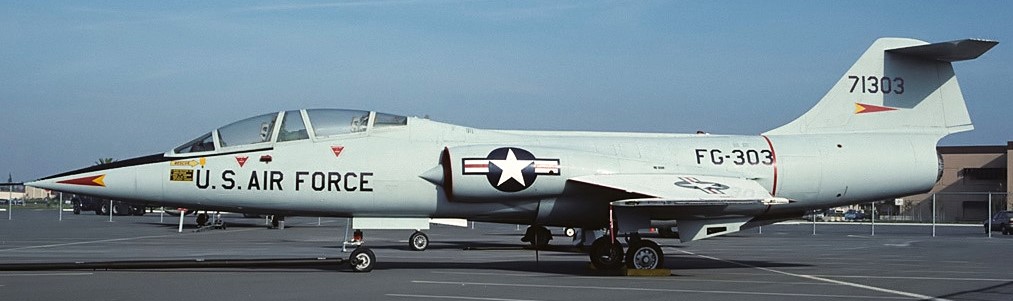
(Mike Freer – Touchdown Aviation Photo)
(kbyywl Photo)
(Alan Wilson Photo)
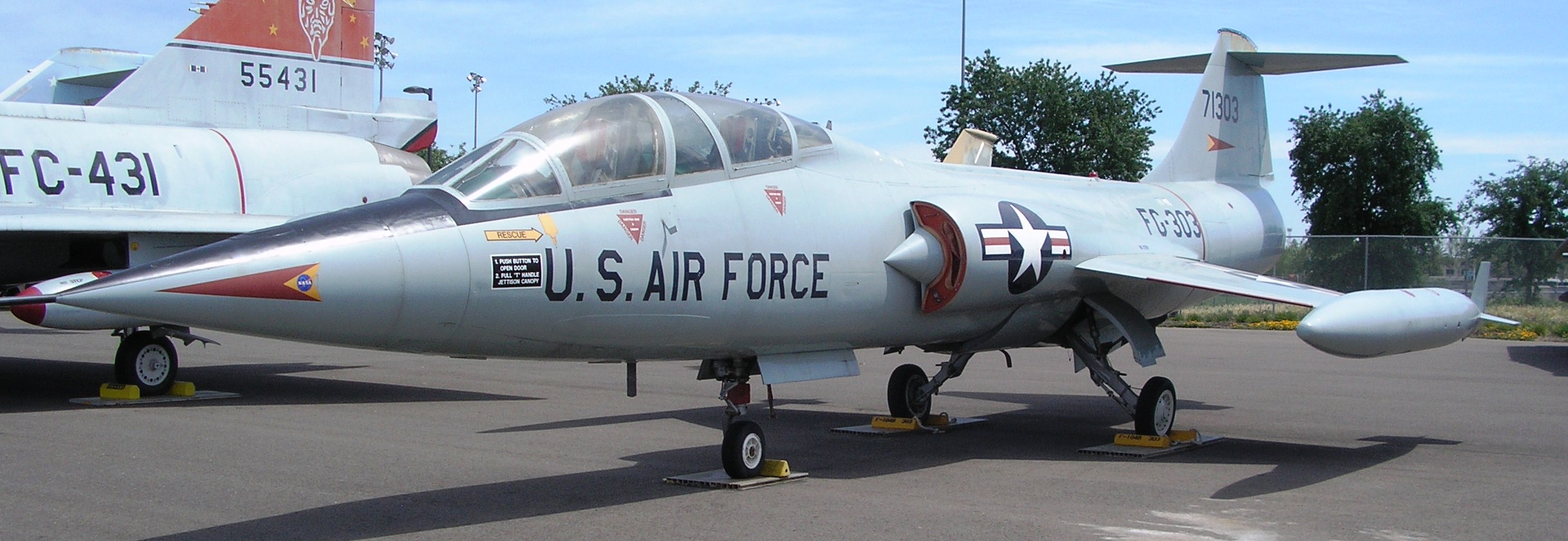
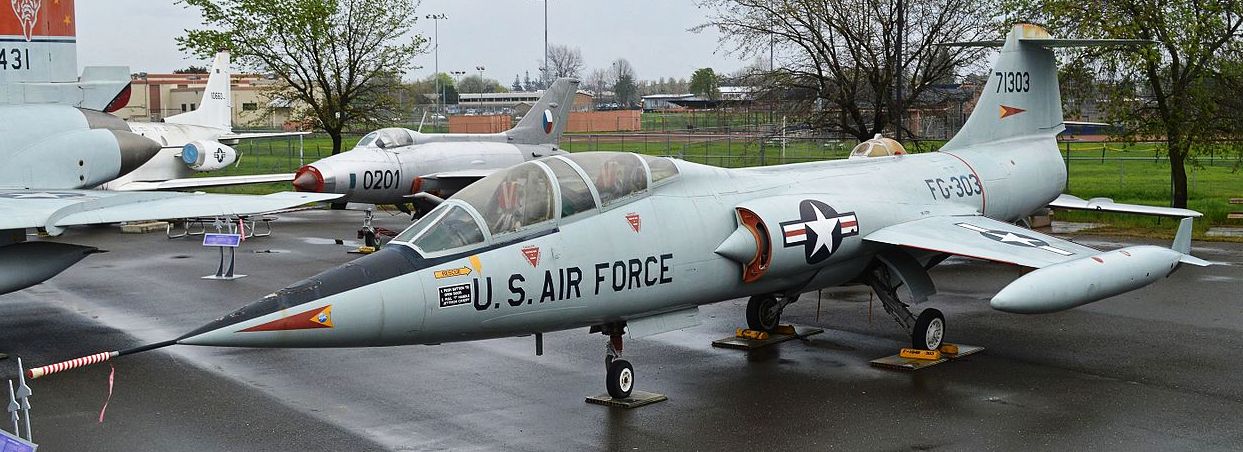
57-1303 (NASA N819NA) – Aerospace Museum of California at the former McClellan AFB in Sacramento, California. Lockheed F-104B (Serial No. 57-1303), once operated by NASA at Edwards AFB as N819NA. It was used to train pilots to fly the X-15 rocket propelled aircraft and the Space Shuttle. It was later used as a chase plane.
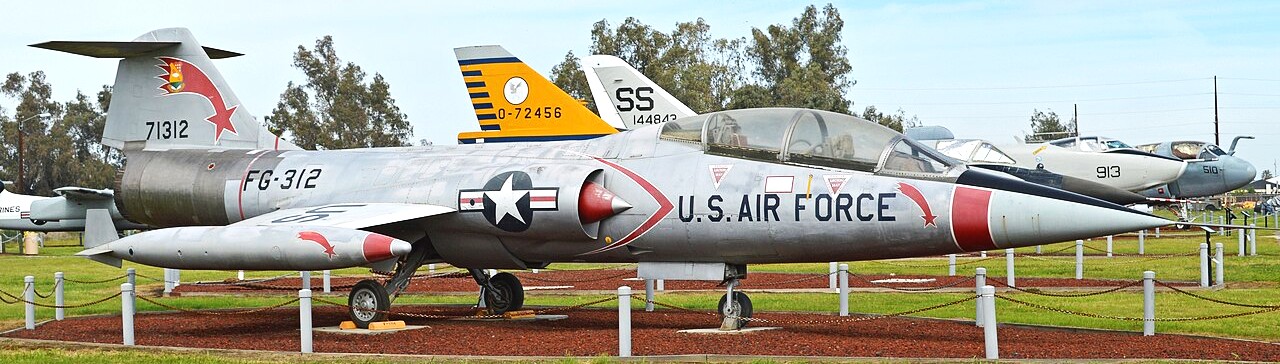
57-1305, (painted as 57-1319), – Kelly Field (formerly Kelly AFB), San Antonio, Texas.
(Alan Wilson Photo)
57-1330 – Castle Air Museum, Atwater, California.
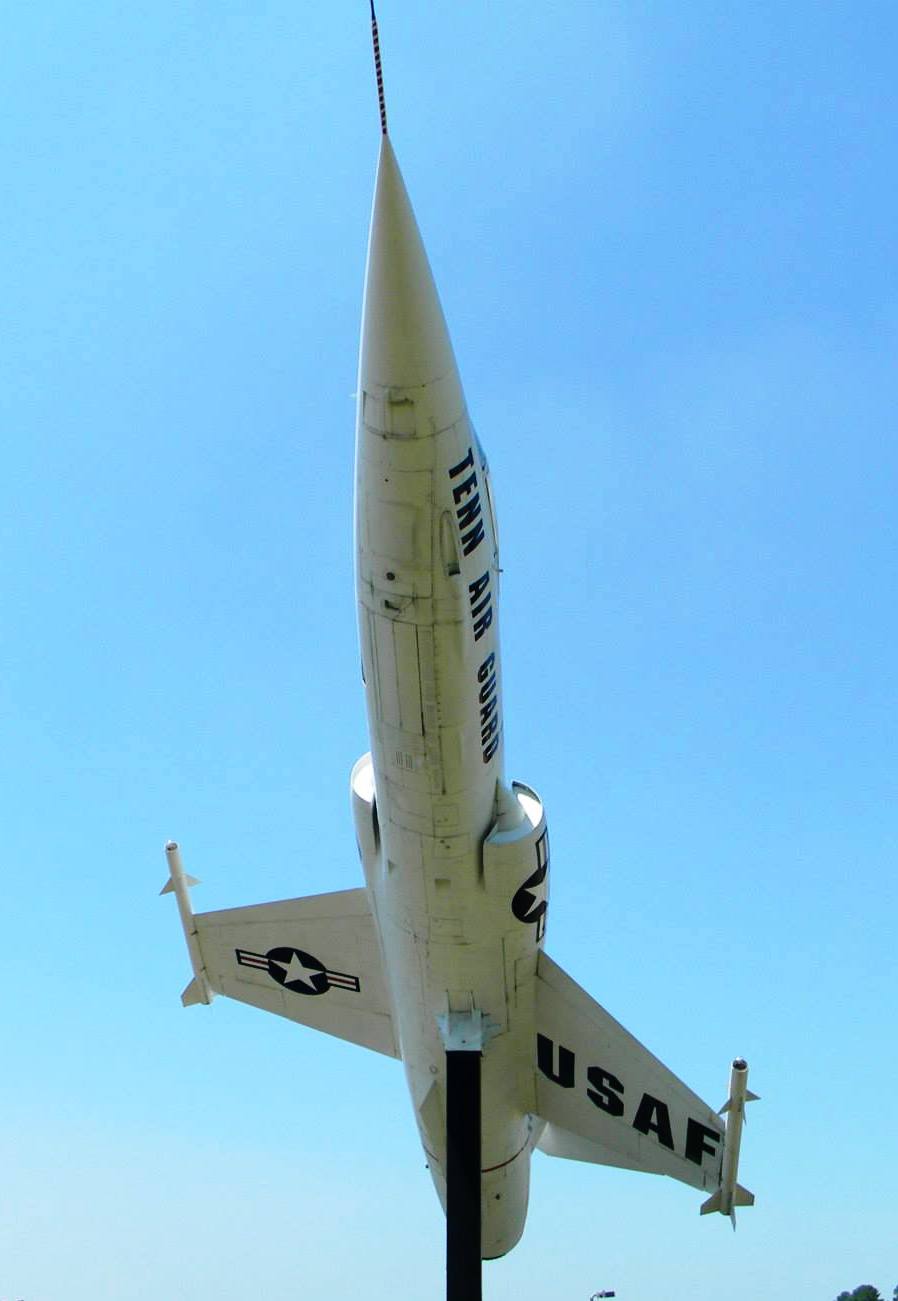
F-104C. A fighter-bomber for USAF Tactical Air Command, the F-104C had improved fire-control radar (AN/ASG-14T-2), one centerline and two pylons under each wing (for a total of five), and the ability to carry one Mk. 28 or Mk. 43 nuclear weapon on the centerline pylon. The F-104C also had in-flight refueling capability. Seventy-seven F-104Cs were built. On 14 December 1959, an F-104C set a world altitude record of 103,389 ft (31,513 m).
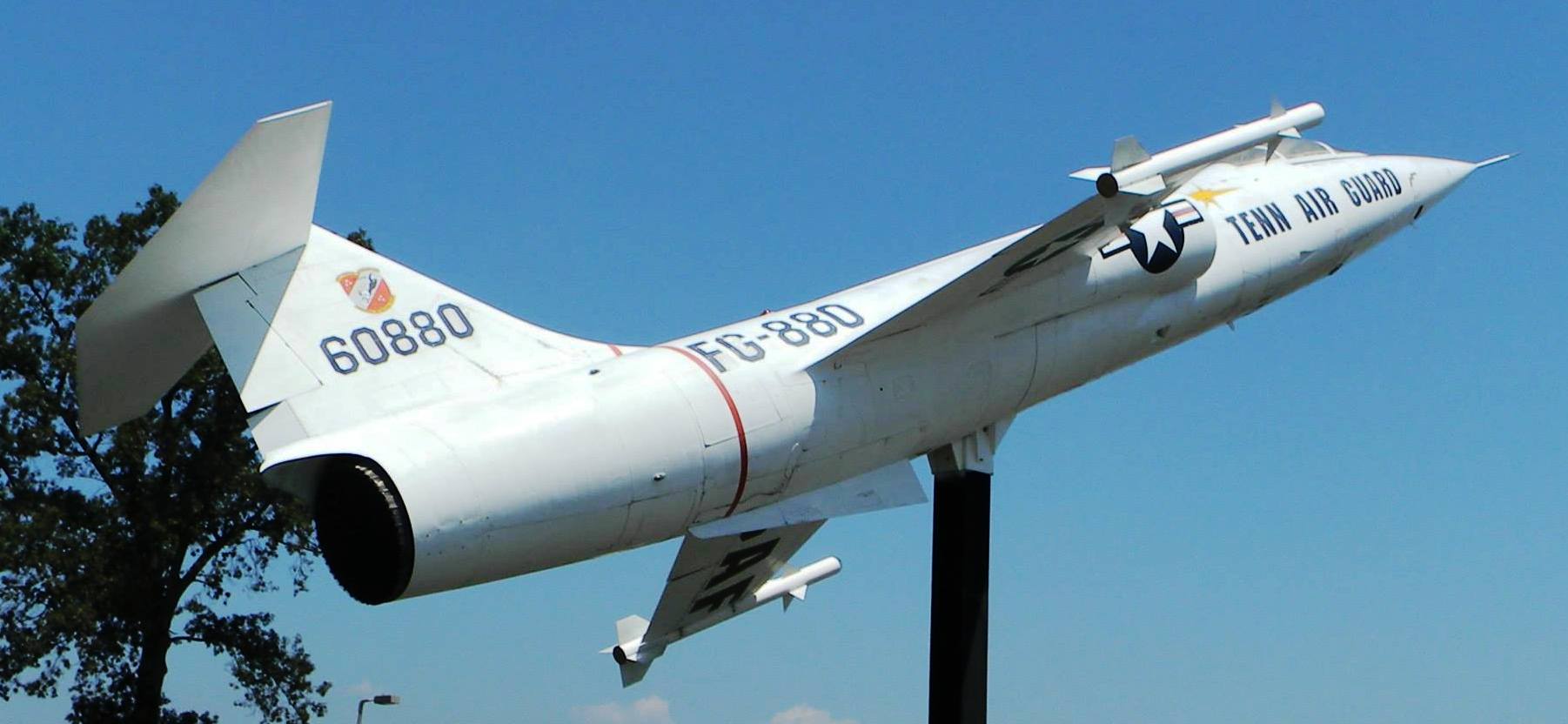
(Dave Gorman Photos)
56-0880 – Louisville, Kentucky.
56-0886 – Holloman AFB, New Mexico.
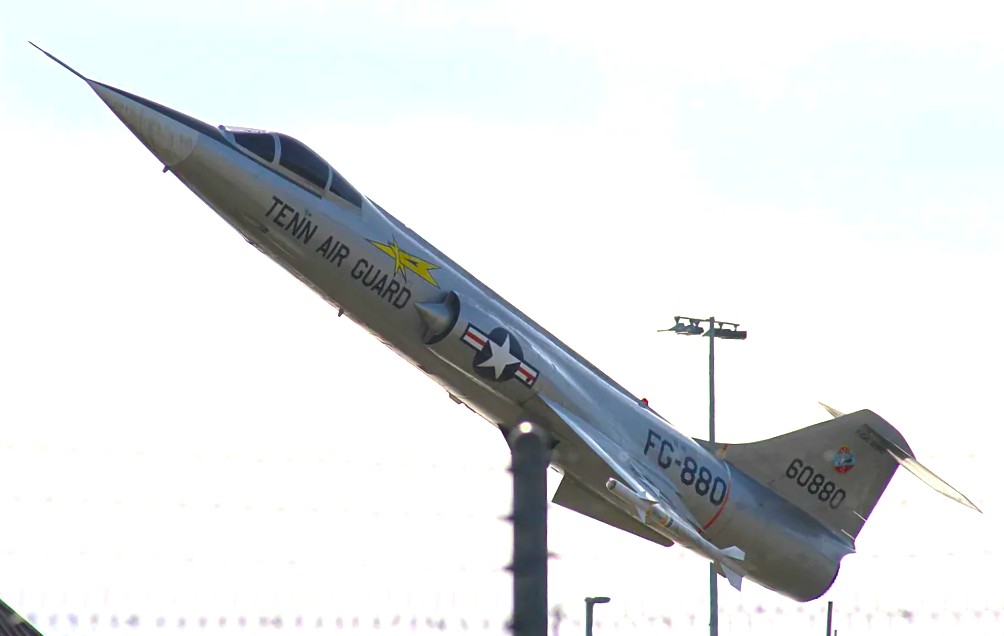
(916-starfighter.de Photo)
56-0890 – Tennessee ANGB – 134th ARG, Maryville, Tennessee. It is fixed to a pedestal and serves as a monument.
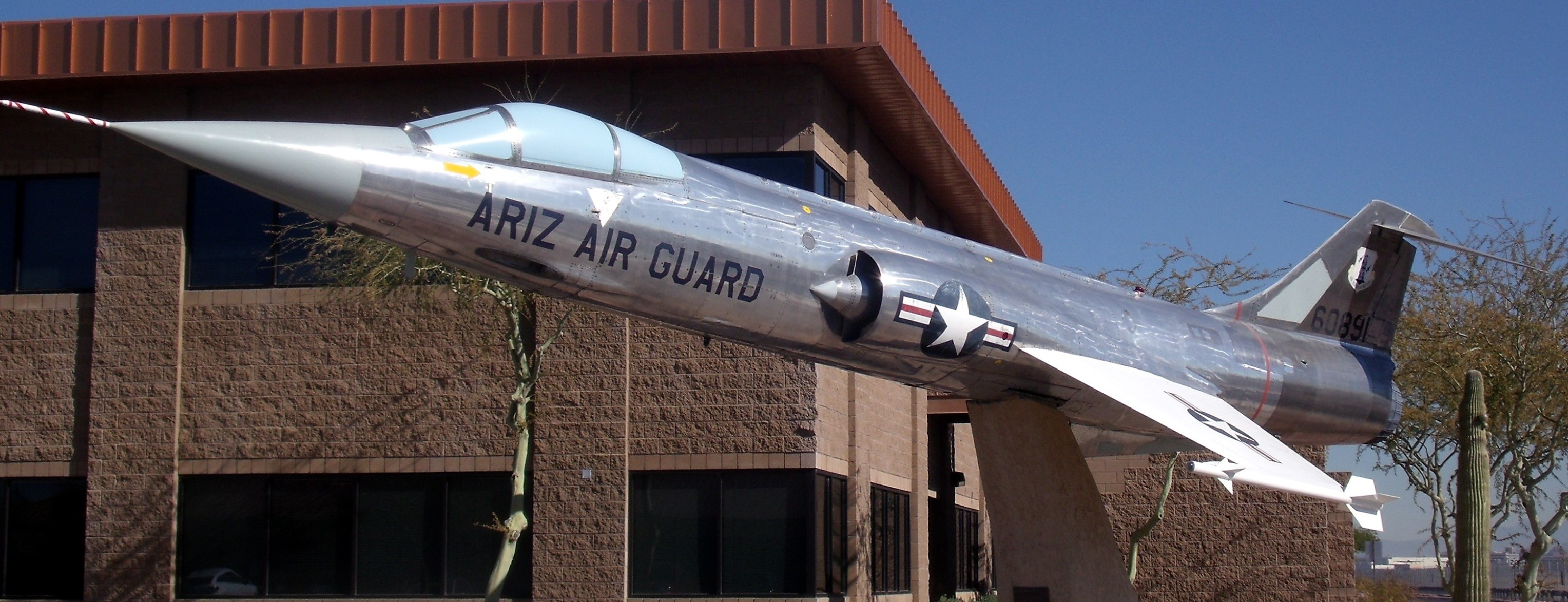
(Skytamer.com, John Shupek Photo)
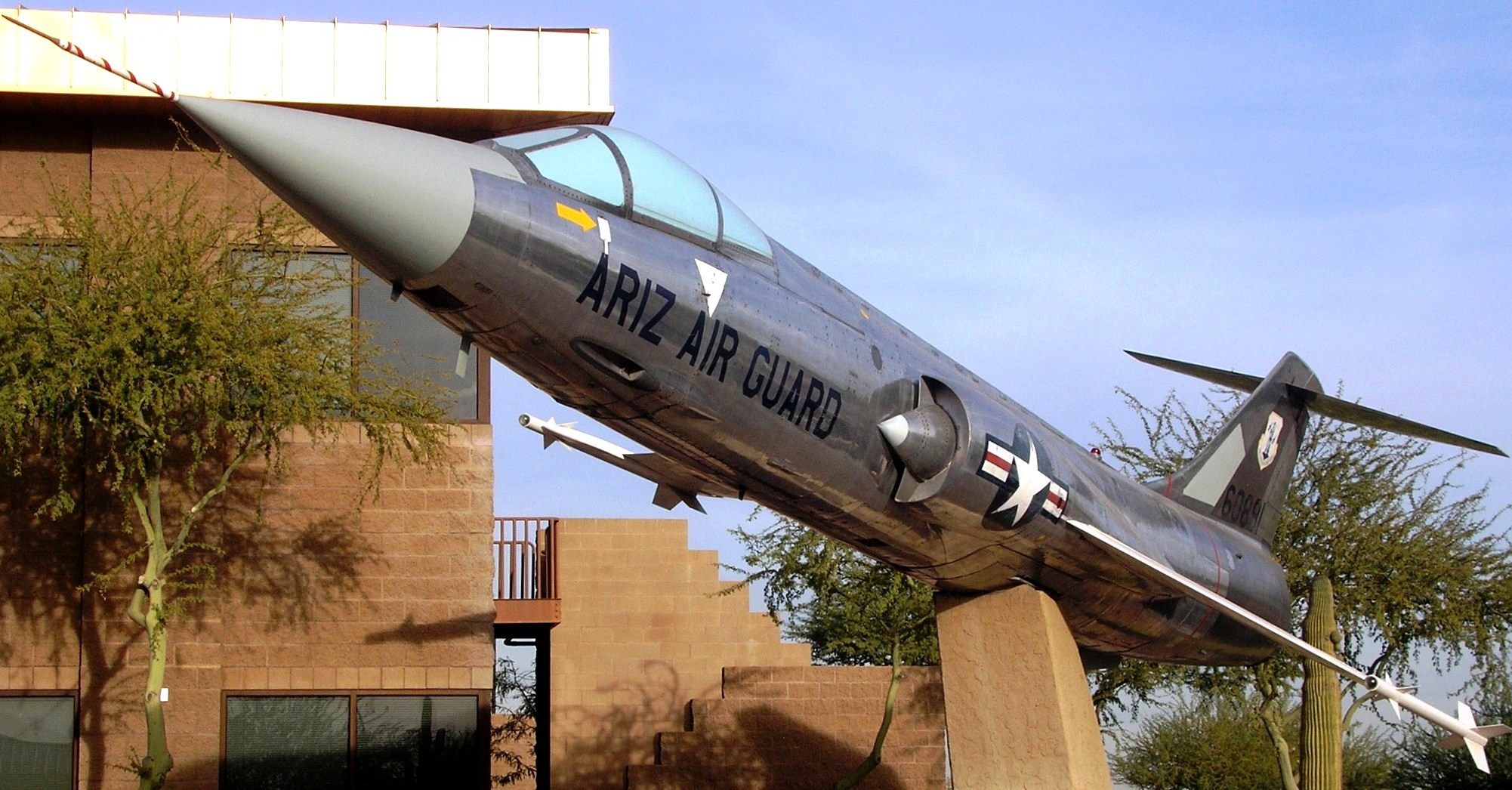
(kb7ywl Photo)
56-0891 – Arizona ANGB – 161st ARG, Phoenix, Arizona. It is fixed to a pedestal and serves as a monument.
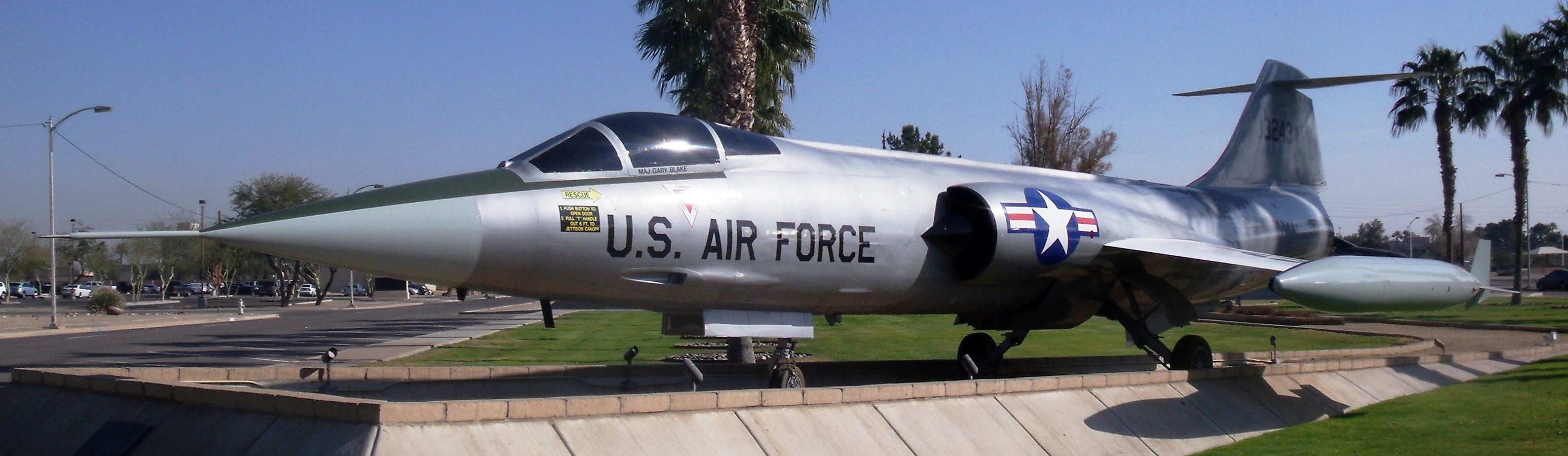
(Skytamer.com, John Shupek Photo)
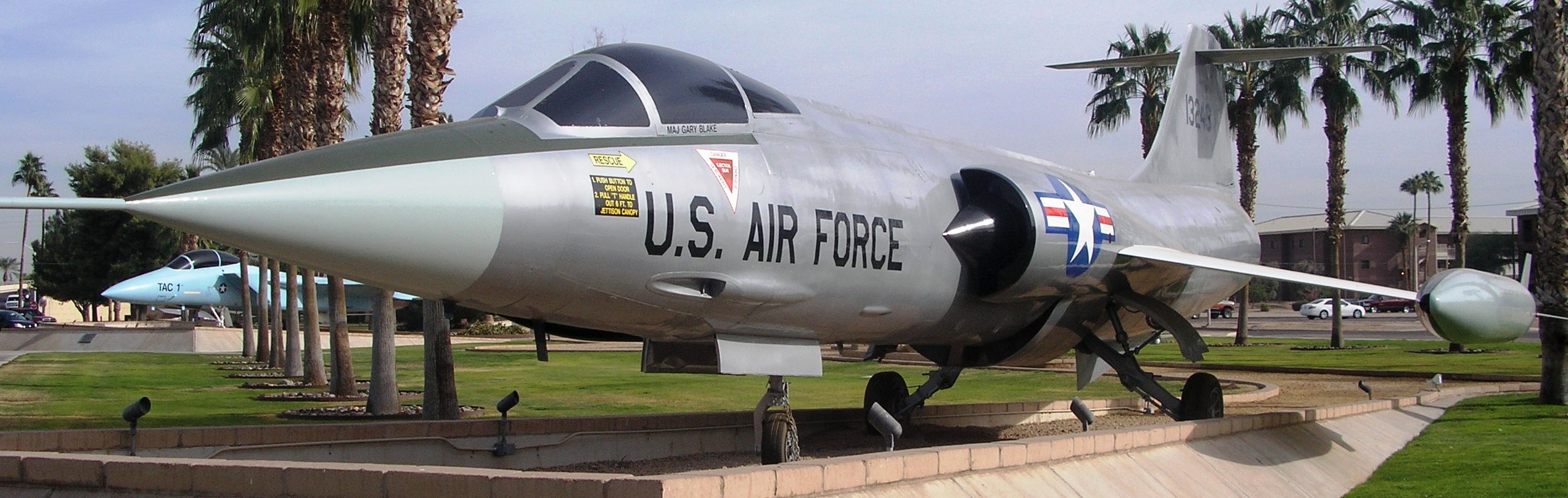
(kb7ywl Photo)
56-0892 – Luke AFB, Phoenix, Arizona.
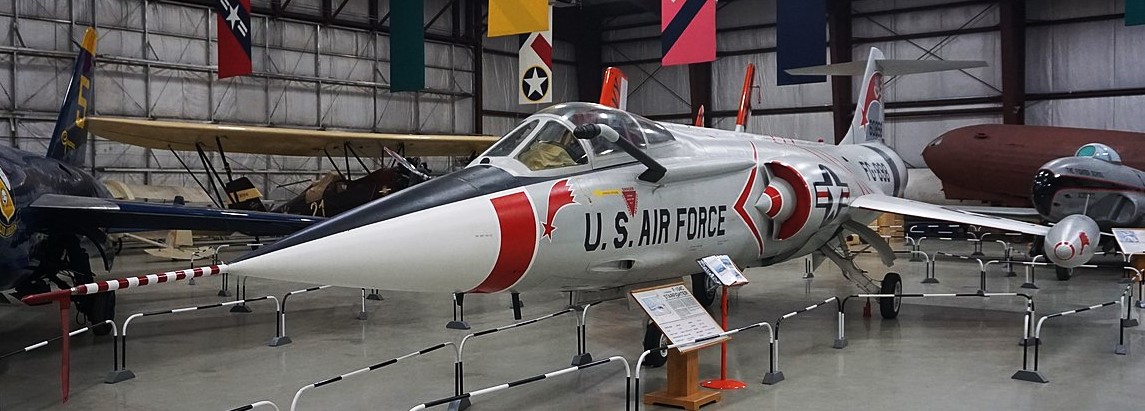
(Michael Barera Photo)
56-0898 – Kalamazoo Air Zoo, Kalamazoo, Michigan.
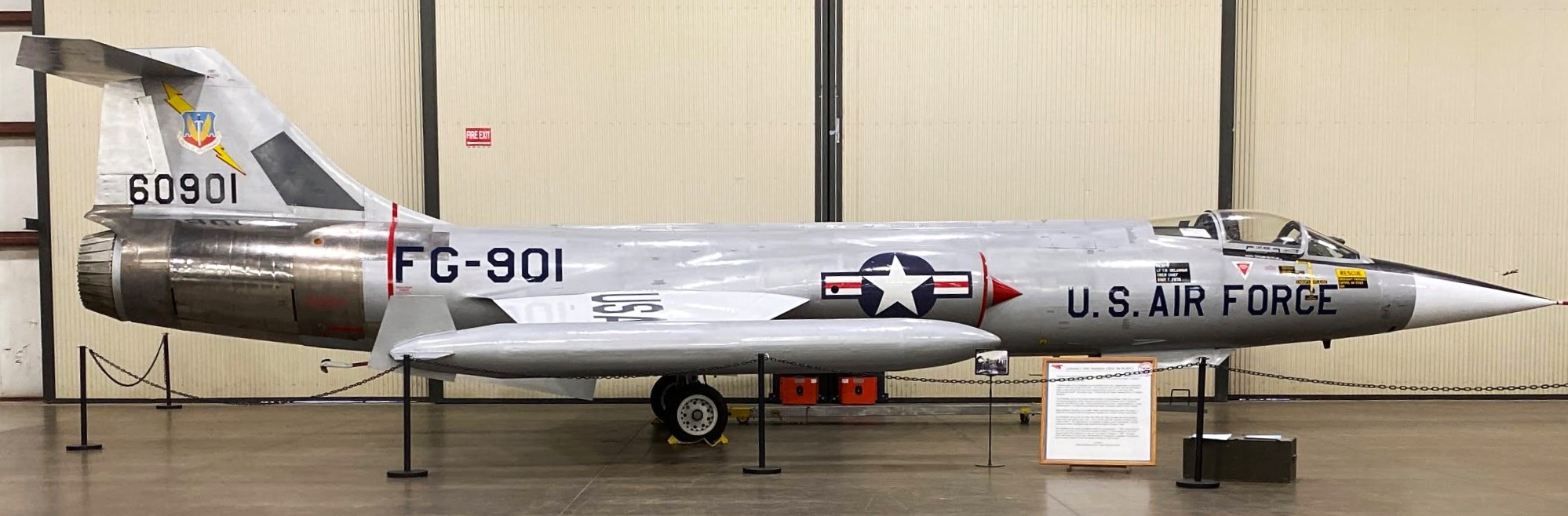
(Jeff Nelson Photo)
56-0901 – New England Air Museum, Bradley International Airport in Windsor Locks, Connecticut.

(Greg Goebel Photo)
56-0910 – Wings Over the Rockies Air and Space Museum (former Lowry AFB) in Denver, Colorado.
(Pinterest Postcard Photo)
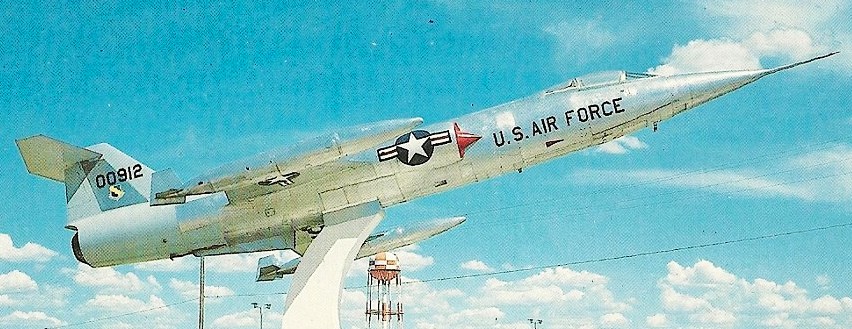
56-0912 – Sheppard AFB, Wichita Falls, Texas. It is fixed to a pedestal and stands as a monument.
(NMUSAF Photo)
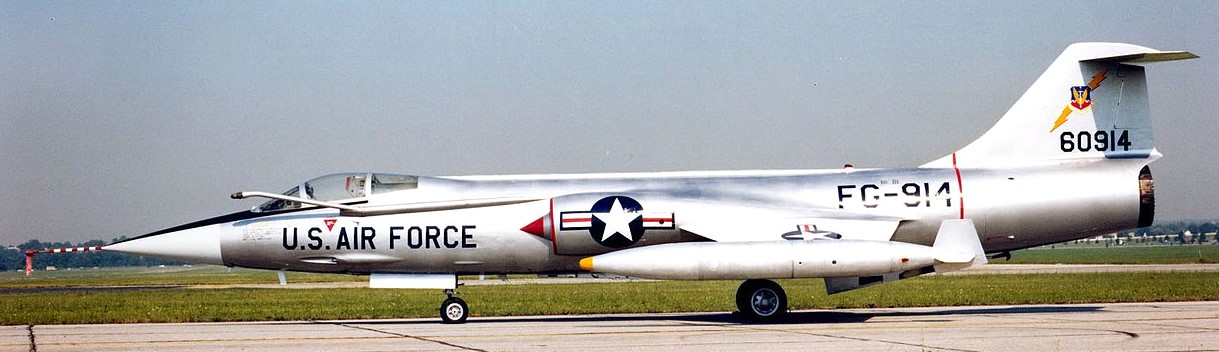
56-0914 – National Museum of the United States Air Force, Wright-Patterson AFB, Dayton, Ohio.
(Jud McCrainie Photo)
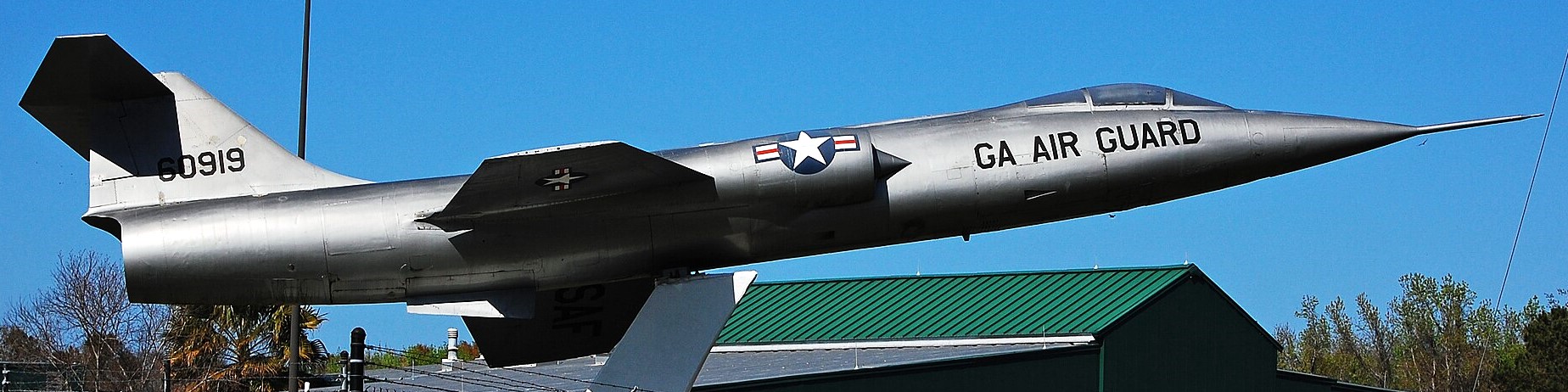
56-0919 – gate guardian at the 165th Air Support Operations Squadron and 224thJoint Communications Support Squadron facility, Georgia Air National Guard, Brunswick, Georgia. It is fixed to a pedestal and stands as a monument.
(DL Andersen Photo)
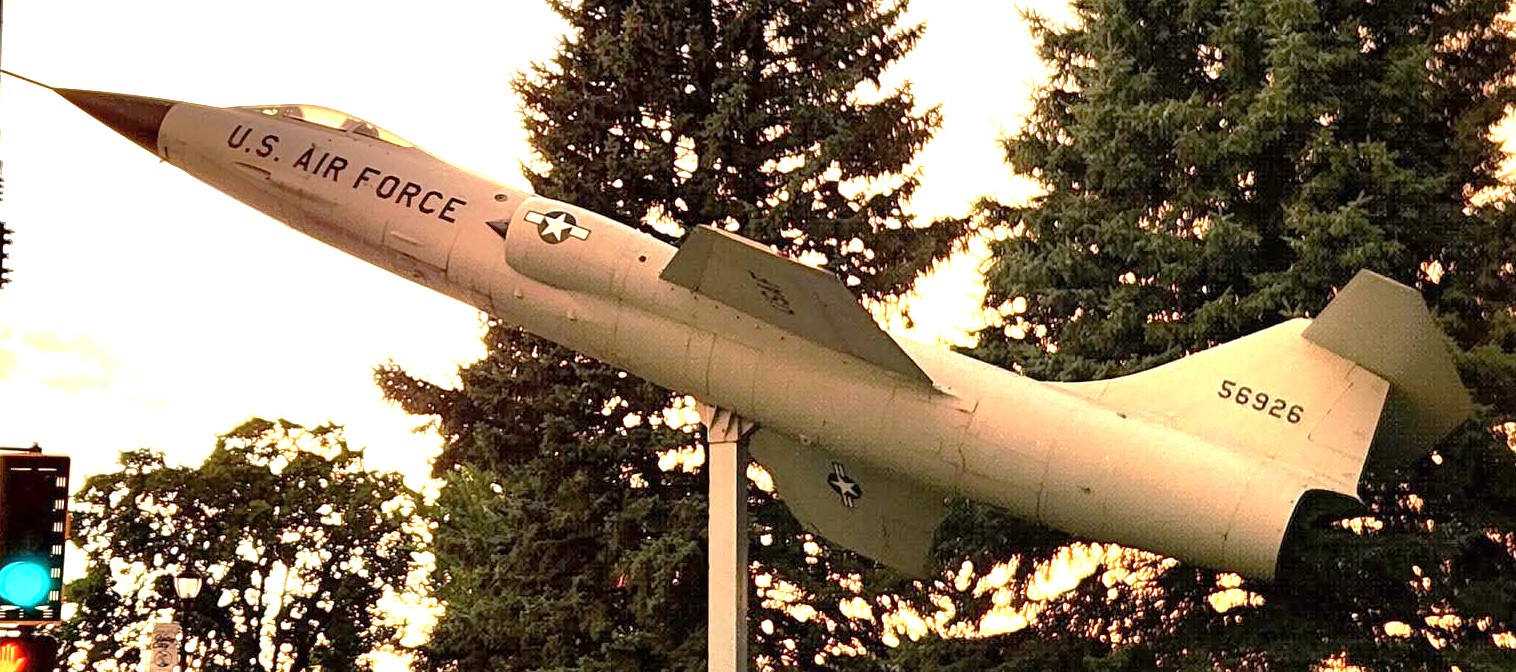
56-0926 – Veterans Memorial Park in Valley City, North Dakota. It is fixed to a pedestal and stands as a monument.
(hummerstation Photo)
(qwesy qwesy Photo)
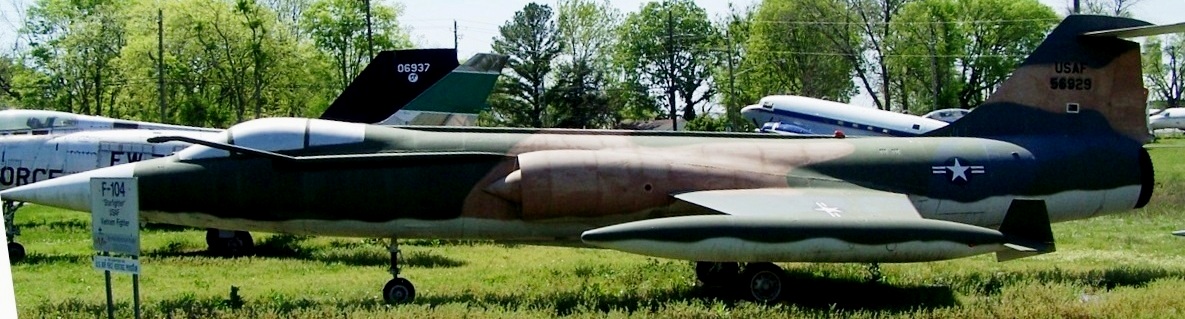
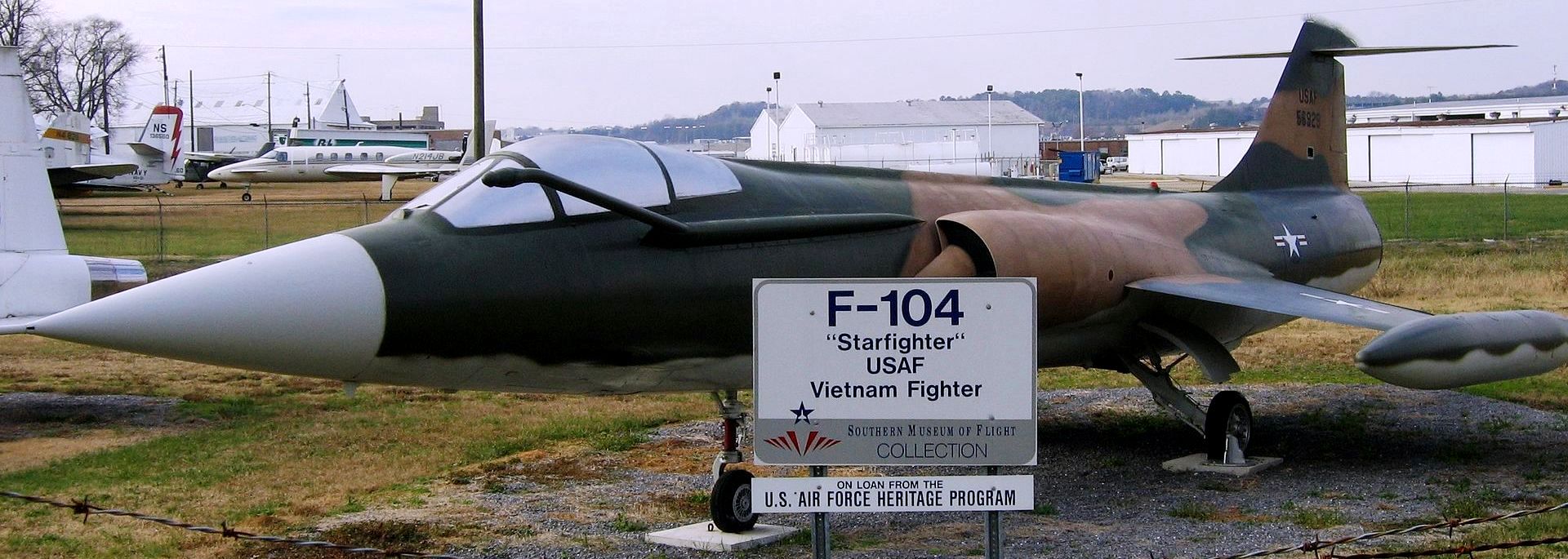
56-0929 – Southern Museum of Flight, Birmingham, Alabama.
(Judson McCrainie Photo)
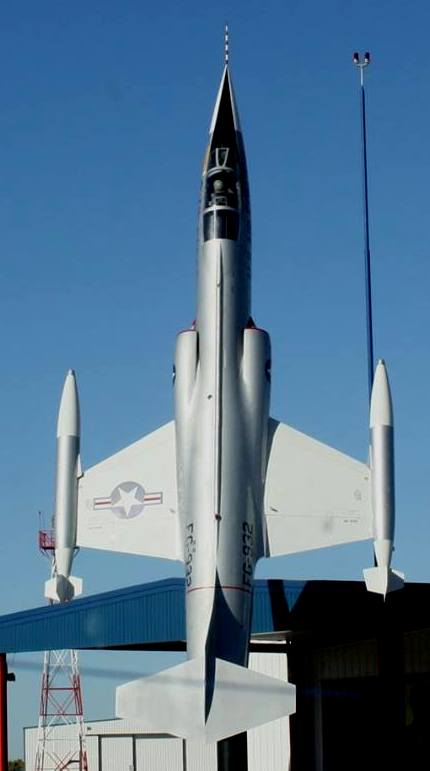
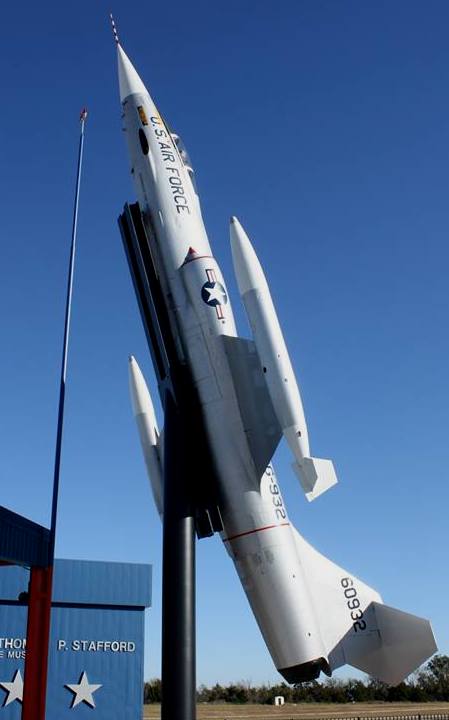
(Phillip Young Photos)
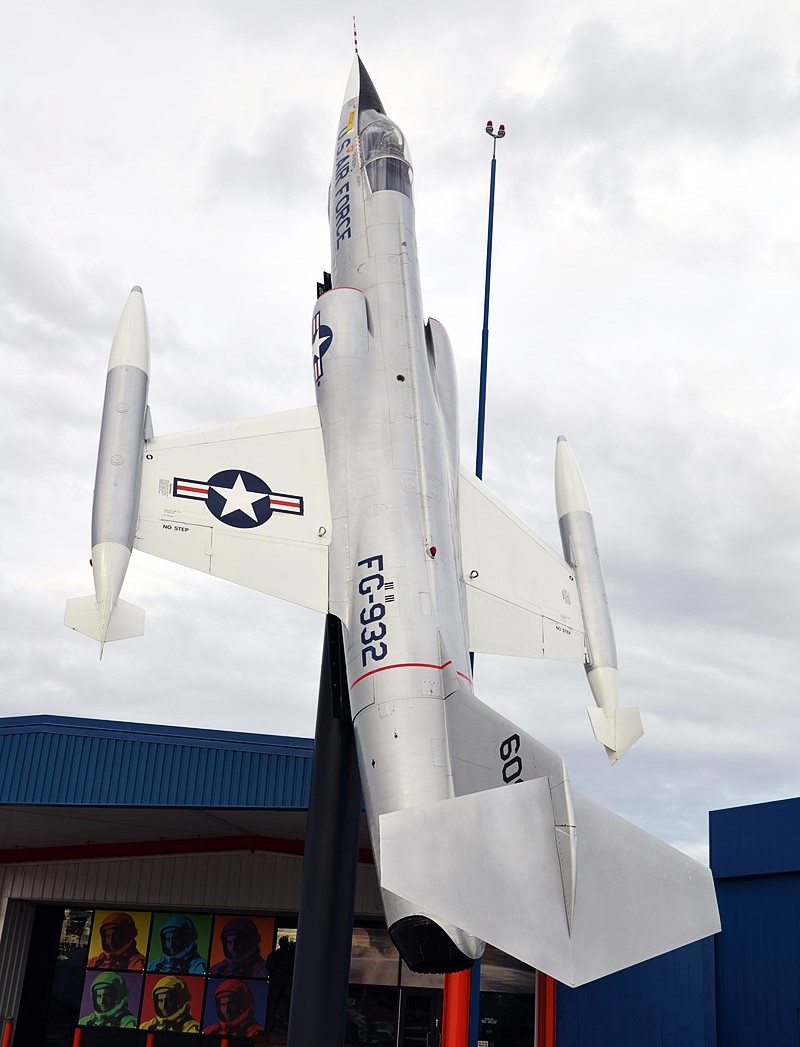
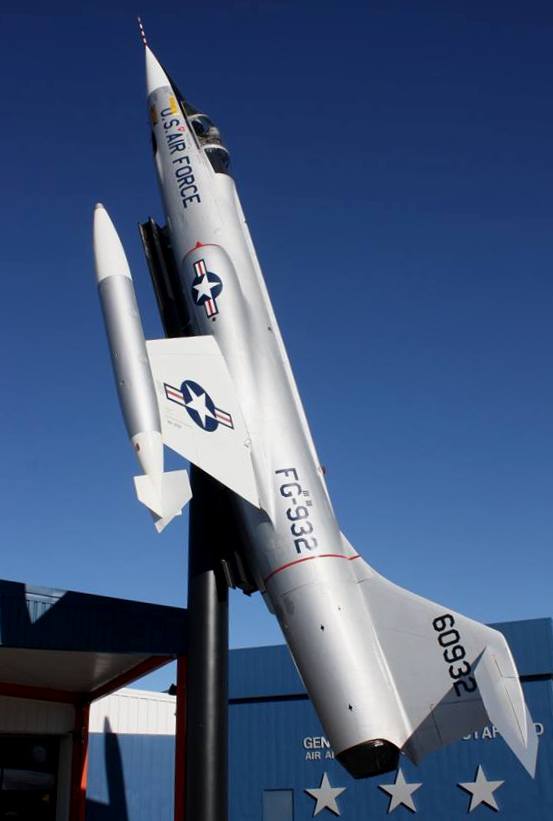
56-0932 – Stafford Air & Space Museum, Weatherford, Oklahoma, painted as 609.
56-0933 – Mid-America Air Museum, Liberal Municipal Airport, Liberal, Kansas.

(Frank Kovalchek Photo)
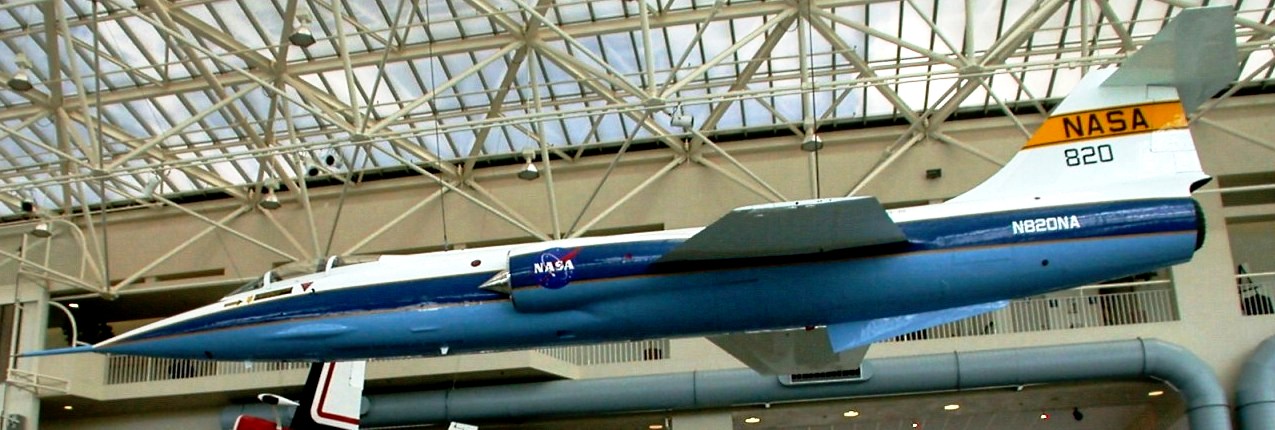
(Greg Goebel Photo)
56-0934 – Museum of Flight in Seattle, Washington. C/N 363-1222, Reg. No. N820NA.
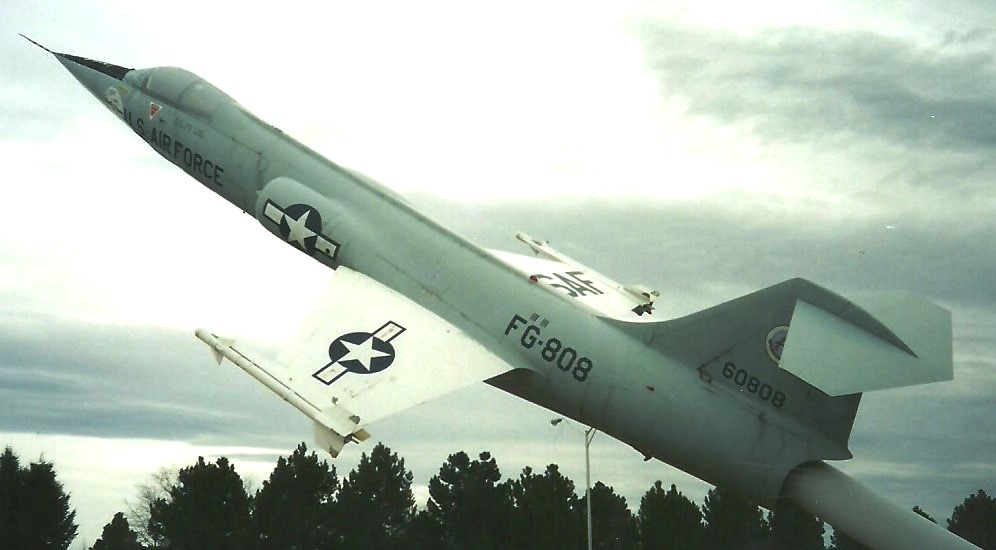
(Author Photos)
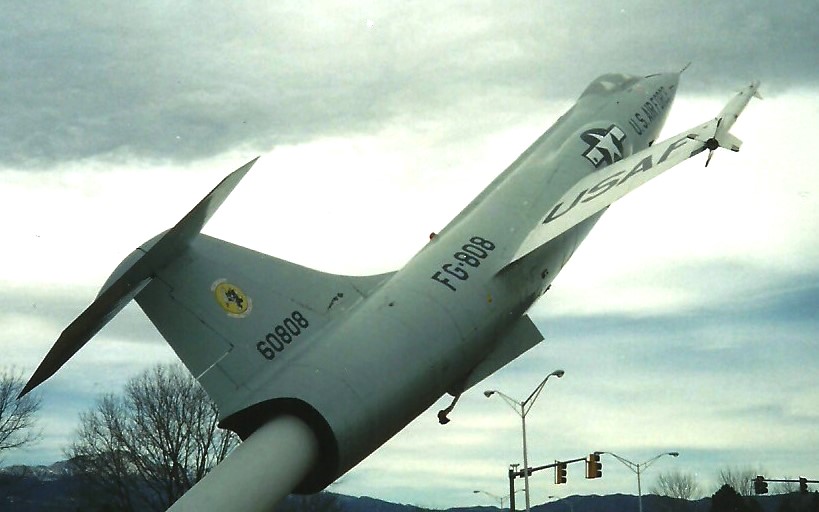
56-0936 (painted as F-104A 56-0808) – Peterson Air and Space Museum, Peterson AFB, Colorado. It is fixed to a pedestal and stands as a monument.
(City of Biloxi Photo)
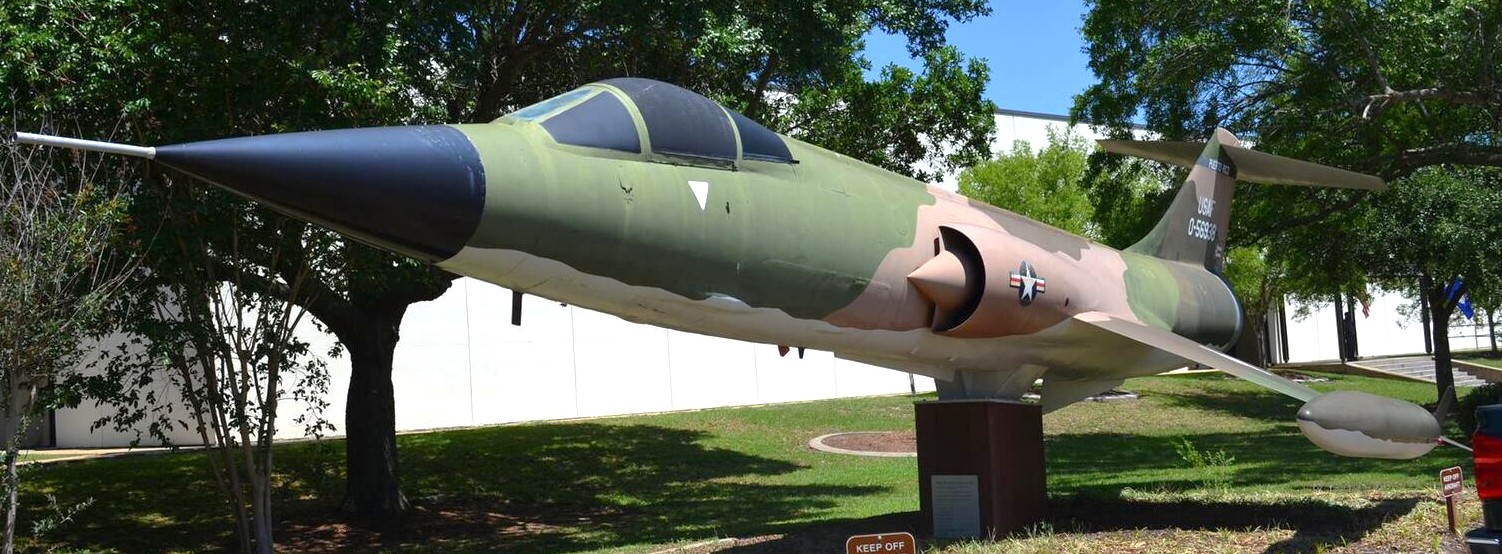
56-0938 – Keesler AFB, Biloxi, Mississippi. It is fixed to a pedestal and stands as a monument.
(MChew Photo)
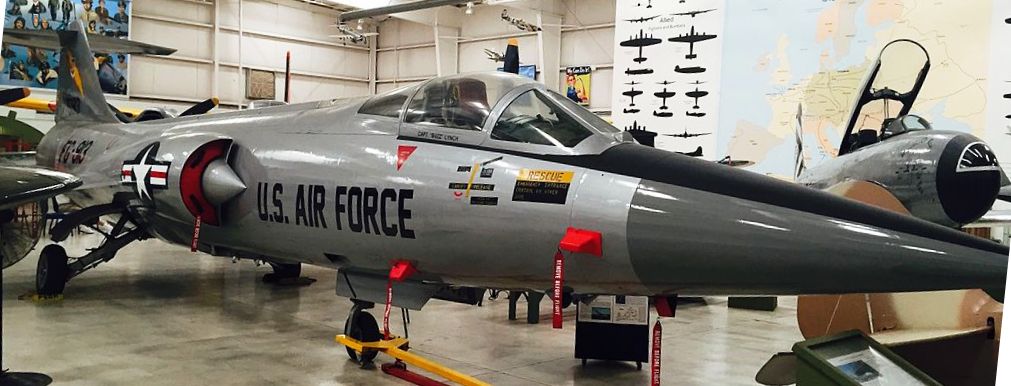
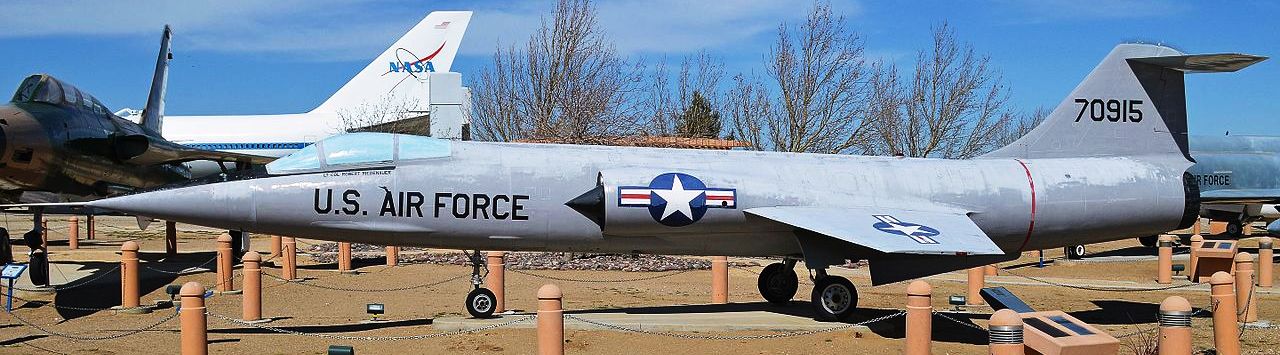
57-0913 – Palm Springs Air Museum, California.
(Alan Wilson Photos)
(aeroprints Photo)
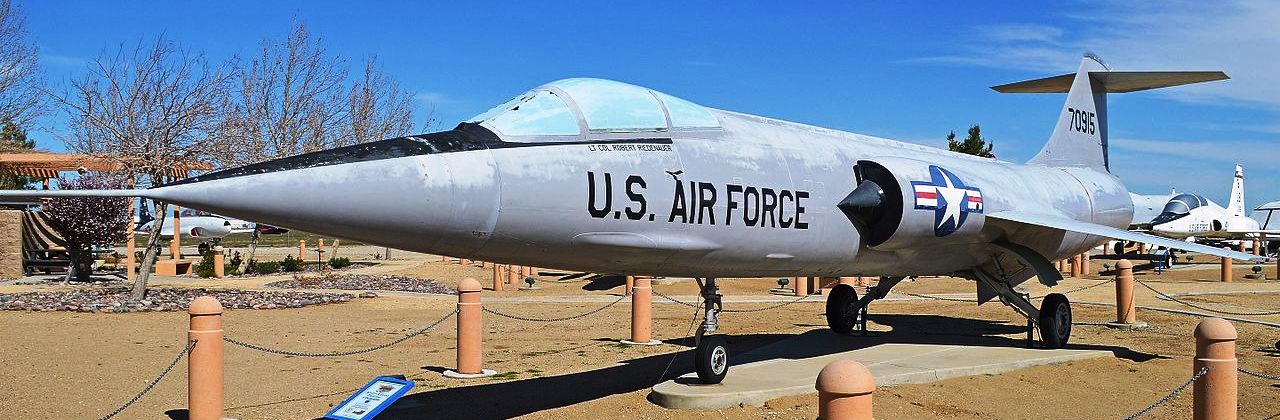
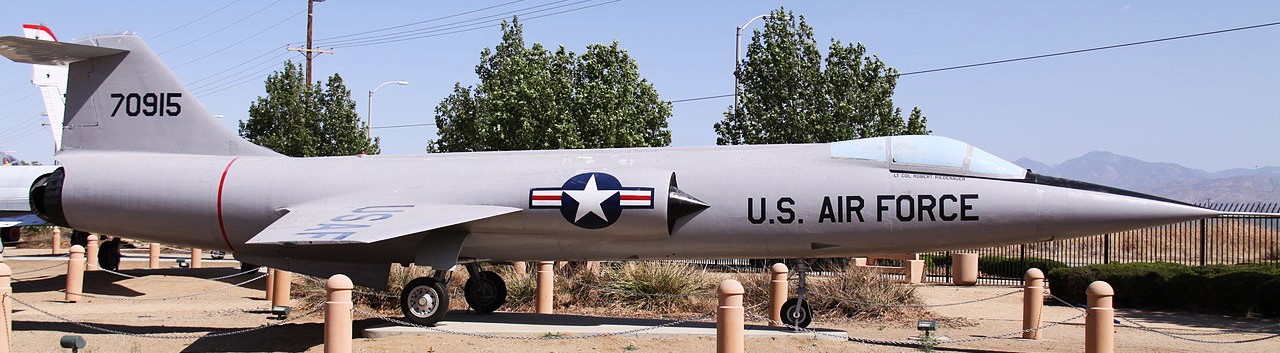
57-0915 – Joe Davies Heritage Airpark at Palmdale Plant 42, Palmdale, California.
(Author Photo)
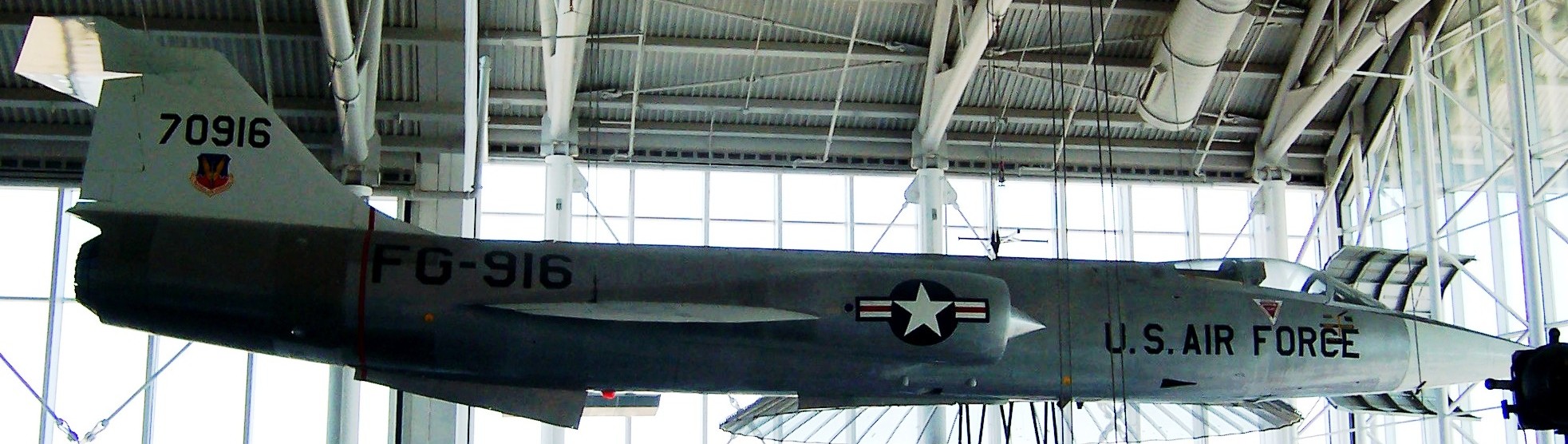
57-0916 – Virginia Air & Space Center near Langley AFB in Hampton, Virginia.
(USAF Photo by Airman 1st Class Amy Rangel, 169th Fighter Wing)
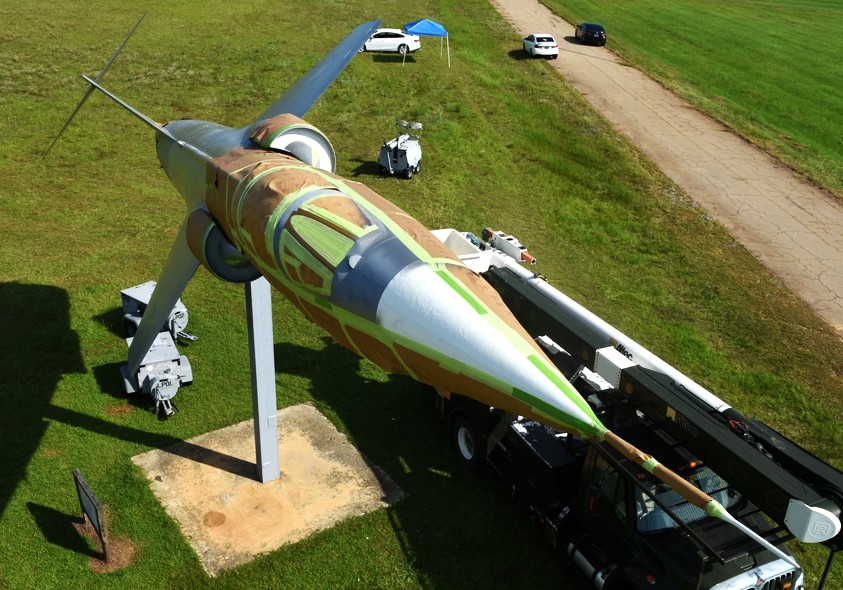
57-0920 – Memorial Park, McEntire ANGB, Columbia, South Carolina. It is fixed to a pedestal and stands as a monument.

(Magic Aviation Photo)
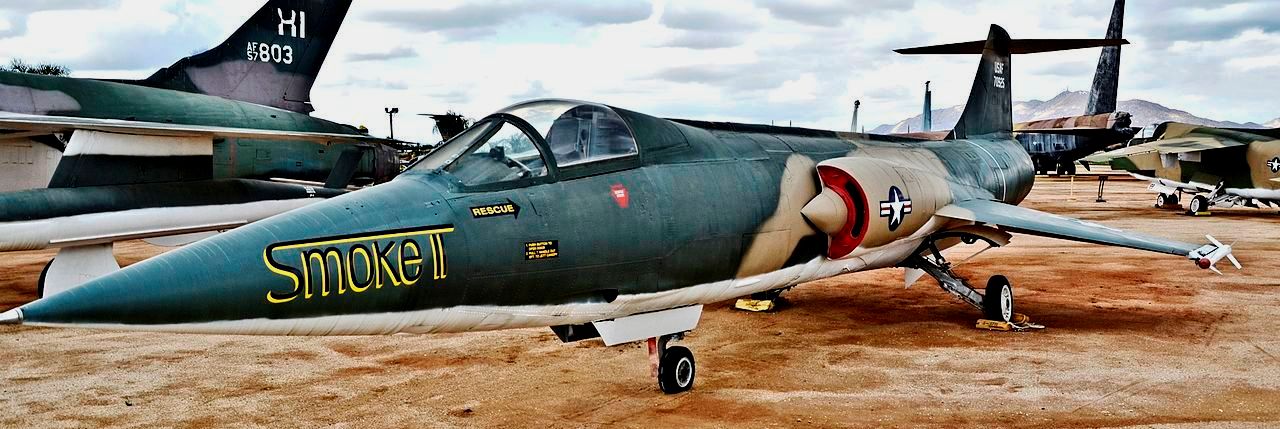
(Tomás Del Coro Photo)
57-0925 – March Field Air Museum, California. Mock-up, painted as F-104C (Serial No. 57-0925), “Smoke II”.
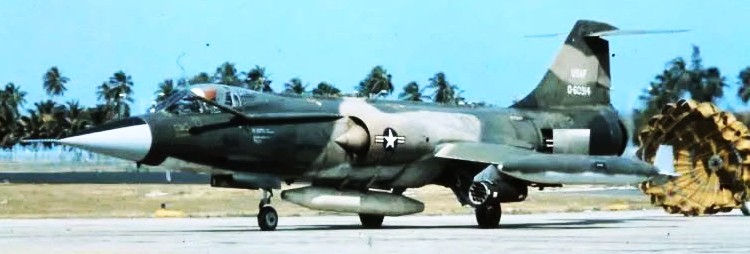
(Puerto Rico ANG Photo)
F-104C of the Puerto Rico ANG (PRANG) is seen after returning from a bombing/gunnery range training exercise. The 198thTFS 156th FG operated the F-104C/D from 1967-1975 at San Juan IAP.
57-0929 – Muñiz Air National Guard Base at Luis Muñoz Marín International Airport, San Juan, Puerto Rico.
F-104D. The F-104D designation was a dual-control trainer version of the F-104C. Twenty-one examples were built.


(Alan Wilson Photos)
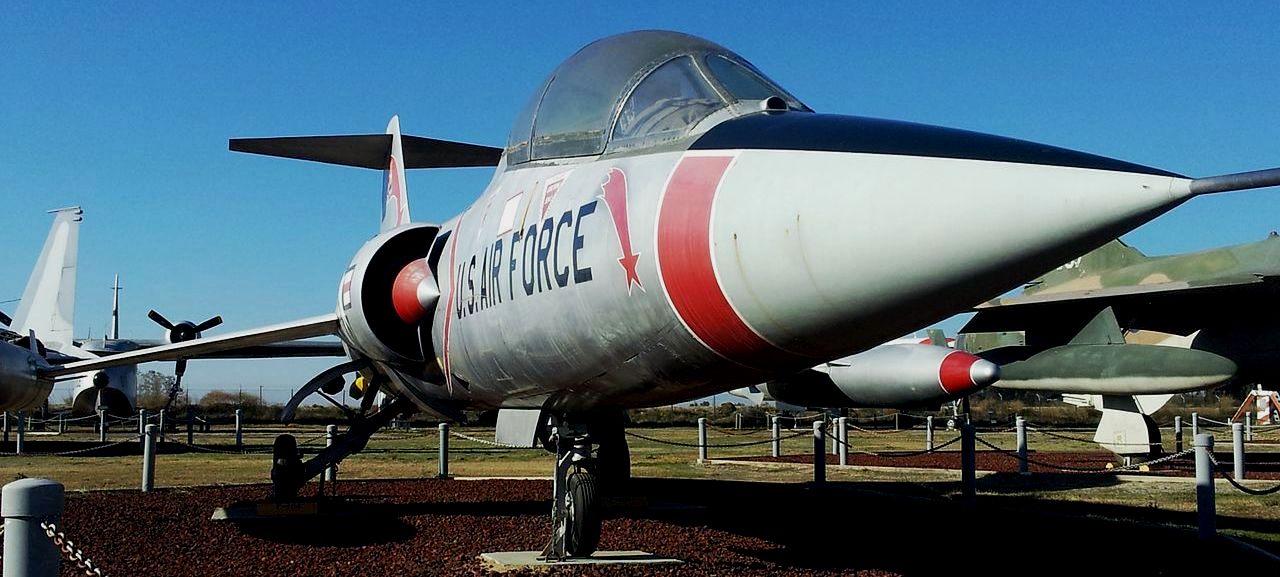
(Eric Friedebach Photo)
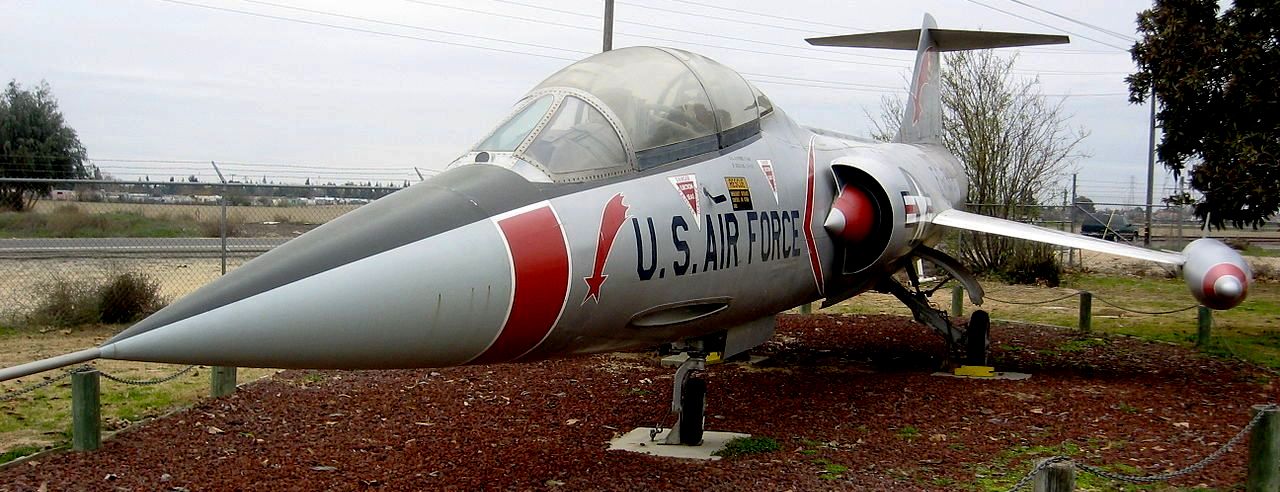
(Nehrams2020 Photo)
57-1314 (painted as F-104B 57-1312) – Castle Air Museum at the former Castle AFB in Atwater, California.
(Alan Wilson Photo)
57-1320 -Jimmy Doolittle Air & Space Museum (Travis Air Museum), Fairfield, California.
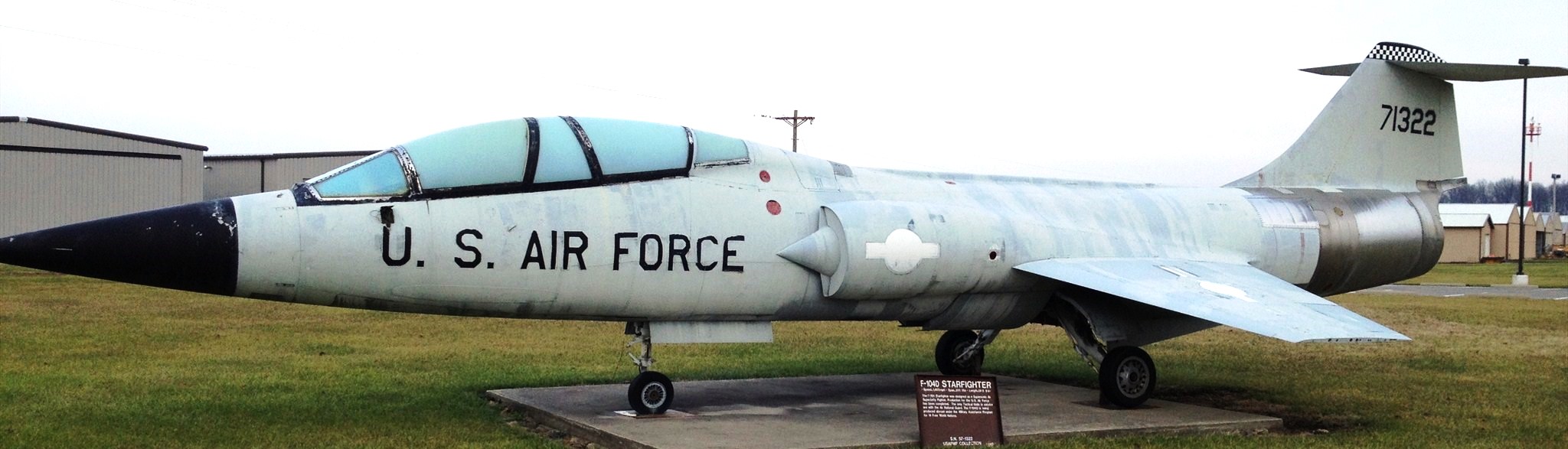
(Team gEco Friendly Photo)
57-1322 – Wings of Freedom Museum, Huntington Municipal Airport, Indiana.
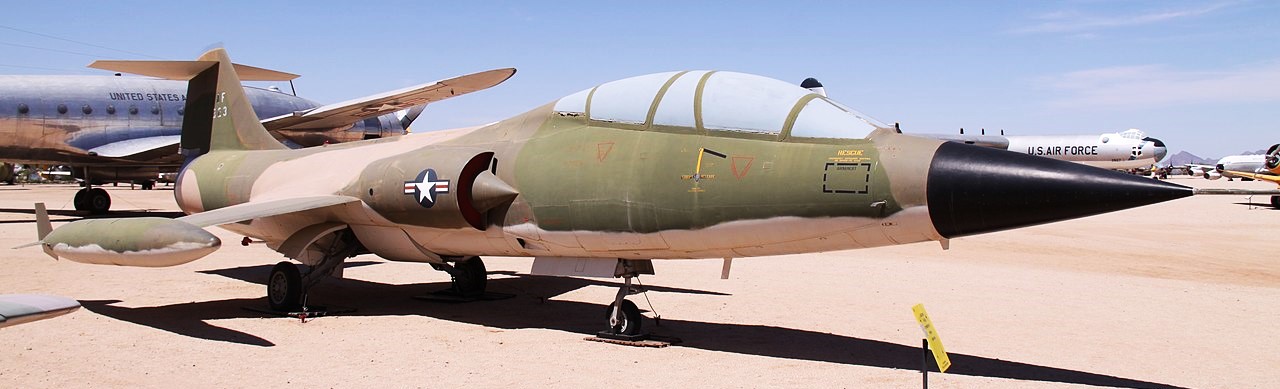
(aeroprints Photo)
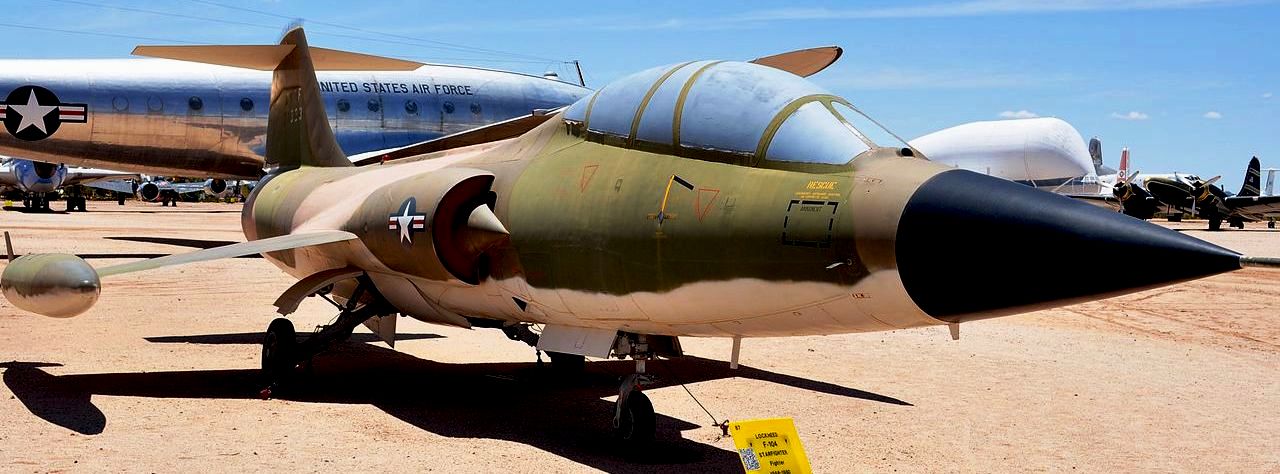
(Eric Salard Photo)
57-1323 – Pima Air and Space Museum adjacent to Davis-Monthan AFB in Tucson, Arizona.
(C. Mark Sublette Photo)
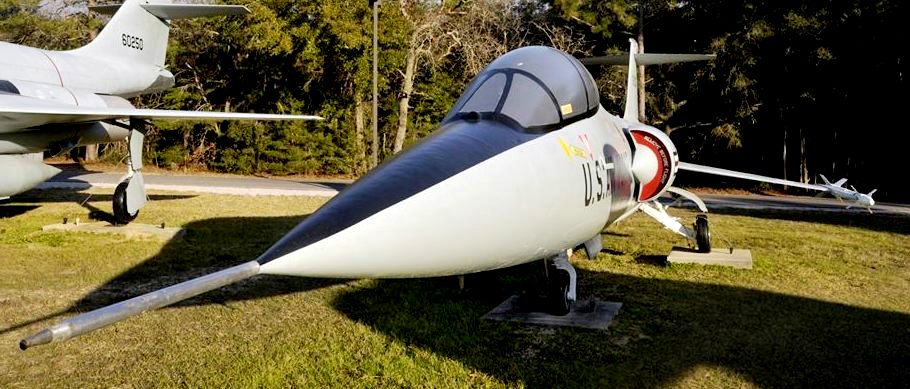
57-1331 – Air Force Armament Museum, at Eglin AFB, Florida.
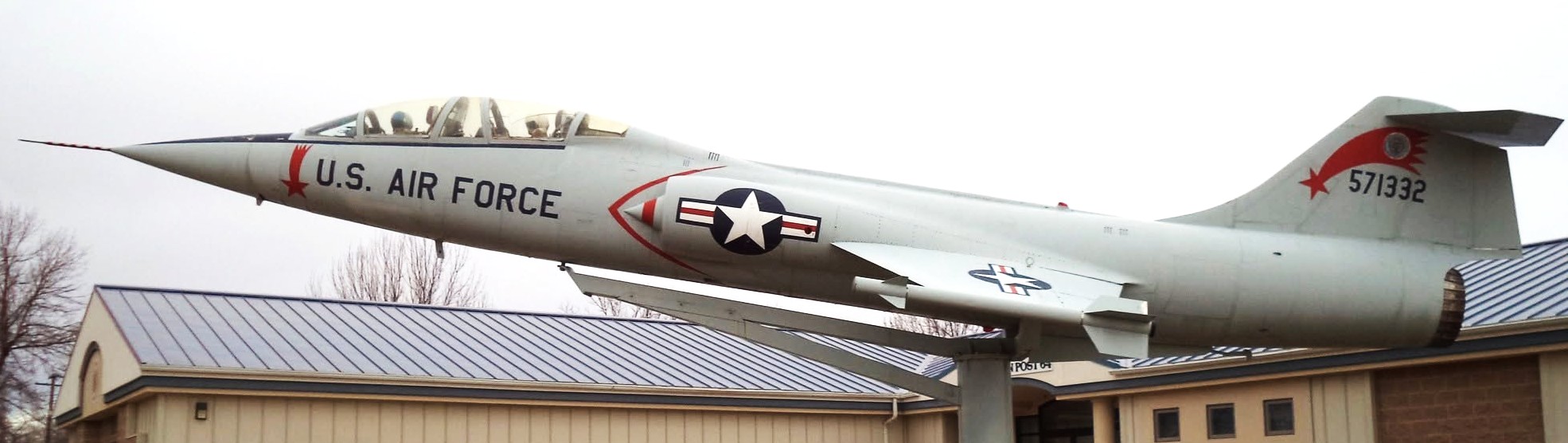
(Benjamin Donnelly Photo)
57-1332 – American Legion Post 64 in Dutton, Montana.
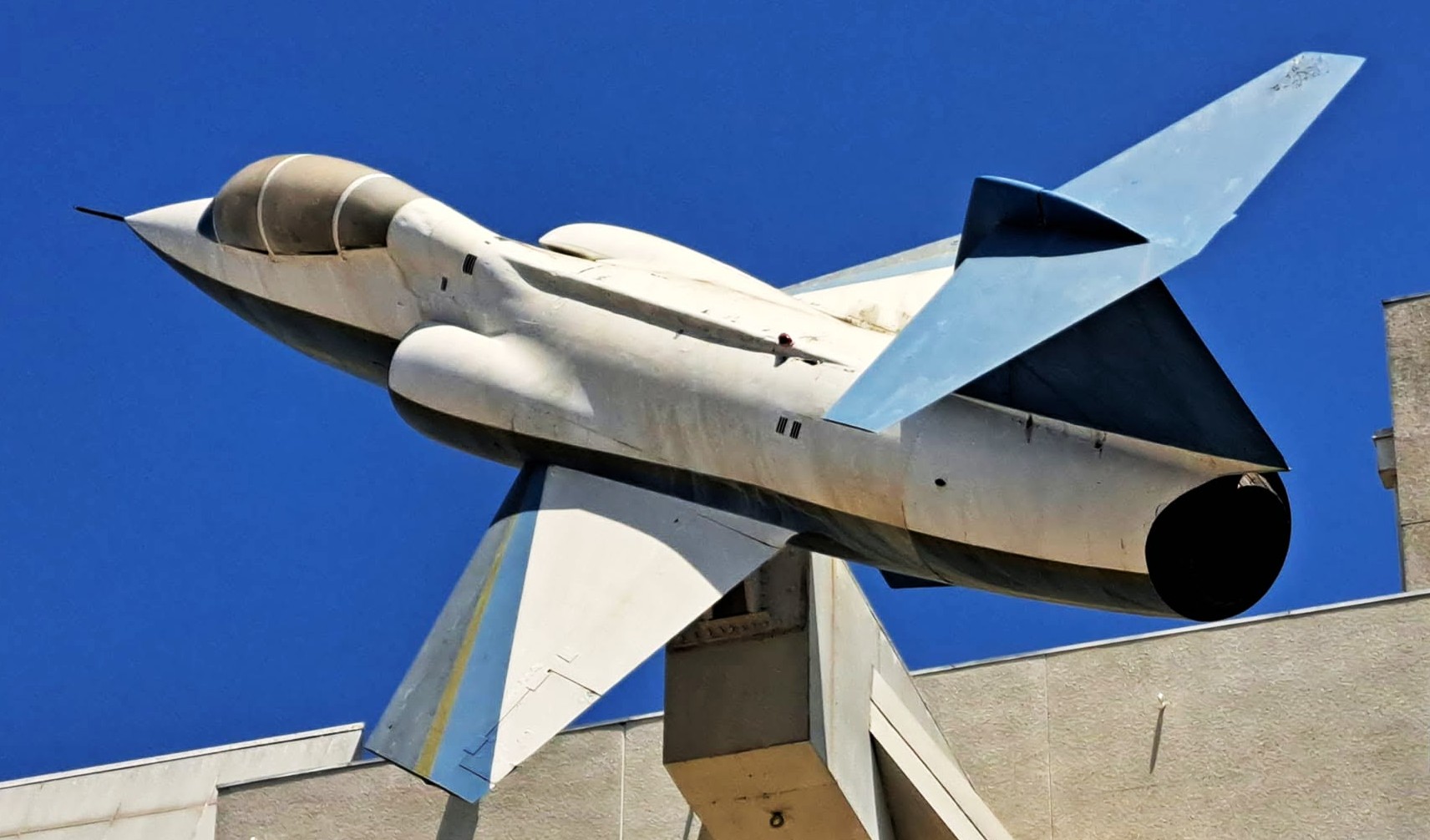
(Steve Mitchell Photo)
57-1333 – California Science Center, Los Angeles, California.
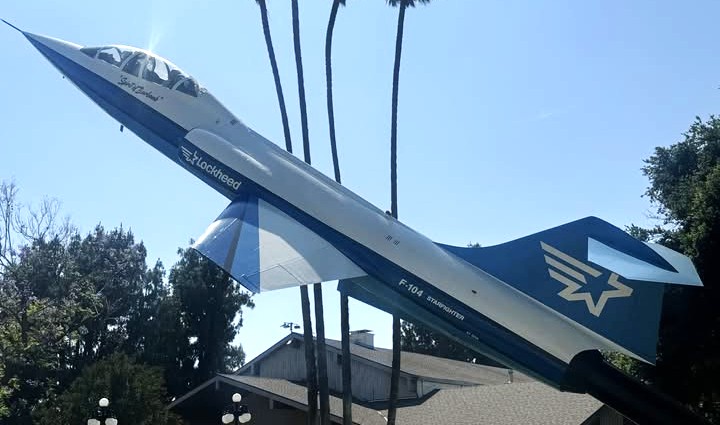
(City of Burbank Photo)
57-1334 – George Izay Park, Burbank, California.
F-104DJ. This aircraft was a dual-control trainer version of the F-104J for the Japanese Air Self-Defense Force (JASDF). Lockheed built 20 F-104DJs, assembling the first at their Burbank facility, and shipping the remaining 19 to Japan for assembly by Mitsubishi and Kawasaki. After their retirement in Japan, the United States delivered some these F-104J/DJs to the Taiwanese Air Force.
- F-104F. The F-104F designation was given to a dual-control trainer based on the F-104D, but using the upgraded engine of the F-104G. It had no radar, and was not combat-capable. The F-104F was produced as an interim trainer for the German Air Force. All 30 F-104F aircraft were retired by 1972.
F-104G. The F-104G was the most-produced version of the F-104 family, a multi-role fighter-bomber with a total of 1,127 aircraft built. They were manufactured by Lockheed, as well as under license by Canadair and a consortium of European companies that included Messerschmitt/MBB, Fiat, Fokker, and SABCA. The type featured a strengthened fuselage, wing, and empennage structures; the larger vertical fin with fully powered rudder as used on the two-seat versions; fully powered brakes, a new anti-skid system, and larger tires; revised flaps for improved combat maneuvering; and a larger braking chute. Upgraded avionics included the Autonetics NASARR F15A-41B radar with air-to-air, ground-mapping, contour-mapping, and terrain-avoidance modes, as well as the Litton LN-3 inertial navigation system (the first on a production fighter).
D-8331 (Royal Netherlands Air Force) – Science Museum Oklahoma, Oklahoma City, Oklahoma.
FX-81 (Belgian Air Force, painted as Royal Netherlands Air Force”D-8090″) – Inde Motorsports Ranch, Willcox, Arizona.
X-82 (Belgian Air Force) – Planes of Fame Air Museum, Chino, California.
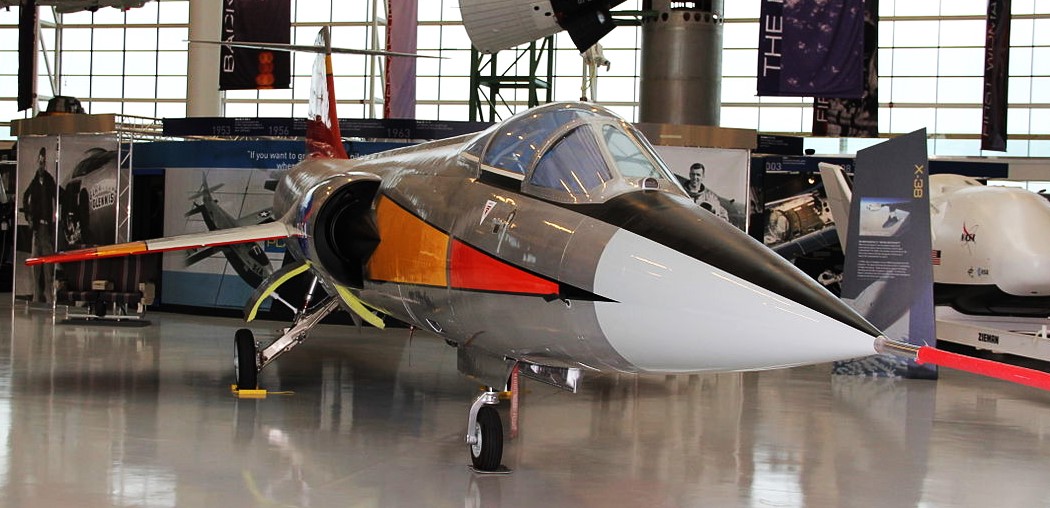
(Clemens Vasters Photo)
FX-84 (Belgian Air Force, painted as NASA N813NA) – Evergreen Aviation & Space Museum, McMinnville, Oregon.
(Thornfield Hall Photo)
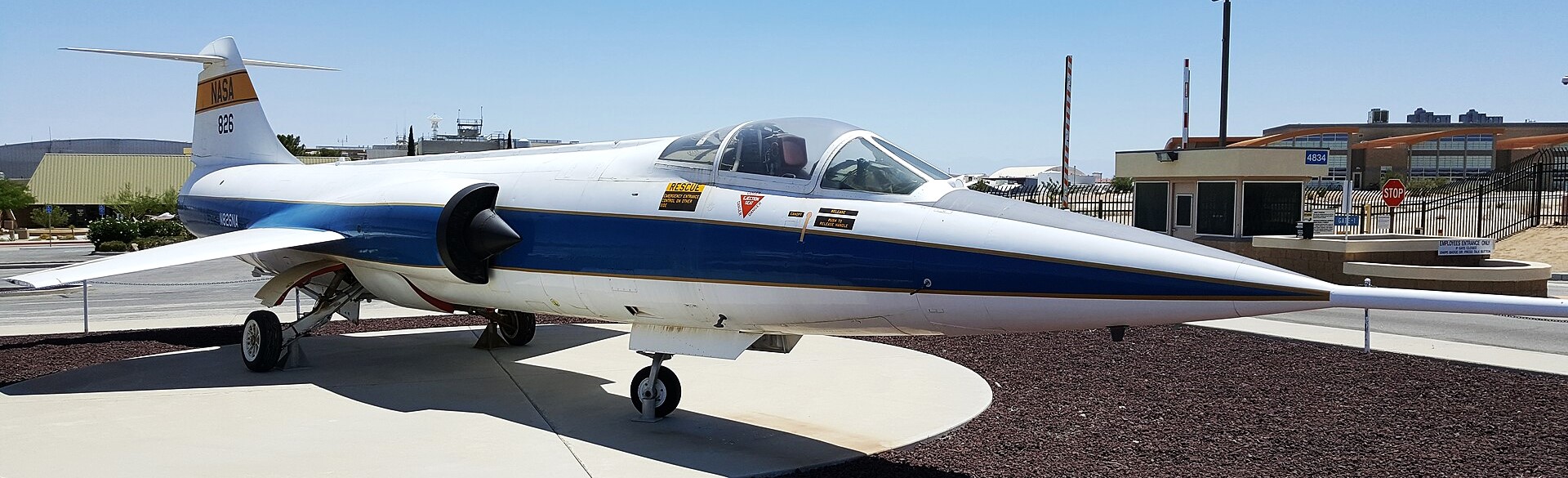
KG200 (NASA N826NA) – Dryden Flight Research Center located inside Edwards Air Force Base, California.
RF-104G. The RF-104G was a tactical reconnaissance model based on the F-104G, usually with three KS-67A cameras mounted in the forward fuselage in place of the internal cannon. Many of the 189 built were subsequently reconfigured to the F-104G standard.
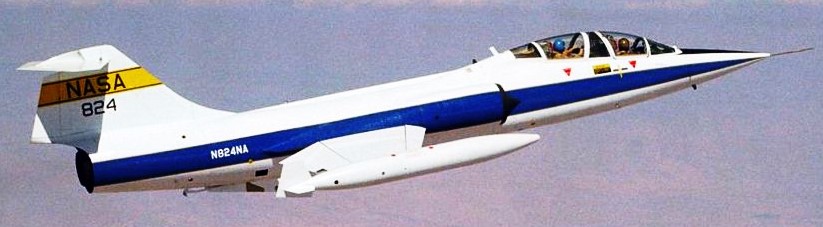
TF-104G. A combat-capable trainer version of the F-104G,[47] the TF-104G had no cannon or centerline pylon, and reduced internal fuel. One of the 220 aircraft produced was used by Lockheed as a demonstrator with the civil registration number N104L, and was flown by Jackie Cochran to set three women’s world speed records in 1964. This aircraft later served in the Netherlands. A pair of two-seat TF-104Gs joined the NASA Dryden inventory in July 1975 along with a Fokker-built former RF-104G.
(Bob Rhine, NASA Photo)
61-3065 (NASA N824NA) – Estrella Warbird Museum at Paso Robles, California.
KF+226 – being restored to airworthiness by Classic Aircraft Aviation Museum Hillsboro, Oregon.
- F-104H. The F-104H was a projected export version based on the F-104G with an optical gunsight and simplified equipment. It was canceled prior to construction.
F-104J. The F-104J was a specialized interceptor version of the F-104G for the Japanese ASDF, built under license by Mitsubishi for the air-superiority role; it was armed with cannon and four Sidewinders, but had no strike capability. Some were converted to UF-104J radio-controlled target drones and destroyed. A total of 210 were built, three by Lockheed, 29 by Mitsubishi from Lockheed-sourced components, and 178 by Mitsubishi. After being retired in Japan, the U.S. delivered some of these 104J/DJs to the air force of Taiwan.
F-104N. Three unarmed and lighter F-104Gs were delivered to NASA in 1963 for use as high-speed chase aircraft and given the designation F-104N. One, piloted by Joe Walker, collided with an XB-70 on 8 June 1966.
(Skytamer.com, John Shupek Photos)
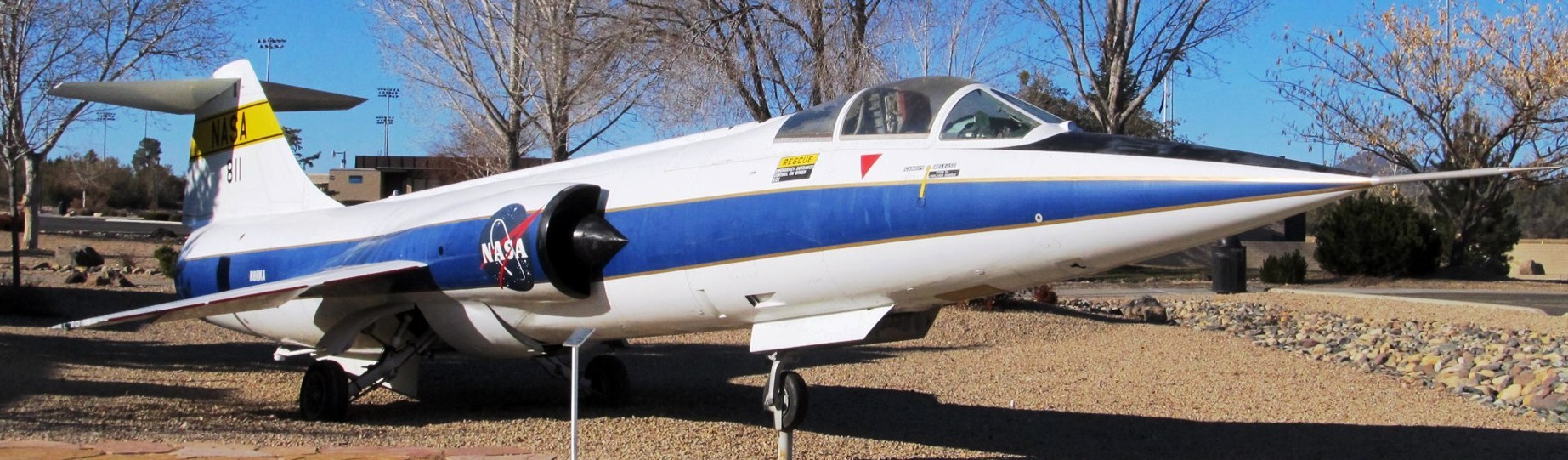
(kb7ywl Photo)
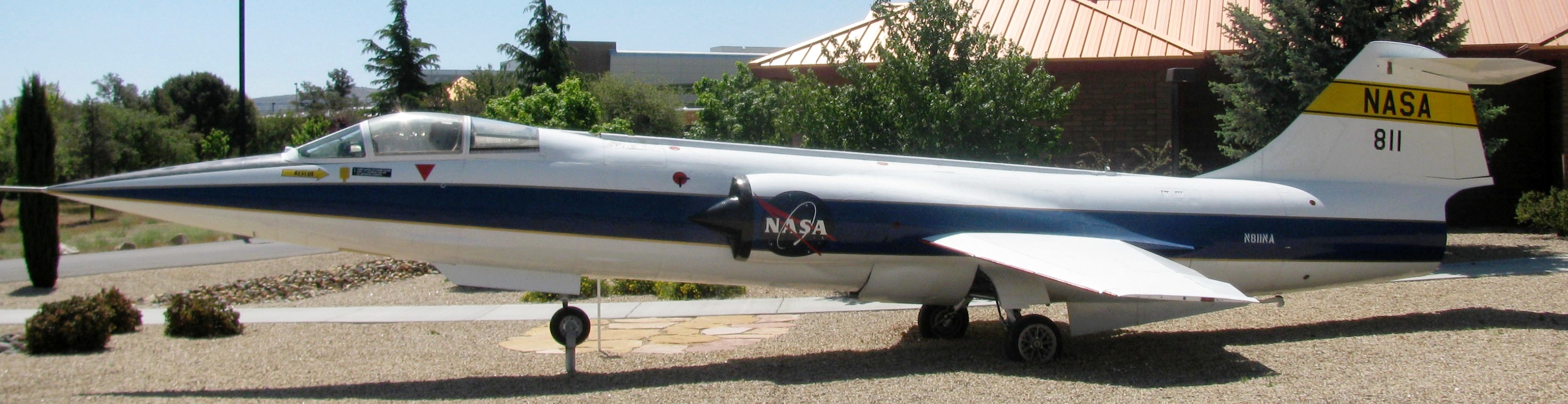
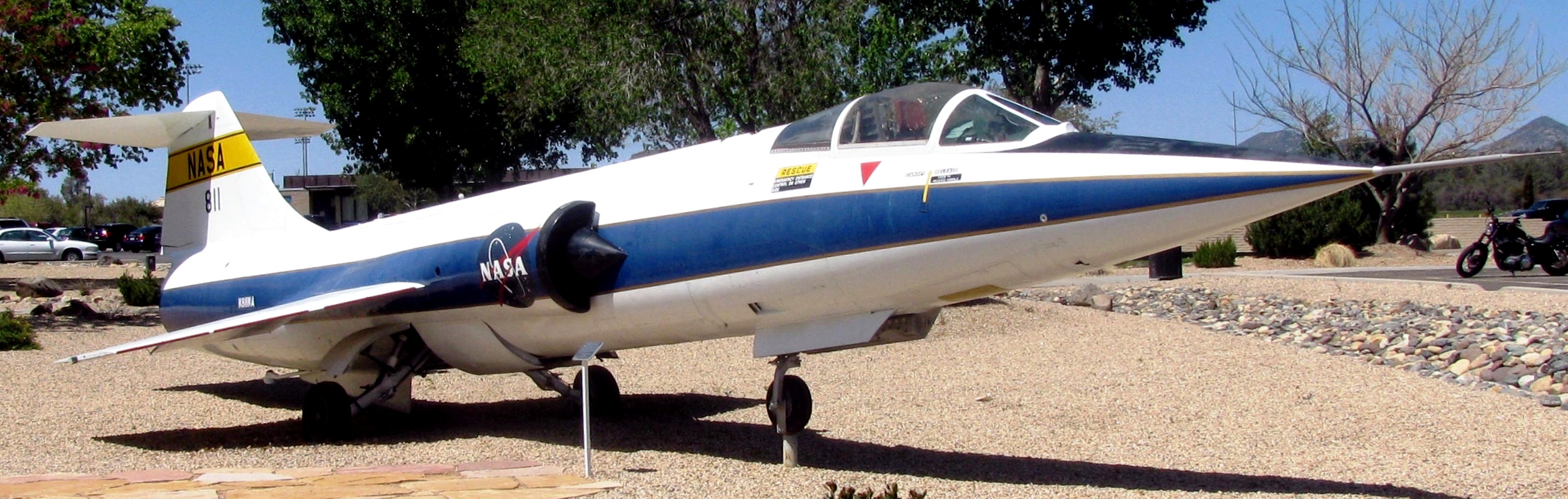
N811NA – Embry-Riddle Aeronautical University Prescott, Arizona campus. It was flown by Neil Armstrong.
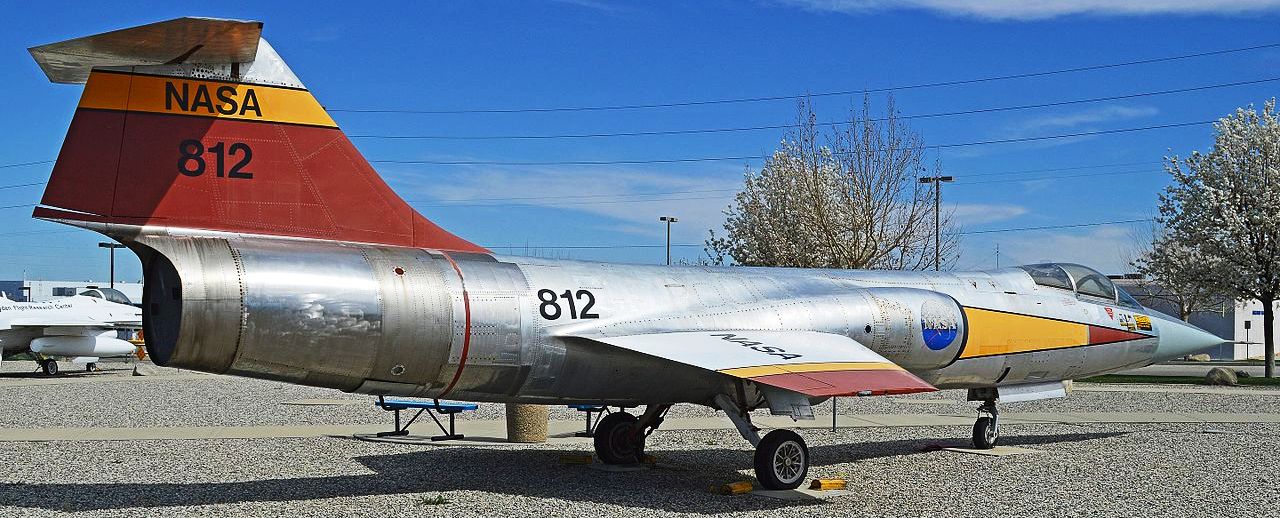
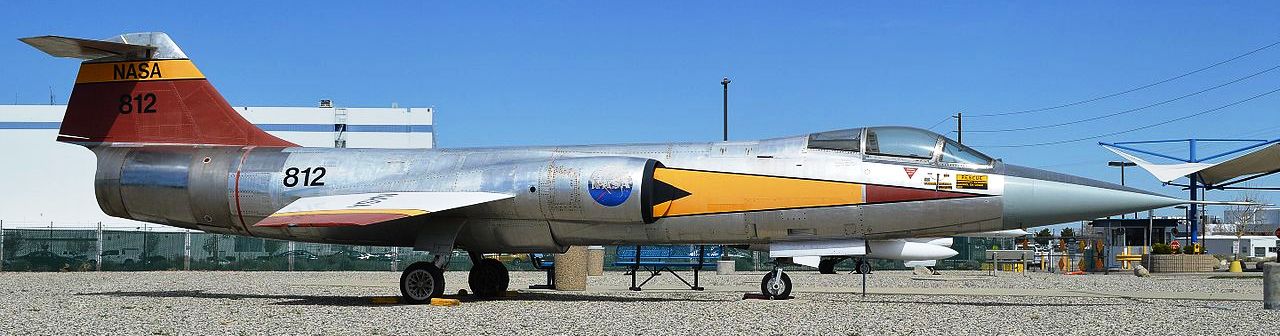
(Alan Wilson Photos)
N812NA – Lockheed Martin Skunk Works facility, Palmdale, California.
F-104S. FIAT built 246 of the final production version, the F-104S (one of these aircraft crashed prior to delivery and is often not included in the total number produced). Forty of these aircraft were delivered to the Turkish Air Force and the rest to the Italian Air Force (Aeronautica Militare Italiana). The F-104S was upgraded for the interception role, adding the NASARR R-21G/H radar with moving-target indicator and continuous-wave illuminator for semi-active radar homing missiles (initially the AIM-7 Sparrow), two additional wing and two underbelly hardpoints (increasing the total to nine), the more powerful J79-GE-19 engine, and two additional ventral fins to increase stability. The M61 cannon was sacrificed to make room for the missile avionics in the interceptor version, but was retained for the fighter-bomber variant. Typically two Sparrow and two (and sometimes four or six) Sidewinder missiles were carried on all the hardpoints except the central (underbelly), or up to seven 750 lb (340 kg) bombs (normally two to four 500–750 lb [230–340 kg] bombs). The F-104S was cleared for a higher maximum takeoff weight, allowing it to carry up to 7,500 lb (3,400 kg) of stores; other Starfighters had a maximum external load of 4,000 lb (1,800 kg). Its combat radius was up to 775 mi (1,247 km) with four external fuel tanks. (Wikipedia)
F-104S-ASA (Aggiornamento Sistemi d’Arma – “Weapon Systems Update”). This was an upgraded F-104S equipped with the FIAR R21G/M1 radar with frequency hopping and a look-down/shoot-down capability, new IFF system and weapon delivery computer, and provision for the AIM-9L all-aspect Sidewinder and Selenia Aspide missiles. A total of 150 were built, with the first flight in 1985.
F-104S-ASA/M (Aggiornamento Sistemi d’Arma/Modificato – “Weapon Systems Update/Modified”). Forty-nine airframes were upgraded from 1995 to 1997 to ASA/M standard with GPS, new TACAN, and Litton LN-30A2 INS, a refurbished airframe, and improved cockpit displays. All strike-related equipment was removed. The last Starfighters in combat service, the F-104S-ASA/M was withdrawn in October 2004 and temporarily replaced by the F-16 Fighting Falcon, while awaiting Eurofighter Typhoon deliveries.
Canadair CF-104. CF-104 was the designation applied to 200 Canadian-built versions, built under license by Canadair.[47] Optimized for nuclear strike, the CF-104 NASARR R-24A radar with air-to-air modes was removed and the cannon deleted (both were restored after 1972). It had an additional internal fuel cell, and a license-built Orenda Engines J79-OEL-7 turbojet with 10,000 lbf (44 kN)/15,800 lbf (70 kN) thrust.
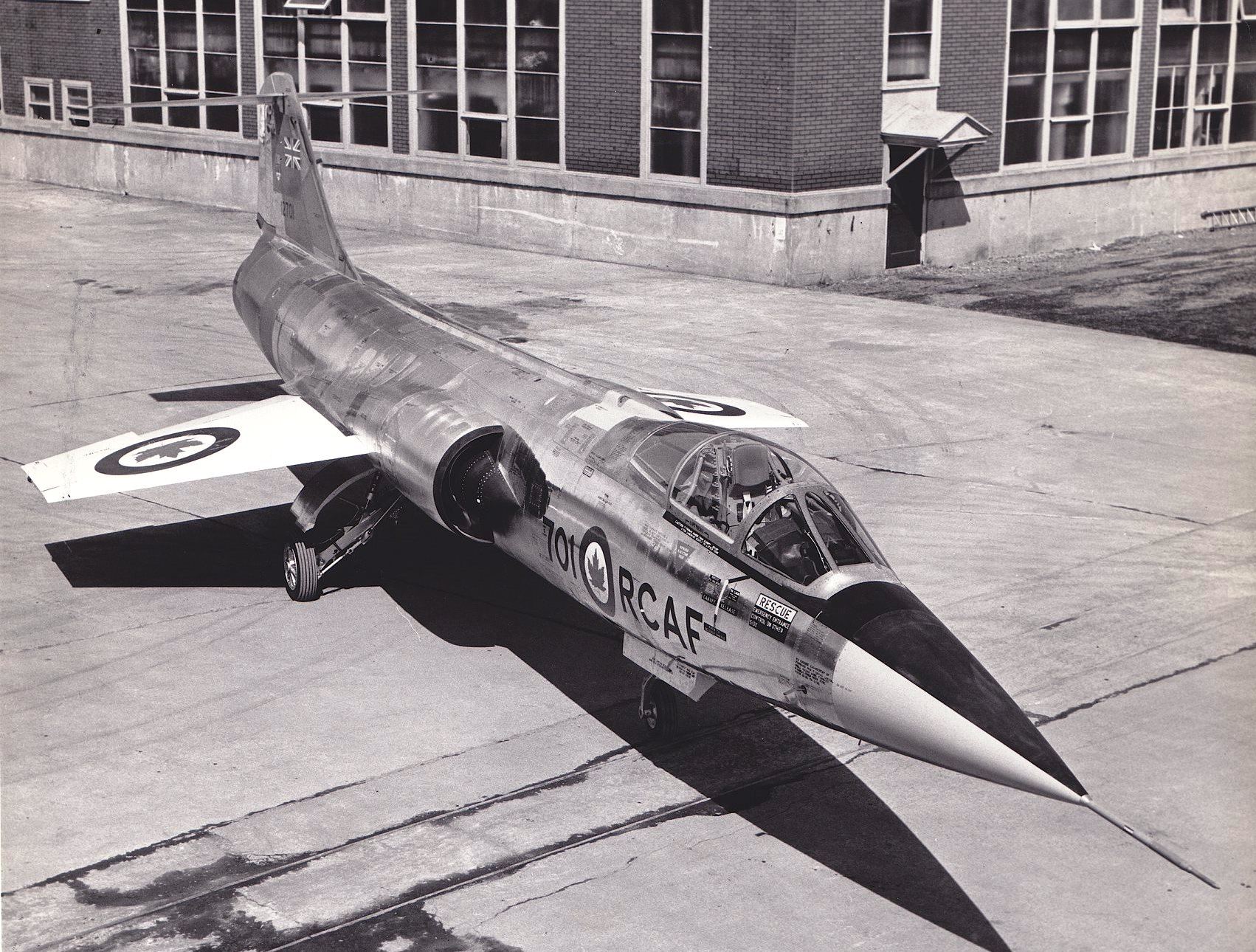
(RCAF Photo)
Canadair CF-104 Starfighter (Serial No. 12701) with Canadian ensign.
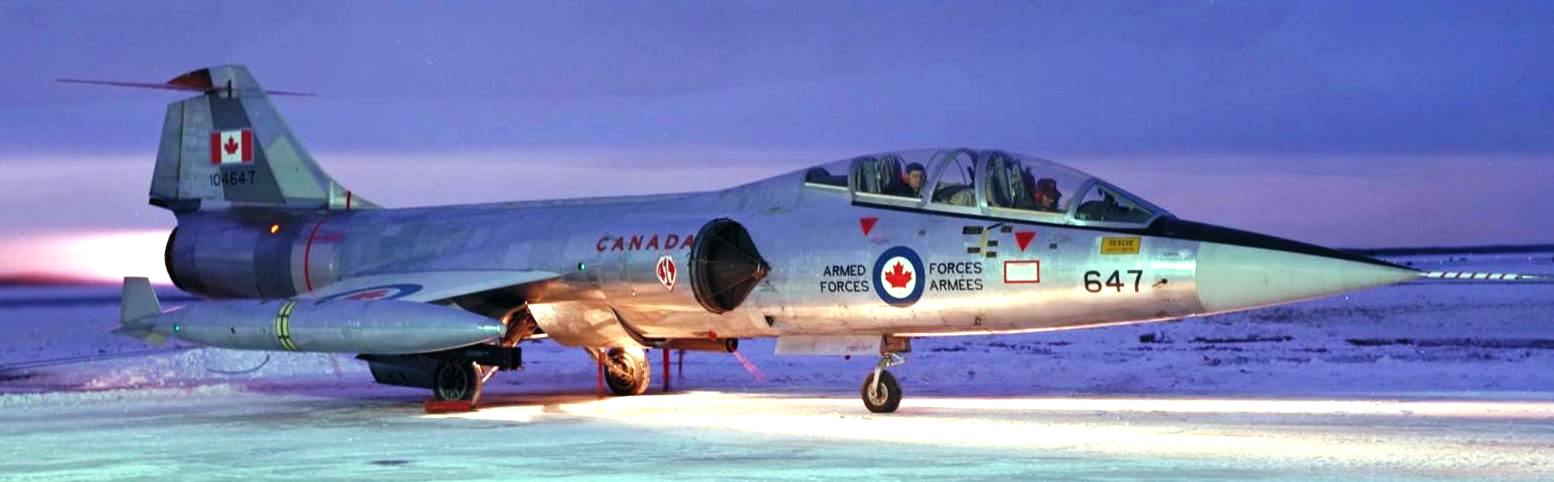
Lockheed CF-104D. The CF-104D was a dual-control trainer version of the CF-104, built by Lockheed, but with Canadian J79-OEL-7 engines. Thirty-eight were built, with some later being transferred to Denmark, Norway, and Turkey.
(DND Photo)
Lockheed CF-104D Starfighter, CAF (Serial No. 104647), night engine run up.
All comments are subject to our Comment Policy. You must be at least 18 years old to comment.
See a comment that violates our guidelines? Report it here.