
Artillery in Halifax, The Army Museum
The Army Museum, Halifax Citadel National Historic Site, Cavalier Building (second floor), Halifax, Nova Scotia
(Author Photo)
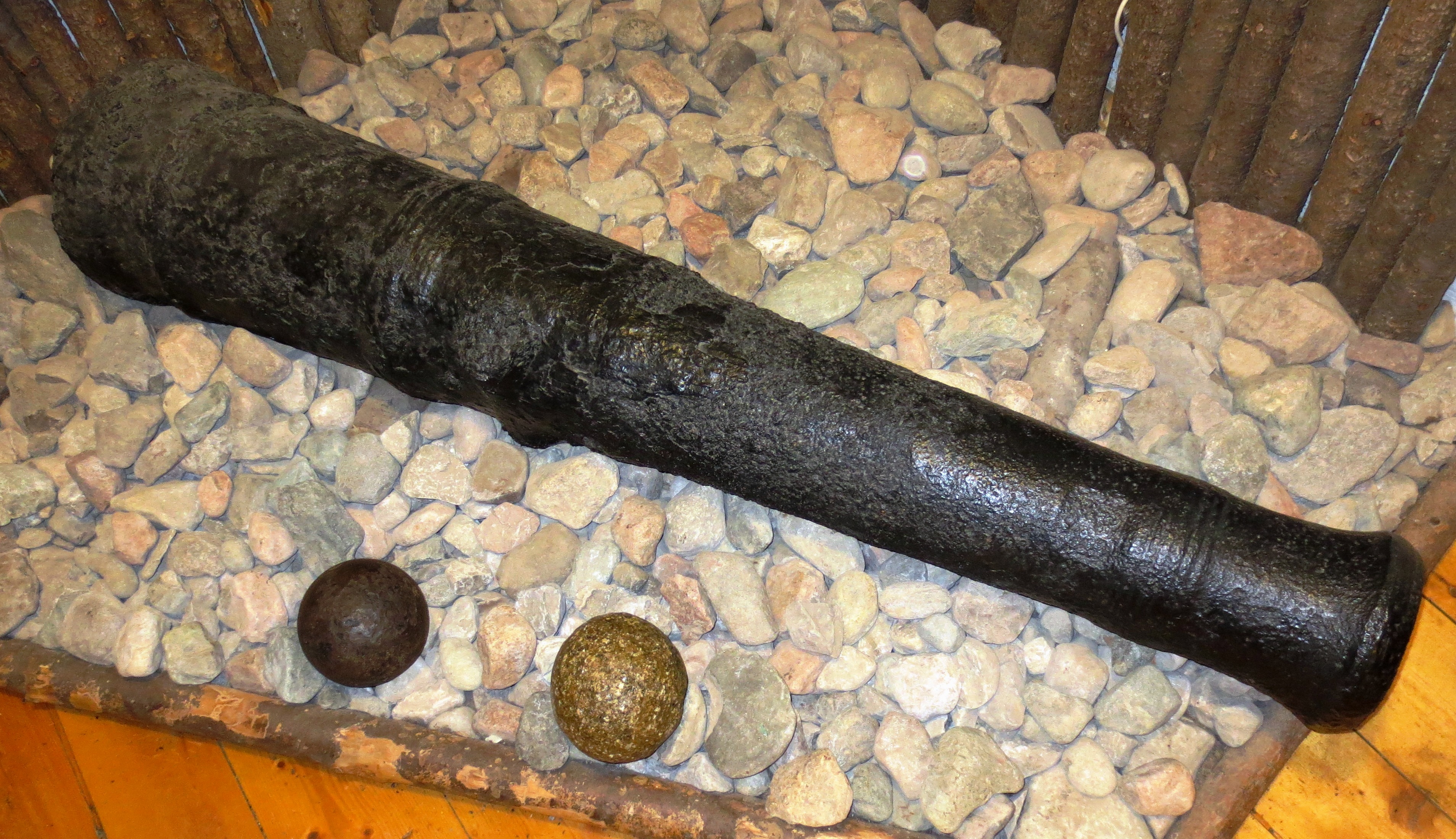
Cast Iron possible 3-pounder Smoothbore Muzzleloading Gun, heavily corroded, trunnions broken, recovered from the sea near Louisbourg.
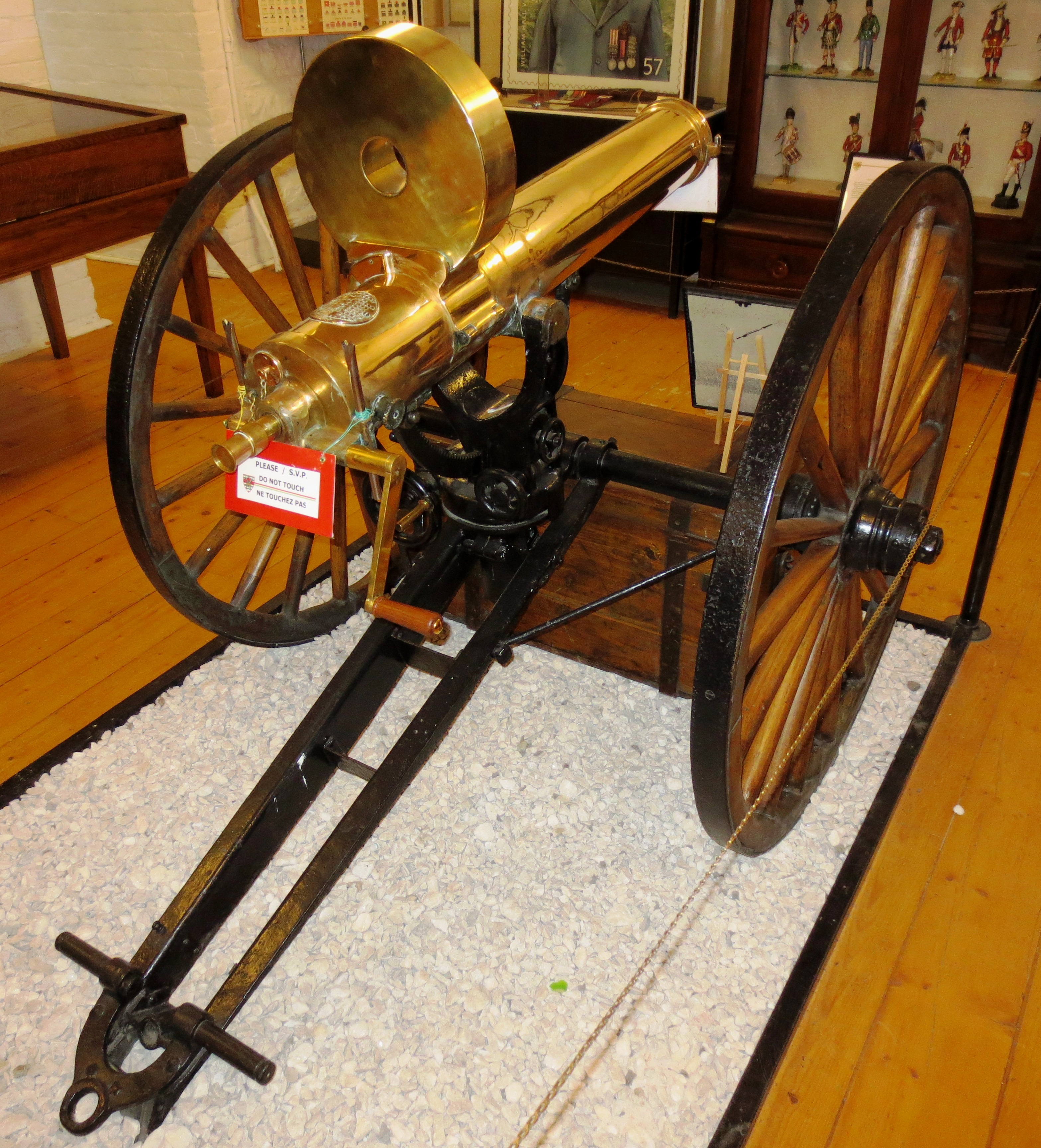
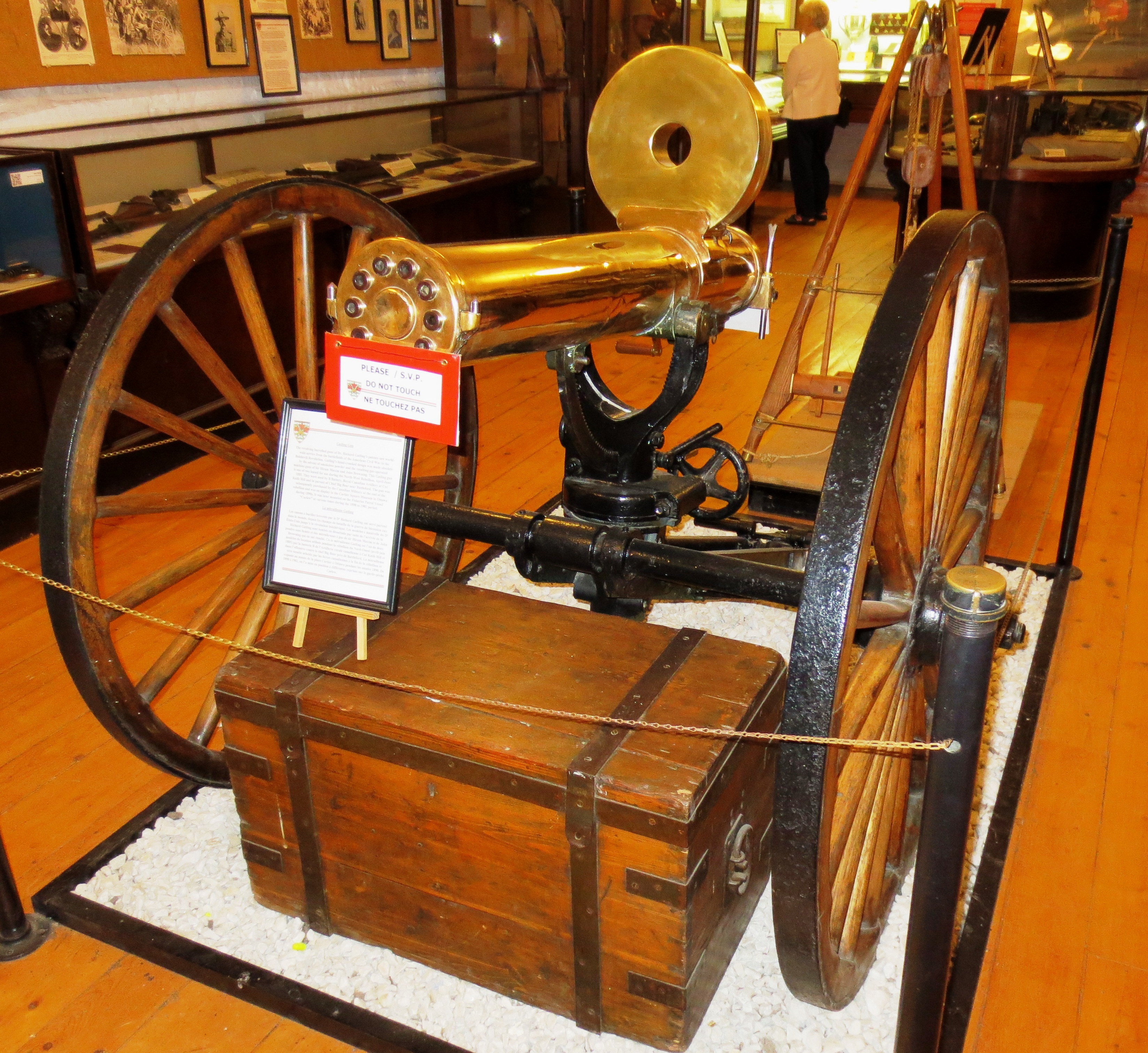
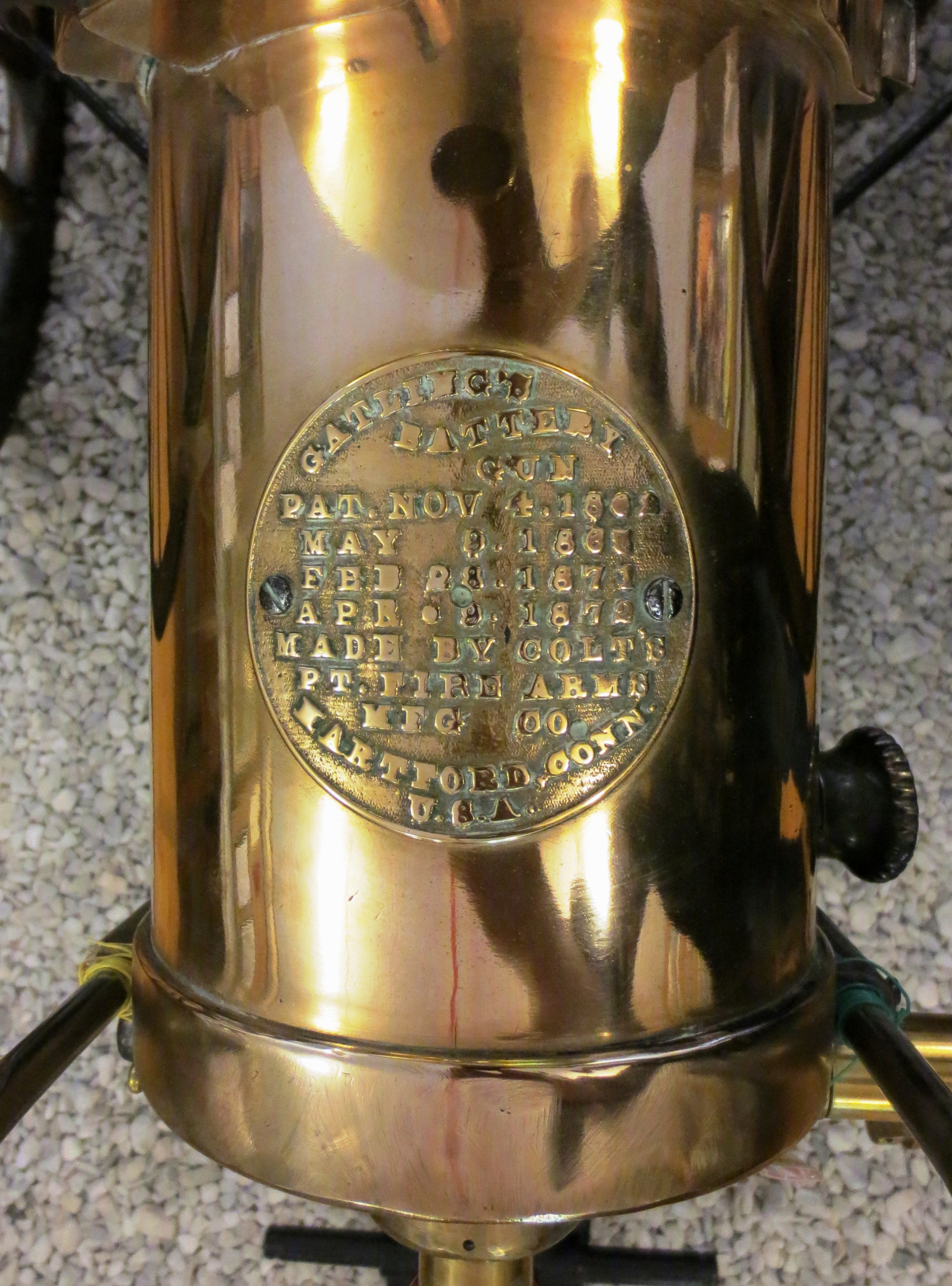
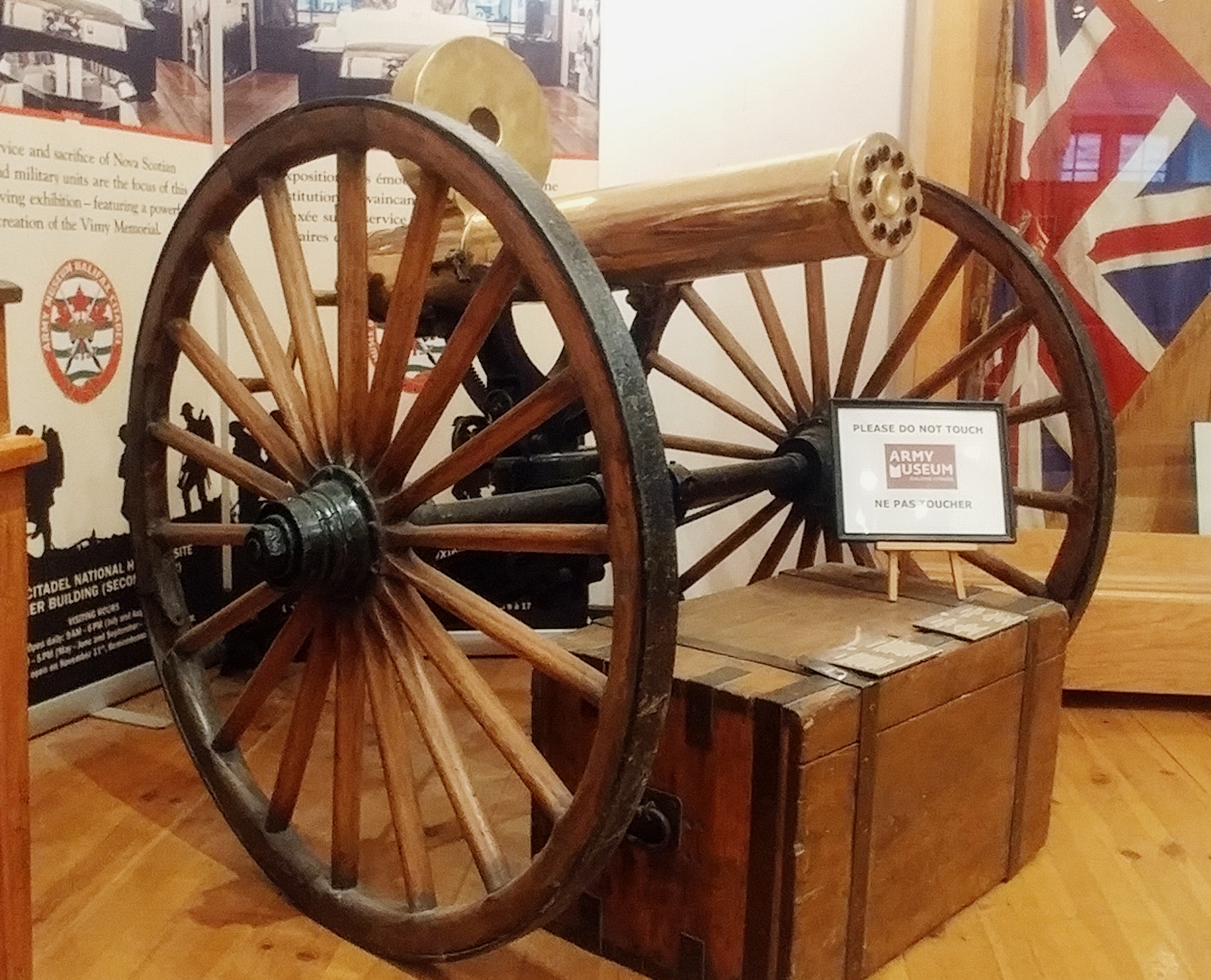
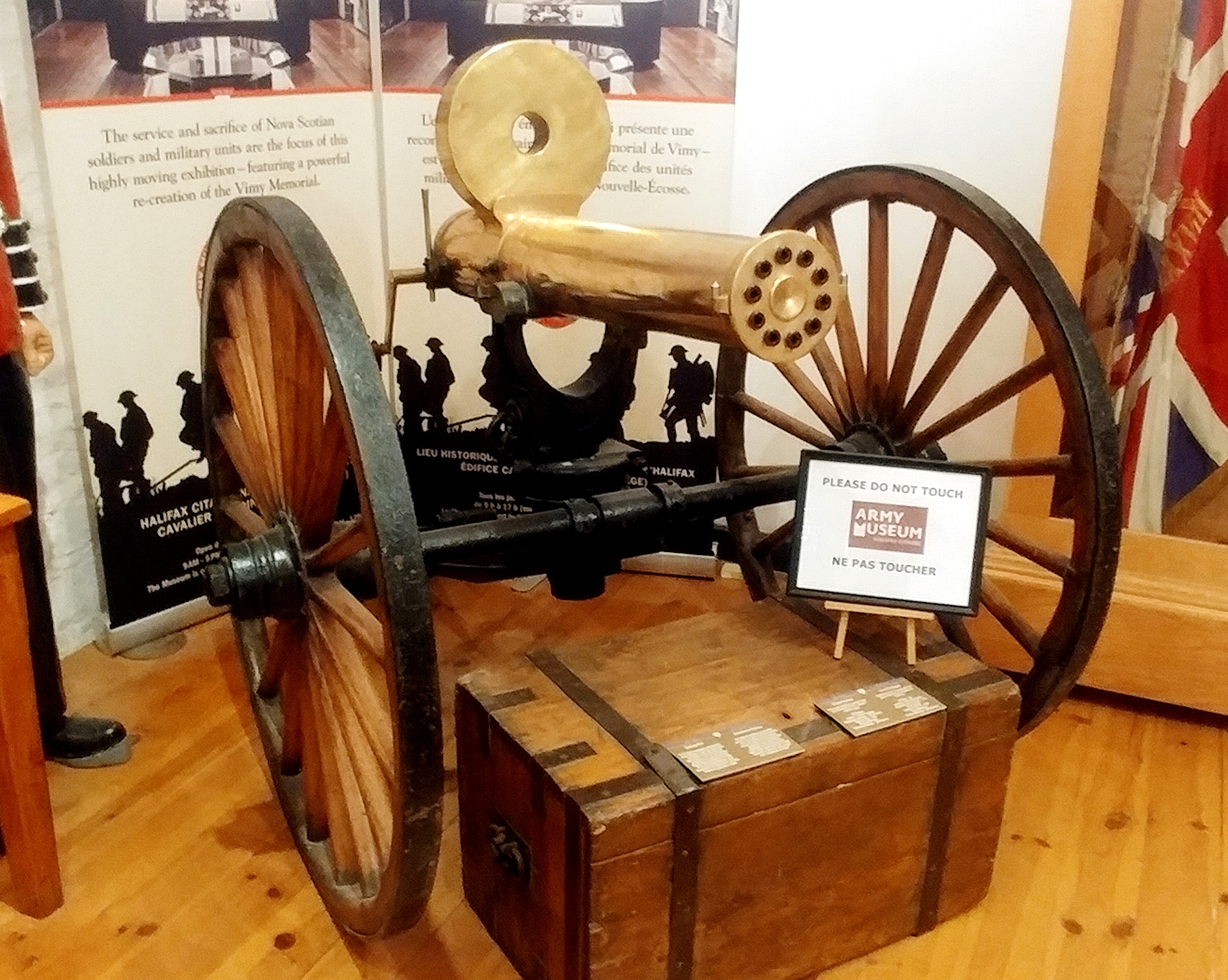
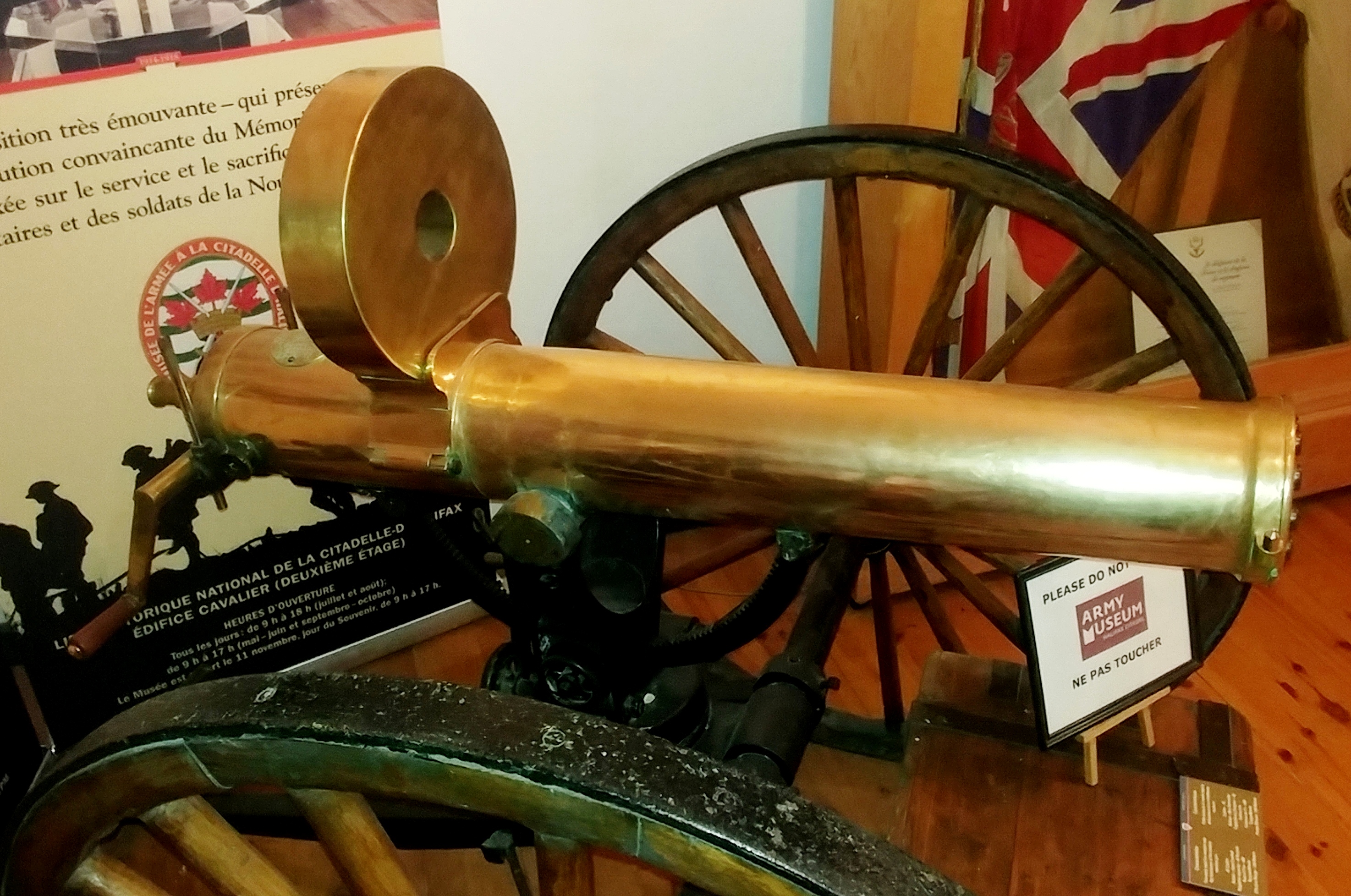
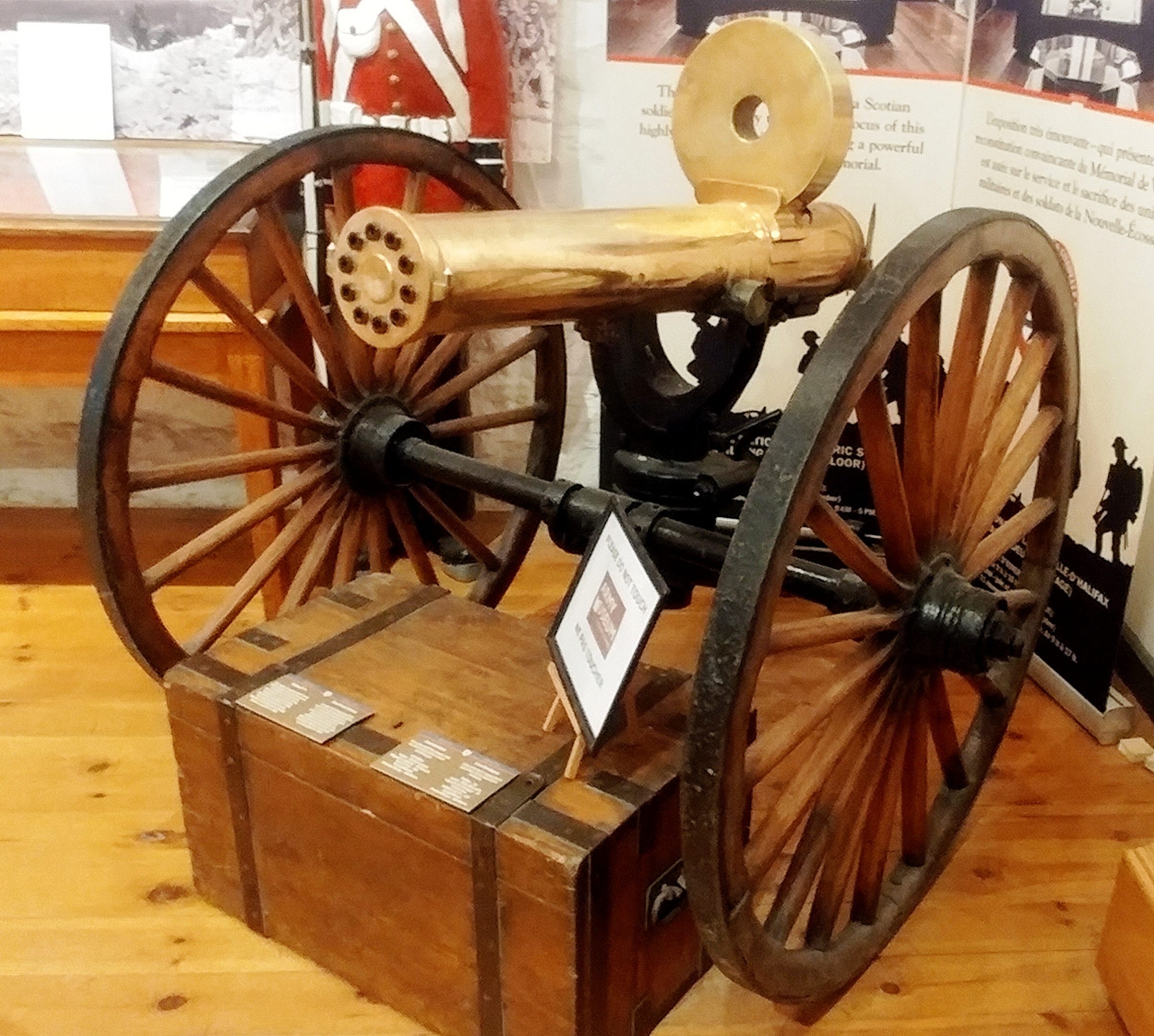
(Author Photos)
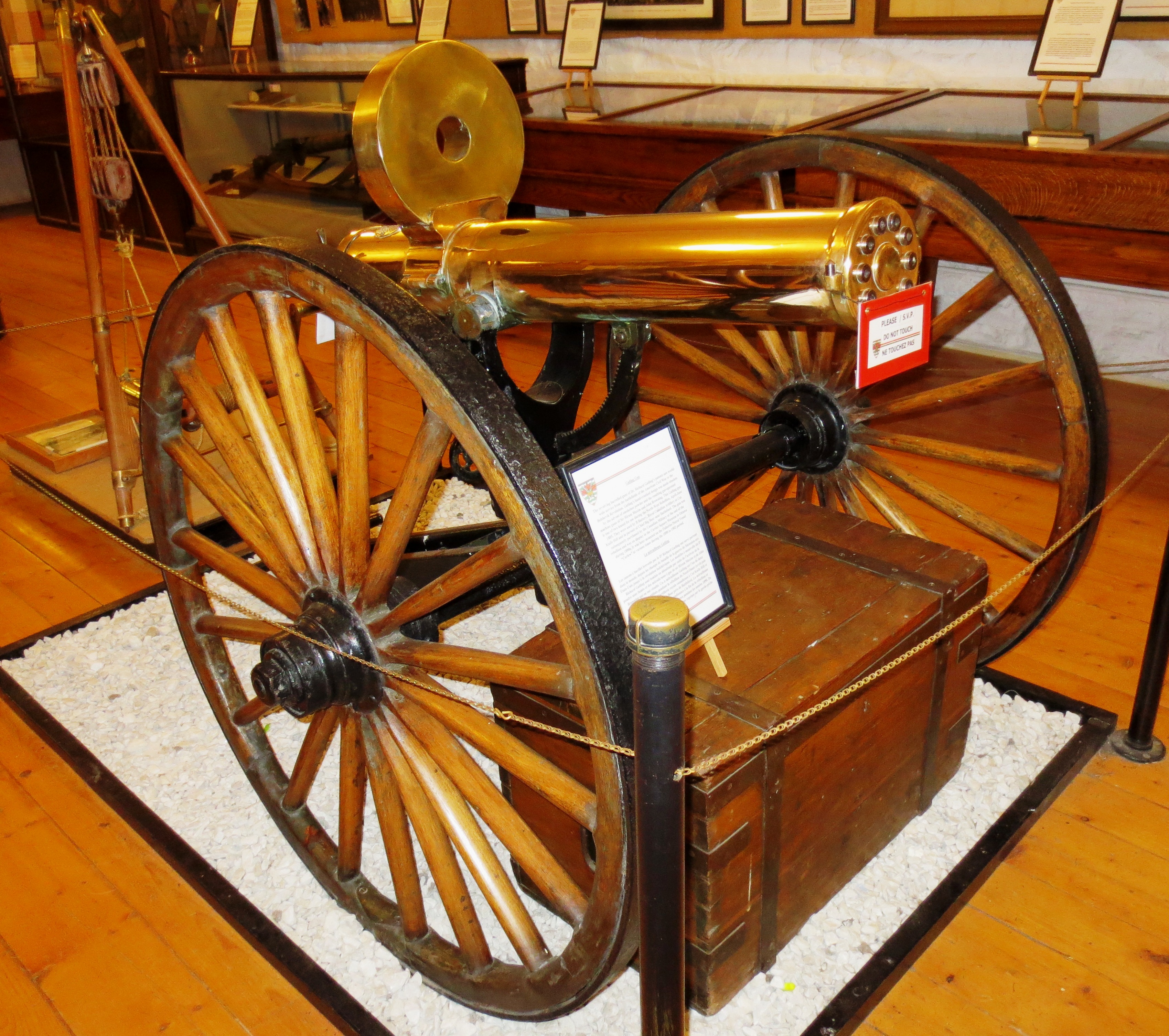
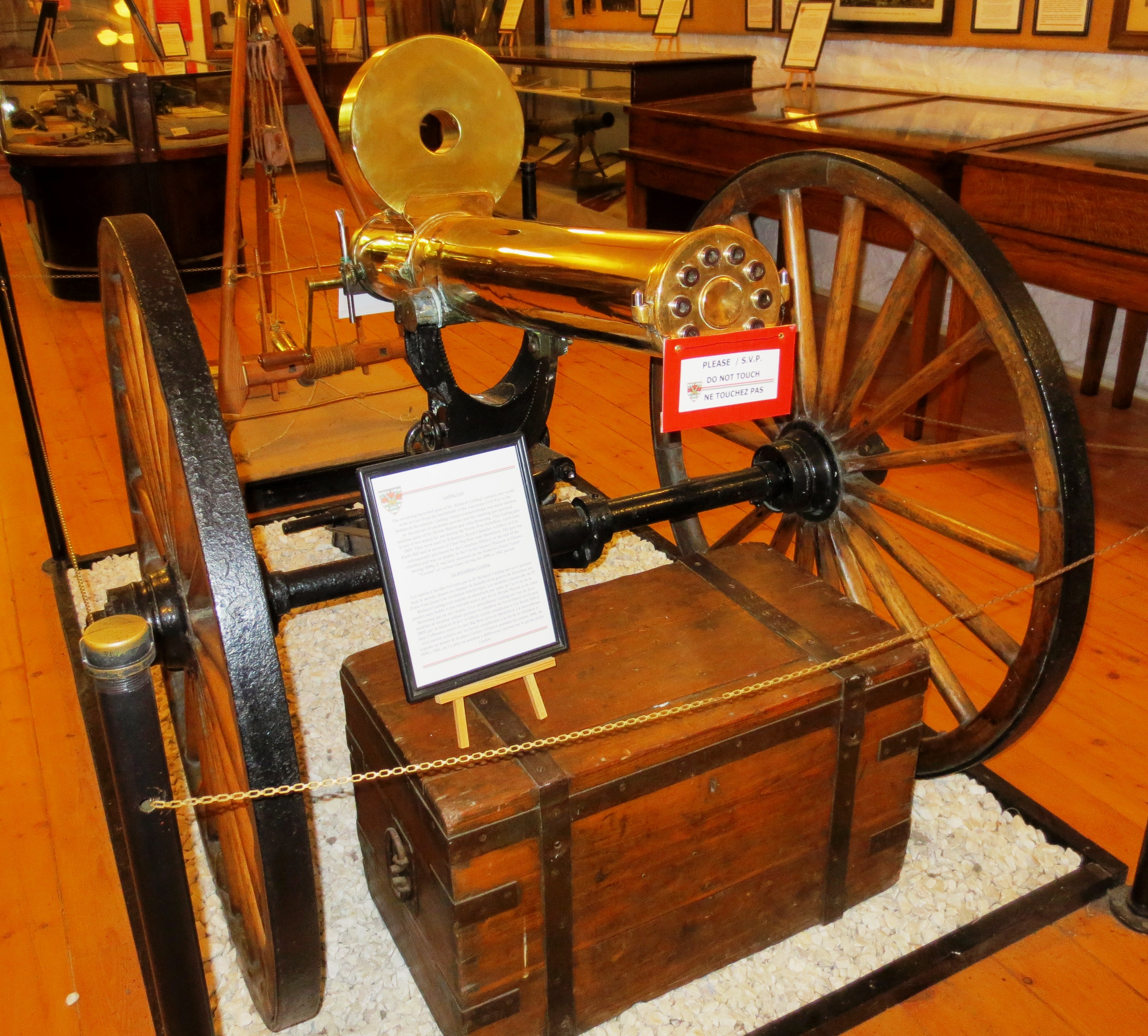
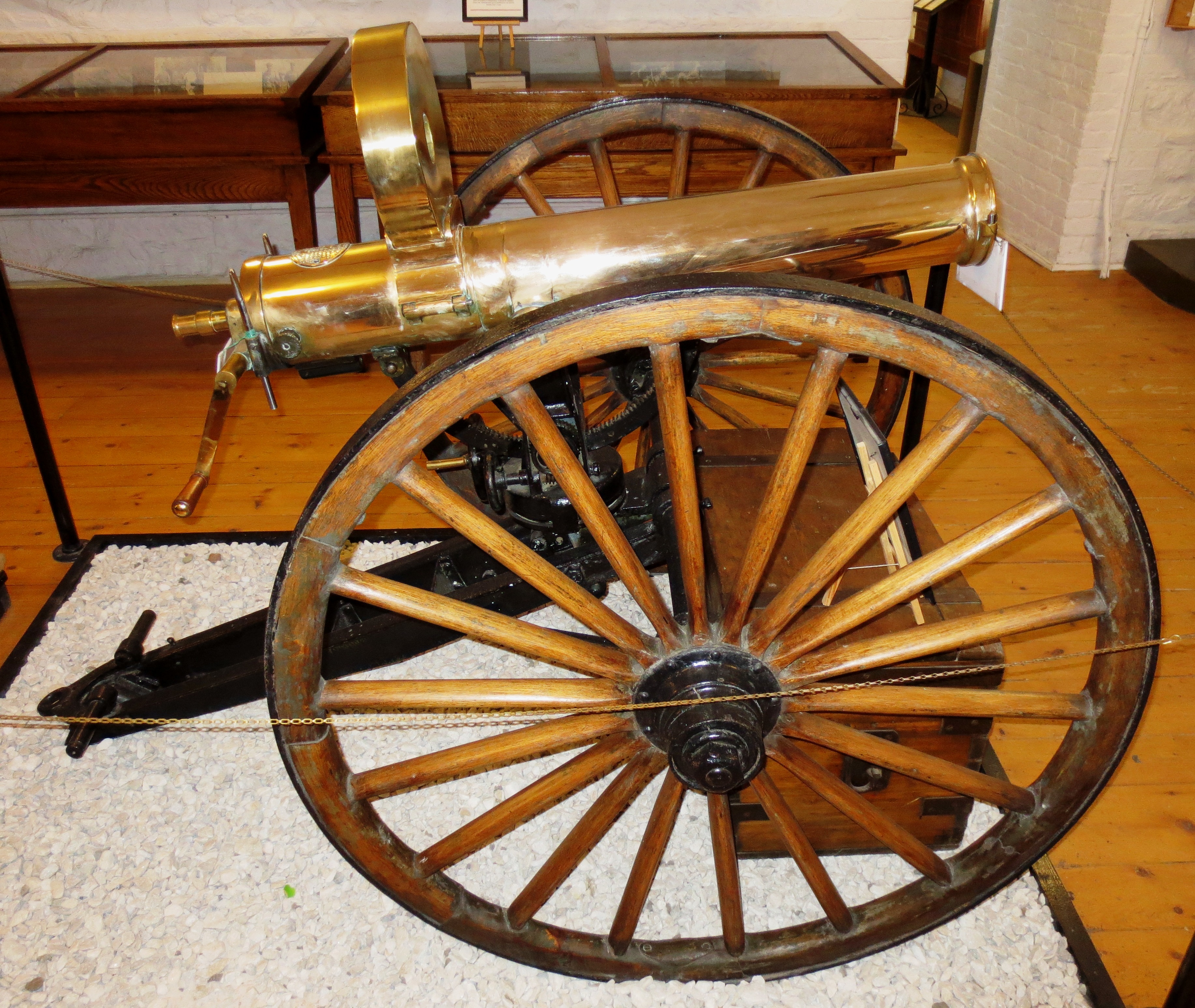
.45-calibre Gatling Battery Gun, Colt Fire Arms, (Serial No. 00).
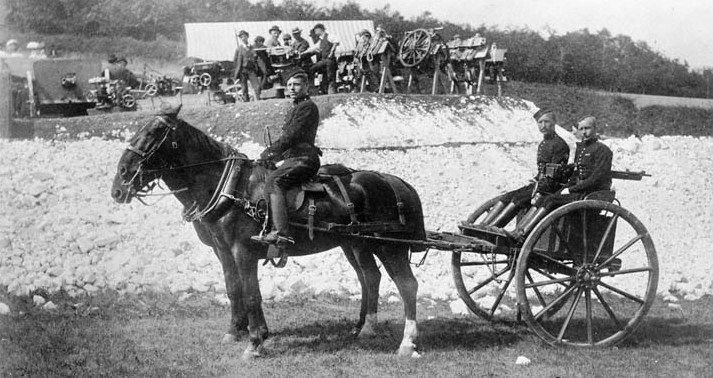
(Library and Archives Canada Photo, MIKAN No. 3228076)
45-inch 5-barrel Nordenfelt Mk. II Machine Gun mounted on a galloping carriage, 1887.
(Royal Navy Photo)
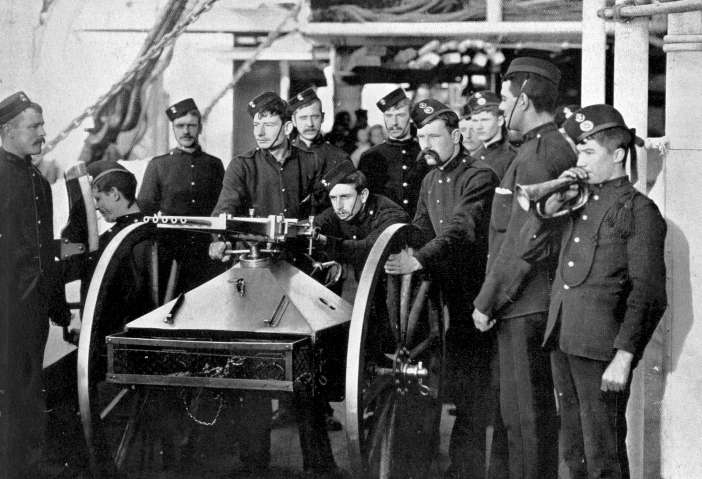
45-inch 5-barrel Nordenfelt Mk. II Machine Gun, and Royal Navy Marine gunners, 1890s.
(Gary Melville, Photos)
(Author Photos)
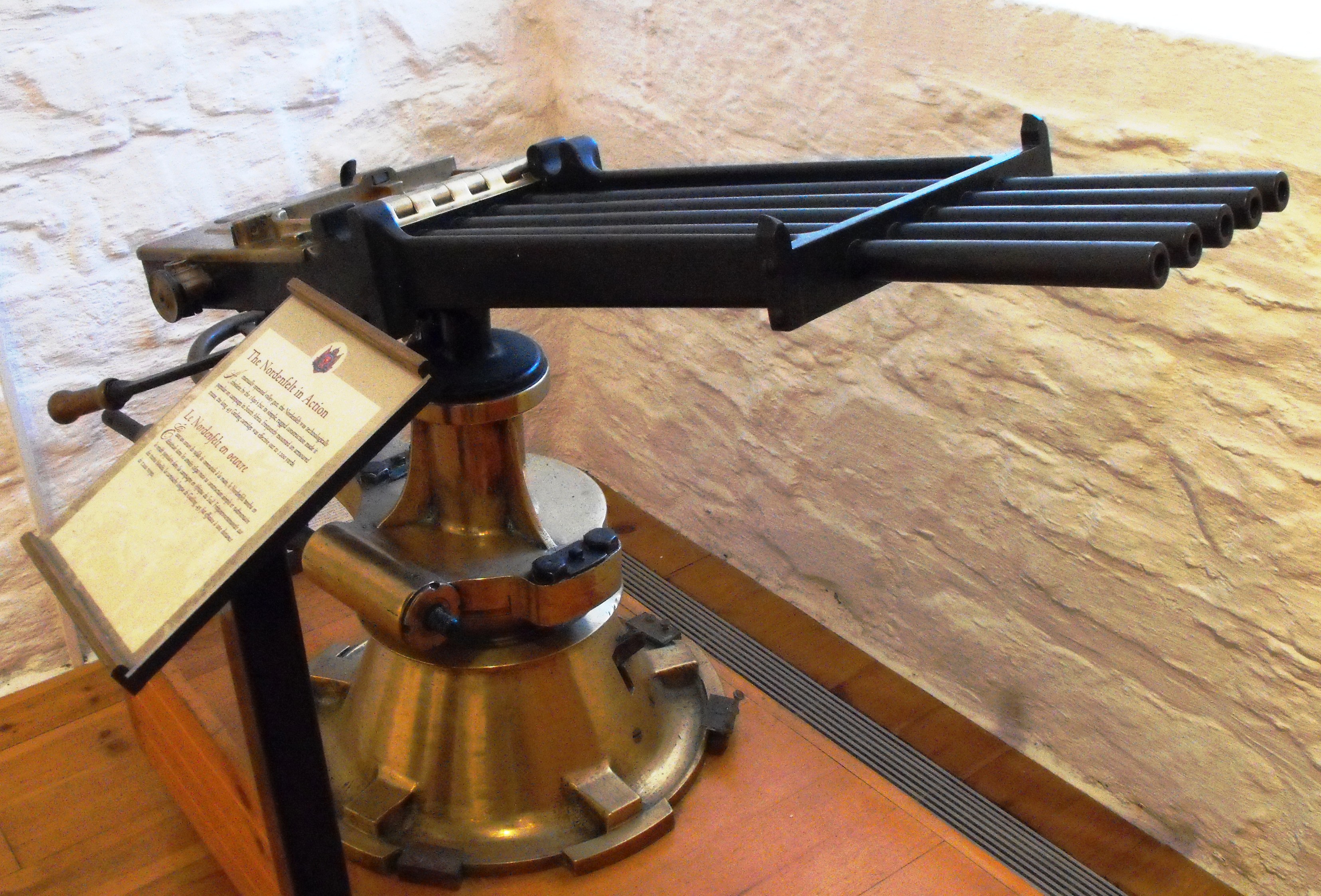
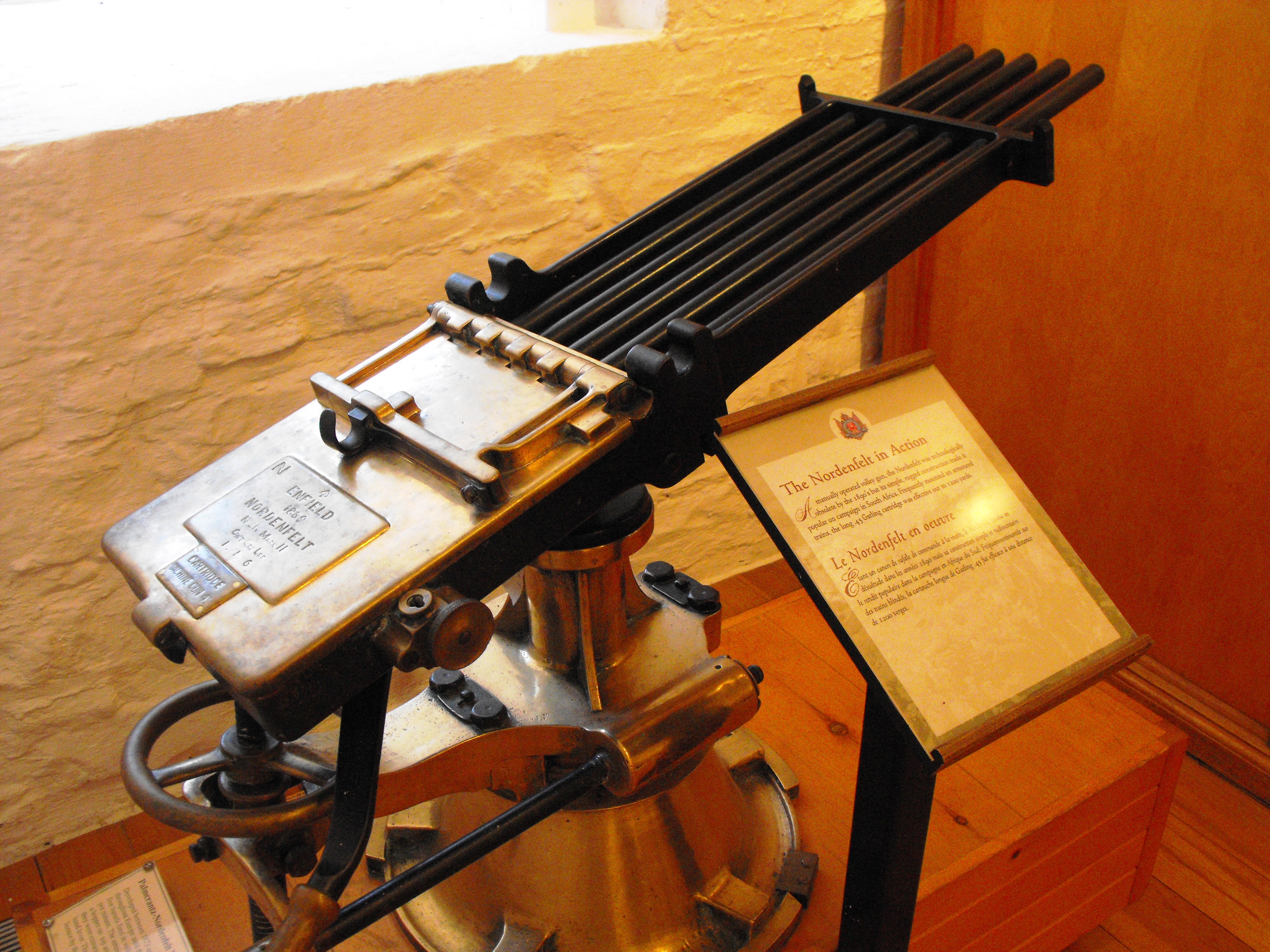
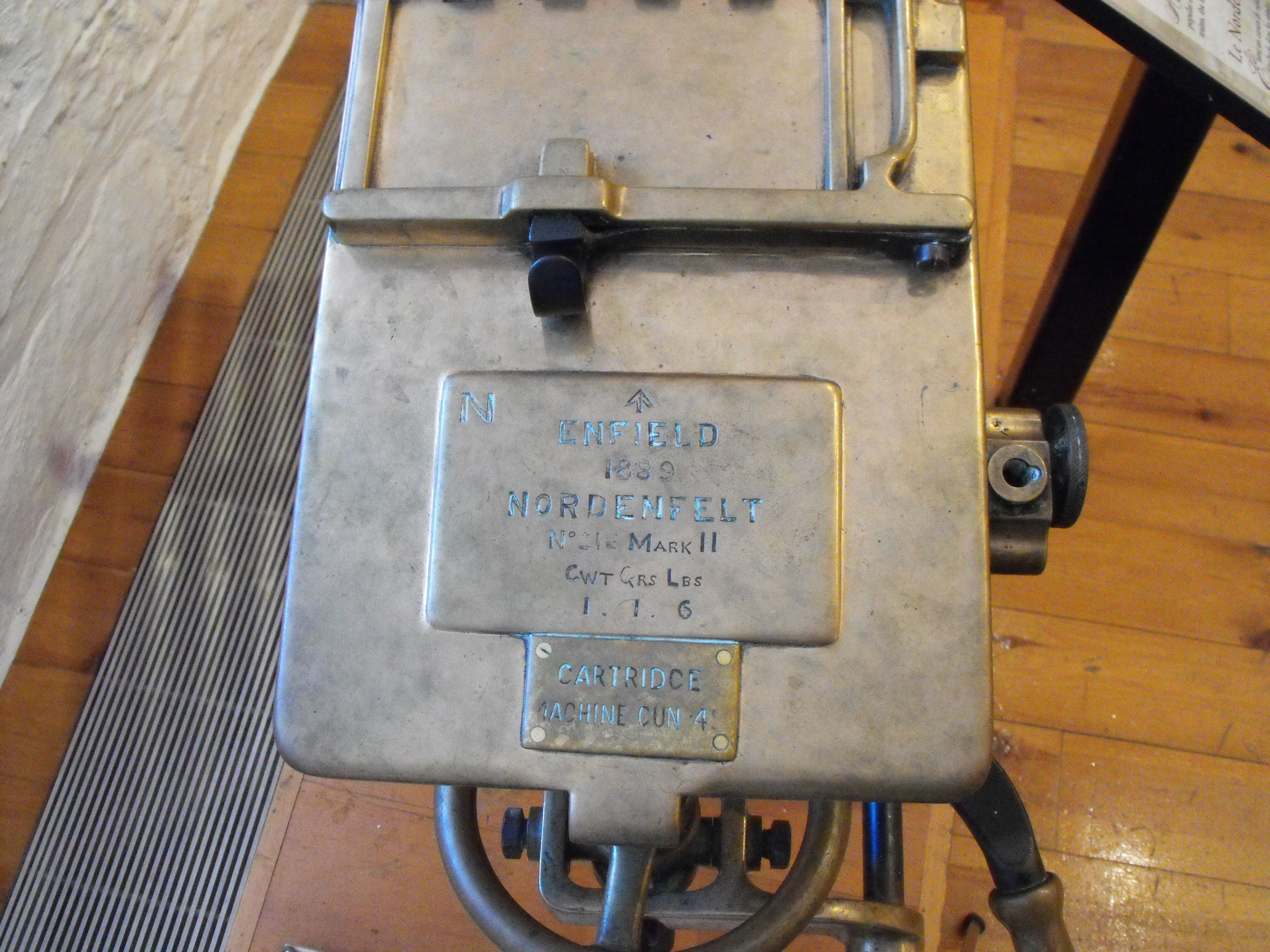
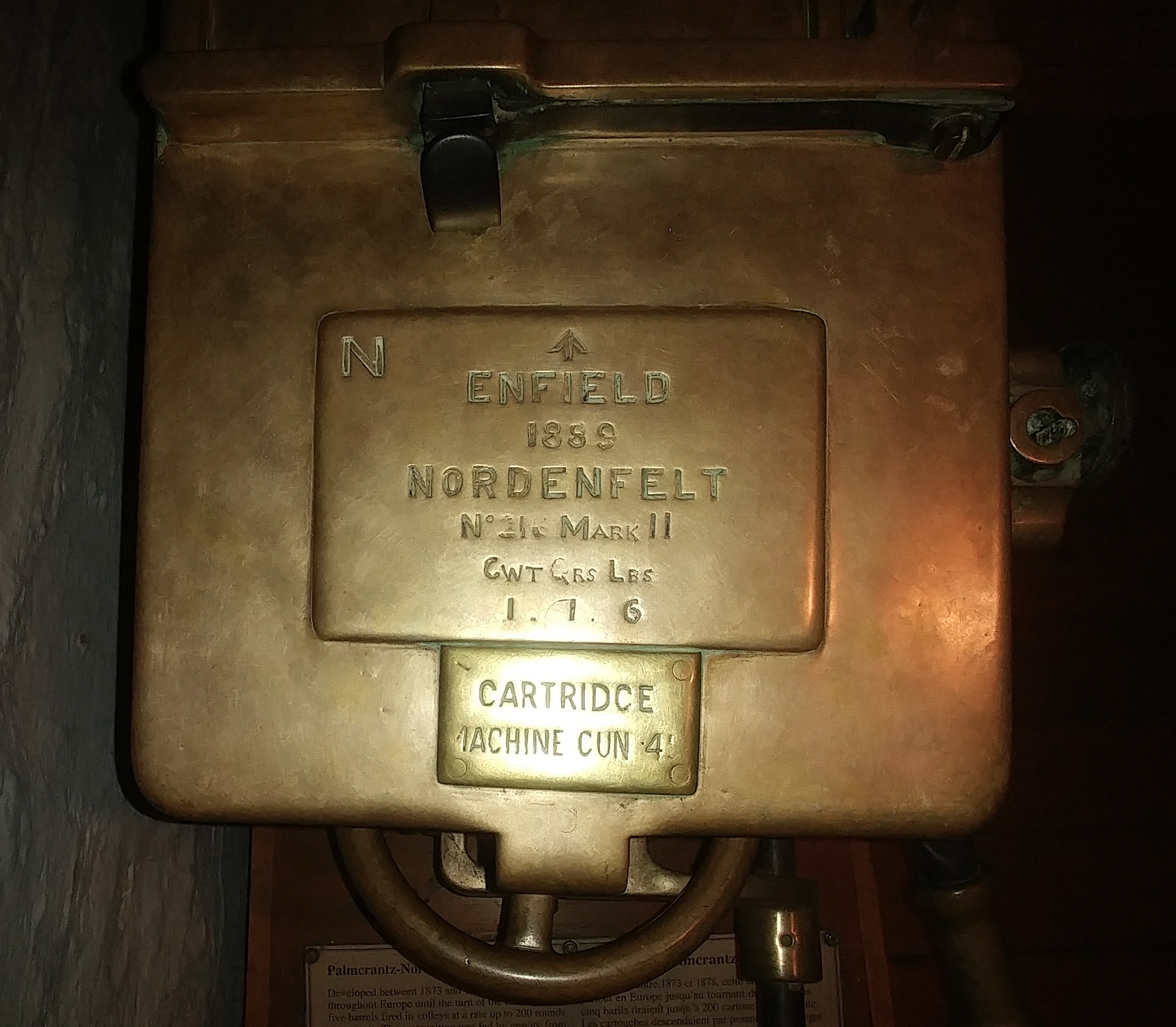
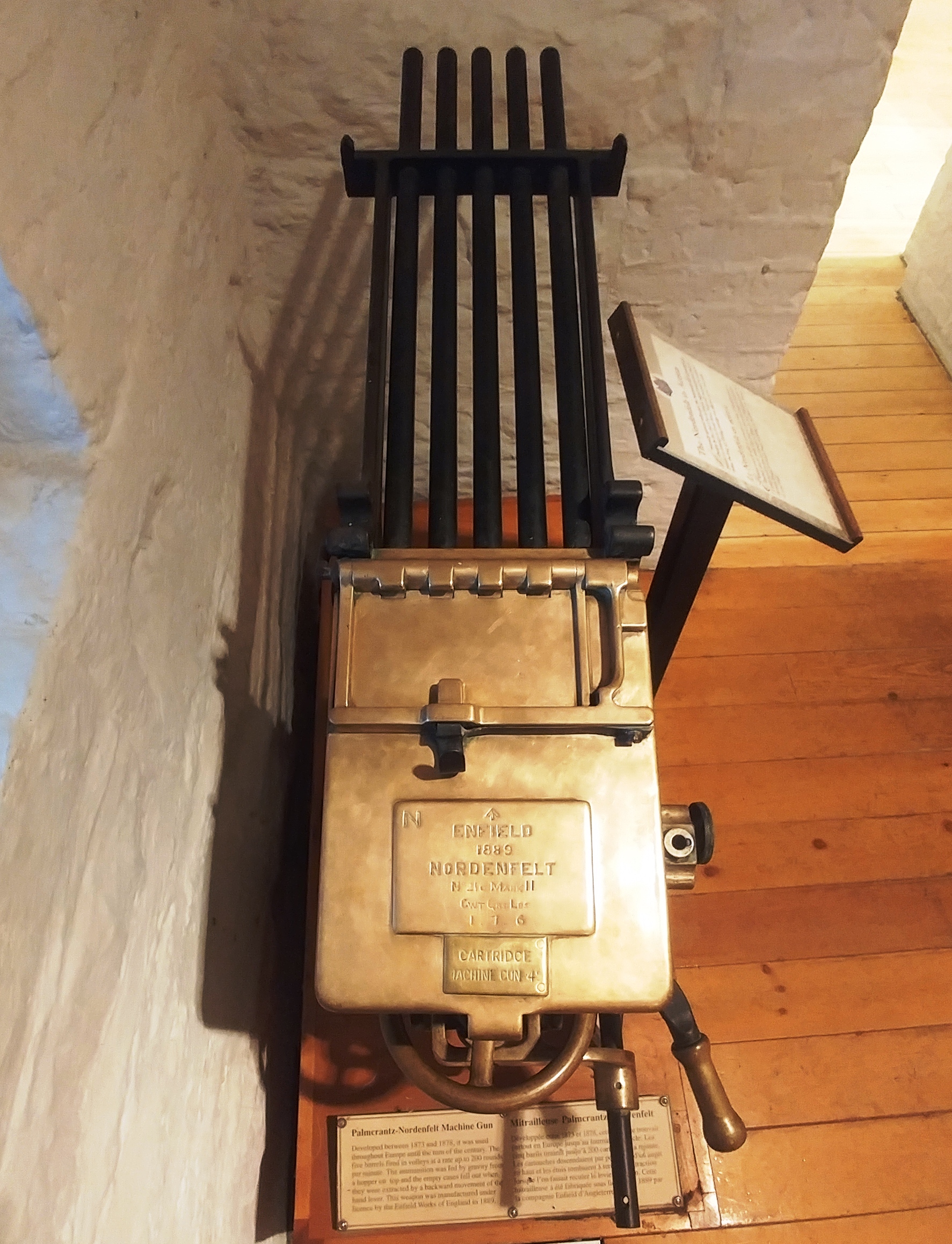
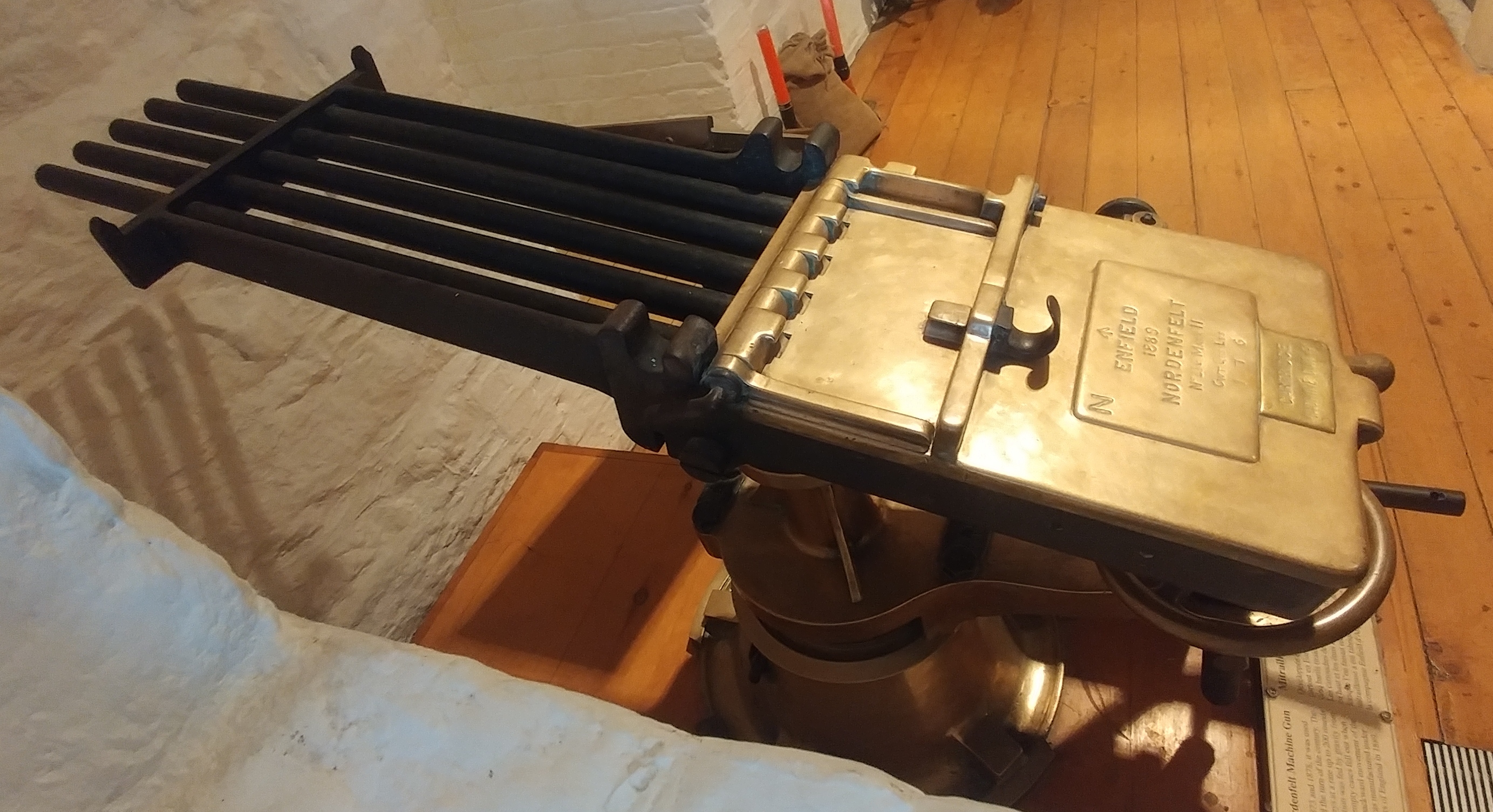
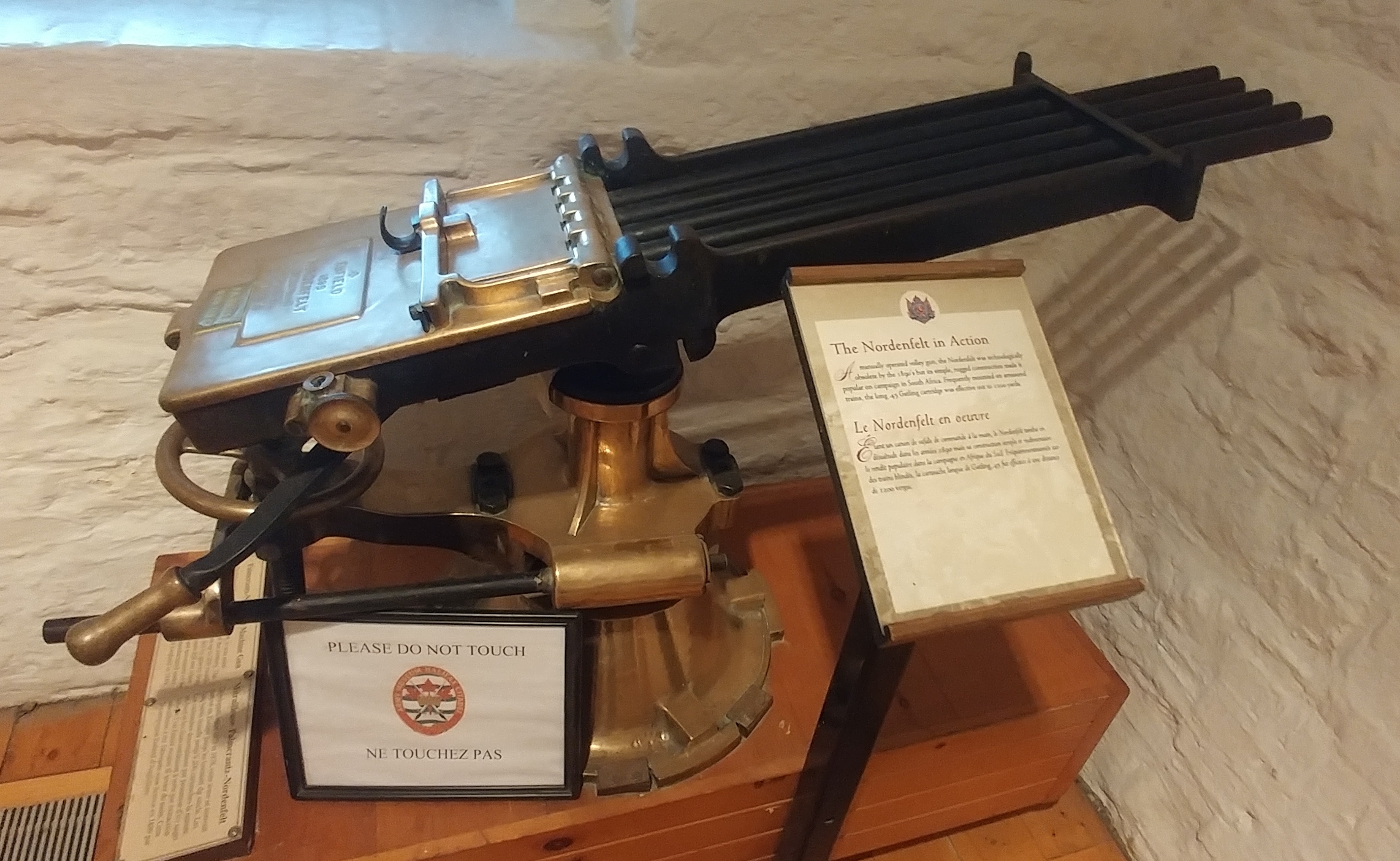
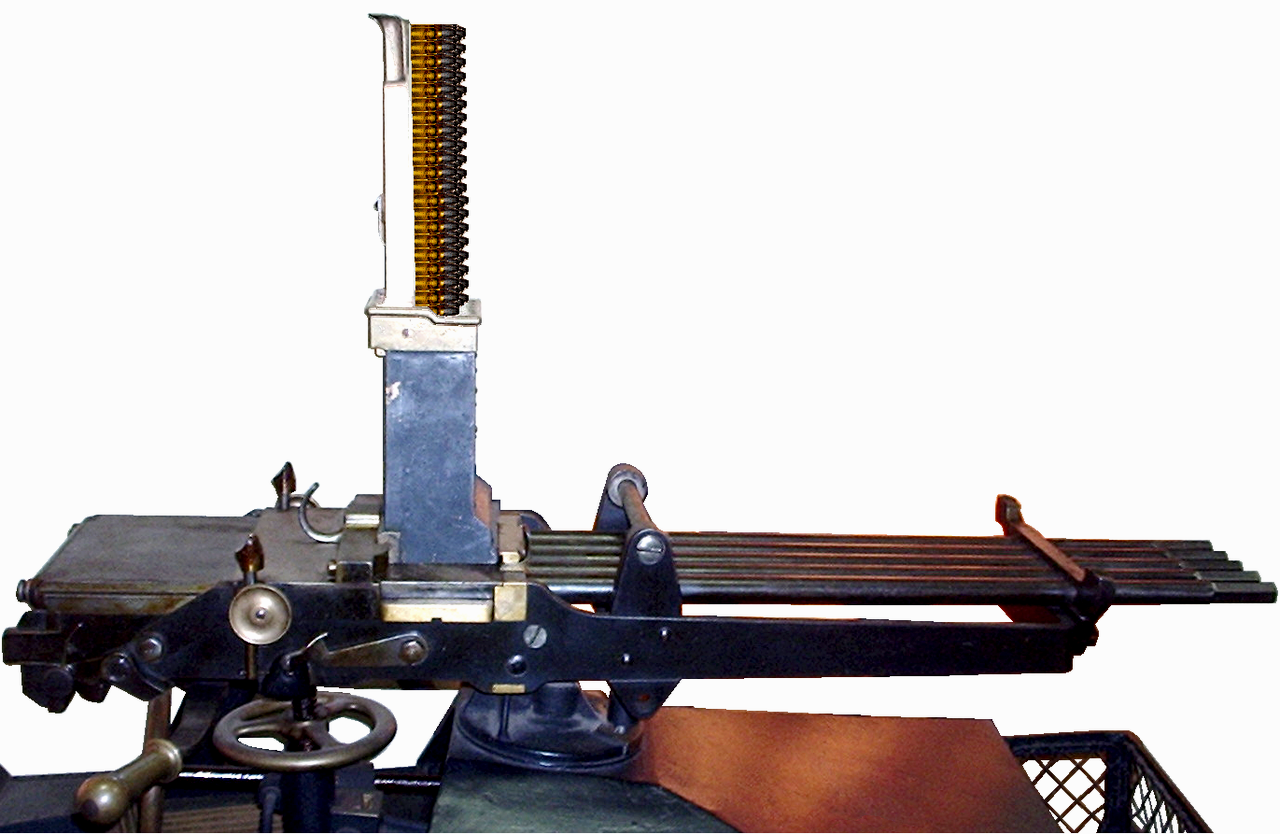
5-inch 5-barrel Nordenfelt Mk. II Machine Gun, stamped Enfield 1889, Nordenfelt No. 216 Mark II, weight 1-1-6 (146 lbs), Cartridge Machine Gun 41.
 (Guilmann Photo)
Ammunition feed system for the 5-inch 5-barrel Nordenfelt Mk. II Machine Gun.
The Nordenfelt gun was a is a multiple barrel organ gun that had a row of up to twelve barrels (he one shown here in the Army Museum has five). It was fired by pulling a lever back and forth and ammunition was gravity fed through chutes for each barrel. It was produced in a number of different calibres from rifle up to 25 mm (1 inch). Larger calibres were also used, but for these calibres the design simply permitted rapid manual loading rather than true automatic fire. This specific Nordenfelt Gun was intended for use as an anti-personnel weapon.
The Nordenfelt gun was reportedly originally designed at the end of the 1860s by Helge Palmcrantz (July 7, 1842-November 22, 1880), a Swedish inventor, and subsequently financially backed in the early 1870s by Thorsten Nordenfelt (March 1, 1842-February 8, 1920), a Swedish steel producer and banker operating out of London, as a multi-barreled, volley firing weapon. Both of the aforementioned names have British patents relating to the designs of the gun, ammunition and carriage. The gun was officially named the “Nordenfelt machine gun” with the Nordenfelt Guns and Ammunition Company operating with sales offices in London and a plant set up in England. These guns were made in anywhere between single, 2, 3, 5, 6, 10 and 12-barrel configurations and offered in a variety of calibers. An early variant of the gun was demonstrated to the Swedish Defense Minister in 1868, and it was subsequently bought into the Swedish Army. During a demonstration at Portsmouth naval base in England, a 10-barrel Nordenfelt reportedly fired 3,000 rounds in 3 minutes and 3 seconds without any stoppages, which was a very respectable feat for the time. The British Royal Navy officially adopted the Nordenfelt in addition to their Gardner and Gatling guns then in use. The Nordenfelt gun was eventually overshadowed by the Maxim machine gun as designed by Sir Hiram Maxim. Thorsten Nordenfelt eventually merged operations with the Maxim Gun Company to officially become Maxim-Nordenfelt Guns and Ammunition Company Limited in 1888. Shortly after, Thorsten Nordenfelt suffered a personal bankruptcy and was forced out of the Maxim-Nordenfelt company in 1890. Although a few examples are known in prominent museums, Nordenfelt guns never gained widespread success, and any surviving example today is considered extremely rare and desirable as an evolutionary piece in the story of “machine gun” development.
The weapon basically functions by simply moving the side mounted crank handle backwards and forwards. The initial operation of the weapon is by retracting the crank handle to the rear, this movement retracts the breech bolts rearward, which in turn allows five rounds to drop from the gravity fed hopper magazine located on top of the weapon through the cutouts on top of the receiver/top cover. Upon pushing the crank handle forward, this advances the breech bolts forward, while simultaneously positioning the rounds in line with the chambers in which the five rounds fire at the end of travel. The operation is repeated with the addition of the extraction and ejection function, in which the empty shells drop out the bottom. The speed or cyclic rate of firing is determined by how fast the operator can move the crank handle forward and backwards. The weapon itself is all machined steel with a “U” shaped frame in which the five barrels are mounted in parallel, with a brass breech block, blade and notch sights with elevation adjustable rear sight. (guns@rockislandauction.com)
(PO2 Tim Muise Photo)
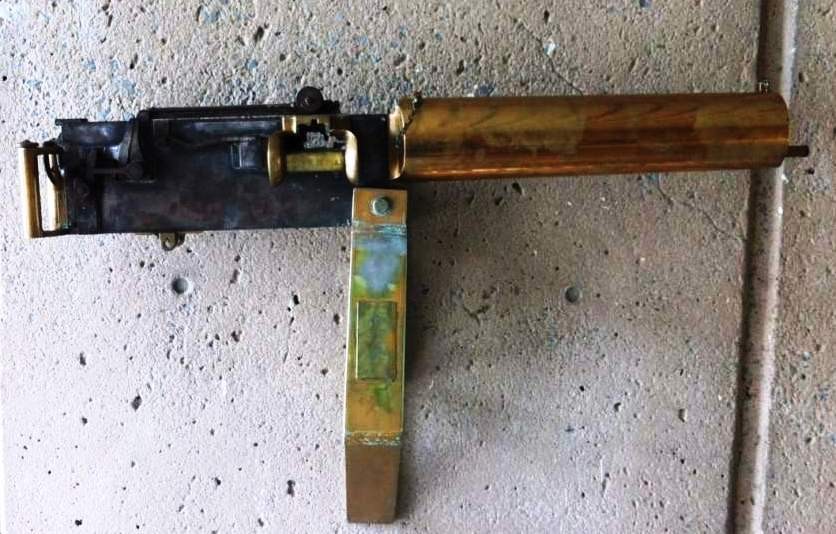
Vickers .303-inch Machine Gun, mounted on the wall inside the entrance to HMCS Scotian. This MG has been moved to the Army Museum in the Halifax Citadel.
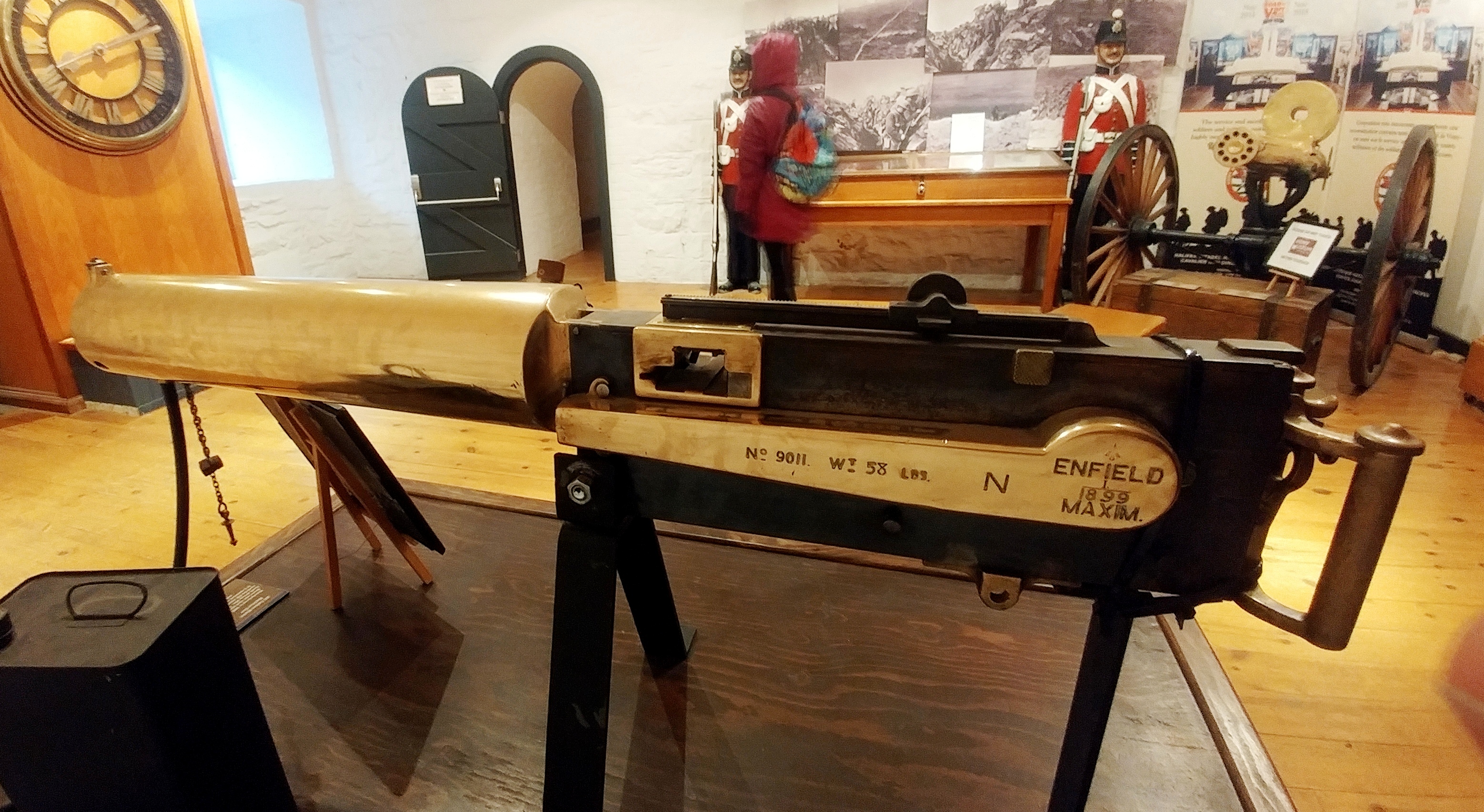
(Author Photos)
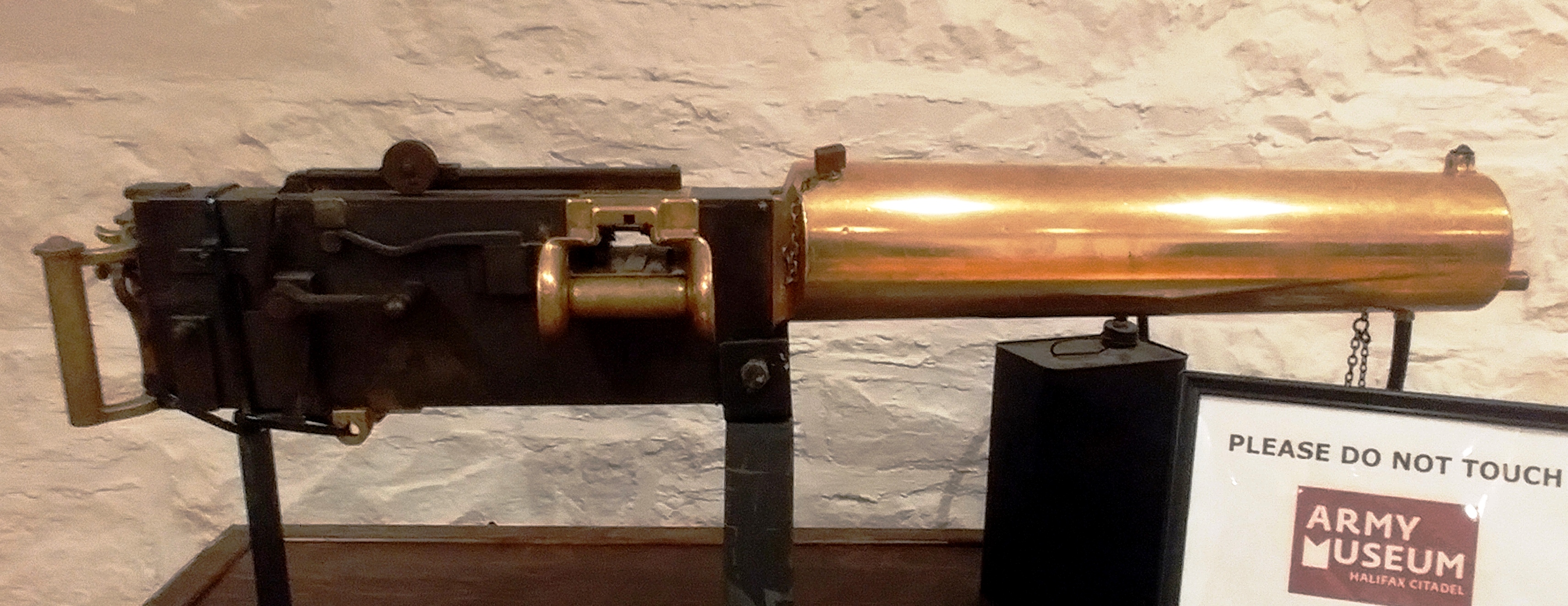
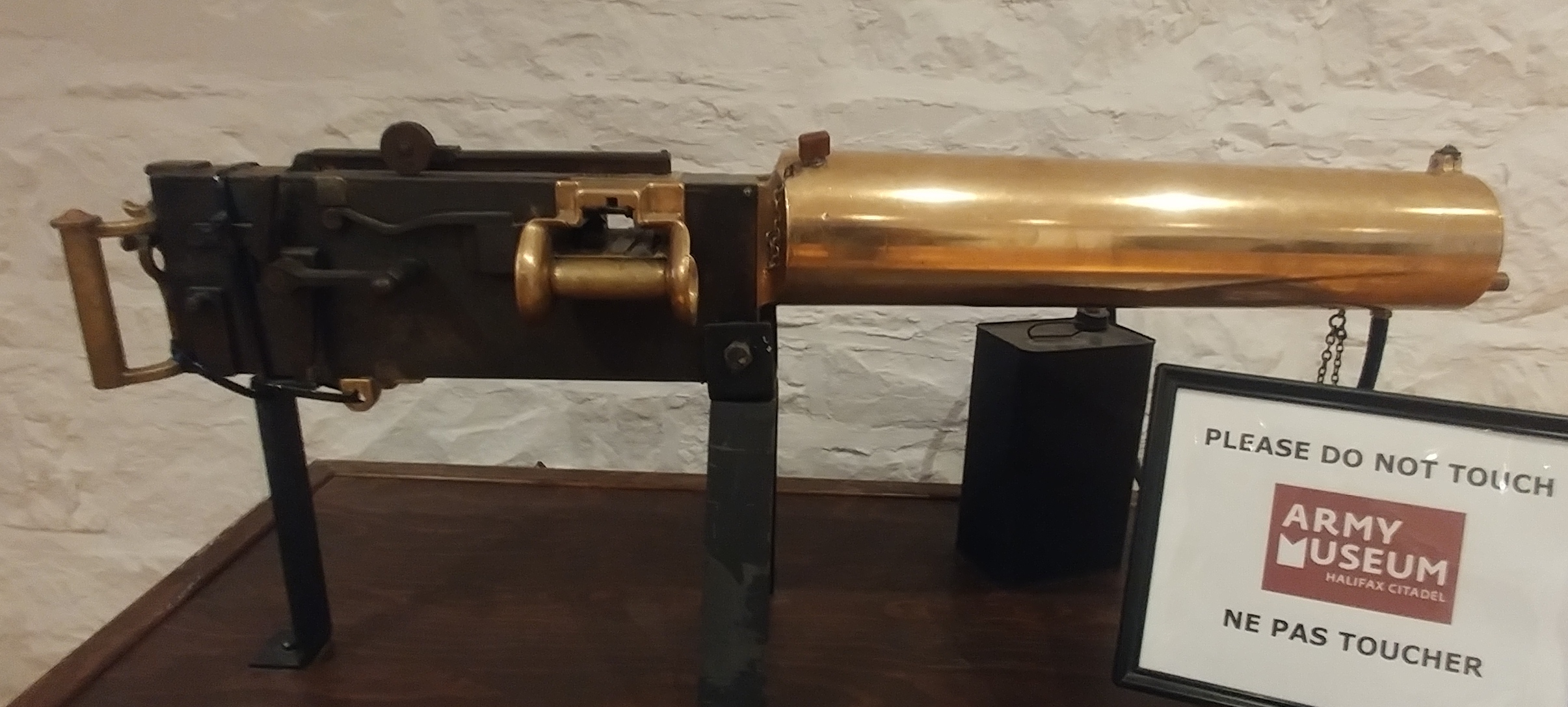
Vickers .303-inch Machine Gun.
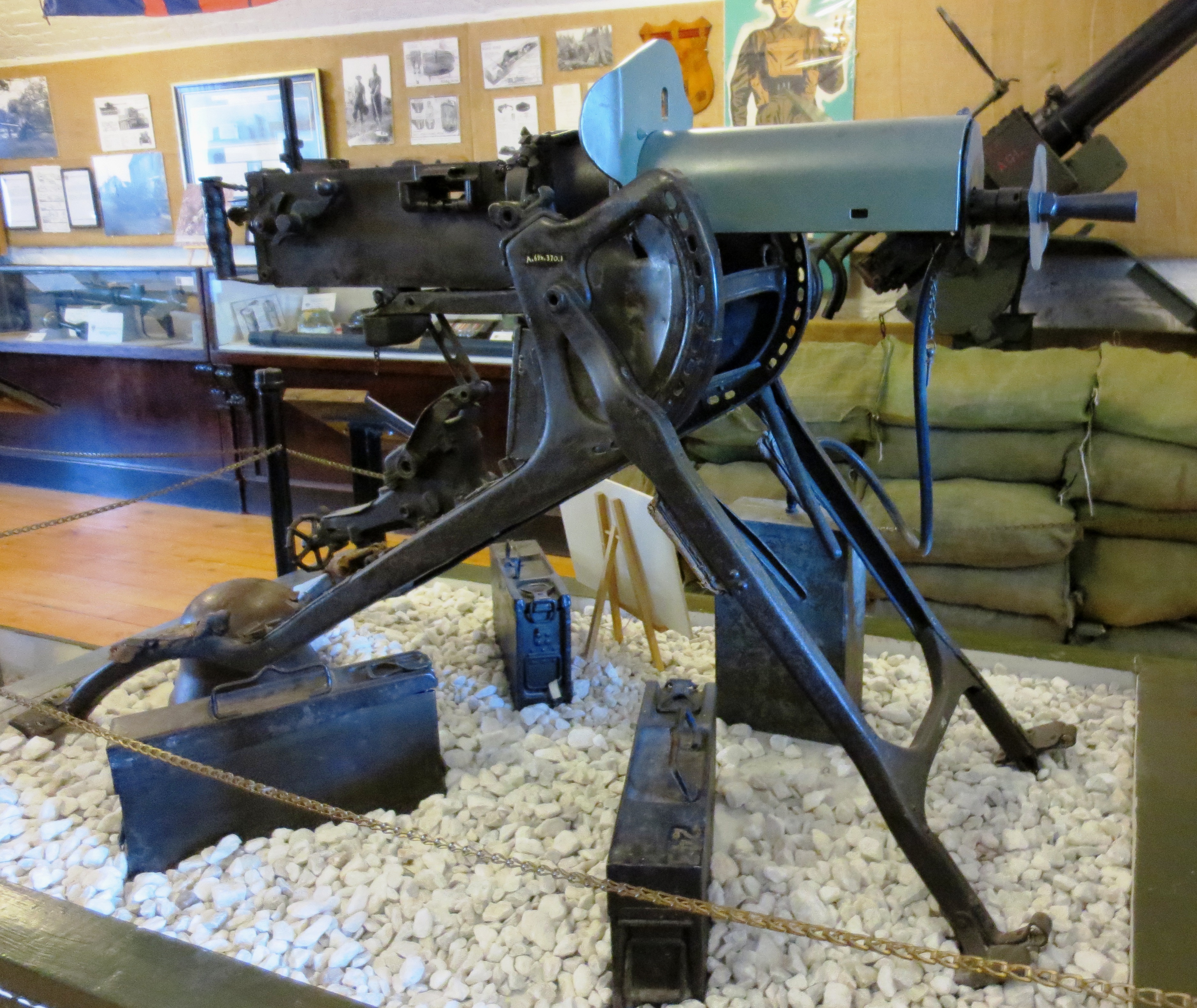
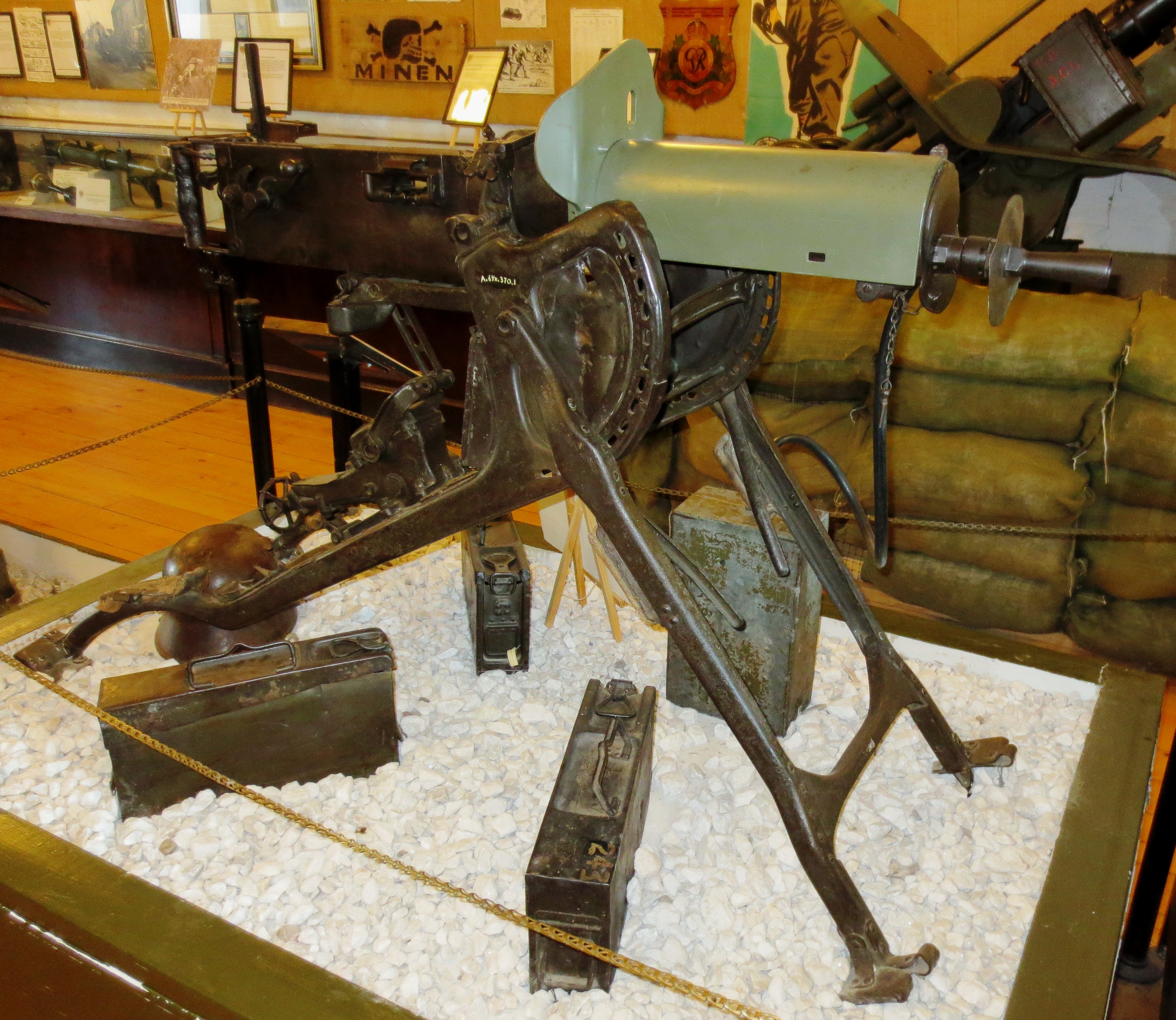
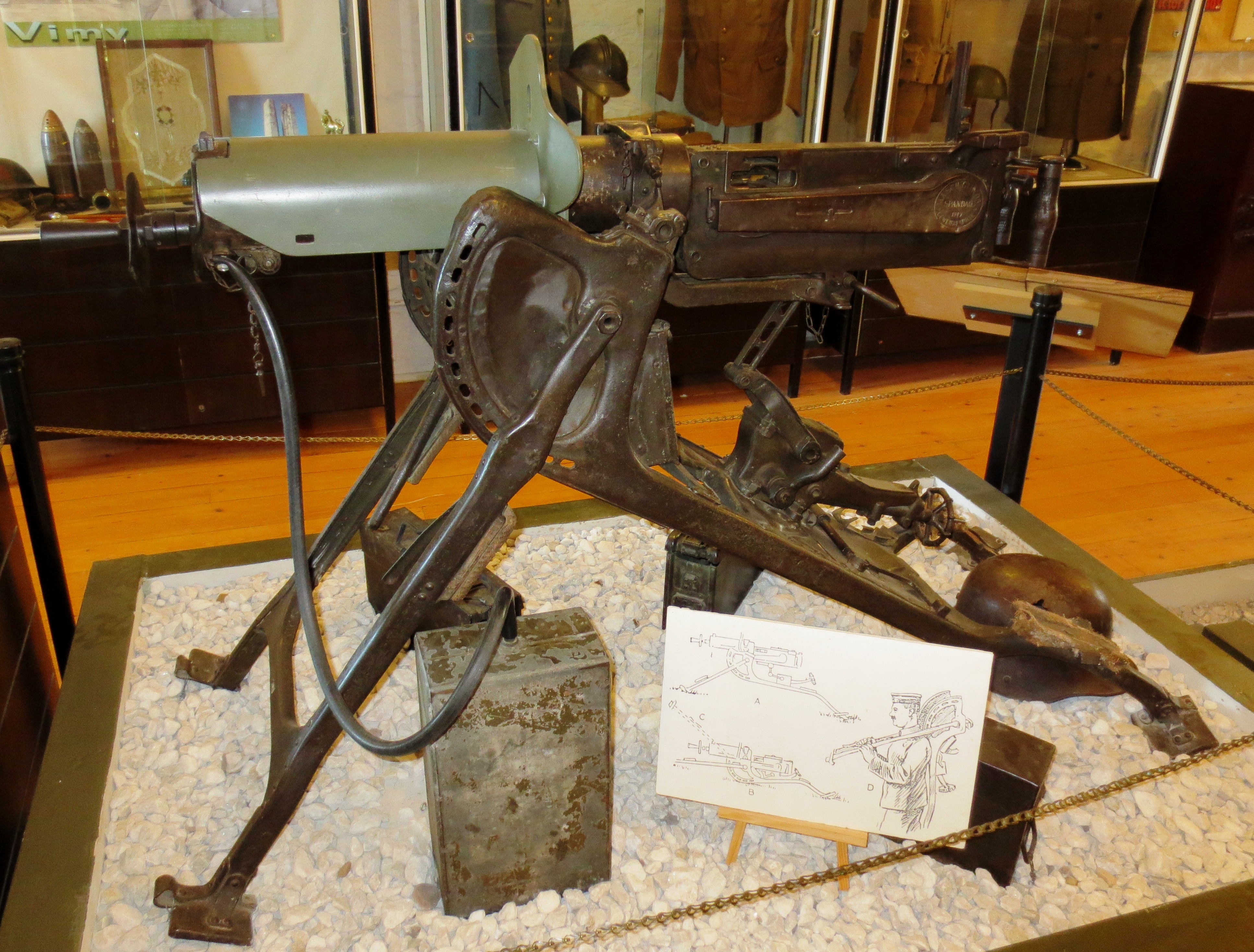
(Author Photos)
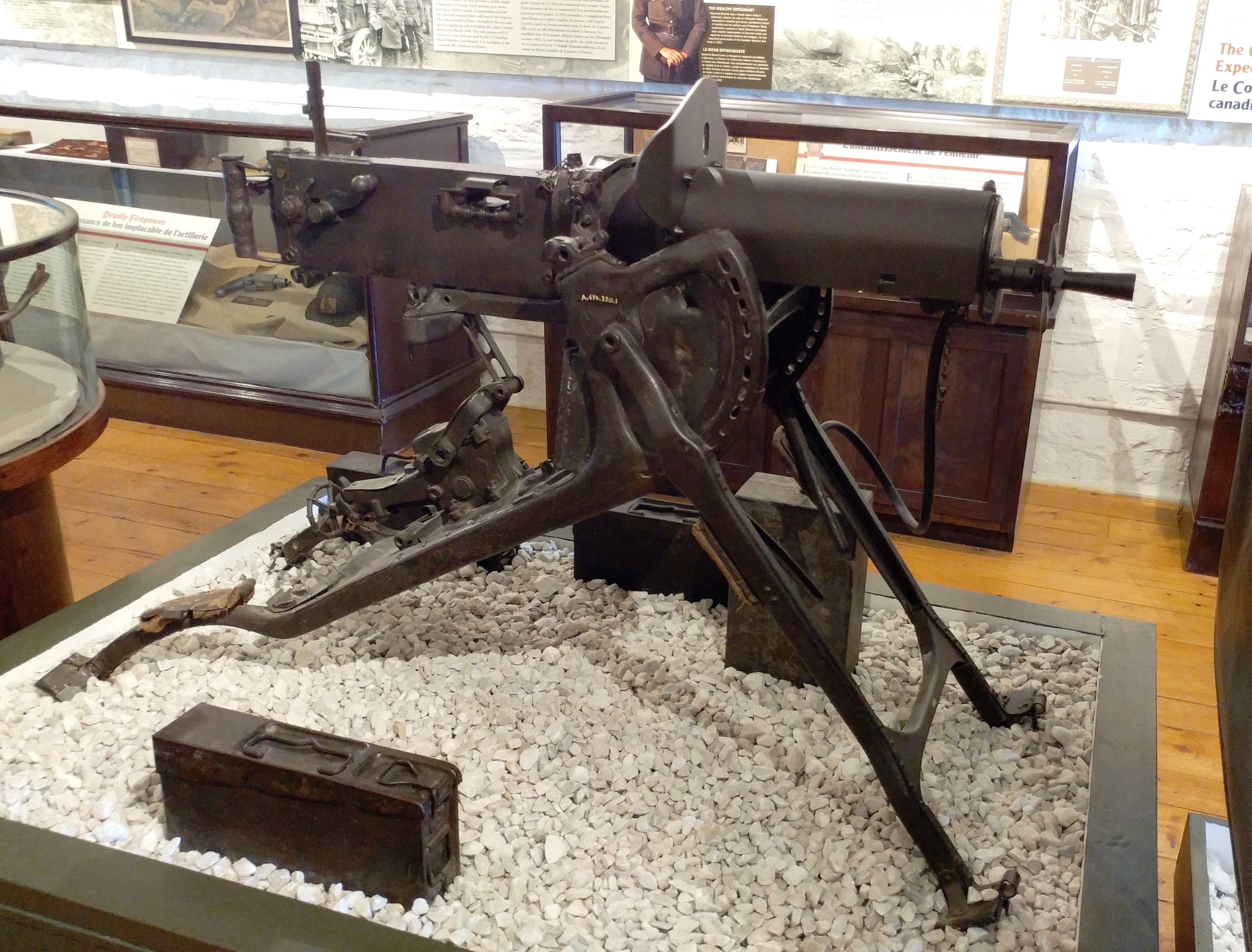
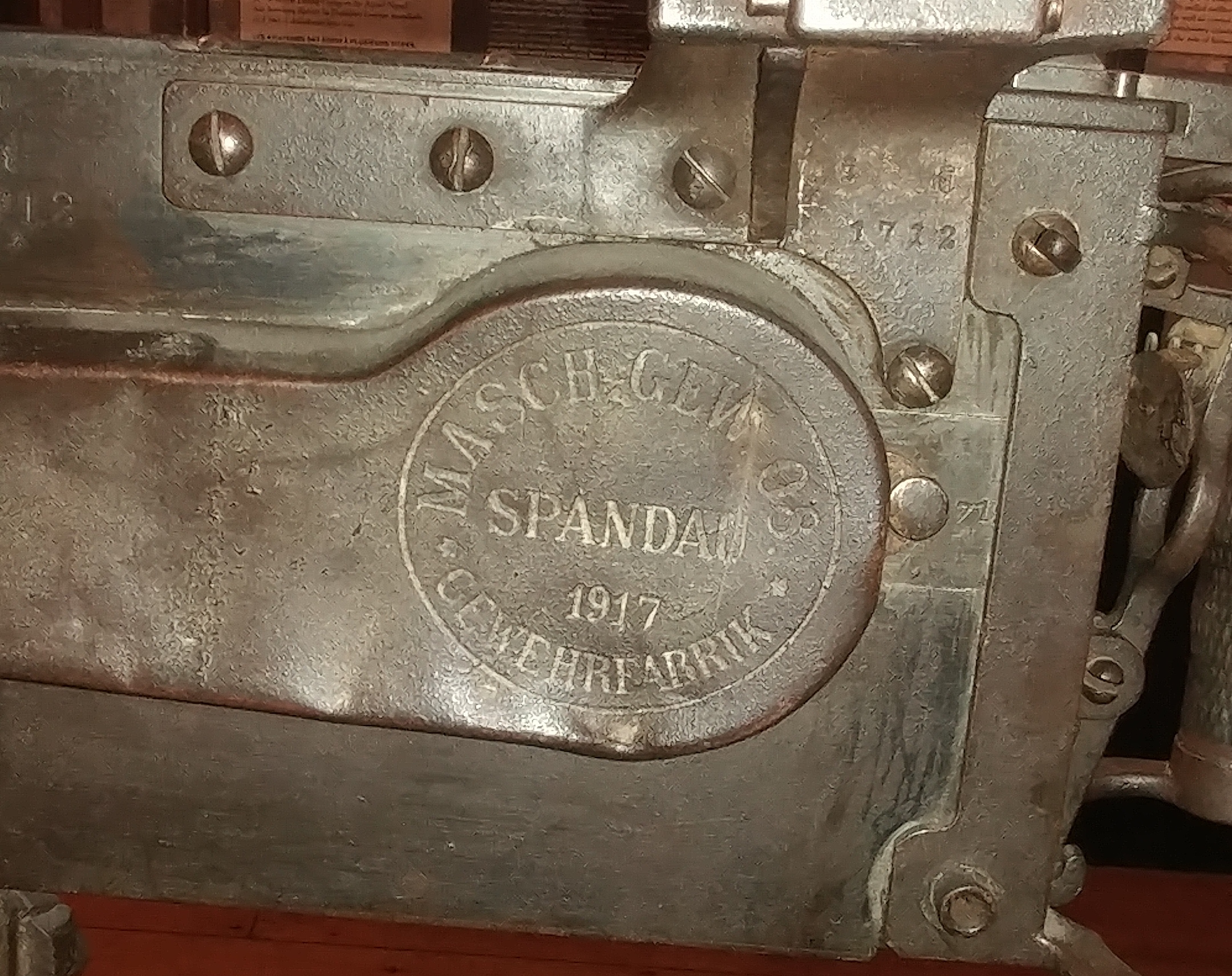
German First World War 7.92-mm Maxim Spandau MG 08 Machinegun, possibly (Serial Nr. 1712), mounted on a Schlitten stand. This MG 08 was captured on 27 Sep 1918 by the 78th Battalion (Winnipeg Grenadiers), of the 12th Brigade within the 4th Canadian Division of the Canadian Expeditionary Force (CEF) in France.
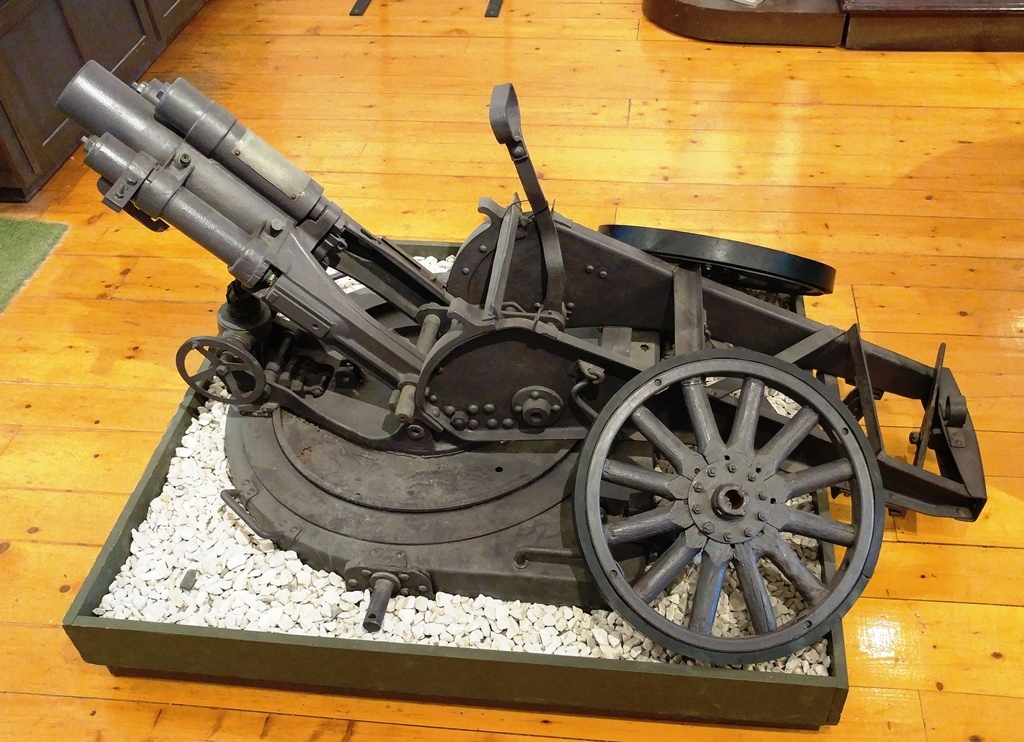
(Author Photos)
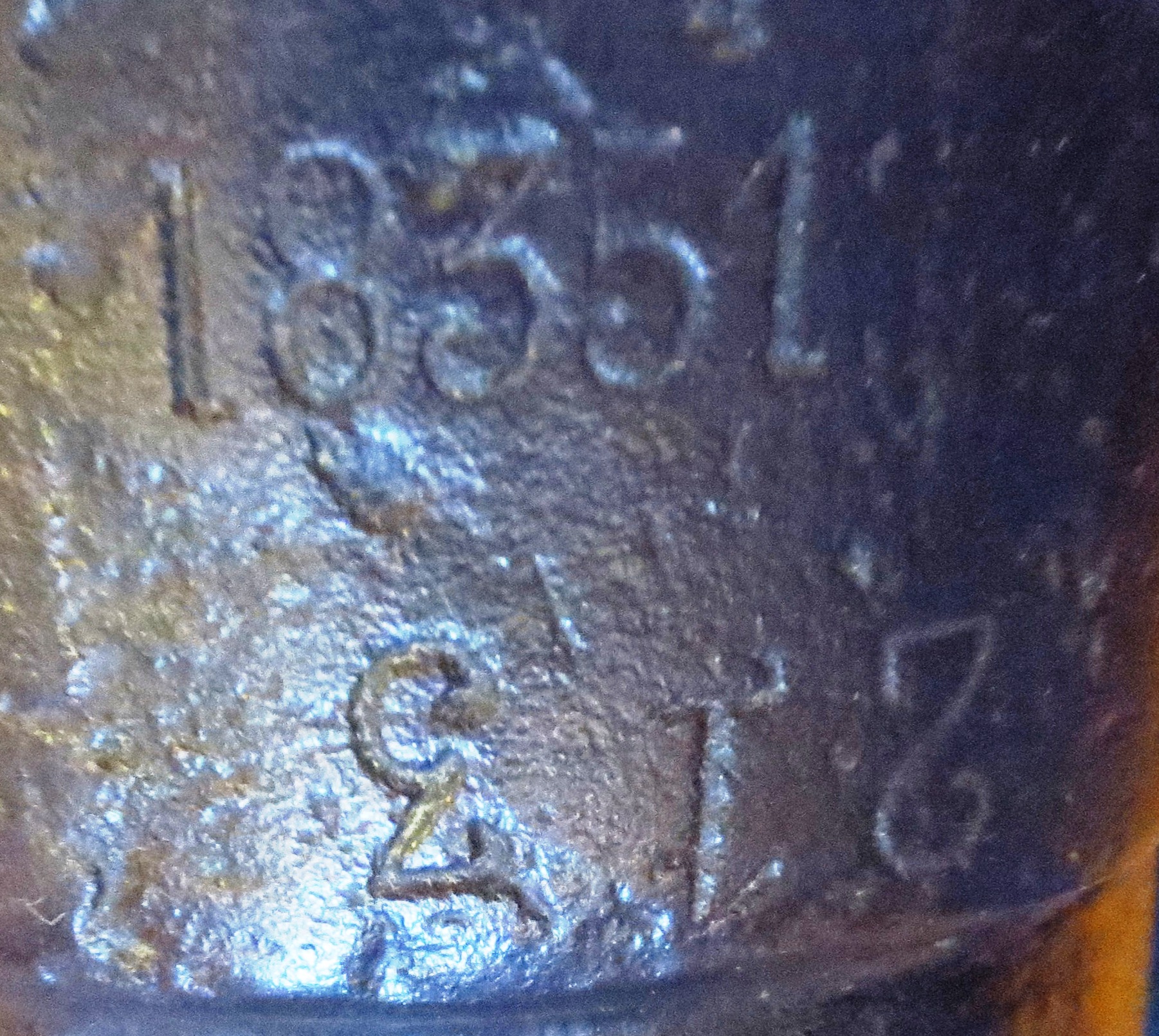
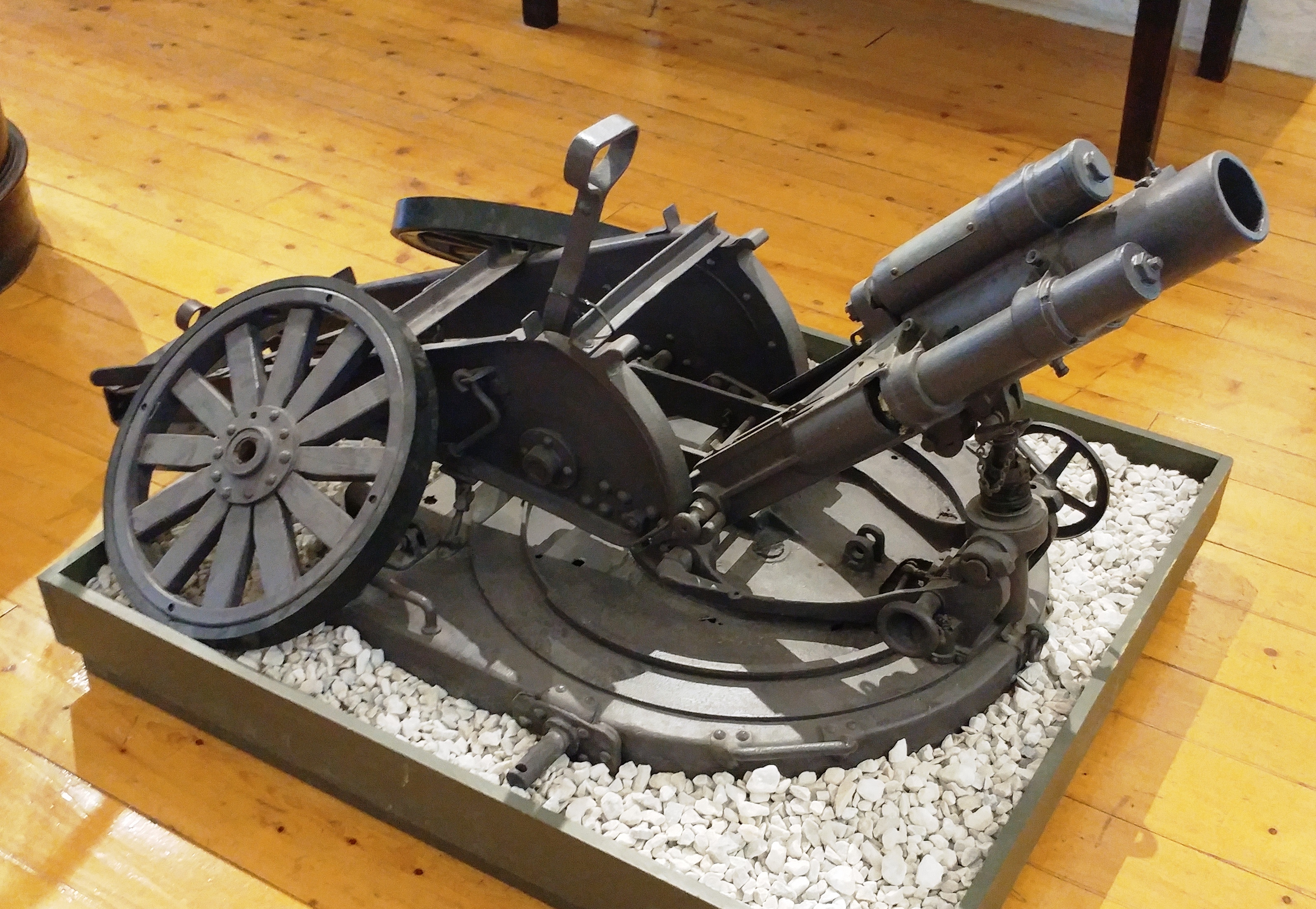
German First World War 7.58-cm leichtes Minenwerfer neuer Art (7.58-cm leMW), (Serial Nr. 18351), 213. This trench mortar was captured on 26 Aug 1918 by the 19th Battalion, 4th Infantry Brigade, 2nd Canadian Division, Canadian Expeditionary Force (CEF), at Guemappe, France.
The 7.58 cm Minenwerfer a.A. (alter Art or old model) (7.58 cm leMW). The Germans fielded a whole series of mortars before the beginning of the First World War. Their term for them was Minenwerfer, literally mine-thrower; they were initially assigned to engineer units in their siege warfare role. By the Winter of 1916-17, they were transferred to infantry units where the leMW’s light weight permitted them to accompany the foot-soldiers in the advance. In common with Rheinmetall’s other Minenwerfer designs, the leMW was a rifled muzzle-loader that had hydraulic cylinders on each side of the tube to absorb the recoil forces and spring recuperators to return the tube to the firing position. It had a rectangular firing platform with limited traverse and elevation. Wheels could be added to ease transportation or it could be carried by at least six men. In 1916, a new version, designated as the n.A. or neuer Art, was fielded that included a circular firing platform, giving a turntable effect, which permitted a full 360 degree traverse. It also had a longer 16 inches (410 mm) barrel and could be used for direct fire between 0° and 27° elevation if the new 90 kg (200 lb) trail was fitted to absorb the recoil forces. In this mode it was pressed into service as an anti-tank gun.
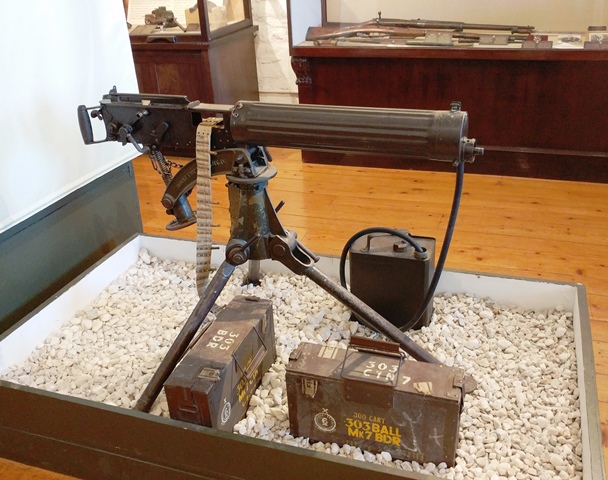
(Author Photo)
.303-inch Vickers MG.
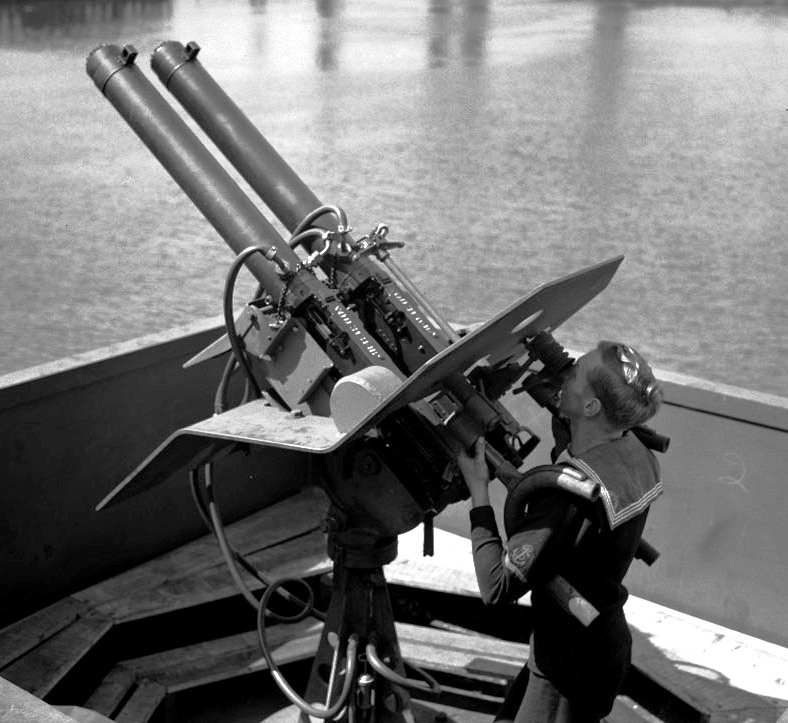
(Library and Archives Canada Photo, MIKAN No. 3356796)
Twin .50 cal MGs, shipboard.
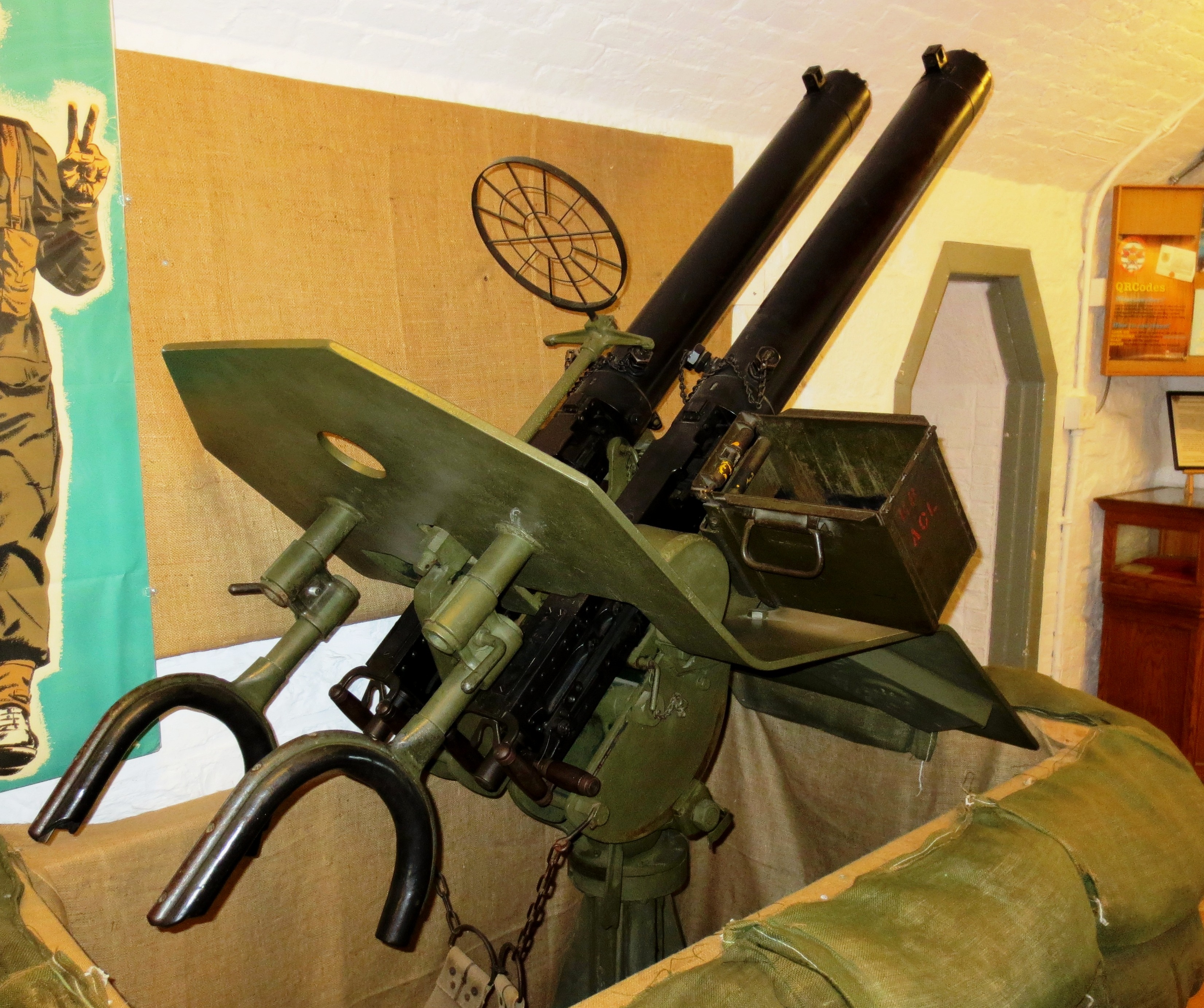
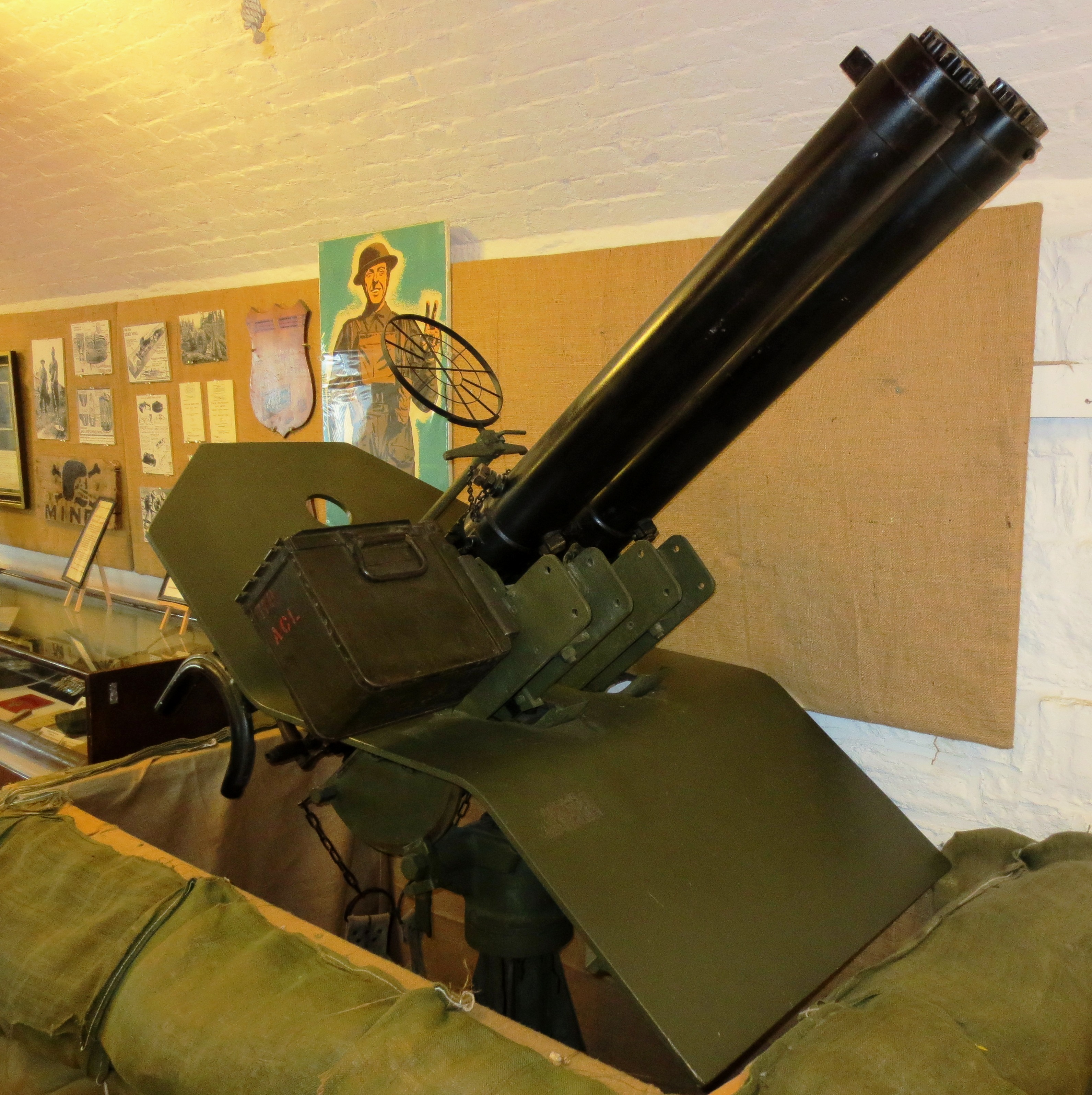
(Author Photos)
Twin .50-calibre AA Heavy Machine Guns.
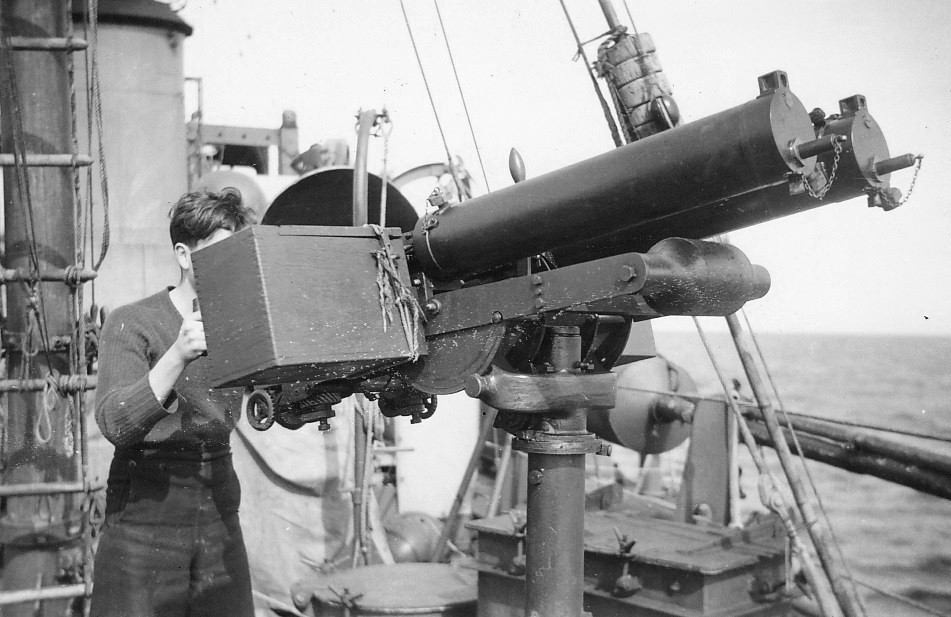
(Catherine Crewe Photo)
HMCS Quinte (J166) (Bangor-class), twin Browning.50-calibre water-cooled AA machine guns.
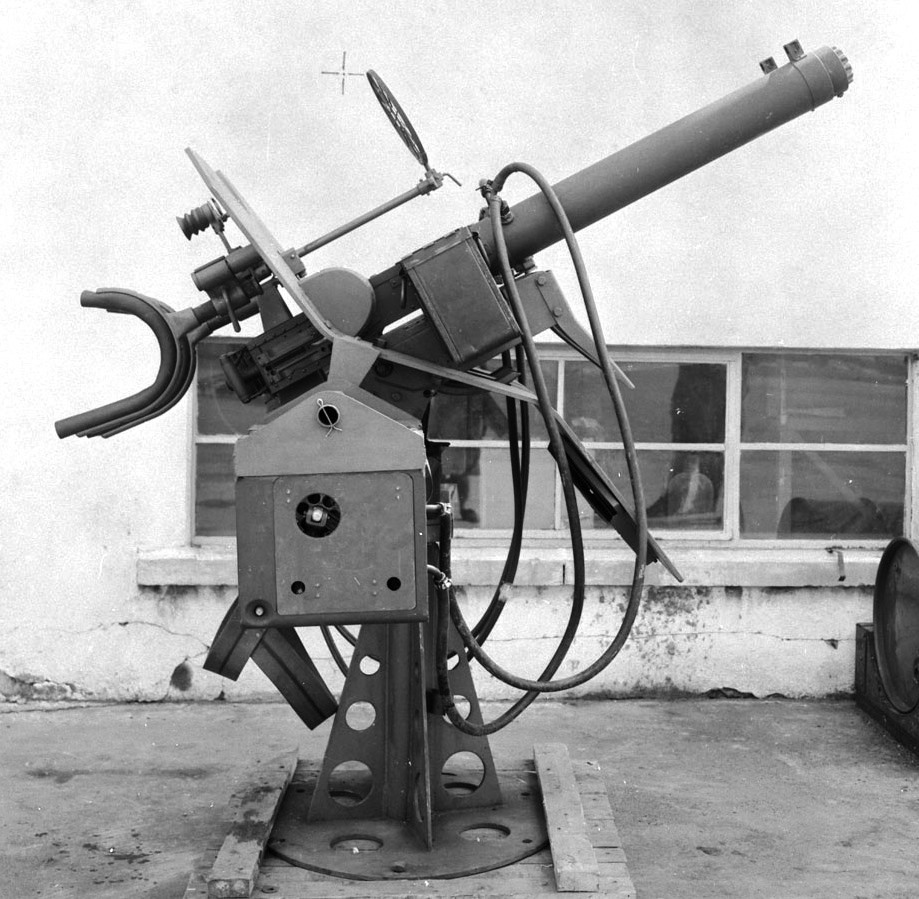
(Library and Archives Canada Photo, MIKAN No. 3584934)
.50-cal twin-mount AA Gun, 6 May 1954.
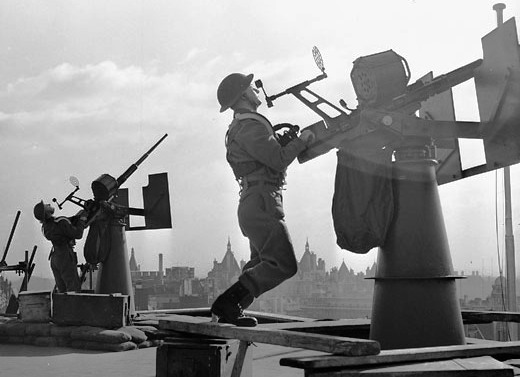
(Library and Archives Canada Photo, MIKAN No. 3238905)
Oerlikon 20-mm/70 Light Anti-Aircraft Guns being manned on the roof of the Canadian Military Headquarters (CMHQ), London, UK, ca 1942.
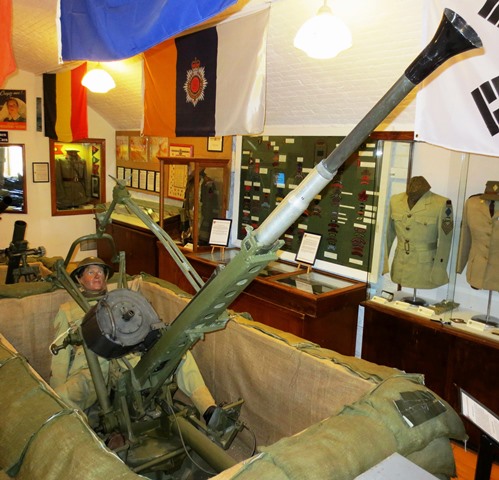
(Author Photo)
Oerlikon 20-mm/70 Light Anti-Aircraft Gun.
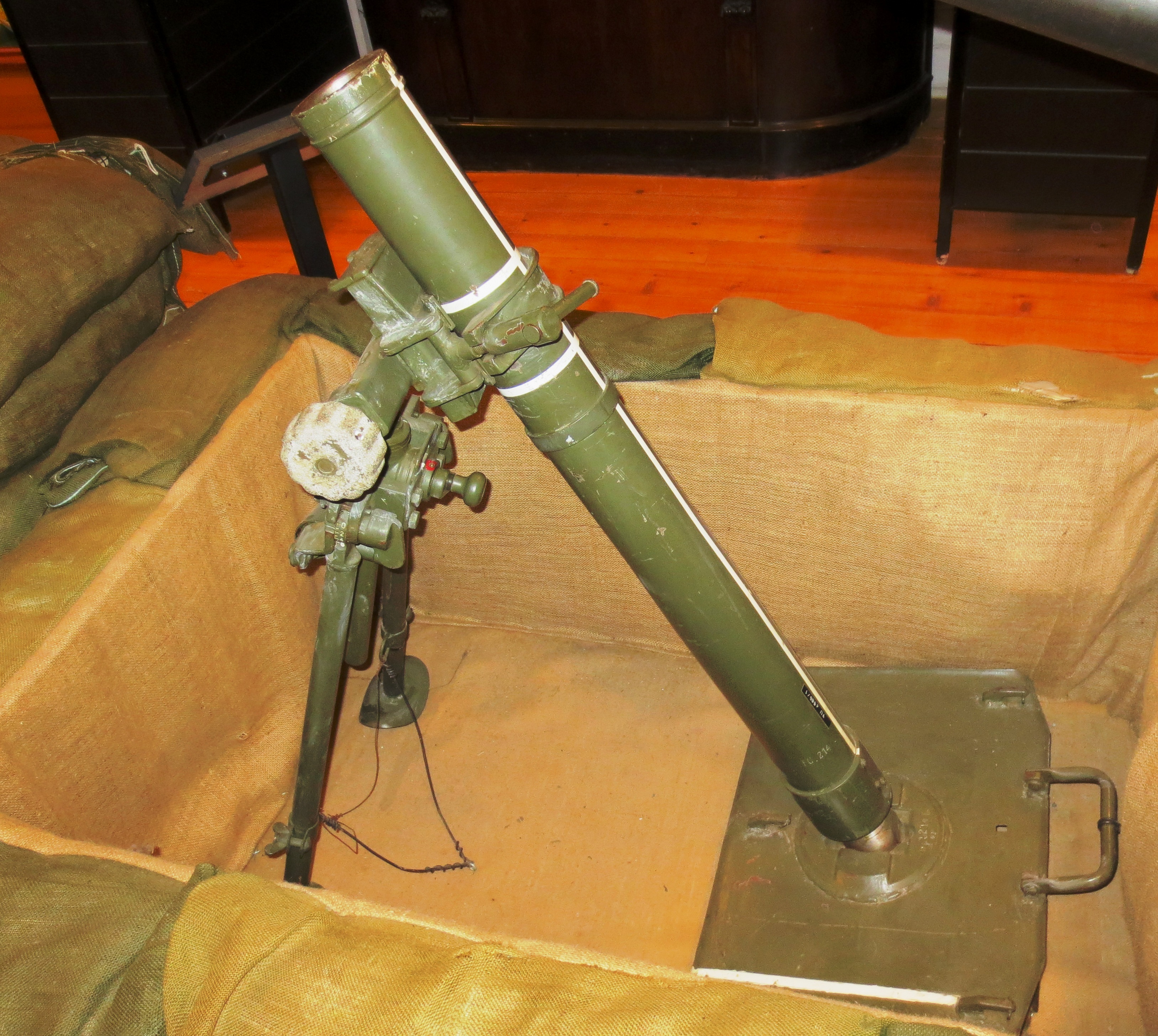
(Author Photos)
German 81-mm Mortar, (Serial Nr. FG214).
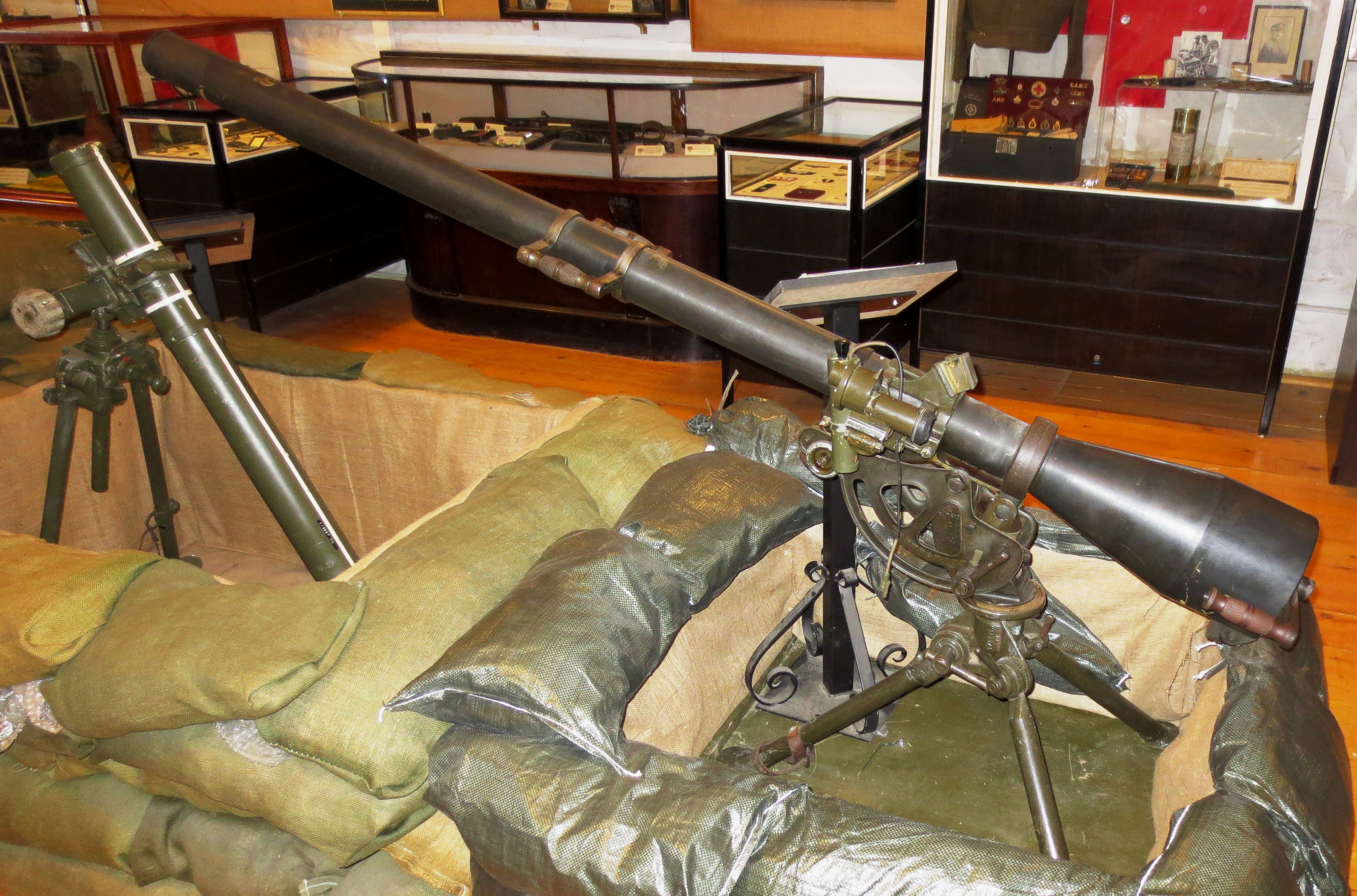
(Author Photos)
75-mm M20 RR Recoilless Rifle, (Serial No. 7229225).
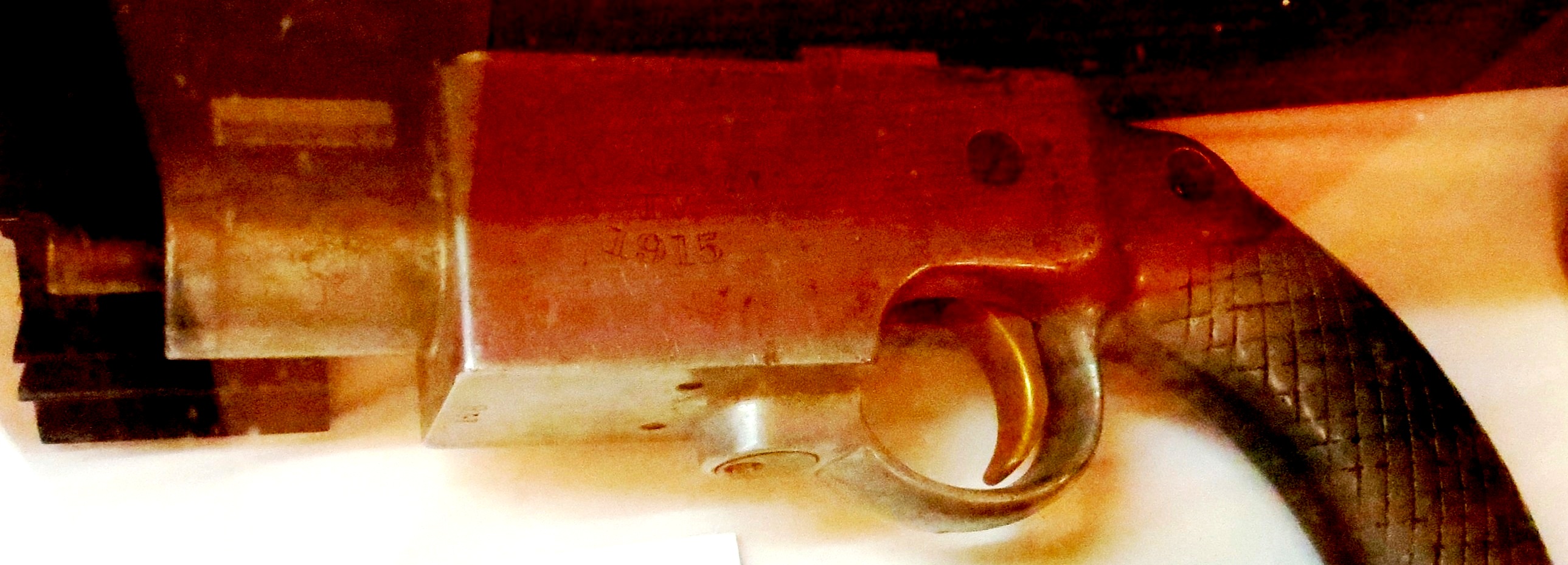
(Author Photo)
Pistol like device used as an electrical initiator for firing large coastal guns. 1915 Model.
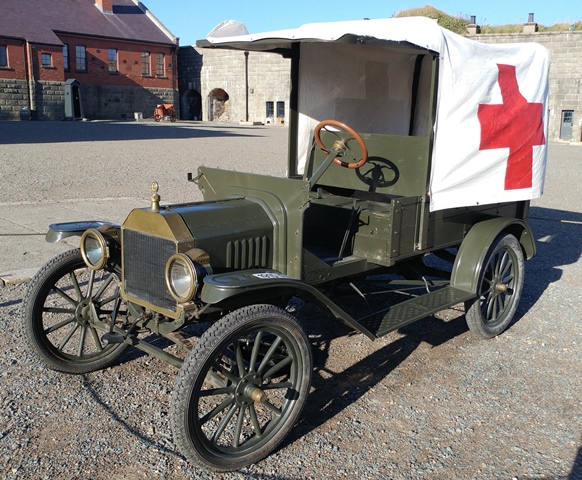
(Author Photo)
1915 Ford Field Ambulance in the Citadel Courtyard.
All comments are subject to our Comment Policy. You must be at least 18 years old to comment.
See a comment that violates our guidelines? Report it here.