
Halifax, Fort Ives, McNabs Island
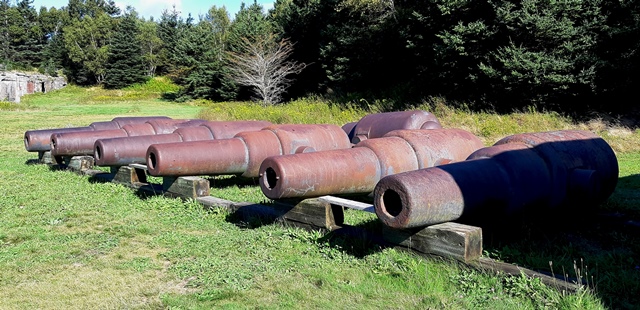
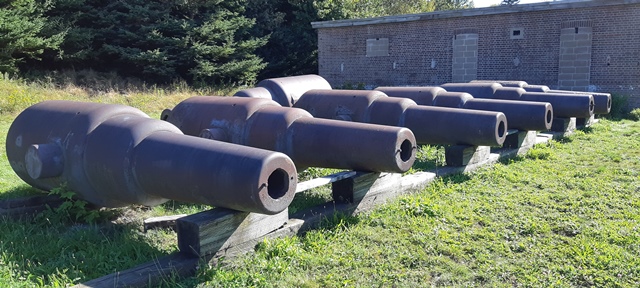
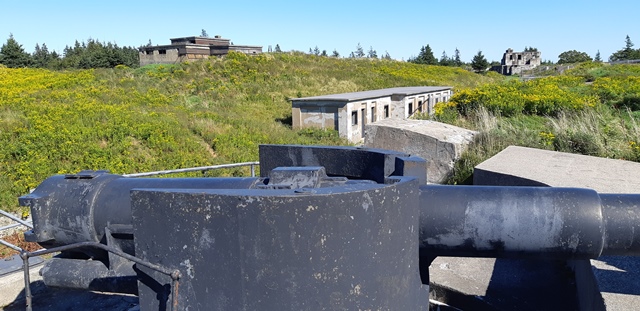
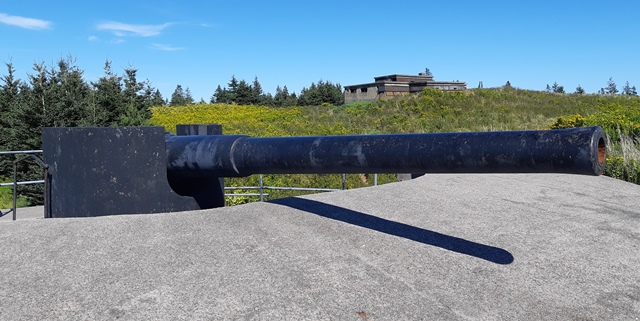
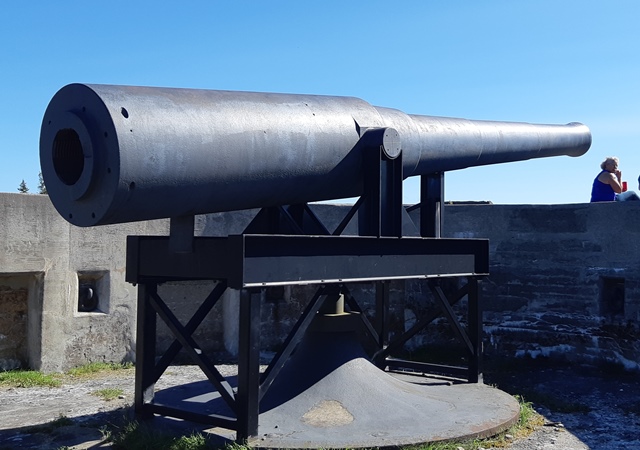
(Author Photo)There are nine guns currently on display in Fort Ives, including three 10-inch Guns with two in fixed defensive positions on the ramparts and one on the ground, and six 9-inch guns unmounted in the court yard.
(Author Photo)
Fort Ives (Halifax Military Heritage Preservation Society article)
During the Seven Years War between Britain and France, the threat of a French attack on Halifax was heightened with the capture of St. John’s, Newfoundland by the French in July of 1762. The decision was made therefore to strengthen the defences of Halifax by enhancing existing fortifications at Georges Island, Eastern Battery and along the Halifax waterfront. Additionally, new gun batteries were quickly built at Point Pleasant (Point Pleasant Battery and Northwest Arm Battery). A further battery of ten guns was ordered to be built at Ives Point on the northwestern tip of McNab’s Island, to guard the main harbour entrance channel in conjunction with Point Pleasant Battery. Some work was done to clear the heavily timbered site at Ives Point in the summer of 1762 however, work was suspended and then abandoned shortly thereafter, as the threat of a French attack subsided. No further effort would be made to fortify Ives Point for another century.
The advent of rifled muzzle-loading ordnance in warships in the mid-19th century heralded a recapitalization of coastal and harbour defences throughout the world, as militaries sought ways and means to defend against these new and much more powerful guns. A massive new gun battery was begun at Ives Point in 1865, intended to cooperate with the new and improved Fort Ogilvie and Cambridge Battery at Point Pleasant and a vastly upgraded York Redoubt, to defend the main channel into Halifax Harbour – the intermediate line of harbour defences. Also known as Fort Ives, the battery and point are named after Captain Benjamin Ives, a British officer who served with Sir William Pepperell at the Siege of Louisburg in 1745, and later held the office of Captain of the Port in Halifax.
Completed in 1870 and with the ordnance mounted by 1874, Ives Point Battery consisted of three 10-inch 18-ton rifled muzzle loaders (RMLs) facing south west and six 9-inch 12-ton RMLs on its western face. The guns fired through deep embrasures fitted with iron screens, sited in extensive masonry and concrete substructures and casemates; they could penetrate 12 inches of wrought iron at a range of 1,000 yards. As the range from the battery to the middle of the nearby harbour entrance channel was a mere 850 yards, the guns would have indeed been devastating against any enemy shipping that made it that far. Various brick buildings sat within the battery, for storerooms, a field forge, barracks and a cook house. The rear (eastern) side of the battery was enclosed by a wooden stockade wall, replaced by an iron fence sometime between 1899 and 1903. There was also a jetty on the eastern side of Ives Point to support the battery.
In the late 1880s, a new system of defensive sea mines was added to the Halifax defences to guard the harbour entrance. The main portion of the minefield would be positioned in the harbour entrance channel between Ives Point and Point Pleasant. To guard the minefield, three 6-pounder quick-fire (QF) guns were installed near the shoreline just north of Ives Point Battery, along with an ammunition stores building, all being in place by November 1891. Similar QF guns were mounted across the channel at Point Pleasant Battery for the same purpose.
Further upgrades and improvements to Ives Point Battery were made between 1888 and 1892, including concrete strengthening for the magazines and adding position finding apparatus to aid fire control. With the pace of weapon technology rapidly advancing however, the RMLs were becoming obsolete by the 1890s. The 9-inch RMLs were removed between 1899 and 1901 and replaced by a new counter bombardment battery of two 6-inch Mk VII breech-loading (BL) guns built on top of two of the old 9-inch RML emplacements in 1901. The 10-inch RMLs were left in position, even though obsolete. Two new 12-pounder QF Mk I guns, for close defence and to protect the minefield, were added in 1902 immediately north of the 6-inch BL guns and just behind the old 9-inch RML emplacements. Two of the three 10-inch RMLs still remain in place and can be seen today, mounted on their original carriages in their embrasures with iron screens. The other 10-inch RML and the six discarded 9-inch RMLs rest on open ground on the eastern part of the battery.
In 1898, a submarine mining cable test room and observation post were added to Ives Point Battery, to provide the means to power the minefield and to detonate remotely various mines in the main channel. This would also provide power to a secondary minefield at the north end of Eastern Passage. A pair of searchlights to cover the minefield was located on the shoreline below the 6-pounder QF guns in 1903. The minefield was deemed obsolete and removed from Halifax’s defences in 1904 when British Imperial forces departed, and the 6-pounder QF guns were removed in 1906. However, three more searchlights were added during the First World War (1914-18), providing illumination for the 12-pounder QF guns defending against fast torpedo boats and guarding the anti-submarine barrier that stretched from Ives Point to the breakwater at Point Pleasant.
Although obsolescent by the 1930s, Ives Point Battery continued to function in the early days of the Second World War (1939-45), initially manned by the 51st Battery, 1st (Halifax) Coast Brigade, Canadian Artillery. In September 1939 the 12-pounder QF guns at Ives Point Battery were transferred to York Shore Battery below York Redoubt. The searchlights operated until September 1940 when the new ones at Strawberry Battery came on line, and Ives Point Battery was used as barracks for soldiers manning other works on McNab’s Island during the war.
Much of the structure of Ives Point Battery can still be seen today, including the 10-inch RML emplacements (two of them with the guns still in place), the 6-inch BL emplacements and the 12-pounder QF gun emplacements. A number of the support buildings still stand, and various crumbling remains of the 6-pounder emplacements, searchlight emplacements and other ancillary support buildings can be found with difficulty in the woods and bushes around the battery. Responsibility for the site remains with the Province of Nova Scotia.
References:
Harry Piers. The Evolution of the Halifax Fortress 1749-1928 (Halifax: The Public Archives of Nova Scotia, 1947)
A.J.B. Johnston. Defending Halifax: Ordnance, 1825-1906 (Parks Canada, 1981)
The Friends of McNab’s Island Society website (https://mcnabsisland.ca)
Halifax Military Heritage Preservation Society
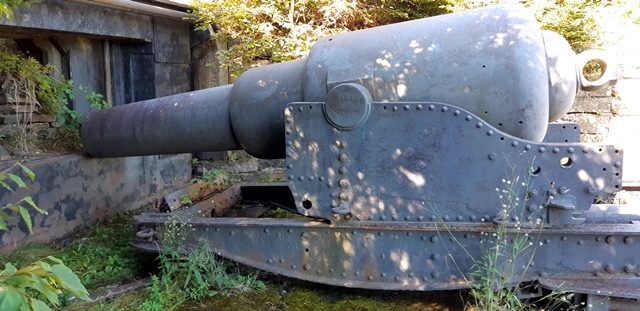
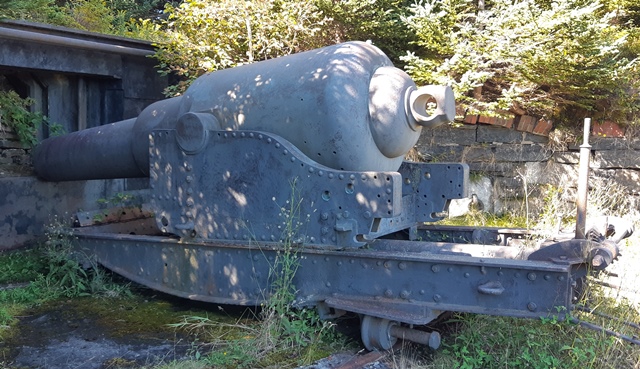
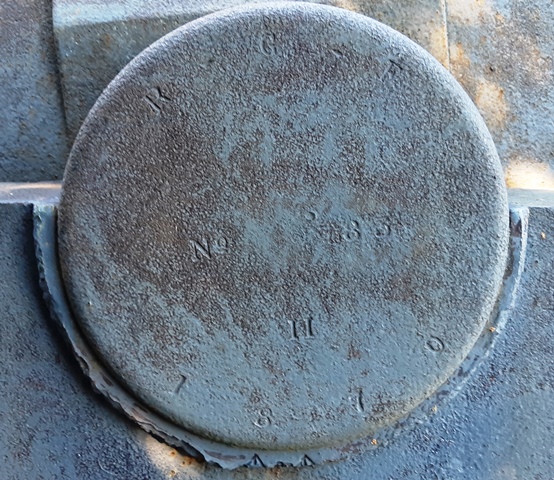
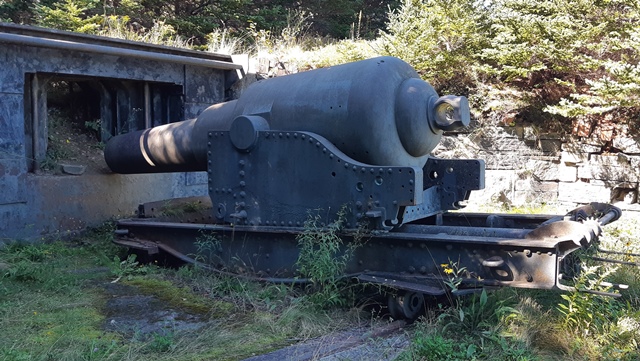
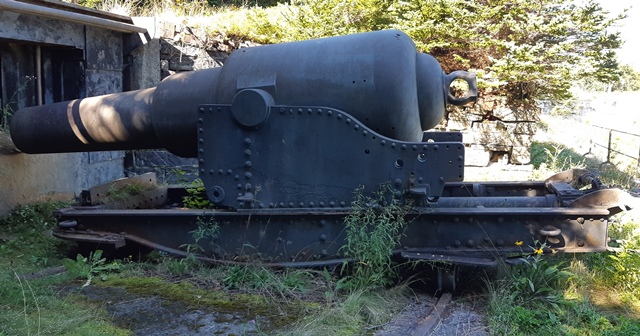
The nine guns currently on display in Fort Ives, include three 10-inch Guns with two in fixed defensive positions on the ramparts and one on the ground, and six 9-inch guns unmounted in the court yard:
(Author Photos)
10-inch 18-ton Mk. II Muzzleloading Rifle with Millar pattern breeching ring, weight greater than 17-0-0-0 (38,080 lbs). An English ton is 2,240 lbs, therefore the weight for this gun is greater than (17 X 2,240 lbs = 38,080 lbs) or close to 20 tons in Canadian weight. (RGF II, No. 83, 1870) on the left trunnion, blank on the right trunnion. No. 1, mounted on an iron traversing carriage.
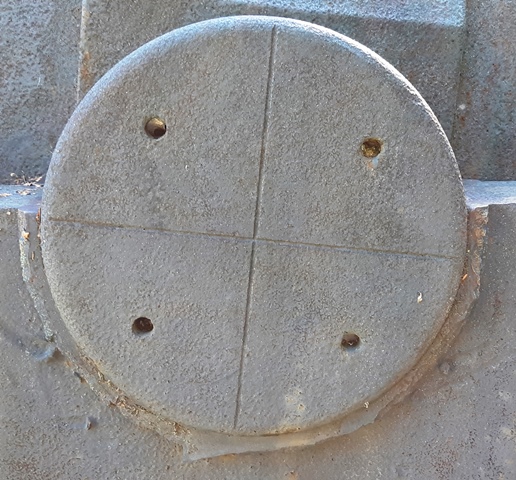
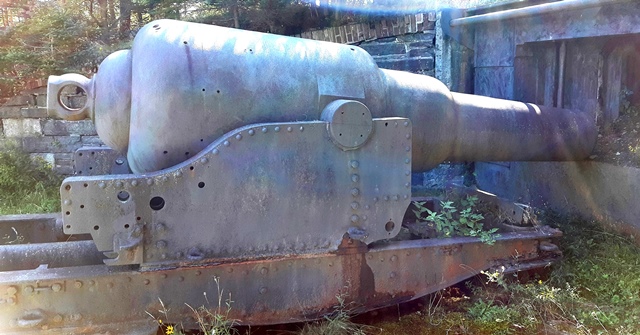
(Author Photos)
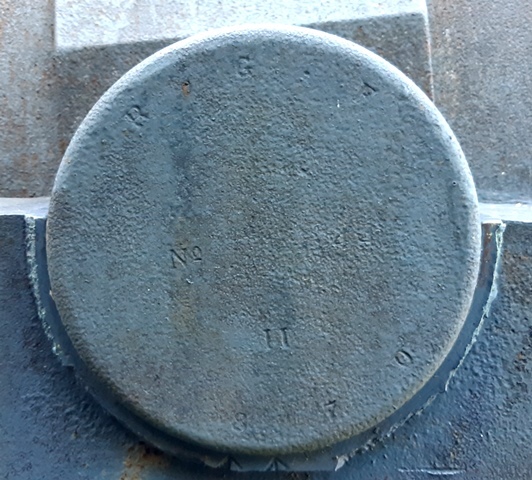
10-inch 18-ton Mk. II Muzzleloading Rifle with Millar pattern breeching ring, weight greater than 17-0-0-0 (38,080 lbs). No. 2, mounted on an iron traversing carriage, (RGF II, No. 44, 1870) on the left trunnion, blank on the right trunnion.
There are seven guns on the ground behind the ramparts:
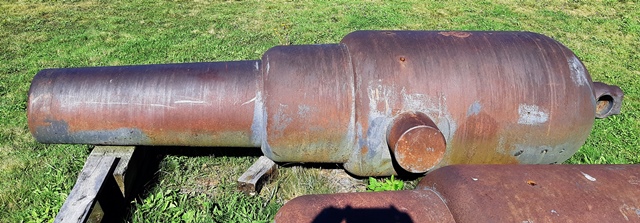
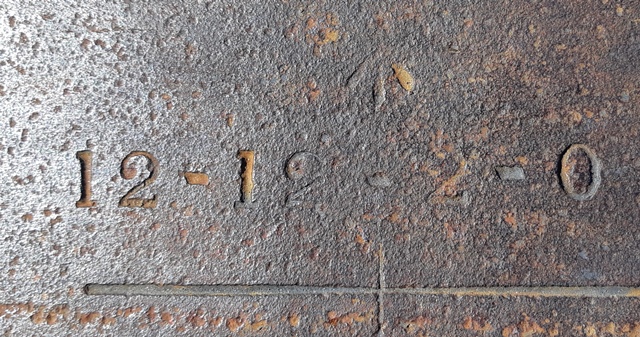
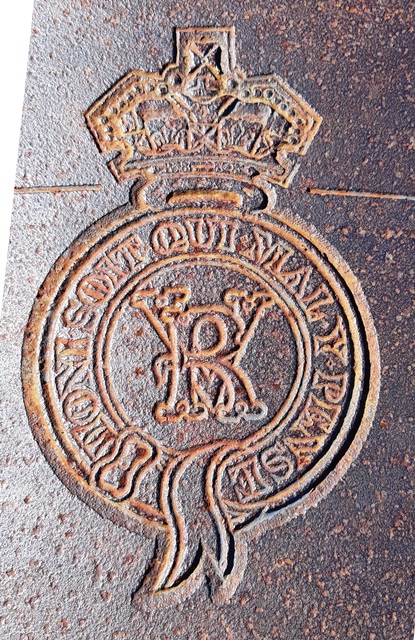
9-inch 12-ton Mk. III Muzzleloading Rifle with Millar pattern breeching ring, weight 12-12-2-0, (12 X 2,240 = 26,880, +12 X 112 = 1,344, +2, for a total of 28,280 lbs), (RGF No. 379, III, 1869) on left trunnion, (+) on right trunnion, Queen Victoria cypher, unmounted, resting on wood blocks, No. 1.
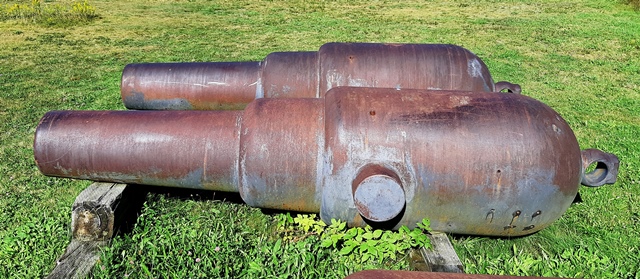
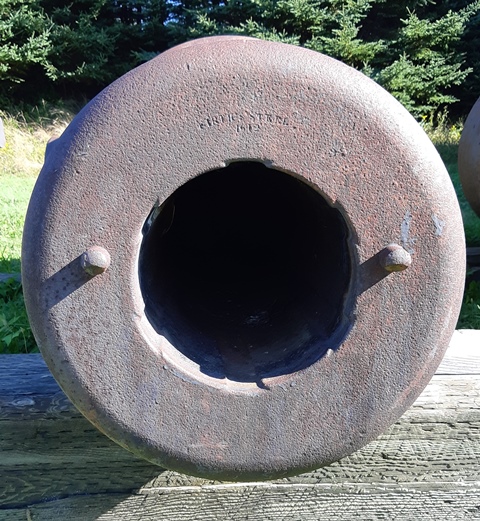
9-inch 12-ton Mk. III Muzzleloading Rifle with Millar pattern breeching ring, weight 12-13-0-0, (12=26,880, +13 X 112 = 1,456, for a total of 28,336 lbs), (RGF No. 359, III, 1869) on the left trunnion, (+) on the right trunnion, Queen Victoria cypher, unmounted, resting on wood blocks, No. 2.
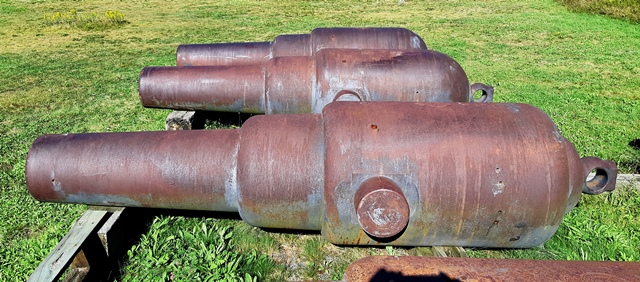
9-inch 12-ton Mk. III Muzzleloading Rifle with Millar pattern breeching ring, weight corroded, greater than 26,880 lbs, RGF No. corroded on the left trunnion, (+) on the right trunnion, Queen Victoria cypher, unmounted, resting on wood blocks, No. 3.
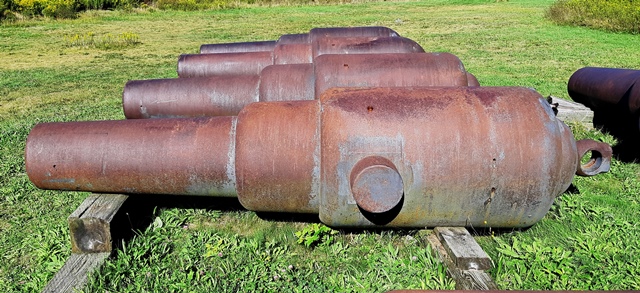
9-inch 12-ton Mk. III Muzzleloading Rifle with Millar pattern breeching ring, weight corroded, greater than 26,880 lbs, RGF No. corroded on the left trunnion, (+) on the right trunnion, Queen Victoria cypher, unmounted, resting on wood blocks, No. 4.
9-inch 12-ton Mk. III Muzzleloading Rifle with Millar pattern breeching ring, weight corroded, greater than 26,880 lbs, RGF No. corroded on the left trunnion, (+) on the right trunnion, Queen Victoria cypher, unmounted, resting on wood blocks, No. 5.
9-inch 12-ton Mk. III Muzzleloading Rifle with Millar pattern breeching ring, weight corroded, greater than 26,880 lbs, RGF No. corroded on the left trunnion, (+) on the right trunnion, Queen Victoria cypher, unmounted, resting on wood blocks, No. 6.
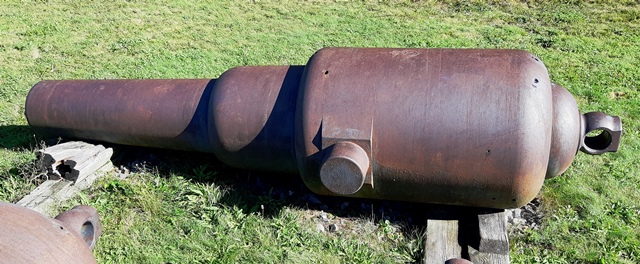
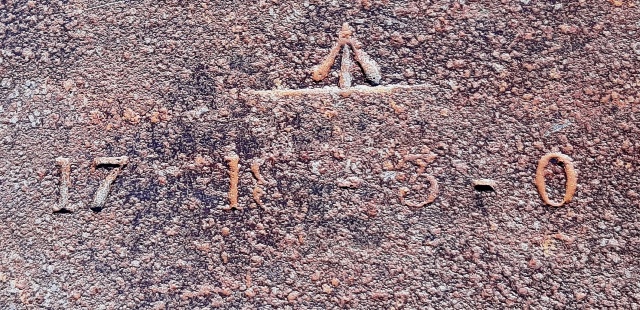
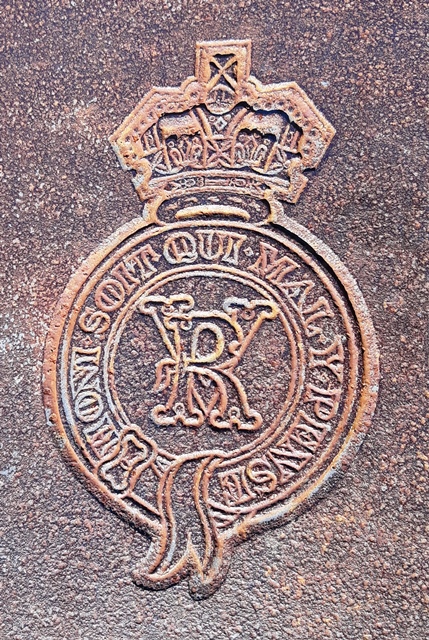
10-inch 18-ton Mk. II Muzzleloading Rifle with Millar pattern breaching ring, weight 17-18-3-0 (38,080 lbs), (17 X 2,240 = 38,080, + 18 X 112 = 2,016, + 3 X 28 = 84, for a total of 40,180 lbs),RGF No. corroded on the left trunnion, blank on the right trunnion, Queen Victoria cypher, unmounted, resting on wookd blocks behind the six 9-inch guns. An English ton is 2,240 lbs, therefore the weight for this gun is greater than (17 X 2,240 lbs = 38,080 lbs) or close to 20 tons in Canadian weight.
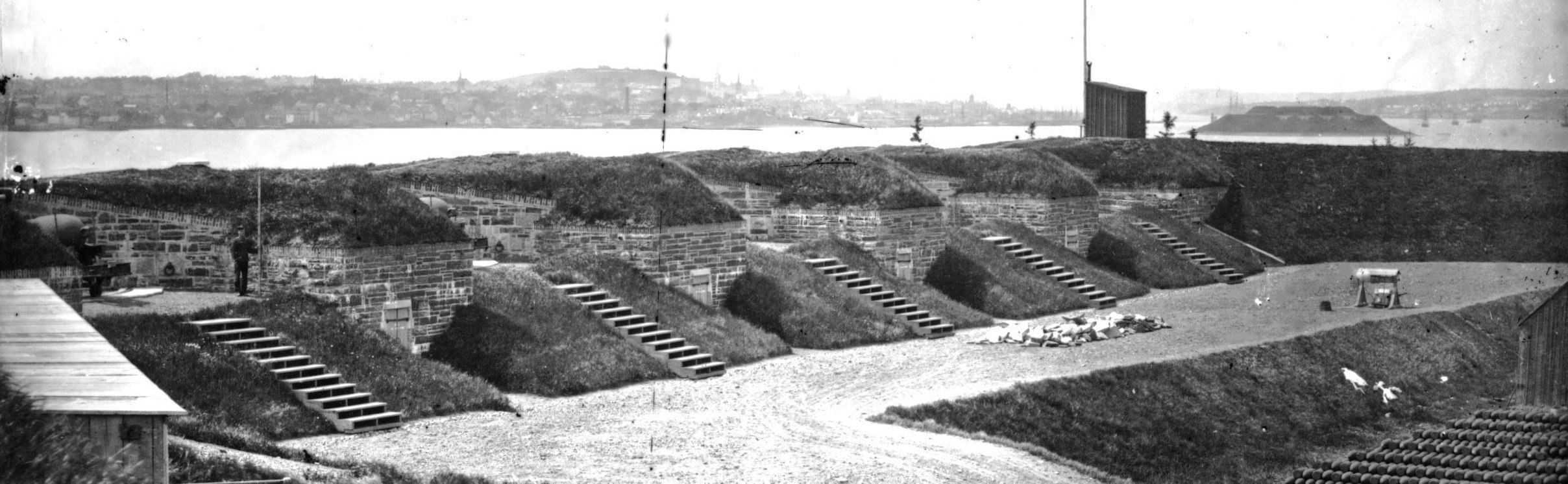
(Halifax Military Heritage Preservation Society Photo)
Fort Ives was built in 1864, updated in the 1890s, and again during the First World War.
Halifax, Fort McNab, McNabâs Island
(Author Photos)
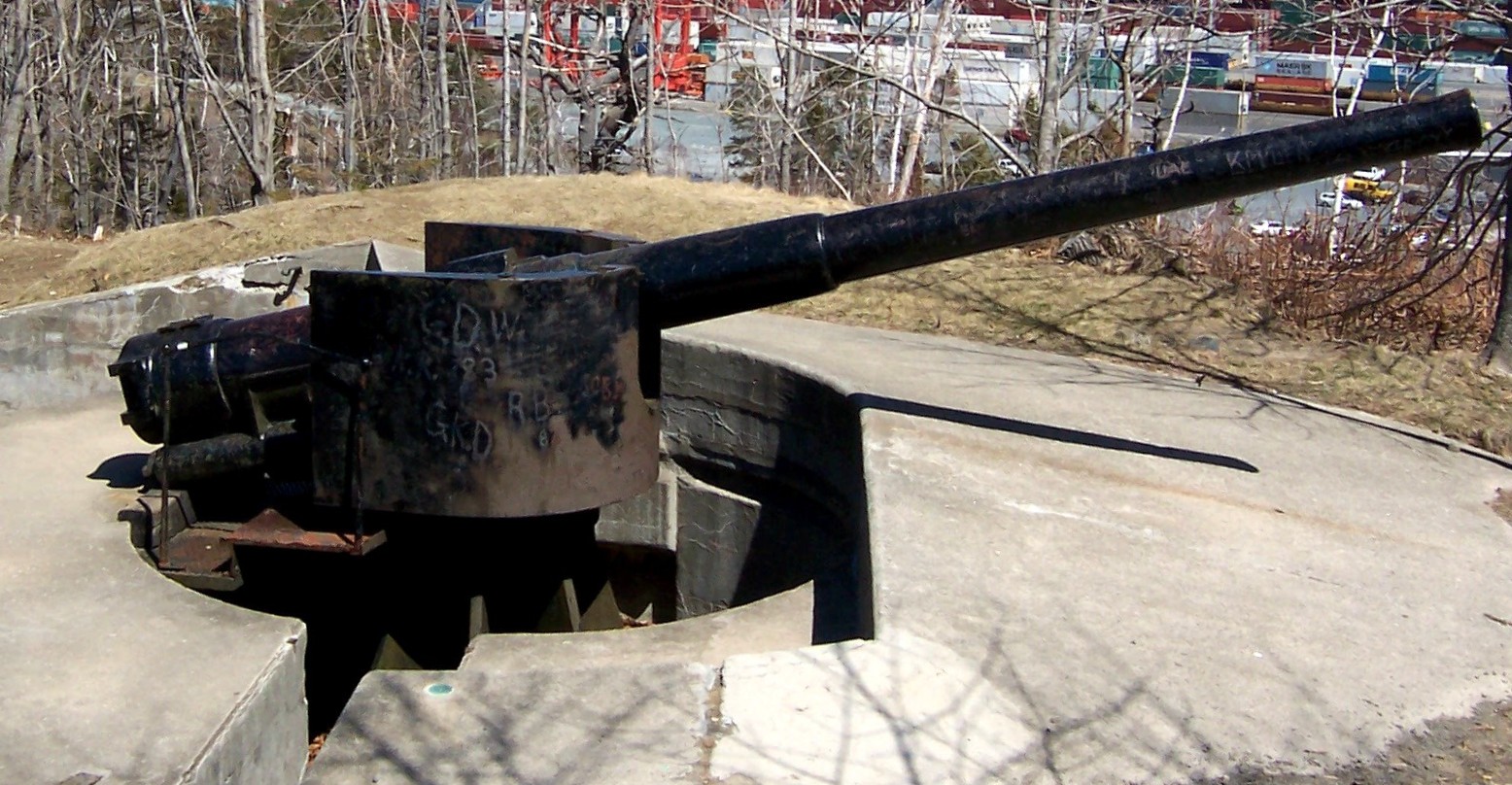
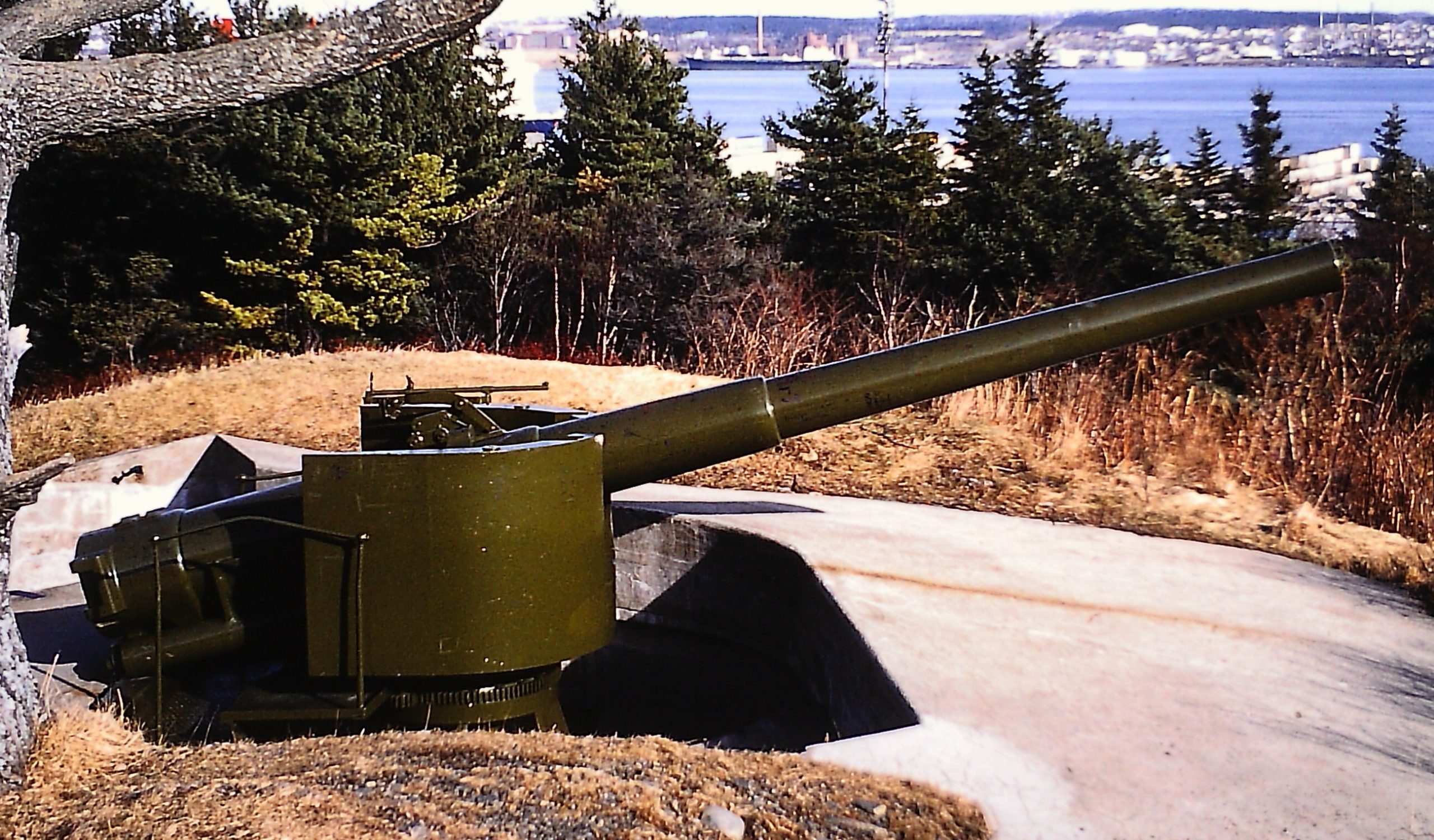
6-inch Mk VII Breechloading Gun (Serial No. l346), mounted on a Central Pivot Mk II, VS&M, 1900, shown here when it was in a gun emplacement at Fort Ogilvie in Point Pleasant Park, now in a gun emplacement on McNab’s Island as shown below.
(Author Photos)
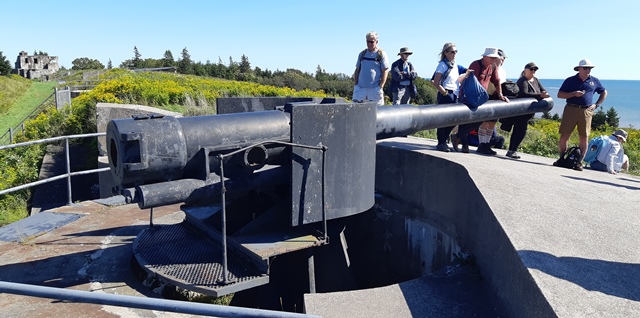
6-inch Mk VII Breechloading Gun (Serial No. 1346), VS&M, 1900, in a gun emplacement at Fort McNab, facing out to sea.
(Author Photos)
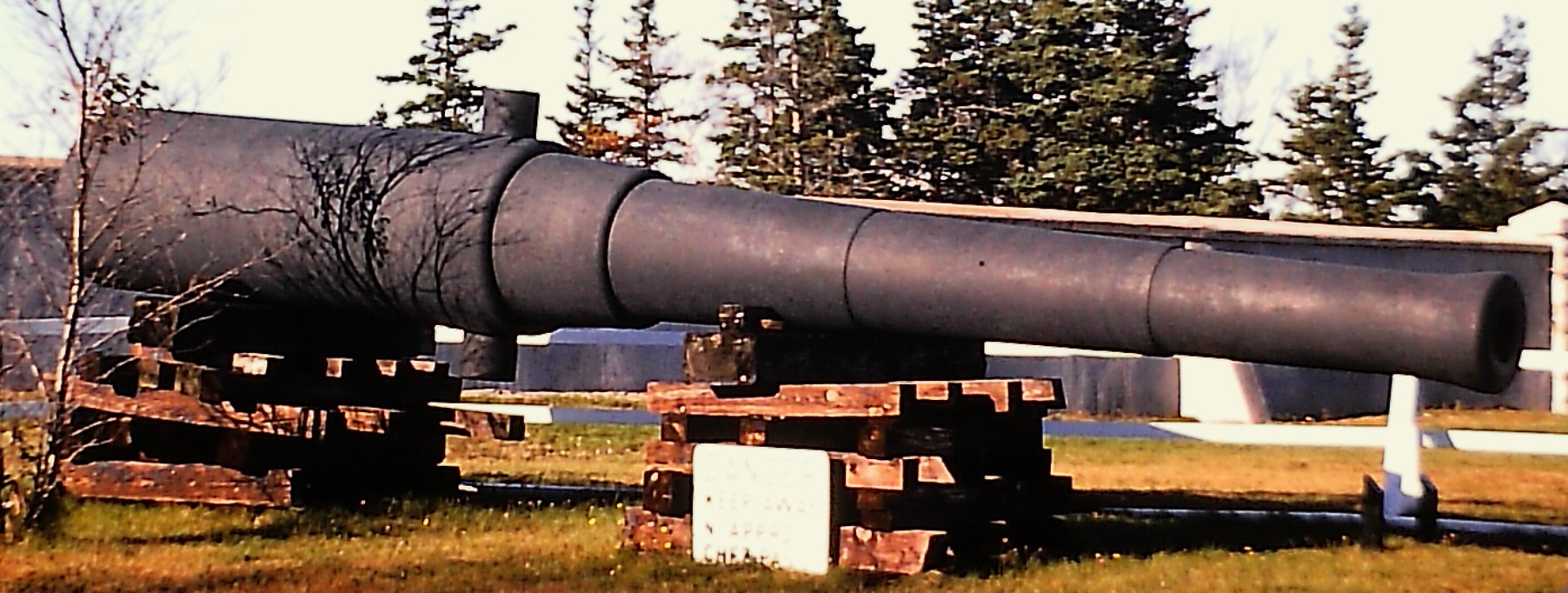
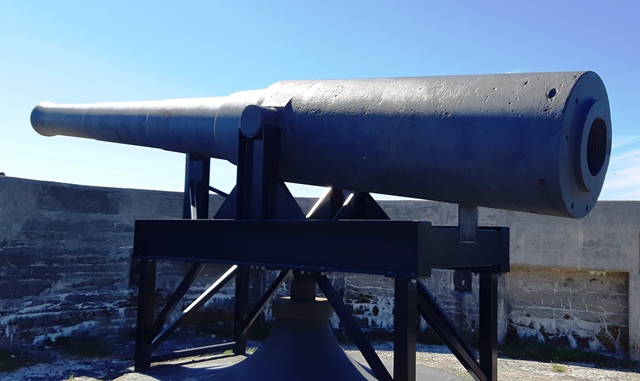
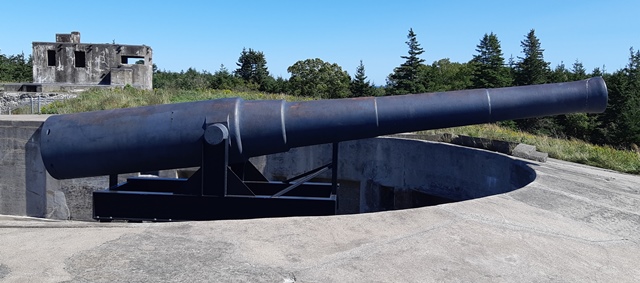
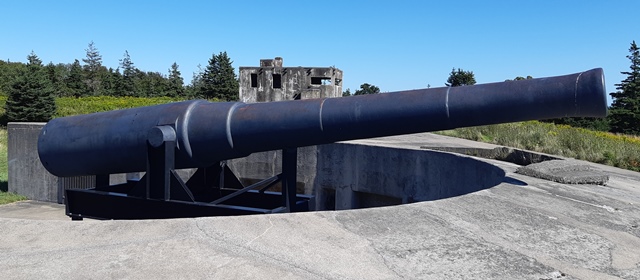
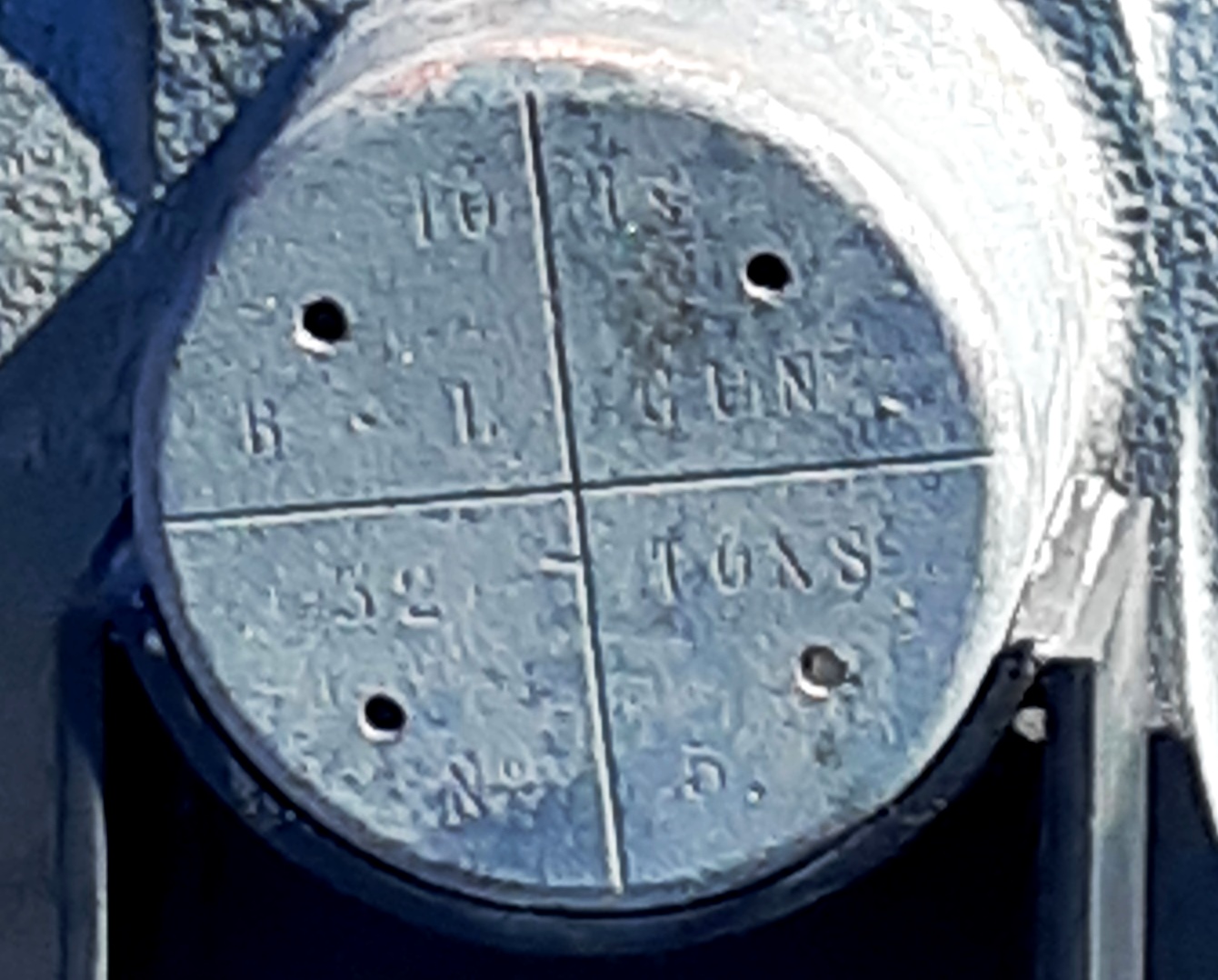
10-inch 32-ton Mk. I Breechloading Gun (Serial No. 5) shown here on wooden pilings at its storage site in York Redoubt, before being moved to McNab’s Island.
Author Photos)
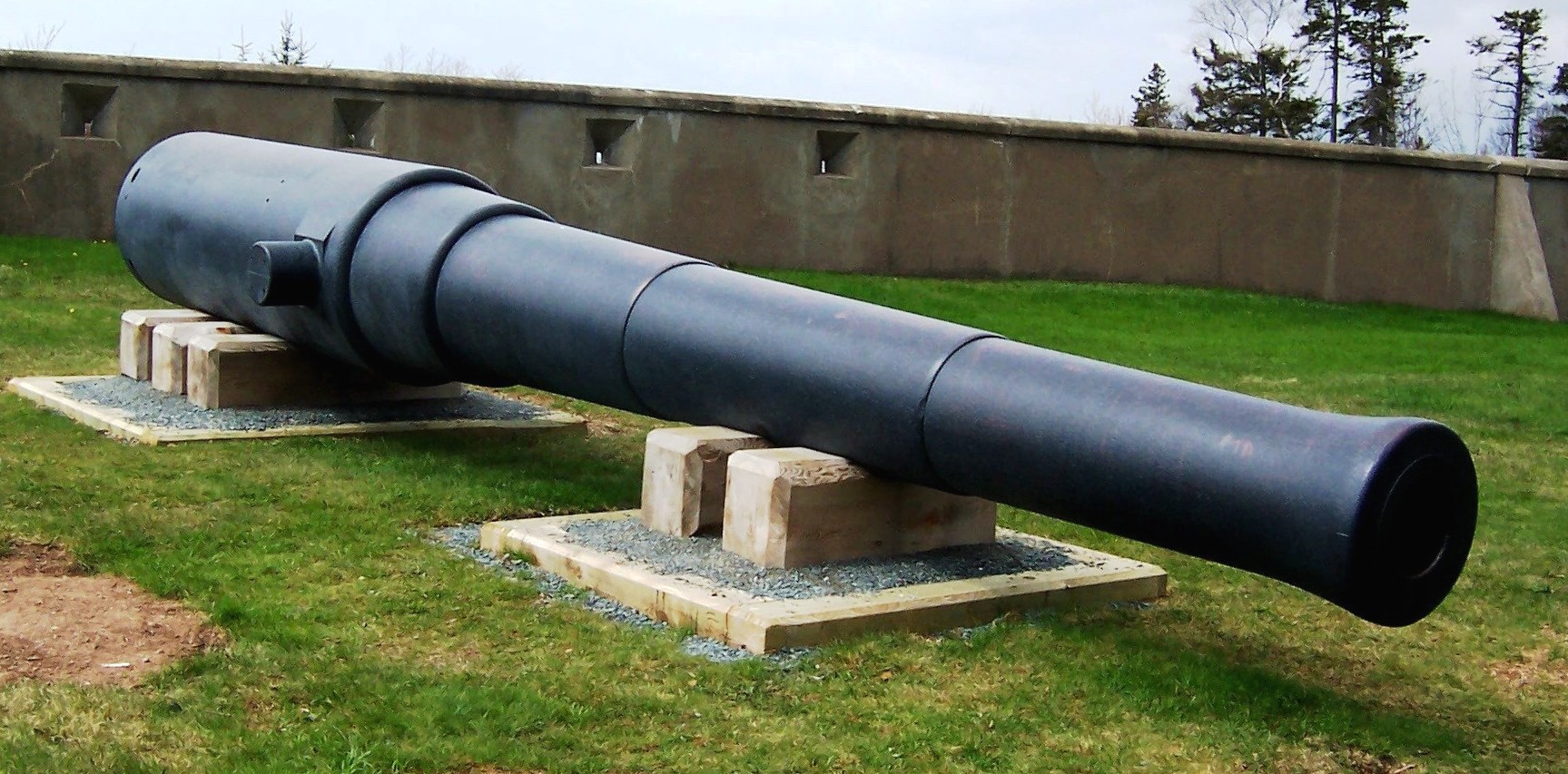
10-inch 32-ton Mk. I Breechloading Gun (Serial No. 5), Fort McNab.
(Library and Archives Canada Photo, MIKAN No. 3332951)
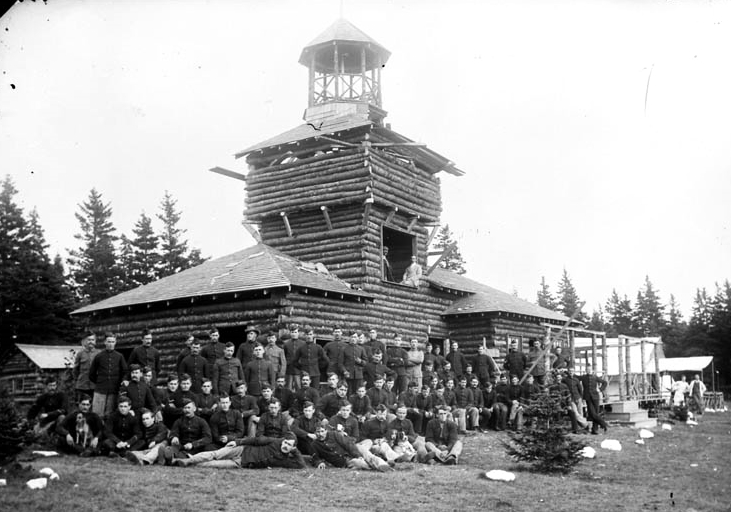
Officers Mess, Royal Engineers camp on McNab Island, 1904.
All comments are subject to our Comment Policy. You must be at least 18 years old to comment.
See a comment that violates our guidelines? Report it here.