
US Navy Essex-class aircraft carriers:
USS Oriskany (CVA-34), USS Antietam (CV-36), USS Princeton (CV-37), USS Shangri-La (CV-38)
The Essex class is a retired class of aircraft carriers of the United States Navy. The 20th century’s most numerous class of capital ship, the class consisted of 24 vessels which came in “short-hull” and “long-hull” versions. Thirty-two ships were ordered, but as the Second World War wound down, six were canceled before construction and two were canceled after construction had begun. Fourteen saw combat during the Second World War. None was lost to enemy action although several sustained crippling damage due to aerial attacks. Essex-class carriers were the backbone of the U.S. Navy from mid-1943 and, with the three Midway-class carriers added just after the war, continued to be the heart of U.S. naval strength until supercarriers joined the fleet starting in the 1950s. Several of the carriers were rebuilt to handle heavier and faster aircraft of the early jet age and saw service in the Vietnam War, with Lexington decommissioned as a training carrier in 1991. Of the 24 ships in the class, four – Yorktown, Hornet, Lexington, and Intrepid – have been preserved as museum ships. (Wikipedia)
USS Oriskany (CV-34)
(USN Photo)
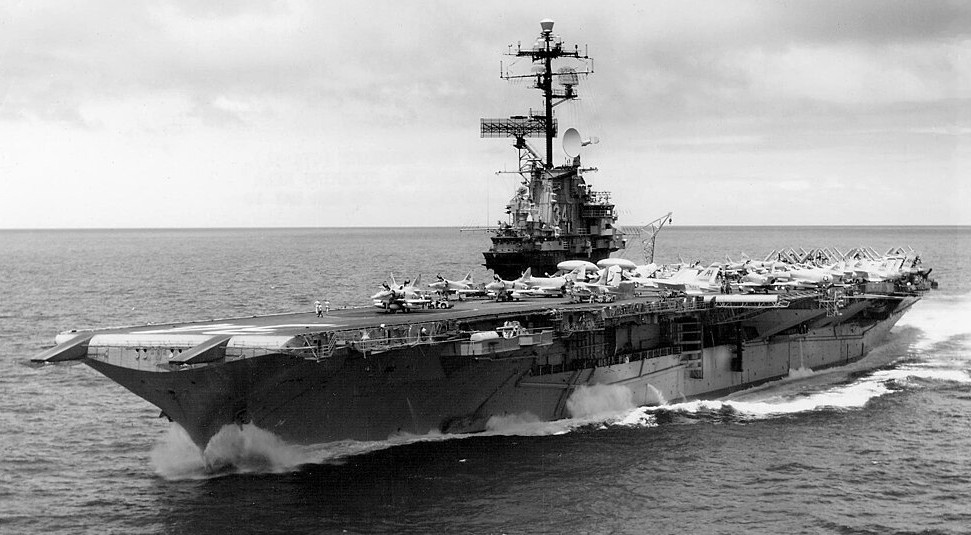
USS Oriskany (CVA-34) underway near Midway Atoll in 1967. Oriskany was deployed with Attack Carrier Air Wing 16 (CVW-16) to the Vietnam from 16 June 1967 to 31 January 1968.
USS Oriskany (CV/CVA-34) was one of the few Essex-class aircraft carriers completed after the Second World WarI for the United States Navy. The ship was named for the Battle of Oriskany during the Revolutionary War. The history of Oriskany differs considerably from that of her sister ships. Originally designed as a “long-hulled” Essex-class ship (considered by some authorities to be a separate class, the Ticonderoga class), she was not completed and construction was suspended in 1946 after the end of the Second World War. She eventually was converted to an updated design called SCB-27 (“27-Charlie”) and commissioned in 1950. This updated version became the template for modernization of 14 other Essex-class ships. Oriskany was the final Essex-class ship completed.
She operated primarily in the Pacific into the 1970s, earning two battle stars for service in the Korean War, and ten for service in the Vietnam War. In 1966, one of the worst shipboard fires since the Second World War broke out on Oriskany when a magnesium flare was accidentally ignited; forty-four men died in the fire. Oriskany’s post-service history also differs considerably from that of her sister ships. Decommissioned in 1976, she was sold for scrap in 1995, but was repossessed in 1997 because nothing was being done. In 2004, the Navy decided to sink her to create an artificial reef off the coast of Florida in the Gulf of Mexico. After much environmental review and remediation to remove toxic substances, the ship was carefully sunk in May 2006. She settled in an upright position at a depth accessible to recreational divers. As of September 2025, Oriskany is the largest vessel ever sunk as an artificial reef, a record that is set to be broken by the ocean liner SS United States. (Wikipedia)
(USN Photo)
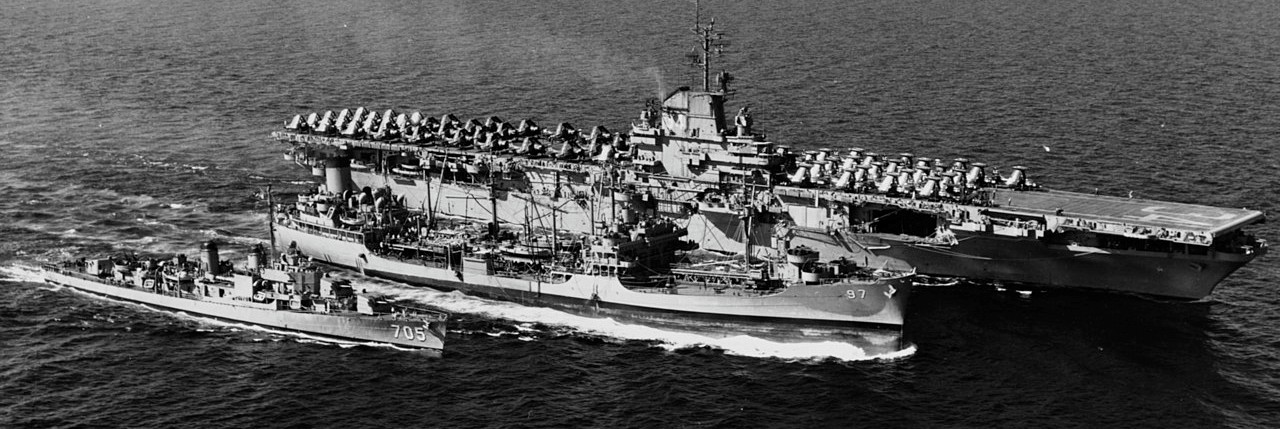
U.S. Navy fleet oiler USS Allagash (AO-97) refueling the aircraft carrier USS Oriskany (CVA-34) and the destroyer USS Compton (DD-705), in 1951. Oriskany, with assigned Carrier Air Group 4 (CVG-4), was deployed to the Mediterranean Sea from 15 May to 4 October 1951.
(USN Photo)
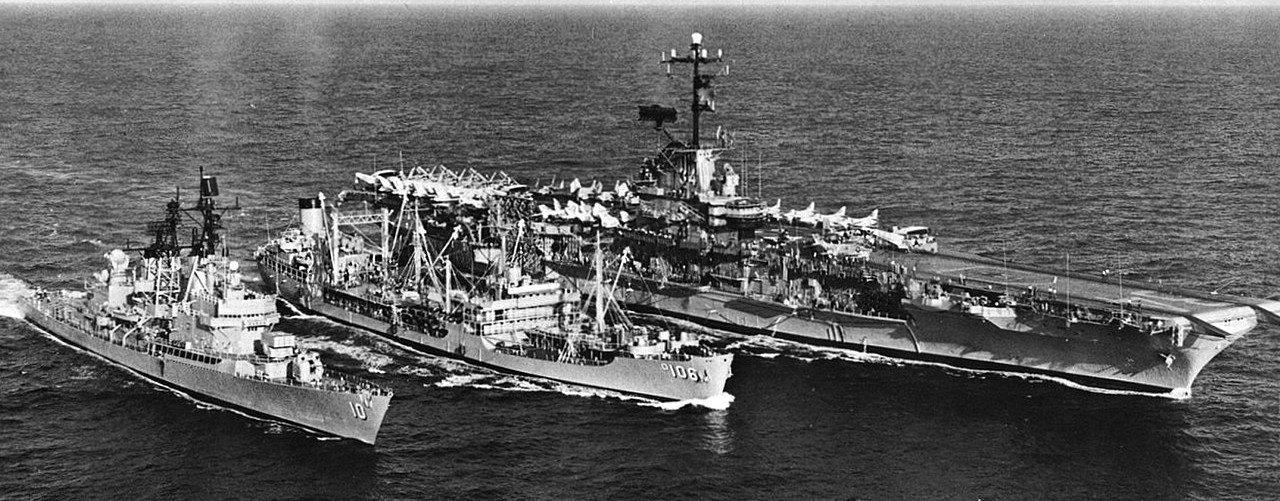
The U.S. Navy fleet oiler USS Navasota (AO-106) refuels the aircraft carrier USS Oriskany (CVA-34) and the guided missile destroyer USS King (DLG-10) in the Pacific Ocean, circa in 1963. Oriskany, with assigned Attack Carrier Air Wing 16 (CVW-16), was deployed to the Western Pacific from 1 August 1963 to 10 March 1964.
(USN Photo)
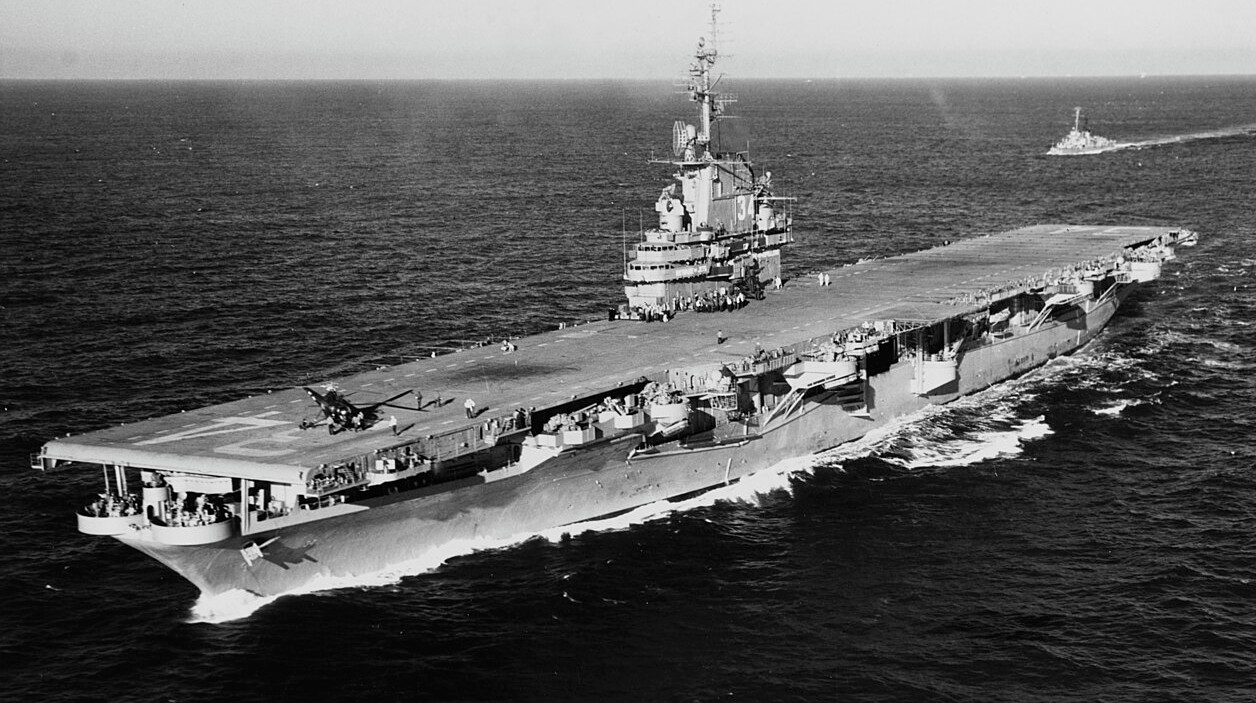
USS Oriskany (CV-34) underway off New York City, 6 December 1950, while en route to conduct carrier qualifications off Jacksonville, Florida.
(USN Photo)
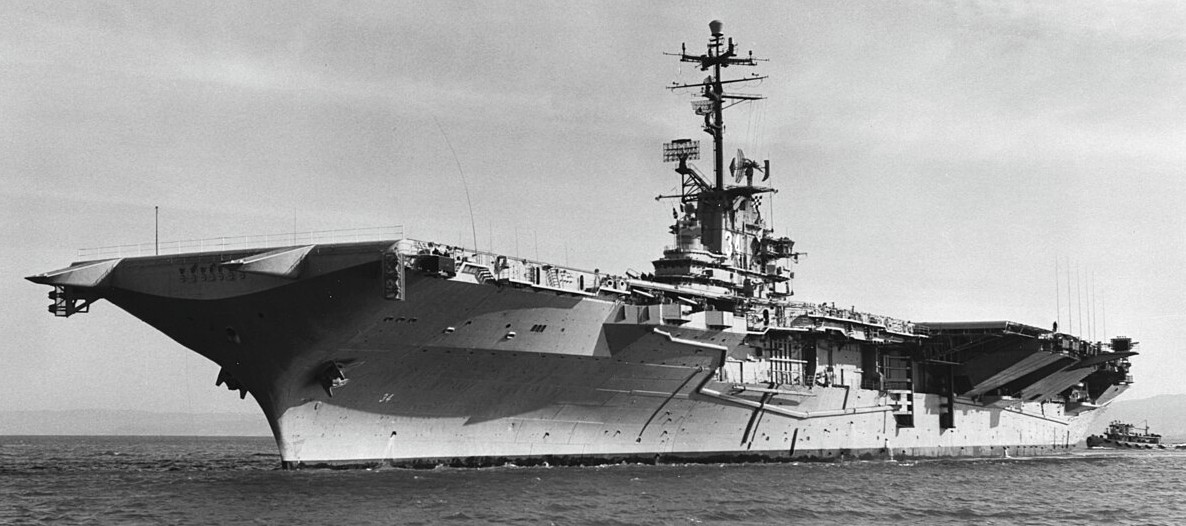
USS Oriskany (CVA-34) off the San Francisco Naval Shipyard, California, on 27 April 1959, following installation of her new angled flight deck and hurricane bow.
(USN Photo)
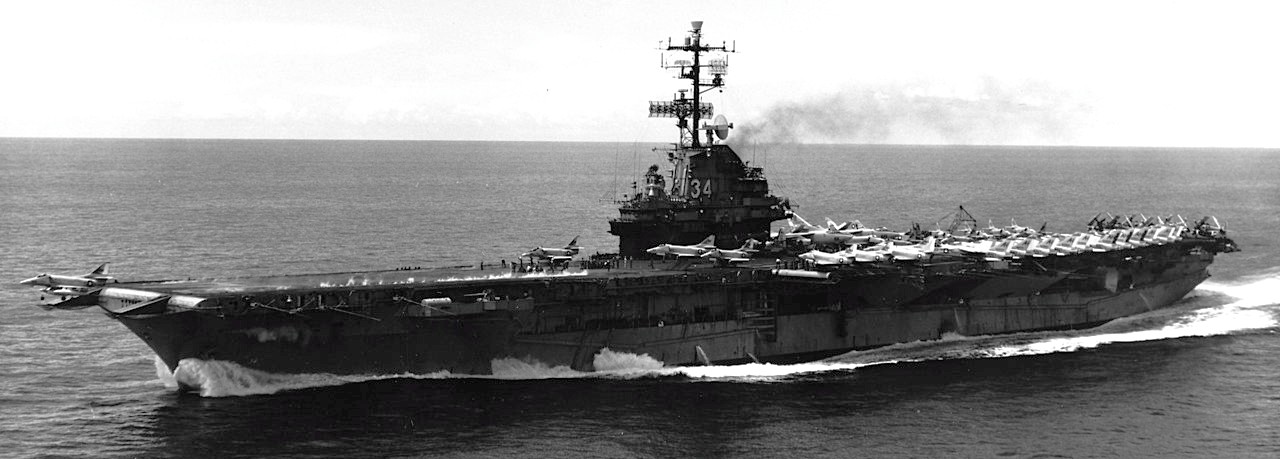
USS Oriskany (CVA-34) catapulting a Douglas A-4E Skyhawk from Attack Squadron 163 (VA-163) “Saints” during operations off Vietnam, 30 August 1966. VA-163 was assigned to Attack Carrier Air Wing 16 (CVW-16) aboard the Oriskany for a deployment to Vietnam from 26 May to 16 November 1966.
(USN Photo)
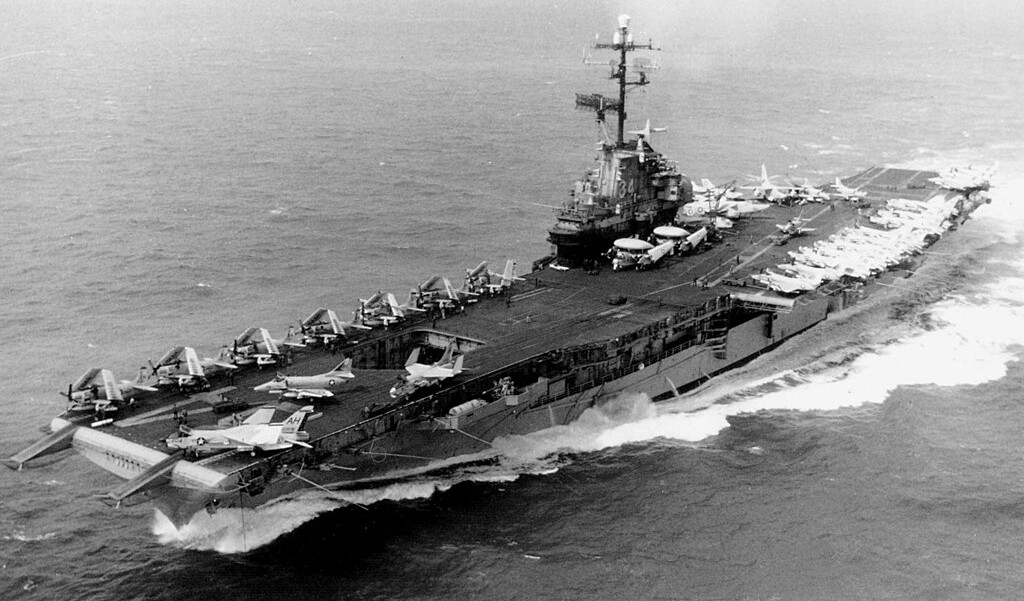
USS Oriskany (CVA-34) underway off Vietnam on 3 January 1968. Oriskany, with assigned Attack Carrier Air Wing 16 (CVW-16), was deployed to the Vietnam from 16 June 1967 to 31 January 1968.
(USN Photo)
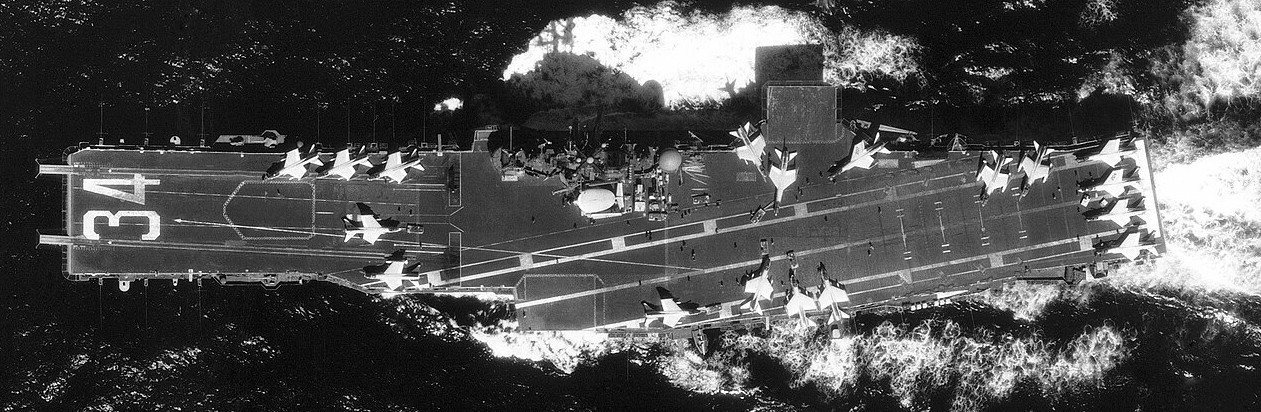
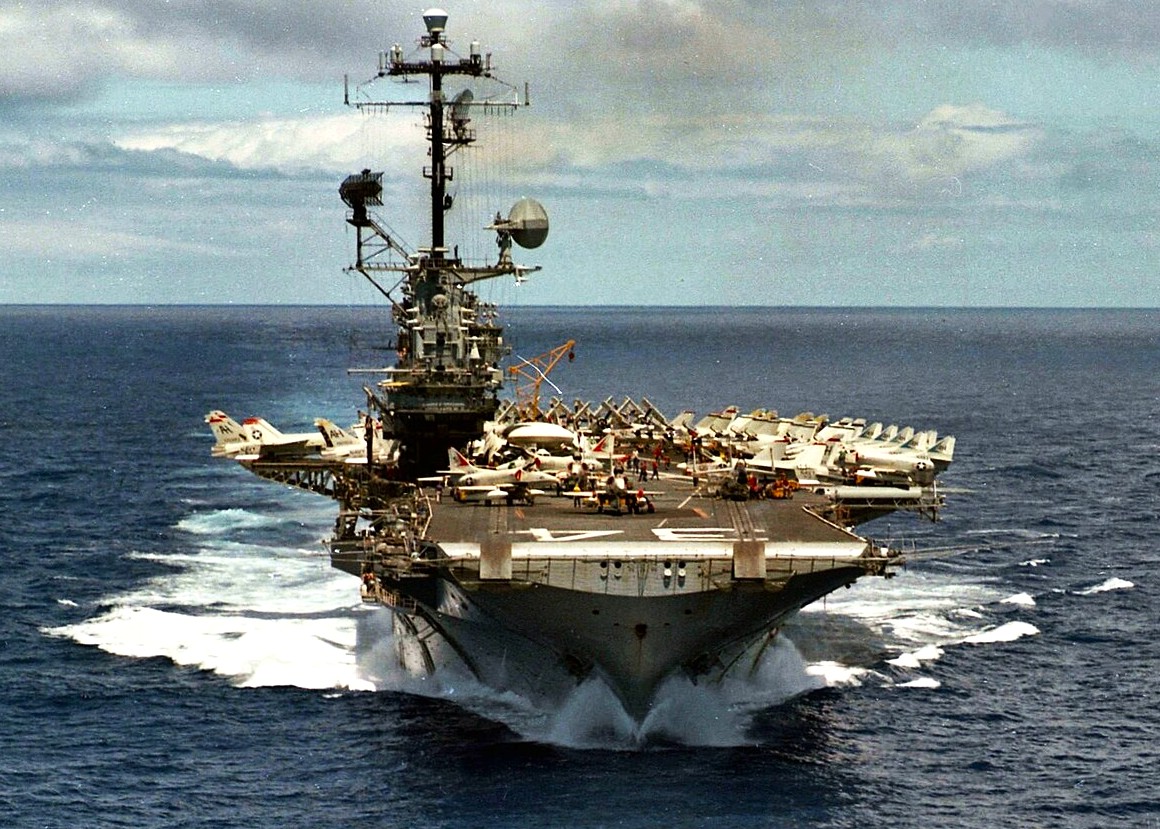
USS Oriskany (CV-34) photographed sometime in the mid-1970s. Visible are six Vought F-8J Crusader, twelve Vought A-7A/B Corsair II, and a single Grumman E-1B Tracer of Carrier Air Wing Nineteen (CVW-19).
(USN Photo)
USS Oriskany (CVA-34) en route to the Western Pacific for operations off Vietnam, 23 June 1967. Oriskany, with assigned Attack Carrier Air Wing 16 (CVW-16), was deployed to Vietnam from 16 June 1967 to 31 January 1968.
USS Reprisal (CV-35). Cancelled during construction. Scrapped in 1949.
USS Antietam (CV-36)
(USN Photo)
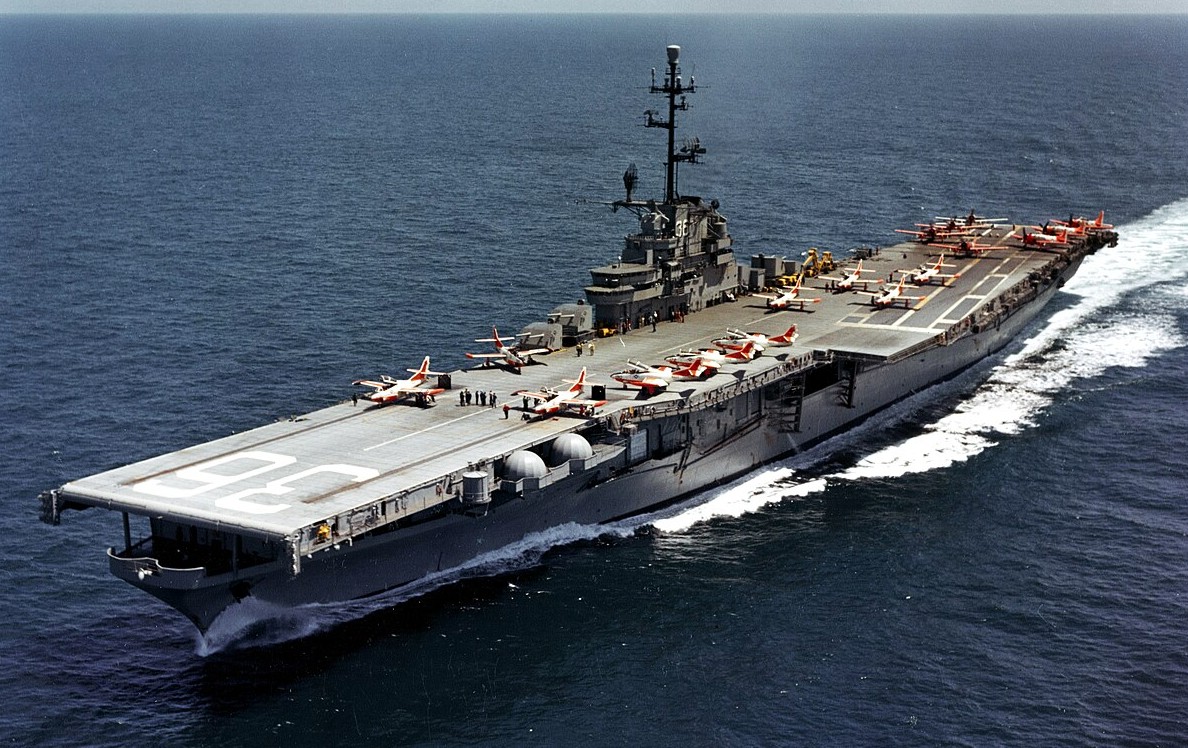
USS Antietam (CVS-36) Operating training aircraft, 19 April 1961. Planes on deck include North American T2J-1 Buckeyes amidships and forward and Douglas AD Skyraiders parked aft. Note the dayglo paint on the aircraft and the mothballed 127 mm/38 guns in the carriers port side sponsons.
USS Antietam (CV/CVA/CVS-36) was one of 24 Essex-class aircraft carriers built during and shortly after World War II for the United States Navy. The ship was the second US Navy ship to bear the name, and was named for the American Civil War Battle of Antietam (Maryland). Antietam was commissioned in January 1945, too late to serve actively in the Second World War. After serving a short time in the Far East, she was decommissioned in 1949. She was soon recommissioned for Korean War service, and in that conflict earned two battle stars. In the early 1950s, she was redesignated an attack carrier (CVA) and then an antisubmarine warfare carrier (CVS). After the Korean War she spent the rest of her career operating in the Atlantic, Caribbean, and Mediterranean. From 1957 until her deactivation, she was the Navy’s training carrier, operating out of Florida. Antietam was fitted with a port sponson in 1952 to make her the world’s first true angled-deck aircraft carrier. However, she received no major modernizations other than this, and thus throughout her career largely retained the classic appearance of a Second World War Essex-class ship. She was decommissioned in 1963, and sold for scrap in 1974. (Wikipedia)
(USN Photo)
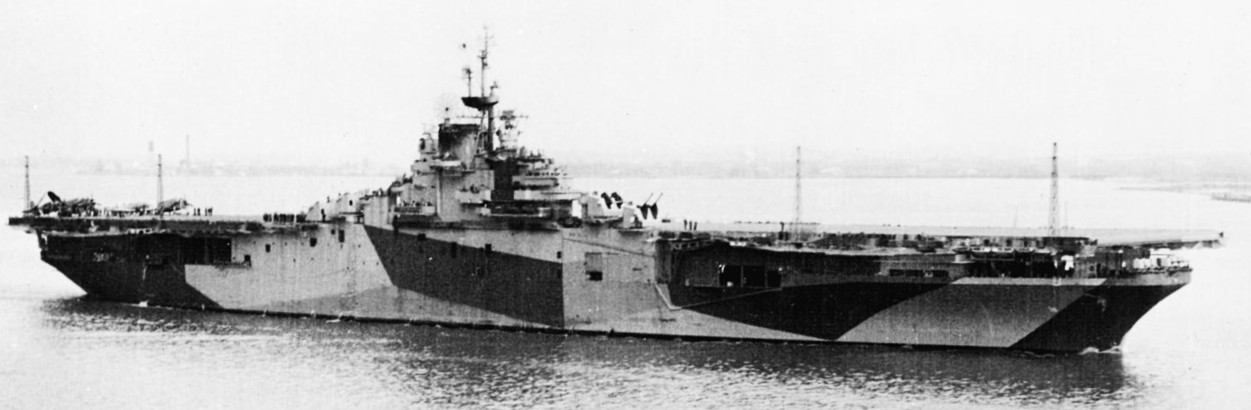
USS Antietam (CV-36) underway in the waters off the Philadelphia Navy Yard on 2 March 1945. She wears Camouflage Measure 32, Design 17A-2.
(USN Photo)
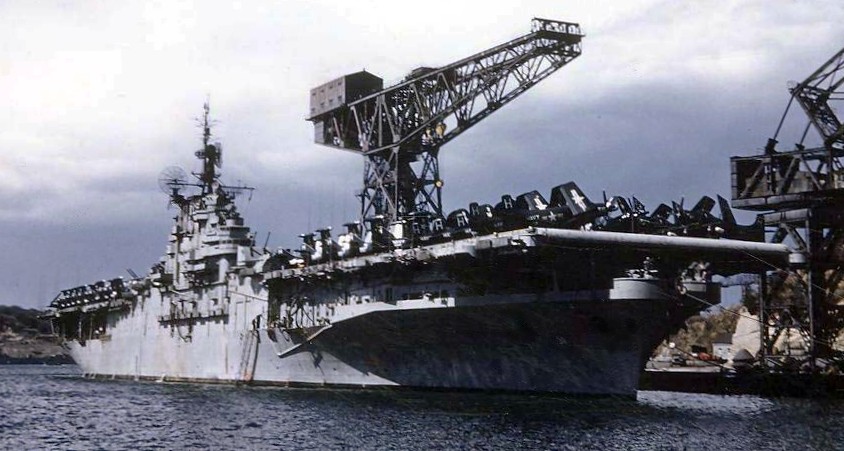
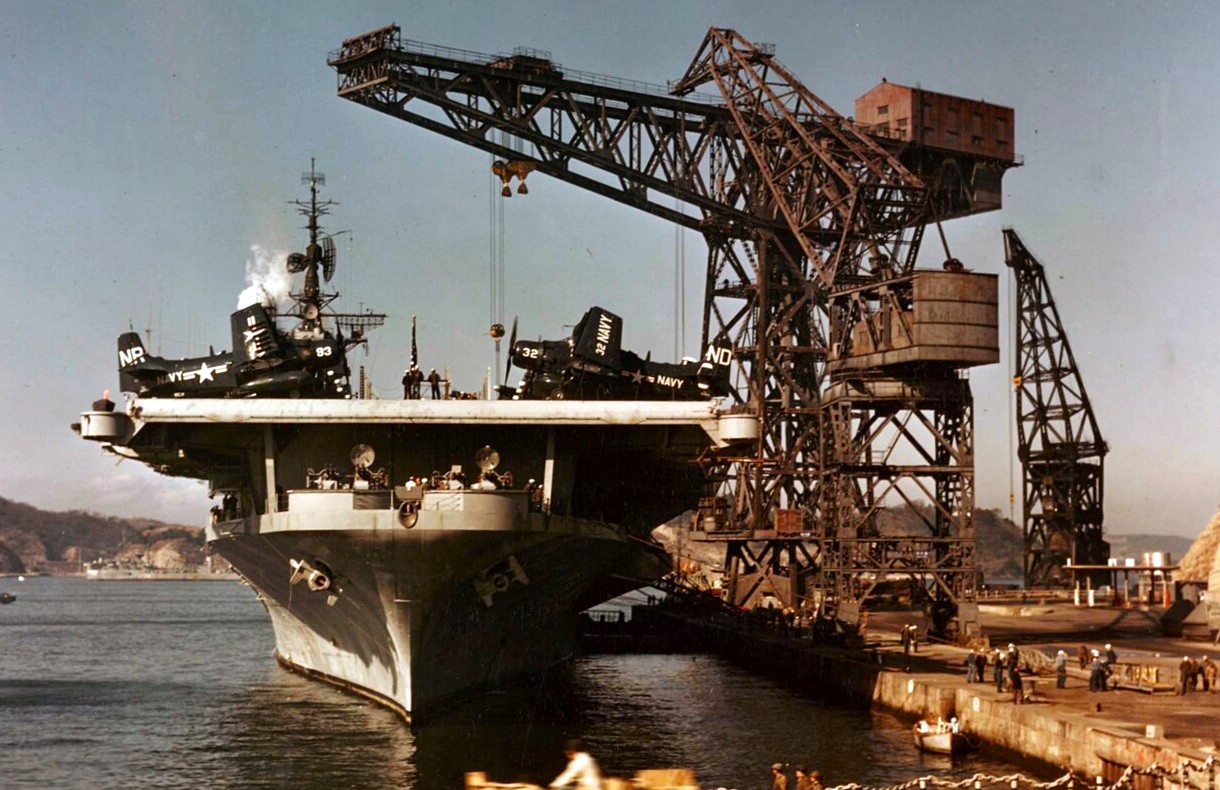
USS Antietam (CVA-36) moored at berth B-12 at the naval base at Yokosuka, Japan, during her 1951-1952 Korean War cruise.
(USN Photo)
USS Antietam (CV-36) moored at Piedmont Pier in Yokosuka, Japan, during a Korean War deployment. Visible on deck are two Douglas AD Skyraider aircraft from Carrier Air Group 15 (CVG-15): An AD-4NL from Composite Squadron VC-35 Det.D Night Hecklers (left), and an AD-4W from Composite Squadron VC-11 Det.D (right).
(USN Photo)
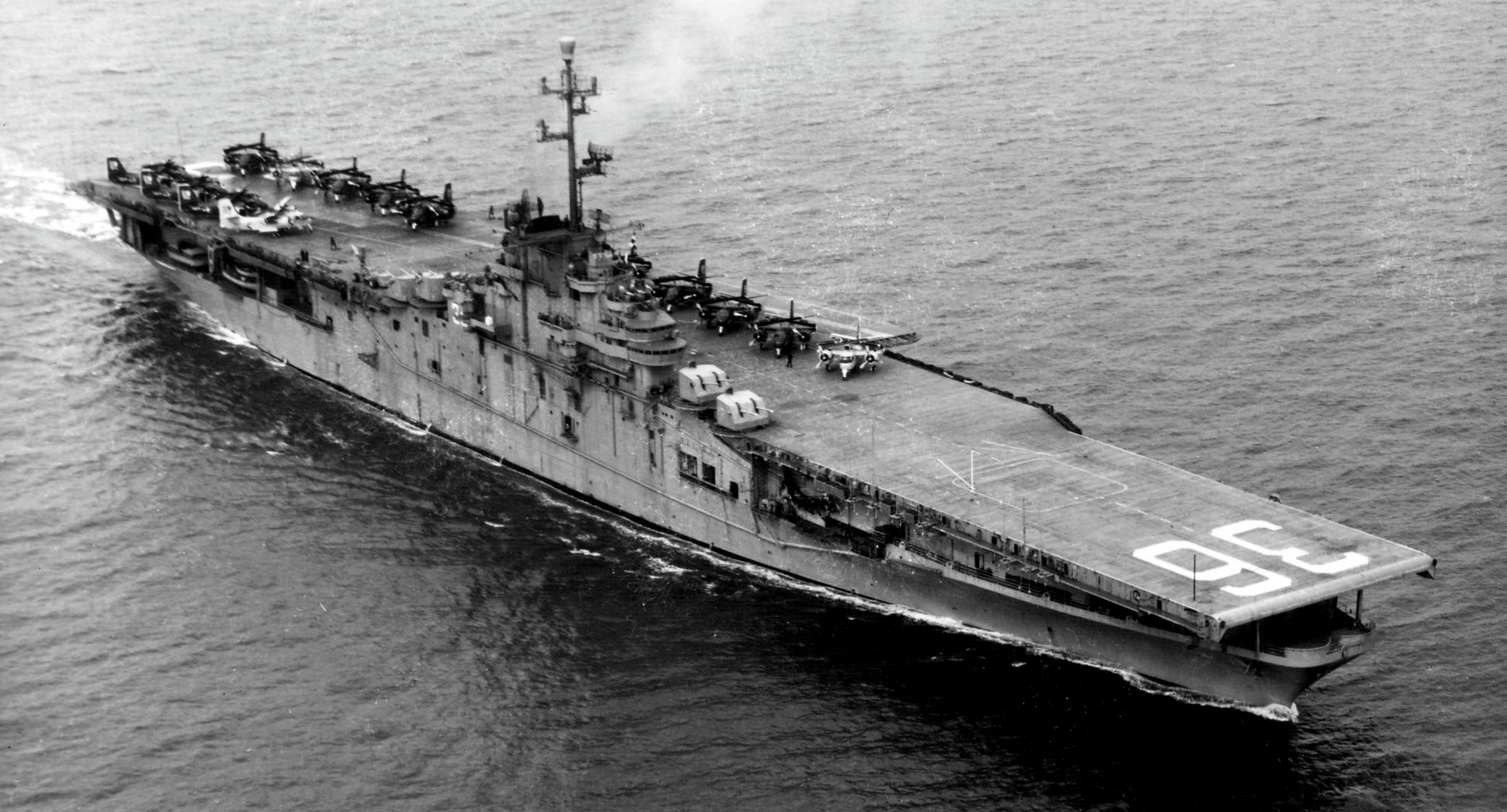
USS Antietam (CVS-36) underway at sea on 12 March 1956.
(USN Photo)
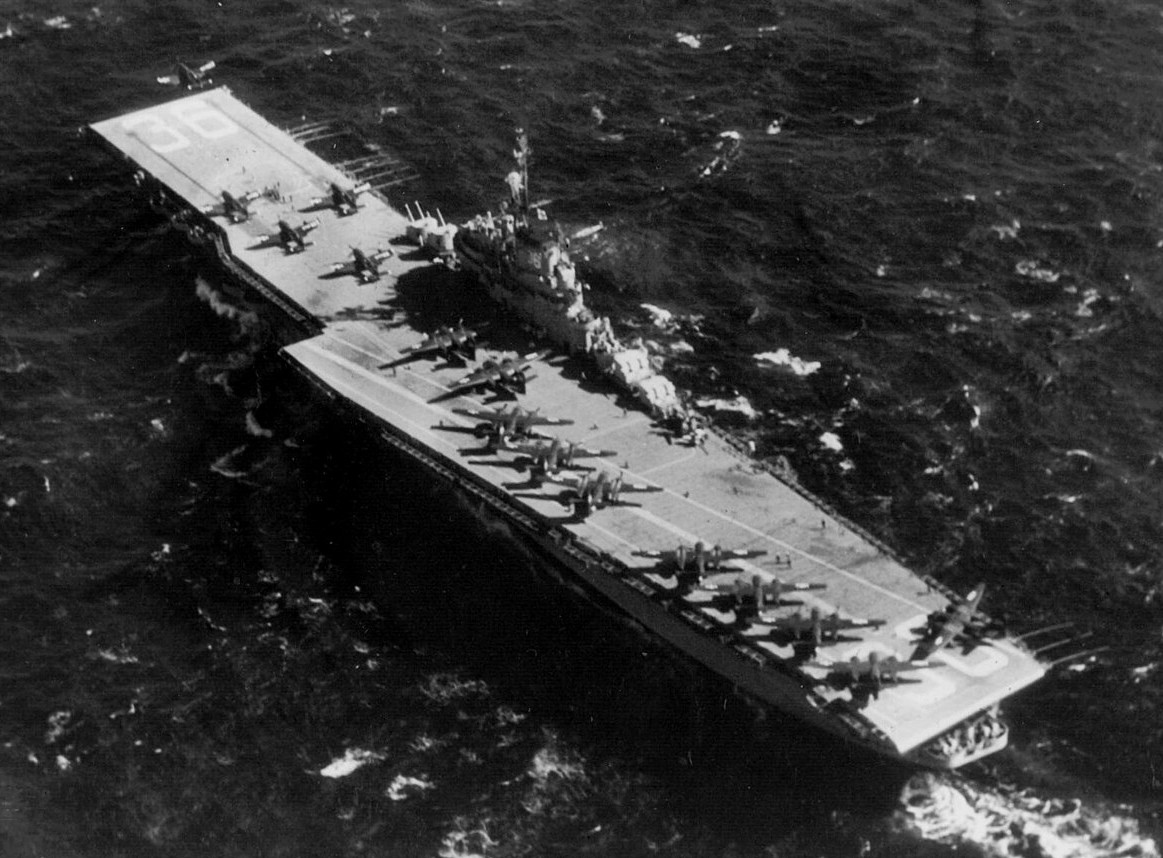
USS Antietam (CVS-36) operating off the Virginia Capes with an Vought F4U-4 Corsair visible launching. Other Corsairs and Grumman S2F-1 Tracker are visible on deck.
(USN Photo)
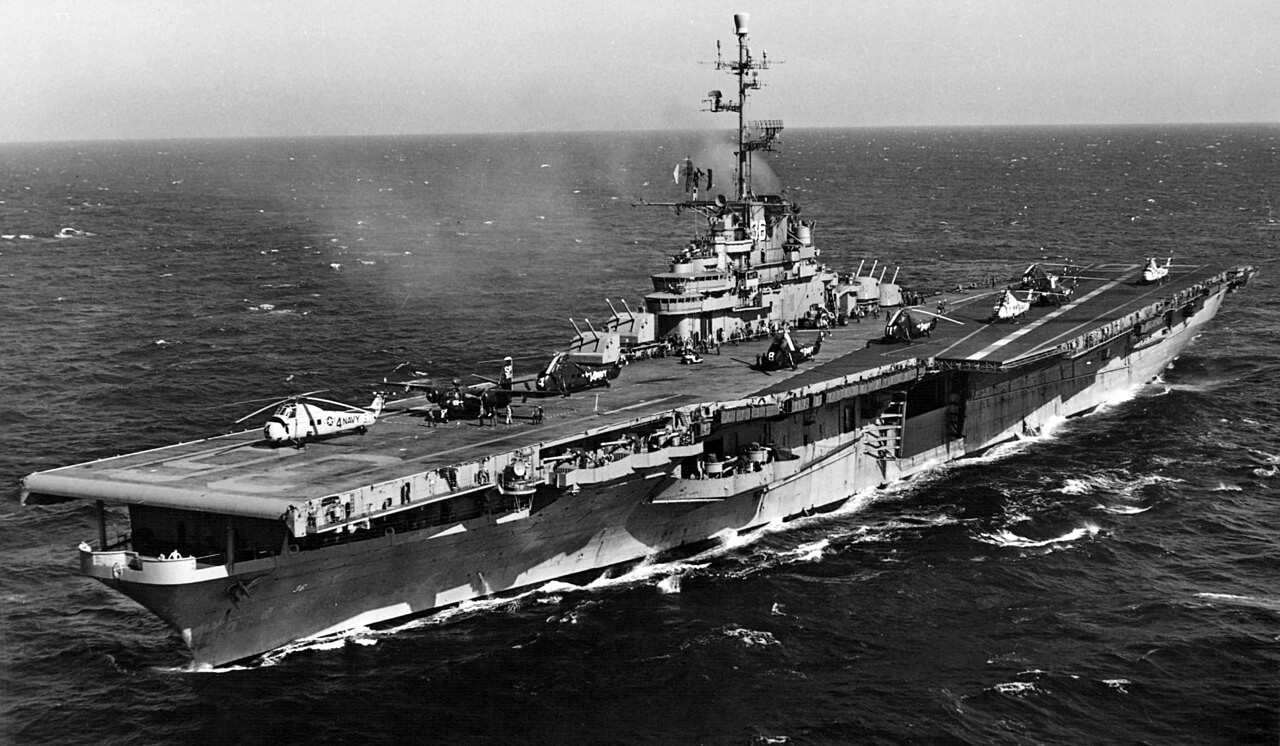
USS Antietam (CVS-36) underway with an Grumman S2F-1 Tracker from Anti-Submarine Squadron VS-31 Topcats and Sikorsky HSS-1 Seabats on the flight deck.
USS Princeton (CV-37)
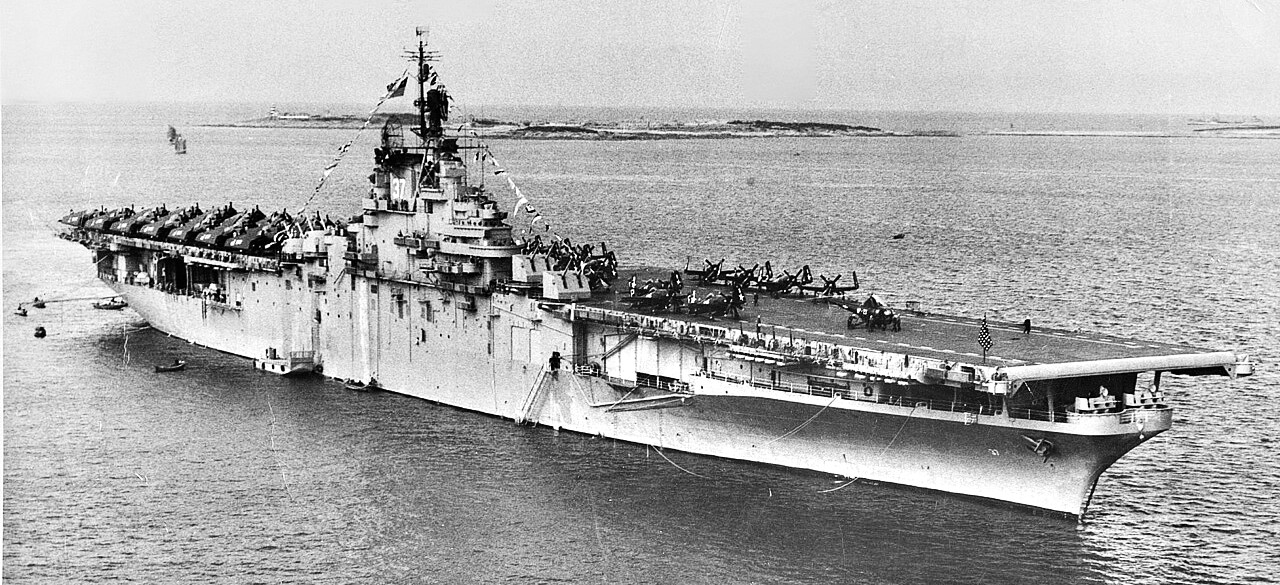
(USN Photo)
USS Princeton (CV-37) pictured at anchor in Tsingtao, China, with aircraft of Carrier Air Group Thirteen (CVG-13) on the flight deck, circa November 1948. Note that her air group was composed only of Grumman F8F-1 Bearcat fighters (VF-131, VF-132) and Grumman TBM-3E/-3Q Avenger bombers (VA-15, VA-135).
USS Princeton (CV/CVA/CVS-37, LPH-5) was one of 24 Essex-class aircraft carriers built during and shortly after World War II for the United States Navy. The ship was the fifth US Navy ship to bear the name, and was named for the Revolutionary War Battle of Princeton. Princeton was commissioned in November 1945, too late to serve in the Second World War, but saw extensive service in the Korean War, in which she earned eight battle stars, and the Vietnam War. She was reclassified in the early 1950s as an attack carrier (CVA), then as an Antisubmarine Aircraft Carrier (CVS), and finally as an amphibious assault ship (LPH), carrying helicopters and marines. One of her last missions was to serve as the prime recovery ship for the Apollo 10 space mission. Although she was extensively modified internally as part of her conversion to an LPH, external modifications were minor, so throughout her career Princeton retained the classic appearance of a Second World War Essex-class ship. She was decommissioned in 1970, and sold for scrap in September 1972. (Wikipedia)
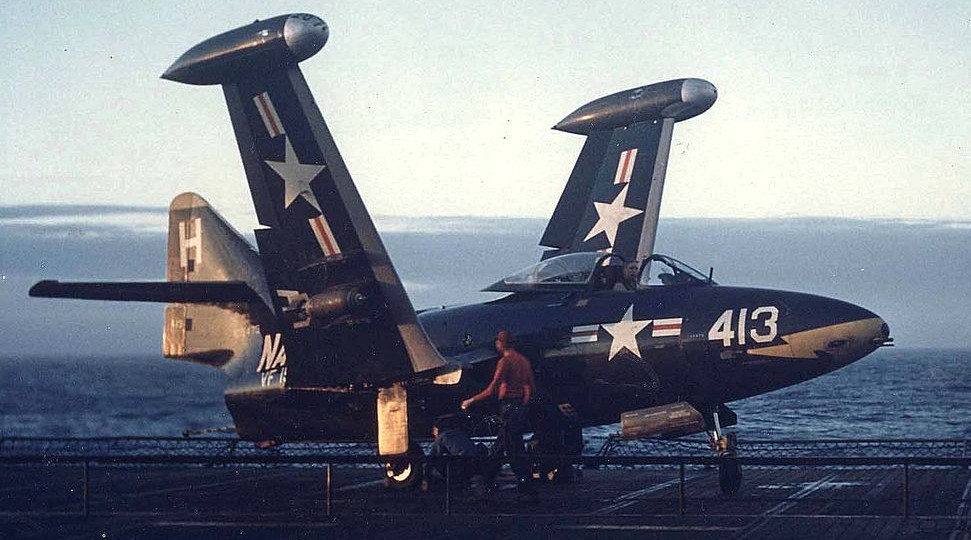
(USN Photo)
U.S. Navy Grumman F9F-5 Panther of Fighter Squadron 154 (VF-154) “Flaming Panthers” on the deck edge elevator on board the aircraft carrier USS Princeton (CVA-37) operating in the waters off Korea on 13 May 1953. VF-154 was assigned to Carrier Air Group 15 (CVG-15) aboard the Princeton for a deploymetn to the Western Pacific anc Korea from 24 January to 21 September 1953.
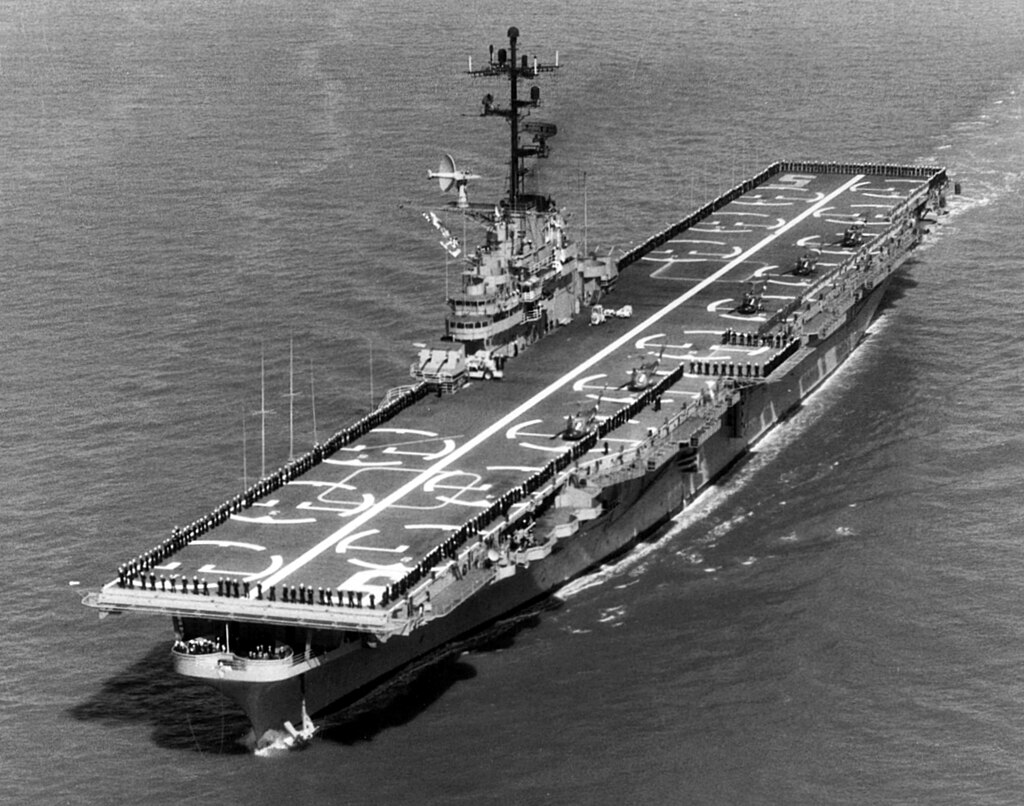
(USN Photo)
USN amphibious assault ship USS Princeton (LPH-5) underway, circa 1965.
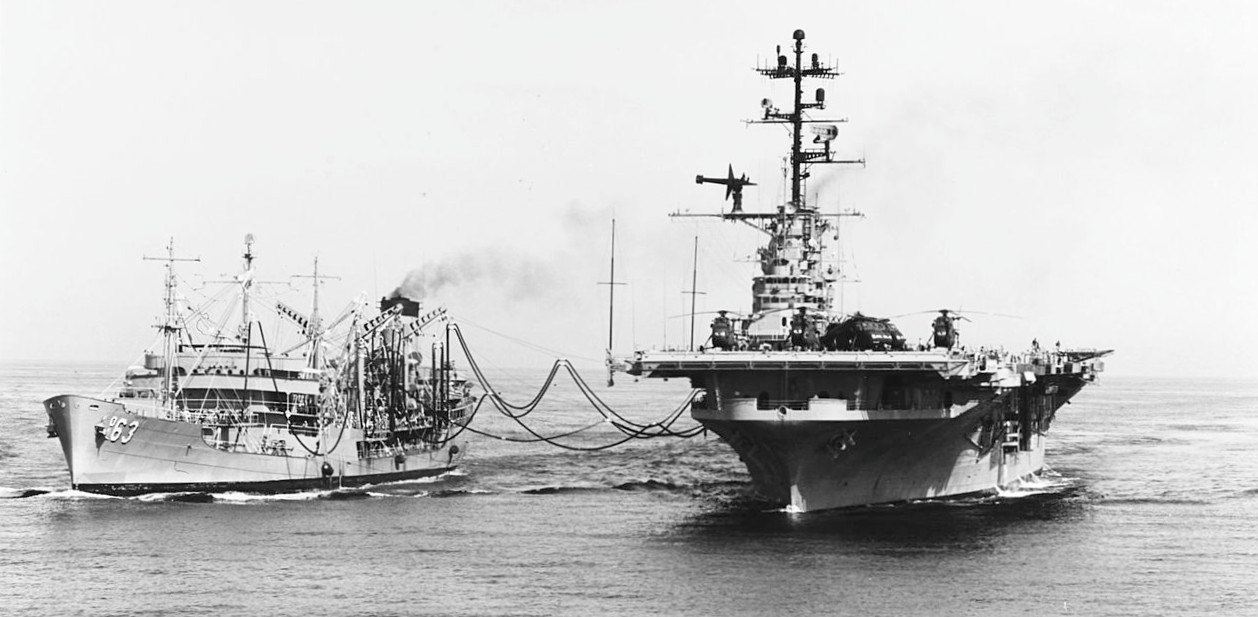
(USN Photo)
USS Princeton (LPH-5) refueling from the fleet oiler USS Chipola (AO-63) during operations in the Pacific Ocean, 25 June 1968.
(USN Photo)
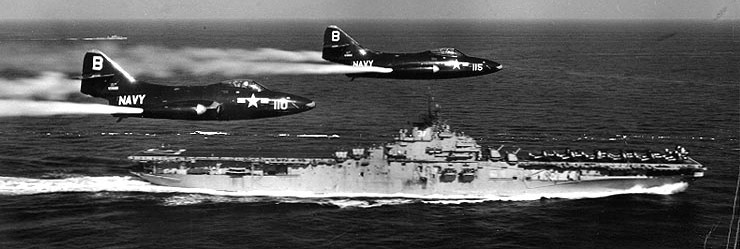
Two U.S. Navy Grumman F9F-2 Panther (left: BuNo 123583) from Fighter Squadron 191 (VF-191) “Satan’s Kittens” dump fuel as they fly past the aircraft carrier USS Princeton (CV-37), during Korean War operations, circa in May 1951. VF-191 was assigned to Carrier Air Group 19 (CVG-19) aboard the Princeton for a deployment to Korea from 9 November 1950 to 29 May 1951.
(USMC Photo)
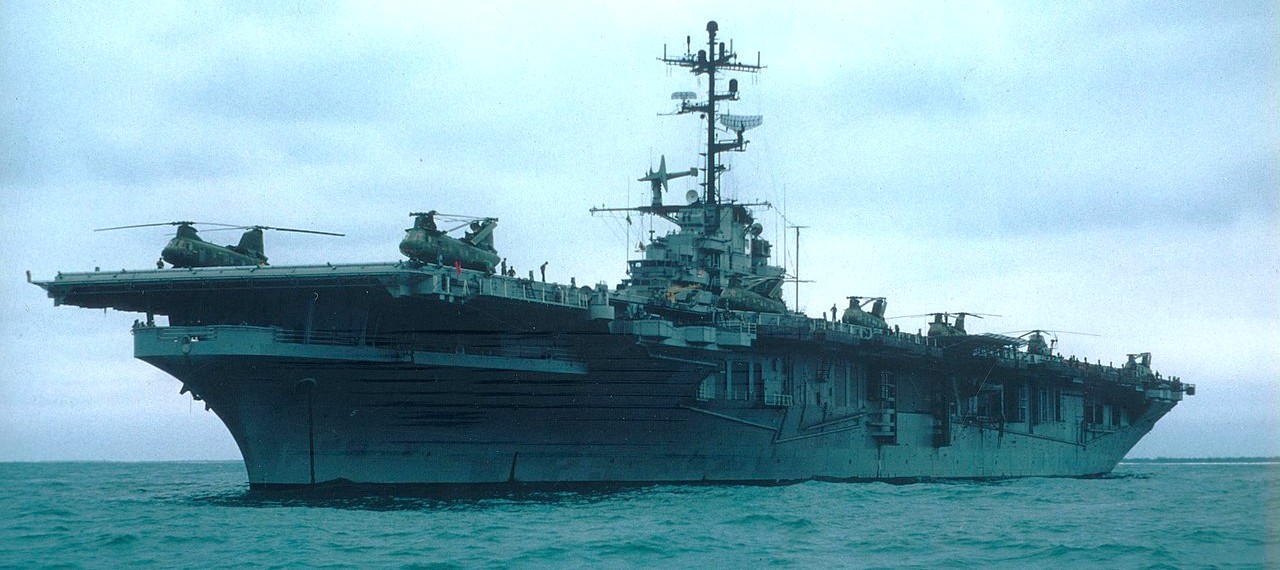
3d Battalion, 4th Marines Loading onto Helicopter Carrier USS Princeton, 5 May 1967.
(USN Photo)
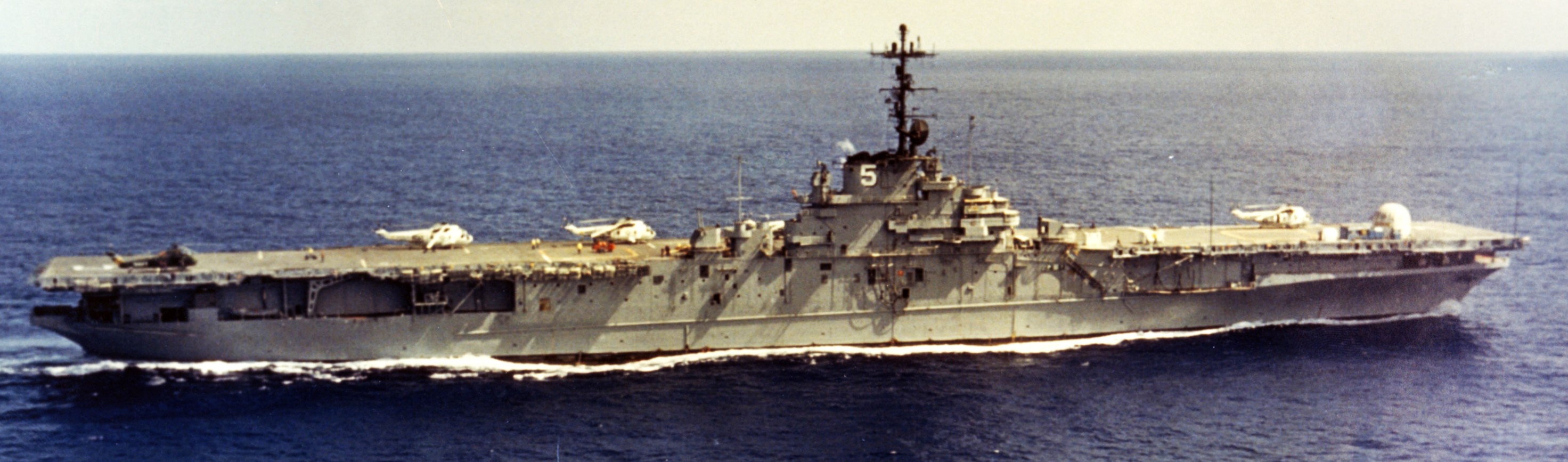
USS Princeton (LPH-5) at sea during the operation to recover the Apollo 10 spacecraft in late May 1969. Visible on the flight deck are a Sikorsky UH-34 Seabat helicopter (green, aft) and three Sikorsky SH-3D Sea Kings of helicopter anti-submarine squadron HS-4 Black Knights. The rounded structure on the forward part of the flight deck is for use in housing the space capsule. The Apollo 10 was the pre-moon landing mission and landed on 26 May 1969, 16:52:23 UTC at 15°2′S 164°39′W (circa 500 km east of Samoa).
(NASA Photo)
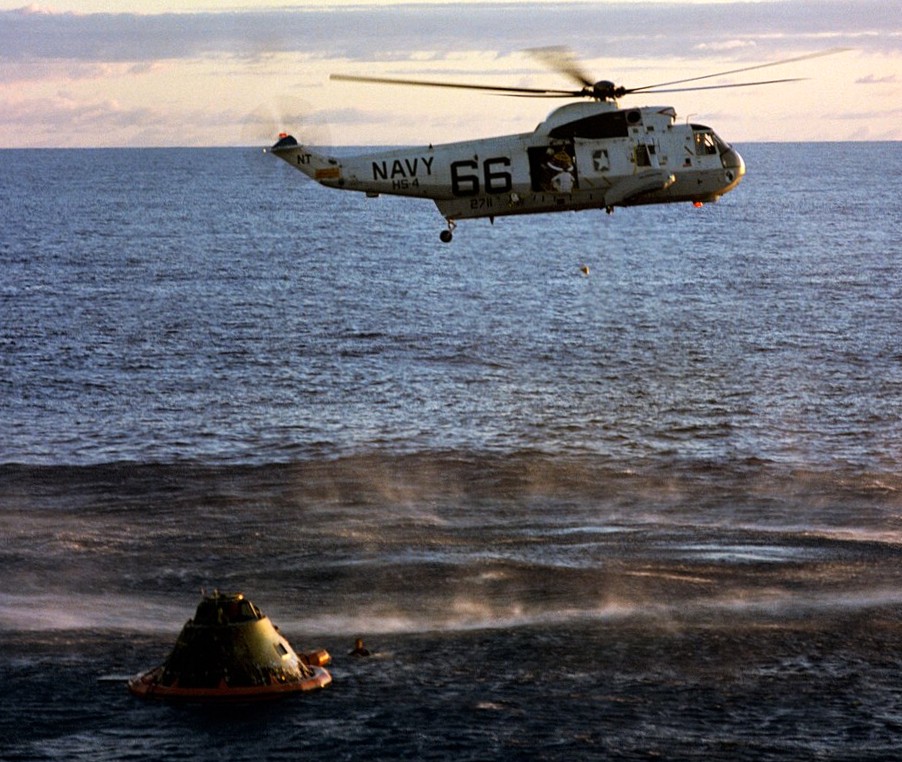
A member of the Apollo 10 crew is hoisted into a helicopter from the prime recovery ship, USS Princeton, during recovery operations in the South Pacific. Astronauts Thomas P. Stafford, commander; John W. Young, command module pilot; and Eugene A. Cernan, lunar module pilot, were picked up and flown to the deck of the USS Princeton where a red-carpet welcome awaited them. The spacecraft was later retrieved from the water and put aboard the recovery ship. The Apollo 10 splashdown occurred at 11:53 a.m. (CDT), May 26, 1969, about 400 miles east of American Samoa, and about four miles from the recovery ship, to conclude a successful eight-day lunar orbit mission. U.S. Navy underwater demolition team swimmers assisted in the recovery operations.
USS Shangri-La (CV-38)
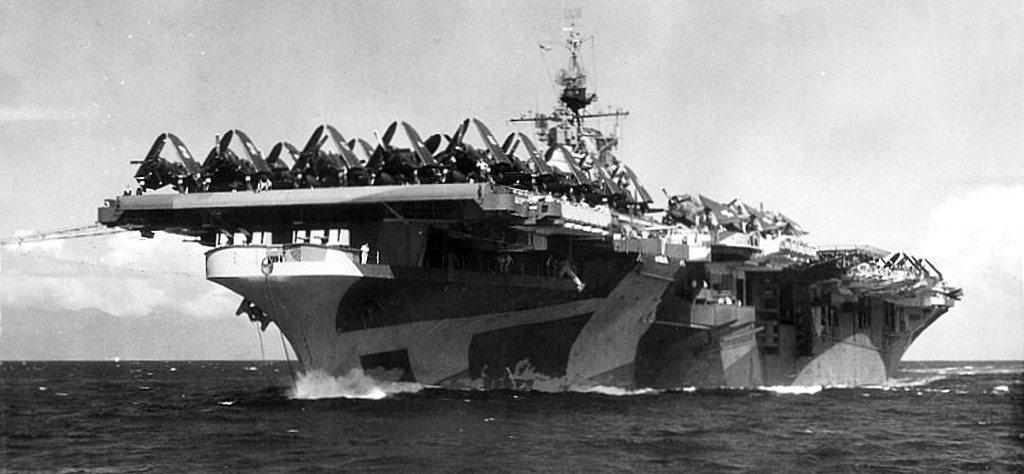
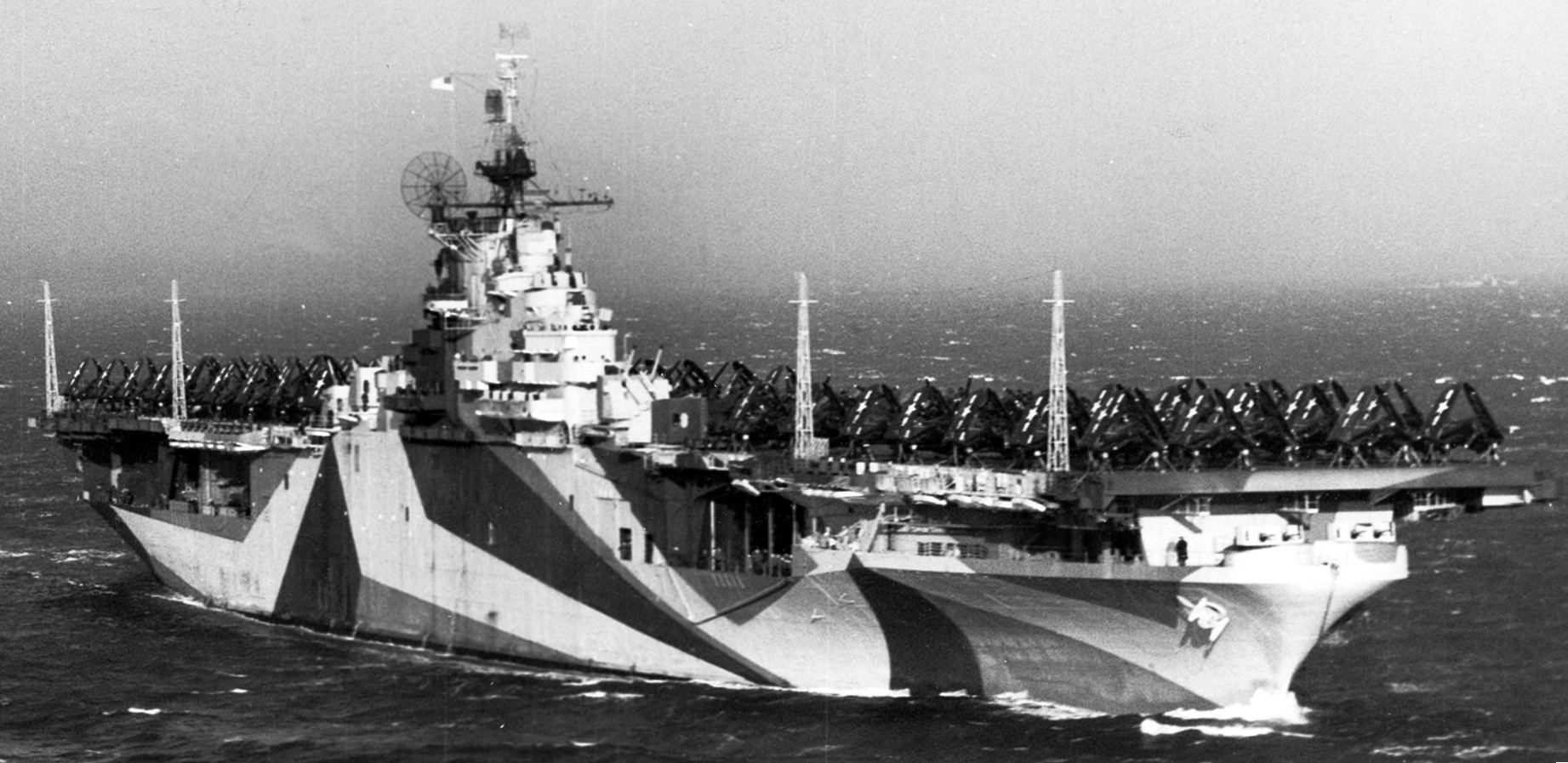
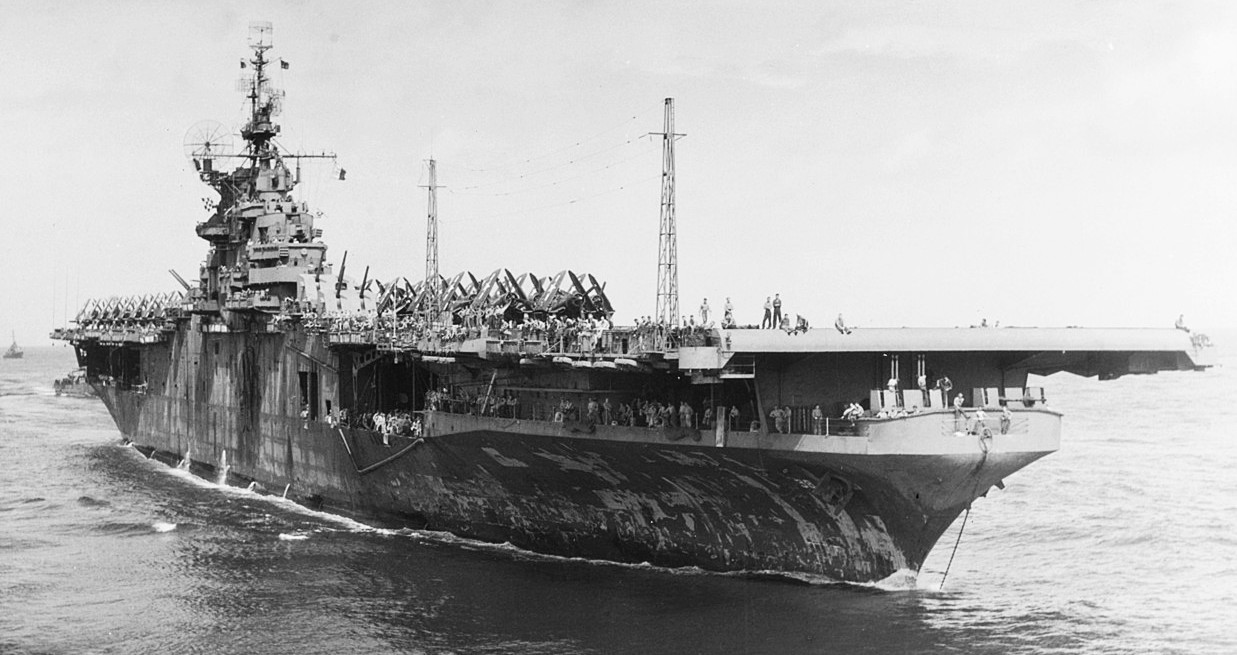
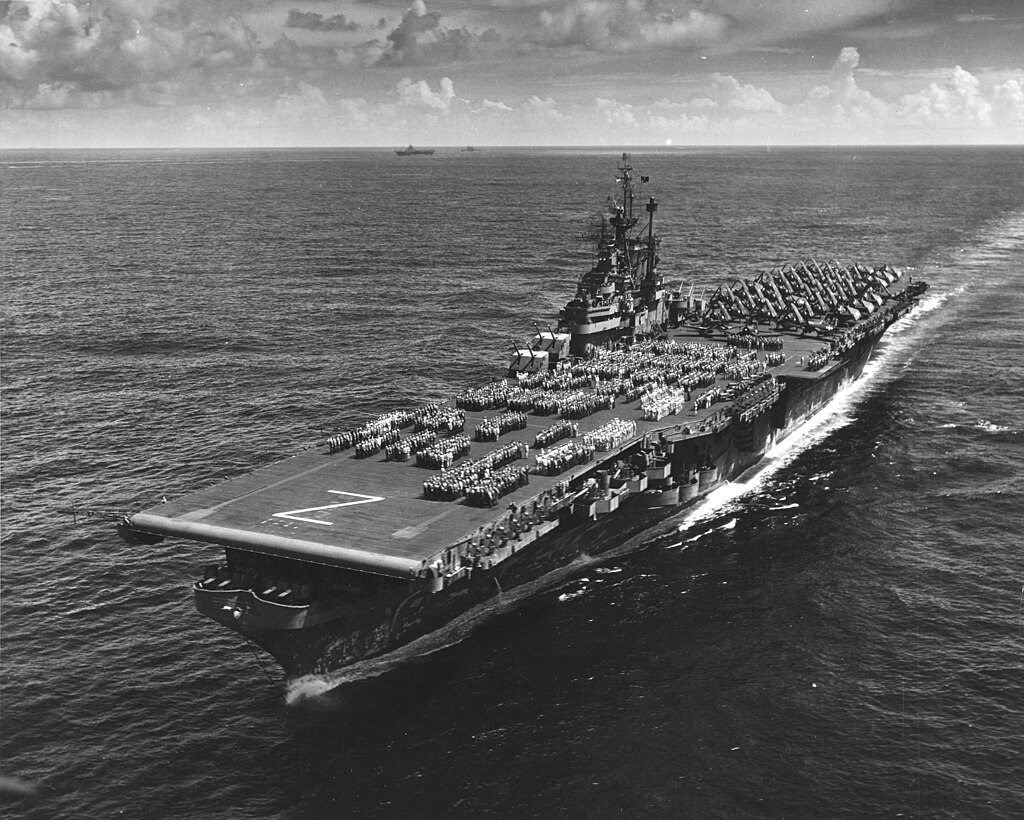
USS Shangri-La (CV-38). Commissioned 15 Sep 1944. She was commissioned in September 1944 and reached the Pacific in early 1945. Serving as flagship for Task Forces 38 and 58, her aircraft conducted strikes on Okinawa and the Japanese home islands. After the war, Shangri-La remained in the western Pacific before being decommissioned in 1947. Recommissioned in 1951, the carrier underwent modernization and was deployed to the Mediterranean and Vietnam. It was decommissioned in 1971 and eventually sold for scrapping in 1988.
(USN Photo)
USS Shangri-La (CV-38) underway at sea, circa in January 1945, or during her shakedown cruise between September and November 1945. The carrier is painted in Camouflage Measure 33, Design 10A.
(USN Photo)
USS Shangri-La (CV-38) leaving Norfolk, Virginia (USA), on 17 January 1945, heading to the Pacific. She is painted in Camouflage Measure 33, Design 10A.
(USN Photo)
USS Shangri-La (CV-38) comes alongside the escort carrier USS Attu (CVE-102), not visible, to transfer personnel and supplies, 3 September 1945.
(USN Photo)
USS Shangri-La (CV-38) underway in the Pacific Ocean, with her crew paraded on the flight deck, 17 August 1946. Note use of the air group identification letter “Z” on the flight deck instead of her hull number 38.
All comments are subject to our Comment Policy. You must be at least 18 years old to comment.
See a comment that violates our guidelines? Report it here.