
Royal Navy Minelaying Cruisers
HMS Adventure (M23), HMS Abdiel (M39), HMS Latona (M76), HMS Manxman (M70), HMS Welshman (M84), HMS Ariadne (M65), HMS Apollo (M01)
Adventure class 6,740 tons, 4 × 4.7 in.
HMS Adventure (M23)
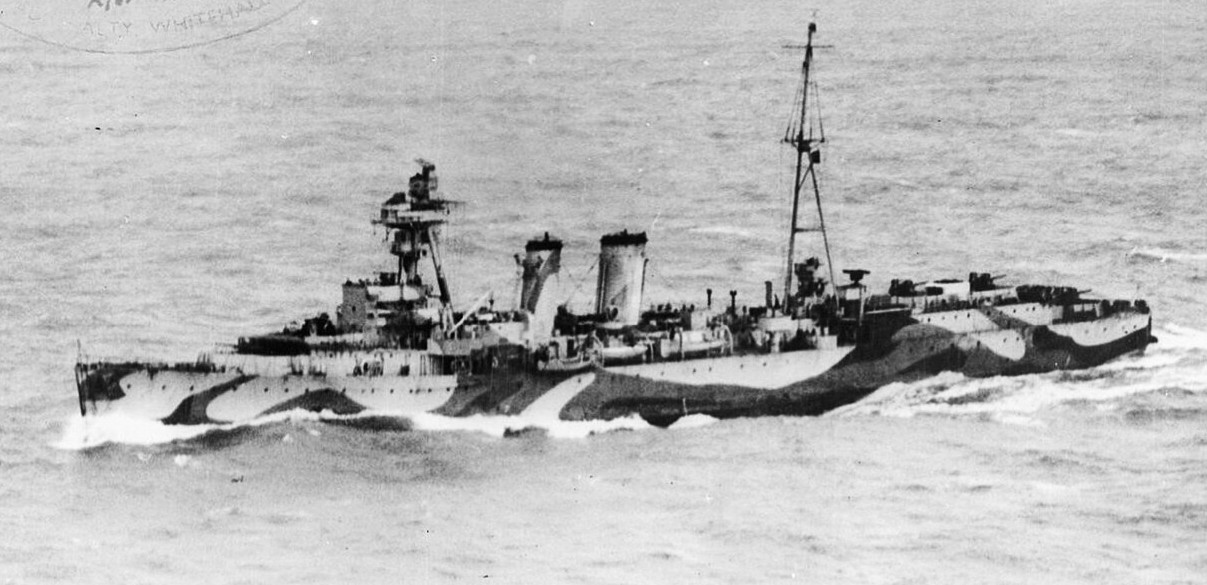
(IWM Photo, FL 200)
HMS Adventure (M23), 1943.
HMS Adventure, pennant number M23, was an Adventure-class minelaying cruiser of the Royal Navy built in the 1920s that saw service during the Second World War. Her commander between 1928 and 1929 was the future First Sea Lord John H. D. Cunningham. Laid down at Devonport in November 1922 and launched in June 1924, Adventure was the first vessel built for service as a minelayer; she was also the first warship to use diesel engines, which were used for cruising. Adventure first joined the Atlantic Fleet, then was transferred to the China Station in 1935. In the Second World War, the ship was damaged in 1941 and 1944, and was converted to a landing craft repair ship in 1944. In 1945 Adventure was reduced to reserve and in 1947 she was sold and broken up for scrap. (Wikipedia)
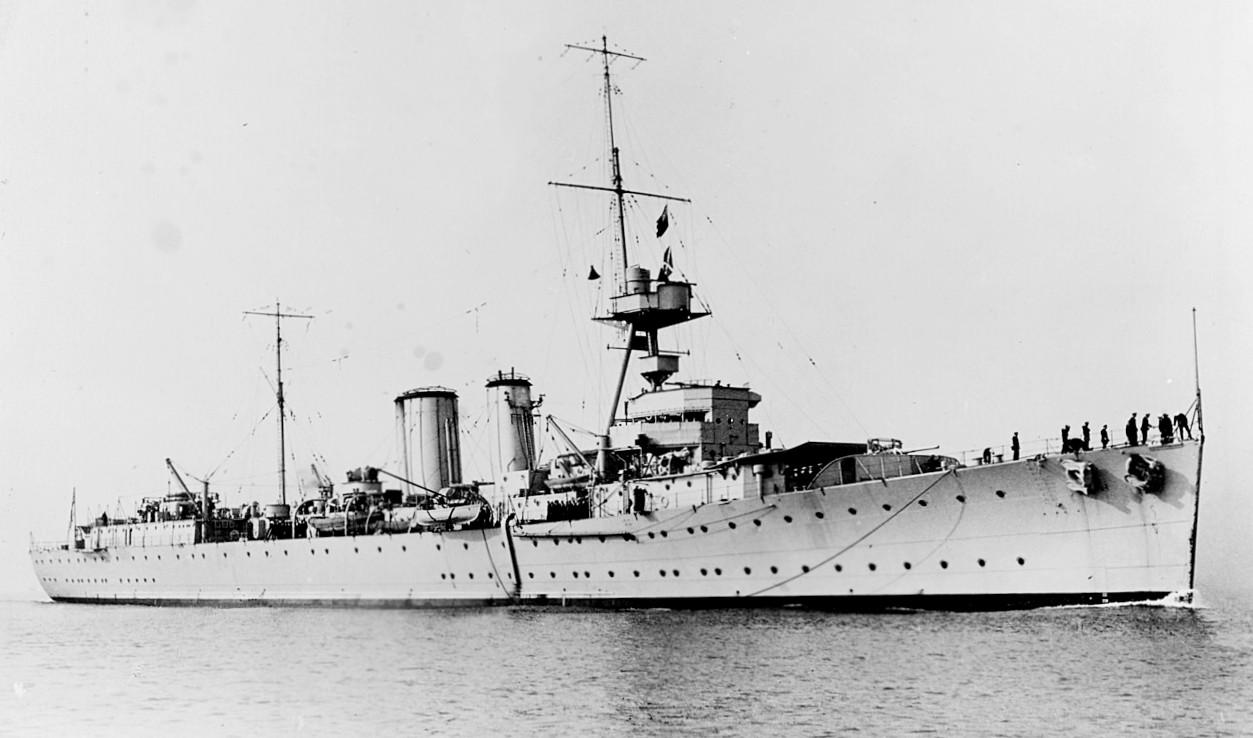
(USN Photo)
HMS Adventure (M23), 1930.
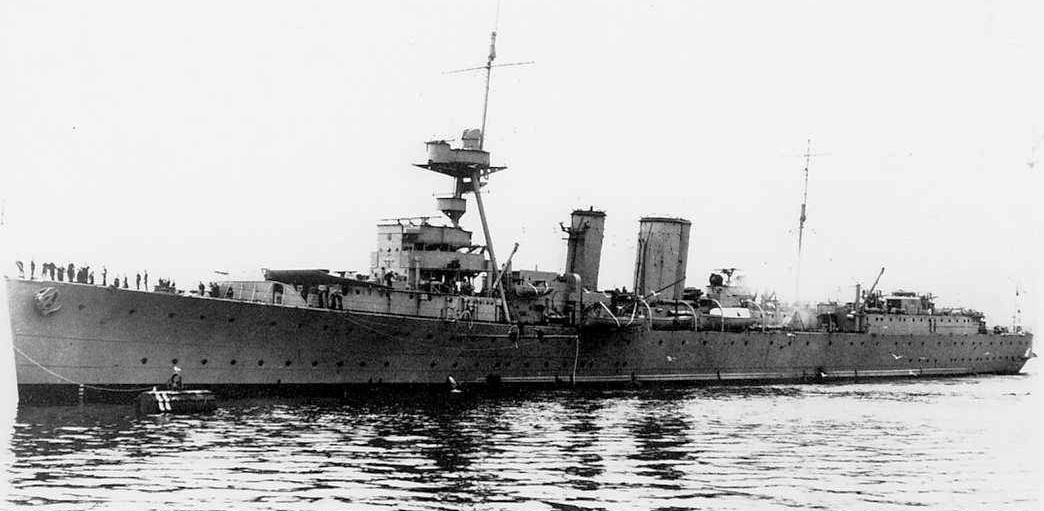
(RN Photo)
HMS Adventure (M23), c1943.
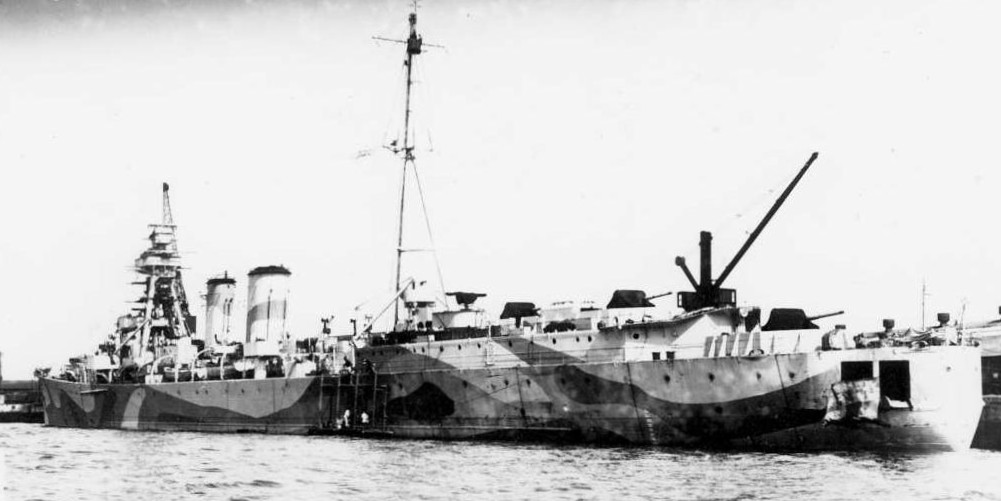
(RN Photo)
HMS Adventure (M23), c1943.
Abdiel class 1938 group 2,650 tons, 6 × 4 in.
HMS Abdiel (M39)
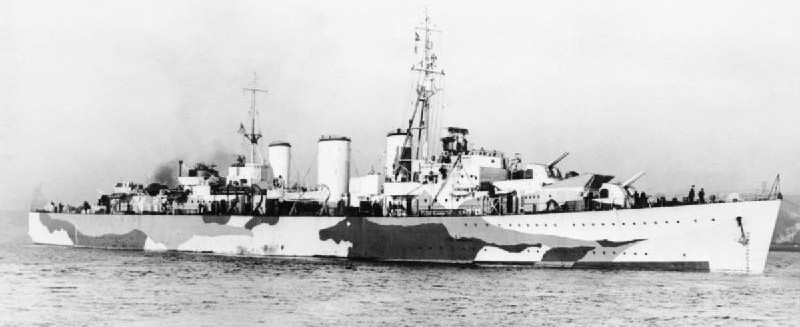
(IWM Photo, FL 26)
HMS Abdiel (M39).
HMS Abdiel (M39) was an Abdiel-class minelayer that served with the Royal Navy during World War II. She served with the Mediterranean Fleet (1941), Eastern Fleet (1942), Home Fleet (1942–43), and the Mediterranean Fleet (1943). Abdiel was sunk by German mines in Italy’s Taranto harbour in 1943. Although designed as a fast minelayer her speed and capacity made her suitable for employment as a fast transport.
Abdiel was sunk by mines in Taranto harbour, Italy on 10 September 1943, during Operation Slapstick. The mines had been laid just a few hours earlier by two German torpedo boats (S-54 and S-61), as they left the harbour. Abdiel, carrying troops of the British 1st Airborne Division (6th (Royal Welch) Parachute Battalion and 204 (Oban) Anti-Tank Battery, Royal Artillery), took the berth which had been declined earlier by the captain of the US cruiser USS Boise. Shortly after midnight, two mines detonated beneath Abdiel and the minelayer sank in three minutes, with great loss of life among both sailors and soldiers. The 1st Airborne Division lost 58 dead and around 150 injured, the Derbyshire Yeomanry lost a member of Popski’s Private Army, Lieutenant McGillavray, 48 crew were also lost. There is a rumour that the ship’s degaussing equipment had been turned off to reduce noise and to allow troops to sleep better. Commander F. Ashe Lincoln QC RNVR gives a different cause in his book “Secret Naval Investigator” (Wm Kimber London 1961, and pp. 132–133 of the 2017 reprint). A naval mine clearance expert, he found in the Germans’ Taranto magazine a number of large wooden wheels fitted with depth charges, with a timing clock and explosive charge in the centre. He says that one of these devices had been sunk next to the mooring buoy Abdiel used when the Germans evacuated the previous night. (Wikipedia)
HMS Latona (M76)
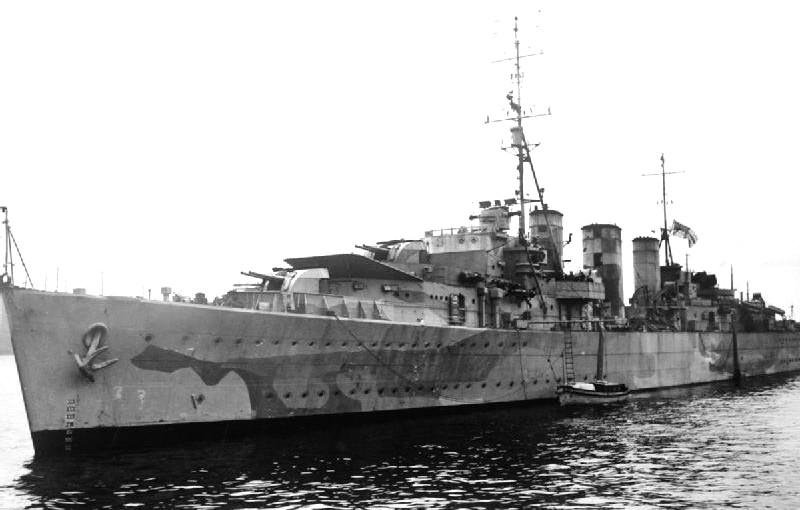
(IWM Photo, FL 14541)
HMS Latona (M76), 1940.
HMS Latona (M76) was an Abdiel-class minelayer of the Royal Navy. She served briefly during the Second World War, but was sunk less than six months after commissioning. Latona was ordered on 23 December 1938 and was laid down at the yards of John I. Thornycroft & Company, of Woolston, Hampshire on 4 April 1939. She was launched on 20 August 1940 as a fast minelayer. She was commissioned on 4 May 1941 but never served in her intended primary role, instead being used in the Mediterranean to deliver stores and supplies to the allied armies and garrisons at Tobruk and Cyprus.
On being commissioned Latona sailed to Scapa Flow to embark stores and extra Oerlikon 20 mm cannons for defence against air attacks. Having completed loading, she sailed for the Mediterranean on 16 May, travelling via the Cape of Good Hope and the Red Sea. She arrived at Alexandria on 21 June, joining her sister Abdiel. The following day they sailed to support military operations in the eastern Mediterranean. Latona’s first assignment was to carry RAF personnel to Cyprus to reinforce the garrison there. After successfully carrying this out, she returned to Alexandria on 25 July.
She sailed again in August in company with Abdiel, the Australian cruiser Hobart, and Australian destroyers Napier and Nizam to support the garrison at Tobruk. They eventually carried some 6,300 troops to Tobruk and evacuated another 6,100. On 25 October the ships supporting Tobruk came under air attack north of Bardia. Latona, carrying 1,000 Polish troops, was hit in the engine room by a bomb from a Junkers Ju 87 of I./StG1. This started a fire which soon raged out of control. The destroyers Hero and Encounter came alongside to assist and evacuated most of the troops and crew. Latona remained afloat for a further two hours, before the after magazine exploded, sinking the ship. Four officers, 16 crew members and 7 soldiers were killed. (Wikipedia)
HMS Manxman (M70)
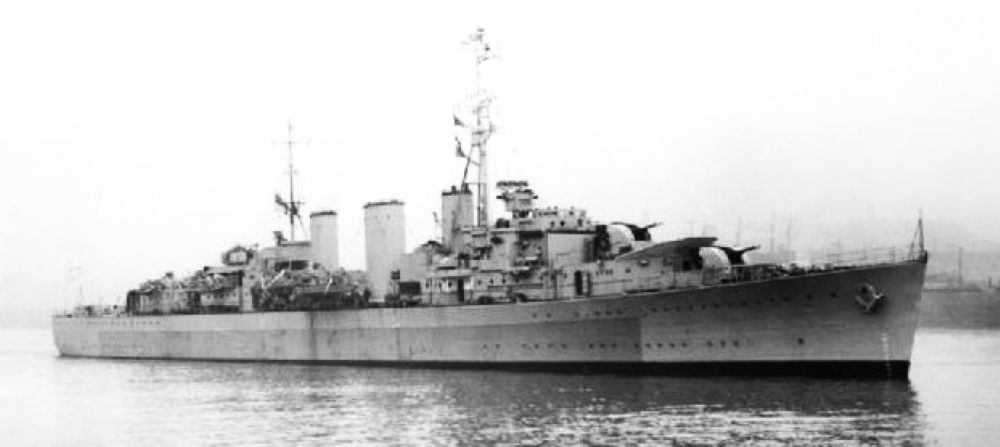
(IWM Photo, FL 4437)
HMS Manxman (M70), 1945.
HMS Manxman (M70) was an Abdiel-class minelayer of the Royal Navy. The ship is named for an inhabitant of the Isle of Man. It served in the Mediterranean during the Second World War, and entered the Reserve Fleet following the end of the war.Commissioned on 7 June 1941, her first mission was the delivery of mines to Murmansk. Manxman then transferred to the Mediterranean, where she was employed on relief runs to Malta. In August she took part in Operation Mincemeat, which involved mine-laying in the Gulf of Genoa while disguised as the French destroyer Léopard. From October 1941 to February 1942, Manxman was returned to the Home Fleet and took part in a number of mine-laying operations in the North Sea and the English Channel. In March, she joined the Eastern Fleet at Kilindini in the Indian Ocean. After escort and patrol duties, on 8 October she participated in the assault and capture of the island of Nosy Be on the north west coast of Madagascar, which was occupied by Vichy French forces.
Transferring to the Mediterranean again, Manxman was sent with supplies to Malta, followed by mine-laying in the Sicilian Channel. On 1 December, whilst in transit from Algiers to Gibraltar, she was torpedoed by U-375 and severely damaged at the position 36°39′N 0°15′E. Following emergency repairs at Oran and Gibraltar, she returned to Newcastle-upon-Tyne for extensive repair work. Manxman was re-commissioned on 10 April 1945 and made ready to join the British Pacific Fleet. The ship did not reach Colombo until 14 July, and was in Melbourne, Australia, on Victory over Japan Day.
The ship remained in Australia until June 1946, then underwent repairs at Chatham back in England before returning to the far East from February to December 1947.[3] Following a refit, Manxman joined the Mediterranean Fleet in 1951. In 1953, she appeared in the film Sailor of the King as the German cruiser Essen.[4] She was fitted for the film with enlarged funnels and mock-up triple-gun turrets over her 4-inch guns. The “torpedo damage” which forces her delay at “Resolution Island” was painted on the side of her port bow. The scenes when she is holed up for repairs were filmed in the semi-circular Dwejra bay, guarded by Fungus Rock on the west coast of Gozo Island in Malta. In 1953 she also took part in the Fleet Review to celebrate the Coronation of Queen Elizabeth II.She was refitted in Chatham in the early 60s and converted to a minesweeper support vessel. When the forward boiler was removed and the compartment was fitted with diesel generators to supply outboard power to minesweepers, she was fitted with a dummy forward funnel, which housed the diesel exhausts and ventilation for the compartment. Much of the mine stowage was removed to make way for additional accommodation. Commissioning in 1963, she was subsequently stationed in Singapore. Returning to the UK in 1968, Manxman was used for engineering training at Devonport and following a fire, was transferred to the reserve at Chatham Dockyard until broken up at Newport in 1973. (Wikipedia)
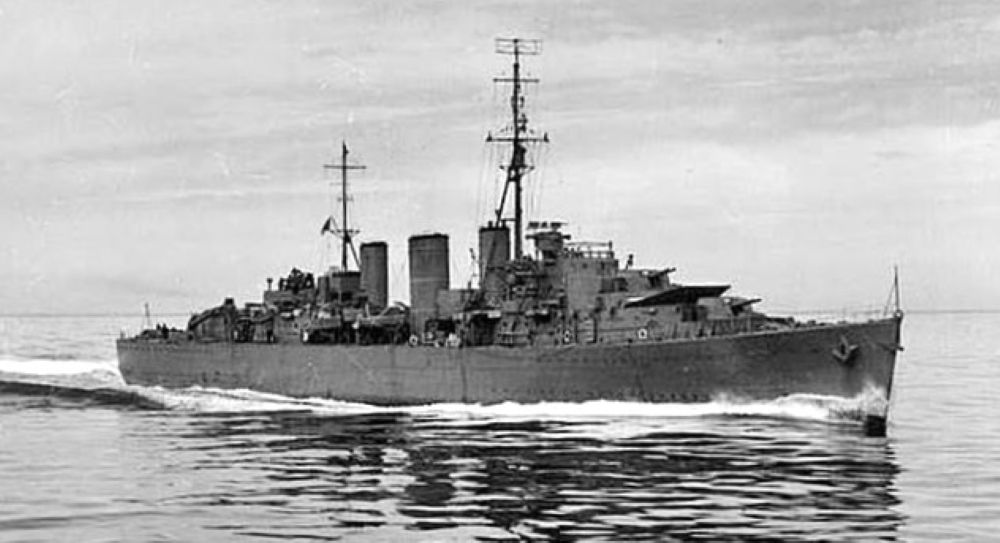
(IWM Photo, FL 4435)
HMS Manxman (M70) under way on July 7 the 1941.
HMS Welshman (M84)
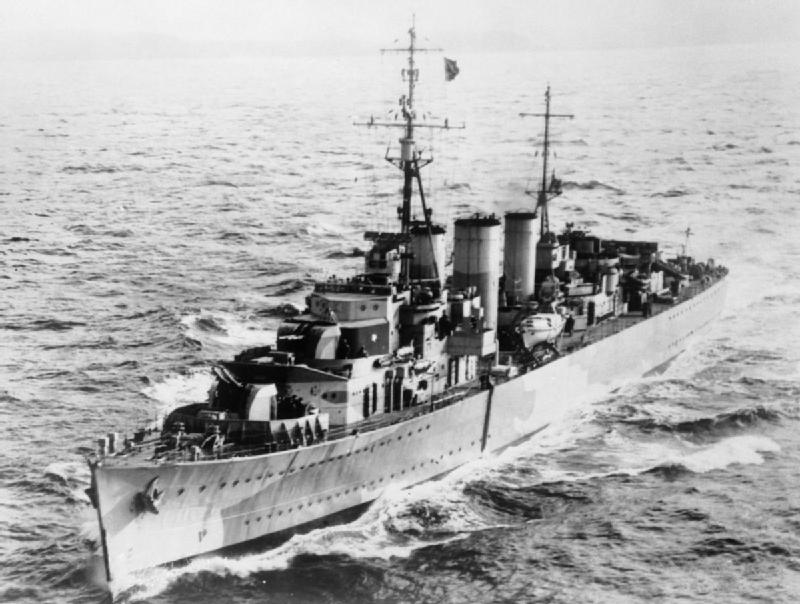
(IWM Photo, FL 4485)
HMS Welshman (M84).
HMS Welshman (M84) was an Abdiel-class minelayer of the Royal Navy, launched in September 1941. During the Second World War she served with the Home Fleet carrying out minelaying operations, before being transferred to the Mediterranean Fleet in mid-1942 for the Malta Convoys. She also saw service during Operation Torch. On 1 February 1943, while transporting stores and personnel to Tobruk, she was hit by a torpedo fired by U-617, commanded by Albrecht Brandi. Two hours later she sank east of Tobruk in position 32°12′N 24°52′E, with the loss of 155 lives. The survivors were rescued by destroyers Tetcott and Belvoir and taken to Alexandria. (Wikipedia)
Wartime Emergency Programme group 2,650 tons, 4 × 4 in.
HMS Ariadne (M65)
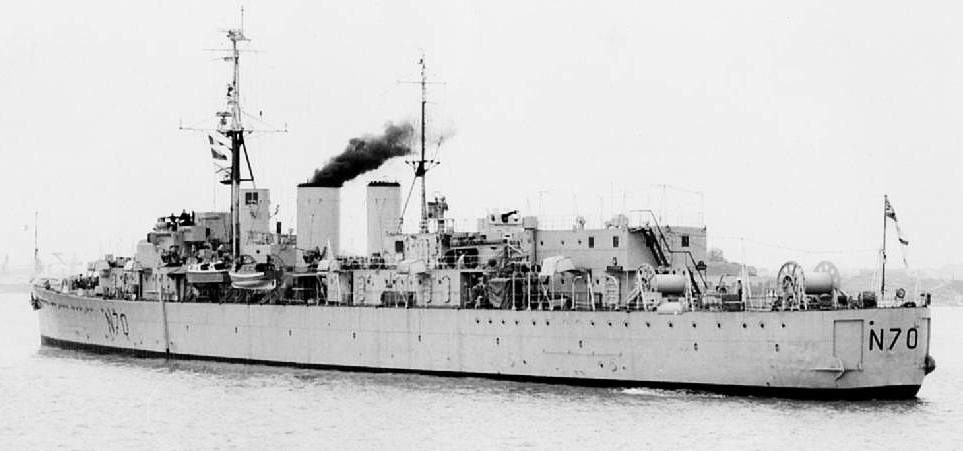
(RN Photo)
HMS Ariadne (M65), c1943
HMS Ariadne was an Abdiel-class minelayer built by Alexander Stephen and Sons of Glasgow, Scotland. She was laid down on 15 November 1941, launched on 16 February 1943 and commissioned on 9 October 1943. Her first duty was to lay mines off the coast of Norway. She was also one of the ships taking part in Operation Stonewall. She then left Home waters in January 1944 to join the United States Seventh Fleet in the Pacific Ocean theatre of war. In June 1944 she laid 146 mines off the northern coast of New Guinea, and when landings were made in the Mapia Group of islands in November 1944, Ariadne was used to carry US Army soldiers. During her period of active service she laid 1,352 mines.
After the end of the war, Ariadne was used to repatriate British prisoners of war from Japan and as a mailship due to her speed. She was paid off into the Reserve Fleet at Sheerness, and did not see service again, apart from a short trial after a refit in the 1950s. This involved the replacement of her light anti-aircraft guns with more modern weapons. She was finally sold to W.H. Arnott Young for scrapping and arrived at Dalmuir in February 1965. She was then scrapped at Dalmuir and Troon in June 1965. (Wikipedia)
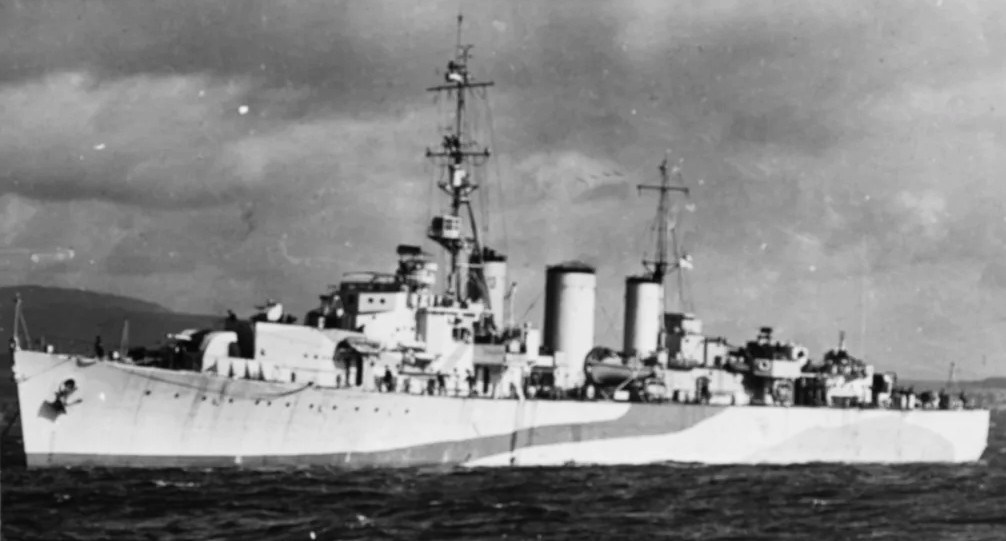
(RN Photo)
HMS Ariadne (M65), 1943.
HMS Apollo (M01)
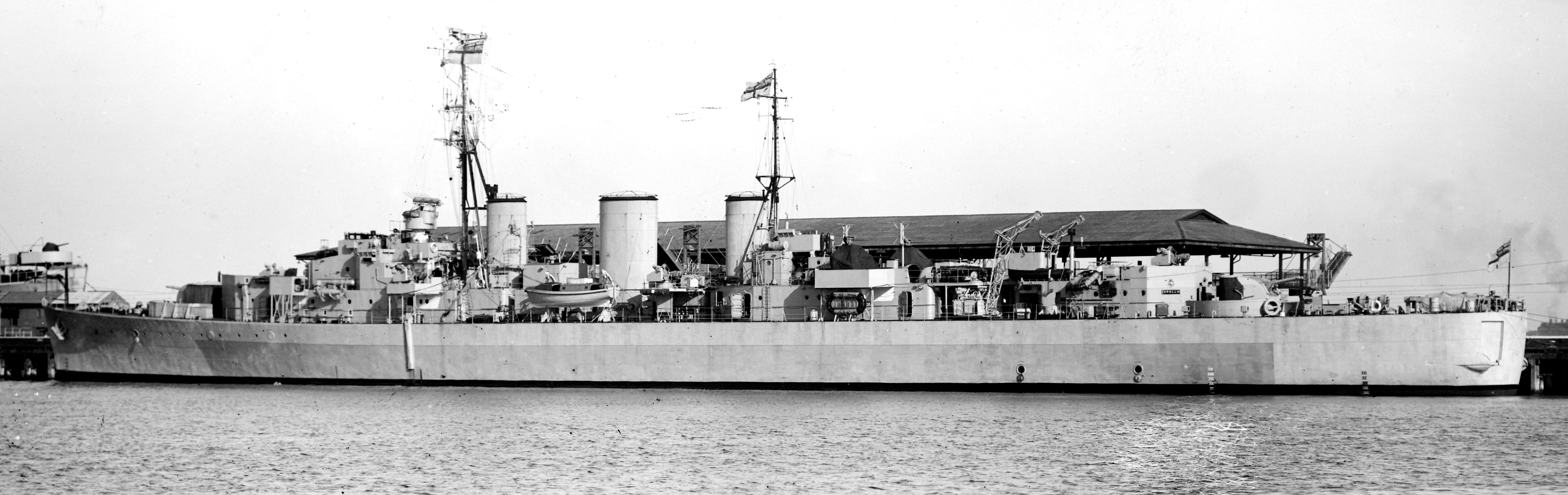
(State Library of Victoria Photo)
HMS Apollo (M01), 1945.
HMS Apollo was an Abdiel-classminelayer of the Royal Navy, the eighth RN ship to carry the name. She served with the Home Fleet during the Second World War, taking part in the Normandy Landings before being transferred to the British Pacific Fleet. Put into reserve in 1946, she was recommissioned in 1951, serving until 1961, and was sold for scrapping in 1962.
Commissioned after sea trials in Feb 1944 Apollo joined the Home Fleet at Scapa Flow before setting out for Plymouth for minelaying operations in supportof the planned invasion of France. Loading mines at Milford Haven she commenceda series of operations off the French coast of Brittany between Ushant and Île Vierge. She was detached for duty in “Operation Neptune” and on 7 June (D-Day+1) she embarked Allied Supreme Commander General Dwight D. Eisenhower,Naval Commander in Chief Admiral Bertram Ramsay, General Bernard Law Montgomeryand staff officers from SHAEF, to visit the assault areas. Unfortunately the minelayer grounded while underway, damaging her propellers, and her passengers were transferred to the destroyer HMS Undaunted.
Apollo took passage to Sheerness and then to the Tyne for repairs, which were completed in September. The ship was then transferred to Western Approaches Command, and deployed in the South-Western Approaches laying deep trap minefields as a countermeasure to U-boat activities in inshore waters. With minelayer HMS Plover she laid more than 1200 Mk XVII moored mines across the coastal convoy route along the north coast of Cornwall. She started on 29 Nov 1944 with minefield “HW A1” – this minefield was later fatal to the submarine U-325. On 3 Dec she laid minefield “HW A3” eastof “HW A1”. This minefield was later fatal to the submarine U-1021.
On 24 December she was transferred to the Home Fleet for minelaying duty off Norway, operating off Utsira in January, accompanied by the destroyers HMS Zealous and HMS Carron. On 15 January 1945 she returned to the Western Approaches for minelaying in the Irish Sea. On 13 April Apollo rejoined the Home Fleet for a minelaying operation in the Russian Kola Inlet (“Operation Trammel”) as part of “Force 5” with destroyers HMS Opportune, HMS Orwell and HMS Obedient, rejoining the Home Fleet in May.
After the end of the war in Europe HMS Apollo sailed to Oslo in company with sistership HMS Ariadne and heavy cruiser HMS Devonshire, returning the Norwegian Government-in-Exile and Crown Prince Olav. On her return Apollo prepared for service with the British Pacific Fleet, departing from Portsmouth at the end of June. After exercises with the Mediterranean Fleet at Malta in July, she finally arrived at Melbourne on 1August, by which time her services were no longer required, as the Japanese surrendered on the 15th. In 1948 her pennant number was changed from M01 to N01.
HMS Apollo was recommissioned in 1951 after the outbreak of the Korean War, Joining the 2nd Cruiser Squadron of the Home Fleet. After Hurricane Charlie struck Jamaica on 17 August 1951, Apollo made a high speed run to deliver relief supplies to the island. In 1953 she took part in the Fleet Review to celebrate the Coronation of Queen Elizabeth II, while in November 1954 she became the Flagship of the Commander-in-Chief, Home Fleet. On 25 August 1960, the destroyer HMS Battleaxe was carrying out steam trials while moored alongside Apollo at Portsmouth, when steam was let into Battleaxe’s turbines, driving the ship forward and breaking Apollo’s mooring lines. Apollo then collided with the frigate HMS Wakeful, which also broke free from her moorings and struck the caisson at the entrance to a dock. Apollo‘s stern was damaged, while Wakeful suffered buckled plates from the impact by Apollo and a badly damaged bow from the collision with the caisson. She was paid off and returned to the Reserve in 1961, was put on the Disposal List the next year, and sold for breaking-up by Hughes Bolckow at Blyth, Northumberland, where she arrived in November 1962. (Wikipedia)
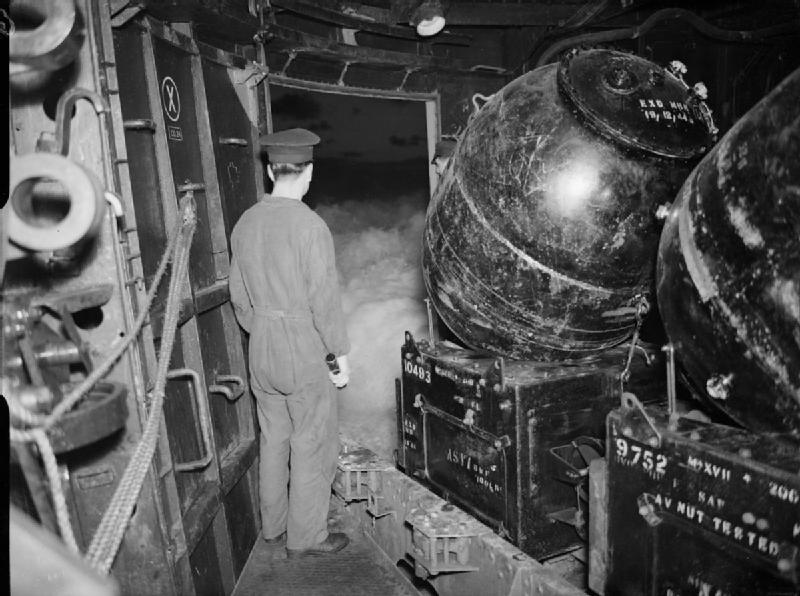
(IWM Photo, A 27055)
HMS Apollo (M01) about to start laying mines off Norway.
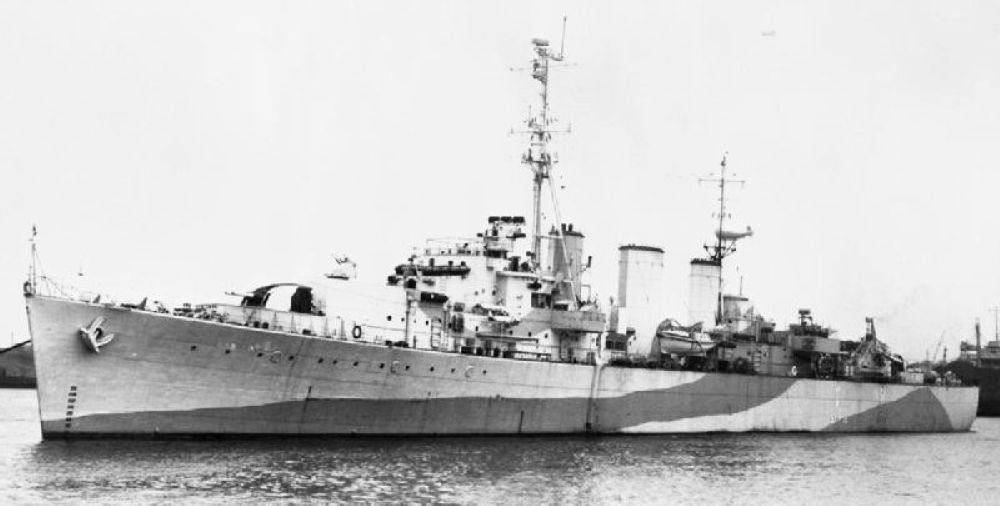
(IWM Photo, FL 745)
HMS Apollo (M01), 1 Feb 1944.
All comments are subject to our Comment Policy. You must be at least 18 years old to comment.
See a comment that violates our guidelines? Report it here.