Minotaur class cruisers: HMS Swiftsure (08), HMS Minotaur (53)/HMCS Ontario (C53), HMS Superb (25)
The Minotaur class, also known as the Swiftsure class after the lead ship was sold to Canada and renamed, were a group of light cruisers of the British Royal Navy built during the Second World War. They were designed as a modified version of the Fiji class incorporating war modifications and authorised in 1941. However, in spite of the heavy toll of cruisers in that year and the following one, the building of this new class had a relatively low priority and only three of the planned twelve were completed by end of the Second World War. They played no significant part in the Second World War, though Swiftsure, as flagship of the British Pacific Cruiser Squadron, was selected by Admiral Cecil Harcourt to hoist his flag for the Japanese surrender at Hong Kong. Superb was completed to a slightly different design than the first two ships, work on another three was cancelled and the last three were eventually built to a different design as the Tiger class. (Wikipedia)
HMS Swiftsure (08)
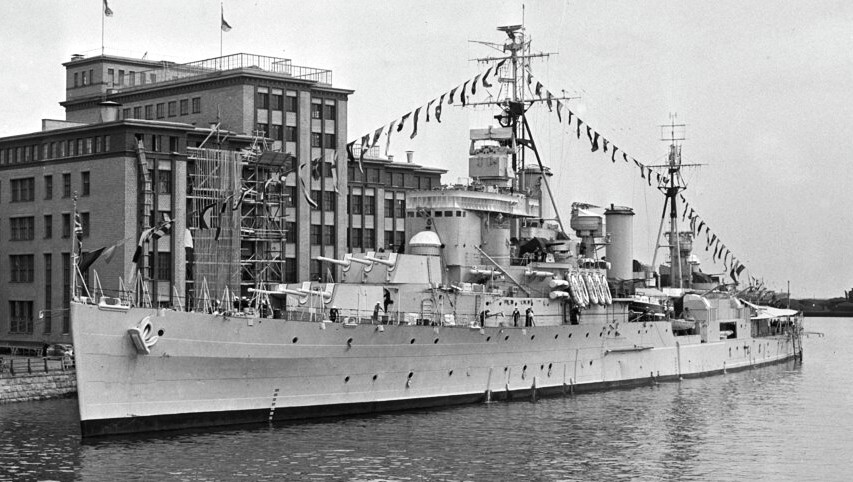
(Finnish Heritage Agency Photo, Helsinki, 26 July 1952)
HMS Swiftsure (08). She was laid down by Vickers Armstrong at Newcastle upon Tyne on 22 September 1941, launched on 4 February 1943 by Lady Wake-Walker, and commissioned on 22 June 1944. She was the first of the new Minotaur class, a development of the later Colony-class cruisers, featuring increased beam and an additional fifth twin 4-inch turret.Swiftsure was the last Royal Navy cruiser to be completed during the war and the first British cruiser to be designed with an operations room and modern radar systems. Her sensor displays and communications were arranged for improved operational efficiency. During her service in the Pacific in 1945, she was regarded as the most effective anti-aircraft cruiser in the fleet, and was the first Royal Navy cruiser equipped with the Type 274 lock-and-follow radar targeting system for her main armament.
HMS Swiftsure joined the Home Fleet upon commissioning and, in 1944, was assigned to the Eastern Fleet. In November 1944, she became a unit of the newly formed British Pacific Fleet. While operating in the Pacific, she participated in the Okinawa campaign from March to May 1945, and in June took part in a the carrier raid on Truk. During this operation, the British Pacific Fleet was operating as part of Task Group 111.2, with the cruisers conducting shore bombardments. On 30 August 1945, Swiftsure entered Hong Kong as part of this group and took part in the formal acceptance of the Japanese surrender. At that time, she was serving as the flagship of the British Pacific Cruiser Squadron. (Wikipedia)
HMS Swiftsure served as the flagship of the 4th Cruiser Squadron in 1946, and in 1951 became the flagship of the 2nd Cruiser Squadron.[a] She was refitted to align with HMS Superb, receiving three ‘Glasshouse’ directors with Type 275 radar for the 4-inch guns, Type 960M long-range air warning radar, and a more powerful 40 mm light anti-aircraft armament mounted on “Boffin” and “Buster” mountings. Swiftsure was eventually sold for scrapping, arriving at the Inverkeithing yard of Thos. W. Ward on 17 October 1962. (Wikipedia)
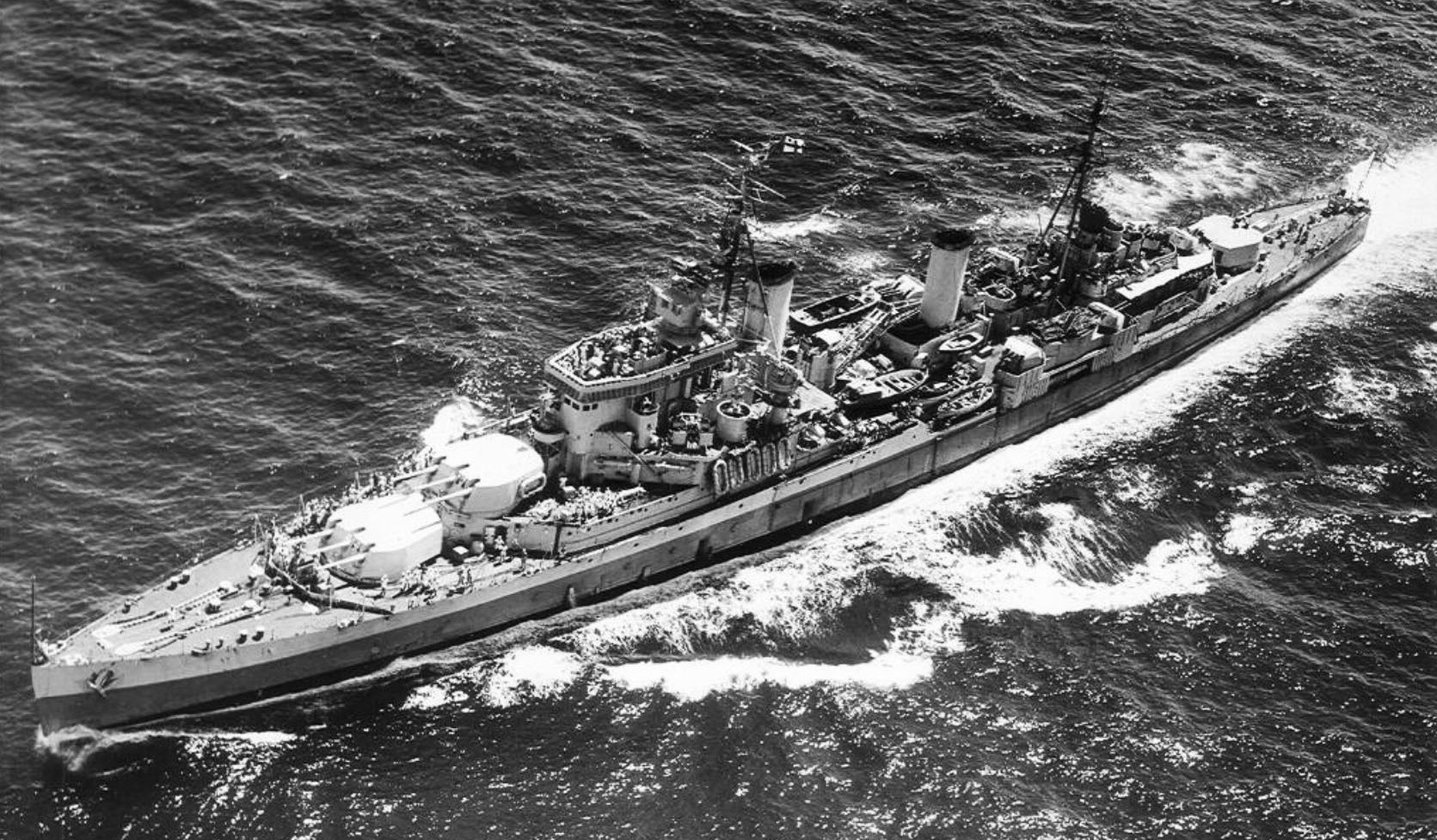
(RN Photo)
HMS Swiftsure (08) outside Sydney Harbour, 20 Dec 1945. She is flying the flag of Vice Admiral Cecil Harcourt the flagship of the British Pacific Cruiser Squadron.
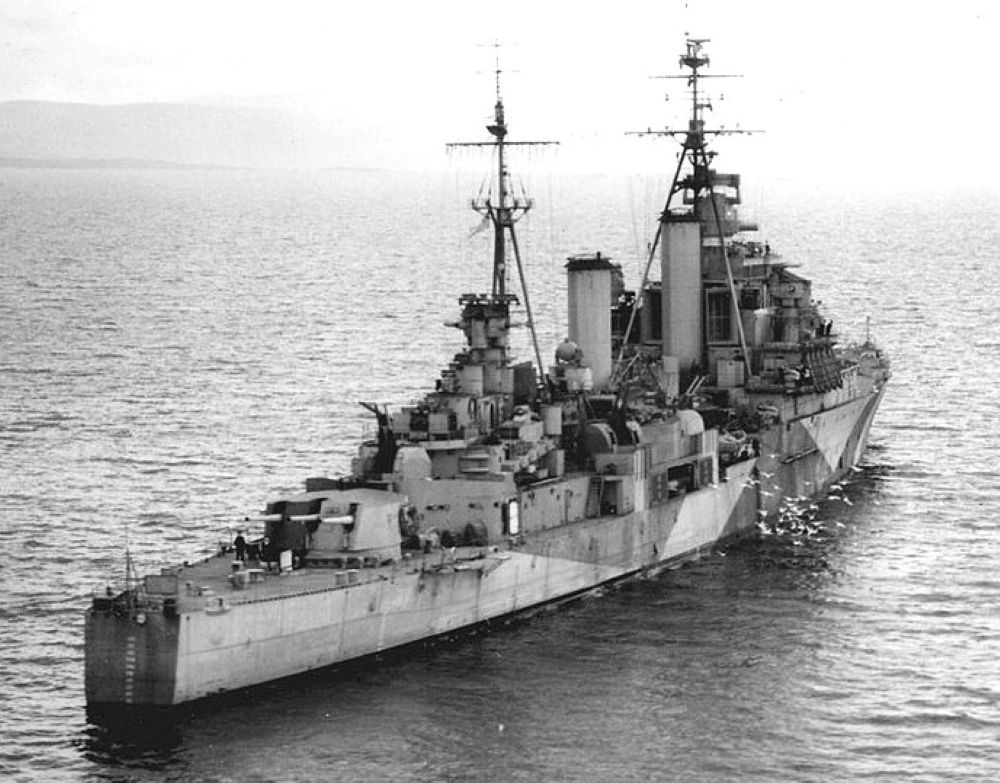
(RN Photo)
HMS Swiftsure (08)
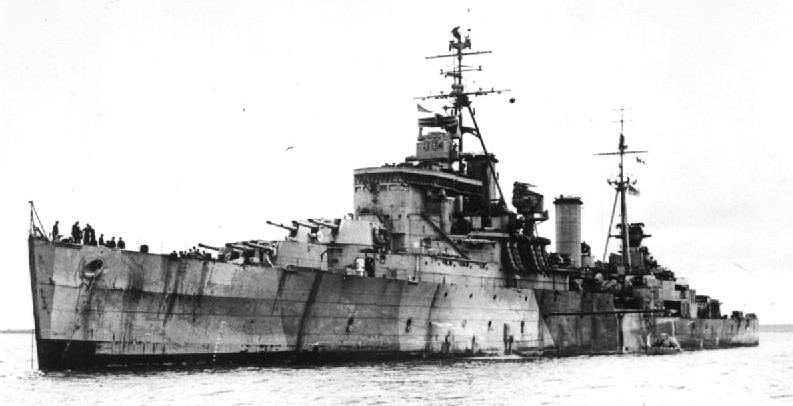
(IWM Photo, FL 9095)
HMS Swiftsure (08).
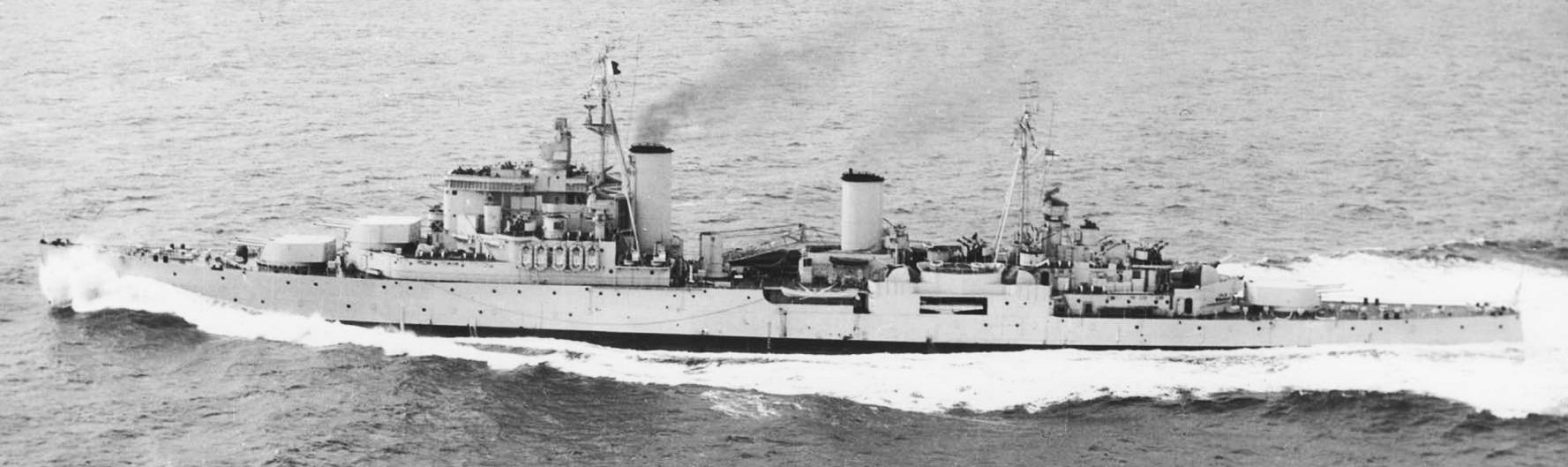
(RN Photo)
HMS Swiftsure (08), 31 Jan 1951.
HMS Minotaur (53)/HMCS Ontario (C53)
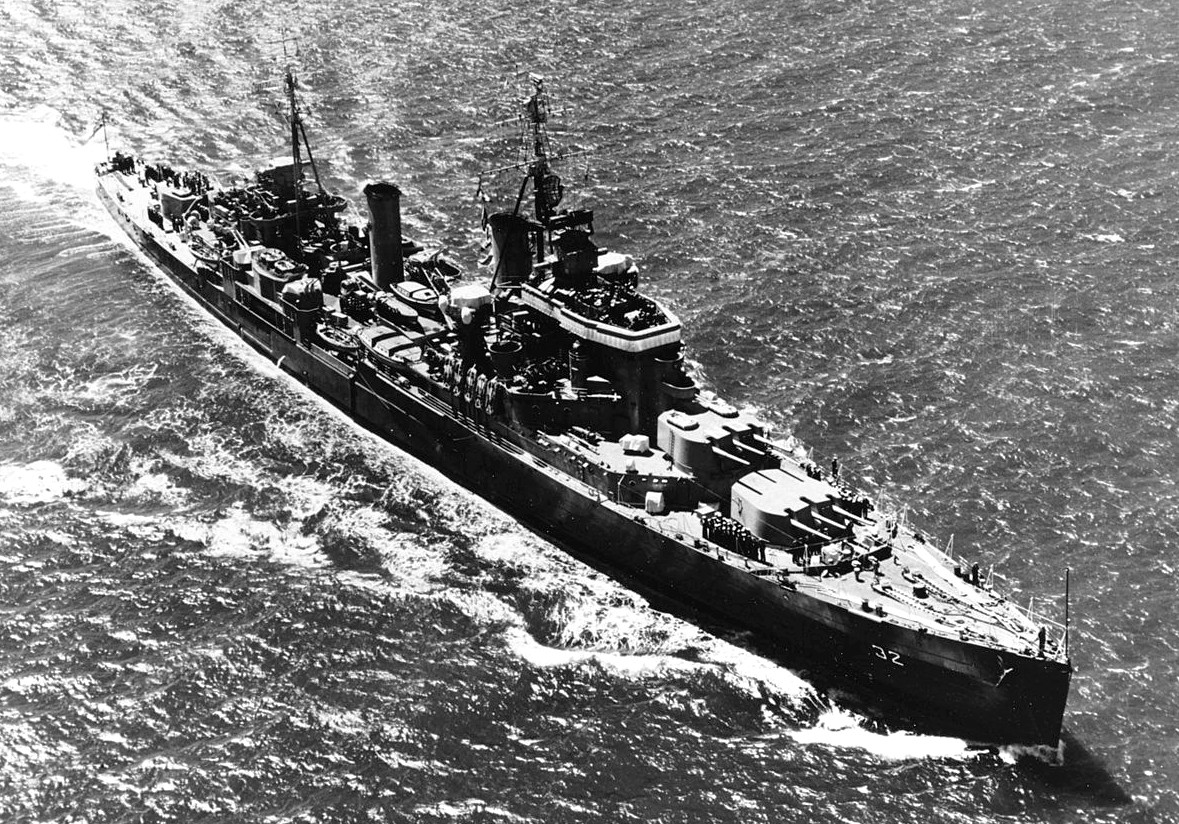
(USN Photo)
HMS Minotaur (53)/HMCS Ontario (C53), off San Francisco, California, 5 July 1951. HMS Minotaur was laid down on 20 November 1941 by Harland & Wolff of Belfast and launched on 29 July 1943. She was transferred to the Royal Canadian Navy in July 1944, and completed and commissioned as Ontario on 25 May 1945 at Belfast. She sailed to join the 4th Cruiser Squadron in the Pacific Theatre, but was too late to see active service, although she was employed in the operations at Hong Kong, Manila and in Japan. She returned home for refit, arriving at Esquimalt, British Columbia on 27 November 1945.
In October 1948, Ontario was joined by the destroyers Cayuga, Athabaskan, Crescent and the frigate Antigonish in sailing to Pearl Harbor, Hawaii; the largest deployment of the Royal Canadian Navy following the war. In January 1949, Ontario took part in the largest training cruise by the Royal Canadian Navy to that date which included the aircraft carrier Magnificent, the destroyers Haida, Athabaskan and the frigate Antigonish. The group, designated CTF 215, participated in naval exercises with US and British vessels in the Caribbean Sea.[5][6] In February 1951, Ontario sailed to Australia, taking part in joint naval exercises with the Royal Australian Navy. On the way the ship made several port visits, returning to Canada in June.
In October 1951, Ontario sailed to the east coast where after arrival, Princess Elizabeth and Prince Philip, Duke of Edinburgh sailed on the cruiser from Sydney, Nova Scotia, through the Cabot Strait to Newfoundland during the Royal Visit. The ship returned to Esquimalt following the tour, arriving in December.[8] From September to December 1952, Ontario sailed around South America on a training cruise, making several port visits.[9] While entering the harbour at Buenos Aires, the cruiser was overtaken by the merchant vessel SS Arauco and struck amidships. The ship continued on her cruise until arriving at Rio de Janeiro on 6 November. There it was found that the starboard propellers were damaged. The outer propeller was removed and repairs were made to the inner one. After nearly two weeks at Rio de Janeiro, Ontario was forced to return to Esquimalt at a reduced speed.
On 15 June 1953 the cruiser took part in the Fleet Review to celebrate the Coronation of Queen Elizabeth II. In January 1954, Ontario began a training cruise across the Pacific, visiting Australia, New Zealand and Tonga before returning to Esquimalt in April. Ontario performed a three-month training cruise to Australia and New Zealand in early 1955, returning to Canada on 2 April. The cruiser then departed on 25 April for a four-month cruise of Europe. In June 1956 Ontario departed Esquimalt for a two-month summer training cruise along the coasts of North and South America, going as far south as Ecuador. The cruiser returned to port on 10 August after meeting the Second Canadian Escort Squadron off the coast of California.
HMCS Ontario was paid off on 15 October 1958.[3] The ship was sold to a west coast firm which began but did not finish the job of breaking up the ship at Vancouver. The ship was resold, along with HMCS Quebec, to Mitsui and Co. of Japan. She arrived at Osaka for breaking up on 19 November 1960. (Wikipedia)
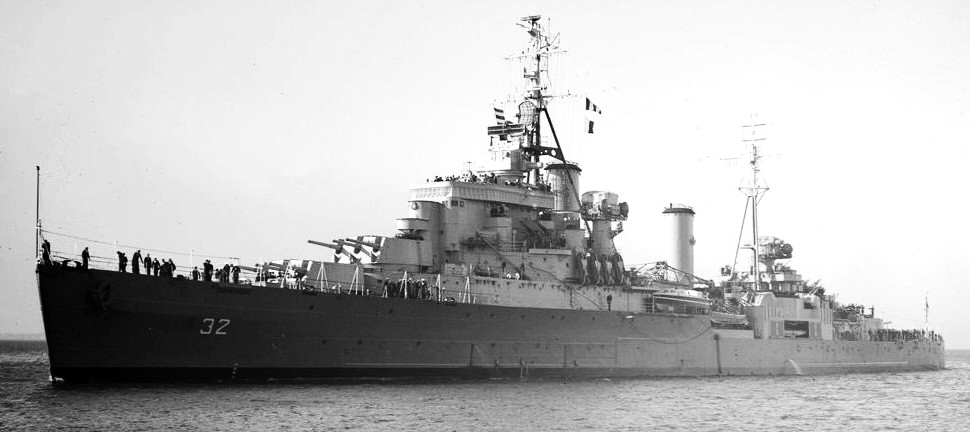
(State Library of Victoria Photo, 1951)
HMCS Ontario (C53).
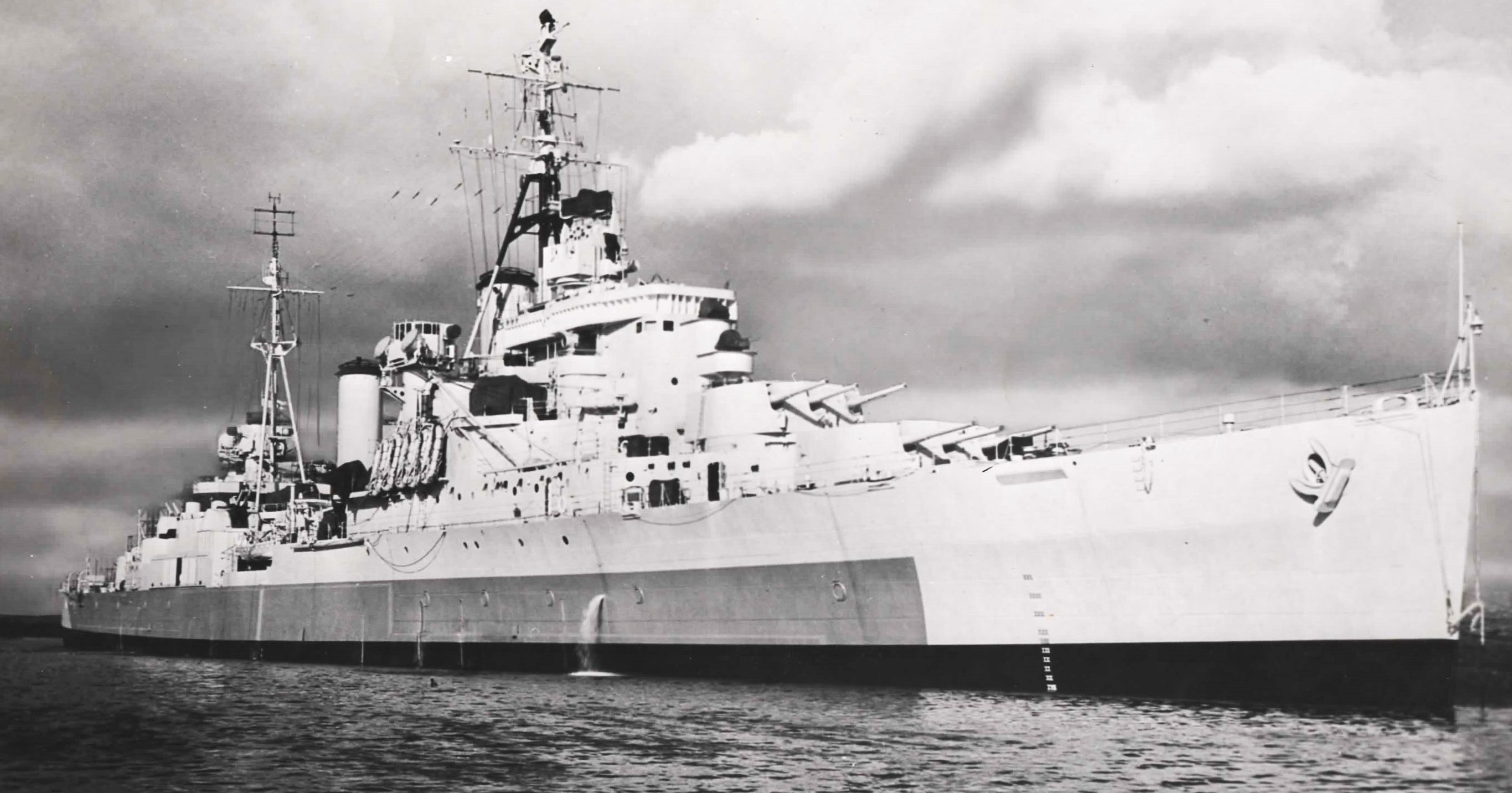
(Maritme Museum of Halifax Photo)
HMCS Ontario (C32).
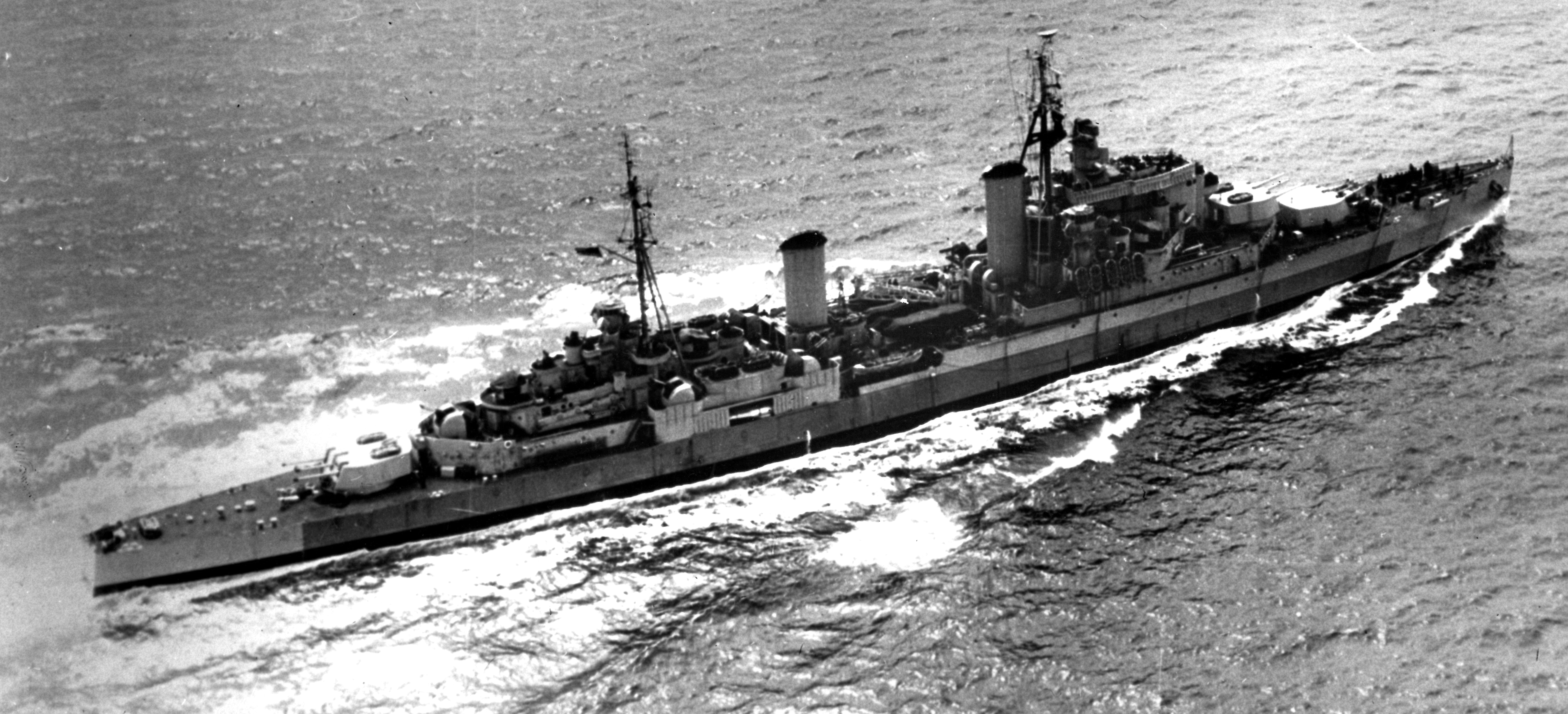
(Maritme Museum of Halifax Photo)
HMCS Ontario (C32).
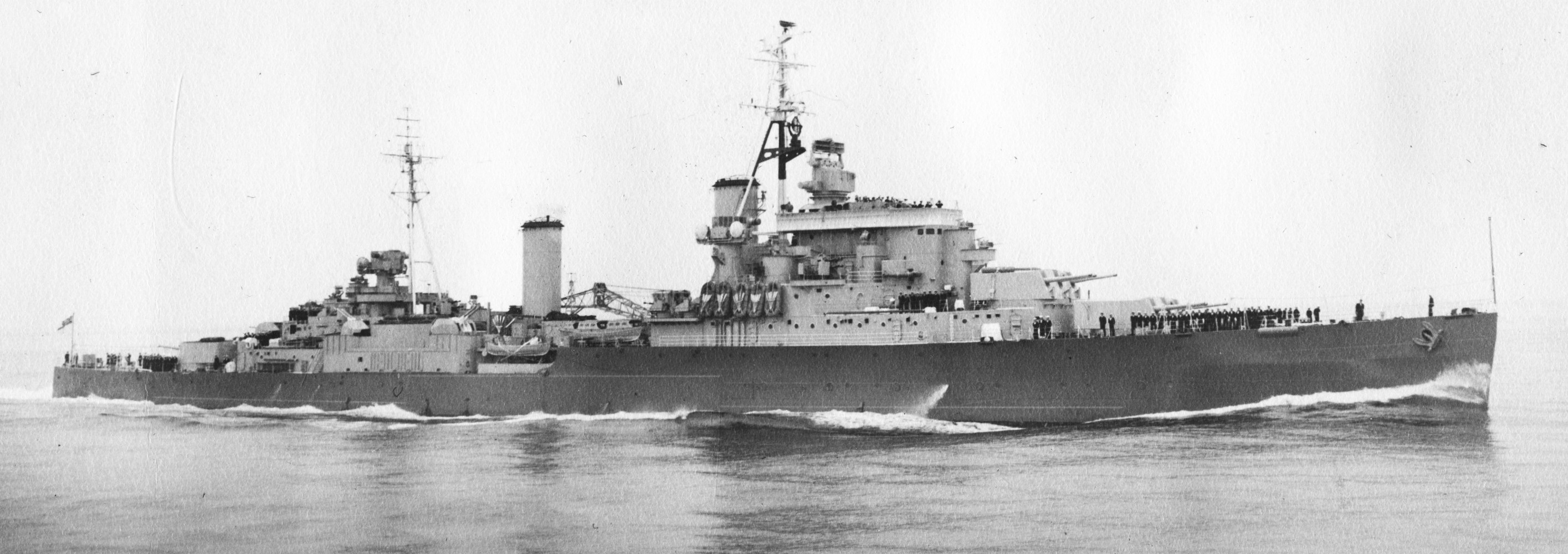
(RCN Photo)
HMCS Ontario (C32), c1949.
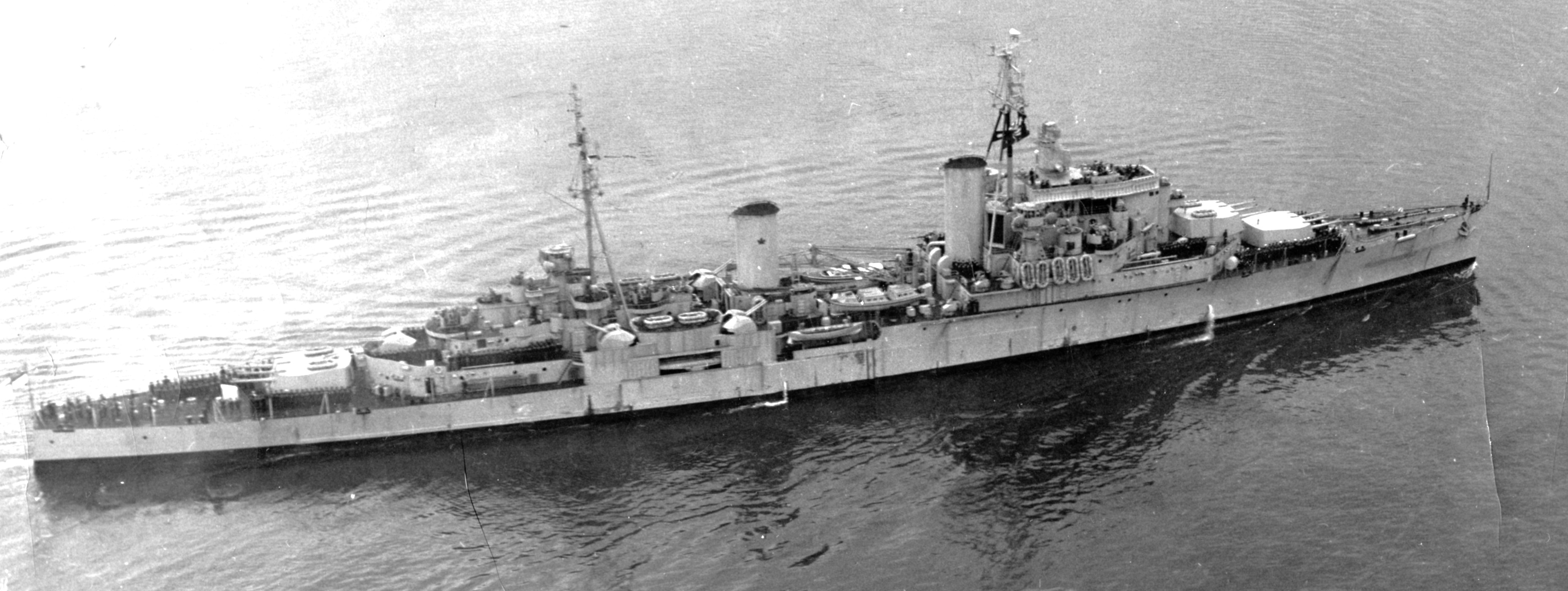
(RCN Photo)
HMCS Ontario (C32) manoeuvers to come alongside in Esquimalt.
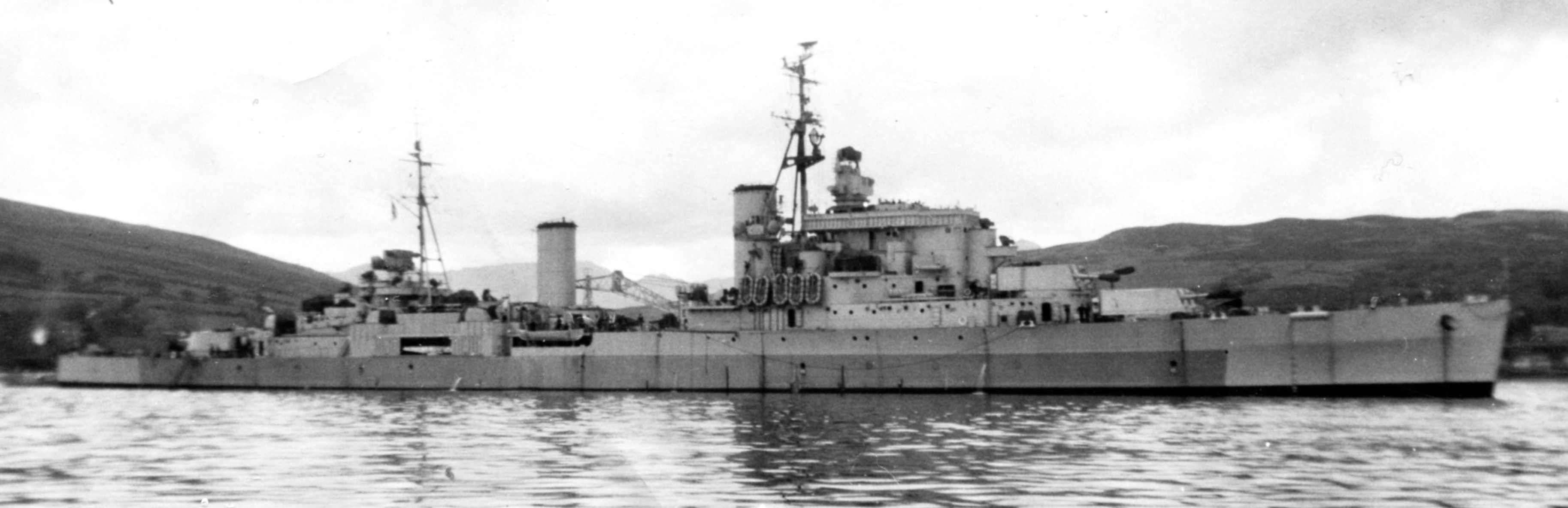
(RCN Photo)
HMCS Ontario (C32).
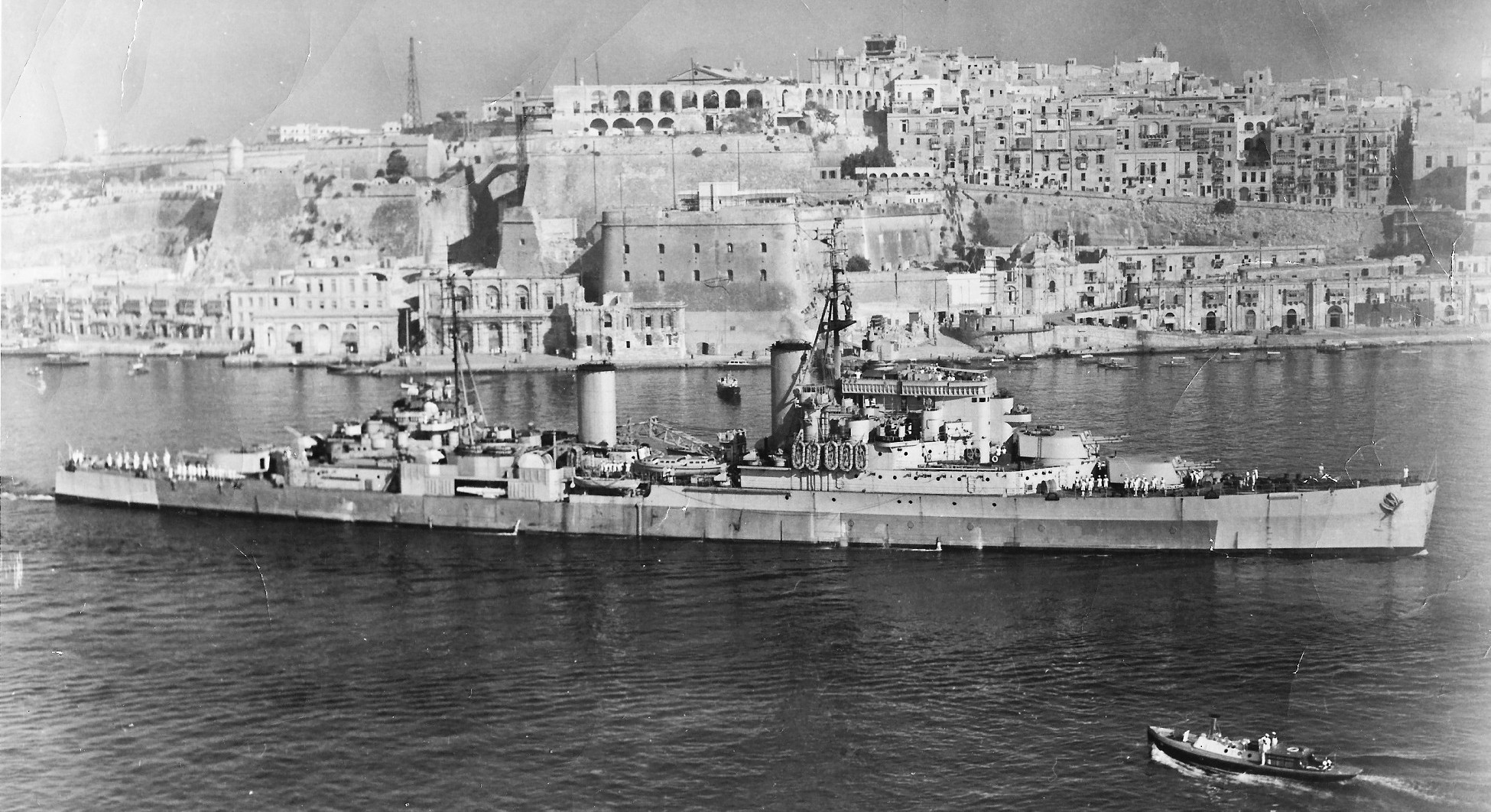
(Terry Gunn Photo)
HMCS Ontario (C32) at Malta enroute to the Pacific.
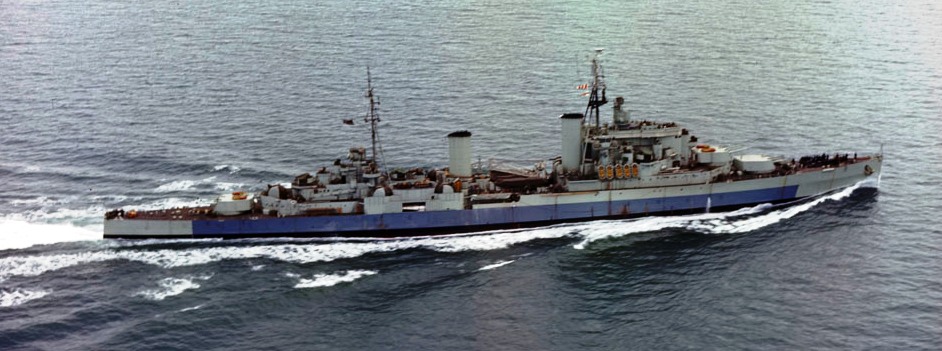
(Library and Archives Canada Photo, MIKAN No. 4950944)
HMCS Ontario (C32) in 1945. She was a Minotaur-class light cruiser built for the Royal Navy as HMS Minotaur (53), but transferred to the RCN on completion and renamed HMCS Ontario. HMS Minotaur was laid down on 20 November 1941 by Harland & Wolff of Belfast and was launched on 29 July 1943 and transferred to the RCN in July 1944. She was transferred to the Royal Canadian Navy in July 1944, and completed and commissioned as HMCS Ontario on 25 May 1945 at Belfast. She sailed to join the 4th Cruiser Squadron in the Pacific Theatre, but was too late to see active service, although she was employed in the operations at Hong Kong, Manila and in Japan. She returned home for refit, arriving at Esquimalt, BC, on 27 Nov 1945. In 1953 she took part in the Fleet Review to celebrate the Coronation of Queen Elizabeth II. She was used for training duties postwar until paid off on 15 October 1958. She arrived at Osaka for breaking up on 19 November 1960.
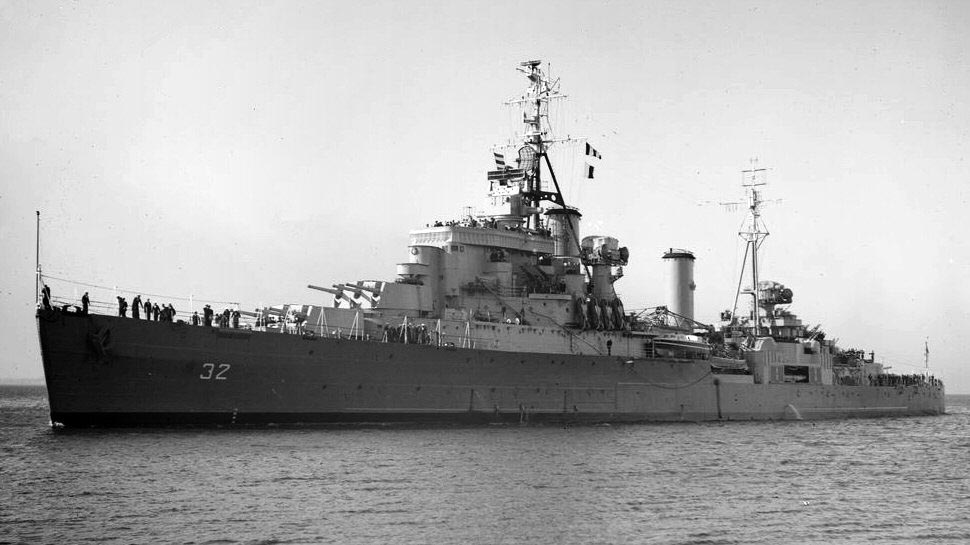
(State Library of Victoria, Australia Photo)
HMCS Ontario (C32), ca Feb 1951.
(Library and Archives Canada Photo, MIKAN No. 3205099)
Ship’s company, HMCS Ontario (C32), Pearl Harbor, Hawaii, 21 November 1945.
(RCN Photo)
HMCS Ontario returning to Esquimalt, 1949.
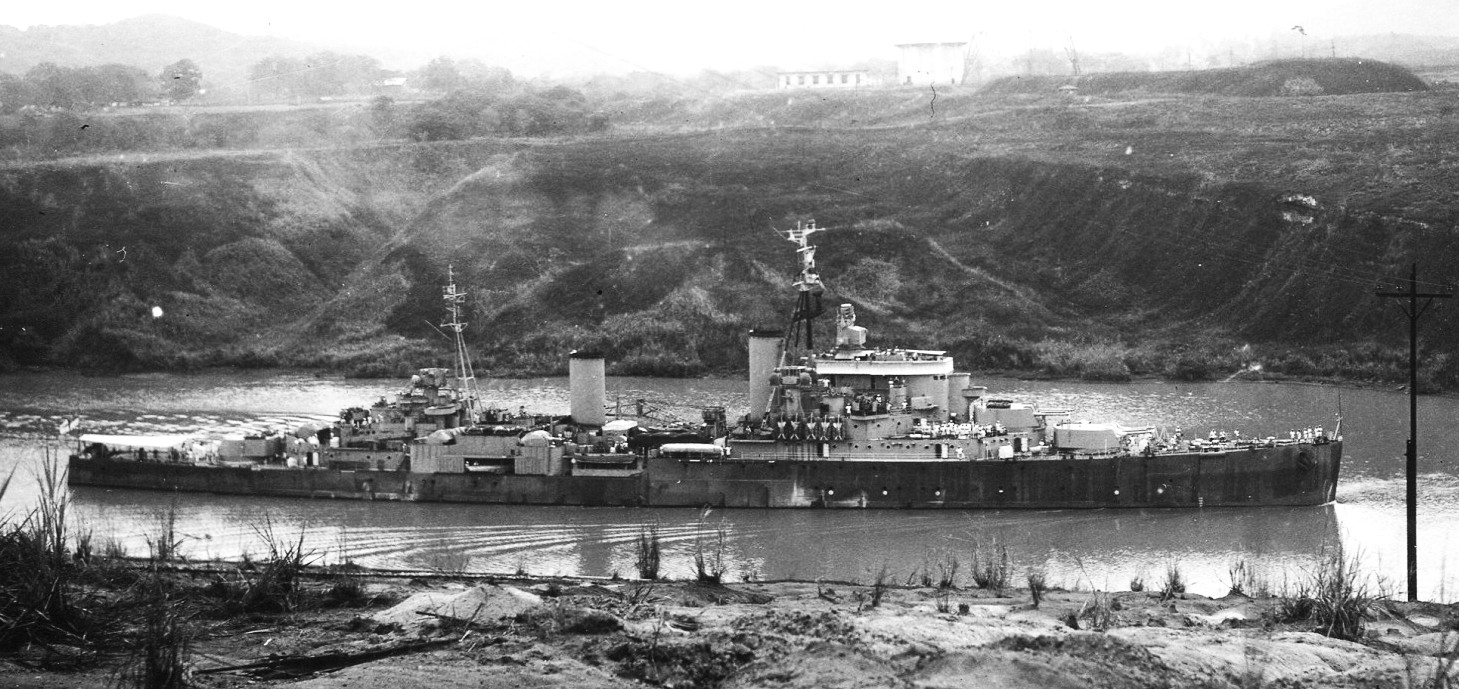
(RCN Photo)
HMCS Ontario transiting the Panama Canal.
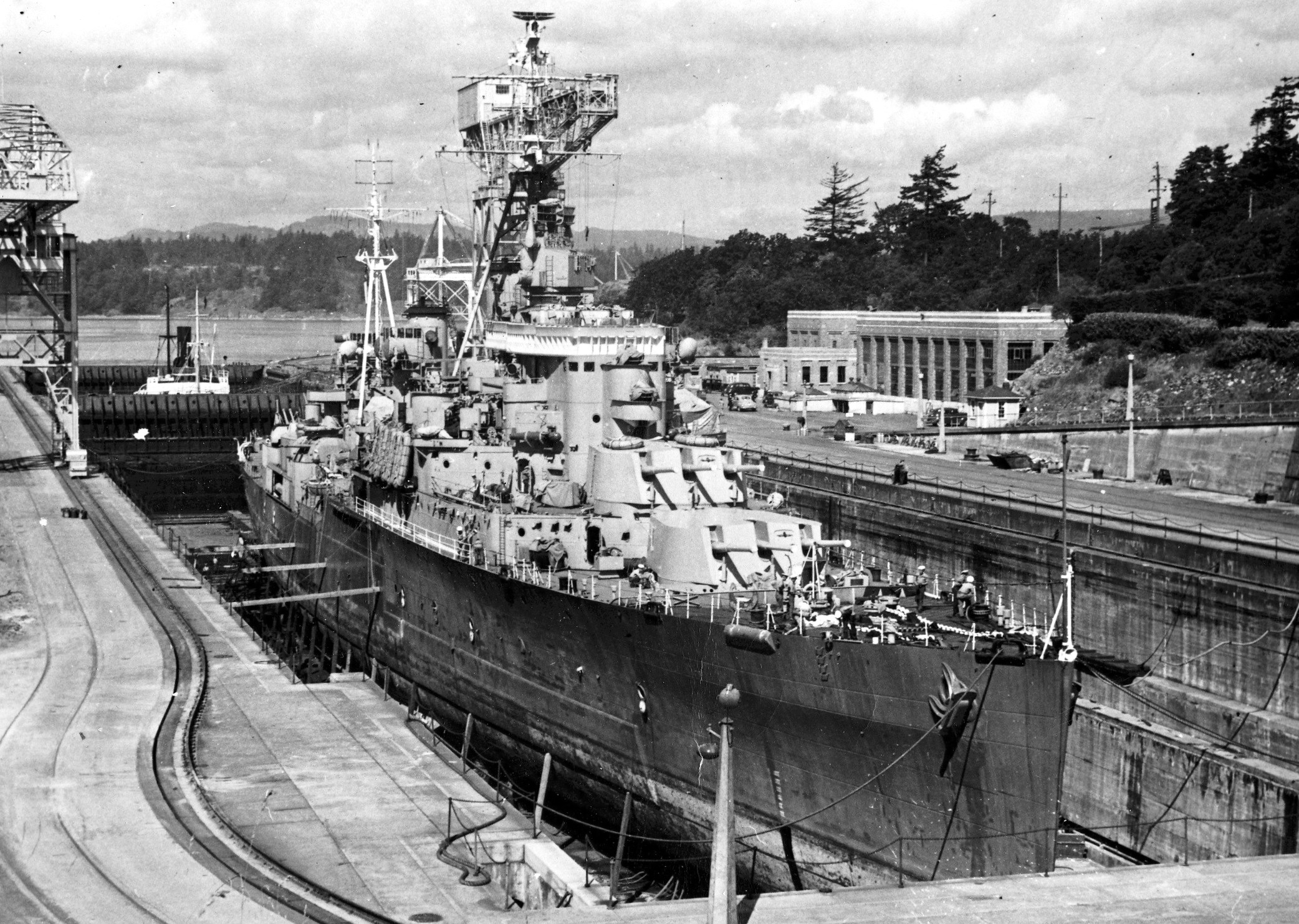
(RCN Photo)
HMCS Ontario in drydock in 1950. Esquimalt, Yarrows Dry Dock, at that time one of the largest dry docks in the world.
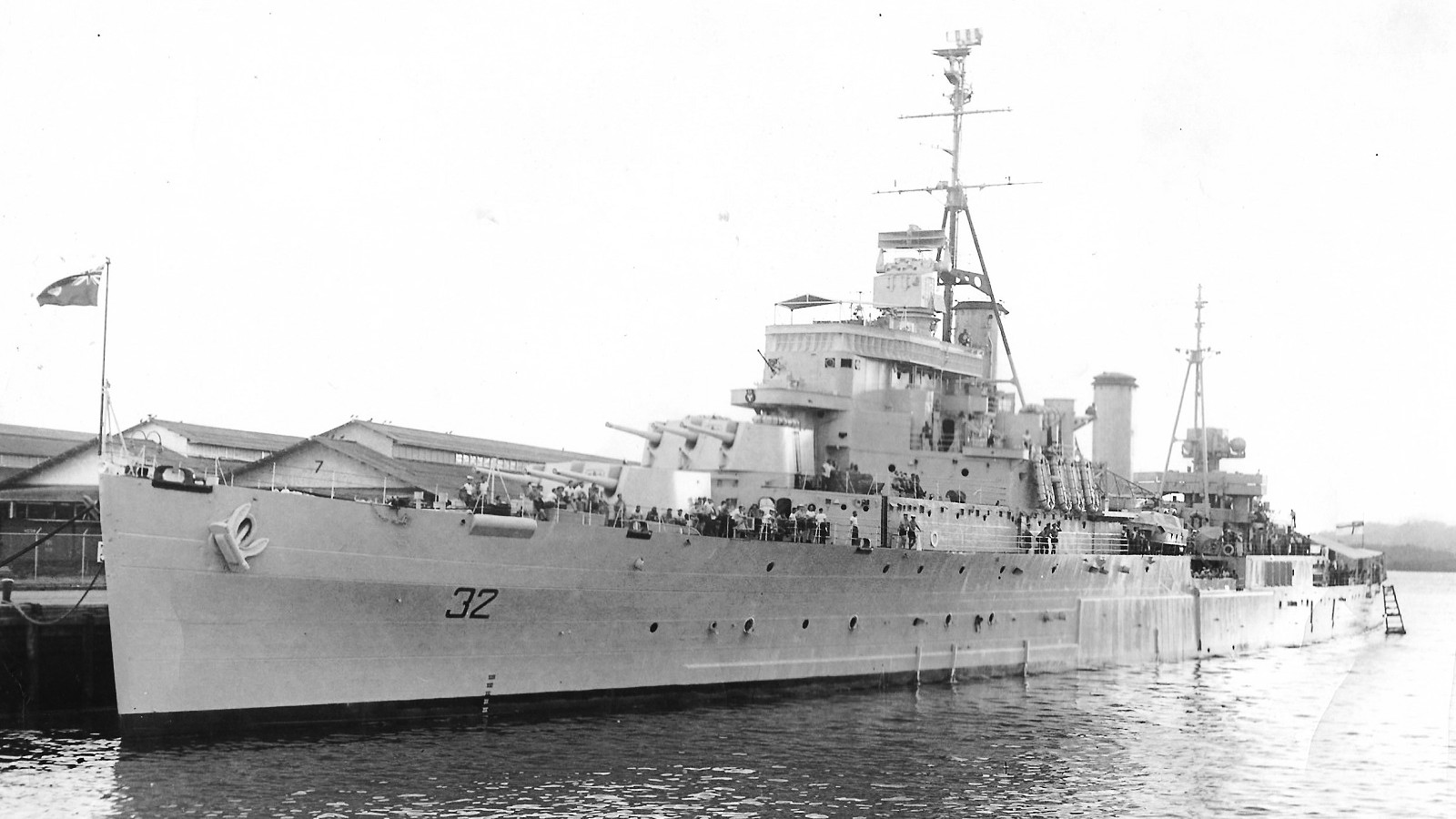
(RCN Photo)
HMCS Ontario (C32).
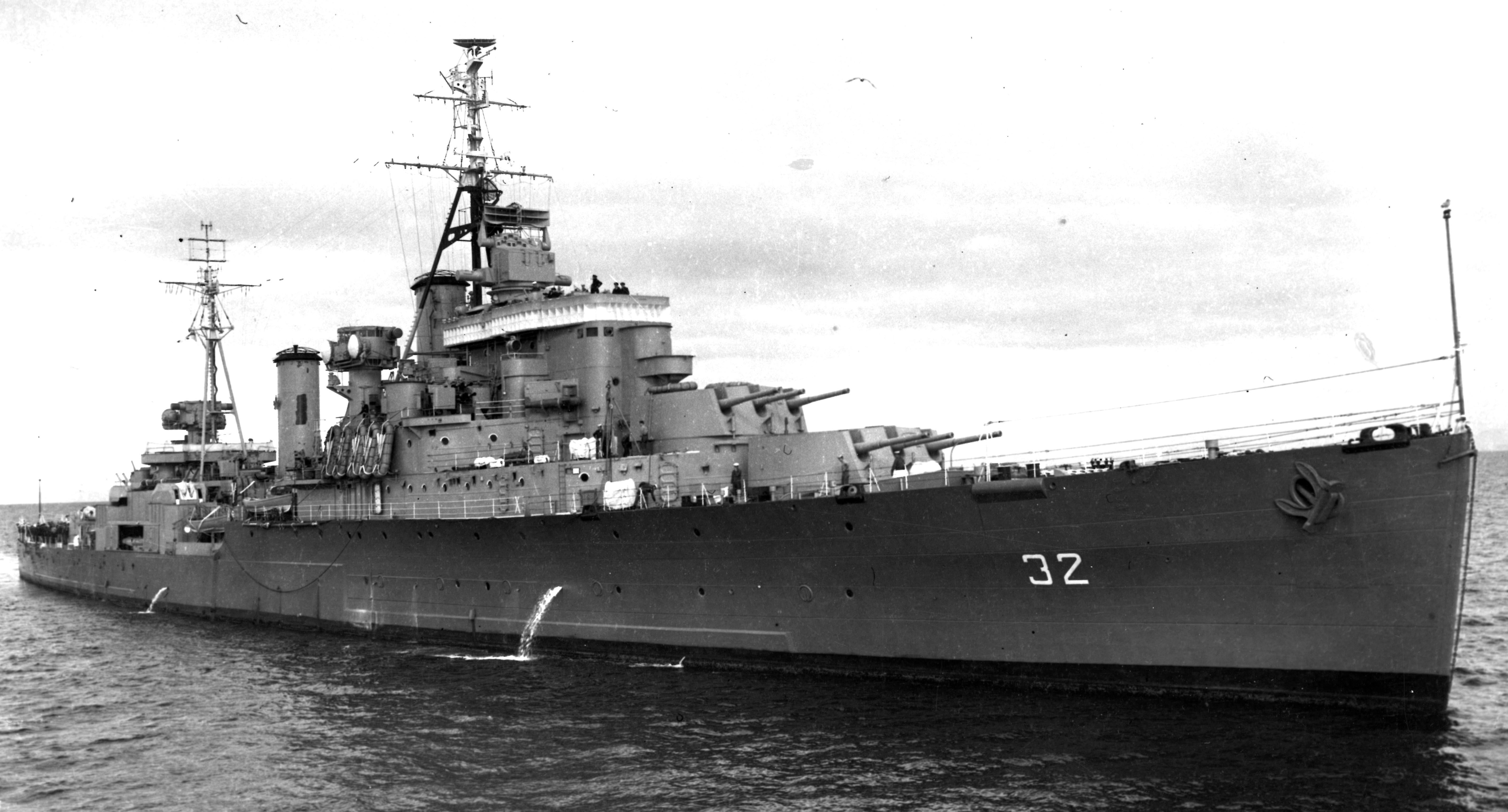
(Naval Museum of Halifax Photo)
HMCS Ontario (C32).
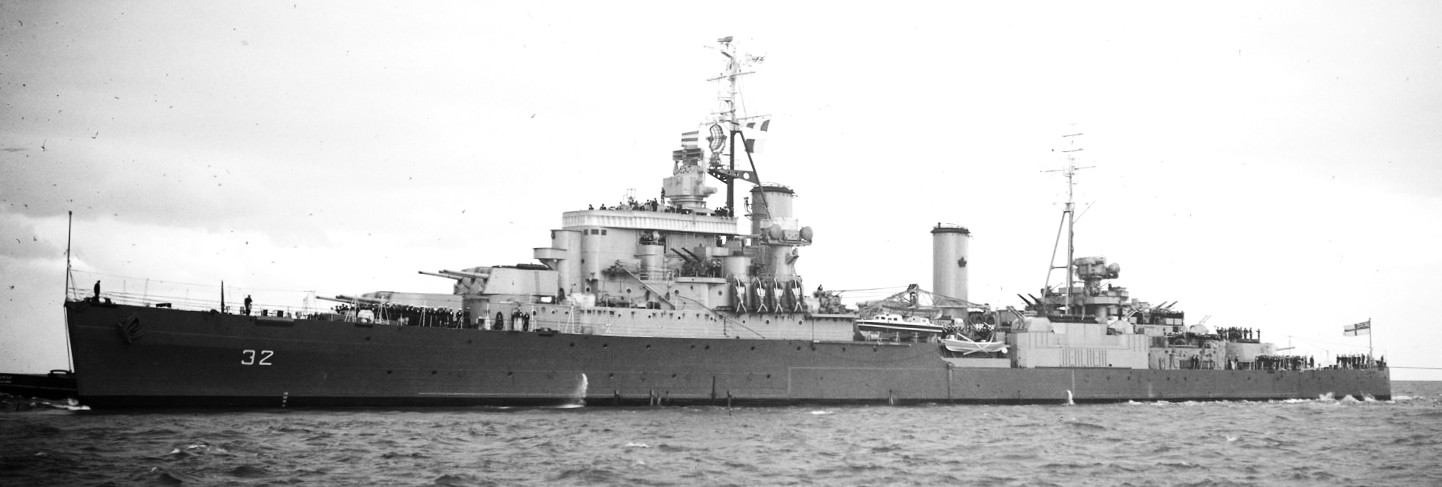
(State Library, Victoria, Australia Photo)
HMCS Ontario (C32).
HMS Superb (25)
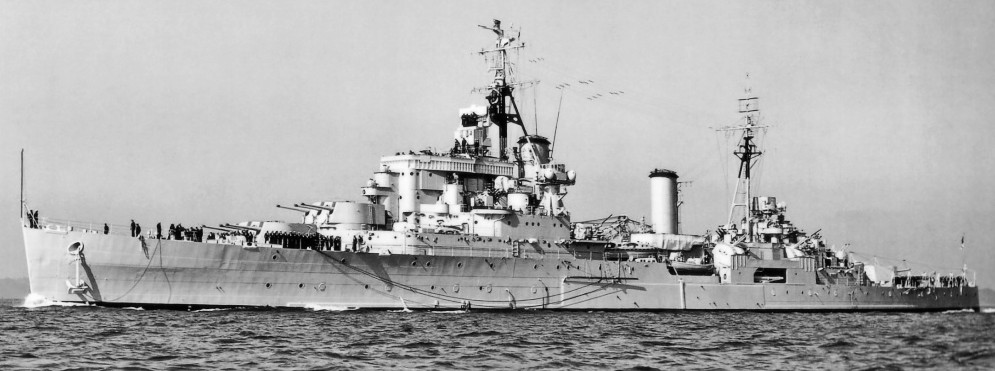
(RN Photo)
HMS Superb (25). The ship entered service in 1945 and had a brief, quiet career before being decommissioned in 1957 after her modernisation was cancelled. She was broken up in 1960. Superb was the last of the Minotaurs to be built, and was completed to a slightly different design to that of the previous members of the class, with a foot more beam than her immediate predecessor HMS Swiftsure, which had introduced Type 274 lock and follow radar directors for surface action. With Superb the first Type 275 sets, modified versions of the lock and follow radar, were introduced to also control anti-aircraft fire of the twin 4-inch mounts. Unfortunately the versions of 275 fitted were the British glasshouse director version, which had higher tolerances and less reliability than the American versions of the set, which were reserved for the latter Battle-class destroyers and aircraft carriers Eagle and Ark Royal under construction and in particular the last battleship, Vanguard, for its secondary armament. Construction on her unfinished sister ships was halted after the end of the war and they were later scrapped, or converted into the new Tiger-class automatic gun cruiser. Superb herself was planned to be converted to full automatic 6-inch and 3-inch/70 gun Tiger specifications and would have been much more suitable for such modernisation than the narrower beam Swifsure. The plans to modernise Superb at the time of the 1957 Defence Review were much more cost constricted and would have been similar to the limited modernisation of HMS Belfast, with new MRS8 multi channel directors for four twin 4-inch and six twin proximity fused L70 Bofors and new radar, fire control and AIO and a data link to the modernised carriers Victorious and Hermes. Superb’s update was cancelled in April 1957.
She was approved for disposal 2 years later and arrived at the Dalmuir yards of Arnott Young on 8 August 1960 to be scrapped. Although Superb was the latest of the line of 6-inch gun cruisers to be completed, (the 1943 Minotaur class followed directly from the 1938 Colony and 1936 Town classes), she was also one of the first of this type to be broken up. Plans for her modernisation were abandoned after the 1957 defence review. No more cruiser modernisations were approved, with new guided missile ships to take precedence. Pre-war ships lasted longer, showing the difference between peacetime and wartime building standards. (Wikipedia)
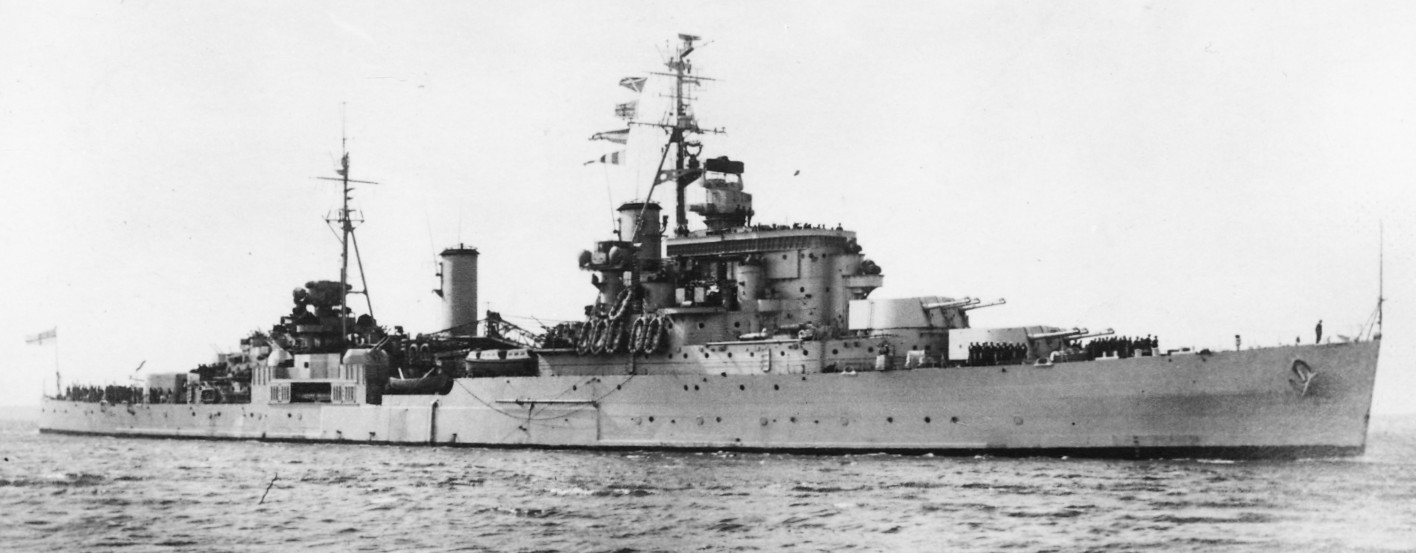
(RN Photo)
HMS Superb (25).
All comments are subject to our Comment Policy. You must be at least 18 years old to comment.
See a comment that violates our guidelines? Report it here.